Do you know the oldest machiya in the Bikan Historical Area?
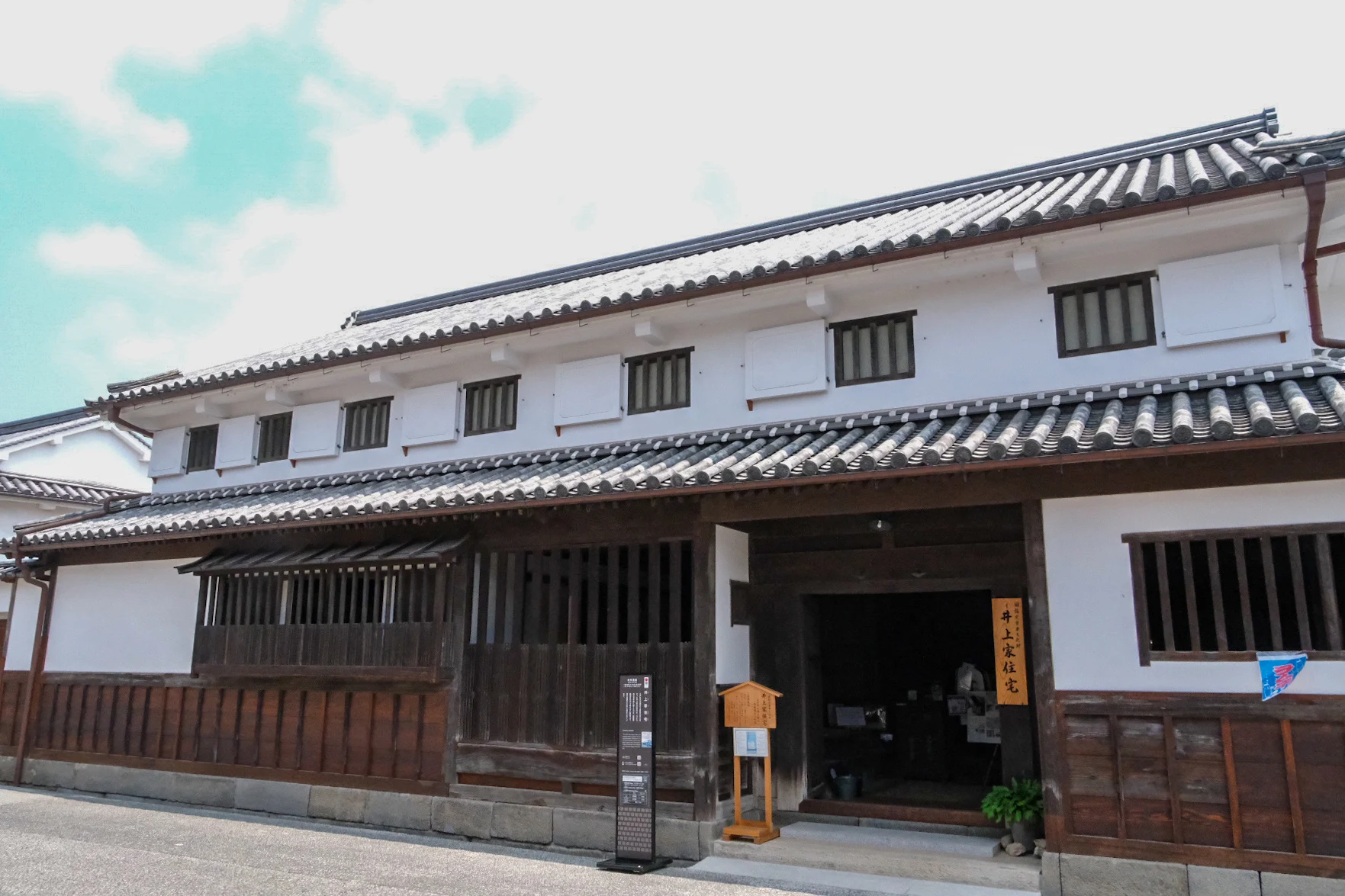
That is the Inoue House, designated as an important cultural property of the country.
From the finishing of the materials and documents, it is understood that a large-scale renovation was carried out in 1721, the 6th year of the Kyōhō era, and the foundation of the house that remains today was established.
From the fiscal year 2012 (Heisei 24) to the fiscal year 2022 (Reiwa 4), a preservation repair was conducted over a period of 10 years, during which the entire structure was dismantled and investigated. The Inoue House has been open to the public since March 2023, and we will explore its highlights.
About the Inoue House
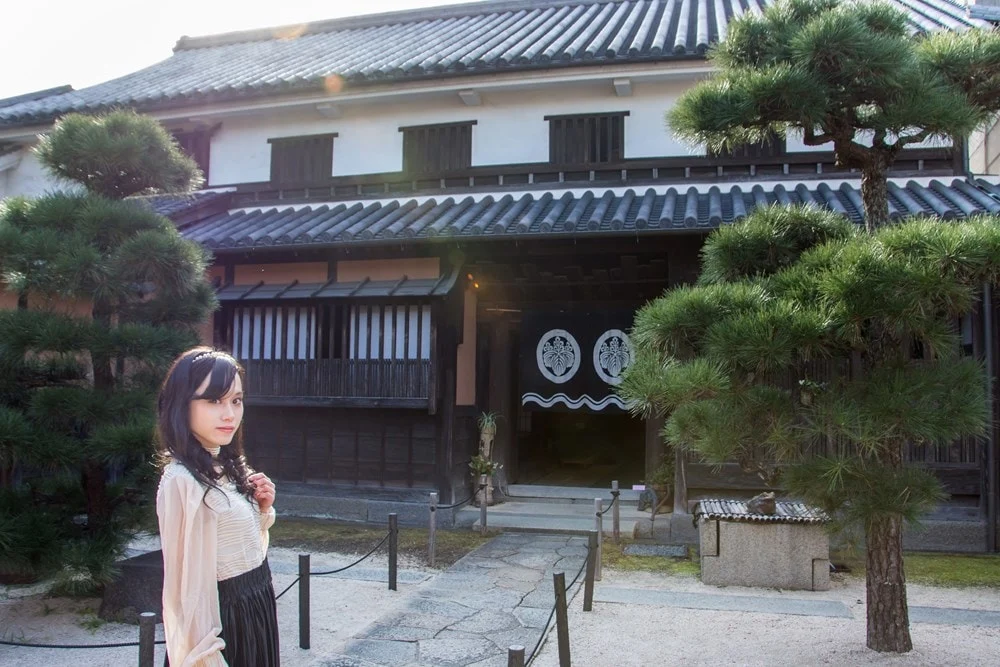
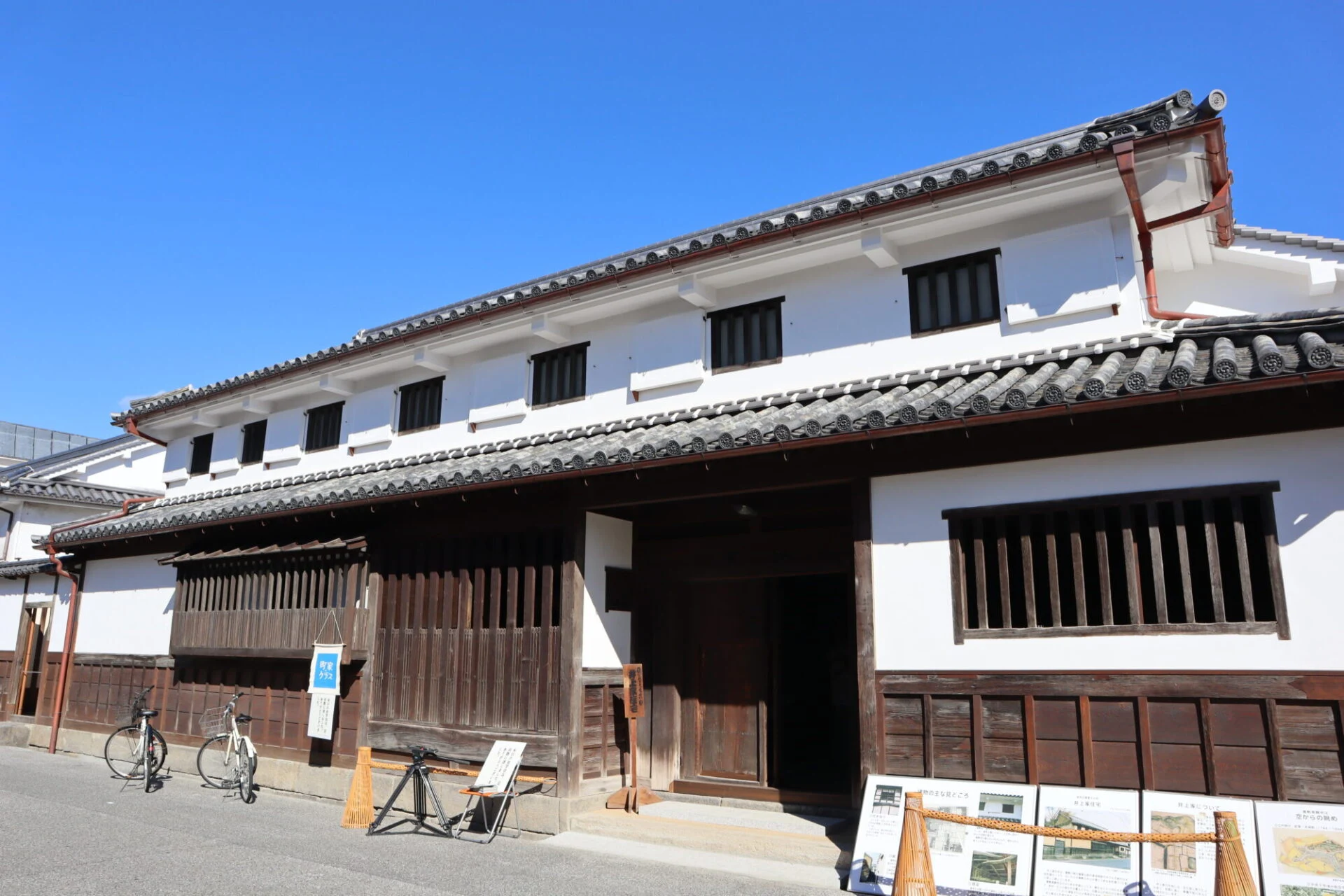
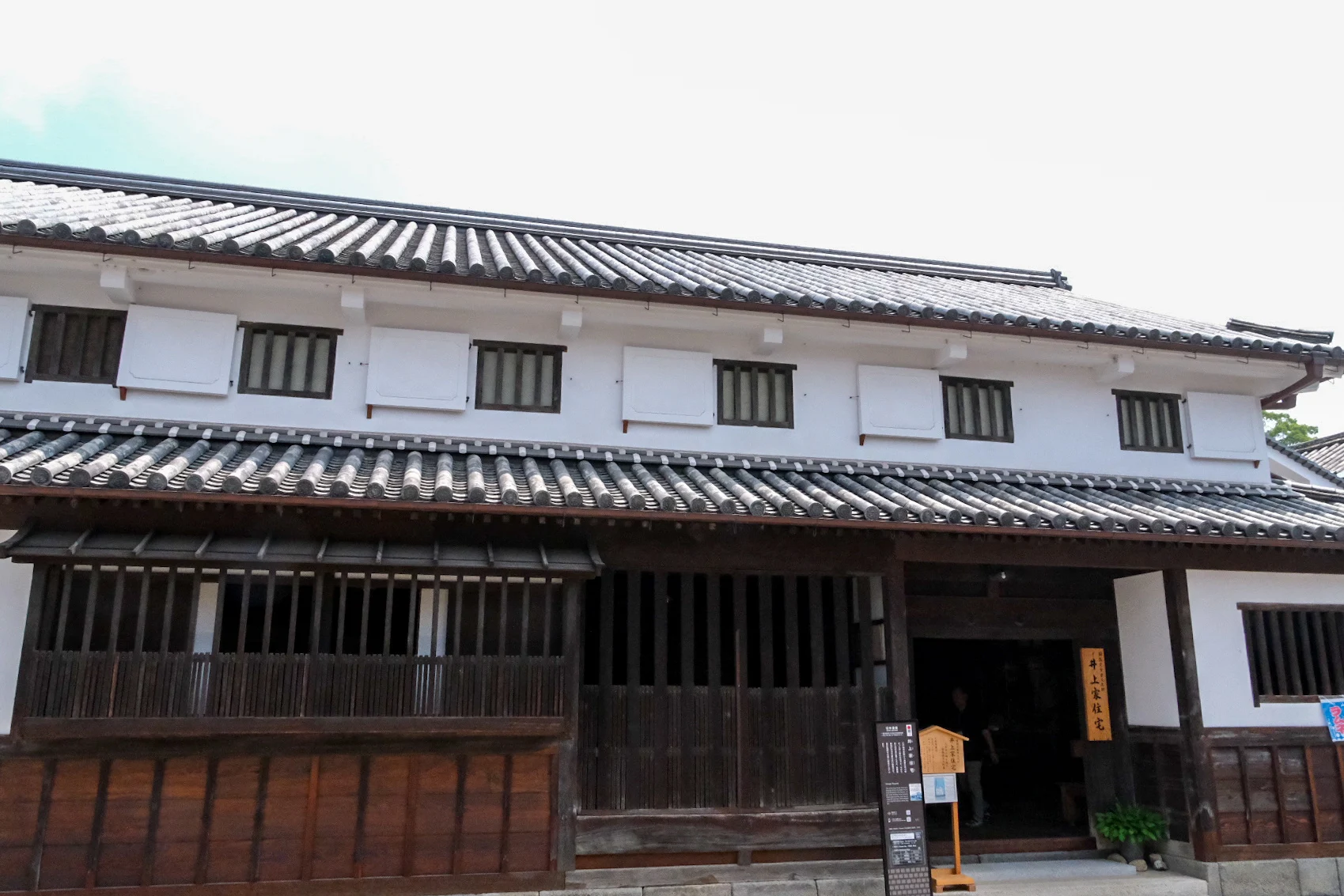
The Inoue House is a machiya building facing Honmachi Street, which has long been the main street of the Bikan Historical Area.
In 2002, the following buildings and materials were designated as important cultural properties of the country.
- Main house
- Three-story storehouse
- Well storehouse
- Earthen wall
- House layout diagram
- Site
However, due to the deterioration of the building, repairs were necessary, so from 2012, preservation repair work was carried out over a period of about 10 years. The house was opened to the public in March 2023.
The recreated machiya architecture from that time, along with the craftsmanship of the artisans and the ingenuity of the predecessors, creates a space that can be felt.
It is also designated as a cultural property of the Japan Heritage "A Kurashiki story beginning with a single cotton flower - A town of textiles woven from Japanese and Western influences."
Who are the Inoue?
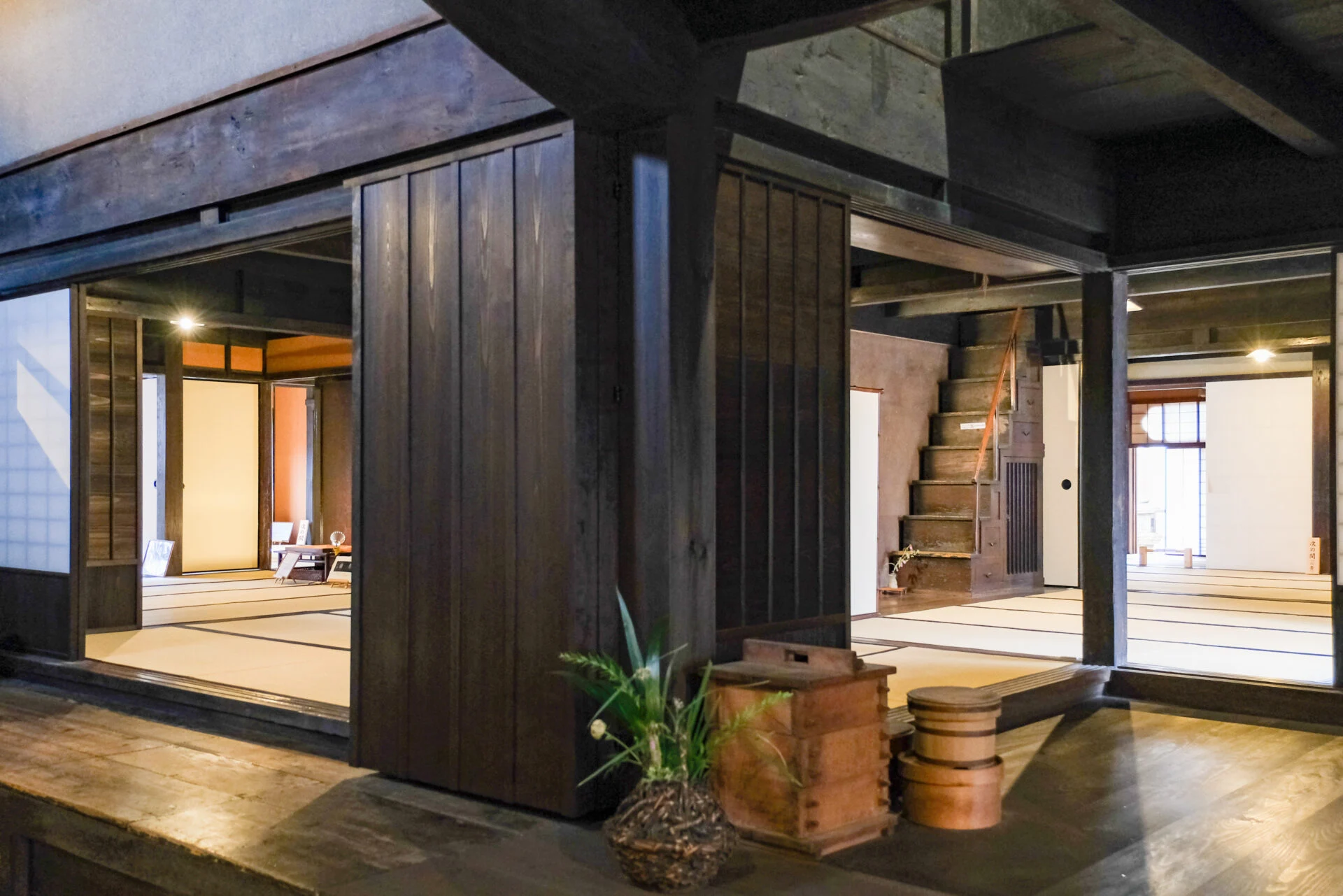
The ancestors of the Inoue family settled in Kurashiki at the end of the 16th century, establishing their residence at the foot of Mt. Tsurugata and engaging in the reclamation of the surrounding tidal flats known as Achi-gata.
They were one of the thirteen houses known as "Koroku," which had the qualification to become village officials, and during the Edo period, they took turns serving as elders and representatives of farmers.
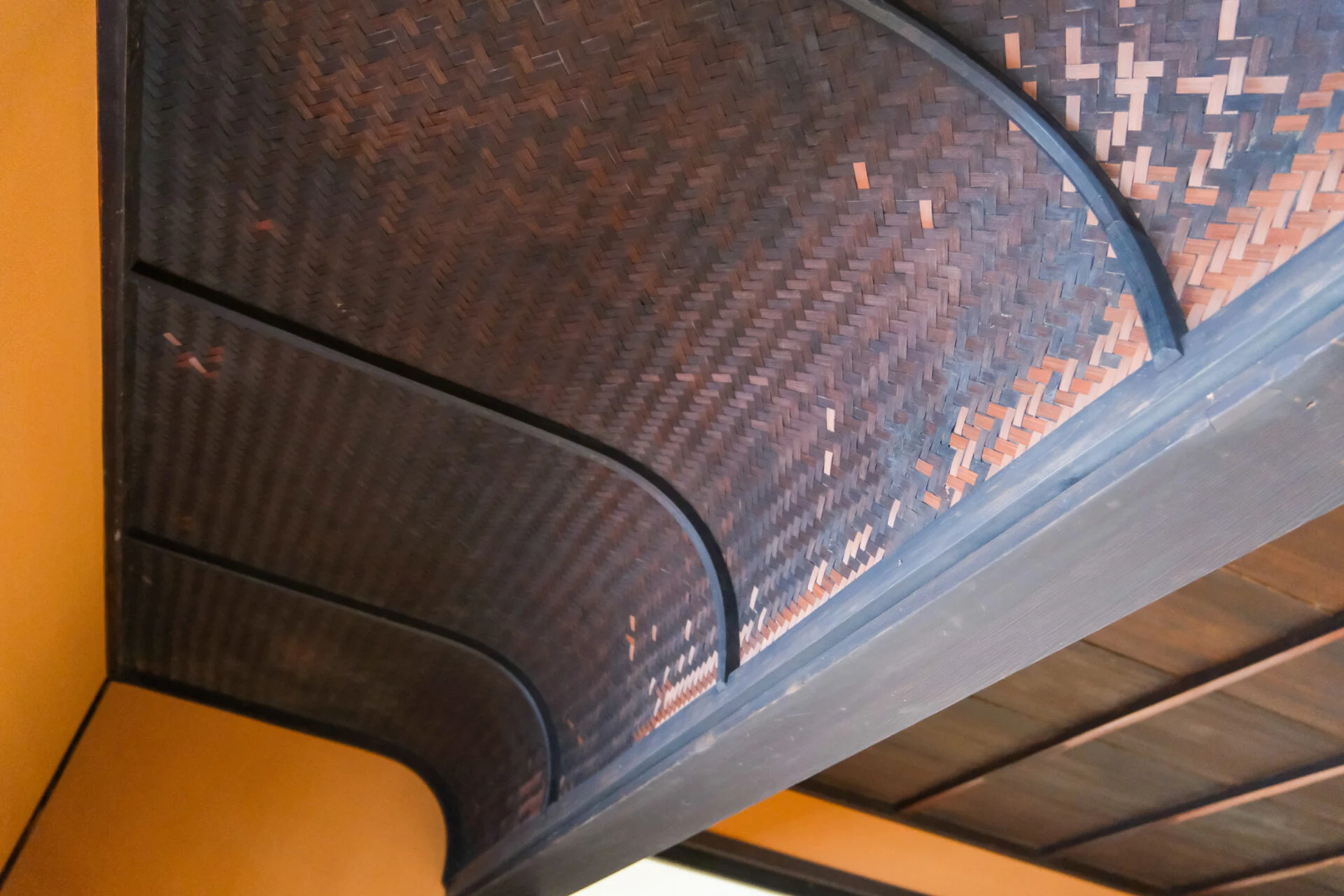
The existing foundation of the Inoue House was extensively renovated by the sixth head of the family, Yasubei, in 1721, the 6th year of the Kyōhō era.
Since then, it has undergone numerous renovations up to the present day.
Until 1997, it was actually used as a residence, but after a new house was built on the premises, it was utilized as a workplace and reception space. The Inoue family continued to use it until the renovations in 2012.
Currently, it has been restored to reflect the Inoue House during the Tenpo era, when the tenth head of the family, Saburoemon, was active.
Architectural features that hint at its merchant past
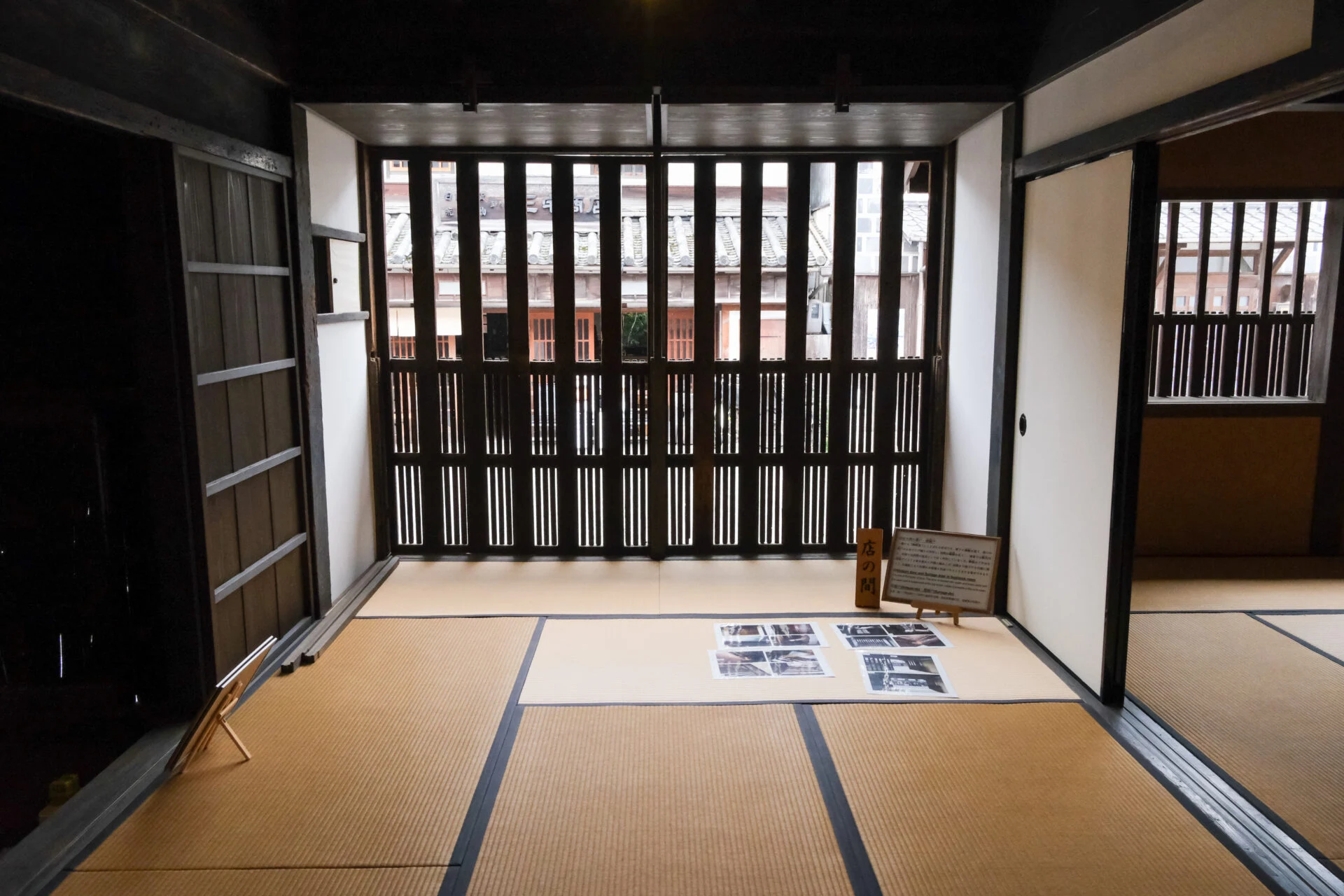
The history of the Inoue family, which engaged in new land development and grew into a privileged merchant who also served as a sake brewer and landowner during the Kyōhō era (1716-1736), can be glimpsed from the architecture.
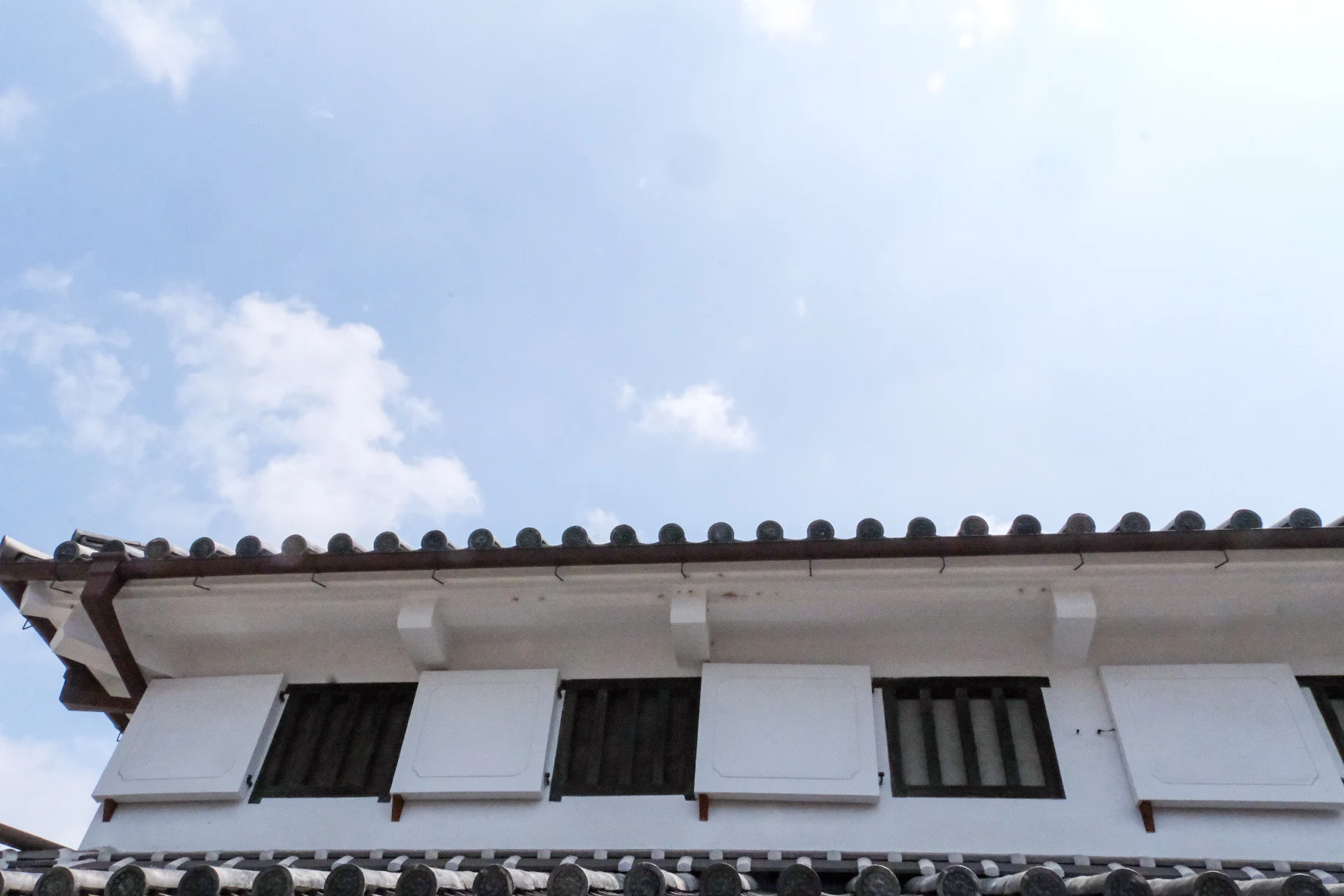
The Kurashiki window facing the street features the only fireproof earthen door in the Bikan Historical Area.
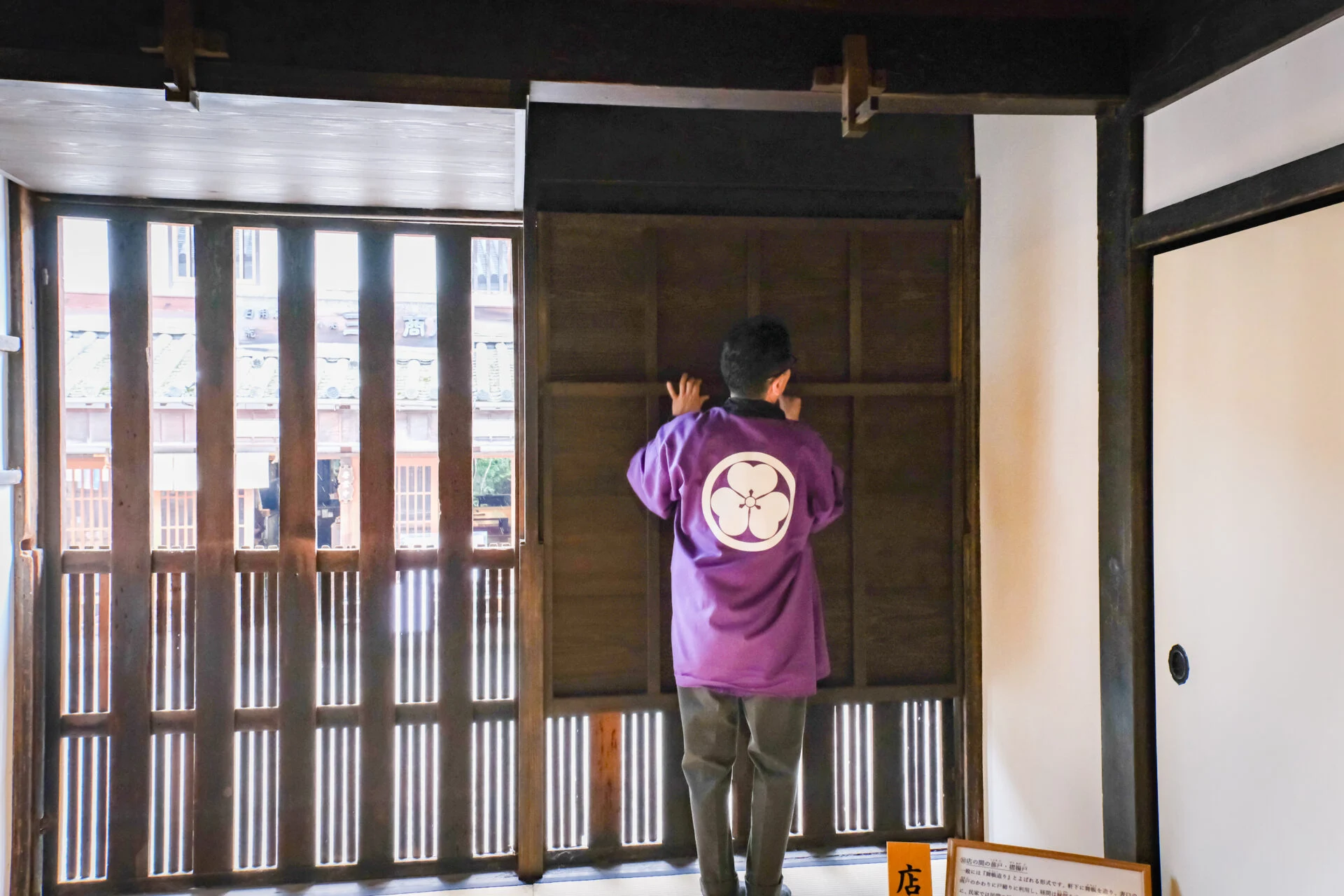
These windows consist of shoji and sliding doors, which are divided into upper and lower sections. The upper door is suspended from above and can be opened by lifting it.
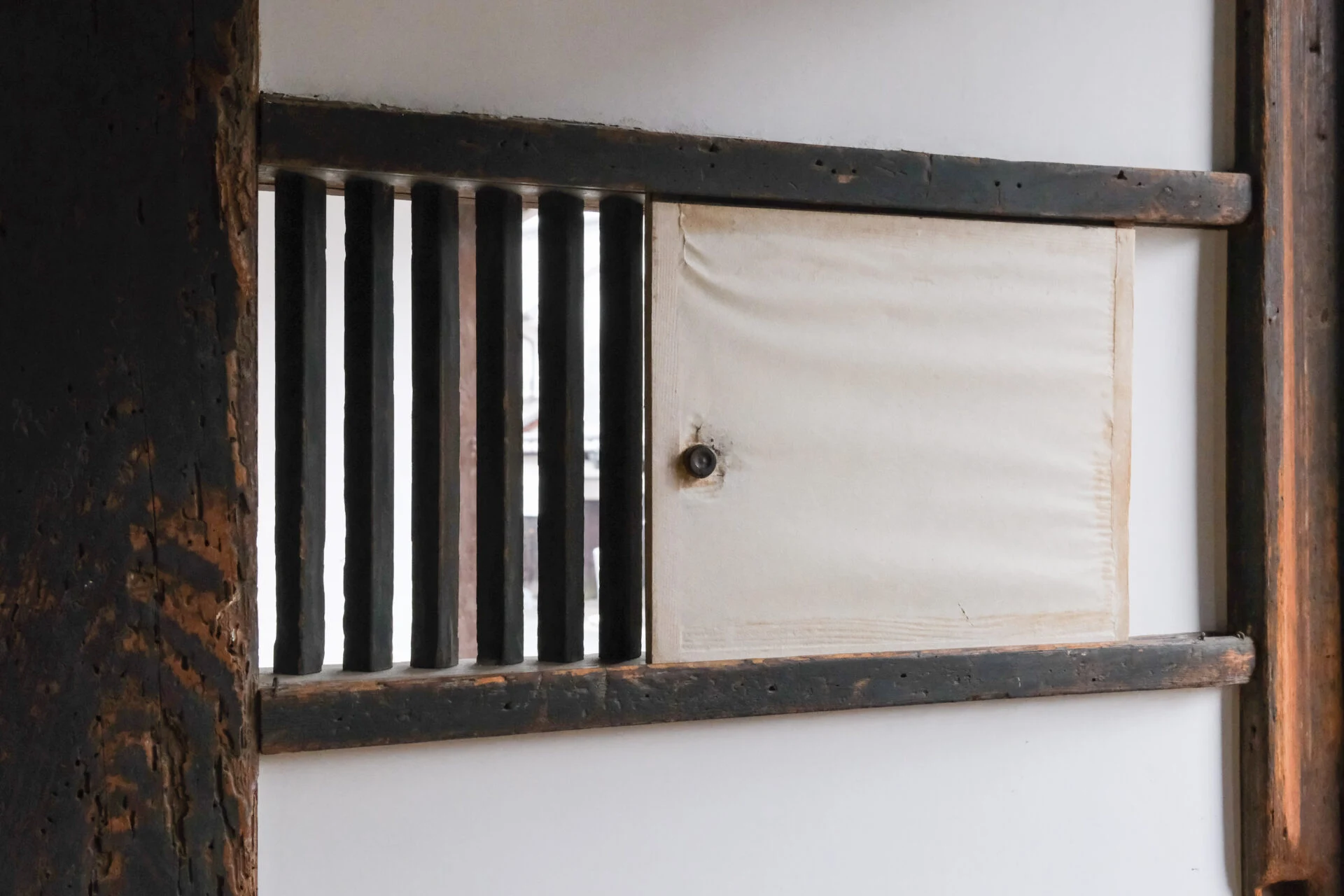
Next to it, there is also a small window for guests, which hints at its past as a prosperous village headman's residence.
Highlights of the living space
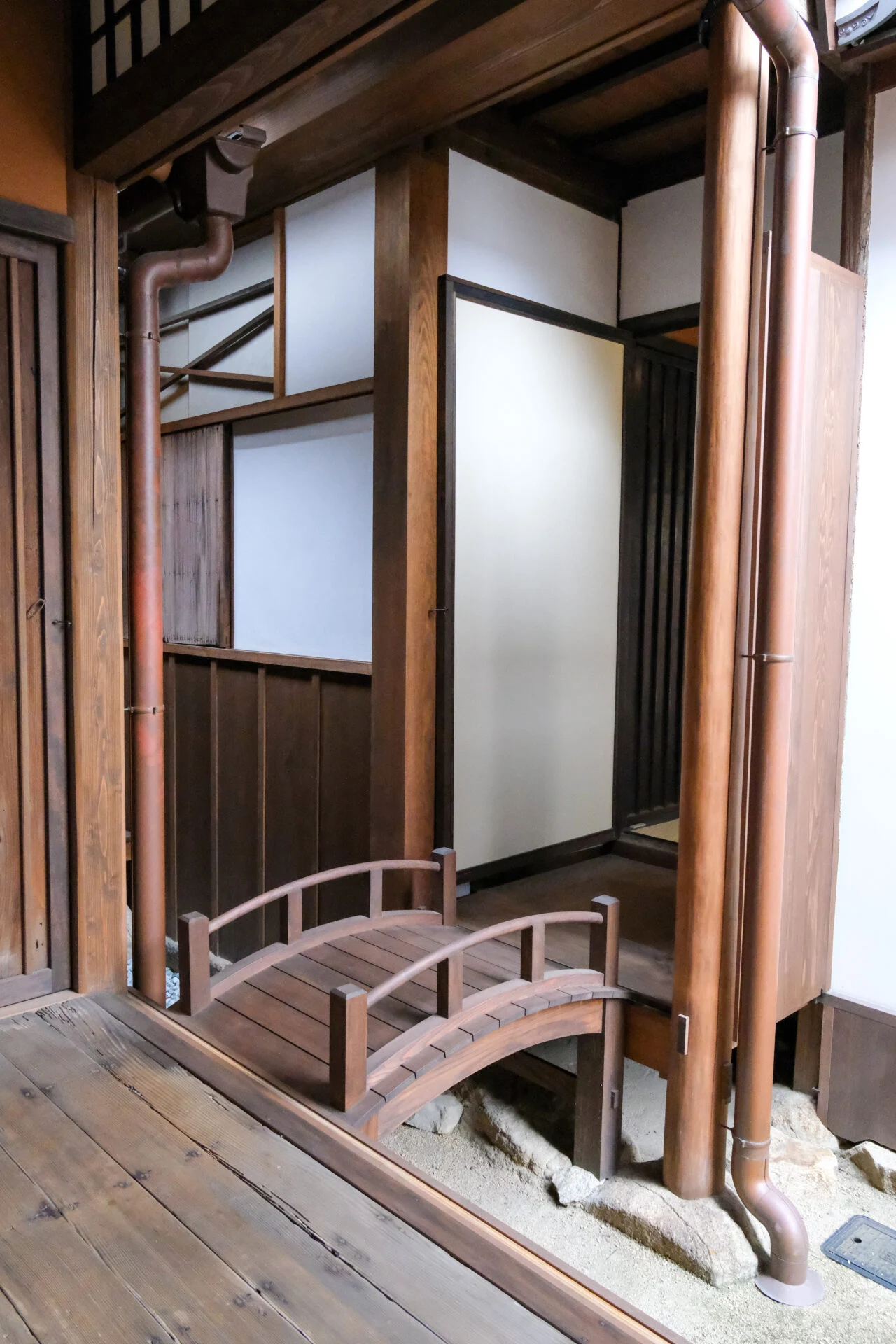
The Taiko bridge separates the guest space on the street side from the family space.
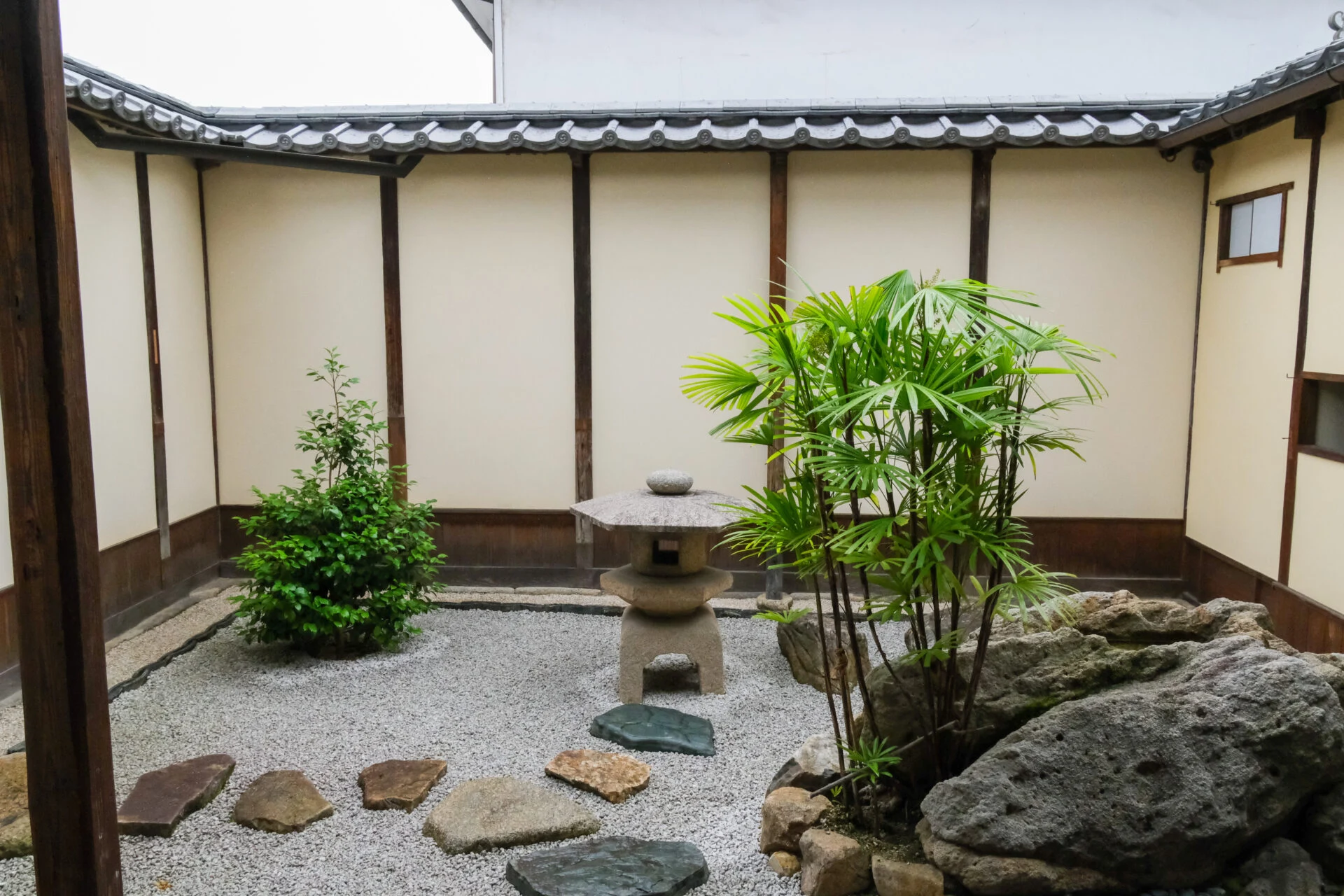
In the guest space beyond the Taiko bridge, the tsuboniwa with a snow-viewing lantern is particularly eye-catching.
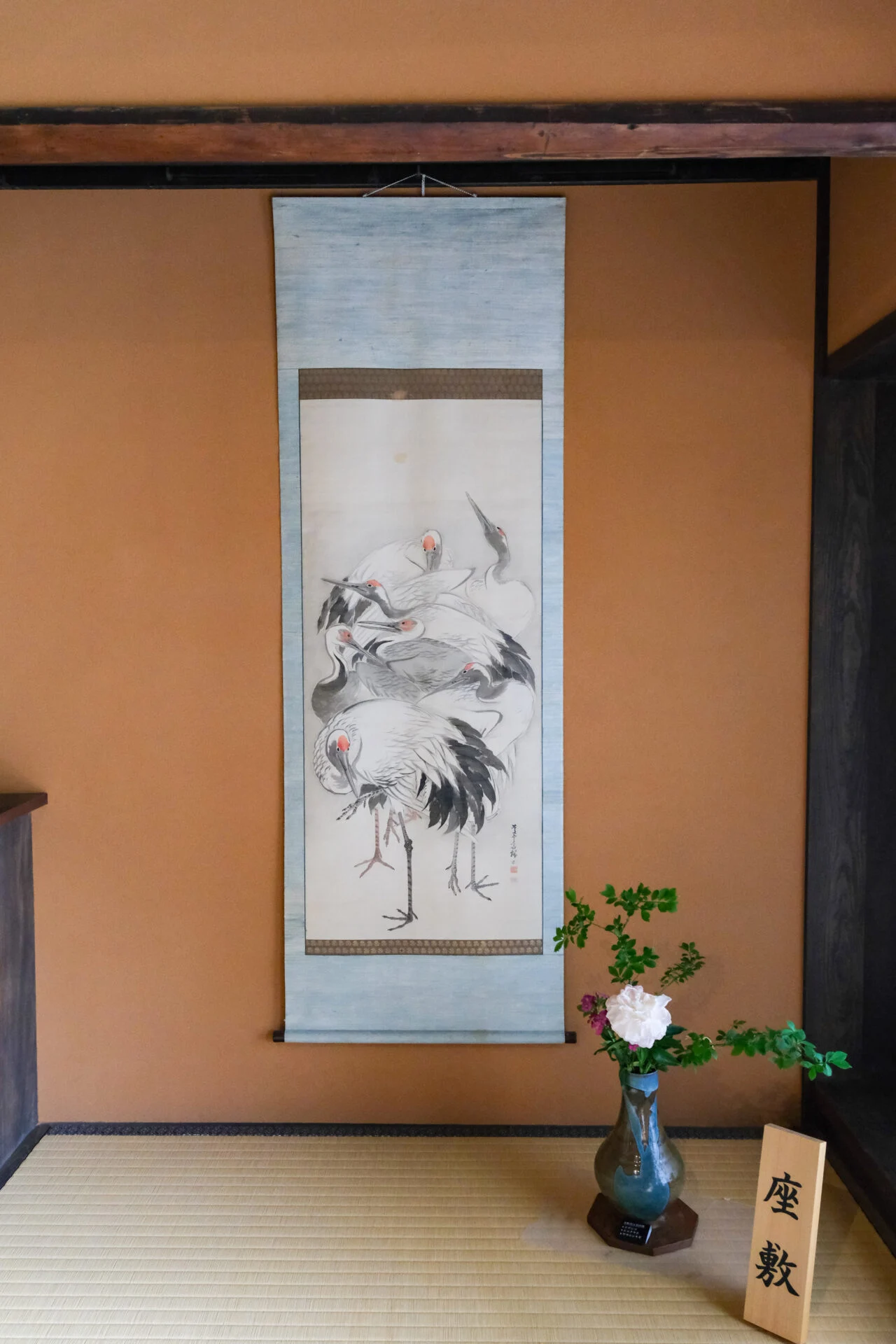
It is said that the tenth head of the family, Saburoemon, loved cranes and painted pictures of the cranes he kept here.
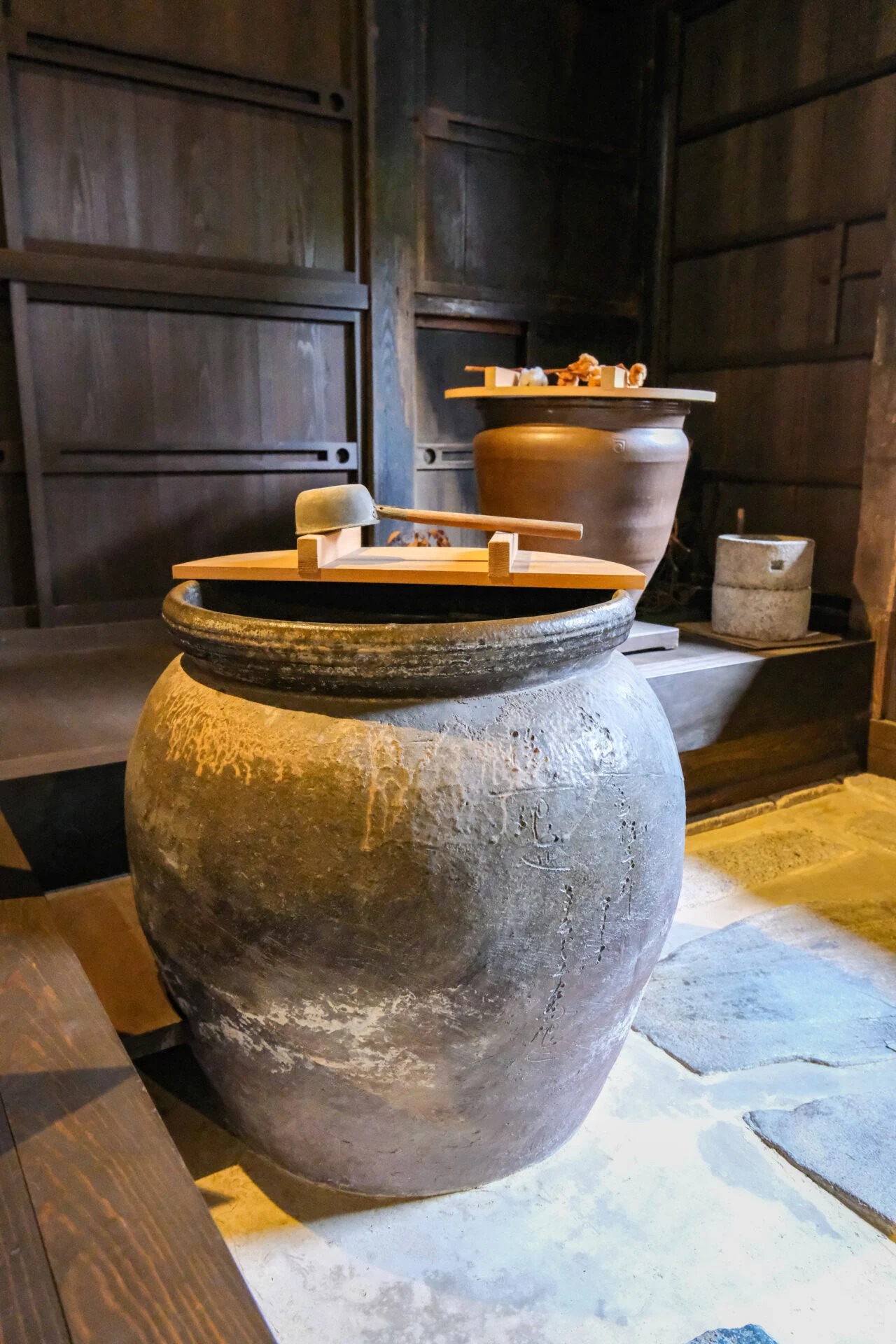
In the kitchen, there is a heavy Bizen ware water jar.
This jar, inscribed with a date from the year after the Honnoji Incident, 1583, is a cultural property designated by Kurashiki City.
After being discovered in the storehouse of the Inoue House, it was kept by Kurashiki City for a while, but during the preservation repair work that began in 2012, the location where it was used was identified, and it was returned to the Inoue House in time for the public opening.
Guided tours with demonstrations by staff
As a member of the regional revitalization cooperation team in Kurashiki City starting in December 2023, I have opportunities to tour the Bikan Historical Area with friends and family from outside Kurashiki City and those I lived with in the Kanto region.
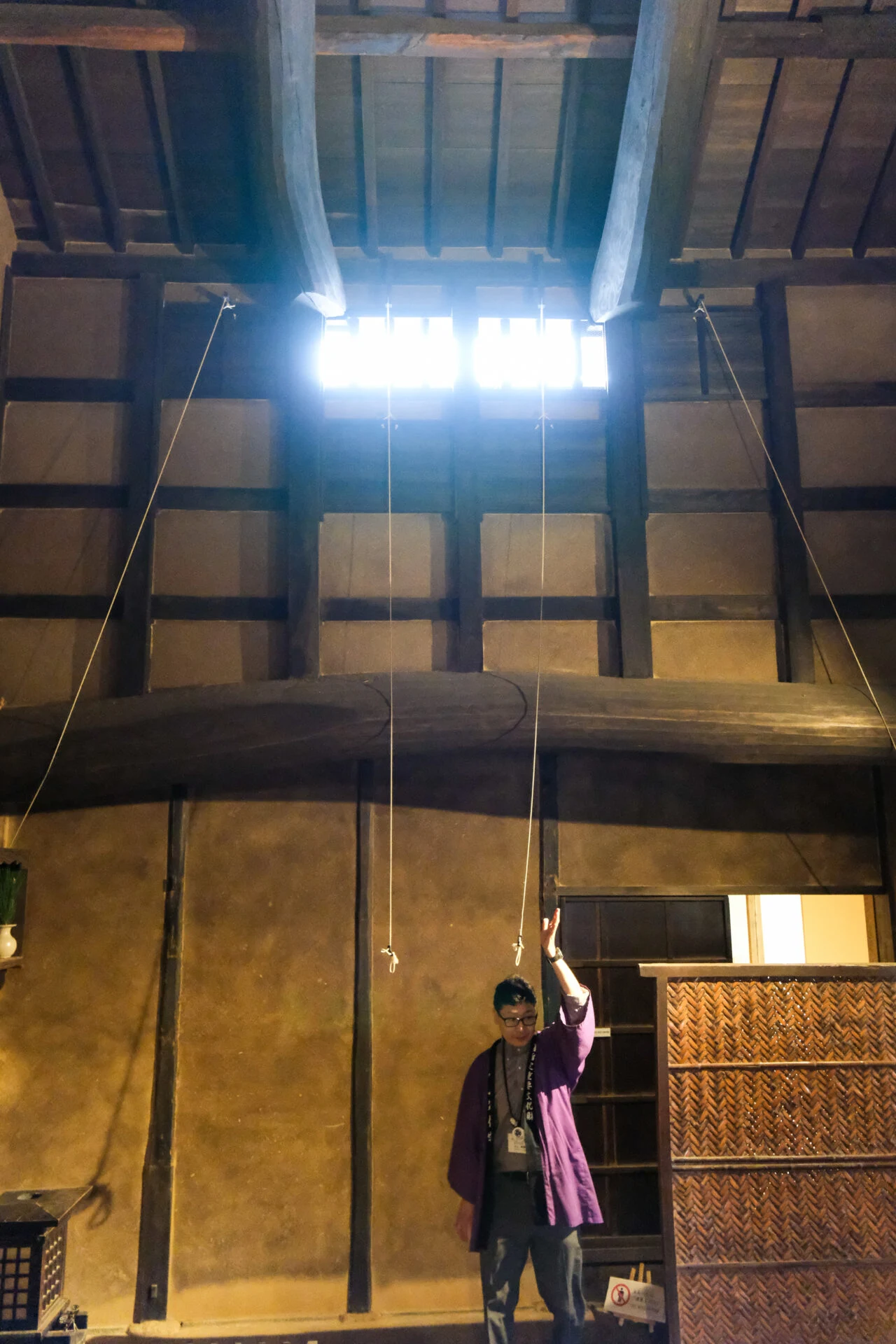
One place I always visit during such times is the Inoue House. This is because, for just the admission fee, the staff will guide you with demonstrations of the Inoue House.
They show the group how the shoji and sliding doors are lifted and opened, as well as the actions of opening and closing the storm shutters.
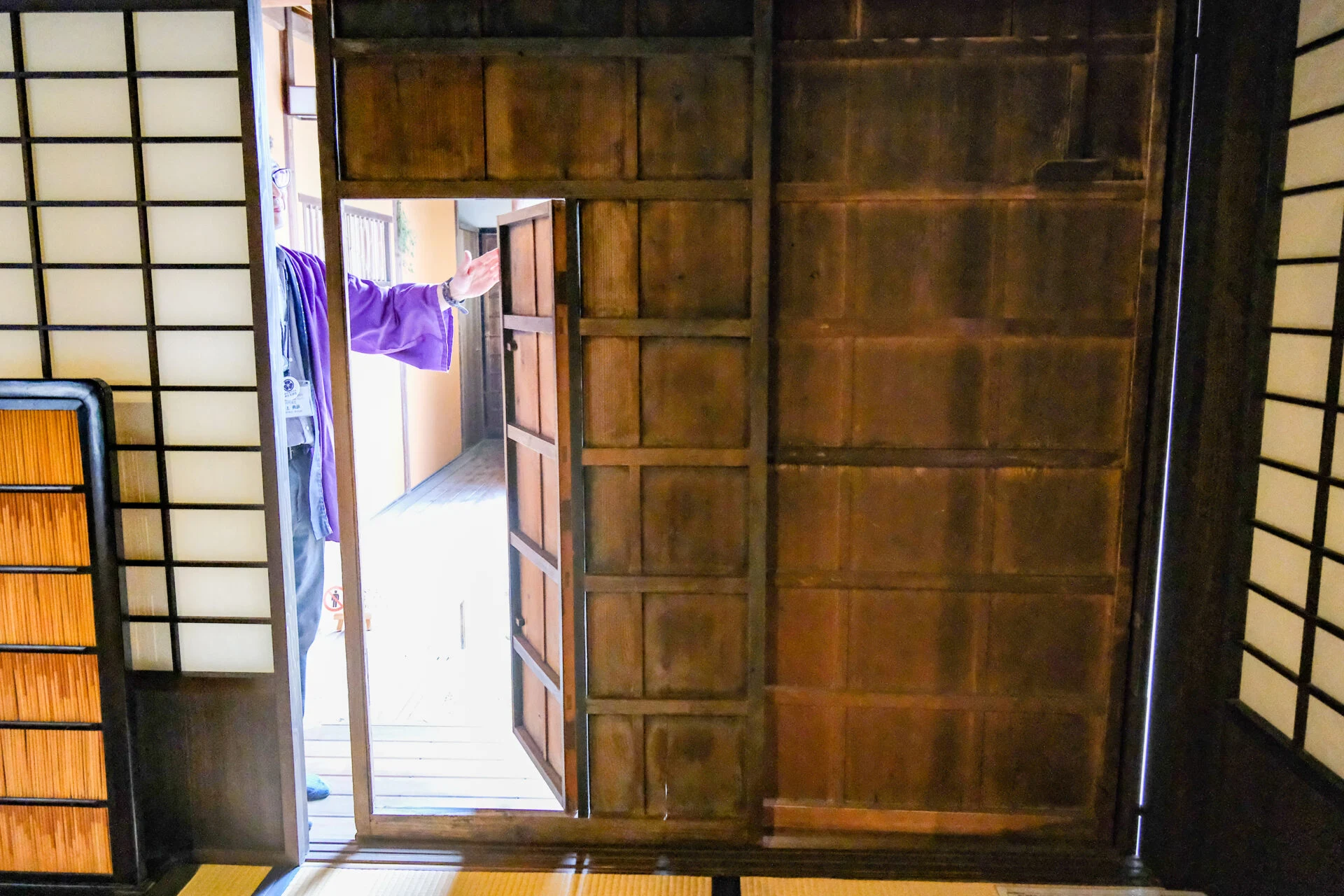
Based on the materials excavated during the preservation repair work conducted over a period of 10 years starting in 2012, there are also explanations about the history of the Bikan Historical Area.
The history told from the perspective of the Inoue family, which has watched over the town of Kurashiki for a long time, can be said to be the very history of this town. The stroll after enjoying the Inoue House is also very well received by my friends.
When you visit the Inoue House, be sure to ask the staff for a guided tour.
How about original goods as souvenirs?
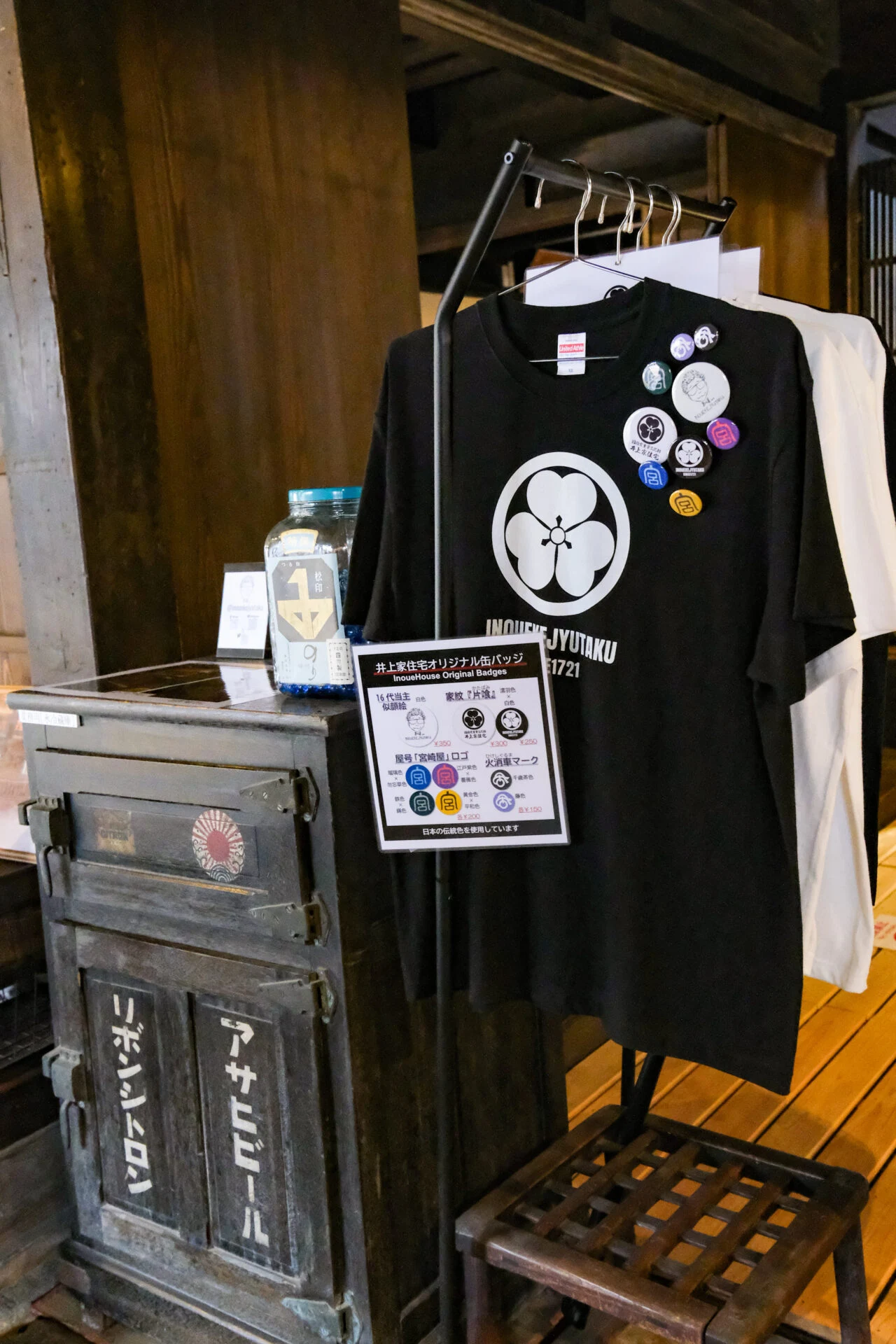
The Inoue House also sells various original goods.
As a memento of your visit, a thank you for the enjoyable guided tour with demonstrations, or as support for the Inoue House, why not take a look?
The original goods currently on sale are as follows.
- T-shirts (family crest, caricature)
- Button badges (family crest, caricature, "Miyazaki-ya" shop name, fire truck mark)
We interviewed Inoue Norihiko, the 16th head of the Inoue family, about the episodes of the 10-year preservation and repair work and the creative efforts made during the guided tours with demonstrations.
Nationally Designated Important Cultural Property: Inoue House Data
| Name | Nationally Designated Important Cultural Property: Inoue House |
|---|---|
| Location | 1-36 Honmachi, Kurashiki City, Okayama Prefecture |
| Contact | 086-422-0714 |
| Parking | None |
| Opening Hours | 10:00 AM - 5:00 PM (Last admission at 4:30 PM) |
| Closed | Monday Year-end and New Year (12/28 - 1/3) (If Monday is a holiday, open, closed the following day) |
| Admission Fee (including tax) | Adults: 500 yen (400 yen) Elementary and junior high school students: 300 yen (200 yen) Preschool children: Free *The figures in parentheses are for groups of 20 or more |
| Payment Method |
|
| Reservations | Available If you wish for a guided tour in English, confirmation by phone is necessary Reservations are also required for group tours (30 to 60 minutes) |
| Smoking | Completely non-smoking |
| Restroom | Western-style toilet |
| Childcare | Designated facility for Ikigai Passport |
| Barrier-Free | Can bring in a cane with a cane cover Guided tours can be conducted without masks Many exhibits are touchable and enjoyable |
| Website | Nationally Designated Important Cultural Property: Inoue House |