

Late December 2023, with the end of the year approaching.
With the children’s winter break having started, I found an event that looked like fun for the whole family and went along.
I visited the huge steelworks in Mizushima, Kurashiki City: “JFE Steel Corporation West Japan Works (Kurashiki District).”
A classic destination for school field trips in Kurashiki, some of you may have visited before. This time, however, I’ll report on the steelworks, focusing on “the present and the future.”
Photography is prohibited inside the steelworks, so this article mainly uses reference images. Thank you for your understanding.
The information presented here was current when this article was published in January 2024. Please note that it may differ from current information.
Overview of the “JFE Steel Winter Vacation Factory Tour”
The “JFE Steel Winter Vacation Factory Tour” was held at JFE Steel Corporation West Japan Works on December 26 (Tuesday) and 27 (Wednesday), 2023.
The tour times each day were 9:30 a.m.–11:30 a.m. and 2:00–4:00 p.m.
Advance registration was required.
The tour was open to elementary school students and older, with a capacity of 70 people per session.
It was described as an opportunity to experience with your eyes, ears, and skin the powerful steelworks that is not usually open to visitors.
I joined the factory tour
After arriving at the visitor center, I explored the adjoining Iron Learning Center while waiting for the factory tour to begin.
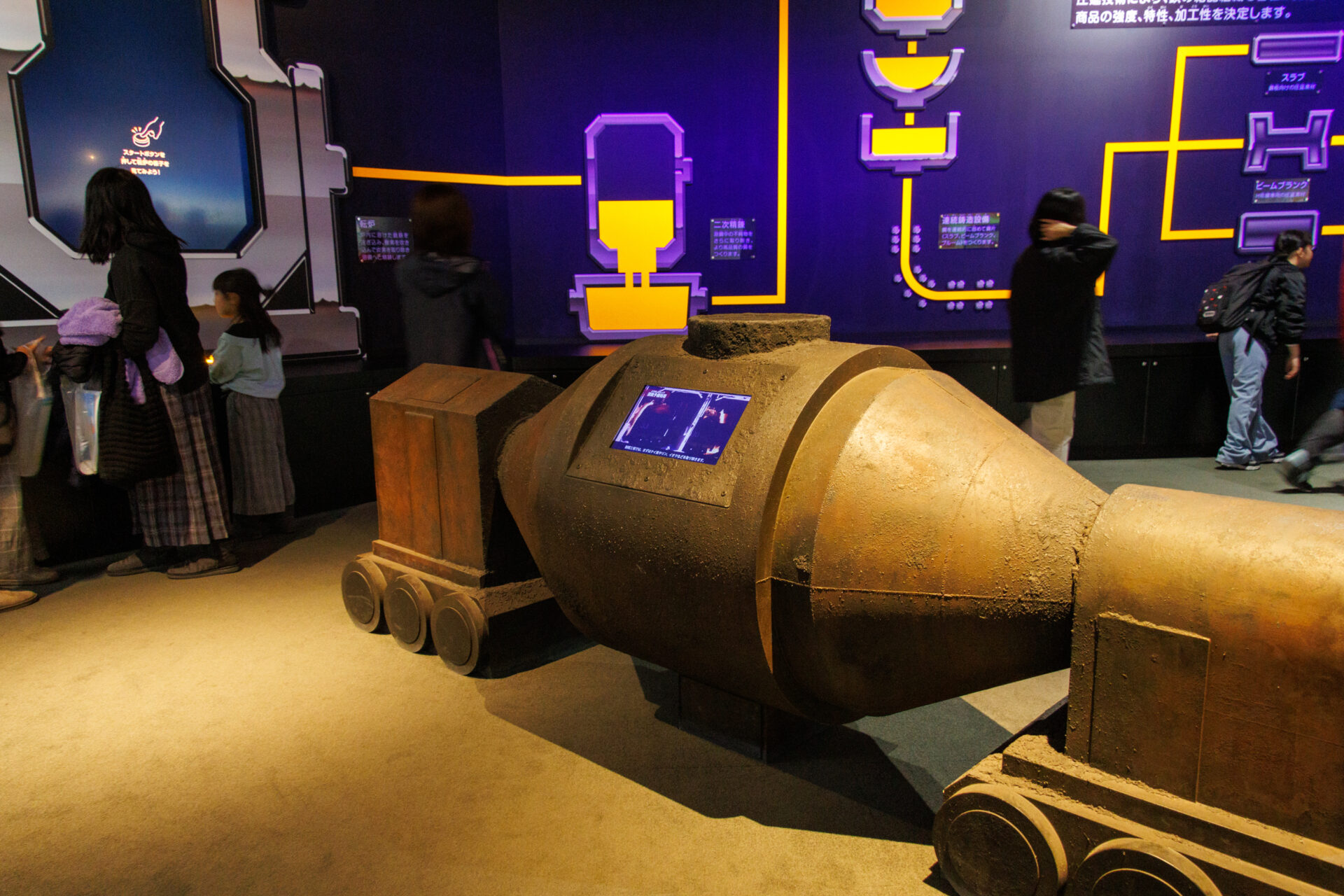
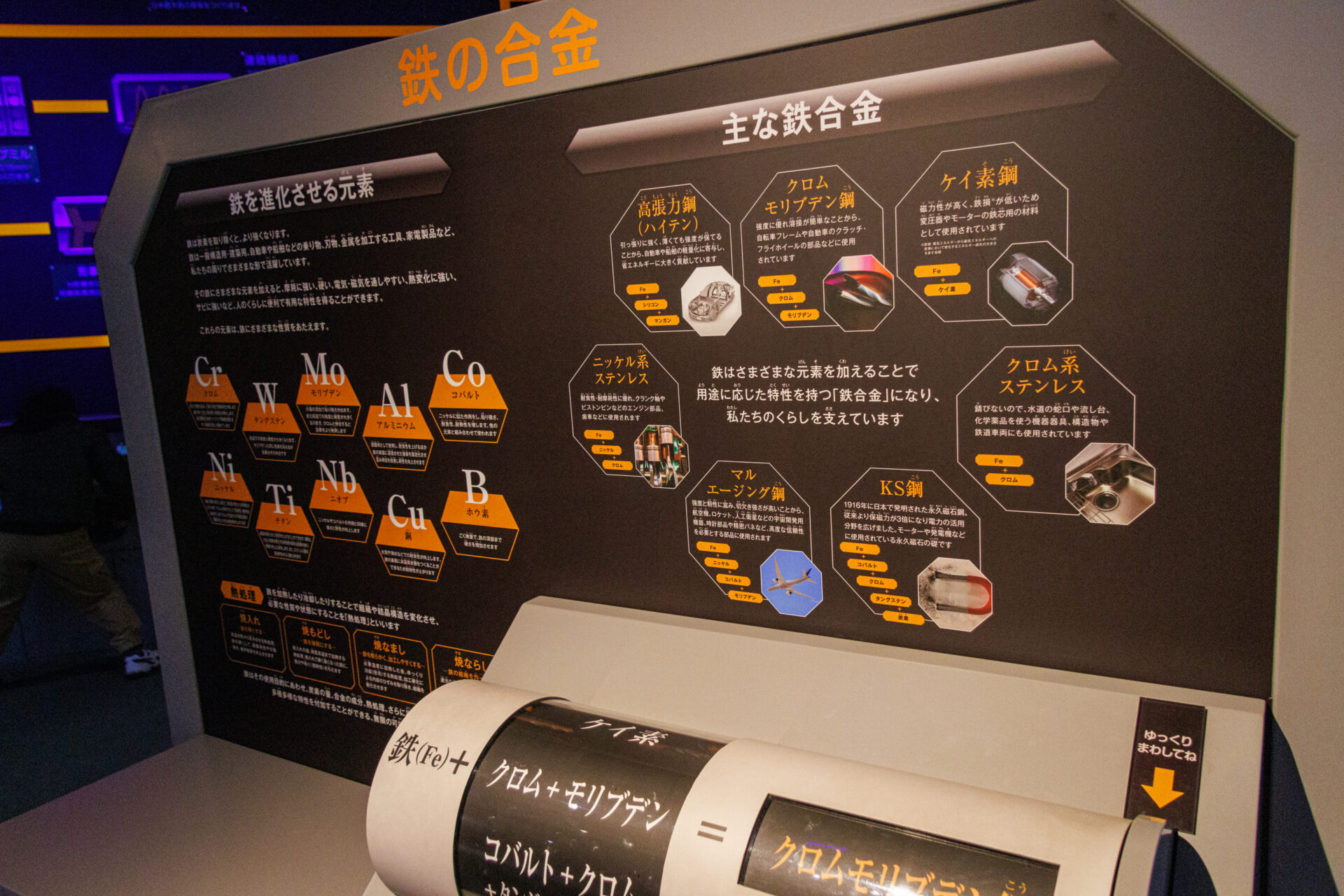
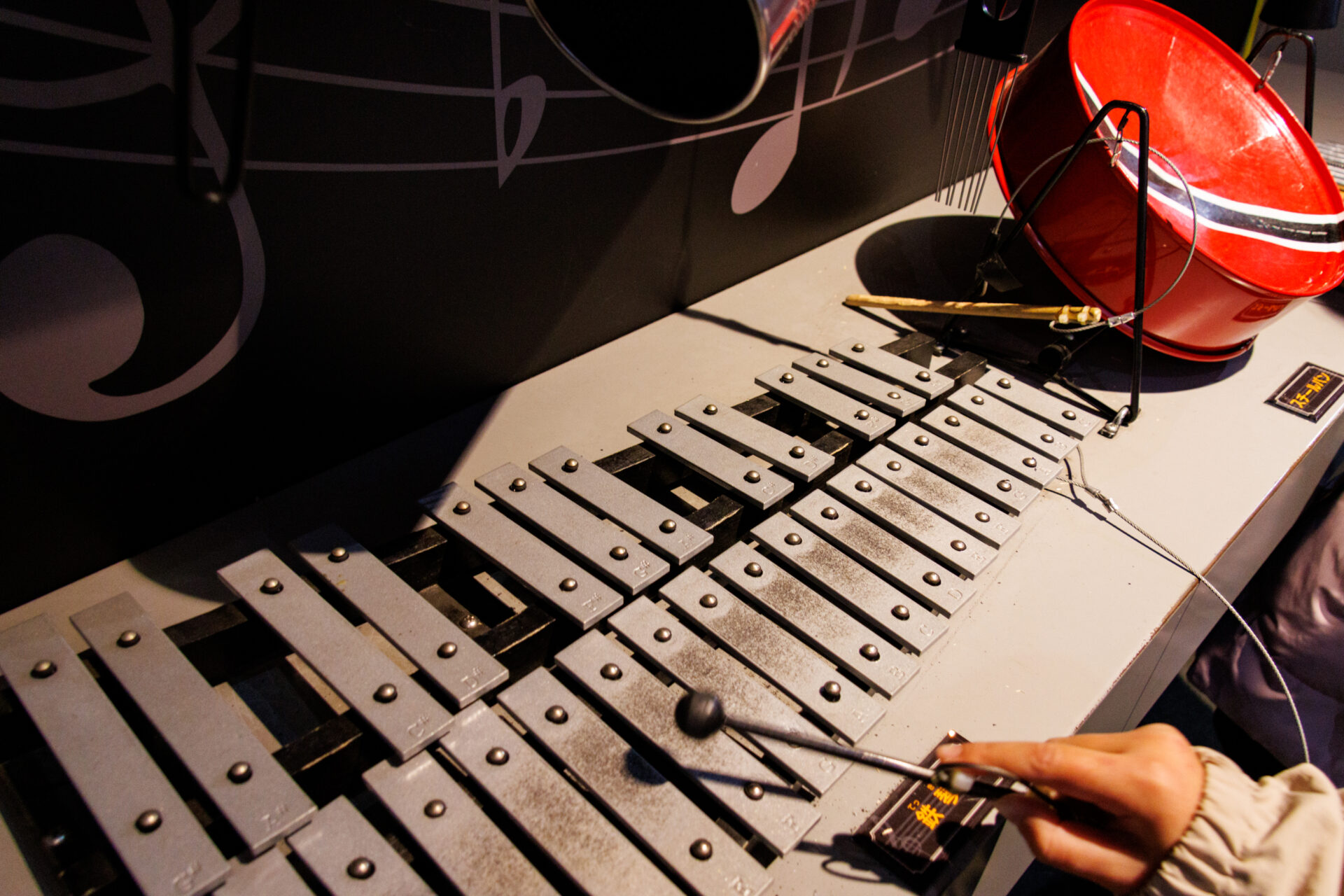
This science museum is dedicated to iron. It introduces the enormous steelworks, which covers an area equivalent to 240 Tokyo Domes, and uses photos and models to clearly explain how iron is made.
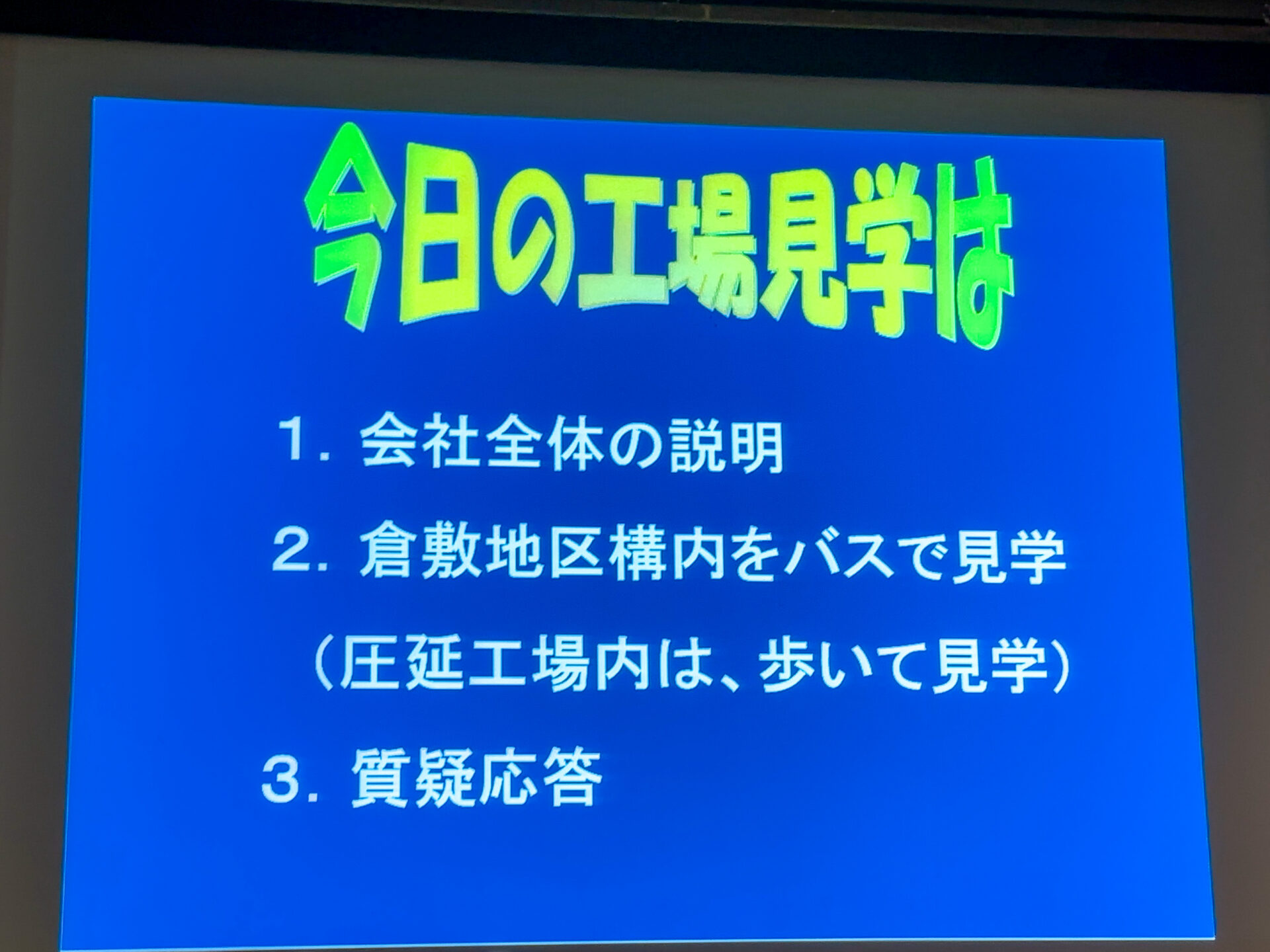
At 9:30 a.m., the tour’s start time, we first listened to an explanation about the factory in the hall.
The official name of this steelworks is “JFE Steel Corporation West Japan Works (Kurashiki District).”
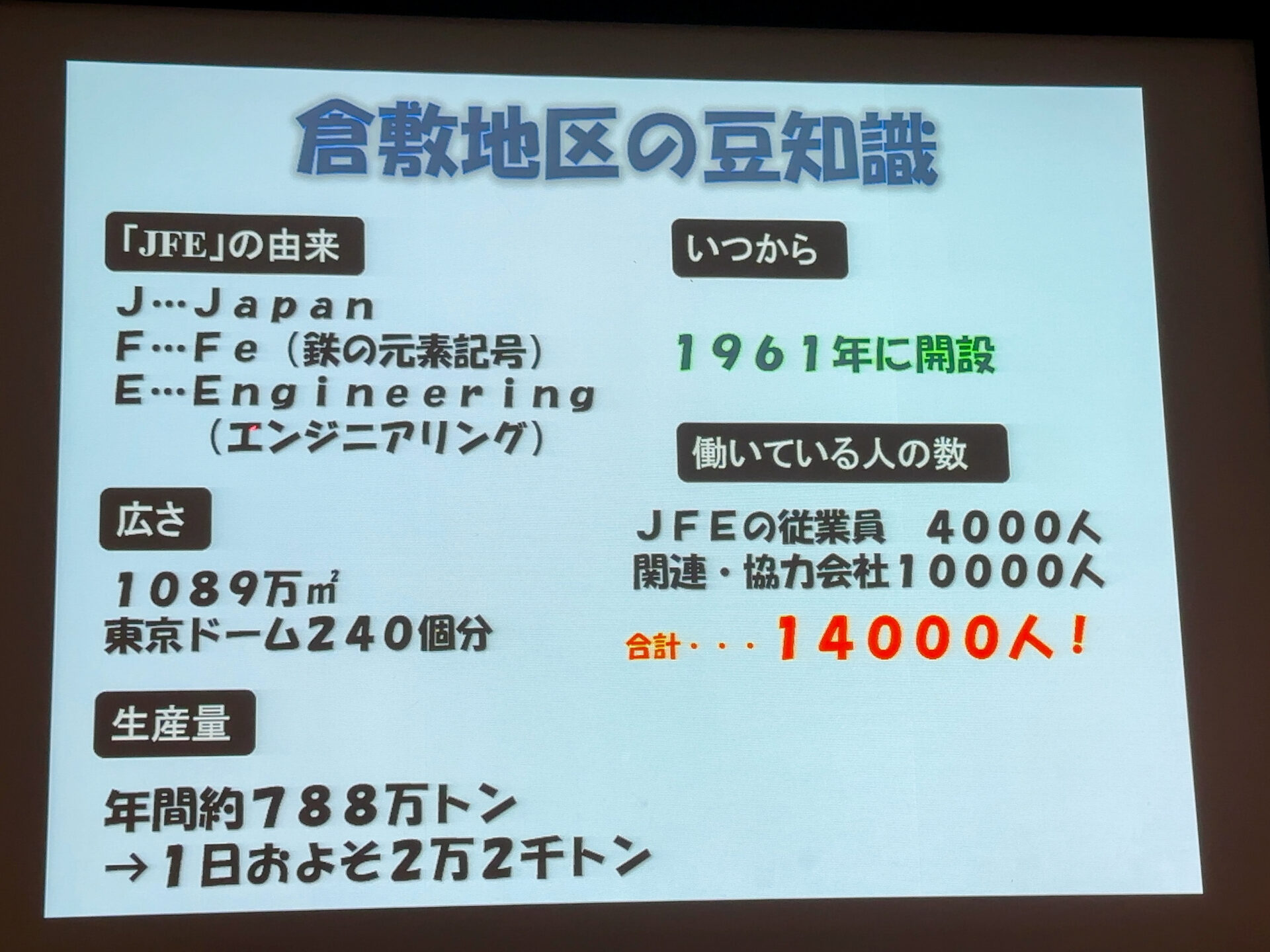
The steelworks traces its roots to the Mizushima Works of Kawasaki Steel Corporation, which began operations here in 1961. In 2003, it merged with Nippon Kokan Corporation’s Fukuyama Works, and the Mizushima and Fukuyama sites have since been operated together as a single steelworks.
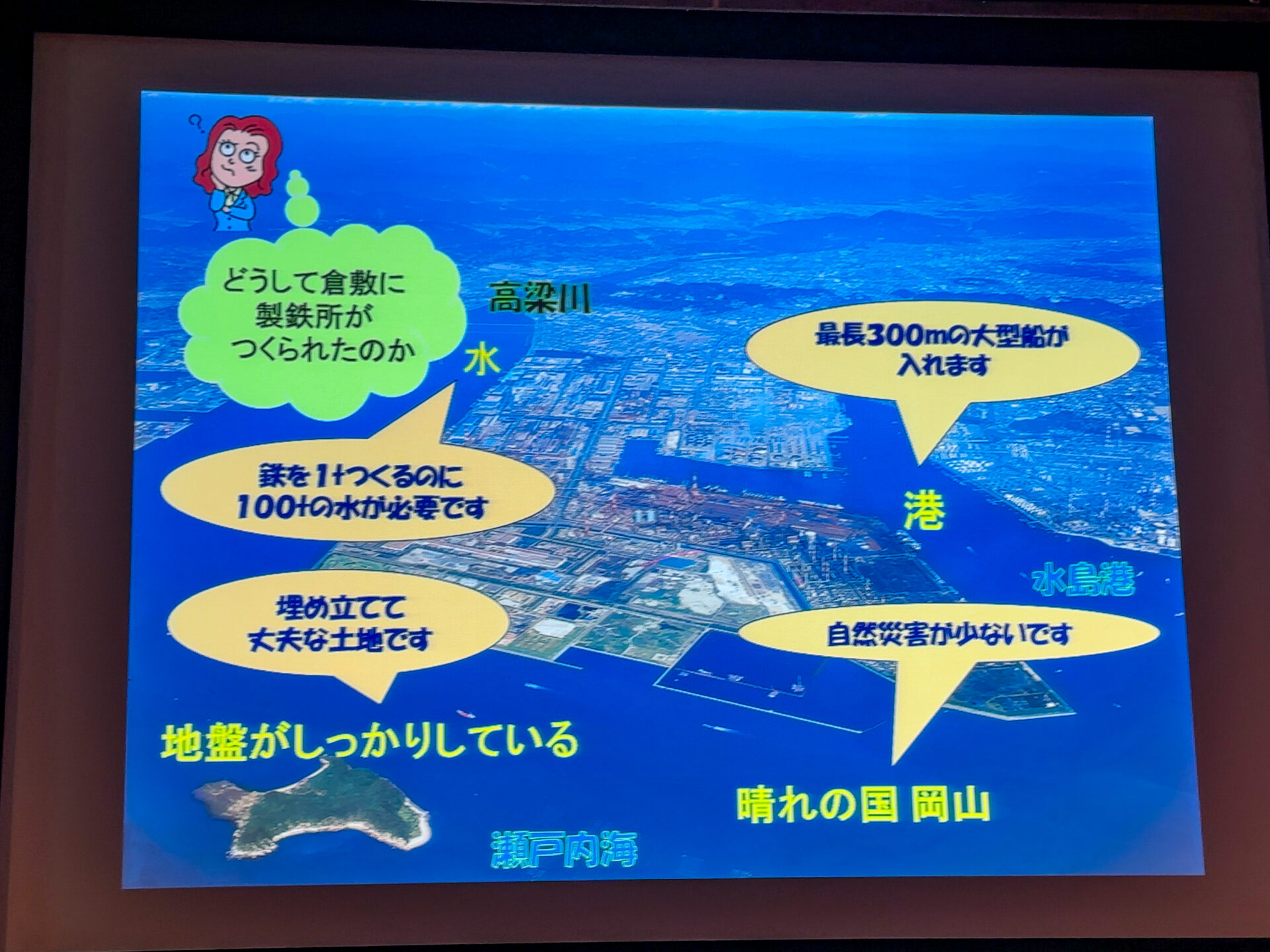
We were told that Mizushima was chosen as the site for the steelworks because of the abundant water from the Takahashi River, a harbor that can accommodate large ships, extensive reclaimed land, and a favorable climate.
As for the factory layout, the process flows from south to north, turning raw materials into finished products.
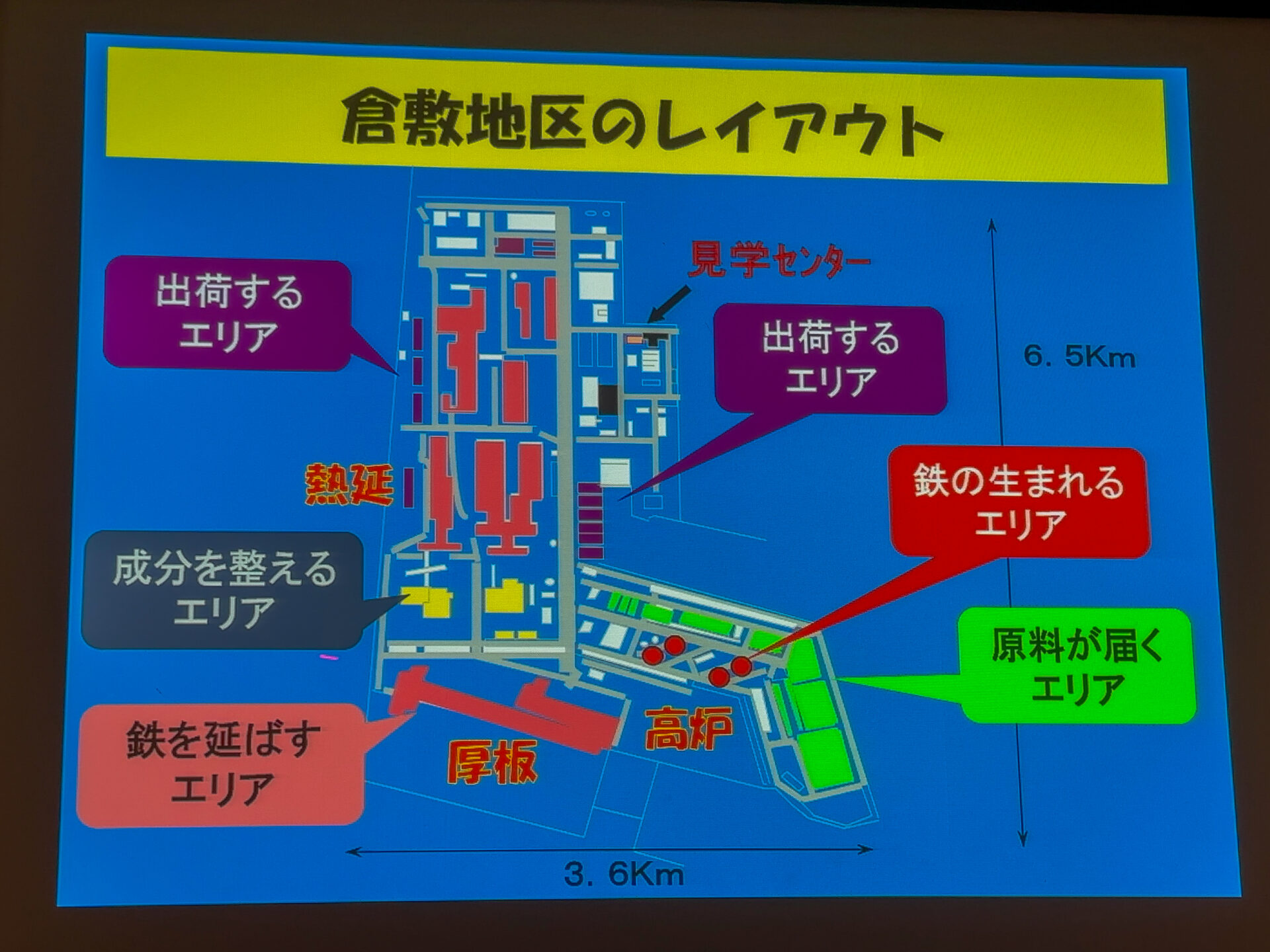
On this tour, we were taken by bus around the vast factory, mainly visiting the areas where iron is made and where it is rolled.
Plate Mill
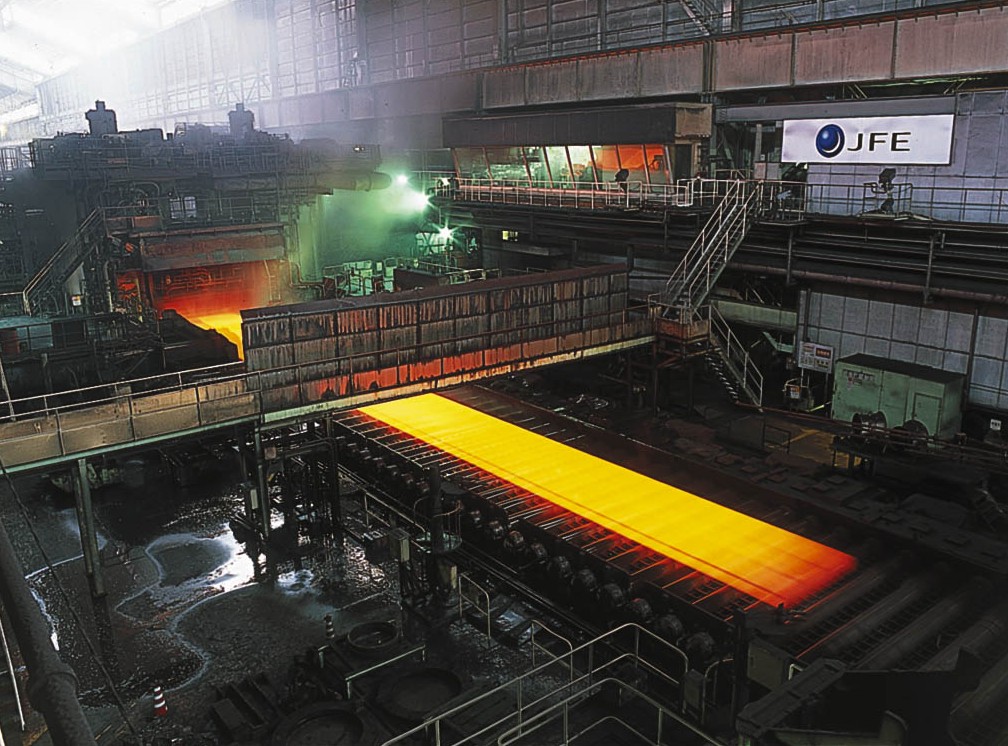
The highlight of the factory tour.
We got off the bus and walked along the factory’s viewing walkway, watching up close as heated blocks of iron were rolled (a process in which rollers stretch the blocks) into plates.
Although the factory is enormous, all operations are controlled from the control room, so there are no people on the production line at all.
The children were fascinated as the blocks of iron quickly turned into plates.
The thick plates made at this factory are mainly used as materials for large structures such as ships and bridges.
Blast Furnace
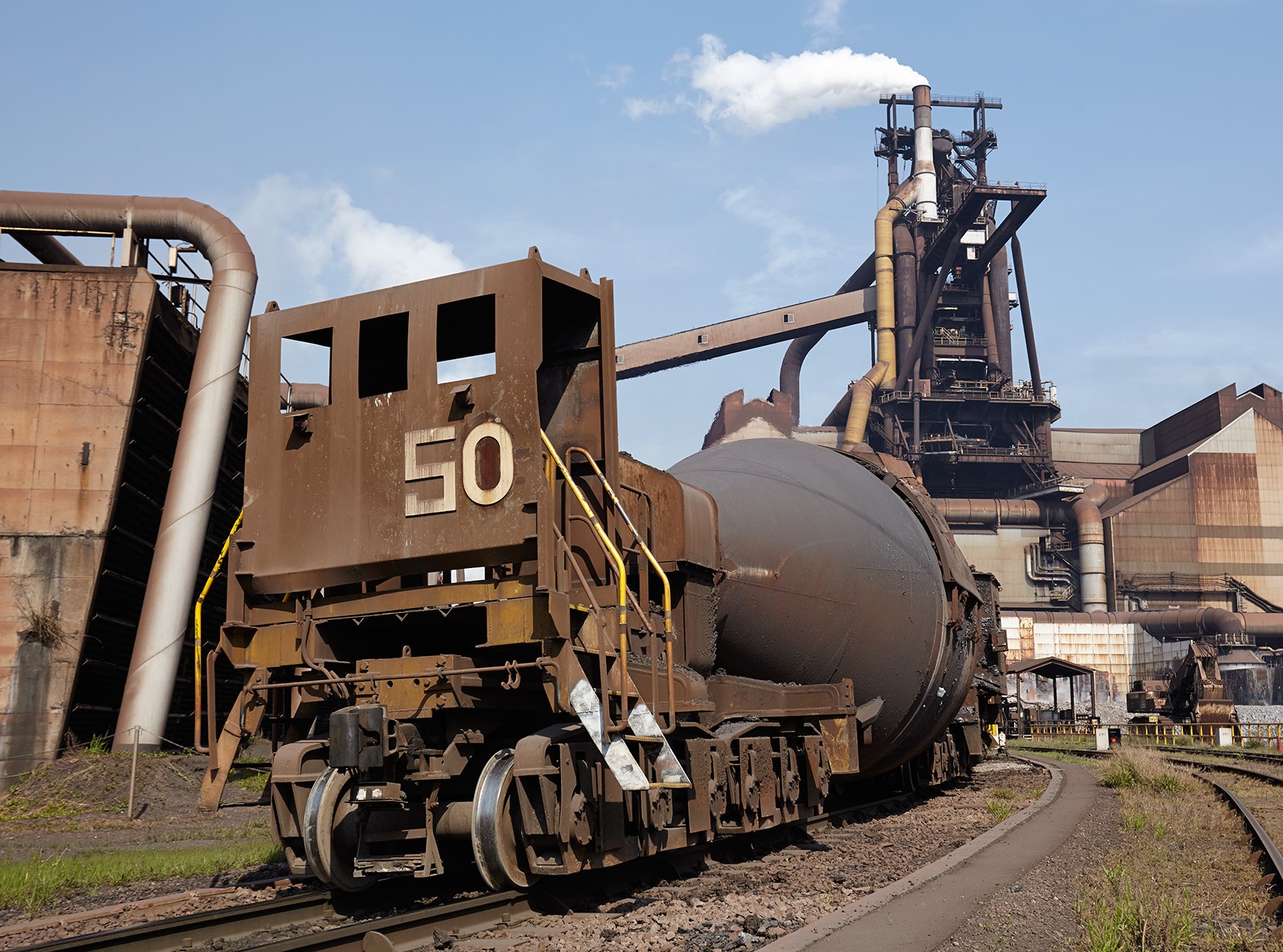
A blast furnace is equipment used to melt iron ore and extract iron. Its tower-like form is said to be a symbol of a steelworks.
During the tour, we watched from inside the bus as iron was actually tapped from the furnace.
The pig iron extracted here contains a lot of carbon, making it extremely brittle, so it cannot be used as a product in its raw state.
It is loaded while still molten into a railcar shaped like a rugby ball (a torpedo car) and transported to the next stage, where it is made into the hard, strong iron we use every day.
Steelmakers with blast furnaces as part of their facilities are called “integrated steelmakers.” As consolidation has progressed, only three companies remain in Japan today, including JFE Steel.
Mizushima Eco Works
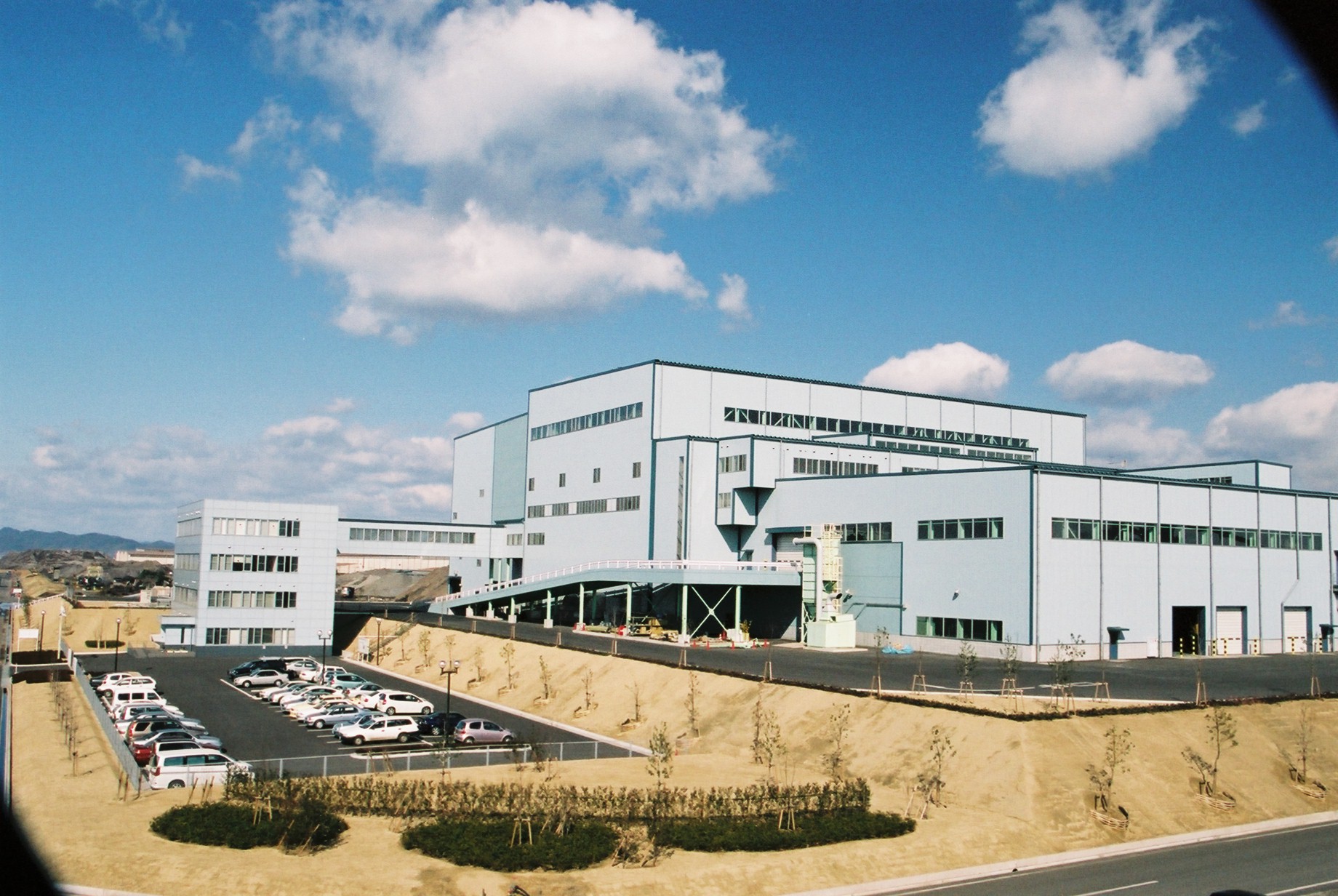
Mizushima Eco Works is a waste treatment facility inside the steelworks, which we viewed from the bus.
It works to recycle waste, including exhaust gases, and its most distinctive feature is that it has no chimney, unlike a typical incineration plant.
In addition to business waste from the Mizushima Industrial Complex, it also accepts general waste from Kurashiki City, so I imagine it is a facility that serves us without our even realizing it.
The facility also reportedly played an important role in processing disaster waste during the heavy rains of July 2018.
From the Writer
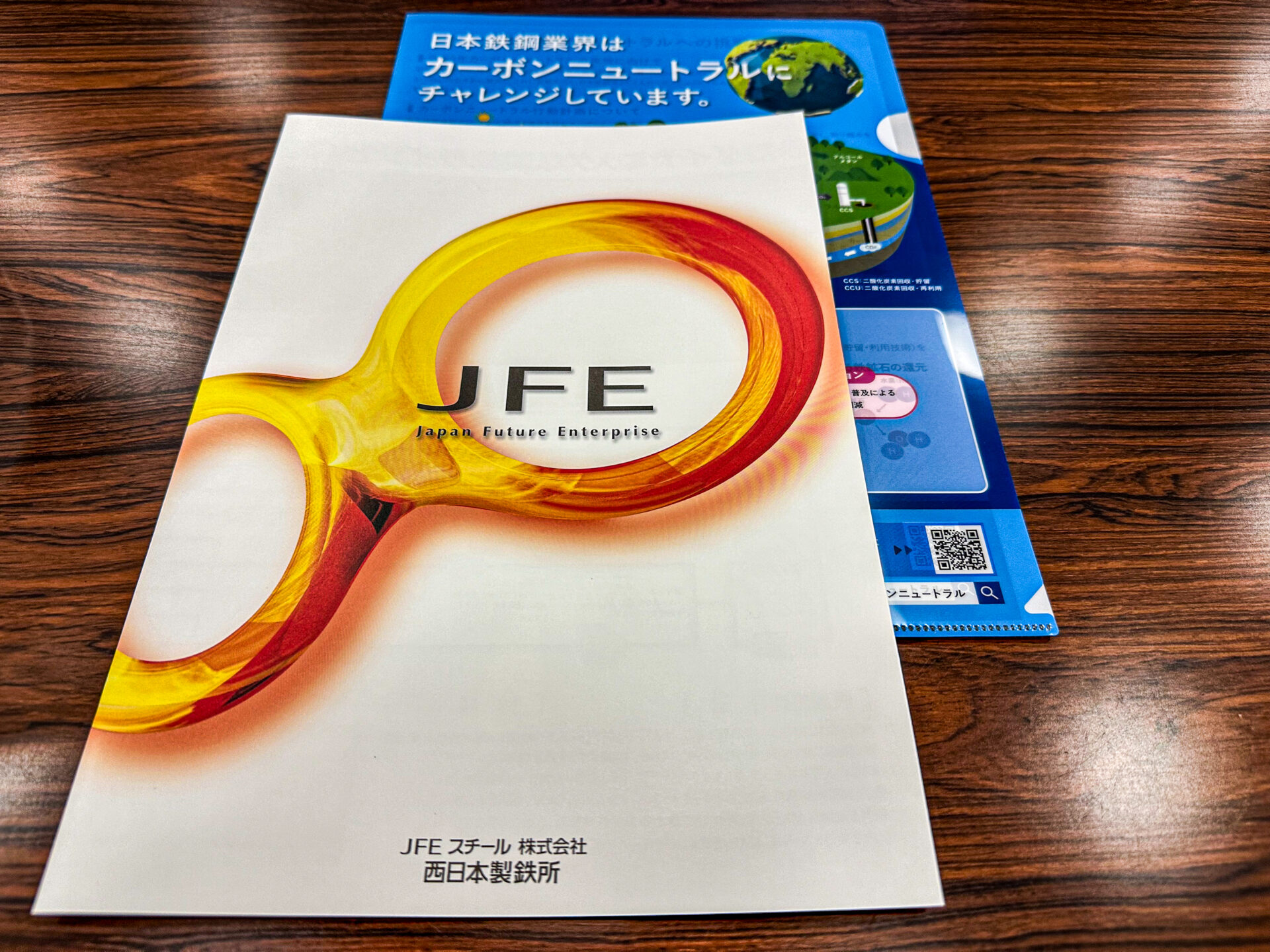
It had been quite a while since I last toured a steelworks, having visited one on a school trip in elementary school. As I went around, though, memories from back then came flooding back.
I think I also gained a lot of insights as someone who currently works in manufacturing.
With the recent trend toward decarbonization, I got the impression that steelworks, too, are entering an era of transformation.
For example, electrical steel sheet is used in EV (electric vehicle) motors, and demand for it is expected to grow. A new factory was being added to increase production.
On the other hand, from the perspective of reducing carbon emissions, the company has announced plans to idle one of its three blast furnaces and convert it to an electric furnace.
I thought it was characteristic of a steelworks, which emits large amounts of carbon dioxide compared with other manufacturing industries, that its efforts toward the SDGs (Sustainable Development Goals) are directly reflected in company policy.
JFE Steel also holds tours during long school holidays, so if you’re interested in taking part, be sure to check them out. They’re also a great subject for a school journal.
JFE Steel Winter Holiday Factory Tour Information
| Name | JFE Steel Winter Holiday Factory Tour |
|---|---|
| Date | December 26 (Tuesday) and 27 (Wednesday), 2023 9:30 a.m.–11:30 a.m., 2:00 p.m.–4:00 p.m. |
| Location | Visitor Center, West Japan Works (Kurashiki District) |
| Admission (tax included) | Free admission |
| Website | JFE Steel Corporation, West Japan Works |



What would you like to know about Kurashiki?
Enter a word to search articles on this site




































