There are three first-class rivers flowing in Okayama Prefecture. One of them is the "Takahashi River."
Originating from Hanamiyama (elevation 1,188m: Niimi City), Niimi City is conducting forest management to enhance the water source conservation and sediment runoff prevention functions of the forests that support the rich water environment of the Takahashi River.
Japan Tobacco Inc. (hereinafter referred to as "JT") is collaborating with Niimi City on forest conservation activities at "JT's Forest in Koigakubo, Niimi," which will also take place in the fall of 2024.
The Kurashiki Tocotoco editorial team (Haretoco General Incorporated Association) participated in this activity in 2022 and 2023.
And, since we were given the opportunity to participate again, we will introduce the " JT's Forest in Koigakubo, Niimi: Fall 2024 Forest Conservation Activity" held on September 21, 2024 (Saturday).
What is "JT's Forest in Koigakubo, Niimi"
The JT Group, which conducts business activities centered on tobacco, pharmaceuticals, and processed foods, utilizes natural materials derived from plants such as leaf tobacco, paper, and vegetables in its operations.
As part of its environmental conservation efforts, the forest conservation activities are referred to as "JT's Forest," and as of 2024, activities are ongoing in nine locations nationwide.
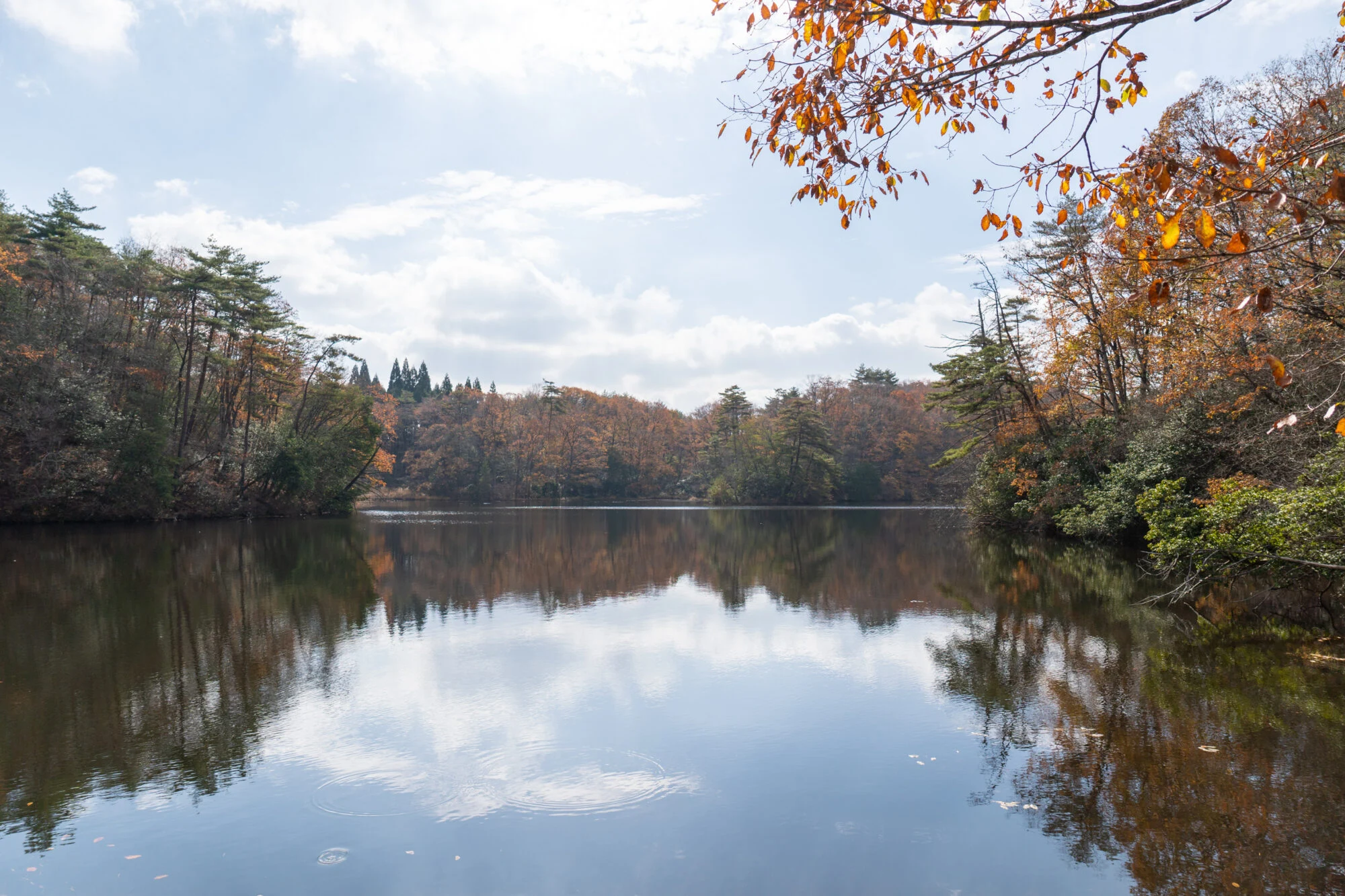
In Okayama Prefecture, there is " JT's Forest in Koigakubo, Niimi," which conducts forest conservation activities centered around the Koigakubo Wetland.
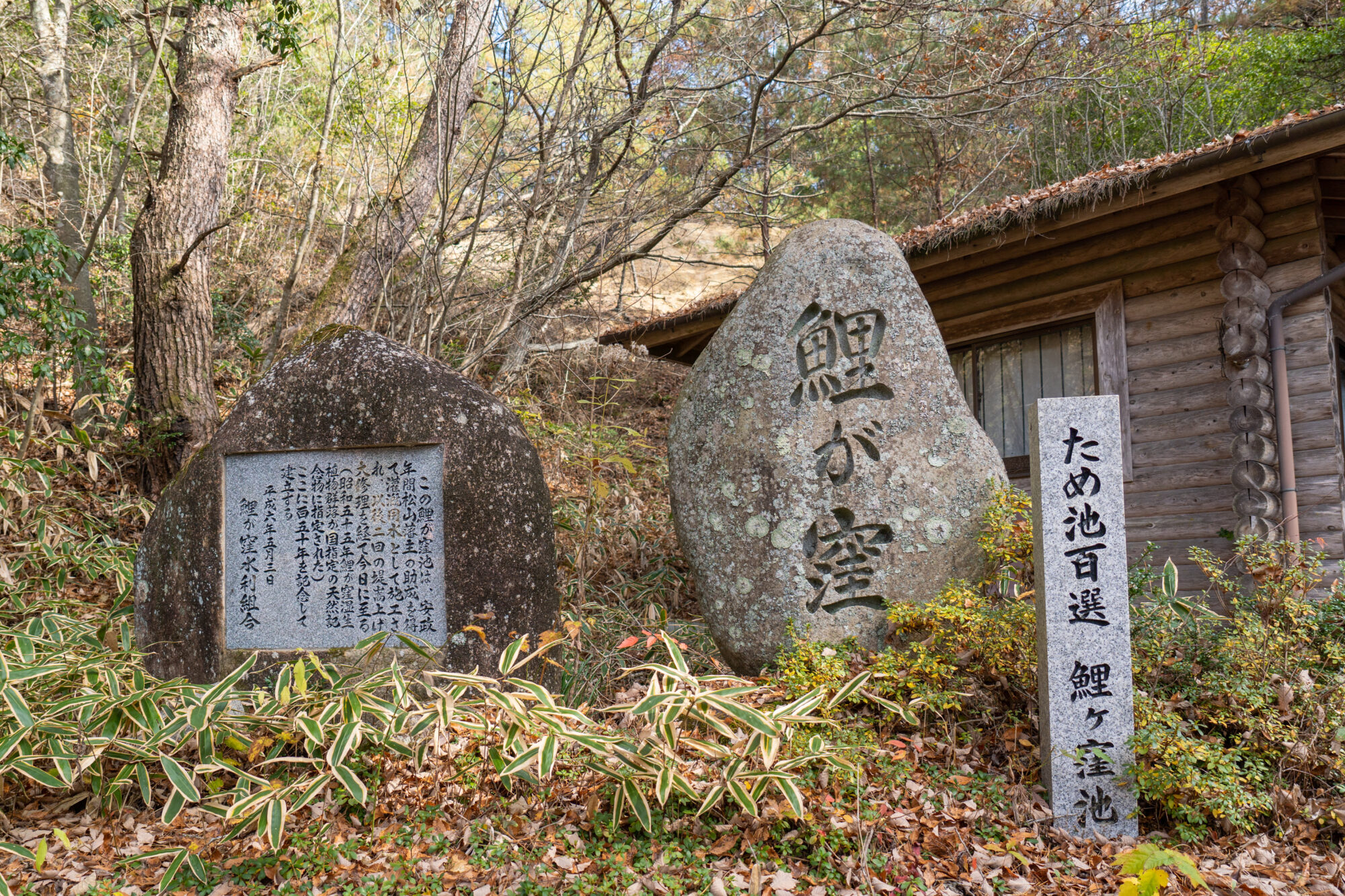
Koigakubo Wetland
It is a region where over 300 species of plants, including Ogura-senno, grow naturally, and it was designated as a natural monument of Japan on March 6, 1980, as the "Koigakubo Wetland Plant Community."
"JT's Forest in Koigakubo, Niimi" has been conducting forest conservation activities in collaboration with Niimi City for about six years since November 2016, utilizing the "Forest Creation Project in Collaboration with Companies" promoted by Okayama Prefecture.
The activities are divided into the first phase starting in 2016 and the second phase starting in 2022, which changed the target forest area, and the fall 2024 forest conservation activity was conducted as the third activity of the second phase.

Contents of the Fall 2024 Forest Conservation Activity
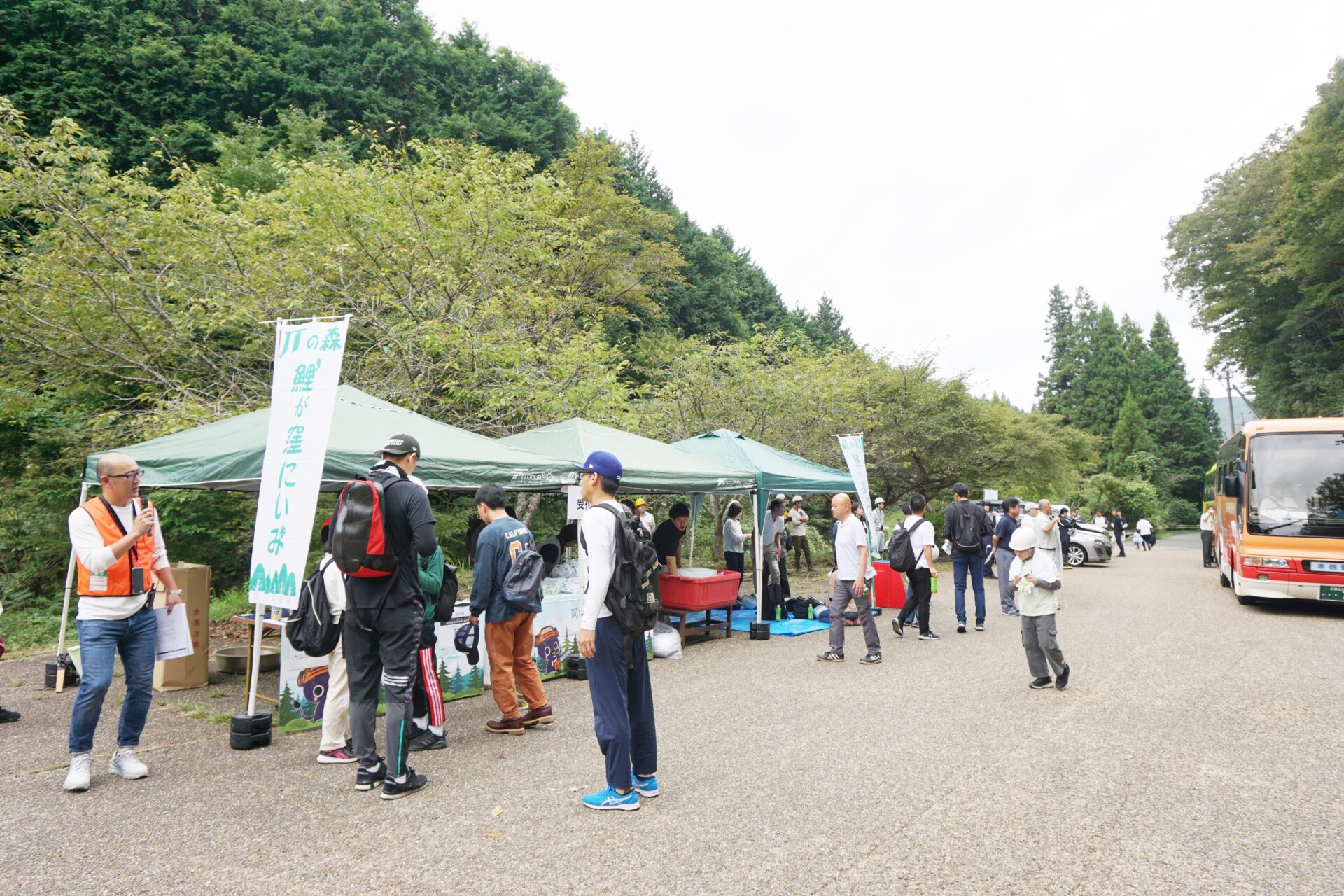
The fall 2024 forest conservation activity was conducted with the main focus on "Underbrush Cutting in Low-Pollen Cedar Model Forest" following the flow below.
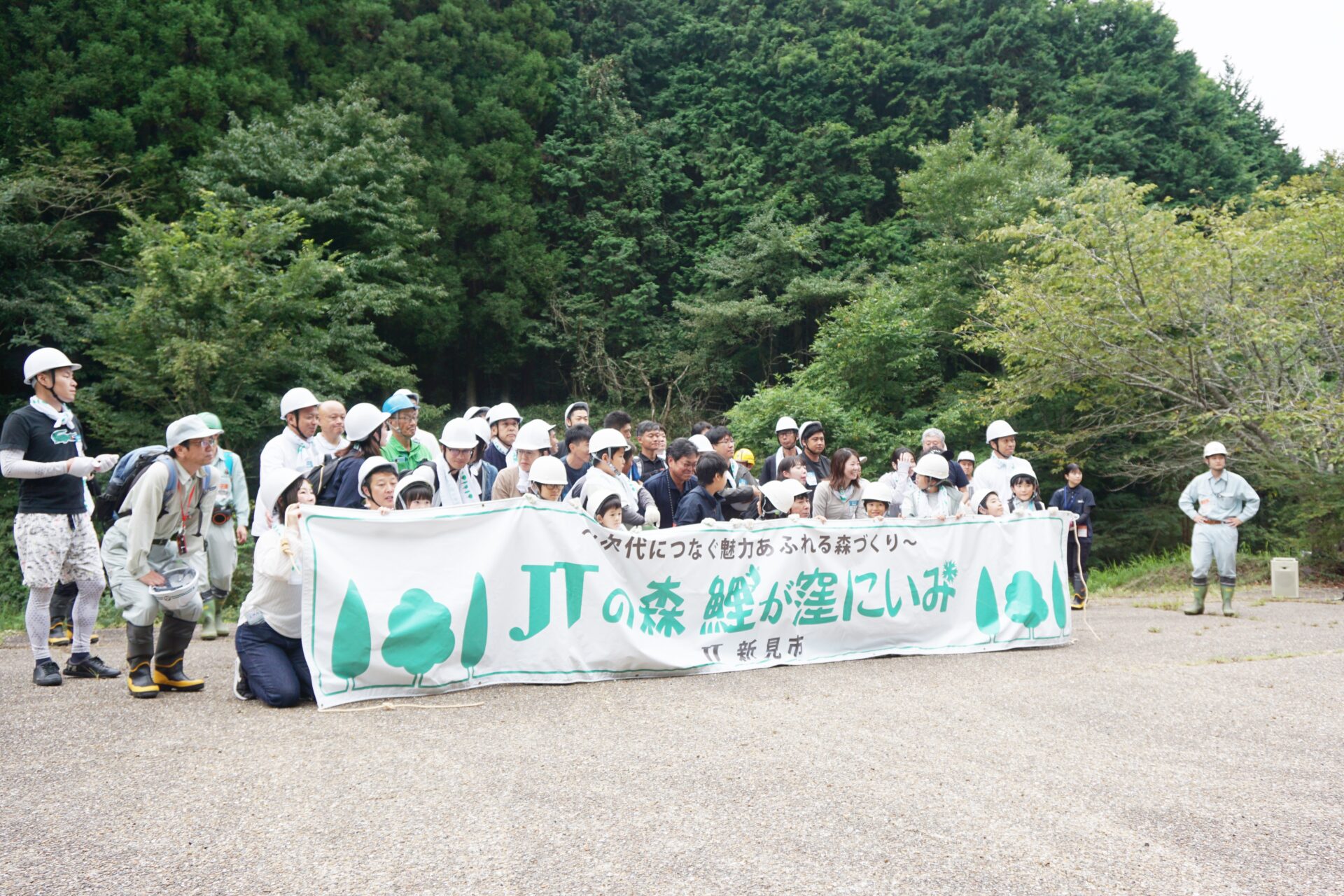
- Opening Ceremony (Greetings from the Organizer / Commemorative Photo)
- Forest Conservation Activity (Underbrush Cutting in Low-Pollen Cedar Model Forest)
- Lunch
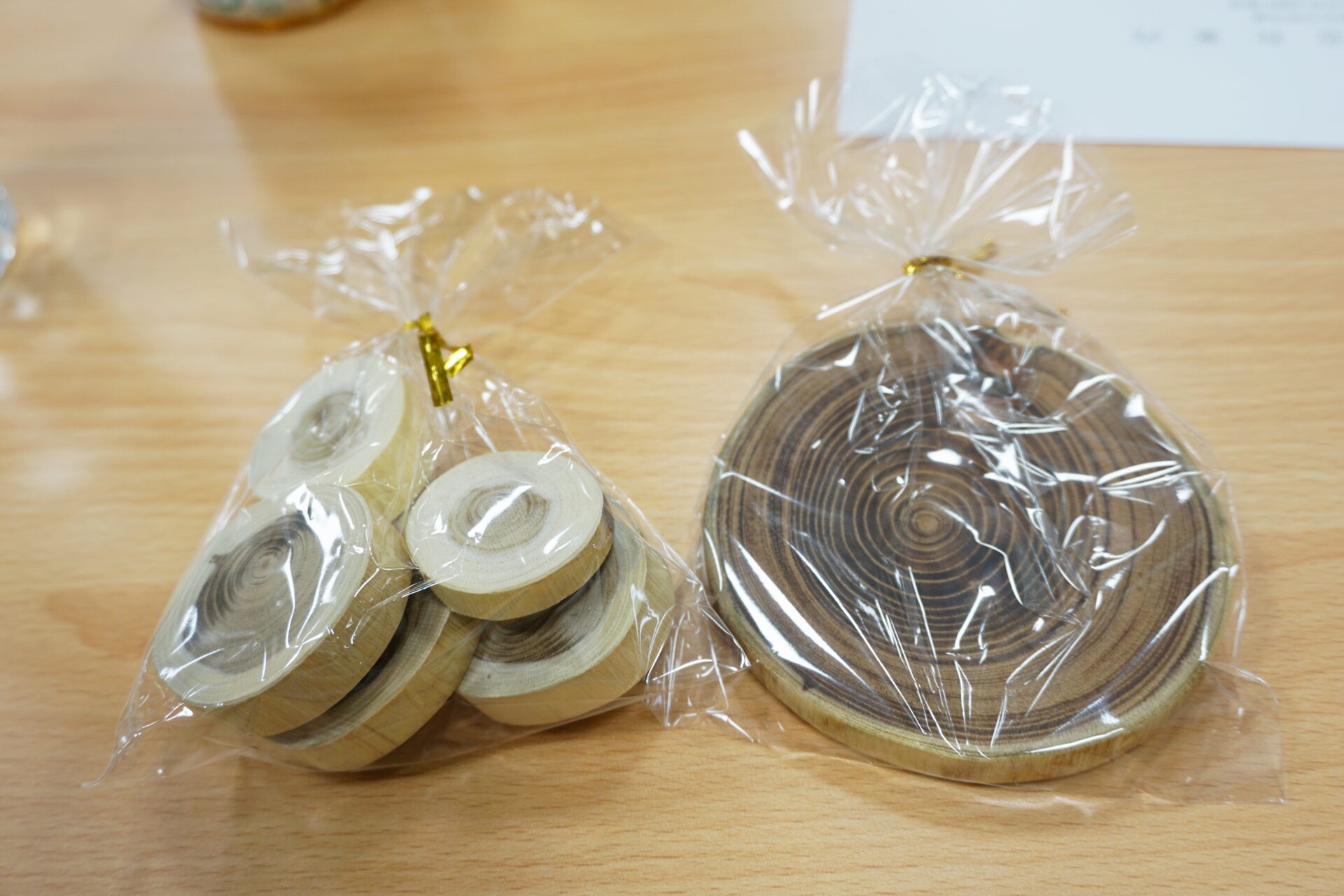
- [Activity] Coaster and Chopstick Making
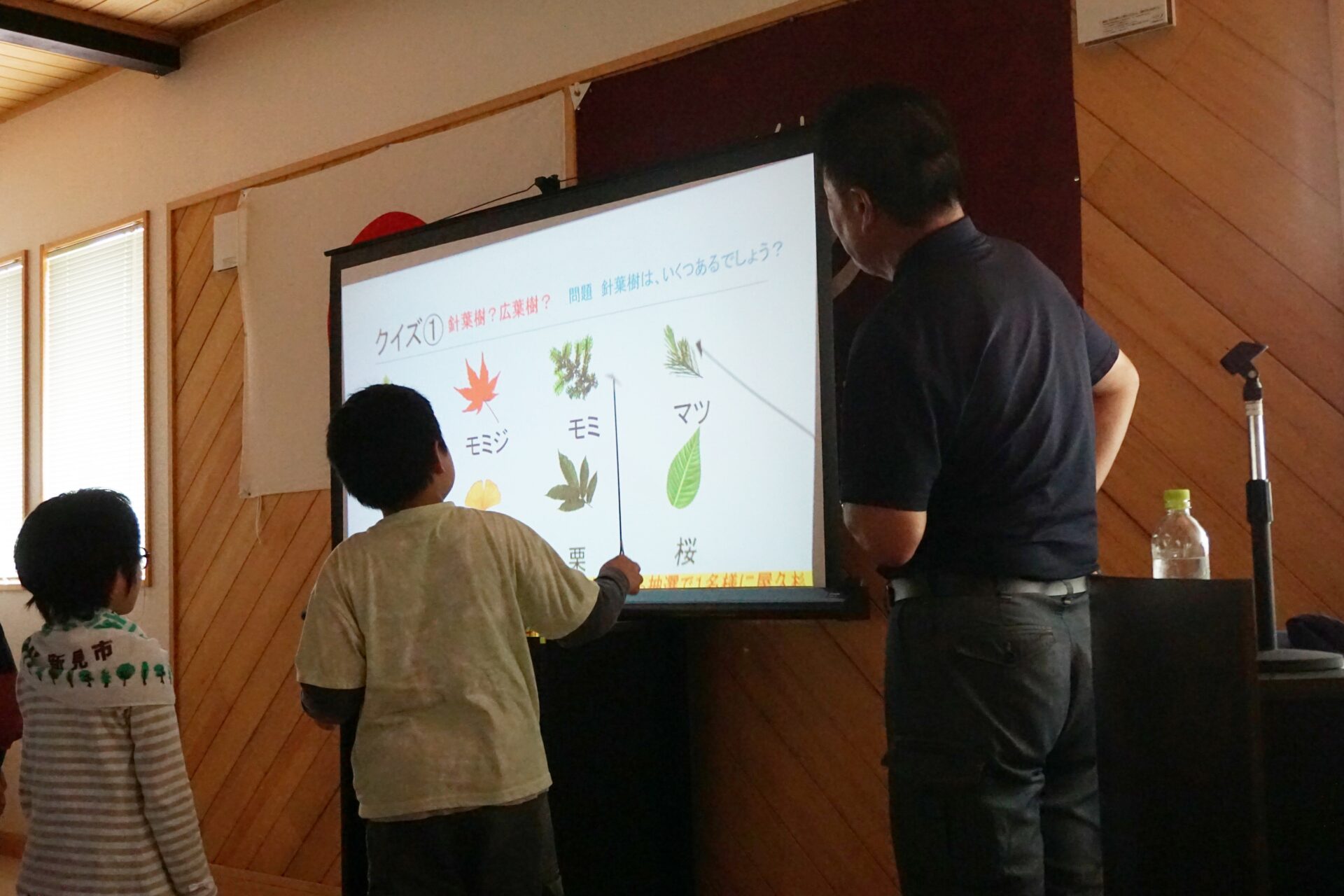
- [Forest Extracurricular Class] Lecture and Tsuyama Comprehensive Timber Market Tour
Items 1 and 2 were morning activities, while items 4 and 5 were afternoon activities.
About 100 participants, including employees of the JT Group centered in Okayama, Hiroshima, and Shimane Prefectures, employees of business partners, and their families, were divided into five groups for the activities.
Opening Ceremony
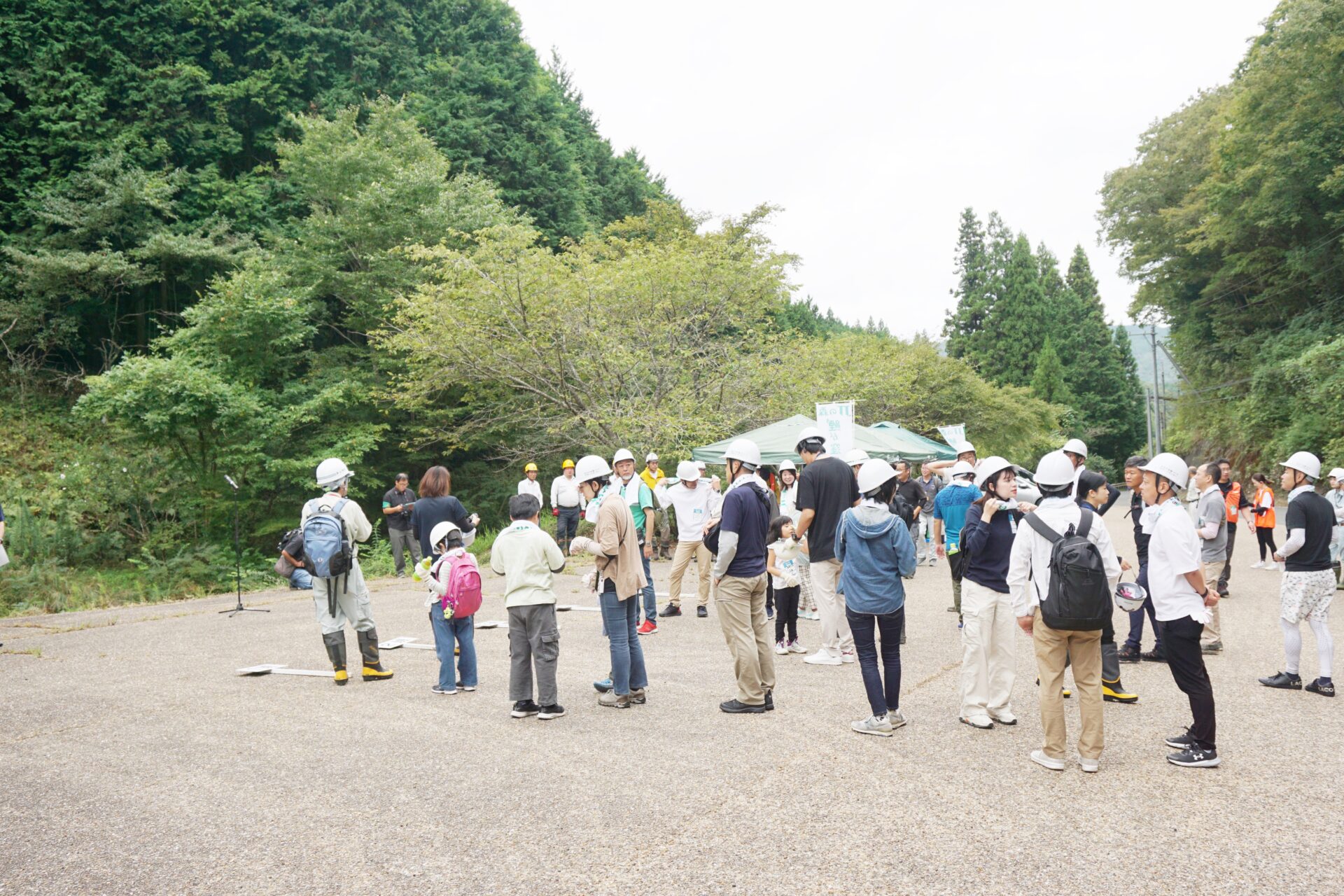
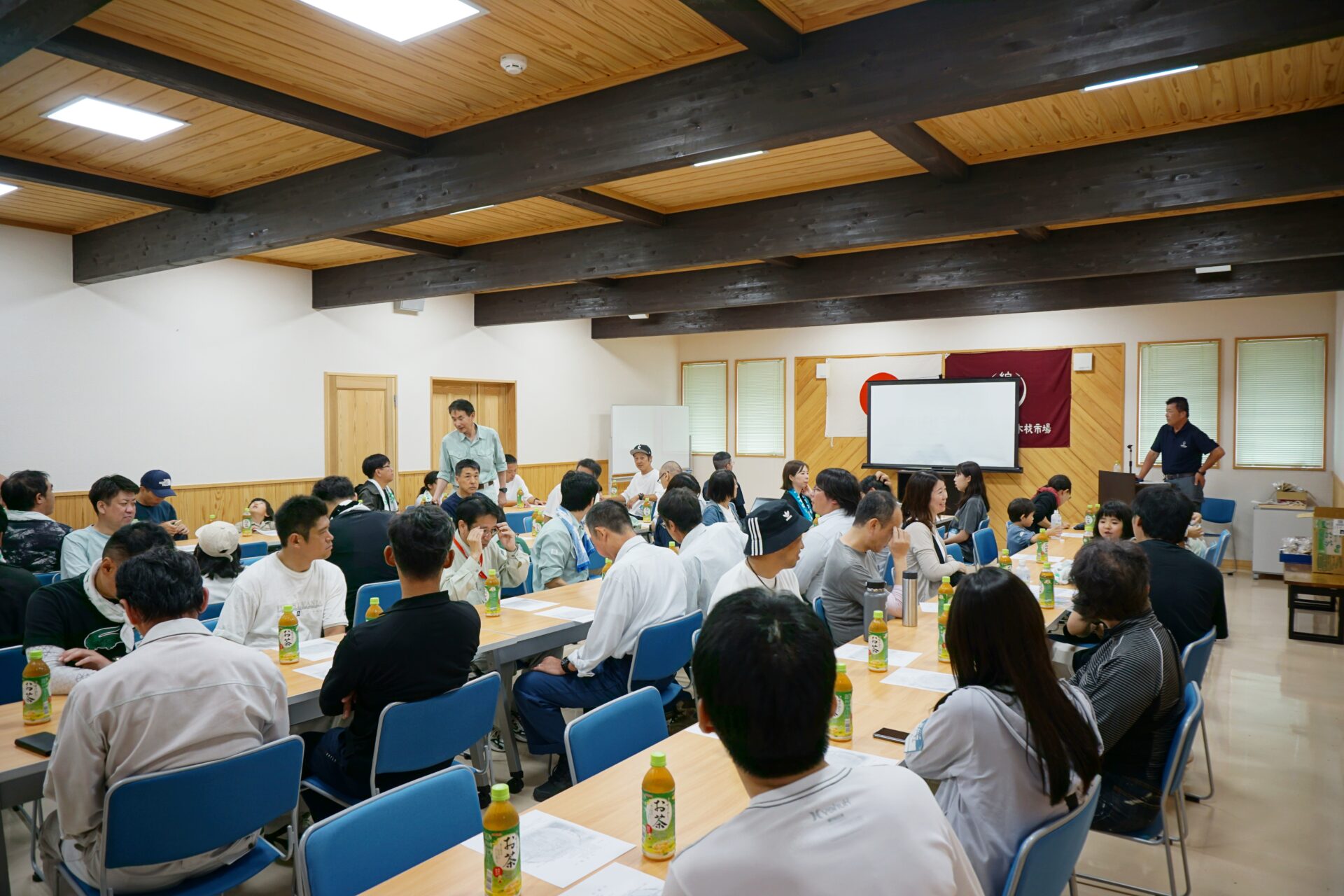
At the opening ceremony, greetings were given in the following order by the guests.
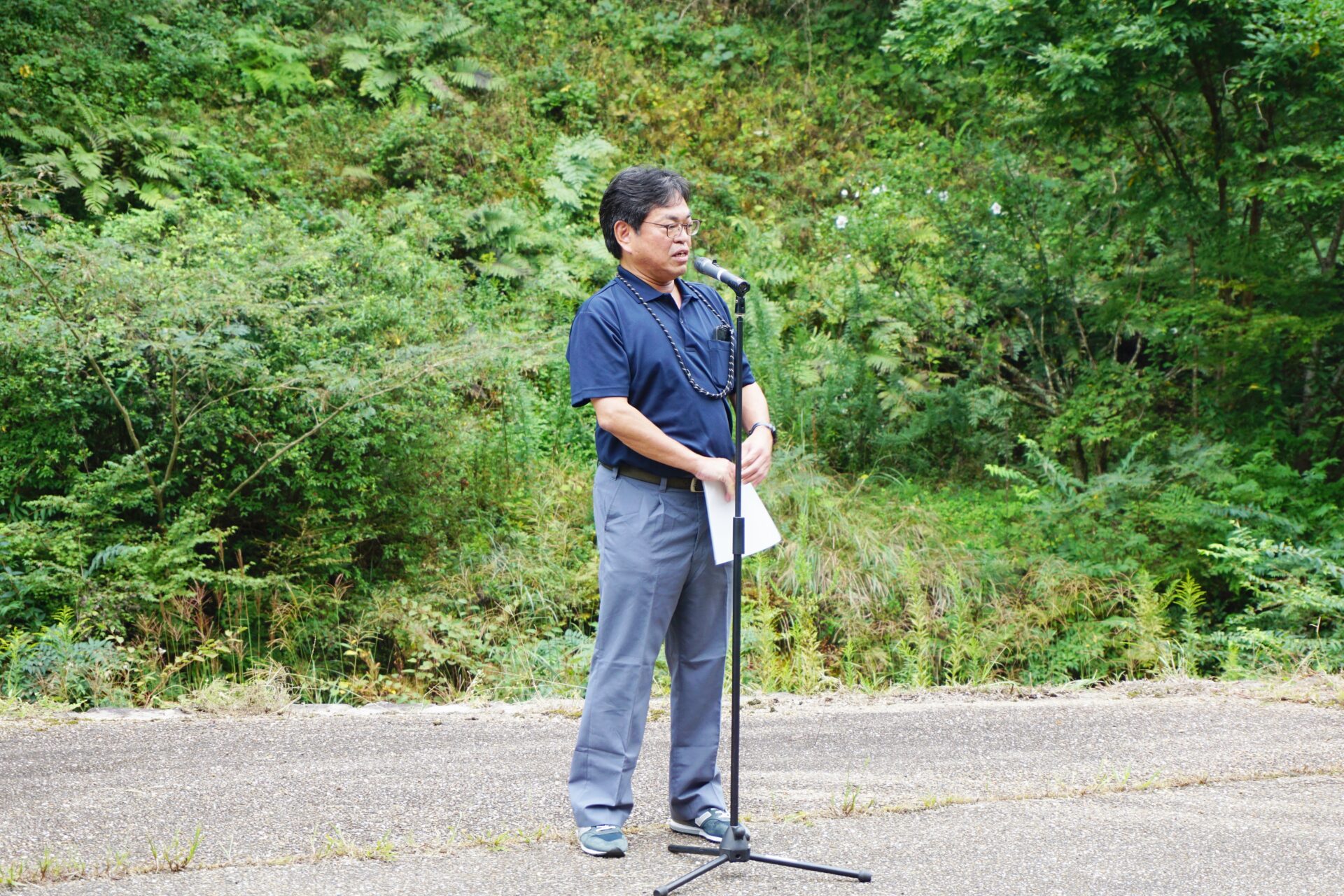
- Kenji Neishi, Vice Mayor of Niimi
- Shuichi Ooshio, President of JT Okayama Branch
- Yuji Mikami, Chairman of the JT's Forest in Koigakubo, Niimi Forest Creation Executive Committee
- Yosuke Ishikura, Vice Chairman of the JT's Forest in Koigakubo, Niimi Forest Creation Executive Committee
After that, there was an introduction of the participating organizations and staff, and the forest conservation activities finally began.
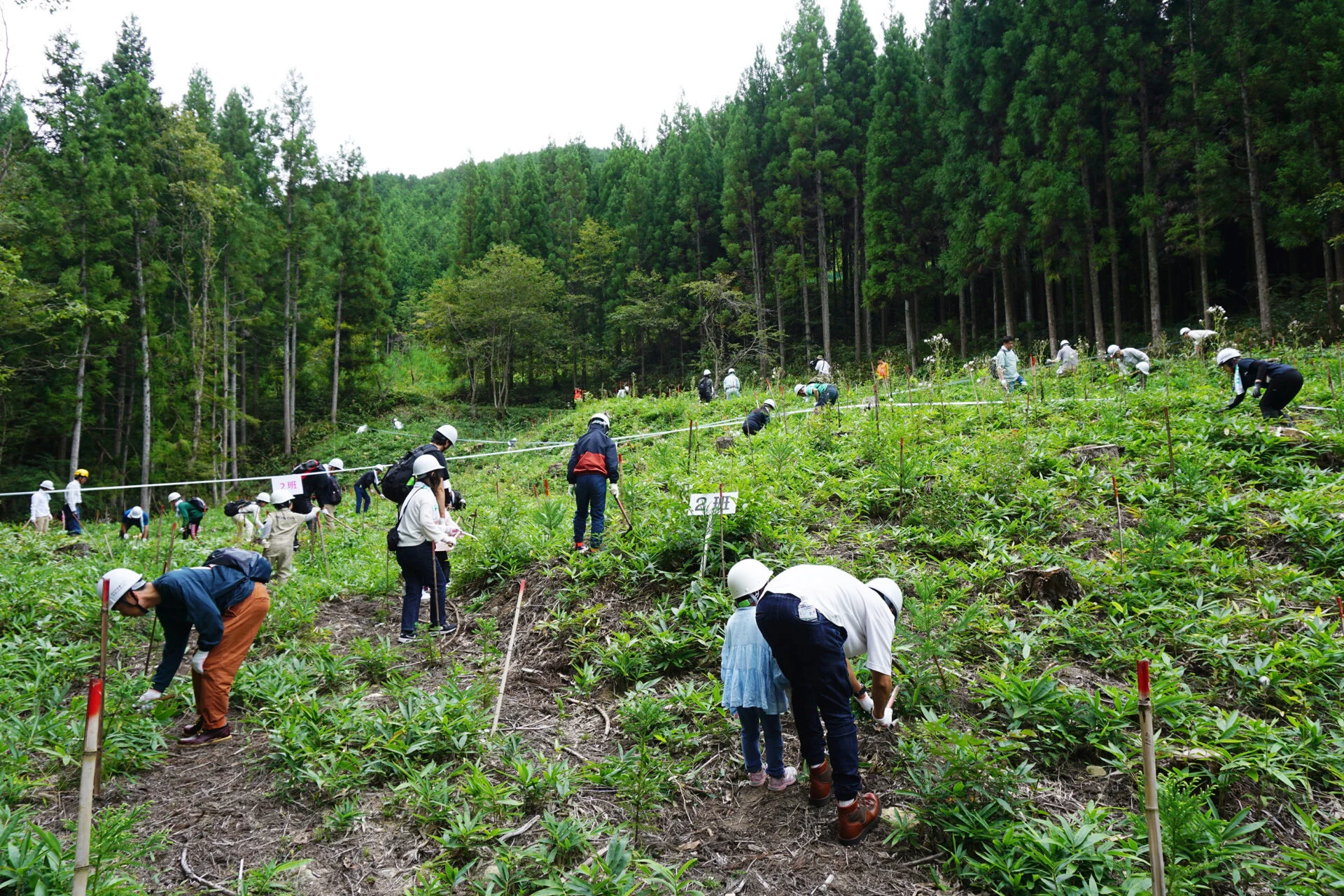
Forest Conservation Activity (Underbrush Cutting in Low-Pollen Cedar Model Forest)
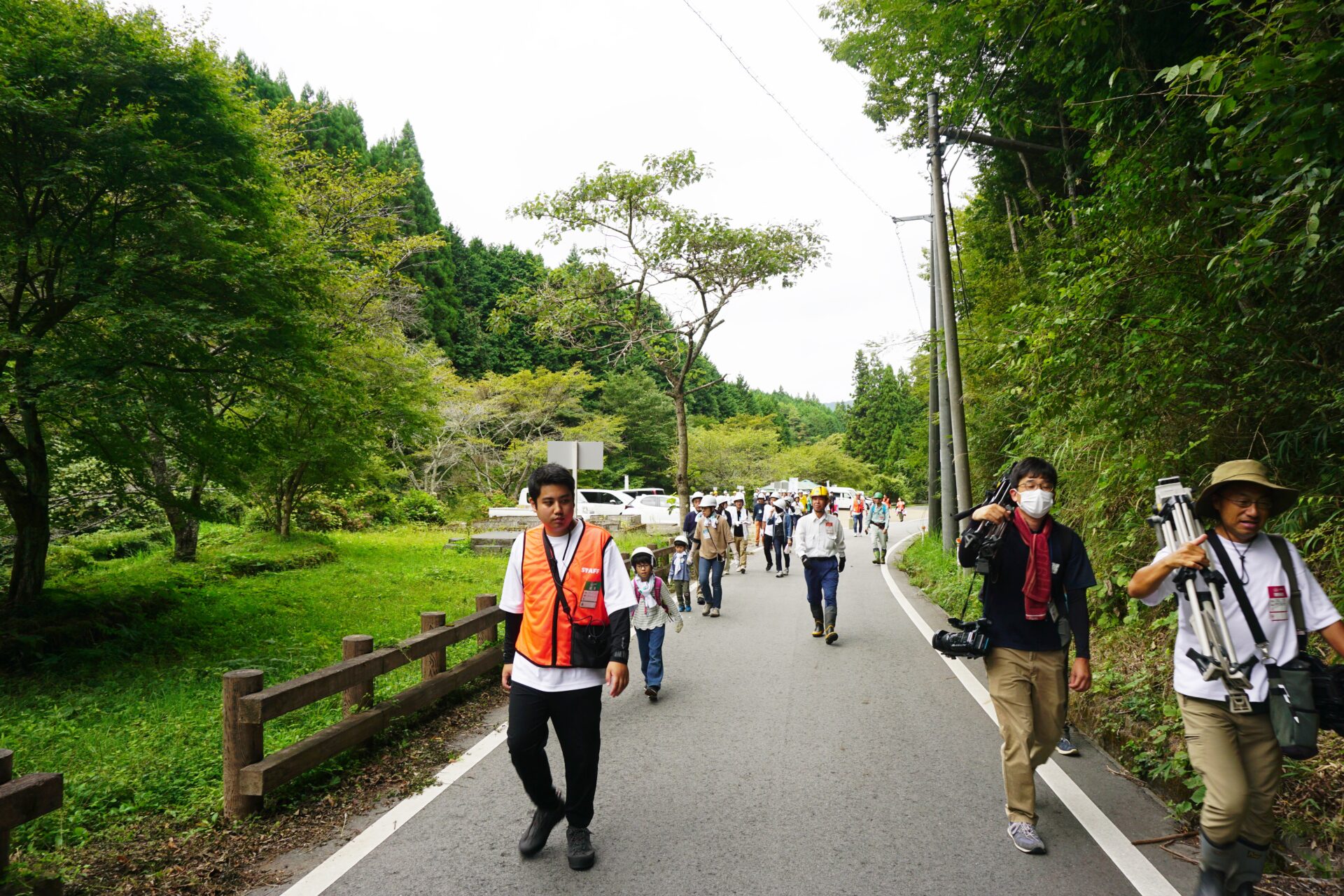
We move to the work site, which is about a 5-minute walk from the opening ceremony venue.
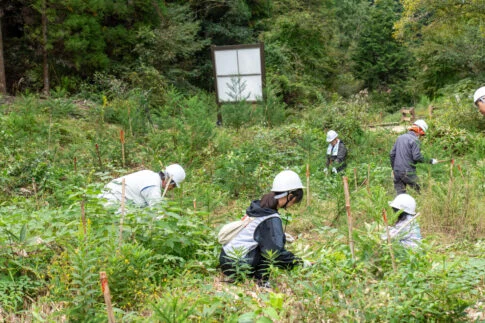
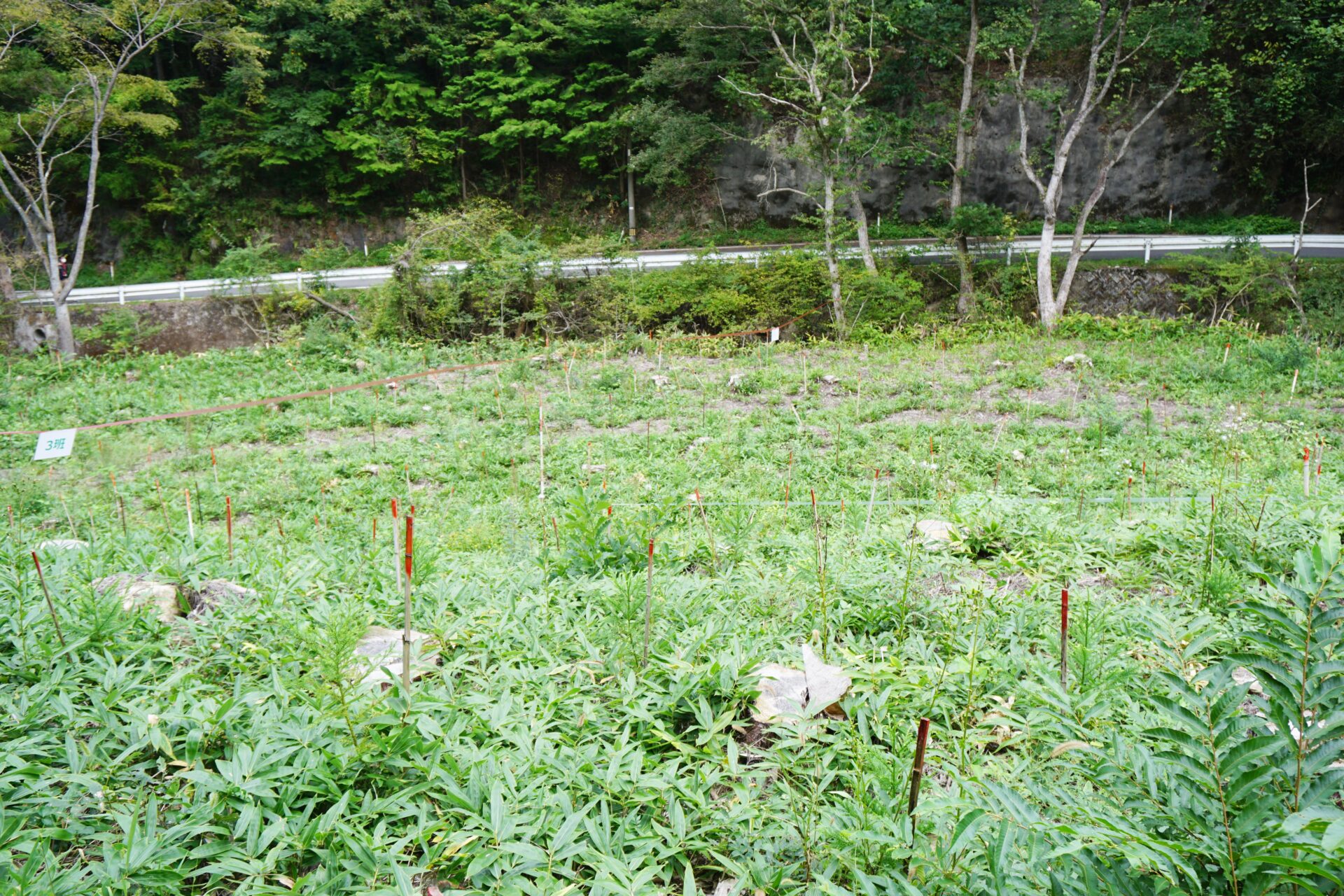
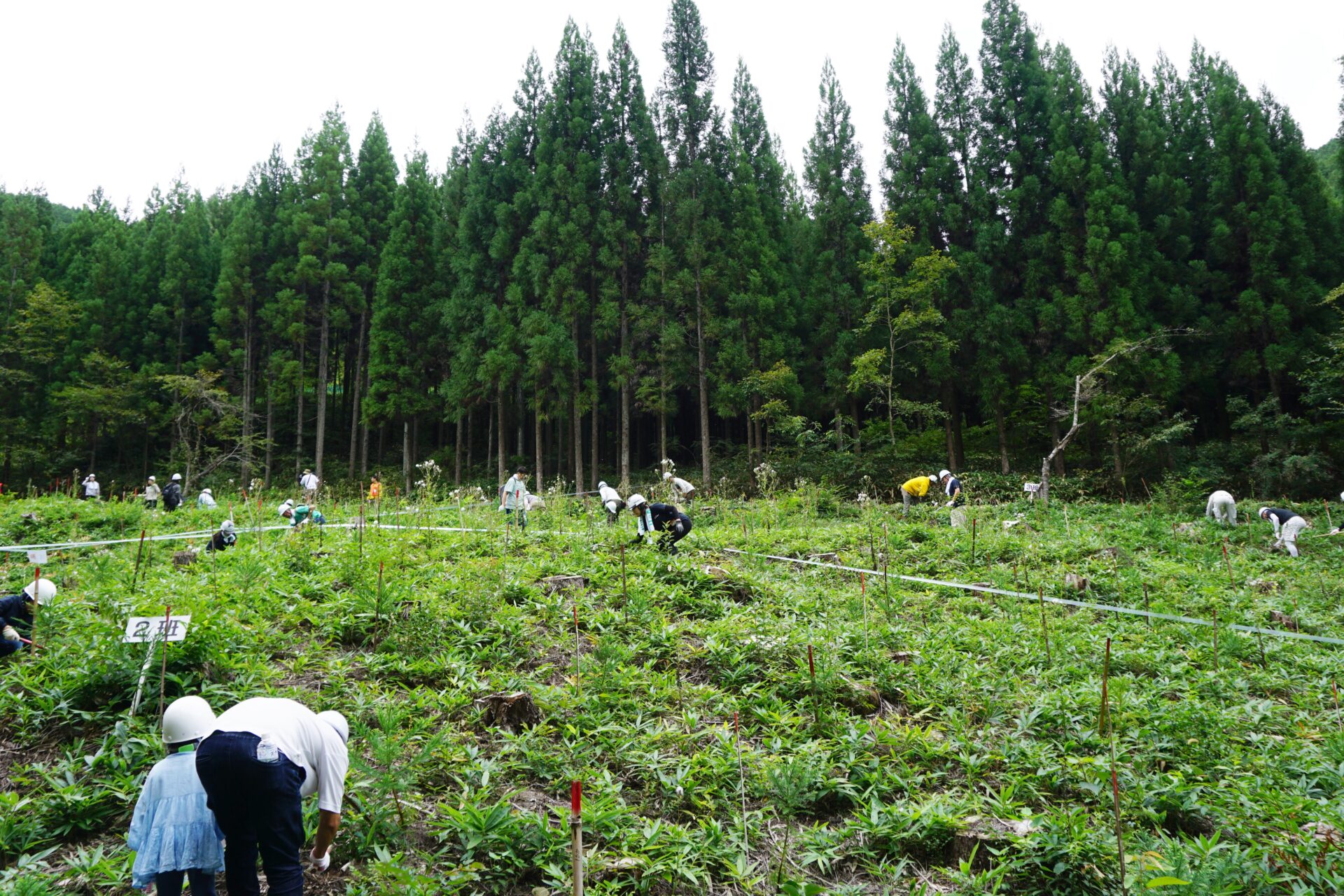
The work site has a grassy atmosphere compared to the surroundings, lacking trees. In another sense, it is a field overgrown with grass.
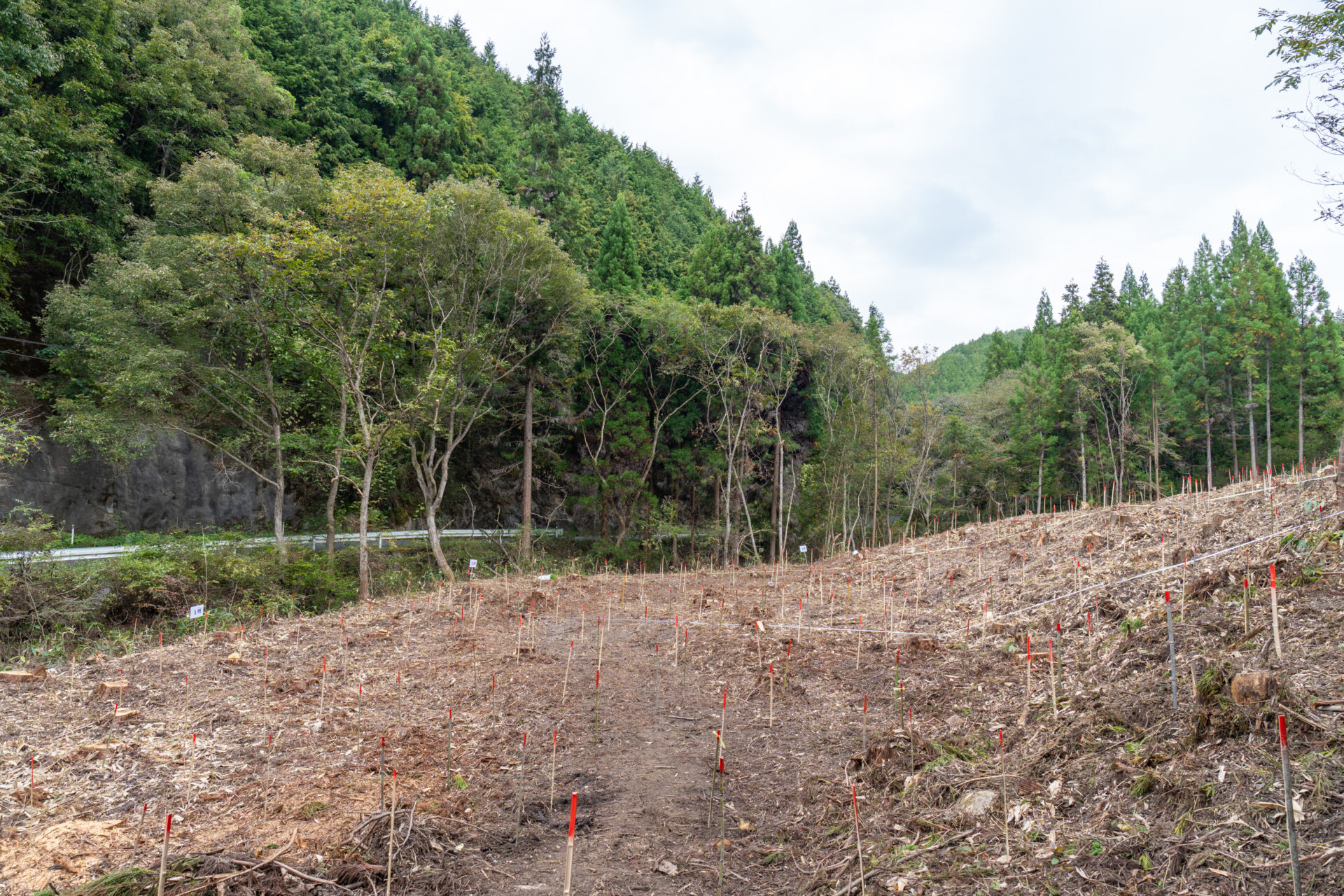
By the way, last year's (2023) forest conservation activity involved "Planting Low-Pollen Cedar," and the work site was in the following condition.
As part of the forest conservation activity, the " underbrush cutting" involves cutting down the overgrown grass (annual plants) with sickles and other tools.
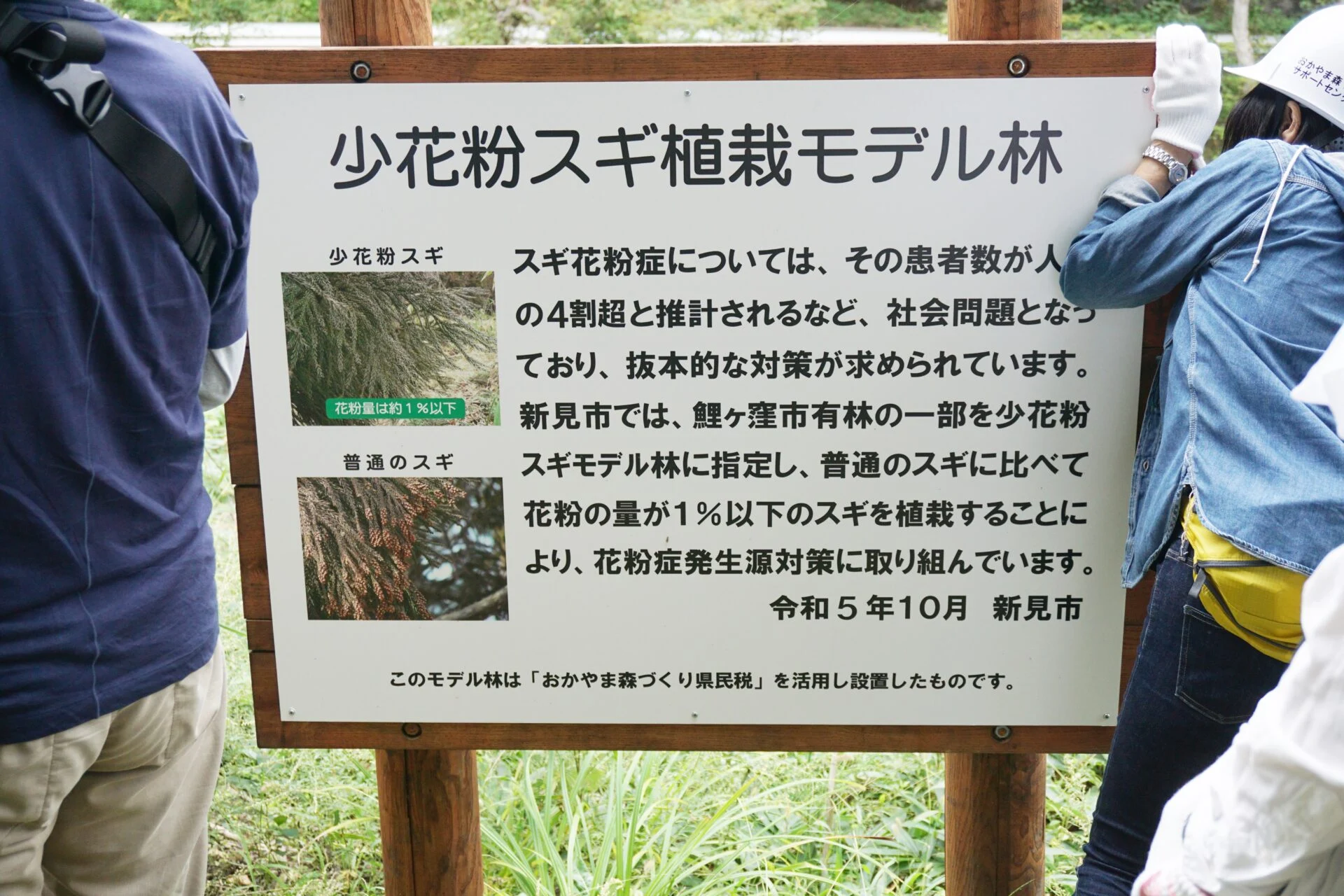
Low-Pollen Cedar
It is a variety of cedar that produces almost no pollen.
From the existing cedars, those with low pollen were selected, studied, and registered as low-pollen cedar varieties that meet the national pollen quantity standards set by the government.
Compared to the previous pollen emission levels, the pollen emission level for cedars is less than 1%.
◆ Quoted from the leaflet distributed on-site (2023 edition)
First, there was an explanation of the method for underbrush cutting.
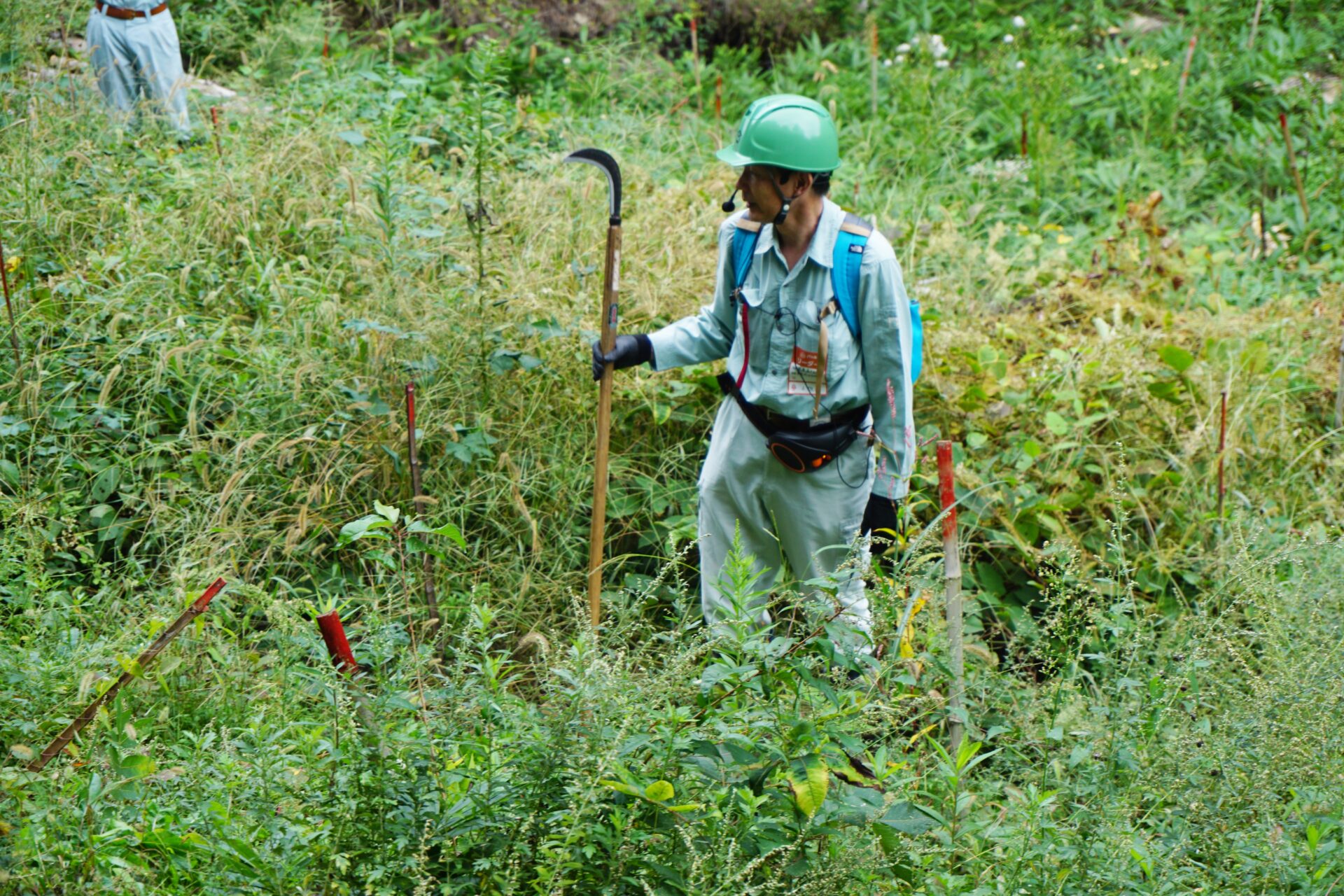
- There are small and large sickles, so adults should use the large sickle.
- Each person should cut the grass with their sickle.
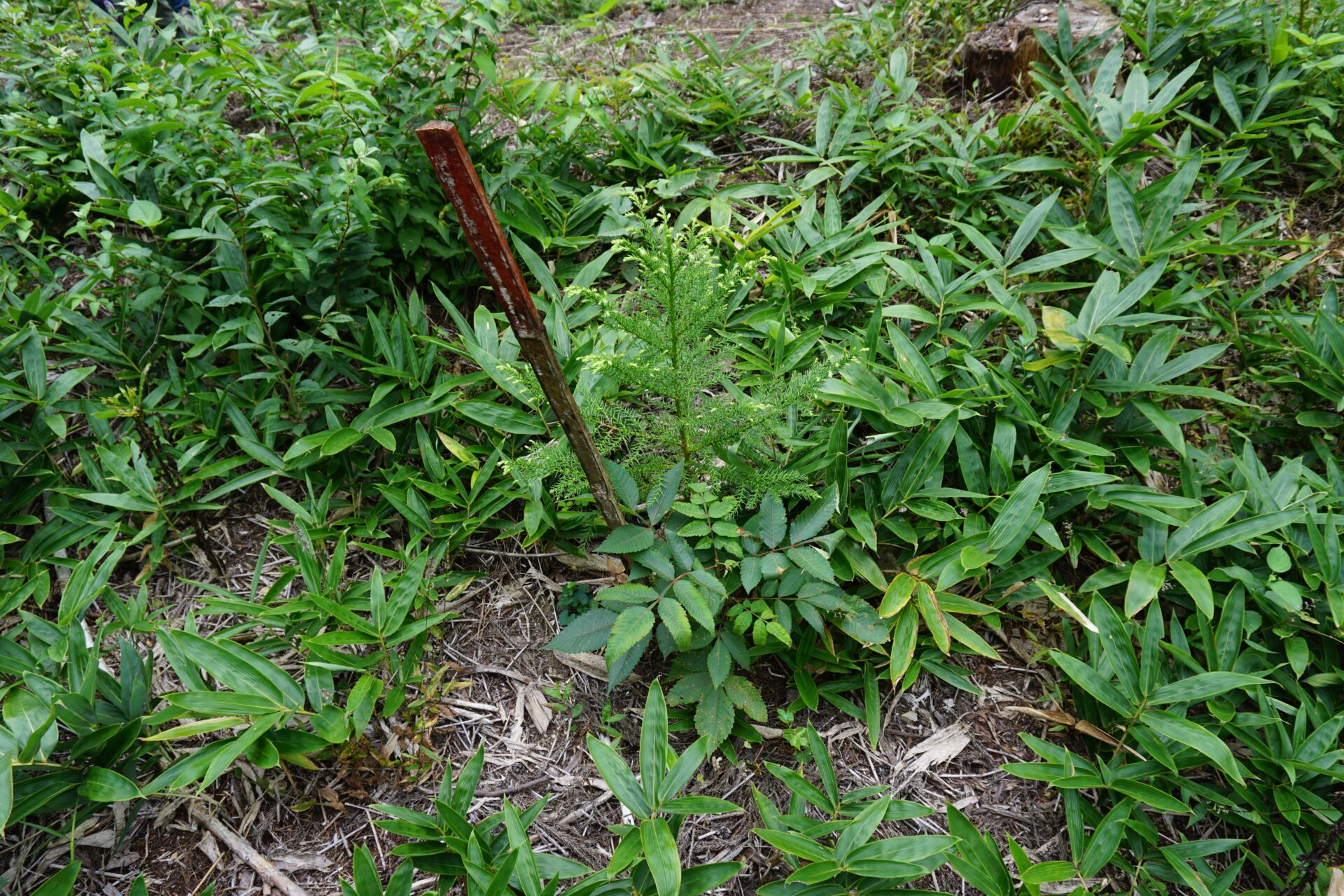
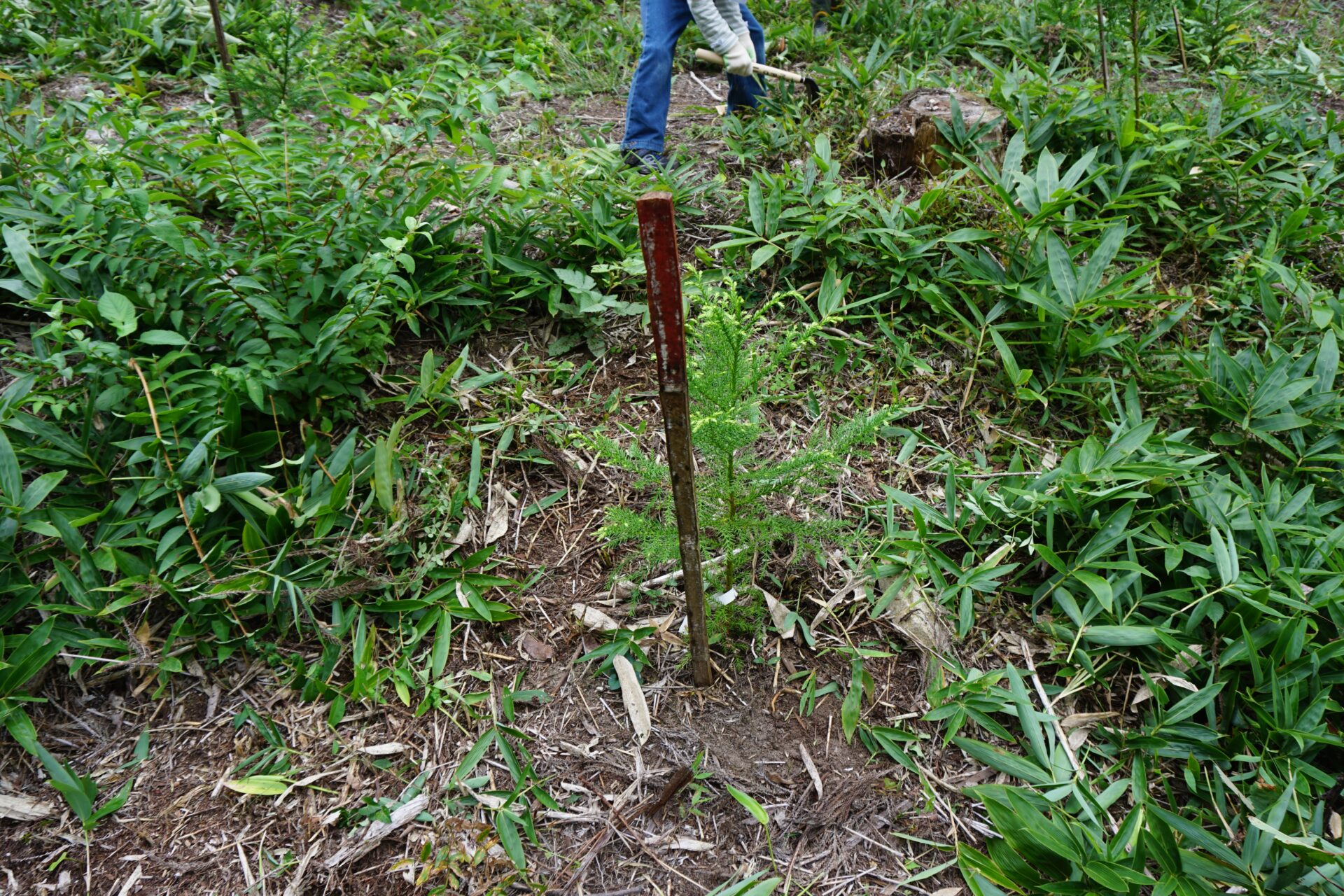
- Do not cut the cedar under the red marker!
This is all there is to the process. However, it is not easy to identify which cedar is " the one under the red marker" at a glance.
Upon closer inspection...
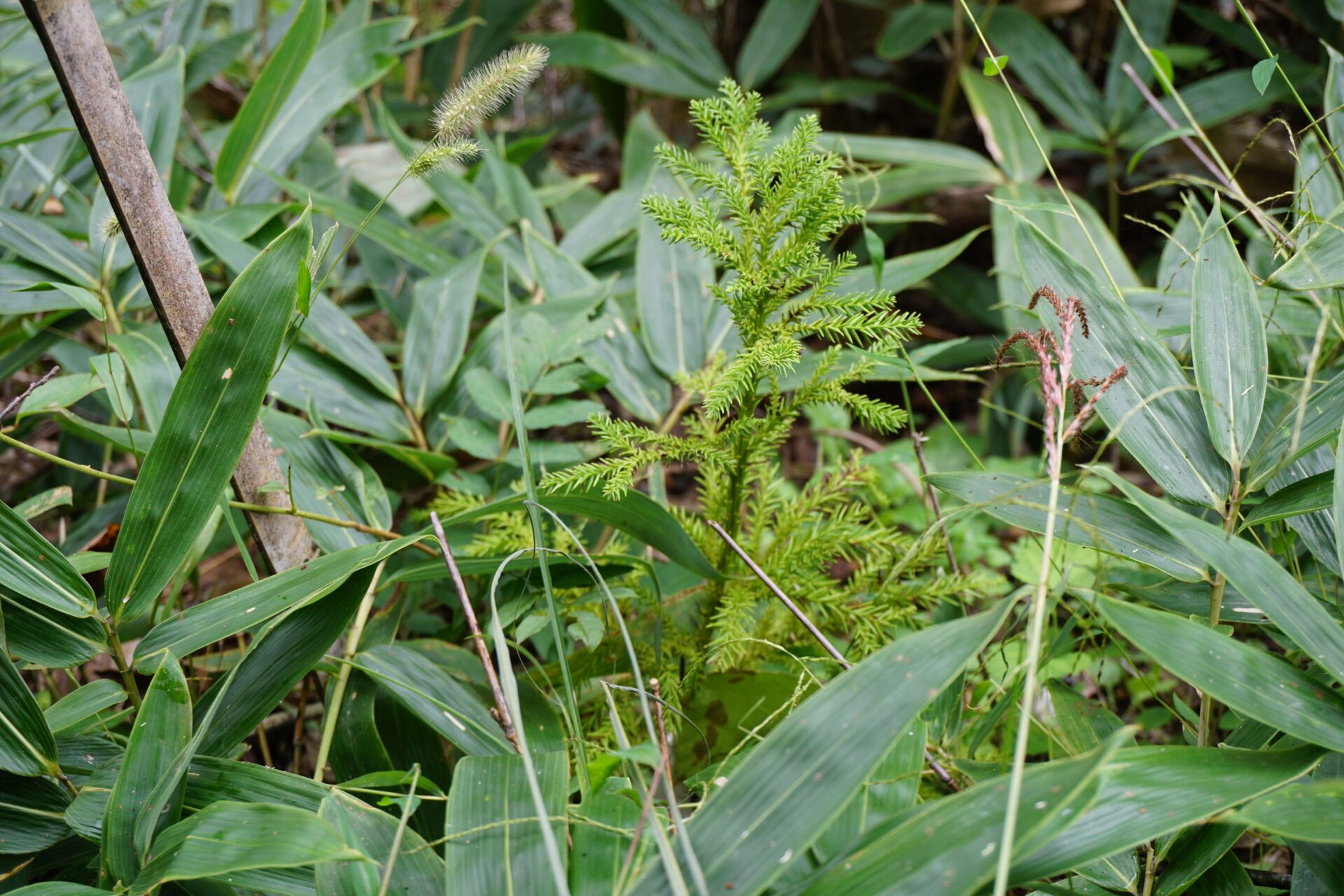
▼ By the way, at the time of planting, it looked like this.
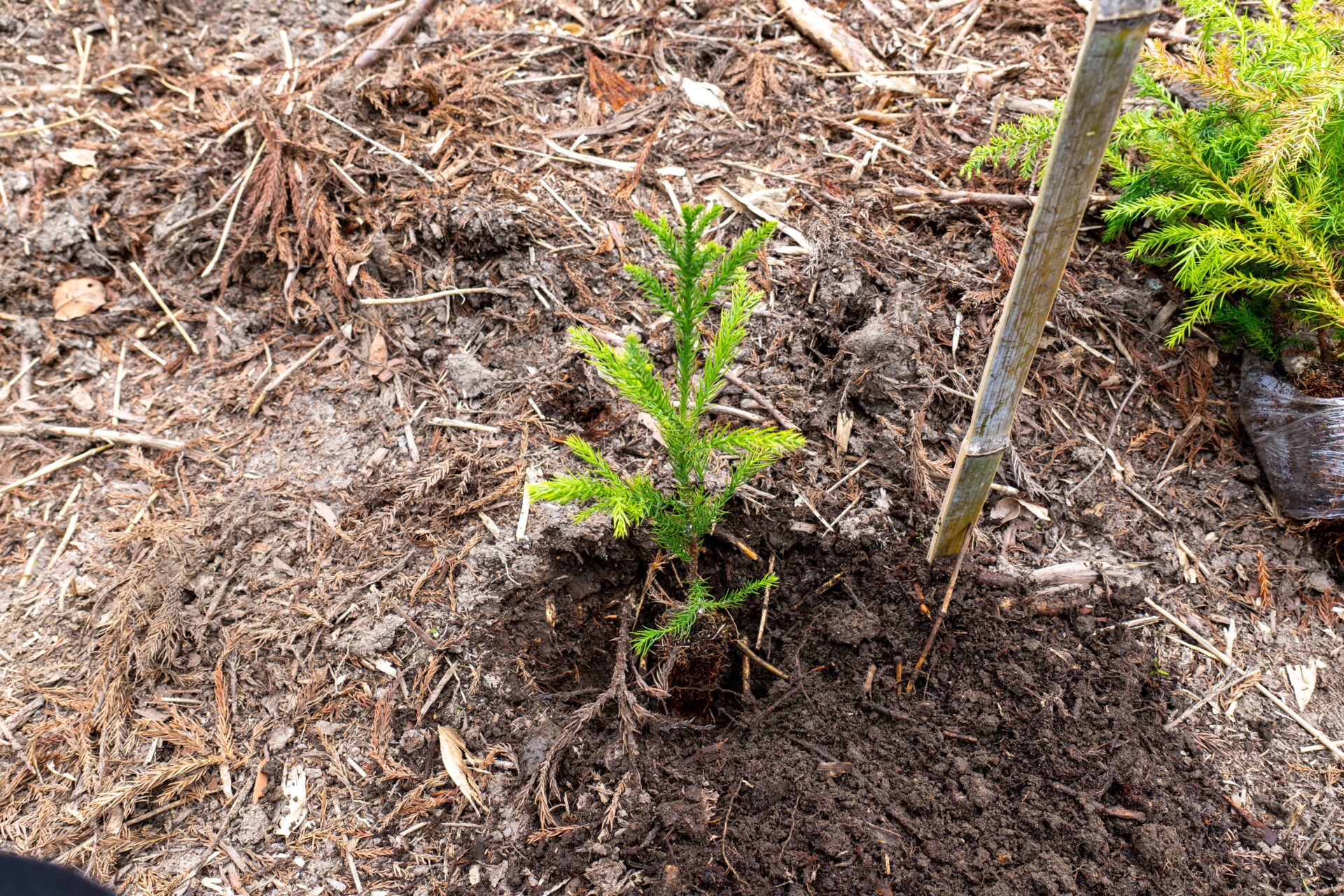
Why do we perform underbrush cutting?
Cedar trees grow large enough to be used as timber in several decades (40-50 years). When the cedar is small, it competes with surrounding grass for water and sunlight. Underbrush cutting helps with that competition. This underbrush cutting is performed for about five years.
◆From the explanation on site
Starting work while relying on the red markers, we make sure not to cut the cedar saplings.
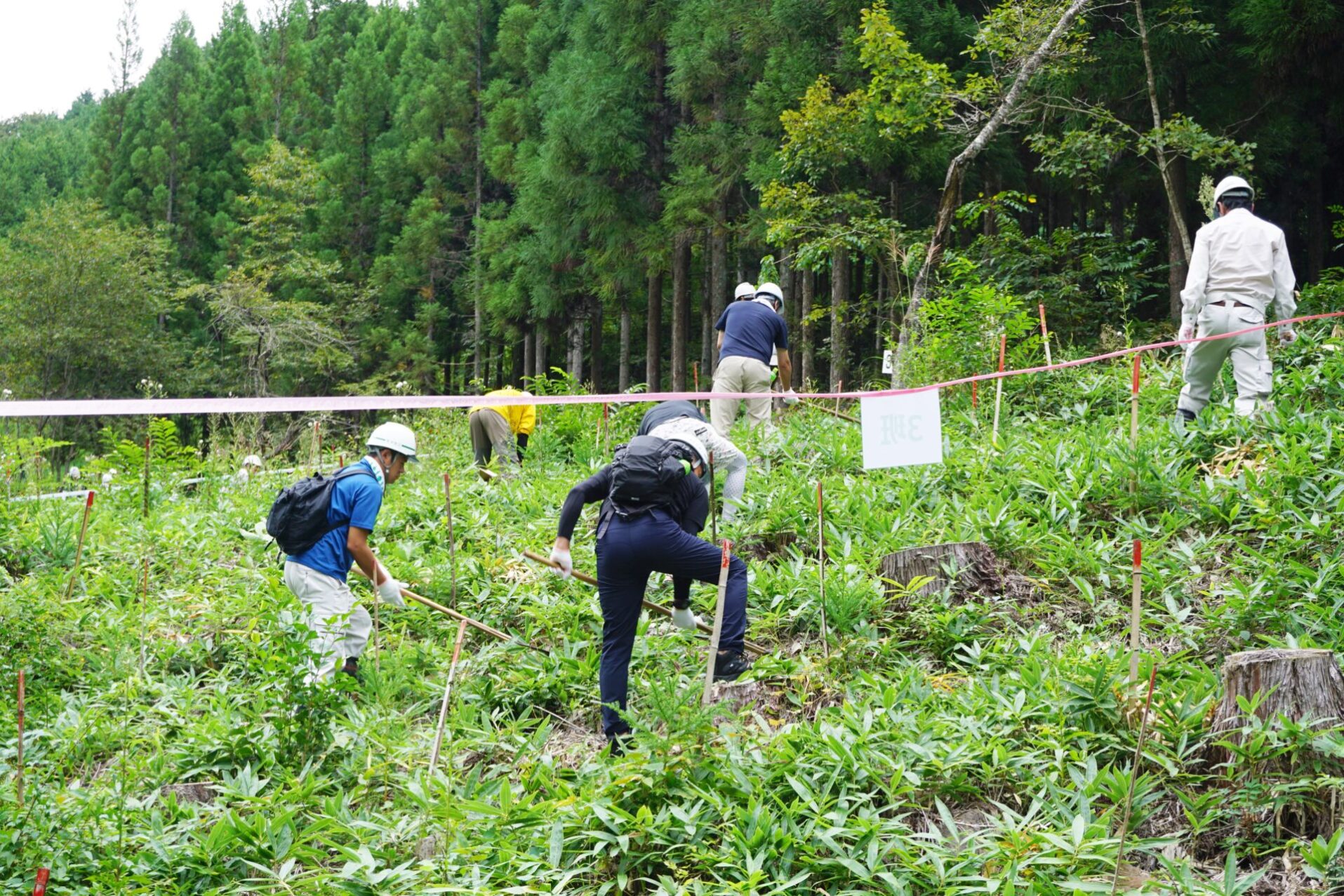
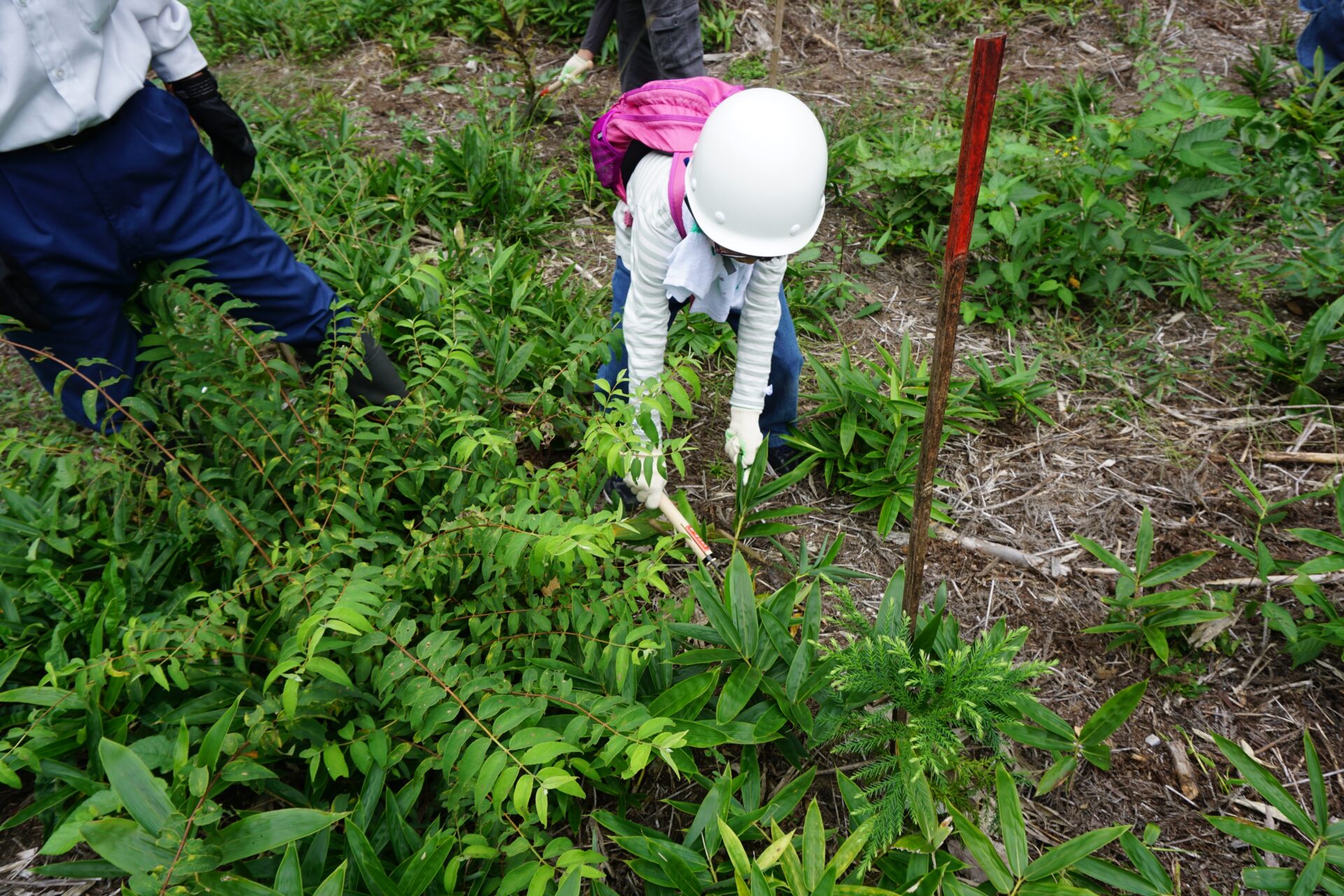
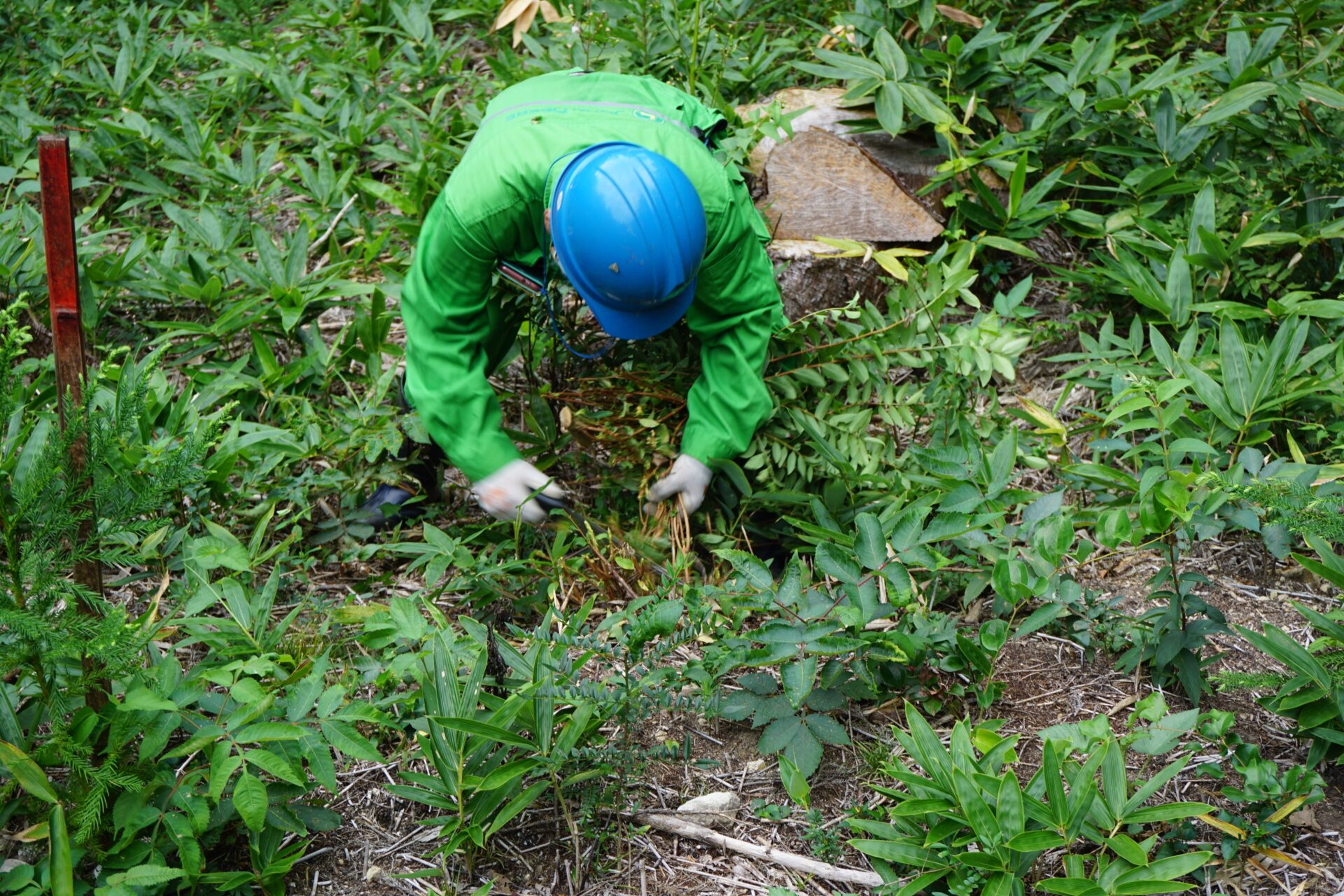
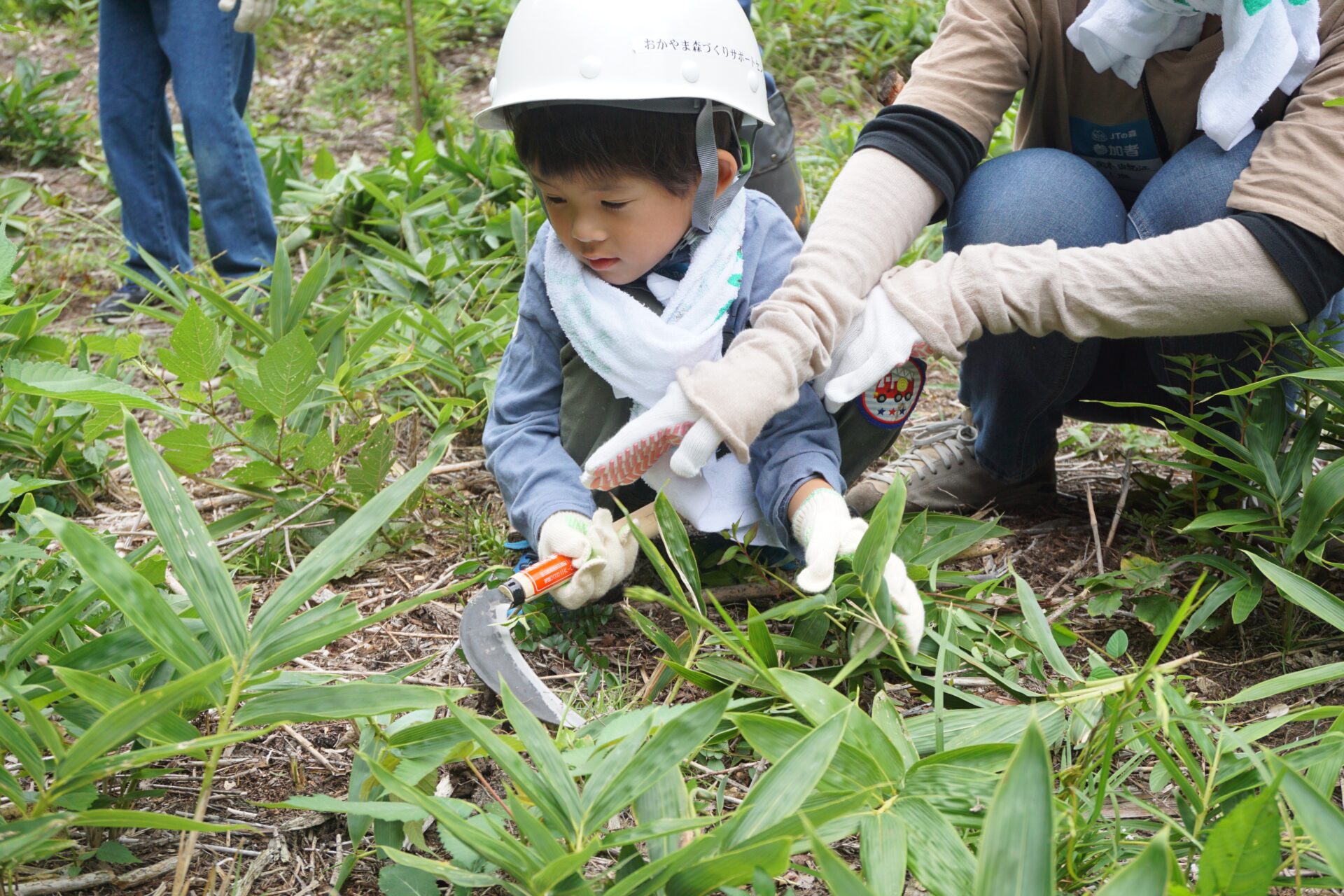
▼In this way, we place the sickle at the base of the grass and cut it vigorously. It may seem easy, but various roots are tangled in the ground, making it difficult to cut... It was quite a heavy labor.
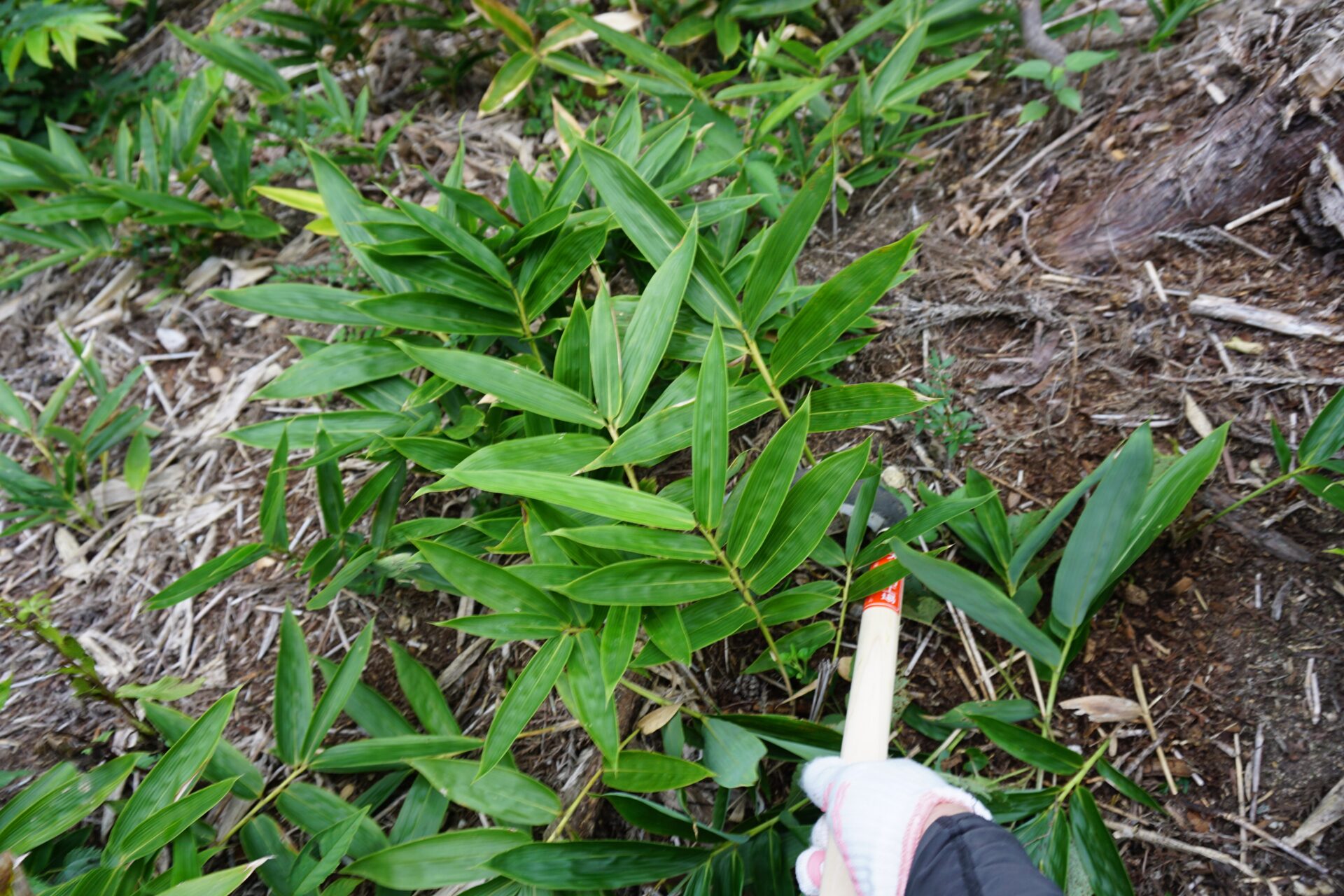
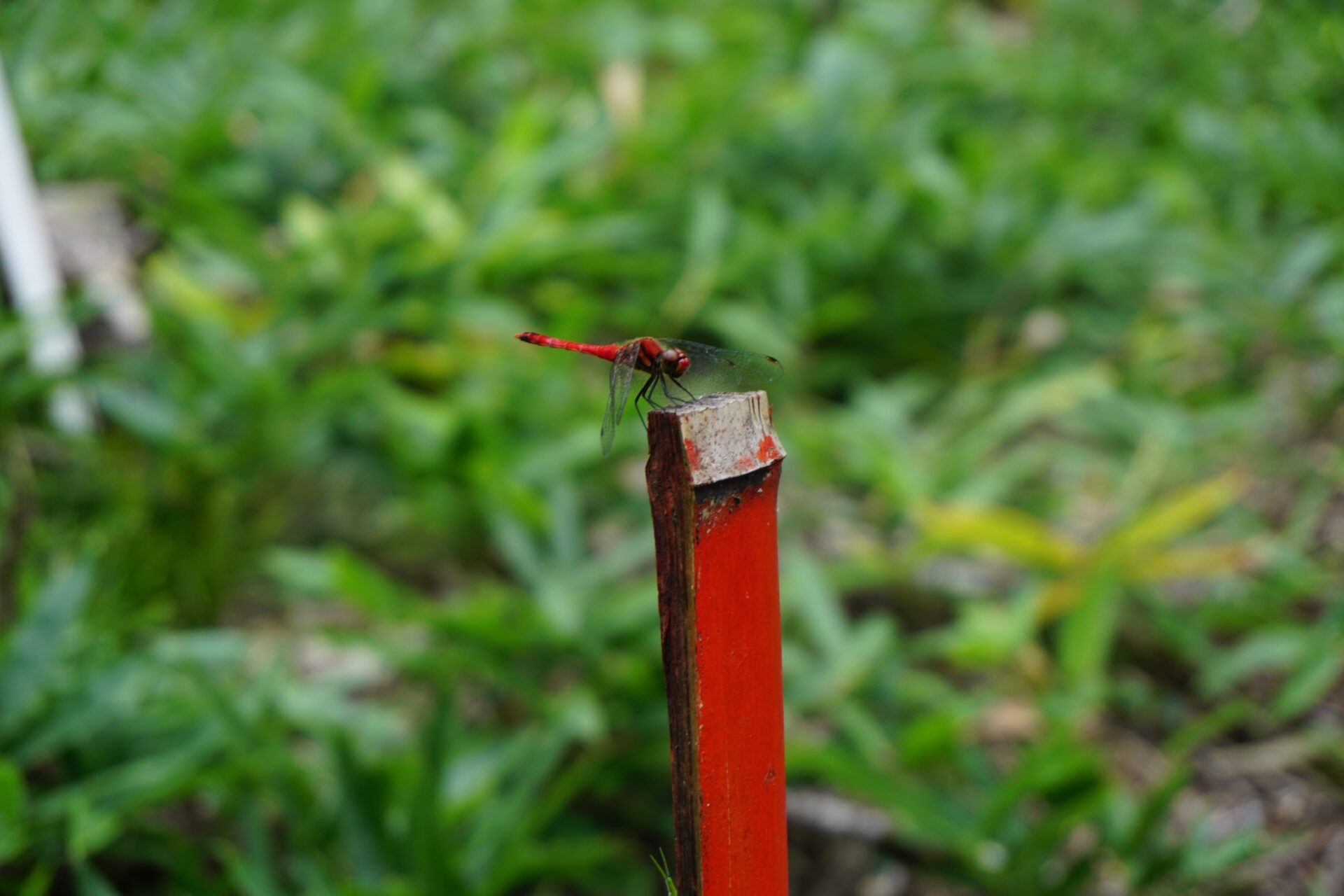
On the day of the work, it was cloudy and somewhat cool, which made it seem easier to work, but before we knew it, everyone was sweating and doing their best.
Lunch
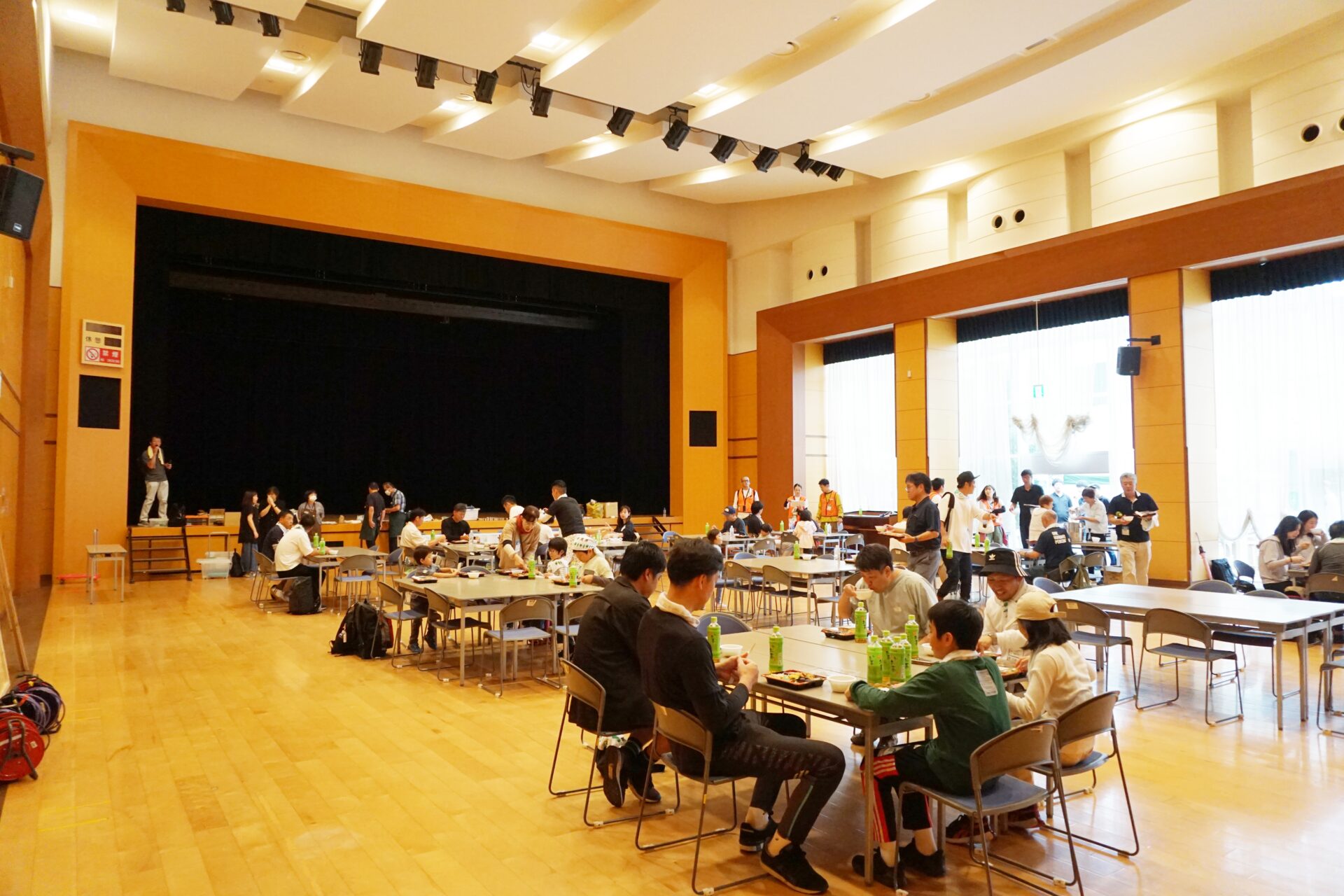
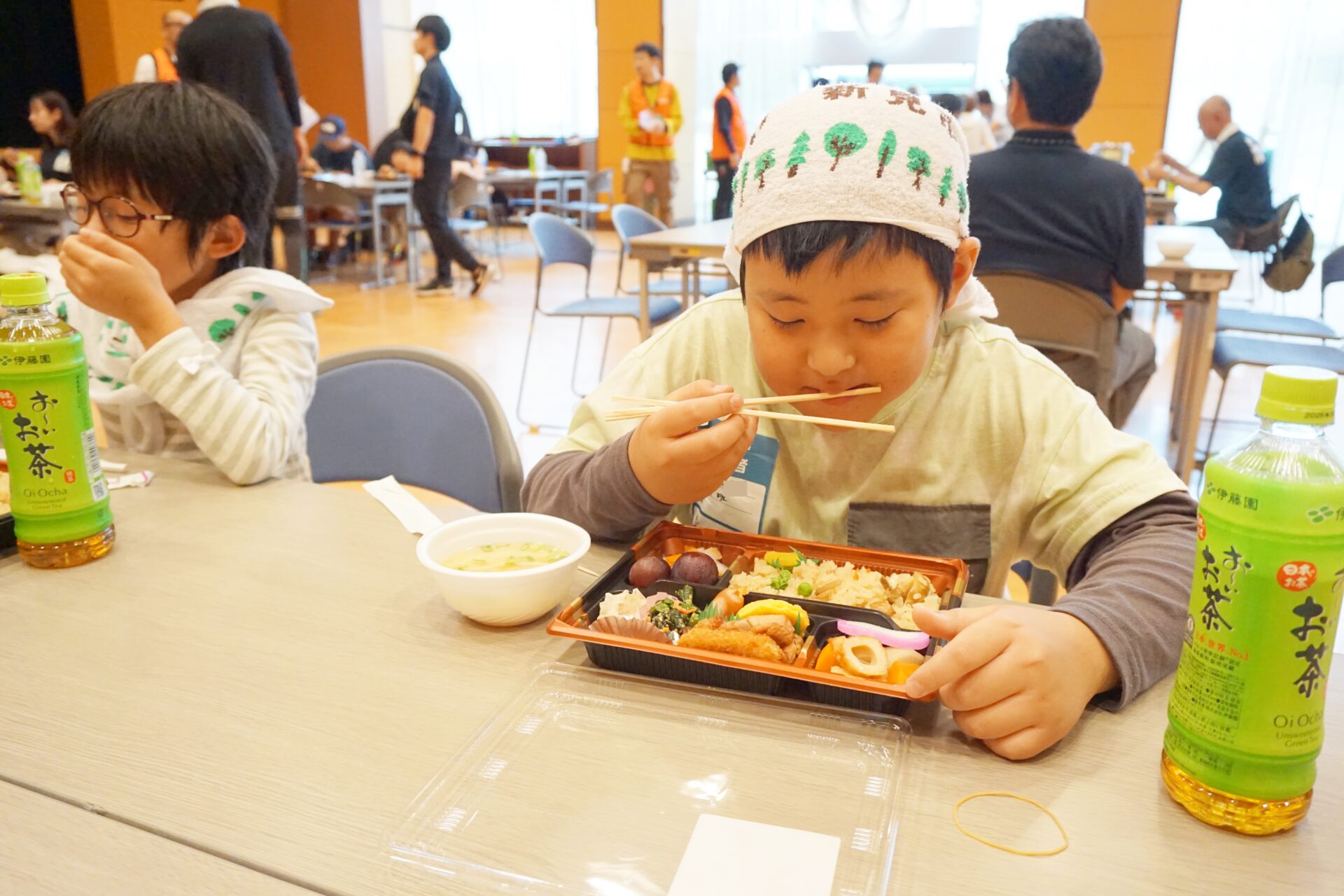
After finishing, we moved to "Michi no Eki Koigakubo" for lunch time.
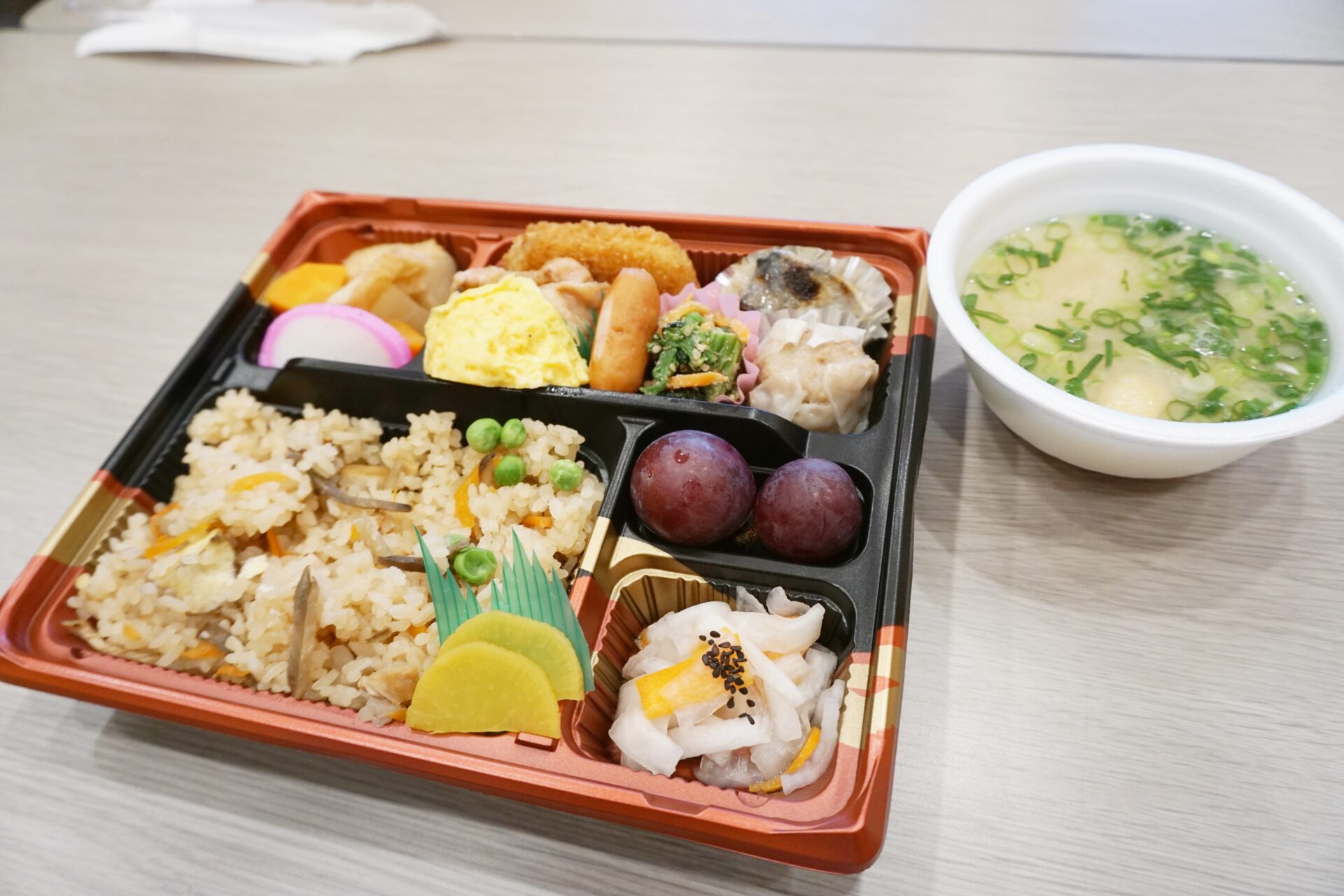
Lunch boxes made with plenty of ingredients from Niimi City and miso soup were prepared. After the forest conservation activities, participants were smiling as they enjoyed their meal.
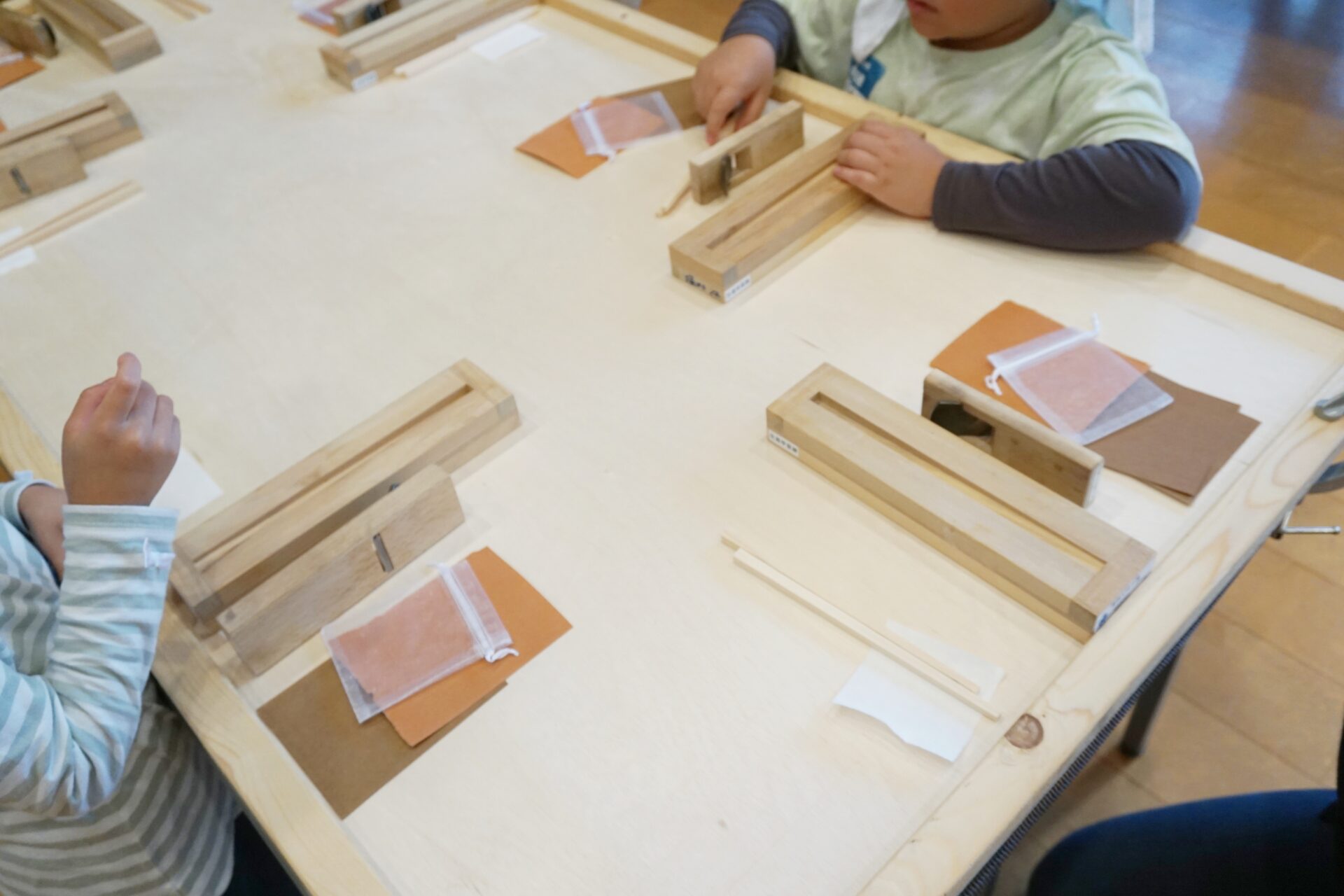
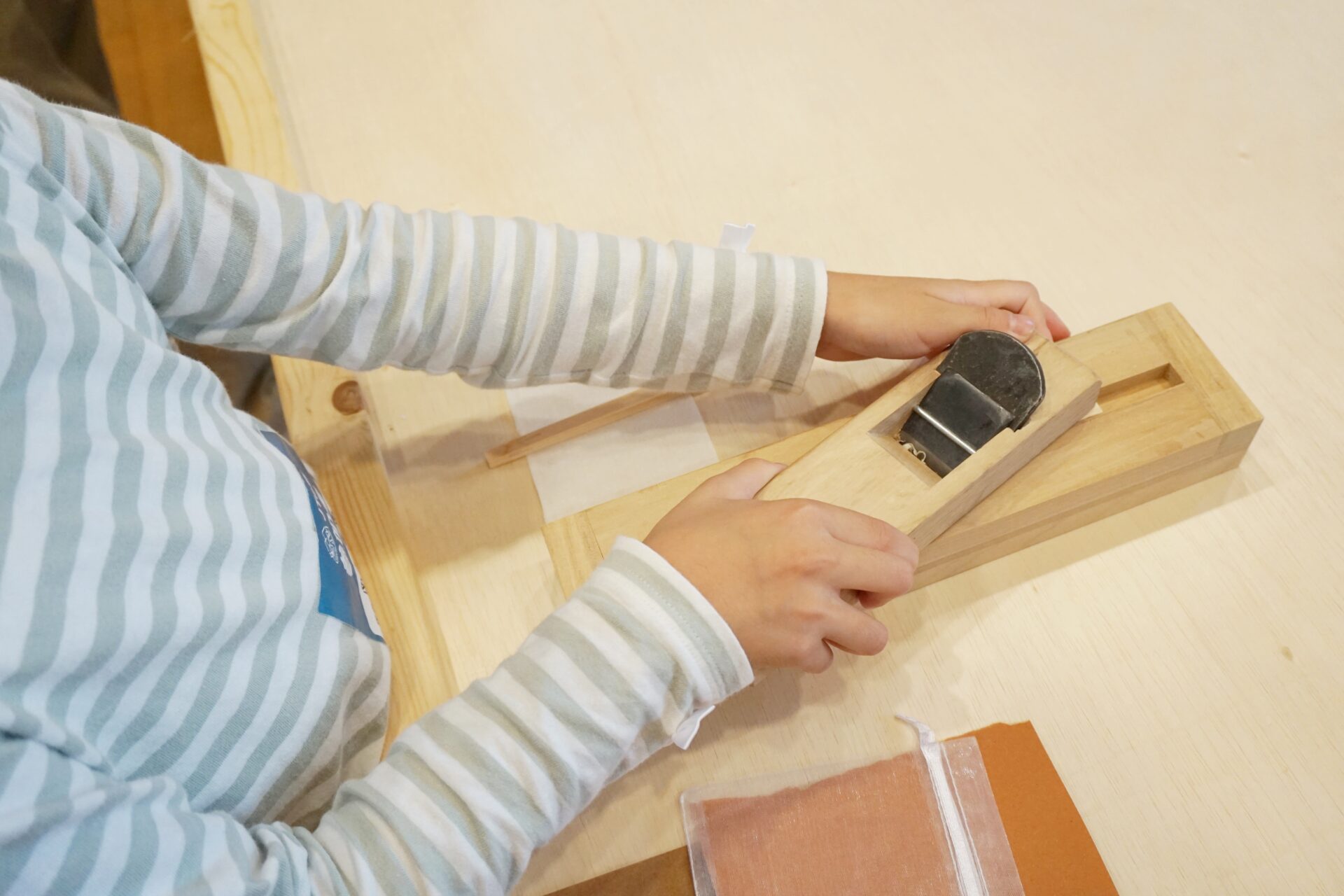
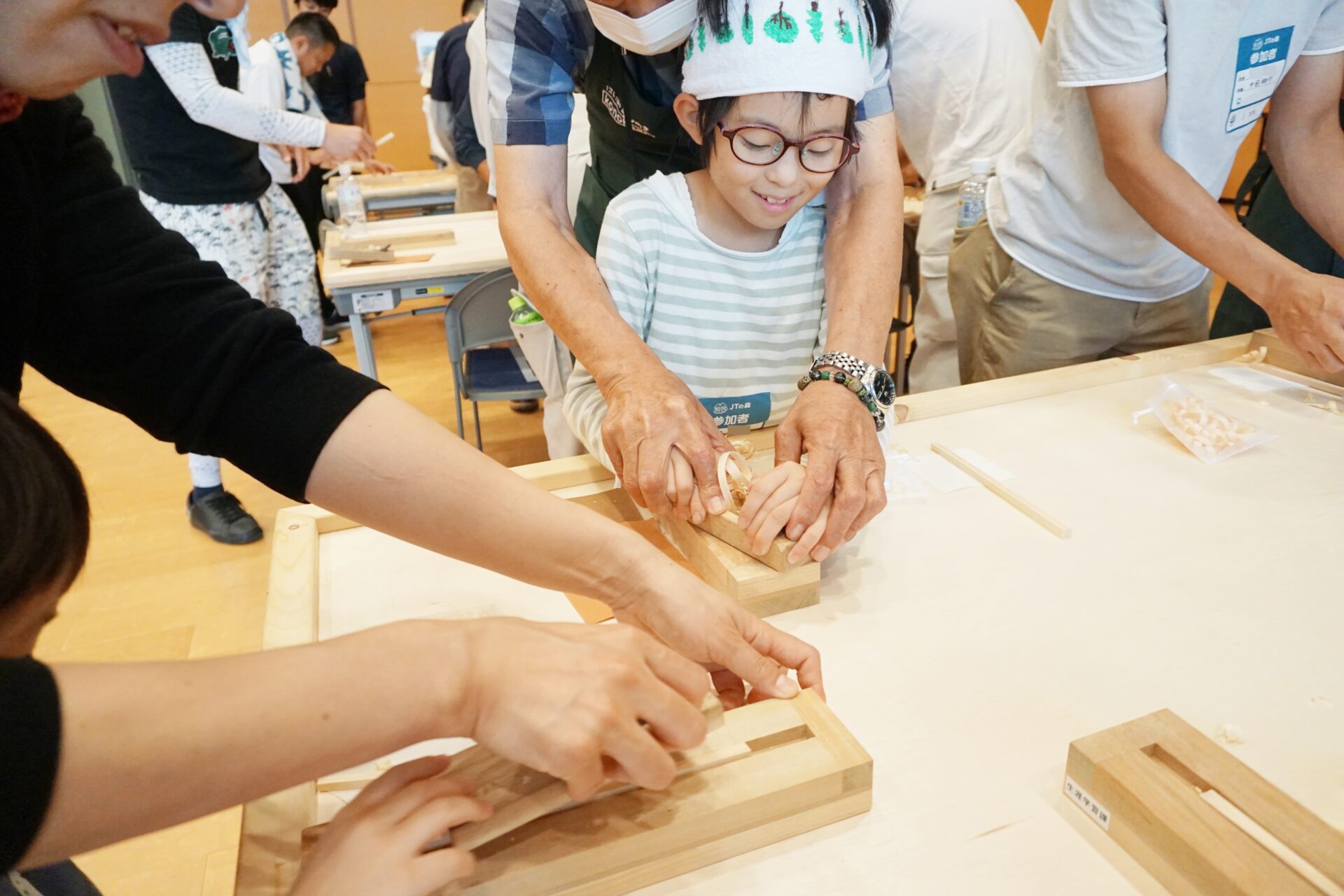
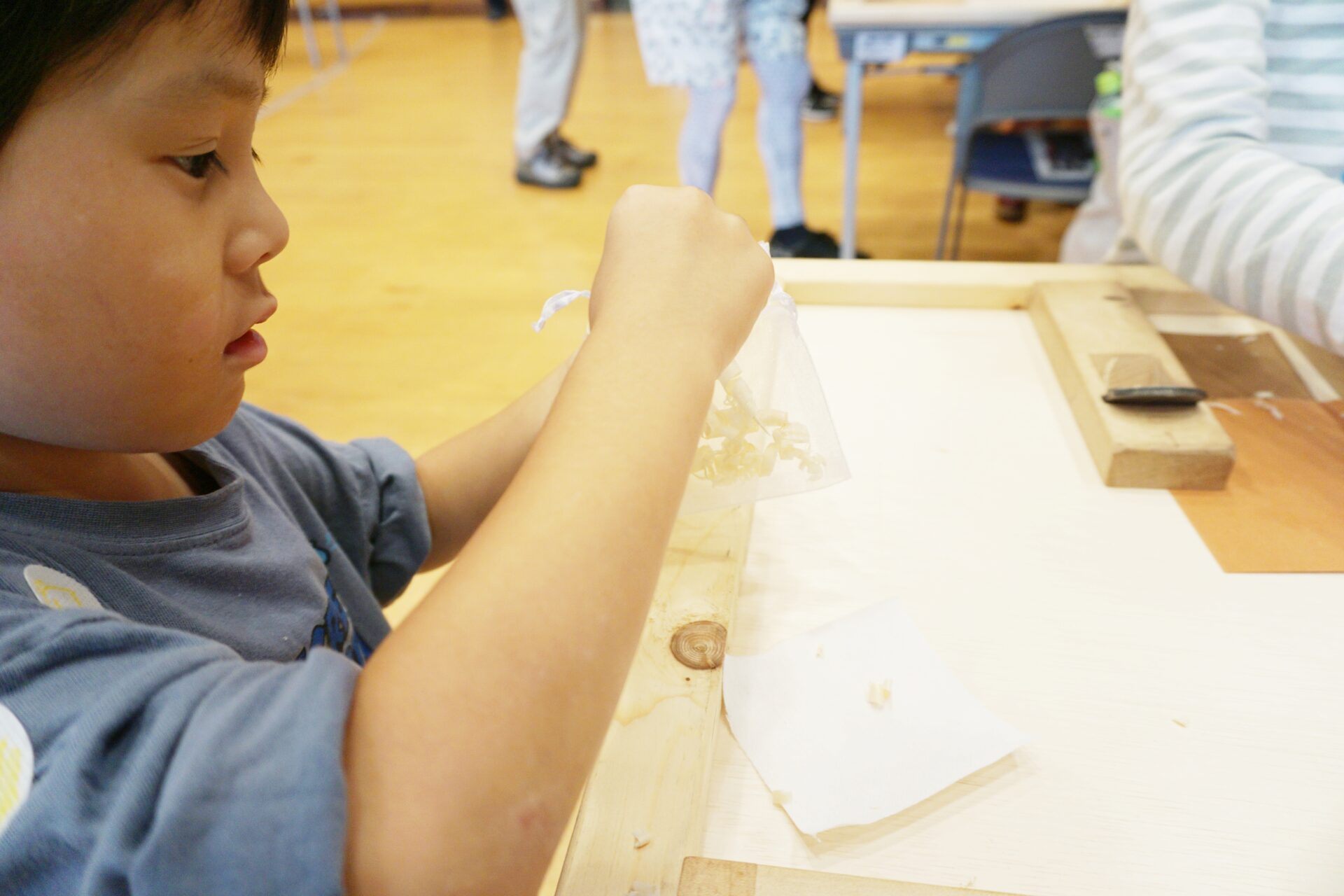
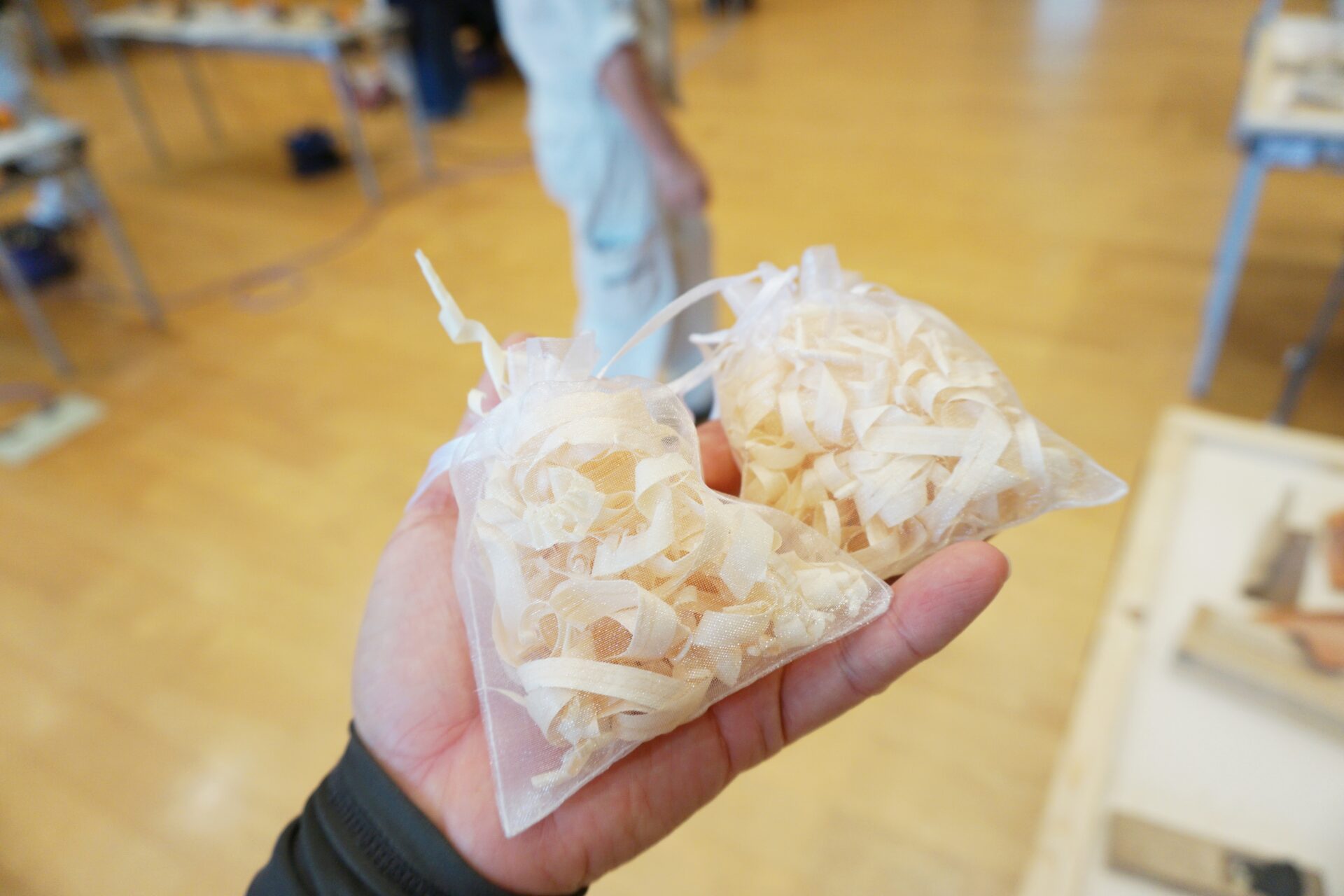
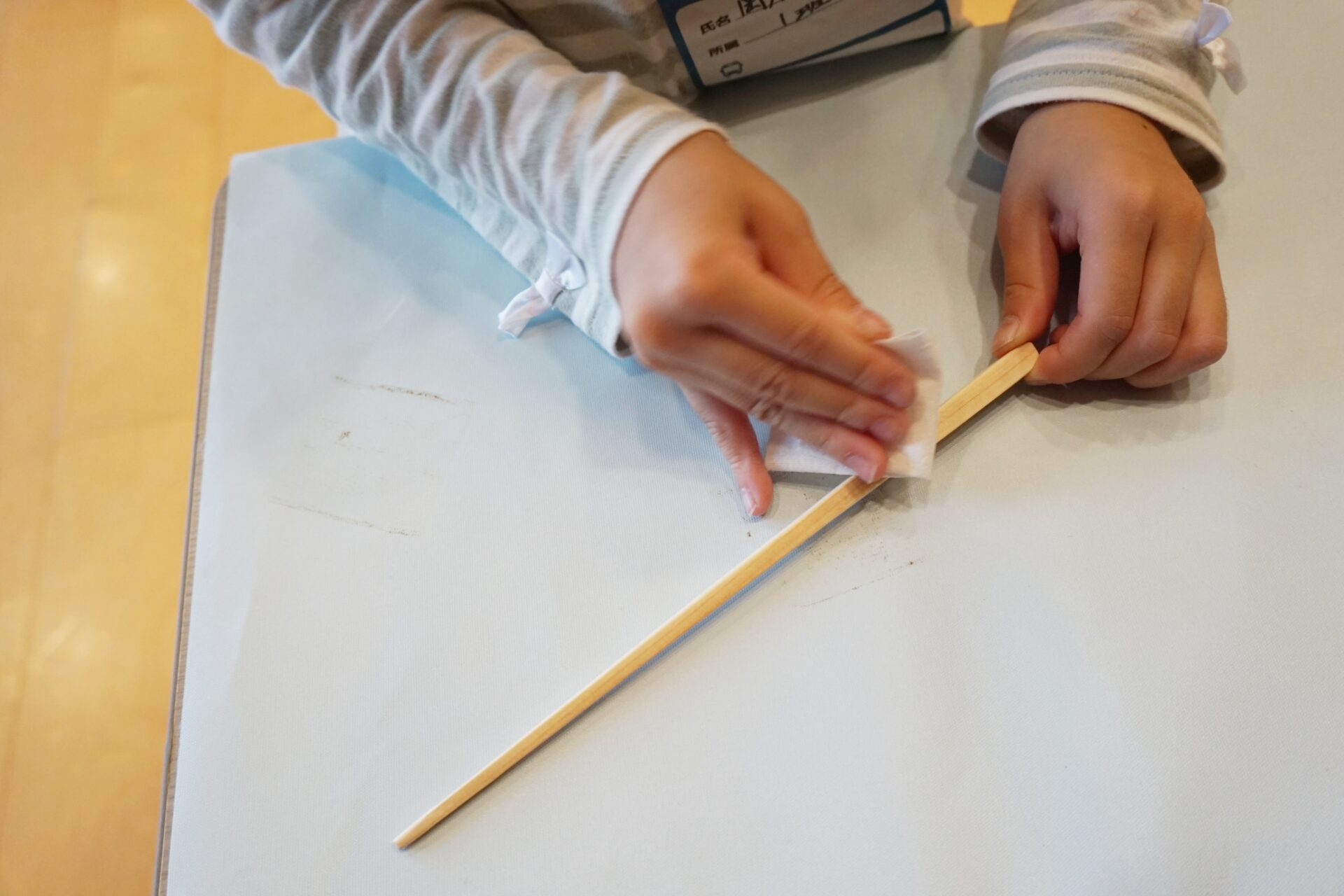
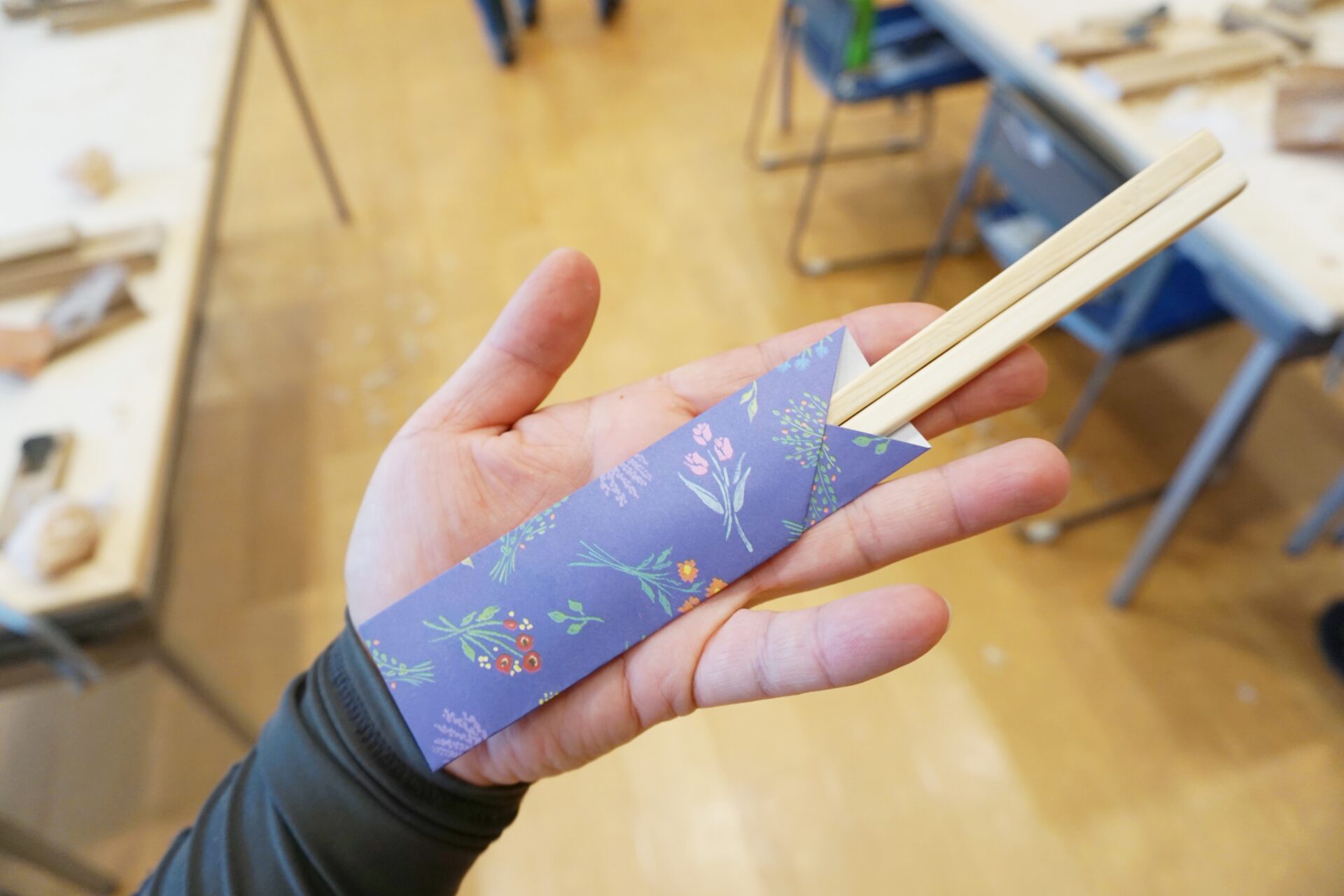
【Activity】Coaster and Chopstick Making
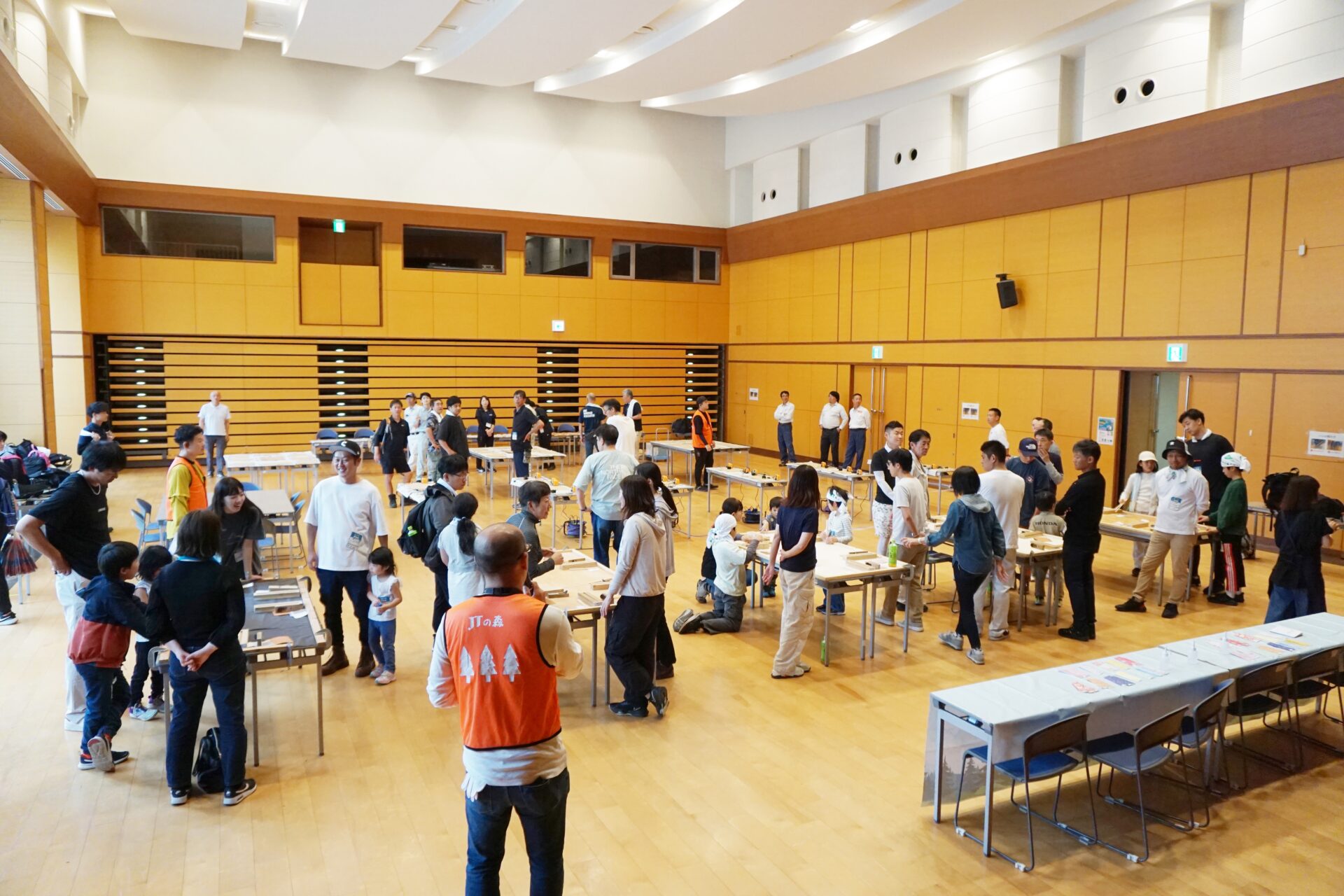
After lunch, we took a break and then challenged ourselves to make coasters and chopsticks in the same location. The materials used are from Niimi. Everyone moved to their desired area to start!
[Forest Extracurricular Class] Lecture and Tour of Tsuyama General Lumber Market
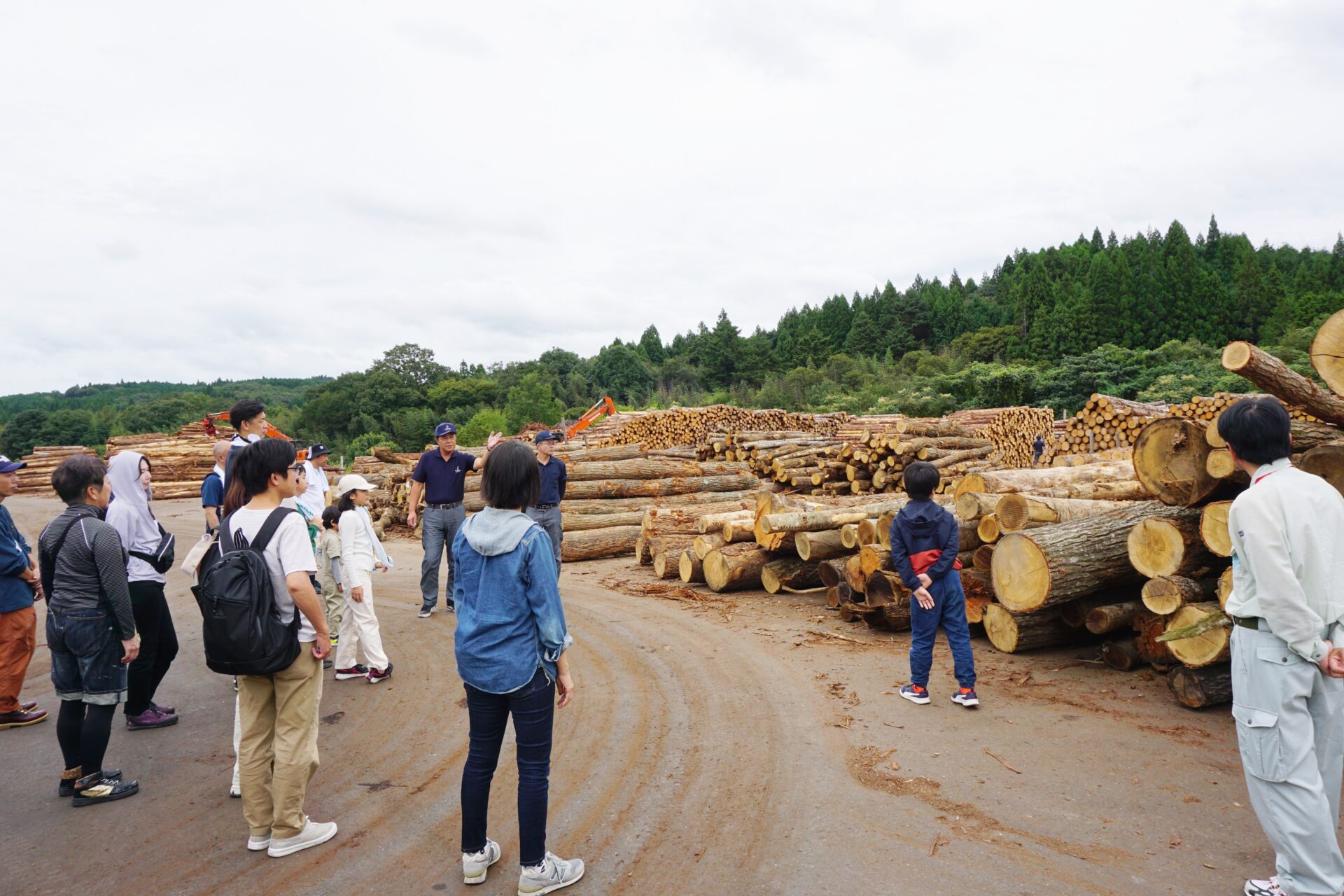
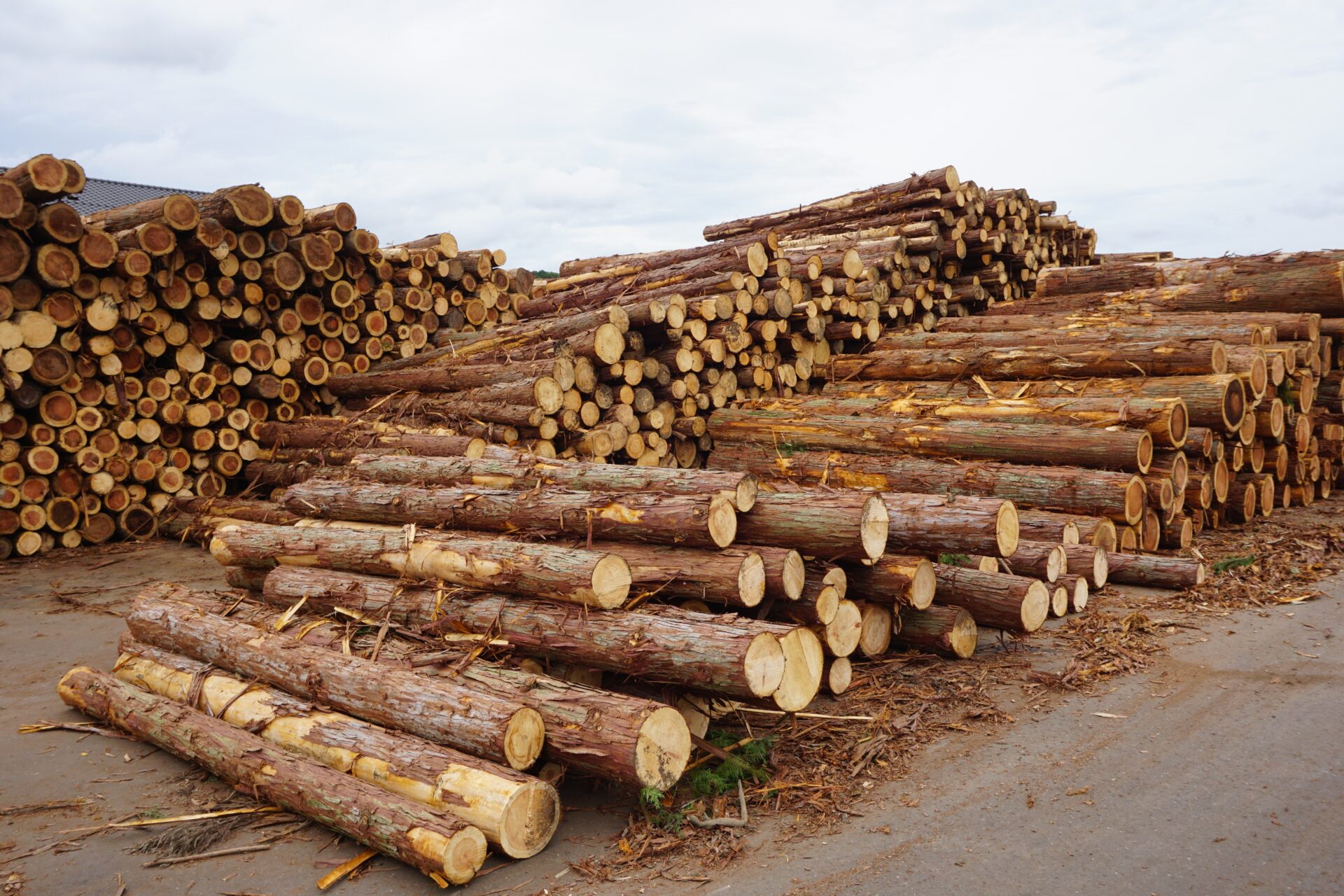
After the activity, we moved to Tsuyama General Lumber Market, which is about a 15-minute bus ride away, for a site tour.
Conclusion
This conservation activity was participated in by a family of five, including preschoolers and elementary school students. Until now, the family had never gone into nature together, making it a very valuable experience.
Even a task that seems like just mowing grass, called "underbrush cutting in the low-pollen cedar model forest," feels quite profound when you think, "We are creating a forest for the future."
However, it may be only the adults who feel this way. The children simply say, "It was fun~" and "I want to go again!" as if they see it as just an event.
But I think that feeling is just fine. Eventually, they will realize how important this experience was.
I would like to participate in this activity again if the opportunity arises next time.
"JT Forest Koigakubo in Niimi" 2024 Autumn Forest Conservation Activity Data
| Name | "JT Forest Koigakubo in Niimi" 2024 Autumn Forest Conservation Activity |
|---|---|
| Date | September 21, 2024 |
| Location | Yada, Tetsusei-cho, Niimi City, Okayama Prefecture |
| Participation Fee (including tax) | ※ The availability of general recruitment and the method of the next event are undecided |
| Homepage | JT Forest |