When we think of summer, festivals and the food stalls lining them come to mind. Cotton candy, takoyaki… Some of you may also think of goldfish scooping.
For Japanese people, admiring goldfish has been a summer tradition since the Edo period.
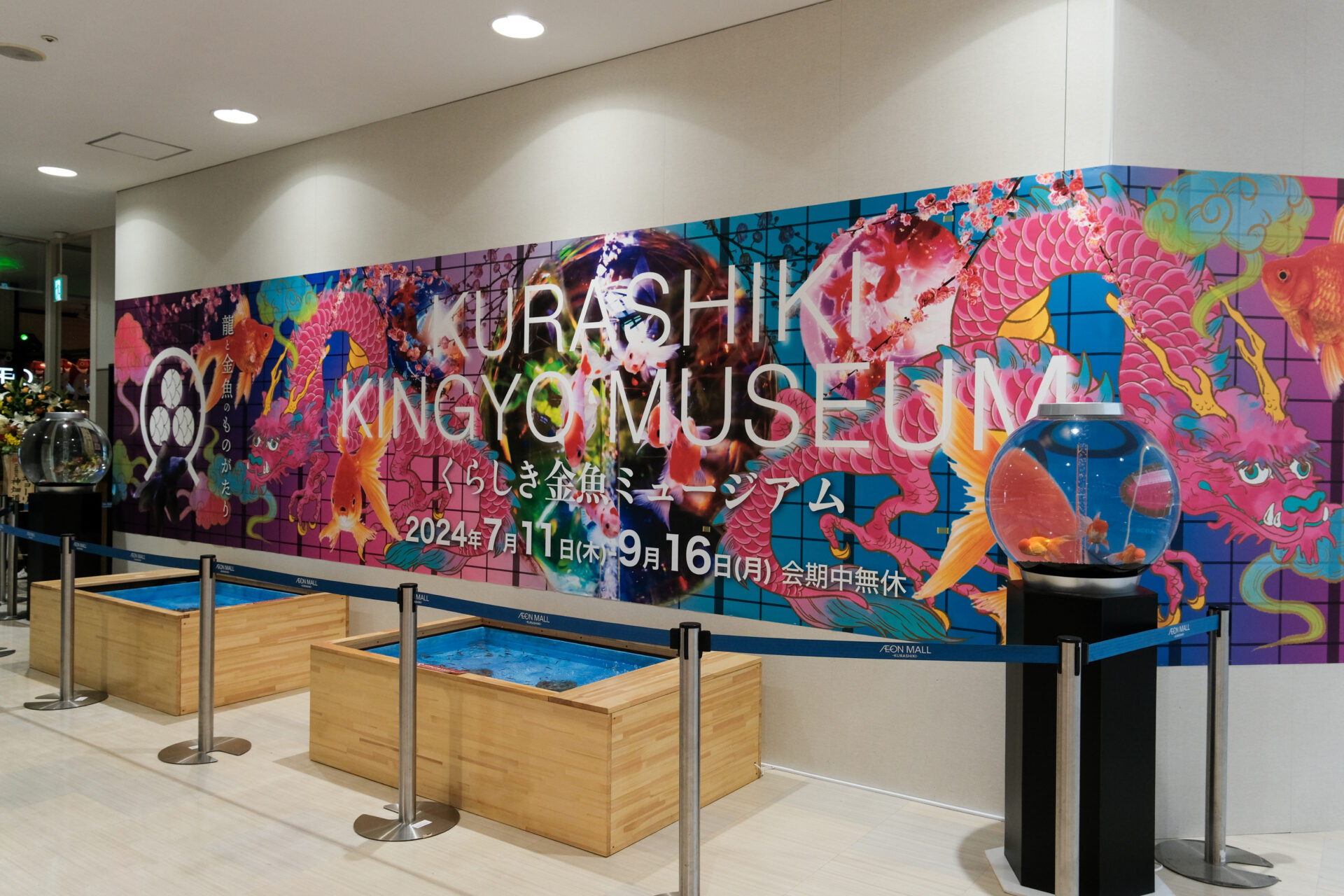
In summer 2024, the “Kurashiki Goldfish Museum,” featuring beautiful tanks made with Bizen ware and a recreation of a fish festival held in Kurashiki during the Edo period, has arrived at AEON MALL Kurashiki.
At a preview held on Wednesday, July 10, the day before it opened, we heard stories that offer a deeper appreciation of the venue’s appeal, and are sharing them here.
The information presented was accurate when this article was published in August 2024. Please note that it may differ from current information.
What is “Kurashiki Goldfish Museum: The Tale of the Dragon and the Goldfish”?
“Kurashiki Goldfish Museum: The Tale of the Dragon and the Goldfish” is a limited-time aquarium opened by UWS ENTERTAINMENT Co., Ltd. at AEON MALL Kurashiki, running from Thursday, July 11 to Monday, September 16, 2024.
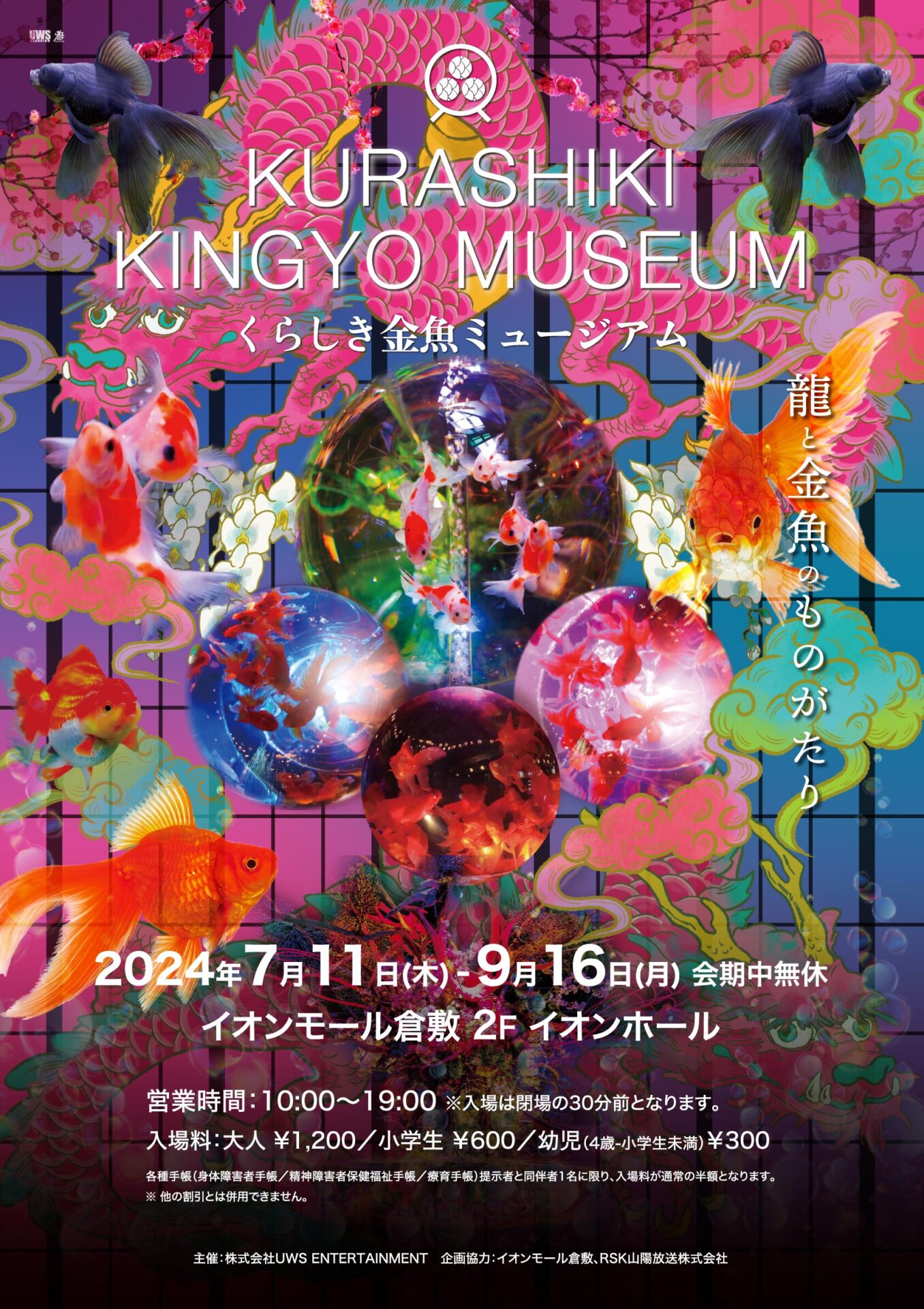
The aquarium is an exhibition that presents the goldfish-viewing culture dating back to the Edo period as works of art. It has captivated one million visitors in Tokyo, Yokohama, Nara, and Kagawa.
At the Kurashiki venue, visitors can enjoy an otherworldly aquarium where goldfish and dragons dance, woven from Kurashiki’s art and traditions, with beautiful tanks made using Bizen ware and an area recreating a fish festival in Edo-period Kurashiki.
At the preview on Wednesday, July 10, GA☆KYO, representing UWS ENTERTAINMENT Co., Ltd., spoke passionately about the Kurashiki Goldfish Museum. With delicate yet unconventional ideas, GA☆KYO has called aquariums “water planets” and pioneered a new style of aquarium.
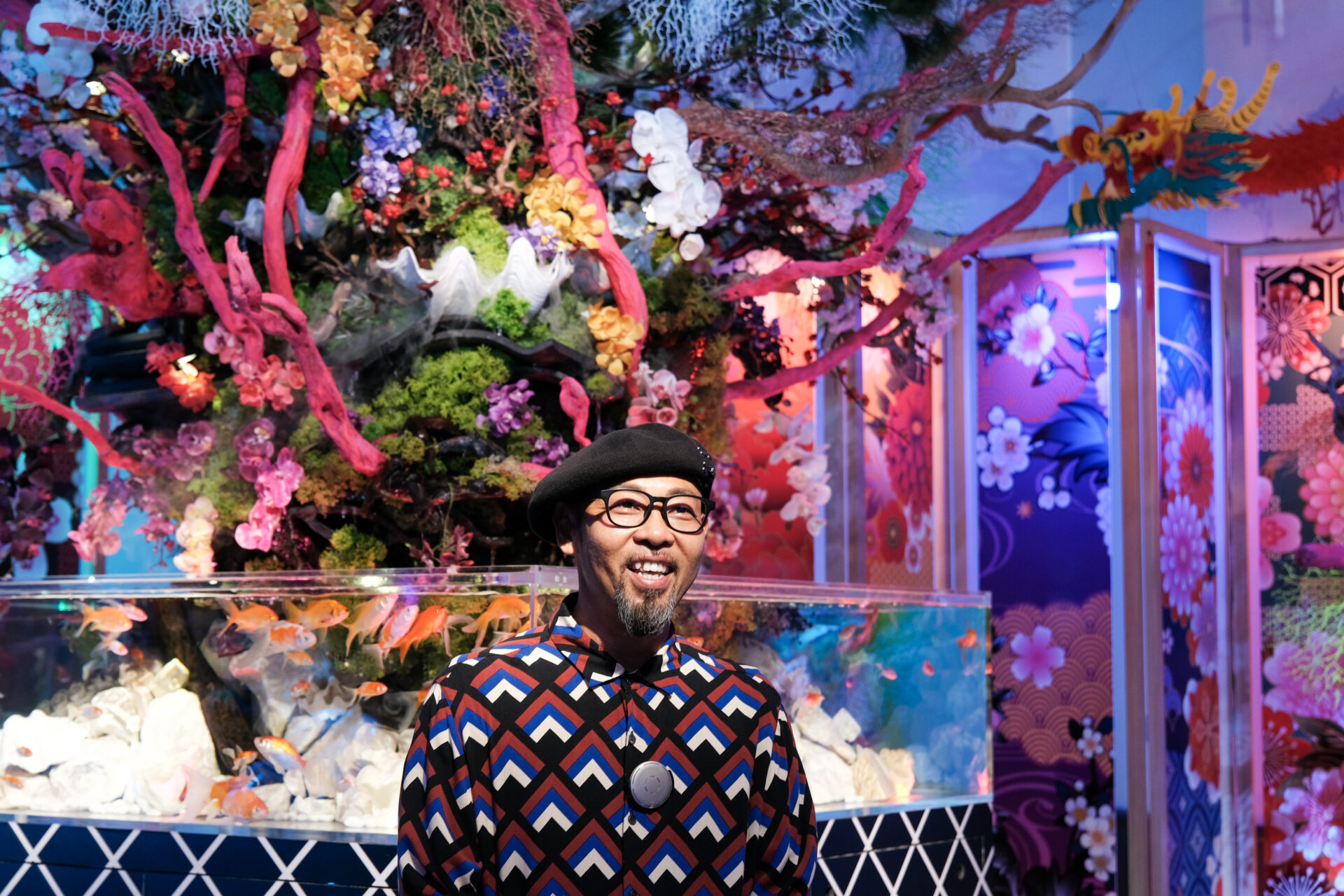
The inspiration for holding an aquarium exhibition in Kurashiki came from the namako walls of the Bikan Historical Area, the magnificent Takahashi River, and the irrigation canals found throughout Kurashiki City. When GA☆KYO asked, “You don’t see them much nowadays, but if you trace back to Japan’s original landscapes, goldfish were fish that swam in irrigation canals, weren’t they?” the attendees nodded in agreement.
The event was set to be held in Kurashiki because of the affinity between aquariums and the city, which has many canals that could be considered the goldfish’s original home. Also, since the Takahashi River, which flows near Kurashiki, is nicknamed “the Dragon,” the theme for this exhibition became “The Tale of the Dragon and the Goldfish.”
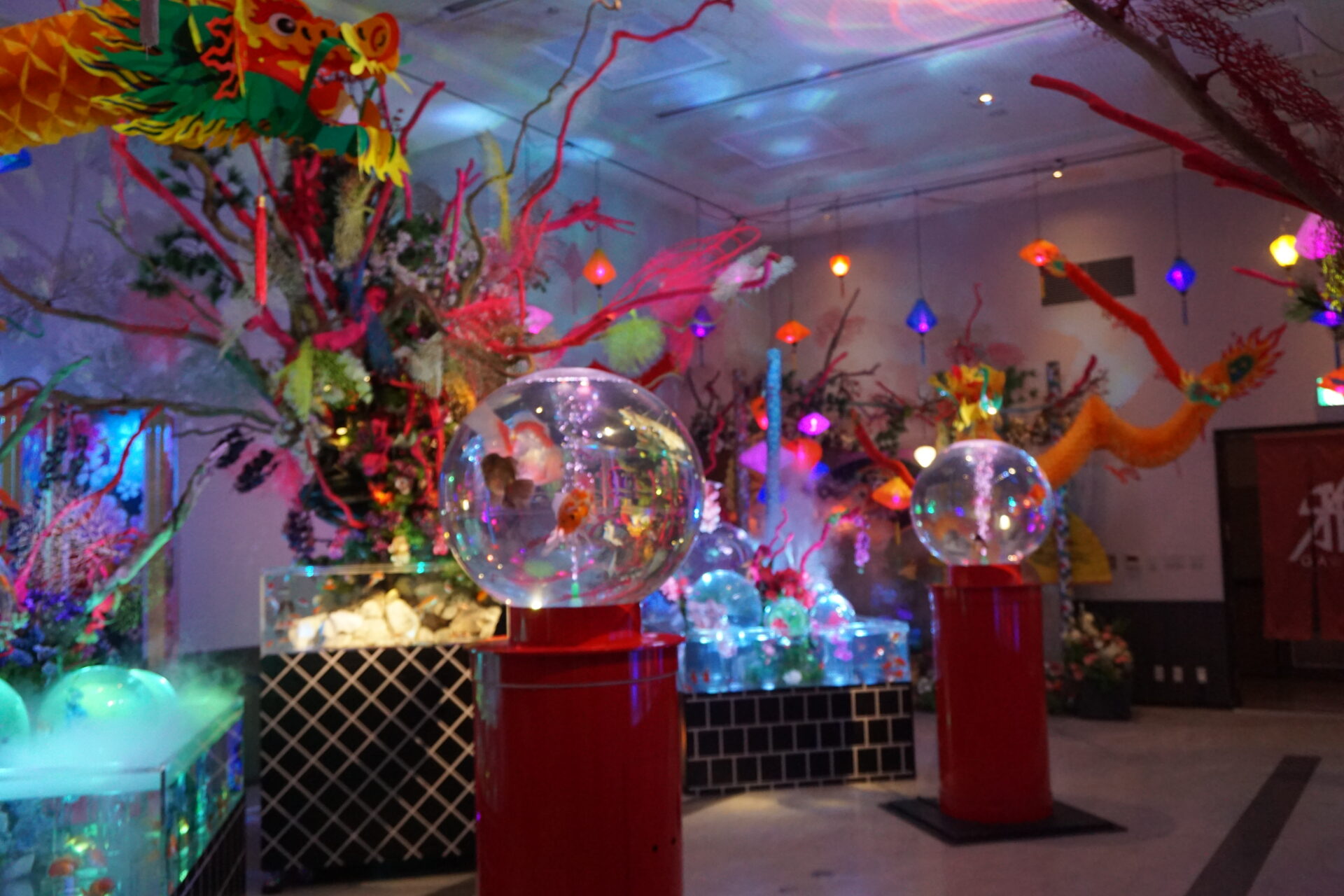
An exhibition comprising six zones
The venue is divided into six zones.
Goldfish in Japanese Patterns
The Japanese-pattern goldfish zone, themed around traditional Japanese “wagara” patterns and “living art goldfish,” features displays where you can view the goldfish not only from the front, but also from above and below.
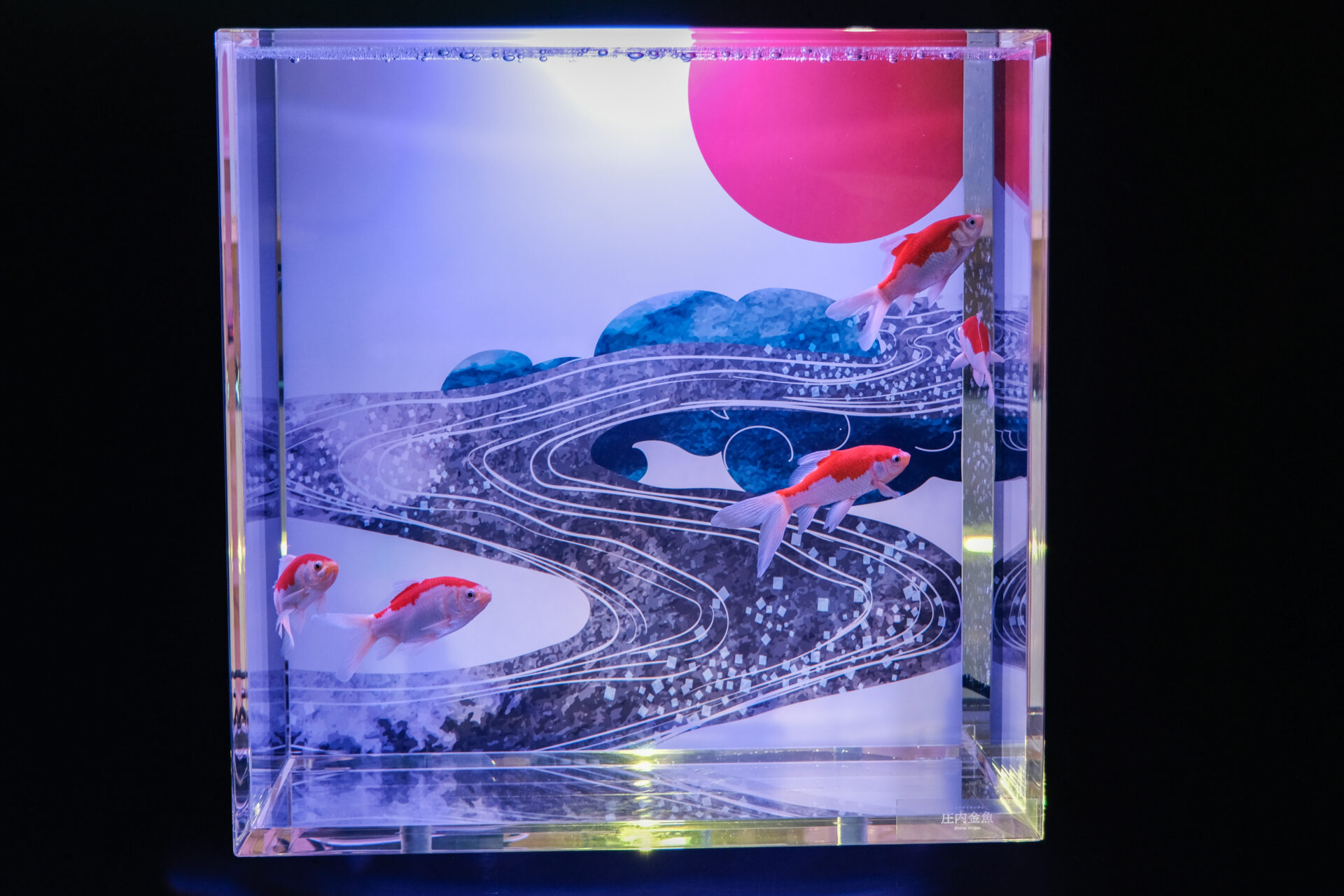
According to GA☆KYO, goldfish are best viewed from above.
Indeed, it seems we often look down at goldfish when scooping them at festival stalls or seeing them in irrigation canals.
The goldfish swimming gracefully here are native to Japan. As a sense of nostalgia washes over us, we become immersed in the world of the aquarium.
Digital Goldfish
Digital Goldfish is an exhibit that applies projection mapping and makes full use of the latest technology.
In this zone, you can try digital goldfish scooping.
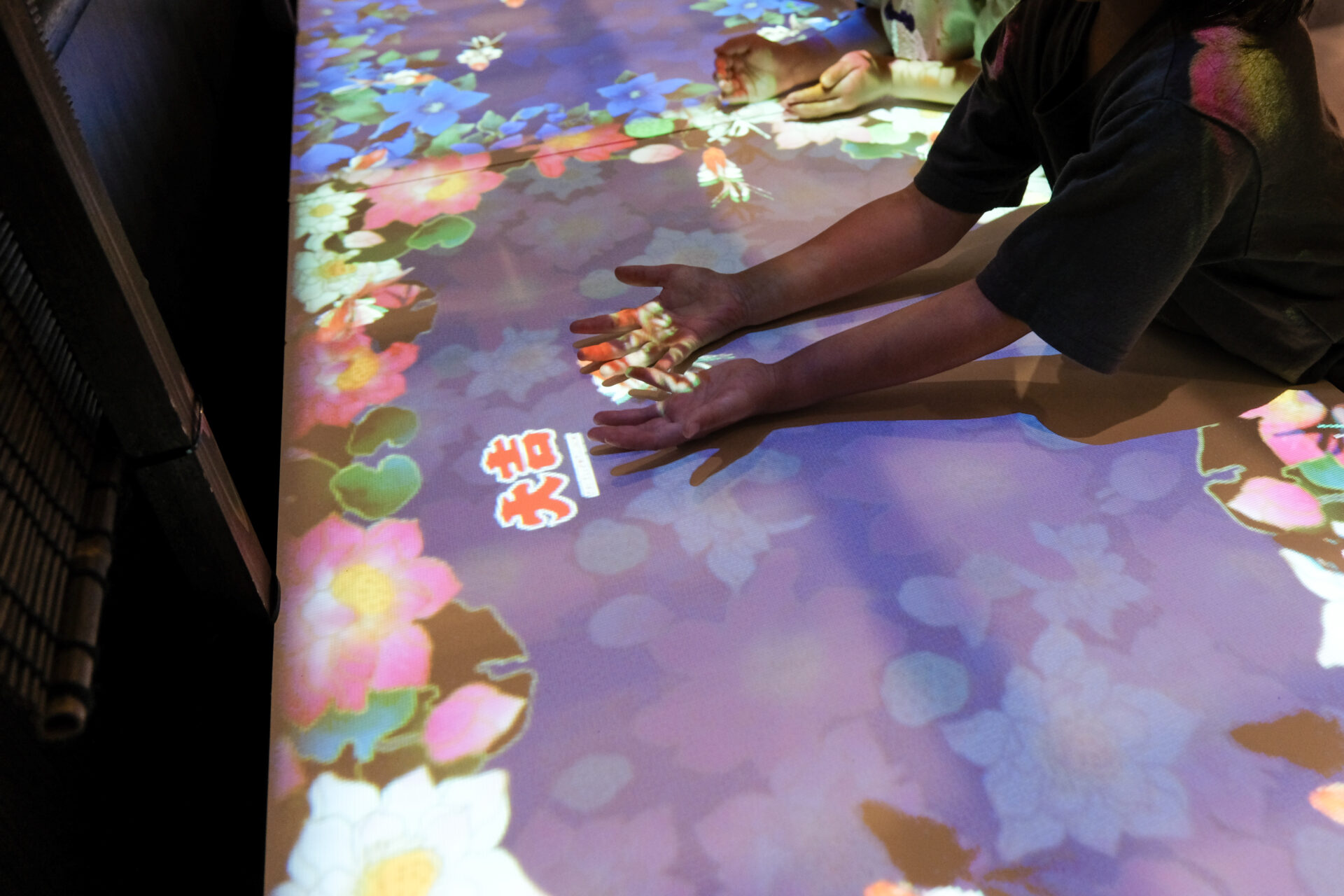
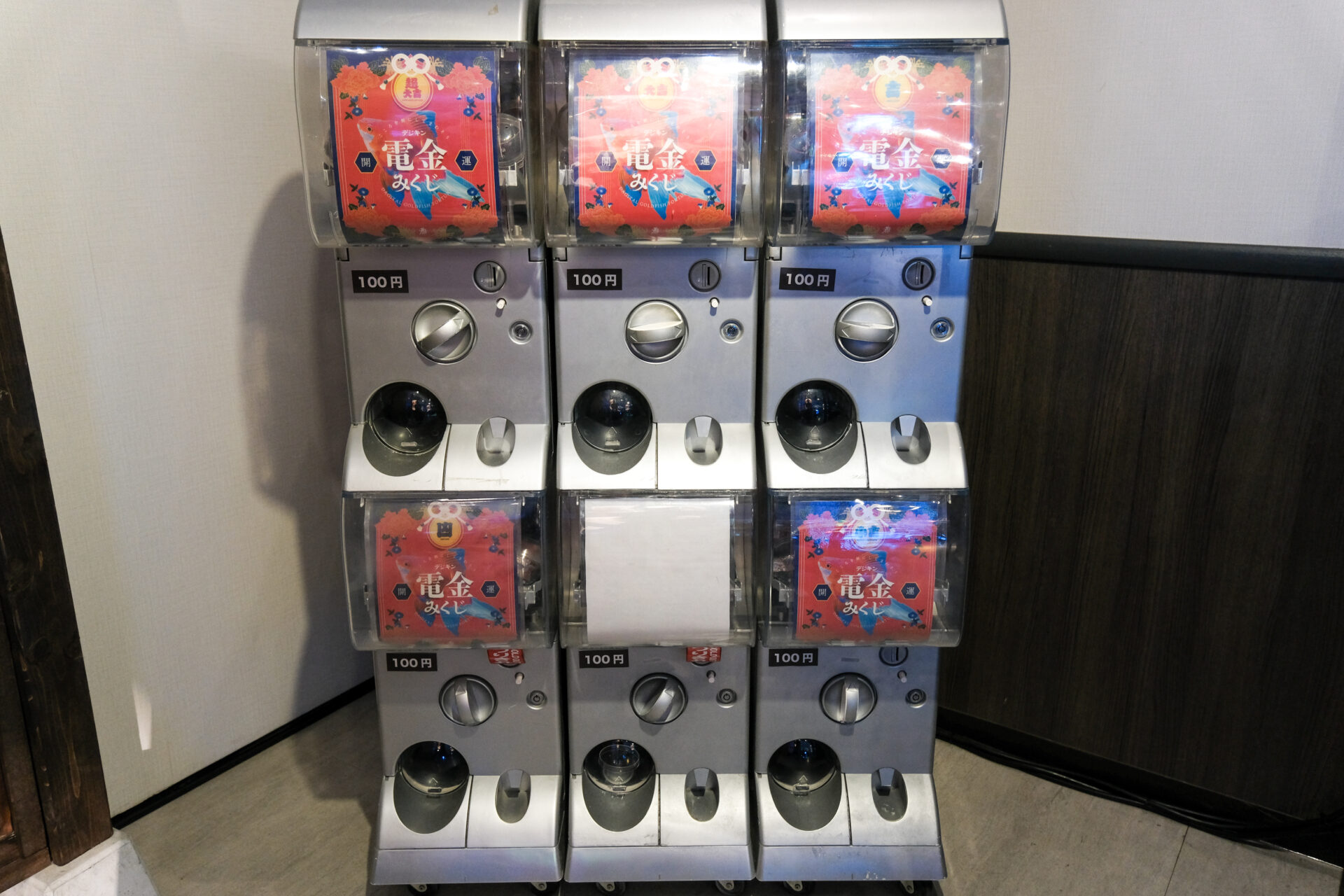
When you successfully scoop a goldfish, an omikuji fortune slip appears. Since the exhibition is being held during summer vacation, the space is filled with thoughtful touches that let children enjoy the aquarium while playing.
Seven-Color Dome
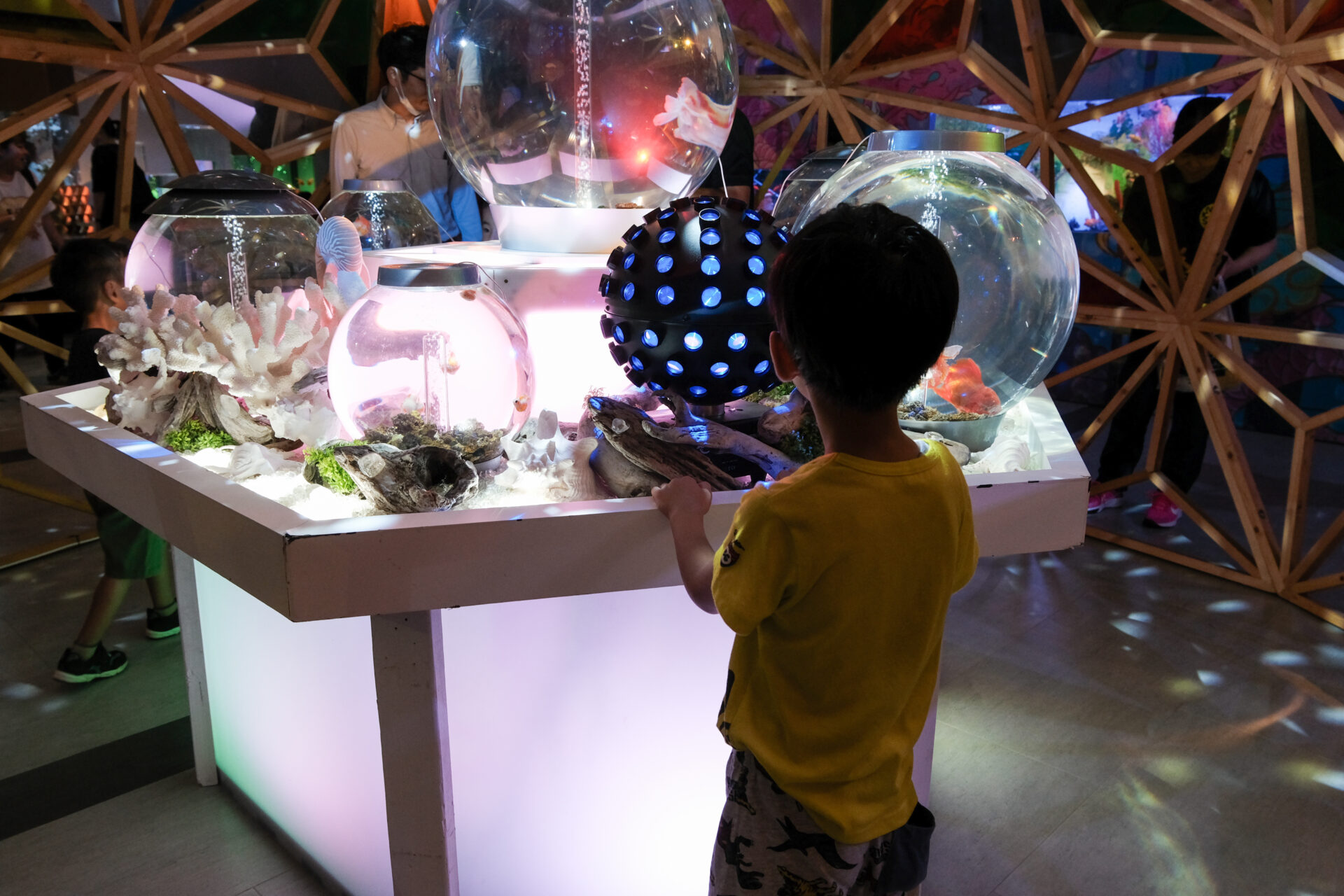
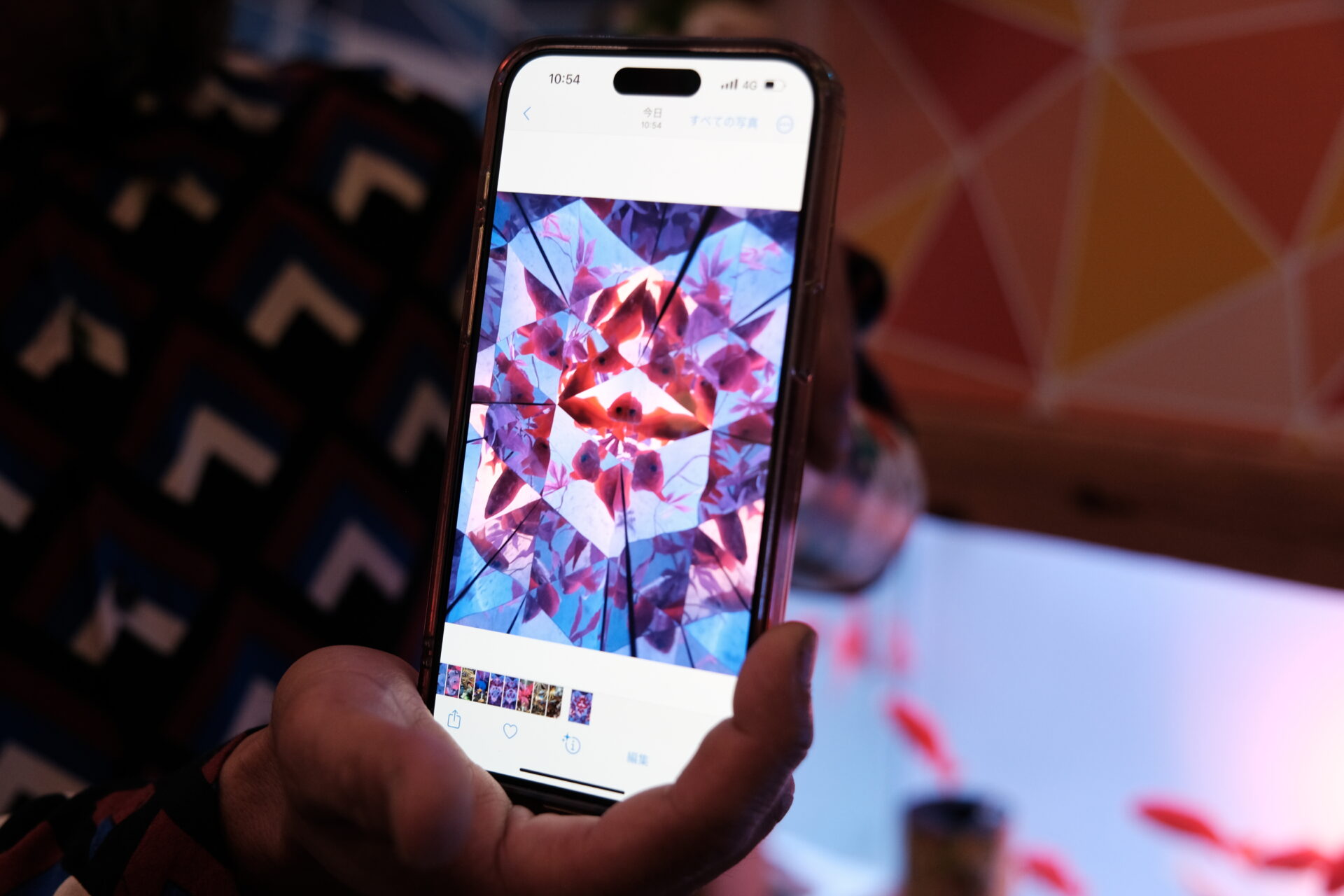
The wooden dome installed in the center of the venue is a fantastical space, like a kaleidoscope, with light from a mirror ball inside the dome reflecting all around.
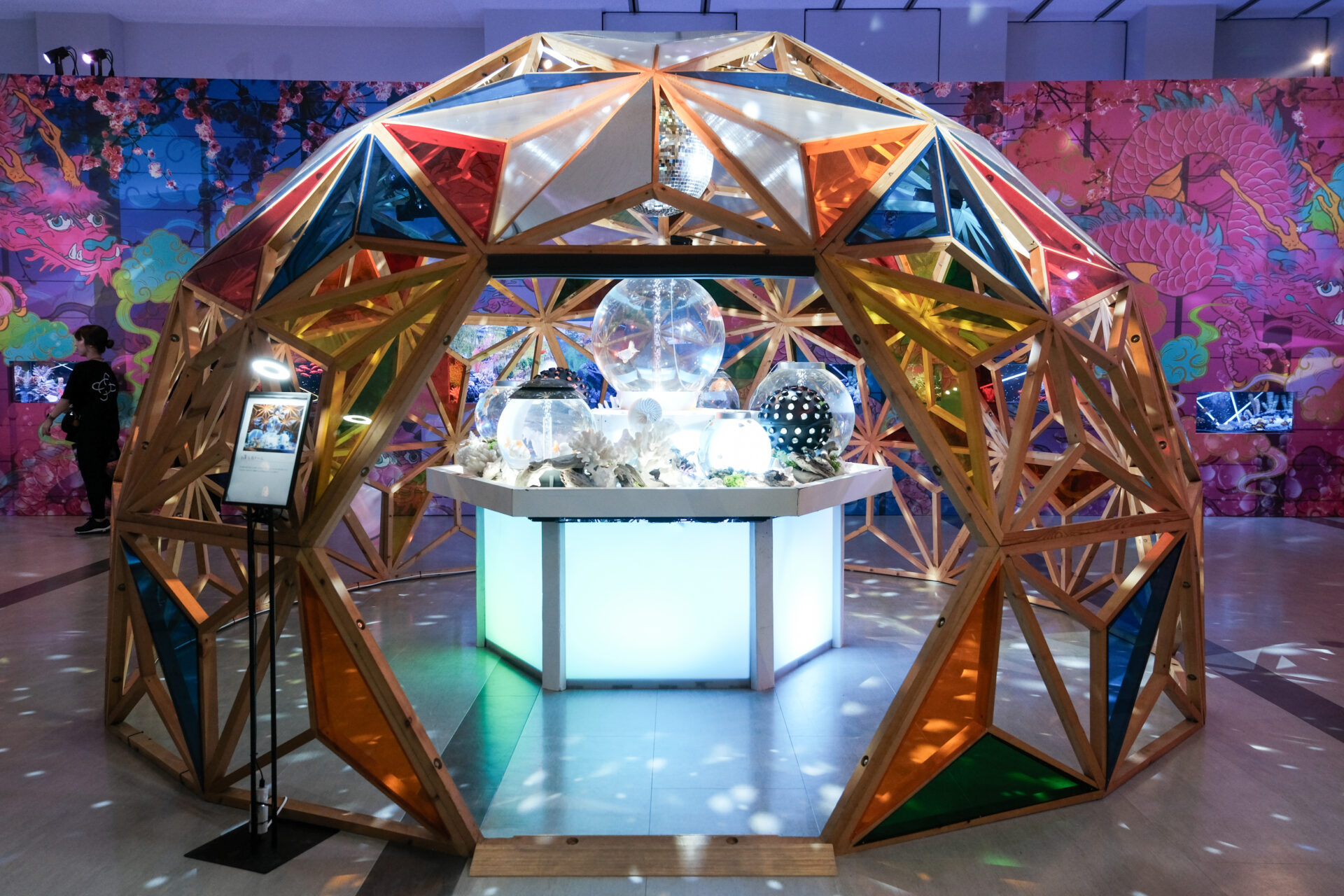
You can admire it from outside, or go inside and gaze at the goldfish, becoming part of the kaleidoscope yourself.
You can also see the rest of the venue from inside the dome, so you can enjoy a variety of views.
Bizen Goldfish
This is a space where Okayama’s Bizen ware meets goldfish.
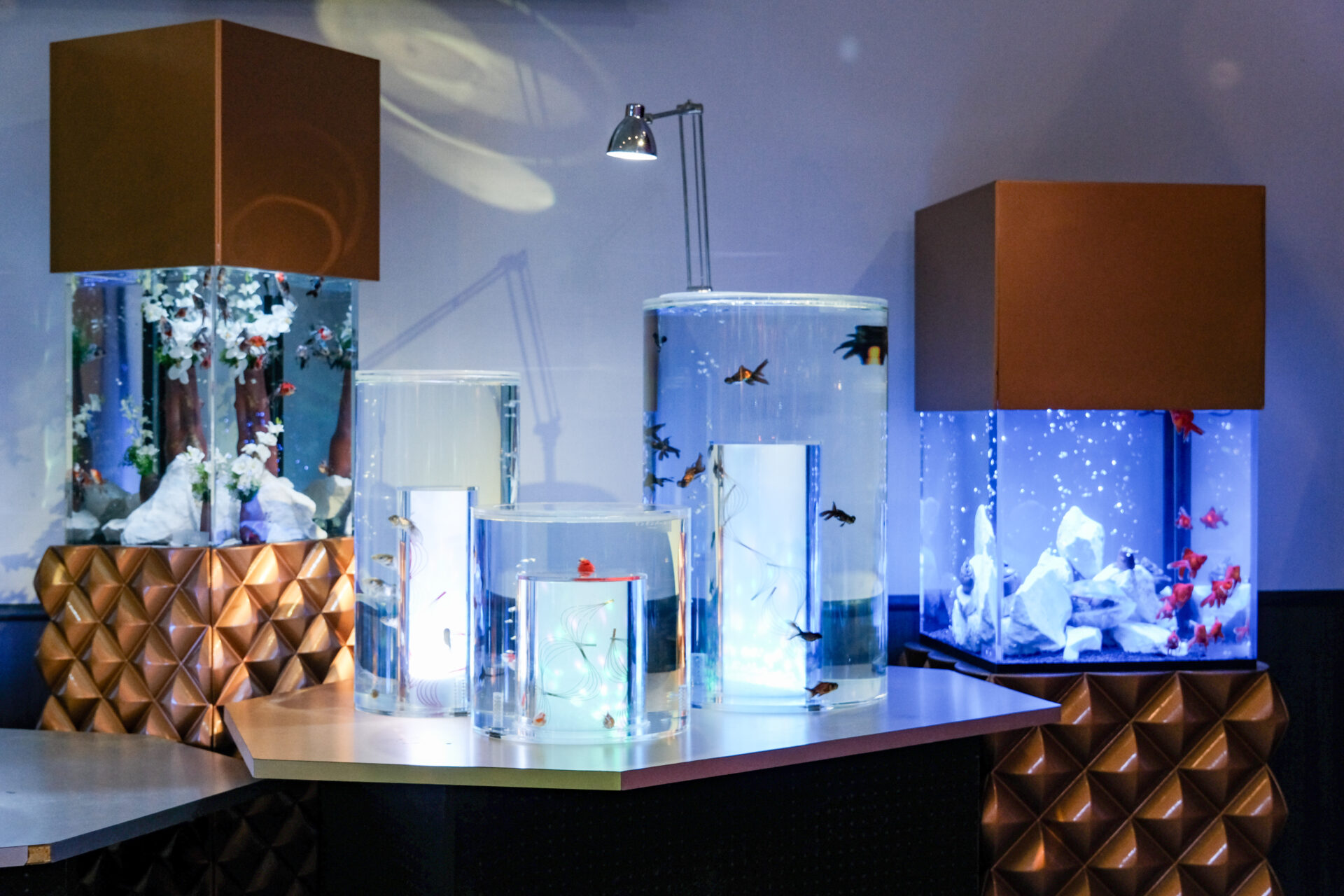
In a tank decorated with the Bikan Historical Area, a rare goldfish called the Dragon Scale, not yet available in Japan, swims.
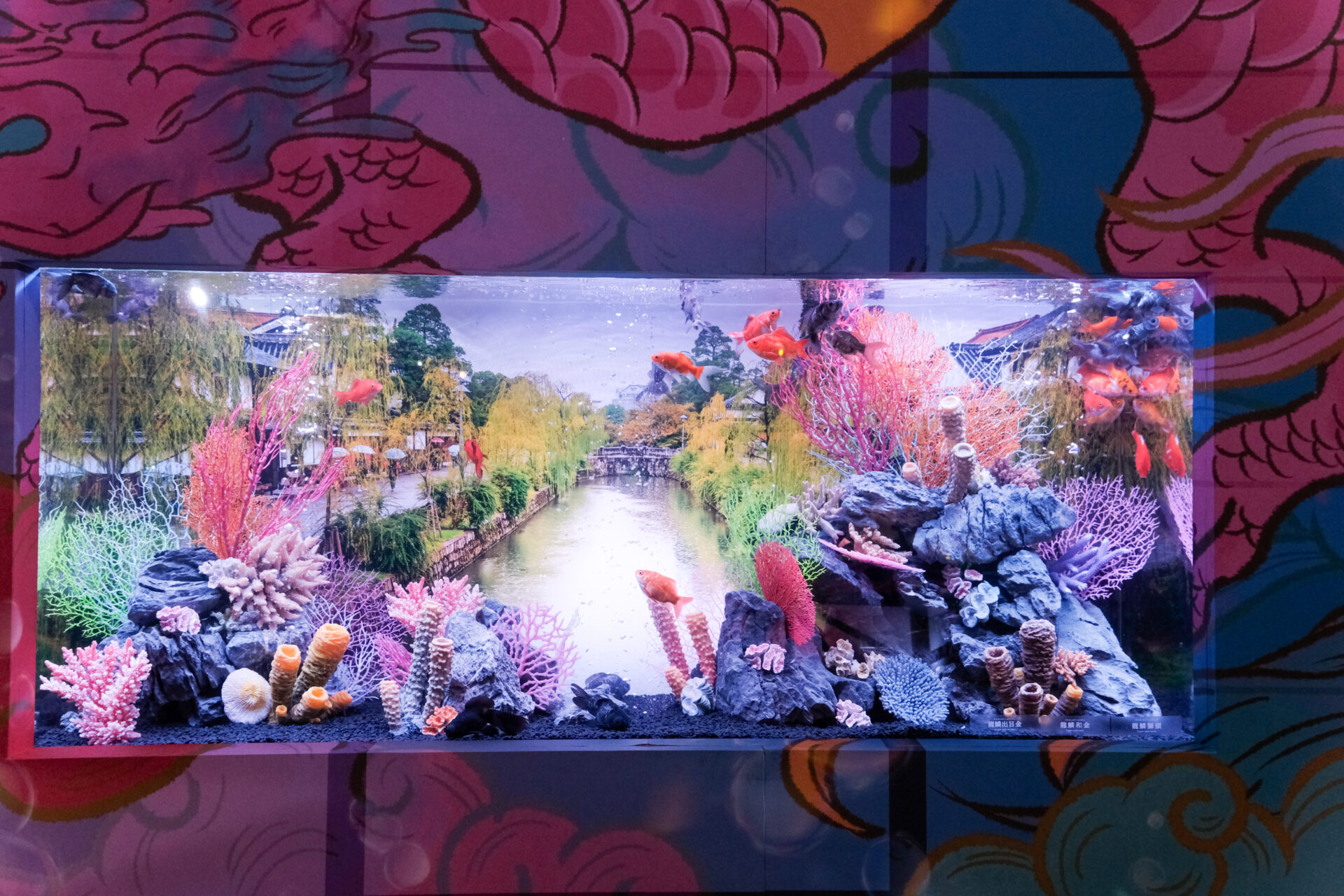
The substantial feel of Bizen ware, the scenery of the Bikan Historical Area, and the goldfish go together beautifully. It makes your imagination run wild: how wonderful it would be if goldfish really swam in the Bikan Historical Area…
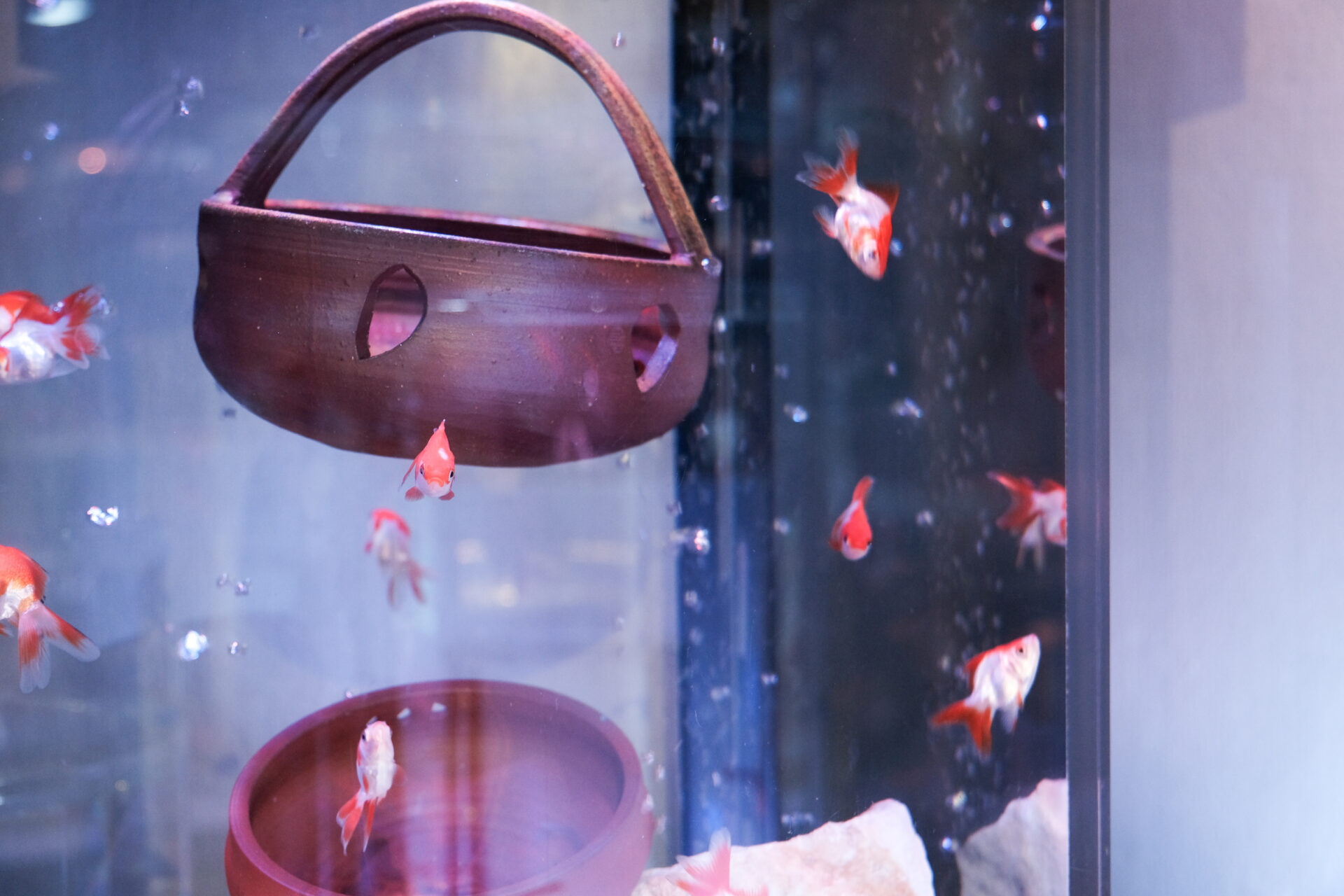
The Story of the Dragon and the Goldfish
The culmination of the four zones above, located at the end of the venue, is a space reminiscent of the Dragon Palace.
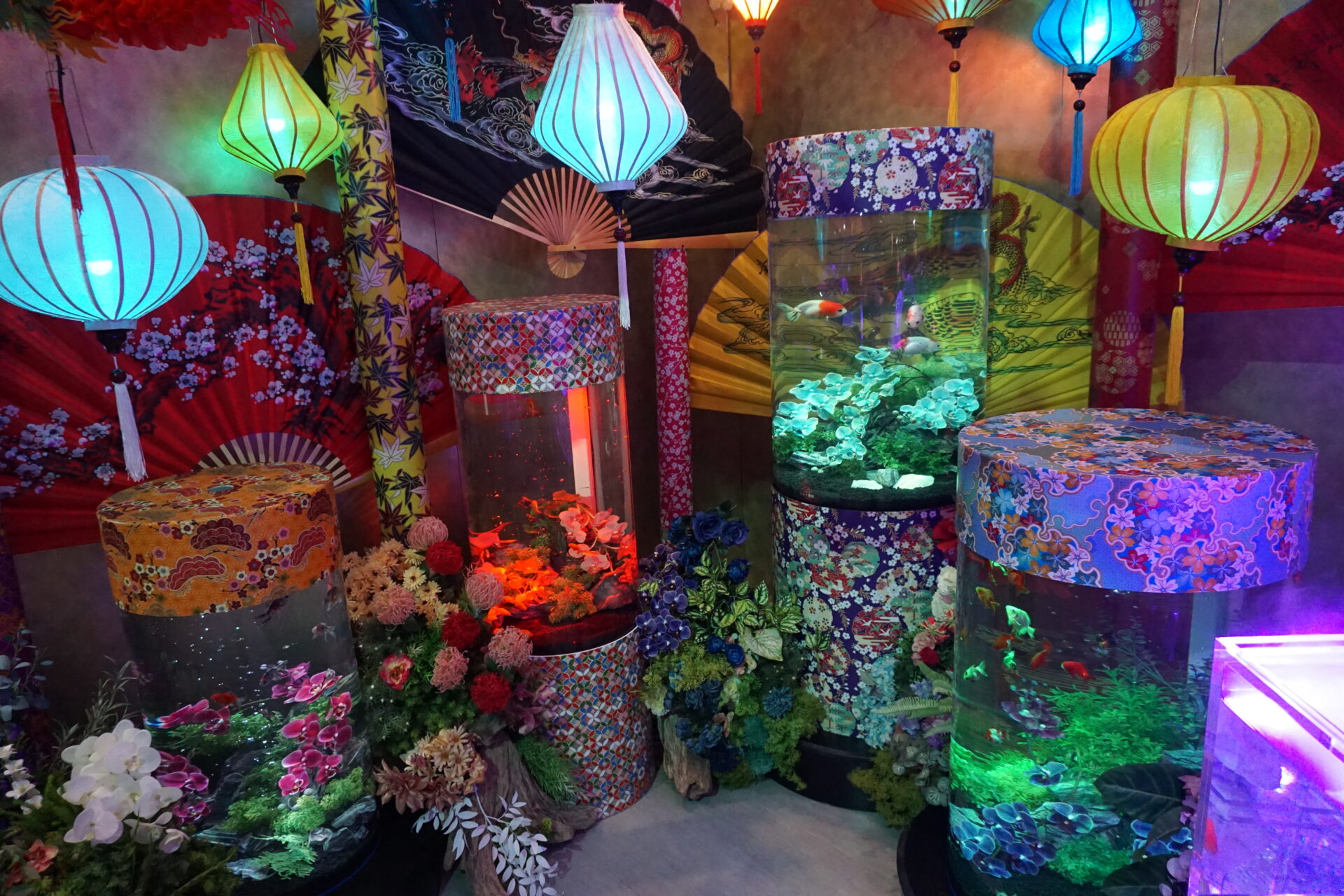
The visual impact of the art is just one part of the experience. You can enjoy the space with every sense, from the fragrance of flowers to the sound of flowing water. It truly is a place where you can experience goldfish viewing as contemporary art.
There are also kaleidoscopes you can look through, so we recommend viewing the goldfish through one.
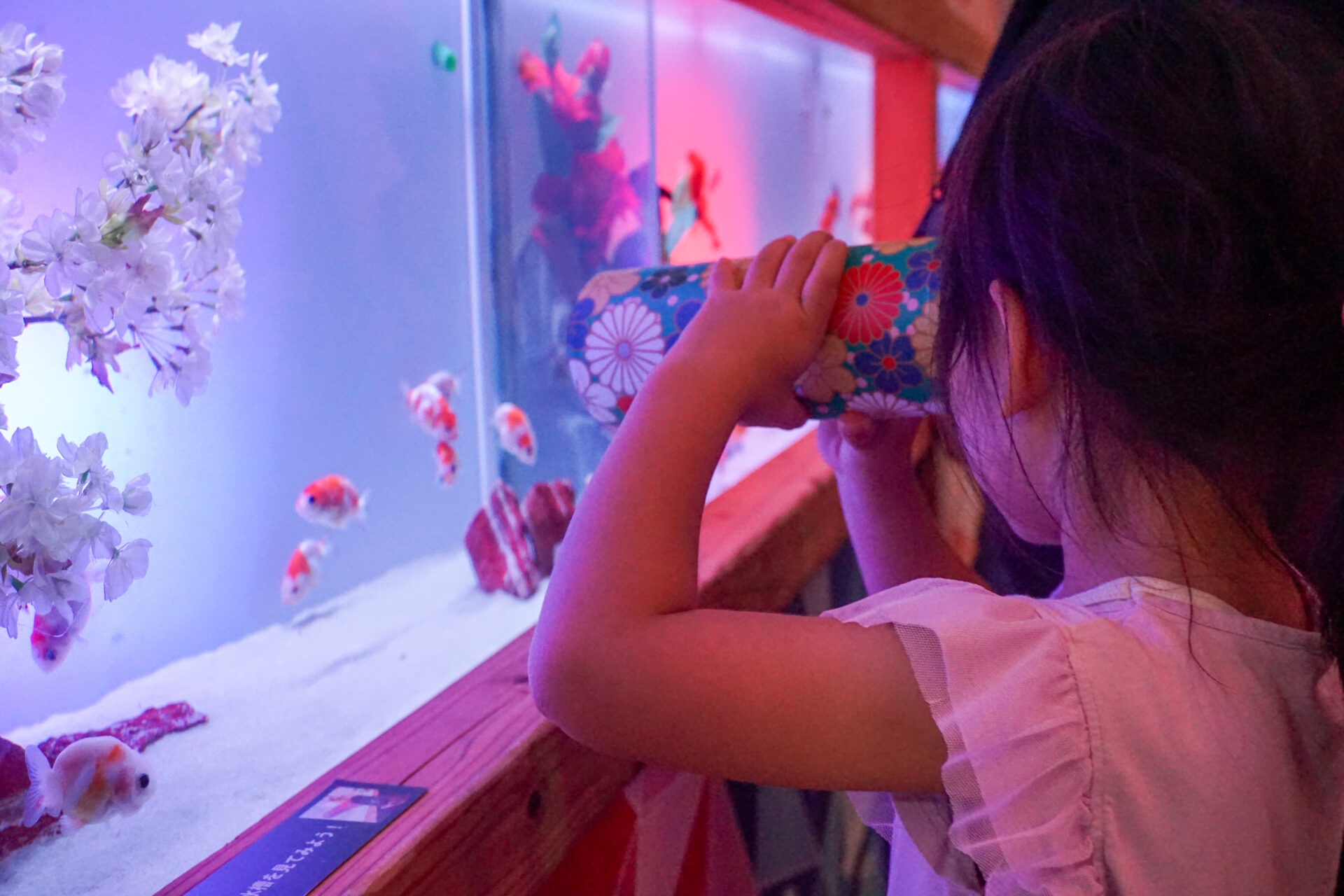
Goldfish Lantern Path
On the path from the venue to the exit, goldfish lanterns see you off.
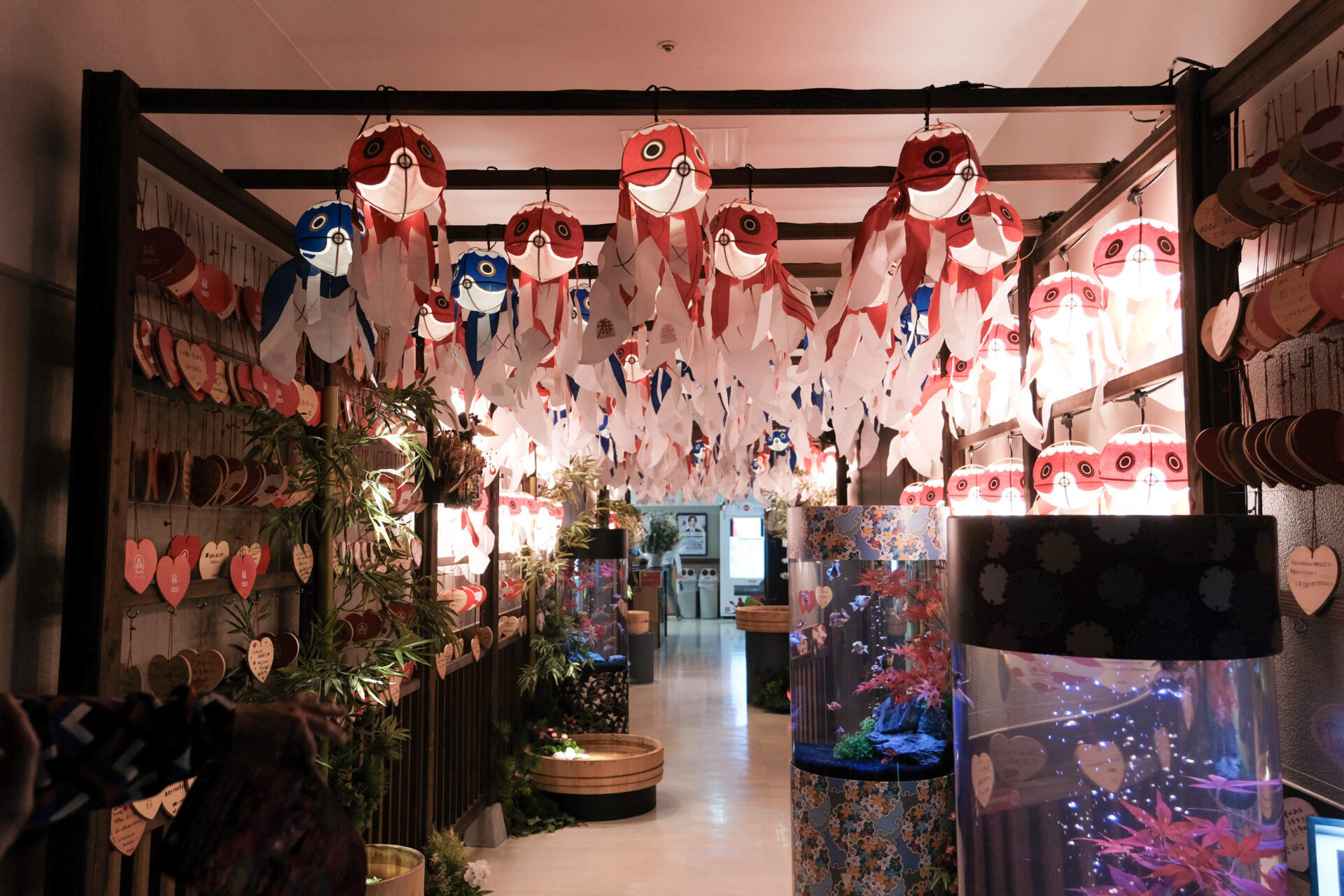
These original lanterns were made especially for this aquarium by artisans from Yanai City, Yamaguchi Prefecture, a place famous for producing goldfish lanterns.
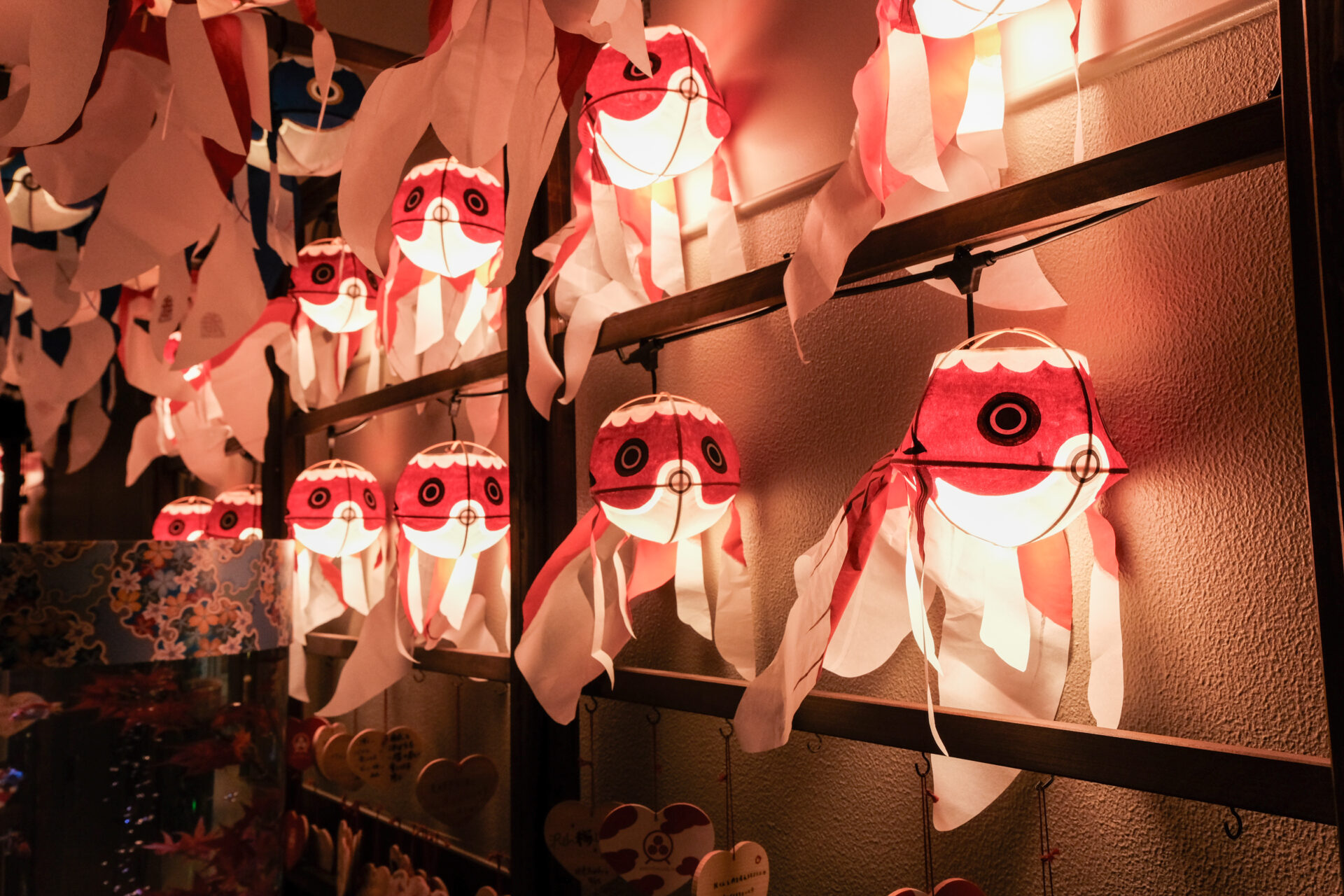
The space was apparently designed to evoke the “Kurashiki Fish Festival,” which was held in Kurashiki during the Edo period.
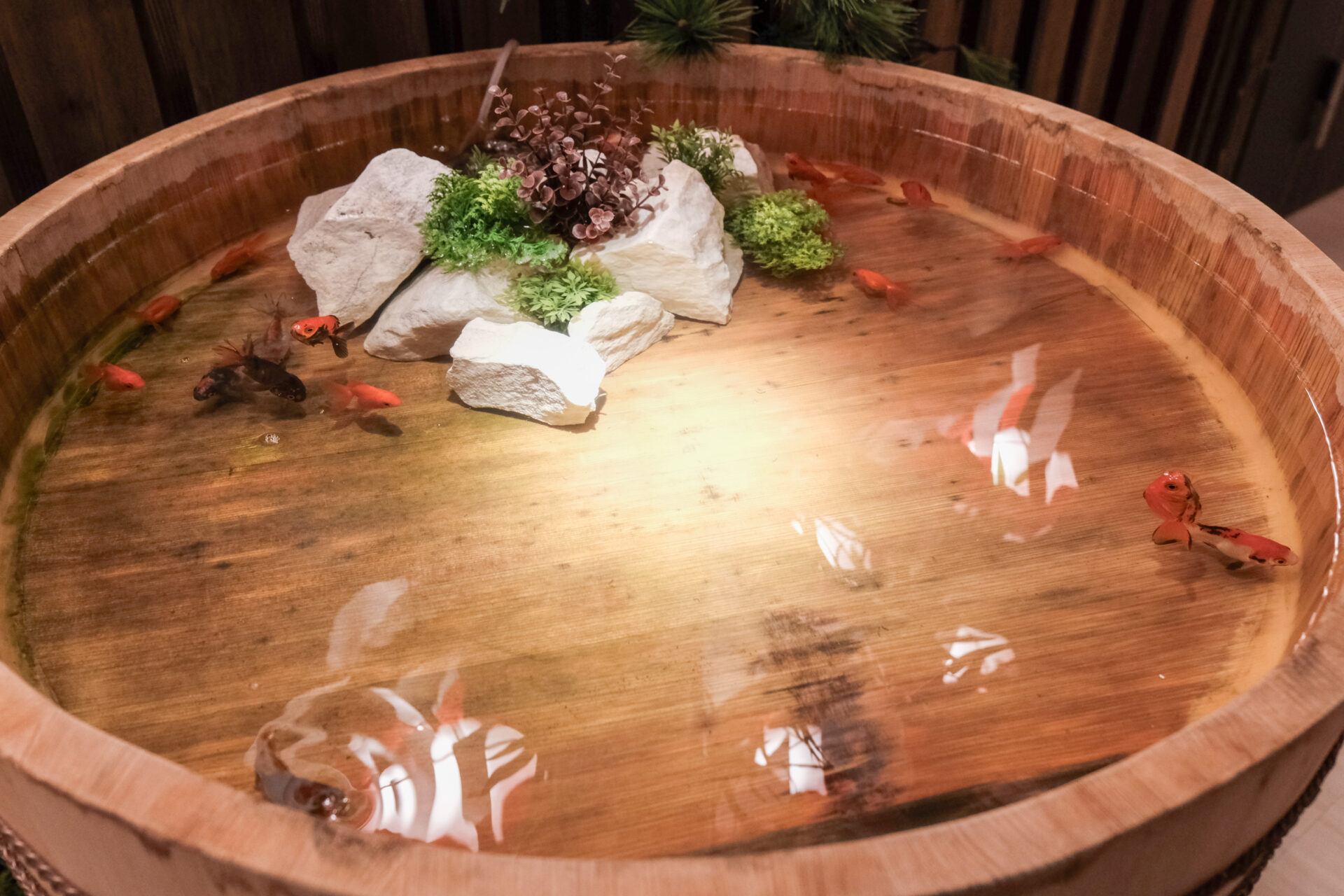
Charming goldfish lanterns swim through the air, and when you lower your gaze, goldfish swim in wooden tubs. The “Kurashiki Fish Festival” is no longer held, and although none of us has ever experienced it, we leave the venue feeling a comforting sense of nostalgia.
The venue is spacious and does not have a one-way route, so you can take your time and enjoy the exhibits at your own pace.
Find your favorite goldfish
Around 1,000 goldfish of 40 varieties are on display at the “Kurashiki Goldfish Museum.”
Alongside popular varieties found at other venues, such as the Ping Pong Pearl, which is round like a ping-pong ball, the exhibition also features goldfish that are rarely seen in Japan.
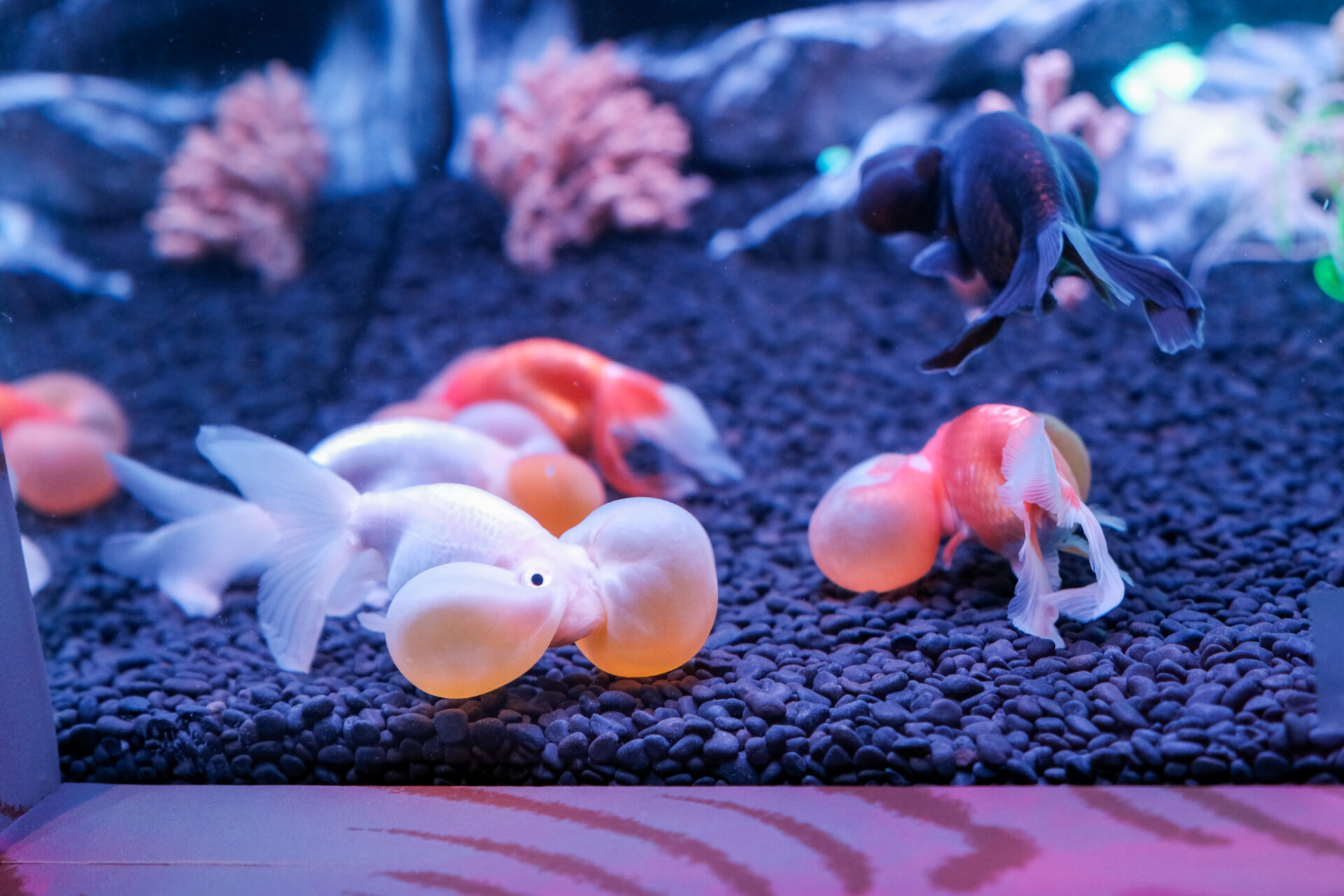
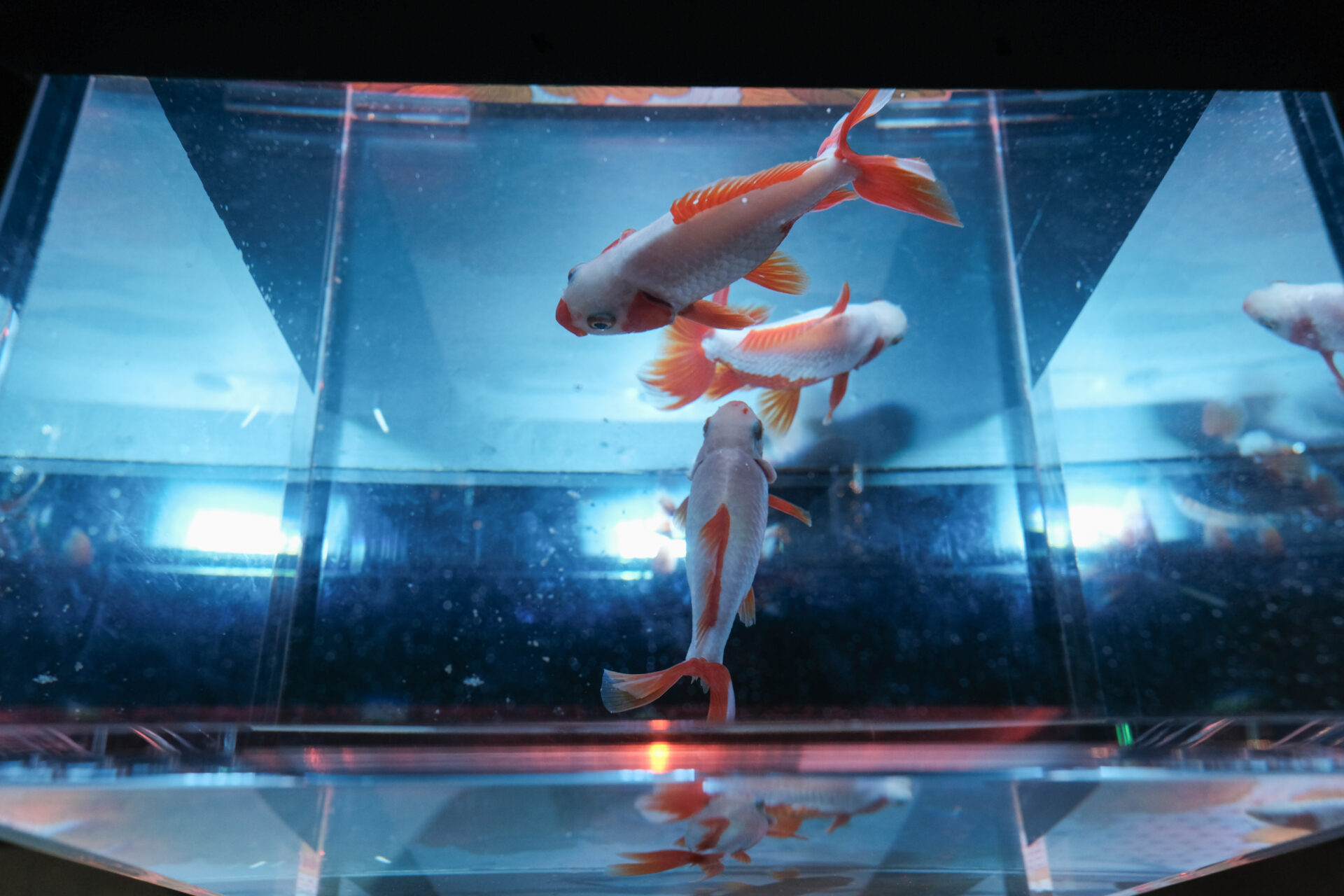
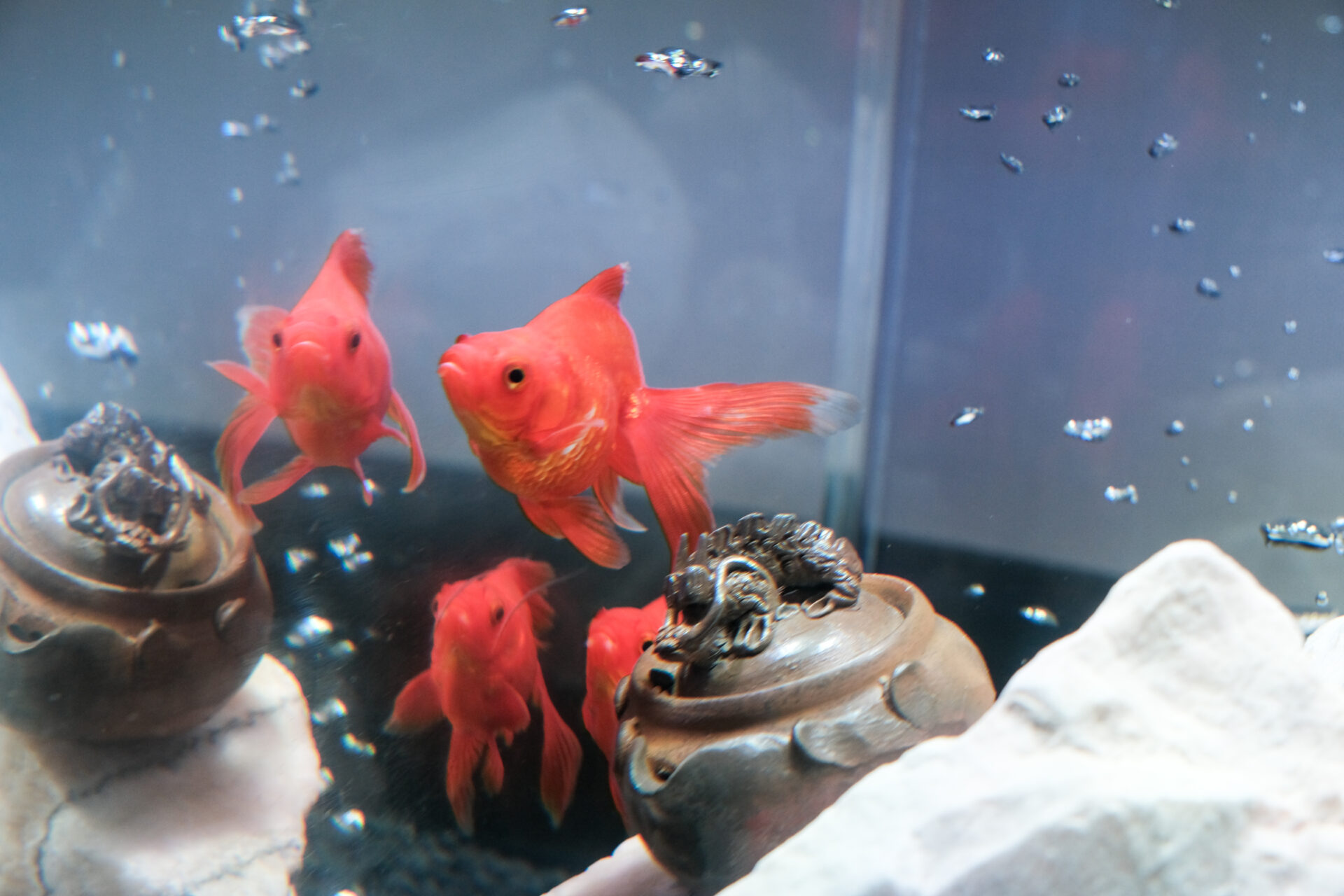
Each has its own colors and shape, so it could be fun to find your own “favorite” goldfish.
An interactive aquarium for children and adults
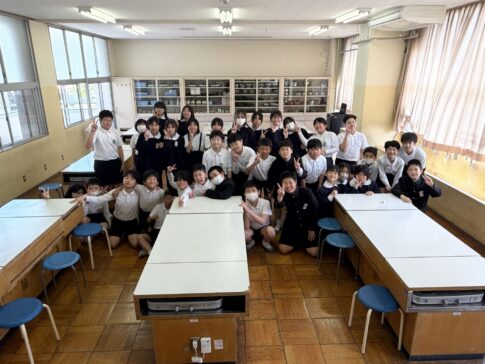
In the second half of the preview, children from a nursery school also visited.
The most popular area with the children was, as expected, the Digi-Kin zone. It was memorable to see them actively running around, chasing goldfish swimming at their feet and trying their luck at the digital goldfish-scooping fortune game.
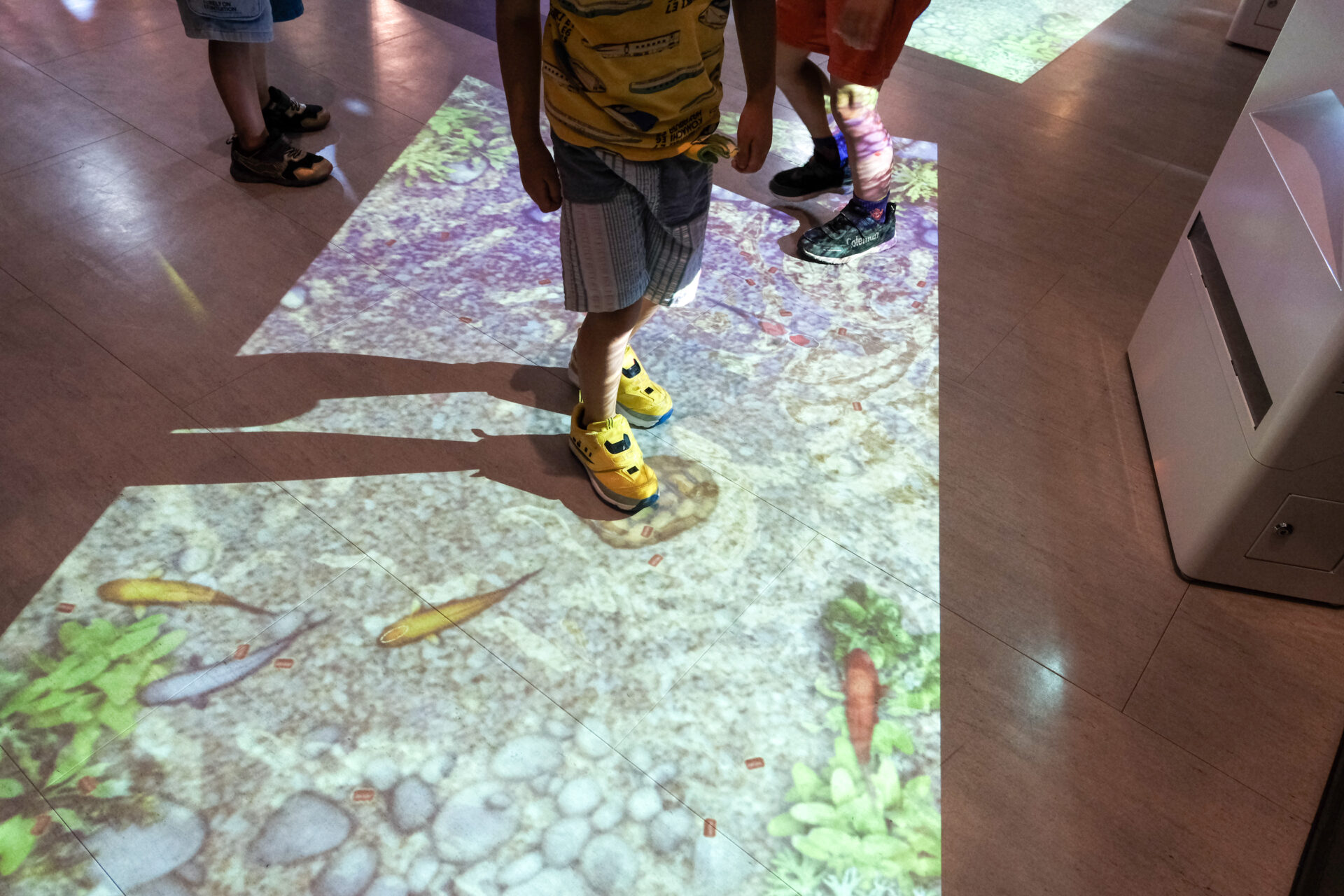
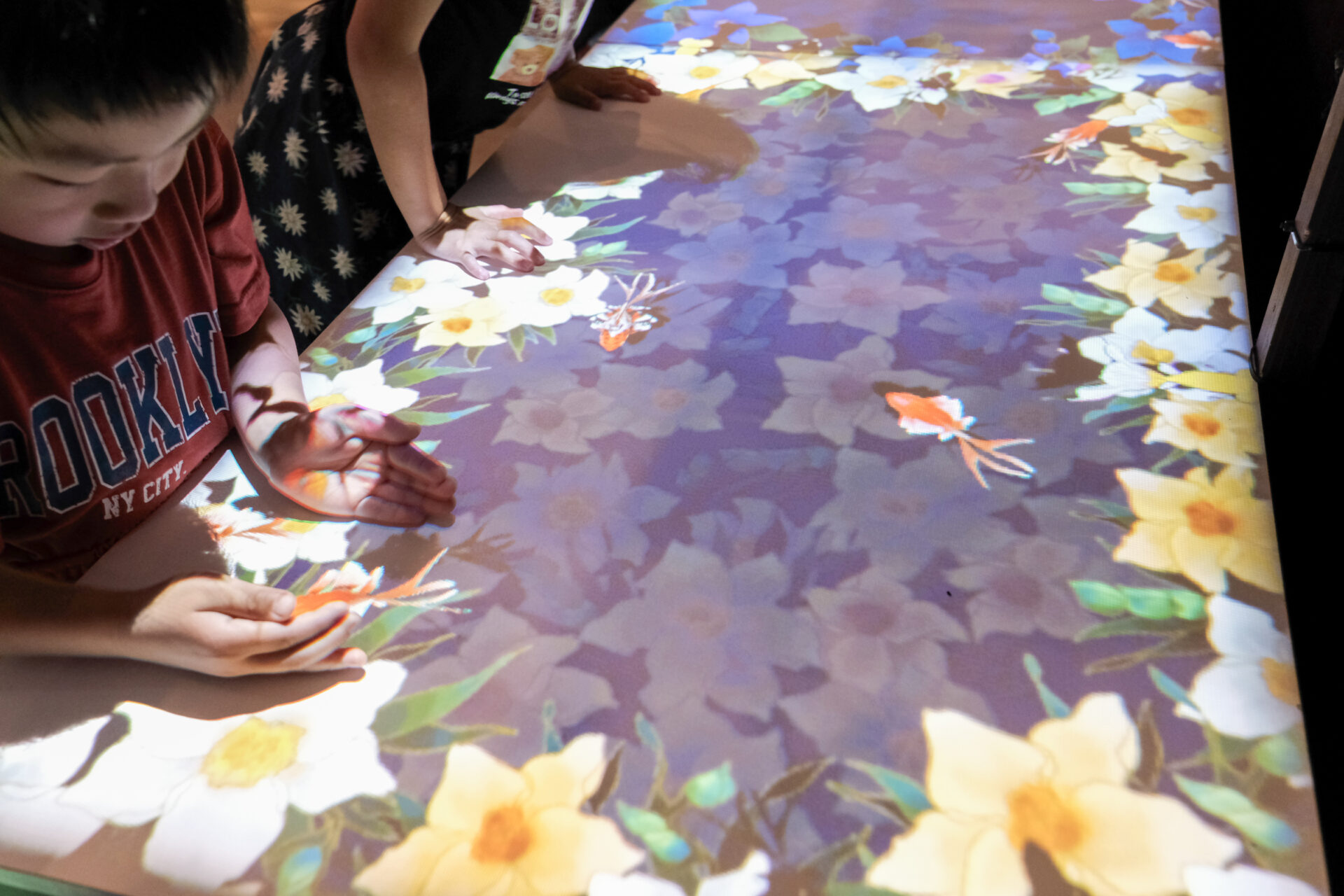
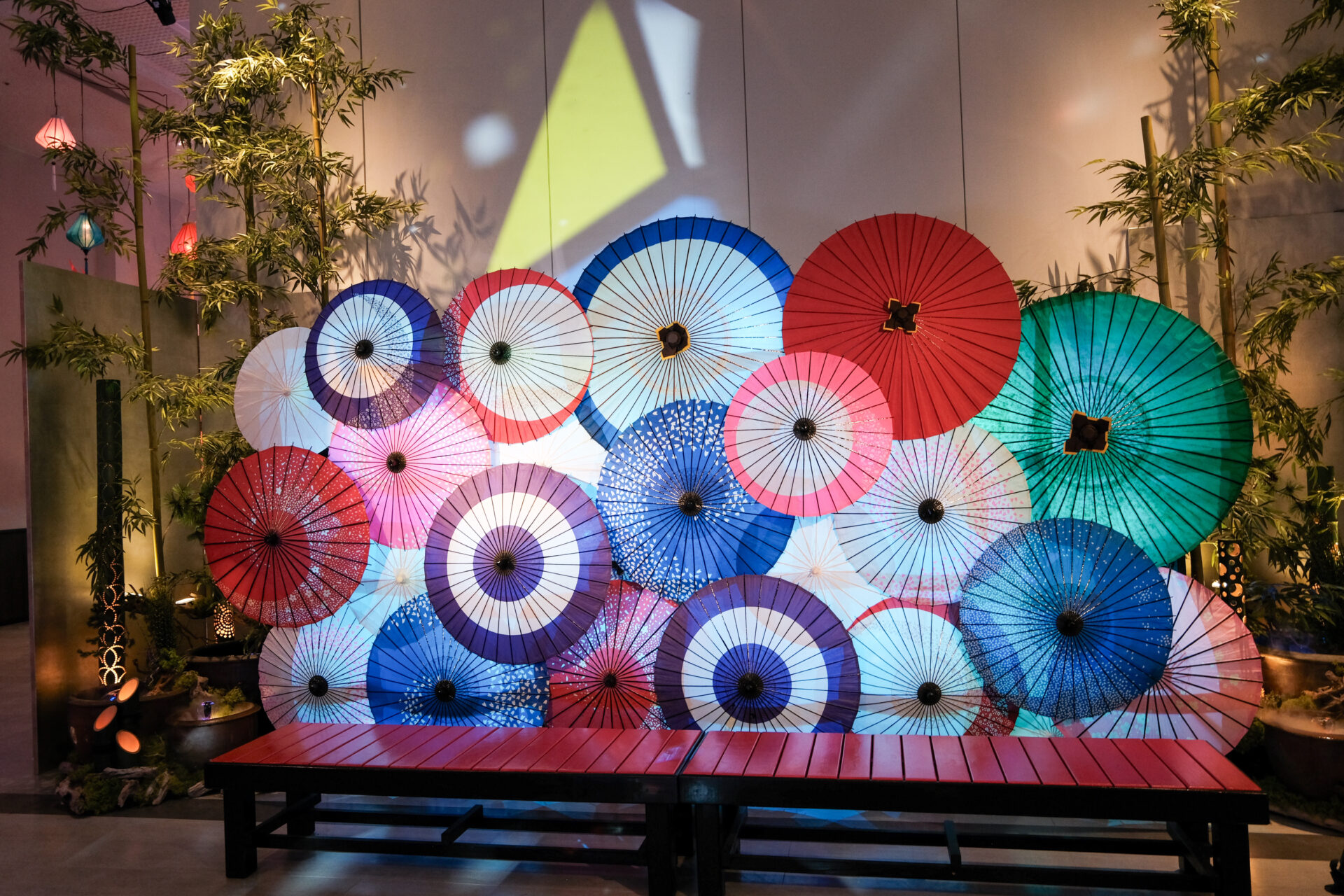
Exhibitions in dark spaces may give the impression that you have to stay quiet, but the activities naturally make things lively. There are also photo spots throughout, so you can capture summer memories in pictures.
There is also an area at the venue entrance where you can try your hand at goldfish scooping. Why not give it a try?
From the Writer
In recent years, it seems that interactive art experiences, such as teamLab, have become more common—not just aquariums. Interactive art, where the work comes alive as other visitors move around or scoop goldfish, offers a different kind of enjoyment from traditional art that you quietly take in.
AEON MALL Kurashiki is a popular destination for families, so visitors can look forward to a variety of ways to enjoy the exhibits.
The exhibition is open every day through Monday, September 16, its final day.
Since it is indoors, the weather will not affect your visit. Why not stop by, stay cool, and make some summer memories?
Kurashiki Goldfish Museum: A Tale of Dragons and Goldfish — Event Information
| Name | Kurashiki Goldfish Museum: A Tale of Dragons and Goldfish |
|---|---|
| Dates | July 11 (Thu)–September 16 (Mon), 2024 10:00 a.m.–7:00 p.m. |
| Location | 1 Mizue, Kurashiki City, Okayama Prefecture |
| Admission (tax included) | Adults: ¥1,200; elementary school students: ¥600; young children (ages 4 to under elementary school age): ¥300 ※All prices include tax ※Admission is half the regular price for holders of a disability certificate, mental health and welfare certificate, or rehabilitation certificate, and one accompanying person |
| Website | AEON MALL Kurashiki |



What would you like to know about Kurashiki?
Enter a search term to find articles on this site