Do you know about the creature called "ichthyosaur"?
It is a "reptile" that appeared about 250 million years ago, before the first dinosaurs were born, and resembles a dolphin.
From August 2 (Saturday) to 31 (Sunday), 2025, a special exhibition was held to commemorate the discovery of the first ichthyosaur fossil in western Japan from the fossils stored at the Nariwa Museum of Art, Takahashi City.
I have heard about the actual ichthyosaur fossils on display, including the rock containing them, and the circumstances of their discovery, so I will report on that.
Introduction to the Fossil Exhibition Room at Nariwa Museum of Art, Takahashi City
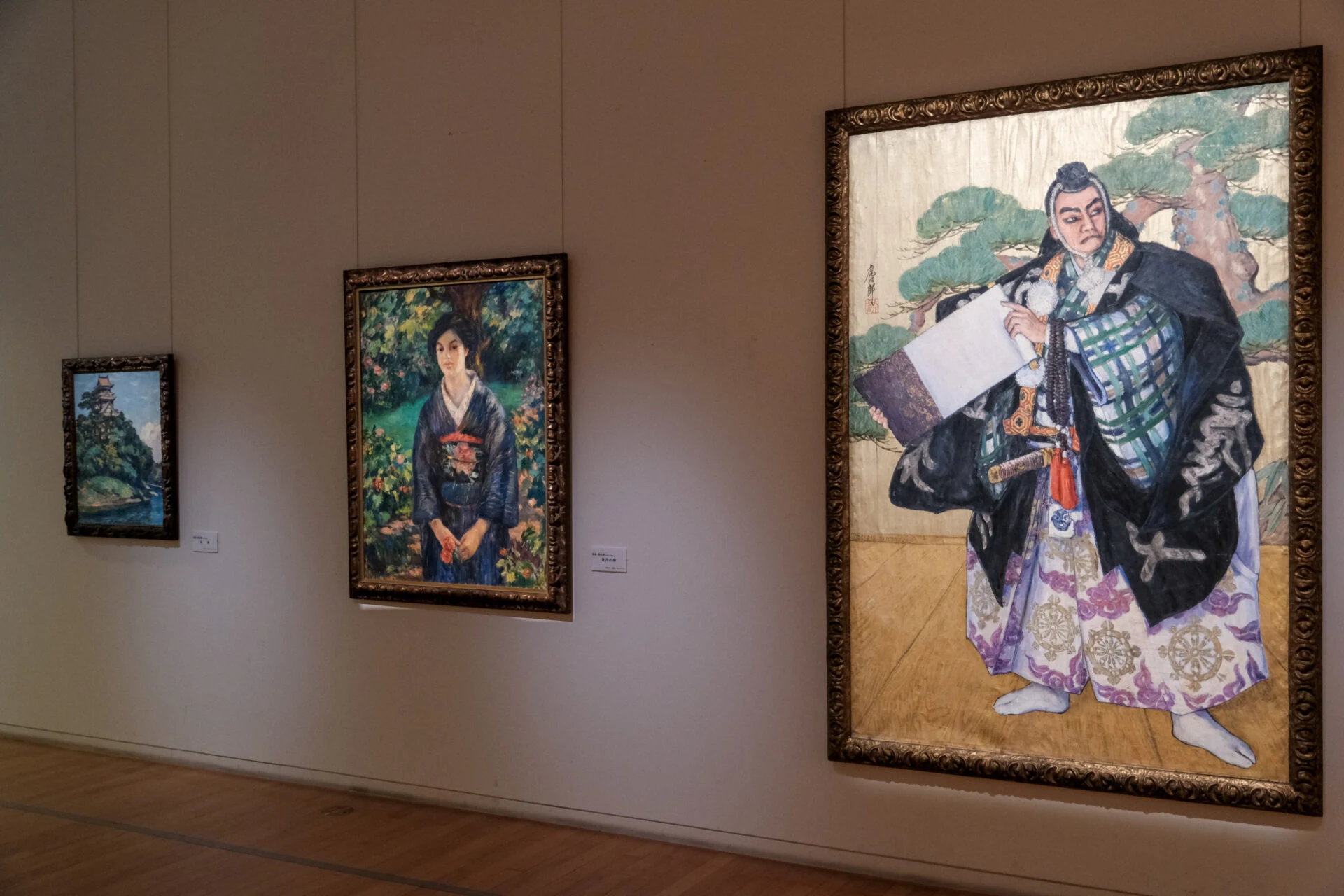
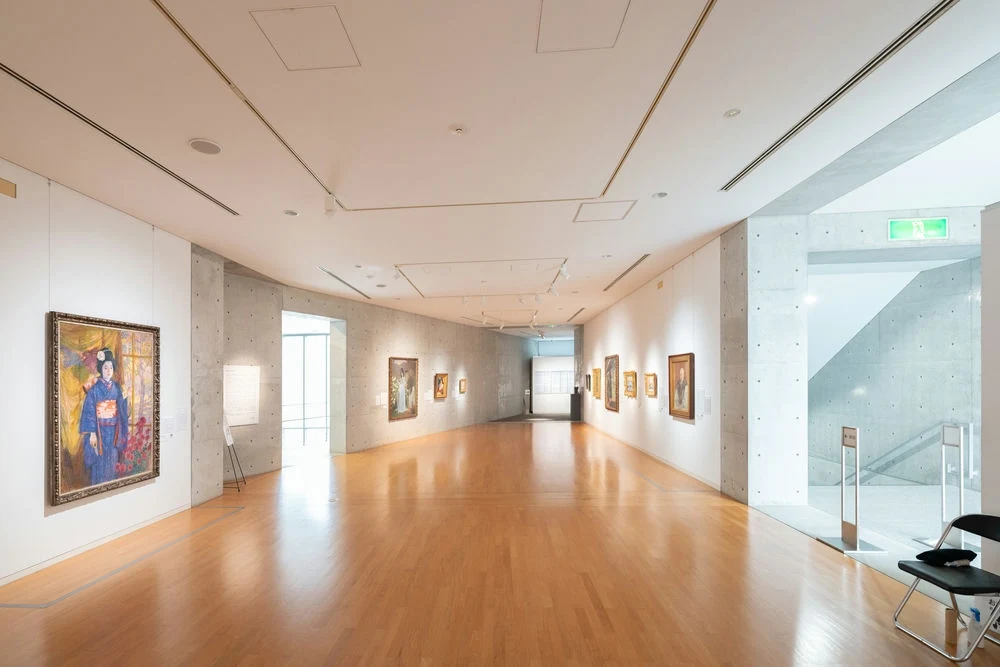
Nariwa Museum of Art, Takahashi City, was opened in 1953 as the first municipal art museum in Okayama Prefecture to honor the legacy of the Western painter Kojima Torajiro, who was from Nariwa-cho. Since then, it has hosted numerous exhibitions in addition to its permanent collection.
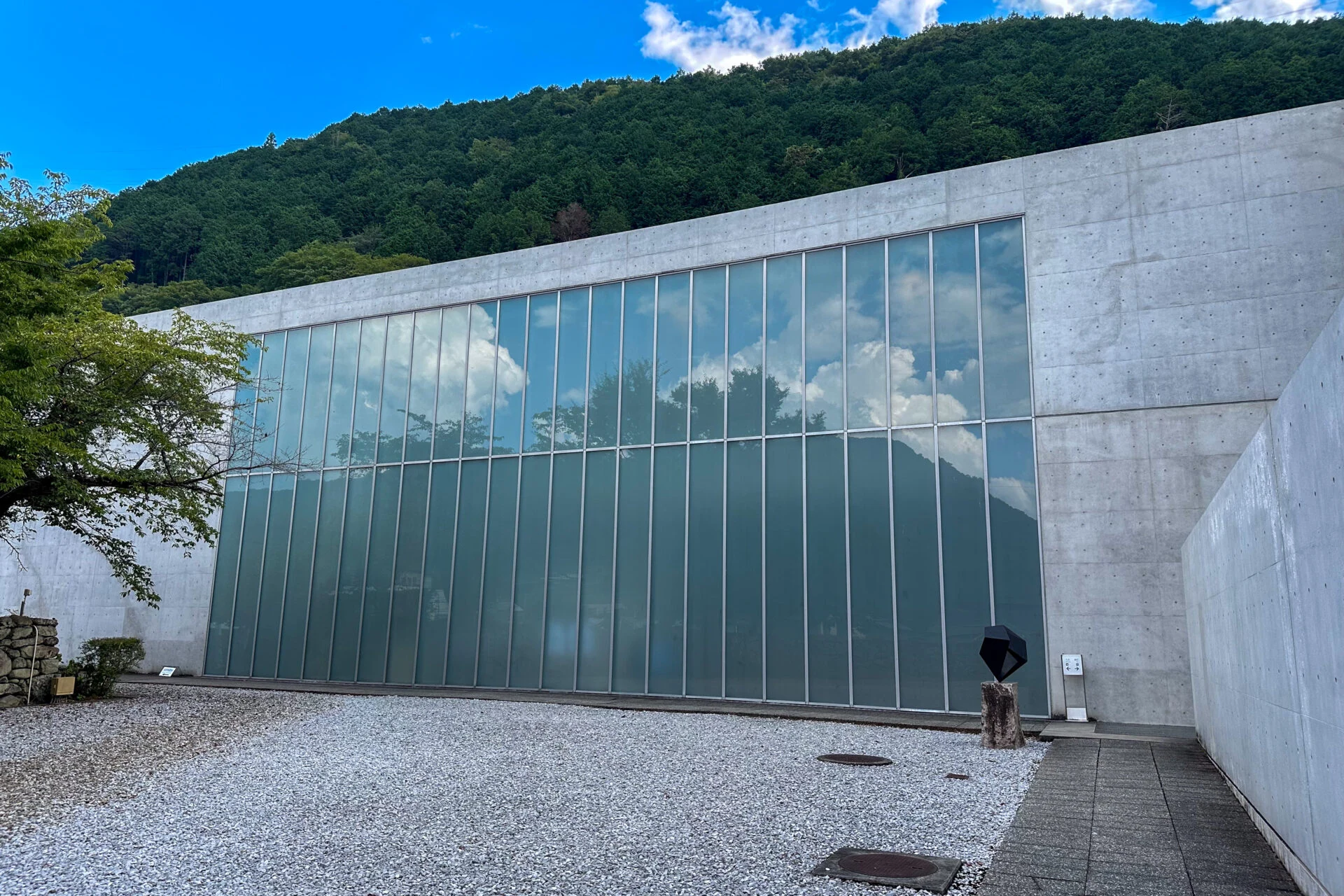
The current building is the third generation, newly constructed in 1994 based on the design of world-renowned architect Tadao Ando. The modern building, characterized by exposed concrete, appears to be a single work of art both inside and out.
The "Fossil Exhibition Room," located on the second floor of the museum, displays many fossils, primarily focusing on plant fossils collected from the surrounding area.
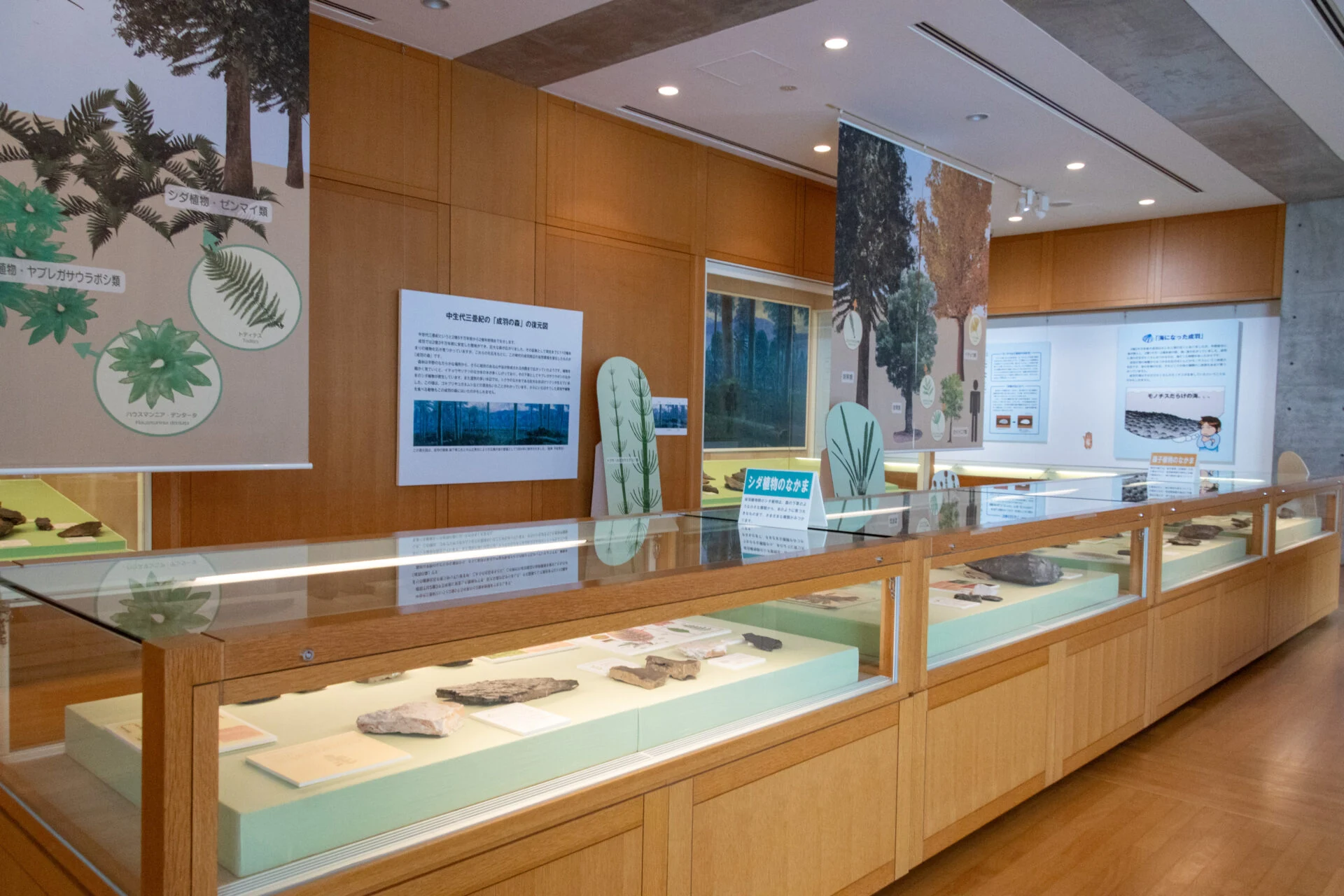
The combination of the museum and fossil exhibition creates a somewhat mysterious pairing, which is rooted in the geological layers of the Nariwa area.
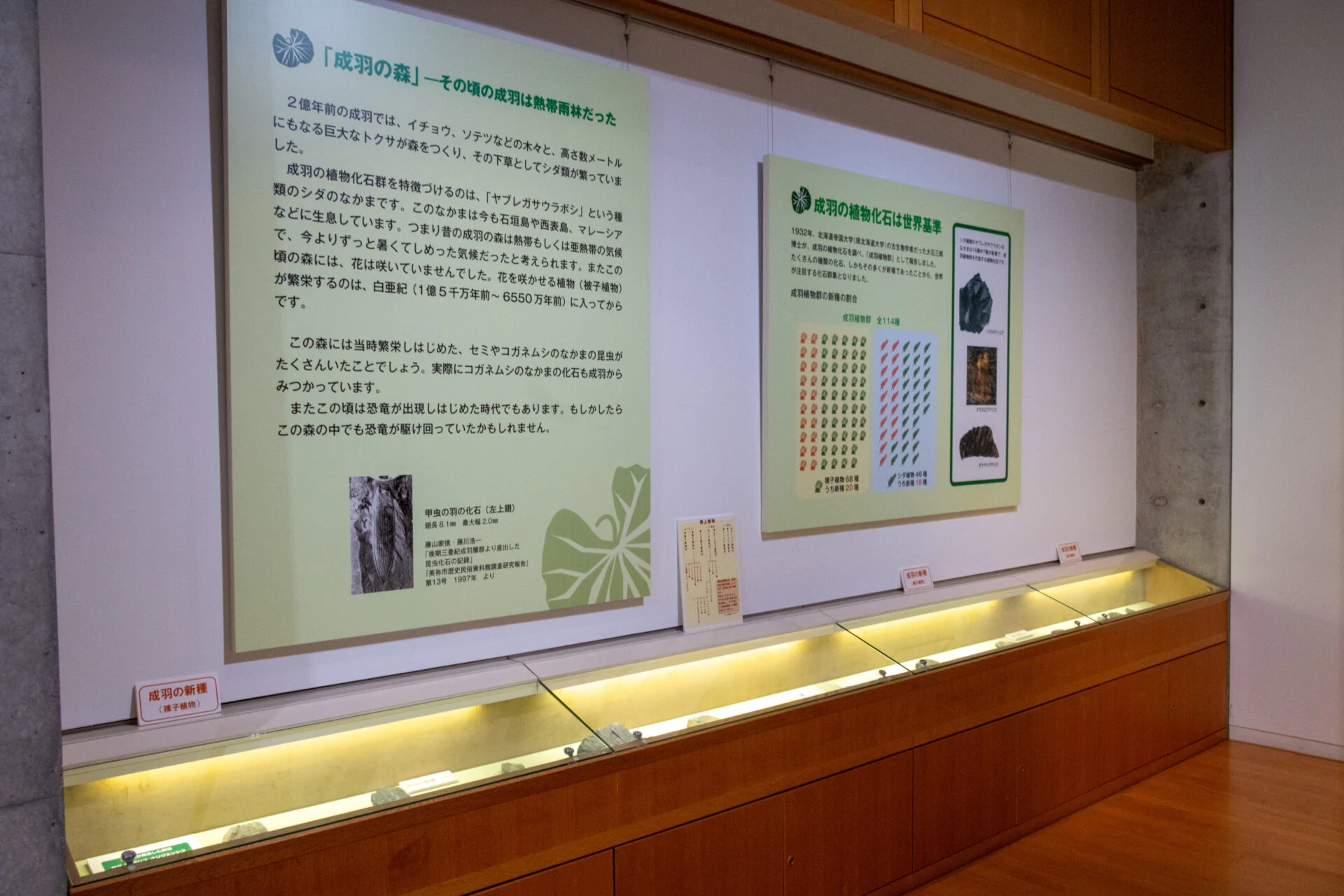
The Nariwa area has geological layers that date back about 230 million years. Fossils of plants have been collected from these layers, making it an active area for academic research since the Meiji period to the present.
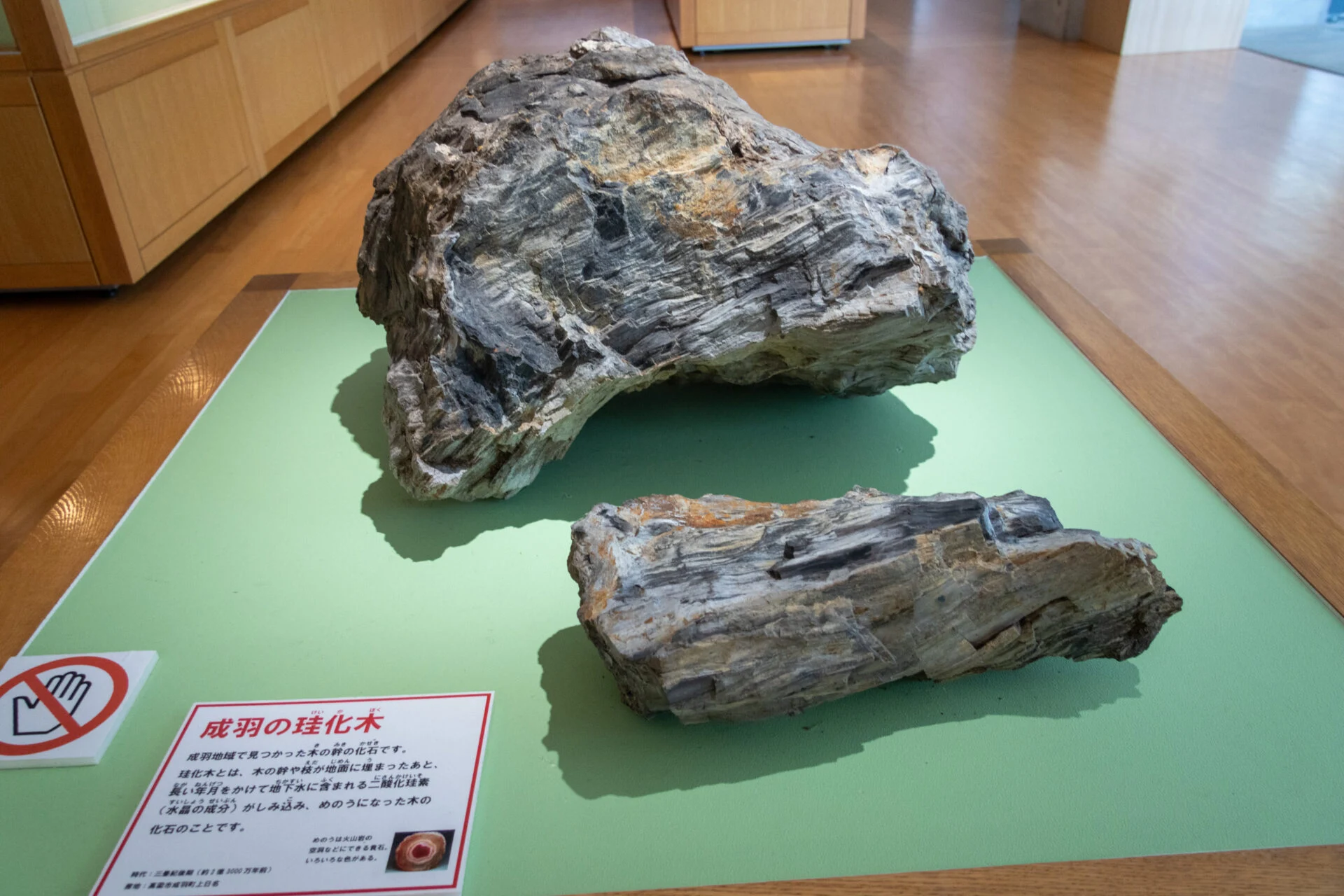
Due to such circumstances, the museum has been displaying fossils since its opening in 1953, with the aim of preserving and collecting the region's natural heritage.
What is an Ichthyosaur?
What kind of creature was the "ichthyosaur," which was discovered for the first time in western Japan?
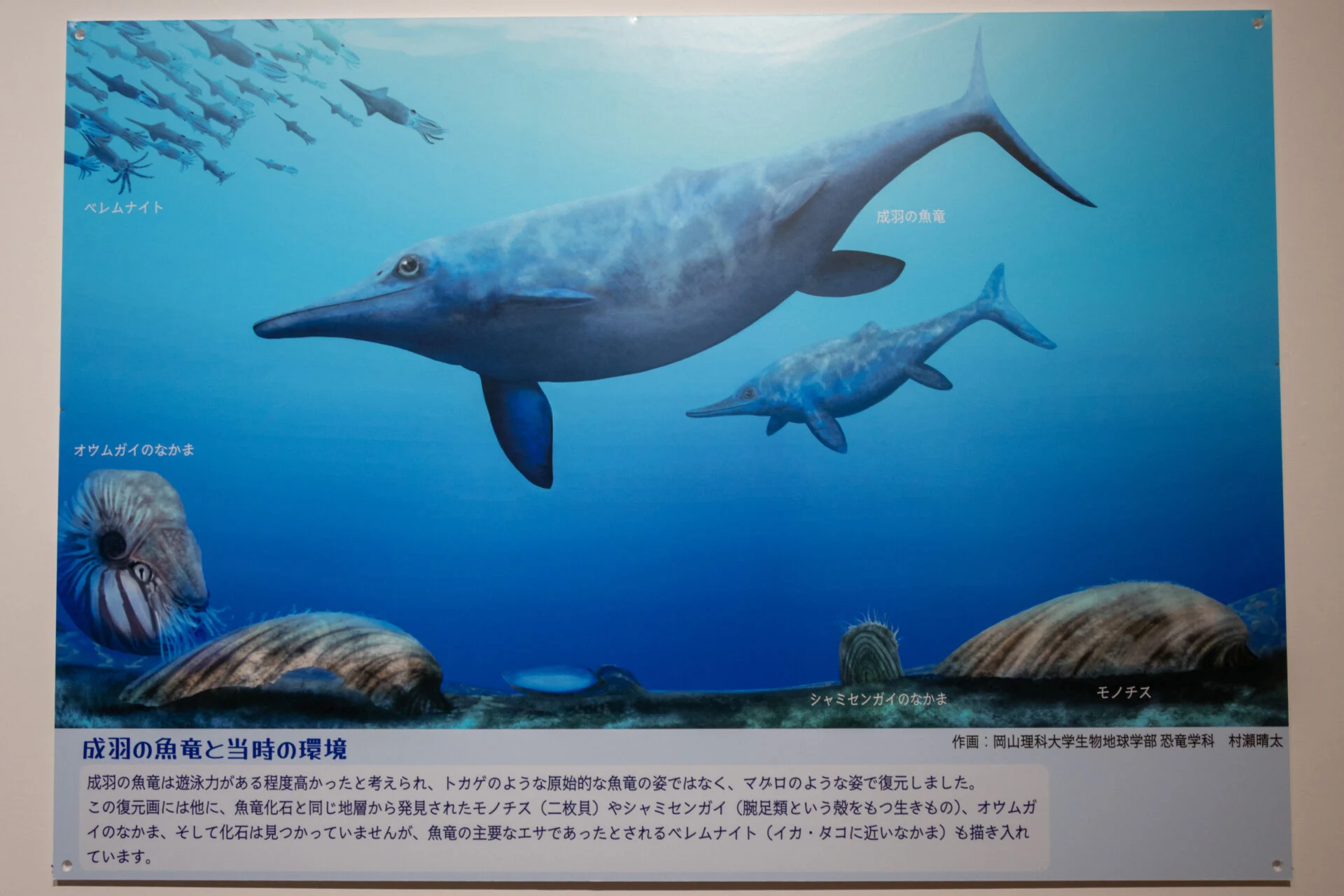
The ichthyosaur is a reptile that is said to have appeared on Earth during the Mesozoic Era, specifically the Triassic period, about 250 million years ago, and has a dolphin-like appearance.
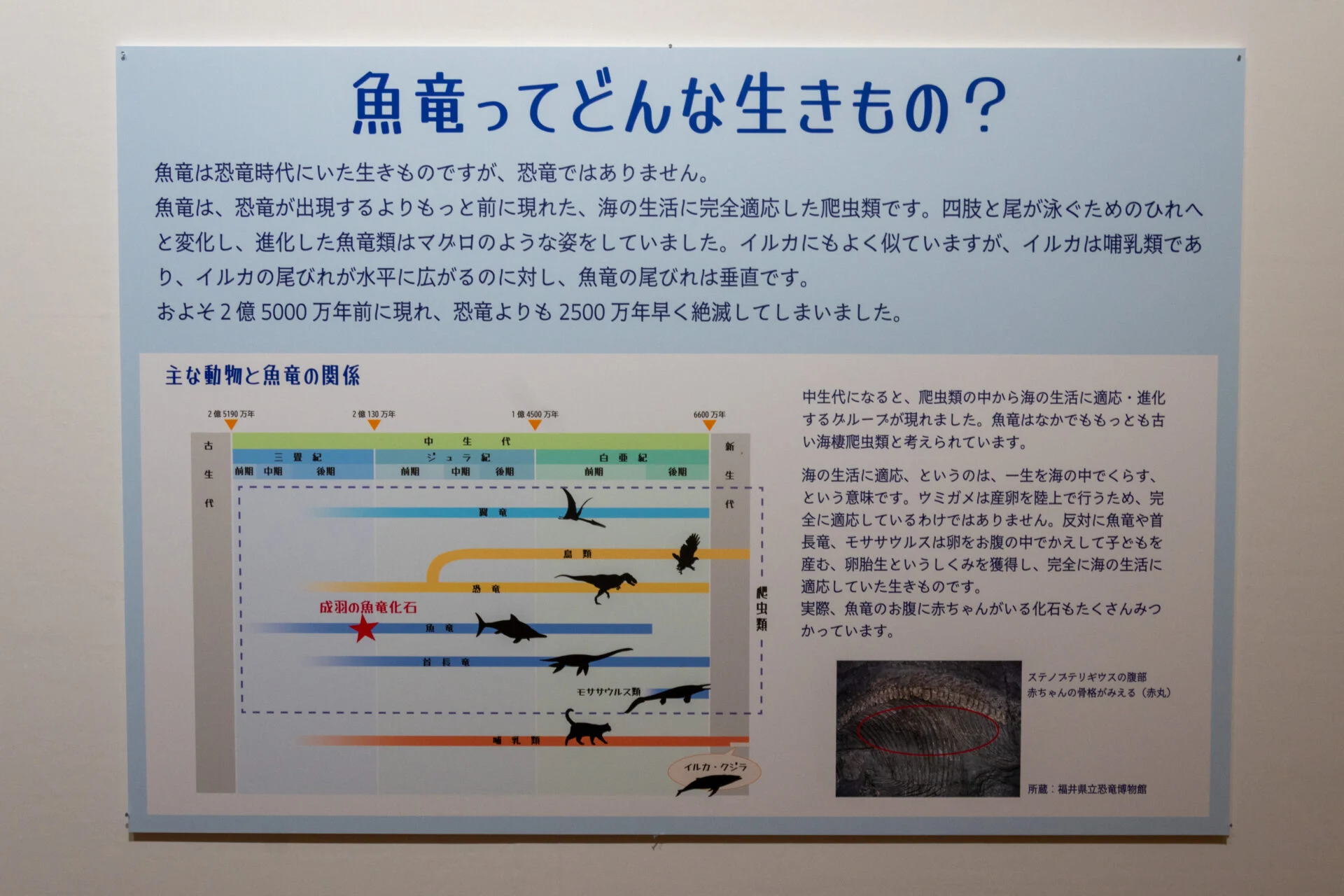
Due to the similarity in their names, ichthyosaurs are often confused with dinosaurs, but they are completely different creatures. The Mesozoic Era was a time when reptiles adapted to life in the sea emerged, and ichthyosaurs were one of those species.
Introduction to the Exhibition Content
This special exhibition was held in a corner at the entrance of the fossil exhibition room.
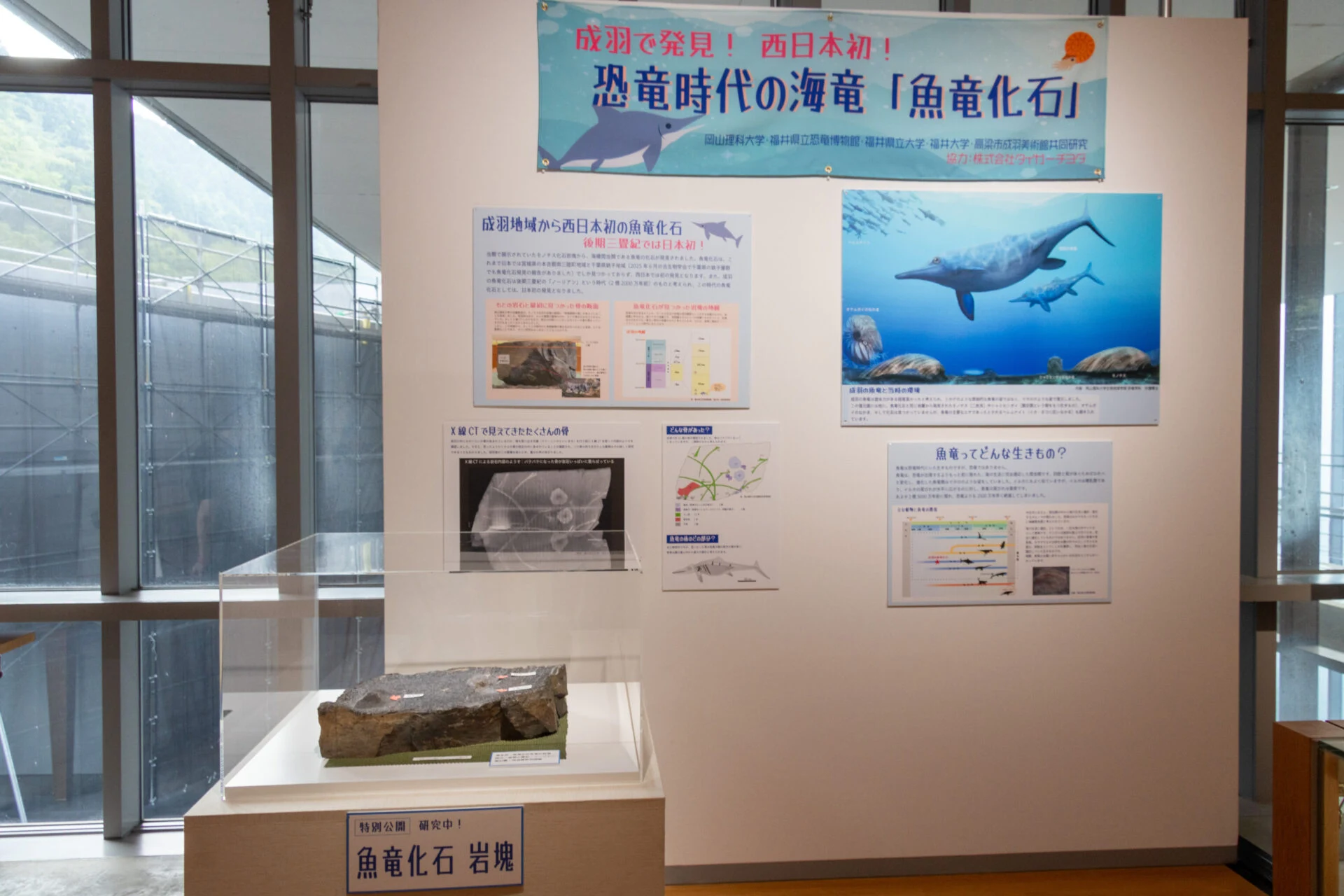
The exhibition featured rocks containing ichthyosaur fossils, along with panels and models that clearly explained the ichthyosaurs and the significance of this discovery.
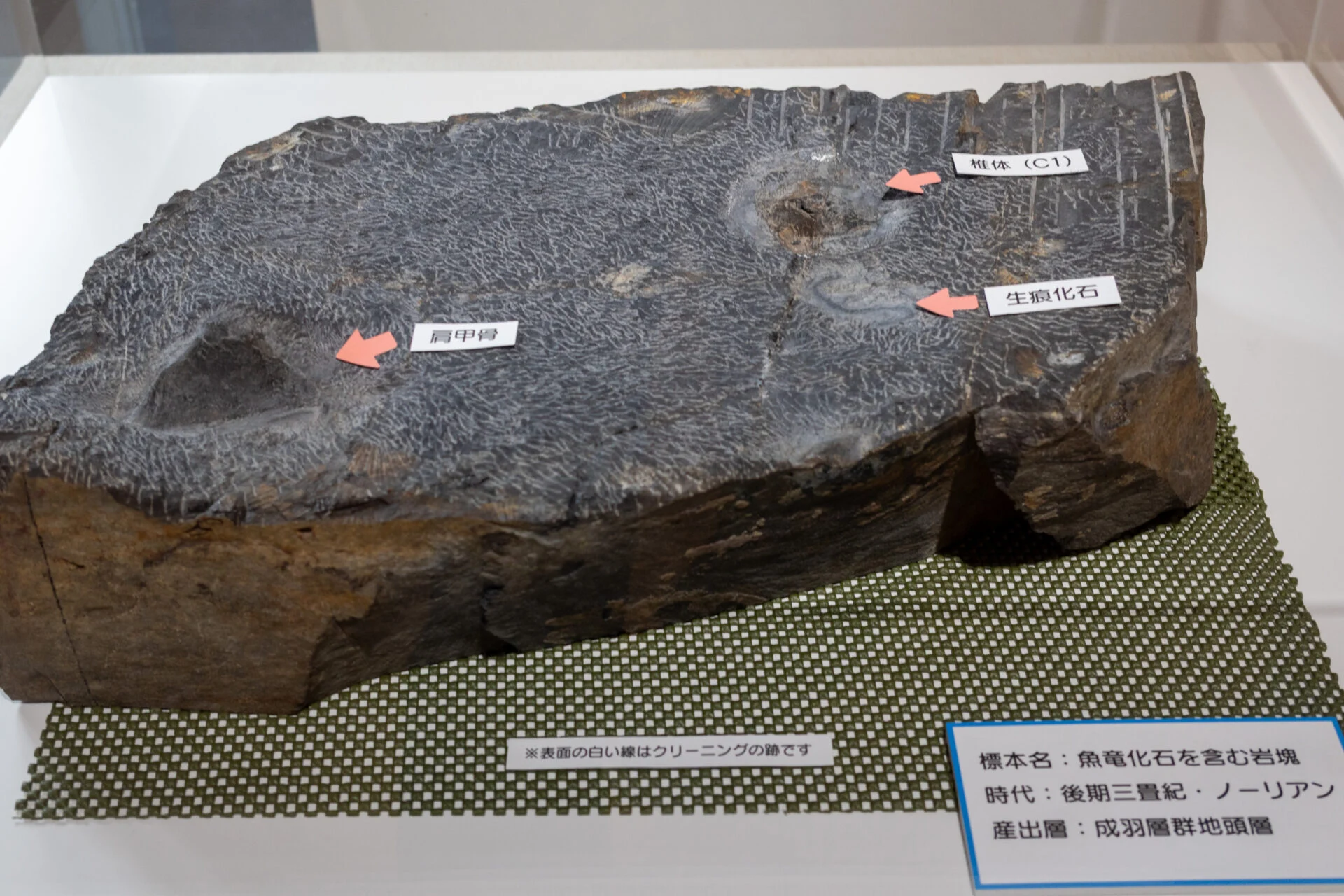
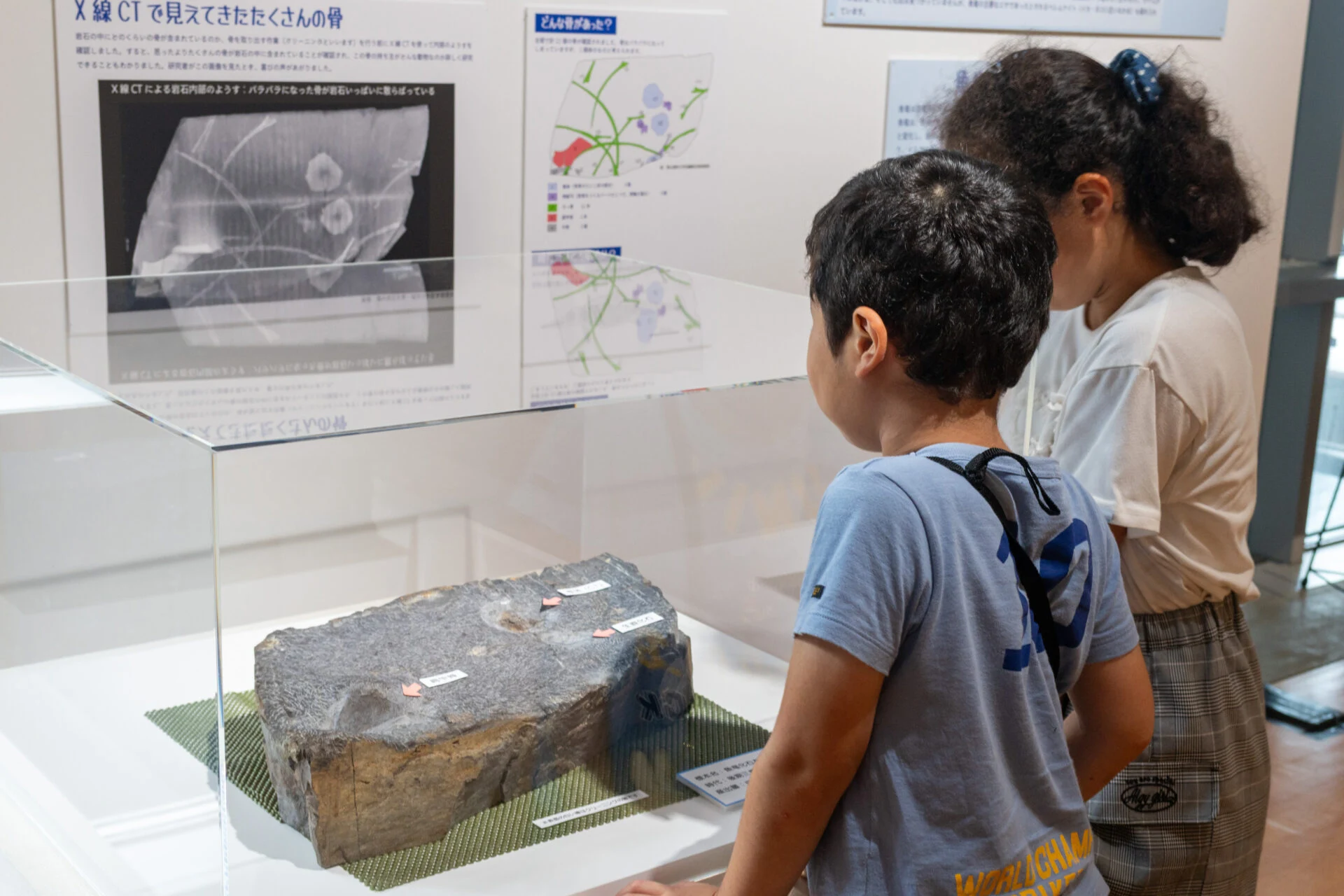
Here is the actual rock containing ichthyosaur fossils that was on display.
To extract the fossils, unnecessary parts are roughly removed, and then the surface is gradually scraped to expose the fossils. The photo shows a stage in that process, with fine white line patterns visible on the surface, which are marks from the tools used to scrape the rock.
During the interview, a local visitor who came to see the exhibition mentioned, "Fossils come out from the back mountain." This indicates the richness of fossils in the Nariwa area.
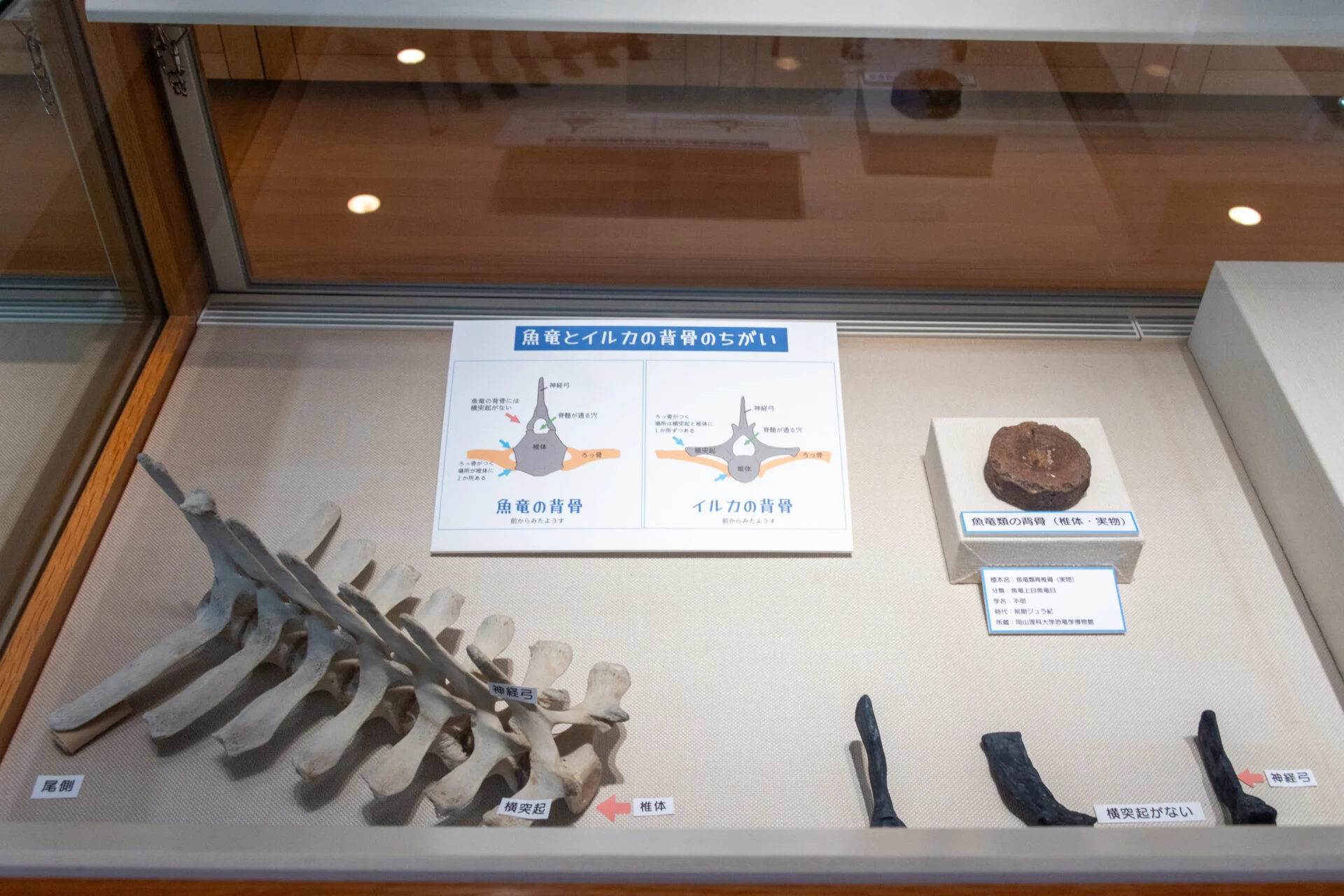
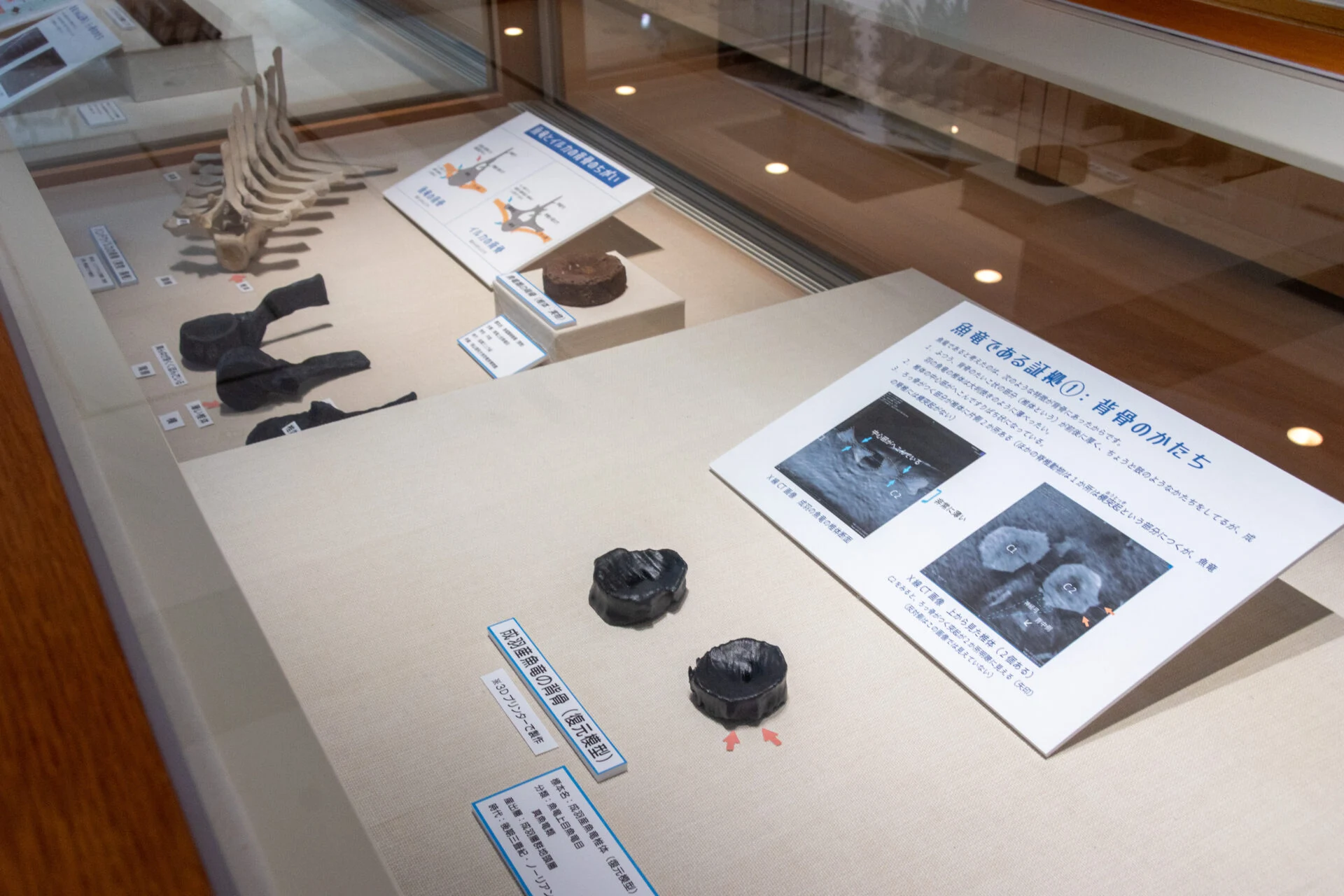
Additionally, models made using 3D printers based on X-ray CT scan data of the rock were also on display. Furthermore, there was a comparative display with the bones of dolphins, which are very similar in appearance and shape, clearly summarizing the differences between ichthyosaurs and marine mammals, which was very informative.
Interview - Regarding the Discovery of Ichthyosaur Fossils
I spoke with Ikari Kyoko, a curator in the fossil department at Nariwa Museum of Art, Takahashi City, about the exhibition and the circumstances surrounding the discovery of ichthyosaur fossils.
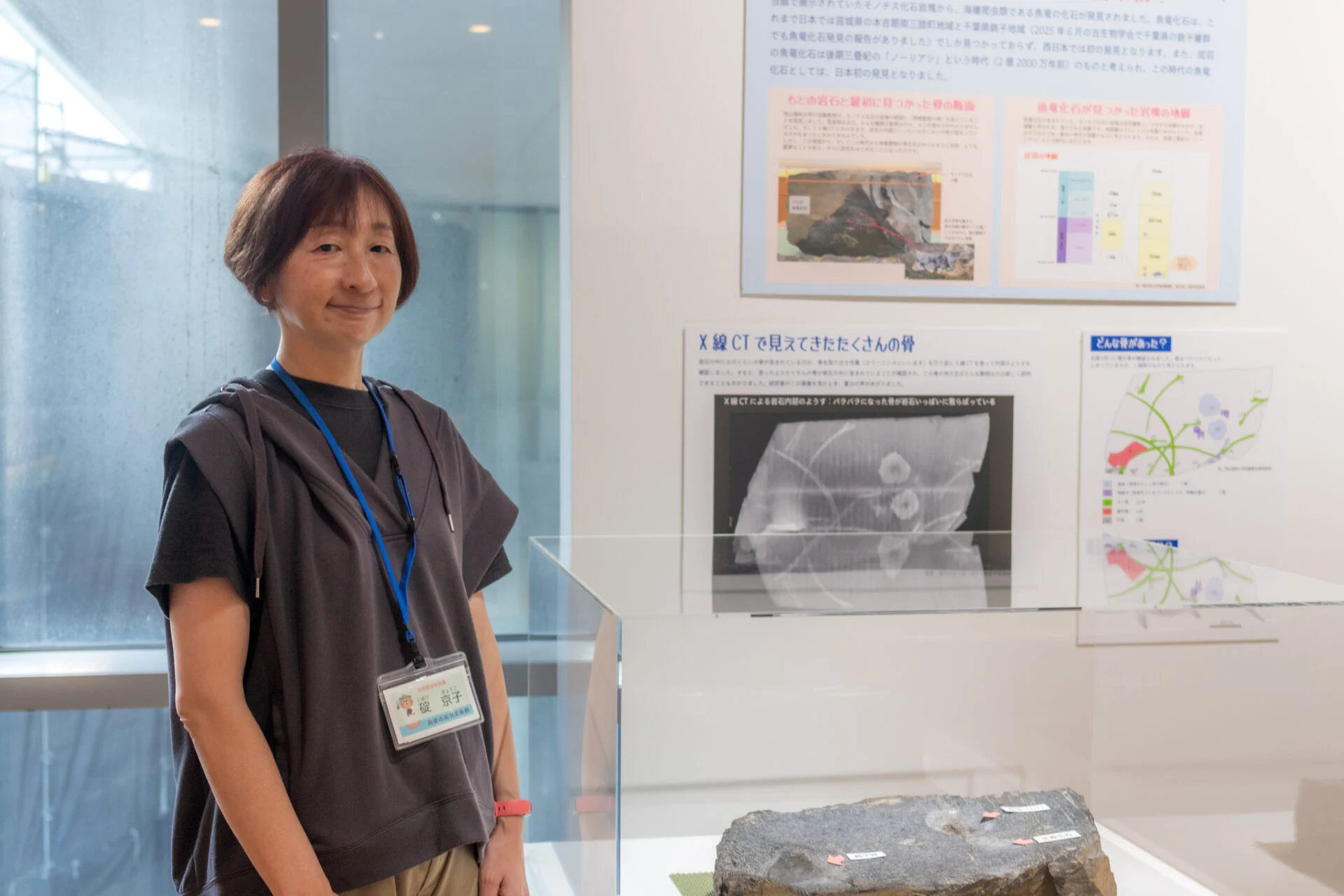
Please tell us about the circumstances leading to the discovery of the ichthyosaur fossils.
Ikari (no honorific)
Two years ago, in the summer of 2023, Professor Kato from Kurashiki University of Science and the Arts (now Okayama University of Science) and researcher Yukawa from the Fukui Prefectural Dinosaur Museum brought students to visit our museum.
During that visit, Professor Kato discovered something while looking at various fossils displayed in the museum.
He said, "Hey? Isn't this a bone?" so I and researcher Yukawa confirmed on the spot that it was indeed a bone. Later, upon examining the bone, it was determined to be an ichthyosaur fossil.
Please tell us about the results of this discovery.
Ikari
Until now, the only ichthyosaur fossil discovered in Japan was a single case in Minamisanriku, Miyagi Prefecture.
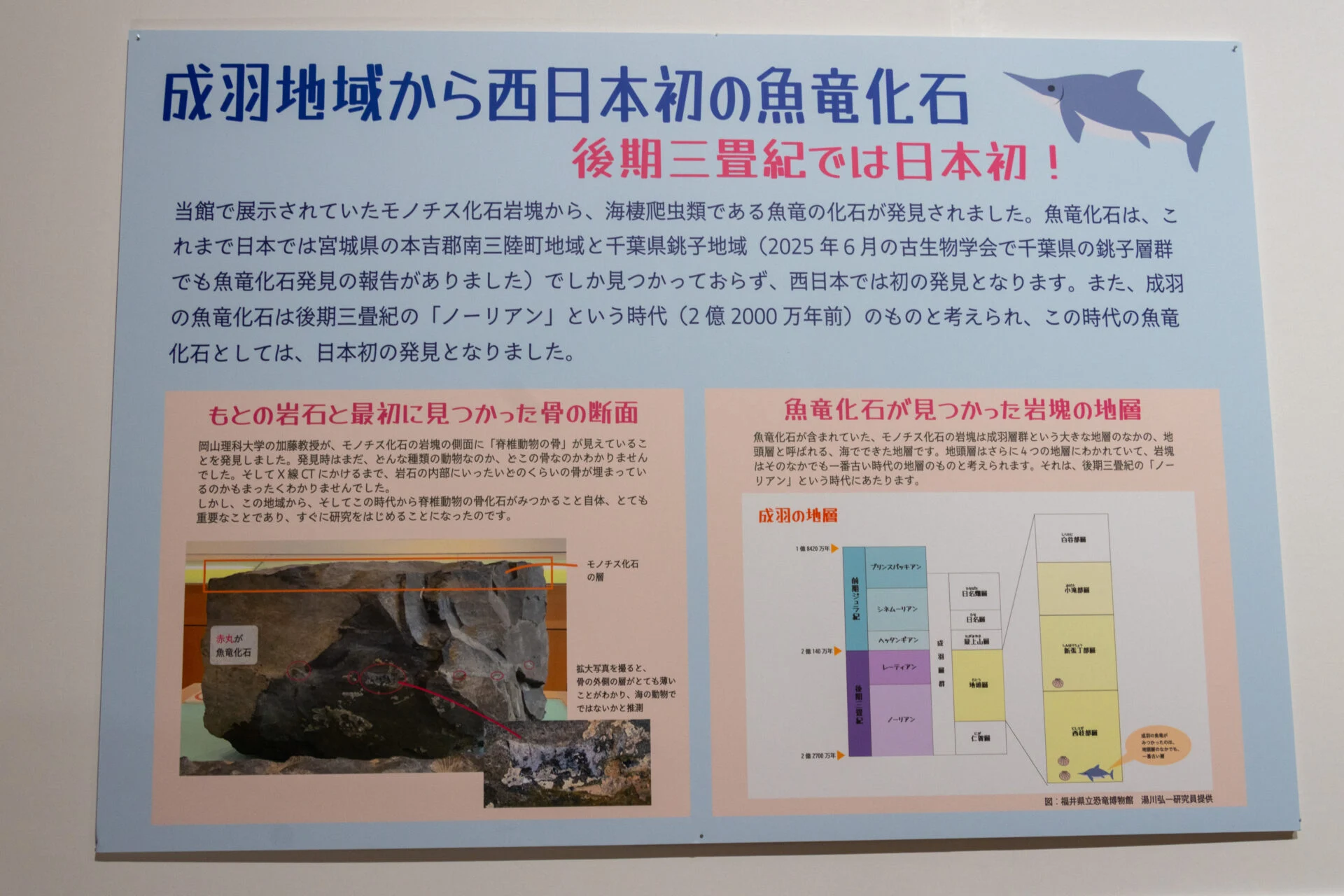
The discovery in Nariwa is the second case in Japan and the first in western Japan, making it of great academic value.
Although the fossils are from different eras, ichthyosaur fossils were also discovered in Chiba Prefecture around the same time as those in Nariwa, so they are treated as the second case together.
The ichthyosaur fossils discovered in Nariwa are from the Late Triassic "Norian" period (about 220 million years ago), and this is the first time ichthyosaur fossils from this period have been found in Japan.
Ichthyosaurs existed in a wide variety of forms throughout the Mesozoic Era. Therefore, while ichthyosaur fossils have been discovered in many places around the world, ichthyosaur fossils from the Late Triassic are relatively rare.
Even when discovered, many are fragmentary, and many ichthyosaurs remain poorly understood.
For that reason, I believe this discovery is also important for clarifying the evolution of ichthyosaurs.
After the exhibition, I heard that the ichthyosaur fossil will go to Fukui Prefecture for research. What kind of work is being done in Fukui Prefecture?
Ikari
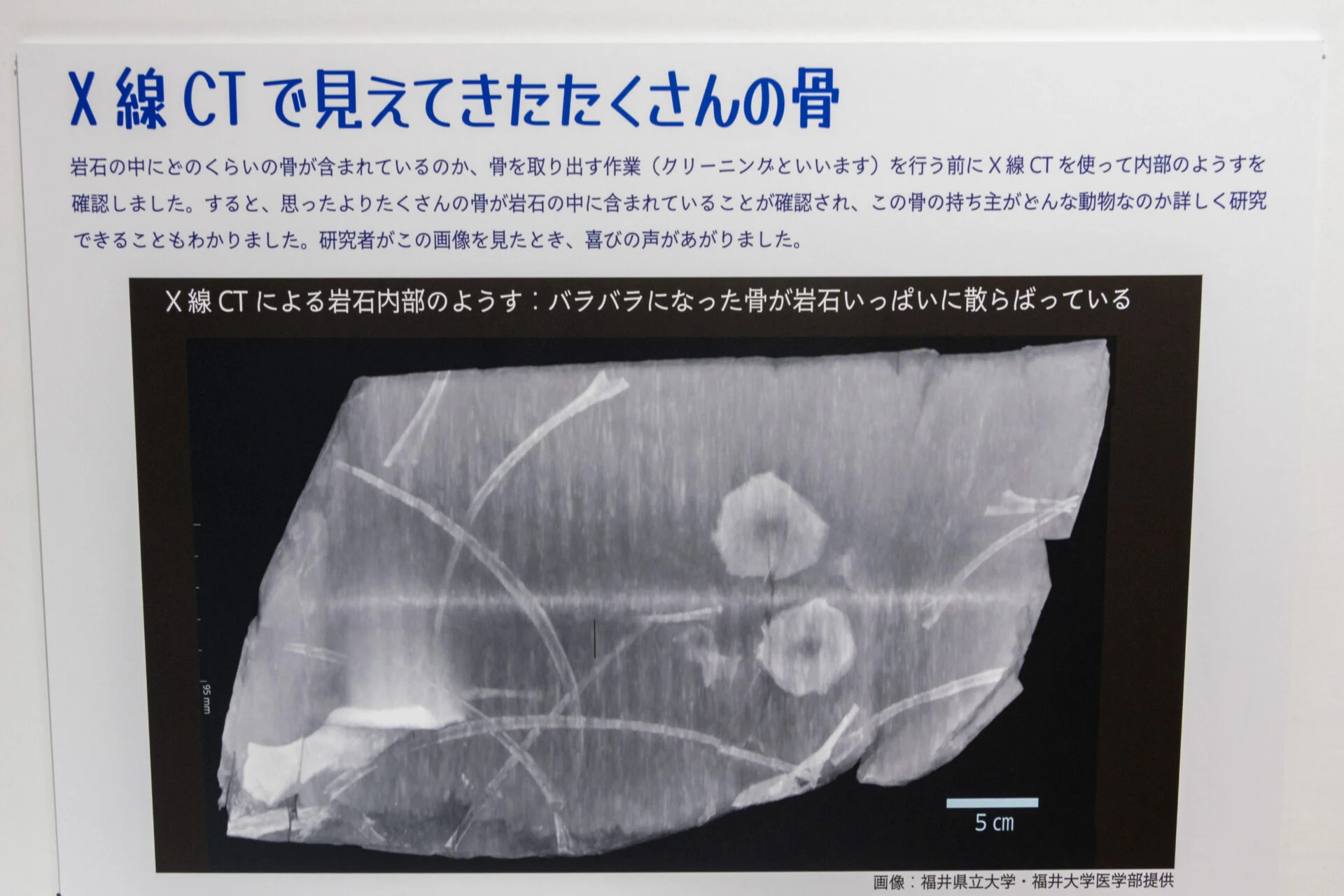
In Fukui Prefecture, the main work being done is analysis using non-destructive testing with X-ray CT (computed tomography).
It has become clear that the rock containing this fossil is very hard, making it difficult to carve out the fossil alone. Therefore, we are using X-ray CT to capture images of the fossil inside the rock and obtain detailed data on the fossil (bones).
We have been conducting non-destructive testing with X-ray CT up to now, but we hope to obtain more detailed information in the future.
Please tell us about future developments.
Ikari
Through the aforementioned analysis with X-ray CT and other methods, we will continue to accumulate new information and compile it into academic papers. I believe we will also make new discoveries in the process.
We plan to announce the results to everyone as they become available, so I would appreciate your attention to future developments.
Conclusion
Through this interview, I understood that the Nariwa area has been a place where fossils have been frequently found since ancient times and that various coincidences led to the discovery of the ichthyosaur fossil.
Considering that there are still many fossils of unknown ancient organisms remaining in the Nariwa strata, it feels quite romantic.
After the exhibition at the Nariwa Museum, the ichthyosaur fossil will also be specially exhibited at the Okayama University of Science Dinosaur Museum from September 13 to 27, 2025.
We will continue to keep an eye on the discoveries revealed through future research.
Special Exhibition of Ichthyosaur Fossils from the Dinosaur Era (Held from August 2 to 31, 2025)
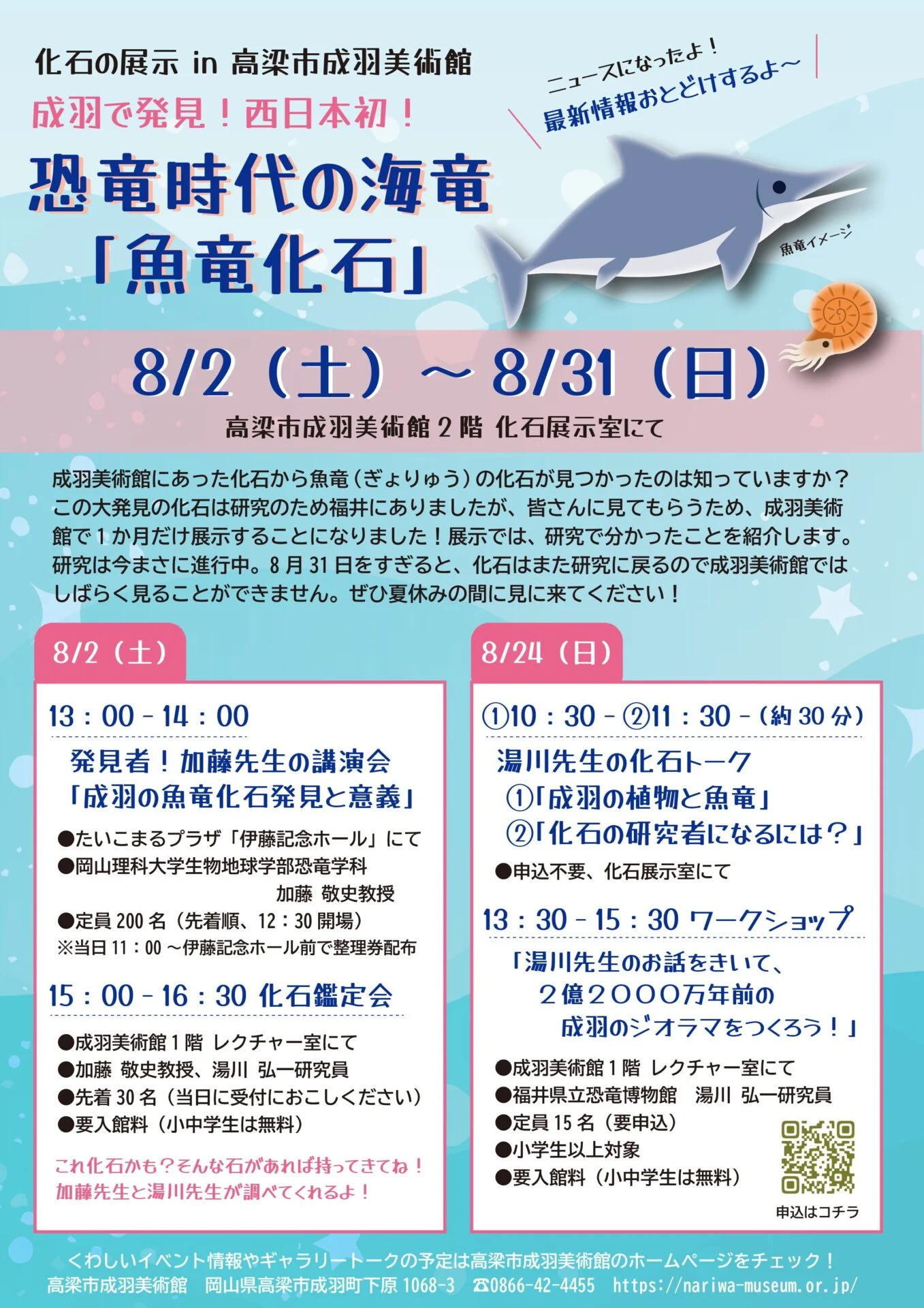
| Name | Special Exhibition of Ichthyosaur Fossils from the Dinosaur Era (Held from August 2 to 31, 2025) |
|---|---|
| Dates | August 2 (Saturday) to 31 (Sunday), 2025 9:30 AM to 5:00 PM |
| Location | 1068-3 Shimohara, Nariwa-cho, Takahashi City, Okayama Prefecture |
| Participation Fee (including tax) | The admission fee varies by exhibition. Please check the current exhibition information for details. |
| Homepage | Nariwa Museum, Takahashi City |