If you visit museums or art galleries, you may have seen replicas at least once.
To be honest, I had never paid much attention to replicas until now. I believed that nothing could surpass the real thing. I had never thought about the reasons for creating replicas or the process of their completion.
However, my perspective changed after participating in the talk show "Glass Treasures Crossing the Sea—Toshodaiji Temple, Shosoin, and the Land of Bizen—" held on July 28, 2024 (Sunday). I learned about the significance of creating replicas and the passion of the creators.
I will introduce the solo exhibition and talk show of Sakoda Takeomi, who is challenging the restoration of ancient glass.
About Sakoda Takeomi
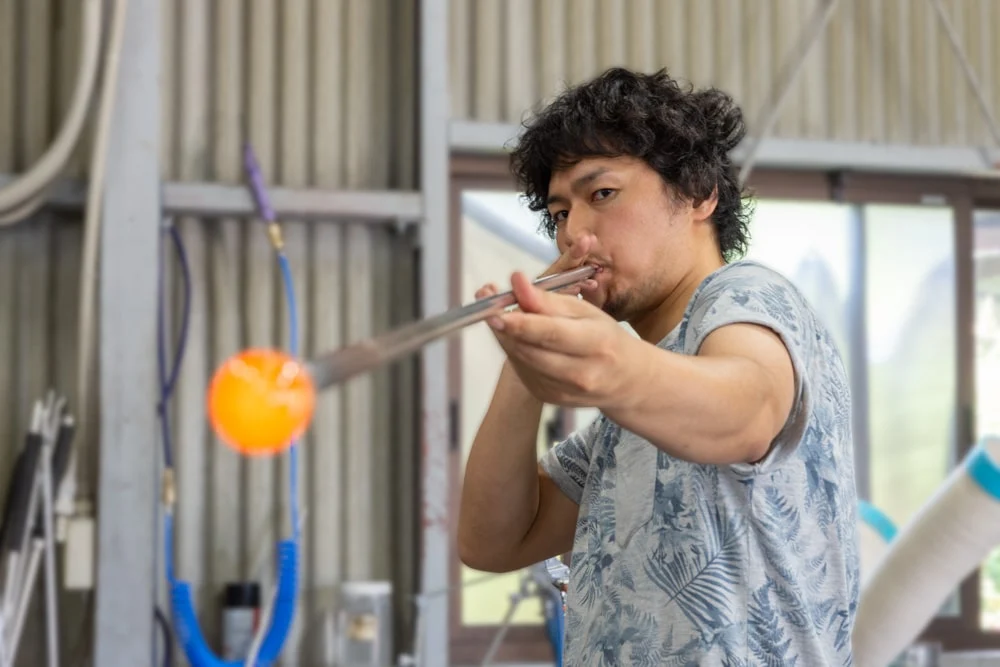
Sakoda is a glass artist born in Hiroshima Prefecture and currently resides in Kurashiki City.
Kurashiki University of Science and the Arts has him as the chief technician in the glass department of the Faculty of Arts, and he also serves as a director of the Japan Glass Art Association. He has been researching the restoration of ancient glass for many years and has exhibited his works in solo and group exhibitions. He has restored treasures from the Shosoin and works held by the British Museum.

From July 13, 2024 (Saturday) to September 23, 2024 (Monday, public holiday), the Takahashi City Nariwa Museum is holding the exhibition "Sakoda Takeomi's Challenge to Restore Ancient Glass".
Sakoda creates exquisitely crafted replicas that are so close to the original in color and shape, even down to scratches and bubbles.
When asked about the charm of restoring ancient glass, which involves repeated failures and challenges, he said,
“I create while thinking about what the ancient makers aimed for and what they found attractive. I am exploring what the essence of humanity is and what the commonalities are between people now and in the past.”
It seems that he is not only focused on the works themselves but also on the thoughts of the creators while engaging in restoration.
Overview of the Exhibition "Sakoda Takeomi's Challenge to Restore Ancient Glass"
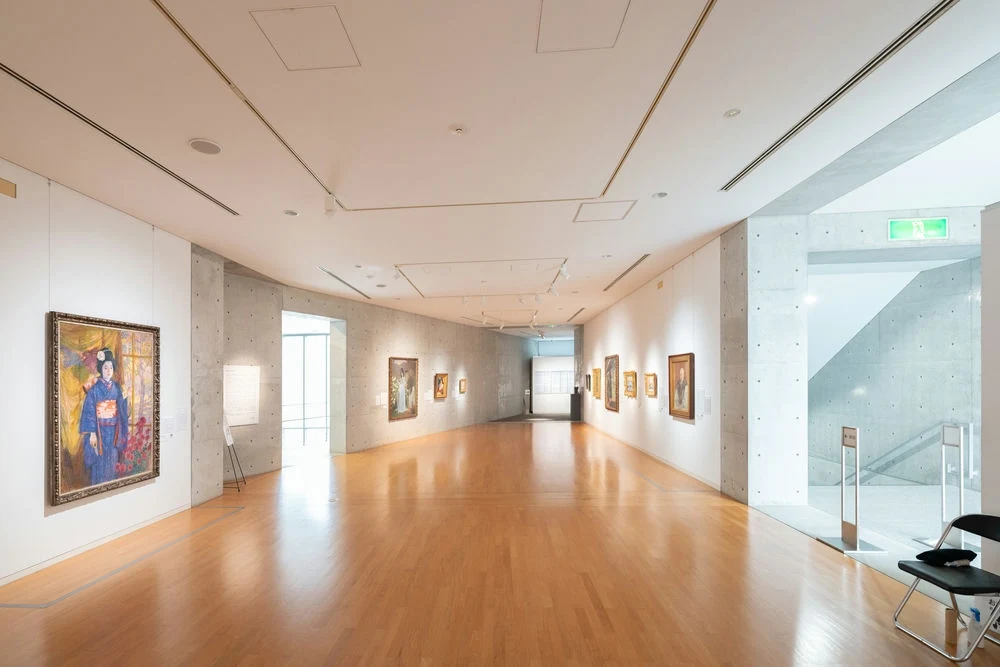
The Takahashi City Nariwa Museum, where the exhibition is being held, is located in Takahashi City, Okayama Prefecture. It was built to honor the achievements of the Western-style painter Kojima Torajiro, who has ties to Kurashiki City. Sakoda's works were displayed on the first floor.
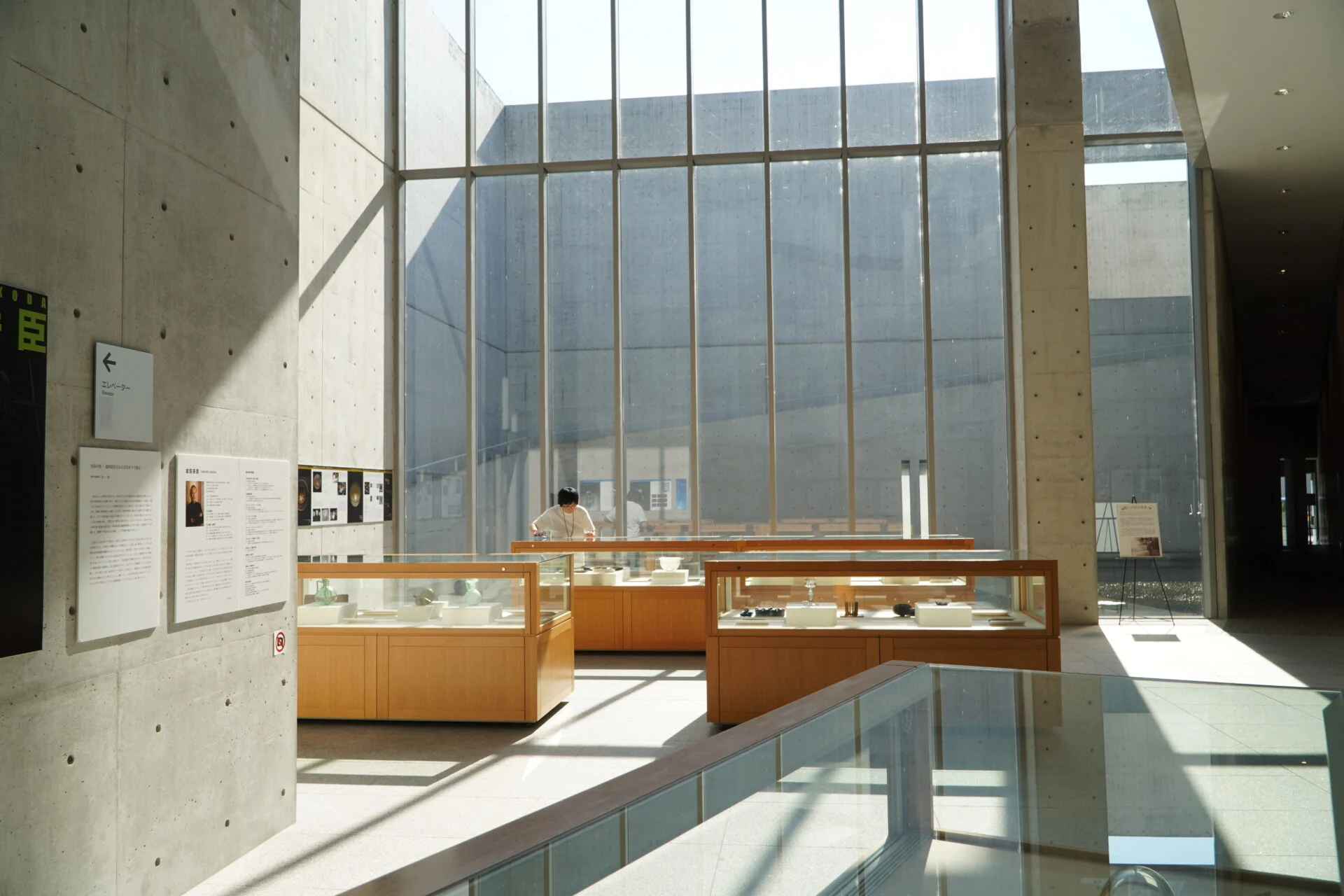
Photography is usually prohibited inside the Takahashi City Nariwa Museum. This time, special permission was granted for photography.
Around 20 replicas are displayed at the venue, along with panel explanations and production videos.
▼ Main Replicas of "Sakoda Takeomi's Challenge to Restore Ancient Glass"
| Replica | Year of Creation | Collection |
|---|---|---|
| Shosoin Treasure "Green Lapis Lazuli Twelve-Section Long Cup" | 2017 | Artist |
| Toshodaiji Temple National Treasure Relic Container "White Lapis Lazuli Relic Jar" | 2004 | Okayama Orient Museum |
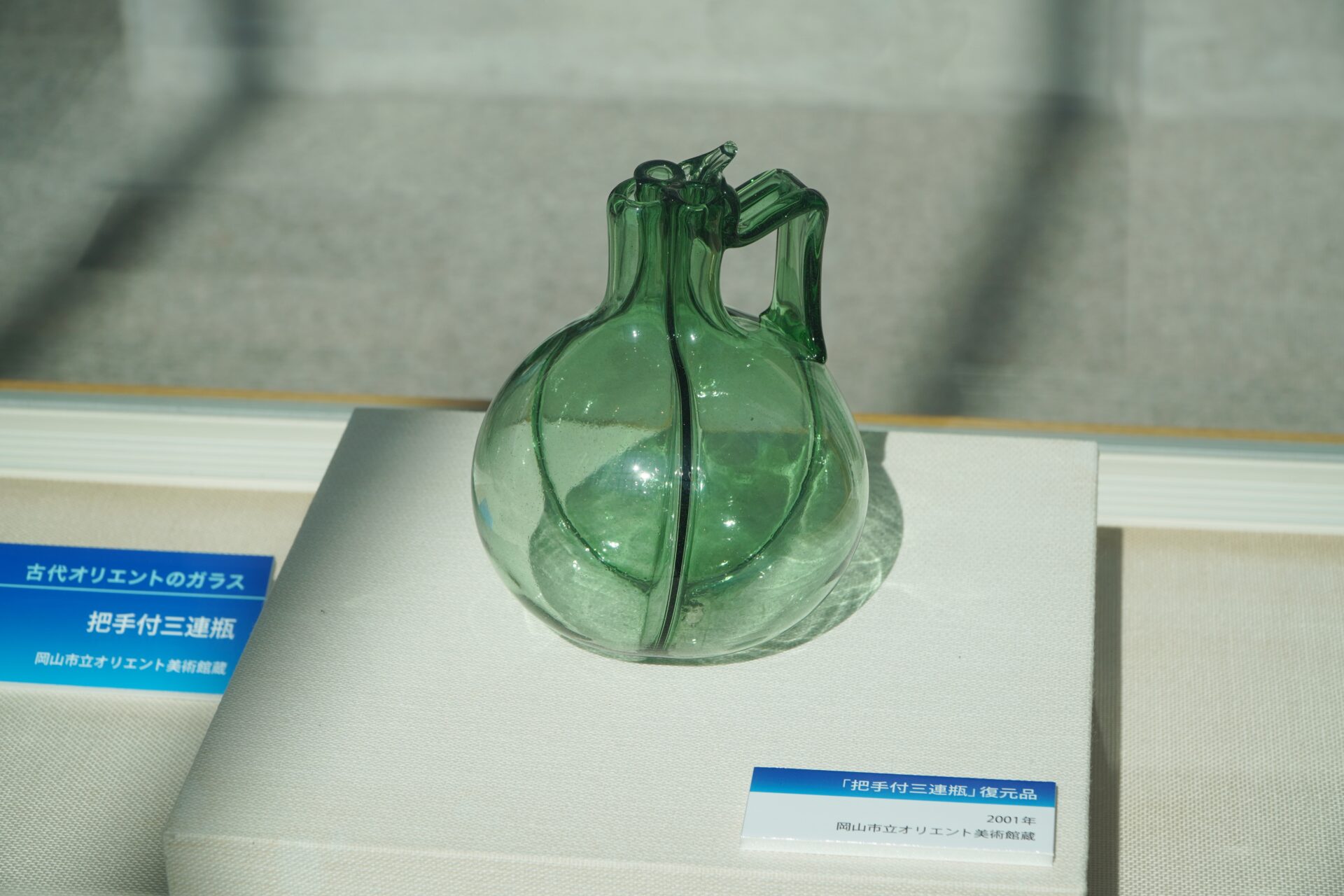
| Bottle with Spout Handle | 1999 | Okayama Orient Museum |
| Idemitsu Museum "Gold Sandwich Glass Bowl" | 2004 | Artist |
| Shosoin Treasure "Lapis Lazuli Small Ruler and Lapis Lazuli Fish Shape" | 2023 | Imperial Household Agency Shosoin Office |
The original works of the replicas that Sakoda has restored are all precious and cannot be taken out. Since they cannot be placed next to each other to check the color, shape, and thinness, observation skills and memory are also necessary for reproduction.
Furthermore, there are differences in manufacturing methods between the past and present, and even if materials are written in literature, colors can change due to temperature and oxygen levels, making the process of completion challenging. The panel explanations and production videos introduced the process of creating the works, overcoming hardships and efforts.
For example, when viewing the displayed replica of the Green Lapis Lazuli Twelve-Section Long Cup, the glass appears slightly dull, and there are large bubbles that are rarely seen in modern glass products. Although it was restored in 2017, it felt as if it had been made hundreds of years ago.
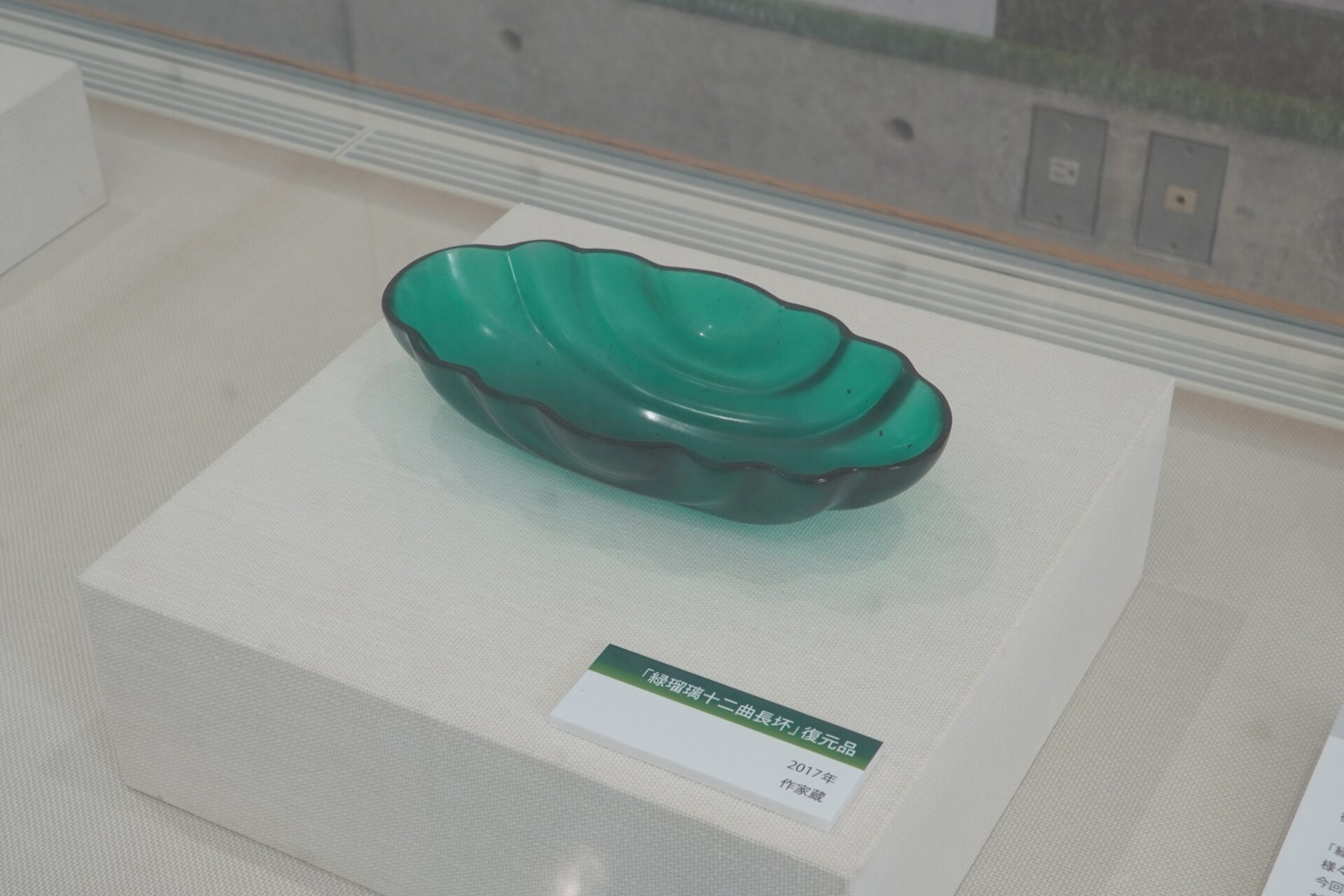
The replicas are not the real thing. However, they are crafted in a form that is extremely close to the original, which is rarely seen in person. Through Sakoda's works, I was able to reflect on the ancient past and touch the charm of these art pieces shrouded in many mysteries.
Participants of "Glass Treasures Crossing the Sea—Toshodaiji Temple, Shosoin, and the Land of Bizen—"
Sakoda Takeomi, who is challenging the restoration of ancient glass and resides in Kurashiki City, participated in the talk show "Glass Treasures Crossing the Sea—Toshodaiji Temple, Shosoin, and the Land of Bizen—" held on July 28, 2024, to commemorate his exhibition "Sakoda Takeomi's Challenge to Restore Ancient Glass."
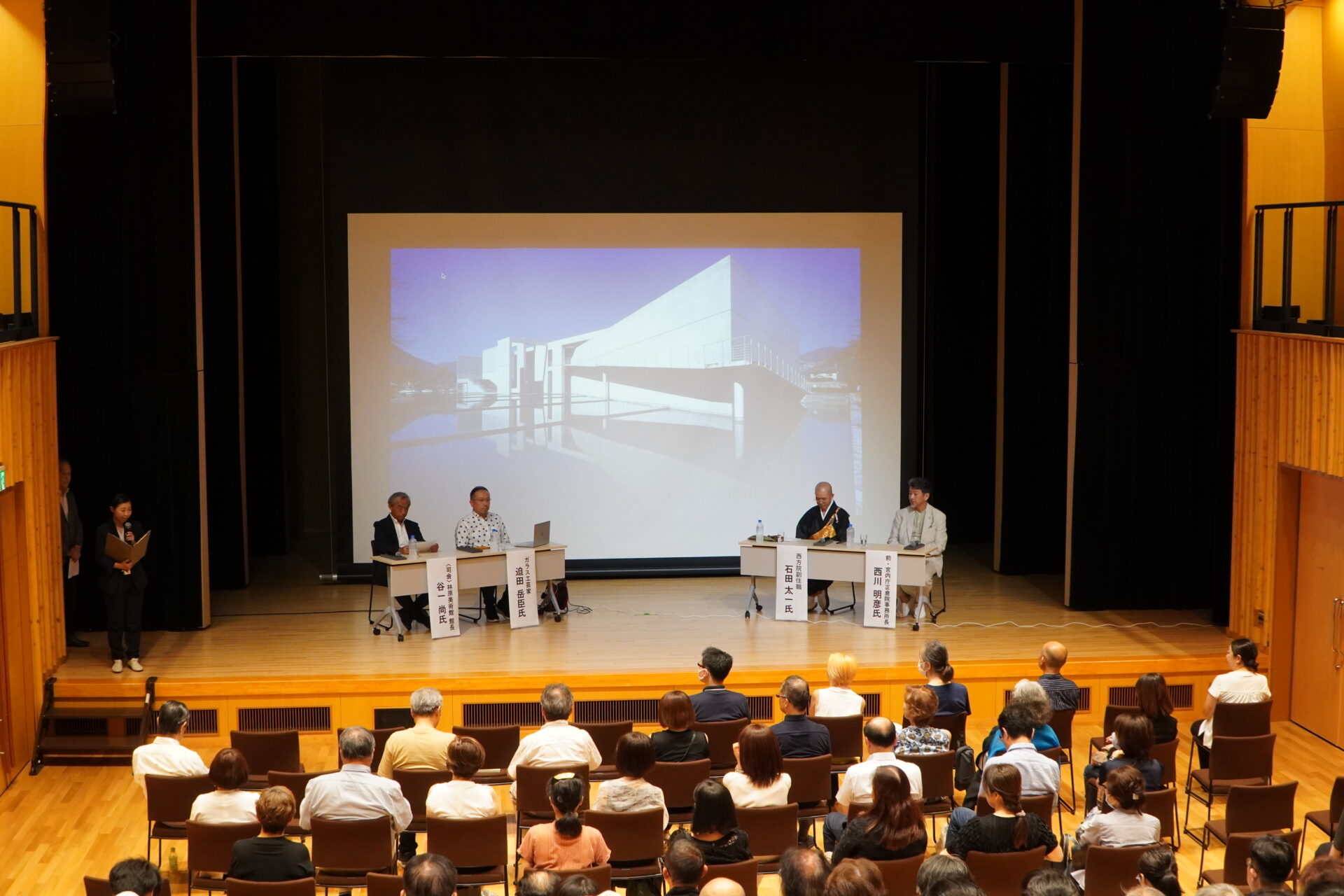
The commemorative talk show, held at Taikomaru Plaza adjacent to the Takahashi City Nariwa Museum, saw many participants. Discussions about the restoration work were exchanged with two individuals deeply involved in the restoration of the treasures (originals) that Sakoda restored.
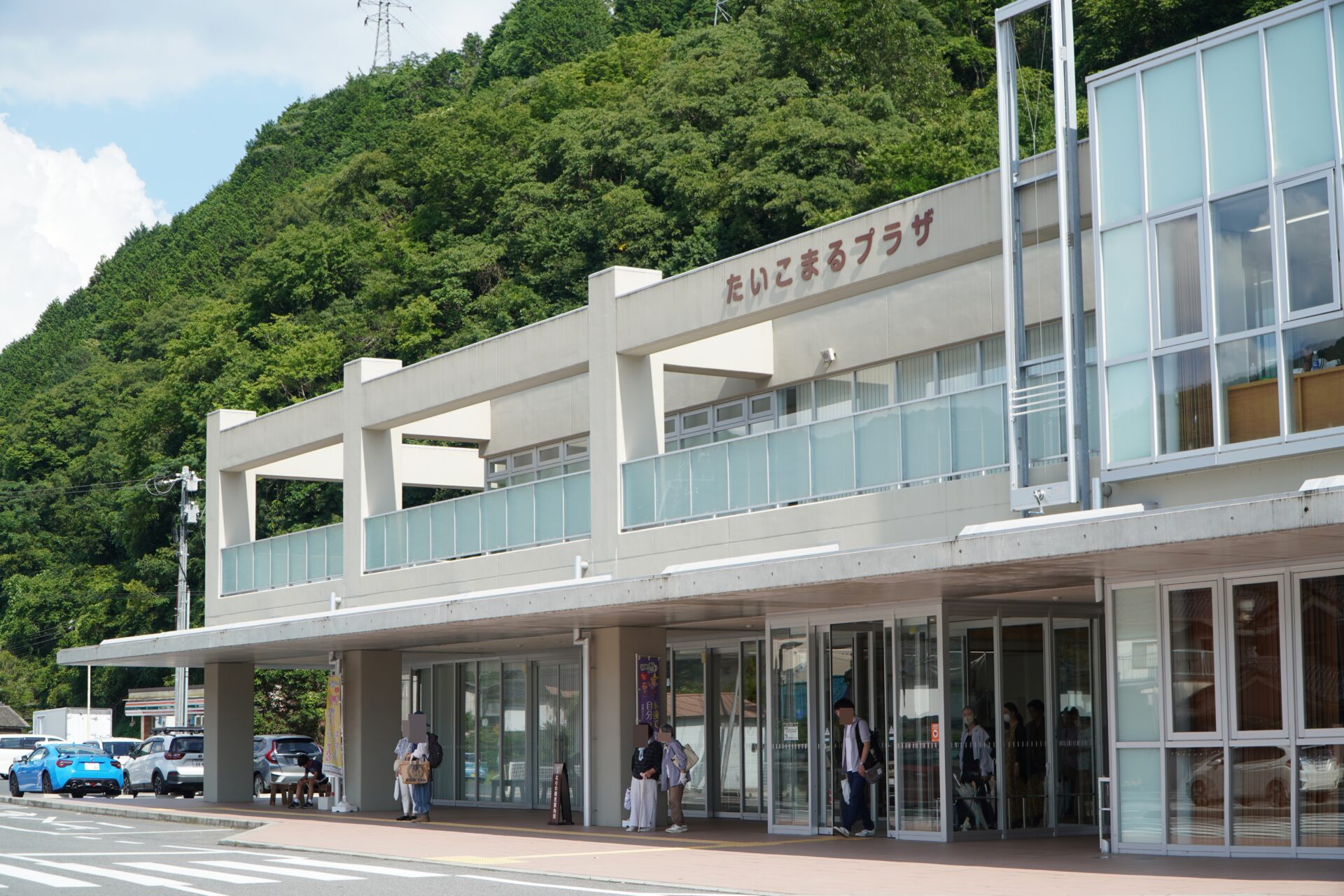
Ishida Taichi
One of the participants, Ishida Taichi, serves as the deputy chief priest of the "Seihouin," the inner temple of Toshodaiji Temple located in Nara City.
Seihouin was founded around 1243-1246 and is a place with many tombs and stone pagodas of the monks who worked hard to restore the temple's buildings.
While his title at the talk show was deputy chief priest of Seihouin, he also serves as the chief steward of Toshodaiji Temple.
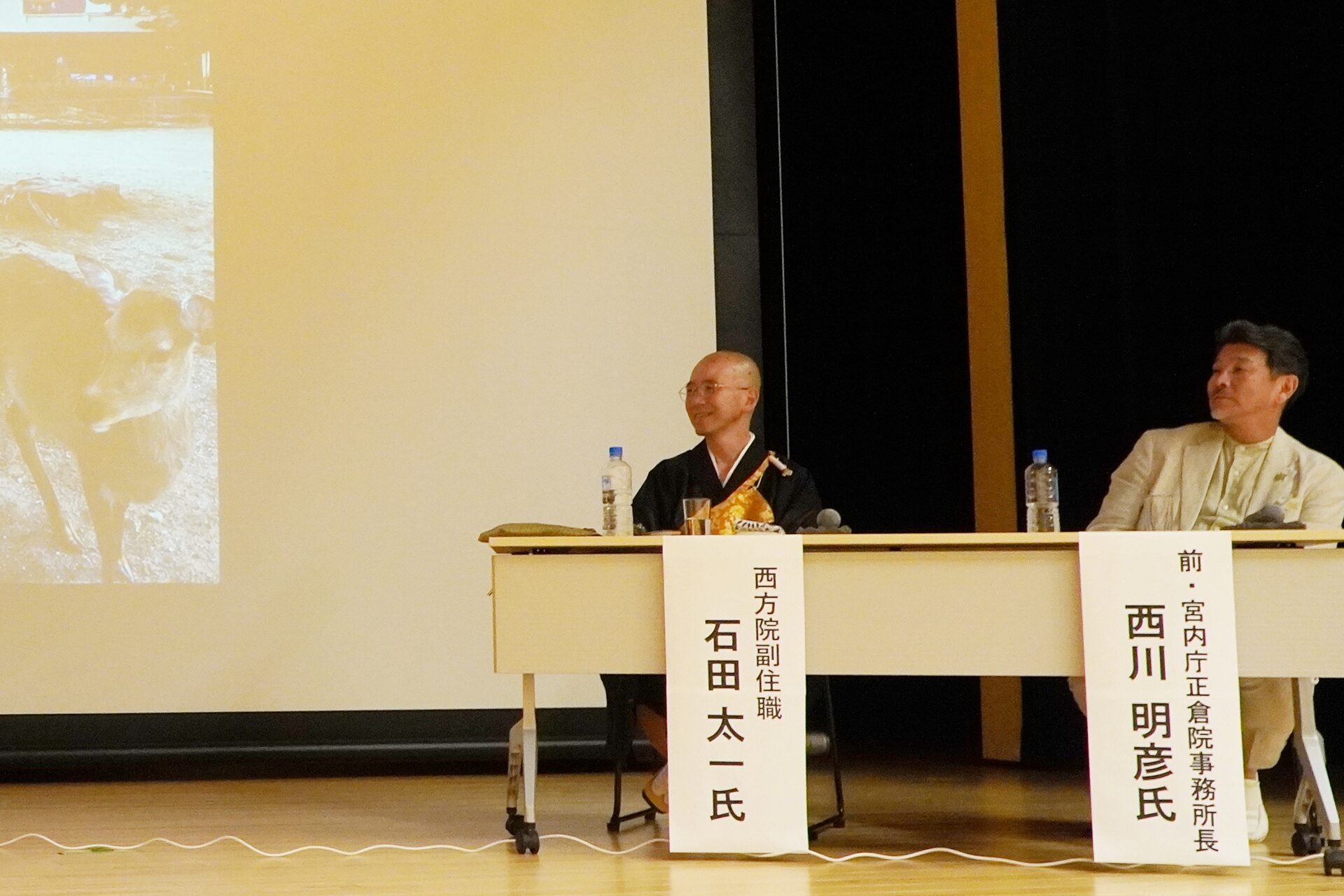
Since 2004, he has been working with Sakoda on the restoration of the National Treasure White Lapis Lazuli Relic Jar.
Nishikawa Akihiko
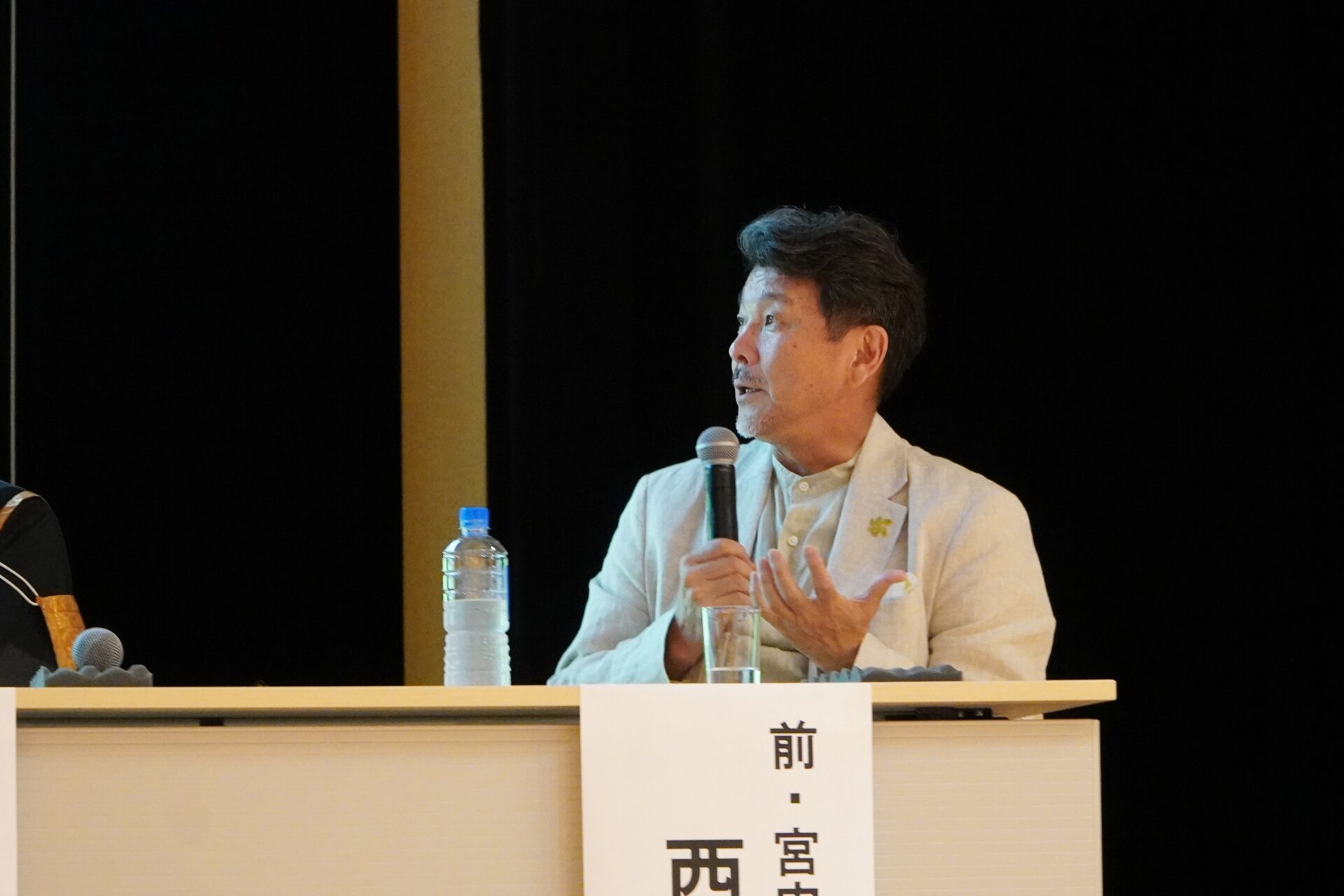
Nishikawa Akihiko is the former head of the Imperial Household Agency Shosoin Office. The treasures of Shosoin mostly consist of art crafts and documents that were transmitted from the continent during the Nara period or produced in Japan. It is said that there are about 9,000 items that have been organized.
Taniichi Takashi
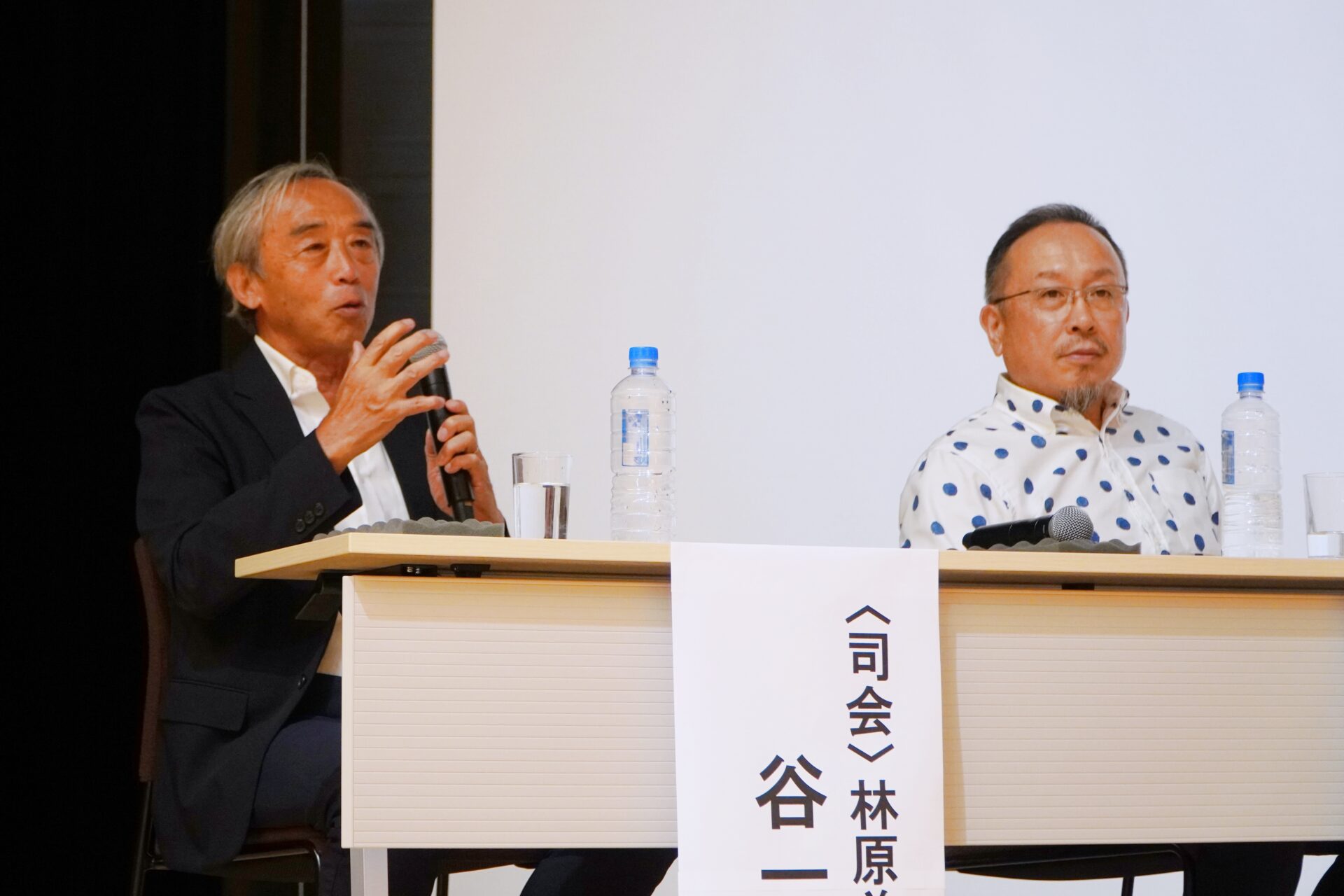
Taniichi Takashi is the former director of the Orient Museum and the current director of the Hayashibara Museum. He served as the moderator for the talk show.
He is a leading researcher of ancient glass, and it is said that Taniichi was the one who inspired Sakoda to begin his research on ancient glass.
How Sakoda Challenged the Restoration of Ancient Glass
Sakoda (honorific omitted)
I would like to talk about why I started working on the restoration of works.
It was in 1999, the 20th anniversary of the Okayama Orient Museum's opening. An exhibition was planned where it was allowed to restore items while looking at the collection or to create works based on the inspiration gained there.
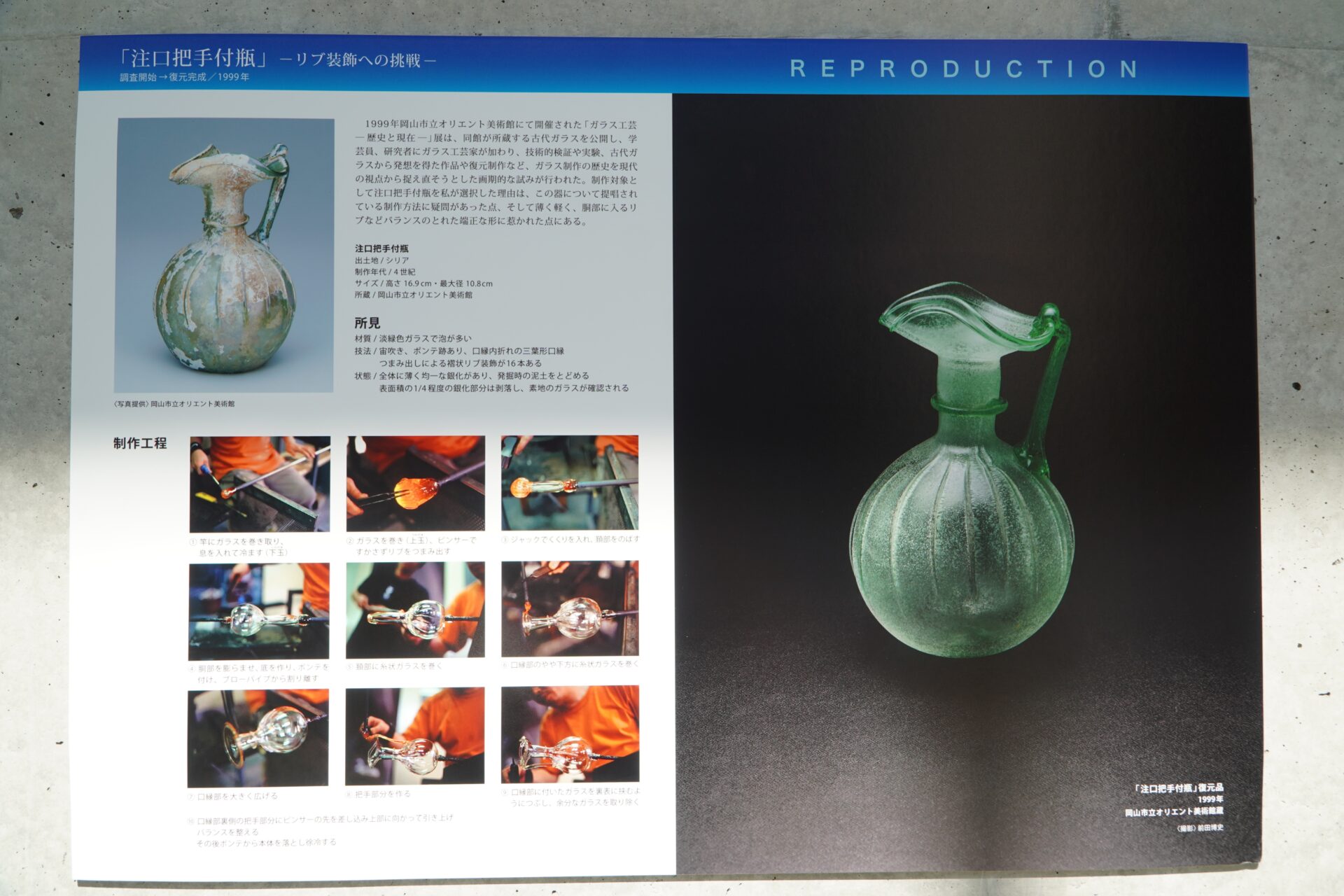
It was a groundbreaking exhibition for that time, where makers, artists, curators, and researchers gathered and created it together. At that time, I chose the bottle with spout handle.
I looked at the catalog and tried various methods to produce the vertical patterns as described, but initially, I couldn't achieve what I wanted. As I thought and experimented, I was able to produce similar patterns, and it became my first completed restoration work.
Two years later, in 2001, I also used a CT scan to investigate the structure of the three-part bottle as part of a project at the Orient Museum. I thought that scientific backing was also important.
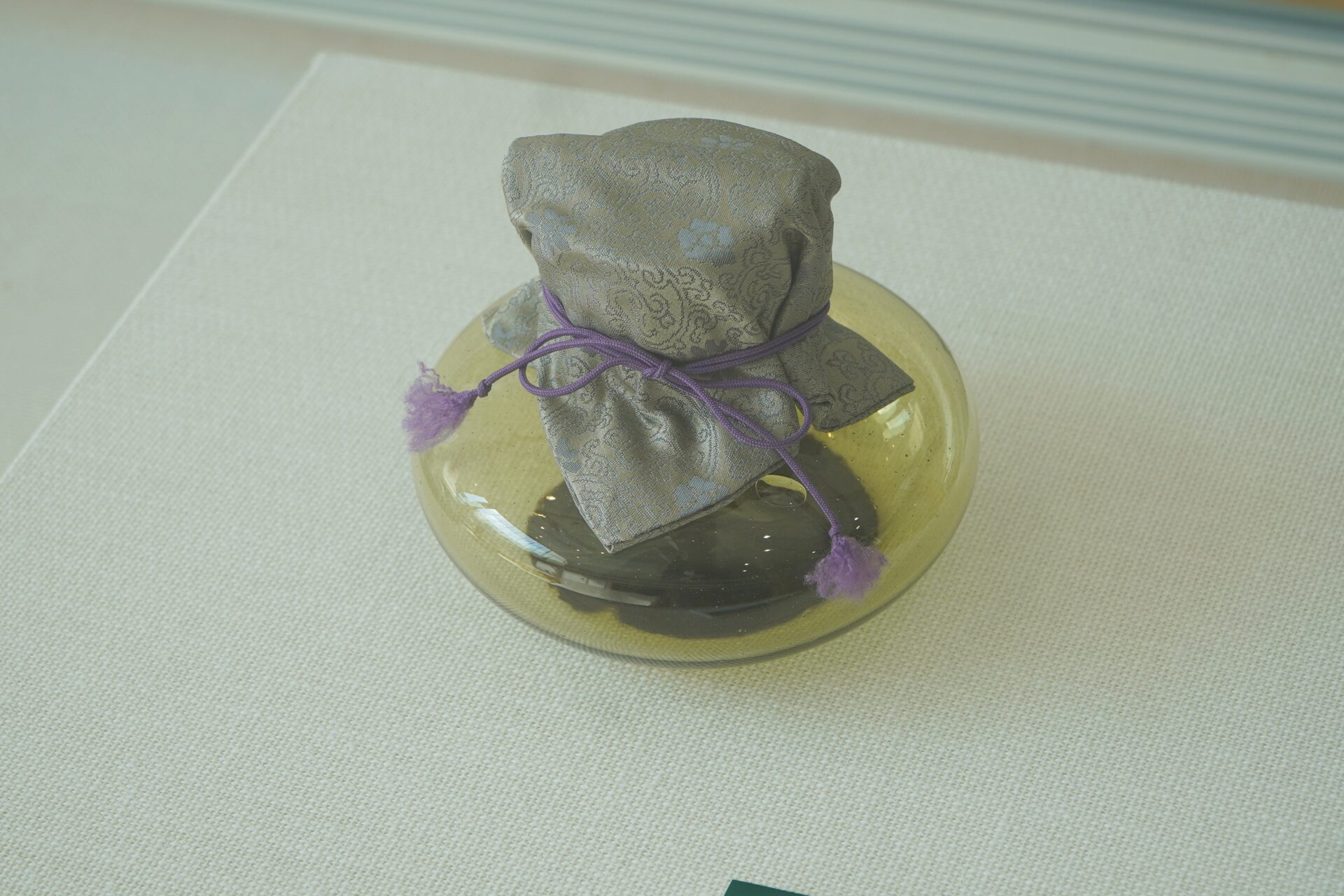
In 2004, I restored the White Lapis Lazuli Relic Jar of Toshodaiji Temple. From this project, I began working with Professor Taniichi. At that time, Professor Taniichi asked me to "put bubbles in here," which was a bit challenging.
In 2004, I went to the then Middle Eastern Culture Center (now the Idemitsu Museum) to inquire in detail about the white glass stupa.
There was also a type of bowl called Gold Sandwich Glass. When I saw it for the first time, I thought, "I want to try making this," and instead of making a request, I asked, "Could I try to restore it?" This led to me starting to create original works as well.
In 2012, I received a request from someone at Tokyo University of the Arts who was researching kirikane (gold leaf) to collaborate on research. They mentioned that the prototype of the kirikane used in Buddhist statue decoration might be found in glass (Gold Sandwich Glass) from 2000 years ago.
The Meaning of Restoration
Nishikawa (no honorifics)
There are very interesting materials left in the Shosoin, including a recipe for making glass beads. It is written in the materials that lead is heated to make lead red (entans).
There are also instructions on how to make the main components of glass and what to add to produce different colors. We say, "There is such a splendid ancient glass recipe here, so please take care of the restoration, Sakoda," and hand over the recipe. That is when Sakoda's struggles begin.
Lead red: A red pigment primarily composed of lead tetroxide, which consists of lead and oxygen.
Sakoda
The raw materials are written down, but there are numerical values from the investigation of glass beads conducted between 1961 and 1963. Based on that, I mixed various components. However, the colors did not come out properly.
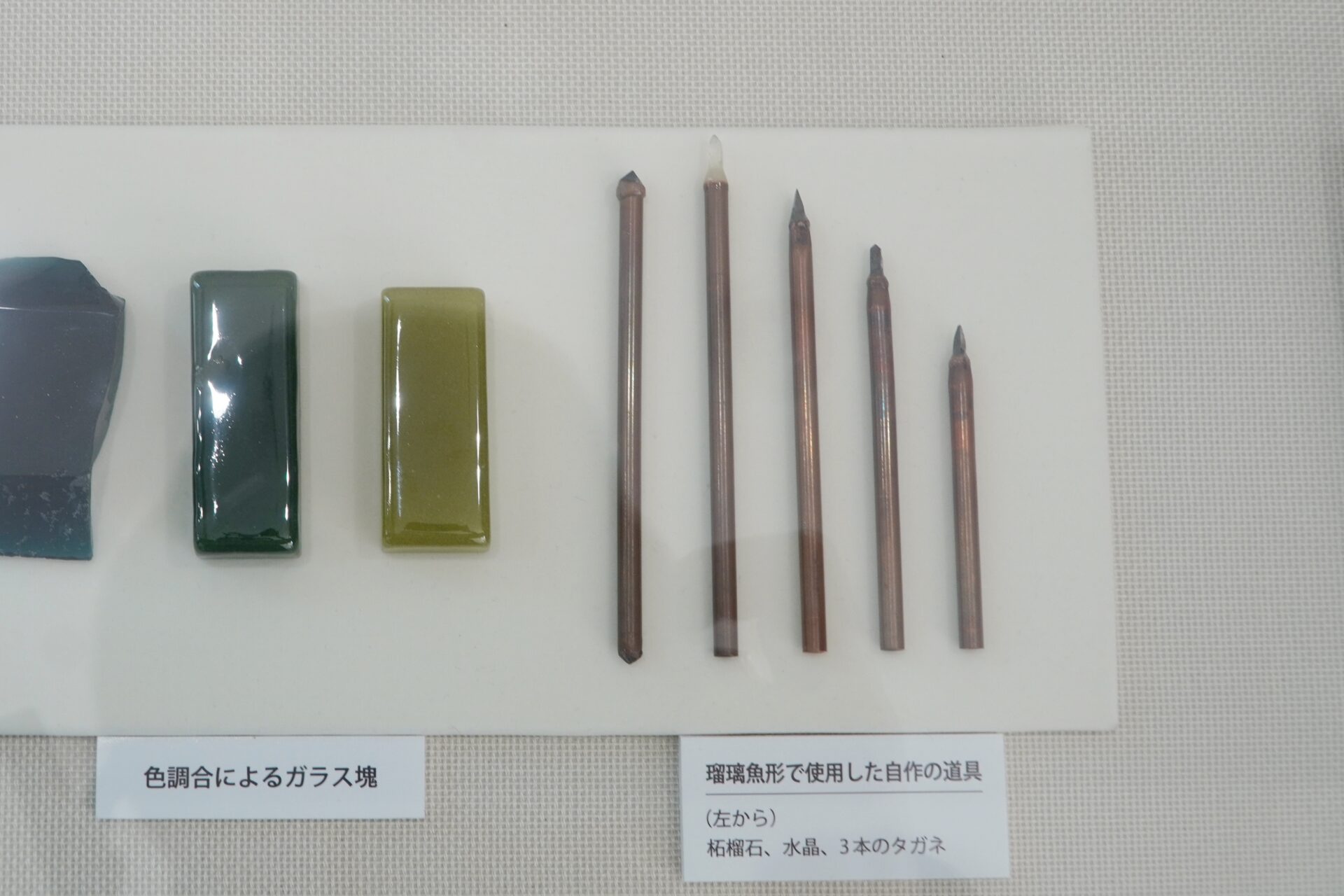
For example, when making yellow, I add coke to create a reducing atmosphere and adjust the color. I repeated the yellow mixing process about 80 times. For blue, it was about 50 times, and for green, about 40. It was only by going through this many variations that I could get colors close to the originals.
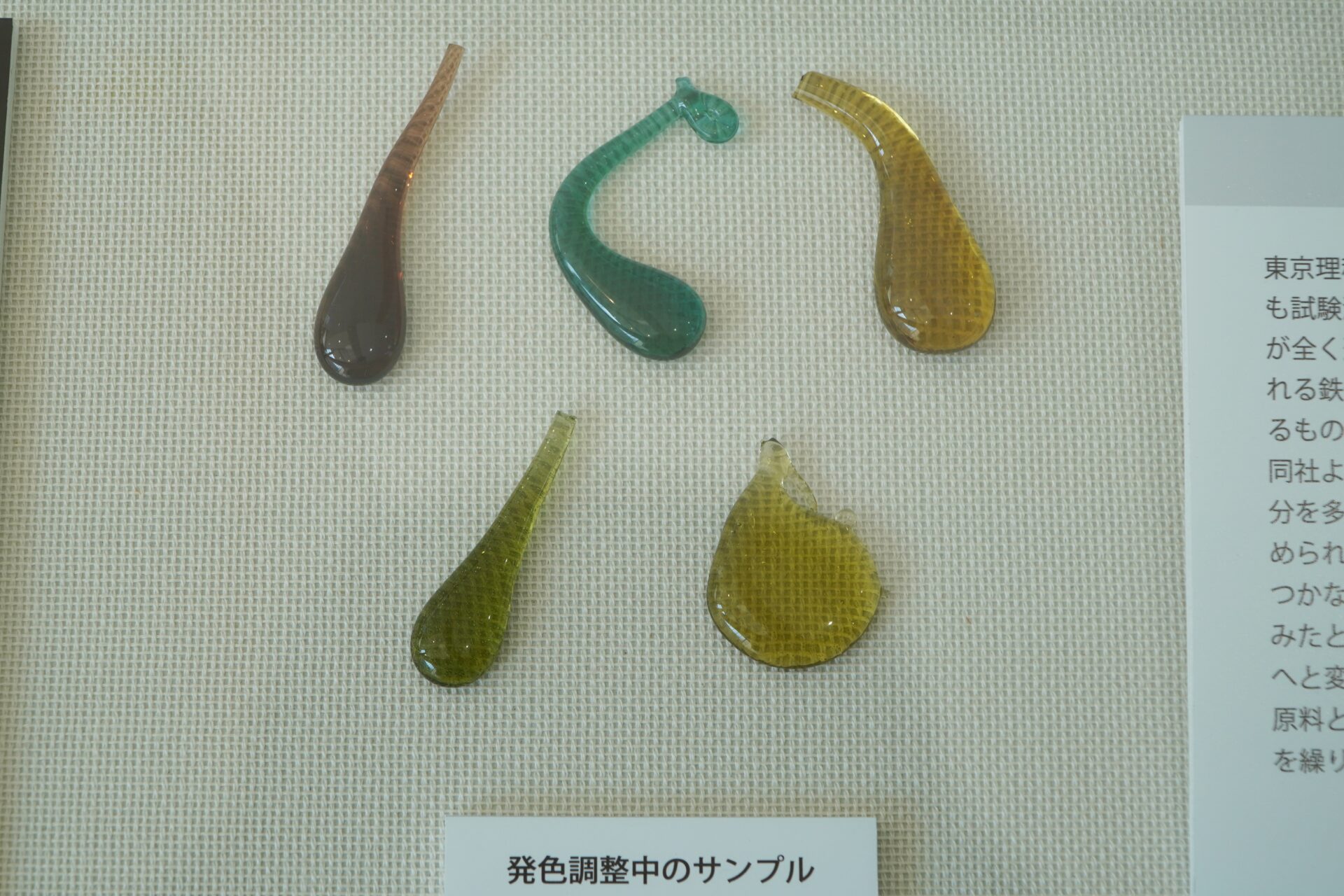
To determine how to achieve the desired color, I would create the glass and transport it to Nara to compare it with the actual pieces. I would then receive instructions and return to repeat the color mixing. This continued for about a year.
I also compared the glossiness of the finished product with the originals, checking for excessive shine or dullness. I examined the surface for scratches under a microscope. I made sandpaper to create scratches and carve. I tried various methods while looking through the microscope to see how to get closer to the originals.
Nishikawa
I think there will be people who see Sakoda's works at this exhibition and think, "I thought I would see the originals, but replicas are a bit disappointing." There are restrictions on circulating the originals. Therefore, one of the significances of restoration is to create a substitute for public display with higher precision.
The second point is that research progresses significantly through restoration. We cannot create just by looking at, photographing, and investigating. It becomes possible to create through more in-depth research.
The third point is that, when I was in my late twenties, I used to think, "Why do we have to create replicas when we are taking good care of the originals?" Protecting the originals is the most important job.
However, there have been disasters such as the Great Hanshin-Awaji Earthquake and the heavy rain in July 2018 that affected Mabi. There have also been air raids during the war. Since we never know what might happen, it is best to create another substitute and store it in a different location.
Restoration has these three major purposes. The desire to create something that is not inferior to the original is something the creators feel, and it may lead to exhausting efforts, but they have energetically engaged in it.
Conclusion
Through participating in the talk show and viewing Sakoda's works, my perspective on replicas has completely changed. The repetitive tasks that seem endless and the meticulous adjustments under a microscope. No compromises are allowed, and one must face the work. I felt that it was accomplished thanks to extraordinary effort, patience, and support from those around.
I had never considered the three purposes of restoration, but I learned that it is important to convey the achievements of our predecessors to future generations. I believe that by restoring, the value of the originals may also be enhanced.
From August 28 (Wednesday) to September 2 (Monday), 2024, an exhibition titled "Sakoda Taketomi Glass Exhibition" will be held at the Tenmaya Kurashiki Store, 4th floor art gallery. Why not be captivated by Sakoda's works at this exhibition?
Data of Takahashi City Nariwa Museum
| Name | Takahashi City Nariwa Museum |
|---|---|
| Location | 1068-3 Shimohara, Nariwa-cho, Takahashi City |
| Contact | 0866-42-4455 |
| Parking | Available |
| Opening Hours | 9:30 AM to 5:00 PM (last admission at 4:30 PM) |
| Closed | Monday If a public holiday or substitute holiday falls on a Monday, the museum will be open and closed the following day. |
| Admission Fee (tax included) | [General] Adults & Seniors: 1,200 yen University, High School, and Middle School Students: 800 yen [Admission Fee Exemptions] Those with a physical disability certificate, rehabilitation certificate, or mental disability health and welfare certificate, and one accompanying person (proof required; the disability certificate app "Mirairo ID" is acceptable) Elementary school students and younger (until January 13, 2025) Middle school students residing in Takahashi City (during school holidays) Okayama Prefecture Museum Council discount ticket [one person and one accompanying person free] [Other Discounts] Okayama Prefectural Cultural Property Foundation membership card [20% discount for the member only] Setouchi Museum Network common discount ticket [20% discount for the member only] Santa Club Card, Sanyo Shimbun ID membership card [100 yen discount for the member only] Elful Card [100 yen discount for the member only] Okayama Love Card [100 yen discount for the member only] Refresh Subsidy Ticket [discount for members and their cohabiting family members] *Admission fees may vary depending on the exhibition *The above fees are for the Sakoda Taketomi exhibition. |
| Payment Methods |
|
| Reservations | Available Advance reservations are recommended for groups. |
| Smoking | Completely non-smoking |
| Restrooms | Western-style toilets, Japanese-style toilets, barrier-free toilets |
| Childcare | Stroller rental Baby bed installed in the women's restroom on the first floor. |
| Barrier-Free | Ramps, barrier-free toilets, elevators, wheelchair rental Wheelchair-accessible toilets are on the first floor. |
| Website | Takahashi City Nariwa Museum |