What kind of image do you have of "ceramics"?
Some of you may have the impression that it seems a bit high-level.
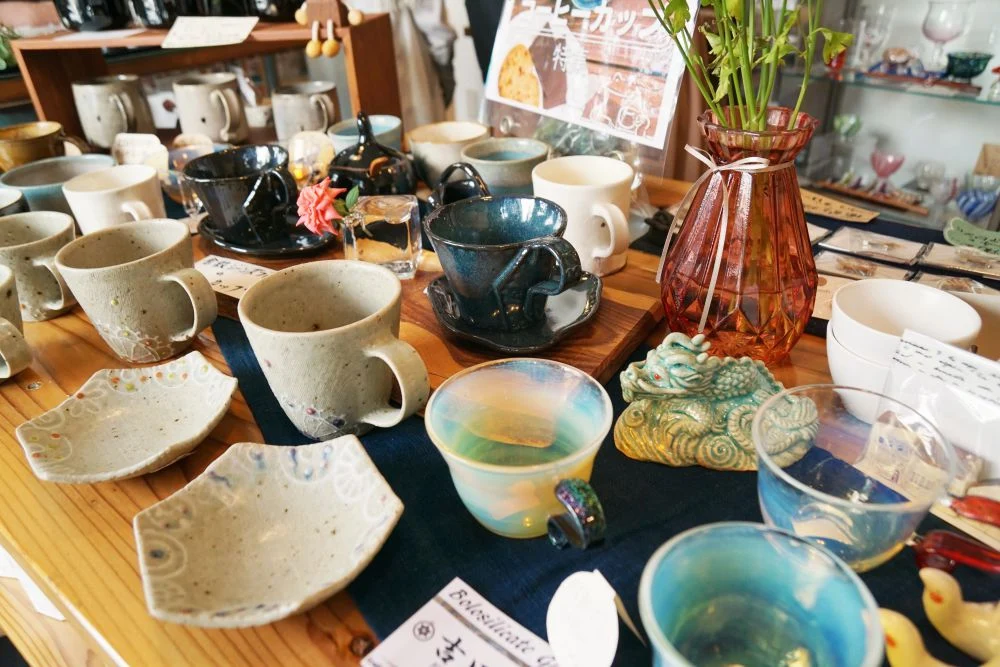
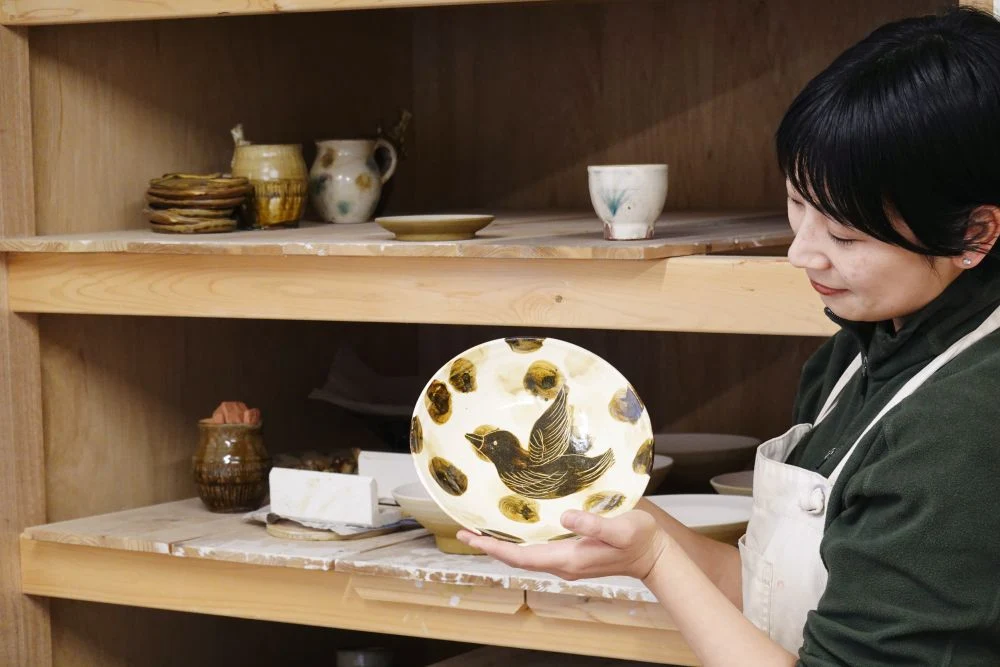
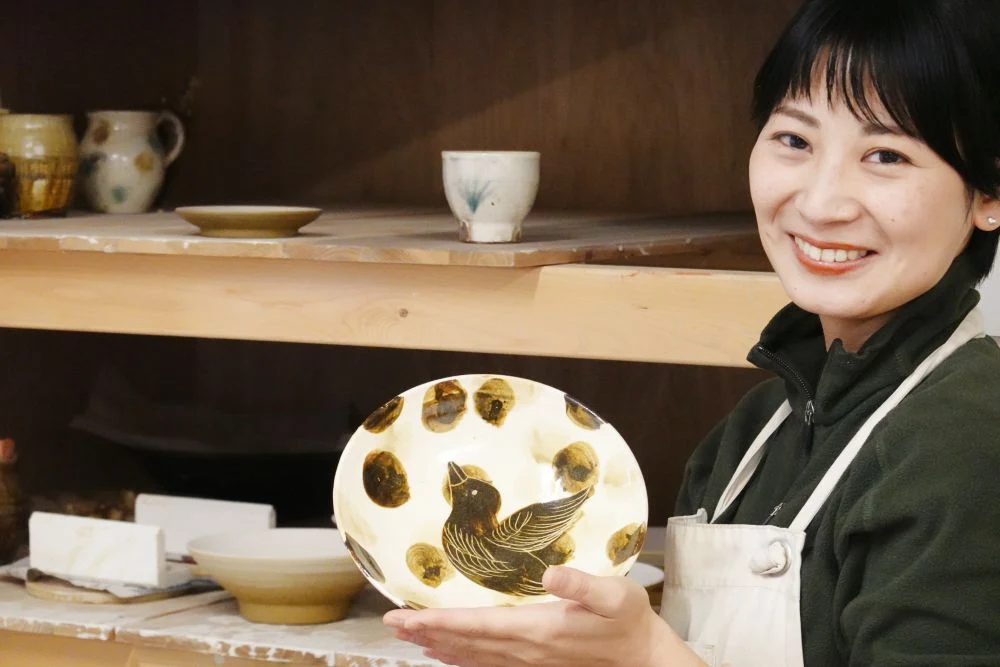
Hara Arika, who has a workshop in Mabi, Kurashiki City, is a woman who creates ceramic works inspired by lively animals.
We visited Hara's workshop to see the actual process of ceramics and to hear about her journey into the world of ceramics.
Through cute animal-shaped chopstick rests and plates decorated with animals, why not experience the charm of ceramics created by the young Hara?
About Ceramics
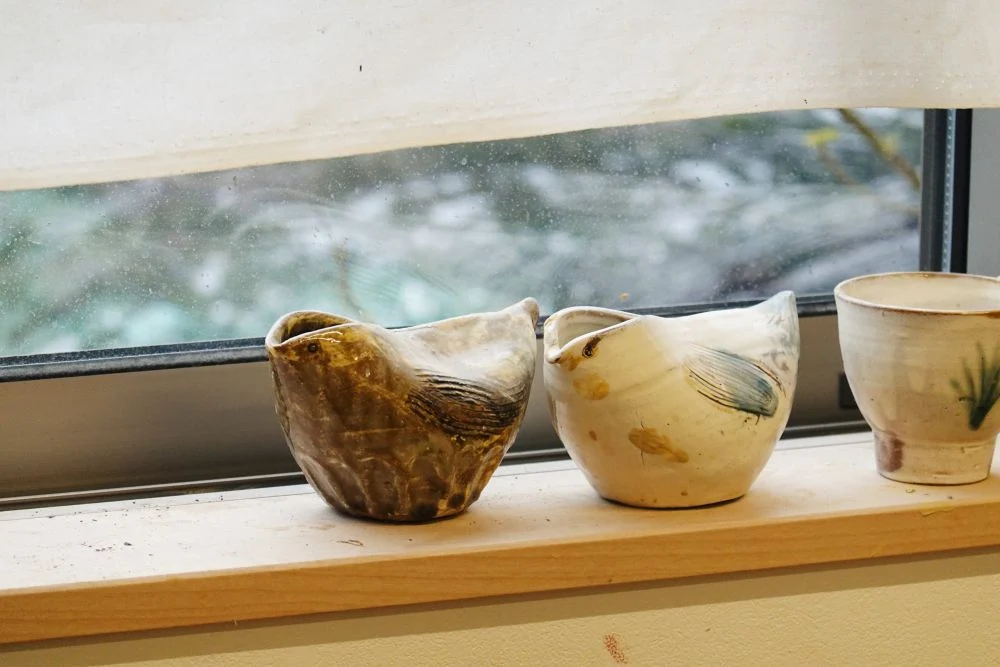
Ceramics is the technique and the pottery created by shaping clay and firing it at high temperatures (heating to increase hardness).
There are various methods for shaping and firing ceramics.
Methods include "hand-building," which uses hands and tools, and "wheel-throwing," which involves placing clay on a rotating wheel and shaping it as it spins.
Additionally, there are two types of firing: "oxidation firing," which occurs in a kiln with sufficient oxygen for complete combustion, and "reduction firing," which occurs in a kiln with incomplete combustion.
Oxidation firing is characterized by the iron in the clay oxidizing, leading to warm color tones.
Reduction firing can result in blue hues or subtle color changes due to chemical reactions involving the metal components contained in the clay.
Ceramic Artist Hara Arika with a Workshop in Mabi
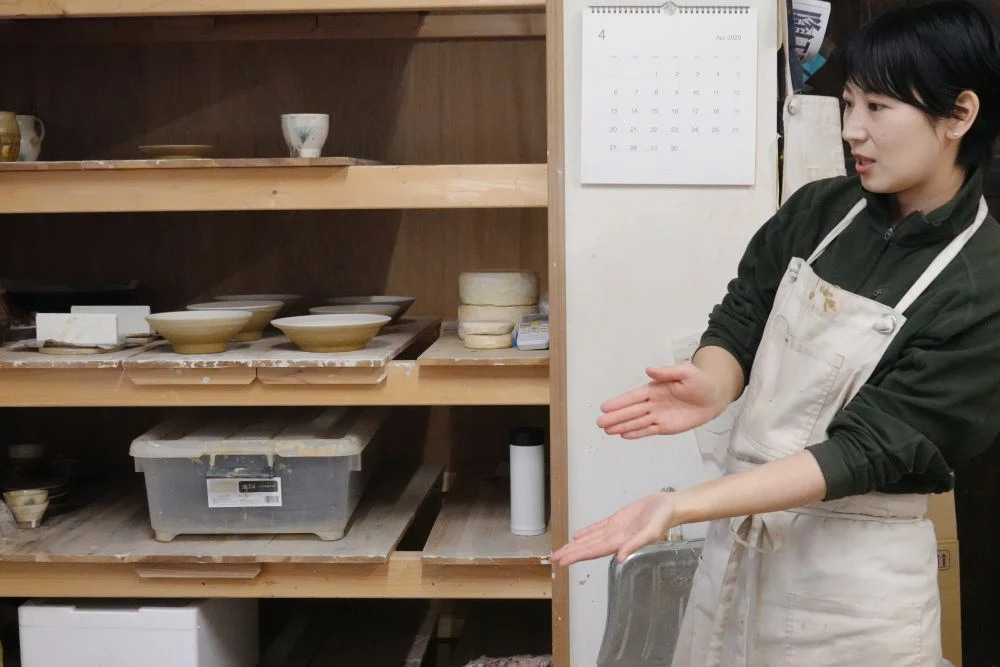
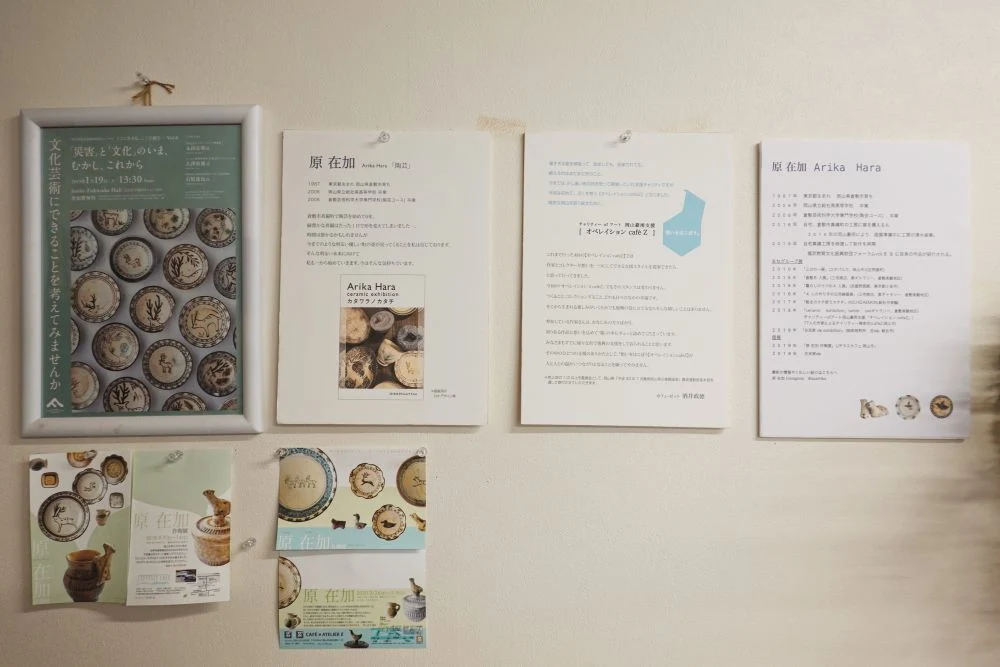
Hara Arika was born in Tokyo in 1987 and moved to Mabi-cho, Kurashiki City, to her father's family home when she was in elementary school.
After graduating from the ceramics course at Kurashiki University of Science and the Arts, she worked for about five years at an apparel company, but she decided to pursue ceramics because she wanted to "make her passion her job."
After establishing a workshop at her family home in Mabi and setting up a kiln in 2016, she spent her days teaching at a ceramics class in Okayama City during the day and immersing herself in production for her solo exhibition at her workshop in Mabi at night.
However, in the summer of 2018, just before her solo exhibition, her workshop was flooded due to the July 2018 heavy rain disaster.
Since the water rose to the ceiling of the first floor, all the tools, including the kiln, and the works she had created up to that point were flooded.
She considered other paths for a time, but with the help and encouragement of her friends, she began to rebuild her workshop about six months later.
In February 2020, she held a solo exhibition titled "Hara Arika Ceramics Exhibition - We Are All Alive. We Move Forward Because We Are Alive." at "cafe Z" in Minami-ku, Okayama City.
Since she taught us about the actual processes of ceramics, let me introduce them.
The Process of Making Ceramics
Kneading Clay
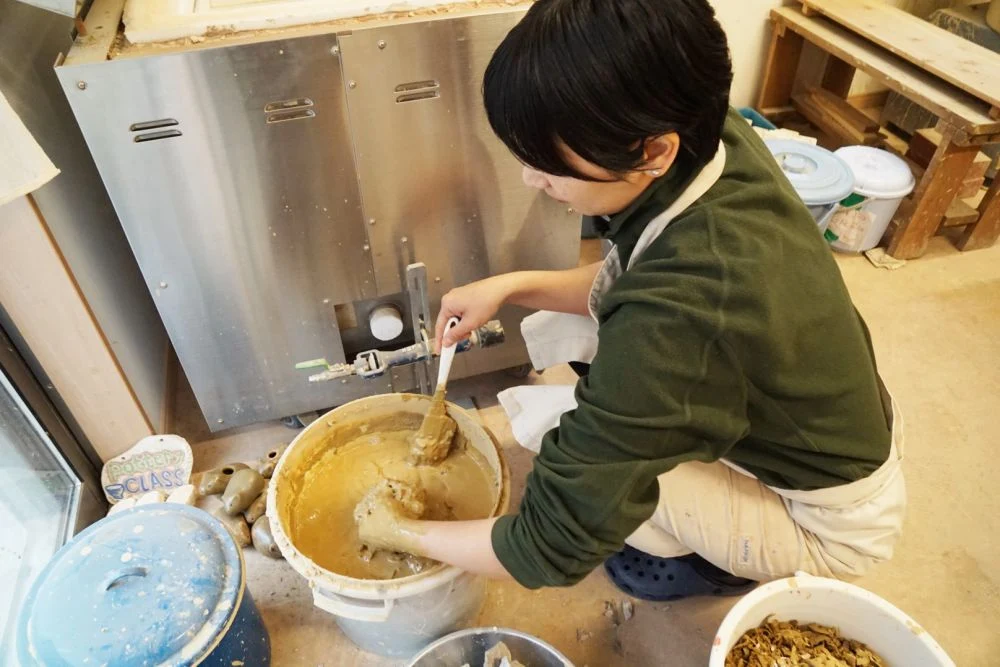
First, we start with "kneading clay."
The clay used for ceramics is broadly divided into "white clay" and "red clay."
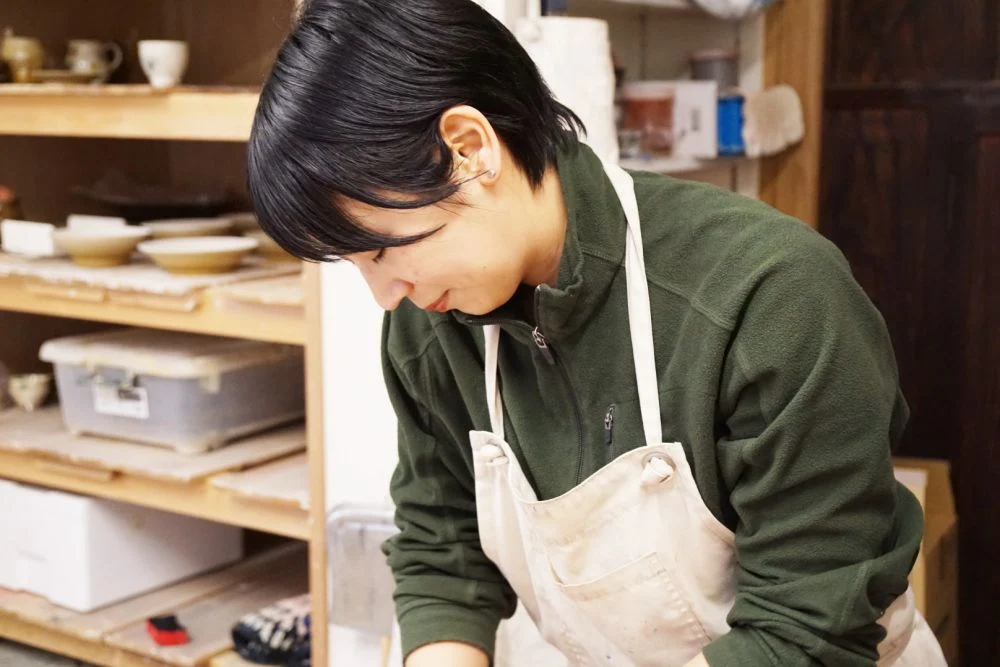
Hara smiles, saying, "I love the time spent touching the clay."
She performs "kiku-nery," completely removing the air from the clay.
Shaping
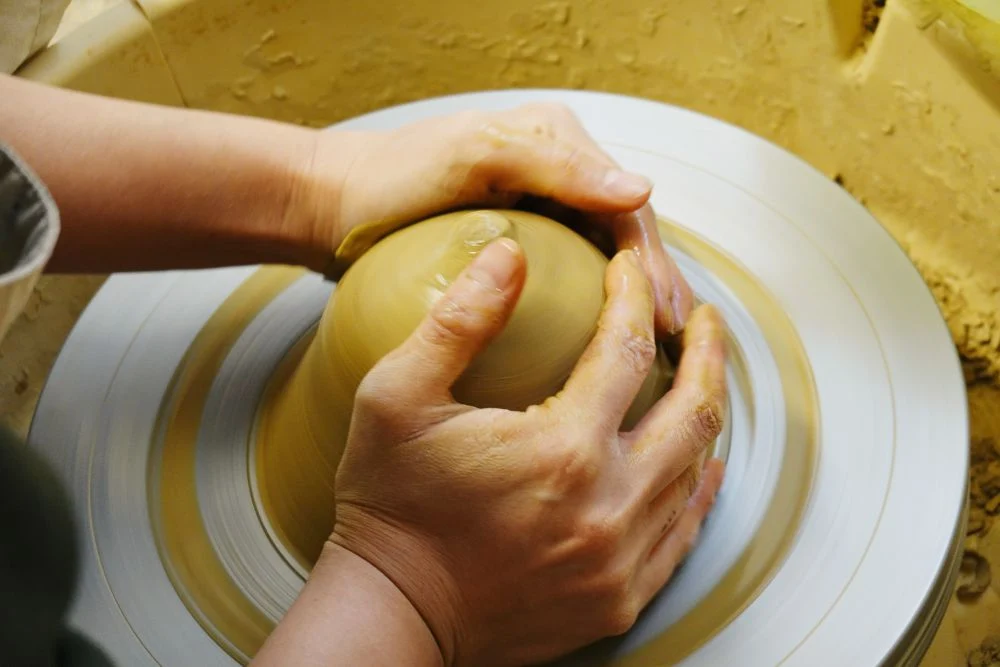
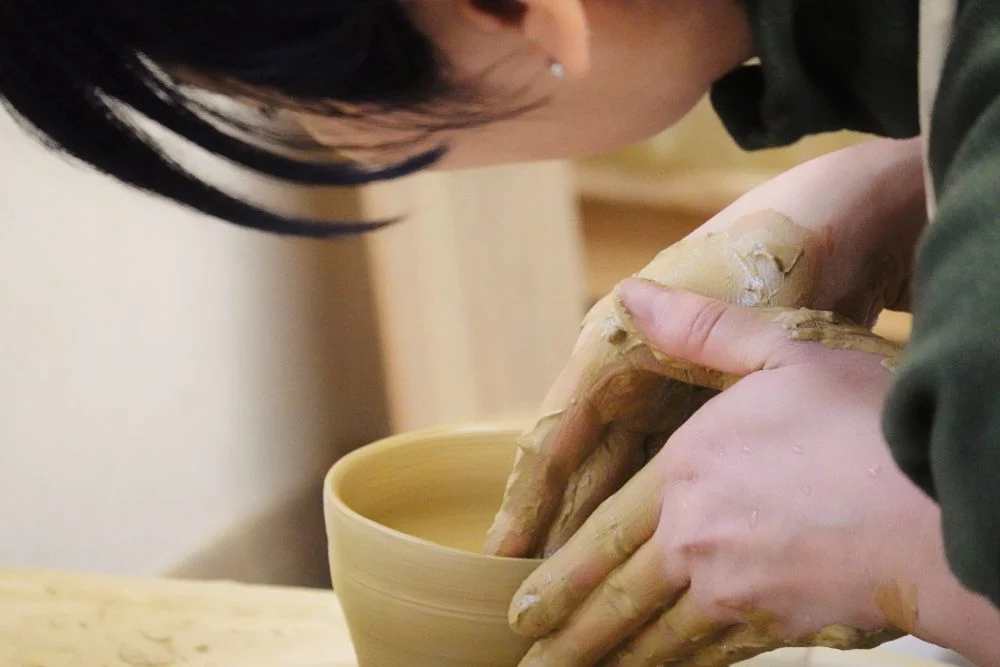
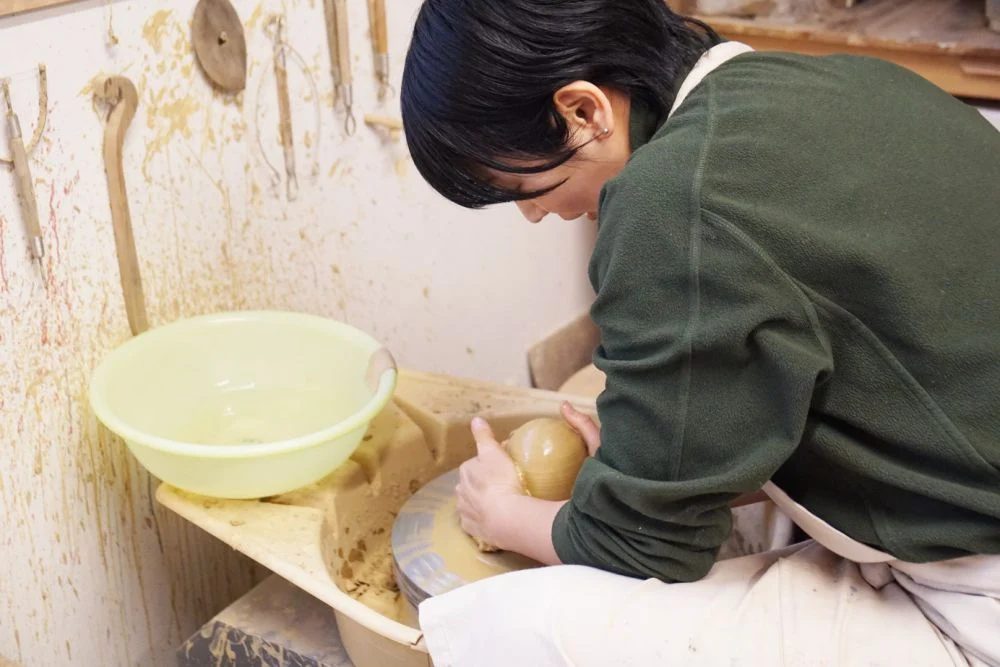
Next, we move on to shaping using an electric wheel.
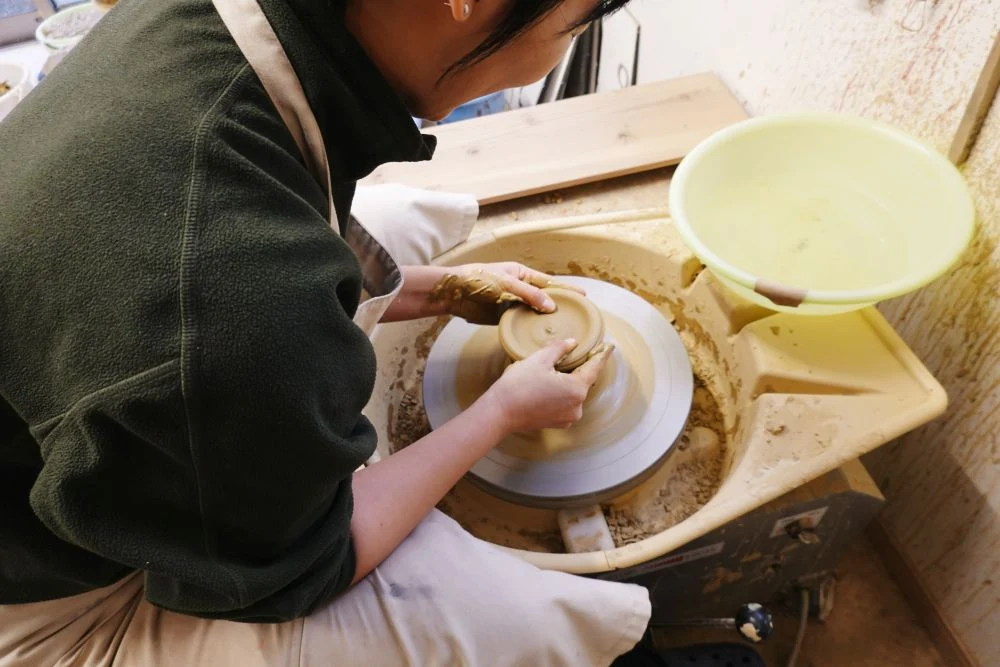
She wets her hands and gradually shapes the clay while making it slippery.
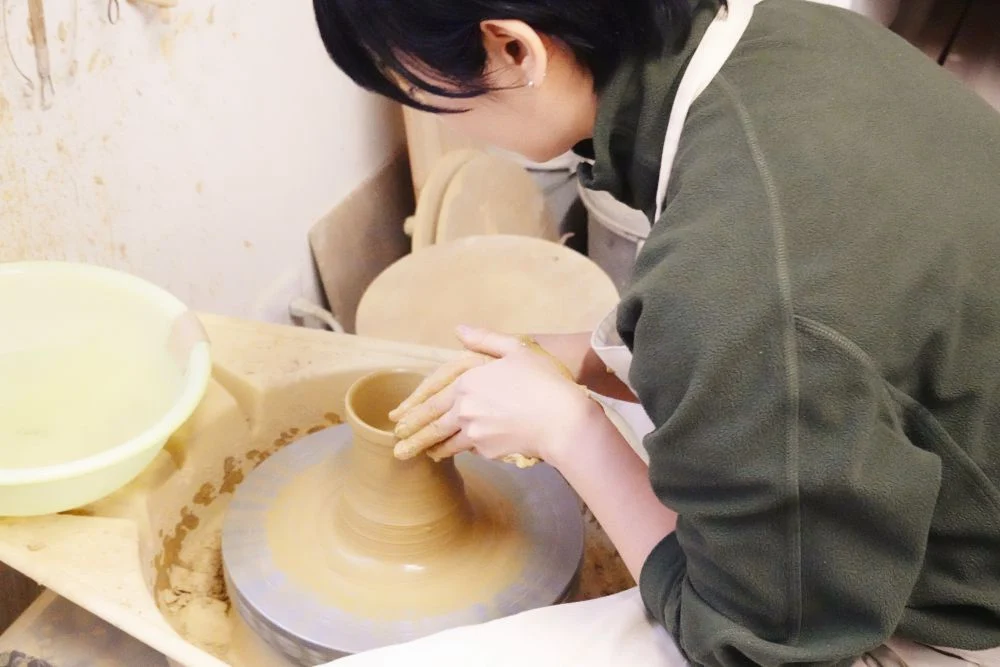
I was so captivated by the process of creating beautiful vessels that I forgot about the interview.
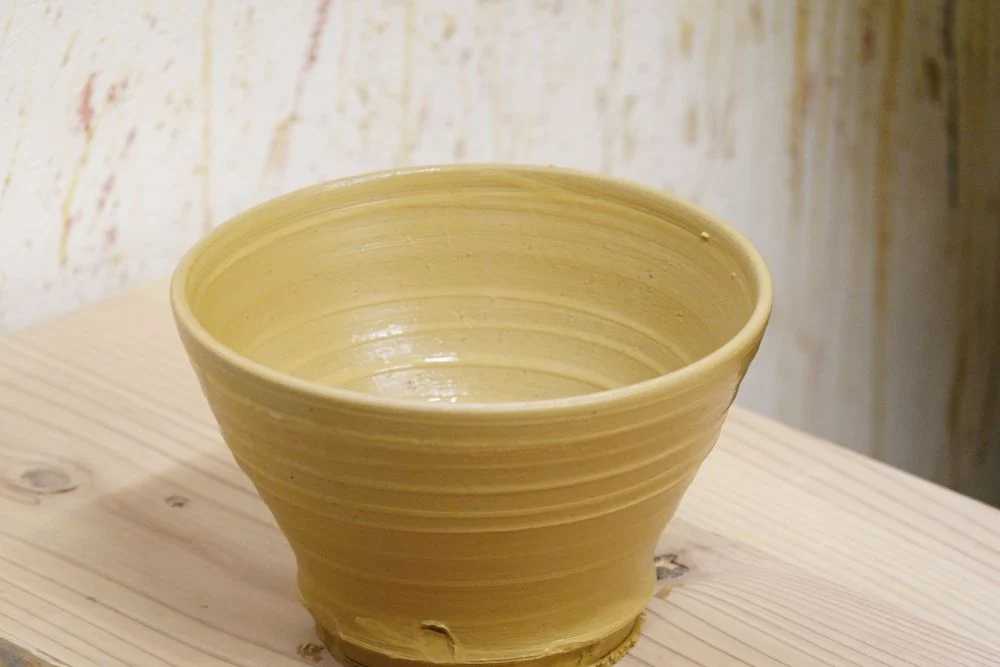
And this is the vessel that was completed after shaping.
This vessel was shaped in about 30 seconds using the electric wheel.
Drying
It is dried for 1 to 2 days until it reaches a state suitable for trimming.
The drying time varies depending on the temperature, humidity, and shape.
After that, the foot (the part that touches the table when the vessel is placed on it) is trimmed, and it is dried for another week or so to completely remove moisture.
Bisque Firing
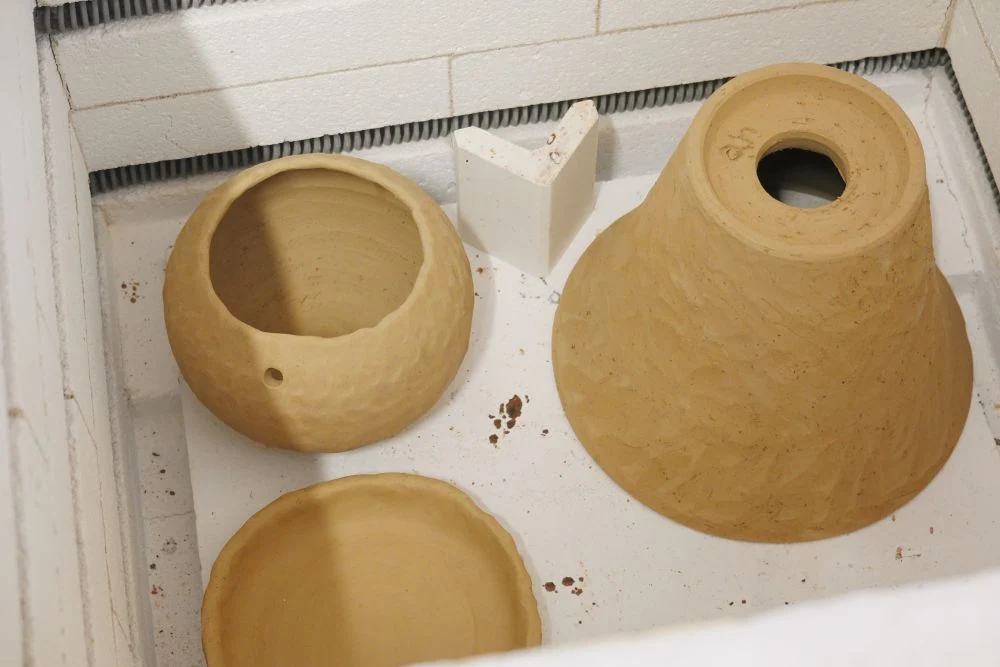
Clay that has only been dried will revert to clay when soaked in water.
When it is fired in an electric kiln at about 780 degrees, it will no longer revert to clay even when soaked in water.
Painting
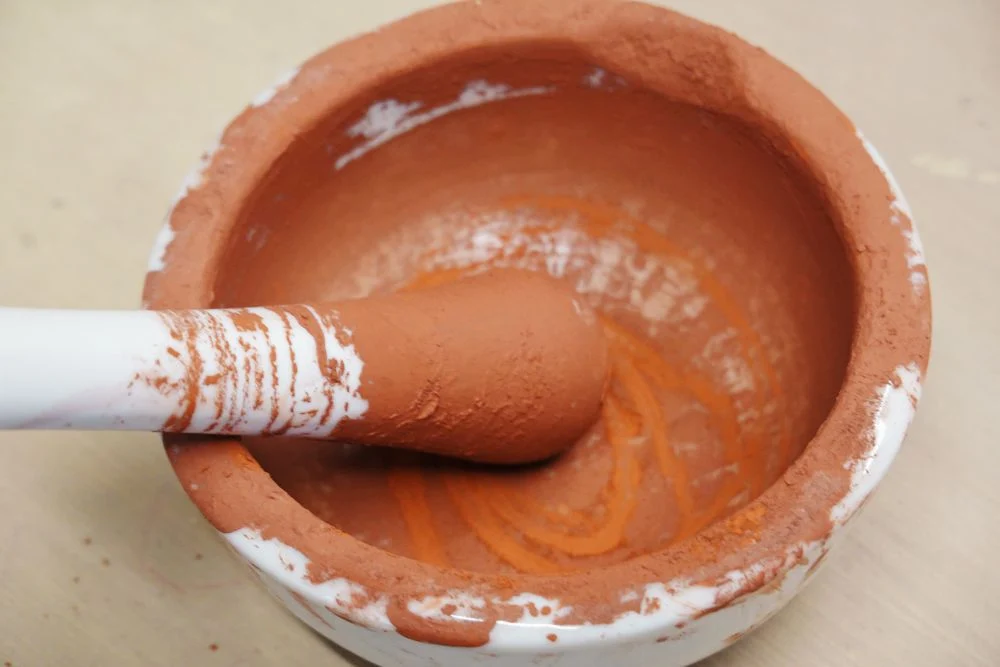
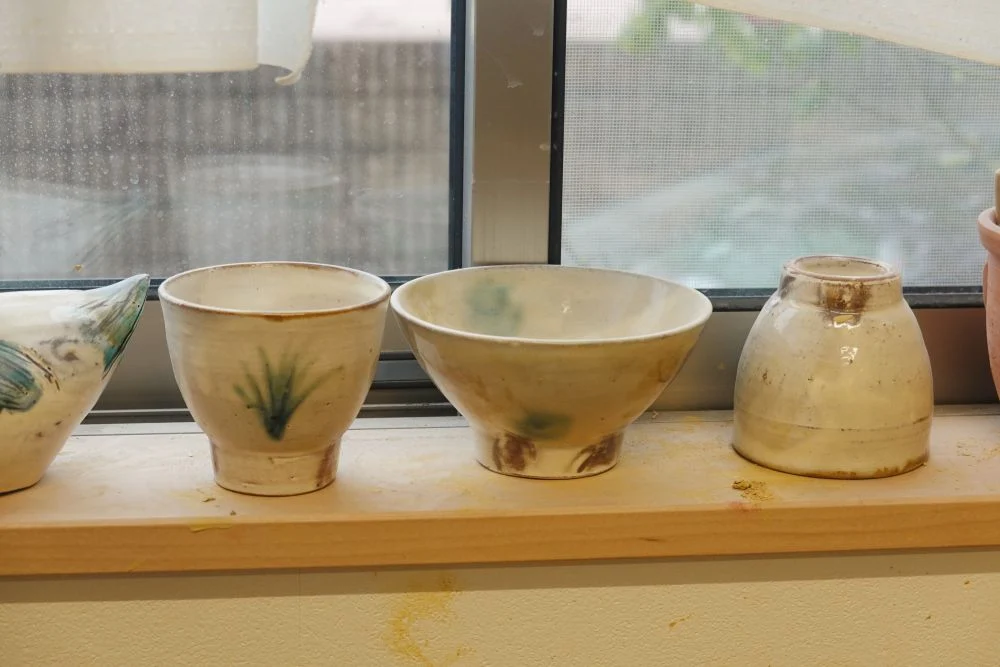
On the bisque-fired vessel, designs and patterns are painted using bengara (red pigment) and other materials.
Glazing
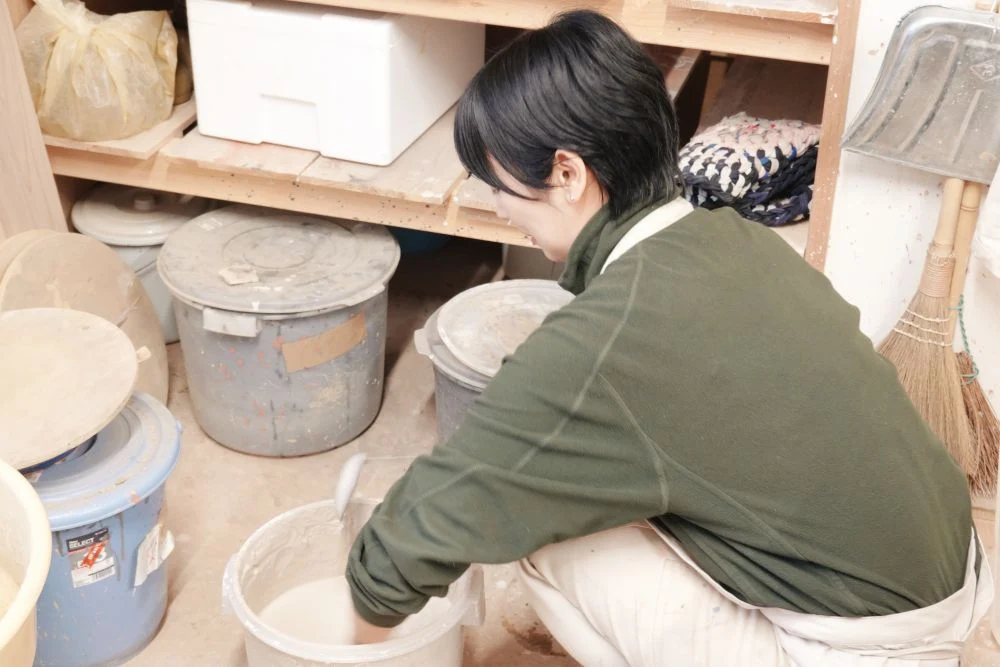
If you look at the surface of pottery, it is smooth like glass, right?
This is because it has been glazed.
Glaze is used to enhance the visual beauty by adding color and luster, and to make pottery durable so that it does not absorb water.
Glaze is made from ash produced by burning plants and crushed minerals like feldspar mixed with water.
Final Firing
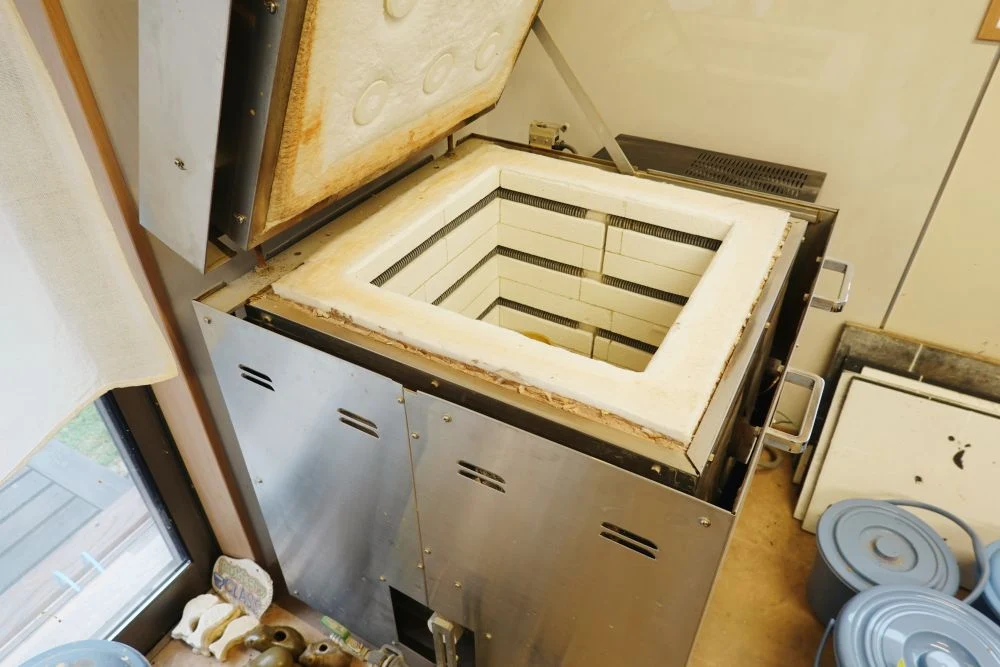
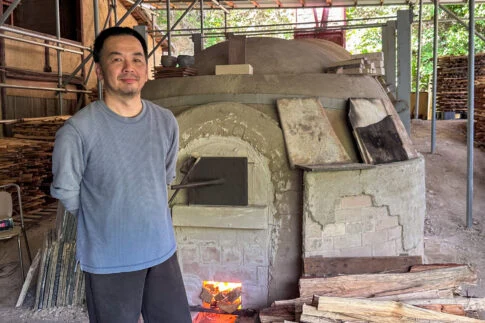
The electric kiln fires for one day at approximately 1230 degrees.
This electric kiln was damaged in the heavy rain of July 2018, but it has been repaired and is now usable.
When it is fired, it becomes much harder than in its bisque state.
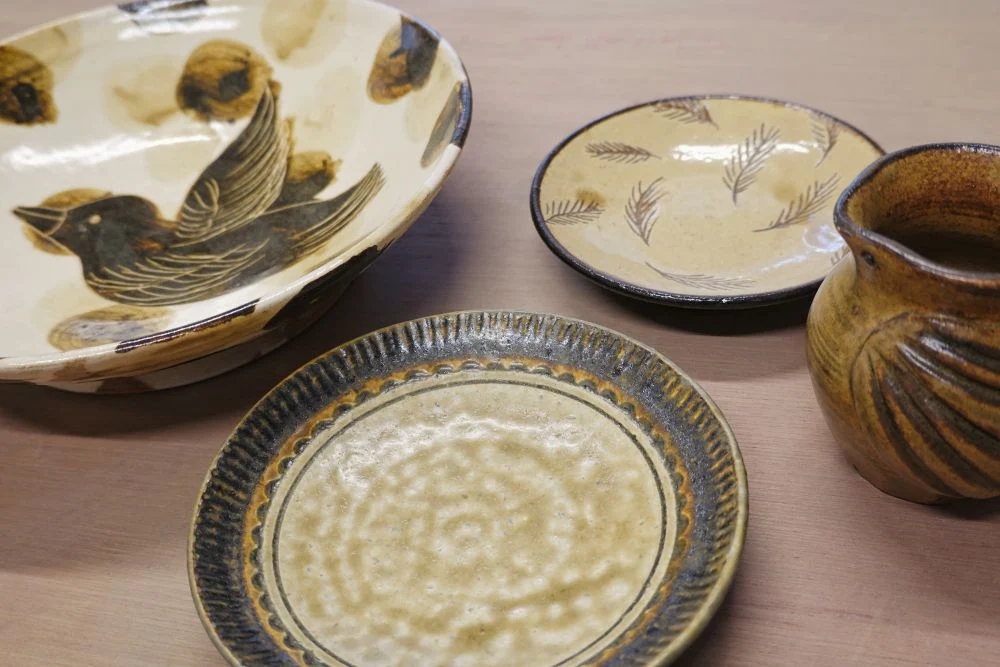
Depending on the shape, it takes about one month to complete a single piece.
After a long process, when it is finally taken out of the kiln, it is the most exciting moment, wondering, "How will it turn out?"
Because it is a piece created from scratch over time, I think the joy is all the more special.
Next, I asked Hara Zaika about her journey into pottery and her dedication and feelings towards her work.
Interview with Hara Zaika, a potter from Mabi
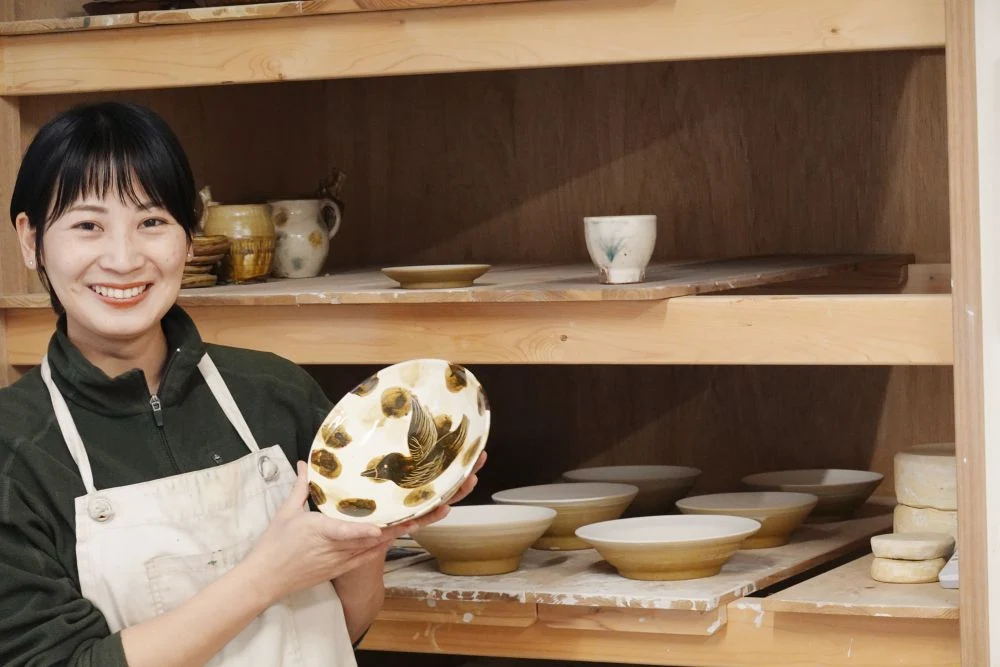
About the inspiration for starting pottery and craftsmanship
When did you start making things, Hara-san?
Hara
My mother was a painting class teacher, so I have been making things since I was little.
I enjoyed drawing and making things with mandarin orange peels, creating something from familiar materials.
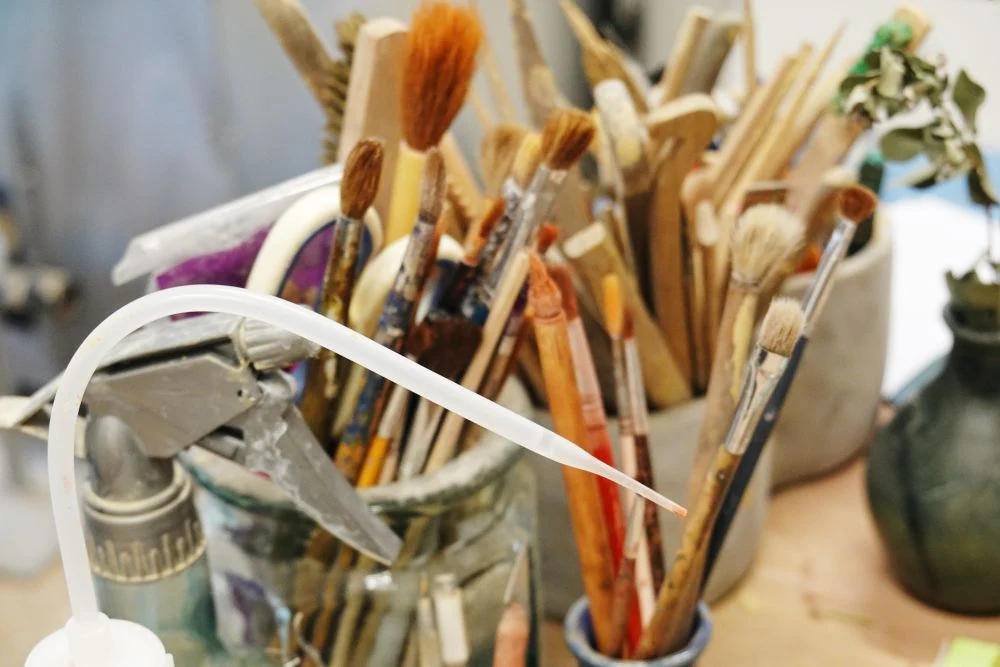
When did you start pottery, Hara-san?
Hara
I went to a high school with a fine arts and crafts course and studied sculpture.
Sculpture involves building up clay, adding, removing, and stretching it to create forms.
There, I realized that I am more suited to making things with my hands than to drawing.
After that, I enrolled in Kurashiki University of Science and the Arts, where I first learned pottery.
So, I started pottery in earnest after entering vocational school.
About the appeal of craftsmanship
Please tell us about the goodness and appeal of craftsmanship.
Hara
The good thing about craftsmanship is that you can express your own world regardless of age.
Indeed, from small children to adults, and even those who can or cannot speak, can express themselves without barriers.
How I came to pursue pottery
What did you do after graduating from vocational school?
Hara
After graduation, I got a job at a company in the apparel industry, unrelated to pottery.
However, during that time, I continued with pottery.
I worked at that company for about five years, but my desire to do what I want to do and create grew stronger, and I resigned at the age of 25.
Now, during the day, I work as an instructor at a pottery class in Okayama City, and then in the evening, I come to my workshop in Mabi to create my own work.
I was fortunate to meet a great teacher who taught me that "continuing is important," which was significant.
I decided to make pottery my own, and even when I took a different job, it was the only thing I continued.
While I thought I wanted to make it my job, there were times when I worked in other fields and did not do pottery.
However, my hands still remembered.
I boldly resigned at 25, converted the first floor of my home into a workshop, and purchased a kiln.
Actually, this workshop is a room that I inherited from my late grandfather.
Dedication to her work
Hara-san's wonderful works feature cute animals. Please tell us about your dedication to your work.
Hara
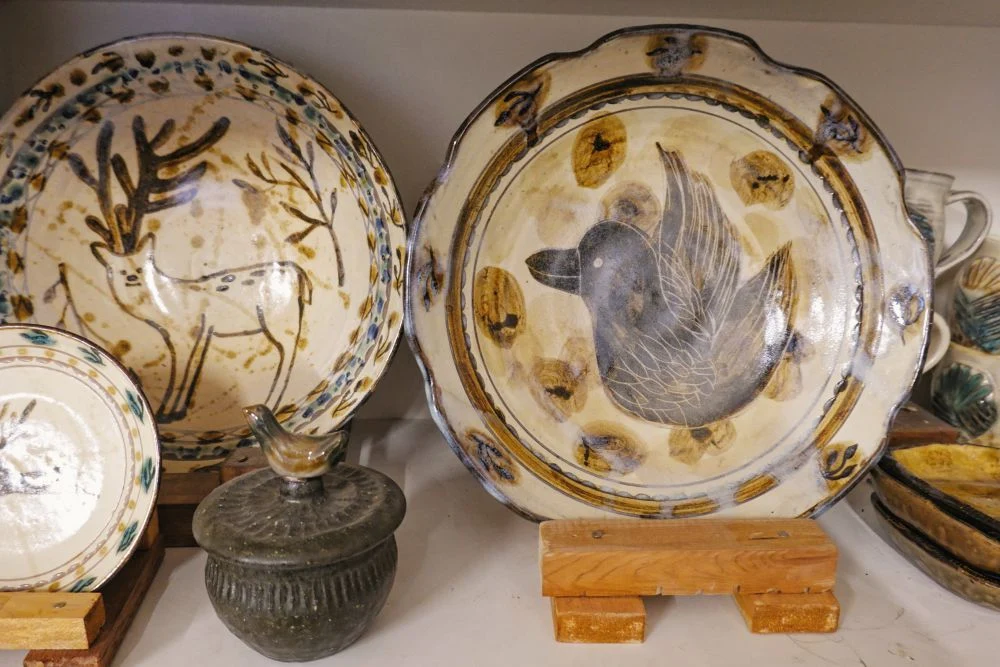
I have always had pets like dogs and cats at home, so I love animals.
The animals I depict in my work are all ones I am interested in at the time.
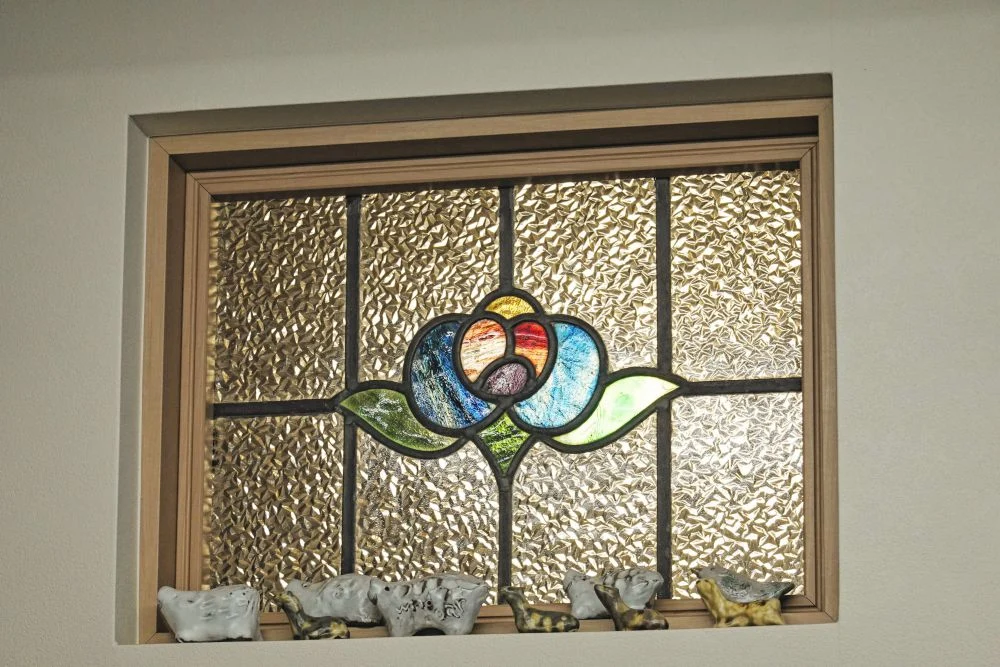
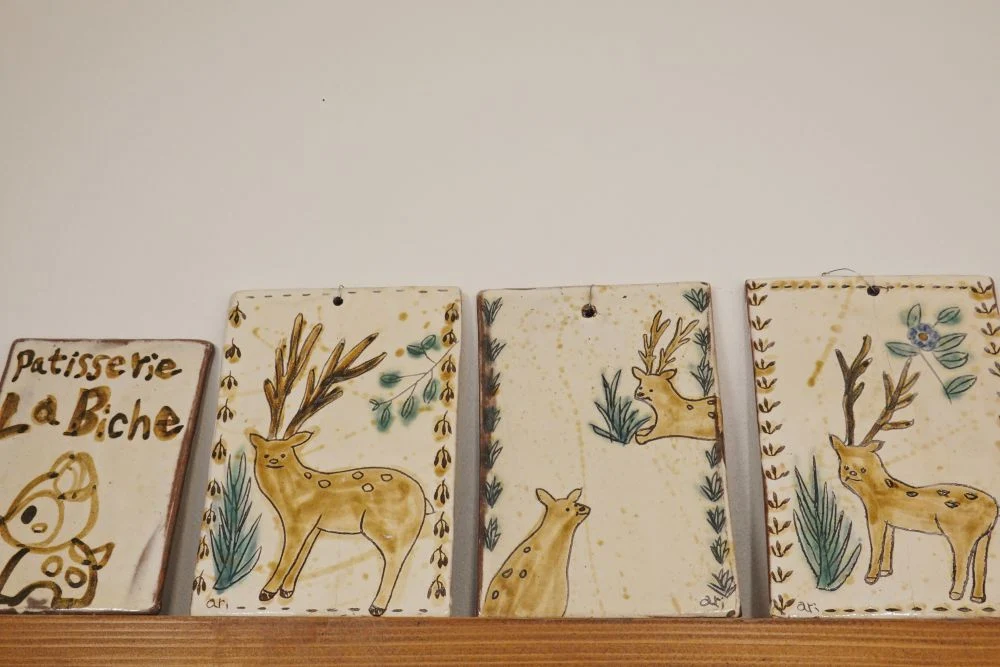
The first animal that felt most natural when I drew it was a deer.
Deer are said to bring good fortune, so they are particularly my favorite.
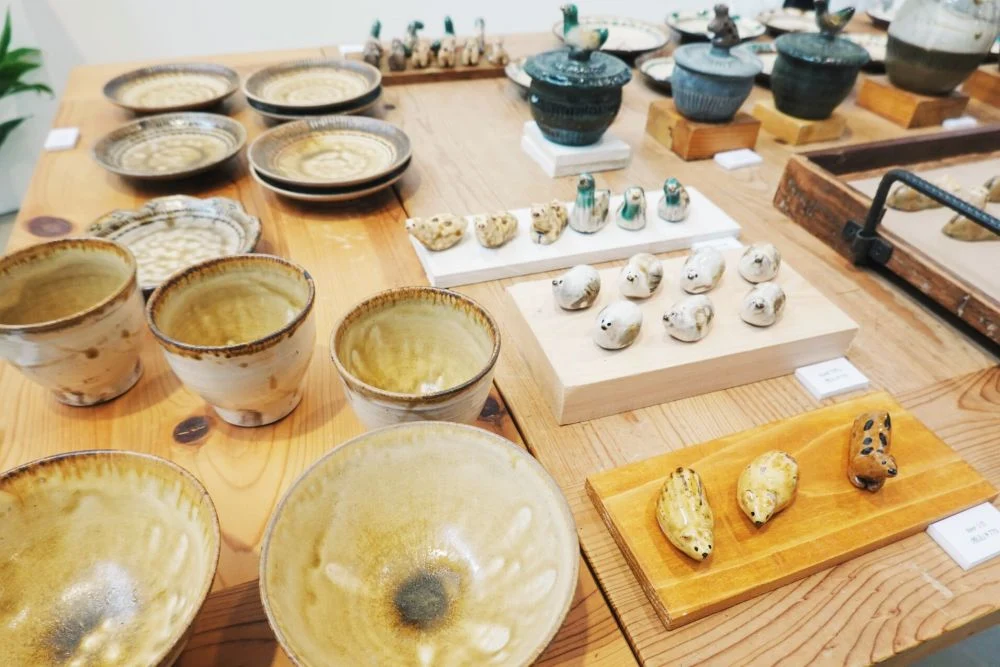
I also like nutria, and I often see mother and baby nutria on my way to work.
Their tails are a bit creepy, but I think their round little bottoms are cute, so I depict them in my work.
I focus on preserving the warmth of the clay in my creations.
About the journey to hold the solo exhibition I aimed for after the disaster
Can you share your feelings about the disaster in July 2018 and your journey to hold a solo exhibition again?
Hara
Originally, I was scheduled to hold a solo exhibition at "cafe Z" in August 2018.
About a month before the exhibition, I was affected by the disaster, and my workshop was submerged up to the ceiling.
Regarding the workshop, I was the only one who could sort out what could be used and what could not, so I spent about two months cleaning up by myself.
The electric kiln was also repaired and returned around December of that year.
After that, it took about six months to properly restart after doing test firings.
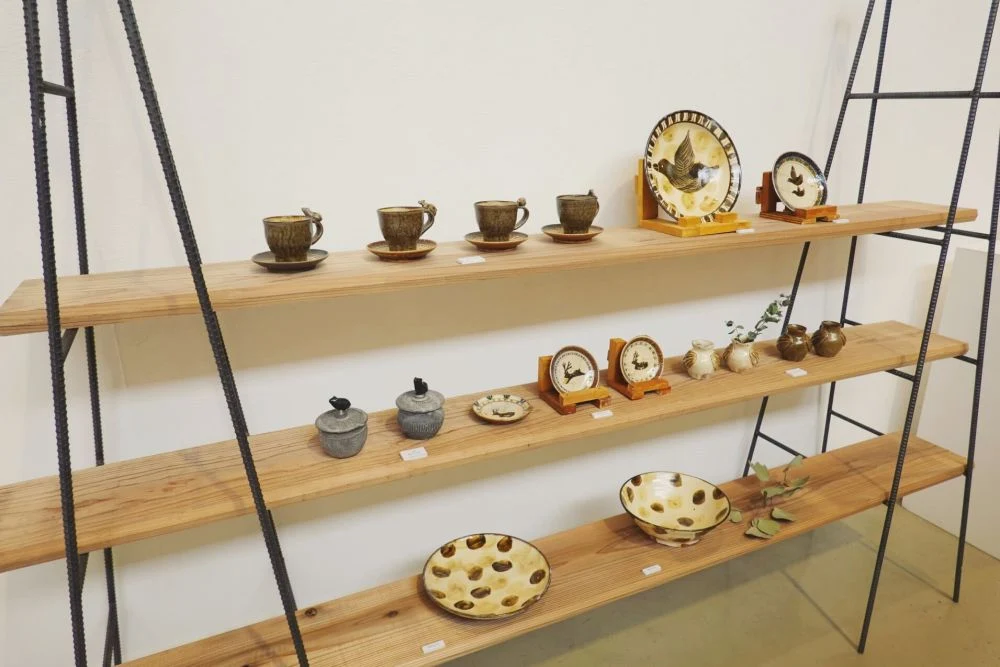
Because there were people who supported me by saying, "I'll come to your exhibition again," I thought, "I can't give up easily; I have to keep going."
After the disaster, I feel that I have become able to create in a more relaxed manner, and my style seems to have changed.
Perhaps my feelings of wanting to do well in the present have started to show in my work.
At the solo exhibition, I was happy to see and talk directly with customers, as I could know their reactions firsthand.
I hope that when they hold my work, they simply feel happy.
Where can I purchase Hara-san's works?
Hara
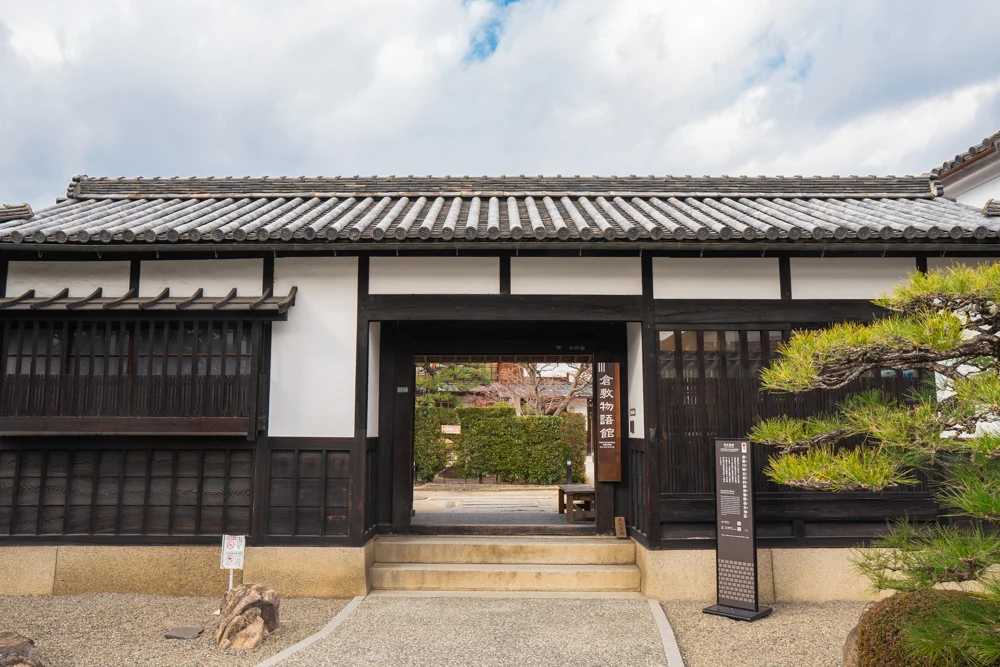
You can currently purchase them at "Miu-chi Zakkaten" located in the Bikan Historical Area and "HAHU (Handmade and Books)" located in Honkan-cho, Okayama City.
Future prospects
Please tell us about your future prospects.
Hara
I think I need to not only enjoy making but also expand the range of my works and think about how to get more people to know about them.
As part of that, I am considering holding workshops in the future.
I want more people to hold my works and think they are cute.
Conclusion
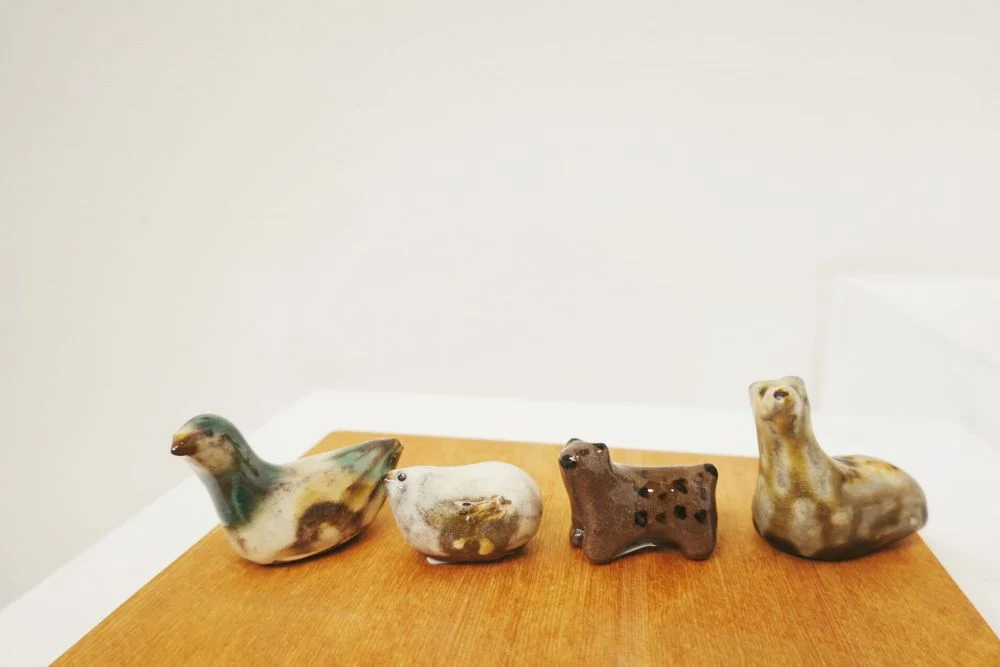
The works of Hara Zaika convey the lively energy of animals.
Through Hara's stories and works, it was a valuable interview that allowed us to touch upon the goodness and charm of pottery once again.
Hara expressed a desire for those who hold the pieces to feel joy.
Why not experience the warmth and charm of Hara's works by holding the real thing?