Parks are places of relaxation.
There are various types of parks, and you have probably visited at least one in your life.
However, that is because the park itself was "suitable for you" and "accessible to you."
On the other hand, there are people who "want to use the park but cannot."
The Minna no Koen Project is a citizen group that advocates for and aims to spread the creation of inclusive playgrounds based on universal design.
It is a wonderful thing that parks can be used regardless of whether one has a disability or not.
So, what exactly is an inclusive playground?
We have conducted interviews to find out about the background of its establishment and its usual activities.
What is the Minna no Koen Project?
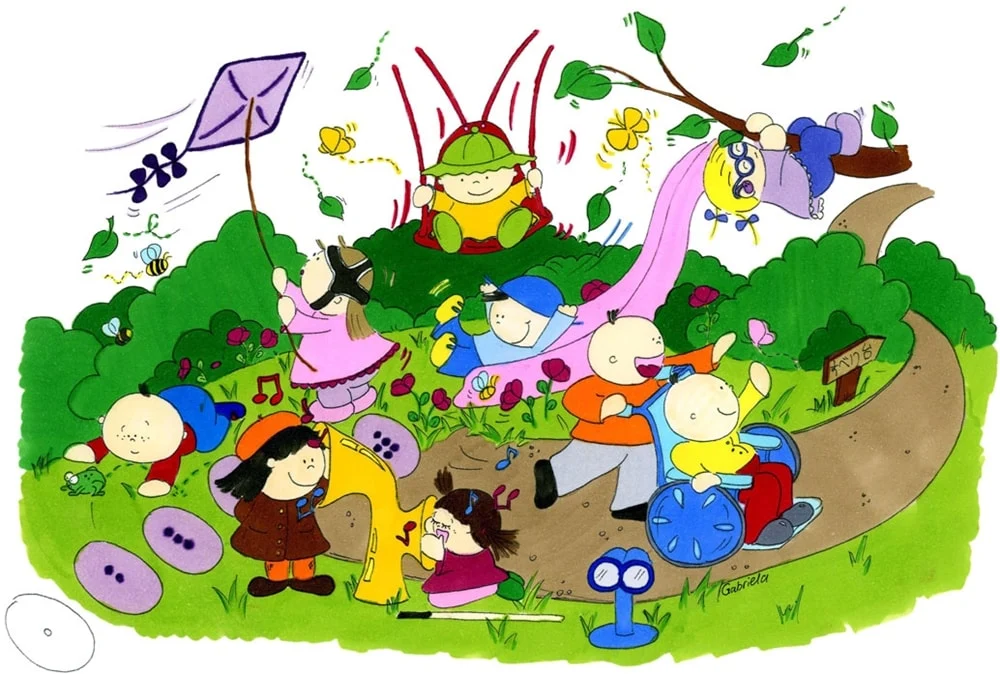
The Minna no Koen Project is a citizen group aiming to promote parks where all children, regardless of disability, can play and learn with various friends while fully expressing their abilities.
This kind of activity is often associated with non-profit organizations, so it was surprising to find that it is a citizen group.
The representative is Yanagida Koji, a professor at Kurashiki University of Science and the Arts.
The group is composed of three members: Hayashi Takushi, a teacher at Okayama Prefectural Okayama Higashi Support School, and Yato Yoko, a former teacher at a special support school.
The main activities can be broadly categorized into the following three areas.
- 【Research】Survey of diverse user needs and investigation of domestic and international park examples, as well as advanced initiatives and guidelines
- 【Think】Based on the results of each survey and discussions with people involved in parks and playground equipment, we consider effective ideas and points for playground creation and create guides
- 【Spread】In addition to disseminating information through the web and publications, we cooperate with advice and information provision for various park projects
They do not directly "create parks on-site (construct/install)."
For example, they respond to consultations from municipalities such as "We want advice on creating a new park" or "We would like you to look at the plans."
While we cannot introduce all activities, let’s take a look at some of what they do.
【Research】Survey of Diverse User Needs
In the needs survey, they conduct interviews with users such as the following.
- Local groups of children with disabilities and their parents
- Disability organizations
- Special support schools
- Daycare facilities for children with disabilities
- General parenting support groups
All children have the right to play. (United Nations Convention on the Rights of the Child, Article 31)
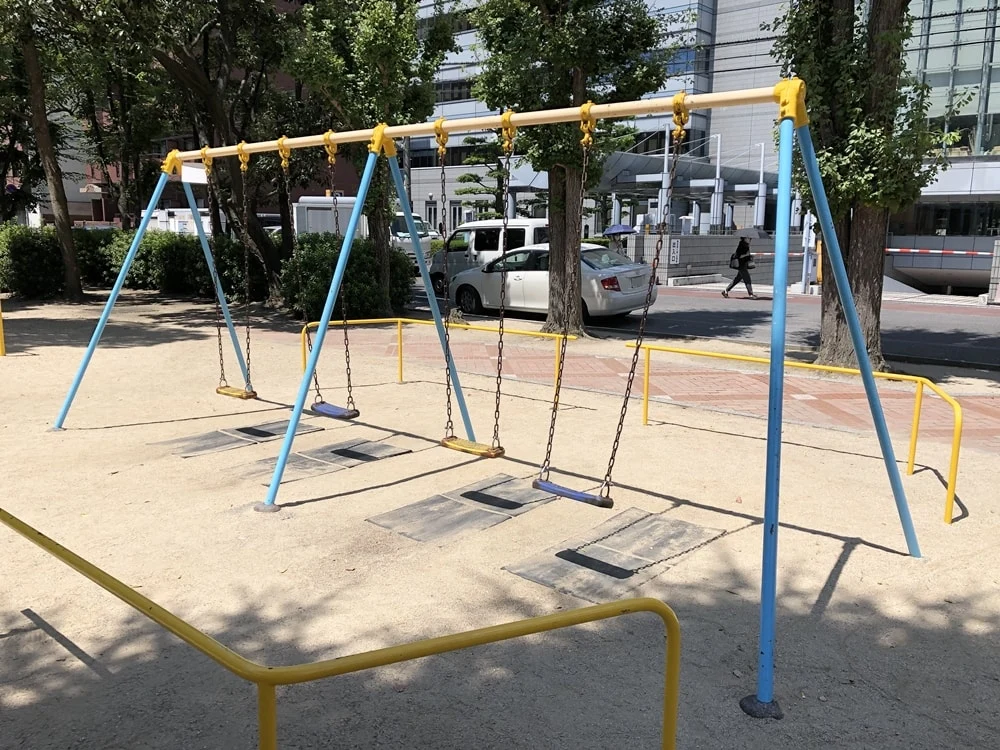
However, due to the physical and social barriers present in current parks, children with disabilities have been missing out on valuable play opportunities.
Municipalities, playground equipment manufacturers, and designers, who are responsible for creating parks, are not fully aware of the needs of these children.
It might seem sufficient to conduct needs surveys only with disability-related organizations.
But what happens then? A park may end up being completed with play equipment that only children with disabilities can use.
While this may seem like a good example, another problem arises.
It takes away the opportunity for all children, including those without disabilities, to meet and grow with diverse peers.
Only by playing together can children with and without disabilities deepen their understanding of each other.
To achieve this, they conduct needs surveys with various people and organizations.
When they started their activities, they conducted hearings with support groups for children with disabilities and various parent-child groups in Kurashiki.
Voices such as "The park does not welcome us," and "It would be nice to have a park where children with disabilities can play together" were raised, along with surprise at the idea that "a park where children with disabilities can play together is possible."
However, these opinions are still frequently heard today.
This is understandable, as the situation of parks has hardly changed in over 10 years, according to Yanagida.
【Think/Spread】Various Information Dissemination
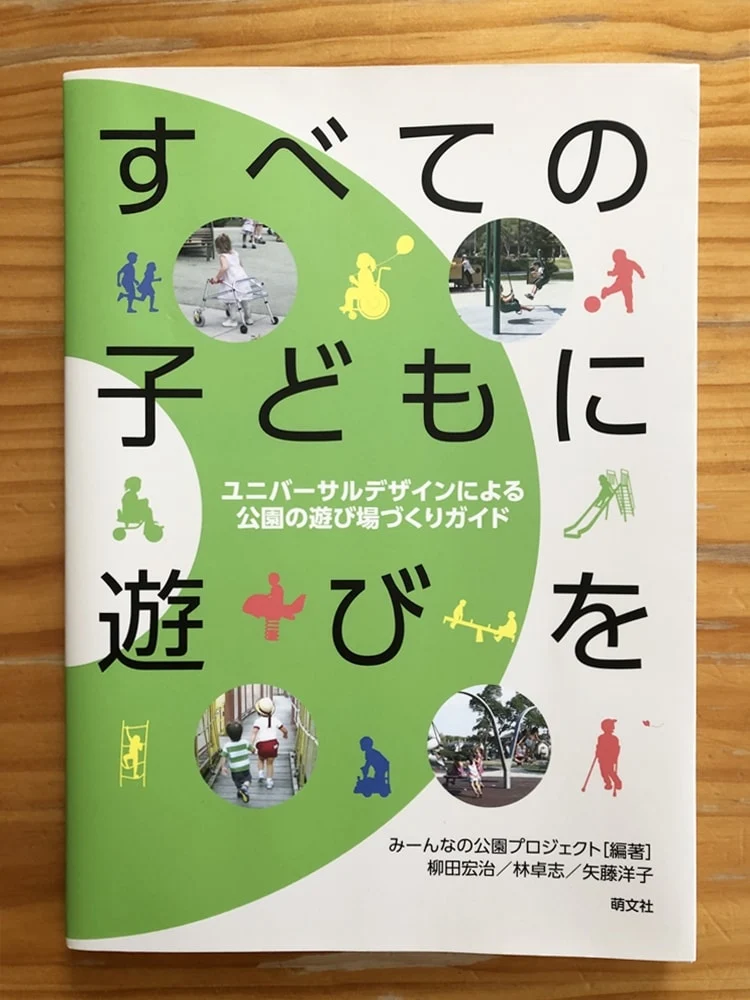
The Minna no Koen Project disseminates information about the results of their surveys through the web and publications.
For web information dissemination, they have created an official website.
They provide a wealth of information through various contents such as the following.
- User Research
- My Thoughts and Everyone's Thoughts
- Understanding Parks │ International Examples
- Understanding Parks │ Domestic Examples
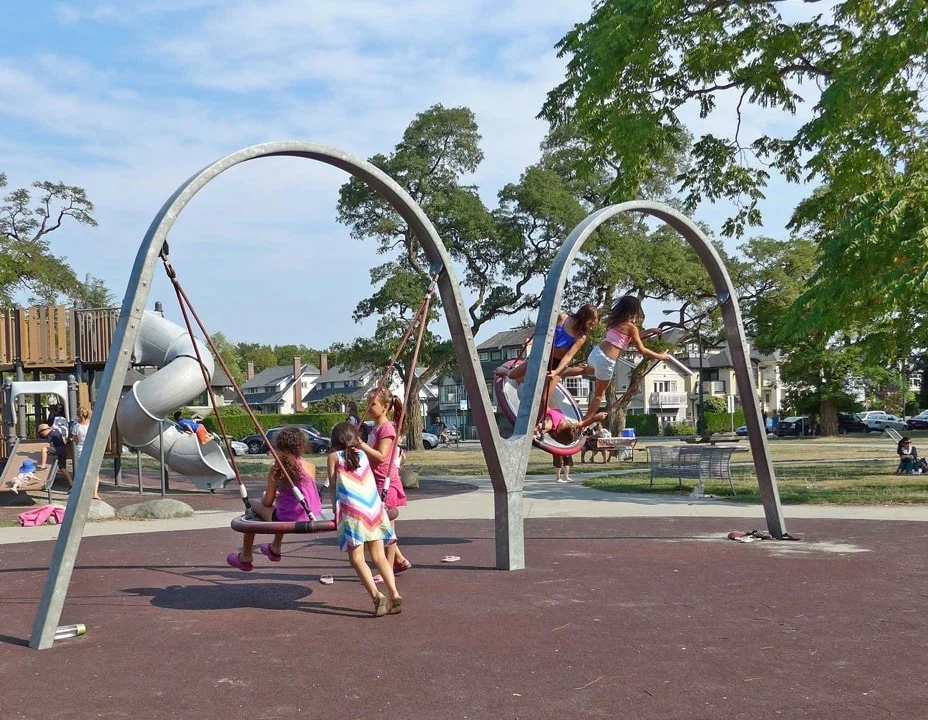
As examples of inclusive parks, they introduce many parks from both overseas and Japan with clear images.
I initially thought, "They must have asked local collaborators to take photos and conduct interviews," but that was not the case.
In fact, all photography and interviews are conducted by the three members who travel to the locations using their vacation time!
I was surprised when I heard this during the interview.
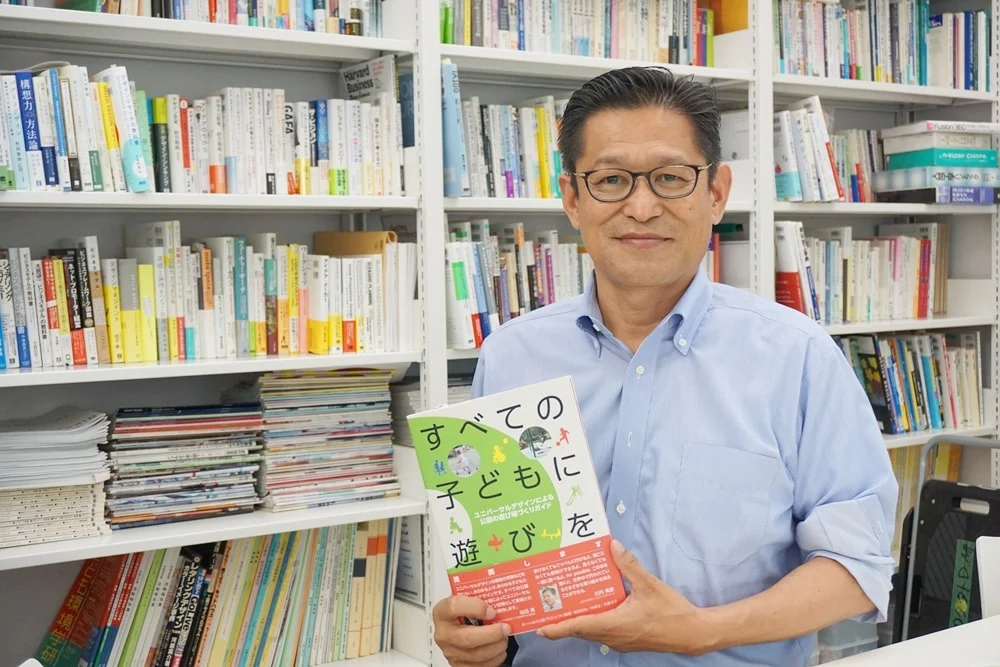
As a guide for creating playgrounds with universal design, they have published a book with the same name.
The information on the official website, along with more practical content, is abundant.
The target audience for the book includes professionals involved in planning, designing, maintaining, and managing park facilities.
Additionally, it is aimed at families/supporters of children with disabilities, as well as those involved in parenting and community development NPOs who are interested in playground creation.
What left an impression on me was the "Universal Design Playground Checklist" included as a resource.
I thought it was wonderful that they are not only providing information but also creating a system that can be practically implemented.
What is an "Inclusive Playground"?
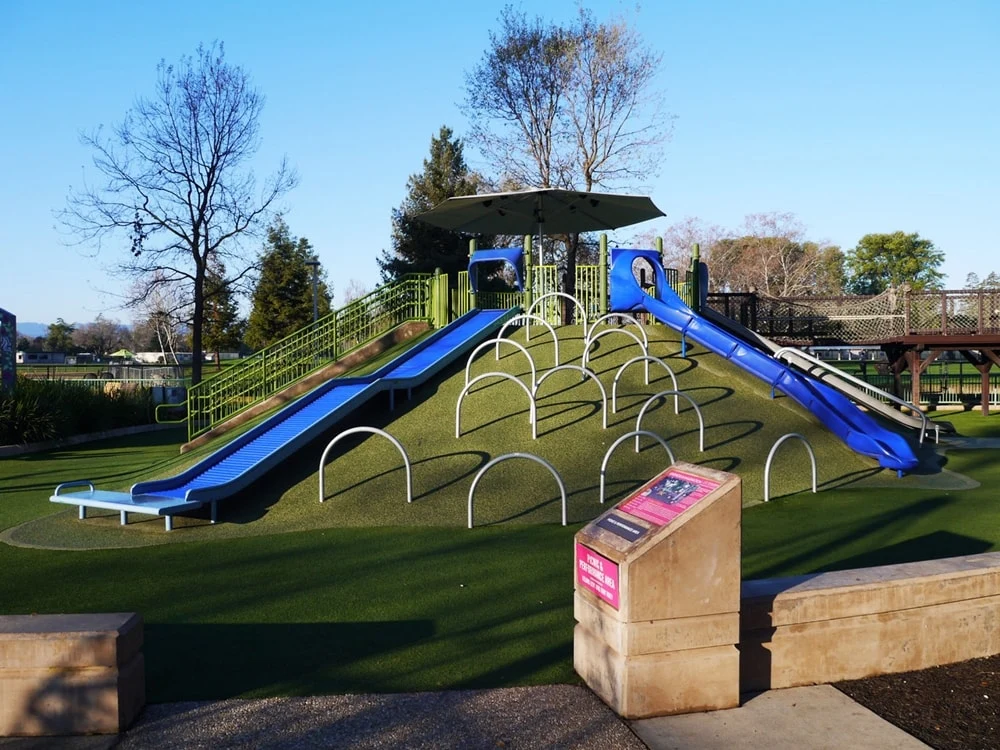
By the way, what exactly is an inclusive playground?
According to the Minna no Koen Project's website, it is described as follows.
An inclusive playground is a place where all children, regardless of disability, can fully express their abilities while playing and learning with various friends.
Minna no Koen Project: Concept
As mentioned earlier, the Minna no Koen Project aims to promote the above.
It is not widely known, but there is a playground in Kurashiki City created with a similar concept.
That is the Rehabilitation Square located outdoors at the Kurashiki Health and Welfare Plaza in Sasao, Kurashiki City.
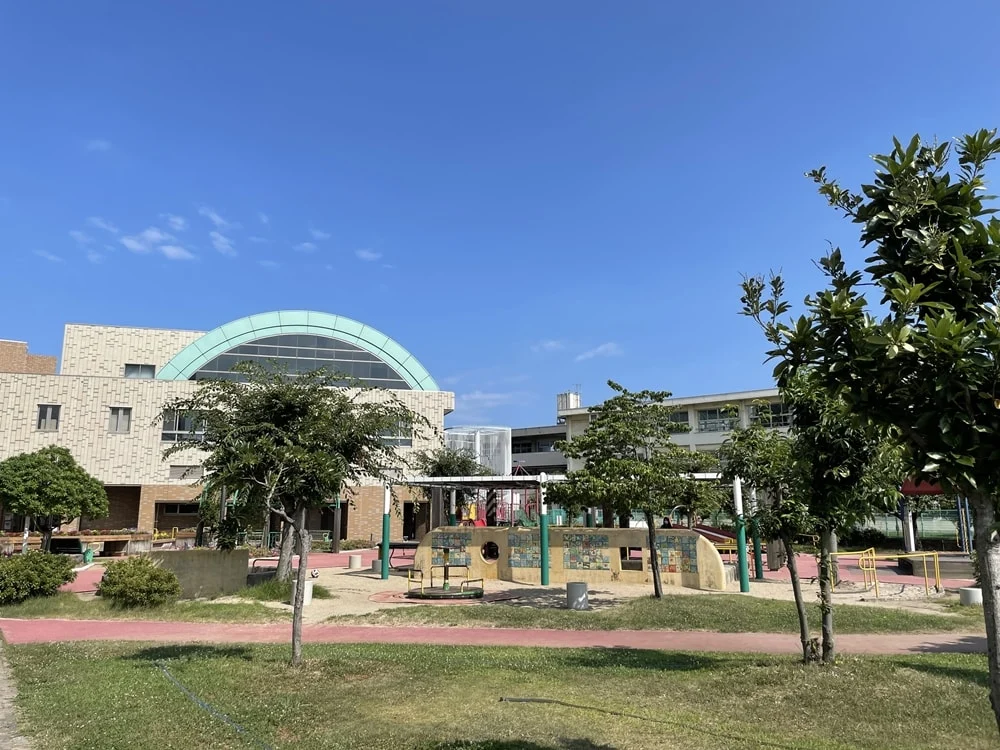
It was originally created so that people with disabilities could also undergo rehabilitation outdoors.
Various people, including representatives from wheelchair associations in Kurashiki, rehabilitation professionals, and teachers from the then welfare school (now a special support school), provided input, and it was completed in 2001.
The intention was to create a space where not only people with disabilities but also small children and the elderly could interact, and specific innovations include the following.
- 【Raised Flower Beds】The flower beds are slightly elevated, allowing wheelchair users to touch the flowers and smell them up close.
- 【Gate】There are features for visually impaired individuals, such as recognizing the "scent of flowers" and "sound of leaves" to identify the entrance to the Rehabilitation Square.
- 【Slide】The slide is accessible via a ramp for wheelchair users, allowing them to slide while lying down or slide together with others.
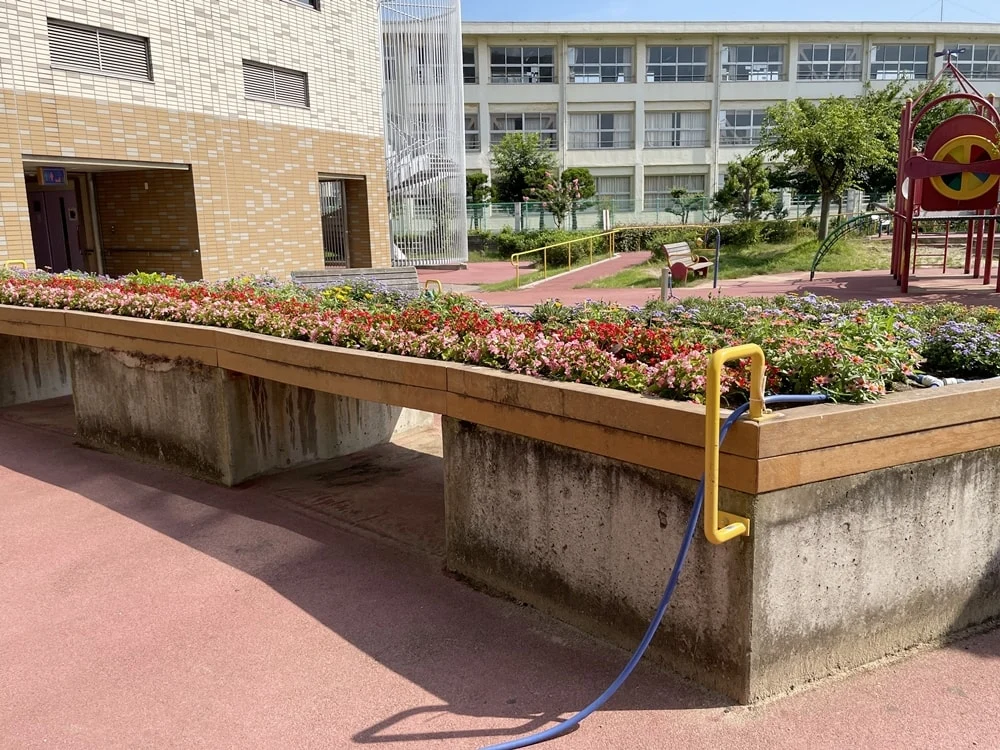
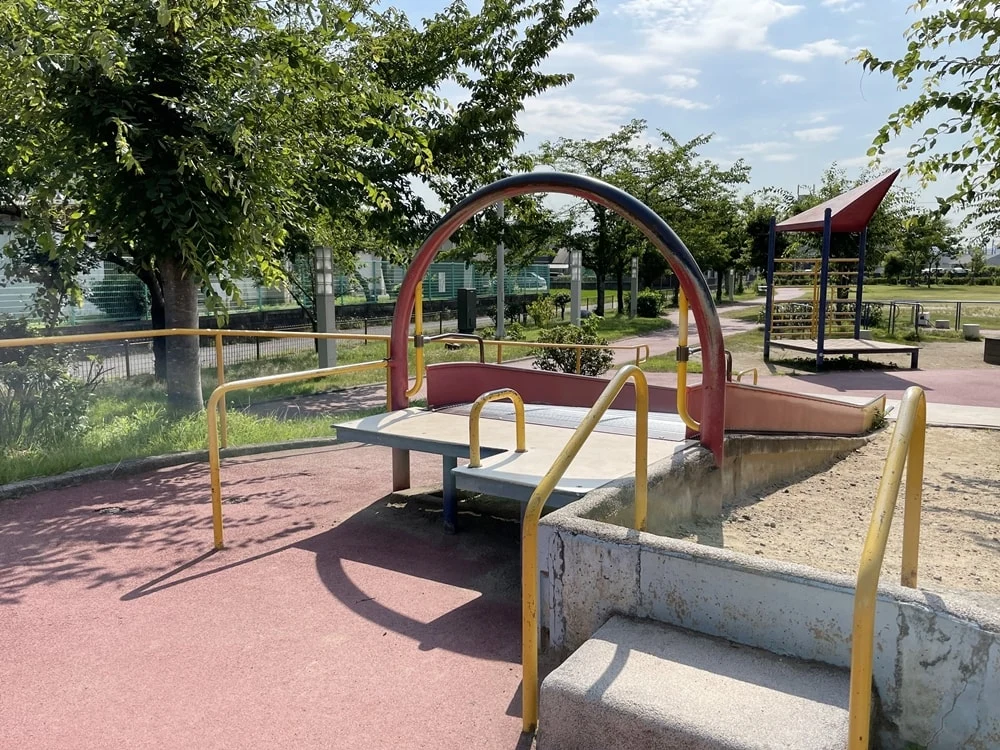
I was surprised to discover, "It was so close by!"
I was also amazed that the Rehabilitation Square was completed before the era when "inclusivity" was being questioned.
I felt that the state of "only those who know it are aware of it" is truly a waste.
While the concept of inclusive playgrounds has not spread much in Japan, it is reportedly evolving and gaining popularity overseas.
Next, I spoke with Yanagida Koji, the representative of the Minna no Koen Project, about their activities and parks.
Data on the Minna no Koen Project
| Organization Name | Minna no Koen Project |
|---|---|
| Industry | Citizen Activities |
| Representative Name | Yato Yoko |
| Year Established | 2006 |
| Website | Minna no Koen Project |