
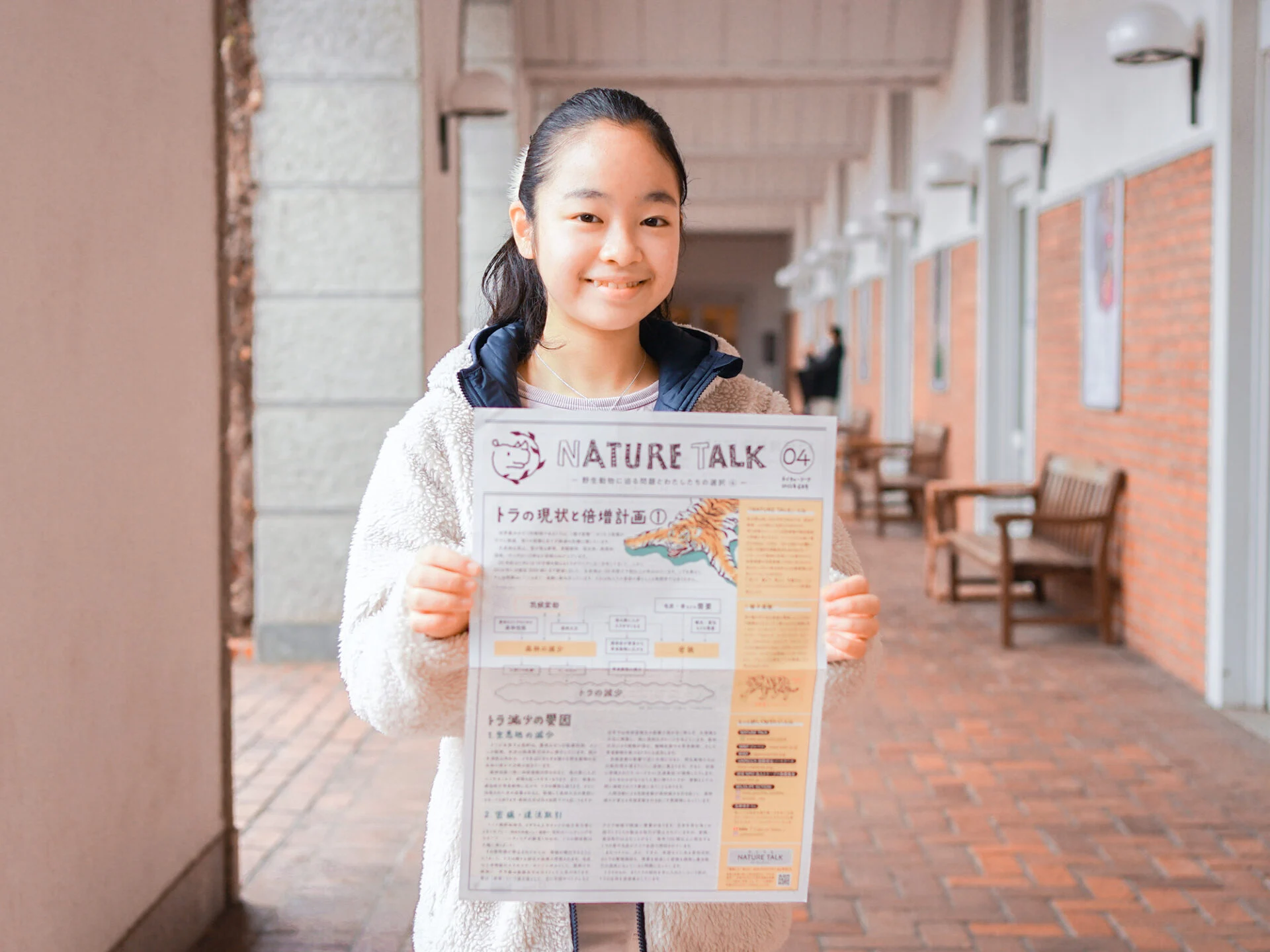
The issue of poaching and extinction of wildlife may feel like a distant problem, but it actually relates to our lives as well.
Even if we think we understand the value of nature, if we do not grasp the realities surrounding wildlife, we may unknowingly be complicit in harming animals.
NATURE TALK is a newspaper about wildlife conservation created independently by junior high school student Oki Meiko.
It summarizes topics that may seem unrelated to Japanese people, such as the poaching of wildlife in Africa and the extinction of tigers, in an easy-to-understand manner.
Furthermore, Oki has focused not only on the background of the issues surrounding wildlife but also on what we can do and has been producing the newspaper.
To protect animals around the world, we will introduce the voices of wildlife that Oki has featured in the newspaper.
What is NATURE TALK?
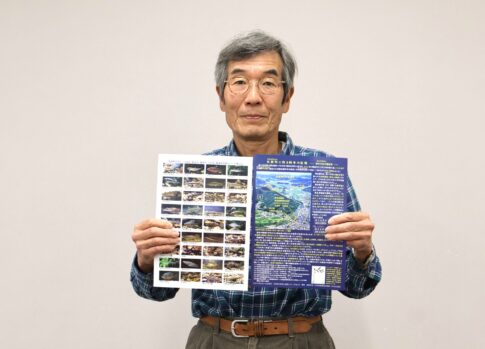
NATURE TALK is a newspaper about wildlife conservation that is published irregularly by Oki Meiko, a junior high school student living in Kurashiki City.
We will introduce what kind of information Oki shares in the newspaper, as she loves animals and insects.
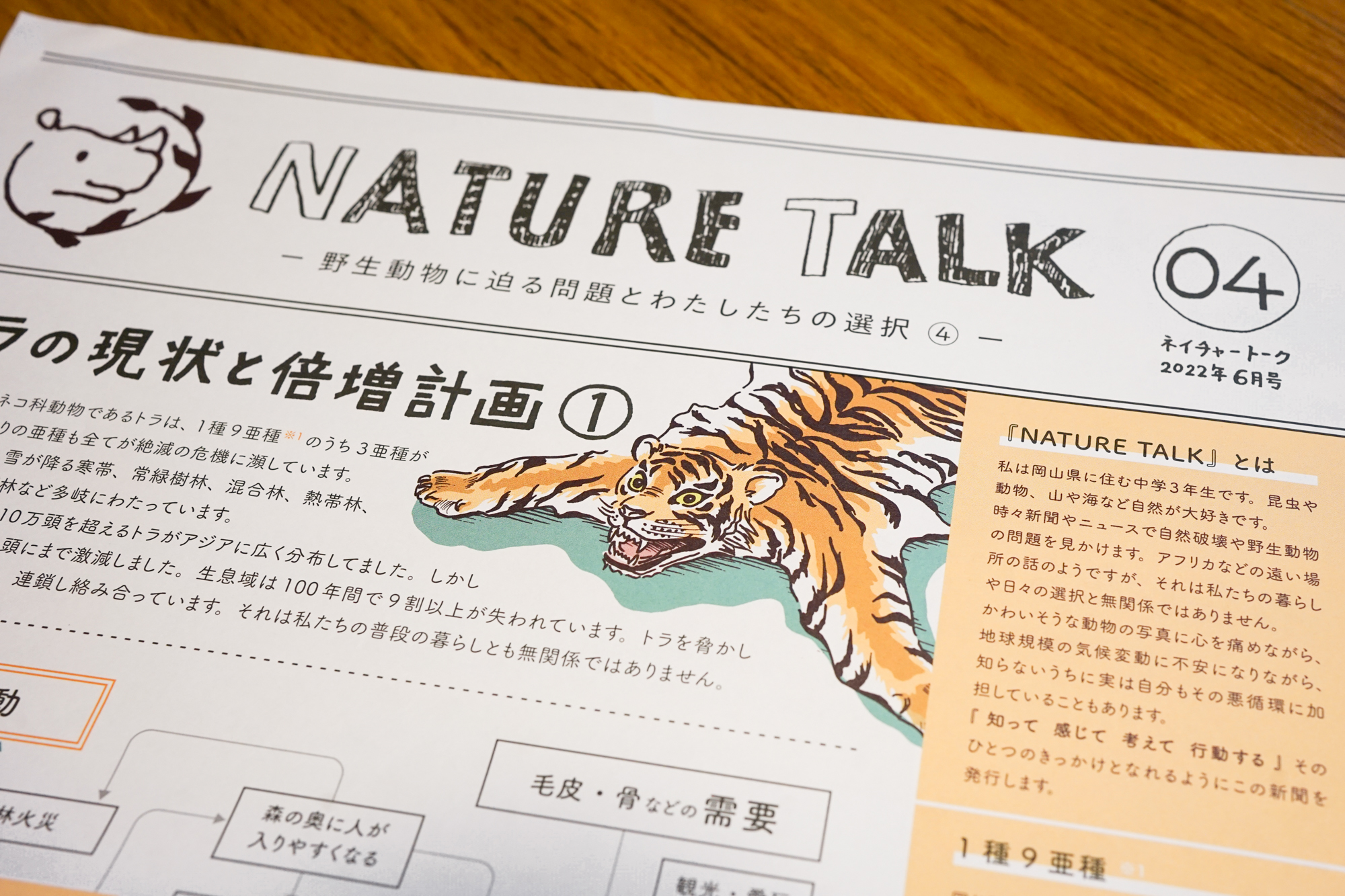
Overview of NATURE TALK
In NATURE TALK, Oki shares information she has researched through lectures, books, and the internet, focusing on themes such as wildlife poaching and extinction due to climate change.
Issues related to wildlife are often thought to be unrelated to the daily lives of Japanese people, but we may actually be complicit in these issues without realizing it.
Driven by the desire to share actions we can take, Oki continues to produce NATURE TALK.
What NATURE TALK conveys
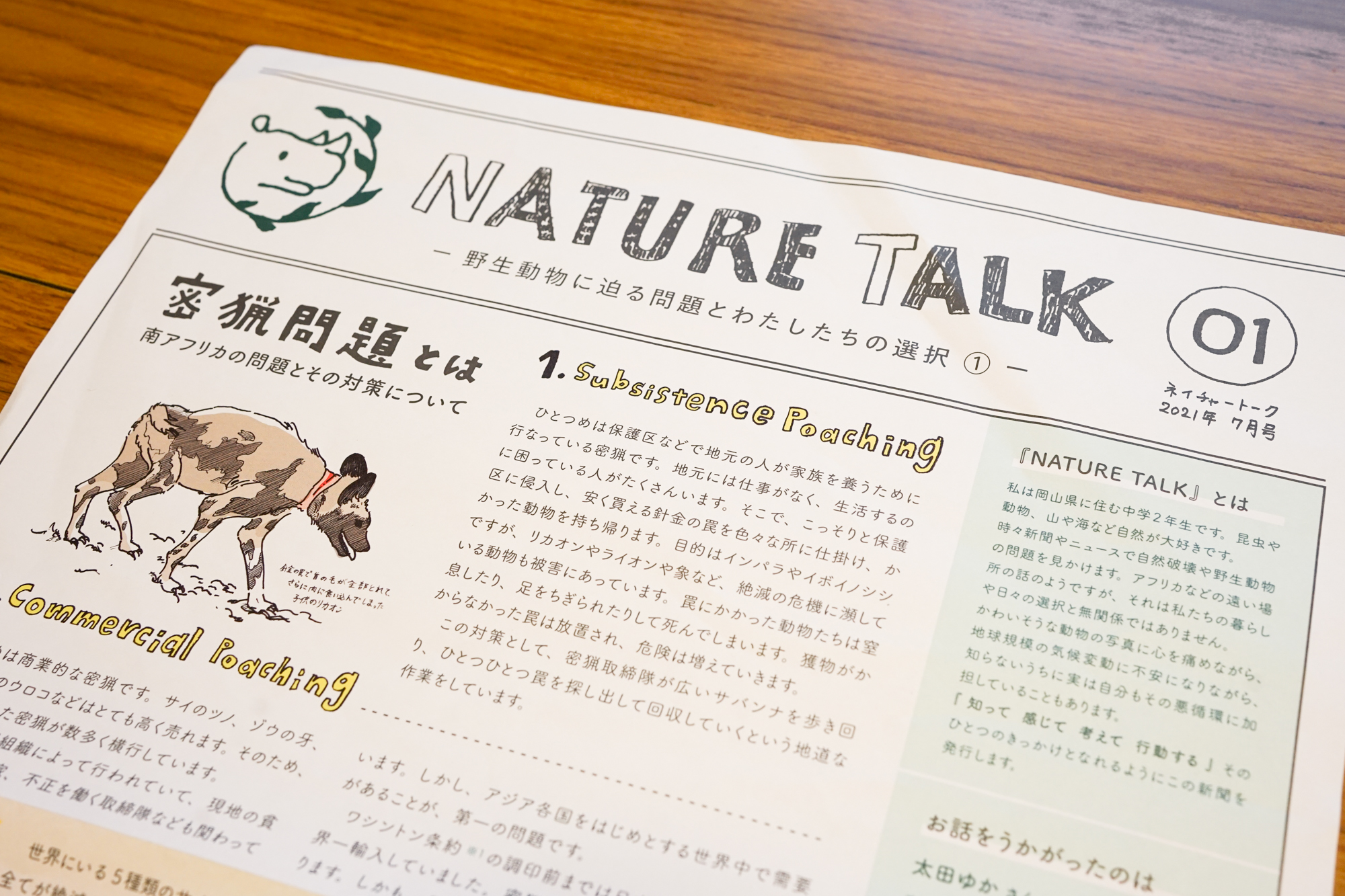
The first issue was published in July 2021, and as of January 2023, four issues have been published.
Below are the topics covered in NATURE TALK.
The realities and causes of issues related to wildlife, as well as actions we can take, are carefully summarized.
| Issue | Publication Date | Content |
|---|---|---|
| 1 | July 2021 | What is the poaching problem? Issues and countermeasures in South Africa |
| 2 | September 2021 | The crisis facing African elephants |
| 3 | February 2022 | Exotic pets and their issues |
| 4 | June 2022 | The current situation of tigers and the doubling plan |
Where can you read NATURE TALK?
NATURE TALK is distributed at zoos and museums across the country.
Below are some representative facilities where NATURE TALK is available.
| Facility Name | Location |
|---|---|
| Kawayu Visitor Center | Hokkaido |
| Kushiro City Zoo | Hokkaido |
| Shari Town Shiretoko Museum | Hokkaido |
| Shiretoko Nature Center | Hokkaido |
| Shiretoko World Heritage Center | Hokkaido |
| Wakoto Field House | Hokkaido |
| Kanazawa Zoo | Kanagawa Prefecture |
| Toyohashi General Zoo and Botanical Park | Aichi Prefecture |
| Shinkyouji Park | Tottori Prefecture |
| Okayama Nature Conservation Center | Okayama Prefecture |
| Ikeda Zoo | Okayama Prefecture |
| Shibukawa Zoo | Okayama Prefecture |
| Shibukawa Marine Aquarium | Okayama Prefecture |
Additionally, it is also available at schools, bookstores, hospitals, accommodation facilities, and roadside stations across the country.
If you want to view it online, check the link to NATURE TALK on the information distribution site note.
NATURE TALK summarizes important issues that we may not be aware of.
You are sure to gain many insights about wildlife conservation.
Atelier NATURE TALK
Atelier NATURE TALK is a fundraising activity that Oki is engaged in for wildlife conservation.
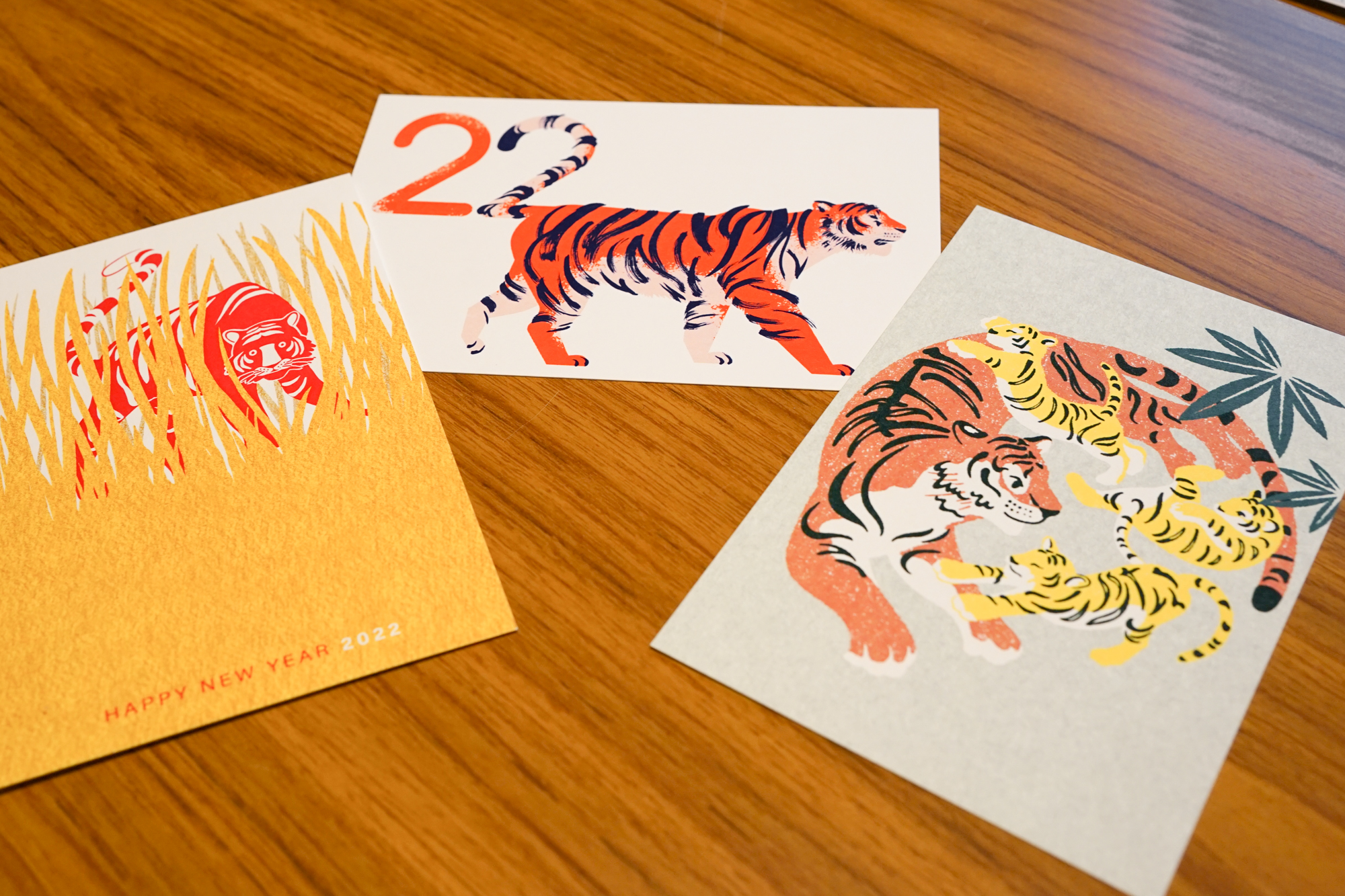
Oki sells postcards and tote bags that she has created on the Atelier NATURE TALK website.
The proceeds so far have been donated to organizations engaged in wildlife conservation activities around the world.
Below are the recipients of donations from Atelier NATURE TALK.
| Recipient | Activities |
|---|---|
| WWF (World Wildlife Fund) | Conservation activities for nature and wildlife around the world |
| MYCAT | Conservation of tigers in Malaysia |
| UAPACAA | Wildlife conservation activities around the world |
Interview with Oki Meiko, Publisher of NATURE TALK
We spoke with Oki Meiko, the publisher of NATURE TALK, about her dedication and thoughts regarding newspaper production.
We will introduce how Oki feels about producing NATURE TALK.

How NATURE TALK came to be
What inspired you to start NATURE TALK?
Oki (honorific omitted)
I participated in an online event featuring Ota Yuka, who is engaged in wildlife conservation activities in Africa.
The event was hosted by Tiger Mov, which provides internship opportunities in emerging countries, and it included a lecture on the poaching problem in South Africa.
One of the topics discussed was the poaching of elephants.
I learned that ivory is traded in Japan as well, and that poaching in Africa is an issue that concerns us Japanese people too.
To raise awareness about the poaching problem, I decided to create a newspaper as something I could do.
Why did you choose to make it a newspaper?
Oki
Websites and social media only attract people who are already interested.
By placing NATURE TALK in libraries and museums, I thought it could catch the attention of people who might pick it up and spark their interest.
Additionally, distributing it in schools allows junior high school students like me and even younger elementary school students to see it.

How do you conduct your research?
Oki
I go to the library to research books and also search the internet.
Sometimes I summarize what I learned from attending lectures, and I also ask people like Ota Yuka, who are actively working in Africa.
I sometimes send questions via email, and when I have time, I also talk directly online.
How do you decide where to distribute it?
Oki
I sometimes request to have NATURE TALK placed in various locations.
For example, when I participated in a nature experience event in Hokkaido, I traveled to Shiretoko and requested to have NATURE TALK placed in facilities related to the Shiretoko World Heritage site.
Additionally, I sometimes receive requests from people who have read NATURE TALK and want to have it placed.
The locations where NATURE TALK is available have spread not only within Okayama Prefecture but also across Japan.
Thoughts behind NATURE TALK
What can we do?
Oki
Even for exotic pets, I think it is acceptable if the facility has established an environment where the animals can live without stress, like in a zoo.
It will be a valuable opportunity to learn about the diversity and ecology of animals that we usually cannot see.
However, I believe it is better to avoid visiting places where management is not properly conducted and the circumstances of how the animals were obtained are unclear.
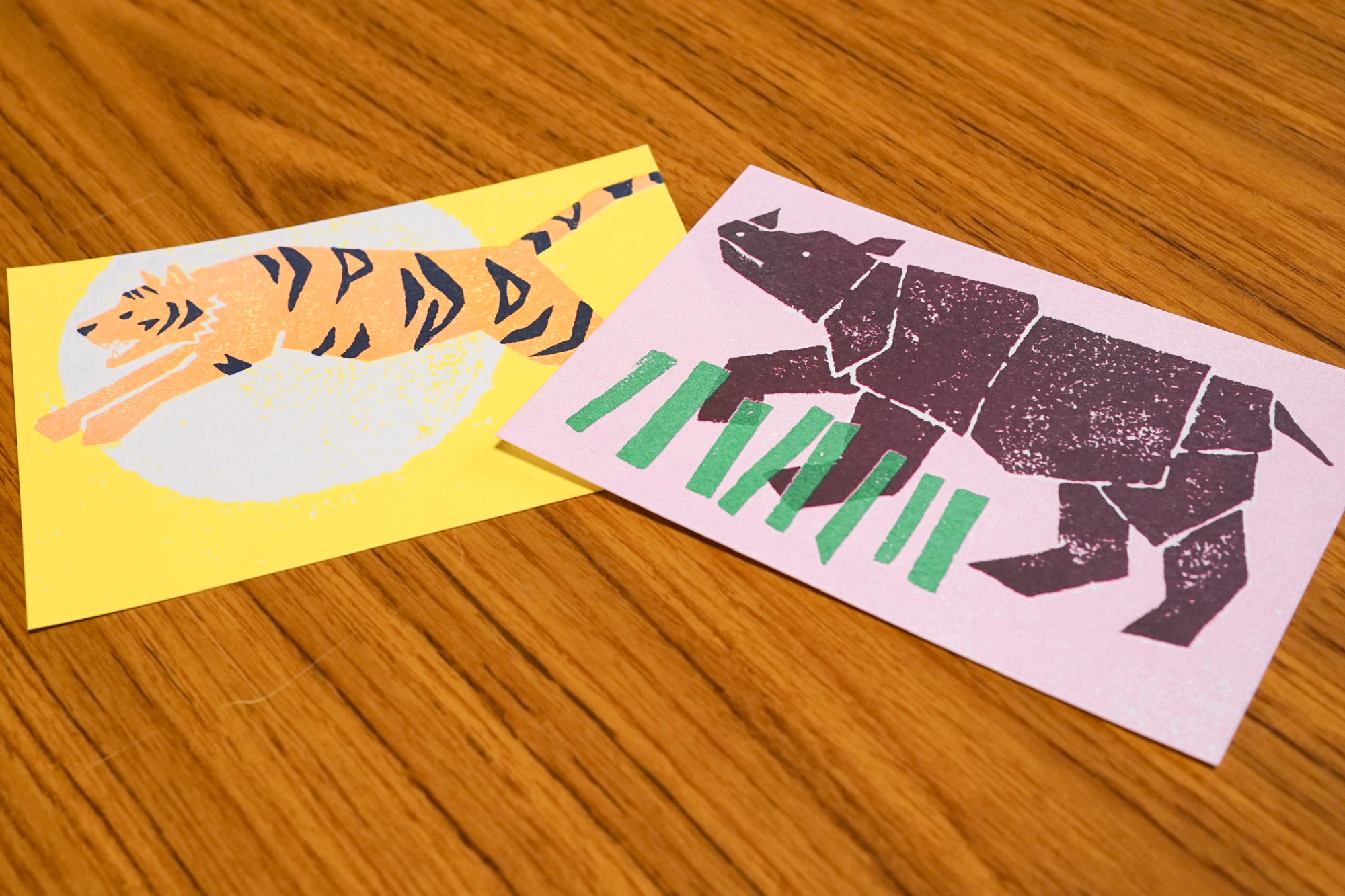
Also, we must not forget that the decline of endangered species like tigers is influenced not only by poaching in their habitats but also by our way of life.
In the forests that are the habitats of tigers, there are issues such as conversion of land to agriculture for food security, logging for timber, and forest fires caused by drought due to climate change.
It may seem like an event happening in a distant country, but the reality is that the habitats of tigers are being lost to support our convenient lives as Japanese people.
Reducing consumption in our society also contributes to the protection of wildlife.
What do you want to convey?
Oki
I think many people feel that wildlife protection is something unrelated to our lives, but that is not the case.
There are things we influence, and there are things we can do.
I have written not only about the background of the issues but also how we can contribute in NATURE TALK.
I hope you will pick up NATURE TALK and learn about what we can do.

After Reading NATURE TALK
What comes to mind about the animals living in Africa is the footage that appears in television programs dealing with wildlife.
I used to view the large mammals like elephants, rhinos, and lions surviving in vast plains as events from another world.
While I had heard about extinction and poaching, I had never thought about them in relation to our lives.
In fact, the reason I thought it was unrelated was due to my lack of knowledge, and NATURE TALK carefully summarized the connections to our lives.
Because Oki loves insects and animals, she was able to receive the voices of the animals and interpret what we can do.
A dialogue with nature is what I felt was carefully summarized in the minutes of NATURE TALK.
I want to continue listening to the voices of nature that come through Oki.
NATURE TALK Data
| Name | NATURE TALK |
|---|---|
| Publication Date | Irregularly published |
| Location | Mainly zoos and museums in Hokkaido and Okayama Prefecture |
| Participation Fee (including tax) | Free |
| Website | NATURE TALK (Charitsumo) |




















Animals that were originally wild and are now kept as pets.
A general term for animals that have been domesticated but are not dogs, cats, or livestock like cattle and pigs, which have been part of human society for a long time.