Every year around November, the town suddenly enters a Christmas mood. I absolutely love the sight of Christmas trees being decorated everywhere, adding color to the town.
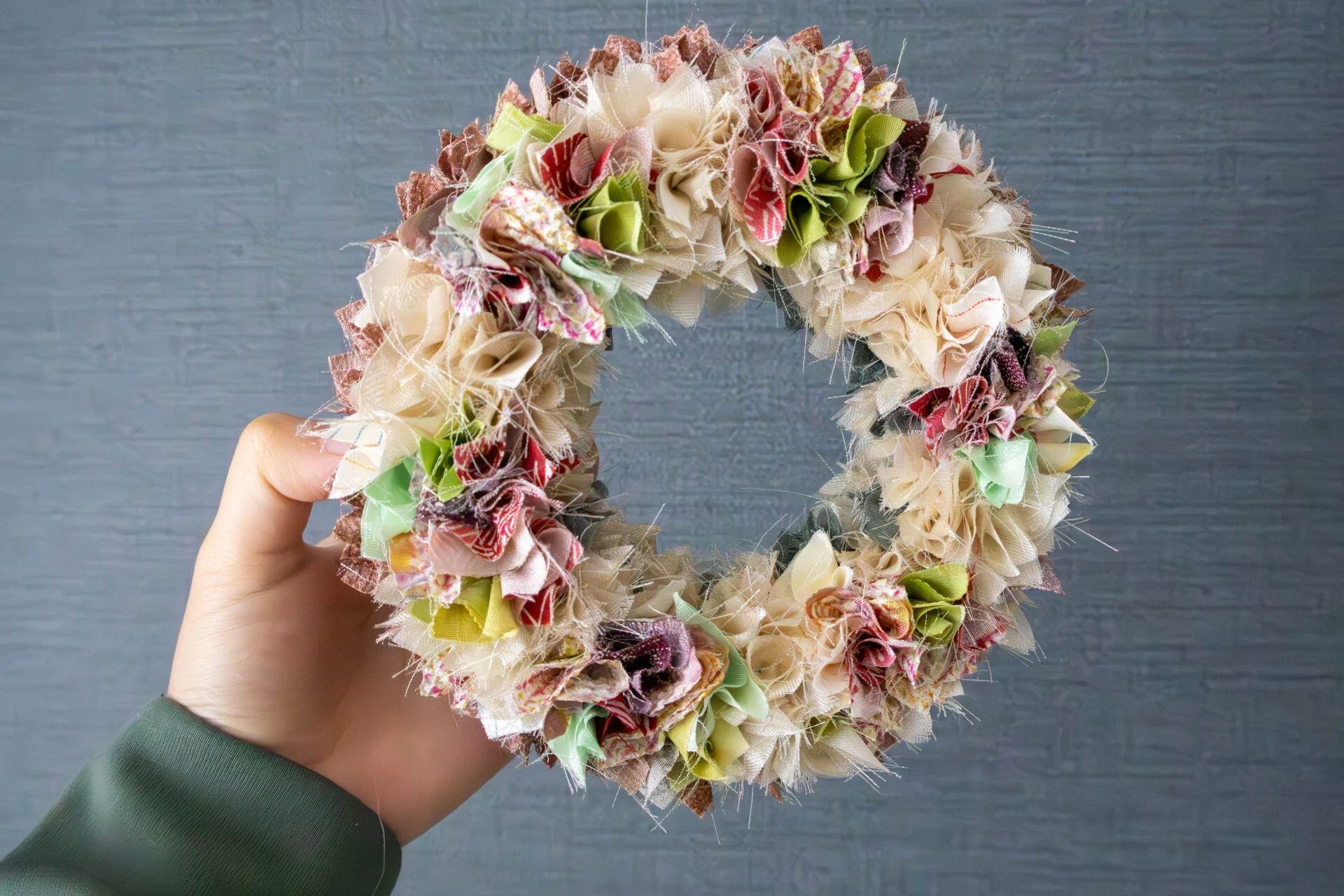
In addition to Christmas trees, what you often see around town is a round wreath for Christmas. It's a classic decoration that enhances the Christmas spirit, but I don't have a single one at home.
Just when I started wanting one, I learned that the kimono remake brand “Takehime” was holding a workshop to make kimono wreaths. I became interested in the wreaths made from kimonos, which I had never really heard of before.
I experienced making Takehime's “kimono wreath,” perfect for Christmas.
What is the “Kimono Wreath” Workshop?
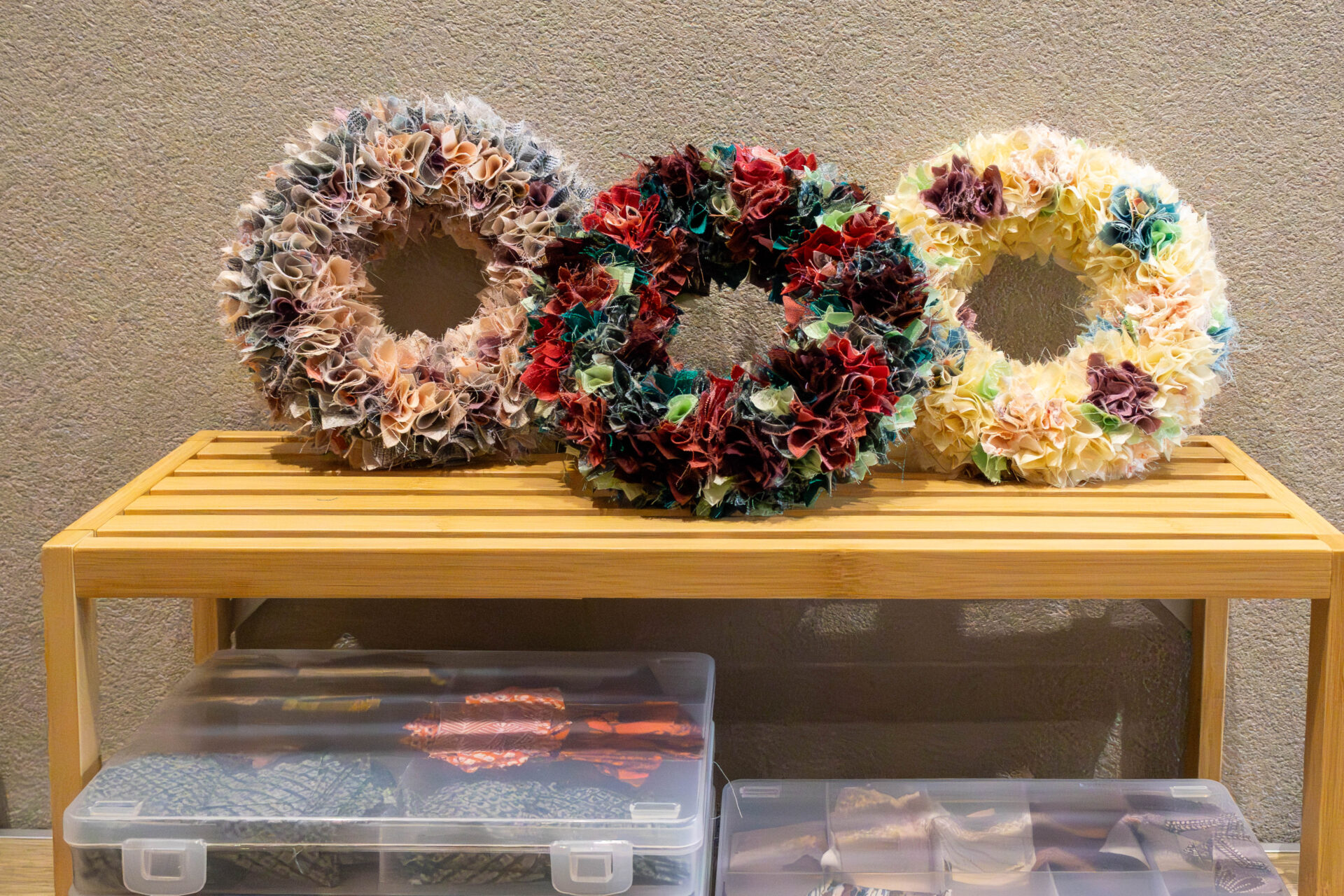
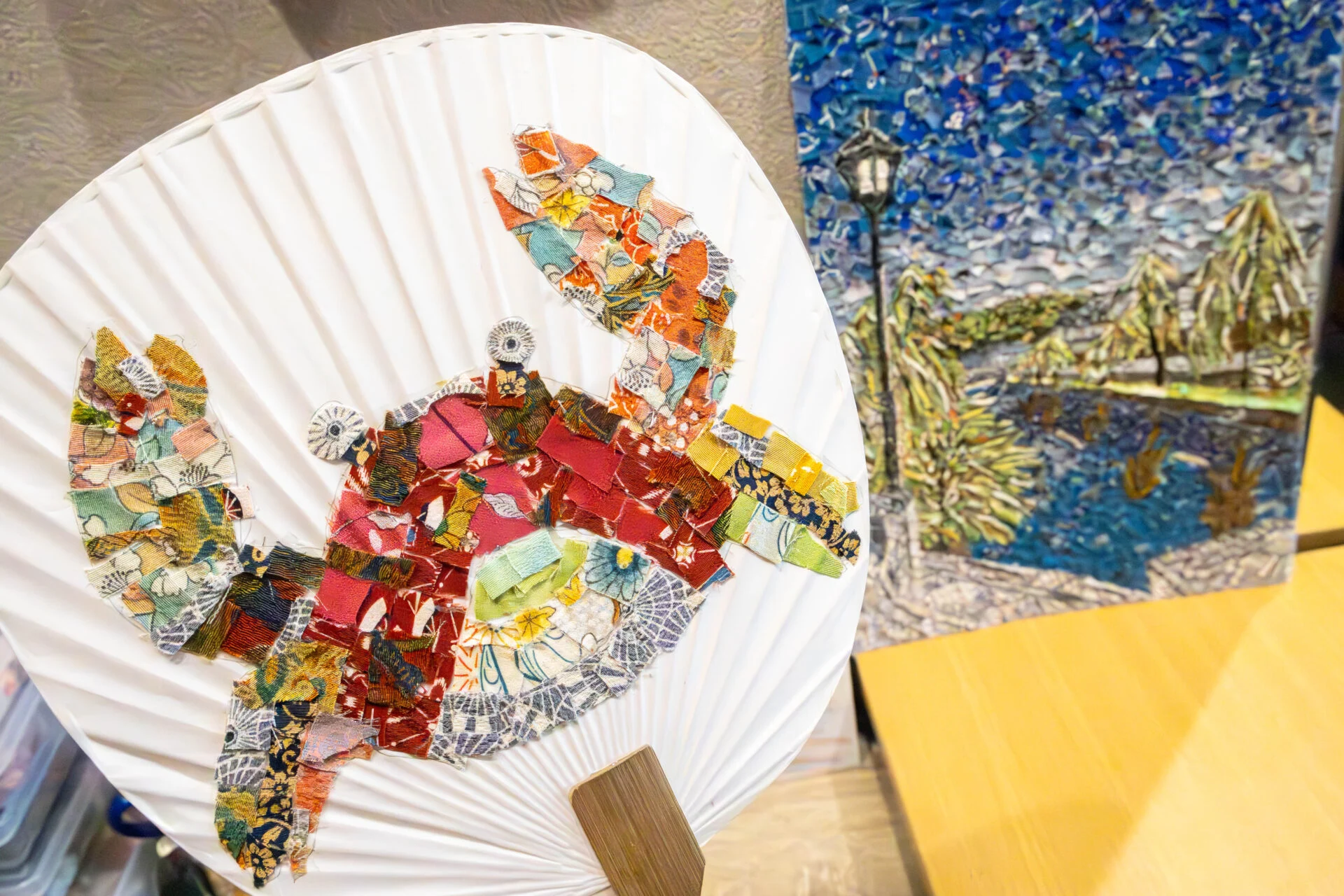
The “Kimono Wreath” workshop is an experiential event where participants create wreaths using colorful fabric pieces from kimonos. It is hosted by the kimono remake brand Takehime, which has a store located in the Bikan Historical Area.
Wreaths made from kimonos are visually stunning, with a delicate balance of Japanese and Western styles that is appealing. You can create a unique wreath that is one of a kind.
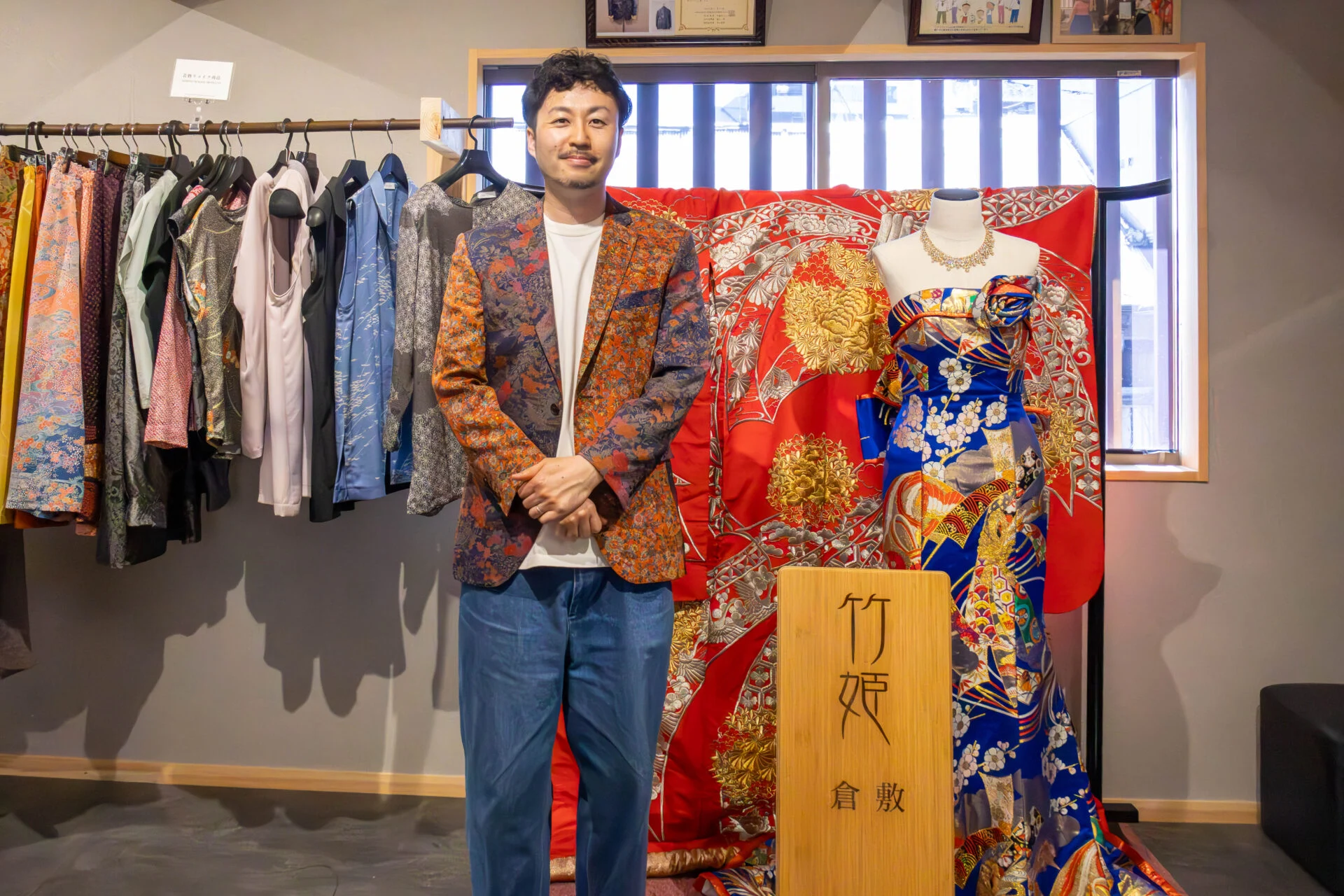
Takehime is a brand that utilizes kimonos that can no longer be worn to create new clothing and items. I believe this workshop is a unique experience that makes use of kimono reuse.
The fee is 2,750 yen per session (including tax), and no reservation is required to participate.
Takehime regularly holds workshops using kimono fabric pieces, and it seems that workshops featuring seasonal motifs will continue to be held in the future.
This time, I went to experience making a wreath perfect for Christmas. Let me introduce what happened on the day.
I participated in the workshop
In mid-November, I headed to Takehime.
Takehime is located on the second floor of a building, but colorful kimono wreaths were displayed on the first floor, making it easy to find the entrance.
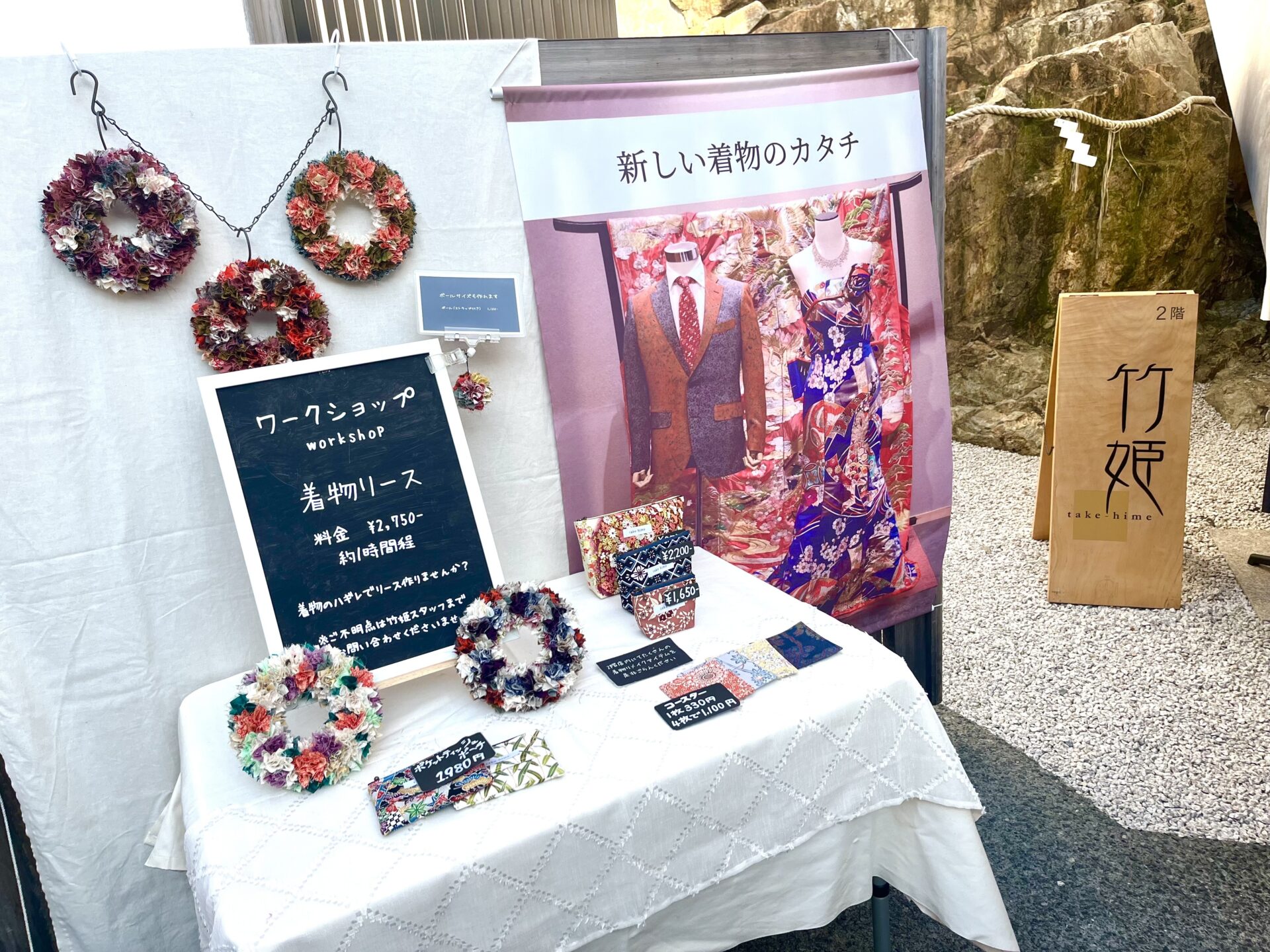
First, a lecture on how to make the wreath
Since the workshop does not require a reservation, upon entering the store, I first informed the staff that I wanted to participate in the workshop.
After settling the payment, it was finally time to start making the kimono wreath.
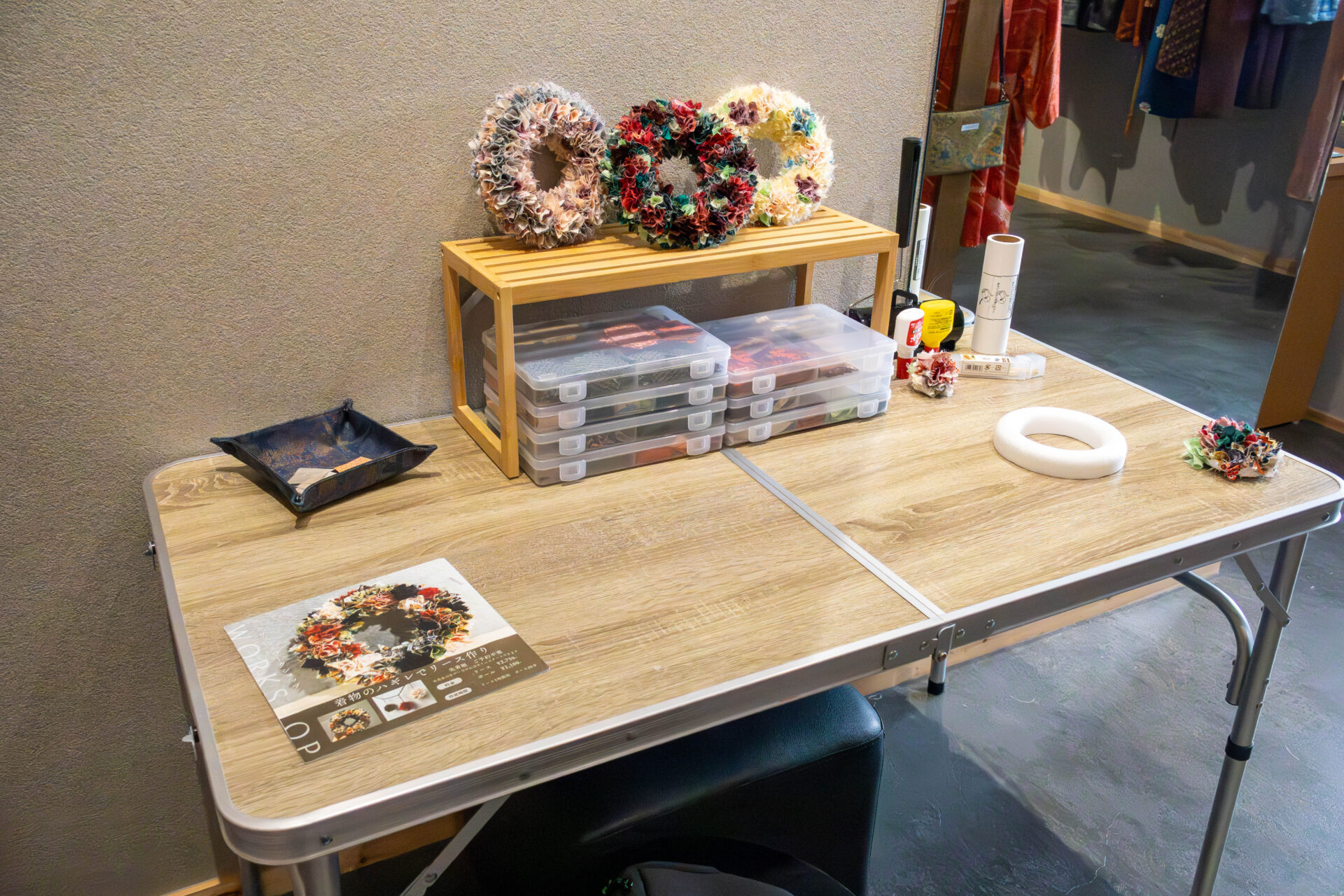
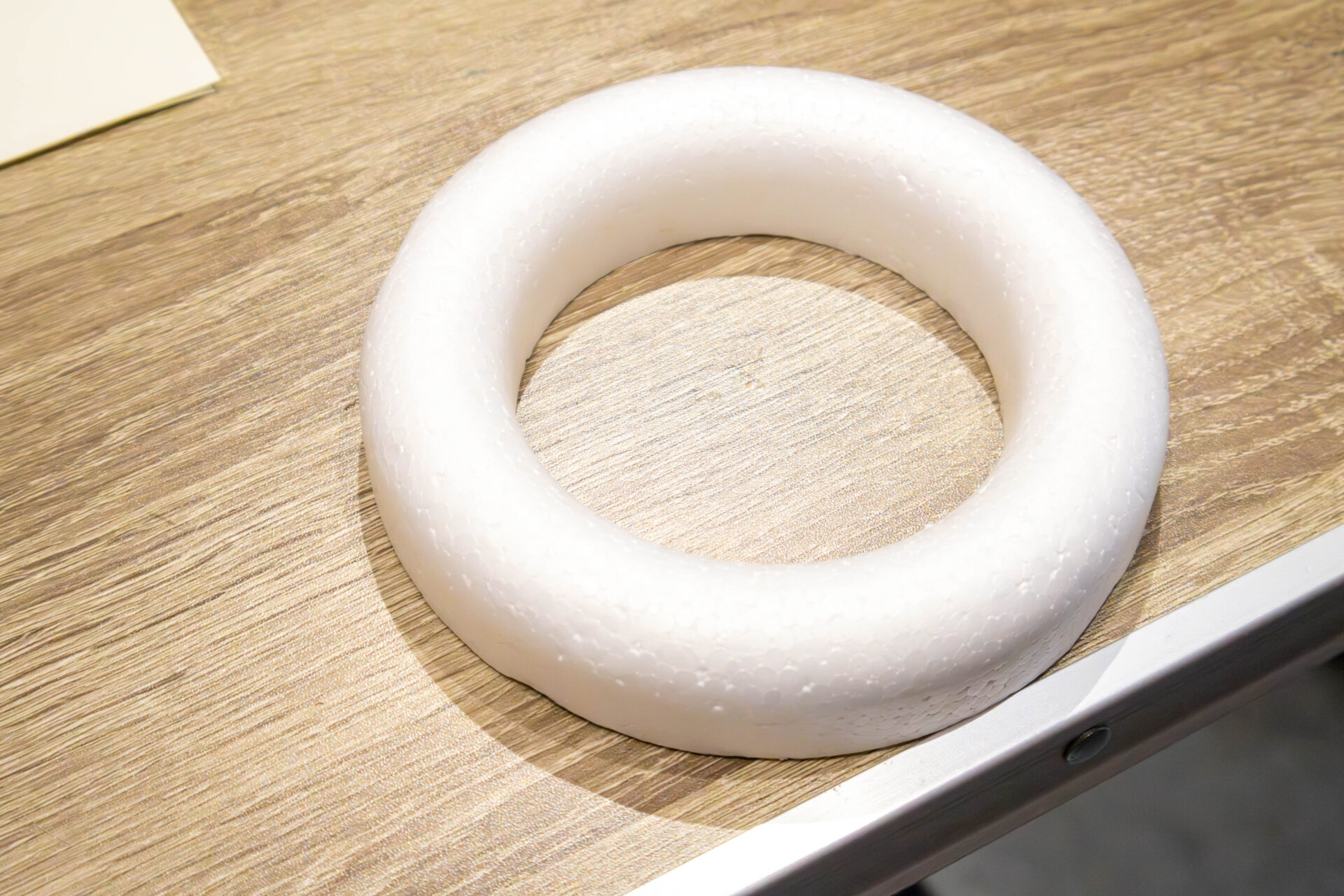
The base for the kimono wreath is a ring made of styrofoam. The materials used are bamboo skewers, glue, the styrofoam base, and fabric pieces from kimonos.
Mr. Yuichiro Warabino, the store manager, taught me how to make it.
First, I made holes in the styrofoam with a bamboo skewer, then wrapped the fabric pieces around the skewer and applied glue.
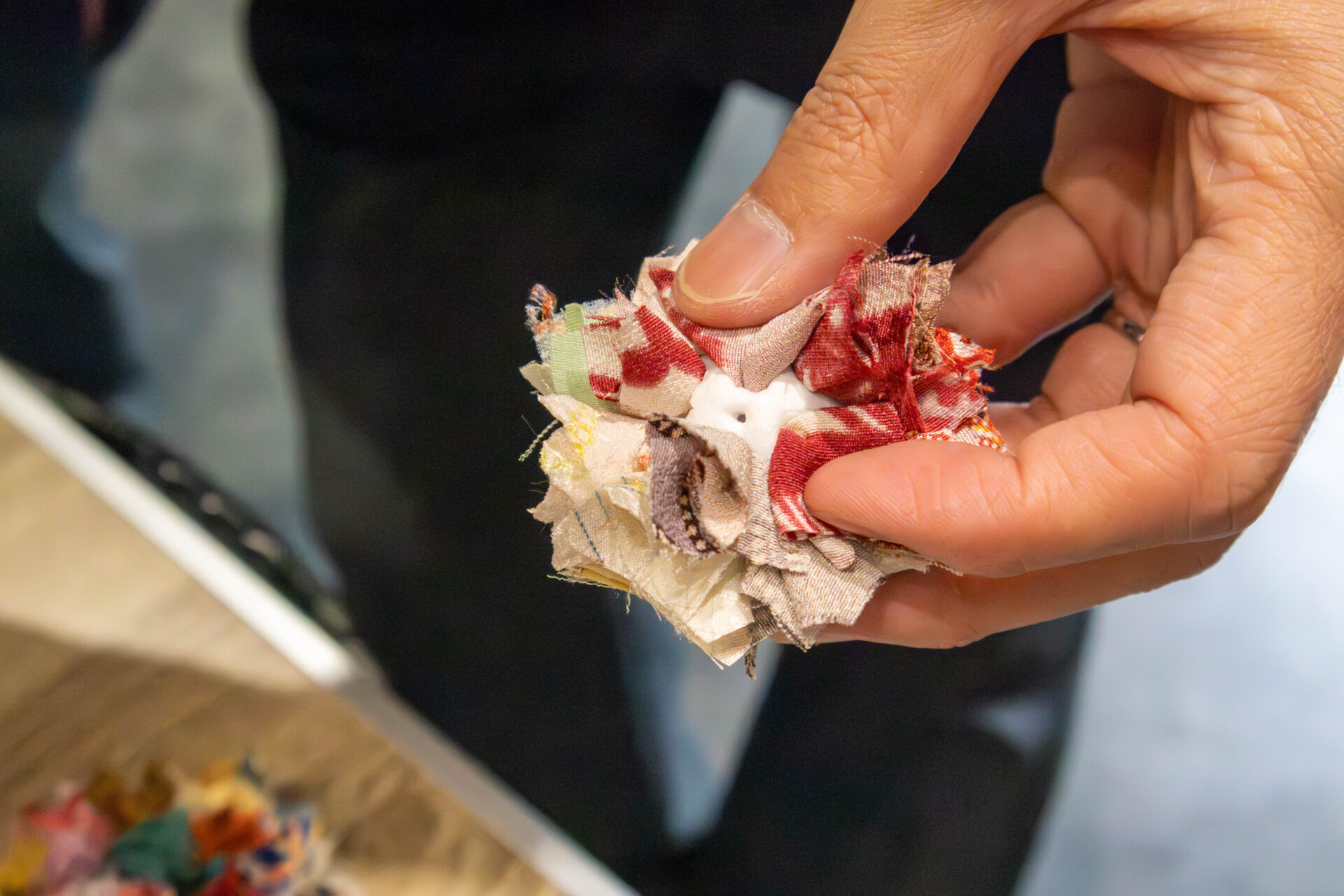
As I pushed the fabric pieces into the holes with the bamboo skewer, the fabric pieces stuck to the styrofoam like petals. I repeated this process until the base was no longer visible, and then it was complete.
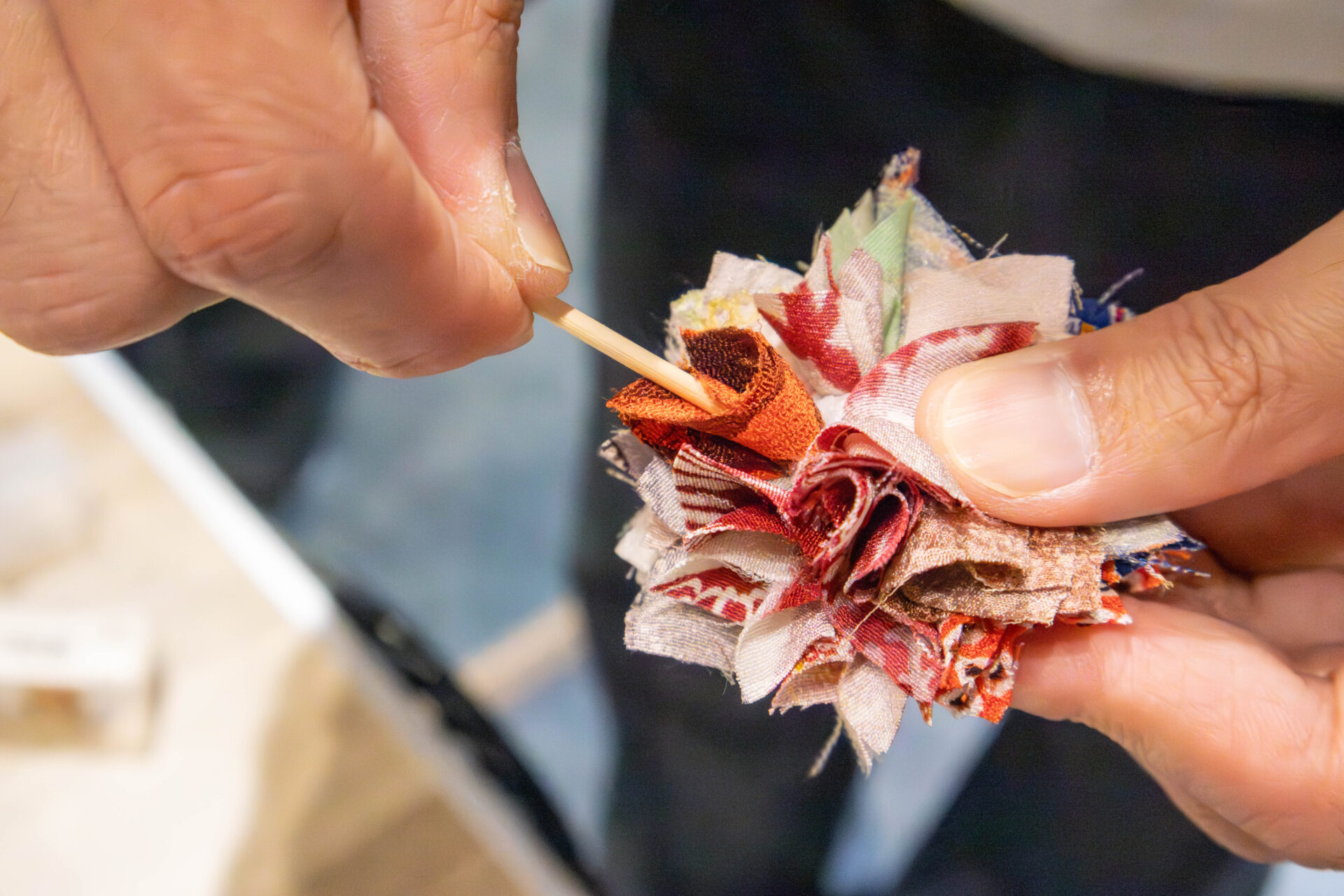
According to Mr. Warabino, the process itself is simple, so it can be completed in about an hour, but those who are particular about the patterns and color combinations may take 2 to 3 hours or more to create their wreath.
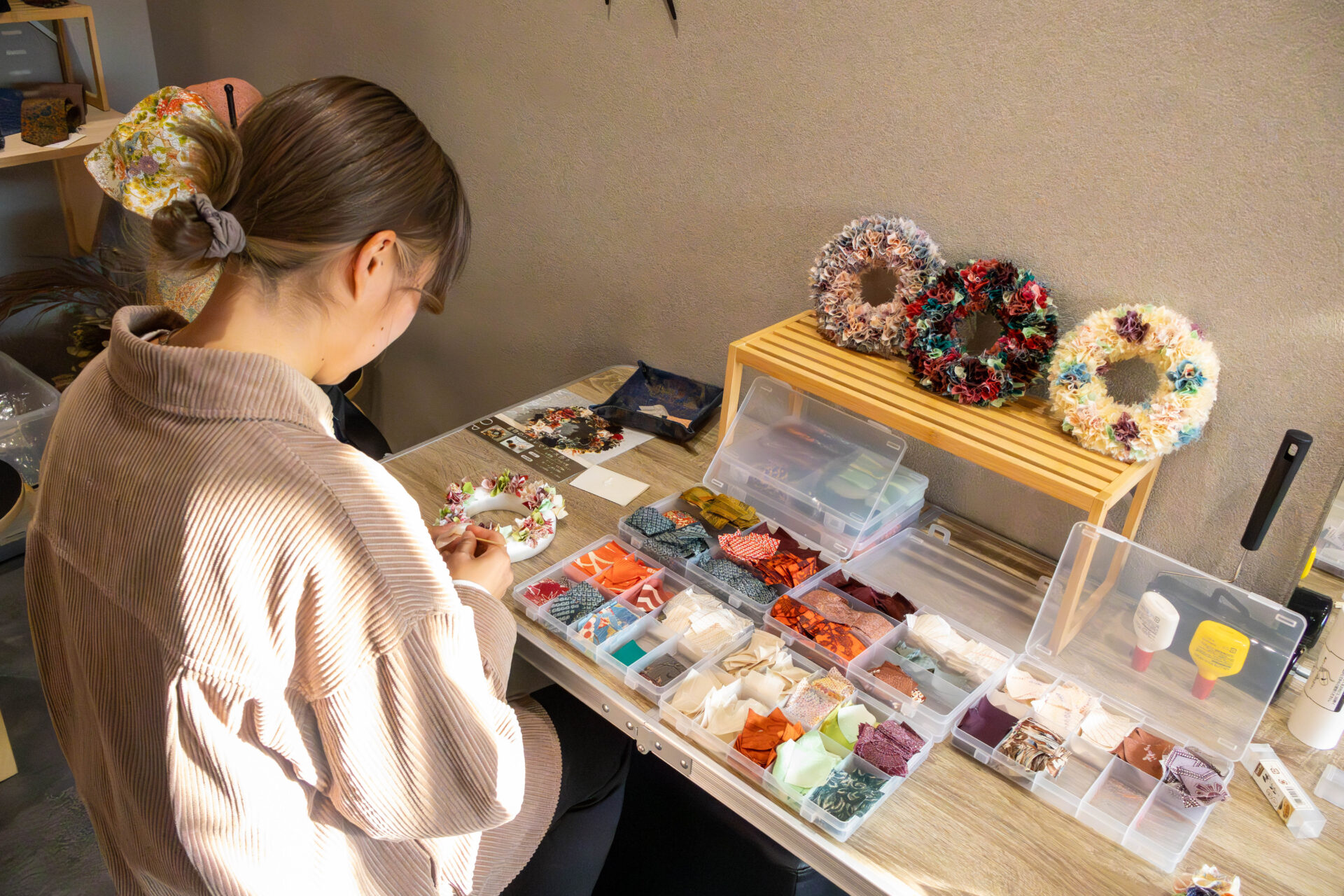
There were also works for sale displayed in the store. I thought I would use them as a reference for color combinations.
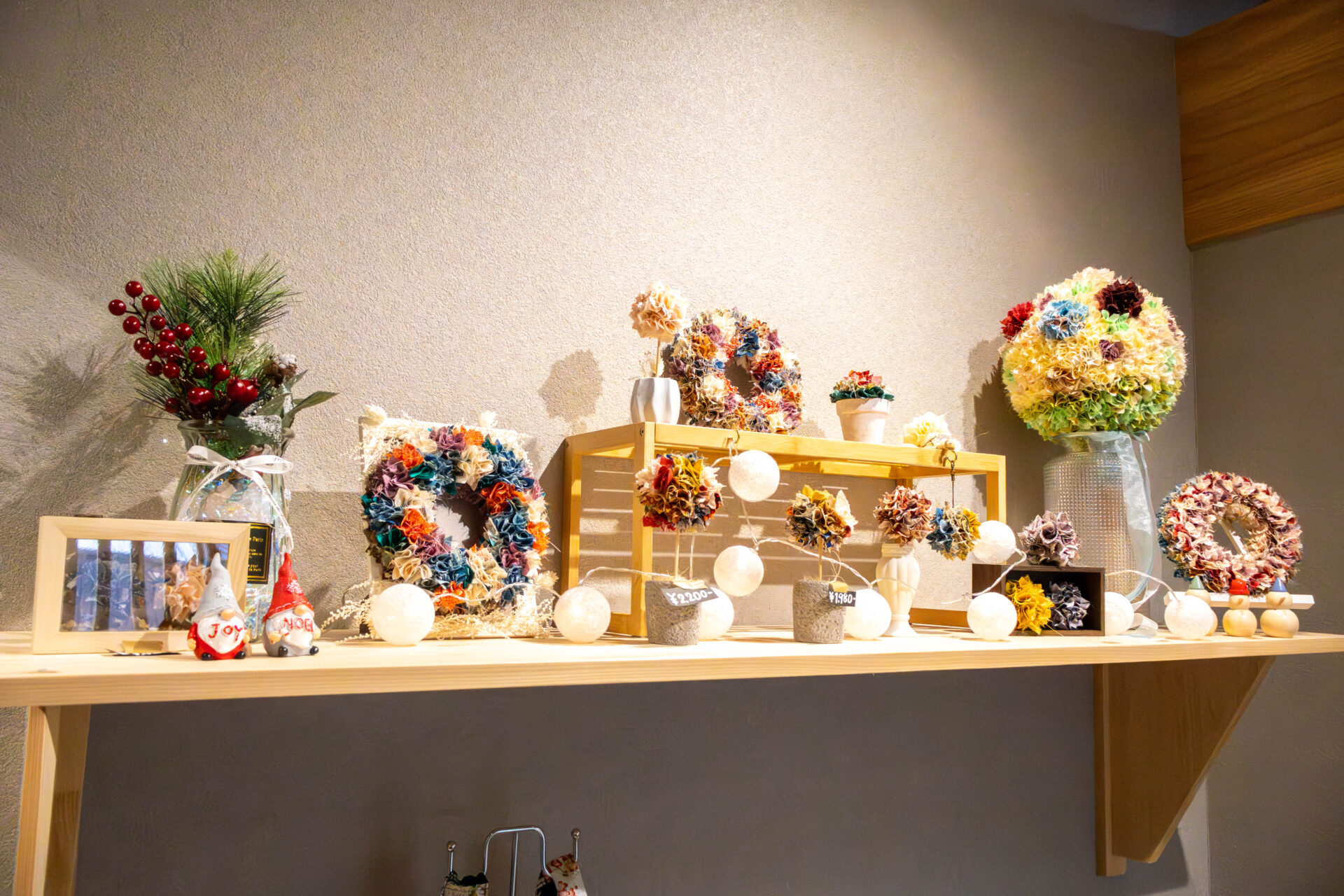
Attaching fabric pieces from the front
Let's get started right away.
There are over 30 types of kimono fabric pieces prepared, and I was unsure which ones to use. While green is the typical color associated with Christmas wreaths, I wanted to create one using colors that can only be achieved with kimono fabric pieces.
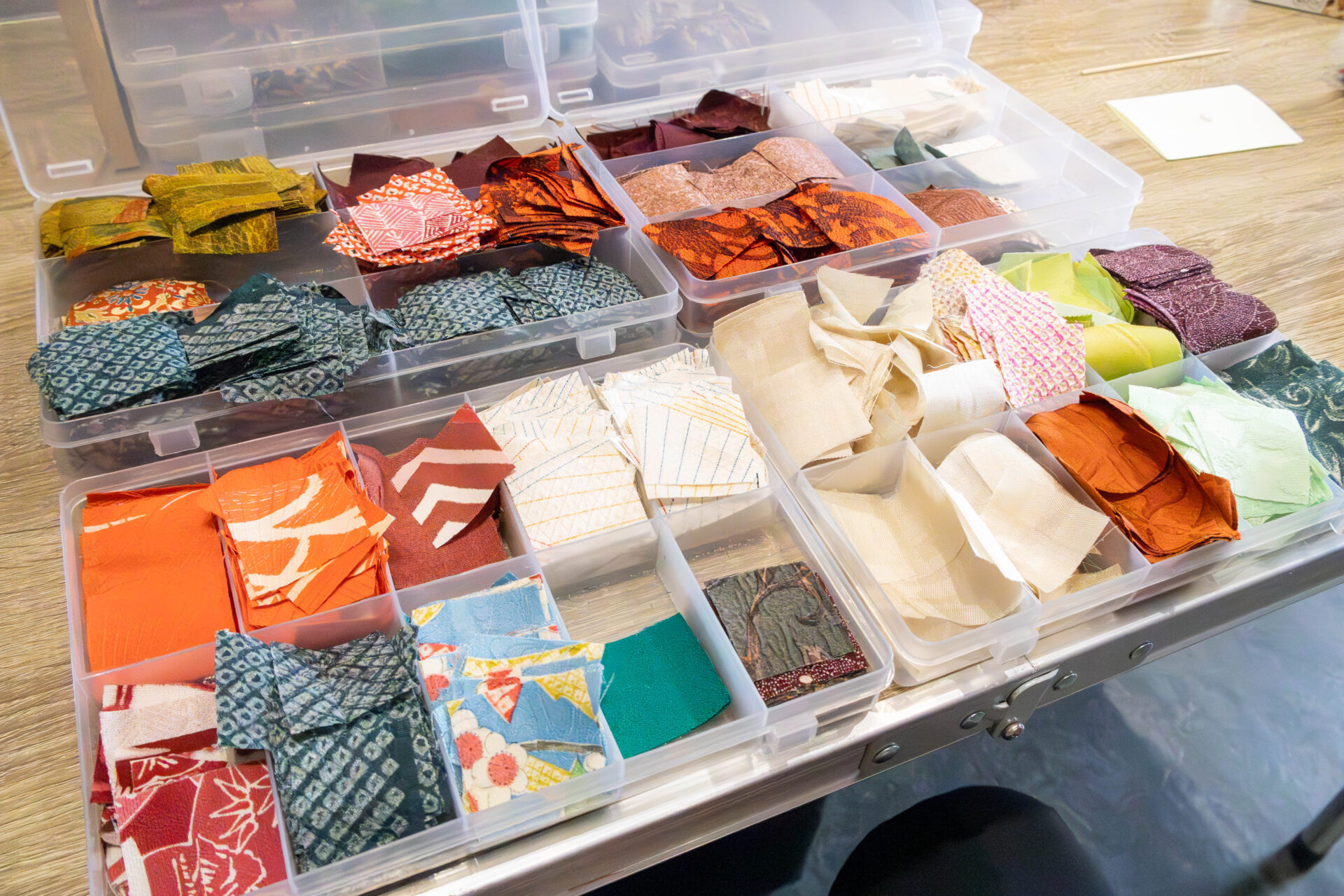
I wanted to create a wreath with a white base, so I first chose pink fabric pieces that would serve as an accent.
As I was wondering where to start, Mr. Warabino advised me, “If you make the part that will be visible from the front when the wreath is propped up first, you can achieve a good balance in the color scheme.” So, I began by attaching pieces to the most prominent areas.
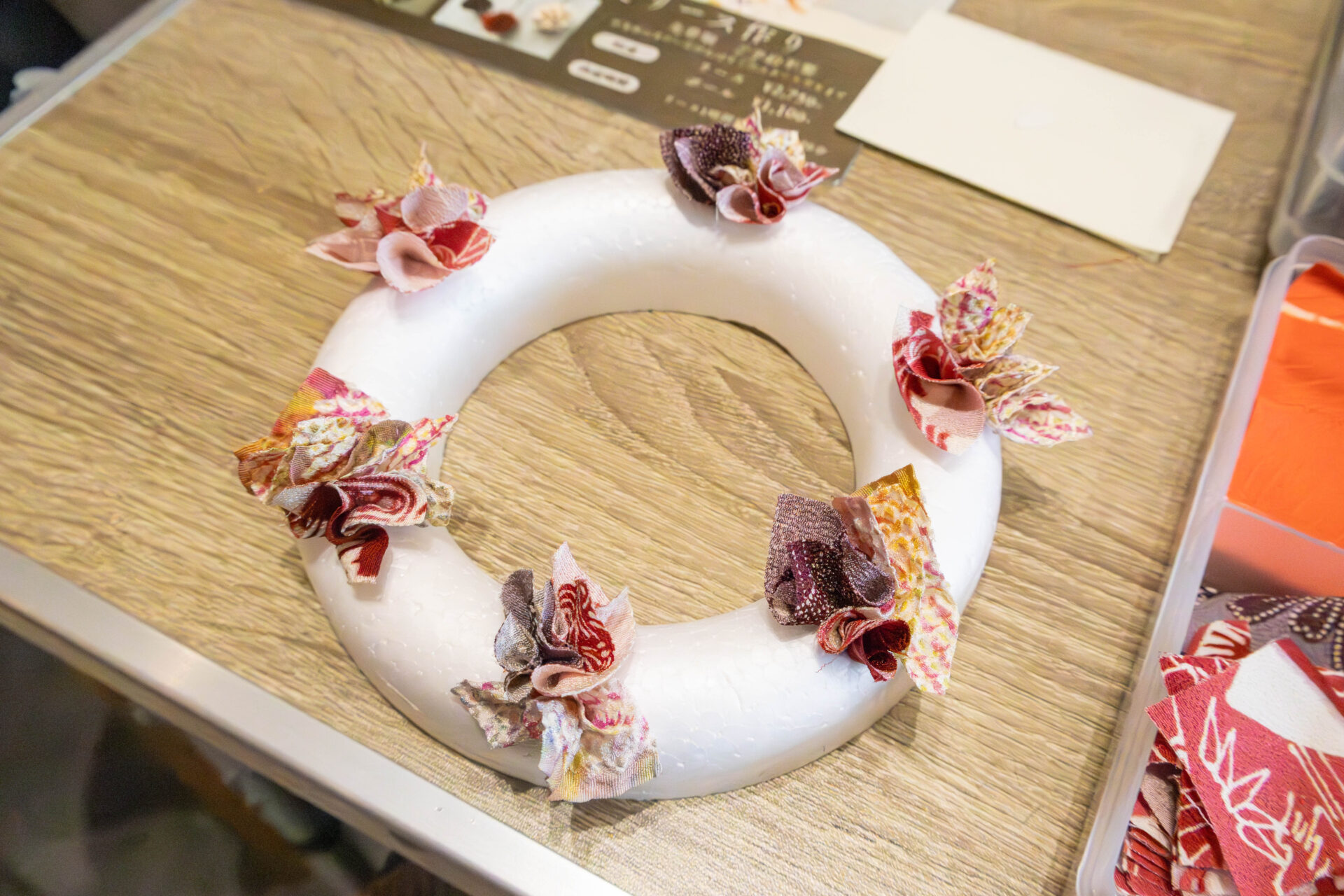
Using about three pieces of fabric in one spot makes it look beautiful like a flower.
To make it look even more floral, I decided to express grass using bright green fabric pieces. It was an idea that came to me on the spot, but when I actually attached them, it became more vibrant than I had imagined, and it started to look just the way I liked it.
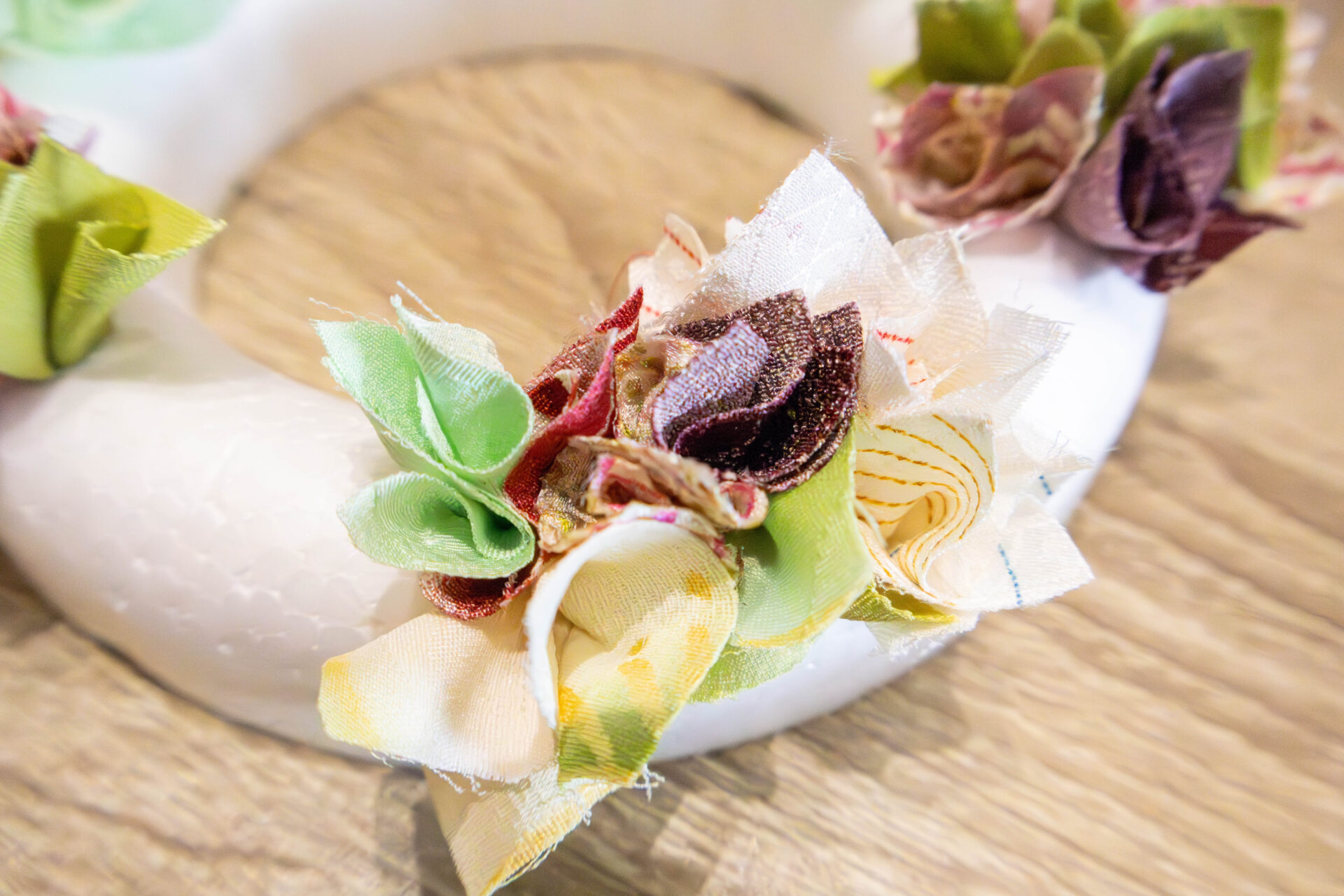
The process of making it is very simple; just lightly poke a bamboo skewer, and the fabric scraps are firmly secured. It doesn't require much strength, so even children can easily give it a try.
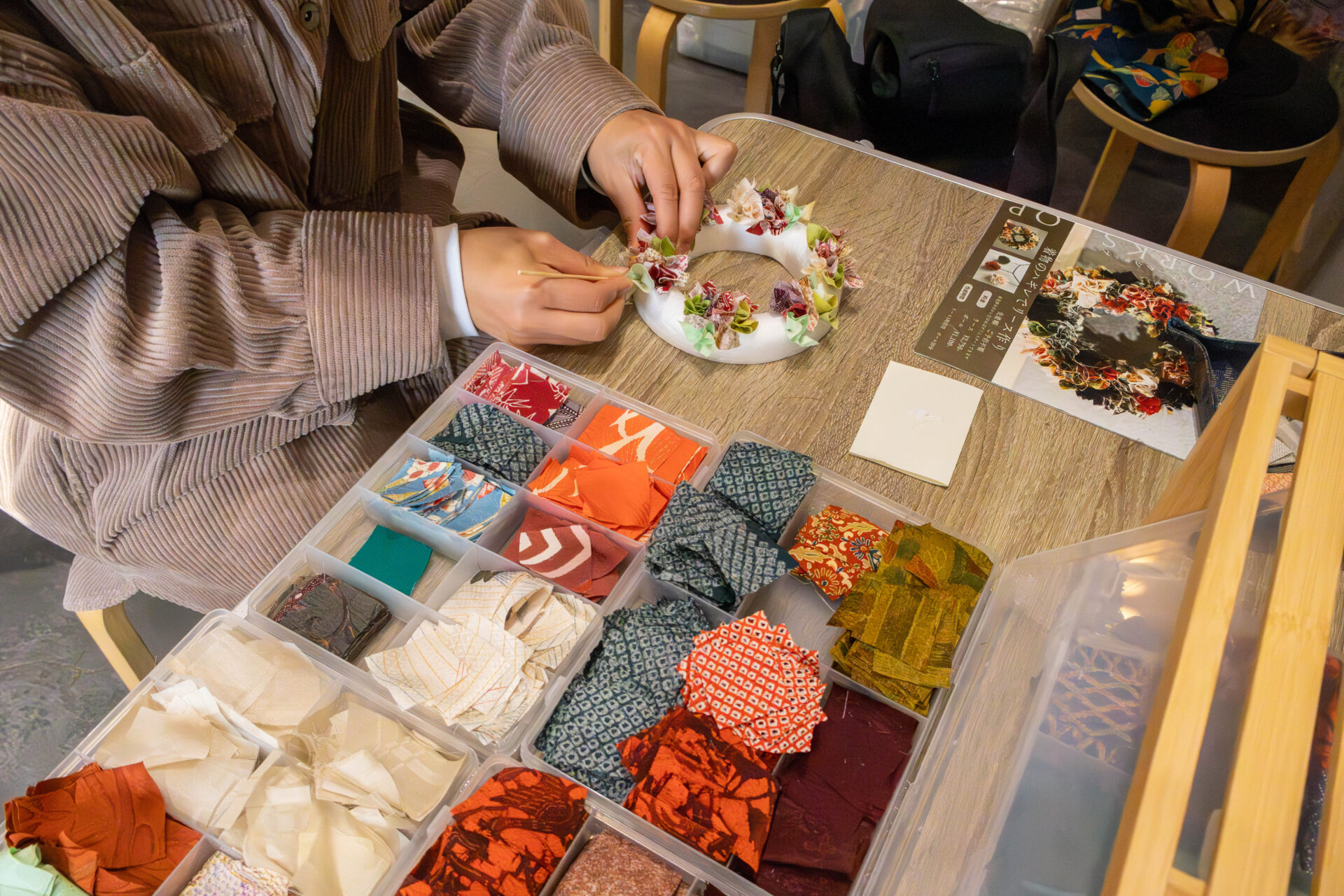
At the beginning of the making process, I couldn't envision the completed image, but once the front part was roughly colored, I started to feel that it would become a lovely wreath.
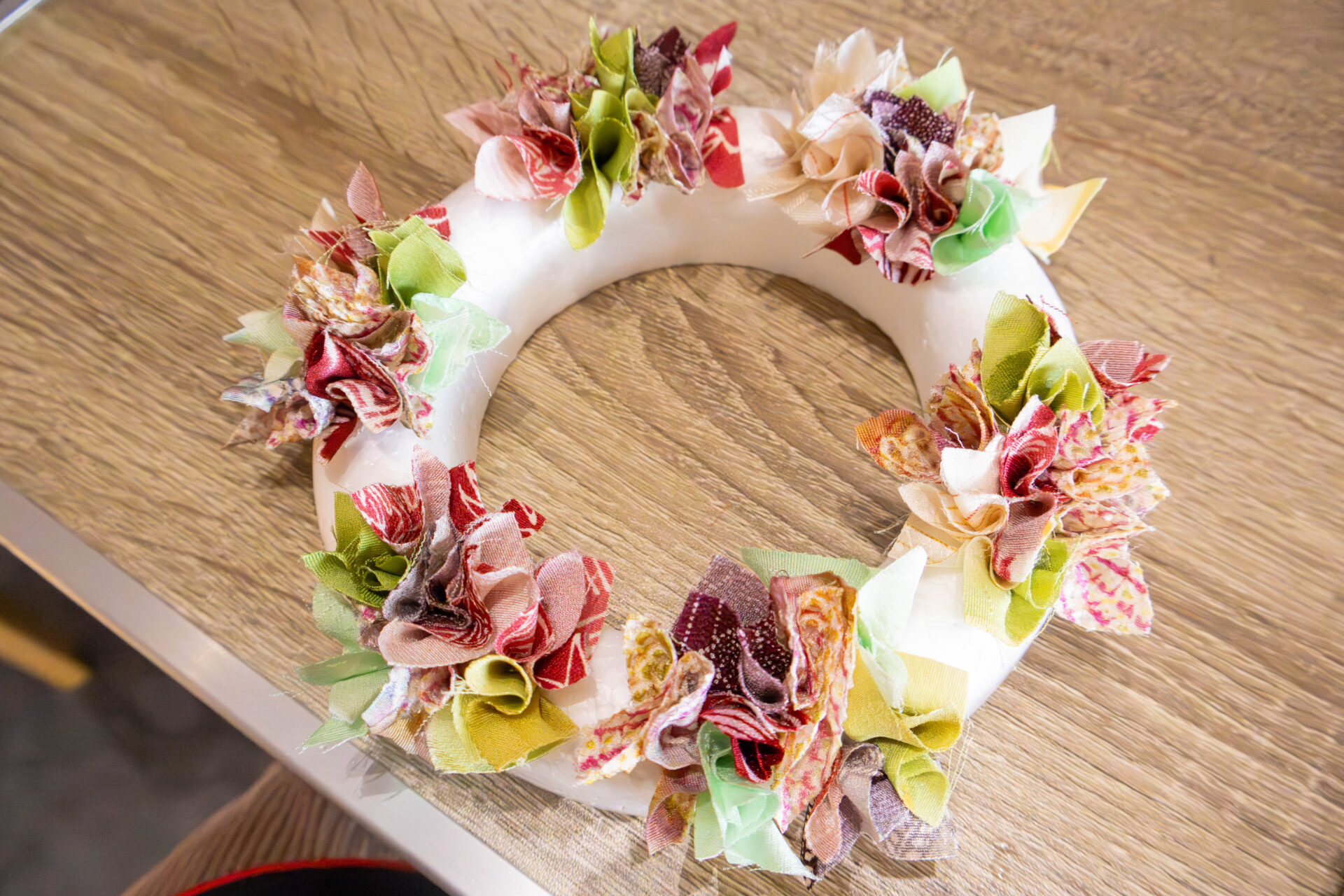
Filling with about 300 fabric scraps to complete
Next, I will attach the base white fabric scraps.
There were two types of whitish fabric. Upon closer inspection, I noticed the patterns were different, so I thought I would use them intermingled.
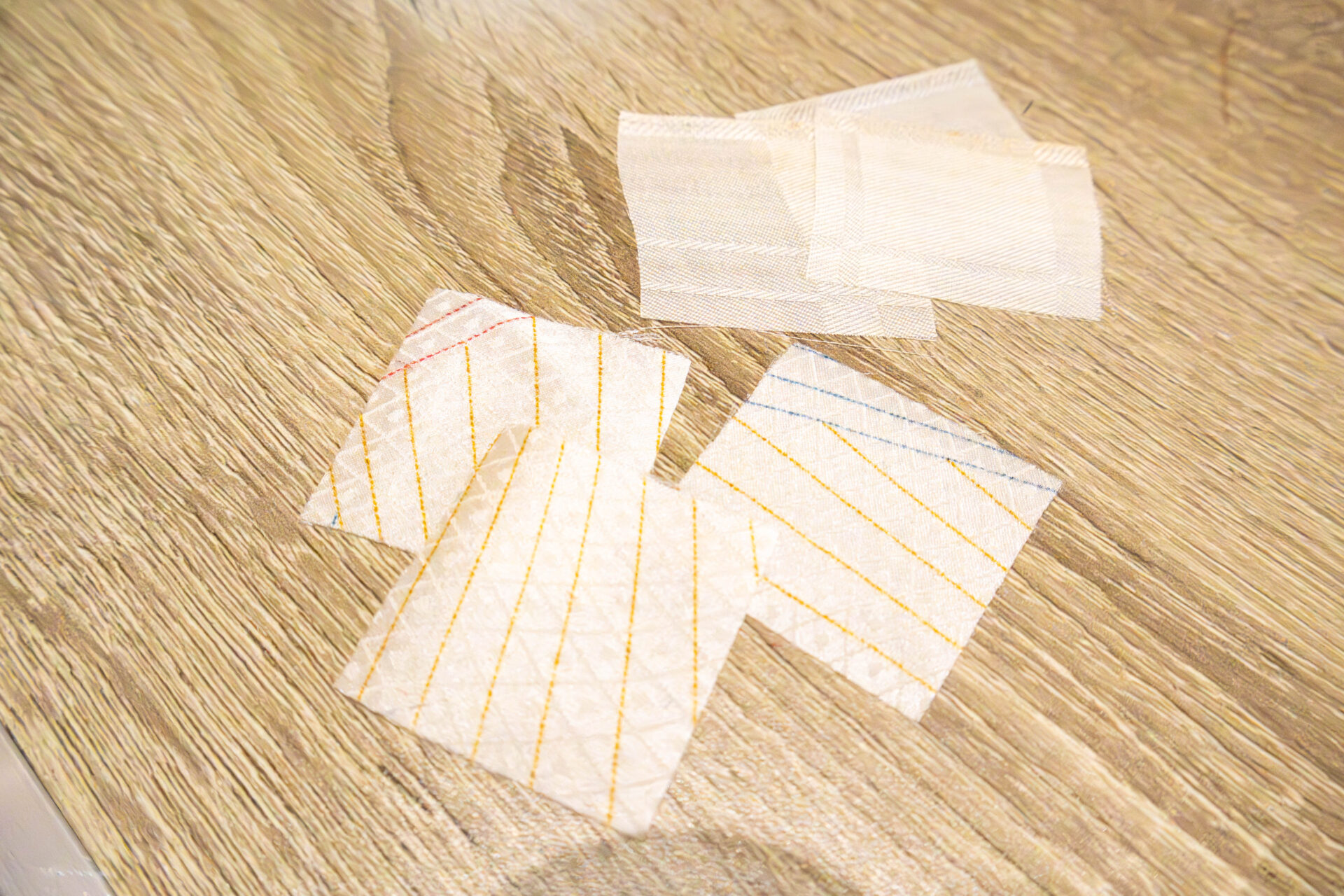
During the work, I was told by Mr. Warabino, "Kimono wreaths typically use about 250 to 300 fabric scraps."
When you get absorbed in it, you don't notice, but it's surprising how many fabric scraps are used.
In about 40 minutes, the front part was filled, and it started to look like a colorful cake. To hide the base, I will fill the sides and the inside with fabric scraps as well.
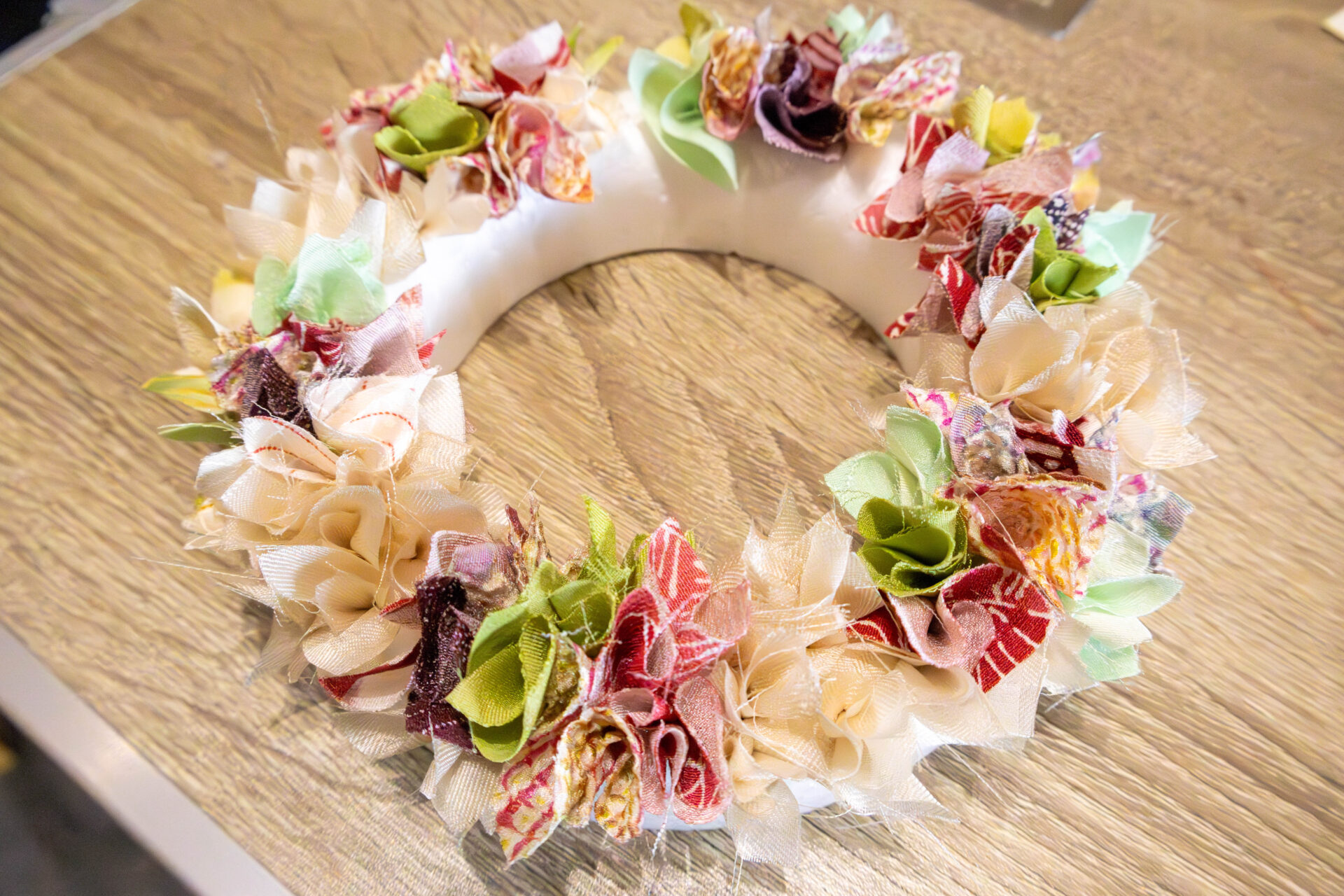
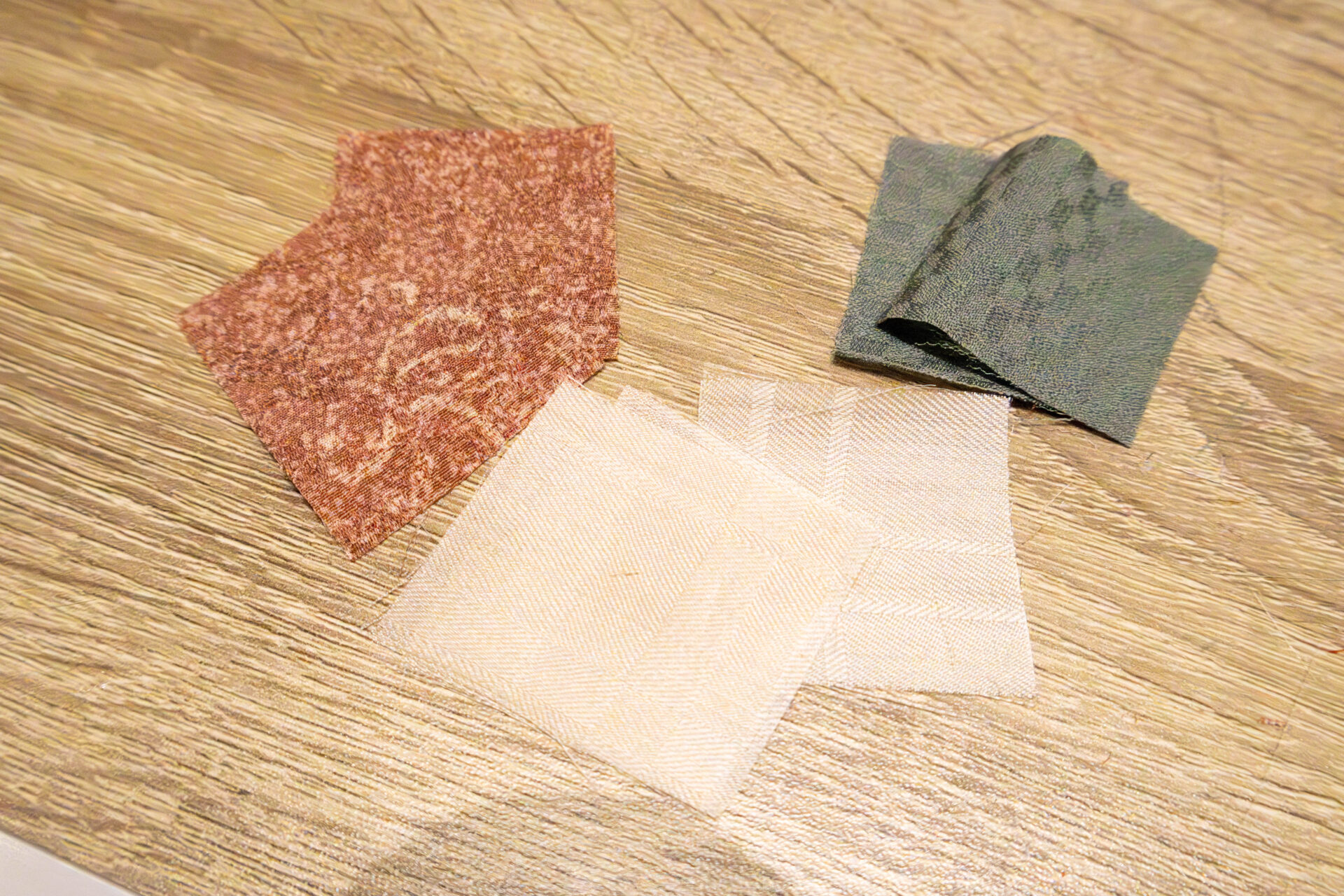
Personally, I found the most joy in thinking about the color combinations. I understand the desire to spend time choosing colors.
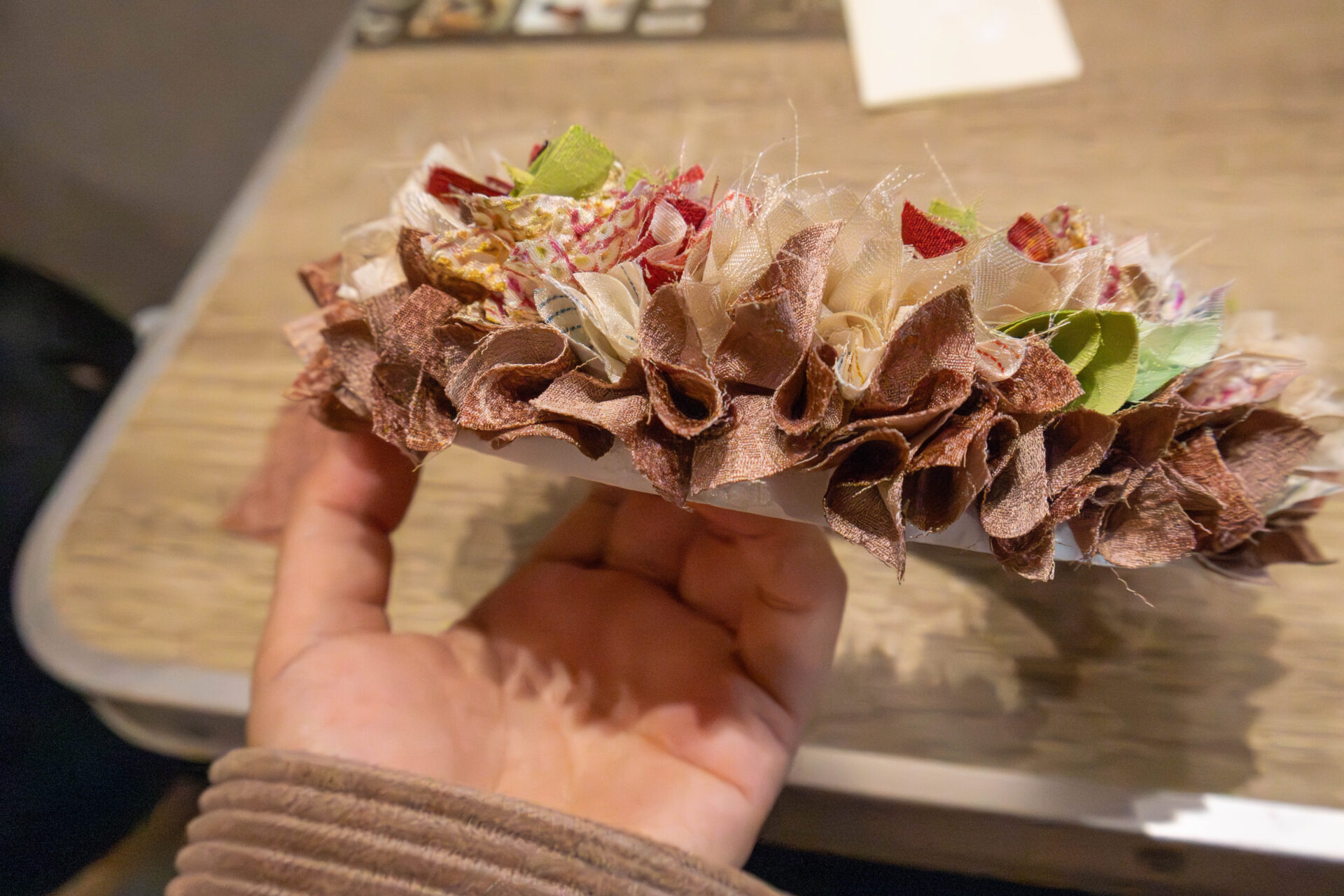
After much deliberation, I decided to use reddish-brown and green fabric scraps for the sides and the inside.
With the addition of the subdued colors, the previously cute wreath's color scheme became a bit more refined. The impression changes dramatically with color selection, but any combination seems to result in a nice finish, which might be unique to kimono wreaths.
I quietly pushed in the fabric scraps until the base was no longer visible, and after about 1 hour and 30 minutes, the kimono wreath was completed.
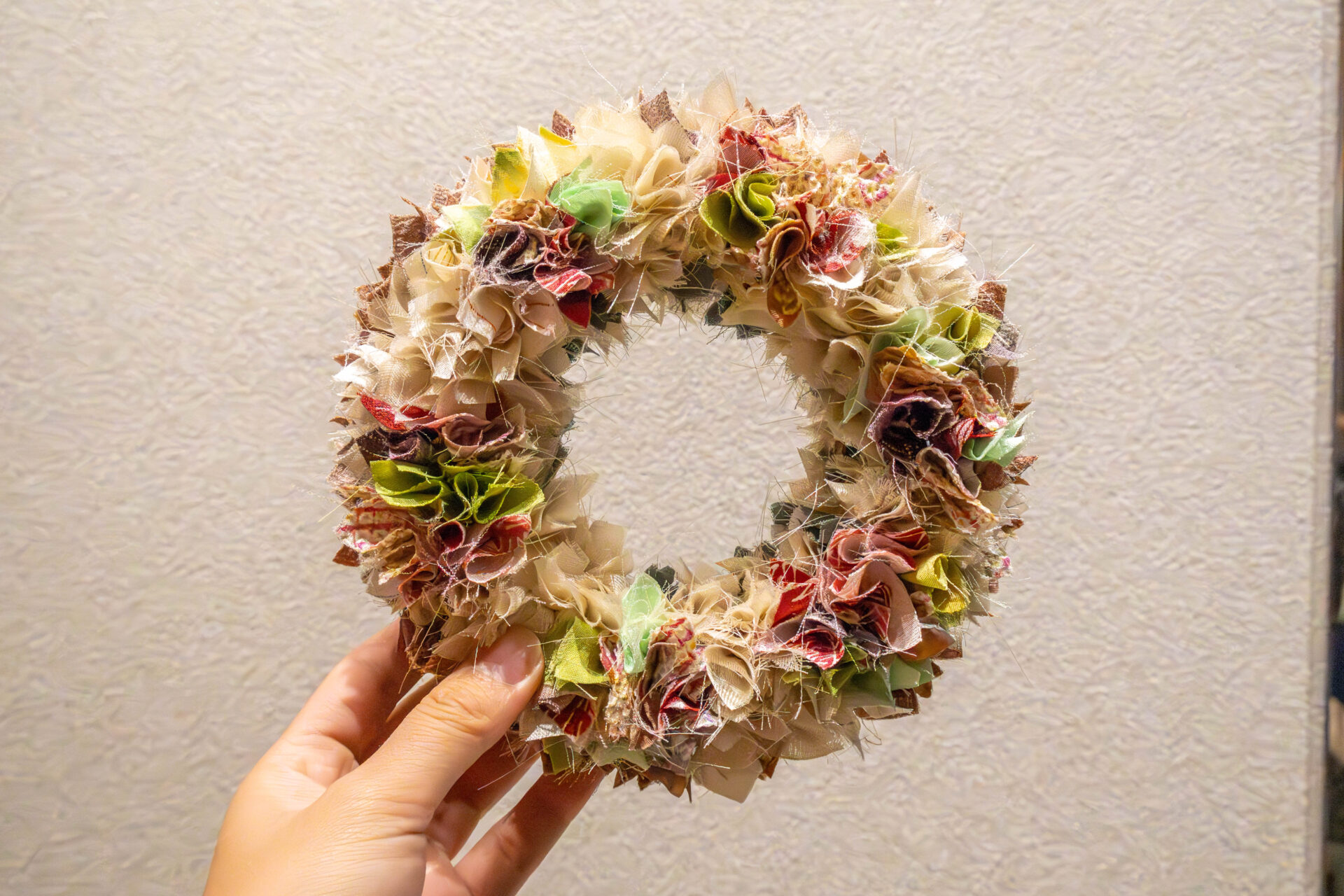
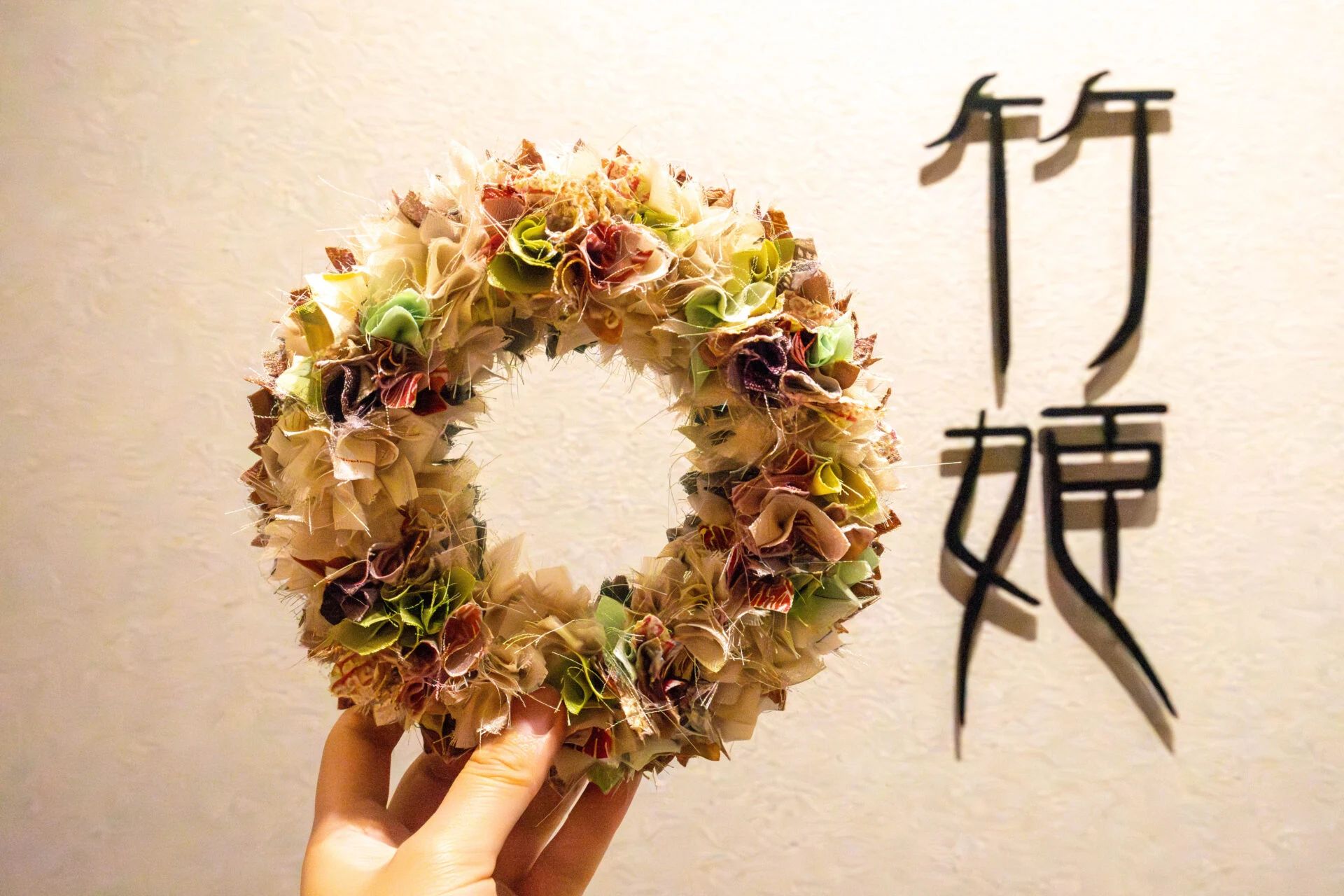
Overall, it is a lovely wreath with a muted, cute color scheme and kimono fabric arranged like flowers.
I was able to create a wreath that is more to my liking than I imagined, making it a very satisfying experience.
Conclusion
Participating in the kimono wreath-making allowed me to experience the Christmas spirit a bit early.
A wreath made from kimono scraps is both a blend of Japanese and Western styles, and visually stunning. I look forward to decorating my room and welcoming Christmas.
Take Hime plans to hold various workshops in line with seasonal events in the future. You can check for workshop information on Take Hime's Instagram.
How about adding a unique original kimono wreath to your Christmas decorations?
“Kimono Wreath” Workshop Data
| Name | “Kimono Wreath” Workshop |
|---|---|
| Date | Wreath making is held until December 2024 |
| Location | 204, Achi 2-25-45, Kurashiki City |
| Participation Fee (including tax) | 2,750 yen (including tax) |
| Website | Take Hime |