Interview with Fumiaki Yamana, Executive Director of Yamana Bookstore

Yamana Bookstore has a long history.
What kind of activities has Yamana Bookstore engaged in throughout its long history?
I spoke with Fumiaki Yamana, Executive Director of Yamana Bookstore, about the history of Yamana Bookstore, its initiatives, and future aspirations.
This interview is based on the content from the initial interview conducted in June 2020.
The origin of Yamana Bookstore is an inn in Tamashima
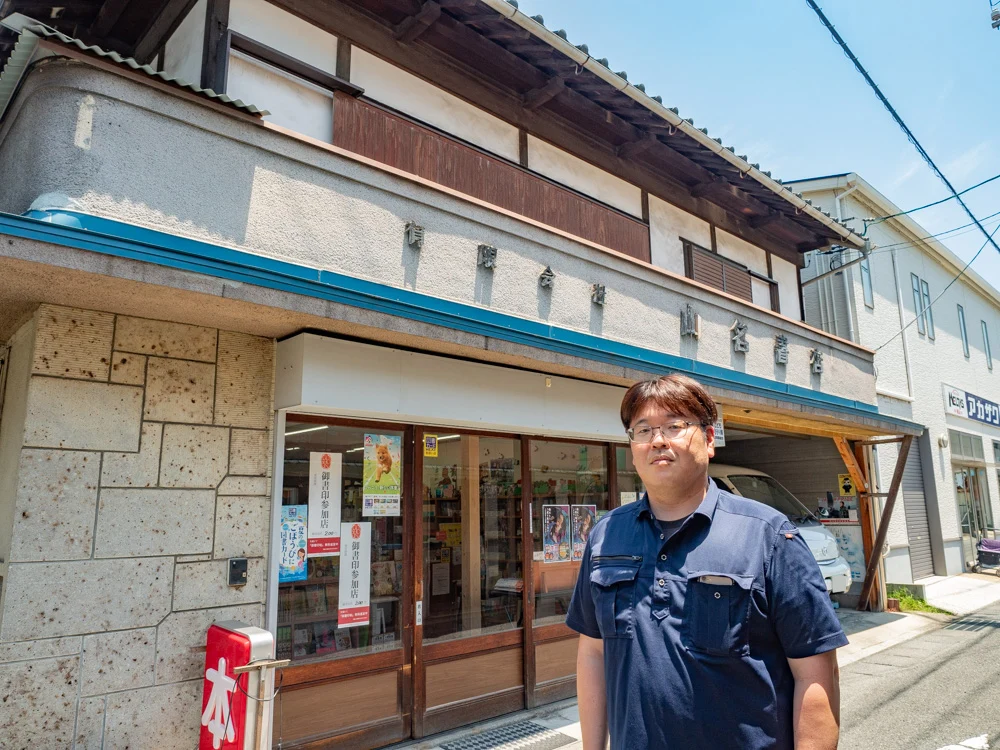
It seems that Yamana Bookstore has a long history, but when did it originate?
Yamana (honorific omitted)
Actually, the beginning of Yamana Bookstore dates back to the Edo period in Tamashima.
Tamashima was a port town, and there, it operated an inn.
I am not sure of the exact timing, but it seems that in the late Edo period, it moved to Nishinoura in the present-day Tsurajima.
Later, in Meiji 7 (1874), there is a record of supplying paper to Nishihira Elementary School, which is located to the north of the current Yamana Bookstore.
Since there are no records of when the business started after moving to Nishinoura, we consider the delivery record from Meiji 7 as the founding of Yamana Bookstore.
It is possible that they were engaged in business even before that.
As Mizushima developed, Yamana Bookstore also expanded its stores

Has the bookstore been operating since its founding?
Yamana
At the time of its founding, it was not exclusively a bookstore.
In addition to books, it handled various items such as stationery and daily goods.
The shift towards focusing on books began when the government designated suppliers for textbooks and other materials to schools during the Meiji period.
At that time, Yamana Bookstore became the designated supplier for schools in the Tsurajima area.
The relationship with schools continues to this day, and we have been very well supported for a long time.
When was it incorporated?
Yamana
The year of incorporation as a corporation was in the post-war Showa 30 (1955).
In the past, book procurement was done by cycling back and forth to Tamashima Station (now Shin-Kurashiki Station), where freight trains used to stop.
Later, it changed to motorcycles and then to light vehicles, but by the 1960s, delivery companies began to handle the deliveries, which reduced the burden.
Additionally, as Mizushima developed and an industrial area was created, urban areas were formed, and the number of companies and residences increased, which had a significant impact.
We opened a branch in the Mizushima shopping district, allowing more people to use Yamana Bookstore.
We also increased opportunities to supply stationery to companies.
Eventually, we opened several branches within the city, preventing citizens from having to go outside the city to purchase books.
The reason for focusing on business in Nishinoura while mainly supplying schools
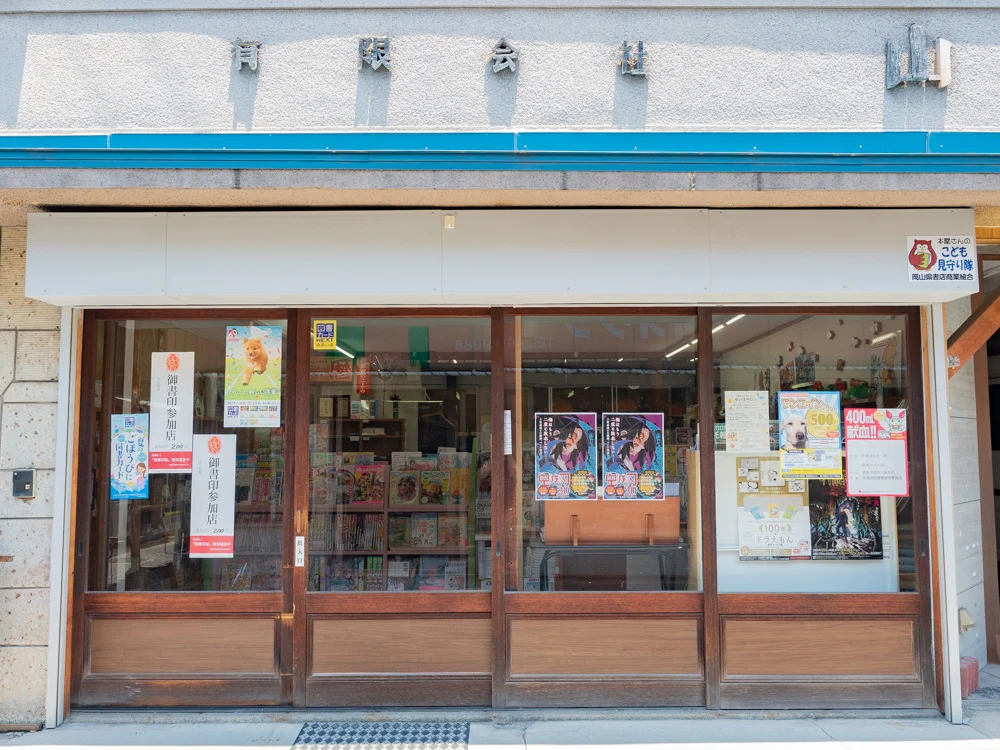
Is it currently just the main store?
Yamana
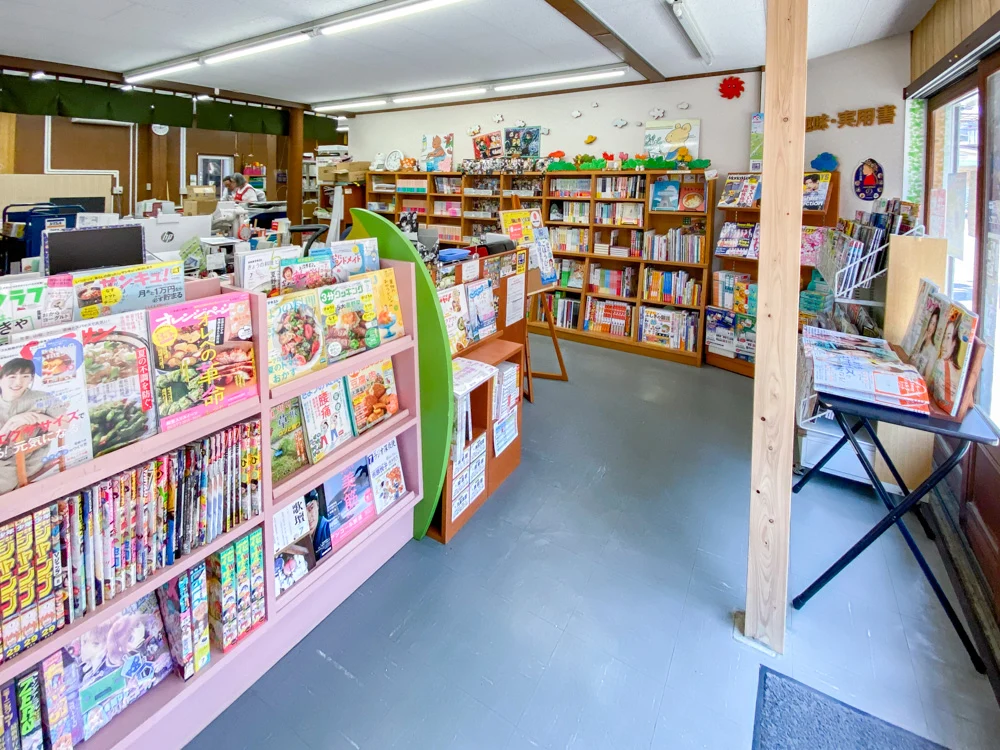
Yes, we are operating with just the main store.
Since the late 2000s, internet shopping for books has become prominent.
Furthermore, e-books have also become widespread. Therefore, by 2014, we closed all branches and consolidated general book sales at the Nishinoura main store.
We then focused on our original business of supplying schools. It is a tough time for bookstores, but I believe it is necessary to adapt to the times.
In addition to supplying schools, we also deliver magazines to local cafes, hospitals, and beauty/barber shops.
However, due to rising prices and the soaring cost of paper, magazine sales have decreased, and prices continue to rise. The burden on customers has increased, leading to cases where purchases are being reconsidered.
Why do you intentionally keep the main store in the form of a general bookstore?
Yamana
The biggest reason is for the local people.
There are many elderly people around the Nishinoura main store who are not good with the internet, so there are those who want to buy books nearby.
Also, it is for the children.
To buy books online, children need a credit card or have to take a payment slip to a convenience store, which can be a bit of a hurdle for them.
That is why we keep the bookstore for the local children.
As opportunities to pick up books are decreasing, I hope that local children will have easy access to books.
The first books they are likely to encounter are picture books and children's books.
Therefore, we focus on picture books and children's books at our store.
I have heard that children's manga is also in a difficult situation lately...
Yamana
In the past, it was common to see children come with their pocket money to buy books and manga.
But now, the four major boys' manga magazines (Jump, Champion, Sunday, Magazine) have also seen a decrease in circulation, and the target audience has shifted to adults.
Only "Shogaku Ichinensei" is still being published among grade-level magazines.
The only one that is doing well is "Korokoro Comic."
However, in the current situation where manga is not selling well, a hit manga called "Demon Slayer: Kimetsu no Yaiba" has emerged.
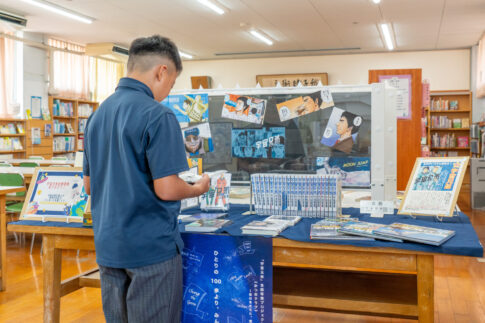
We also display the volumes at our store, and it has been a joy to see children coming back with their pocket money more frequently.
Demon Slayer: Kimetsu no Yaiba is hard to obtain, and it takes a long time to borrow from the library.
But local children were surprised to find it available at our small local store, saying, "I can't believe it was here!"
However, since Demon Slayer: Kimetsu no Yaiba has already concluded, I feel a sense of sadness knowing that children may stop coming in the future.
I hope a new hit work will emerge...
Kurashiki City Bookstore Business Cooperative is an organization that collaborates to help small bookstores survive

Yamana Bookstore is a member of the "Kurashiki City Bookstore Business Cooperative," but what kind of cooperative is it?
Yamana
The Kurashiki City Bookstore Business Cooperative is, as the name suggests, a cooperative for bookstores based in Kurashiki City to collaborate.
Basically, it consists of bookstores that, like Yamana Bookstore, supply textbooks and library books to local schools.
All the bookstores are small, long-established ones. Our company has been participating since the cooperative was established.
While there are extensive bookstore cooperatives at the prefectural level across the country, the community-based bookstore business cooperative at the municipal level is the first in the nation to be established in Kurashiki.
As mentioned earlier, the opening of large bookstores, along with the spread of the internet and e-books, has led to a decline in book sales. I believe that for "traditional small town bookstores" like ours to survive, we need to unite and explore ways forward.
And the actual methods for survival are planning and proposals.
The event planned by the Kurashiki City Bookstore Business Cooperative is the Kurashiki Book Marche.
Additionally, there is the New First-Year Student Reading Promotion Project that the cooperative proposed to the city.
The Book Marche Creates Opportunities for Connections Between Schools and Publishers in Kurashiki
What is the content of the "Kurashiki Book Marche"?
Yamana
The "Kurashiki Book Marche" is an event held once a year by the Kurashiki City Bookstore Business Cooperative since 2011.
Unfortunately, in 2020, it could not be held due to measures against the novel coronavirus infection...
The Book Marche is an event only for school teachers to participate.
Any teacher interested, including those in charge of the library, can participate.
We display our recommended books, but that is not the only purpose.
Publishers also participate in the Book Marche.
Therefore, facilitating dialogue between educators and publishers is also an important objective.
Teachers and publishers rarely have the opportunity to discuss with each other.
Thus, it is utilized as a valuable venue for information exchange.
In 2019, 44 publishing companies participated.
There are few projects like the Book Marche nationwide, right?
Yamana
That's right. It is rare nationwide and is attracting attention from both publishers and schools.
Some publishers have proactively participated, saying, "We will definitely come to Kurashiki!", which is very encouraging.
In the heavy rain disaster of July 2018, two schools in the Mabi area of the city had their library completely destroyed.
At that time, about 40 publishers who participated in the Book Marche donated approximately 6.5 million yen worth of books for free out of goodwill.
In the midst of a publishing recession, the fact that so many books were donated was due to the connection between publishers and the Kurashiki City area that was created through the Book Marche.
Additionally, many books were donated by the Japan Children's Book Publishers Association.
In that regard, I feel it was worthwhile to plan the Book Marche.
The New First-Year Student Reading Promotion Project Was Born from Collaboration Between the Bookstore Business Cooperative and the City
What is the "New First-Year Student Reading Promotion Project"?
Yamana
The "New First-Year Student Reading Promotion Project" creates a dedicated book corner for new first-year students in elementary school libraries and purchases and supplies recommended books selected by the mayor.
First-year elementary school students often find it difficult to choose or borrow books when older students are around.
Additionally, first-year students have few opportunities to see new books.
It would be unfortunate if the first books they borrow are all worn-out ones.
To address such issues and make books feel more accessible and encourage a love for reading, the New First-Year Student Reading Promotion Project was initiated.
This project was born from the communication between our bookstores and the administration through the Book Marche.
From the 2024 fiscal year (Reiwa 6), the nickname "First-Year Exciting Book Corner" will be used.
For Small Bookstores to Survive, They Must Collaborate with Each Other and the City, and Actively Propose Ideas
What are your aspirations for the future or things you would like to try?
Yamana
Honestly, it is a tough time not only for small bookstores like ours but also for large-scale bookstores that are expanding nationwide.
Simply lining up books and waiting for customers will not work well in this passive approach.
In such times, I believe that small bookstores must survive by closely connecting with the community while collaborating with each other.
This means actively proposing ideas in collaboration with the city's educational administration.
Local bookstores need to become a supportive presence for the community's educational administration from behind the scenes.
Projects like the Book Marche and the New First-Year Student Reading Promotion Project have shown results, and I believe the path for small bookstores to survive lies here.
Conclusion

Yamana Bookstore has been dealing with books since the early Meiji period.
Throughout its long history, it has experienced various changes during the period of high economic growth, the bubble era, and the spread of the internet and digitalization.
Yamana Bookstore has adapted flexibly to these changes and has survived.
And to survive in the coming era, it collaborates with other bookstores in the city.
It is actively engaged in activities such as hosting the rare nationwide Book Marche and making proposals to the city.
Books are essential to educational administration.
Behind the local educational administration, there exists the long-established bookstores that support schools and the administration from the shadows.
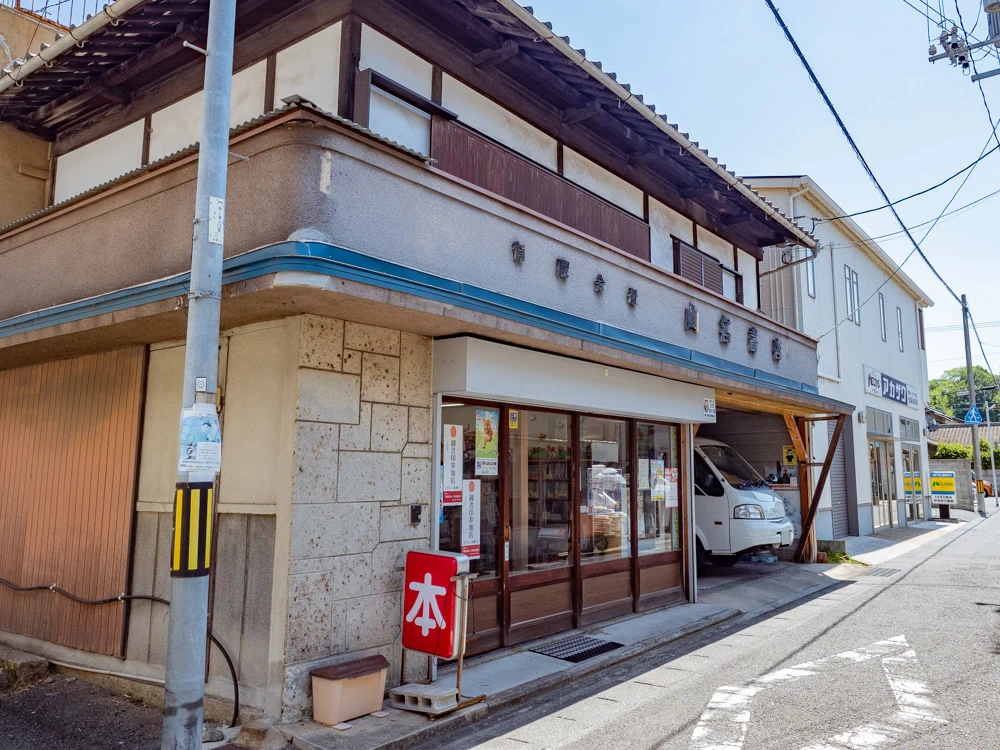
Data of Yamana Bookstore, Ltd.
| Organization Name | Yamana Bookstore, Ltd. |
|---|---|
| Industry | Retail (Bookstore) |
| Representative Name | Yamana Yasuhiro |
| Year Established | Established: 1953, Founded: 1874 |
| Address | 33 Nishinoura, Tsurajima-cho, Kurashiki City, Okayama Prefecture |
| Contact | 086-445-1111 |
| Website | Yamana Bookstore, a specialized bookstore for external sales |