
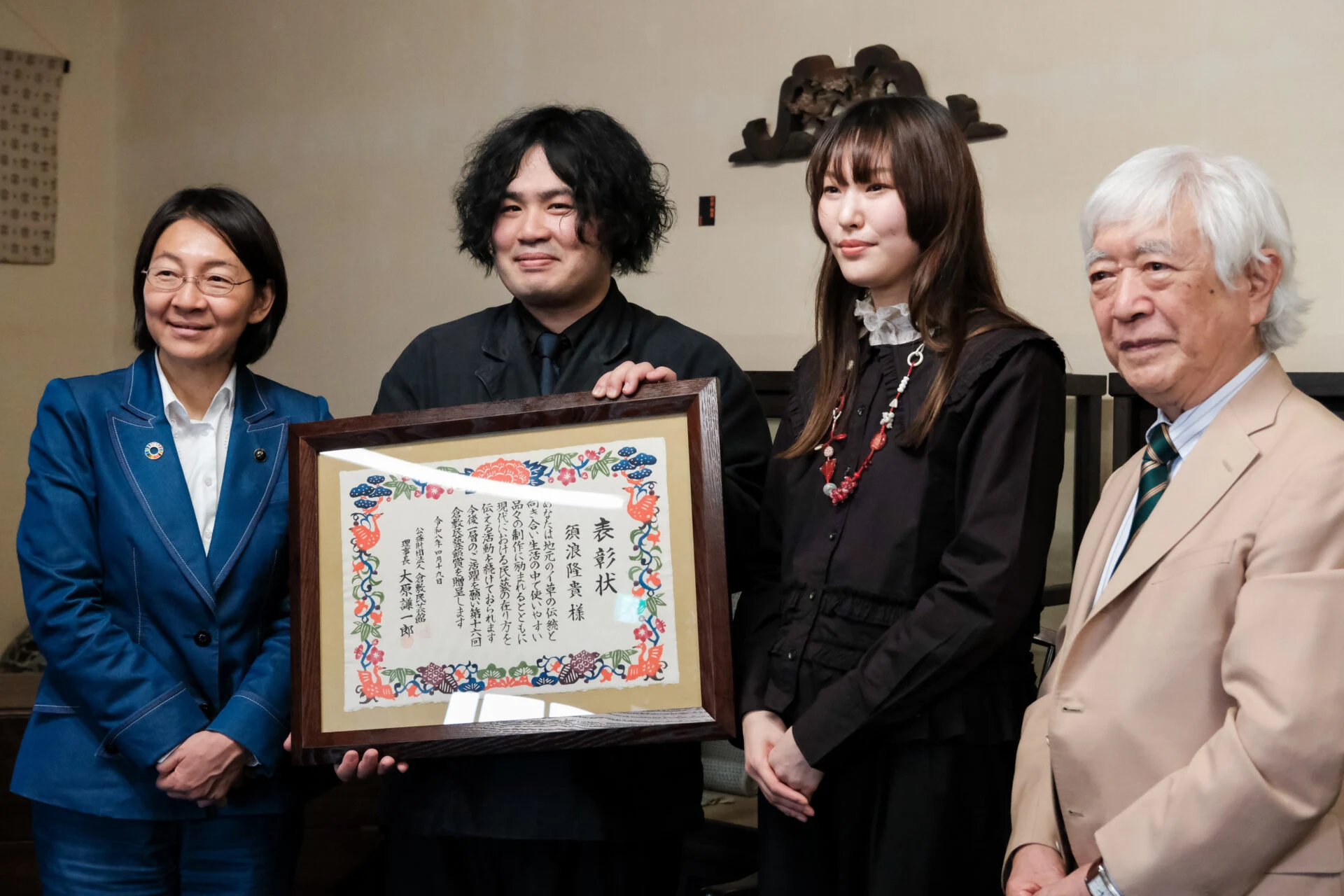
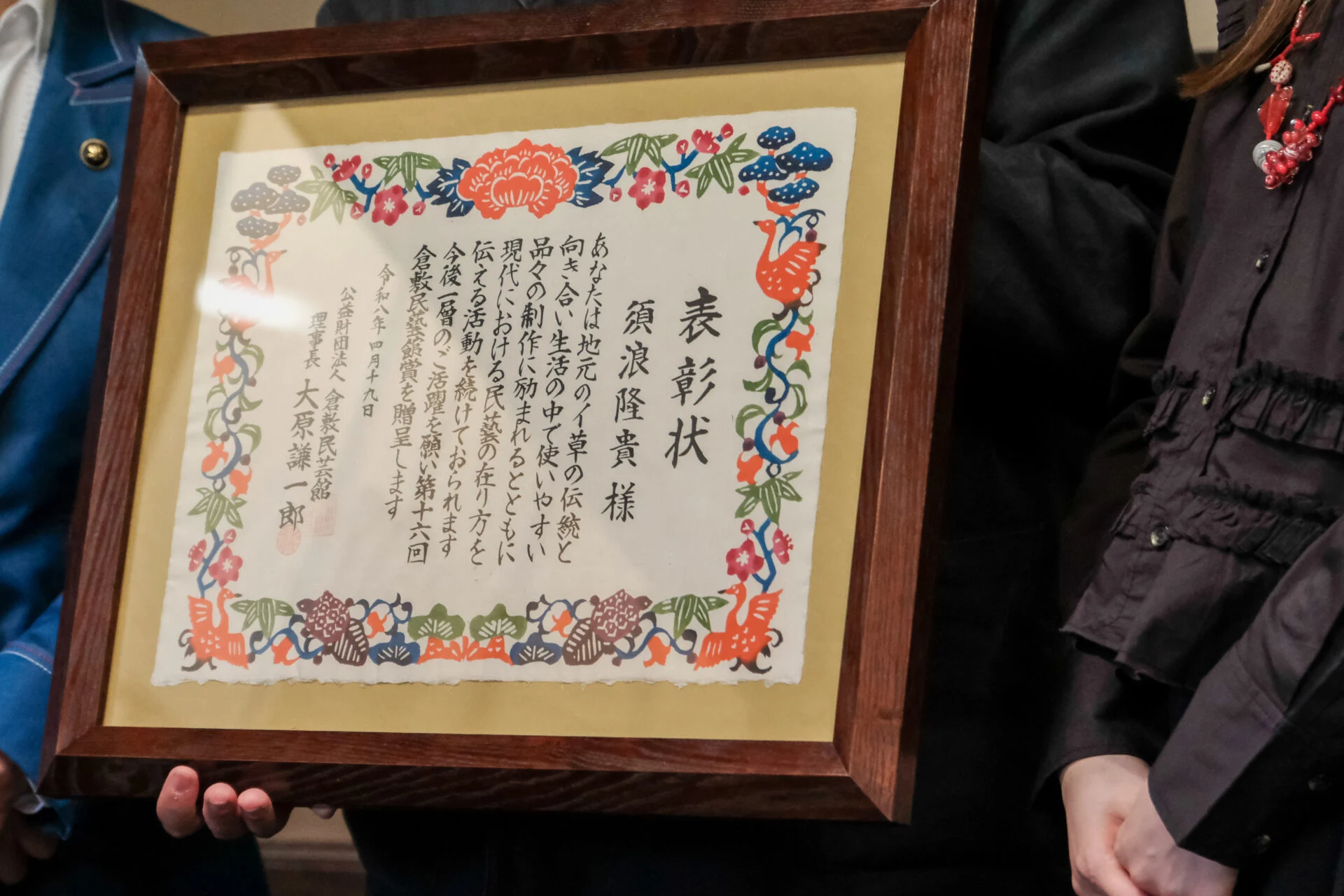
On March 13, 2026 (Friday), it was announced that the recipient of the 16th Kurashiki Museum of Folkcraft Award has been decided to be Ryuki Sunami, who specializes in products made from rush grass.
In response to this, on April 19, 2026 (Sunday), the award presentation ceremony for the Kurashiki Museum of Folkcraft Award and a commemorative talk between the museum director Hideyuki Yanagisawa and Mr. Sunami were held, so I will report on the events of the day.
What is the 16th Kurashiki Museum of Folkcraft Award
The Kurashiki Museum of Folkcraft Award is an award established by the Kurashiki Museum of Folkcraft in commemoration of the achievements of the first director, Kichinosuke Tonemura, and has been awarded every three years since 1994 (Heisei 6).
The recipients are young individuals or groups who are active in the following fields and whose future contributions are highly anticipated.
- Production of folkcraft items
- Training and development of artisans
- Promotion of the folkcraft movement
For the 16th award, there were eight nominations from across the country, and from those, Ryuki Sunami, the fifth generation of Sunami Toh Shoten, which was founded in 1886 (Meiji 19), and produces traditional rush grass items, was selected.
Ryuki Sunami, the recipient of the 16th Kurashiki Museum of Folkcraft Award
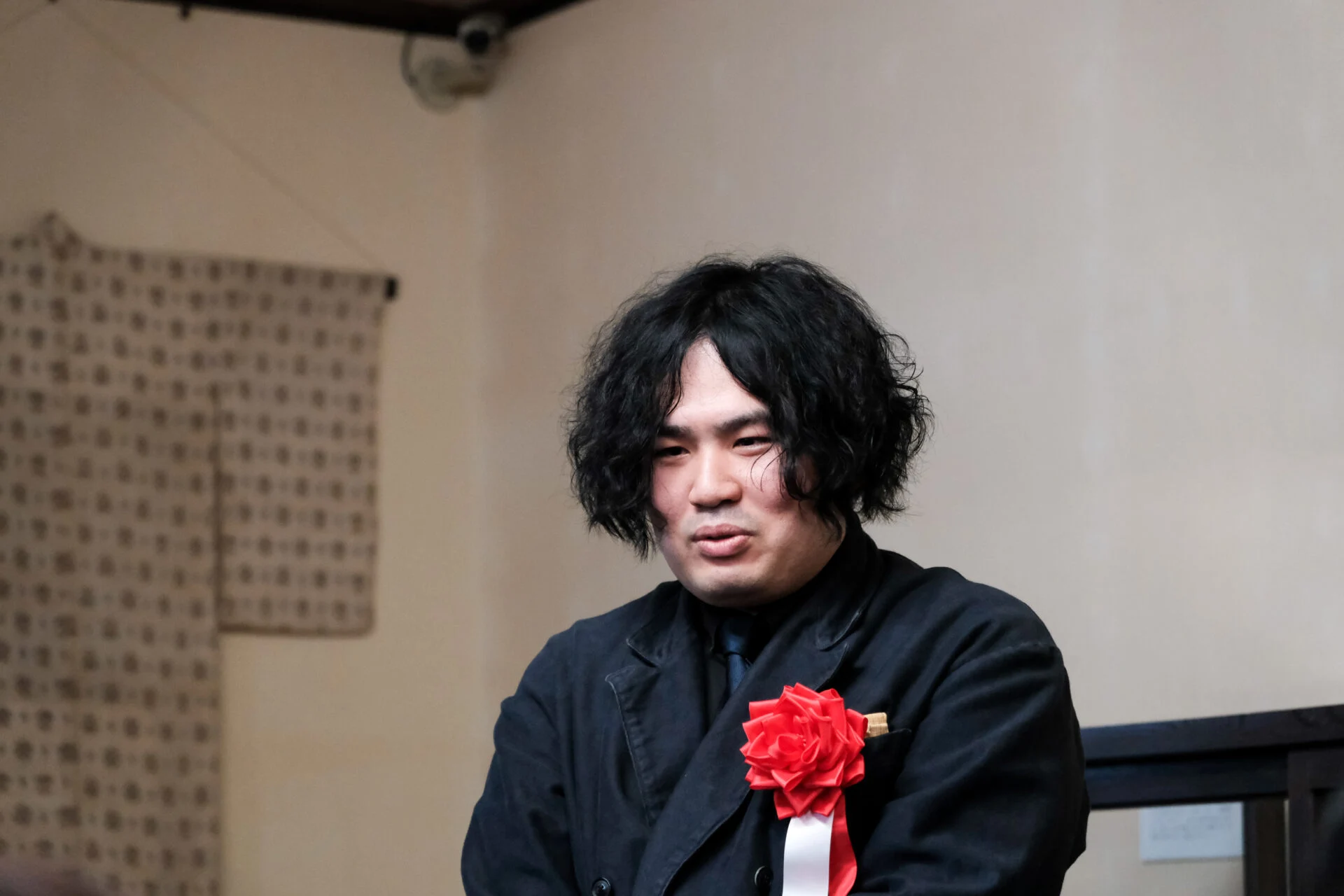
Born and residing in Kurashiki City, 32-year-old Mr. Sunami is the fifth generation of Sunami Toh Shoten, which was founded in 1886 (Meiji 19), and produces traditional rush grass items.
Mr. Sunami began to engage in the production of rush grass items after helping his grandmother, who was the wife of the third generation, with making "ikago" (woven baskets) using short rush grass that was produced during the manufacturing of tatami mats. In 2014, he dedicated himself to making ikago and has been striving to develop original products that suit modern times while applying traditional rush grass weaving techniques.
Additionally, he is actively involved in promoting the folkcraft movement as the vice president of the Okayama Prefecture Folkcraft Association, a permanent director of the Japan Folkcraft Association, and an editorial committee member for the magazine "Folkcraft."
Scenes from the 16th Kurashiki Museum of Folkcraft Award presentation ceremony
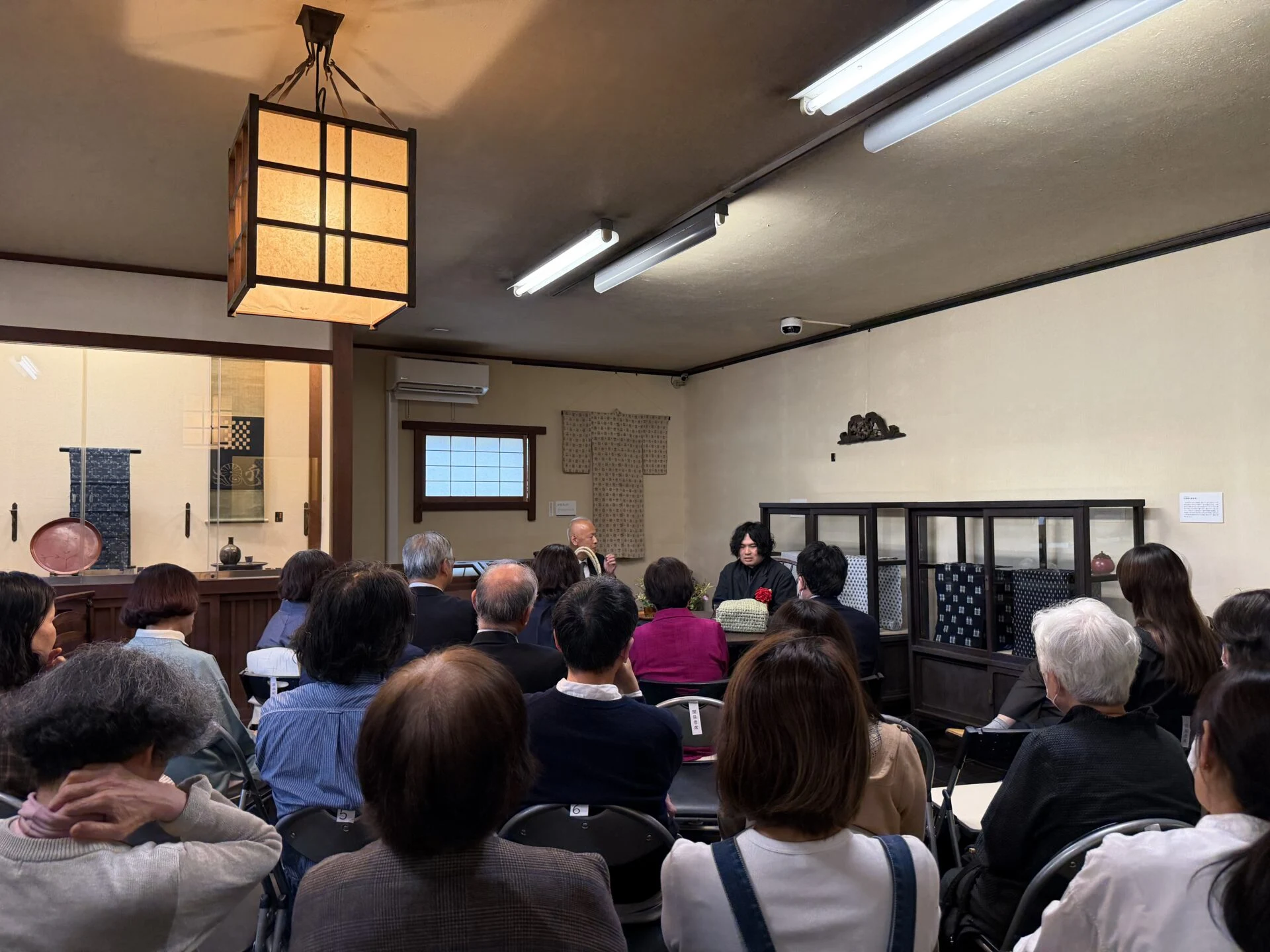
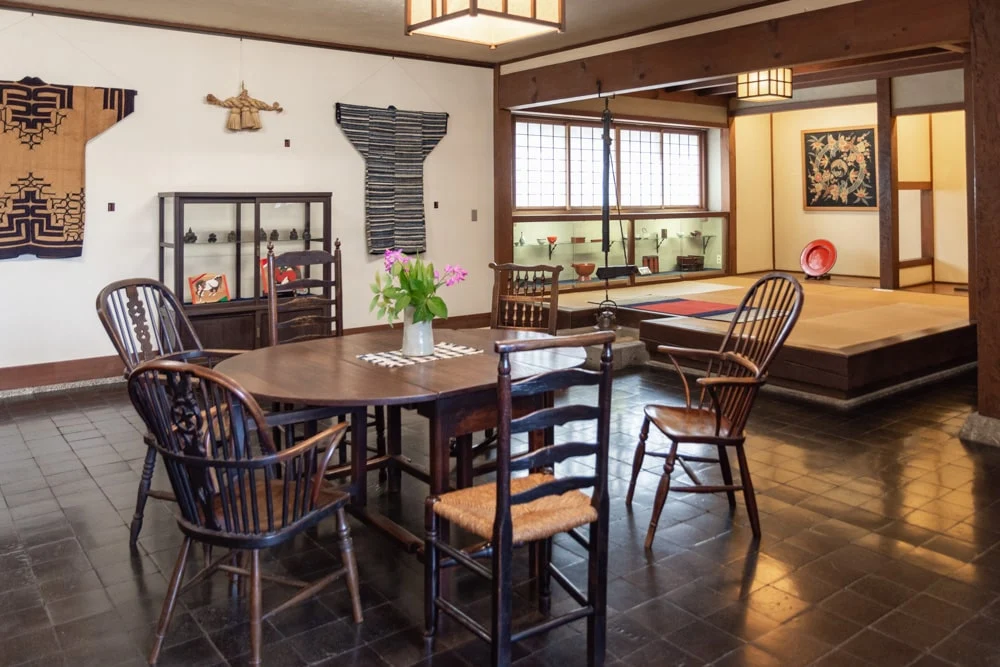
At the award presentation ceremony, all the selection committee members for the 16th Kurashiki Museum of Folkcraft Award gathered from across the country, along with about 40 people including Mr. Sunami's colleagues who make ikago with him, shop owners he collaborates with, and the mayor of Kurashiki City, gathered at the Irori no Ma of the Kurashiki Museum of Folkcraft.
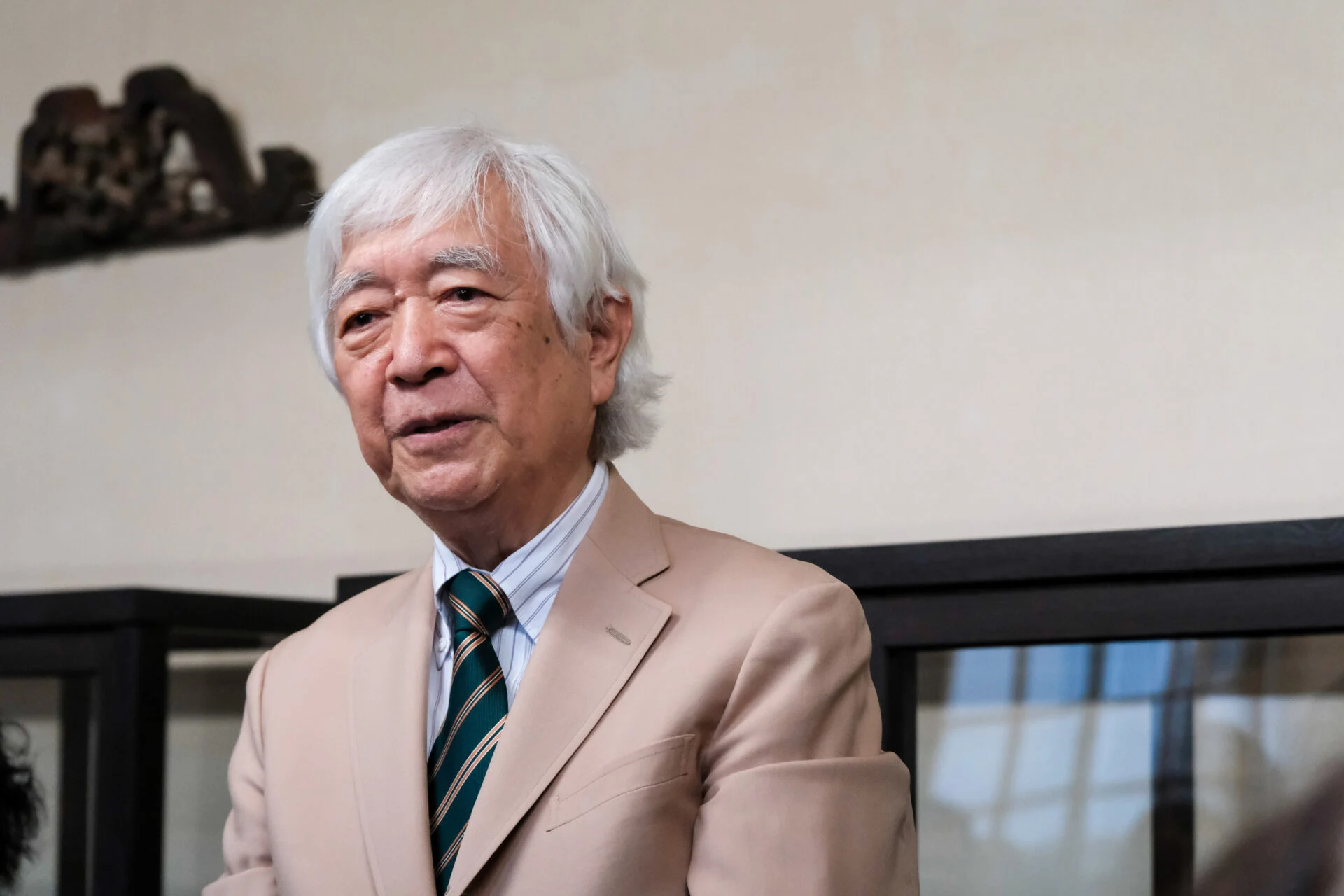
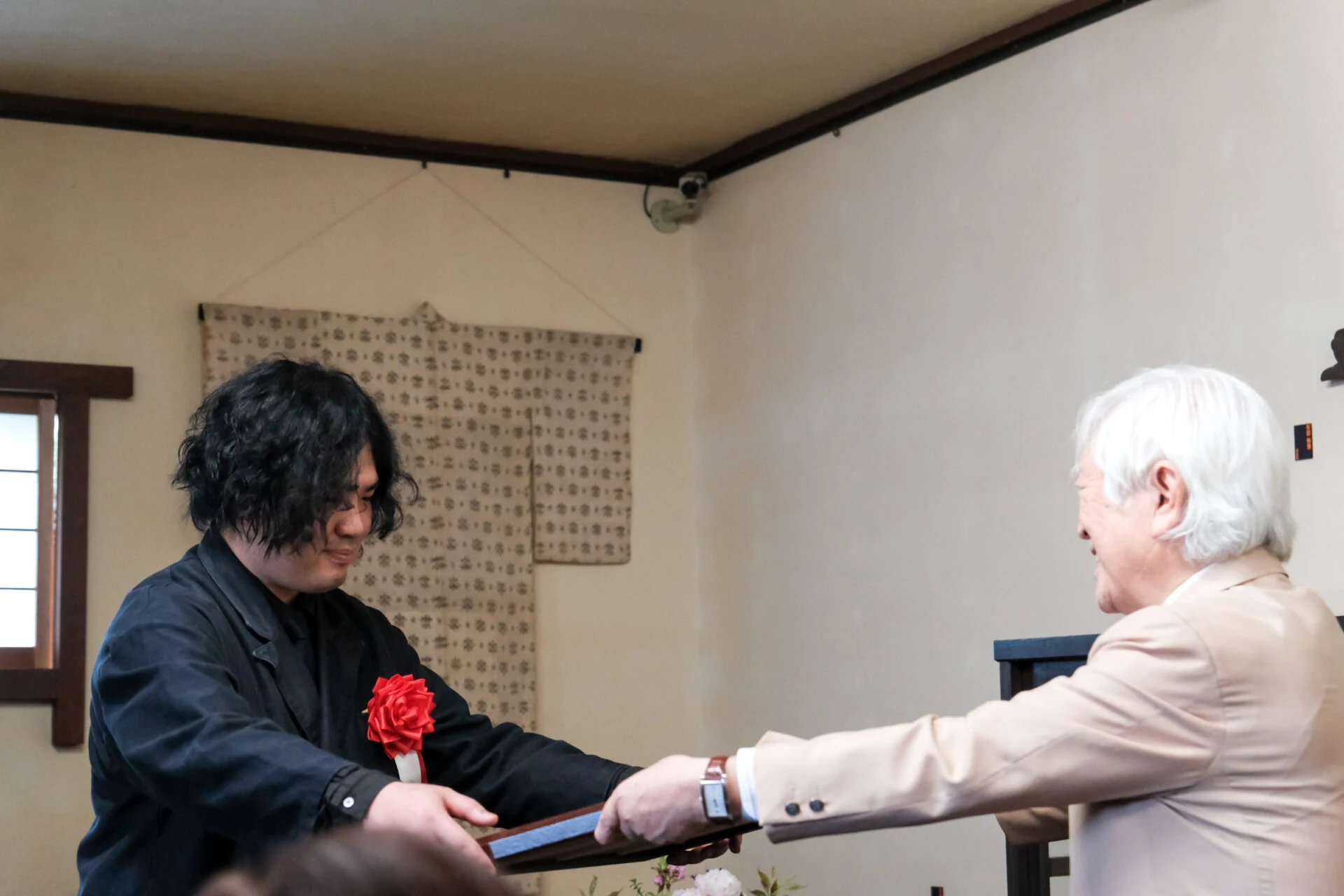
Kenichiro Ohara, the chairman of the Kurashiki Museum of Folkcraft, expressed his joy by stating, "The award to a local craftsman is proof that Kurashiki is recognized as a land of folkcraft," and presented Mr. Sunami with a certificate of commendation and a prize of 300,000 yen.
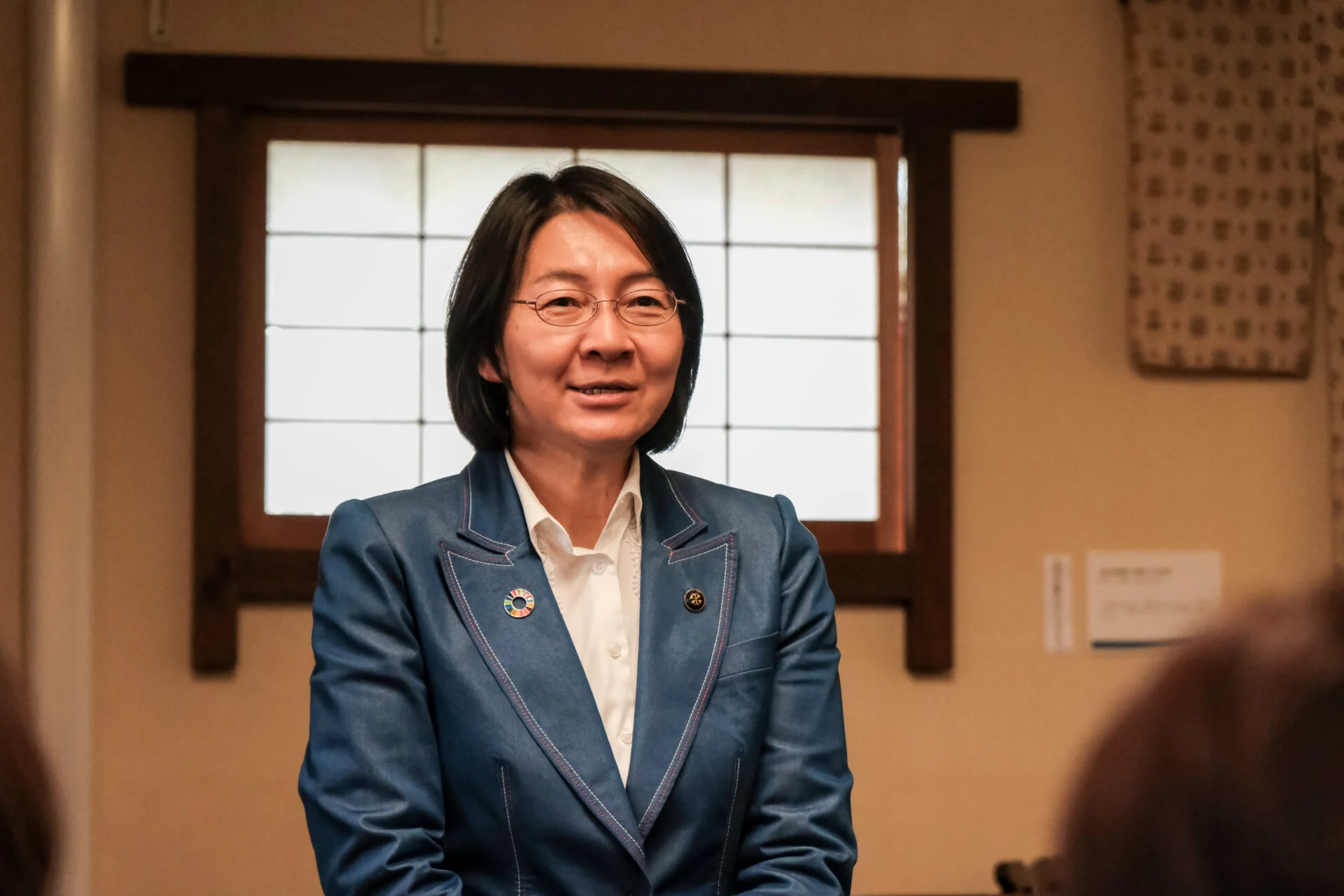
Mayor Kaori Ito expressed her gratitude to Mr. Sunami for his cooperation in promoting the city and mentioned that participants at the event praised the warmth and rich aroma of the ikago, stating, "I take pride in this award."
Each of the judges also expressed their expectations for Mr. Sunami's future, and the award ceremony was held in a friendly atmosphere.
In response to receiving the award, Mr. Sunami made the following comments.
Scenes from the commemorative talk for the 16th Kurashiki Museum of Folkcraft Award
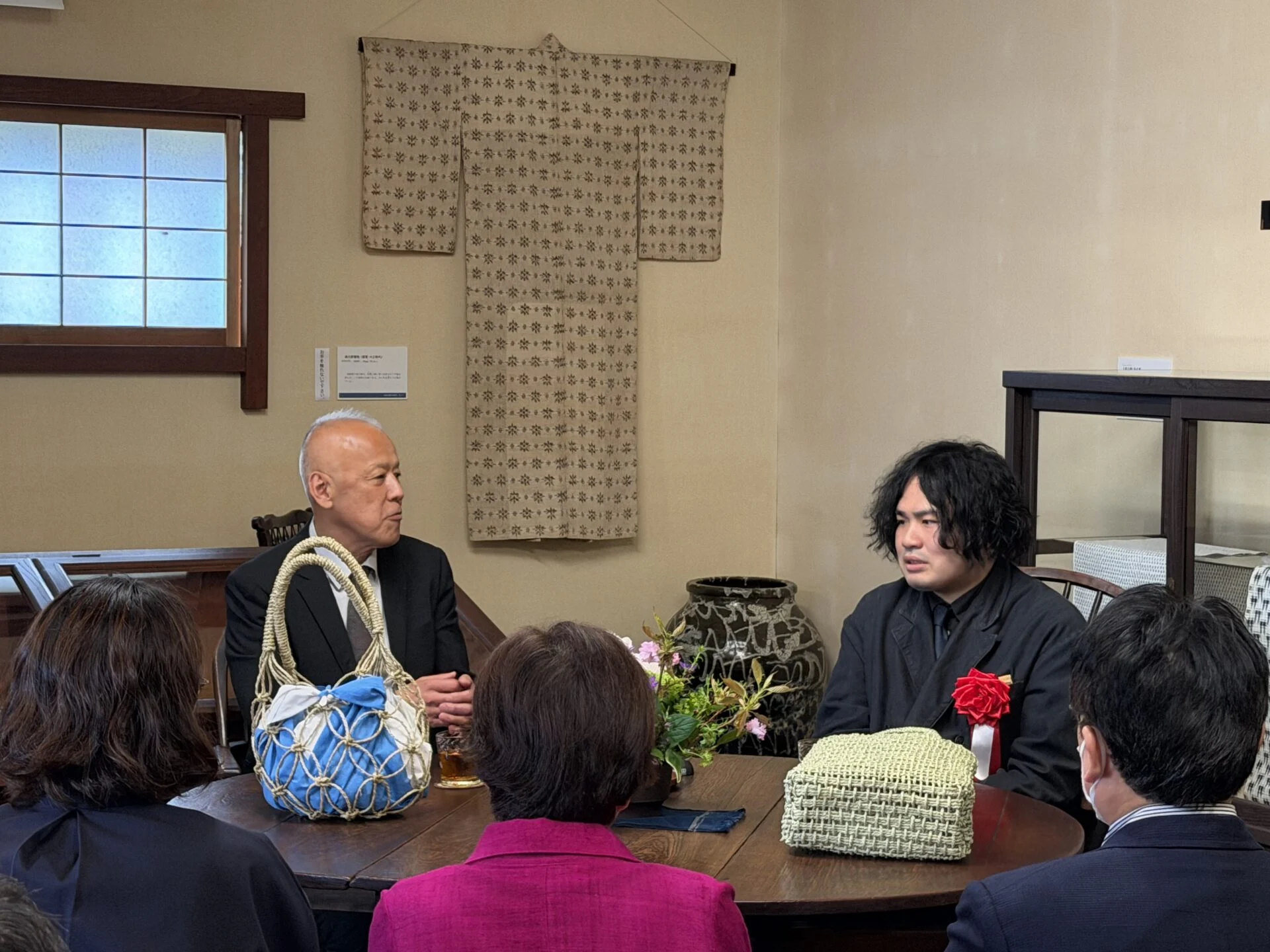
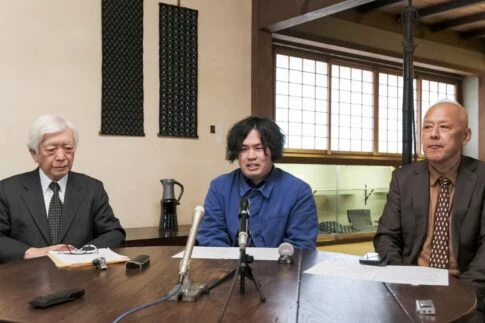
After the award ceremony, a commemorative talk was held for about an hour in the same venue, where Hideyuki Yanagisawa, the director of the Kurashiki Museum of Folkcraft, delved into Mr. Sunami's personality and his thoughts on folkcraft.
Mr. Sunami, who loves collecting, talks about his encounter with folkcraft
The first question from Mr. Yanagisawa was, "Mr. Sunami, you have a strong image of collecting sneakers. Do you enjoy collecting things?"
Mr. Sunami has loved collecting since he was a child and currently collects not only sneakers but also interior items, tools, baskets, and woven goods, displaying them in his workshop.
The trigger for this was his childhood fascination with Pokémon. While Pokémon has elements of battle, Mr. Sunami found it more interesting to complete the Pokédex. His personality, which enjoys collecting steadily at his own pace, has not changed since then.
Mr. Sunami first learned the term "folkcraft" around the age of 18 to 19.
It was when he visited the Japan Folkcraft Museum in Tokyo, prompted by an exhibition featuring items made by his grandmother, who was a rush grass craftsman.
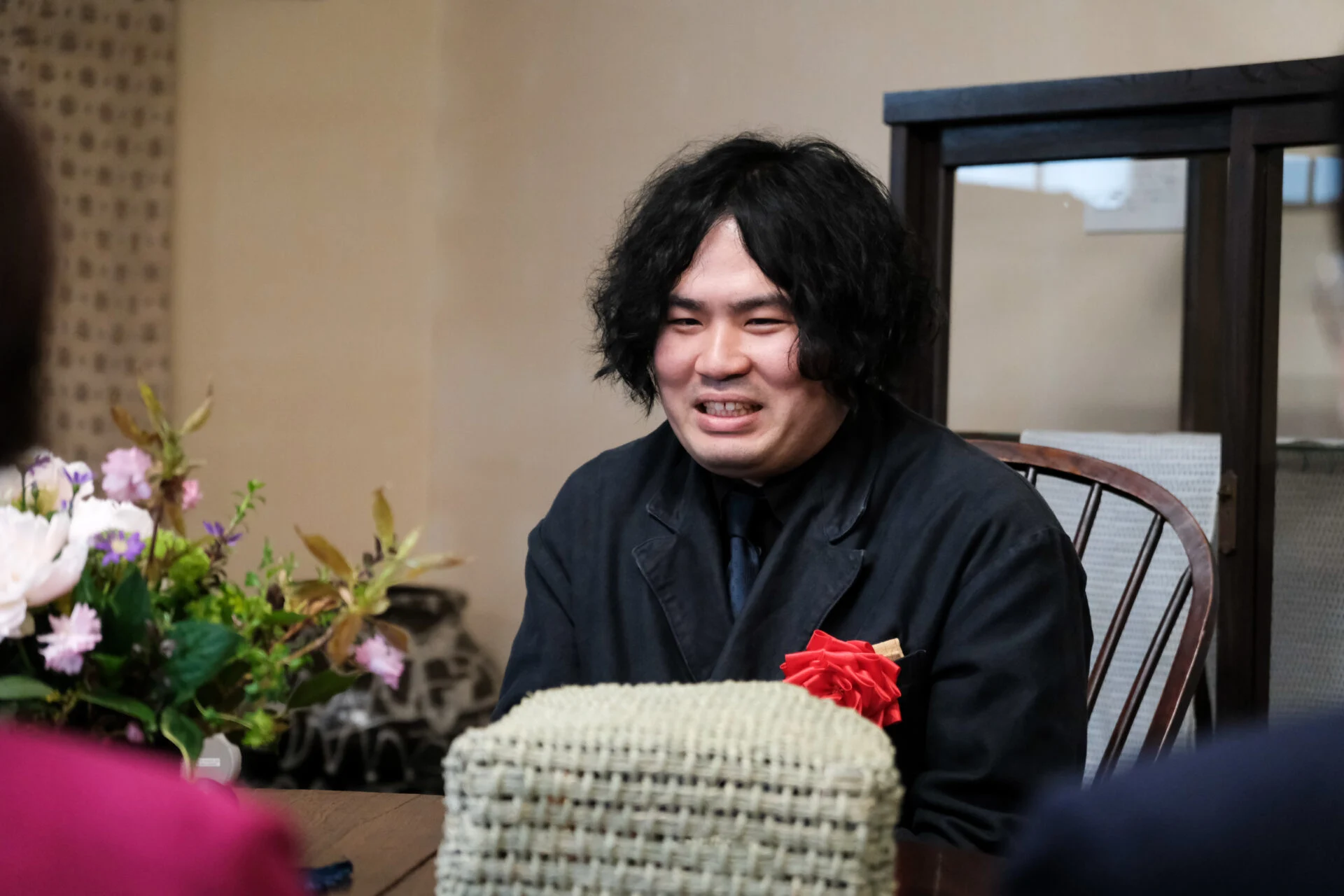
At that time, Mr. Sunami, who already had experience weaving and assembling ikago, focused on the raw materials of baskets from various production areas displayed at the exhibition.
Mr. Sunami's family has been making tatami mats for generations, so he was familiar with the term "folkcraft" from a young age, but it was the first time he had encountered its origins.
After that, at the age of 21, he began making ikago professionally and started visiting senior folkcraft artists in Kurashiki City who worked with ceramics. At that time, even when folkcraft items were handed to him and he was asked, "What do you think?" he couldn't answer anything.
Nevertheless, as a collector, Mr. Sunami continued to collect folkcraft items, and before he knew it, his workshop had become like a museum of his collection.
Mr. Sunami, the craftsman, talks about the current state and future prospects of rush grass weaving
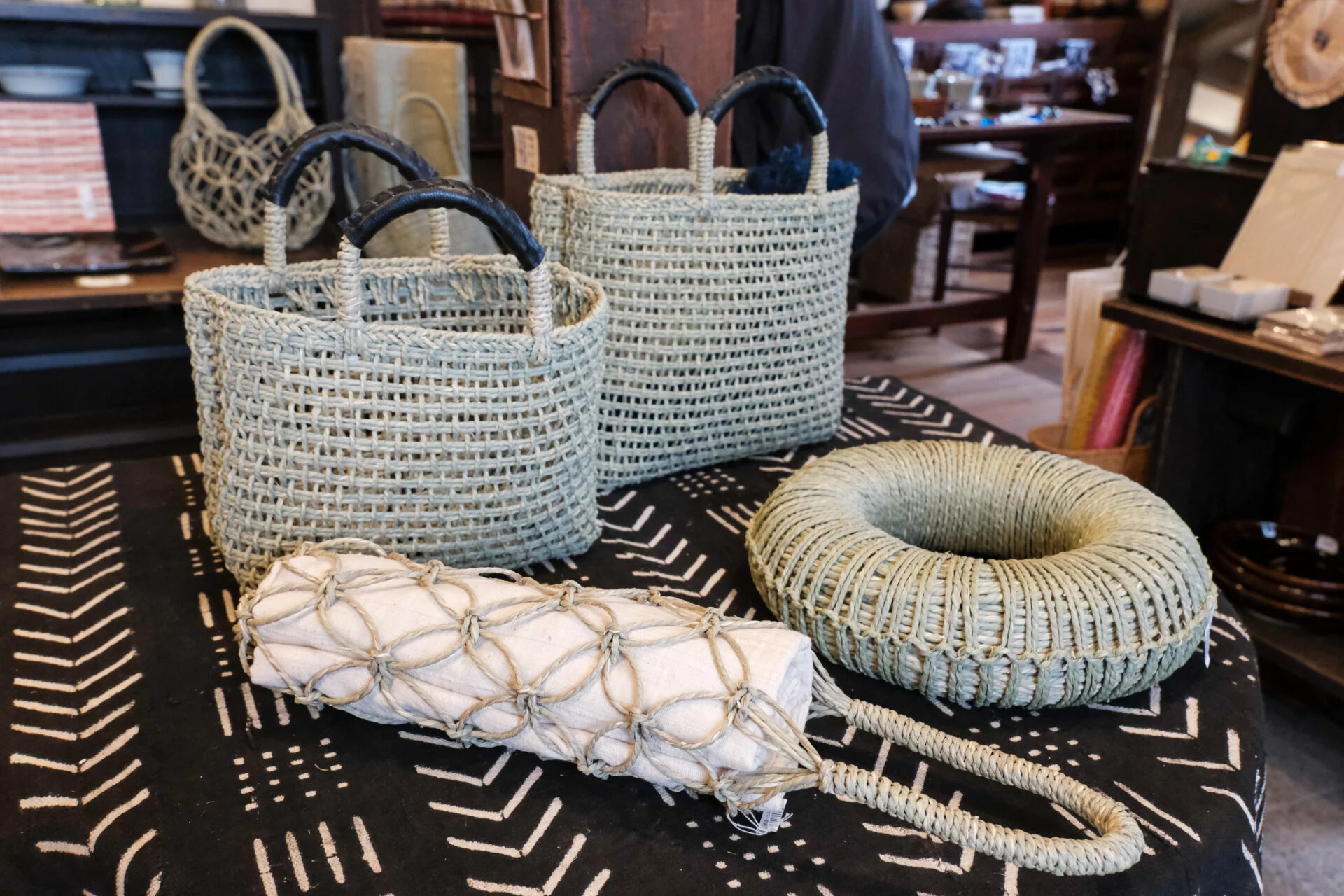
Next, the focus shifts to Mr. Sunami as a craftsman.
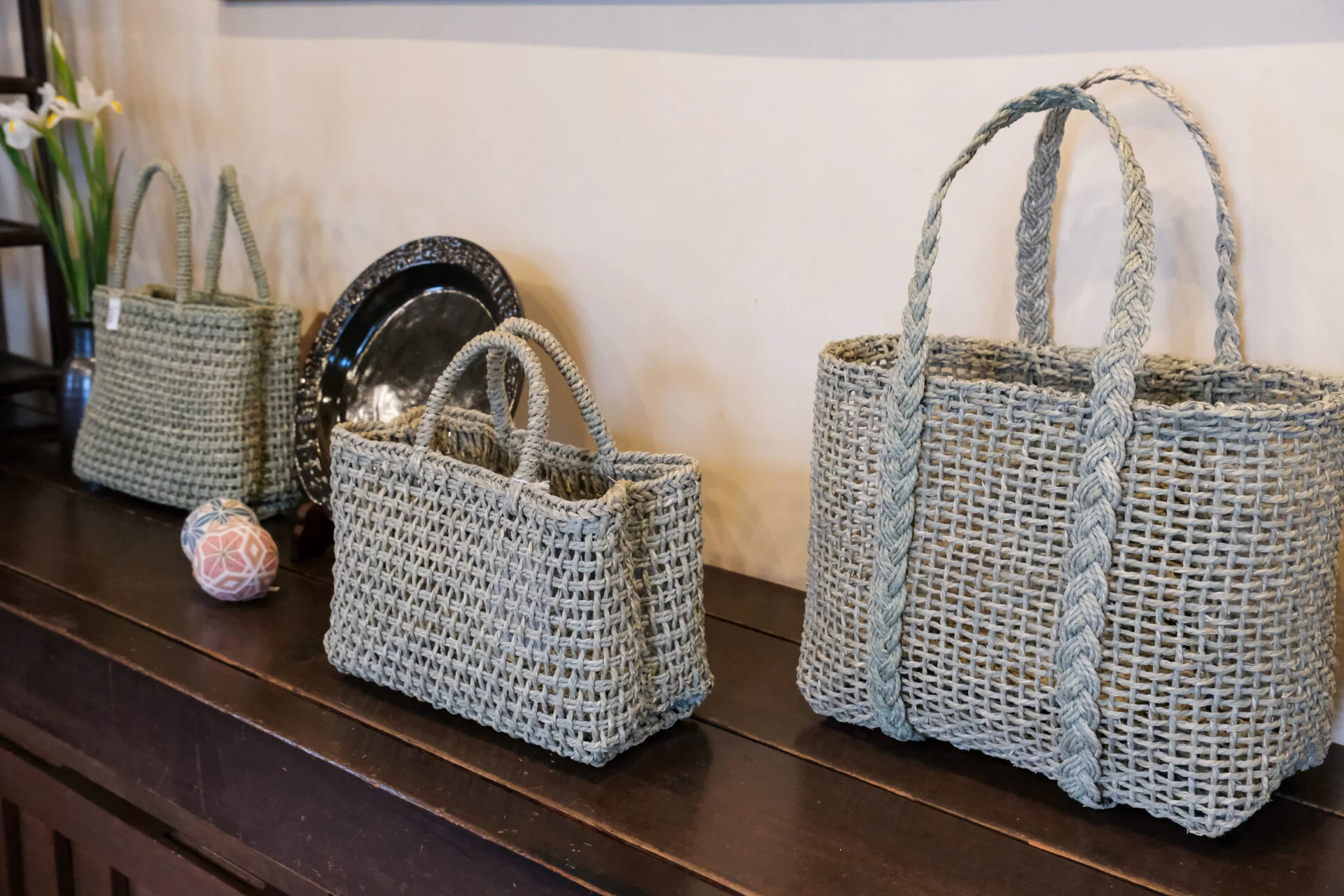
The ikago that Mr. Sunami makes continues to follow the weaving techniques of his grandmother while also adapting the shapes and detailed specifications to fit modern life. While the previous generation's ikago was mainly made for use in the black market after the war, he realized that various methods of production could be applied according to lifestyle, and he began to create a variety of ikago.
When creating new variations, the characteristics and durability of the materials serve as guidelines. While rush grass is not as strong as resin, he aims to pursue works that meet societal demands while utilizing the properties of rush grass, and he wishes to connect with society through rush grass weaving.
Sunami Toh Shoten uses rush grass from Yatsushiro City, Kumamoto Prefecture. In the past, rush grass was actively produced in Nishiachi and Chayamachi in Kurashiki City, but it is no longer produced there.
Additionally, since ikago uses short rush grass that is produced during the manufacturing of tatami mats, he cannot be selective about the materials. Furthermore, the production costs have been rising year by year.
That is why, whether he receives good quality materials (with good color, flexibility, and resilience) or not, he believes that it is the craftsman's skill to ensure that all finished products have a similar quality.
Currently, he is producing ikago with his wife Shiho and other colleagues, but in the future, he hopes to take on a producer-like role, continuing to create works that can contribute to the sustainability of the production area while entrusting specialized works to those who are skilled.
Mr. Sunami, who conveys folkcraft, talks about his thoughts on the Okayama Prefecture Folkcraft Association
While actively working as a rare ikago craftsman nationwide, Mr. Sunami is also dedicated to promoting the folkcraft movement as the vice president of the Okayama Prefecture Folkcraft Association, a permanent director of the Japan Folkcraft Association, and an editorial committee member for the magazine "Folkcraft."
Questions arose from Mr. Yanagisawa and the floor regarding the background of his activities not only as a craftsman but also as someone who conveys folkcraft.
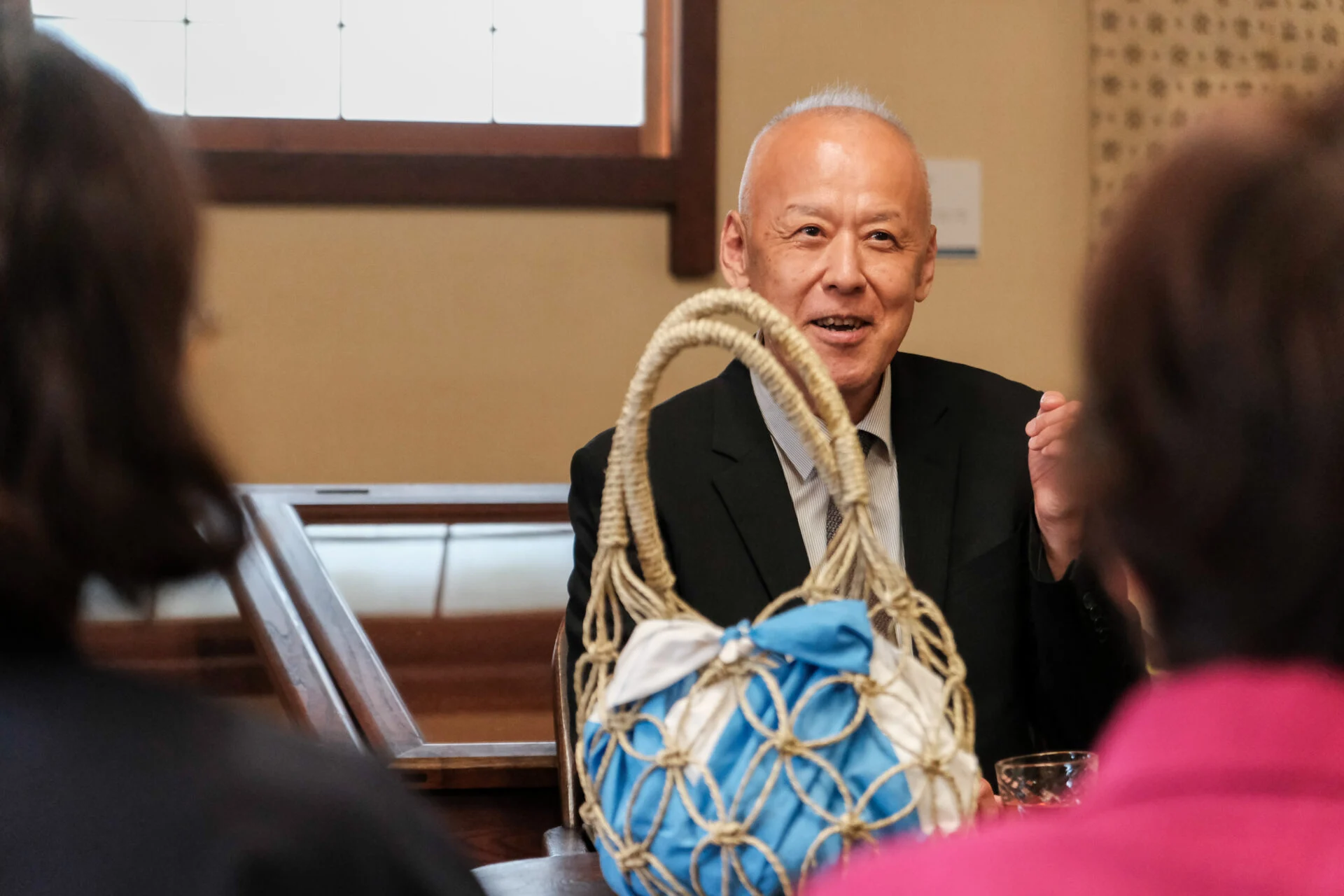
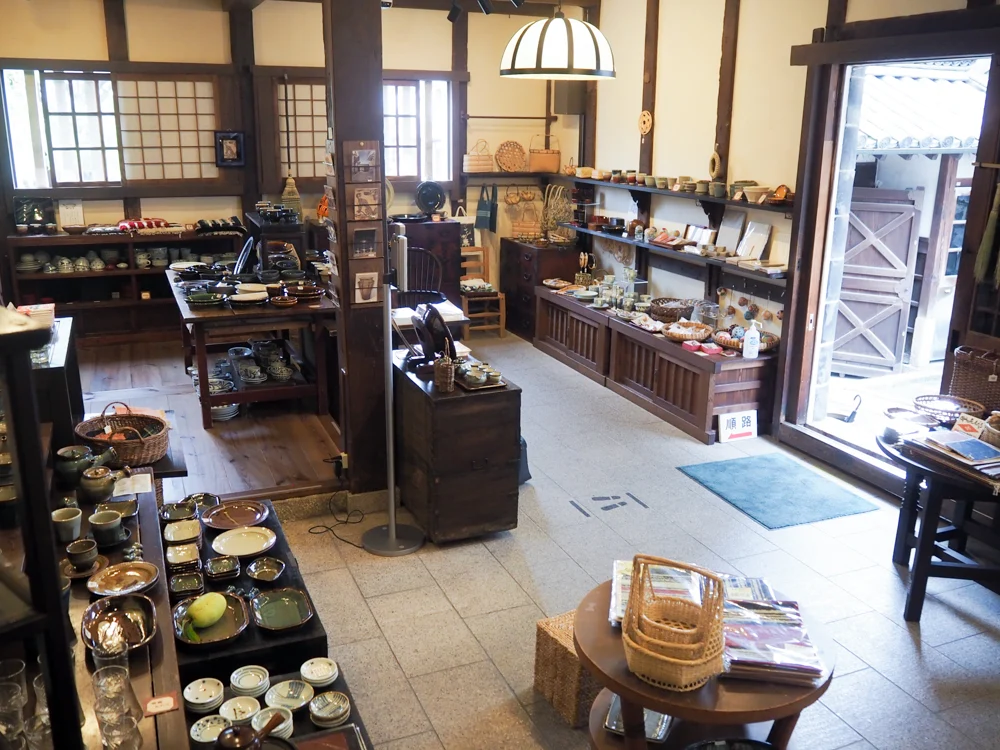
At the Kurashiki Museum of Folkcraft, which served as the venue for the award commemorative discussion, Sunami-san frequently visited and received numerous inspirations. When in doubt, returning to see the exhibits and straightening his back, and the desire to someday create works that can stand alongside those displayed at the Kurashiki Museum of Folkcraft has become the driving force behind his creations.
For this reason, he expressed his feeling that he wants to play a role in revitalizing the folkcraft industry while repaying the favor to the folkcraft association in Okayama Prefecture that nurtured him.
Conclusion
Born in 1993, Sunami-san is the same age as the author. I had thought that such an honorable award was still far in the future for my generation, so I was very curious about the background of Sunami-san's award.
What was impressive during the interviews was that everyone who held the microphone at the award ceremony and the commemorative discussion expressed messages of expectation for Sunami-san's "future."
The Kurashiki Museum of Folkcraft Award is not just a place to celebrate honor, but I felt it is a hope award that supports those in their 30s who will carry on the future of folkcraft, backed by many predecessors involved in folkcraft.
How will Sunami-san invigorate the historic folkcraft industry and handmade goods in Okayama Prefecture?
I can't take my eyes off the future developments.
Data on the Kurashiki Museum of Folkcraft Award Ceremony and Commemorative Discussion
| Name | Kurashiki Museum of Folkcraft Award Ceremony and Commemorative Discussion |
|---|---|
| Date | April 19, 2026 (Sunday) Ceremony: 2:00 PM〜 Commemorative Discussion: 3:00 PM〜 |
| Location | 1-4-11 Chuo, Kurashiki City, Okayama Prefecture |
| Website | Kurashiki Museum of Folkcraft |









As a craftsman, I still have a long way to go, so I am filled with the thought, "Is it really okay for me to receive this?"
When I first started making ikago as a profession, I had concerns like, "Will this be a job?" However, while being nurtured by the local community, I have continued to create with the desire to have others also think that what I believe is good is good.
Receiving such an award from the historically significant Kurashiki Museum of Folkcraft is thanks to the producers and the people around me who have worked with me. I want to continue to work on production and the folkcraft movement while keeping my gratitude in mind.