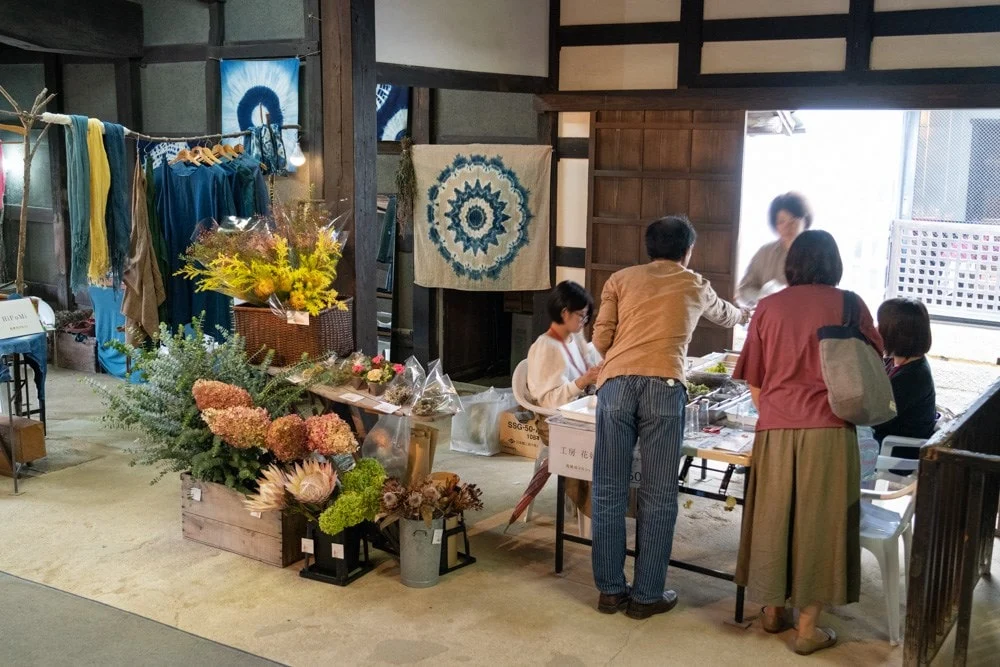
The market “Takahashi River Marché 2019,” bringing together healthy, organic food and goods for everyday life, was held on Saturday, October 19, and Sunday, October 20, 2019.
It brought together delicious, interesting, and beautiful things, and featured many workshops.
It was bustling with so many people that at times it was difficult to get through the aisles.
Here’s a look at Takahashi River Marché 2019.
The information presented was current when this article was published in October 2019. Please note that it may differ from current information.
About Takahashi River Marché

Takahashi River Marché is a market that brings together healthy, organic foods produced throughout the Takahashi River Basin, along with household goods, furniture, accessories, artworks, and other items that enrich everyday life.

In 2019, eight food vendors and 22 craft vendors took part, and works by artists were also exhibited.

The main venue for Takahashi River Marché is Ohashi House, a machiya-style building designated as an Important Cultural Property of Japan.
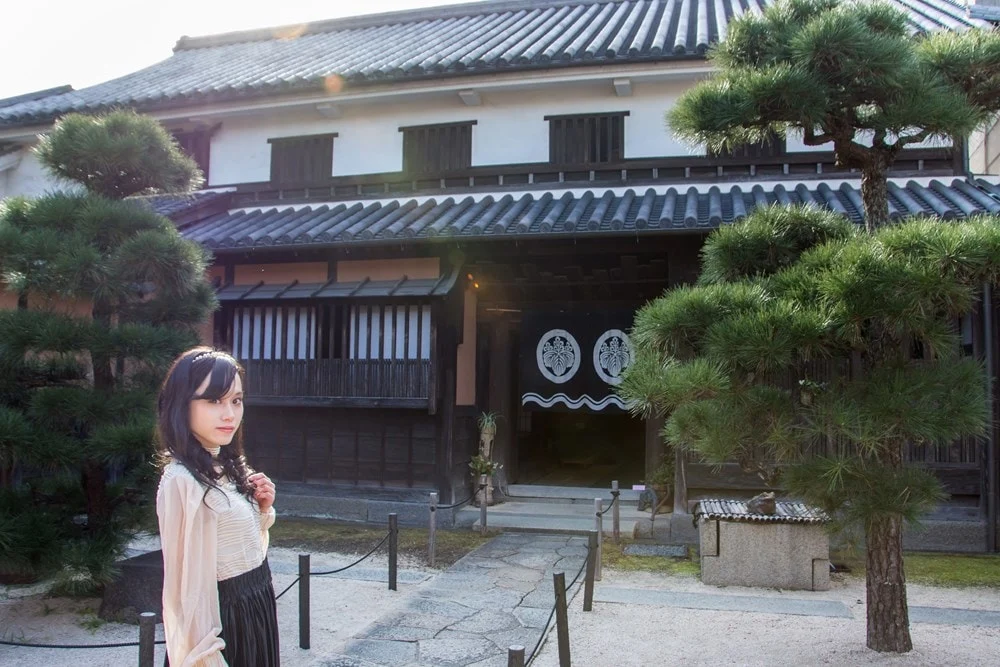
First, let’s take a look at the main venue.
Enjoy shopping for food and household goods at Ohashi House

Ohashi House hosted vendors selling organic food and household goods to enrich everyday life.
Many of the shops let you talk directly with the producers, so it’s nice to be able to ask about what makes their products special.
Here are some of the vendors that particularly caught the author’s eye.
Bean-to-bar chocolate from alfer

A specialty bean-to-bar chocolate shop, a rare find in Okayama.
Bean-to-bar means making chocolate from start to finish, beginning with selecting the cacao beans and ending with the chocolate bar.

At alfer, they say, “We want to make things by hand as much as possible,” and even peel the cacao beans by hand.
We were also able to sample cacao beans.
Their acidity and bitterness spread across the palate.
The chocolates made with beans from different regions were fruity or floral.
We were able to fully enjoy the distinctive character of each cacao bean.
Chopsticks and wooden goods from Hashitsukuriya & bolly Woodworking Studio

Hashitsukuriya is a chopstick workshop that uses Japanese lacquer suitable for dishwashers. They usually supply department stores and chopstick shops, so opportunities to buy directly from them are rare.
The author has long been looking for “simple, stylish chopsticks in a size for women.”
Custom-made chopsticks start at ¥8,500, but the author found a pair to their liking among the one-off items priced at just ¥1,000.

They also have cute household goods.
Knots in wood might be considered “defects” in manufactured products.
But the natural character of wood is an added value.
I found the knots endearing, too.
Sanada-himo cords from Sakamoto Orimono Co., Ltd.

Sanada-himo cords were used for paulownia-wood boxes and as sword ties.
There were straps, corsages, book covers, shoelaces, and other items made with Sanada-himo, which fascinated visitors from overseas.
Scraps of fabric are apparently a popular item that people often overlook.

Sweets from Kashikobo Komachi

Komachi’s booth was packed with tempting sweets, including cookies and cakes.
There were classic options as well as unusual ones, such as “cheesecake with six spices.”
There were so many varieties that people kept stopping to ponder their choices with delight.
Vessels and accessories from Akari Glass

These glasses made with polysilicate glass caught the eye with their gentle gradations.
Their delicate, beautiful shapes were lovely, too.
Flowers from Hanayoshi

Hanayoshi’s large flowers caught the eye.
Their workshop on making herbariums was a great success.
They made me dream of living in a room where flowers like these would look at home.
And many other wonderful things
There were many other wonderful things that I can’t cover here.


See the art of Mari Ujimine and Tae Take
In 2019, an installation (a technique for expressing a space as a single work of art) by two young artists with deep ties to Kurashiki was also held.

The theme was “Feeling the -wind- passing through Ohashi House, capturing the wavering -shadows-, and listening to the -sounds-.”
The explanation was as follows.
“Spinning Wheel”
A magnificent spinning wheel steeped in history, entrusted to us by the Uchida residence in the Achi-cho neighborhood.
Starting with this Takahashi River Marché, the “Achi-cho neighborhood” has also joined in.
We sense the bonds among the people of historic Achi-cho and the possibility of new encounters.“Sound”
We used bamboo entrusted to us by “Mabi Regional Support Team ~Takeakari~,” which has continued support activities, mainly in Mabi, since the torrential rain disaster.
We received bamboo from bamboo lanterns decorated using Mabi bamboo and reused it.
The metal parts combine impact-driver bits and other items that rusted after being used in support activities following the disaster.
With disasters continuing in various places, we have expressed our intentions and hopes through this work.From the explanatory text at the venue
From the explanatory text at the venue

We spoke with Mari Ujimine and Tae Take.

What kind of work is it?
Take
The themes are wind and sound.
We wanted to create a work that conveys a sense of time and space and makes the most of Ohashi House, the venue.
Ujimine
I struggled with how to express the path of the wind.
There is not only the wind passing through Ohashi House, but also wind created by people moving around.

What details did you pay special attention to?
Ujimine
I made the work monochrome so that it would match the atmosphere of Ohashi House, a traditional Japanese house, and Tae's work.
To help people feel the wind and light, I used paint containing pearl that glitters when it sways.

How was the first day?
Take
It was great to experience the energy and lively atmosphere of Takahashi River Marché together.

The stylish, light-looking objects swayed, creating a wonderful space.
Next, we’ll introduce the program that took visitors around the Achi-cho neighborhood and the streets of Kurashiki.
Walk around the Achi-cho neighborhood
In 2019, shops and private homes in Achi-cho also served as venues.

A garage sale was held at the former Kajimaya Shiraga Genjiro Shop.
There were Hagi ware and other ceramics, glass plates, candle holders, and more. People could be seen carefully browsing the items, hoping to find a hidden gem.

A workshop using fabric scraps and buttons was also held.

Old photographs of Achi-cho were displayed on the venue walls.
It’s easy to believe that this was once the busiest street in Kurashiki.
Works by Ujimine and Take were displayed in shops in Achi-cho.


A tea gathering was held at the Uchida Residence, and a kamishibai storytelling performance at Candle Fairy.

We enjoyed sencha and sweets at the Uchida Residence and took a breather.

Some places were decorated with folding screens and other items, filling the town with a welcoming atmosphere.

Kotaro Uchida, who also serves as chairman of the Achi 3-chome Urban Redevelopment Association, told us:
“This was my first time taking part, but when I asked, people in town were happy to help. It was great to feel the connections with people that have been built up over the years.”
Walk around town and get to know Kurashiki

I joined a town-walking workshop with university interns to learn about Kurashiki as we walked.

About the shops here today, the copper mines and geisha district that once existed, the features of JR Kurashiki Station, and the origin of the name Ebisu Shopping Street.
We also learned how features such as rubbish collection points and utility poles are designed to blend into the townscape.
As we walked and learned all sorts of things, even familiar scenery looked a little different.

Since the participants were young, there were also moments when explanations drew comparisons to manga popular with young people.
“I had no idea Ichibangai used to be a geisha district,” one participant said in surprise.
Experience the culture of the Takahashi River Basin

At Takahashi River Marché, you can look, eat, or make things.
This year, too, I learned about many people who produce and create fascinating things.

When you can see the face of the person who made something you bought, you feel “even more attached to it.”
I’m happy to have been able to shop for things that enrich everyday life.
What exciting things will I discover next year?
I’m already really looking forward to it.
Takahashi River Marché 2019 Information

| Name | Takahashi River Marché 2019 |
|---|---|
| Dates | October 19 (Sat) and 20 (Sun), 2019, 10:00 a.m.–5:00 p.m. |
| Location | 3-21-31 Achi, Kurashiki City, Okayama Prefecture |
| Admission (tax included) | Free admission |
| Website | Takahashi River Marché 2019 | Takahashigawa marche 2019 |

What would you like to know about Kurashiki?
Enter a word to search articles on this site