

People who need medical care and use wheelchairs, people with visual impairments who need guide assistance to walk in unfamiliar places, people with hearing impairments who cannot hear tour announcements…
People with disabilities also want to experience the joy and excitement of traveling.
In 2026, the sightseeing train “Kurashiki Himawari-go,” on which people with disabilities, medical and welfare professionals, and volunteers enjoy day trips together on a chartered train, ran from JR Kurashiki Station to Akashi City, Hyogo Prefecture. I joined the trip.
The information presented here was current when this article was published in July 2026. Please note that it may differ from current information.
What is the Kurashiki Himawari-go trip to Akashi?

Himawari-go is a chartered group train exclusively for people with disabilities that began in Tokyo in 1982.
At the time, trains and stations were not as widely accessible as they are today, and people with disabilities faced many difficulties when traveling by train.
Against this backdrop, the Himawari-go service began, led by people with disabilities, their families, volunteers, and labor unions, and spread throughout Japan. In Kurashiki City, the first Himawari-go train ran between Kurashiki Station and Hiroshima Station in 1985.
Passengers on the Kurashiki Himawari-go are mainly people with disabilities who live, work, or study in Kurashiki City and their families, as well as volunteers who support the purpose of the trip, regardless of where they live. Since the service began, it has been based on the idea that “everyone taking part is a member of an inclusive society,” regardless of whether they have a disability. Both people with disabilities and volunteers pay the same participation fee.

In 2026, a total of 239 people rode the train, including 54 people with disabilities, 12 family members, 99 volunteer assistants, and other medical staff.
In 2025, the Kurashiki Himawari-go traveled to Onomichi City, Hiroshima Prefecture. For its 39th run this year, the destination was Akashi City, Hyogo Prefecture.

The day’s events

On the day of the Kurashiki Himawari-go trip to Akashi, rain had been forecast for several days, but the weather turned sunny, with temperatures rising to nearly 30°C.
For people with disabilities, Himawari-go is a major annual event.
Depending on the severity of their disabilities, some participants need medical care, while others have difficulty getting around in electric wheelchairs. For some, Himawari-go is their only opportunity to travel.

The day’s itinerary was as follows.
Departing from JR Kurashiki Station amid a grand send-off

Every year, the Kurashiki Himawari-go holds a departure ceremony at Ikoi Plaza on the second floor of the north exit of Kurashiki Station, featuring performances by the Kurashiki City Fire Department Band, the oldest of its kind in Okayama Prefecture.


After registering and receiving an original badge, carefully sewn stitch by stitch by staff at a welfare facility, participants watch the departure ceremony in groups, each consisting of one person with a disability and two or three volunteer assistants.

The Kurashiki mayor and the JR Kurashiki Station manager also came to celebrate the trip. The mayor went down to the platform to see the group off, while the deputy station manager accompanied them on the trip and helped ensure safe operations.


Traveling back and forth between Akashi and Kurashiki in full view of many people


When the ceremony ends, everyone makes their way to the platform at their own pace.
Until 2025, the train used a JNR-era model, but this year it was replaced with the new Urara. The gap between the platform and the train is now smaller, making boarding safer for wheelchair users and participants with difficulty walking.


The train also has a spacious, accessible restroom, making it easier for people who need assistance to use the restroom onboard. However, since only some cars have restrooms, the organizing committee will install portable toilets in the cars without them, as it does every year.


Those who can transfer from their wheelchair to the train sit in regular seats, while those who board in a stroller or wheelchair use the long seats, where it is easier to talk with their caregivers. They set off in a travel style suited to their needs.


Although it is a chartered train, it is a local service, so the journey from JR Kurashiki Station to Akashi Station takes about two and a half hours. However, many participants are looking forward not only to sightseeing but also to the “journey itself,” including the train ride, so lively voices ring out throughout the trip.
There is plenty to look forward to onboard, with activities such as singing and ventriloquism. A rock-paper-scissors game was also held, with prizes including Akashiyaki and octopus crackers redeemable at Uonotana Shopping Street in front of Akashi Station. The game grew heated as participants competed to make the most of their sightseeing.


When the train stopped several times along the way to adjust the intervals between trains, “Himawari-go” appeared on the electronic signs at the stations, drawing attention at each stop.
It was also a rare opportunity for Urara, which currently operates only west of Himeji Station, to travel as far as Akashi Station. On the platform, participants crossed paths with members of the public who had come to take photos.

Comments such as “I wonder what that train is?” and “There are so many wheelchair users on the Himawari-go!” may have prompted people who saw it to take notice, and helped more people learn that people with disabilities can enjoy traveling too.

“Since we’ve come all the way to Akashi!” Make the most of the time exploring

Since boarding and alighting the train takes time, there were about two and a half hours to explore Akashi, including time for lunch.
The organizing committee had planned a leisurely itinerary: eat lunch, then browse for food and souvenirs at Uonotana Shopping Street in front of Akashi Station.
But the committee waited and waited at Uonotana Shopping Street, and the participants still did not show up. It turned out that many of them had taken a stroll around Hyogo Prefectural Akashi Park and then continued on to Akashi City Museum of Culture, which lies up a hill beyond the park.


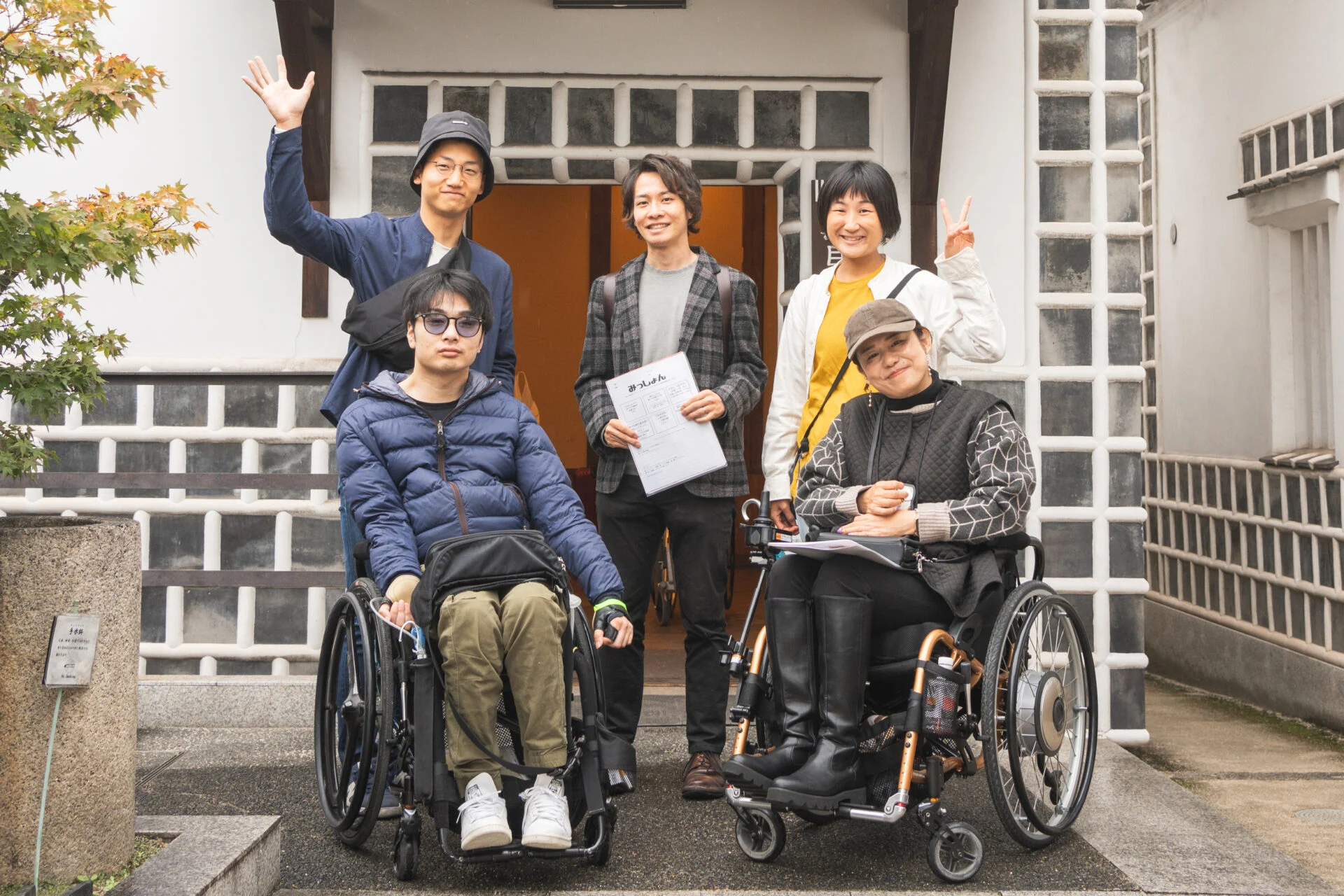
A wheelchair user we met at Akashi City Museum of Culture told us, “Since we’ve come all the way to Akashi, we want to visit lots of places.” The museum was air-conditioned, and after taking a short break at the top of the hill, they took their time looking around the exhibits.

A participant with a visual impairment also told us, “Because I’m with someone who guides me, it’s fun to walk around a town I’m visiting for the first time. Akashi has well-maintained tactile paving, which makes it even easier to get around.”

People who tend to give up on traveling because getting around is difficult still want to enjoy trips just like everyone else. Kurashiki Himawari-go is supported by a variety of volunteers, including:
- Assistance volunteers
Spend the day enjoying the trip alongside wheelchair users and people with visual impairments - Setup volunteers
Set up temporary toilets, beds, diaper-changing stations, and other facilities on the train. Participation is required from early morning until the end - Recreation volunteers
Create a fun, relaxed atmosphere through recreational activities they excel at, such as singing, ventriloquism, puppet shows, and kamishibai (picture-story shows) - Documentation volunteers
Photograph the day’s events and compile them into a record book afterward
A medical team also accompanies the trip, including doctors and nurses, so people can participate with peace of mind even if they have chronic conditions or difficulty getting around.

After visiting Hyogo Prefectural Akashi Park and Akashi City Museum of Culture, participants passed through Uonotana Shopping Street at around 2 p.m. They exchanged prizes won during onboard activities for Akashiyaki and tako senbei, bought souvenirs, and returned to JR Akashi Station.

A day filled with smiles from those lending their support
Kurashiki Himawari-go carries not only people with disabilities, but also many of the people who support the trip, including volunteers and the medical team.
Last year (2025), rain on the Saturday before the trip meant that Kurashiki City elementary schools’ sports days were postponed, so fewer elementary school volunteers took part. This year, however, many elementary school volunteers joined the trip.

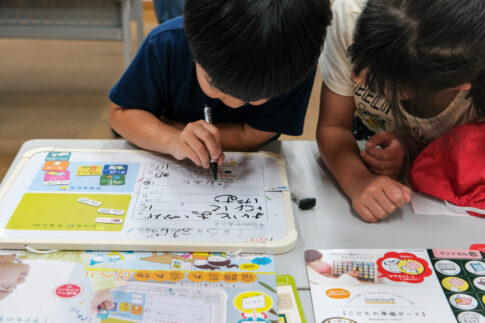
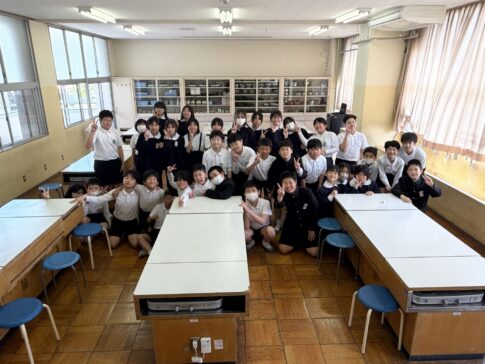
Elementary school volunteers are paired with a parent and assigned to a group with participants with disabilities. They seemed nervous at first, but gradually relaxed as they arrived in Akashi, taking charge of breaking a kusudama to celebrate the train’s departure and joining other participants in recreational activities.
After arriving in Akashi, the elementary school volunteers were a great help, pushing wheelchairs and helping people buy souvenirs while their parents watched over them.

When everyone returned to Kurashiki Station and parted ways, both the participants with disabilities and the elementary school volunteers seemed reluctant to say goodbye.
There were also groups participating through their high schools and universities. Several students from Okayama Prefectural Kurashiki Washu Senior High School in Kurashiki City took part. They helped not only as assistance volunteers but also with onboard recreational activities.

People with disabilities often have a limited circle of people they interact with in their daily lives, such as family members, staff at their day-service facilities, and hospital staff. Meanwhile, although children may see people with disabilities in their everyday lives, they rarely have the opportunity to communicate closely with them.
For both people with disabilities and the children participating as volunteers, it was surely a day that offered an opportunity to experience an inclusive society.

From the Writer
The families who saw them off at Kurashiki Station come back to meet them there when they return.
When volunteers tried to explain the day’s events in detail to the families, many replied, “I can tell just by looking at their faces that they had a good time. Thank you.” Many families headed home with smiles just as broad as those of their family members with disabilities.


The volunteers who watched them leave also headed home, saying, “That was fun,” with a sense of accomplishment on their faces.
Until around 2000, Himawari-go trains ran throughout Japan, but Kurashiki is now the only place still operating one using a chartered train. Kurashiki Himawari-go is not only a chance for people to “try traveling by train with people with disabilities,” but also a place where people belong for those who take part every year, regardless of whether they have a disability.
It is an initiative we hope will continue into the future.
Kurashiki Himawari-go Akashi Trip Information
| Name | Kurashiki Himawari-go Akashi Trip |
|---|---|
| Date | May 24, 2026 (Sunday) 7:50 a.m.–6:00 p.m. |
| Location | Departs from JR Kurashiki Station |
| Participation fee (tax included) | 4,000 yen |
| Website | Kurashiki Himawari-go Organizing Committee |




What would you like to know about Kurashiki?
Enter a search term to find articles on this site


































Lunch at Hyogo Prefectural Akashi Park or the Akashi Chamber of Commerce and Industry
Explore the area around Akashi Station (Akashi City Museum of Culture, Uonotana Shopping Street, etc.)