Things that may go unnoticed when walking can actually be inconvenient places when trying to move in a wheelchair.
Perhaps the lively scenes of tourist spots are not enjoyed by everyone.
On November 12, 2023, an event called Kurashiki Wheelchair Town Walk was held in the Bikan Historical Area to gather tourism information from the perspective of wheelchair users.
By visiting tourist facilities and restaurants in the Bikan Historical Area together with wheelchair users and able-bodied individuals, participants learn through real experiences the support needed for wheelchair users.
To realize a society where everyone can be happy, let’s think together about what we can do regarding barrier-free access.
What is Kurashiki Wheelchair Town Walk?
What kind of information is necessary for wheelchair users to enjoy sightseeing without hesitation?
Let’s reconsider tourism from diverse perspectives.
Overview of Kurashiki Wheelchair Town Walk
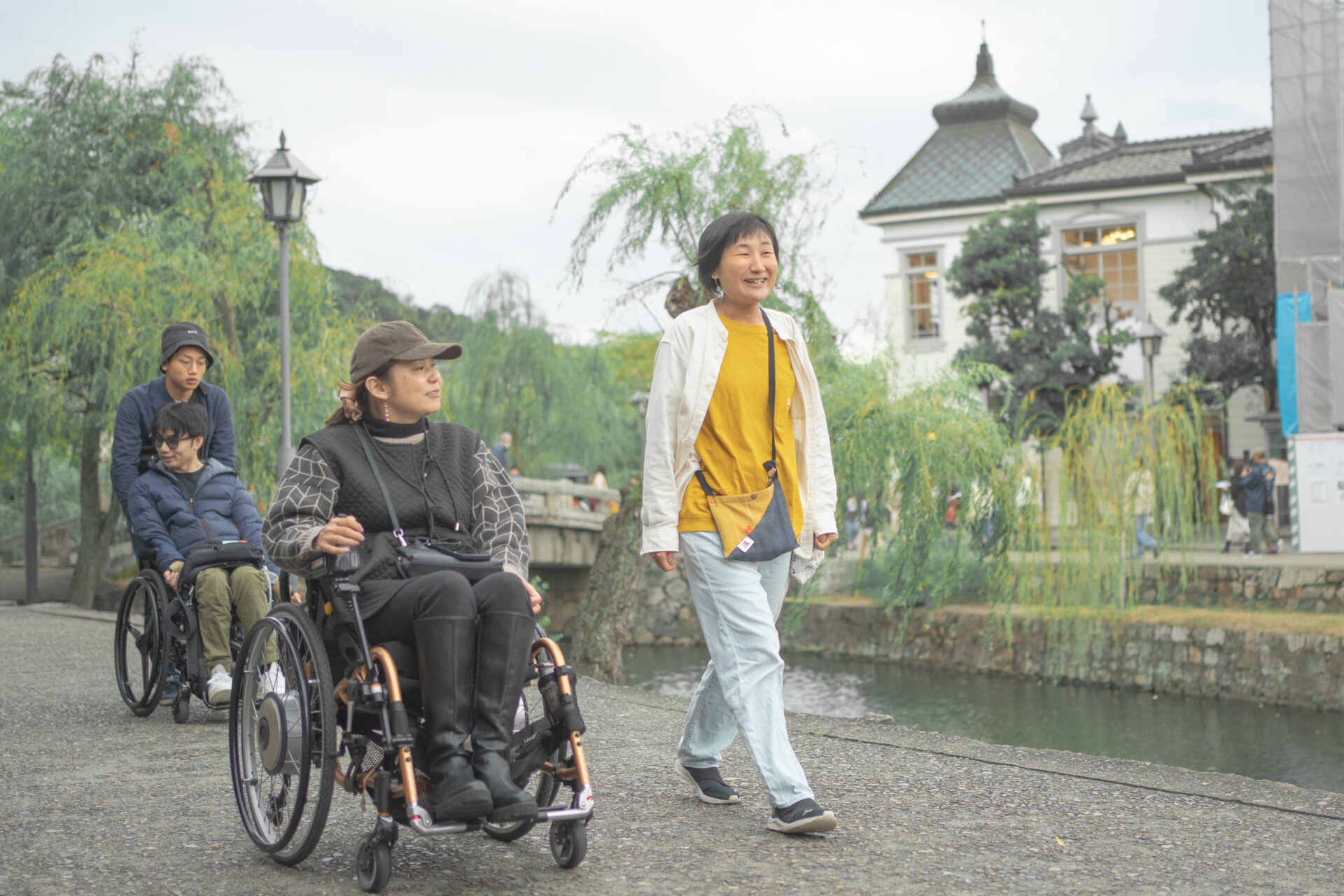
On November 12, 2023, an event called Kurashiki Wheelchair Town Walk was held, where wheelchair users toured tourist facilities in the Kurashiki Bikan Historical Area together with able-bodied individuals.
Participants not only walked around the town but also checked the barrier-free environments of tourist facilities and restaurants. The information gathered will be used to create a tourism map that includes barrier-free information so that wheelchair users can enjoy the Bikan Historical Area.
While physical barrier-free environments such as "there is a ramp to bypass steps" and "there are pathways wide enough for wheelchairs" are important, it is not the only focus.
Even in environments that are inconvenient for wheelchair users, with the help of staff at restaurants and tourist facilities, they can enjoy meals.
Sharing information about barrier-free access created by consideration is also a goal of the Kurashiki Wheelchair Town Walk.
Organizer Miho Moriue
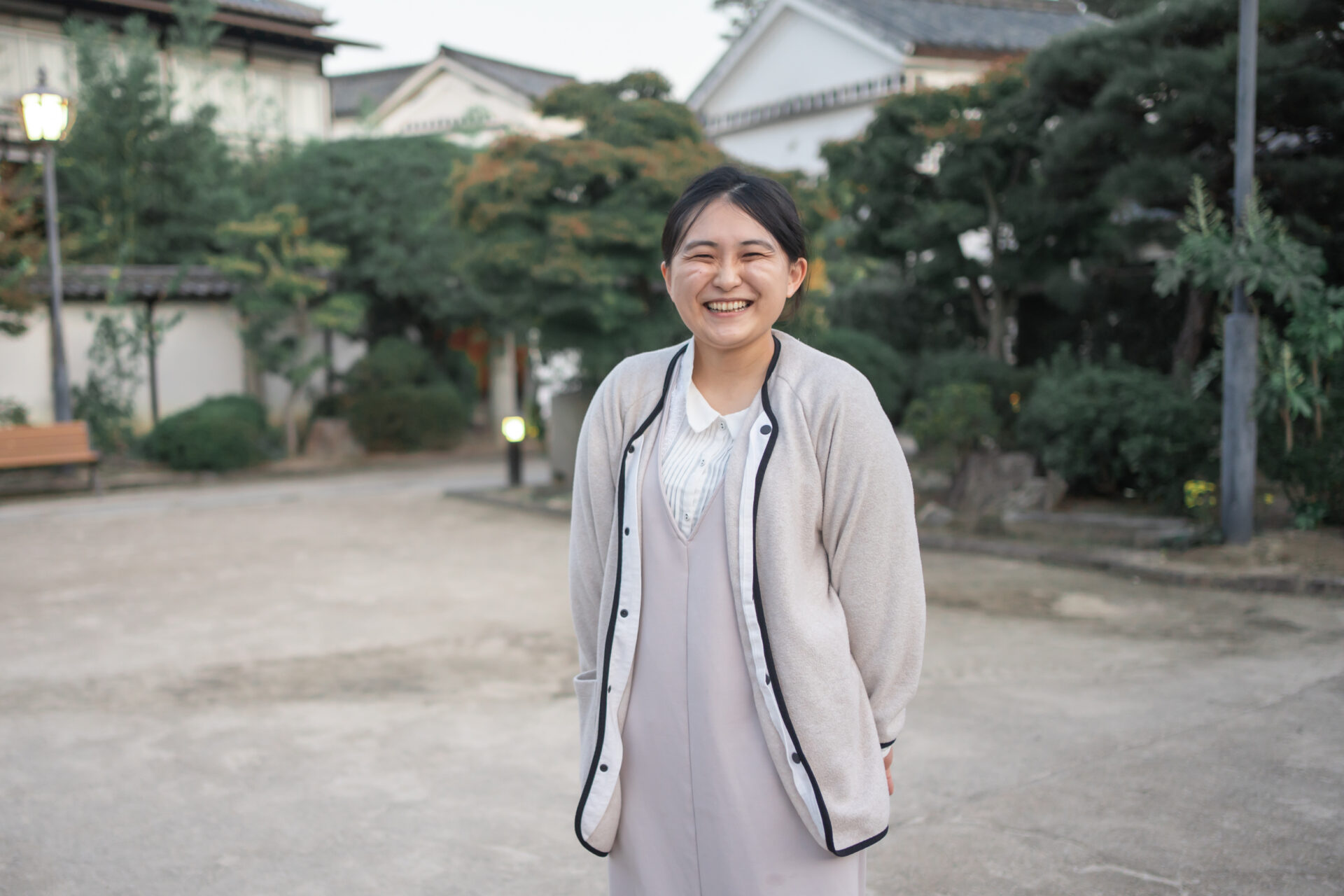
The organizer, Miho Moriue, spent her childhood with her grandmother, who was a wheelchair user. Due to her limited mobility, she often felt negative emotions and witnessed her grandmother struggling with life in a wheelchair.
As a working adult, she worked at a general hospital for five years. After that, she has been working as a physical therapist at a nursing care facility.
Through her work, she has had more opportunities to interact with wheelchair users and began to think about the nature of barrier-free access.
The catalyst for Moriue to start the town walk event with wheelchair users was her encounter with Tatsuya Miyoi, who achieved a world tour in a wheelchair.
Cities and tourist spots around the world are not always places that wheelchair users can easily visit.
Miyoi's words, which were fulfilled by the hospitality and consideration of the people he met during his travels, made Moriue realize that simply preparing the environment is not enough to achieve barrier-free access.
Therefore, to allow wheelchair users to freely enjoy sightseeing, she began to disseminate barrier-free information about tourist facilities and restaurants mainly in Okayama Prefecture.
While valuing not only information about facilities but also the kindness of staff that creates barrier-free access, she is sharing information aimed at wheelchair users.
Challenges when sightseeing
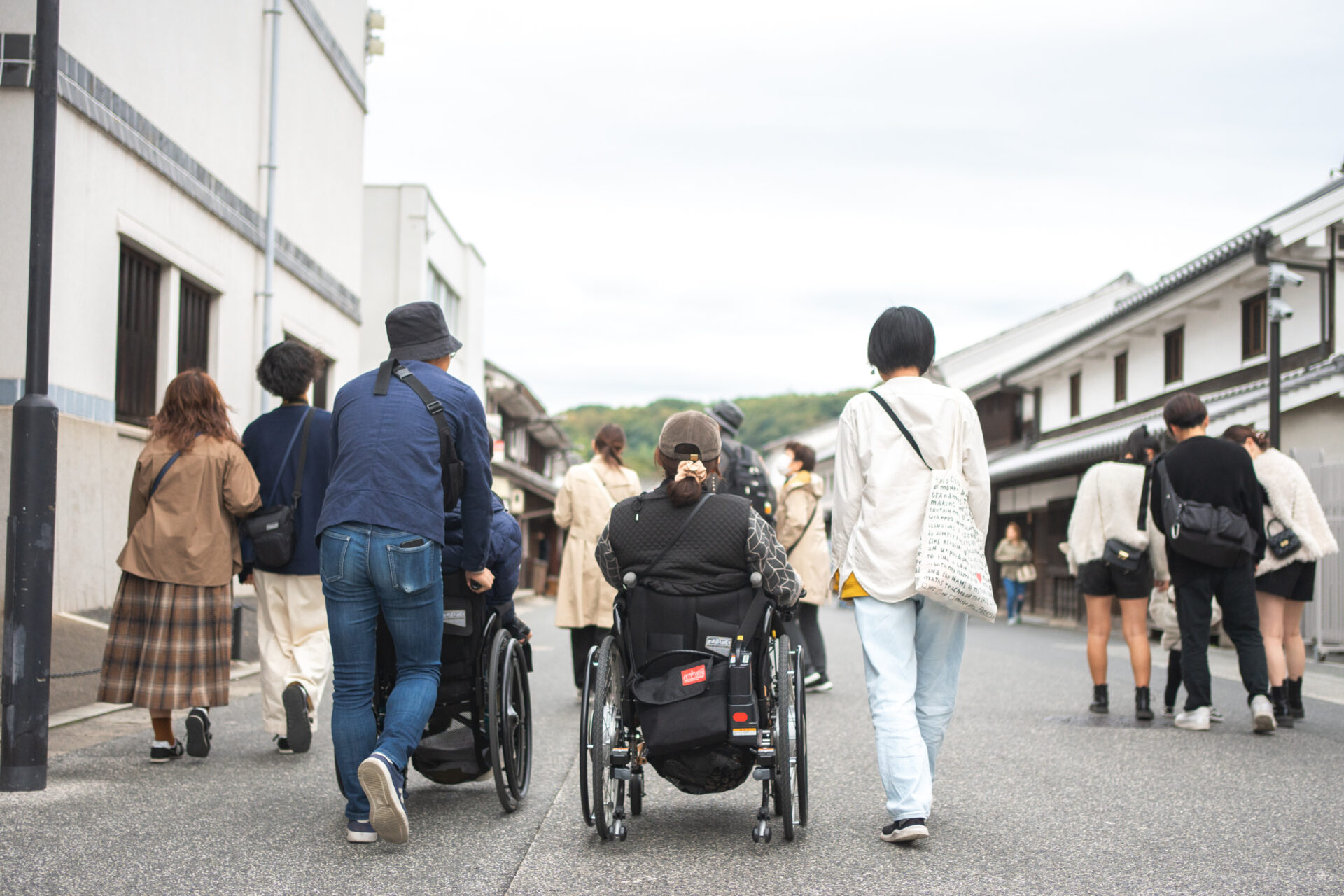
While there is an abundance of information about tourist facilities and restaurants on the internet, there is a lack of information regarding barrier-free access for wheelchair users to visit without hesitation.
It is not enough to just display the term barrier-free; specific information to confirm whether wheelchair users can move freely, such as the presence of steps and the width of ramps, is required.
Moreover, not only the physical barrier-free environment but also the consideration of staff at tourist facilities and restaurants that creates barrier-free access is important information for wheelchair users.
Even if there are steps inside a building, if there are staff who actively offer to help, wheelchair users can enjoy their visit.
Specific information regarding barrier-free access is not included in the information shared by stores on the internet, creating a challenge for wheelchair users to determine whether they can visit.
Wheelchair Town Walk in the Bikan Historical Area
What kind of inconveniences might wheelchair users encounter when heading to the Bikan Historical Area?
Let’s reconsider the Bikan Historical Area from a barrier-free perspective.
What is today’s objective?
▼ First, organizer Moriue explained the content of the event.
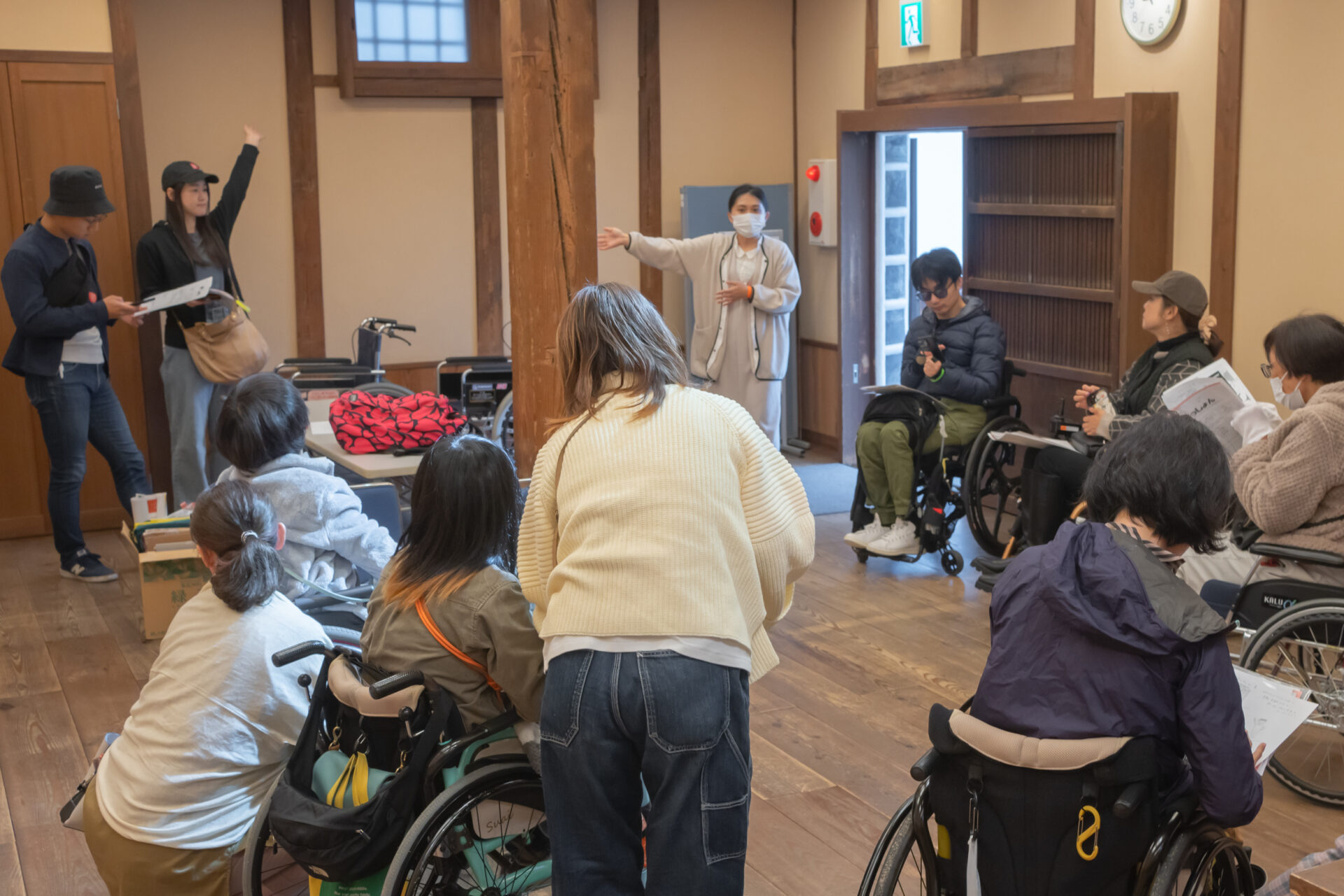
The objective is to collect barrier-free information while touring tourist facilities and restaurants in the Bikan Historical Area by wheelchair. Importantly, it is not only about gathering information on physical barrier-free access but also information on barrier-free access achieved through staff assistance.
While collecting information during sightseeing, participants are divided into three teams and compete for the total points awarded for completing missions.
| Mission | Points (pt) |
|---|---|
| Experience the WheeLog! app's travel log function | 50pt |
| Able-bodied individuals experience using a wheelchair | 100pt |
| Enter a store | 50pt |
| Have a tourist take a group photo | 50pt |
| Enter Ohara Museum of Art, Ohara House Katalyzer, experience a rickshaw | 200pt |
| Ask foreign tourists about their country's barrier-free access | 200pt |
There are several missions that are not easy for wheelchair users to accomplish. Participants enjoyed strolling through the Bikan Historical Area while playing a game to complete the missions.
WheeLog! is a barrier-free map app that allows wheelchair users, stroller users, and those who walk with canes to collectively share barrier-free information.
Users can write about the barrier-free environment of tourist facilities and restaurants on the map, sharing it with future visitors.
Additionally, it allows users to save their travel routes, enabling the sharing of paths accessible for wheelchair users.
▼ After Moriue's explanation, each team held a strategy meeting on how to tackle the missions.
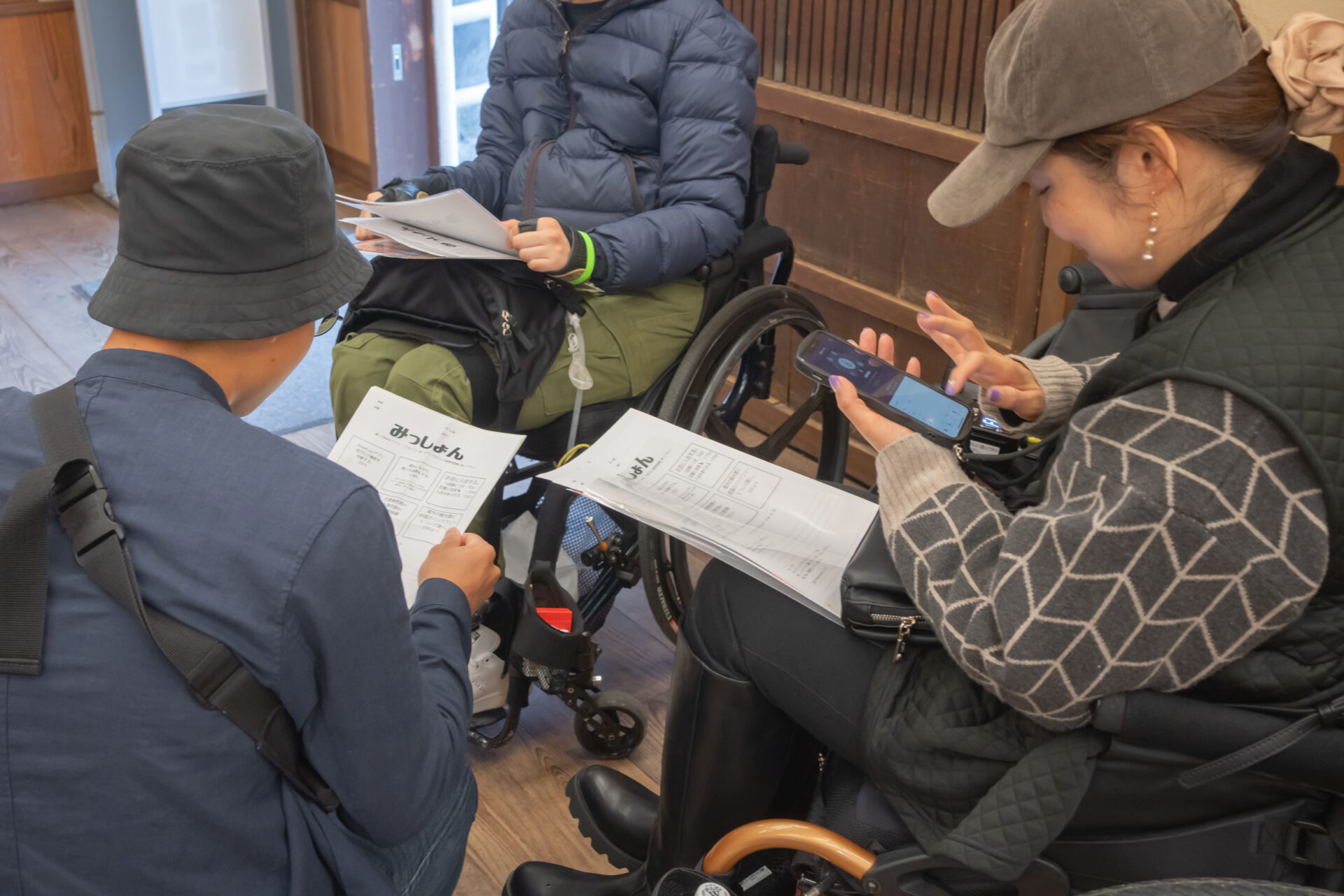
Since there was a desire to ride a rickshaw, the first goal was to head towards the rickshaw.
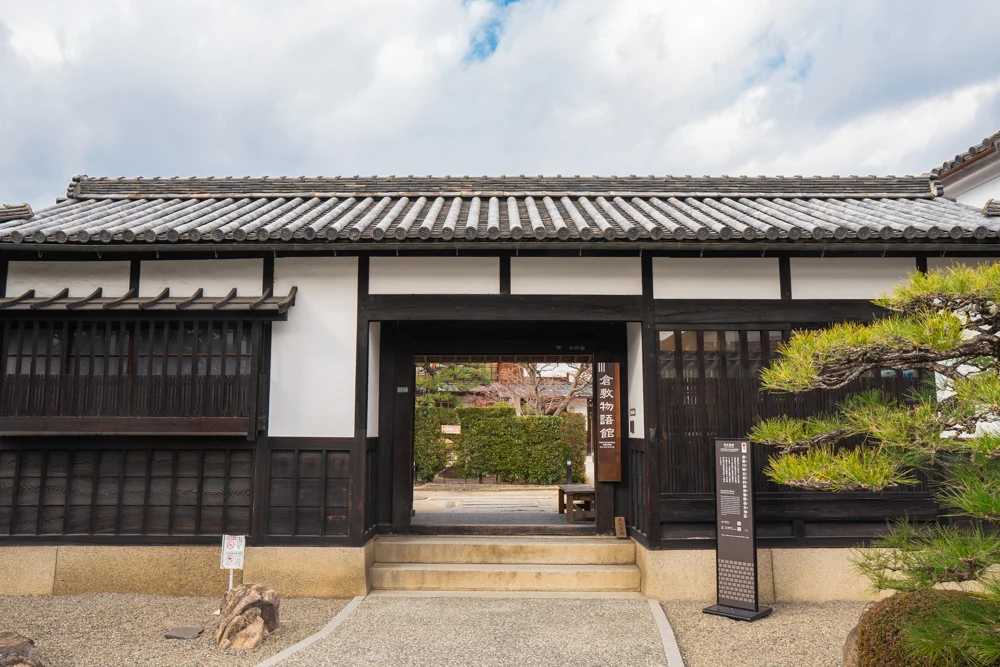
▼ Departing from Kurashiki City Kurashiki Monogatari-kan, we headed into the Bikan Historical Area.
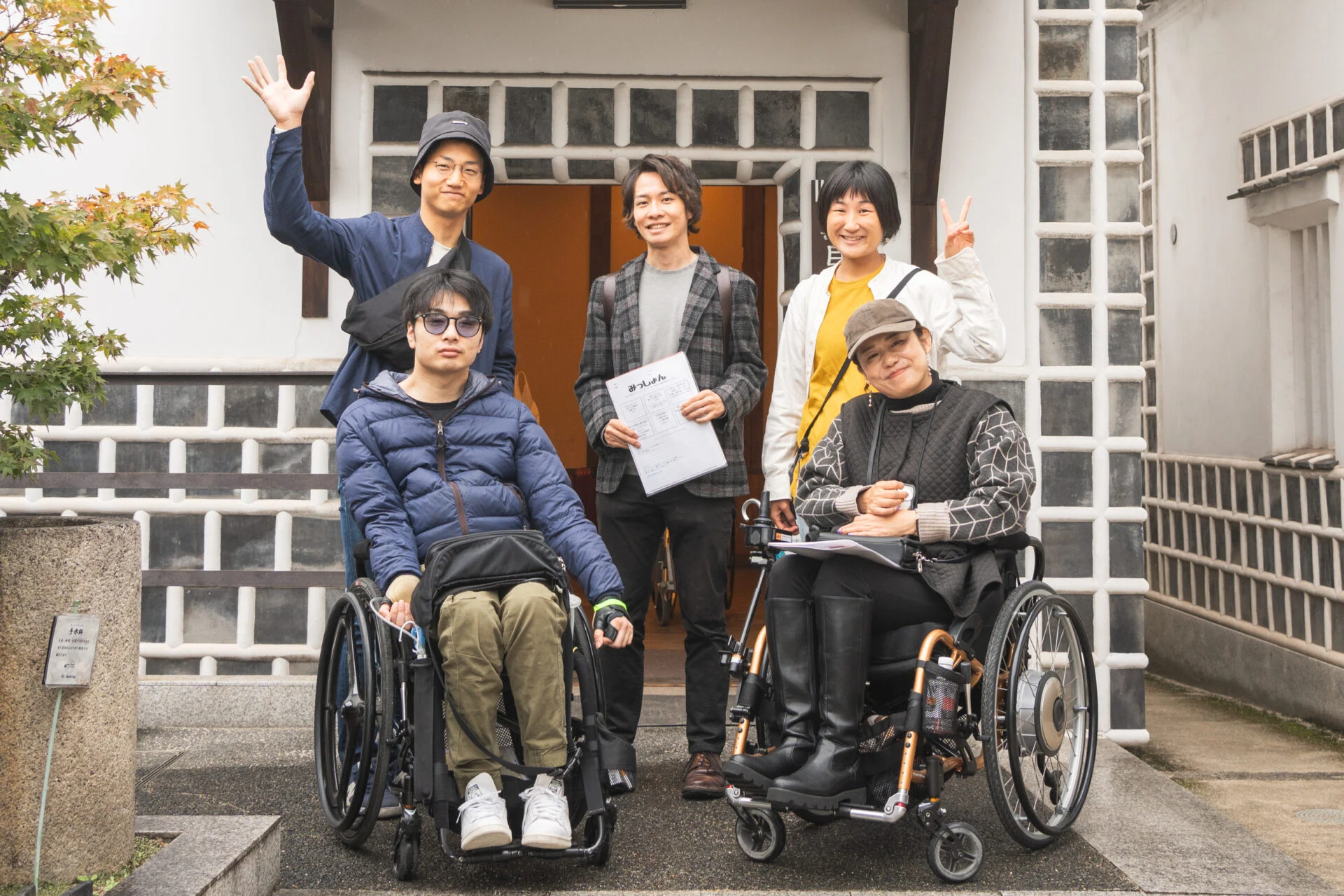
Wheelchair users challenge the rickshaw
Upon entering the Bikan Historical Area, a rickshaw was found in front of Ohara Museum of Art.
▼ Immediately, we checked if it was possible to ride in a wheelchair.
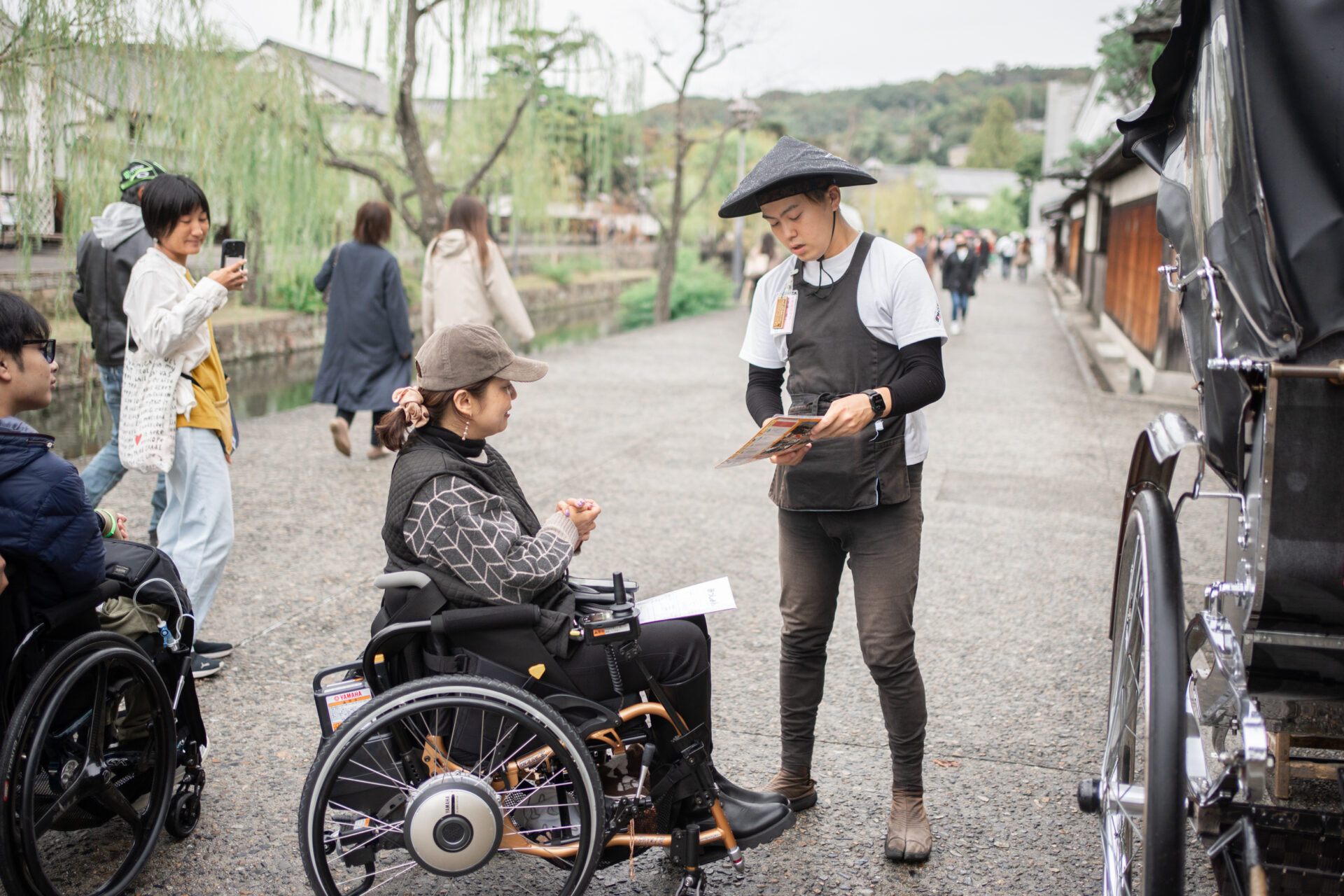
When asked by the young man pulling the rickshaw, it turns out that wheelchair users can ride in the rickshaw.
▼ However, assistance is needed when getting on, and at this time, a total of four people were required to help.
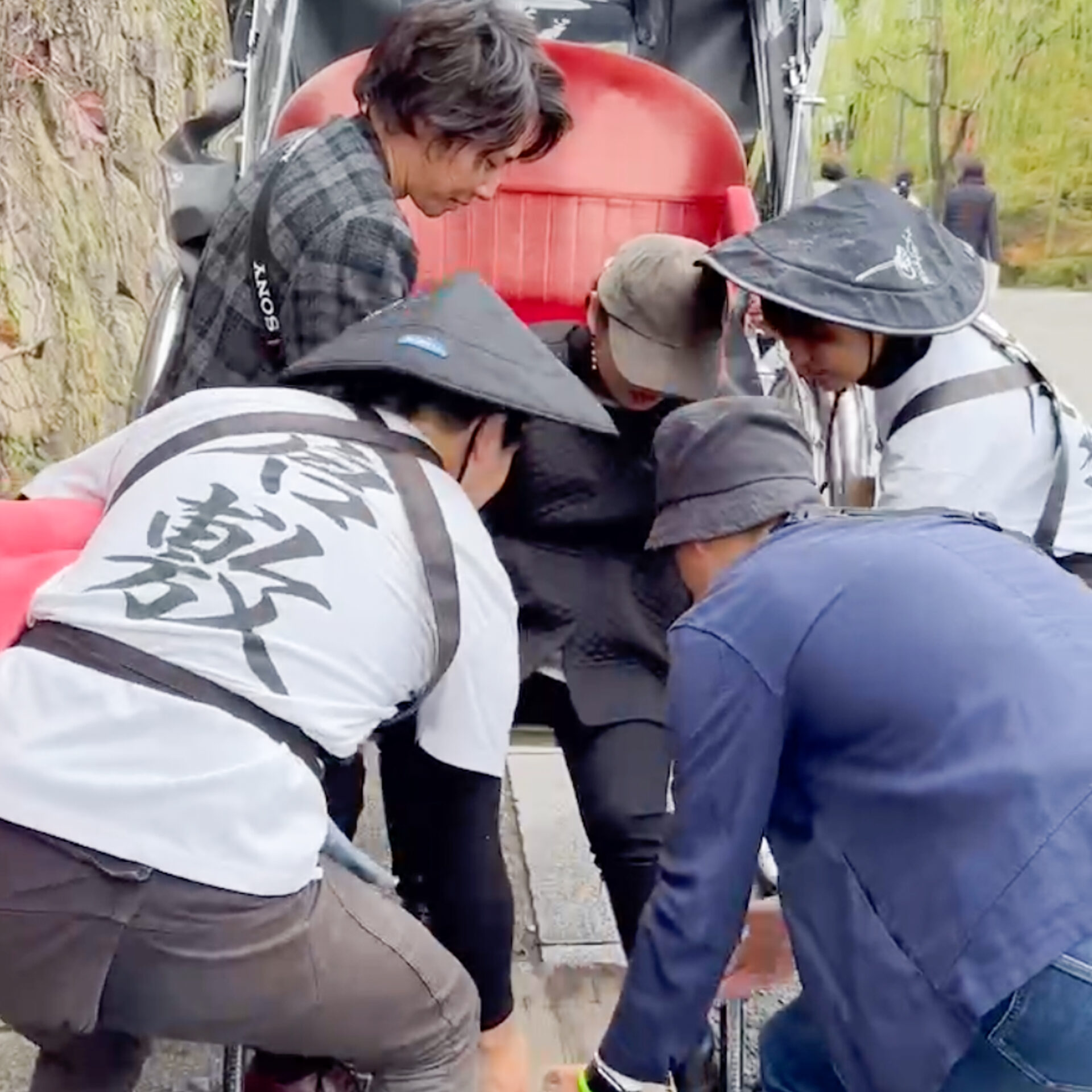
The author also helped, feeling confused about how to support.
▼ Successfully getting on the rickshaw. A sigh of relief.
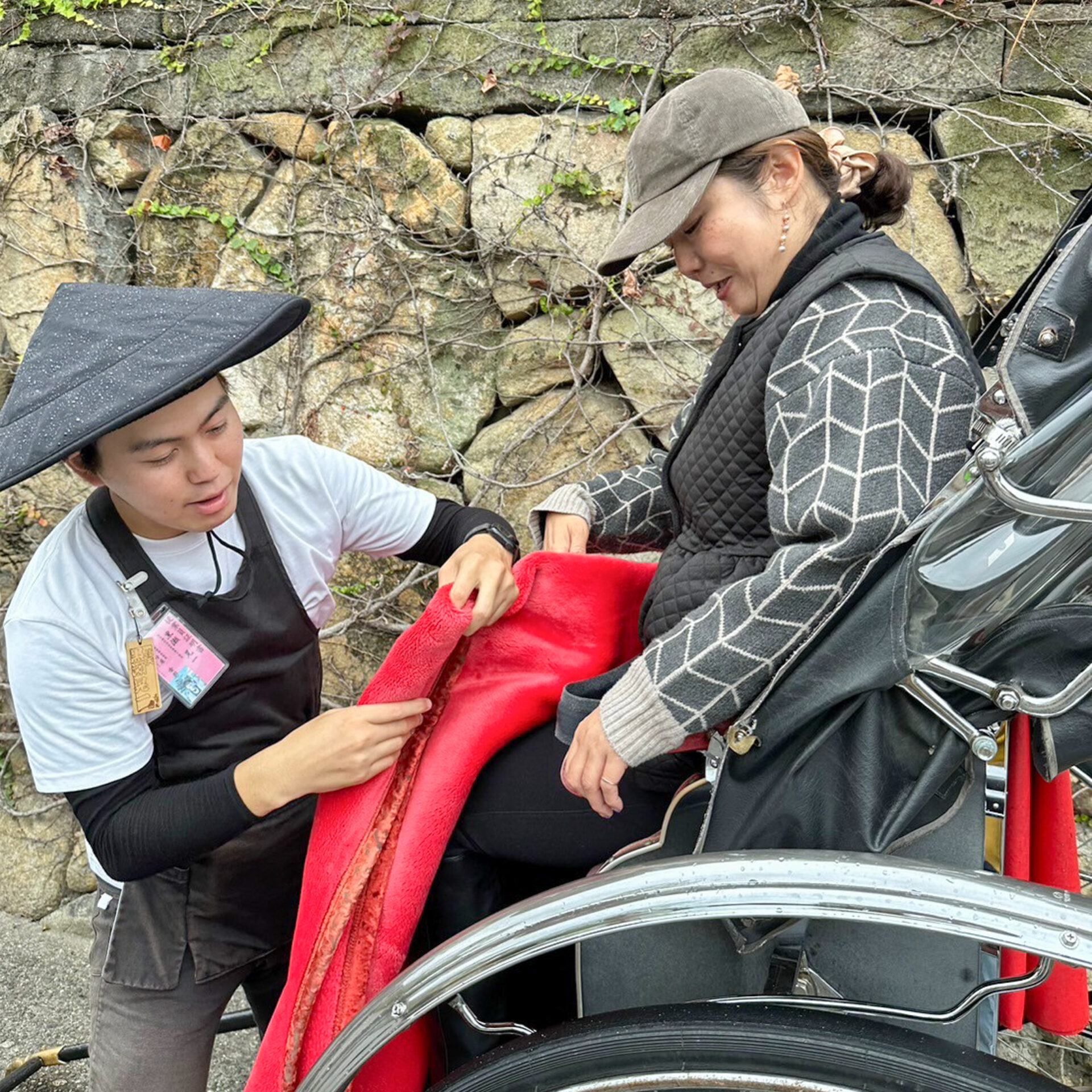
The young man pulling the rickshaw runs through the Bikan Historical Area while sharing the history of each building as they pass.
▼ Not only providing tourist information, but the young man also takes photos for us.
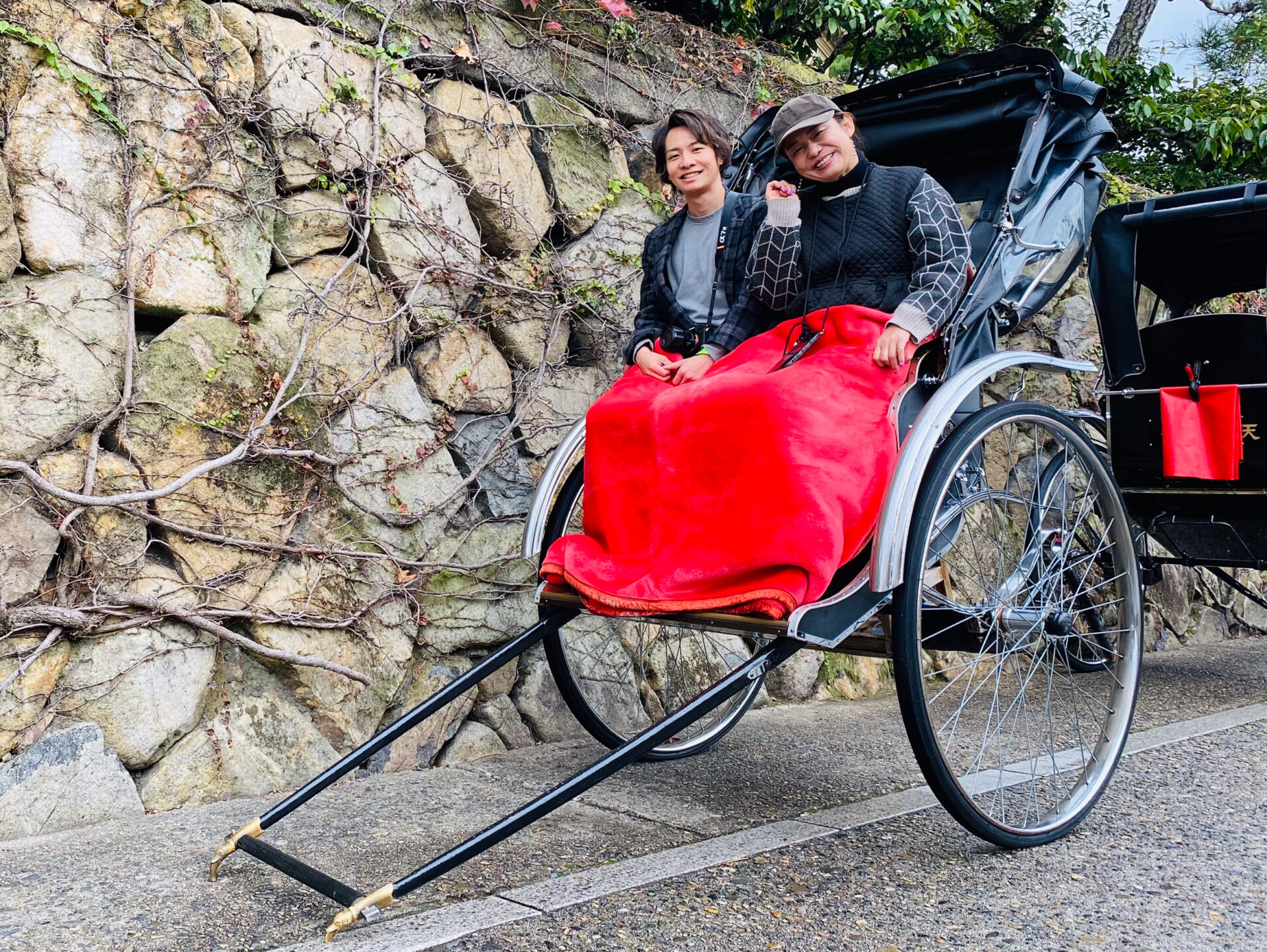
Getting on and off the rickshaw was not easy, but the young man provided solid support, allowing for a safe ride.
According to wheelchair users, there are many things they have given up on due to their limited mobility. Participants mentioned that they never dreamed they would be able to ride a rickshaw.
▼ After getting off the rickshaw, there was a sense of relief. Smiles naturally overflowed.
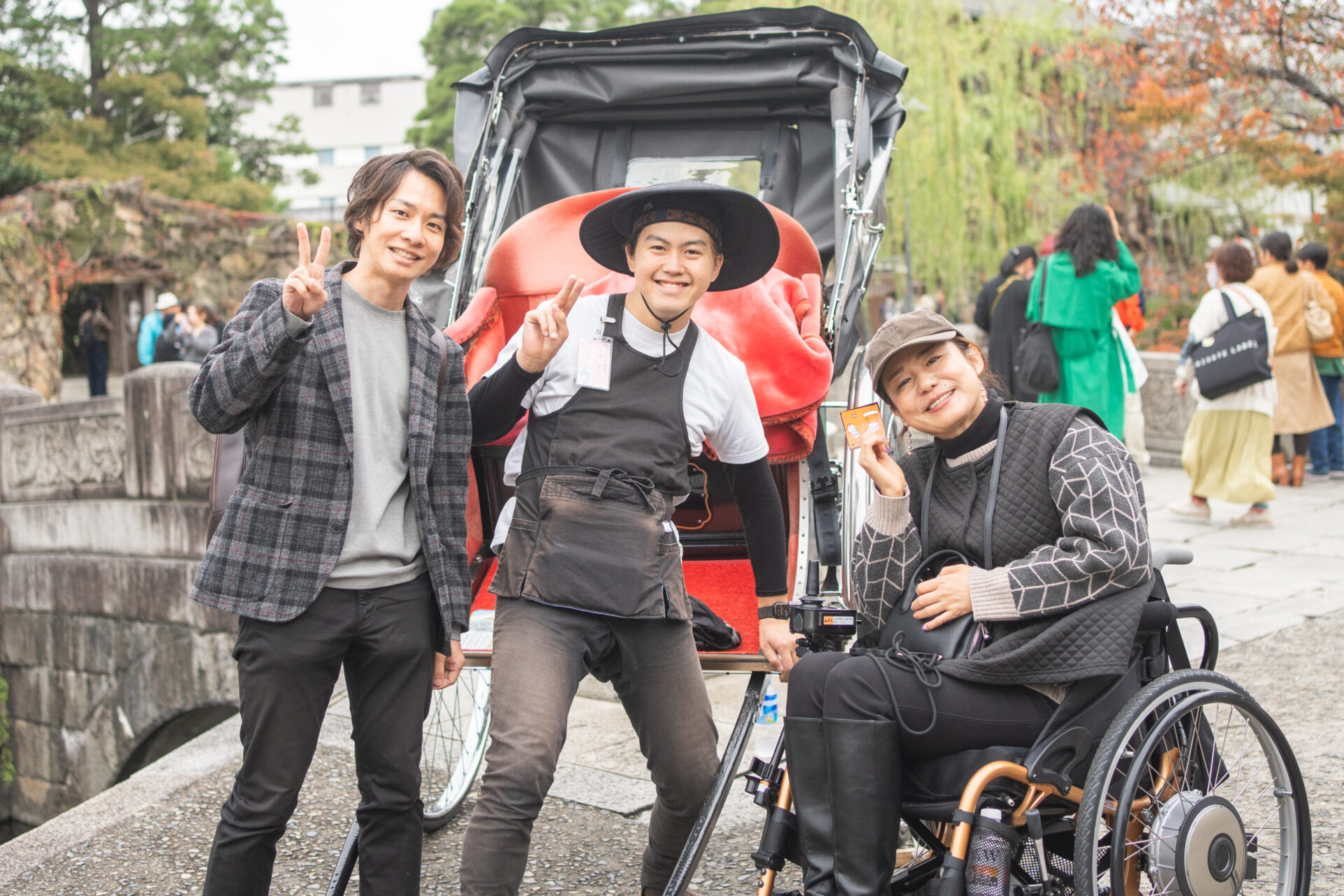
Lunch at the Tourist Spot is a Challenge
After finishing the rickshaw tour, it was past noon. It was time to start feeling hungry.
Are there any shops in the Bikan Historical Area that wheelchair users can enter without hesitation? I began selecting stores from the perspective of a wheelchair user.
The first restaurant I visited had no issues with wheelchair access, but I had to give up due to the long wait for other customers.
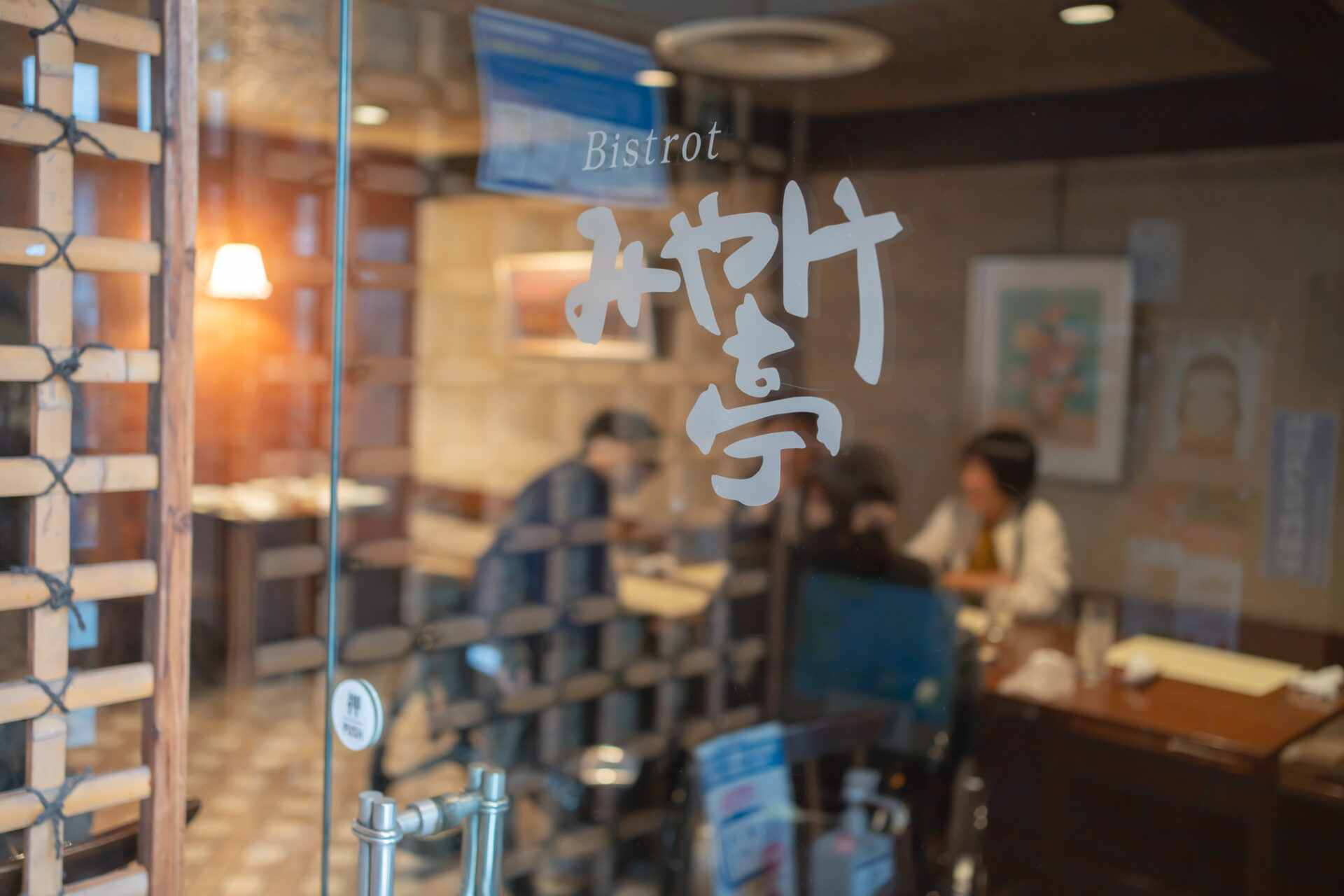
▼ The next place I visited was the Western-style restaurant "Miyake-tei", known for its stewed dishes.
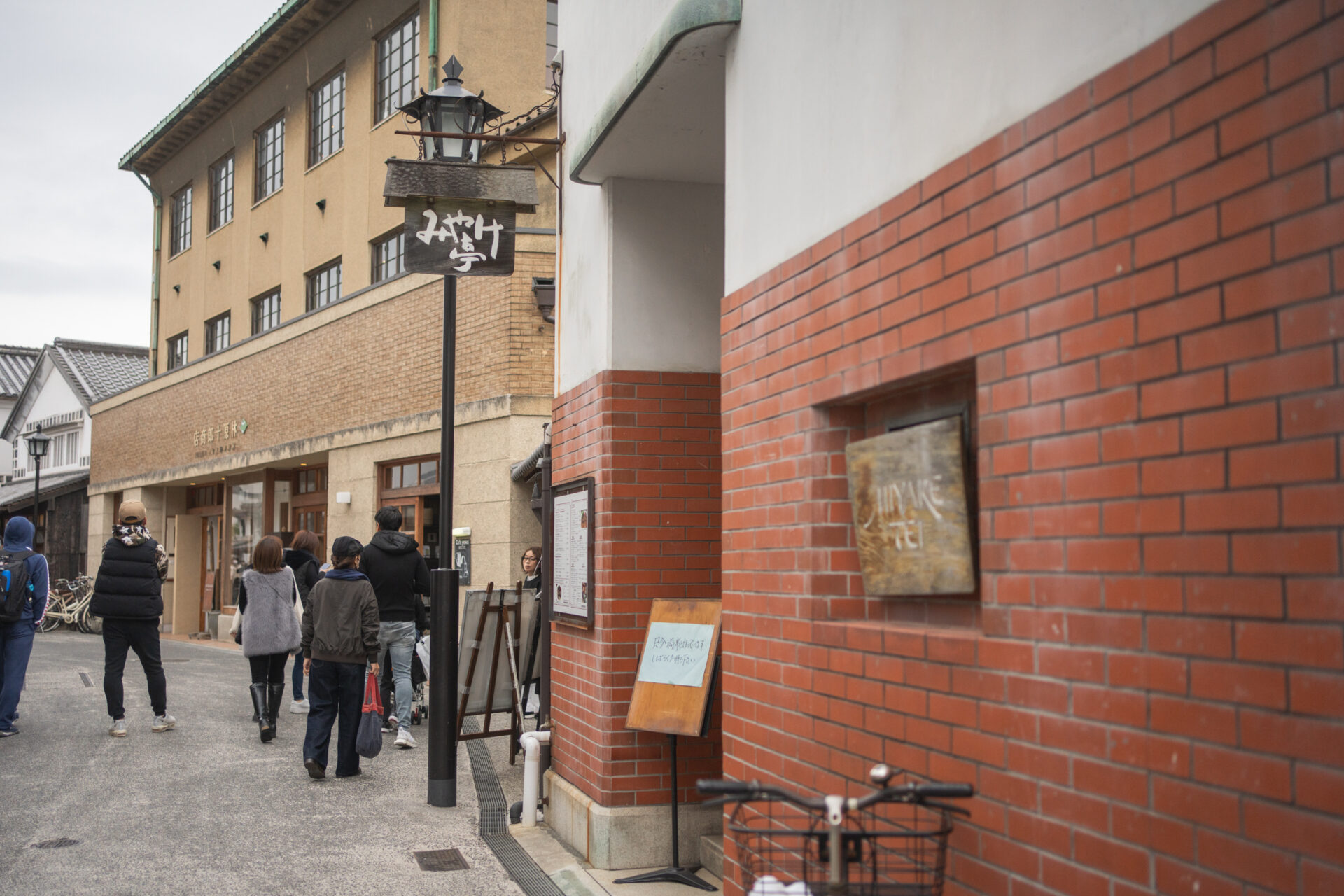
Many wheelchair users mention that they check whether they can use a restaurant before entering. While many restaurants are accommodating, there are instances where they are turned away due to the size of the establishment or the width of the aisles.
Before entering Miyake-tei, I confirmed whether it was accessible for wheelchair users, and they assured me it was fine.
▼ They moved a chair for me, and I took my seat.
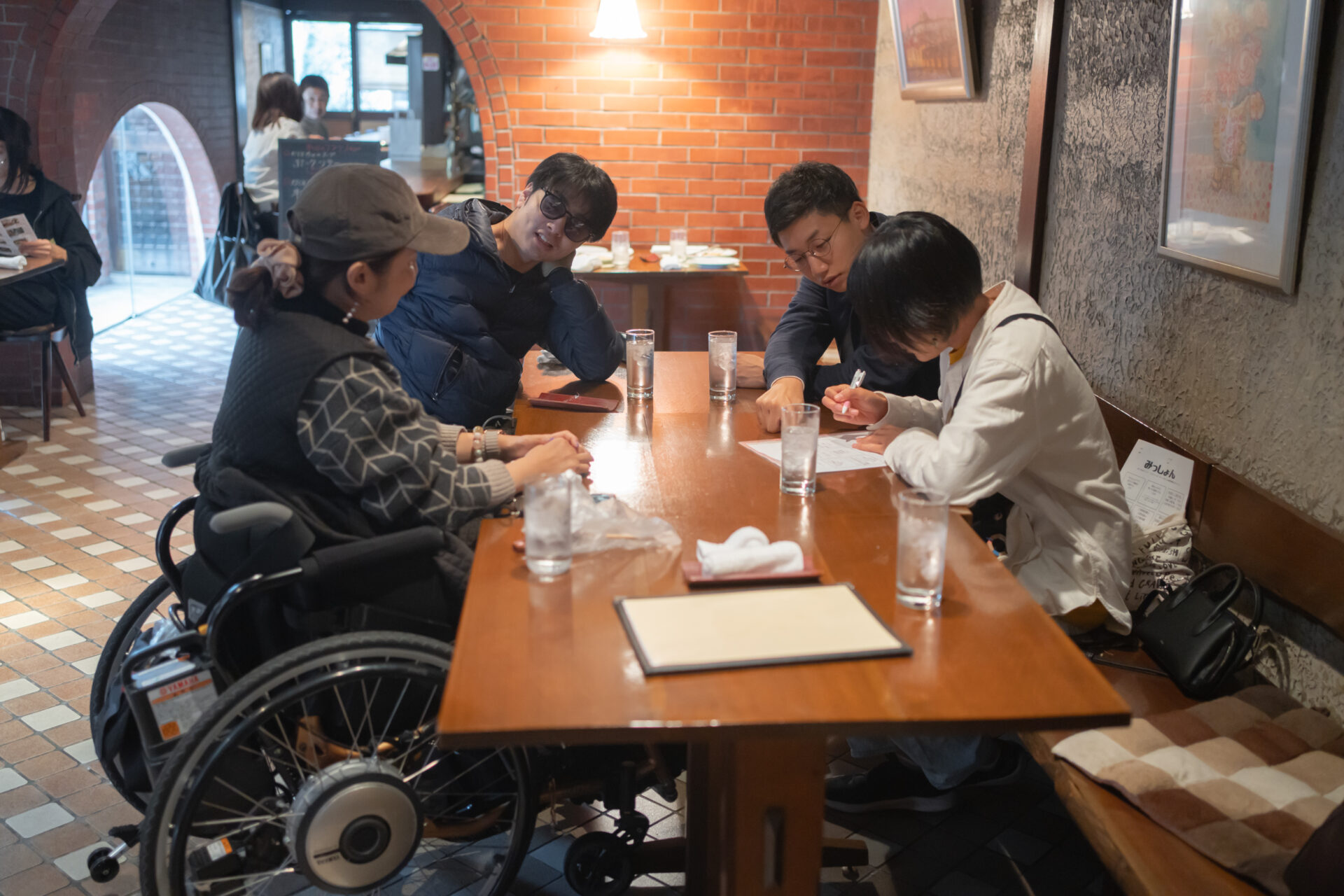
On gourmet sites and restaurant websites, you may find terms like "barrier-free" and "wheelchair accessible," but these can sometimes be misleading.
There are no specific and quantitative standards for expressions aimed at those needing assistance. Therefore, when you actually visit a store, it may turn out to be very inconvenient for wheelchair users.
Information such as the presence of ramps, the height of steps, and the width of aisles would be very helpful, they mentioned.
▼ The dish I ordered was pork sauté.
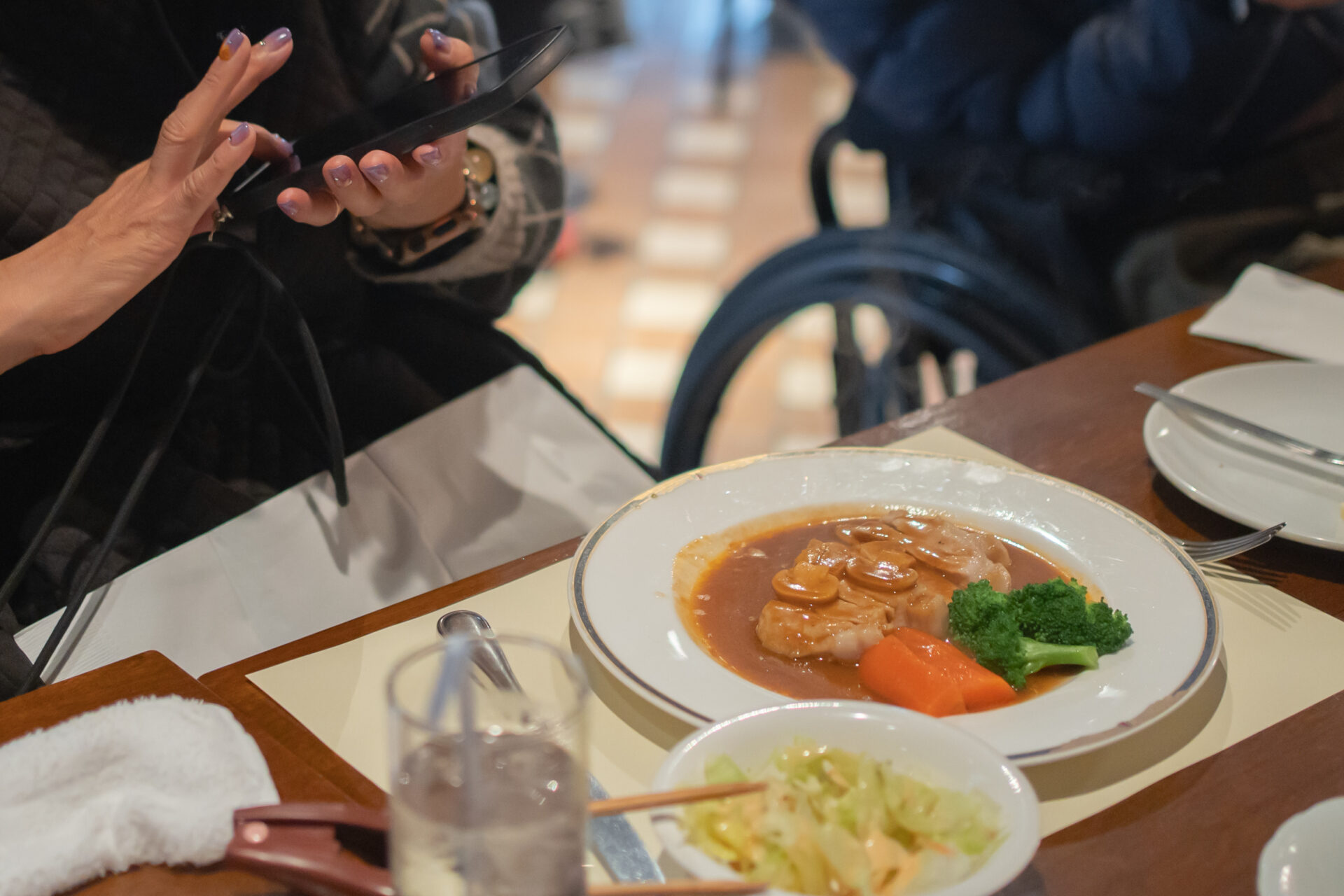
Usually, they do not serve it cut. A staff member who noticed the difficulty with using hands communicated to the chef to have it cut.
The small consideration moved all the team members.
While physical convenience, such as having enough space for wheelchair movement, is important, it is also essential to provide consideration so that people with physical disabilities can enjoy themselves.
Providing services that everyone can enjoy equally, regardless of physical disabilities, may be the true essence of barrier-free.
Wheelchairs in the Bikan Historical Area
After filling my stomach with pork sauté, I continued to stroll through the Bikan Historical Area.
The Bikan Historical Area was bustling with many people, and various languages other than Japanese were being spoken.
▼ I walked through the Bikan Historical Area.
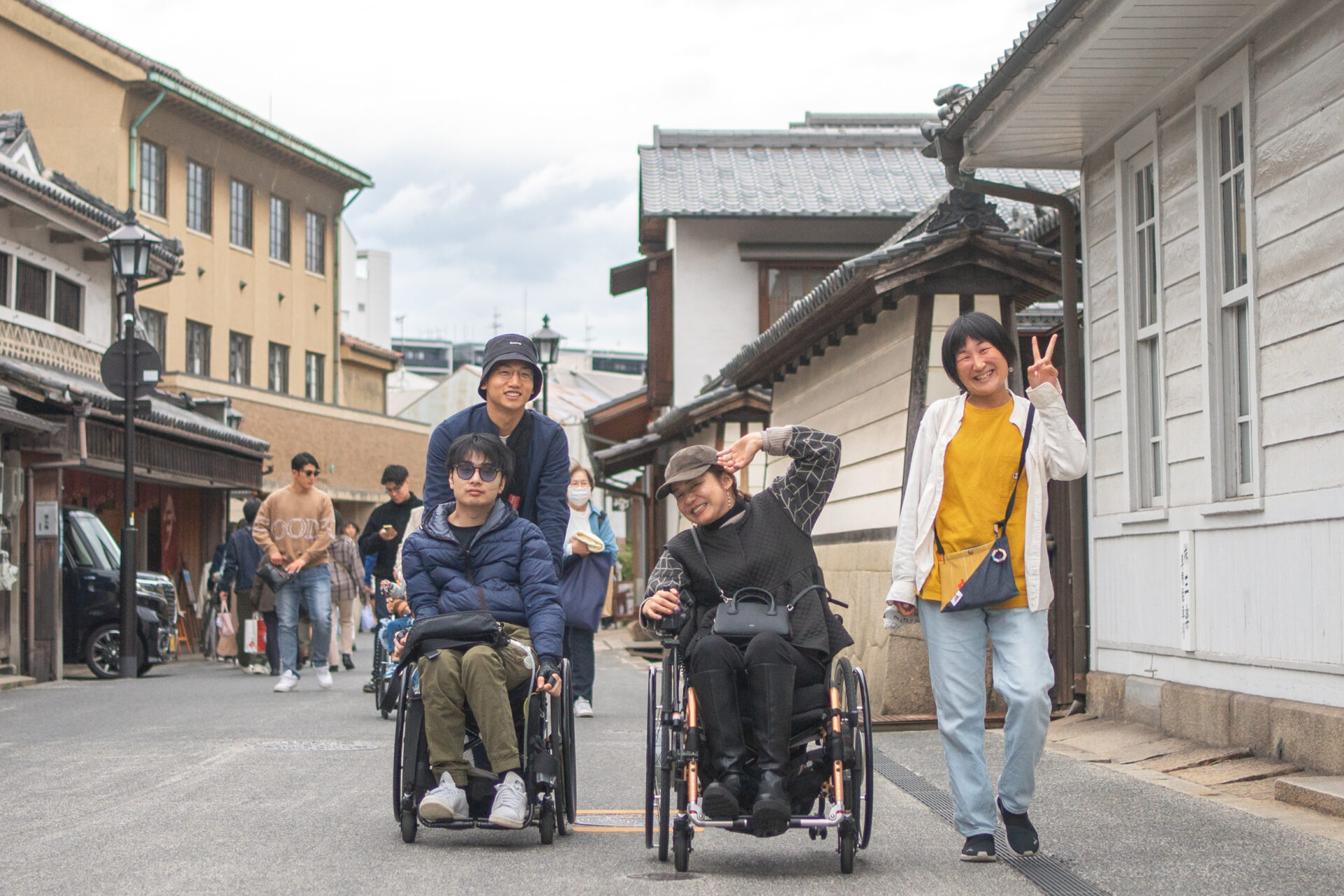
Even on the seemingly flat surfaces of the Bikan Historical Area, there are actually many places where wheelchair users feel the slope.
▼ During my walk, I stopped by "Sumikoffee Mimura." The owner of the store is from "RACOFFEE", located on the outskirts of the Bikan Historical Area.
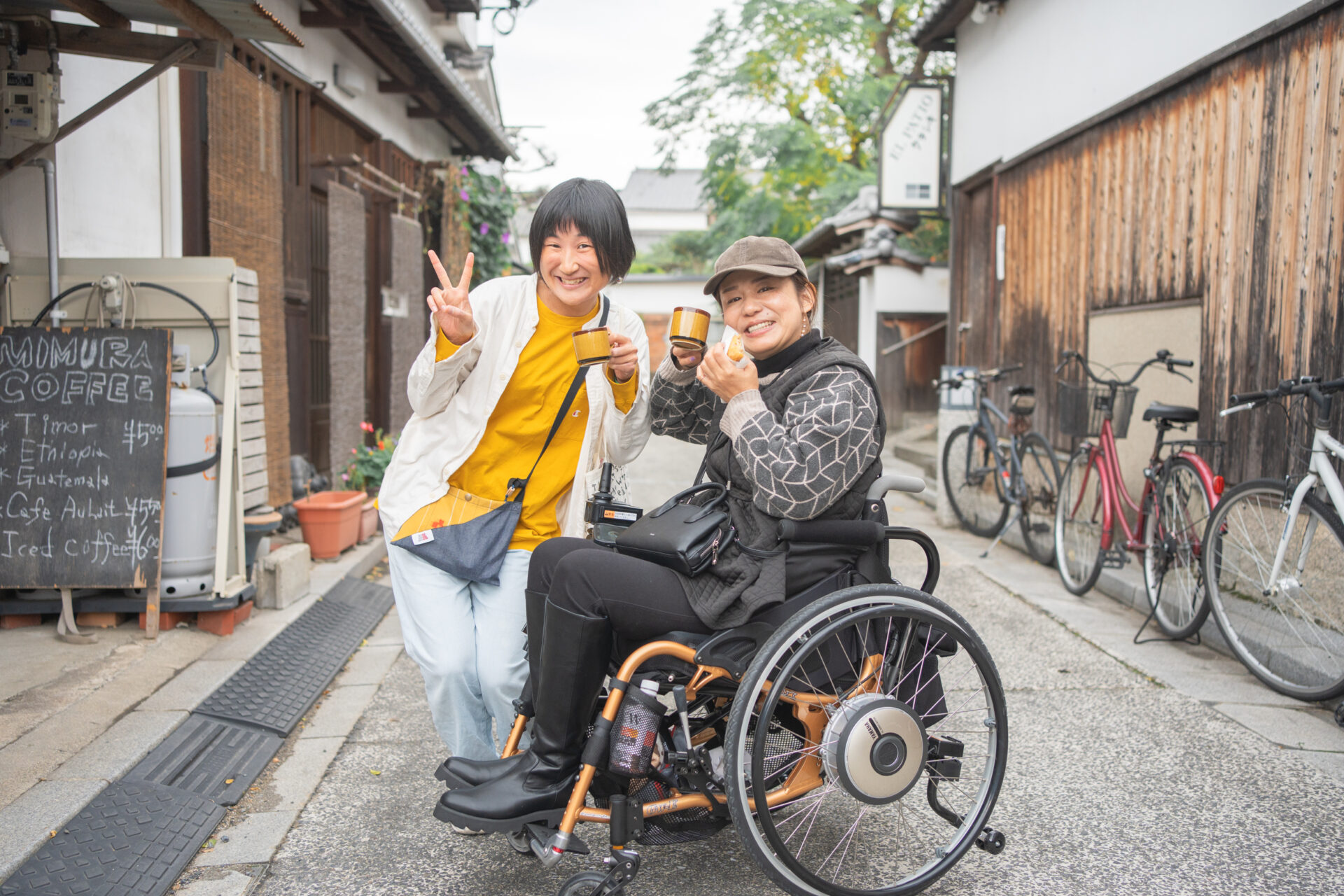
"Sumikoffee Mimura" has repurposed a warehouse for its store. Due to the high steps and narrow aisles, it seemed difficult for wheelchair users to enter.
Instead, I enjoyed coffee to go.
If historical buildings are made barrier-free for everyone to use, it may lose its charm. It can sometimes be challenging to balance aesthetics and barrier-free access.
For wheelchair users, being able to enjoy the space equally is important, but even more so, it is essential to feel psychologically safe while receiving services. The love put into the takeout coffee made me feel that this is also a form of barrier-free.
Enjoying Sweets in a Edo Period Building
As I wandered through the historic town, it was past 2 PM. With snack time approaching, I looked for a place to enjoy dessert.
The café I chose for dessert was "Miyake Shoten", which utilizes a traditional house.
▼ For wheelchair users, the steps unique to traditional houses seem difficult to overcome without assistance.
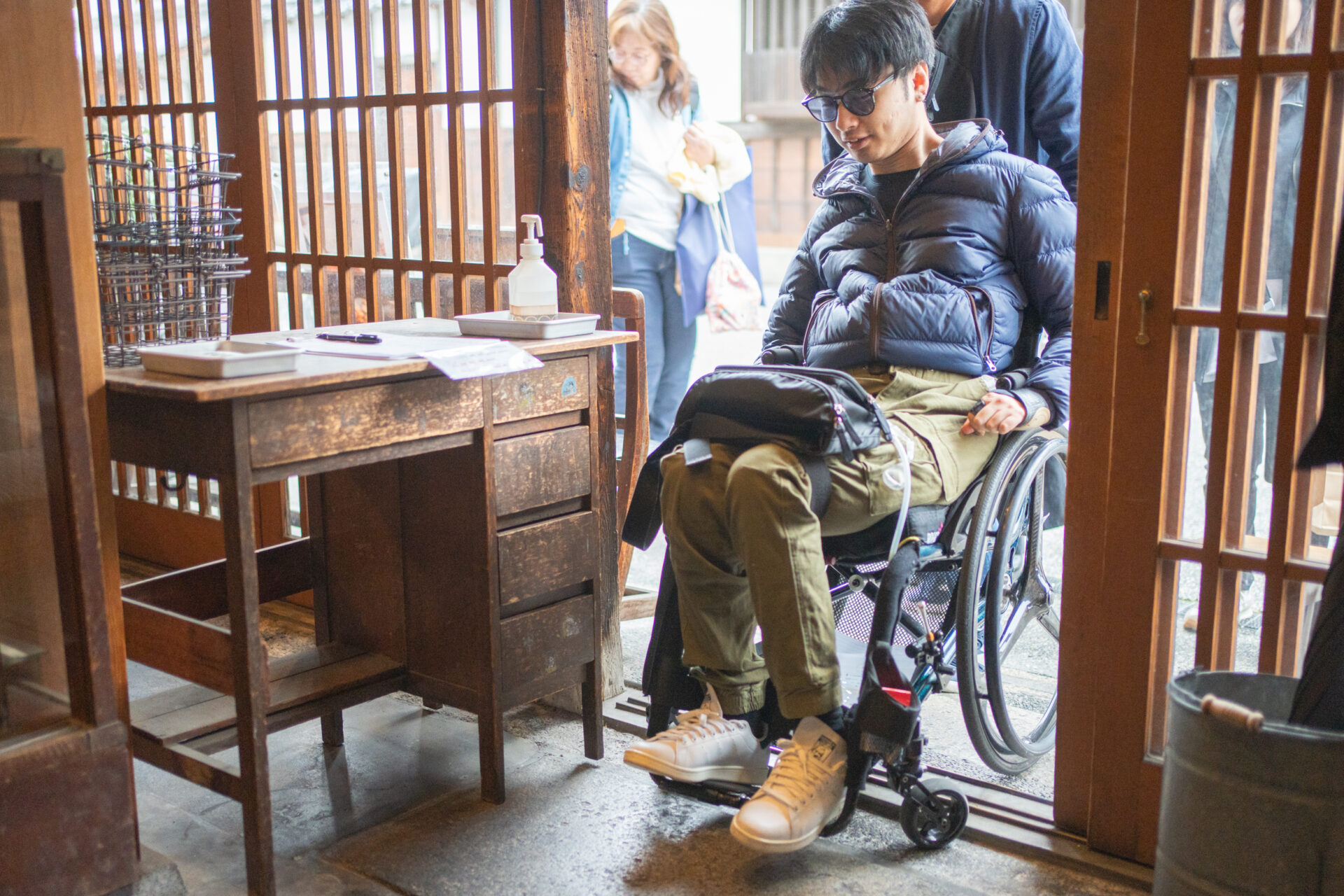
Since it is a café remodeled from a town house that has been around since the Edo period, there are steps throughout the store.
▼ Near the entrance, the dirt floor has few steps, and there were table seats that wheelchair users could use.
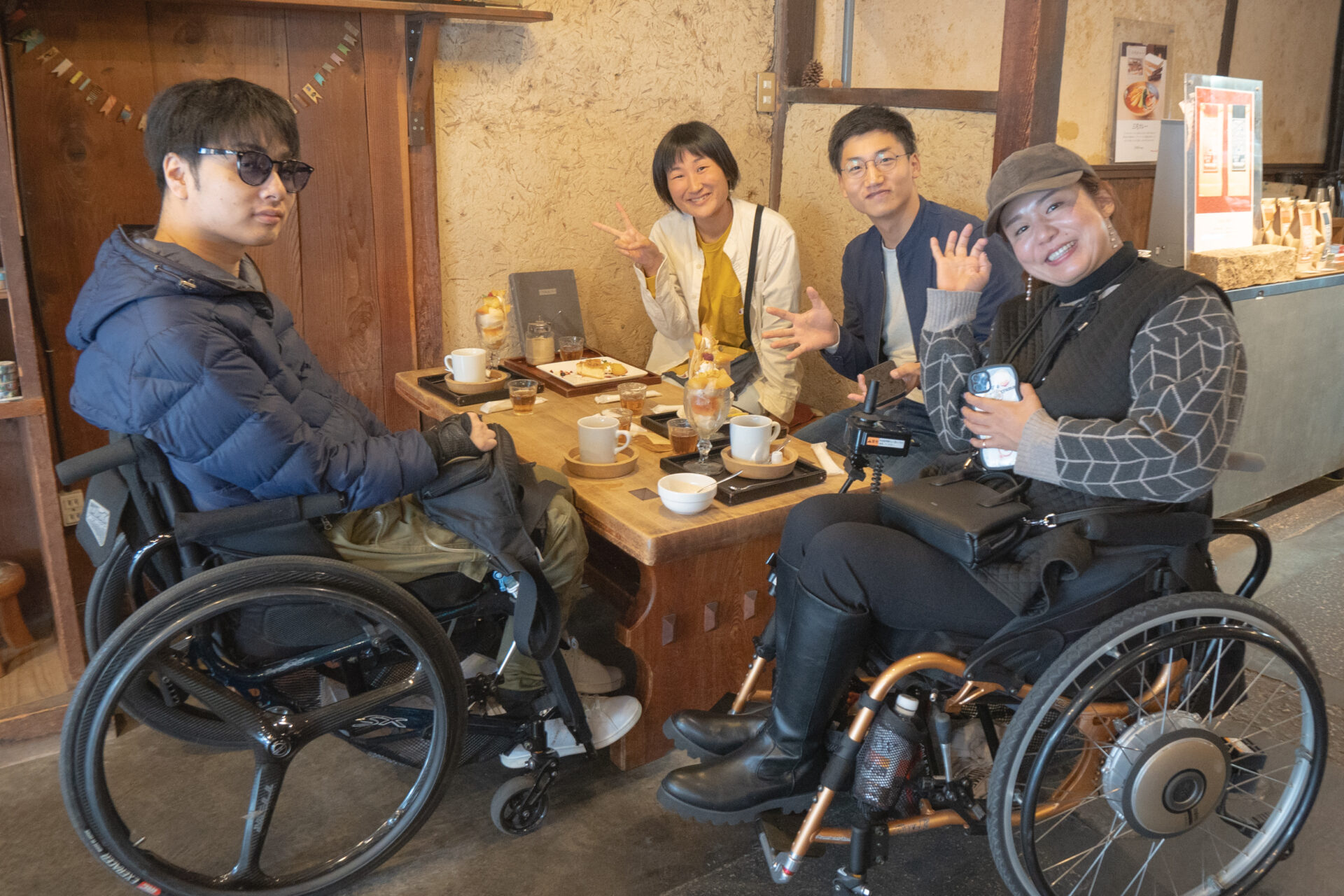
To ensure that wheelchair users can use the tables, the staff cleared away chairs. It seems that restaurants in the Bikan Historical Area generally have an impression of consideration for wheelchair users.
▼ All team members were able to enjoy dessert.
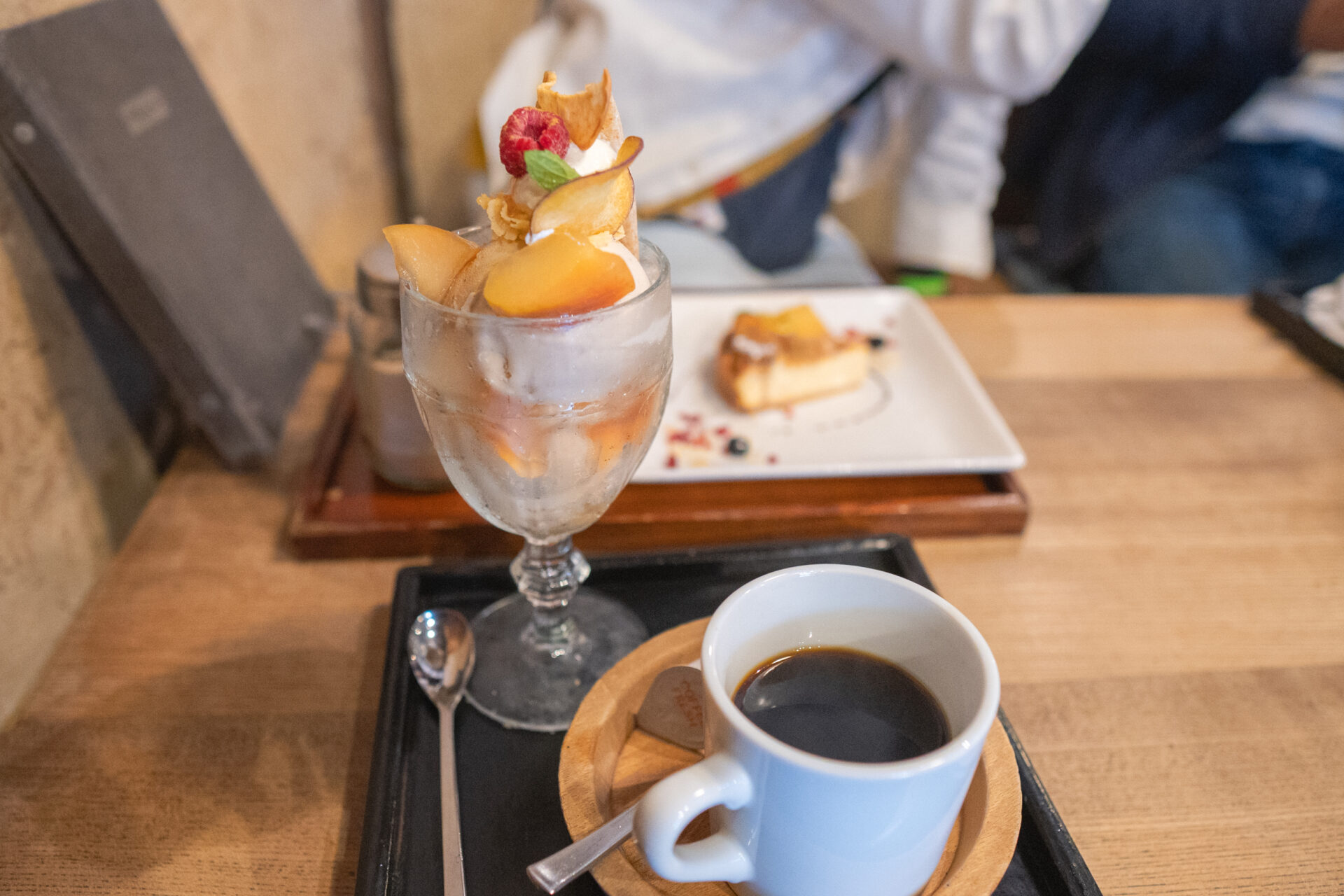
Regardless of whether one is using a wheelchair or not, it goes without saying that the dessert filled both the heart and the stomach.
All team members were amazed by the delicious dessert, exclaiming it was so good it made their cheeks drop.
Sharing Information Gathered During the Walk
After racing through the Bikan Historical Area in a rickshaw and filling our hearts and stomachs with pork sauté, coffee, and parfait, it was time for the event to end. The enjoyable time passed quickly.
▼ All teams returned to the Kurashiki City Kurashiki Monogatari-kan to share the information gathered during the walk.
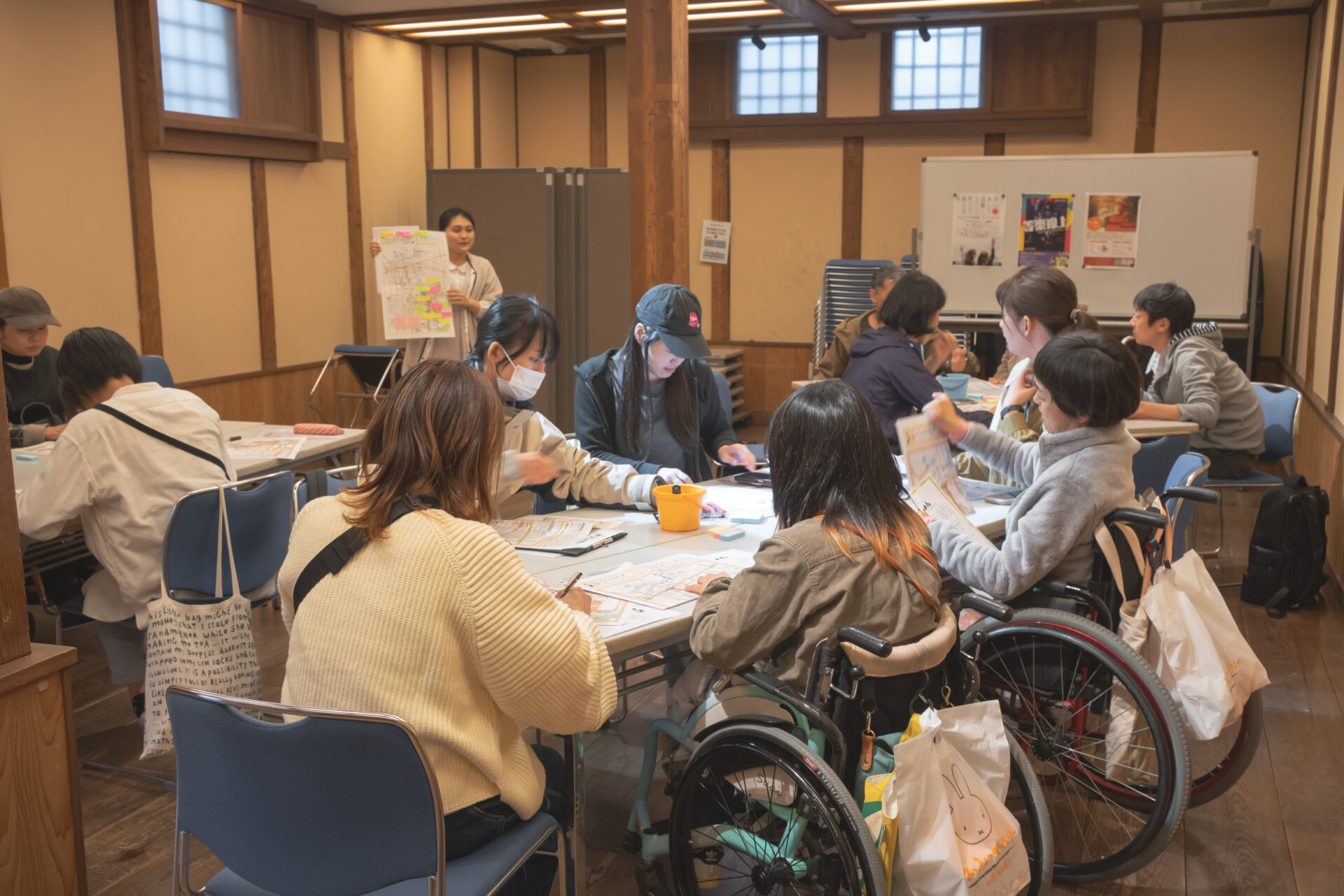
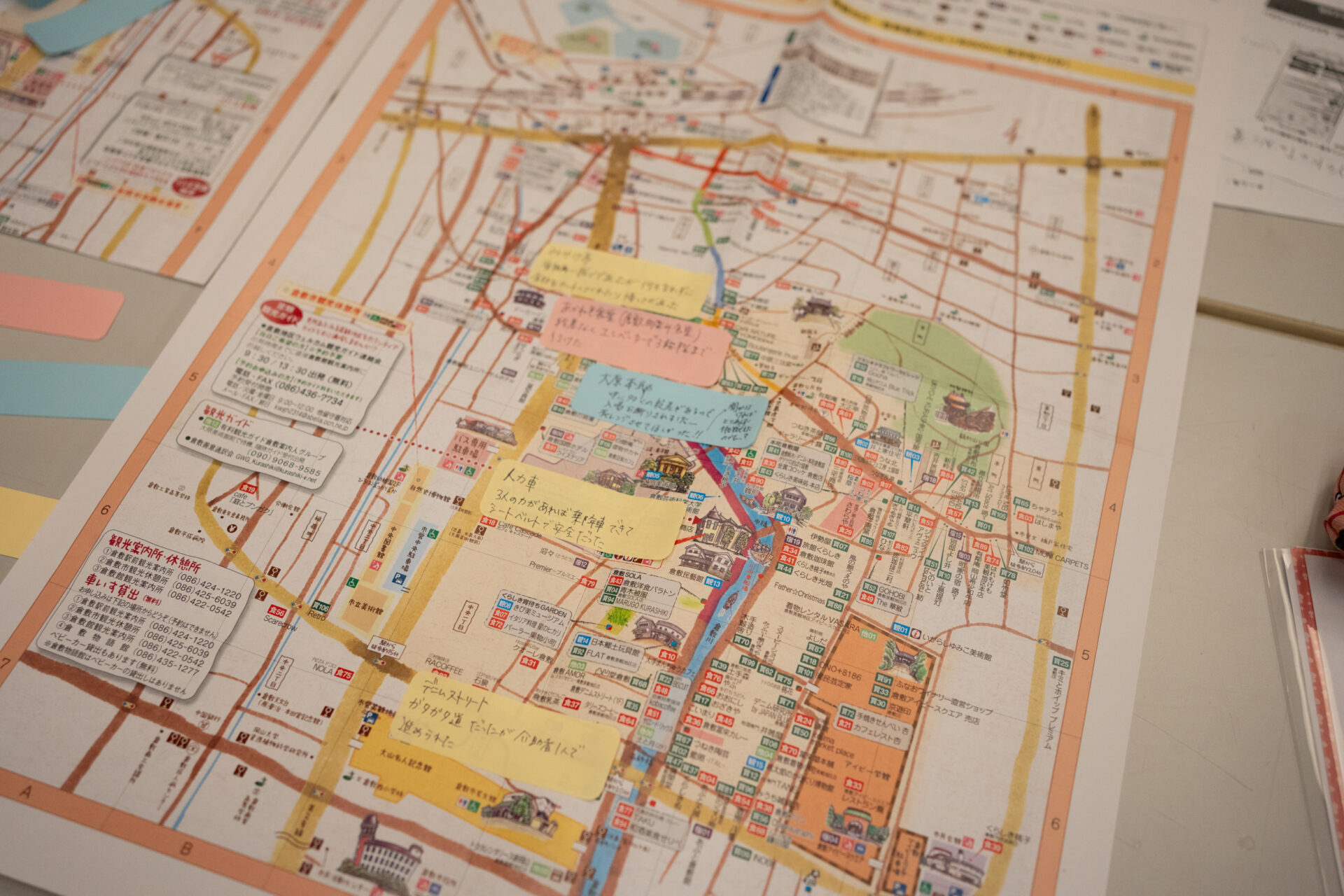
Stores that wheelchair users could enter without issues were marked with pink sticky notes, those that required assistance were marked with yellow sticky notes, and those that turned away customers were marked with blue sticky notes.
▼ The sticky notes included details about the services at the stores to share more specific information.
▼Finally, the team representative shared their impressions of the event.
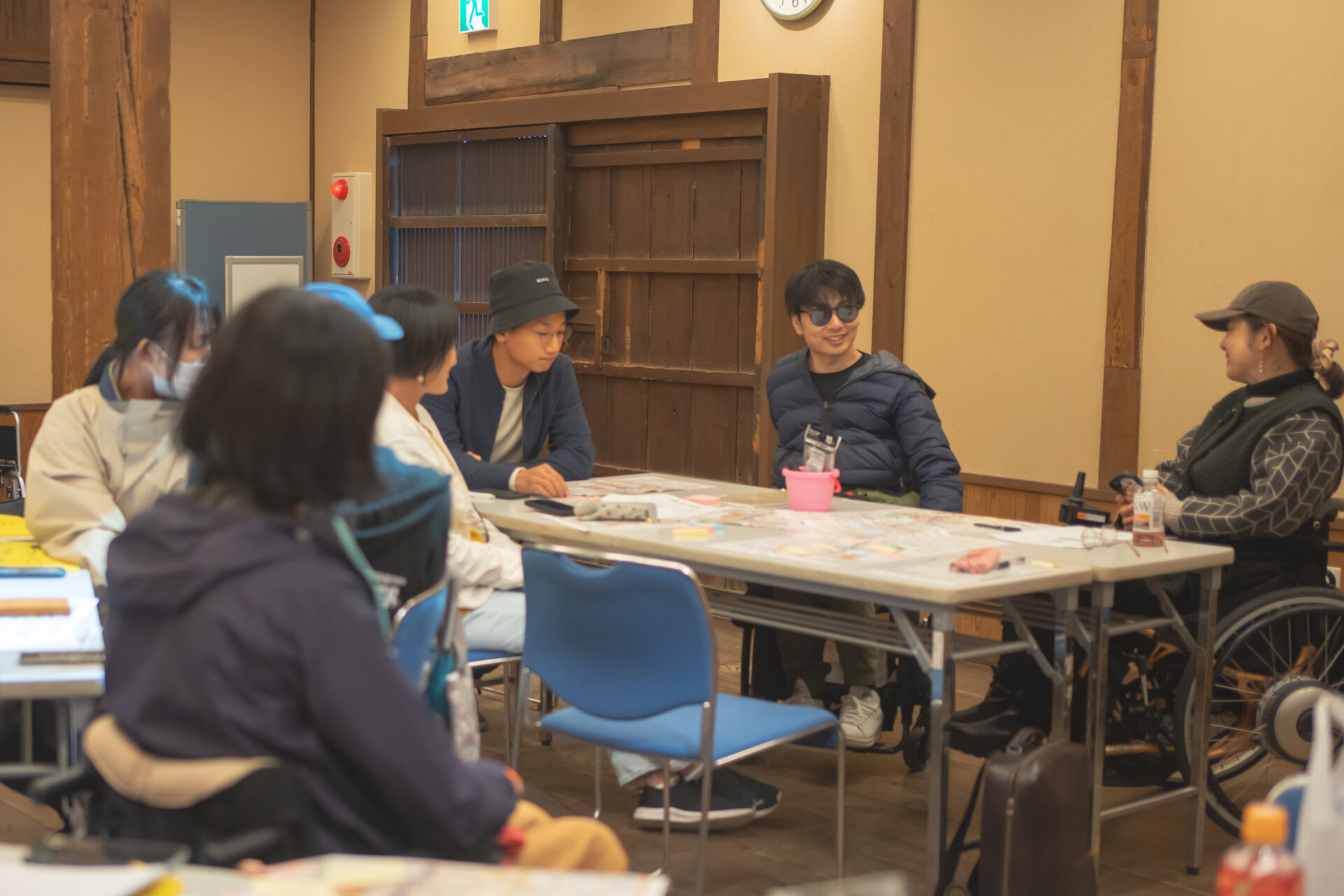
By gathering people regardless of disabilities for a town walk, they expressed that they were able to convey the perspective of wheelchair users.
The definition of barrier-free varies among tourist facilities and restaurants, and it seems that sometimes, upon visiting, one may find that they cannot use the facilities.
Rather than the phrase "a barrier-free environment is established," specific information such as the height of steps and the width of pathways is also necessary for wheelchair users.
Additionally, they mentioned that if there are wheelchair users in need, they would like people to offer assistance. On the other hand, wheelchair users should not have excessive expectations and should also make efforts for self-help.
It was a valuable opportunity to hear candid opinions that can only be obtained from wheelchair users.
Incidentally, the points earned for achieving the mission were the highest for the author's team. The author's experience of walking around the Bikan Historical Area during the reporting activities was beneficial.
Mr. Morigami, who organizes town walk events that not only share barrier-free information but also gather opinions from wheelchair users.
I asked how he came to hold town walk events.