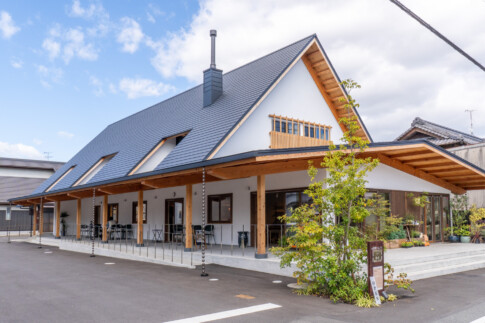
The cafe “RACOFFEE (RACOFFEE)” is located a little way from the Bikan Historical Area.
As you walk along the street, the shop’s distinctive atmosphere catches your eye.
The counter facing the sidewalk and the large glass door beside it make a striking impression.
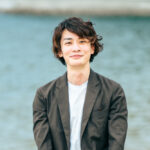
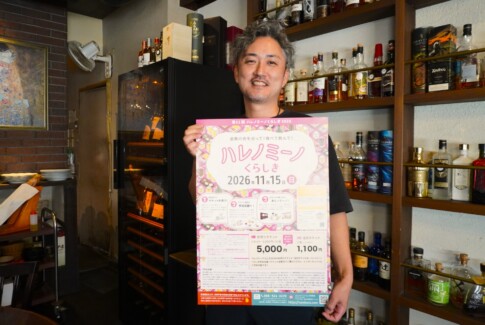
We spoke with Naoya Mimura, owner of the distinctive cafe “RACOFFEE” in Kurashiki, about the shop and his approach to coffee.
The information presented here was current when this article was published in March 2021. Please note that it may differ from current information.
What Makes RACOFFEE Special
Highlights of RACOFFEE

When you pass by RACOFFEE, what catches your eye is its large glass door.
Through the glass set in an iron frame, you can glimpse the interior and see a calm, inviting space.
To the left of the glass door is the counter where you order coffee.
Your coffee is prepared behind the counter.

When you step inside through the glass door, the first thing that draws your attention is the earthen walls at the front and on both sides.
Next, your gaze falls on the wooden tables and mismatched chairs arranged in the space enclosed by earthen walls on three sides.
Inside, the light gradually shifts from the entrance toward the earthen wall at the back, creating a distinctive atmosphere.

Once seated, you notice the straight lines that divide the interior.
The lamp cords hanging down from the ceiling, the iron latticework in the glass door, and the pillars embedded in the earthen walls.
Your eyes follow the orderly vertical lines arranged throughout the calm space.

The view beyond the glass door is also striking.
In contrast to the calm atmosphere inside, the main street is bustling with people and cars.
As you look out at the lively scene through the large glass door, you may feel as if you have been separated from the world around you and time has stopped inside the shop.

A Shop Built by the Owner
The owner, Mimura, renovated the 50-year-old building to create the shop.
The atmospheric earthen walls are original and have been preserved.
Mimura welded the iron frame for the large glass door at the front and cut old glass to fit it.

The lift-up window in the counter is also handmade.
The ceiling fan was made in the 1960s; he tracked it down and installed it.
Mimura, who loves making things by hand, has worked on almost everything you see in the shop.

RACOFFEE’s Menu
RACOFFEE offers coffee from a variety of origins.
Unless you know a lot about coffee, you may be unsure what to choose, since you may not know how the taste differs by origin.
There’s no need to worry: when you order, the staff will explain the aroma and flavor characteristics.
Choose a coffee that catches your interest after hearing the explanation.
| Item | Characteristics | Price (tax included) |
|---|---|---|
| Timor-Leste | Light and easy to drink | ¥500 |
| Ethiopia | Strong aroma and bitterness | ¥500 |
| Guatemala | Rich flavor and bitterness | ¥500 |
| Cafe au lait (hot/iced) | Made with Indonesian coffee beans | ¥550 |
| Iced coffee | Made with Indonesian coffee beans | ¥600 |

You can tell when you compare them: the aroma and flavor really do differ depending on the origin.
Being able to savor the differences in coffee beans from different origins is another thing that makes RACOFFEE special.
Enjoy freshly brewed coffee with your senses of smell and taste fully engaged.

All the coffee served at RACOFFEE is dark-roasted.
It has no acidity and is characterized by a pronounced bitterness and aroma.
You can enjoy your coffee in the shop or take it to go.
Coffee beans are also sold ground, starting at ¥1,150 for a 150-gram bag.

A Commitment to Coffee
Journeys to Coffee Farms Around the World
Every February, Mimura sets off on a journey to visit coffee farms.
The countries he has visited are in the tropical climate near the equator, an area known as the Coffee Belt.
These are regions where coffee is widely cultivated.
Choose a coffee that catches your interest after hearing the explanation.
| Region | Countries |
|---|---|
| Asia | Yemen, Indonesia, Myanmar, Timor-Leste |
| Africa | Uganda, Ethiopia, Kenya, Tanzania, Rwanda |
| Central and South America | El Salvador, Ecuador, Guatemala, Costa Rica, Colombia, Nicaragua, Panama, Brazil, Peru, Honduras, Bolivia |

He travels locally by bicycle.
On longer trips, he covers more than 1,200 kilometers.
Coffee farms are often located at high elevations of around 1,800 meters, and the roads are not always flat.
After cycling an immense distance through valleys and over mountain ranges, he arrives at the coffee farms with his skin deeply tanned.
Through these journeys, he experiences the conditions in which coffee beans are grown and the people who grow them.
What Is Coffee Worth?

Mimura says he tries not to talk about technical matters, such as his approach to roasting coffee or brewing it.
No matter how much care goes into brewing coffee, the people who grow the beans work the hardest.
He told us that what matters is learning about the origins of the coffee in front of you through firsthand experience, and being able to talk about them.

There is probably no one but Mimura-san who travels the world’s coffee farms by bicycle.
He told me it was a one-of-a-kind approach in the world.
Mimura-san shared the sights that stayed with him: the majestic view of Mount Fuego in Guatemala, the thick morning fog he encountered in an Ethiopian valley, and the farmers’ surprised expressions when he arrived at their coffee farms.
As I savored the coffee while listening to the landscapes in Mimura-san’s heart, it seemed to have gained depth.

Trying Coffee at RACOFFEE
Drawn in by its distinctive atmosphere, I visited the cafe “RACOFEE.”
Thinking back on what Mimura-san told me about his dedication to the space and the coffee, I can see why “RACOFFEE” captured my heart.
The renovations he did himself, the shop’s layout, and his travels to coffee farms around the world.
Its appeal must flow from Mimura-san’s passion.
There was a cafe on the outskirts of Kurashiki where you can savor a one-of-a-kind space and coffee.

RACOFFEE Information

| Name | RACOFFEE |
|---|---|
| Address | 1-8-13 Chuo, Kurashiki City, Okayama Prefecture |
| Contact | 070-4196-5019 |
| Parking | None |
| Hours | 10:00 a.m.–6:00 p.m. |
| Closed | Wednesday |
| Payment methods |
|
| Reservations | Not accepted |
| Seating | 6 tables, 24 seats |
| Smoking | Non-smoking (smoking permitted only in designated areas) |
| Restroom | No restroom |
| Website | RACOFFEE (Instagram) |



What would you like to know about Kurashiki?
Enter a word to search articles on this site