
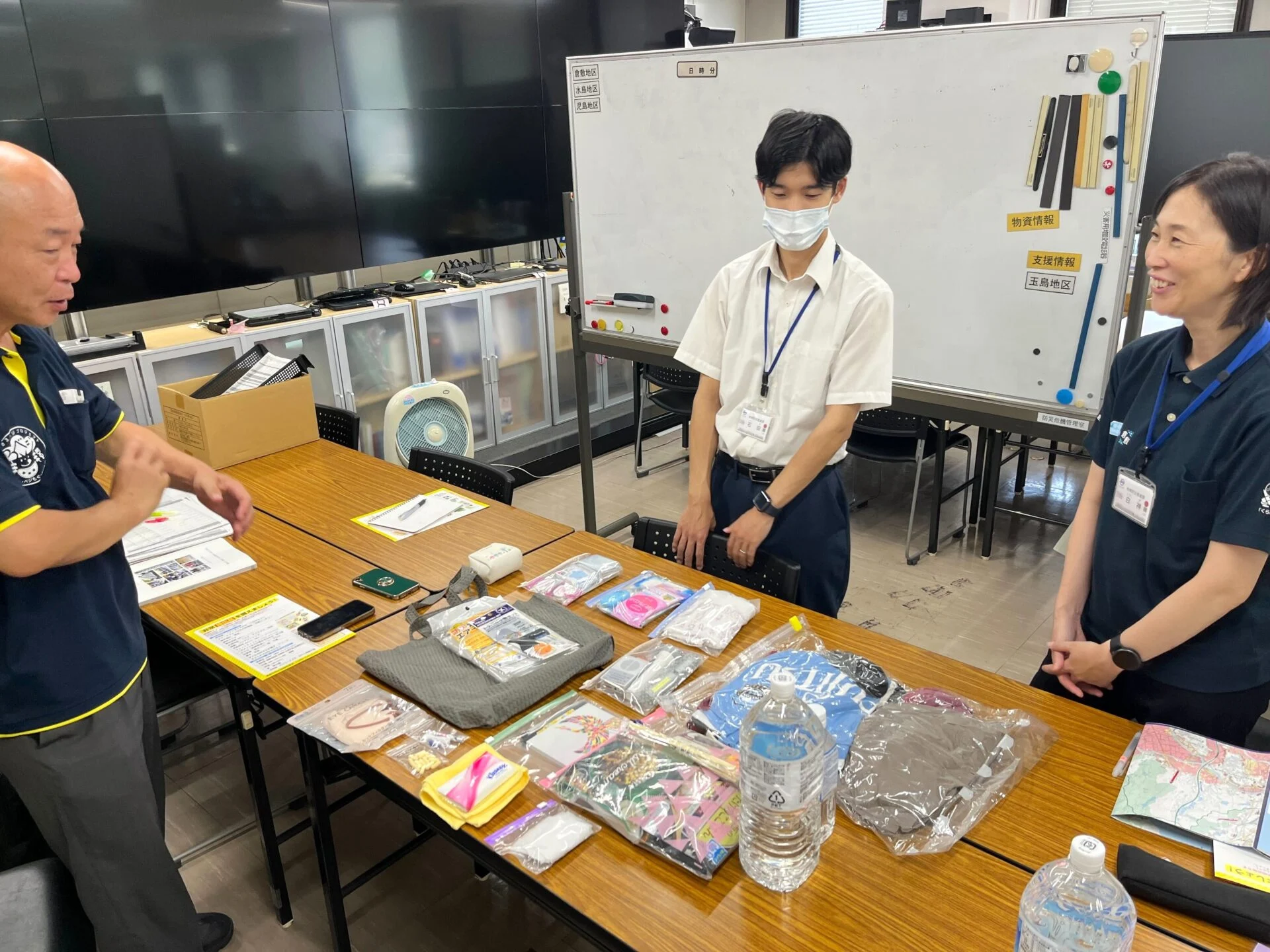
Questions to the Community Disaster Prevention Division about anxiety during disasters
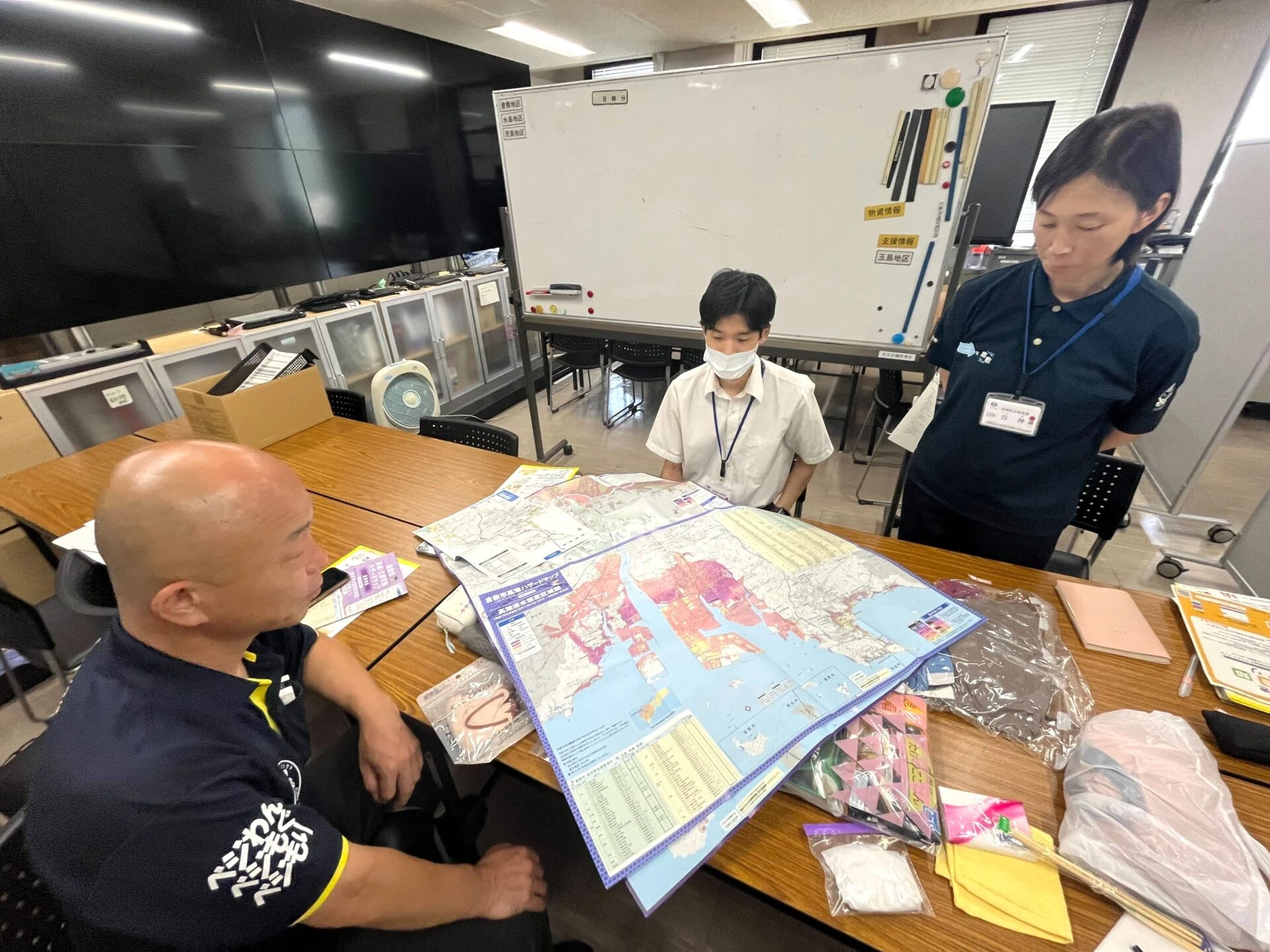
What happens if I can't take my disaster prevention backpack?
During a disaster, I think many people will evacuate without their disaster prevention backpacks. If I evacuate empty-handed, will I be able to receive support at the evacuation site?
Miyake
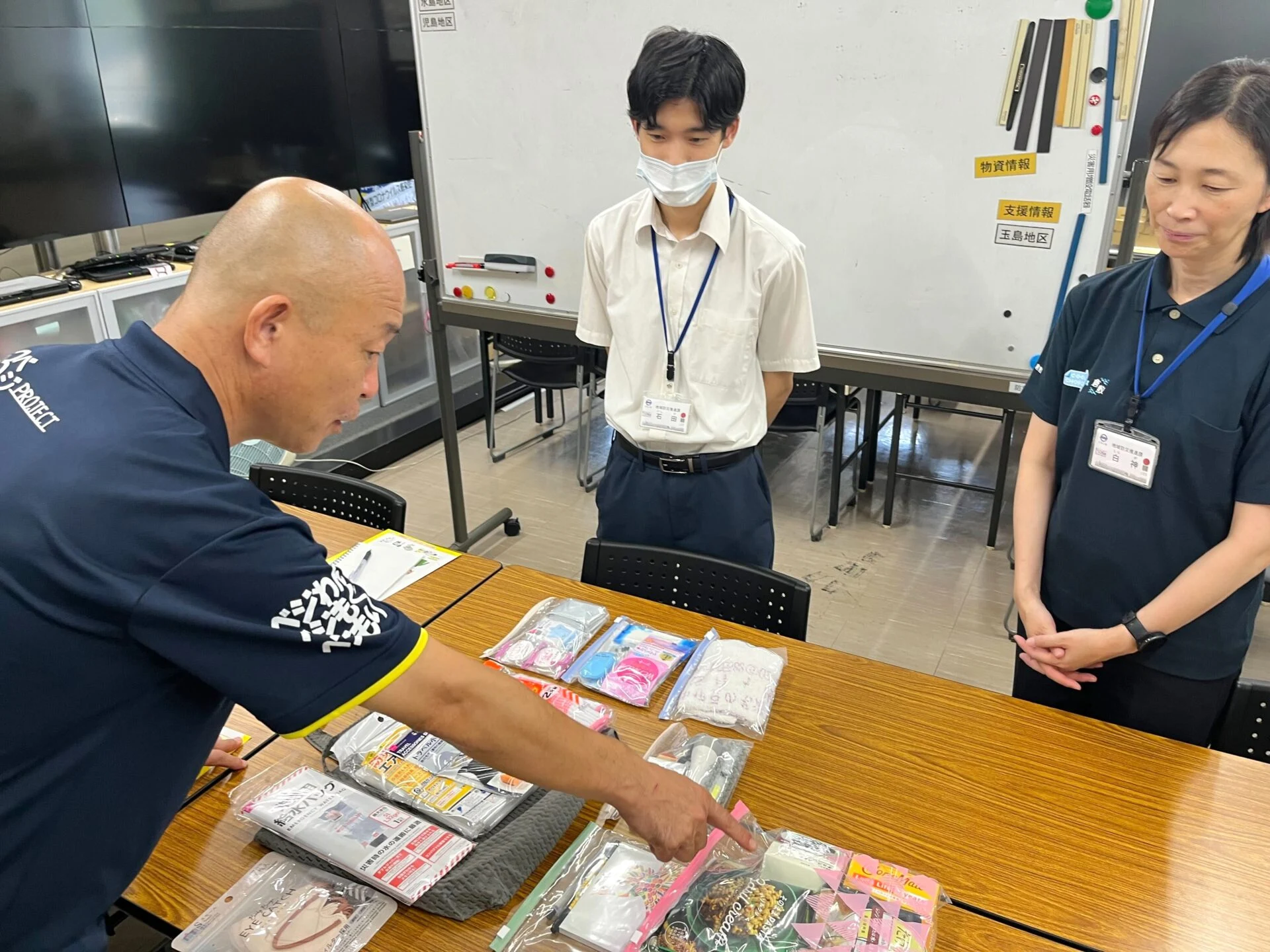
Designated emergency evacuation sites have disaster stockpiles set up.
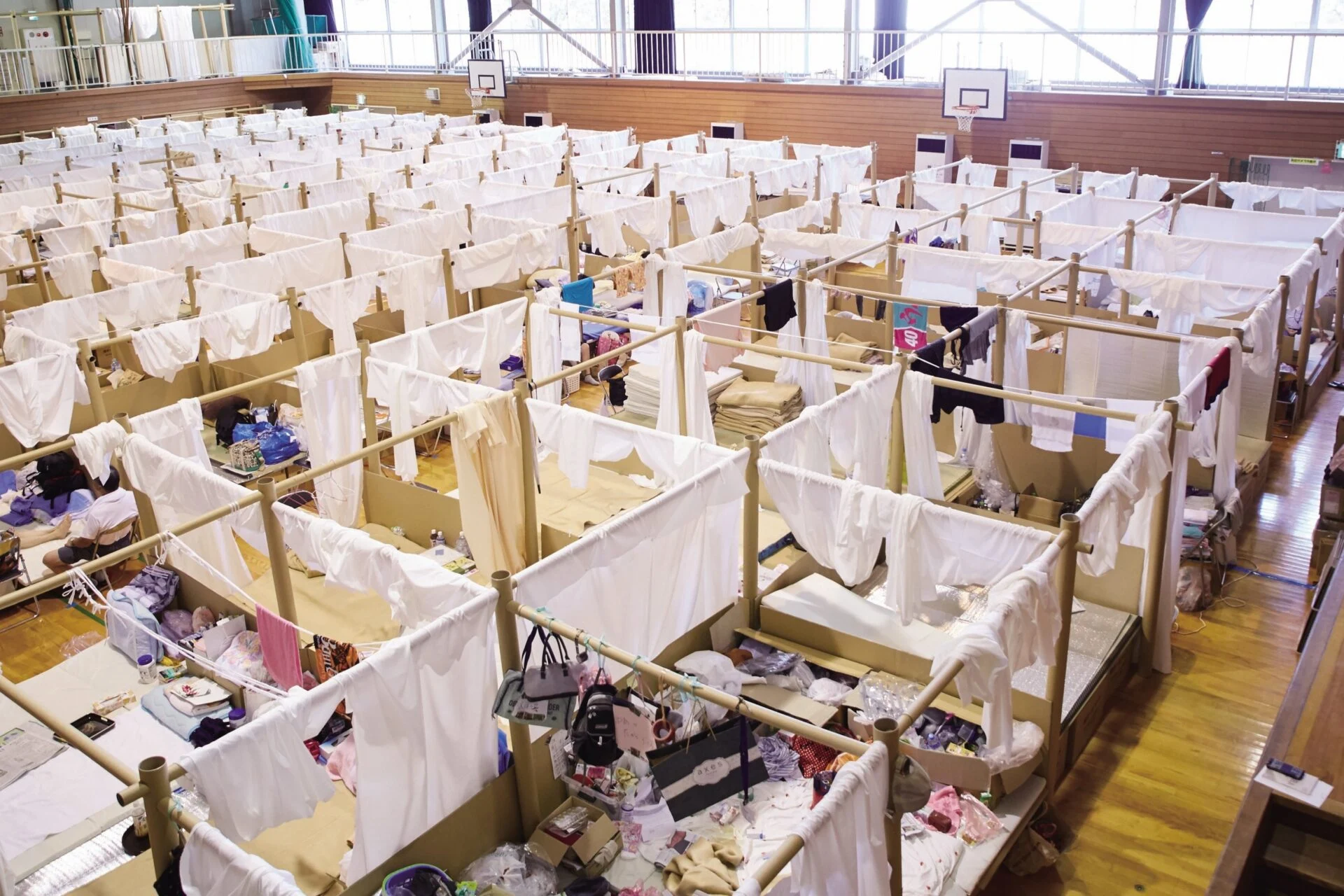
These disaster stockpiles contain emergency food such as alpha rice, drinking water, blankets, mats, towels, and supplies for 50 people to last for 2 days, so you can receive those items.
However, depending on the situation during a disaster, it is quite possible that more than 50 people will gather at the evacuation site. In that case, there may be a shortage of supplies, so it is reassuring to have at least some preparations for yourselves.
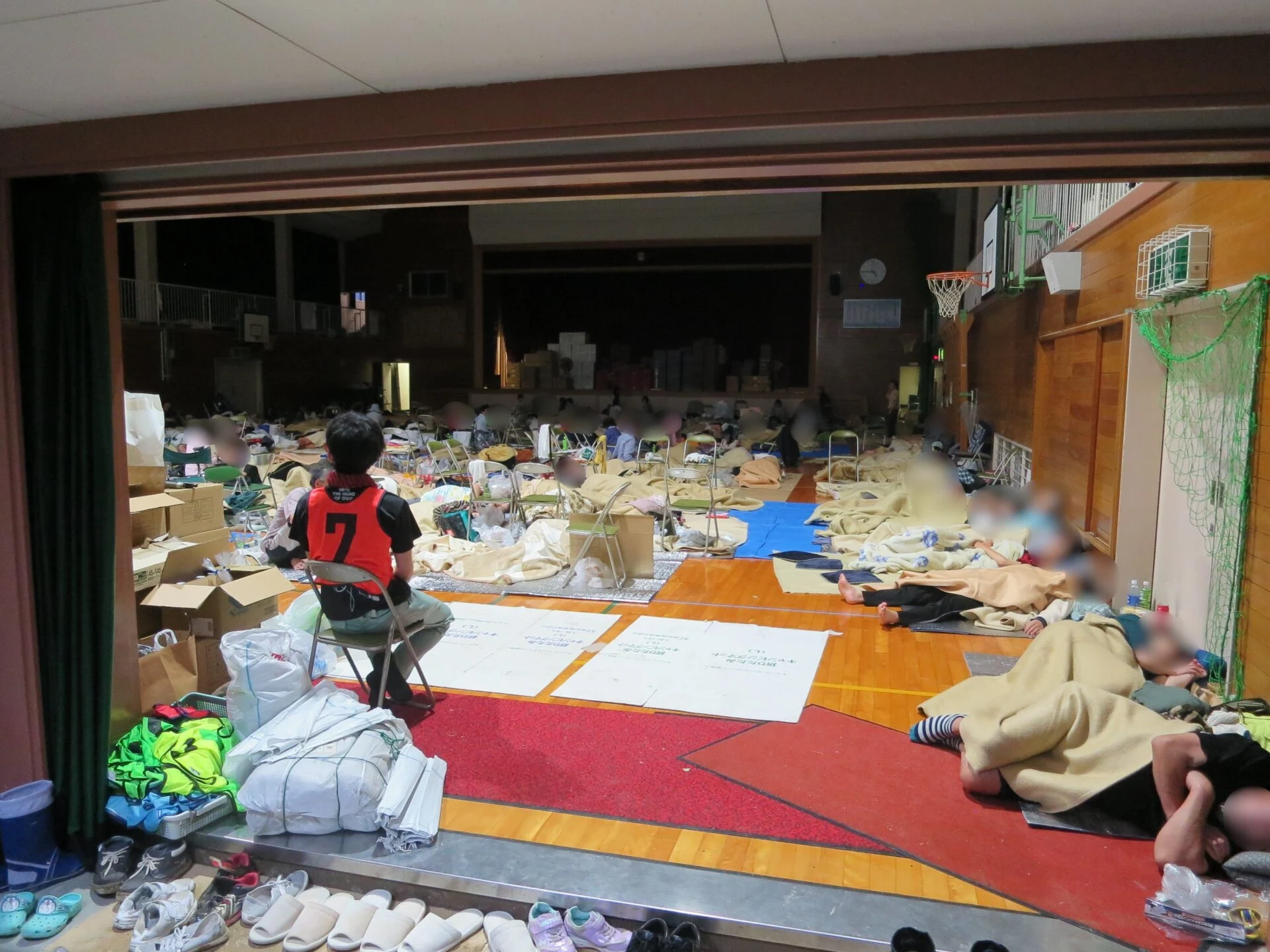
Considering the limited number of supplies, having a disaster prevention backpack makes a difference in the sense of security at the evacuation site.
Miyake
That's right. The items in the stockpile are meant for those who had no choice but to evacuate empty-handed, so I think it would be good to consider it that way.
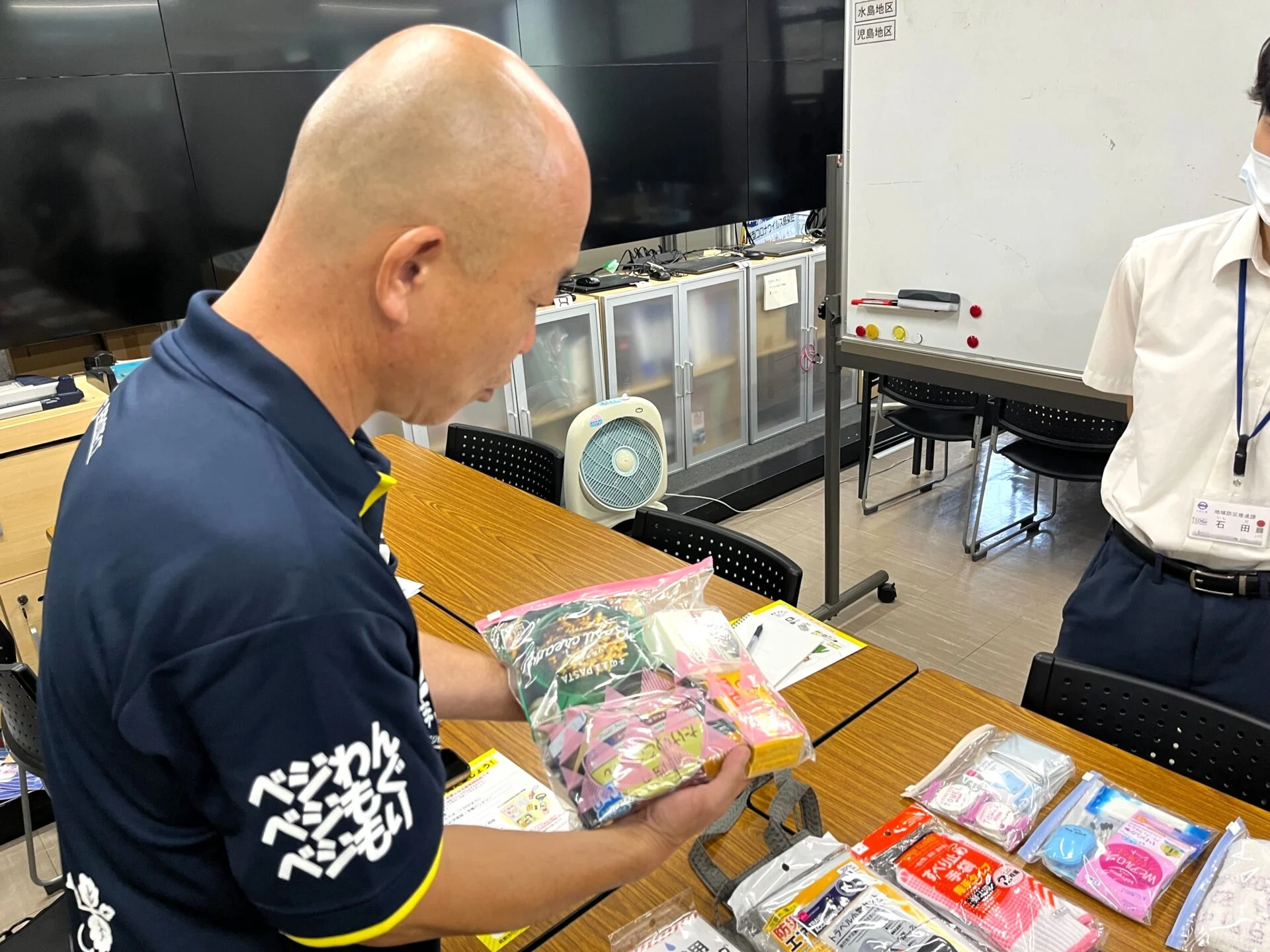
By the way, when evacuating, which is better, by car or on foot?
Miyake
There is no particular recommended method of transportation, and I think the way to evacuate will change depending on the type of disaster and the family's situation. For example, during the heavy rain disaster in July 2018 in Mabi, many families evacuated to the evacuation site by car.
If you evacuate by car during an earthquake, there may be situations where you have to leave your car behind due to road damage, liquefaction, or traffic jams. I recommend that healthy individuals evacuate on foot.
Also, considering taking out insurance to protect your assets is also one of the disaster preparedness measures.
When should I evacuate when a disaster occurs?
Will I be able to know immediately when an evacuation order is issued?
Shirakami
Evacuation information will be sent to your smartphone as an emergency alert message. In addition, you can also check evacuation information through emergency announcement FM radio, NHK's data broadcasting (d button), and Kurashiki Disaster Prevention Portal, so please check during a disaster.
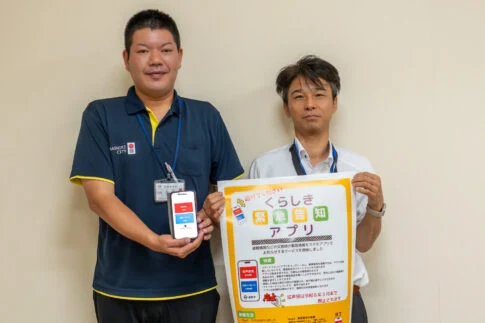
Additionally, from October 2025, the Kurashiki Emergency Announcement App will be operational. If you install the app on your smartphone and register your postal code, emergency broadcasts will play from your smartphone even if the app is not running.
Miyake
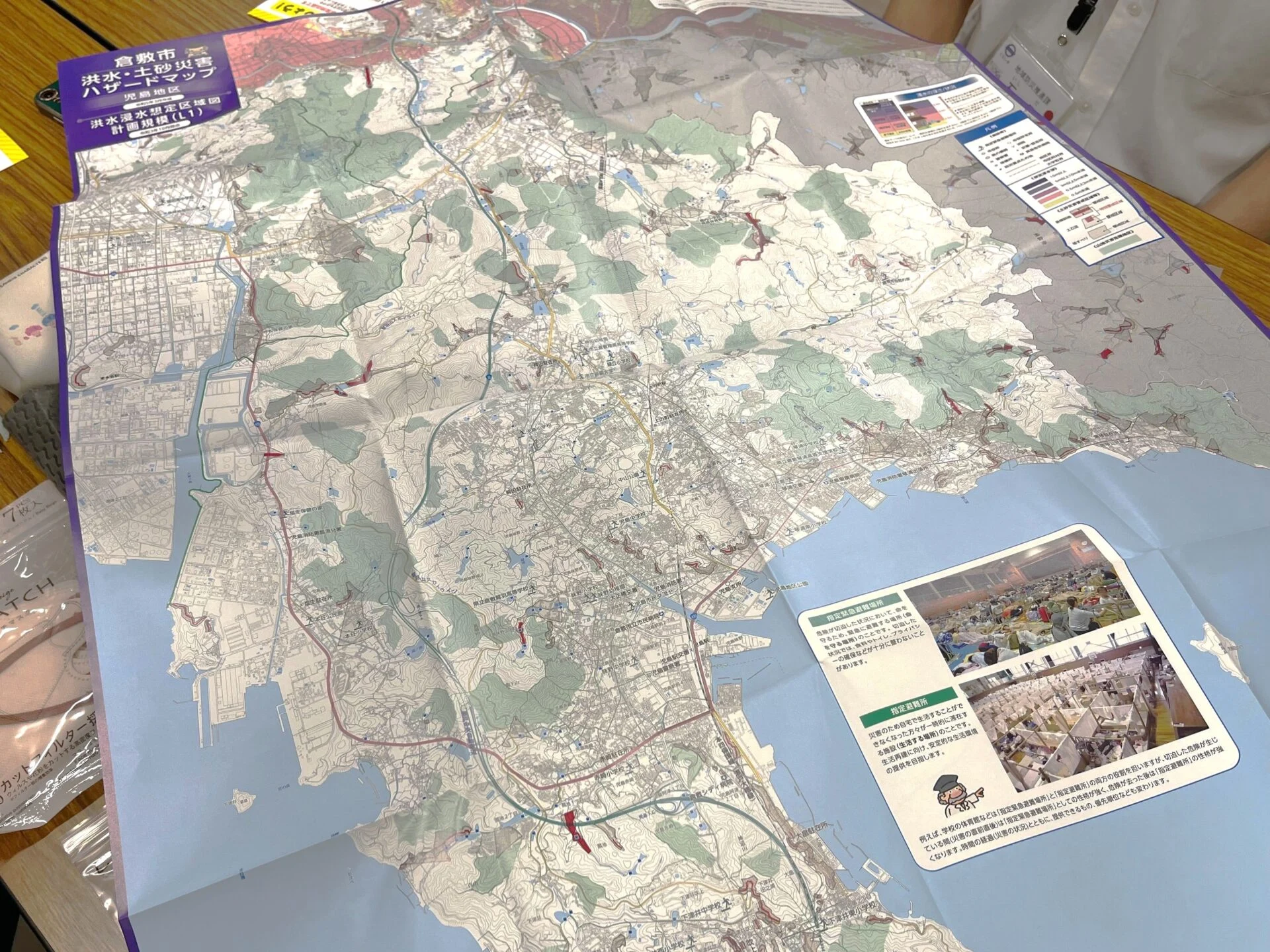
It is also important to know what kind of disaster risks exist in the area where you are.
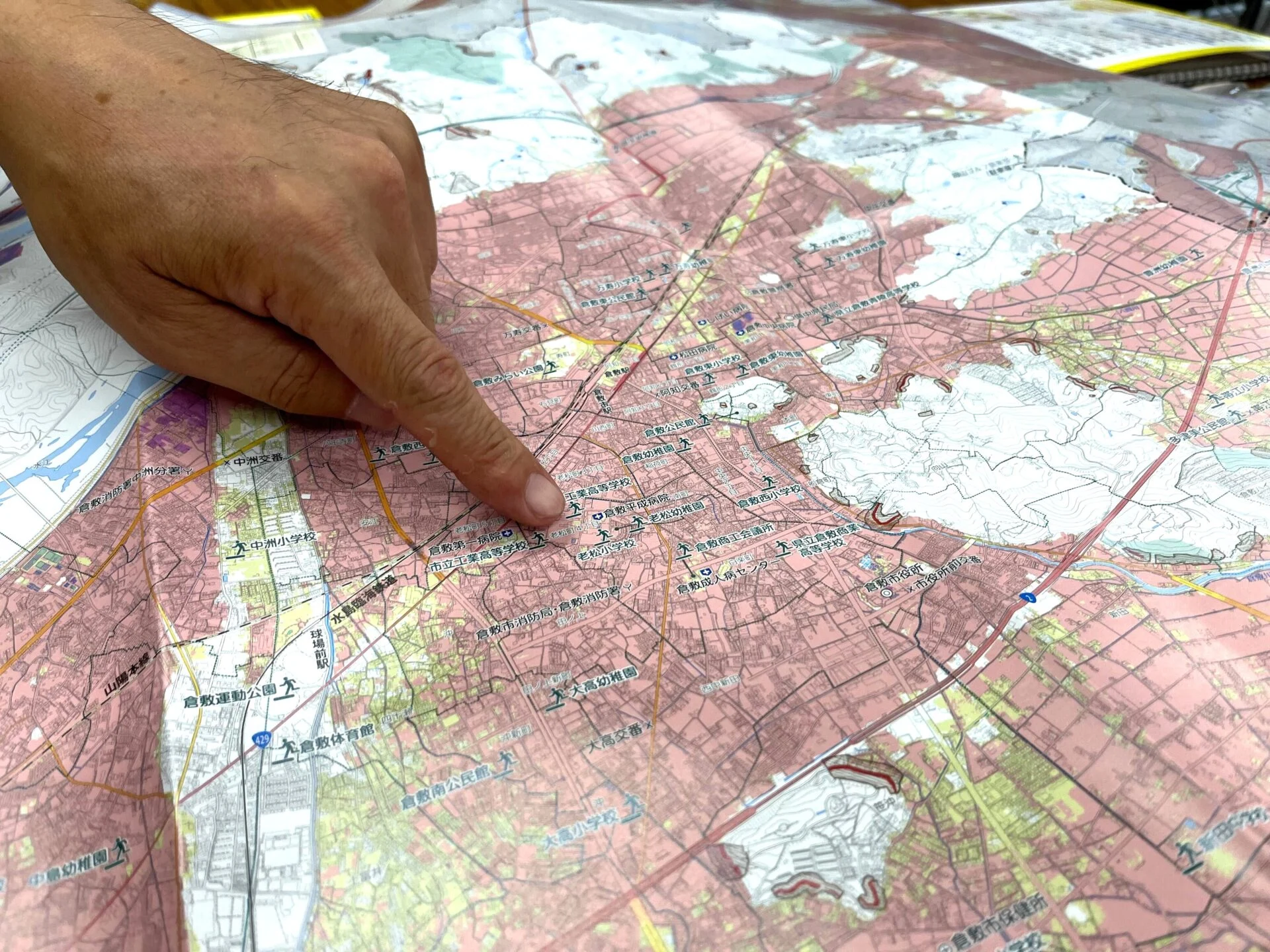
For example, is the area where your house is located at risk of flooding, and how much of your house would be submerged if flooding occurs? It is good to check the hazard map in advance.
Please tell me about the timing of evacuation during a disaster.
Shirakami
As mentioned earlier, it is important to accurately understand the hazards in the area where you are located. And evacuation is not just about going to elementary and junior high schools or community centers. Going to a safe relative's or friend's house is also considered evacuation, and ensuring safety indoors after checking the hazard map is also one form of evacuation.
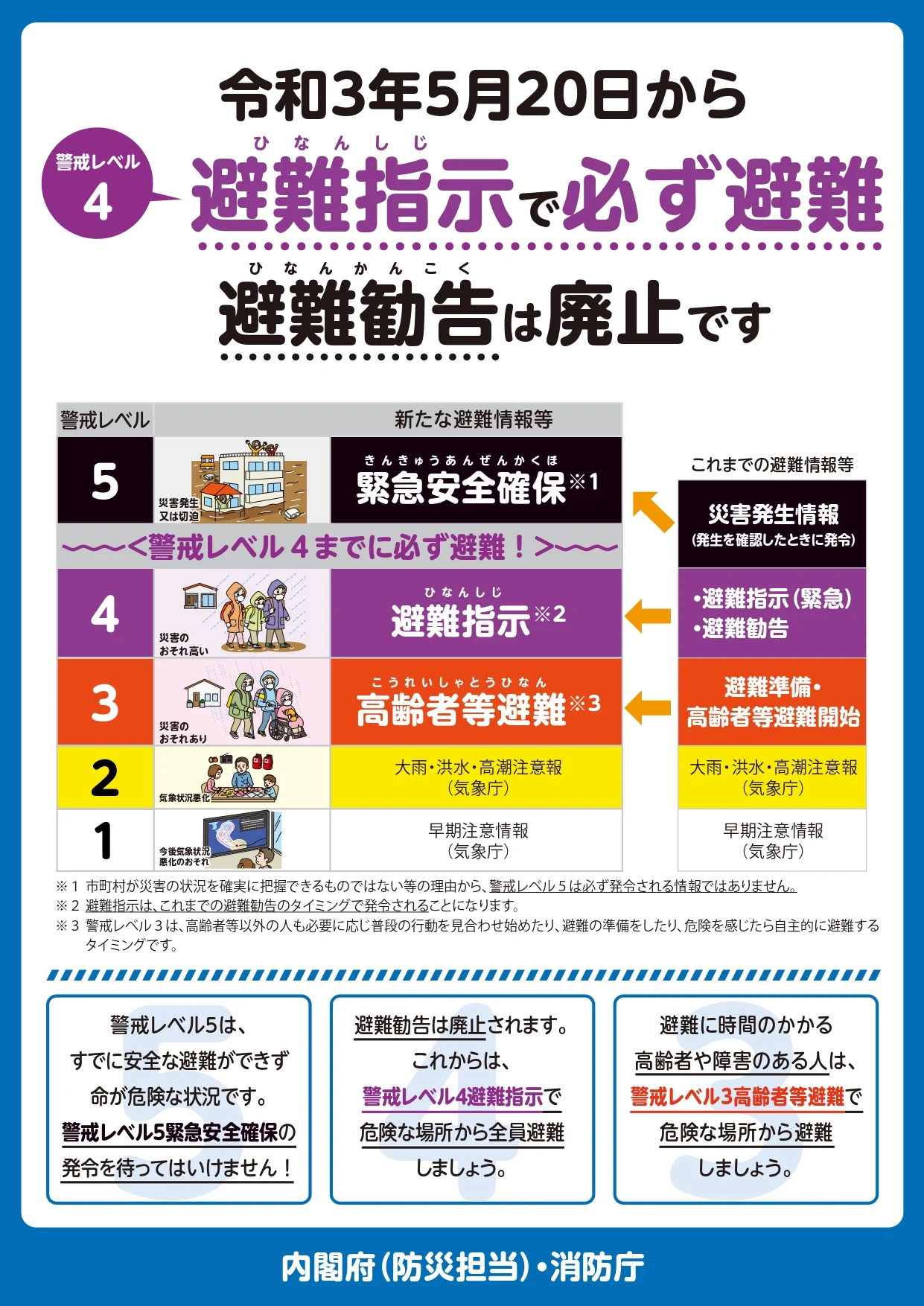
Kurashiki City will issue evacuation information at warning levels 3, 4, and 5.
Level 3, "Evacuation for the elderly and others," is issued when it is safe to evacuate. Those who may take longer to evacuate, such as the elderly and people with disabilities, should start evacuating at this time.
Level 4 is "Evacuation Order." Those in the affected area where damage is expected should evacuate.
When level 5, "Emergency Safety Assurance," is issued, a disaster has already occurred, and danger is imminent. When "Emergency Safety Assurance" is issued, please take actions to protect your safety on the spot, as evacuating may be more dangerous.
Even if I understand it in my head, I feel like it would be difficult to make a judgment when it comes time to evacuate.
Miyake
Indeed, if those around you are not evacuating, you might think, "It's still okay," and hesitate to make the decision to evacuate.
However, I sincerely hope that during a disaster, you will not be caught up in normalcy bias and will take actions to protect your life by following evacuation orders.
Hazard maps are updated every few years, so please check the latest version on the Kurashiki City website. Also, even if you know the nearby evacuation sites, please check the evacuation sites for each disaster, as they may not be opened depending on the type of disaster.
What else should I prepare besides a disaster prevention backpack?
For the elderly and others who may find it difficult to evacuate, I think they feel particularly anxious during disasters. Is there anything they can prepare?
Shirakami
It would be best if organizations like neighborhood associations can actively help each other, but I think there are things that can be done even at the individual level.
For example, if there are elderly people living nearby, you could check on them when evacuating. You could also reach out to foreigners who seem to have difficulty with Japanese. Just being aware of those around you is enough.
By being a little more attentive to your surroundings on a daily basis, I believe it can lead to mutual assistance during disasters.
Are there any other measures you would like to prepare besides the disaster prevention backpack?
Miyake
I recommend creating an individual evacuation plan. I would like many people, not just those who need support during evacuation, to create one regardless of age or gender.
Disasters can happen at any time. For example, if family members are affected at their workplaces or schools, the time spent unable to contact each other can be very anxiety-inducing.
By deciding in advance how to contact each other and where to meet in an emergency, I believe it can reduce anxiety during disasters, so please discuss it.
Conclusion
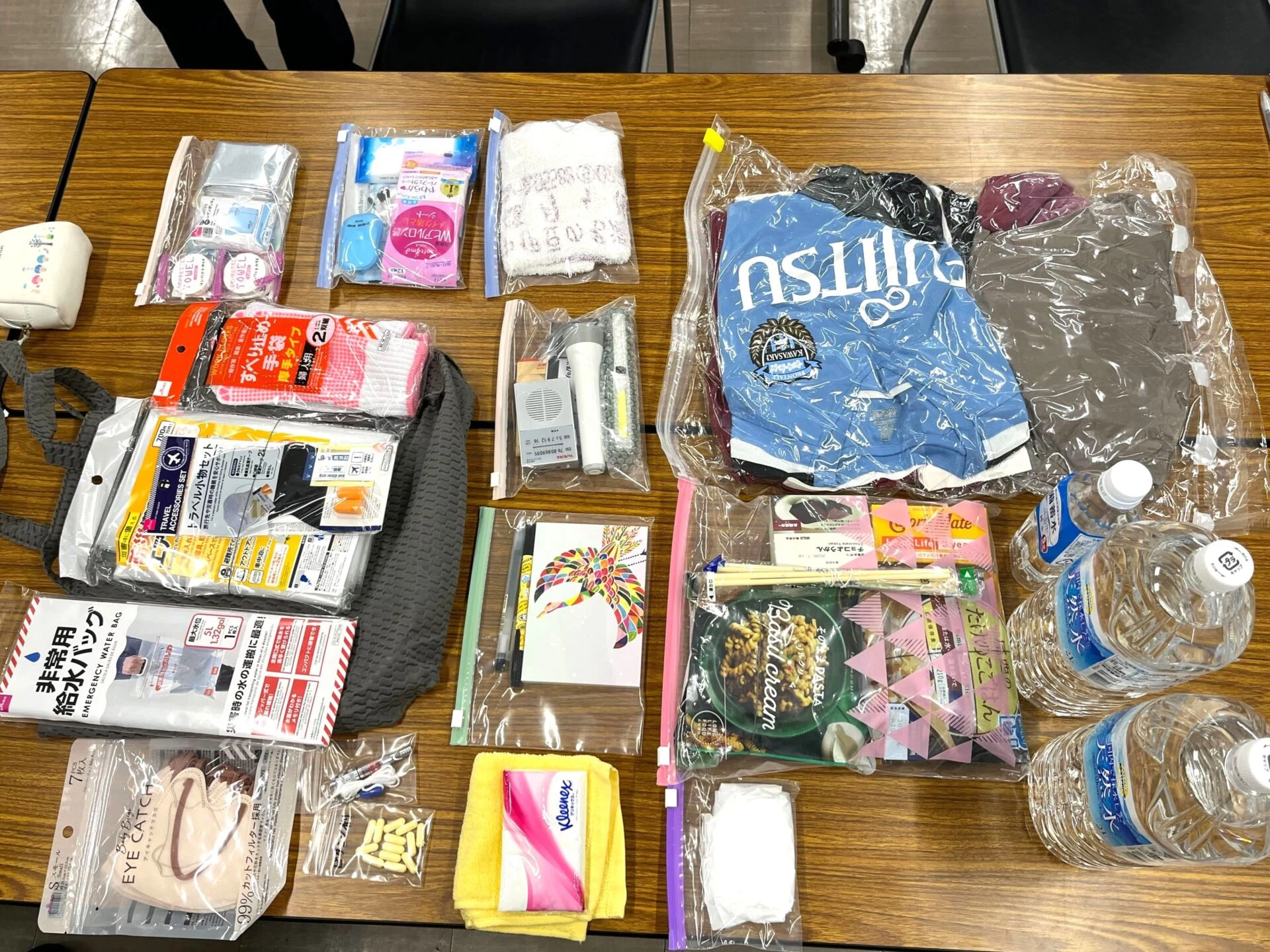
Making a disaster prevention backpack for the first time. I ended up packing too many things out of anxiety, but I realized that it is important to prioritize "ease of evacuation" when preparing.
After returning home, I reviewed my disaster prevention backpack and reweighed it, finding it had lightened from about 11 kg to about 8 kg, which was a relief.
Additionally, having supplies at home for a few days can be helpful in case you cannot go out due to health issues, which also provides a sense of security.
There are also commercially available disaster prevention backpacks, so it might be good to customize one based on a store-bought item.
To feel a little more secure during disasters, let's prepare for disaster prevention on a daily basis.
Data on Creating Your First Disaster Preparedness Backpack
| Name | Creating Your First Disaster Preparedness Backpack |
|---|---|
| Homepage | Kurashiki City Homepage "Disaster Prevention and Disaster Information" |

































You can check the disaster information from Kurashiki City related to this article through the links below.