When you use the internet on your smartphone or other devices, you see all kinds of online ads.
Online ads read information such as the websites you usually visit and your search history, then show you information tailored to you. As a result, the information can seem very appealing. But have you ever looked closely and realized that it contains information that is disadvantageous to you as a consumer?
It’s good if you notice, but sometimes you don’t notice at all. In that case, you may regret it after signing a contract. “Why didn’t I notice at the time…?”
The “Consumer Seminar to Protect You: Learn How to Safely Navigate Online Ads” will be held on Saturday, January 24, 2026, at the annex of Geibunkan Hall. This seminar is free to attend and helps you develop your “consumer savvy.”
We asked the organizers for more details, and here’s what we learned.
The information presented is as of the article’s publication in December 2025. Please note that it may differ from current information.
What is the “Consumer Seminar to Protect You: Learn How to Safely Navigate Online Ads”?

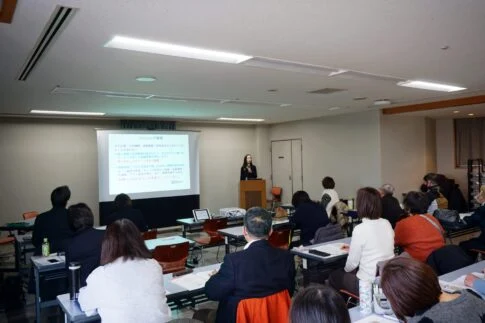
The “Consumer Seminar to Protect You: Learn How to Safely Navigate Online Ads” is a free seminar taking place on Saturday, January 24, 2026, in Conference Room 202 at the annex of Geibunkan Hall.
The seminar is being held as part of the Consumer Affairs Agency’s “Research and Verification Project on Publicity Methods to Raise Awareness of the Activities of Qualified Consumer Organizations and the Injunction Request System.”
What are qualified consumer organizations and specified qualified consumer organizations?
Corporations certified by the Prime Minister as consumer organizations with the qualifications necessary to exercise the right to seek an injunction in order to protect the interests of an unspecified and large number of consumers.
What is an “injunction request”?
A system that allows qualified consumer organizations to demand that businesses stop unfair practices such as “unfair solicitation,” “unfair contract terms,” and “unfair representations.”Source: Consumer Affairs Agency | We Protect Your Assets: The Consumer Organization Litigation System
About the seminar
The seminar consists of the following three parts:
- Exhibition on qualified consumer organization activities / Online ad-check quiz
- Lecture: Consumer Seminar to Protect You
- Consumer trouble consultation session (free, 30 minutes per person; first 8 people; reservation required)
The lecture will be given by Yuri Harada, a director of the general incorporated association EC Network. The venue can accommodate 60 people, and up to 300 people can attend online, making it accessible to many participants.
How to register
Registration is required to attend the seminar. You can register as follows:
- Submit the registration form
- Send the registration form by fax

About Consumer Net Okayama
The seminar is organized by Consumer Net Okayama, a qualified consumer organization in Okayama Prefecture.
It is an NPO established on June 6, 2007, with the aim of becoming a qualified consumer organization. Since its establishment, it has undertaken activities such as:
- Holding consumer consultation sessions
- Requesting businesses to improve unfair contract terms
- Raising awareness to prevent consumer harm, among other activities
Recognized for its ongoing record of activities to protect the interests of an unspecified number of consumers (including protecting and supporting the rights and dignity of people in vulnerable positions, such as older adults and people with disabilities), it was certified by the Cabinet Office on December 8, 2015, as Japan’s 13th qualified consumer organization.
We spoke with attorney Hidemasa Kawada, chair of Consumer Net Okayama, and its secretary-general about the “Consumer Seminar to Protect You: Learn How to Safely Navigate Online Ads.”
Interview with the chair and secretary-general of Consumer Net Okayama

Could you tell us how this seminar came about?
Kawada (honorific omitted)
The consumer organization litigation system is an important system designed to prevent and provide relief from consumer harm.
However, awareness of this system is very low. Since it is not included in the bar examination, many lawyers are unfamiliar with it as well.
Secretary-General
Although this is an issue that directly affects ordinary consumers, the system itself is not widely known.
There are a certain number of unscrupulous businesses whose practices go beyond ordinary promotional activities.
We planned this seminar because we want to prevent harm from these businesses and hope for a society where consumers can truly stand on equal footing with businesses when choosing products and services.
What are some of the seminar’s key points and highlights?
Secretary-General
We will introduce real-life consumer trouble cases, including dark patterns.
Dark patterns
Methods that use website or app design, advertising, or systems to steer consumers toward unintended, disadvantageous choices (such as unnecessary spending, disclosing information they do not need to share, or entering into contracts against their wishes).
The lecture will also clearly explain precautions and points to check when using the internet, as well as basic knowledge and etiquette for consumers.
Who would you like to attend?
Kawada
You might think this is aimed at younger people who are less familiar with contracts and similar matters, but we would like consumers of all ages to attend.
When you use the internet, things you are interested in appear on your screen, right? Dark patterns can be hidden among them.
We also welcome anyone interested in preventing consumer harm.

What would you like participants to take away from the seminar?
Secretary-General
In fact, only 8.7% of people who experience consumer harm contact a consumer affairs center (2021 Basic Survey on Consumer Awareness: Consumer Affairs Agency). This figure shows that many more people are experiencing trouble.
For example, in the lawsuit against health food seller GRACE, consumer affairs centers nationwide received 1,549 complaints over approximately three years.
Based on the above, calculating 1,549 ÷ 8.7% suggests that there were actually approximately 17,800 cases of harm.
Consumers may convince themselves, “It’s my fault for not reading the contract,” or “I’m to blame for not noticing,” and try to resolve the matter on their own.
Much consumer harm never comes to light, and in most cases people simply have to accept their losses. Through this seminar, we hope participants will recognize when “something doesn’t seem right.”
Do you have a message for our readers?
Kawada
I hope this seminar will help people develop a sense that “something feels off.”
When people see contract terms written out, they may find them tedious to read and simply accept them as they are. I believe it is very important to have the sense to pause and think, “This really is strange”.
Secretary-General
These cases are not reported in the mass media or covered in online news, so a great deal of harm occurs without us consumers realizing it. Money that should not have been paid could instead have been spent on products and services from businesses that work hard and operate honestly, and it would be better for that money to flow back into the local economy.
That is why we do this work. We hope that this seminar will be an opportunity to gain knowledge and, when something seems wrong, to provide information so that Consumer Net Okayama, as a qualified consumer organization, can seek an injunction.
We hope you’ll join us at the seminar.
From the Writer
I’m embarrassed to admit that I didn’t know about “qualified consumer organizations” or “injunction requests” until I covered this story. After learning about them, though, I thought, “What a reassuring resource!”
The moment we see an ad, we may think, “That product is right for me,” and sign up on impulse—often without even reading the detailed contract terms. By the time we realize it after signing, it’s too late.
It’s reassuring to know that we can provide information in situations like that.
The seminar offers the chance to learn a wide range of useful information. Why not take this opportunity to learn about “qualified consumer organizations” and “injunction requests”?
“Consumer Seminar to Protect You: Learn How to Safely Navigate Online Ads” Information
| Name | Consumer Seminar to Protect You: Learn How to Safely Navigate Online Ads |
|---|---|
| Date | Saturday, January 24, 2026, noon–4:10 p.m. |
| Location | 1-18-1 Chuo, Kurashiki City |
| Admission (tax included) | Free |
| Website | Consumer Net Okayama |


What would you like to know about Kurashiki?
Enter a search term to find articles on this site