Kurashiki and Africa. Despite being regions with vastly different languages, cultures, and lifestyles, there is a professional soccer player who was born and raised in Kurashiki and continues to challenge himself in Africa.
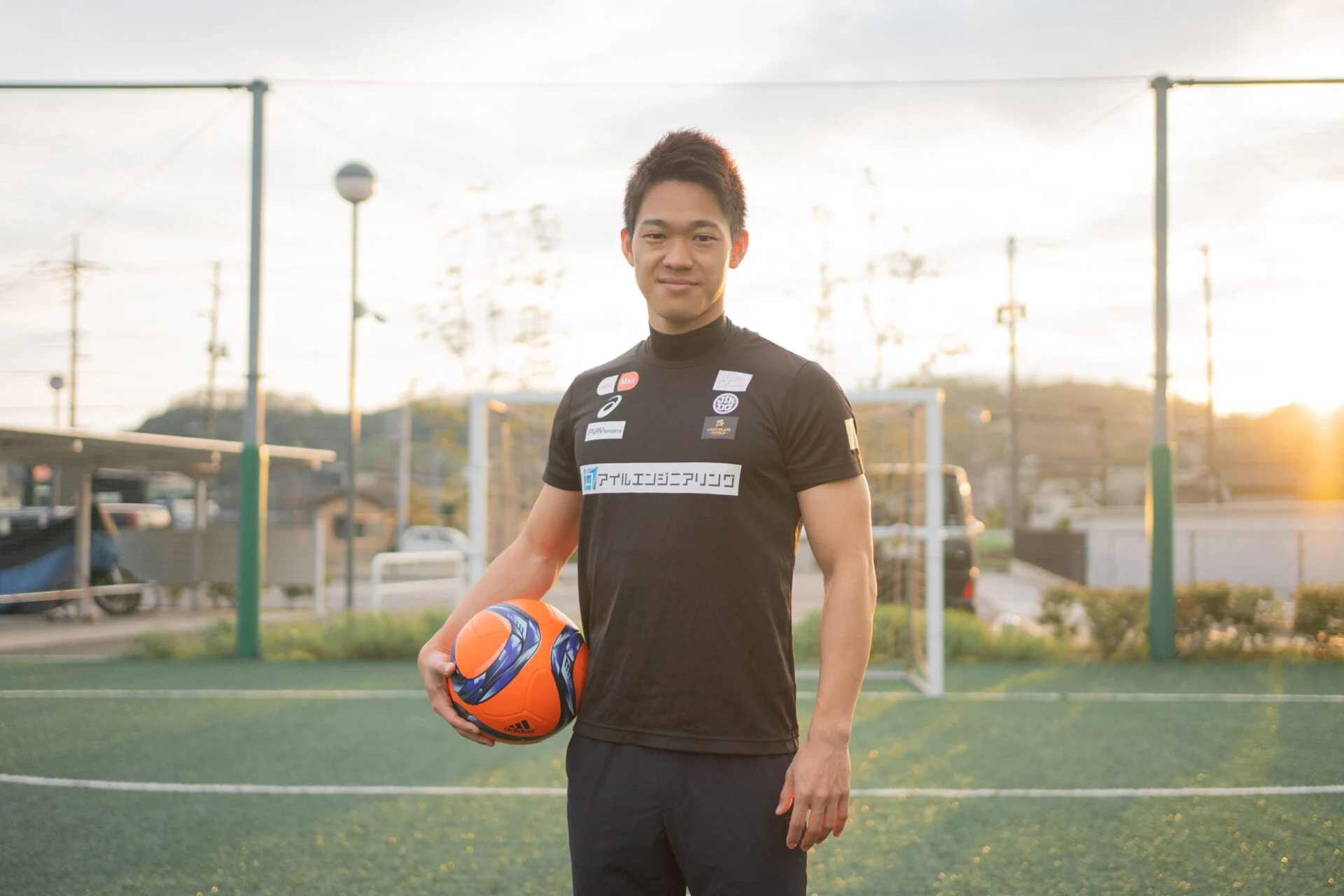
Morishita Jindou is a soccer player who was born and raised in Kurashiki City and has achieved a professional contract in African leagues such as Zambia and Ghana.
He is active as the first Japanese soccer player in Ghana and has gained popularity among the local people.
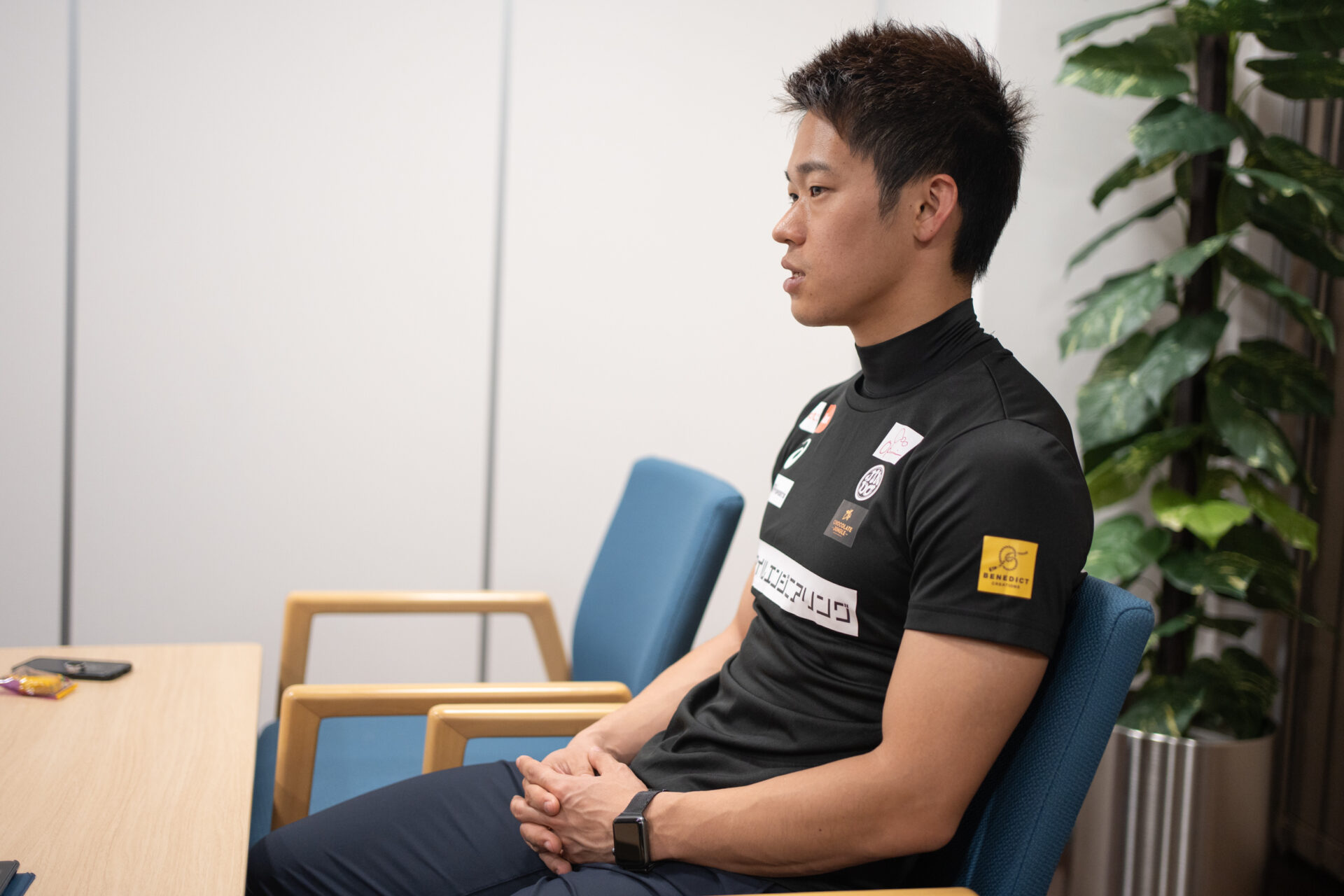
Morishita-san expresses, “I want to become a person that Kurashiki can be proud of.” Here, we introduce his activities.
About Morishita Jindou
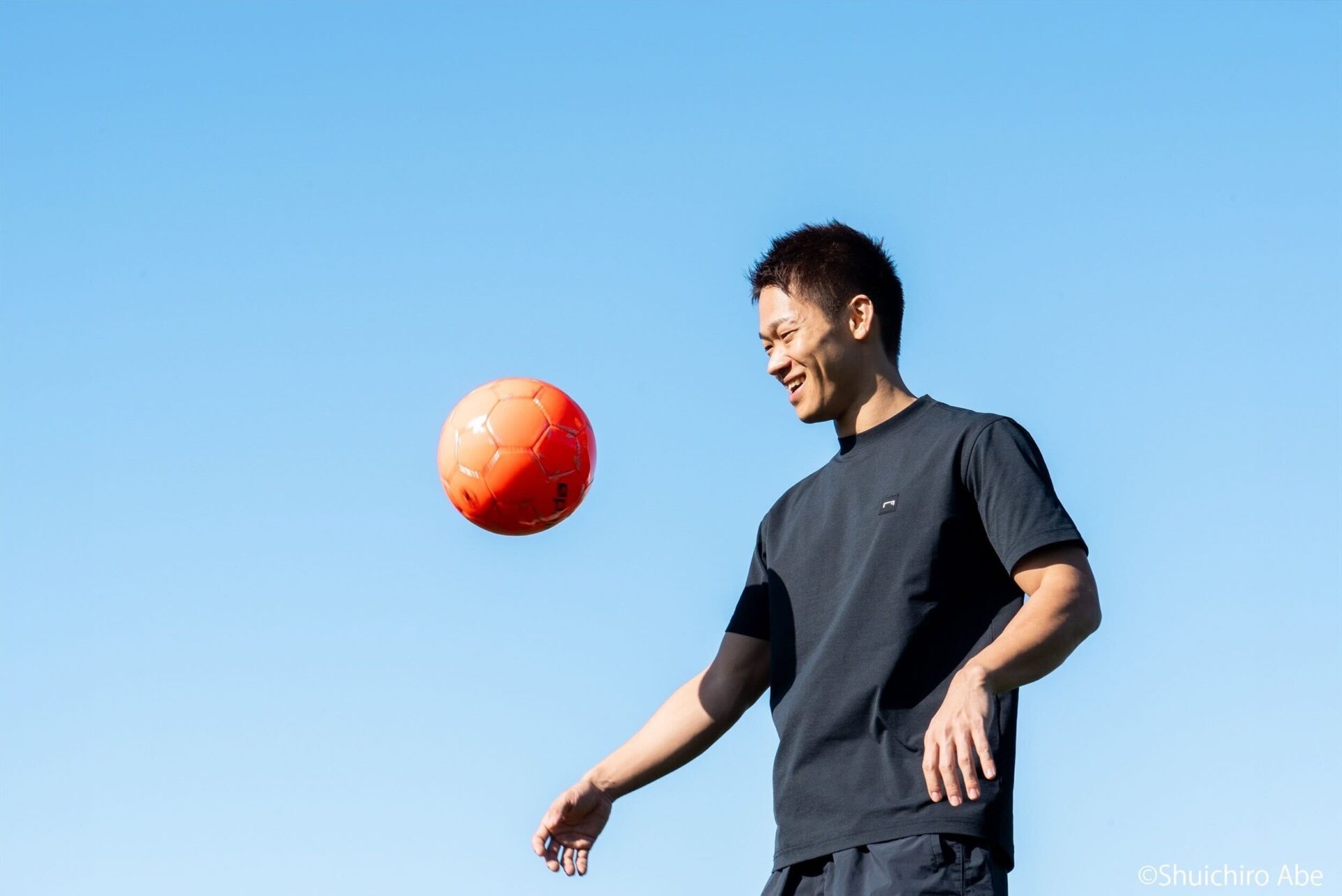
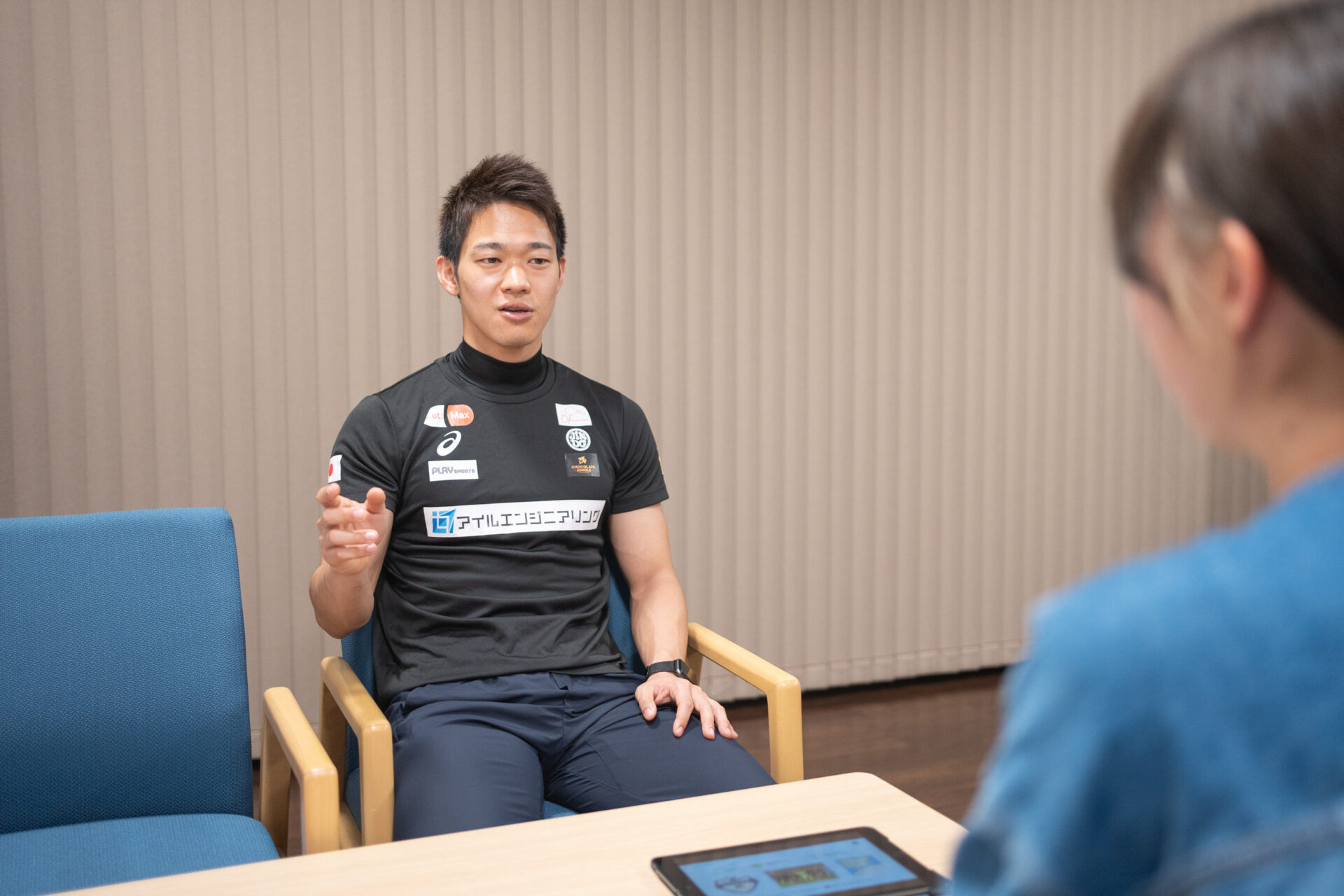
Morishita Jindou is a player active in the professional soccer leagues in Africa. (As of April 2024, he is 28 years old)
Born in Kurashiki City in 1995, he encountered soccer during his childhood in the Netherlands, and after returning to Japan, he joined JFE Kurashiki FC (now Pinnacle Kurashiki FC), Hajasu Football Academy, and the soccer club of Okayama Prefectural Kurashiki Seiryo High School.
From a young age, his passion for soccer was strong, and during high school, he even took a year off to study soccer in Indonesia.
After graduating from high school, he enrolled in the prestigious Tsukuba University for soccer and made his professional debut in Zambia while still a student. He later transferred to Ghana, where he has been contributing to the league as the first Japanese player in Ghana for two years. His activities have been covered by many media outlets both in Japan and abroad.
Morishita-san is not only active as a soccer player but is also involved in numerous activities that lead to international support.
- Ghana's "Tuk Tuk business" that created employment for local supporters
- At a soccer academy (NGO) in Ghana, he provides "soccer coaching and life skills training, gender issues, and career development guidance"
- Attracting sponsorship from Japanese companies to save the club from financial difficulties
- Providing internships that connect Japanese companies with outstanding African students
- Operating the online English conversation service "EvolvEng"
He has also been involved in activities that connect Japan and Africa, as well as Kurashiki and Africa, such as attracting local companies from Kurashiki to sponsor Ghana and guiding students from his alma mater, Okayama Prefectural Kurashiki Seiryo High School, to Ghana.
As of April 2024, he is temporarily back in Japan for rehabilitation due to an injury, but he plans to continue challenging himself in soccer in Africa.
Let’s look back at the story of Morishita-san, who has been running through a life dedicated to soccer, up to the present.
Encounter with Soccer
Let’s reflect on the first encounter with soccer.
Childhood in the Netherlands
The reason Morishita-san started playing soccer lies in his childhood spent in the Netherlands.
At the age of 5, he moved to the Netherlands due to his father's job transfer, and began attending an international school.
At that time, Shinji Ono was active as a professional soccer player in the Netherlands.
Surrounded by physically strong Dutch players, Morishita-san admired Ono-san, who captivated supporters with his technique. Ono-san's success became the reason Morishita-san started playing soccer.
Initially, he struggled with communication in English, but through soccer, he found opportunities to connect with friends without using words. His soccer skills improved more than his English, and he became a respected figure among upperclassmen.
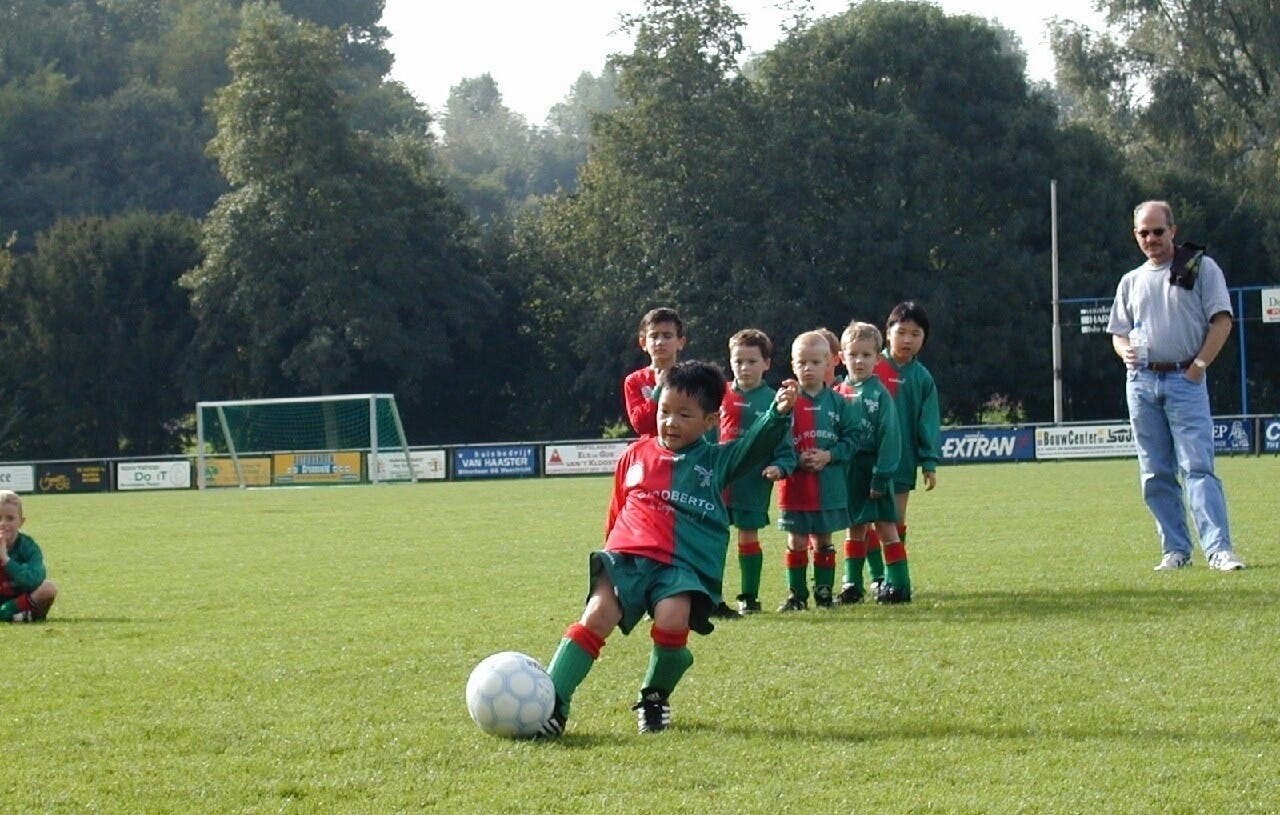
His opportunities to touch the ball were not limited to school; he also belonged to a club team. In the Netherlands, he spent his days immersed in soccer.
Overcoming Bullying After Returning Home with the Support of a Club Team
At the age of 11, Morishita-san returned to Kurashiki from the Netherlands and transferred to a local elementary school.
What awaited him there was bullying. The English he had spoken for years was not accepted by his classmates, and he experienced severe bullying.
In this difficult environment, the existence of a club team became his emotional support.
Morishita-san joined JFE Kurashiki FC (now Pinnacle Kurashiki FC), one of the top clubs in Okayama Prefecture at the time. Despite feeling the harshness of the rigorous training, playing soccer with his club teammates became a place of belonging for Morishita-san.
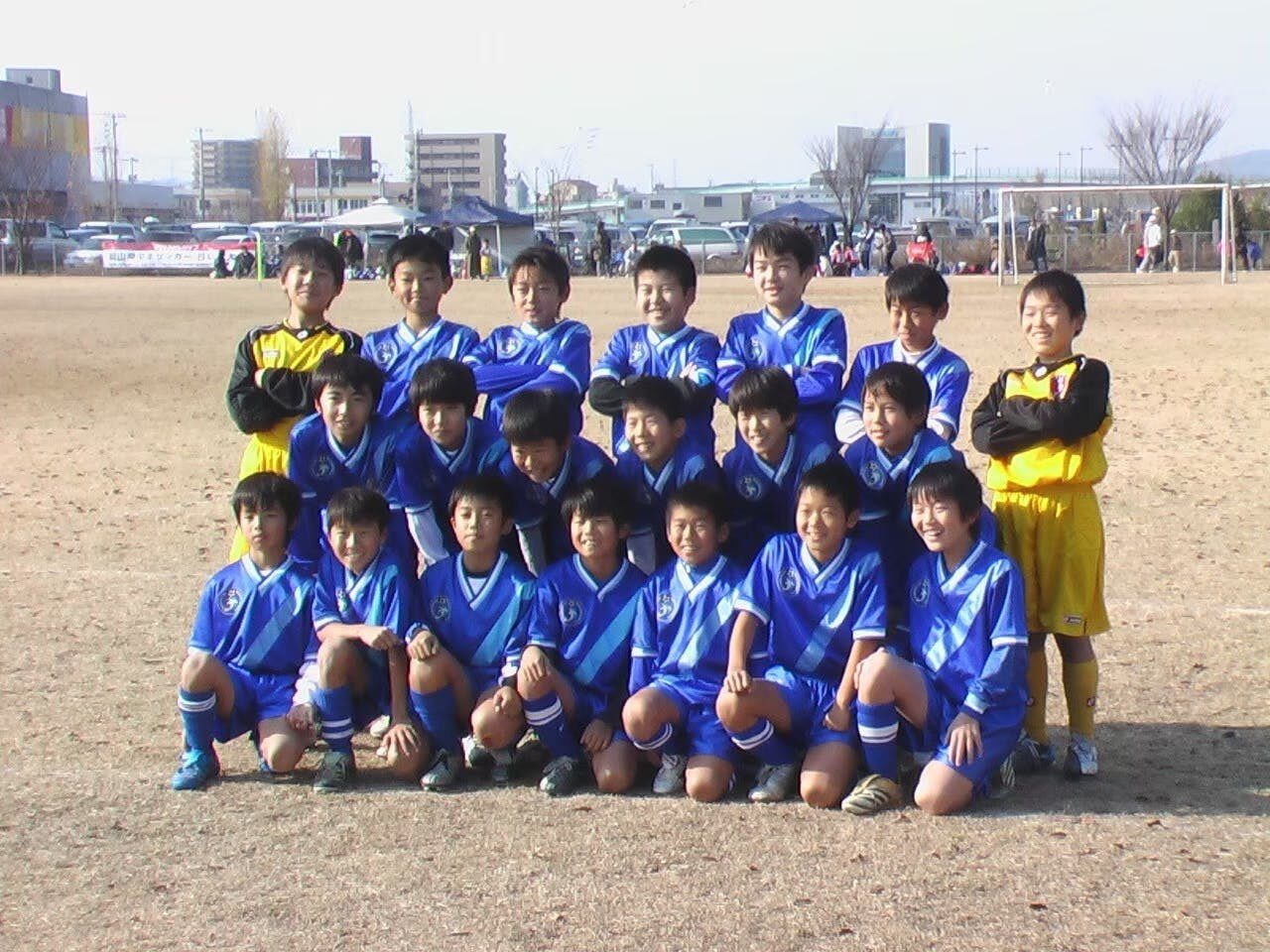
While at JFE Kurashiki FC, Morishita-san experienced winning the prefectural tournament, and the vague dream of wanting to become a professional soccer player began to transform into a realistic goal.
High School Years with Achievements in Indonesia
With the goal of becoming a professional soccer player becoming clearer, Morishita-san joined the strong club team Hajasu during middle school and was selected for the prefectural representative team.
At the age of 14, after receiving advice from his mother, he learned about Tsukuba University, which has produced many professional soccer players.
He enrolled in Okayama Prefectural Kurashiki Seiryo High School to prepare for entering Tsukuba University.
Struggles with Dilemmas in the Soccer Club
Morishita-san entered Okayama Prefectural Kurashiki Seiryo High School and joined the soccer club.
The soccer club at Okayama Prefectural Kurashiki Seiryo High School had a record of being ranked in the top 4 in Okayama Prefecture at the time, and Morishita-san participated in club practices even before enrollment.
However, at the time Morishita-san joined, the advisor and club members who had led the team to the top 4 were no longer there, and he could not practice as he wished. His former club teammates were thriving in other teams, and Morishita-san felt a sense of urgency.
Feeling unsatisfied in an environment where he could not play to his full potential, he asked his father, who was stationed in Indonesia at the time, about the soccer situation there. He learned that soccer is very popular in Indonesia and is cherished as a national sport, which sparked a desire in Morishita-san to challenge himself in a new environment.
However, it was a difficult choice to leave Japan, considering studying for university entrance exams and the possibility of missing the final tournament.
Ultimately, he was encouraged by his mentor, who said, “If you are hesitating, you should definitely go,” and decided to take on the challenge in Indonesia.
New Challenges in Indonesia
In Indonesia, he started by joining local expatriates' casual soccer games.
After participating for a while, he met a professional player active in Indonesia during a practice match. Upon learning that Morishita-san was not affiliated with any team, that player introduced him to the coach of his professional team, allowing Morishita-san to practice with the local academy youth.
Later, he was scouted by the coach of a strong soccer team at Jakarta International School, and he spent his days studying during the day and practicing with the select team after school.
He participated in the last Southeast Asian soccer tournament during his stay, and his team finished as runners-up. Furthermore, Morishita-san ranked in the top 3 in the scoring rankings and was selected as the tournament's outstanding player. His performance was so impressive that he was even named in the Indonesian national team.
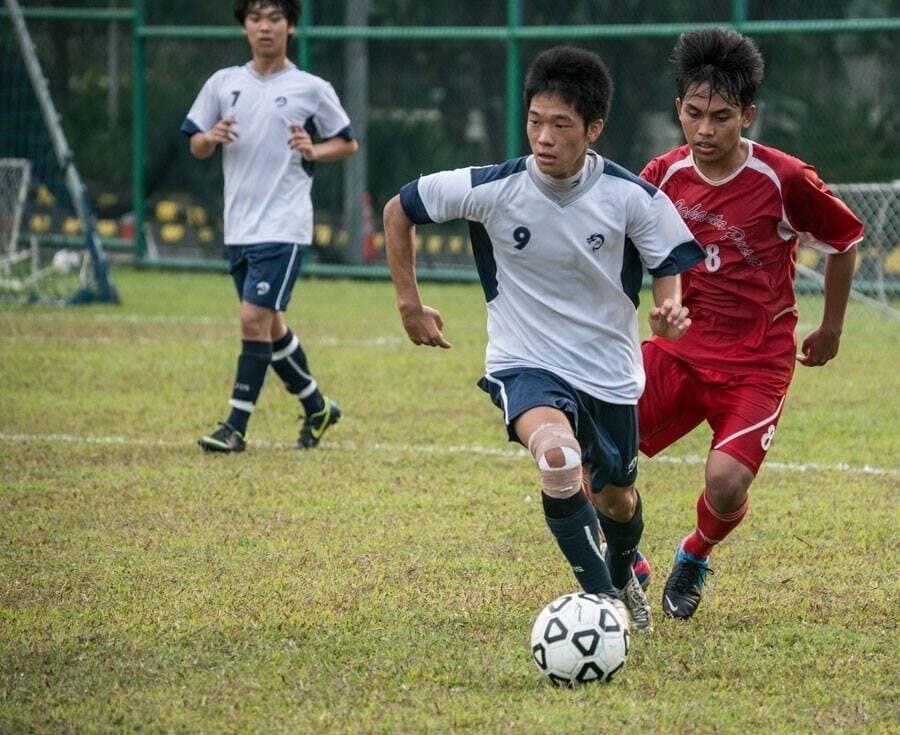
“By working hard at soccer and achieving results in the places I was given, my connections and opportunities kept expanding. I believe that the experience of pioneering unknown places through soccer has led to my later success in Africa,” he reflects.
Balancing Studies and Soccer During Entrance Exam Period
Upon returning to Japan, he quickly became an entrance exam student, but he conveyed to his homeroom teacher his strong will that “I will never quit soccer,” and continued practicing without retiring from the soccer club until graduation.
However, with advice from his advisor, he focused on studying for two months during the summer without playing soccer. Those two months were the most intensive study period of his life, and as a result, his academic score improved by about 20 points, and he began receiving A grades in mock exams.
He was focusing on studying for the physical education entrance exam, but his homeroom teacher suggested he apply for the recommendation entrance exam for the International Comprehensive Studies. He successfully passed the recommendation entrance exam and advanced to Tsukuba University.
He chose the International Comprehensive Studies for the recommendation entrance exam, and later mentioned that this choice opened the path for him to challenge Africa.
University Years
After enrolling in Tsukuba University and joining the soccer club, Morishita-san made his professional debut in Zambia while still a student.
Starting from the 6th Team
The Tsukuba University soccer club, established in 1896, is one of the oldest clubs in Japan. It has produced numerous soccer players, and soccer enthusiasts from all over the country gather there.
As a result, the number of club members is large, and the teams are divided into levels from the 1st to the 7th team, with only the top 1st team receiving direct coaching from the coaches.
Prospective members must first overcome a two-month trial period called the "Freshman Course." The Freshman Course involves intense physical training and instilling the organizational culture of the soccer club, serving as a foundation for physical and mental strength.
New students who pass the Freshman Course are assigned to teams from the 1st to the 7th based on their level. Morishita-san was assigned to the 6th team. He witnessed the skill gap with the higher teams, but he used that frustration as motivation to practice hard, ultimately rising to the 2nd team.
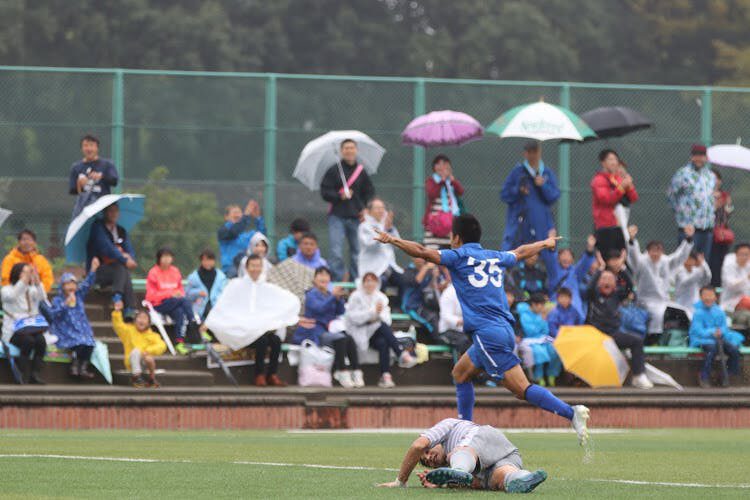
However, he felt that if he remained in the current situation, his dream of becoming a professional would not be realized, so he began to strategize for turning professional.
To become a professional outside of offers, one method is to participate in a tryout, where players showcase their abilities in practice and matches to attract offers from professional teams.
However, tryouts attract players of similar skill levels, so it was necessary to stand out even more.
Morishita-san began planning to train in regions with high soccer levels and aimed to become a professional soccer player in Japan after returning home.
Decision to Challenge Africa in the 4th Year of University
Shortly after enrolling at Tsukuba University, Morishita-san faced a dilemma about whether to transfer from the International Comprehensive Studies to the Physical Education department.
When he consulted with Coach Masaki Koido about transferring, he was persuaded, “It’s better to stay in the International department and be someone who covers sports while being able to speak English, as it will provide more options for the future, so don’t transfer.”
At the time, he felt dissatisfied, but later he mentioned that the idea of challenging soccer in Africa emerged from conversations with friends he met in the International Comprehensive Studies.
While enrolled in the International Comprehensive Studies, Morishita-san was also part of the international development research lab in the Physical Education department. He was introduced by a professor from that lab to an opportunity to accompany a sports international conference held in Zambia.
Wanting to build connections for playing soccer in Africa, Morishita-san begged the professor to let him accompany the trip to Zambia for a week. At the venue, he printed a QR code linking to videos of his soccer play on the back of his business cards and distributed hundreds of them.
As a result, he established connections with representatives of the Zambian national team and was invited to take the entrance test for a professional team in Zambia.
The idea of printing business cards with QR codes came from casual conversations with friends in the International Comprehensive Studies.
Activities Beyond Soccer in Africa
Morishita-san made his professional debut in Zambia and later thrived as a professional soccer player in Ghana. His activities expanded beyond soccer to include international support. Here, we introduce his activities from his professional debut in Africa to the present.
Zambian Soccer Cultivated in a Different Culture
Just before graduation, Morishita-san took a leave of absence and went to Zambia as the 9th cohort of the "Tobitate! Study Abroad JAPAN" program run by the Ministry of Education, Culture, Sports, Science and Technology. He experienced many culture shocks and participated in tryouts for local professional teams, finally achieving his long-awaited professional debut.
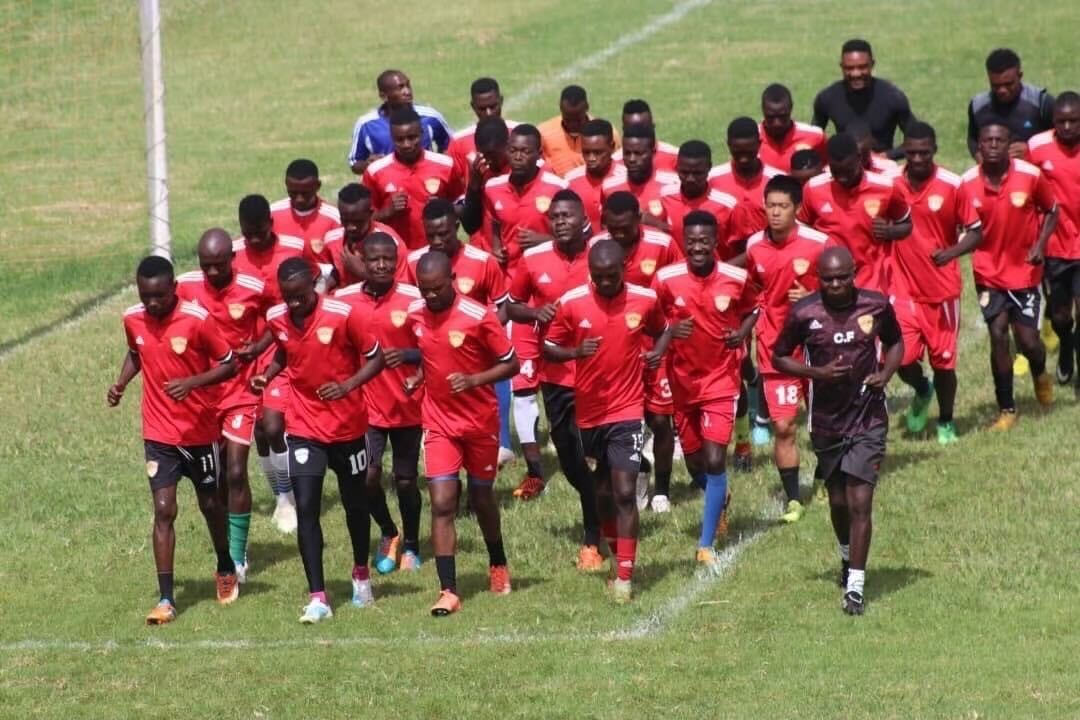
During the tryout, I also experienced racism through soccer.
At the first professional team I tried out for, I was clearly told in the final selection that "we cannot sign an Asian player."
"For the locals, not being able to become a soccer player means they can't support their families, which is a matter of life and death. Knowing the local realities made me reflect. Still, since this is the professional world, I approached the next tryout with the mindset that I had no choice but to do it," he says.
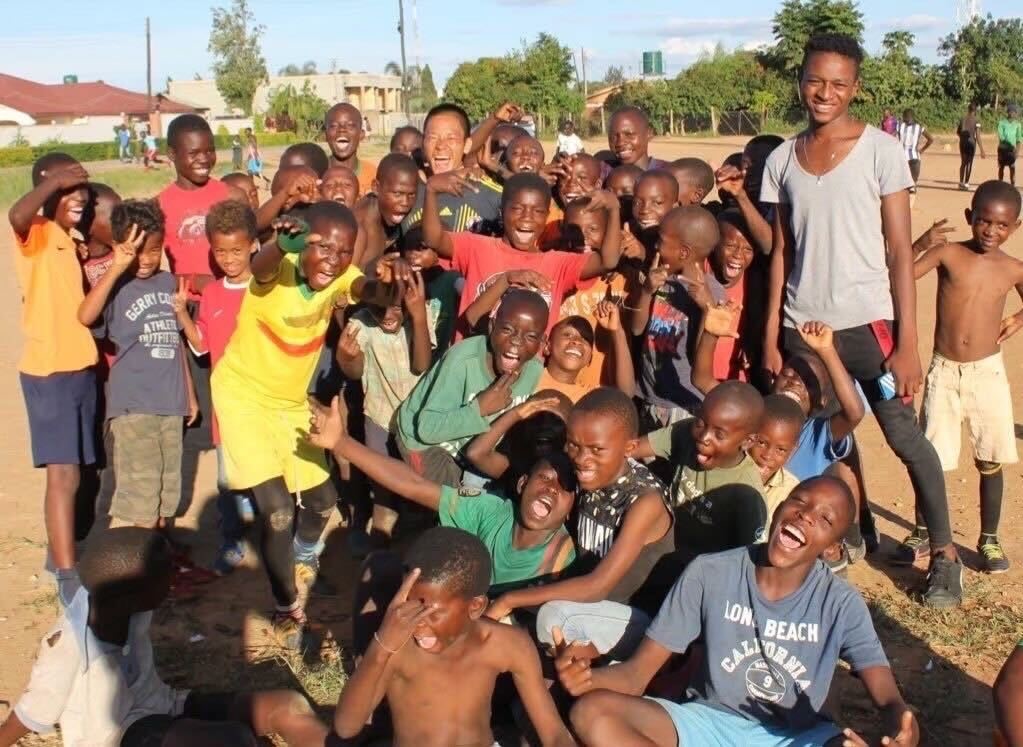
At first, there were days when I felt stressed living in a foreign land.
Communication with my host family did not go well, and I lost 10 kg due to the unfamiliar food culture, but Morishita gradually adapted to Zambian culture.
He thought, "There is a way to create conditions in Africa."
Although life in Zambia was often filled with culture shock, he gained new perspectives. In addition to the previous reverse calculation thinking of "setting goals and planning the path," he added the additive thinking of "how to accumulate this moment."
Currently, during his rehabilitation period, he reflects on "what can I do because I got injured," which he attributes to the additive thinking he developed in Zambia, allowing him to switch his mindset effectively.
Tuk-tuk Business Creating Fans in Ghana
After returning to Japan and graduating from university, just as he was aiming for his long-awaited J-League debut, he was struck by the sudden loss of his sister. The shock of his sister's sudden passing, combined with the COVID-19 pandemic, led to a period when he could not play soccer.
However, with strong support from his family, he decided to continue playing soccer. He readily accepted an offer from a team in Ghana, and a new challenge began.
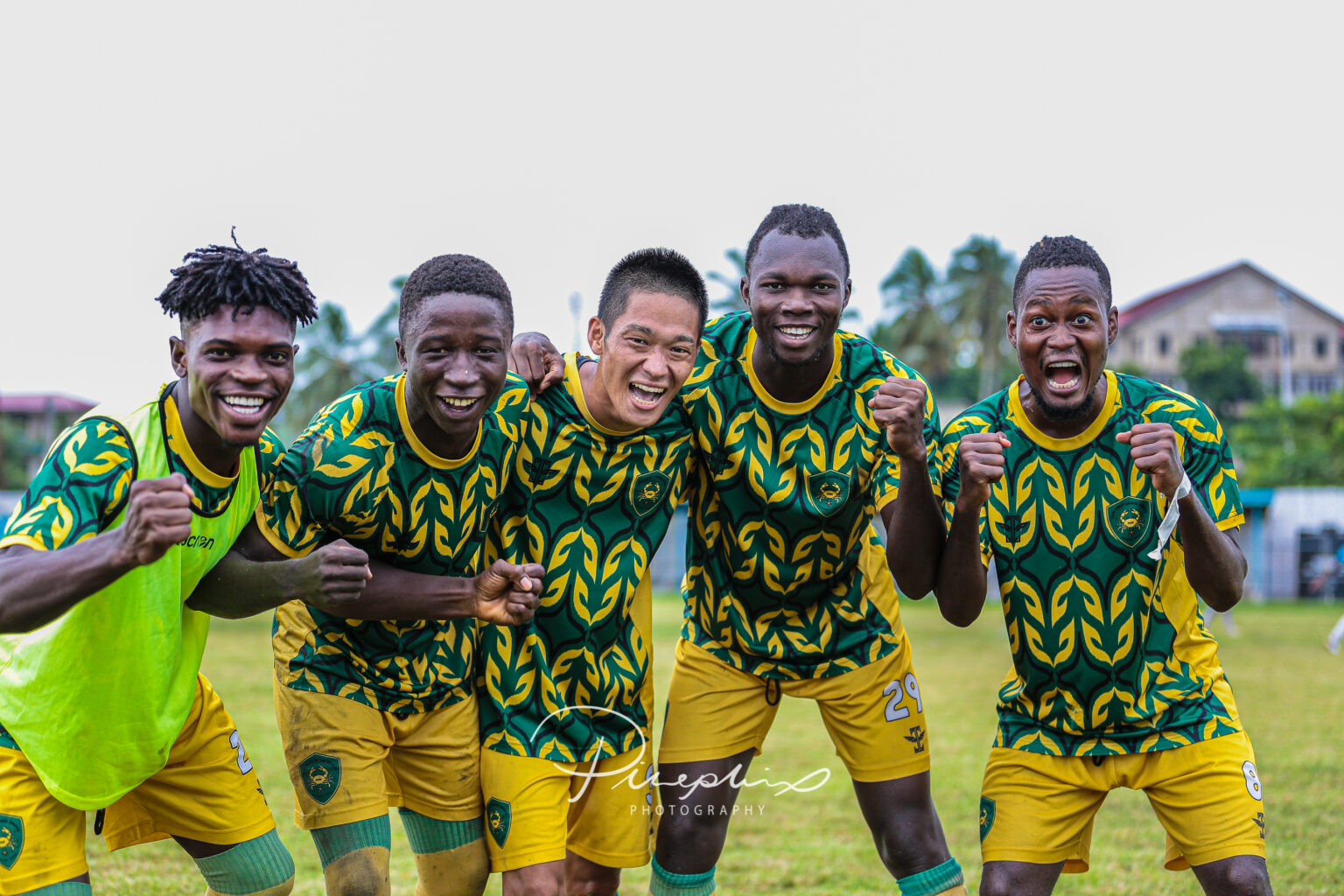
As the first Asian player in the Ghana League's history, the local expectations were high, and he received media attention at the time.
However, in Ghana, he also faced racism from the coach, leading to days when he could not participate in matches. Against a coach who would not let foreign players play, Morishita thought, "Let's increase the number of fans supporting me and apply pressure from the outside."
What Morishita established was the tuk-tuk business. He employed local supporters and used the proceeds to hold children's soccer tournaments multiple times. As a result, supporters, drivers, children, and their families who used the tuk-tuks began to come to the matches, saying "Let's go support Morishita."
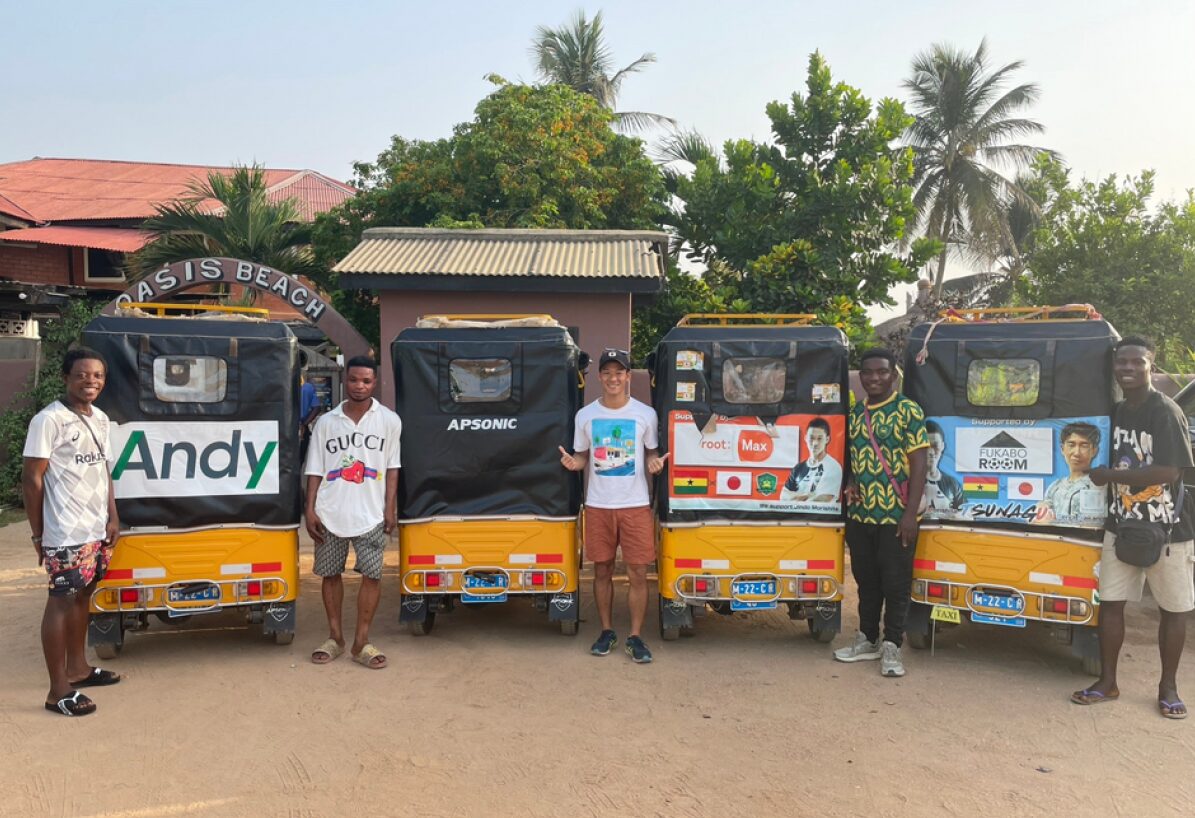
There were supporters who got angry at the coach for not letting him play.
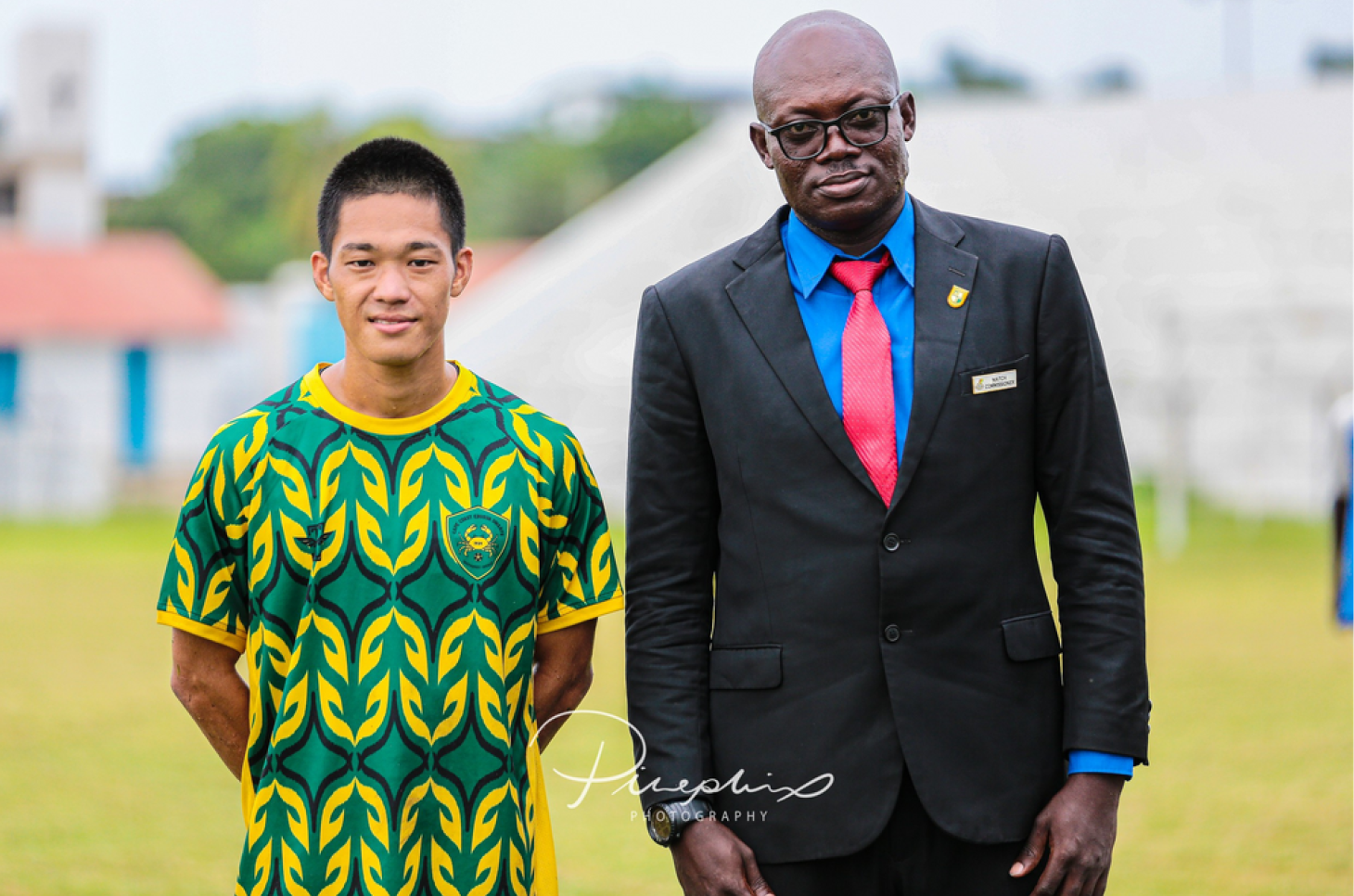
His playing time gradually increased from 5 minutes to 10 minutes, and he finally achieved full participation. He performed so well that he received the Man of the Match award, given to the best player, and helped to energize the Ghana League.
Overcoming the Biggest Injury and Moving to Morocco
After achieving two professional contracts in Ghana, the next stage he aimed for was Morocco. Morishita mentions that Morocco is currently the strongest soccer country in Africa, having ranked 4th in the 2022 FIFA World Cup.
He went out to promote himself and met a team willing to sign him. With the joy of being able to play in a higher-level environment, he put even more effort into his training.
However, during training while back in Japan, he suffered a serious injury of a torn anterior cruciate ligament.
The injury, which requires 10 months of recovery, dealt a significant blow to his athletic career and put his move to Morocco in jeopardy.
At that time, he received a call from a Japanese company with a branch in Morocco, saying, "We would like to sponsor you, so could you negotiate with the team again?"
An alumnus of Tsukuba University, who knew of Morishita's activities in Africa, reached out to him. Grasping the connection brought about by his past efforts, he decided to take on the challenge in Morocco.
Connections Continuing to Expand in Hometown Kurashiki
Morishita is not only active as a professional but is also involved in various businesses through soccer.
Here are some episodes related to Morishita's activities in Kurashiki, both in Africa and Japan.
Meeting with Aile Engineering, the First Japanese Corporate Sponsor in Ghana
The presence of sponsor companies is essential for athletes.
Among the sponsors supporting Morishita's activities is a company from Kurashiki that he met in Ghana.
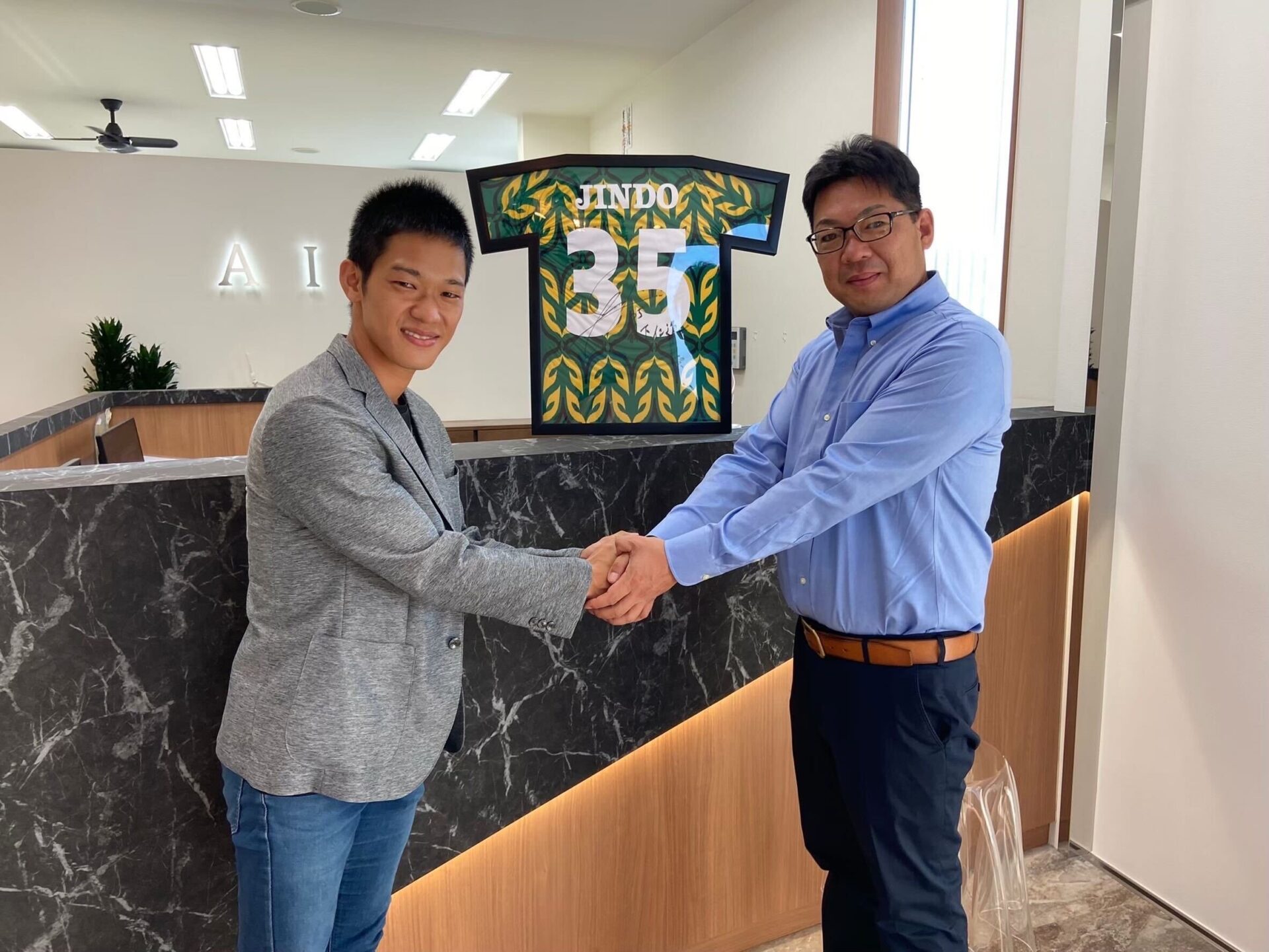
Aile Engineering Co., Ltd. is a construction company based in Kanda, Kurashiki City. Its only overseas branch is in Ghana, and Morishita had a lively conversation with a local employee he met by chance about their hometown, Kurashiki.
Later, he connected with the president and signed a personal sponsorship contract. When he transferred to a new team in his second year in Ghana, they became a team sponsor, saying, "We want to support a soccer player from Kurashiki even more," making headlines as the first Japanese corporate sponsor in Ghana.
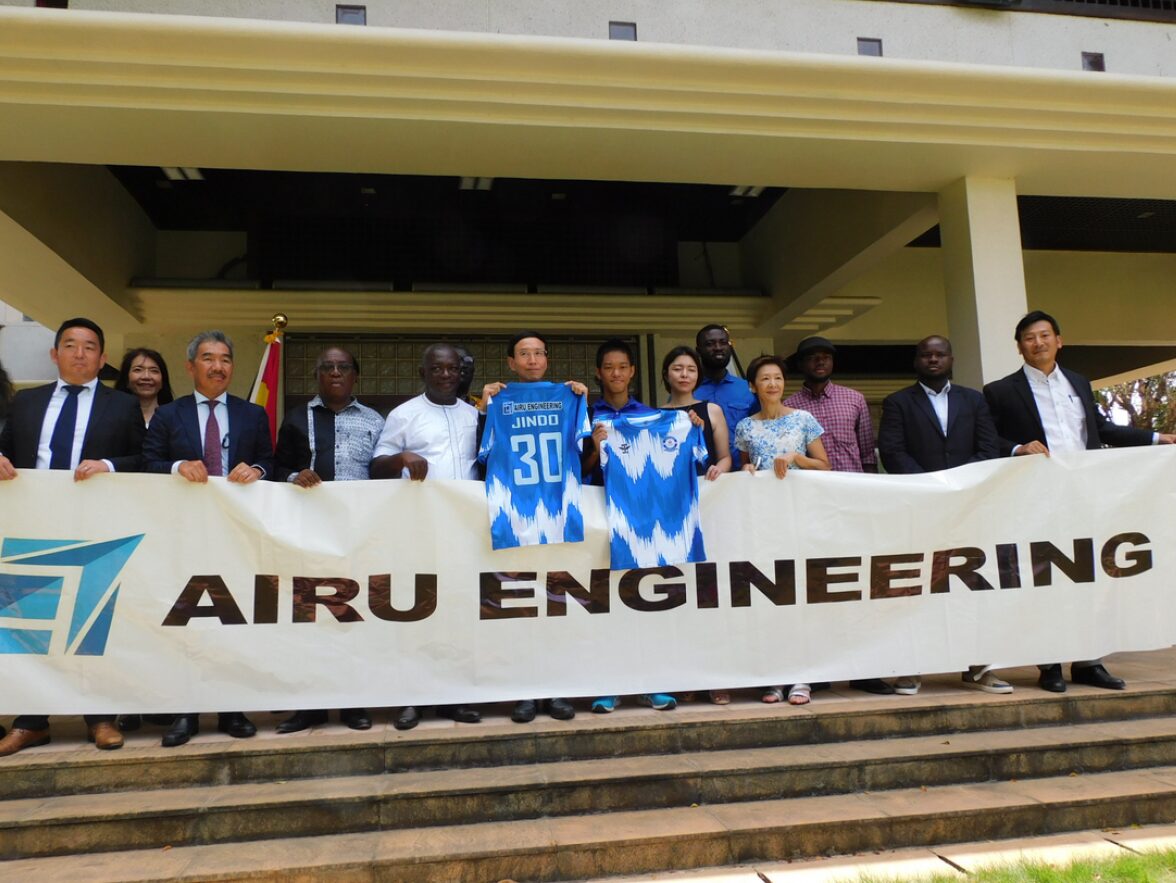
It was a fateful encounter that connected Kurashiki with Ghana.
Collaboration with Alma Mater. Conducting Local Research in Ghana
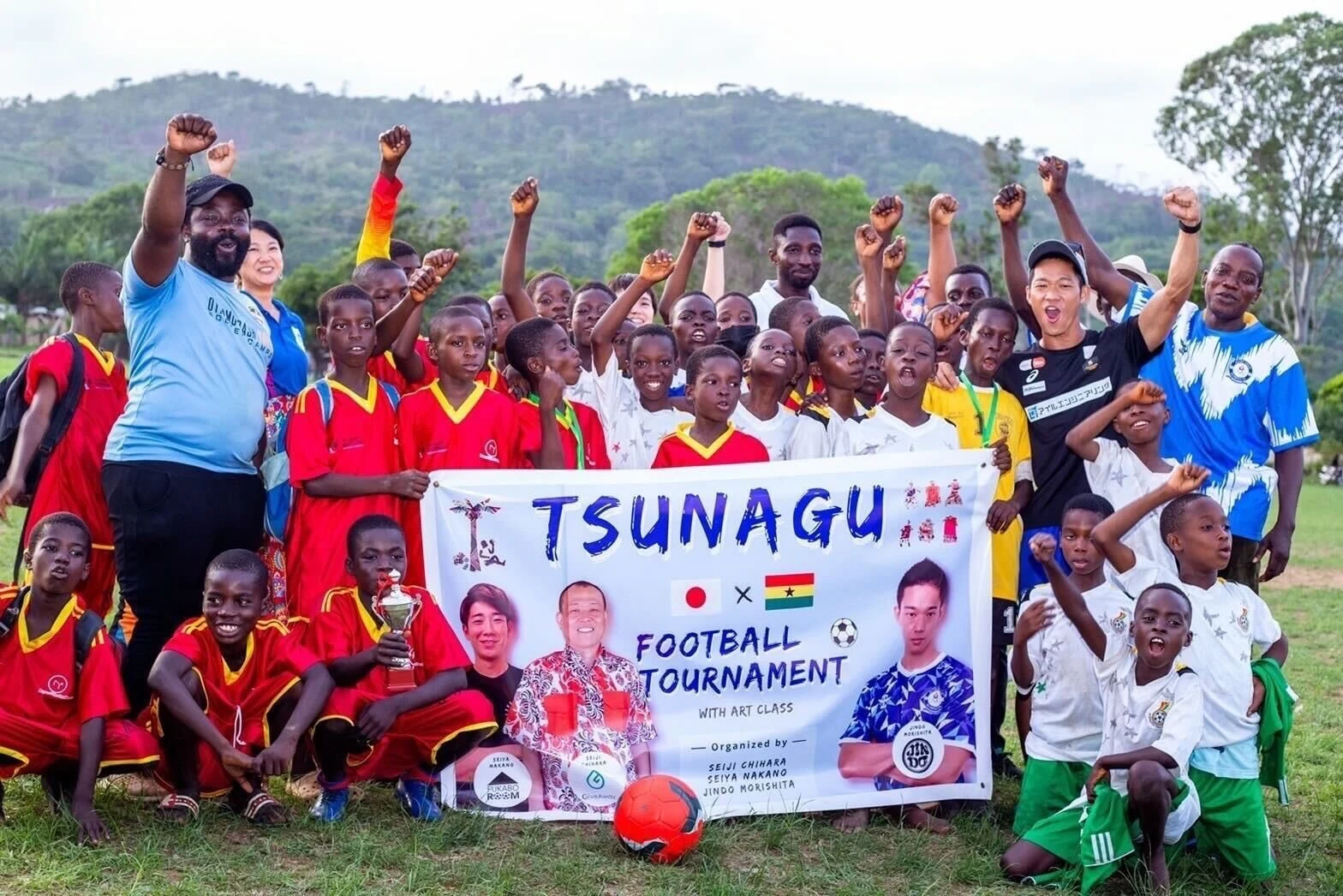
In the winter of 2023, he organized a research tour for students from his alma mater, Okayama Prefectural Kurashiki Seiryo High School Soccer Club, to learn about Ghana's culture and soccer situation.
Not only did they visit Ghana, but before the tour, they also held workshops. In collaboration with the sponsor Play Sports, they collected recycled sports equipment. They provided students from Okayama Prefectural Kurashiki Seiryo High School with the opportunity to think about "how to deliver this sports equipment to the local area in a way that leads to ideal international cooperation."
After attending four workshops, the students came up with a plan to "hold a soccer tournament and present sports equipment as prizes." They then actually held a soccer tournament on-site.
Okayama Prefectural Kurashiki Seiryo High School also donated equipment, and J-League player Nakano Seiya and comedian Chihara Seiji also cooperated as sponsors.
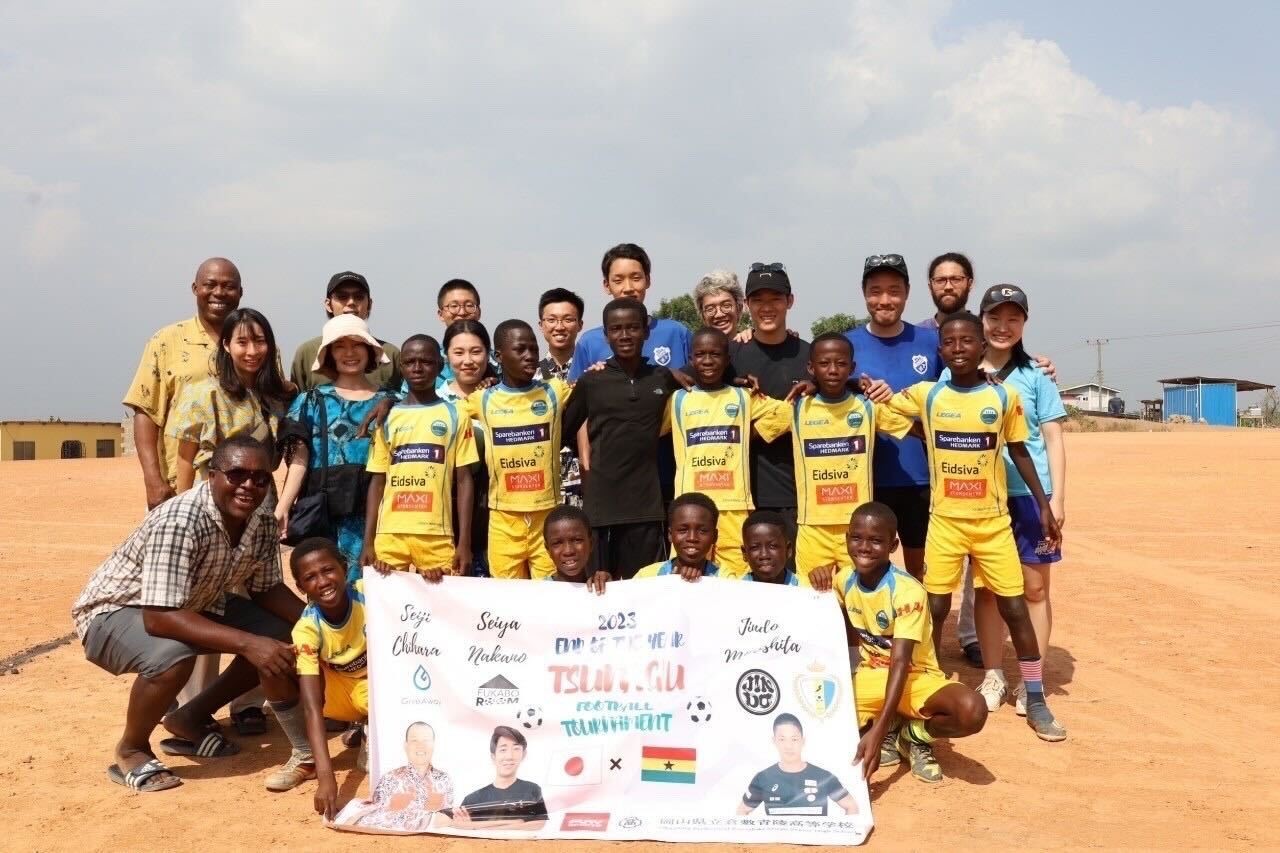
The result was a great success, deepening exchanges with the locals.
The local research provided valuable experiences for the high school students. Under the goal of "connecting schools in Africa and Kurashiki City to expand educational opportunities," they are currently working to continue these activities.
"As someone who grew up in Kurashiki, I want to perform in a way that does not disgrace the name of Kurashiki on the world stage. I hope to someday give back to Kurashiki the experiences I gained in Africa. I would be happy if people knew that young people from Kurashiki are challenging themselves in Africa," he says.
Conclusion
Interviewing Morishita left a strong impression of his continuous challenges in unknown environments.
His ability to take action to not just end with dreams and goals but to realize them is remarkable. Despite the hardships, Morishita's story of flexibly and positively carving out his soccer life carried weight in every aspect.
Morishita will continue to challenge himself in Africa, and I believe he will be a bridge connecting Kurashiki and Africa.
I hope that the citizens will come to know that a young person from Kurashiki is active in the distant land of Africa, and that local fans will continue to grow.
Interview cooperation: Sankyu Co., Ltd.