Interview with Chief Instructor Otsuka Yoshinobu
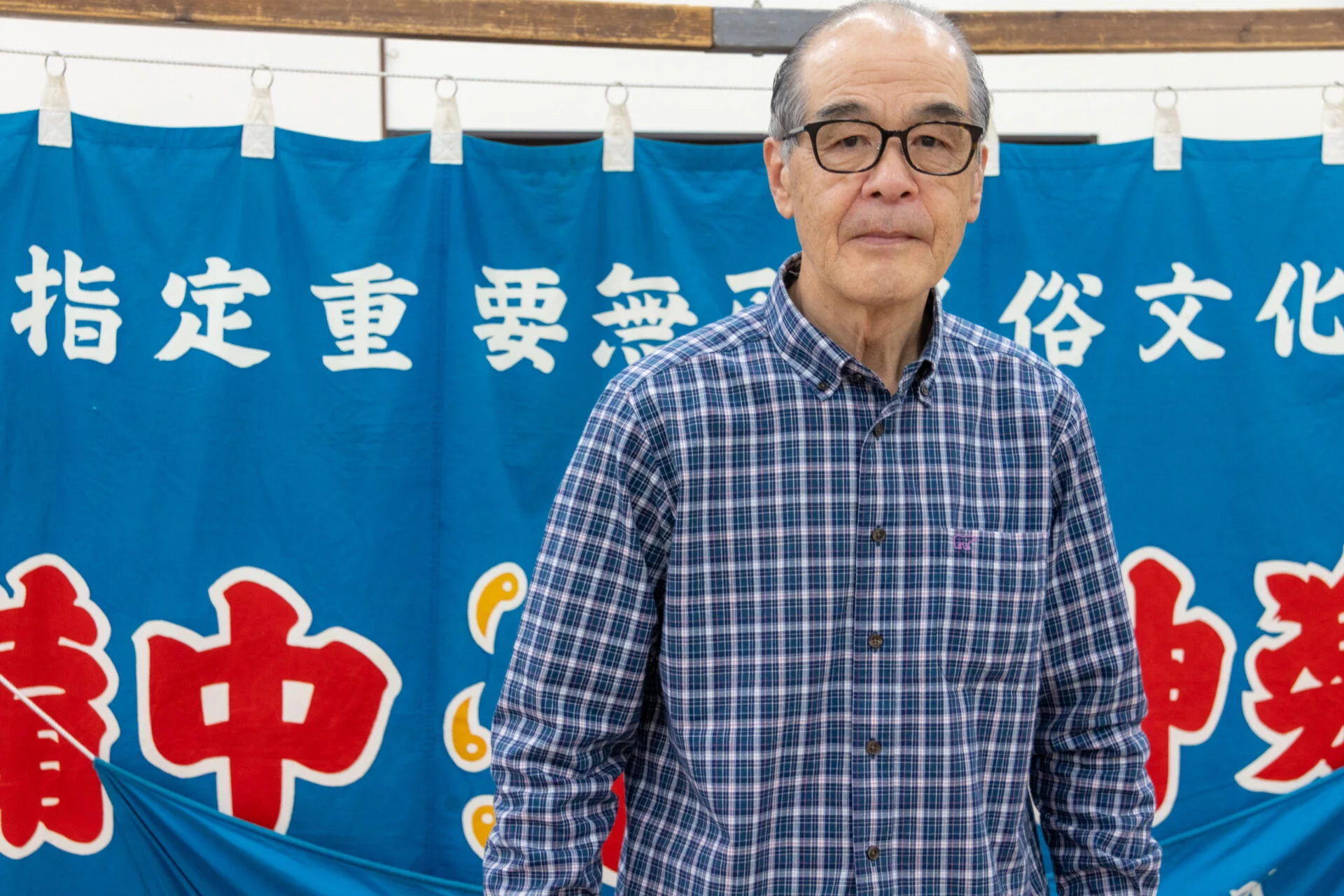
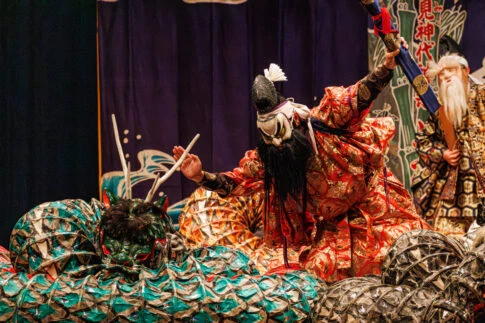
We spoke with Chief Instructor Otsuka Yoshinobu about Bichu Kagura and the Narawa Bichu Kagura Development Association.
Please tell us about the history of the Narawa Bichu Kagura Development Association since its formation.
Otsuka (honorifics omitted)
In 1979, Bichu Kagura was designated as a National Important Intangible Folk Cultural Asset, which raised the awareness of the need to cultivate successors in various areas of the Takahashi River basin.
Amidst this movement, with the hope that graduates from high school would be able to immediately thrive as top Kagura performers, the Narawa Bichu Kagura Development Association was formed in 1988 and has continued its activities to this day.
At the time of its formation, children came not only from Narawa-cho (at that time) but also from Takahashi City, Soja City, Kurashiki City, and as far away as Okayama City, eager to learn Bichu Kagura in the birthplace of Bichu Kagura, Narawa.
Nowadays, perhaps due to the many options for extracurricular activities, there are more local children participating.
Recently, due to the impact of the declining birthrate and aging population, the number of children has been decreasing year by year. Nevertheless, we are committed to preserving the tradition of Bichu Kagura and continue our daily activities.
Please tell us about your activities.
Otsuka
Practices are held at the Takahashi City Narawa Cultural Center Annex once a week, every Wednesday from 7 PM for about two hours.
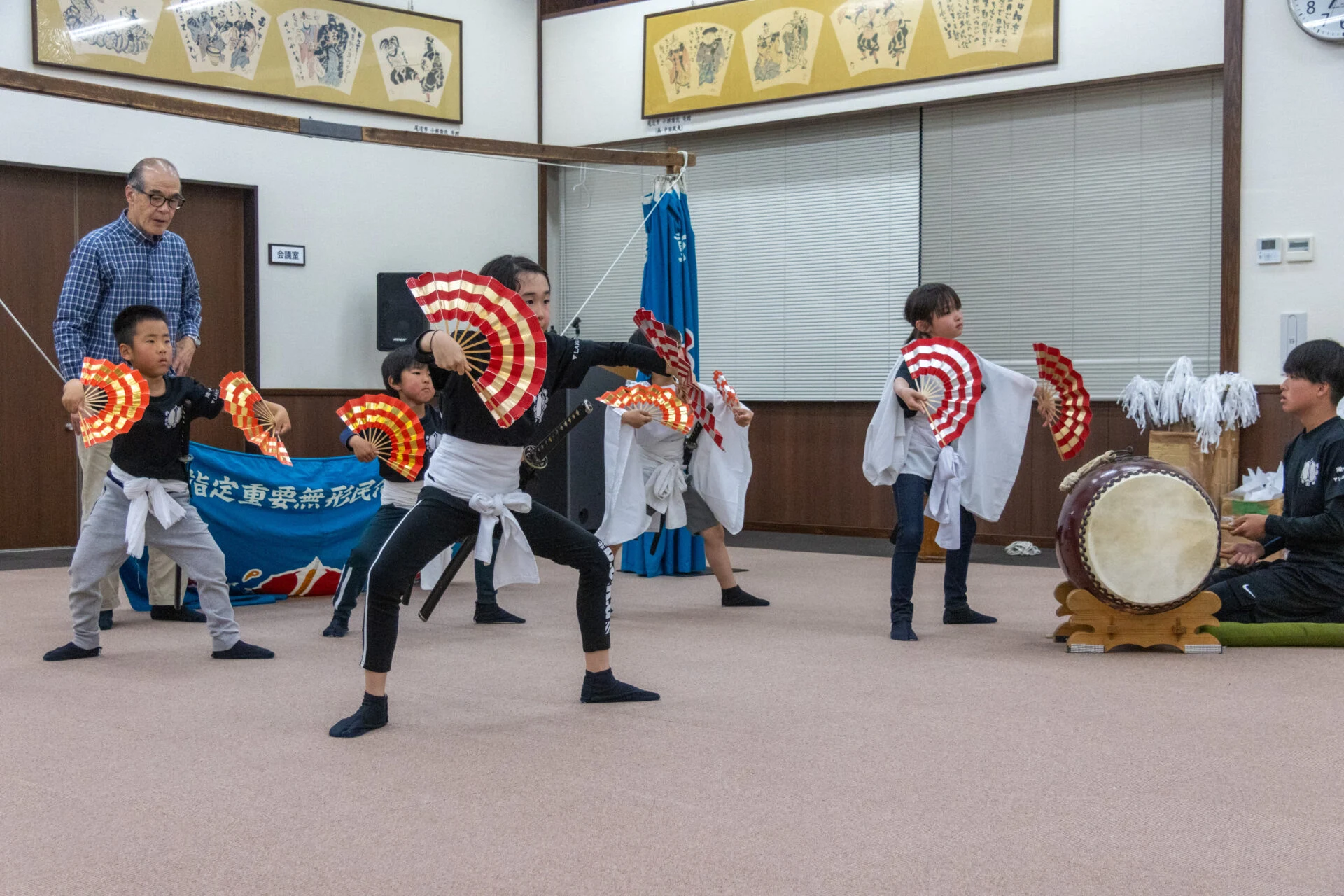
Although the number of (Kagura) performances has decreased compared to the past, we receive many invitations to perform at welfare facilities and various events.
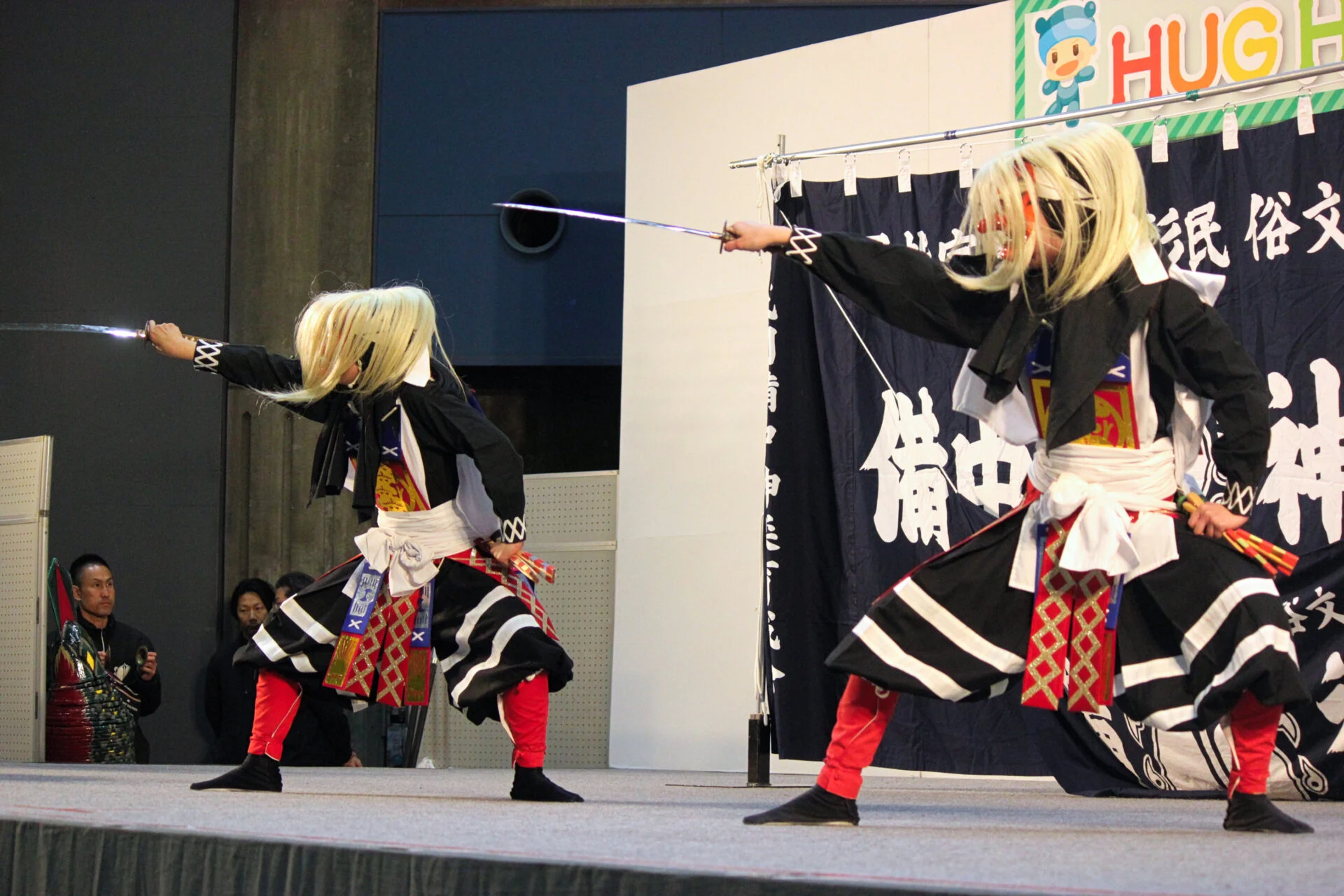
Performances are held not only in the local Takahashi City but also as far away as Tsuyama City, Okayama City, and Tamano City.
How many performances do you have in a year?
Otsuka
Although there is some variation from year to year, we currently have about 50 performances a year.
Since the children also have school, performances are mainly on weekends and during long school breaks.
When I say 50 performances, it may seem like we are performing almost every week, but in reality, there is variation, and there are days when we have two performances in one day, one in the afternoon and one in the evening.
This year, we have had performances almost every week from April to May.
Many times, people who have seen our performances reach out to invite us, which we are very grateful for.
Please tell us about the composition of the members.
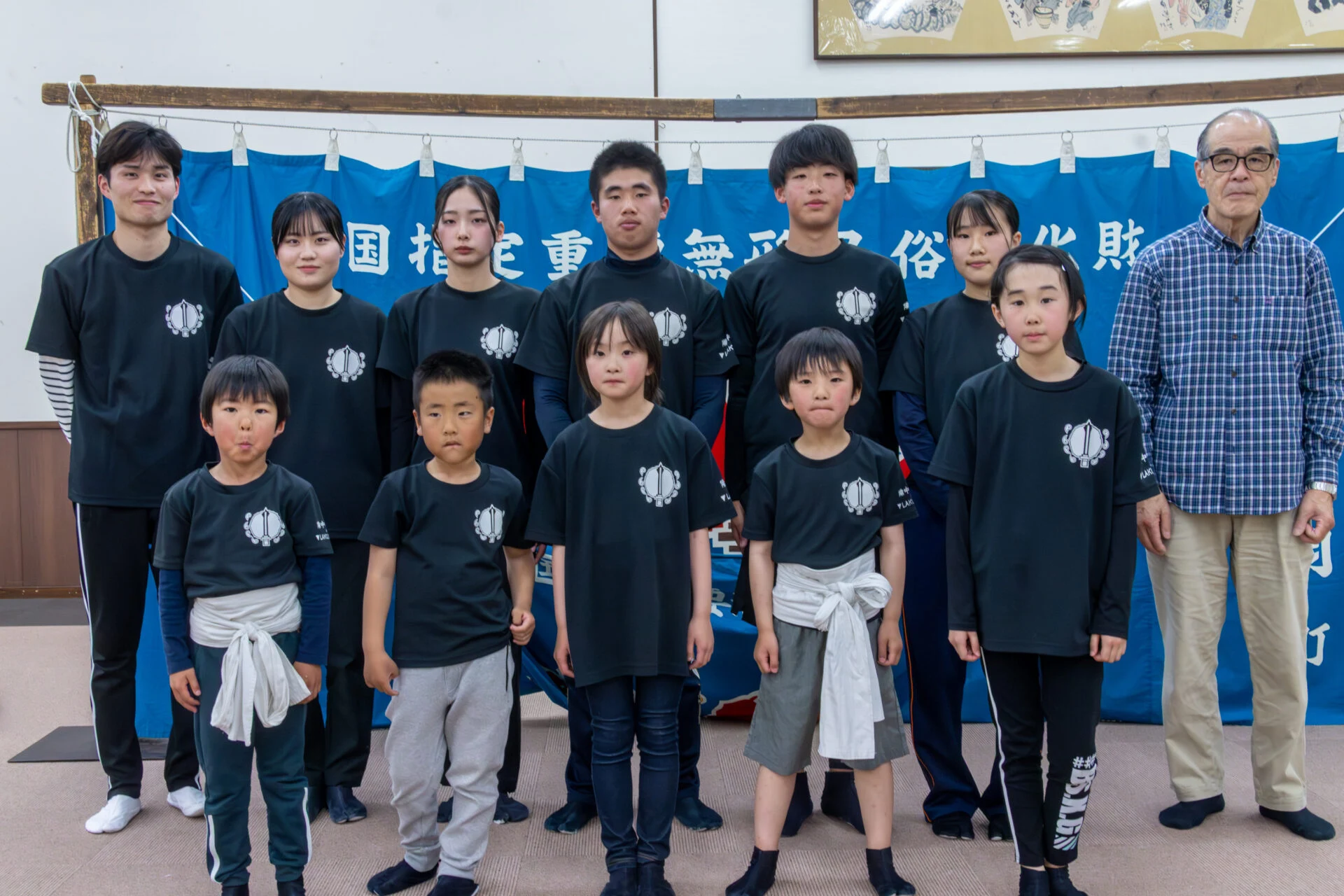
Currently, we have 10 members, ranging from the youngest being a 5-year-old kindergarten senior to the oldest being an 18-year-old high school senior.
Although they graduate from our association upon finishing high school, many alumni continue to perform as Kagura performers in various Kagura groups.
By the way, many of my former students are currently active as Kagura performers.
It seems that Takeru from the popular comedy duo Tokyo Hoteison, who incorporates Bichu Kagura into their acts, is also an alumnus.
Otsuka
That's right. Takeru and his older brother both learned together in elementary and middle school.
After entering high school, both of them found it difficult to practice due to the time it took to commute, but whenever they could come, they practiced with the other children.
Even after moving to Tokyo for university, when they returned home, they would perform Kagura together, but around the end of their second year, they stopped coming home, and that was when I heard he was pursuing a career in comedy.
He was a humorous and quick-witted child even when he was with us. What I still remember is a comedic scene during a Kagura performance.
When Takeru was in the 4th or 5th grade, I wrote a simple script and handed it to him, saying, "How about trying this material?".
He then added embellishments, made it even funnier, and added more material. He had a sense of comedy even back then.
Are there any particular methods you use in your instruction?
Otsuka
The Bichu Kagura performances are rich in theatricality, and there are many lines to memorize, which can be difficult for the children.
This is mainly because the phrasing of the lines is in an archaic literary style that is not familiar in everyday life.
Of course, there are children who memorize the lines without understanding their meaning, but through practice, I teach them what these lines mean.
In this way, we proceed with practice while deepening their understanding of the content of the performances.
It's important to have not just performance skills but also education.
Otsuka
That's right. In addition to being a tradition, history, and form, it is also one of the sacred rituals.
Moreover, etiquette and greetings are very important.
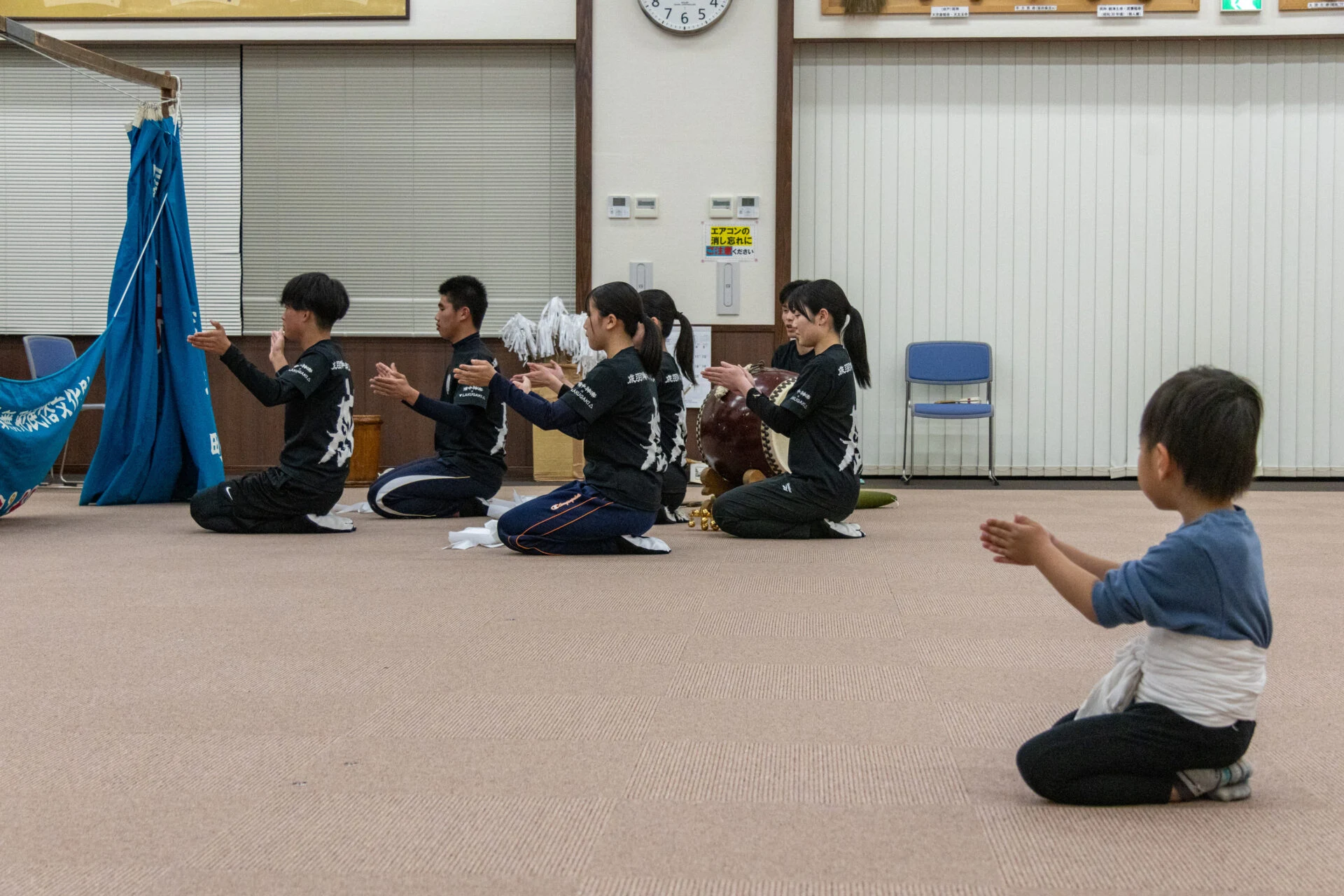
These are very important things to live by, regardless of whether one participates in Kagura or not, and I believe that even after graduating from our association and moving away from Kagura, these will be very useful and beneficial for the children.
It feels similar to martial arts.
Otsuka
It's important not only to teach the art but also to emphasize etiquette and manners.
Additionally, respecting elders and seniors is also important, so we include that in our instruction.
Please give a message to children who want to try Kagura.
Otsuka
If there are those who are interested and would like to learn, I would love for them to feel free to come and observe our practice, even if they are from far away.
If they find it interesting after observing, I would be happy if they could join us and work hard together.
Furthermore, I hope that we can all come together to pass on the tradition of Bichu Kagura.
Finally, please give a message to the readers.
Otsuka
When there are performances nearby, I hope you will come to see the children working hard. I also hope that we can have more opportunities to perform.
The children are very eager to present in front of an audience, and as an instructor, I want to create as many opportunities as possible.
Currently, we are gradually recovering from the COVID-19 pandemic, and the number of performances is increasing. During that time, we faced difficulties for 2 to 3 years with no practice or performances allowed.
While some children left our association during that time, others have returned.
Now, we are starting to receive performance requests from various sources again, and I want to take advantage of those opportunities, and during performances, I hope the audience will enjoy themselves along with the children.
The parents of the children share the same feelings.
If there are any requests for performances, I would be happy if you could feel free to reach out to us.
Conclusion
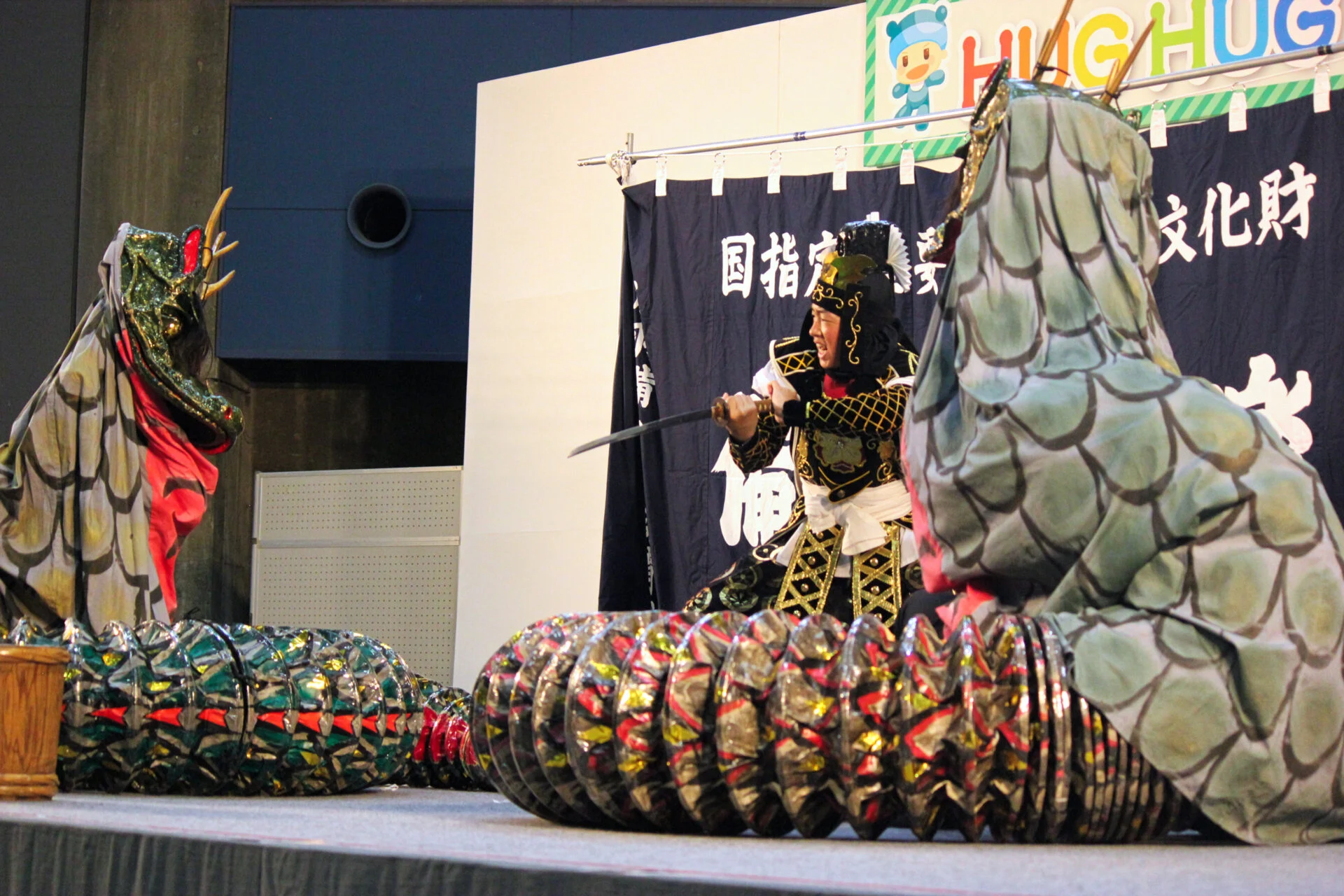
Through the interview, it became very clear that the members continue because they genuinely enjoy performing Kagura.
This passion aligns with the instructor's fervent desire to connect the tradition of Bichu Kagura to the future.
The Narawa Bichu Kagura Development Association holds performances mainly on weekends in Takahashi City and also in Okayama City and Kurashiki City. If there are performances near you, why not come and see?
Additionally, they are always recruiting new members. Interested children are welcome to come and observe practices every Wednesday at 7 PM at the Takahashi City Narawa Cultural Center Annex.
As mentioned by Chief Instructor Otsuka, there are many challenges in passing on Bichu Kagura to the next generation, such as the declining birthrate and depopulation.
In the midst of this, I hope that the future envisioned by the young people who hold a straightforward love for Bichu Kagura and diligently strive for improvement will open up brightly, like the opening of the rock door in the Kagura performance.
Data on the Narawa Bichu Kagura Development Association
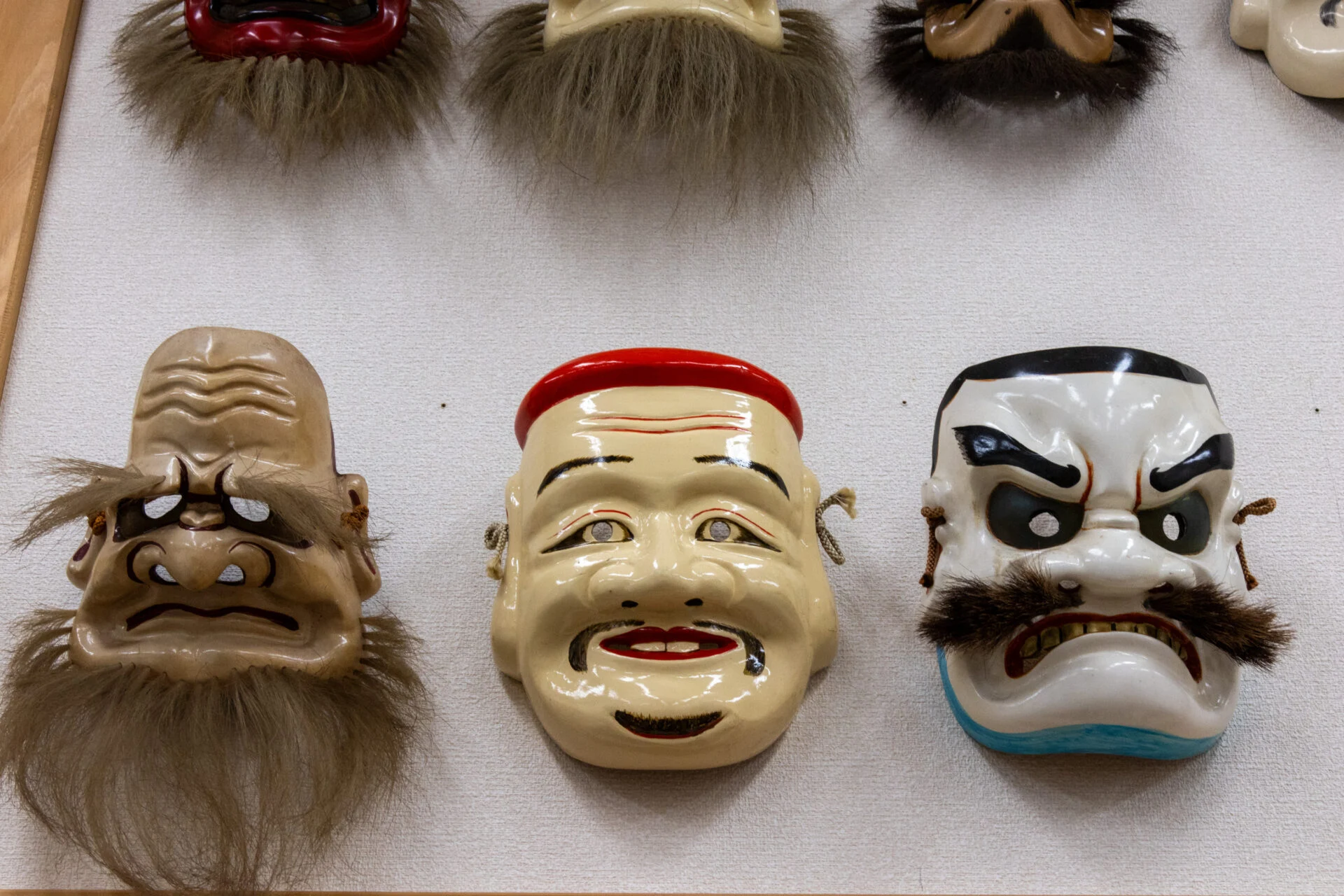
| Name | Narawa Bichu Kagura Development Association |
|---|---|
| Address | 967 Shimohara, Narawa-cho, Takahashi City, Okayama Prefecture |
| Website | Narawa Bichu Kagura Development Association |