April 3rd is the birthday of Kojima Torajiro, who laid the foundation for the Ohara Museum of Art.
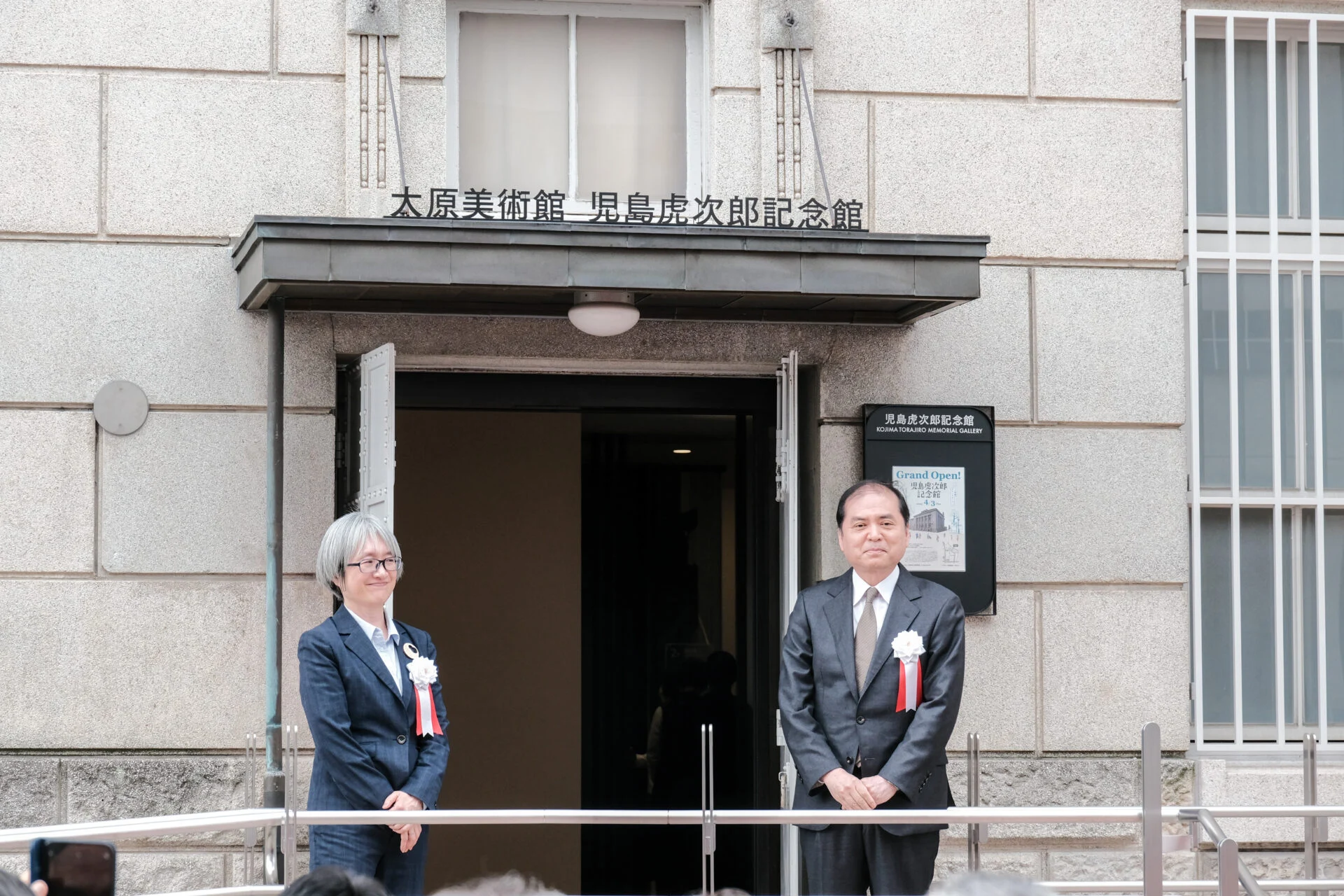
And on April 3, 2025, the Kojima Torajiro Memorial Gallery will have its grand opening in the Bikan Historical Area.
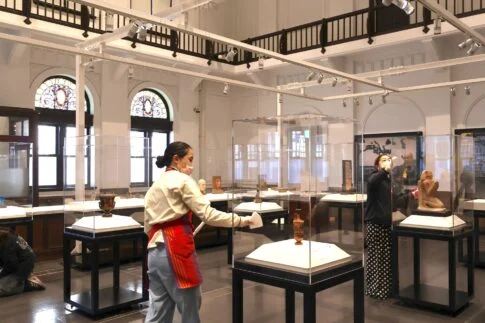
When viewing the Oriental art collected by Kojima Torajiro, including sculptures and glass works from ancient Egypt and Western Asia, as well as works by Kojima Torajiro, I found myself strangely drawn to the "origin."
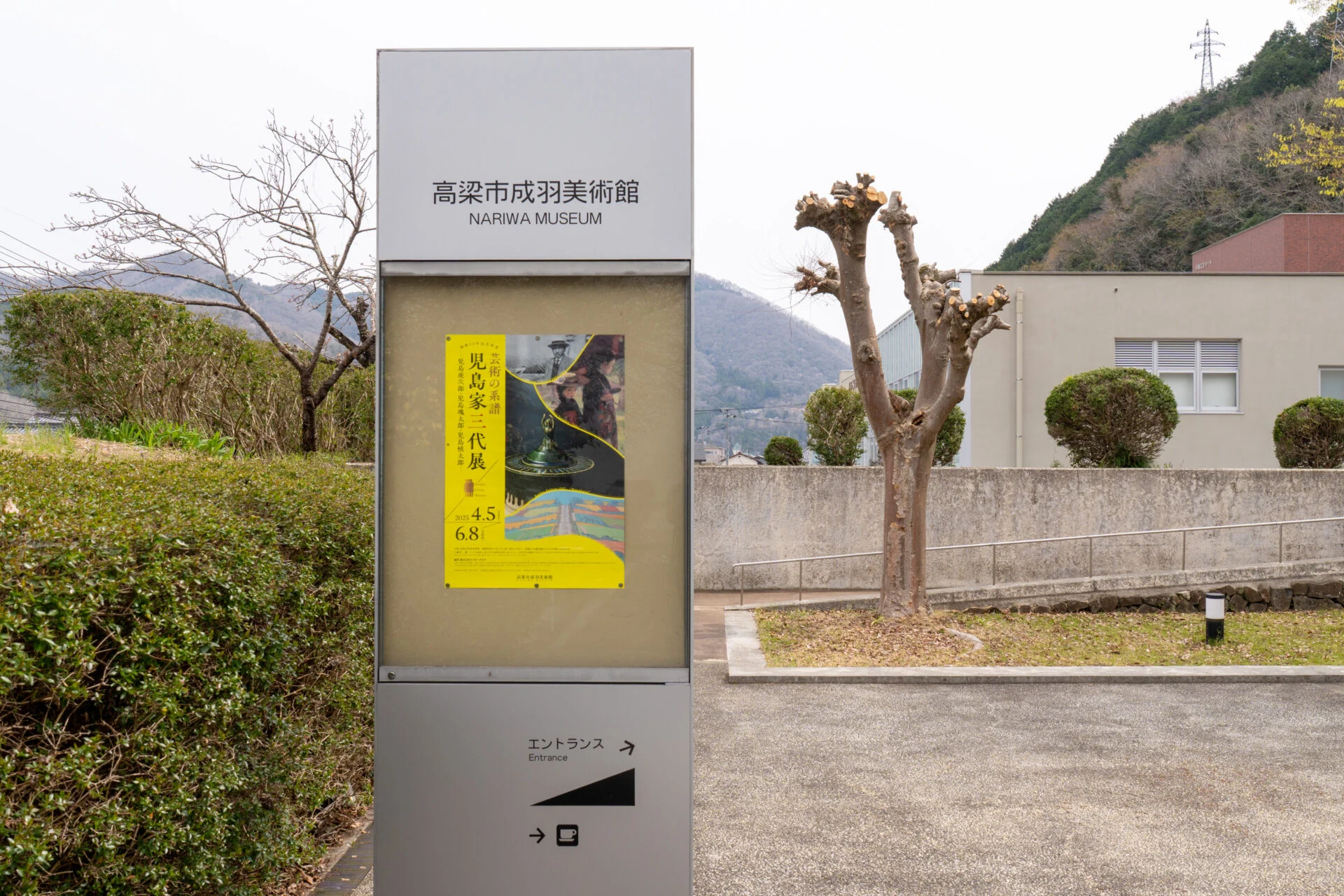
Kojima Torajiro is from the present-day Nariwa-cho in Takahashi City, where there is the Nariwa Museum of Art that conveys his achievements.
Currently, the Nariwa Museum of Art is holding the exhibition "The Genealogy of Art: Three Generations of the Kojima Family - Kojima Torajiro, Kojima Kaitaro, and Kojima Shintaro."
I was curious, so I decided to visit.
What is the "Nariwa Museum of Art"?
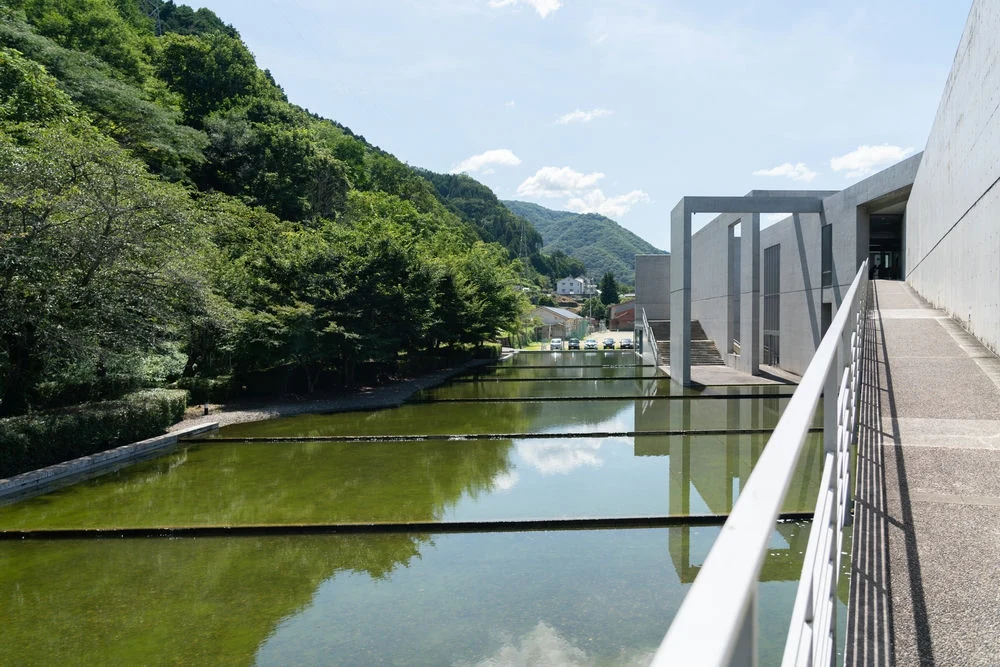
The Nariwa Museum of Art was opened in August 1953 to honor the Western painter Kojima Torajiro from Nariwa-cho in Takahashi City.
In 1994, it was relocated to its current site and was newly constructed based on the design by Tadao Ando.
The museum houses and exhibits works and collections by Kojima Torajiro, as well as fossils collected in Nariwa, and also focuses on special exhibitions.
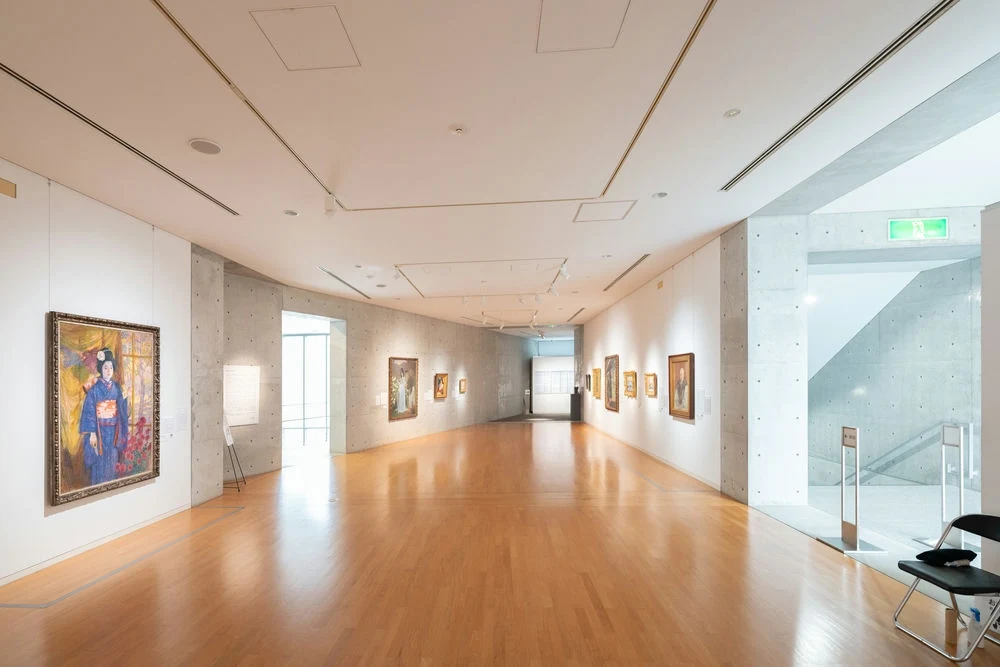
The Genealogy of Art: Three Generations of the Kojima Family - Kojima Torajiro, Kojima Kaitaro, and Kojima Shintaro
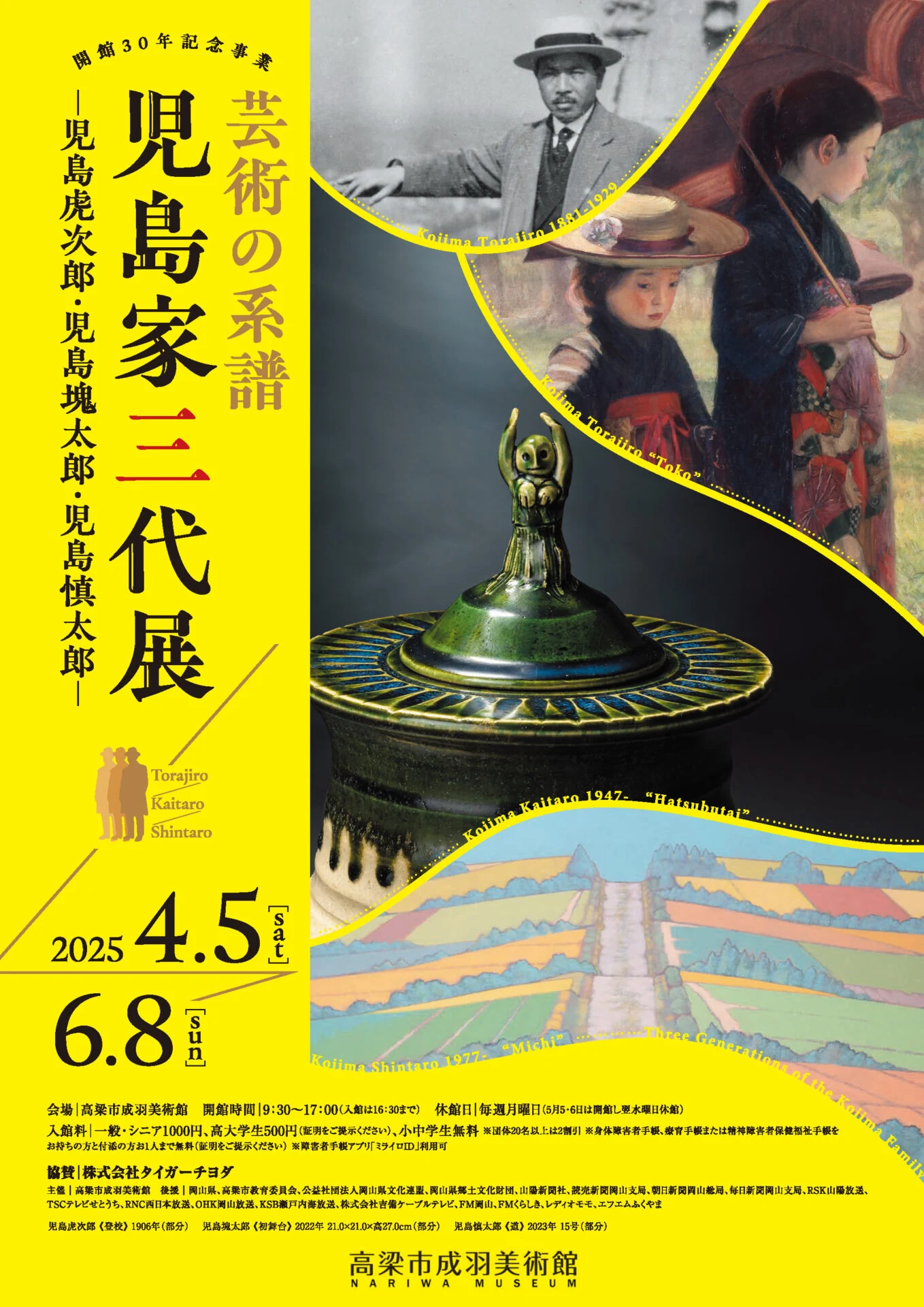
"The Genealogy of Art: Three Generations of the Kojima Family - Kojima Torajiro, Kojima Kaitaro, and Kojima Shintaro" is a special exhibition currently being held at the Nariwa Museum of Art from April 5, 2025 (Saturday) to June 8, 2025 (Sunday).
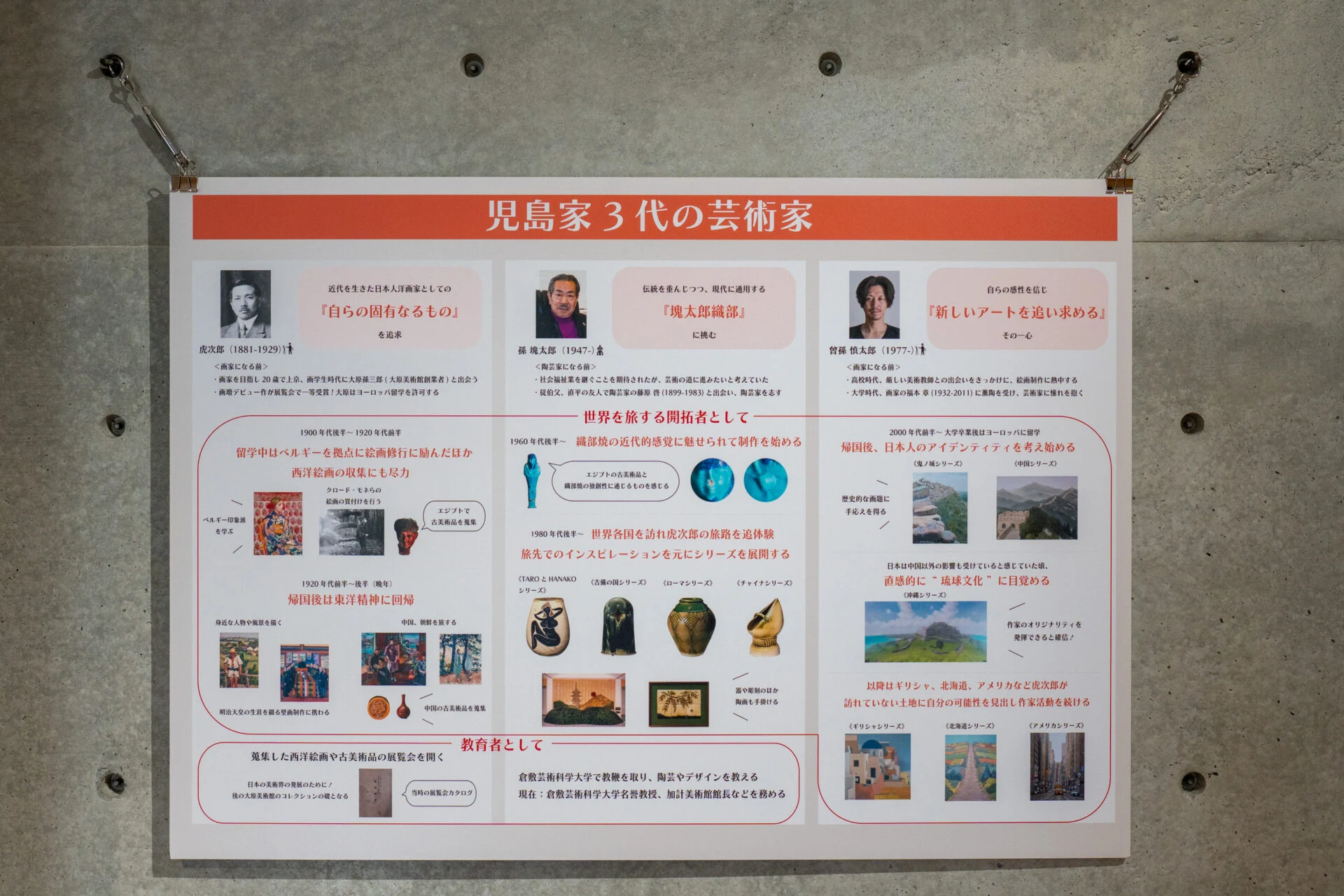
Kojima Kaitaro is a "ceramic artist" and the grandson of Kojima Torajiro, while Kojima Shintaro is a "Western painter" and the great-grandson.
This is a valuable opportunity to see the works of all three and feel the artistic trajectory passed down through the "Kojima family."
I visited on the first day
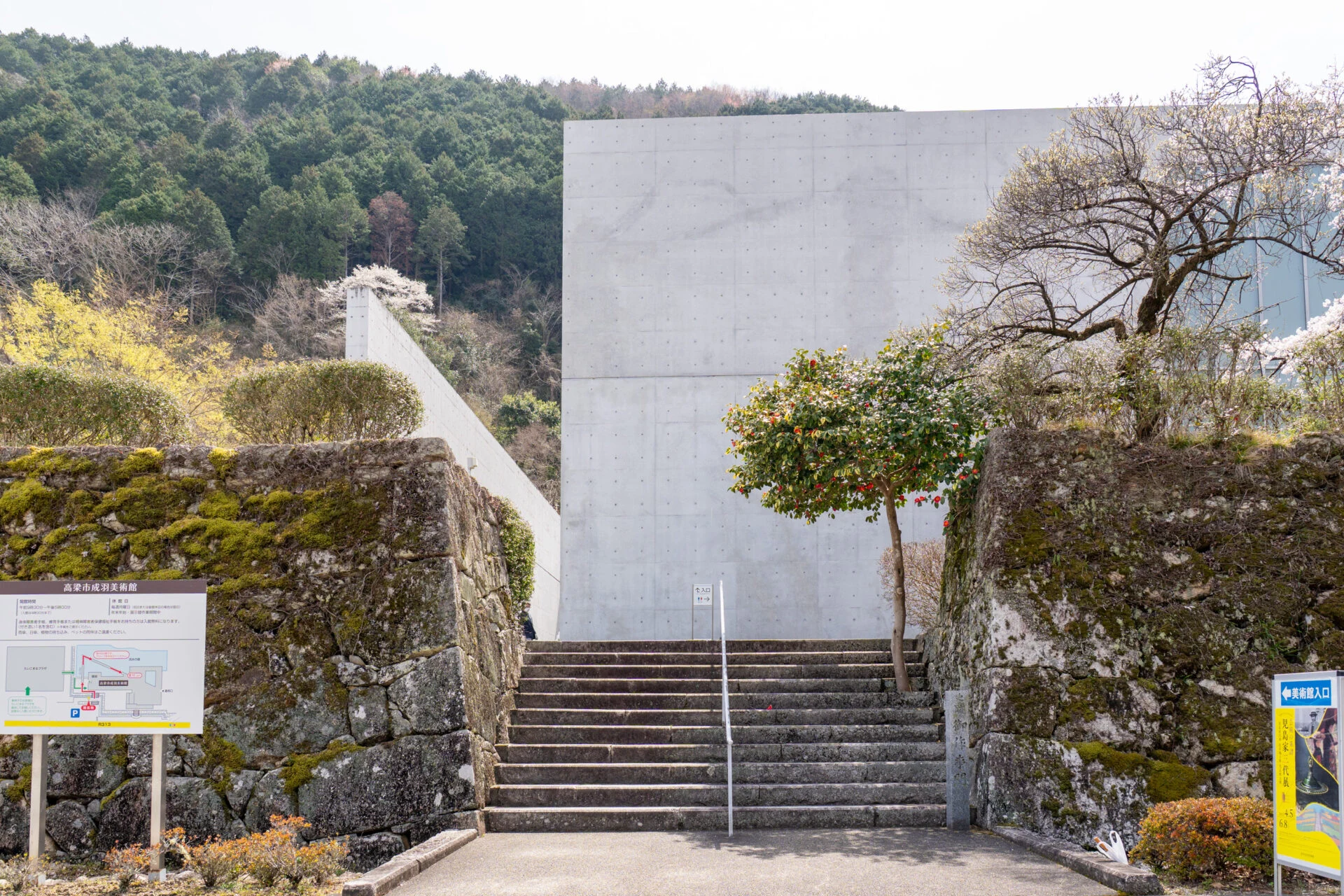
I visited on the opening day, April 5, 2025 (Saturday).
- Opening Ceremony
- Gallery Talk by Kojima Kaitaro and Kojima Shintaro
I will introduce the situation of these events.
Opening Ceremony
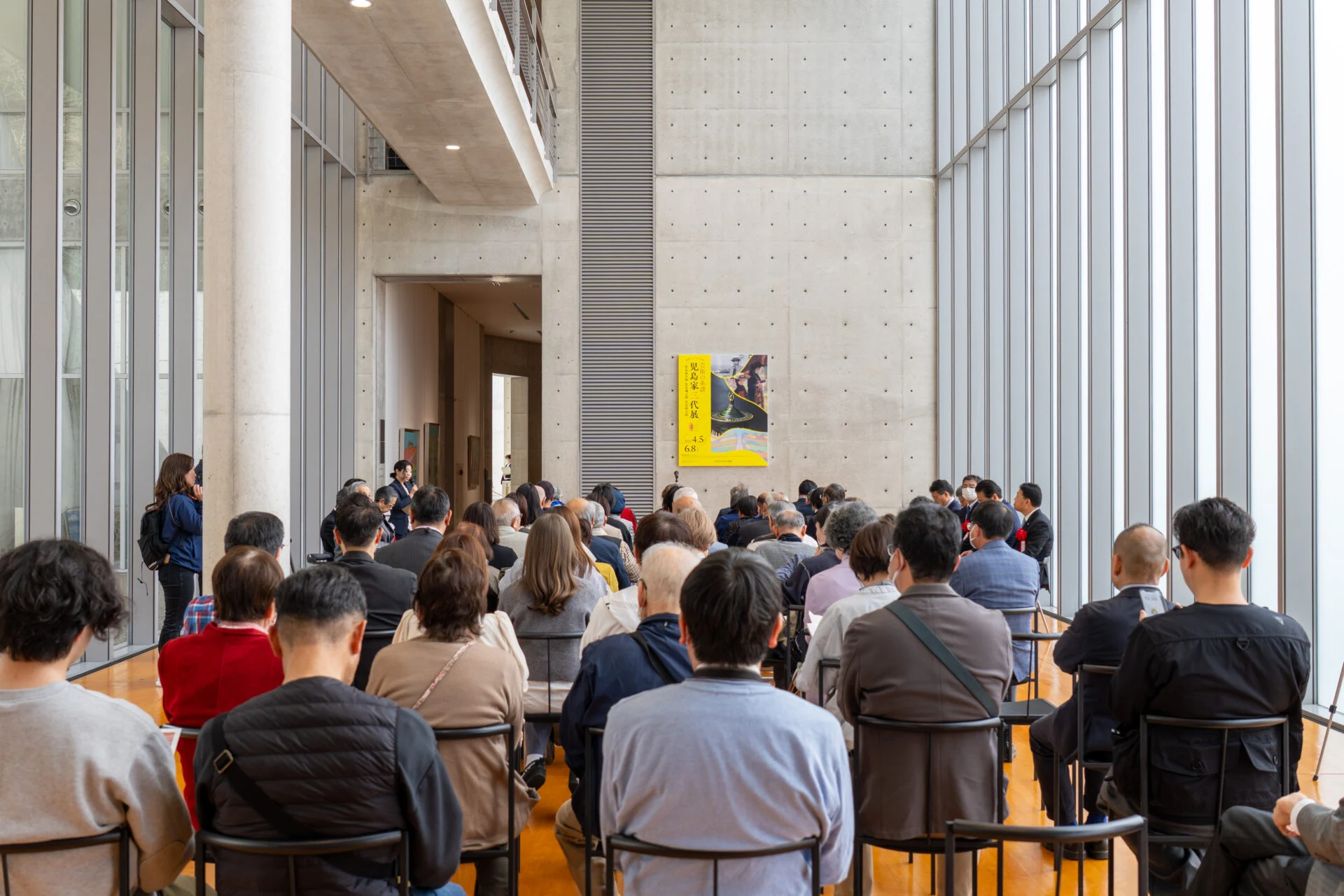
The opening ceremony started at 1:30 PM.
First, there was an opening greeting from the director, Kazushi Sawahara.
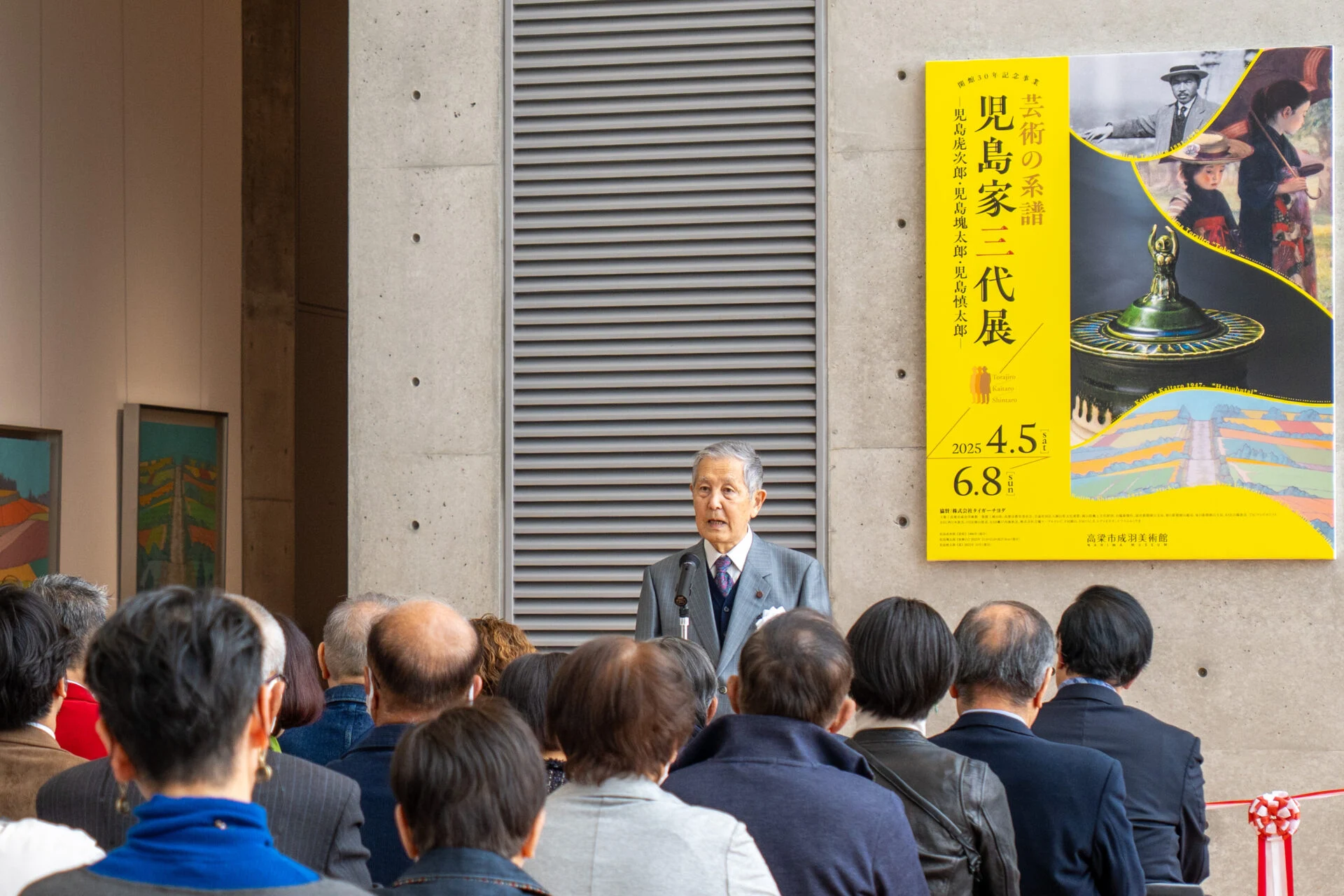
After that, greetings from guests followed.
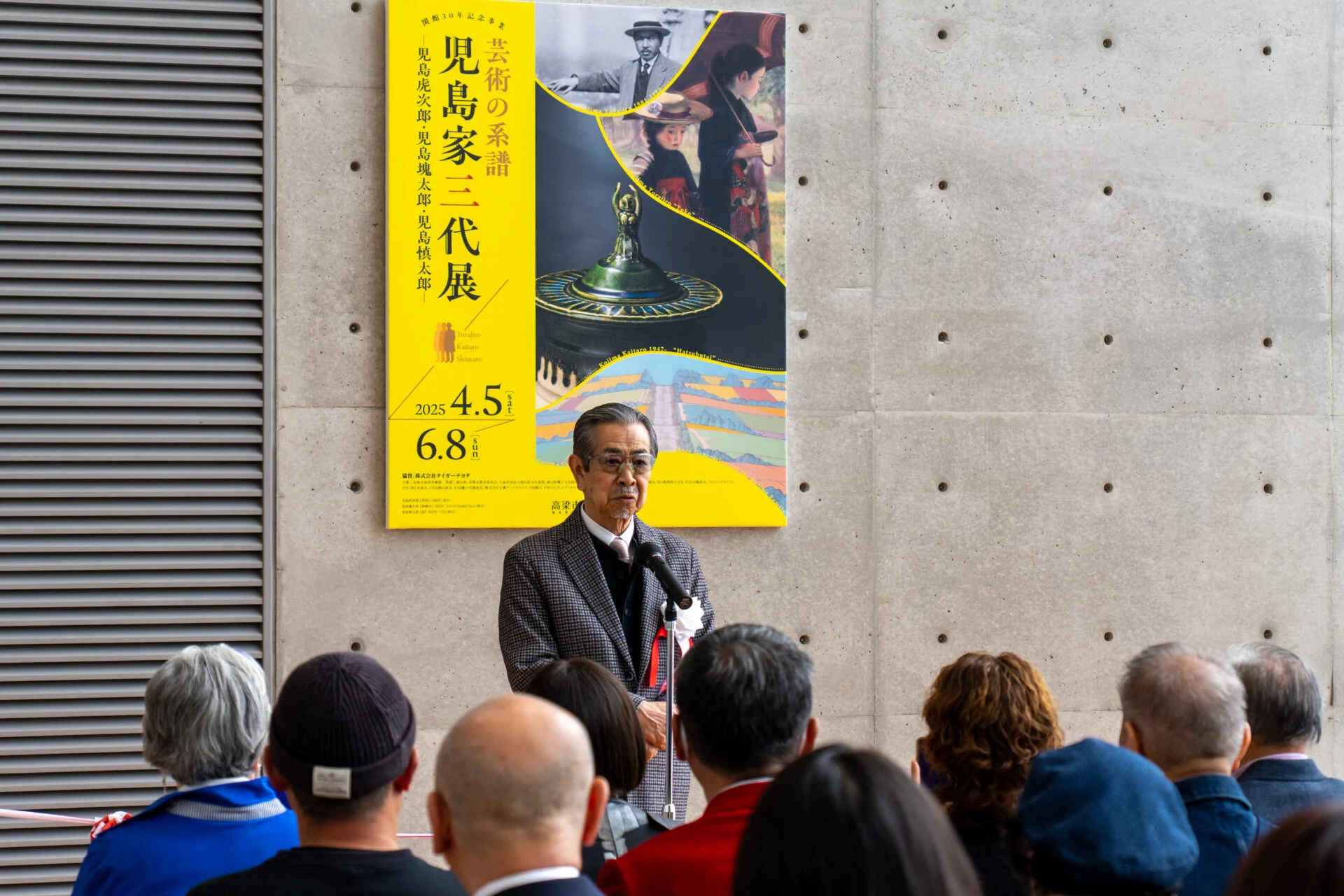
Finally, Kojima Kaitaro, as the chairman of the Nariwa Town Art Promotion Foundation and as an exhibitor, gave a speech.
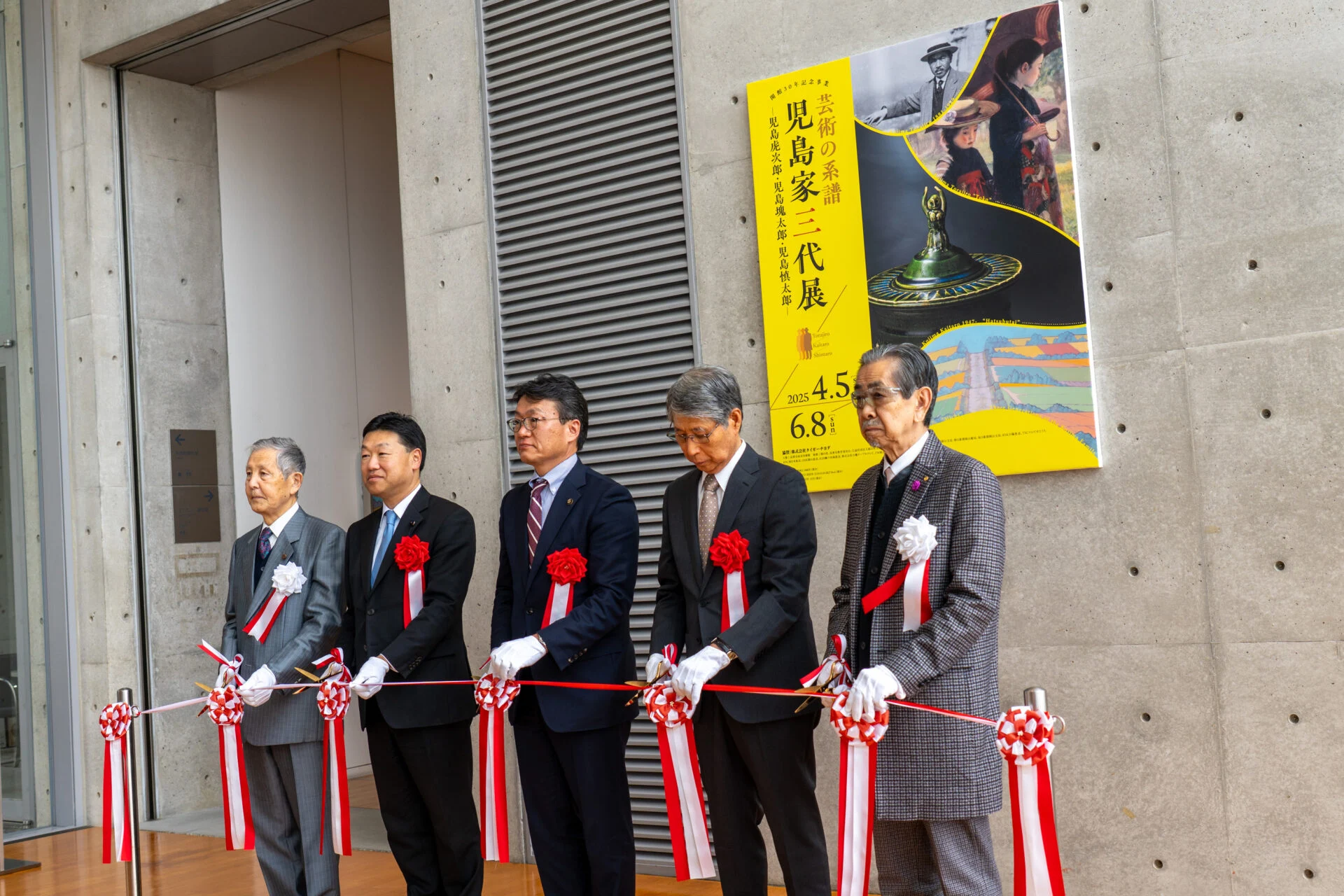
A tape-cutting ceremony was held, and the opening ceremony concluded.
Gallery Talk by Kojima Kaitaro and Kojima Shintaro
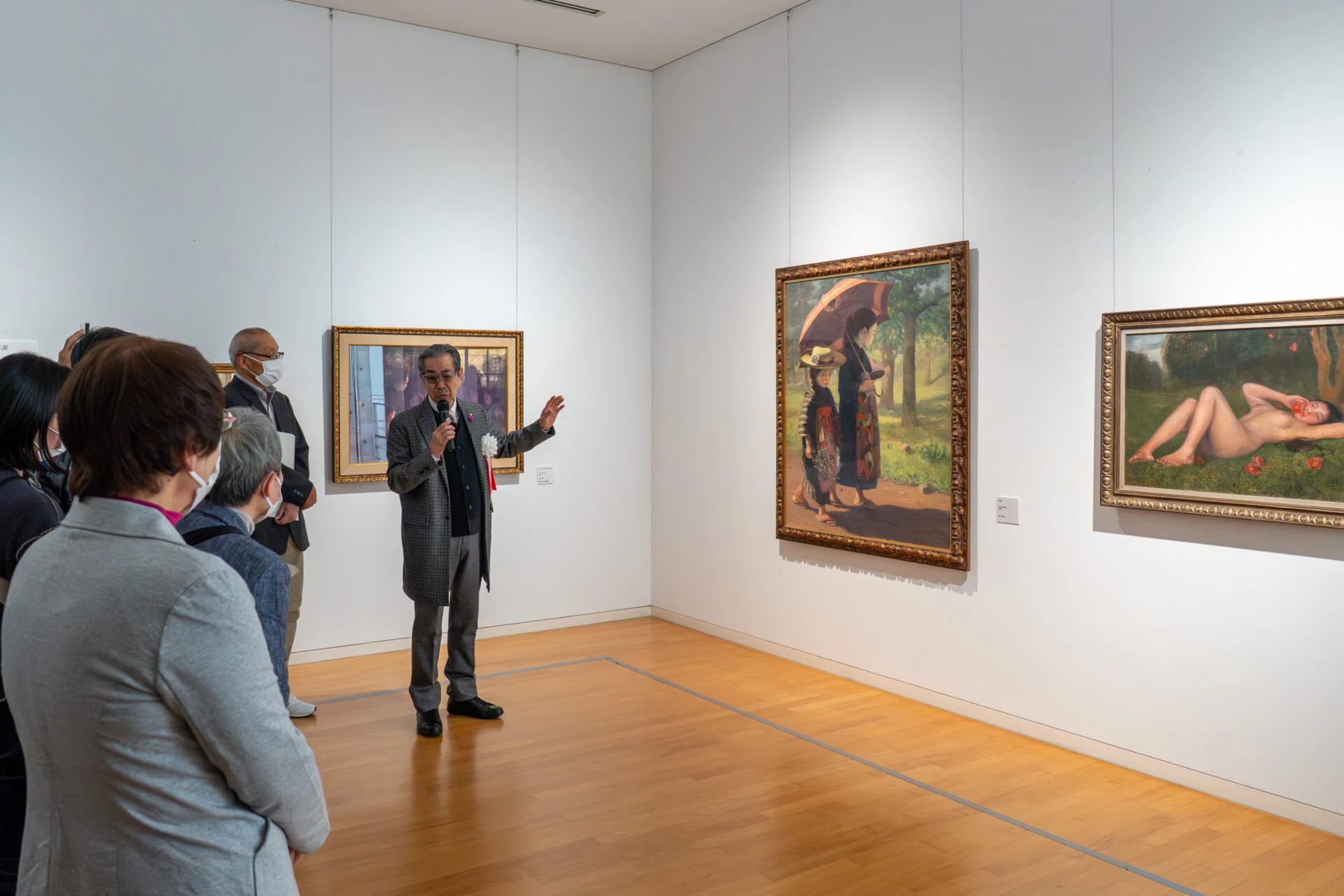
The gallery talk began as we moved to the exhibition room.
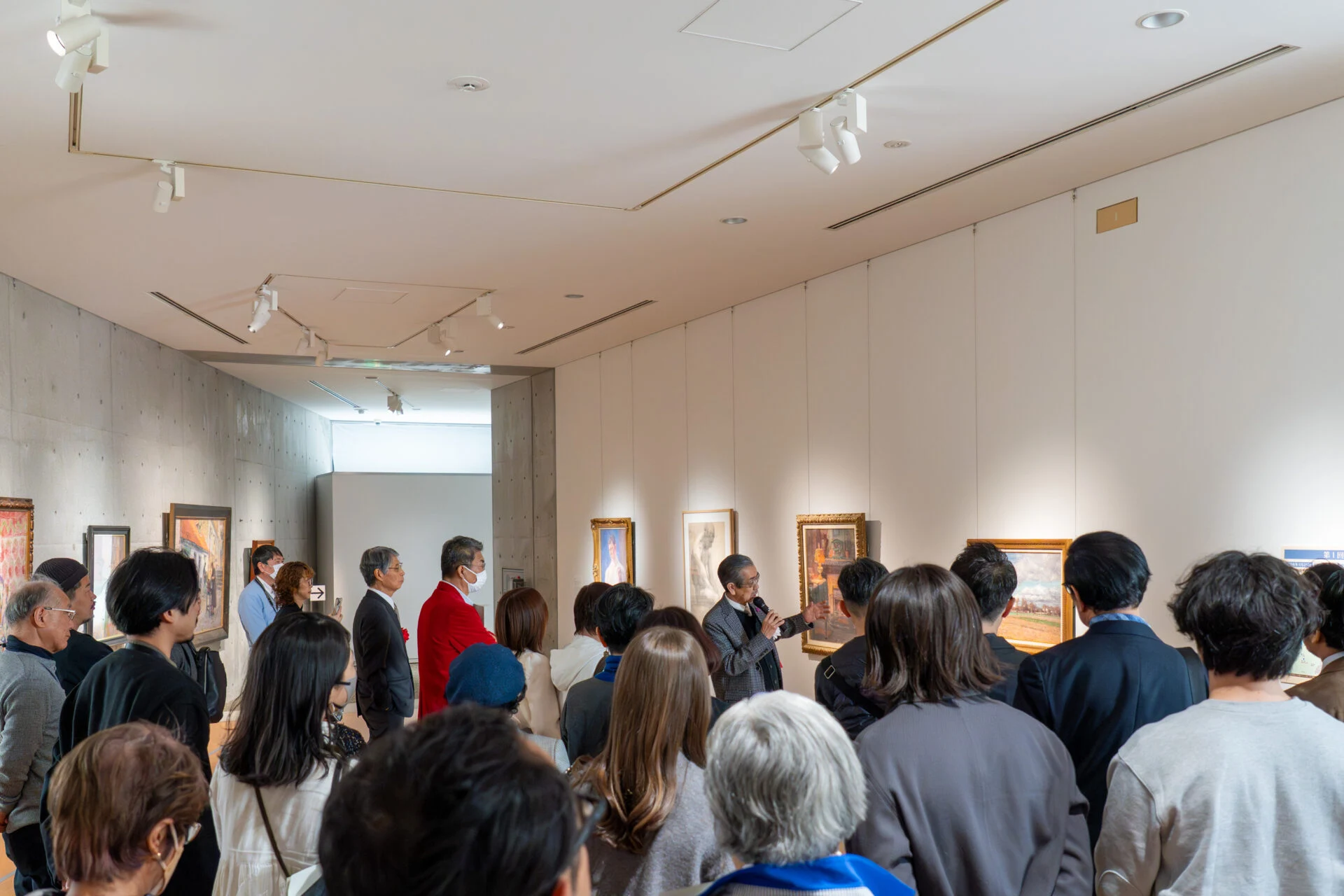
First, in the second-floor exhibition room featuring works by Kojima Torajiro, the explanation was given by Kojima Kaitaro.
Kaitaro Kojima, who has visited Europe and China to trace Torajiro's footsteps, seems to have an aspect as a "researcher of Kojima Torajiro," providing detailed explanations of the works while incorporating historical context.
"I hope I’m not taking too much time. Am I talking too much?"
The detailed explanations, which made the audience forget the time, were attentively listened to by about 50 participants in the gallery.
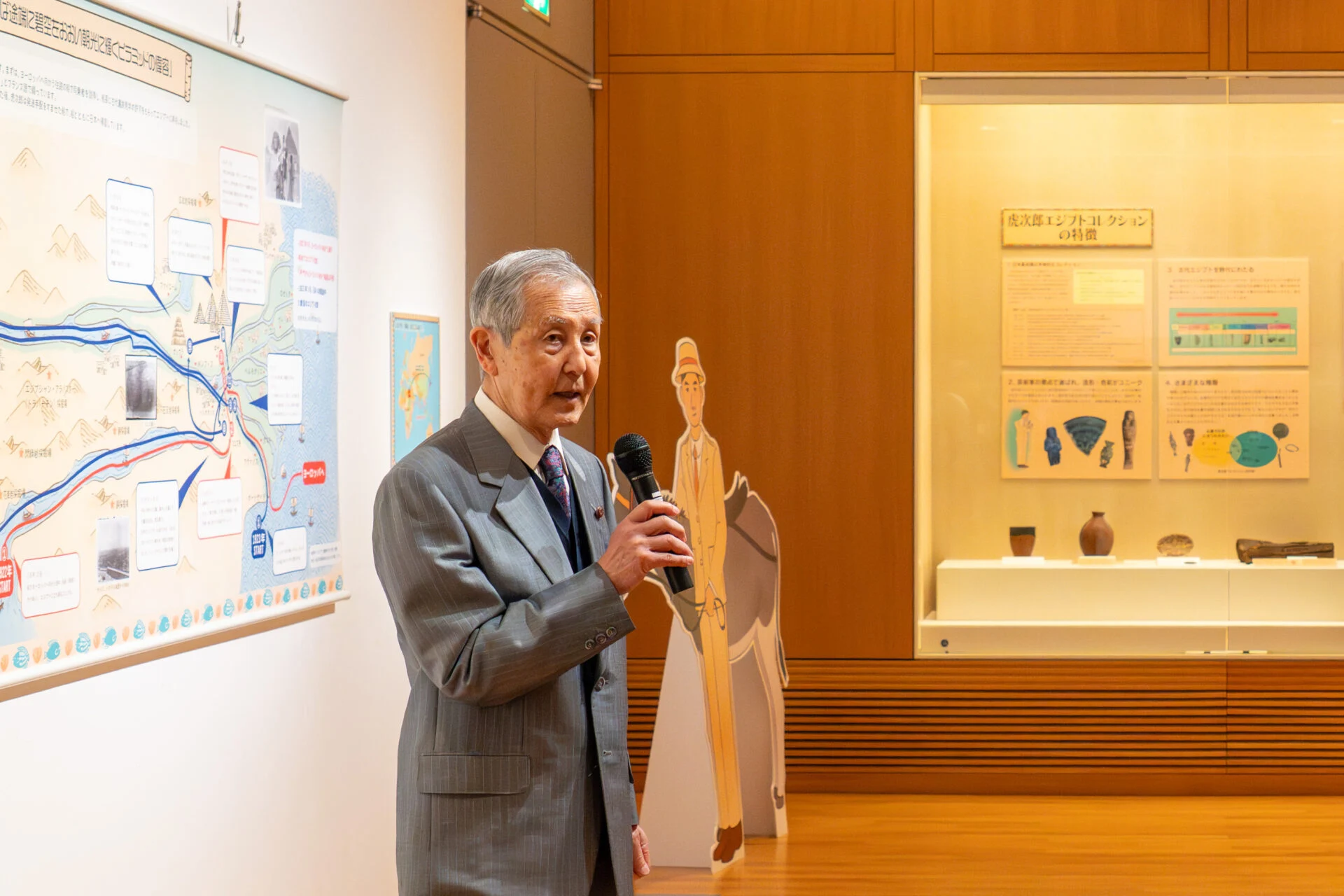
Next, in the first-floor Oriental Room, the explanation was handed over to Director Kazushi Sawahara.
"This time, since the works of Kaitaro and Shintaro are the main focus," he briefly explained as follows.
"Here we have only small items, but we are displaying about 200 pieces.
If you take your time to look closely, you should be able to understand that humanity had such culture and civilization thousands of years ago. Also, I hope you can feel Kojima Torajiro's 'aesthetic sense' that collected these items."
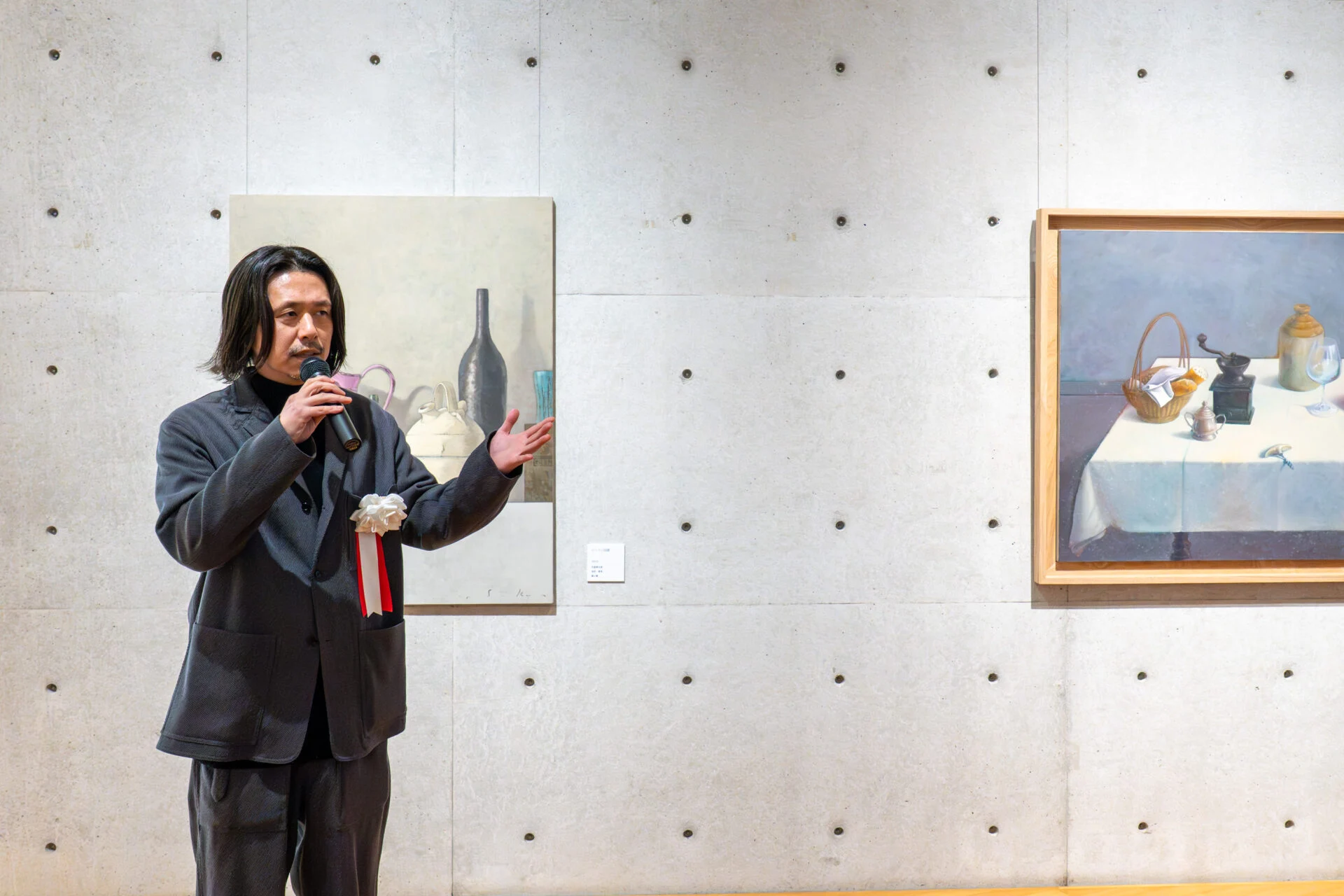
Next, Kojima Shintaro will explain his own works.
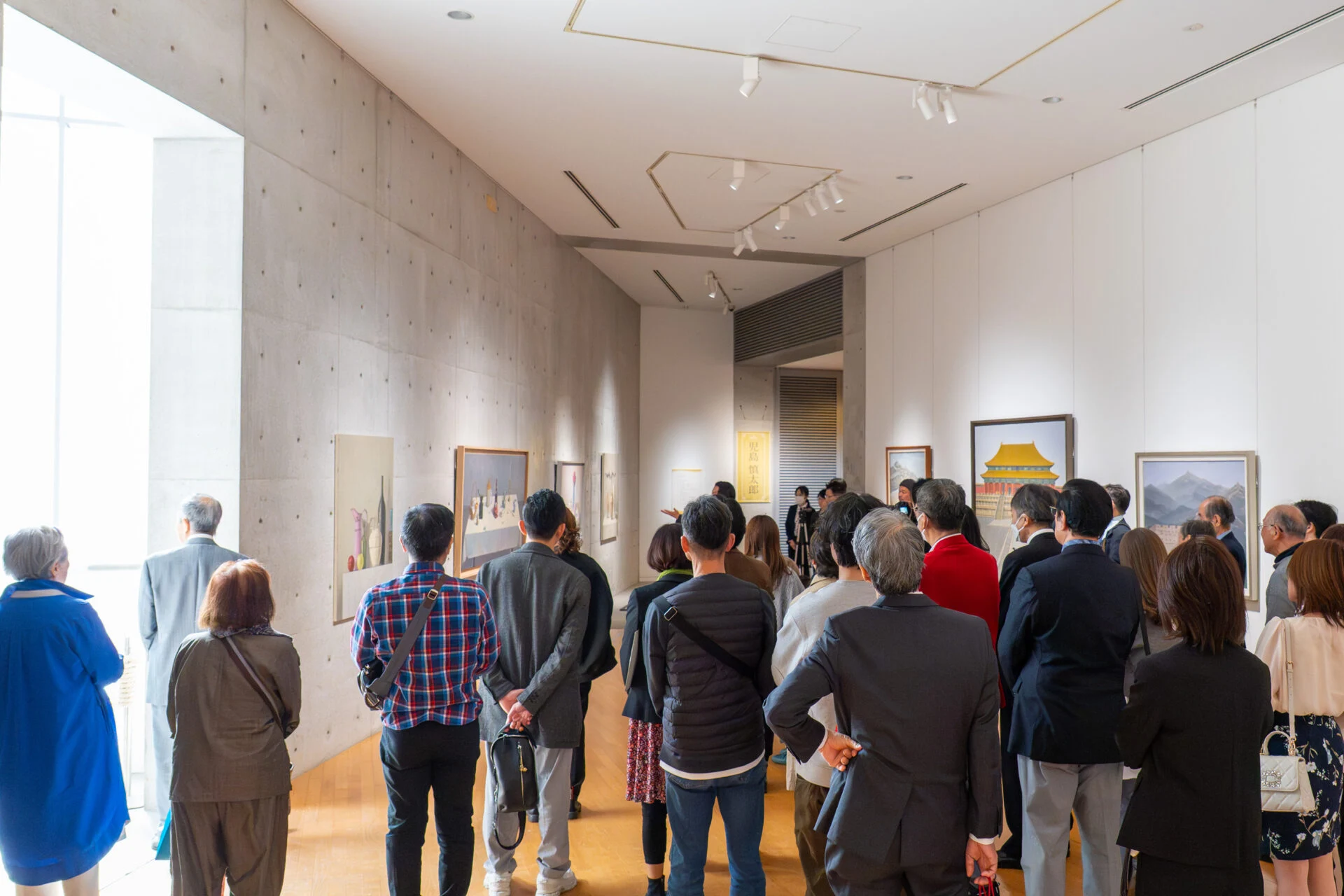
- While learning oil painting in Europe, he became aware of the "roots of the Japanese people" and traveled through China and Japan (Okinawa) while creating works.
- Later, he painted in Athens, Greece, the birthplace of European civilization, but became tired of incorporating a somewhat heavy aspect of history into his works.
He explained the background stories in chronological order, including various anecdotes.
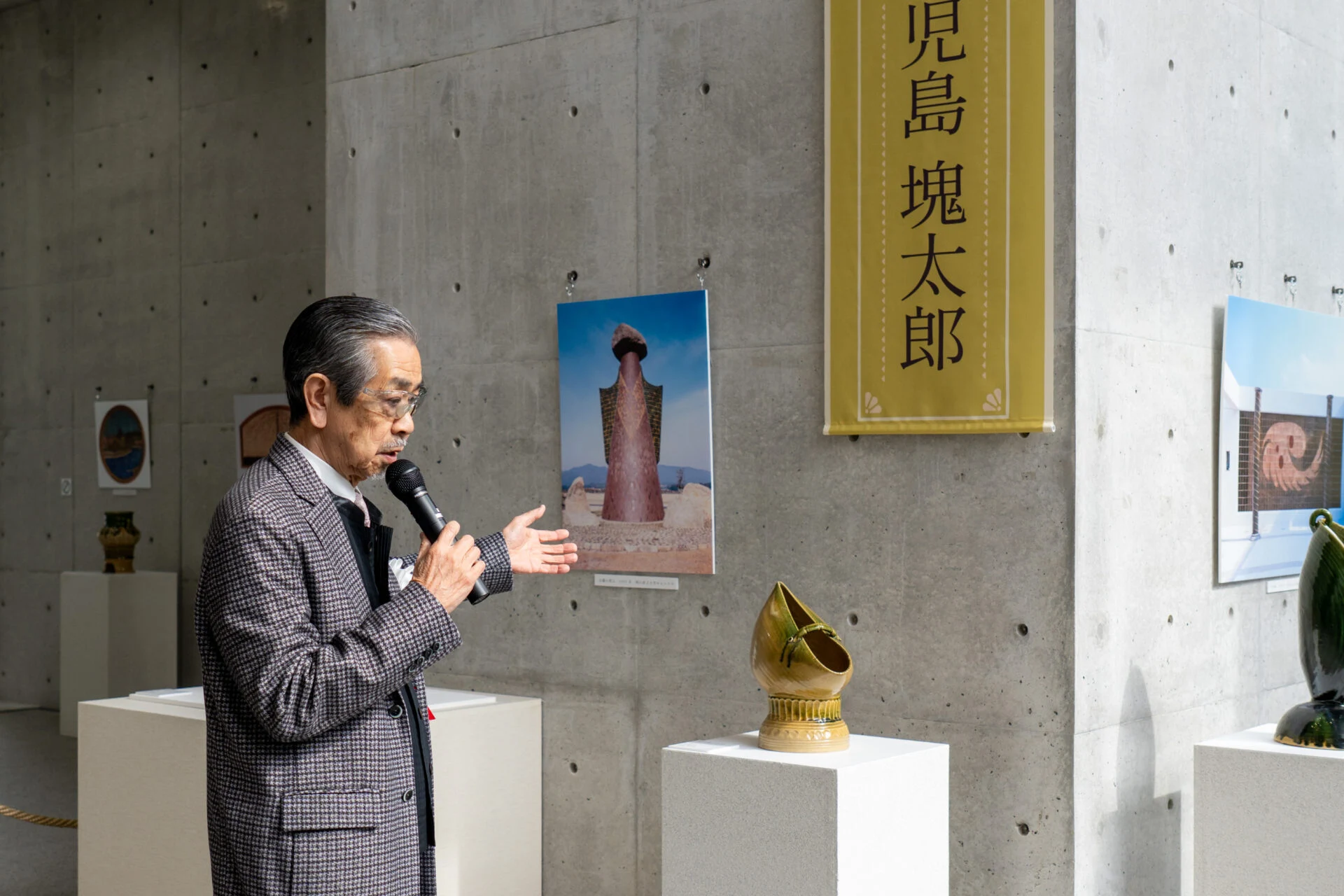
Finally, there was Kojima Kaita郎.
He shared stories about the struggles he faced when expressing colors and the background of the large work he creates every two years.
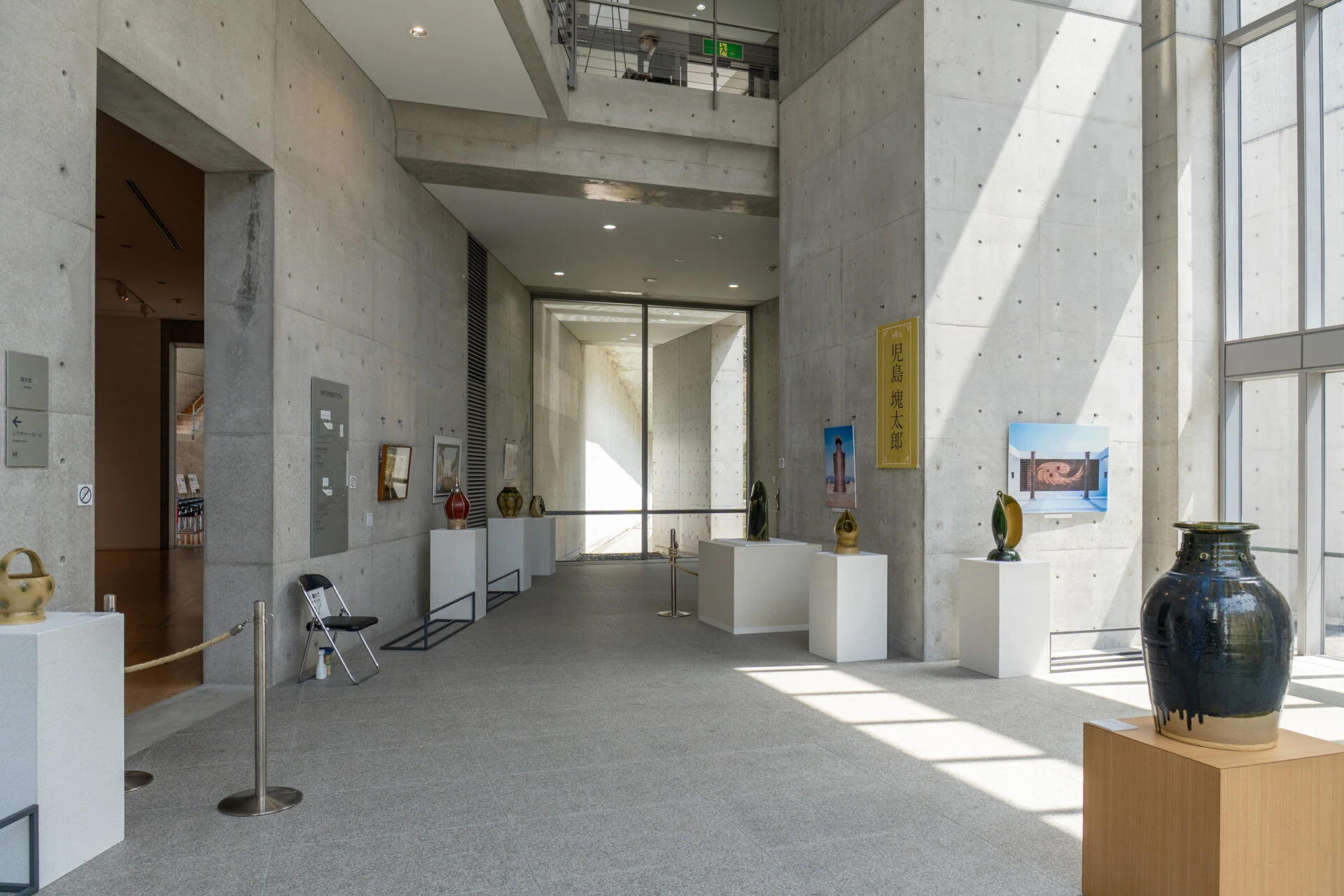
He also talked about the background of the "Aoi Oribe Daiko" (青織部大壺), which is usually displayed in the director's office of the Takahashi City Naruha Museum of Art. Due to its large size, it could not fit into the kiln during production, and he mentioned that he completed it by breaking the entrance of the kiln four times, making it a memorable piece.
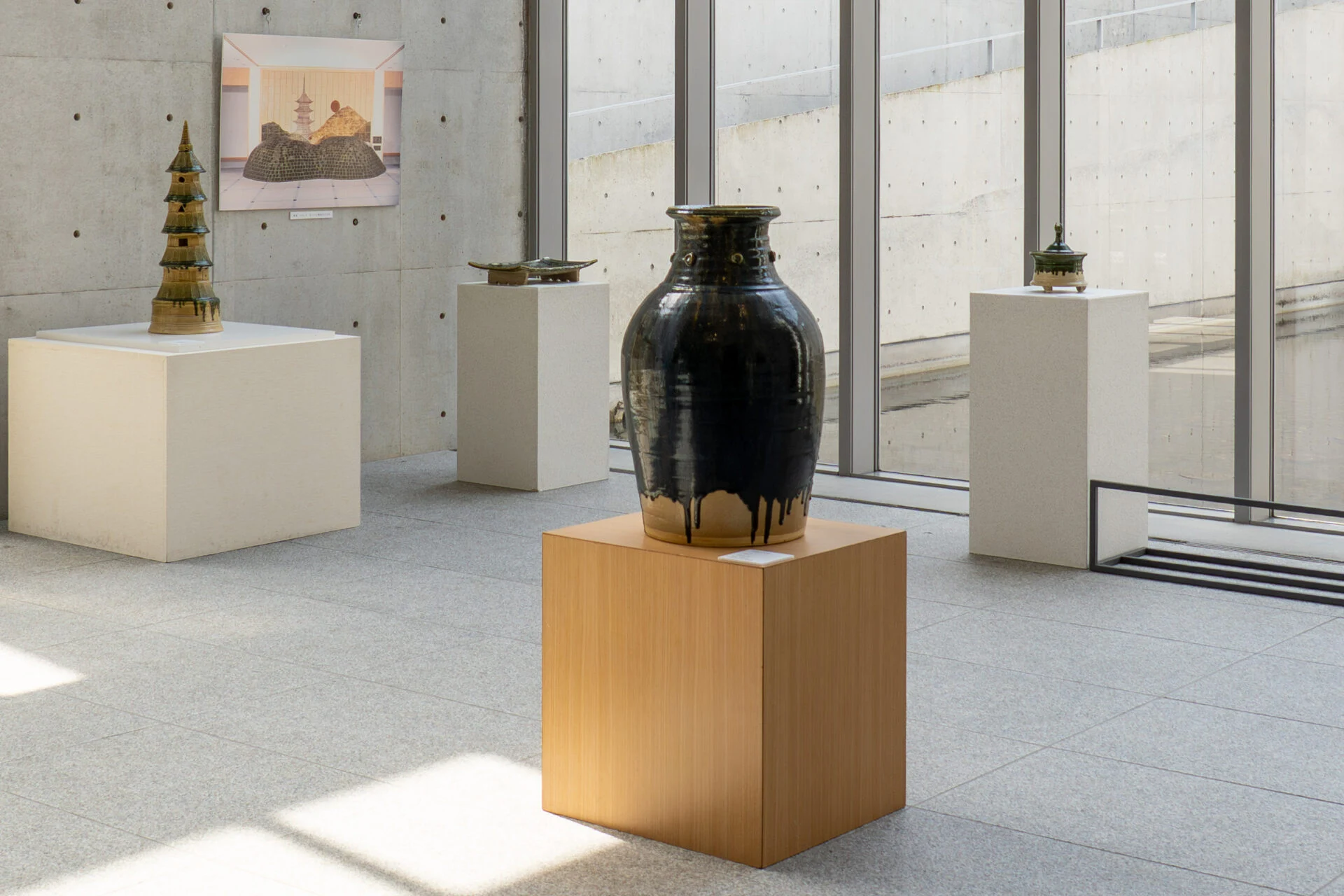
Finally, there were greetings from Kojima Kaita郎 and Kojima Shintaro, and the gallery talk concluded.
Venue Overview
Now, let me briefly introduce the venue with a focus on photos.
Kojima Torajiro Area
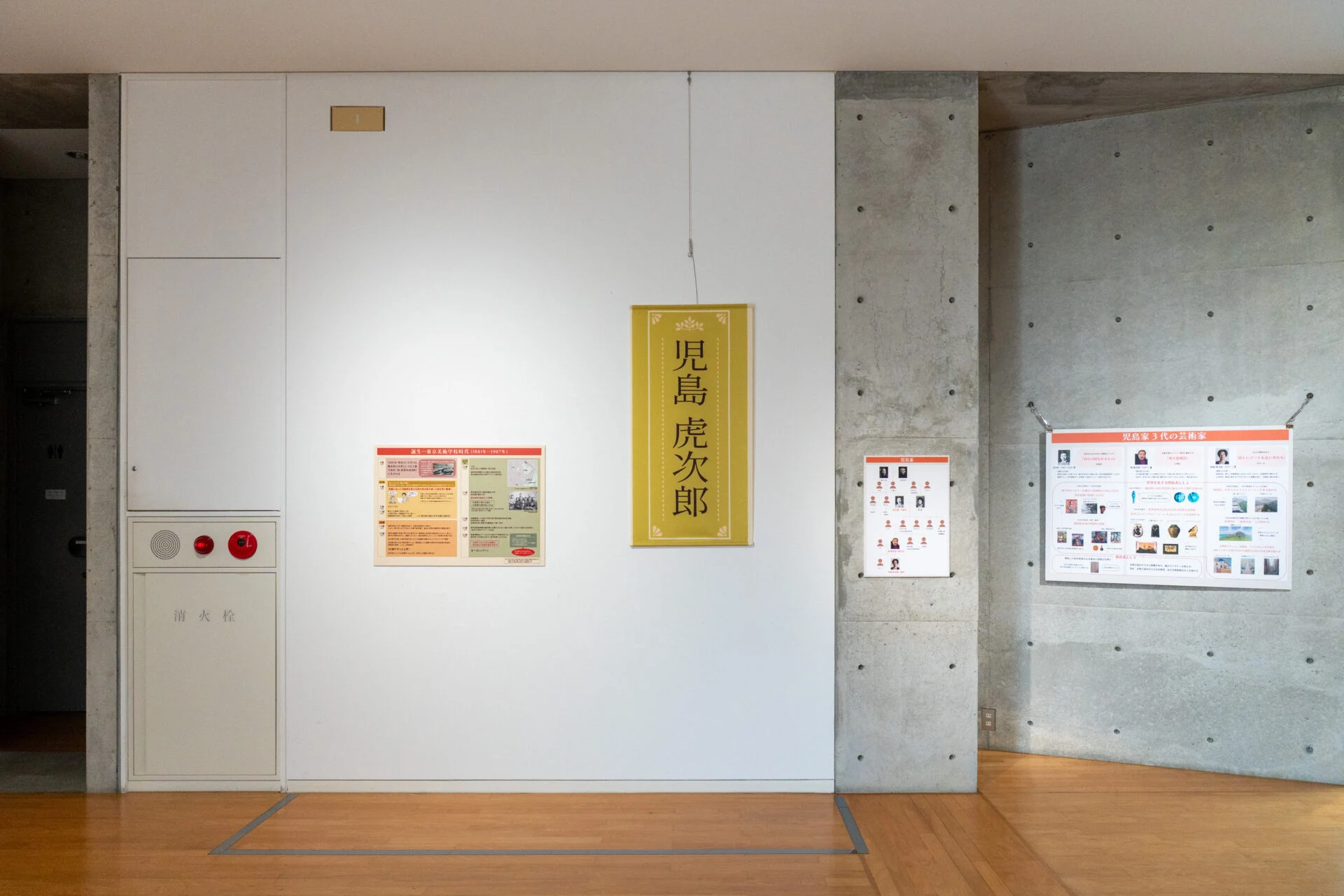
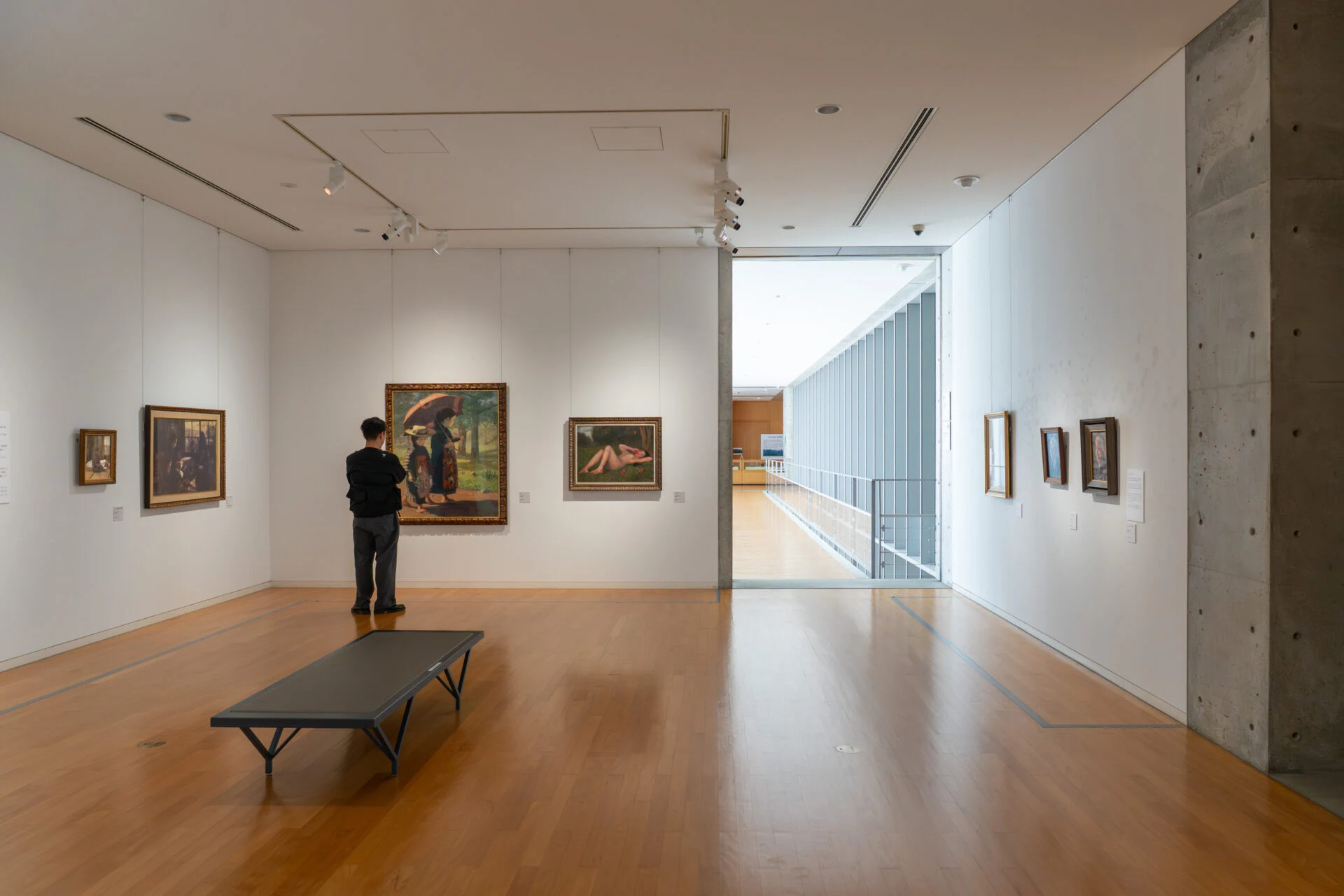
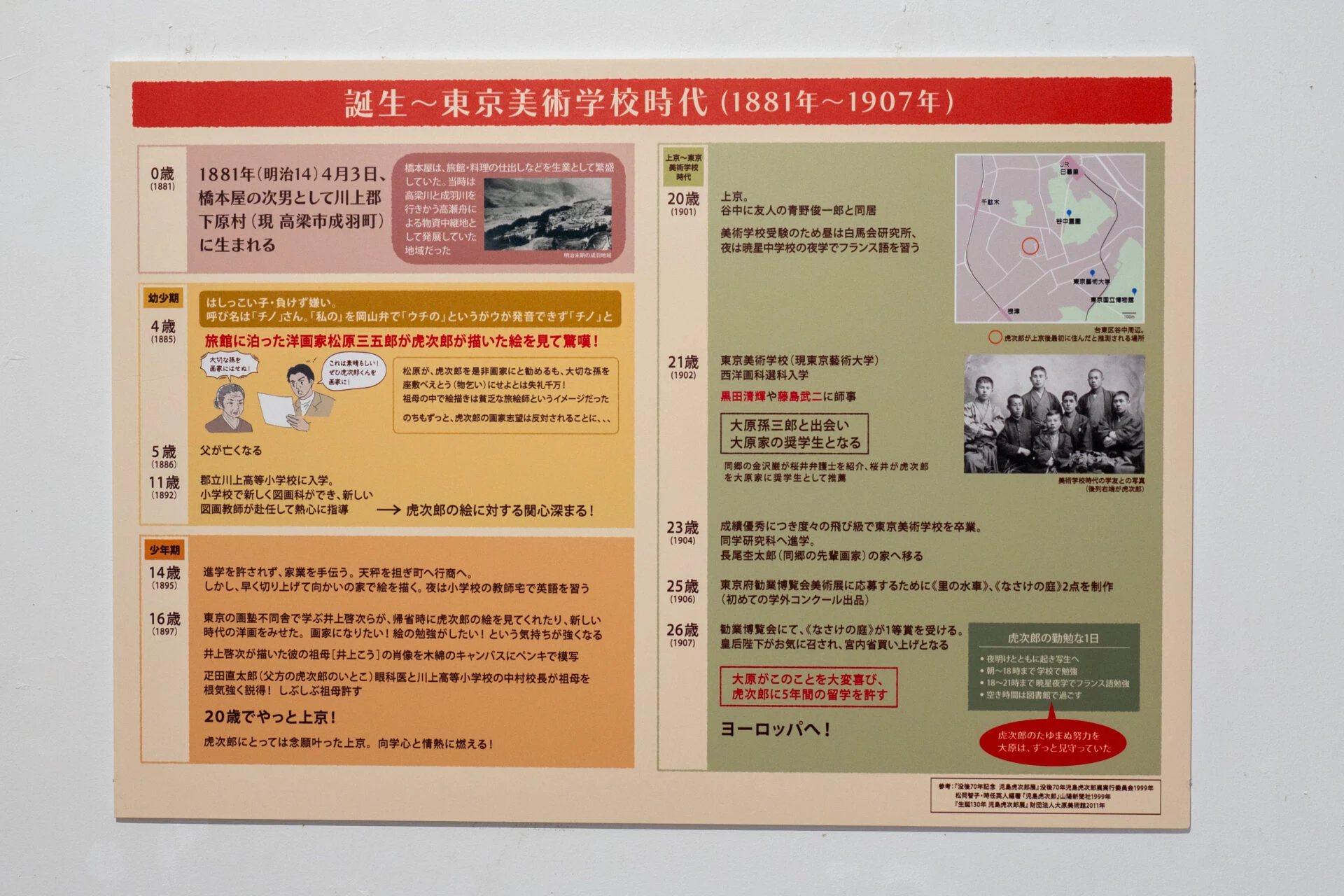
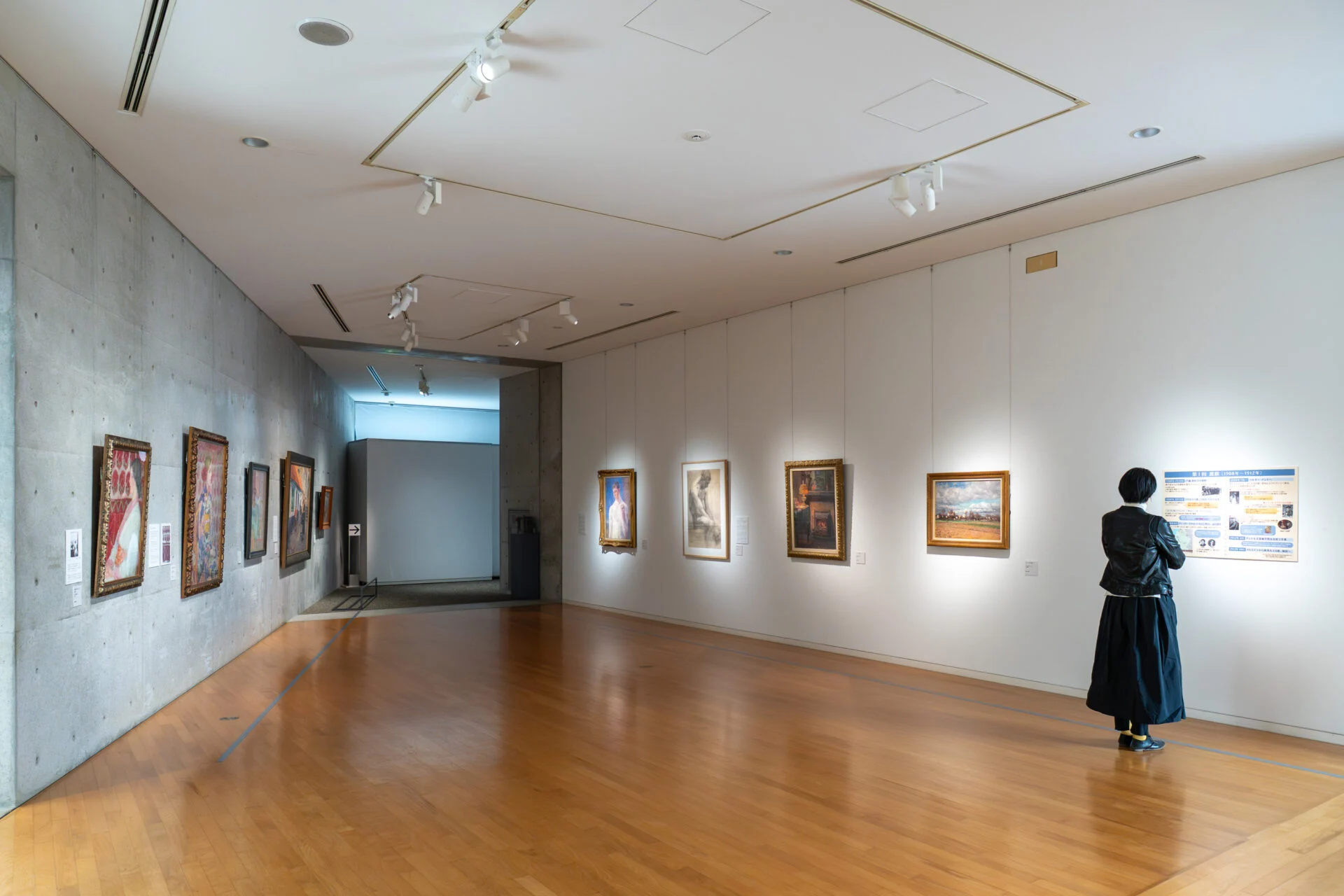
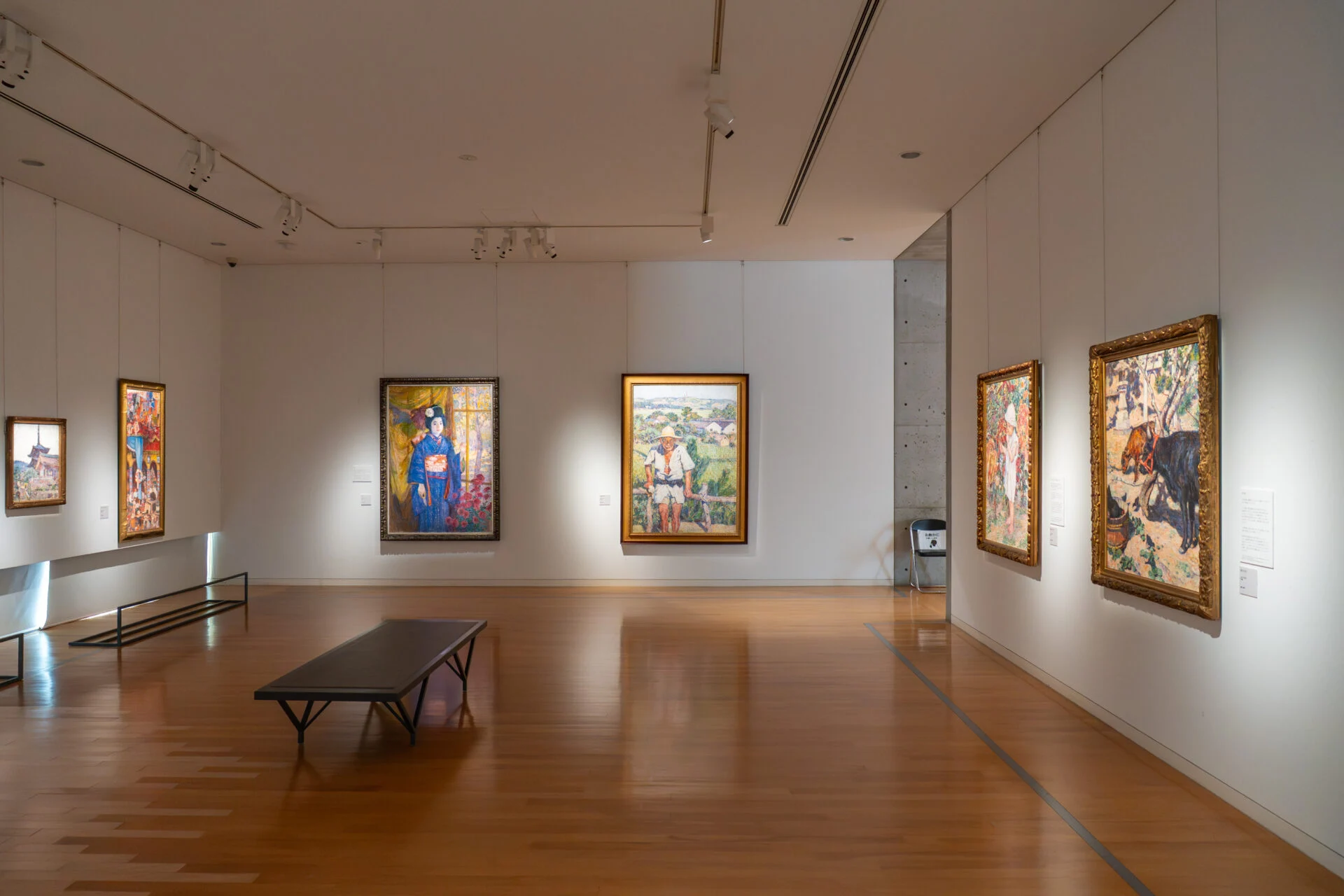
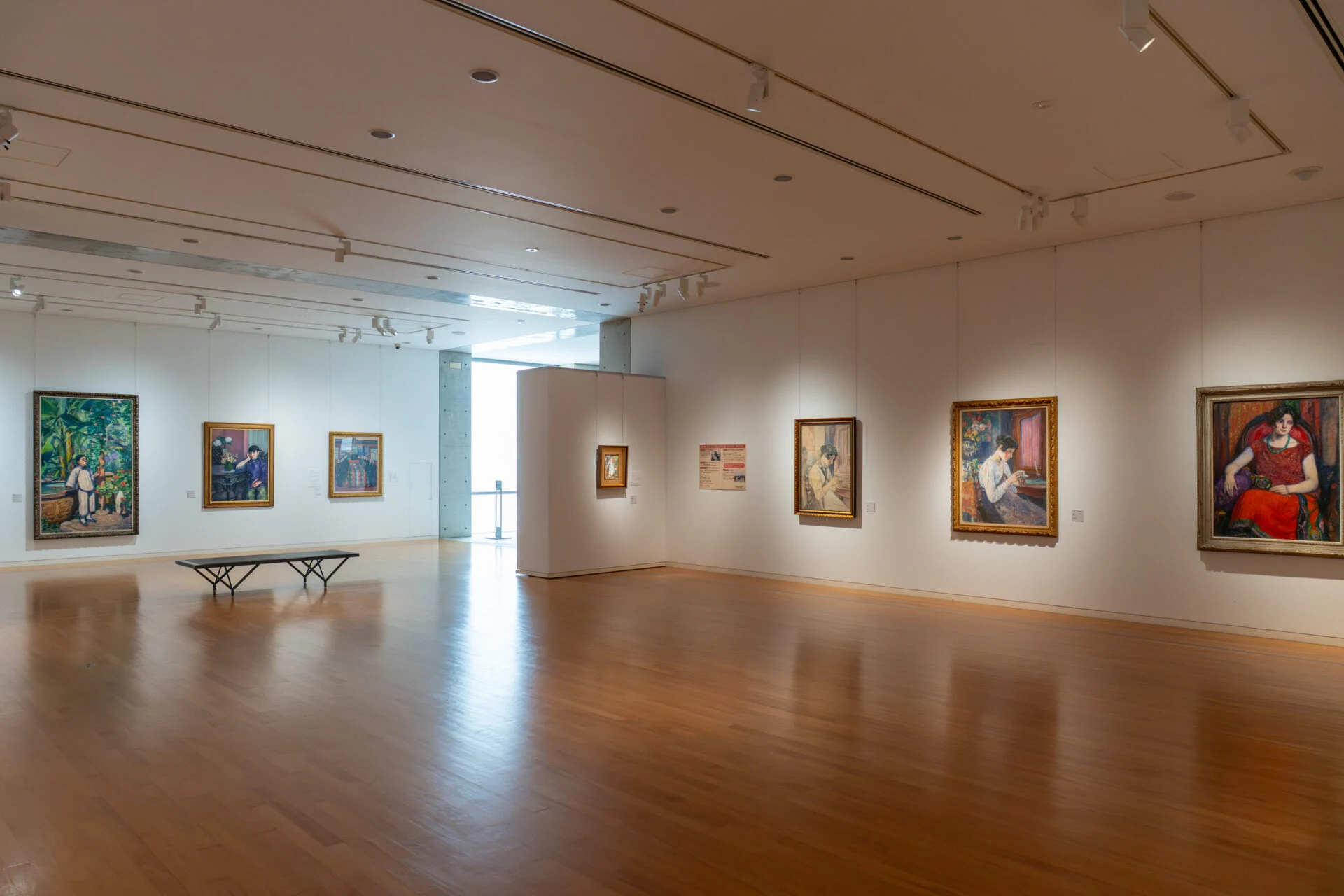
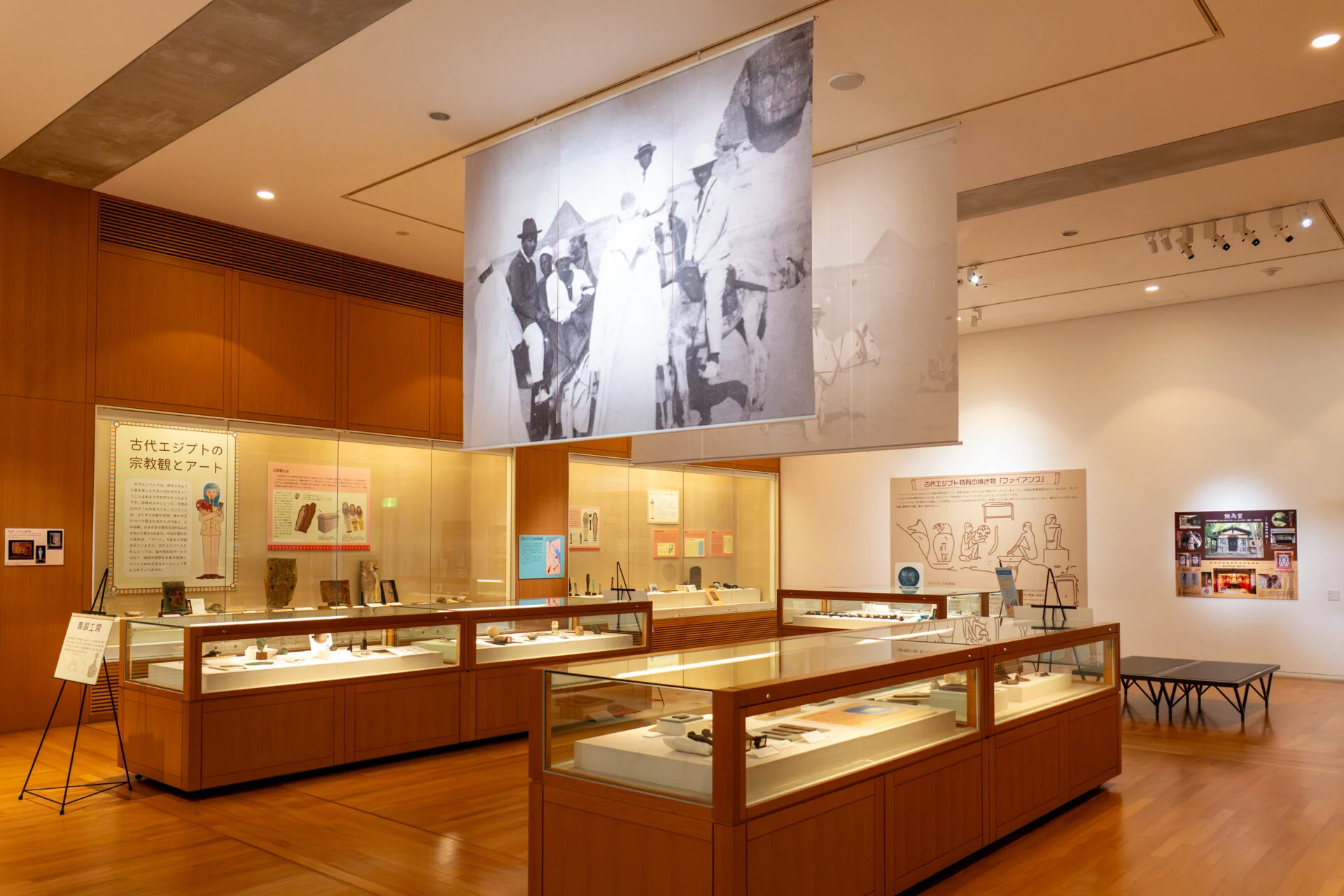
Kojima Shintaro Area
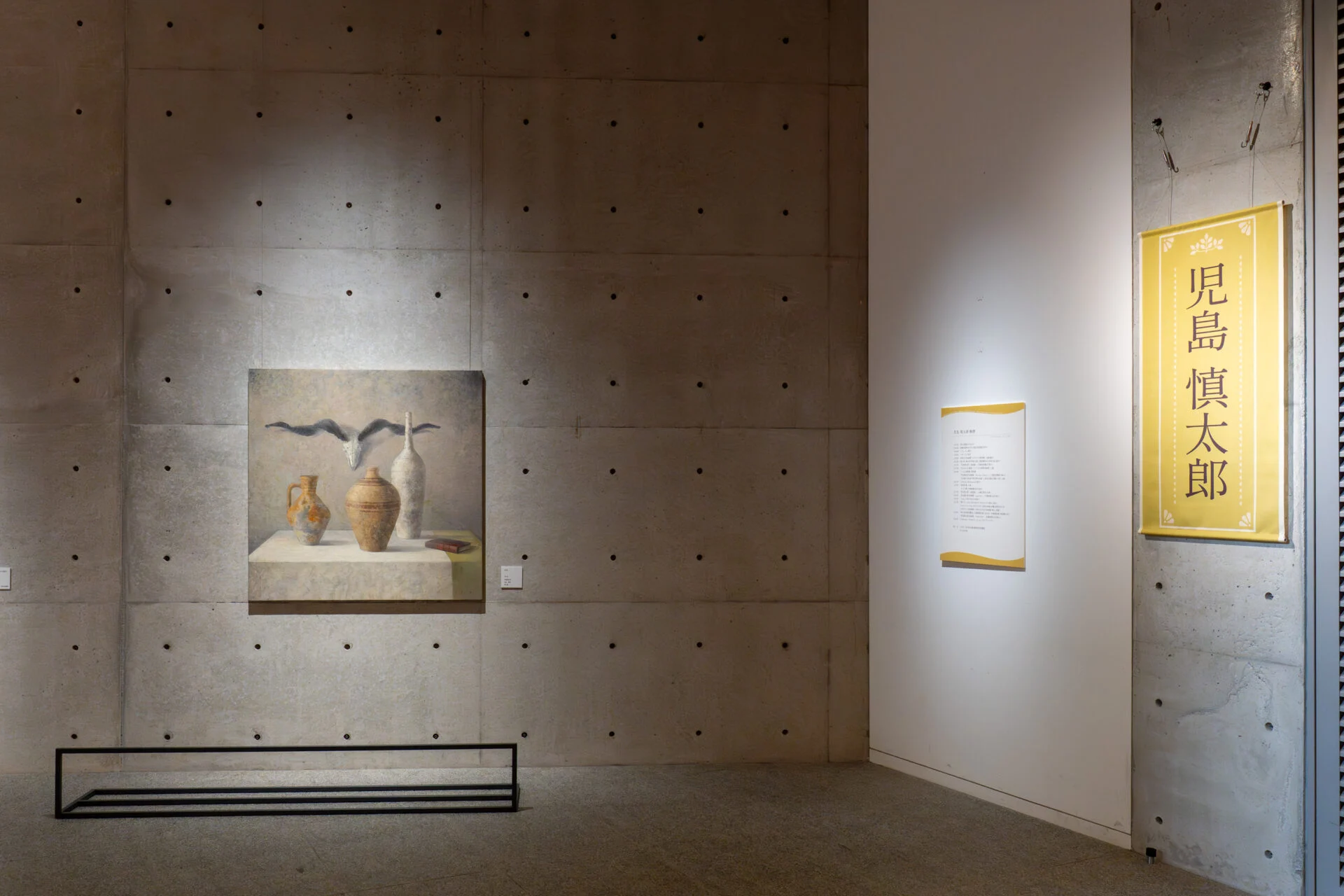
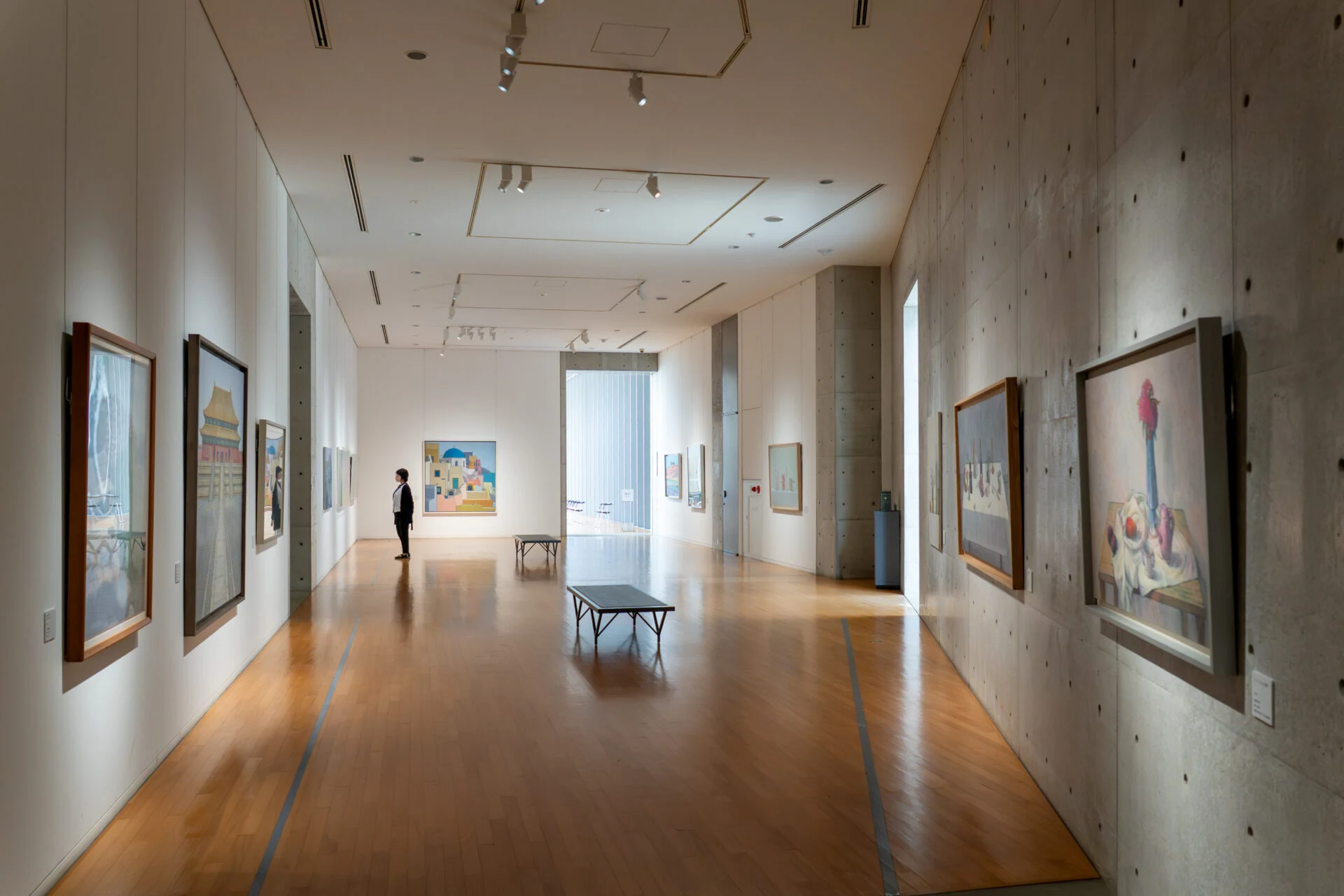
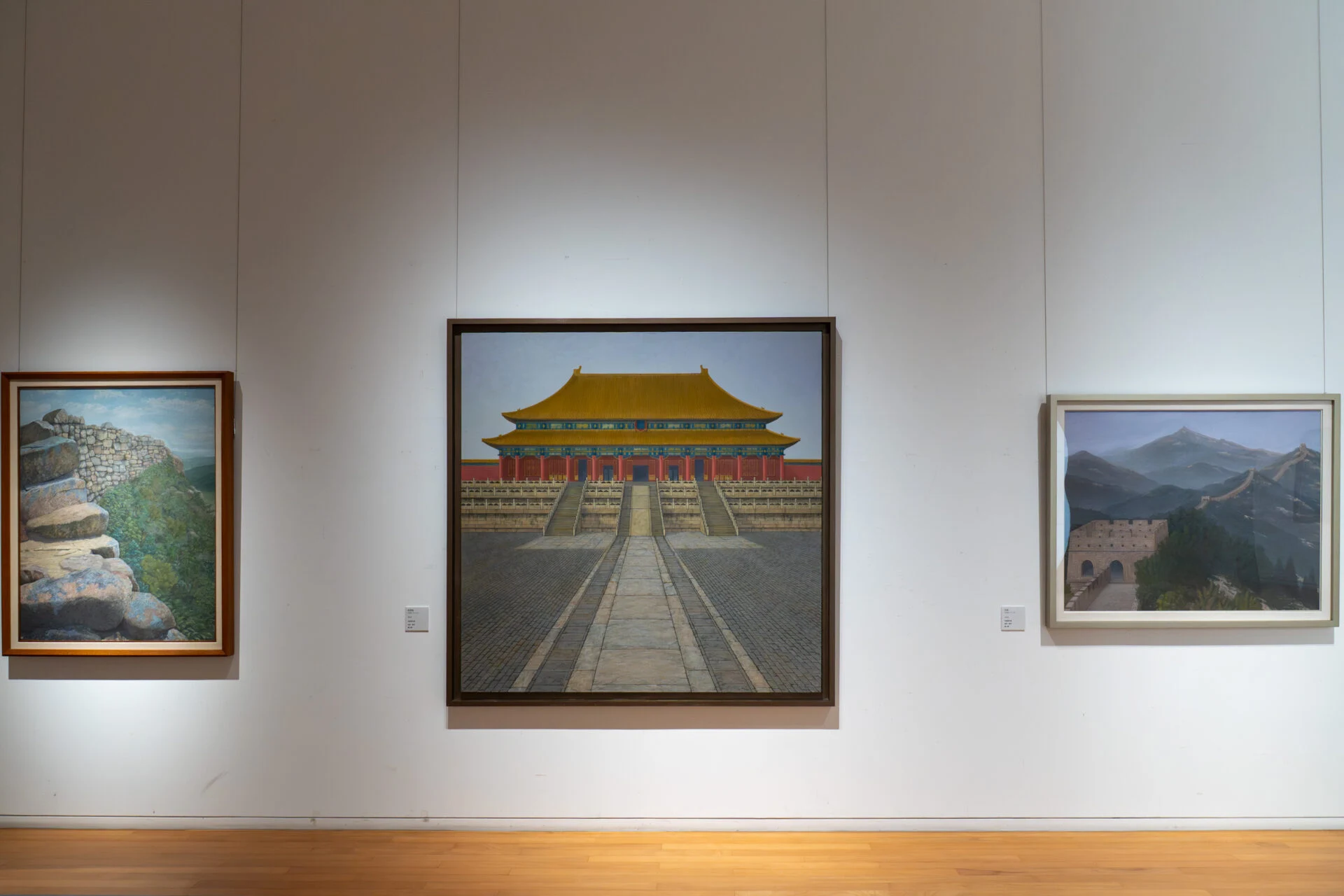
Kojima Kaita郎 Area
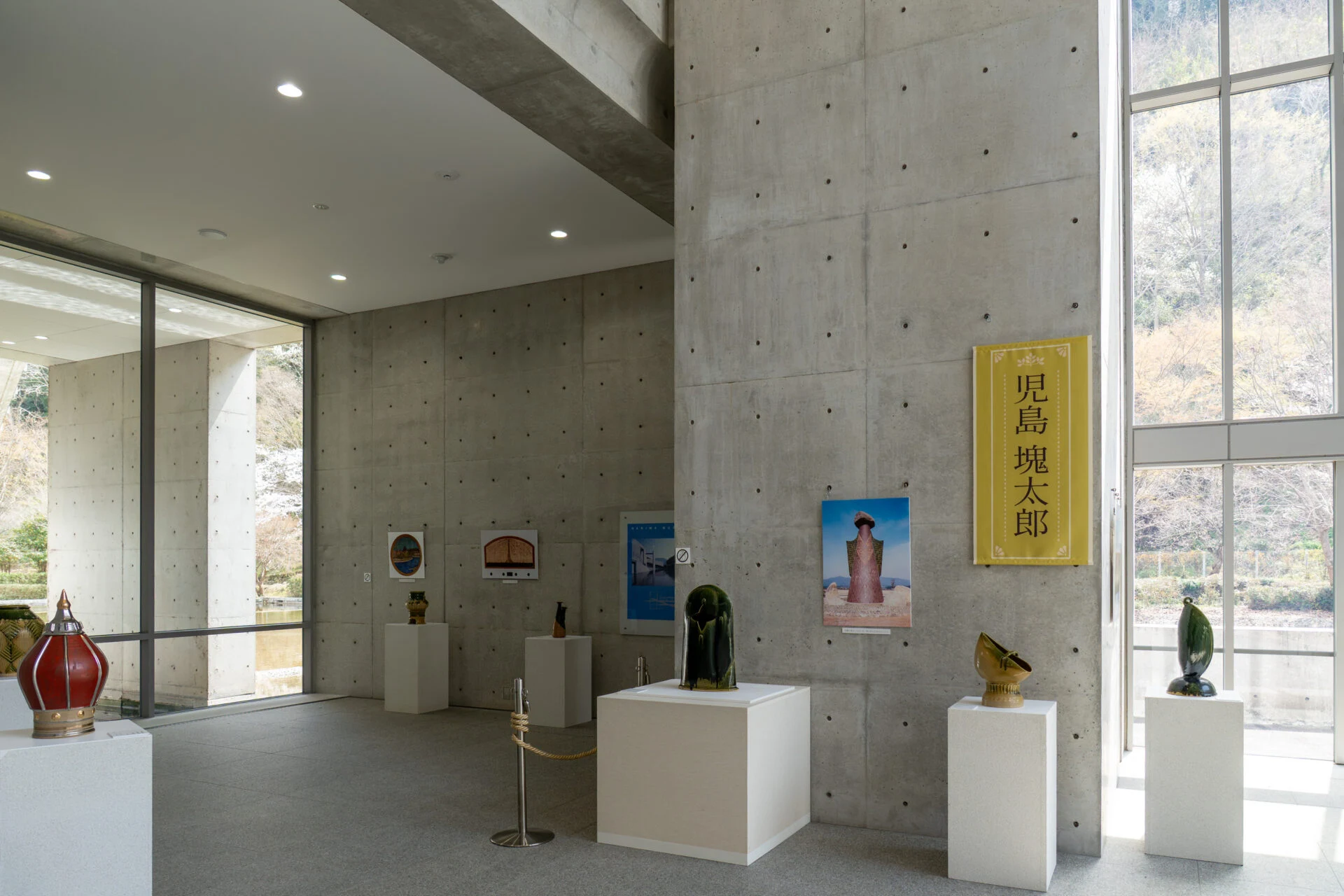
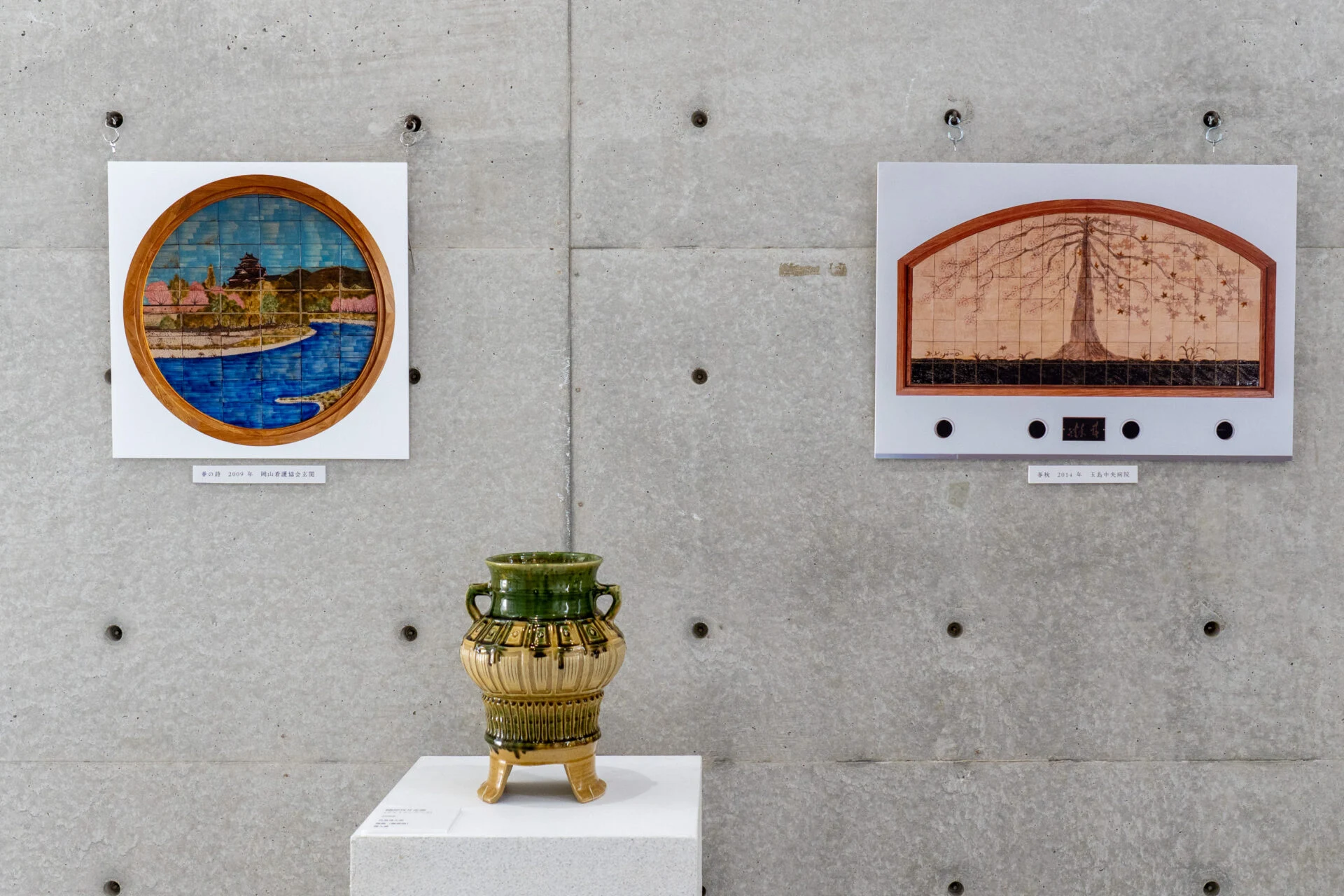
Conclusion
When you hear "Kojima Torajiro" in Kurashiki, you might have a strong impression of him as a collector of art works.
However, after visiting this time, I realized that not only was he a Western-style painter, but that a kind of "artist mind" has been passed down to his descendants.
There are words from Mr. Kojima Kaita郎 that left an impression on me.
I am a ceramic artist. Torajiro and Shintaro are walking different paths from painters, but there is one common point.
That is, they create works while traveling and having a series.
This may be the "Kojima family."
In the Bikan Historical Area, the Kojima Torajiro Memorial Gallery has opened, and 2025 can be called the Kojima Year. How about experiencing "the present of the Kojima family" at the Nariwa Museum in Takahashi City?
Genealogy of Art: The Kojima Family Three Generations Exhibition - Kojima Torajiro, Kojima Kaita郎, Kojima Shintaro - Data
| Name | Genealogy of Art: The Kojima Family Three Generations Exhibition - Kojima Torajiro, Kojima Kaita郎, Kojima Shintaro |
|---|---|
| Dates | From April 5, 2025 (Saturday) to June 8, 2025 (Sunday) 9:30 AM to 5:00 PM (Admission until 4:30 PM) |
| Location | 1068-3 Shimohara, Nariwa-cho, Takahashi City, Okayama Prefecture |
| Participation Fee (including tax) | General/Seniors: 1,000 yen High school and university students: 500 yen (proof of enrollment required) Elementary and junior high school students: Free |
| Website | Nariwa Museum |