
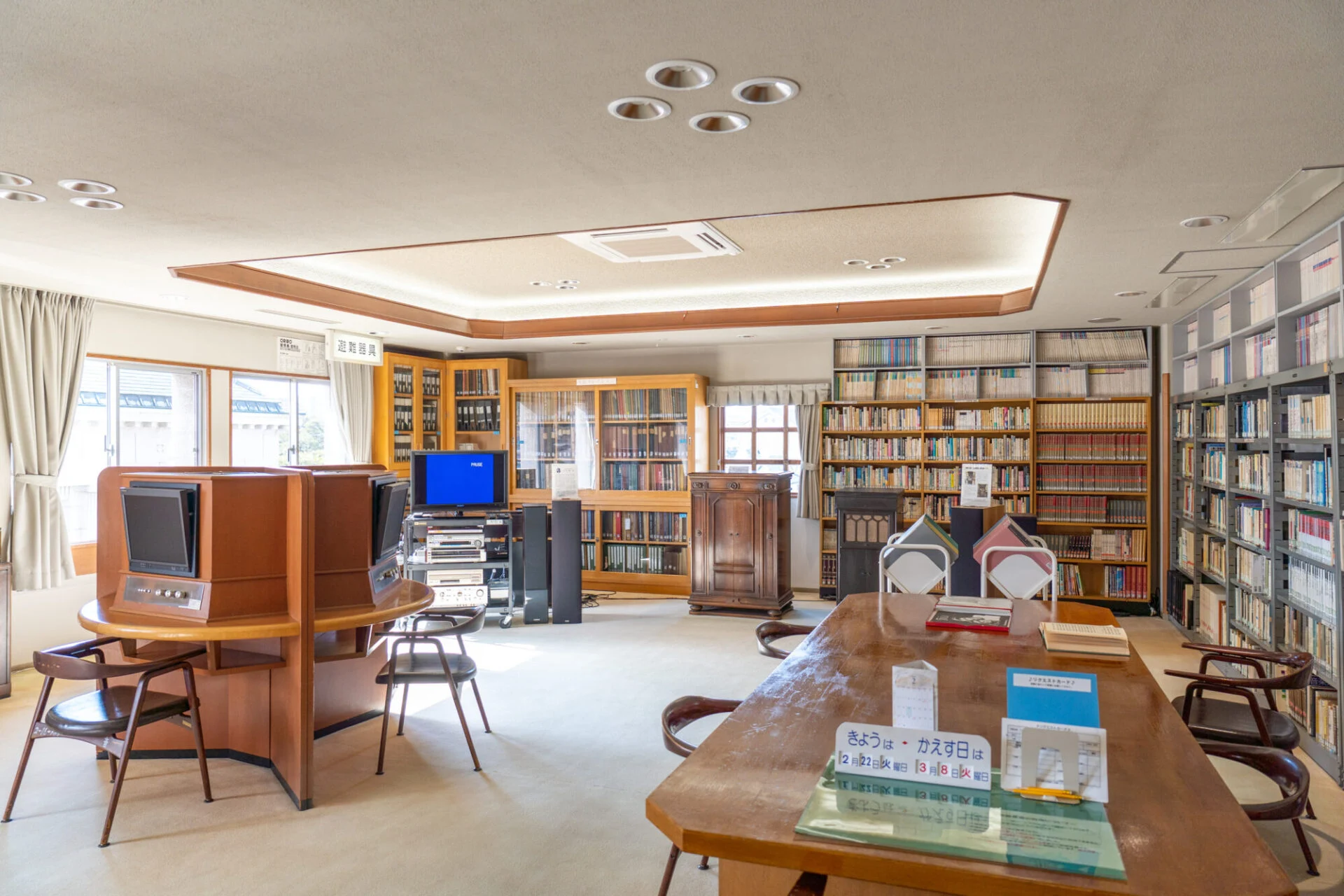
Music and videos can be played on smartphones
Compared to the 20th century, music and videos (audiovisual works) have become more accessible and convenient, but during the post-war period of rapid economic growth, they were not commonplace, and the SP and LP records that were mainstream at the time were expensive.
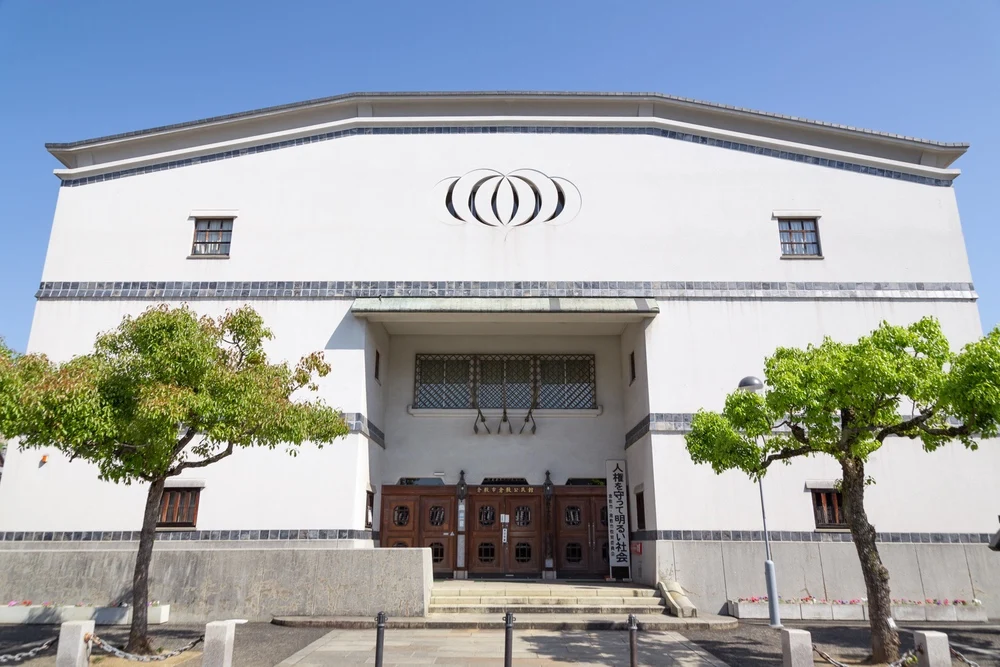
In such an era, in 1969 (Showa 44), the "Music Library" was established within the Kurashiki Community Center (formerly Kurashiki Cultural Center).
Nowadays, it is not uncommon for libraries to have audiovisual facilities such as DVDs, but the "Music Library" of Kurashiki City has a unique background and collection that sets it apart from other facilities.
This article focuses on introducing the "Music Library" located within the Kurashiki Community Center.
What is the "Music Library"?
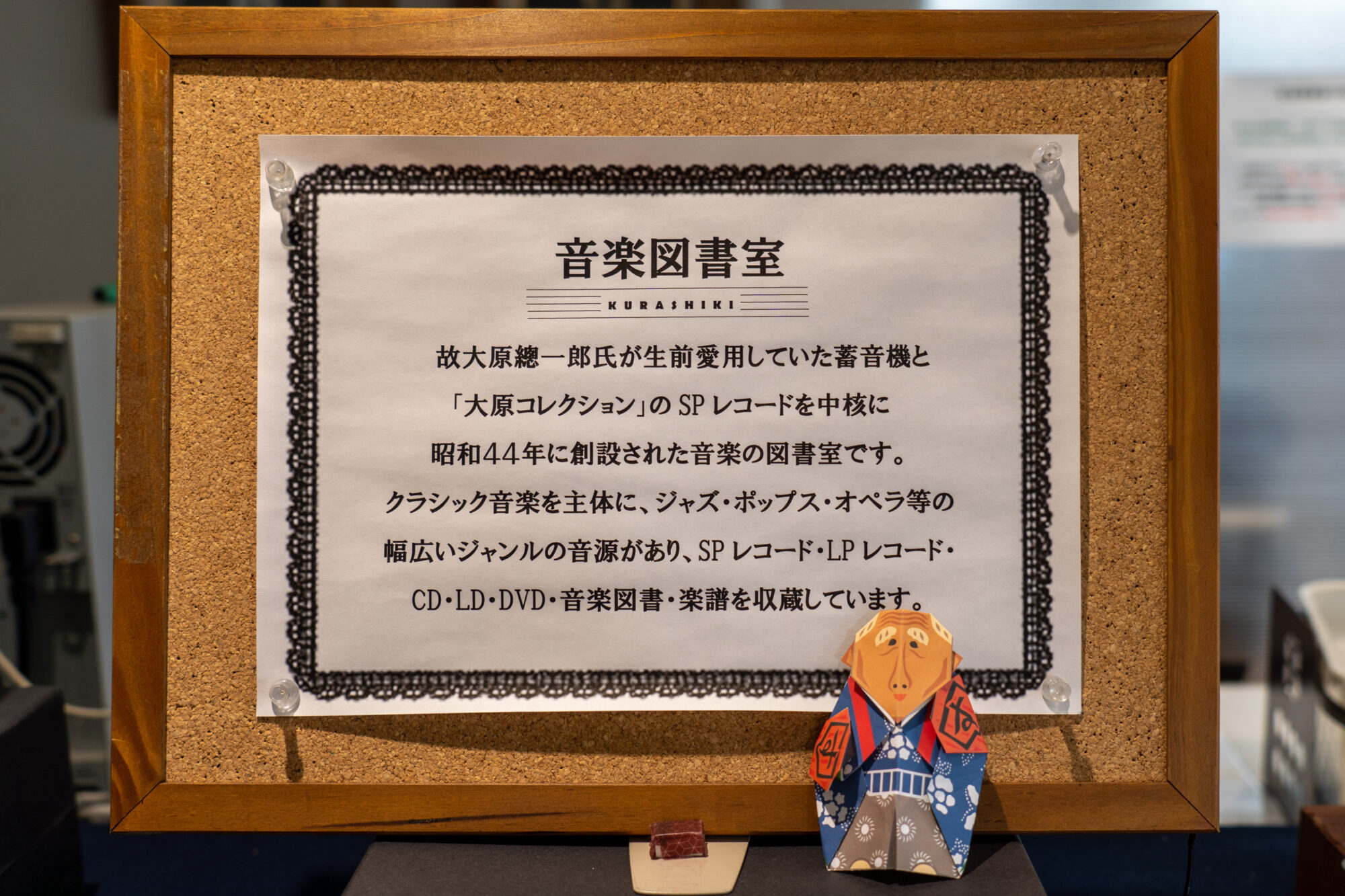
The Music Library was established on October 3, 1969 (Showa 44) when the Kurashiki Community Center (formerly Kurashiki Cultural Center) opened.
The impetus for this was a donation of 10 million yen made by Mr. Ohara Soichiro in 1953 (Showa 28) for the construction of the Music Library, along with the strong desire of the citizens for its establishment.
Mr. Ohara Soichiro had a deep love for the town of Kurashiki and classical music.
He was such a music lover that he once expressed a desire to become a musician if he were to be reborn, and he may have wished for Kurashiki to become a town filled with art and music.
Nowadays, it is not uncommon for public libraries to have audiovisual equipment that allows for the viewing of CDs and DVDs.
However, the Music Library, which holds music materials such as SP, LP, CD, LD, DVD, and BD, is one of the few well-equipped "affiliated facilities of local governments" in the country, making it a unique facility.
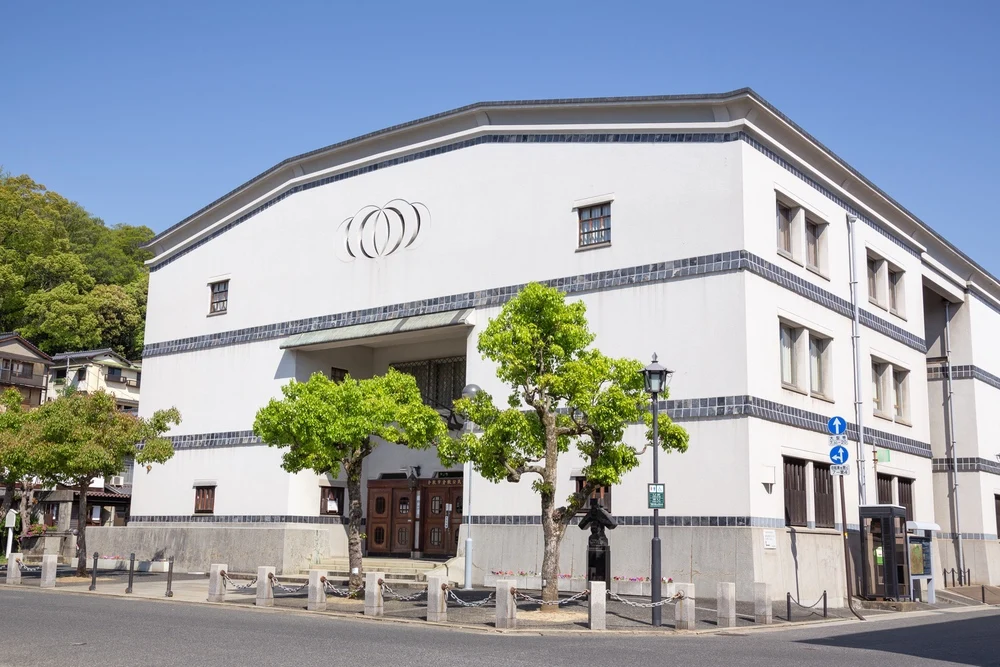
Ohara Collection
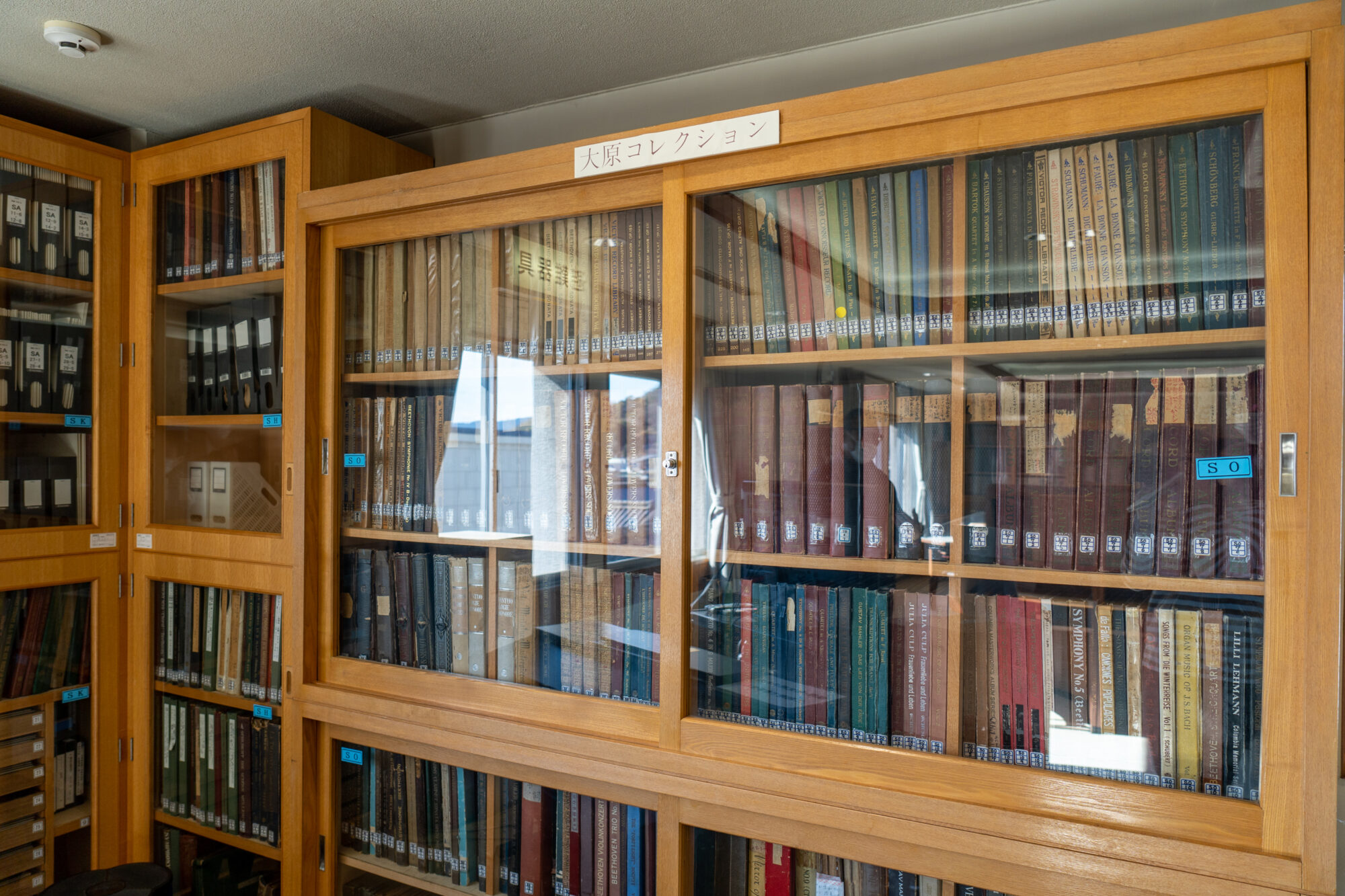
The most notable feature of the Music Library in Kurashiki City is its extensive collection of SP and LP records.
SP (Standard Play) Records
This is an early type of record, with a diameter of 12 inches (about 30 centimeters), a recording time of 4 to 5 minutes, and a speed of 78 RPM.
LP (Long Play) Records
This is the current mainstream type of record, with a diameter of 12 inches (about 30 centimeters), a recording time of 30 minutes, and a speed of 33 RPM.
Mr. Ohara Soichiro donated over 2,000 classical SP records for the establishment of the Music Library, which are still cherished today as the "Ohara Collection."
The collection focuses on SP and LP records, as well as audiovisual works like LD
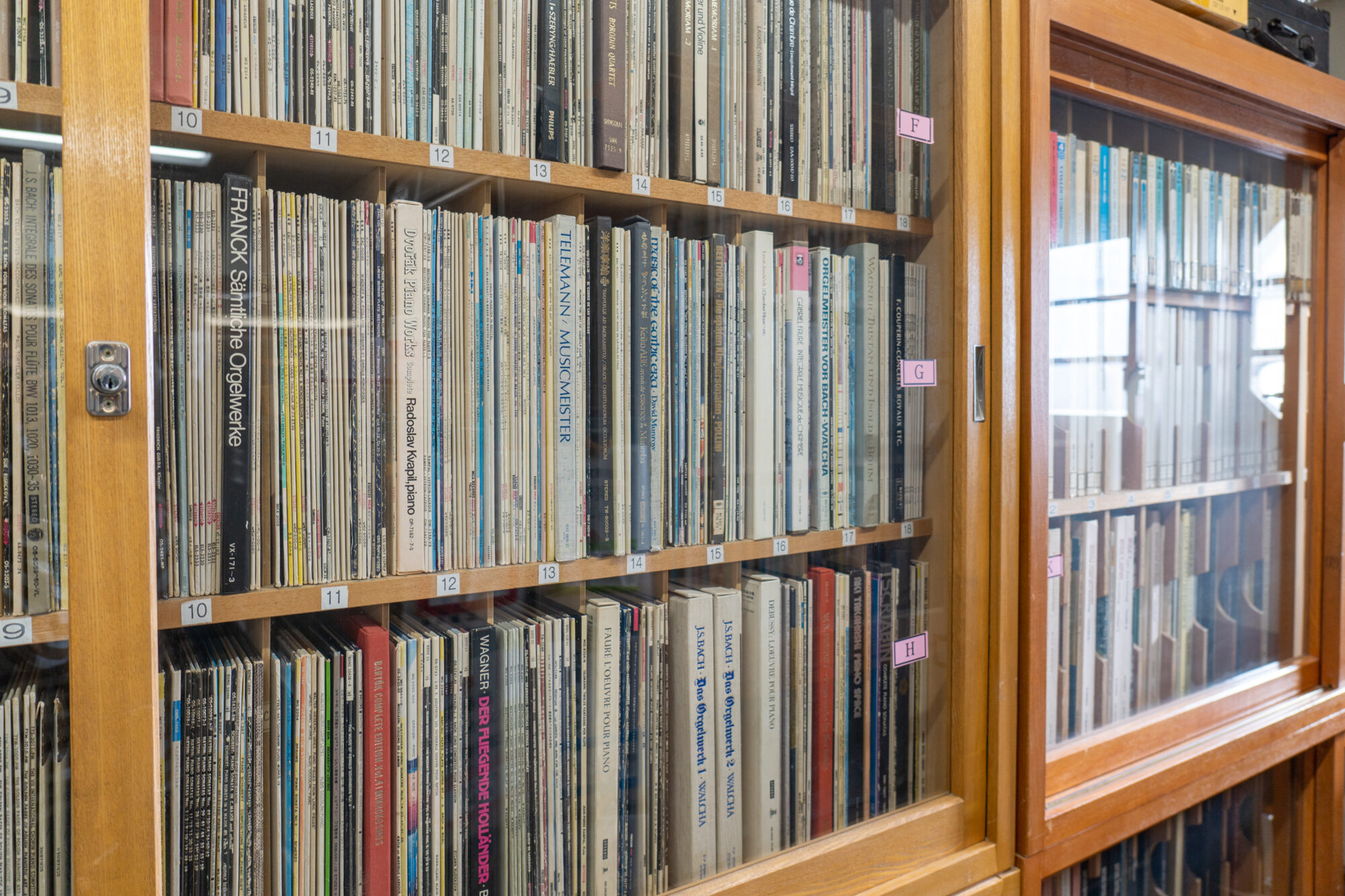
Additionally, Mr. Jo Sengoku, former president of Kuraray Co., Ltd. (formerly Kurashiki Rayon), has also donated records, bringing the total to about 4,000.
Among these, there are many famous recordings by performers active from the late 19th century to the early 20th century.
Summarizing the materials held by the Music Library, they are as follows.
| By Material | Quantity |
|---|---|
| LP Records | 8,385 |
| SP Records | 4,315 |
| CDs | 2,626 |
| SACDs | 58 |
| LDs | 542 |
| DVDs | 241 |
| BDs | 42 |
| Music Tapes | 422 |
| Sheet Music | 1,608 |
| Music Books | 2,423 |
| Ohara Collection CDs | 356 |
Among the music books, the magazines "Record Geijutsu" and "Ongaku no Tomo" have back issues available since the opening in Showa 44.
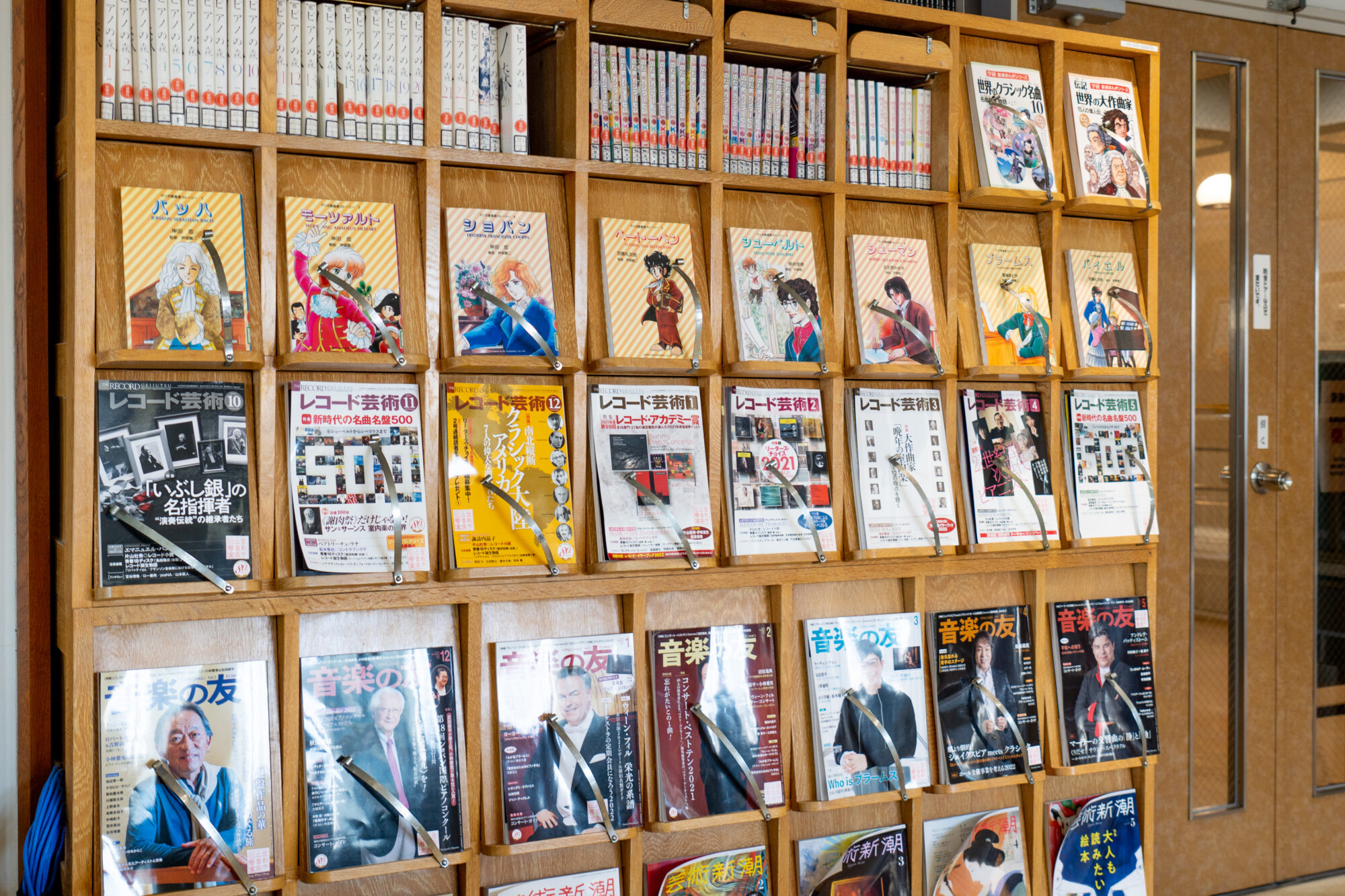
Only books can be borrowed
The Music Library only lends out "books," and records and sheet music cannot be borrowed.
Items cannot be picked up or returned at other libraries or community centers in Kurashiki City. The borrowing conditions are as follows.
- Up to 2 books can be borrowed per person
- The borrowing period is 2 weeks
- Only for those residing, working, or studying in Kurashiki City
In the Music Library, you can listen to performances through headphones and speakers
Some may wonder how to use the library since it does not lend out materials.
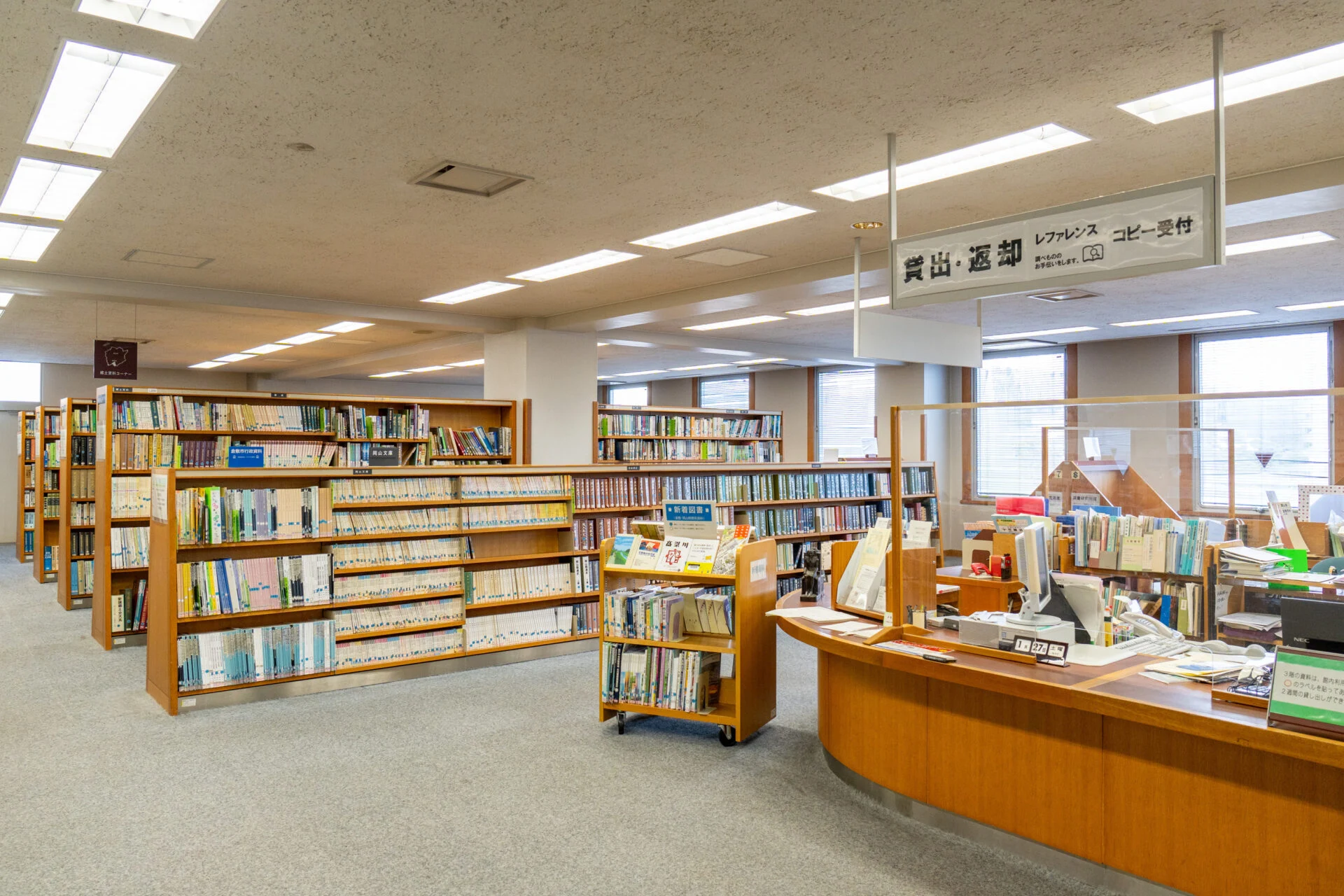
In the Music Library, you can search for the songs or sheet music you want to listen to from files categorized by composer and genre, and request them by filling out a request card.
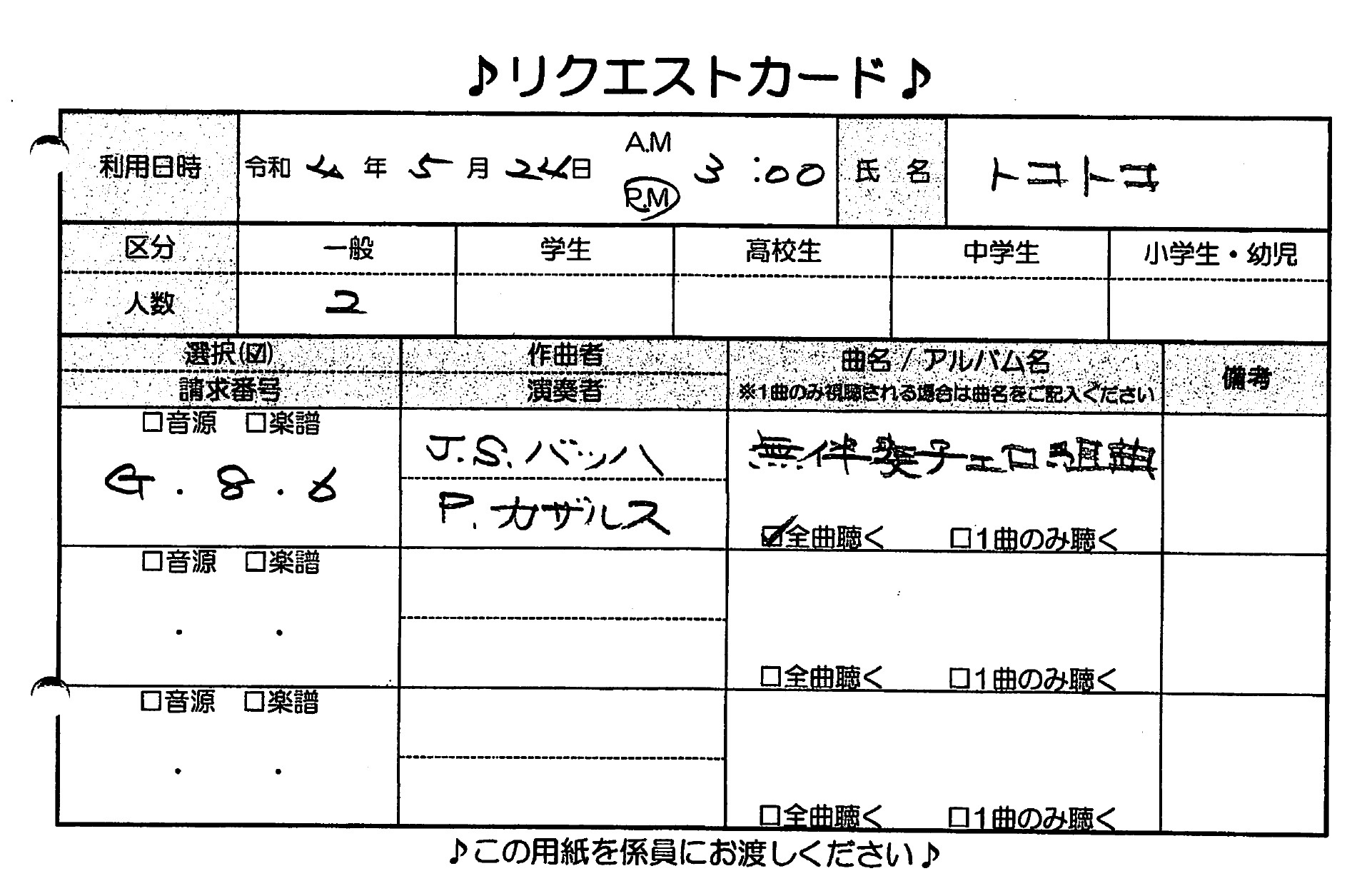
When you hand the card to the staff, you can listen through the headphones at the personal listening station.
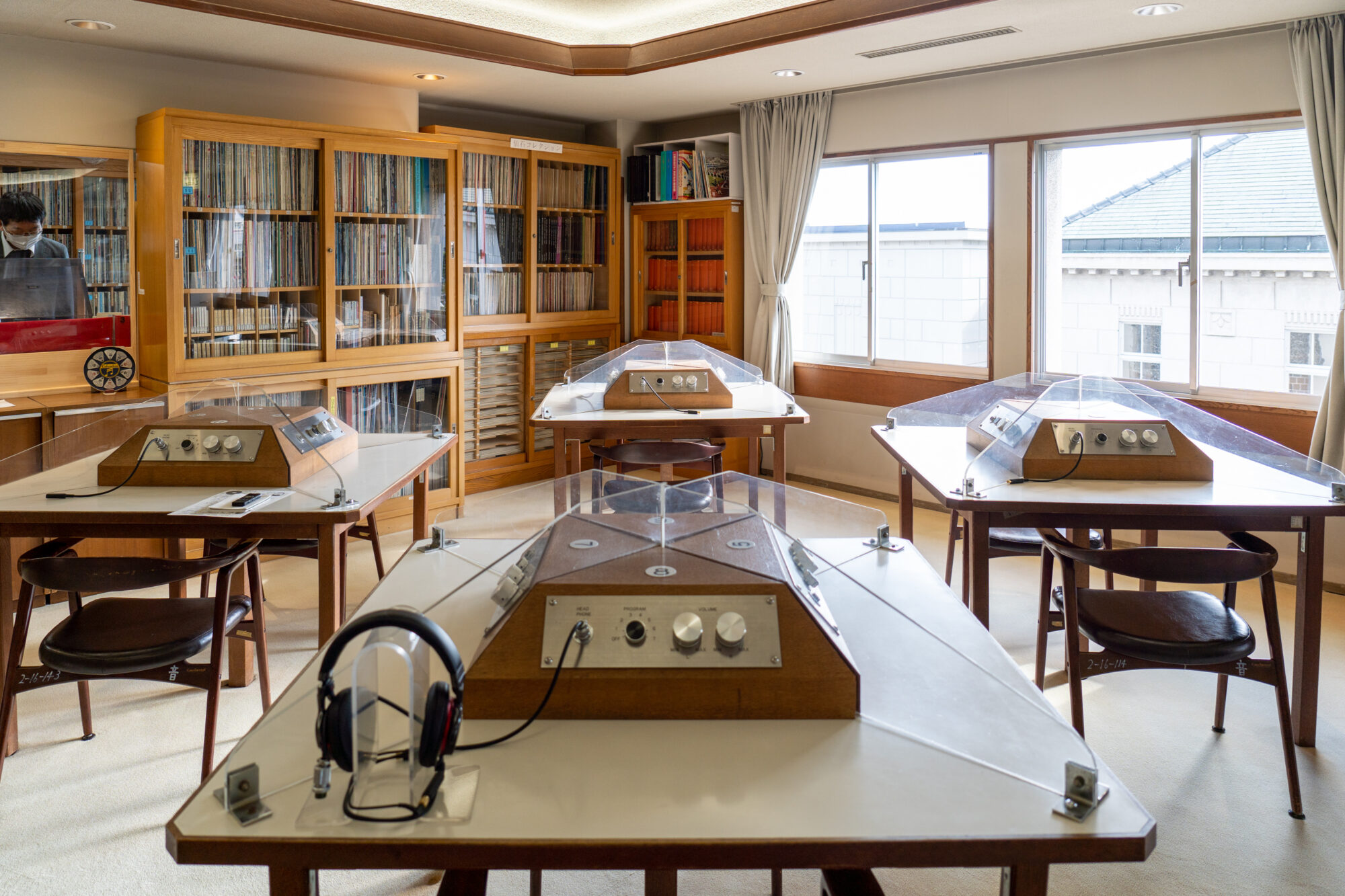
If a group wants to listen to the same piece, and there are no other users, they can also request to play it through the speakers.
You can also listen to music on the phonograph used by Mr. Ohara Soichiro
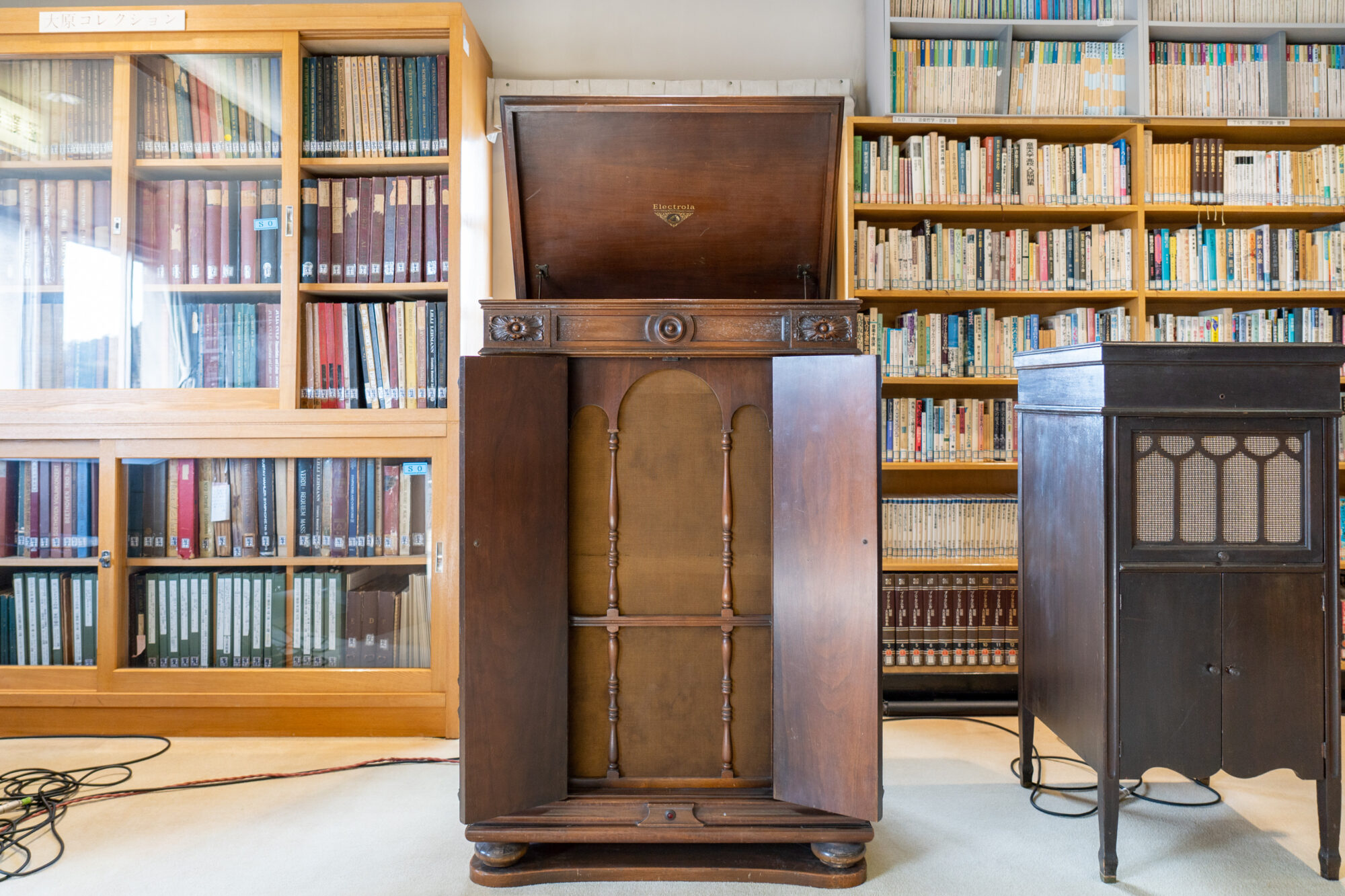
One particularly eye-catching item in the Music Library is the "large phonograph."
It looks like an antique, and it is the phonograph that Mr. Ohara Soichiro used, donated by his son Kenichiro as a commemorative gift upon the opening of the Music Library.
It should be noted that Mr. Ohara Soichiro passed away in July 1968 (Showa 43), a year before the completion of the Music Library.
This valuable phonograph can actually be enjoyed in the Music Library.
I also had the opportunity to listen to it during my interview (the staff operates the phonograph).
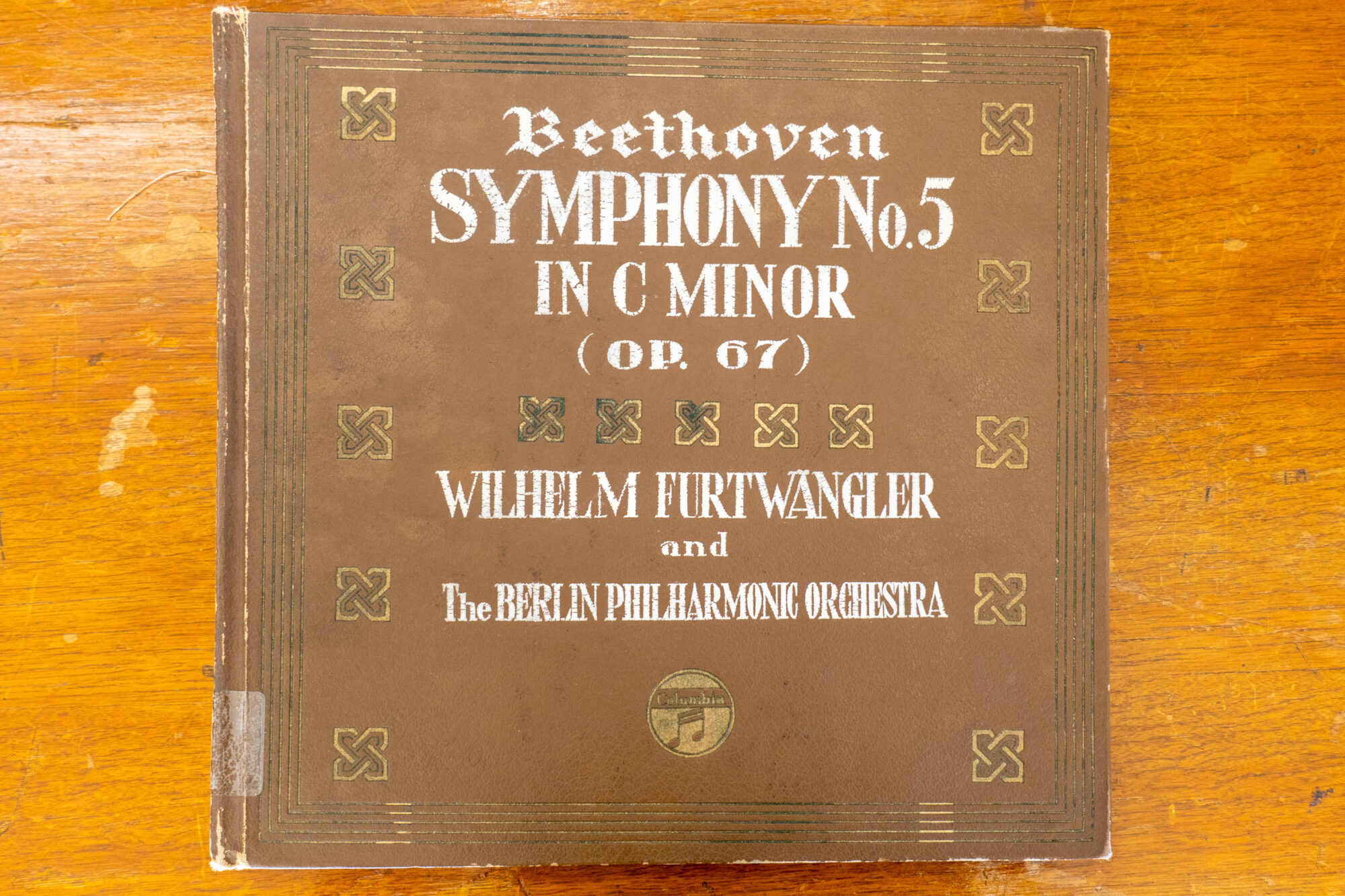
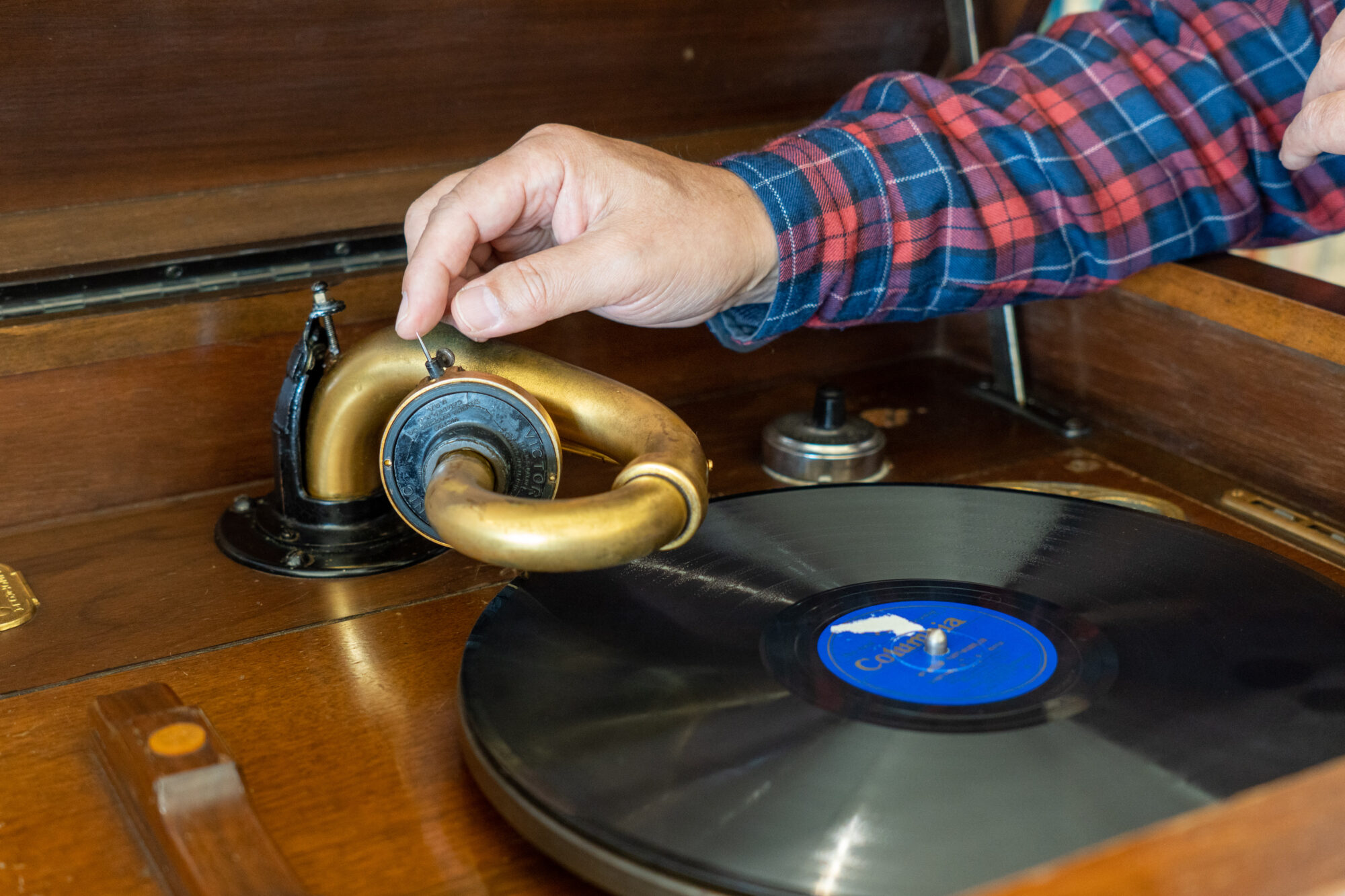
There is a different flavor to listening to music on a phonograph compared to the digital audio from CDs and smartphones.
Honestly, I am not very knowledgeable about music and thought I wouldn't be able to discern differences in sound quality, but I felt a warmth in the sound that is not present in CDs.
It is difficult to explain in words, but I felt that "the sound of CDs is too clean," and the music from CDs and smartphones seemed to have "all the extra elements cut out" compared to the music coming from the phonograph.
This was a surprising experience.
Such opportunities are now considered "precious experiences," but what kind of work does the Music Library do to provide such experiences?
In the latter part of the article, I spoke with staff members Kazuhiko Sasaoka and Hitomi Okura.
Music Library Data
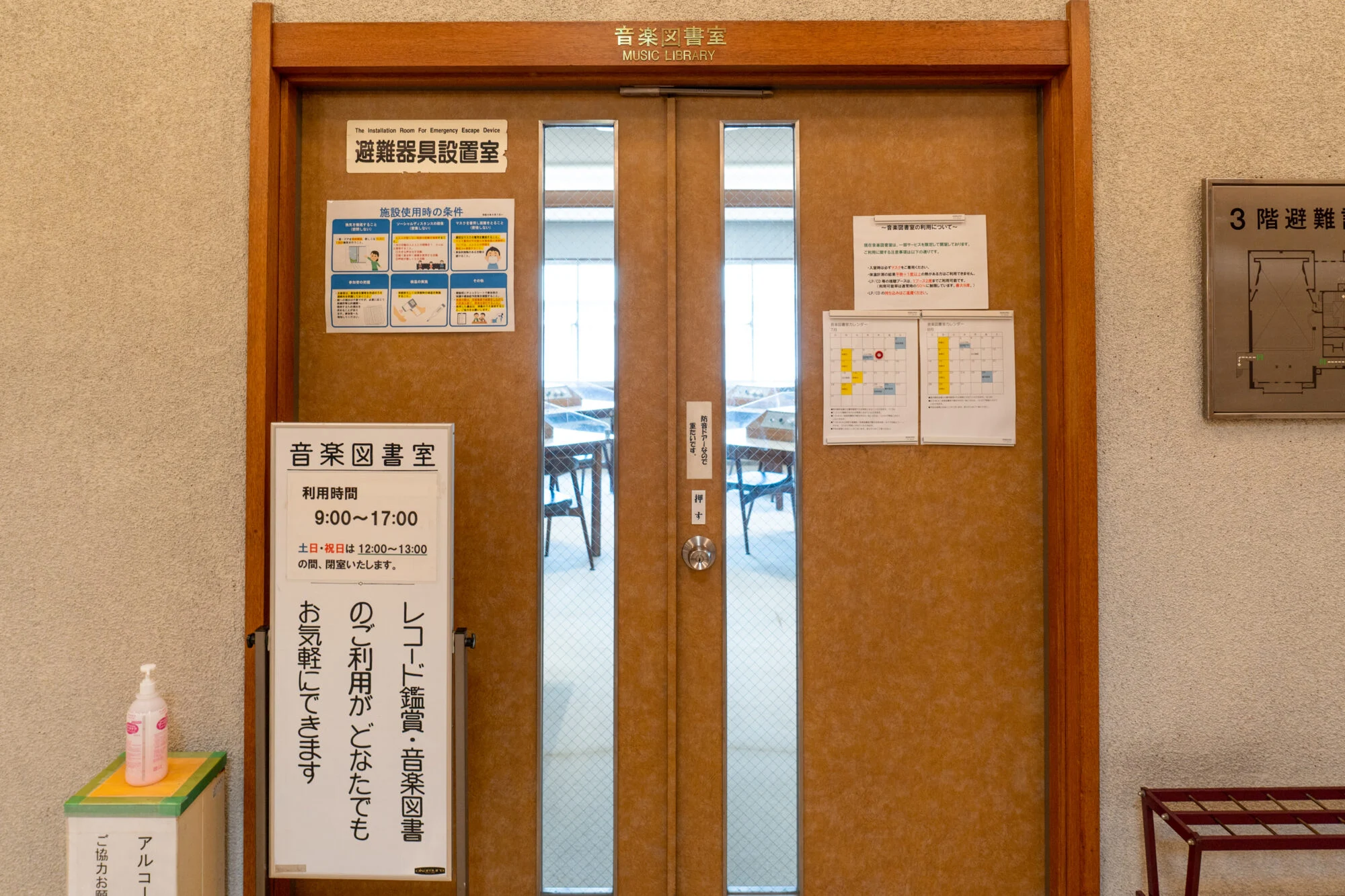
| Name | Music Library |
|---|---|
| Location | 2-21 Honmachi, Kurashiki City, Okayama Prefecture |
| Contact | 086-423-2135 |
| Parking | Available Can use Kurashiki Community Center parking |
| Opening Hours | 9:00 AM - 5:15 PM *Please enter by 5:00 PM if you wish to use the facility |
| Closed Days | Monday ・Open if Monday is a holiday ・The following weekday if Monday is a holiday ・Year-end and New Year (December 28 - January 4) ・Other closures may occur due to shelf organization (notices will be posted on the website) |
| Admission Fee (including tax) | Free |
| Reservations | Not accepted |
| Smoking | Completely non-smoking |
| Toilet | Western-style toilet |
| Barrier-Free | Barrier-free toilet |
| Website | Kurashiki City Kurashiki Community Center Music Library |







Produced for only one year, 1926-27, with about 7,000 to 8,000 units manufactured.
It is said to be over 100 years old. It is considered one of the rare phonographs in today's phonograph market.