During the rainy season when the rain falls steadily, we tend to stay indoors. It can be a bit of a downer, right?
In such times, how about going out for a change of pace?
What you can enjoy during the rainy season is the viewing of hydrangeas!
Here are three spots in Kurashiki where you can enjoy the colorful flowers of hydrangeas.
About Hydrangeas
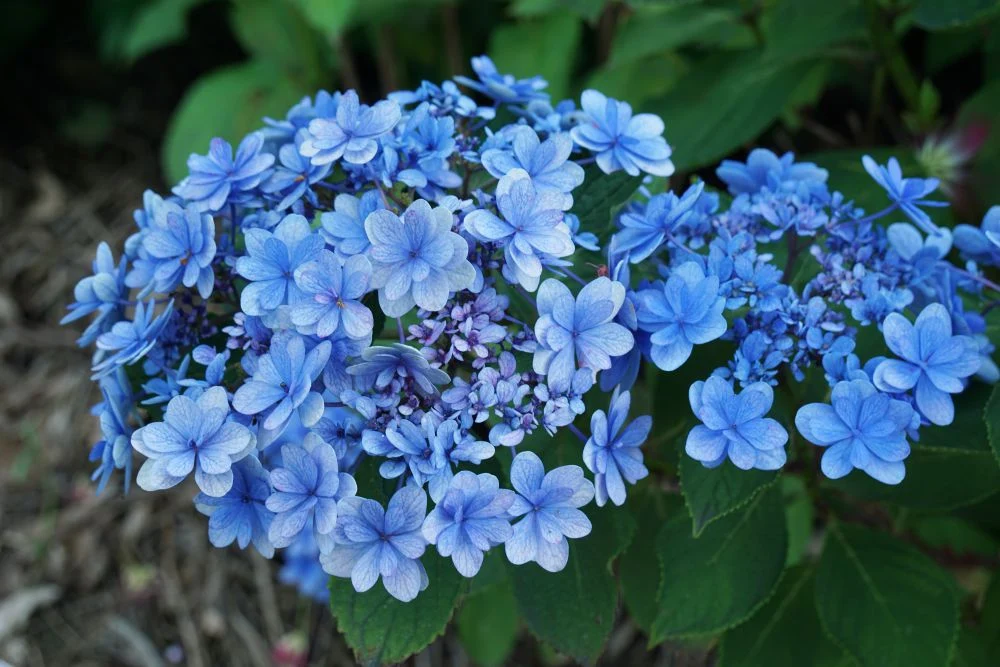
Hydrangeas bloom from May to July, marking the early summer flowers.
The part that looks like a hydrangea flower is actually a transformed leaf called a sepal. The color of the flowers changes depending on the nutrients absorbed from the roots.
If the soil is acidic, it turns blue; if alkaline, it turns pink.
Ultimately, due to a phenomenon that can be considered aging of the flowers, all flower colors tend to approach red or pink.
Acidic soil contains aluminum, and this aluminum binds with a substance called anthocyanin in the hydrangea, causing the flower color to change to blue.
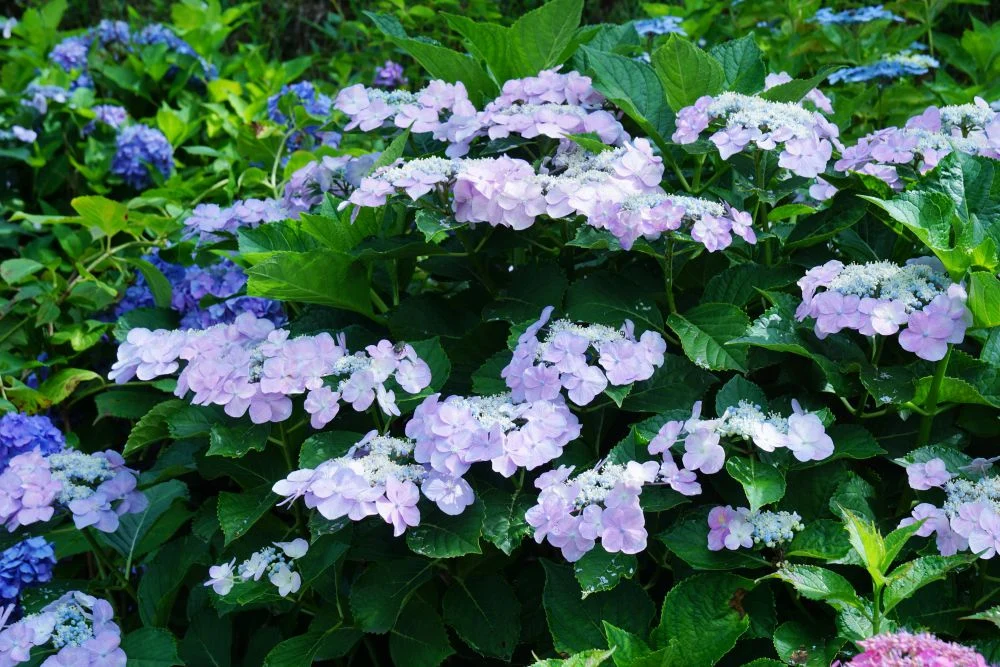
There are three main types of hydrangeas.
The "Gaku Hydrangea," which grows naturally along the Japanese coast, and the "Yama Hydrangea," which grows in Japan's mountainous areas, have bisexual flowers in the center that resemble balls.
Then there is the "Hon Hydrangea," which has temari (handball) blooms. This is said to be a variety that was improved for gardening after being brought to Europe and America during the Meiji era and then re-imported.
The charm of about 150 varieties of hydrangeas at Jushin-in Temple, known for its iris flowers
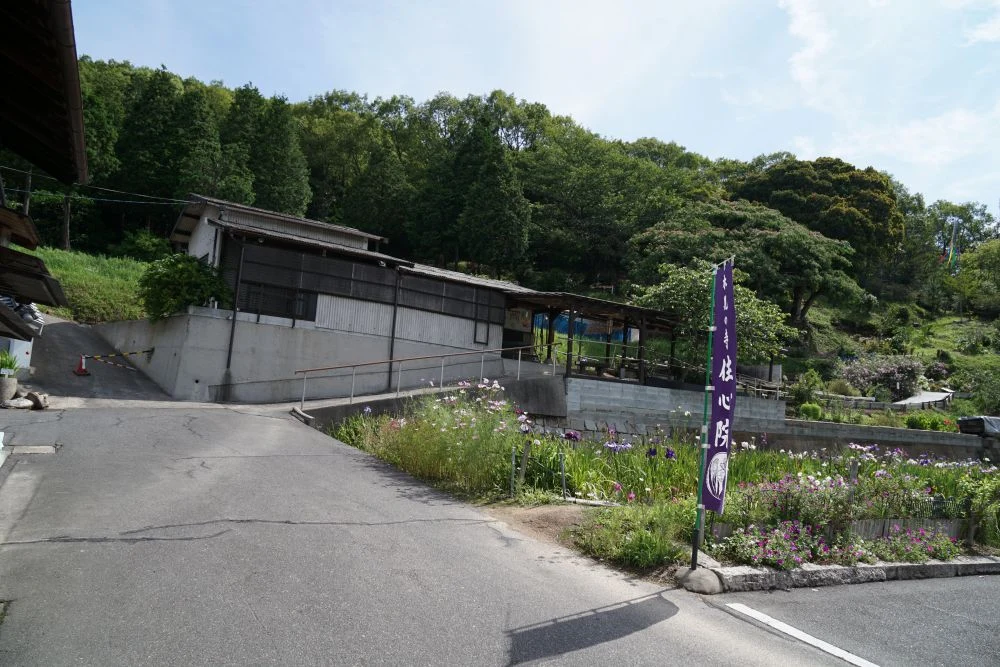
Jushin-in Temple, located in Kimi, Kurashiki City, is about a 10-minute walk from JR Seto-Ohashi Line Kimi Station.
It takes about 25 minutes by car from JR Kurashiki Station.
From JR Kurashiki Station, head south on Prefectural Road 22 to Prefectural Road 165, turn diagonally right at the "Hayashi" intersection, and continue on Prefectural Road 21. Turn left at the "Daiichi Agricultural Cooperative" intersection and proceed southeast for a while.
▼ Turn left just after passing "Yamada Shoten Harimaya."
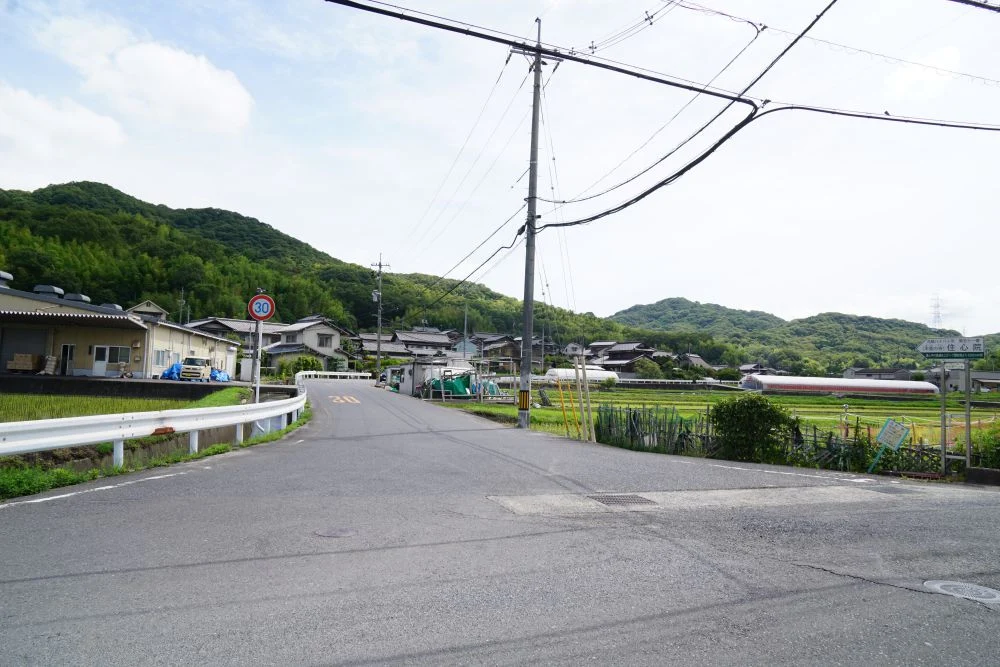
Please be careful while driving as you will be going up a narrow road.
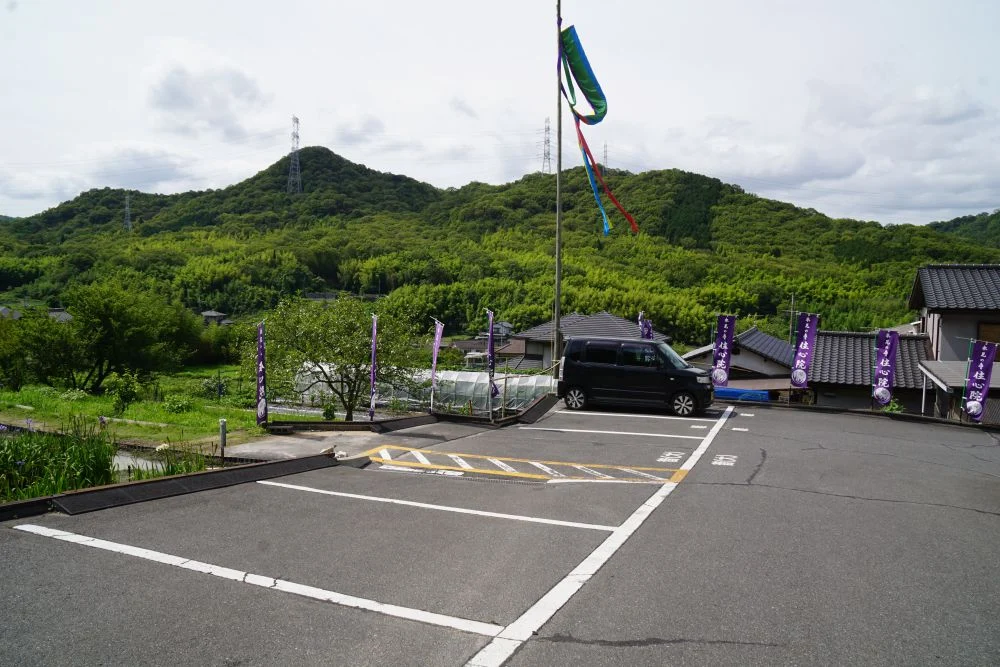
▲ The parking lot at Jushin-in Temple can accommodate about 20 cars.
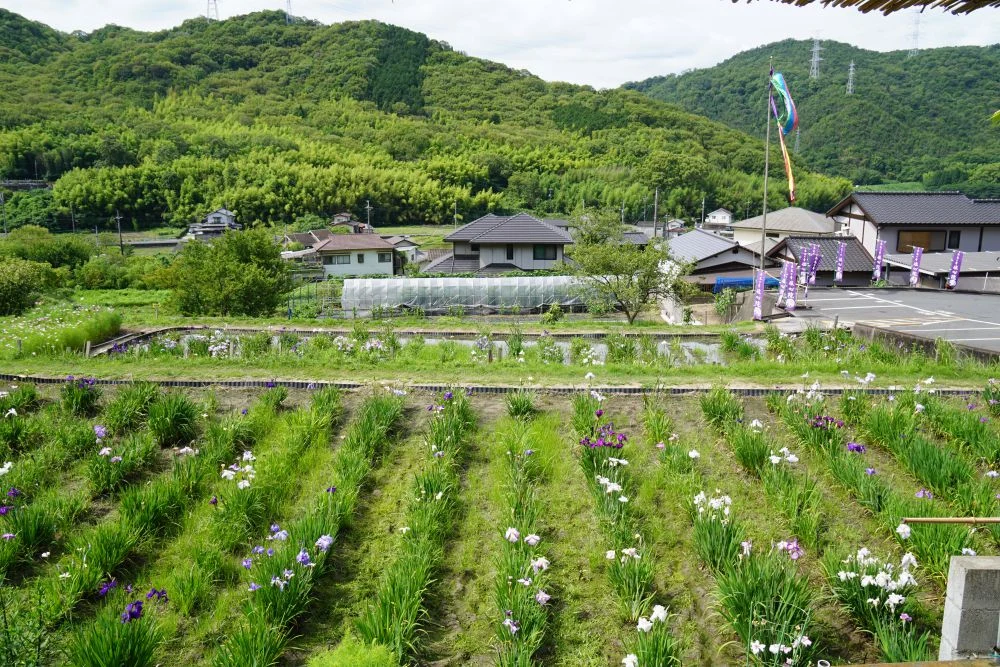
Jushin-in Temple, the 51st temple of the Kojima Pilgrimage, is known for its carefully cultivated iris flowers.
The best time to see the iris flowers is from mid-May to mid-June. When I visited on June 20, 2020, it seemed to be just past the peak.
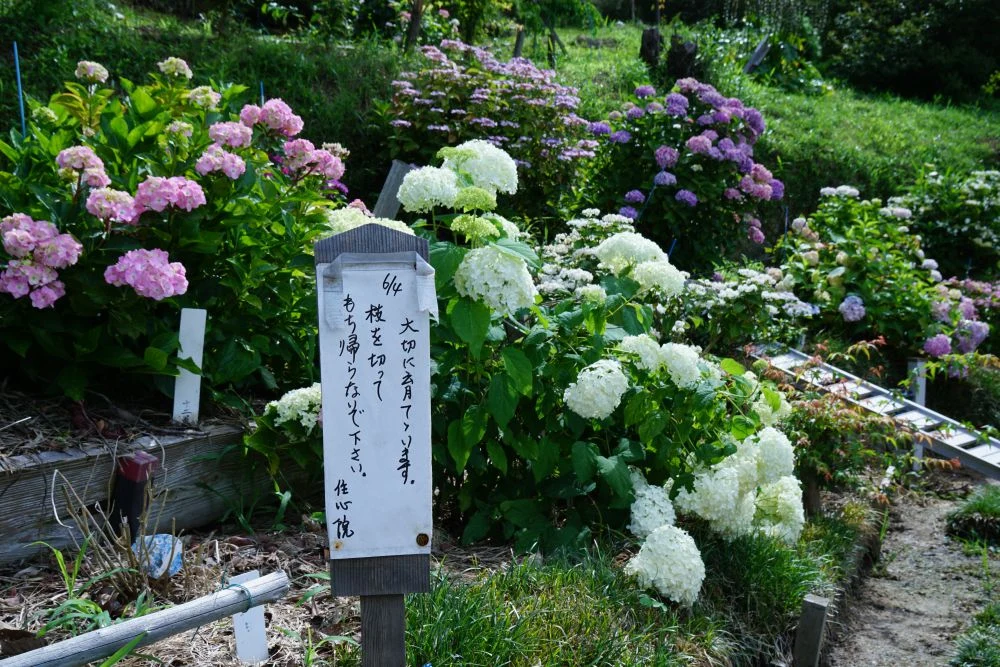
As you go further in, you will find a hydrangea garden that has been lovingly cultivated by the temple priest.
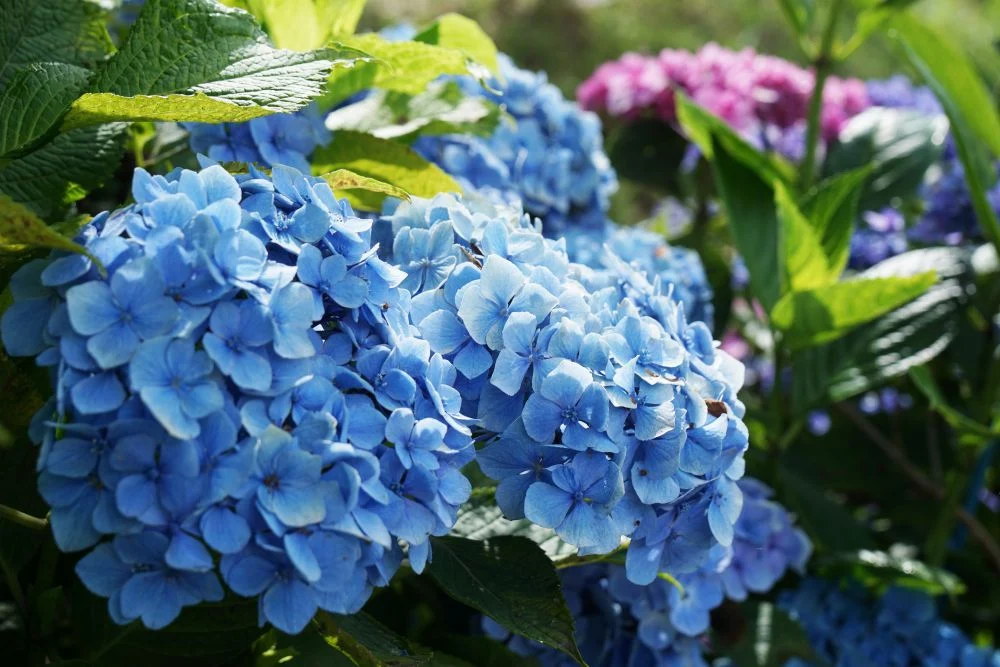
Jushin-in Temple has about 150 varieties of hydrangeas!
There are many rare hydrangeas planted, and I lost track of time admiring them.
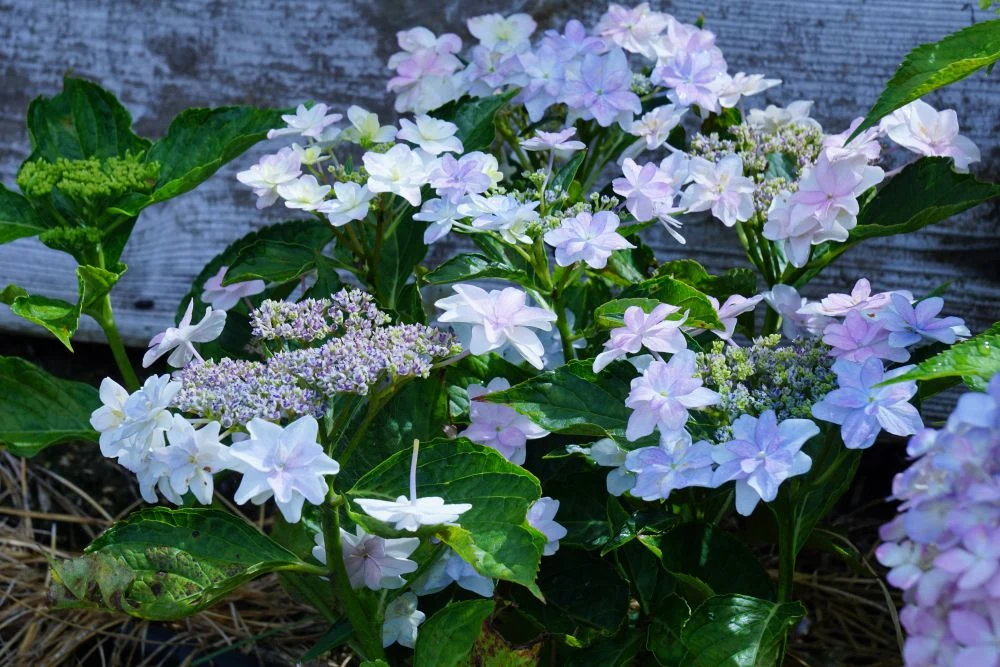
▲ My favorite hydrangea is the "Izumidori."
With slightly pointed petals, the gradient of white and light pink is refreshing and lovely.
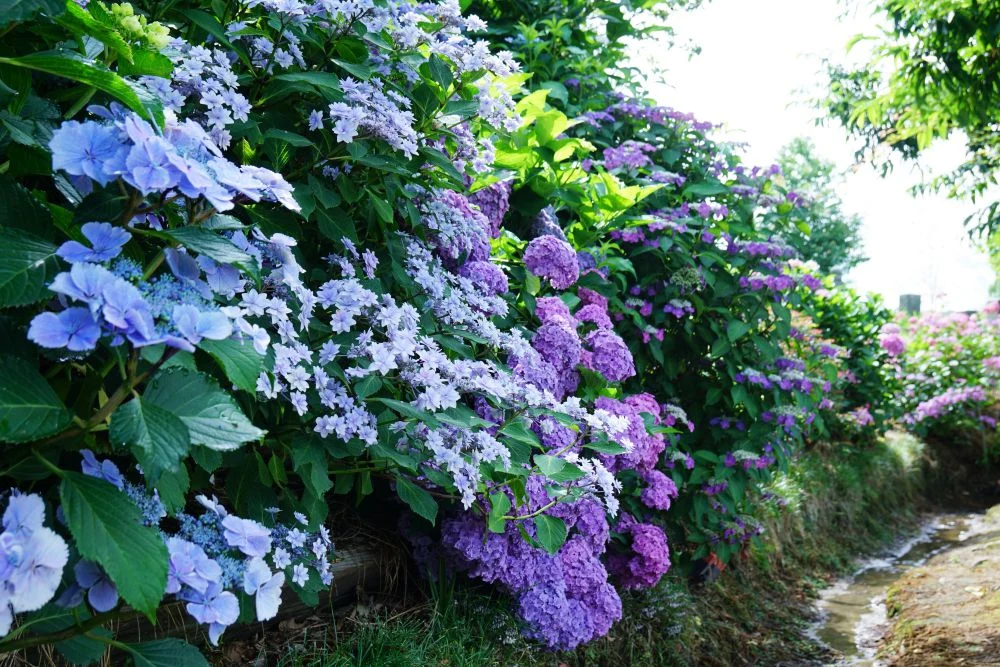
Names of various hydrangeas such as "Dappan no Akatsuki," "Aihime," "Magical Princess," and "Annabelle" were handwritten on tags.
It is a wonderful hydrangea garden that conveys the love and care put into its cultivation.
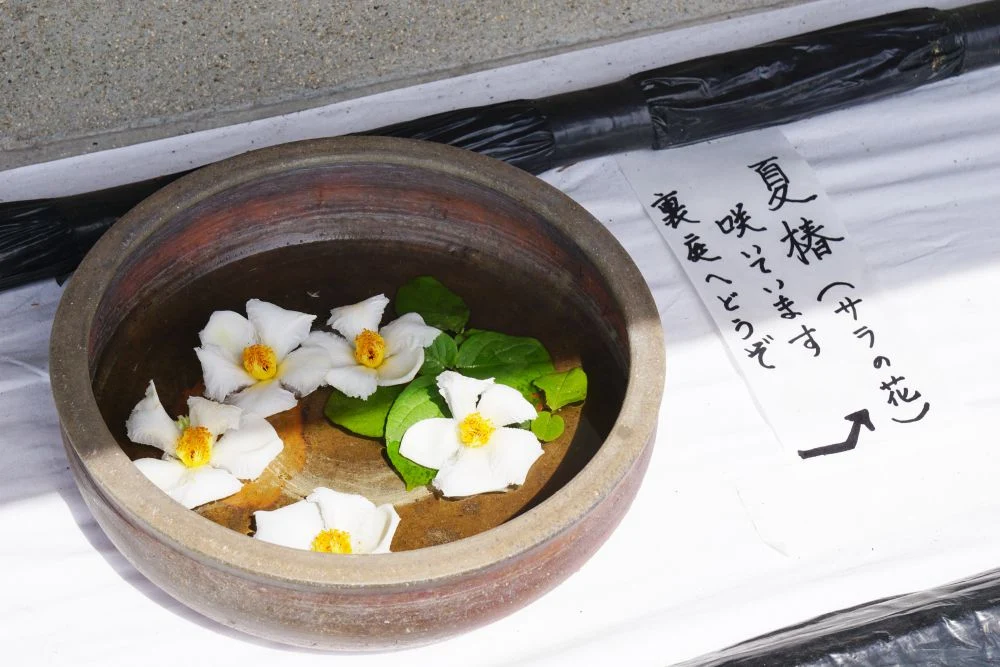
I heard that summer camellias (Sara flowers) were blooming, so I went to the backyard.
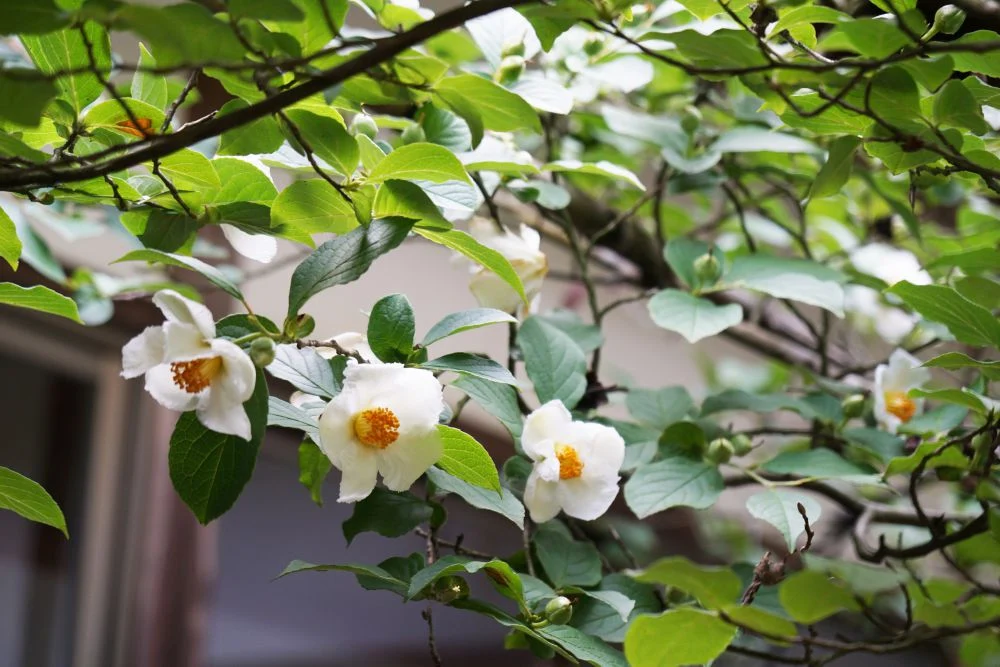
The delicate white flowers of the summer camellia, which bloom in the morning and fall by evening, symbolize the impermanence of life and appear in "The Tale of the Heike."
There are still many buds, so it seems we can enjoy them for a while longer.
Next, I headed to Tanematsuyama Park West Garden, located near the summit of Tanematsuyama, south of Kurashiki City.
About 10,000 hydrangeas at Tanematsuyama Park, overlooking the Mizushima Industrial Complex
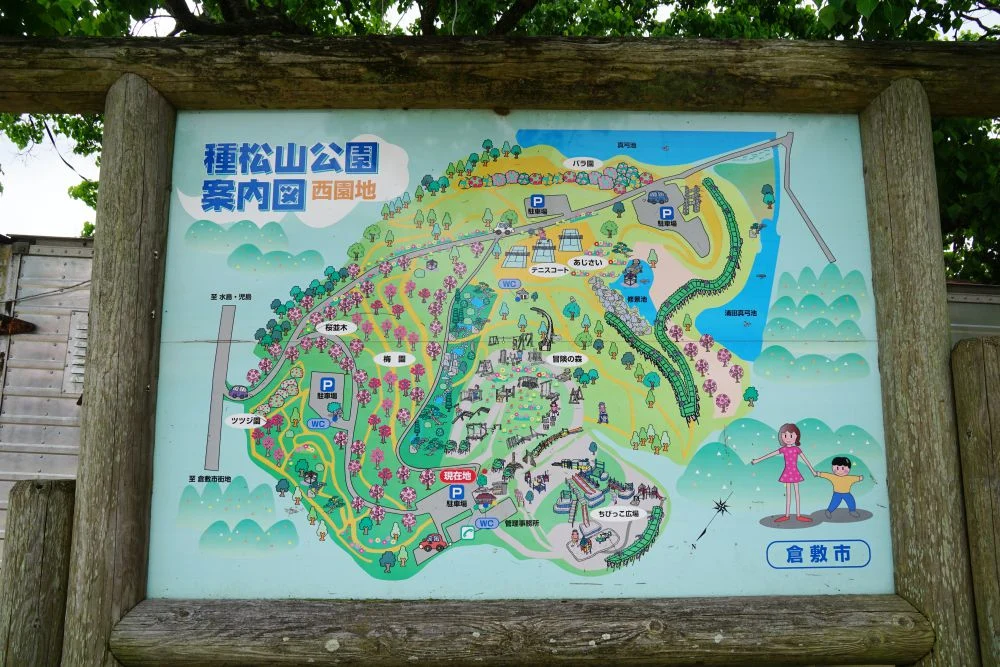
Tanematsuyama Park is located about 20 minutes by car from Jushin-in Temple.
From Prefectural Road 21, head west on Prefectural Road 62, turn right at the "Hiroe 6-chome" intersection, and follow the winding mountain road up.
Please drive carefully as the road has many curves.
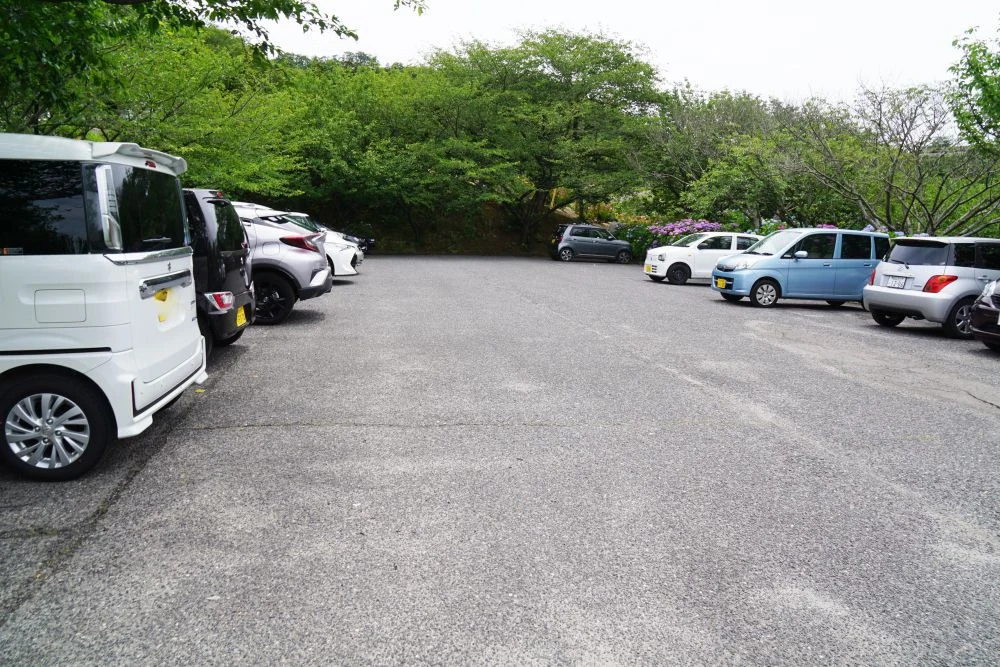
Tanematsuyama Park has four parking lots.
A total of about 300 cars can park, but please be aware that it can get crowded depending on the time and season.
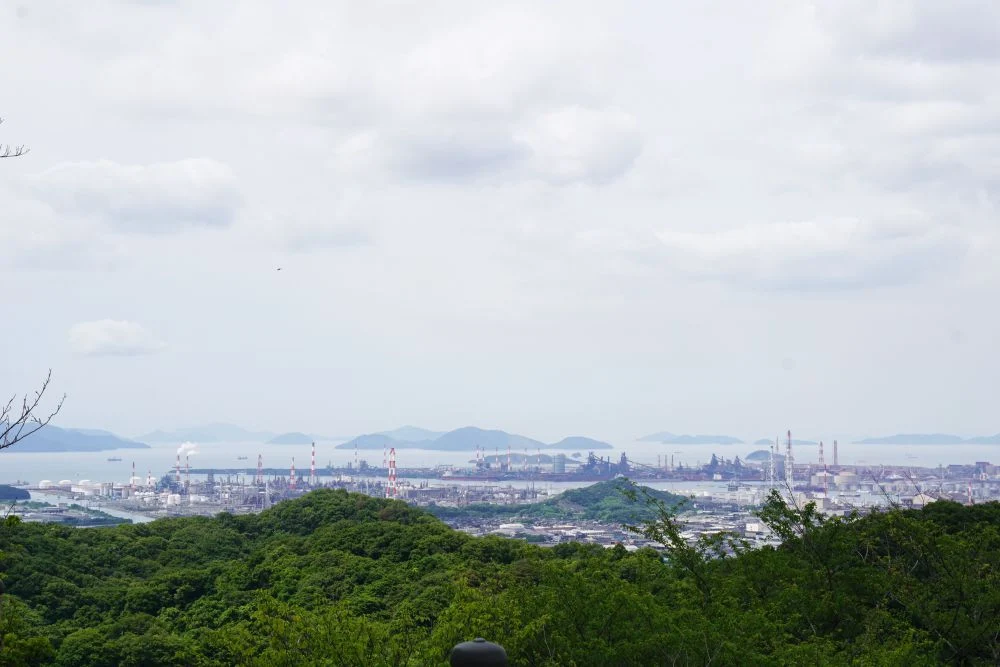
From the Tanematsuyama Park, which is about 258 meters above sea level, you can enjoy a panoramic view of the Mizushima Industrial Complex.
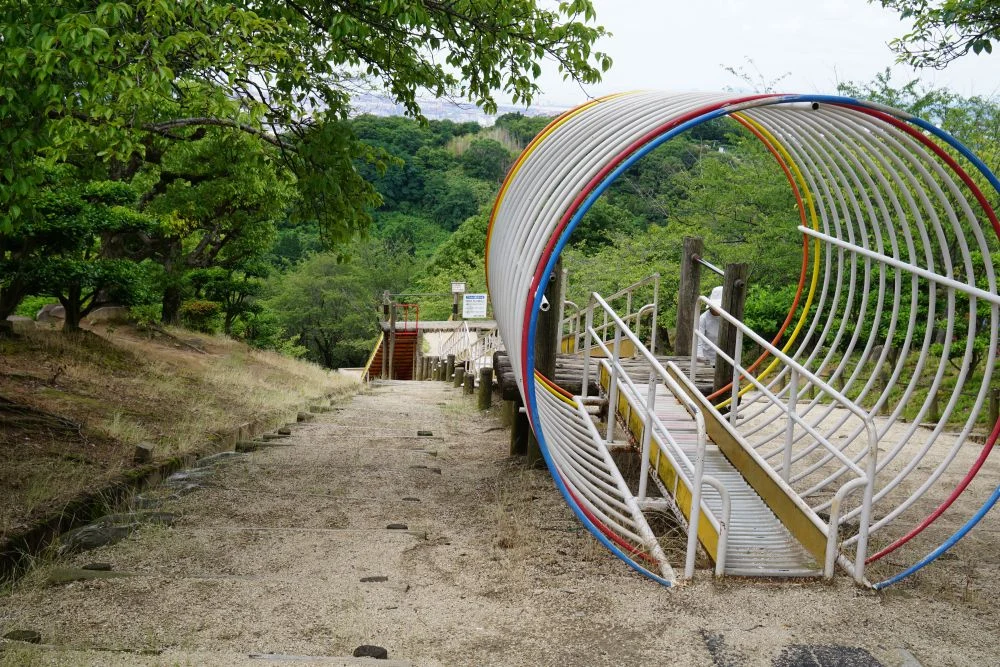
Speaking of Tanematsuyama Park, it's the roller coaster. I also have memories of sliding down it many times in the past.
There are also play equipment installed, so families with small children were visiting as well.
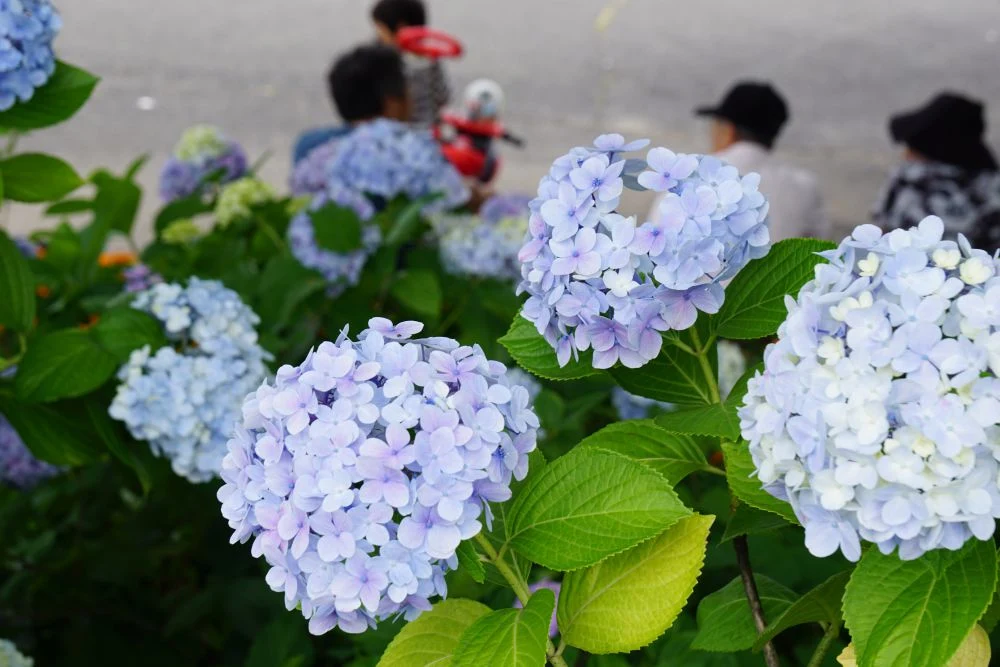
There are about 10,000 hydrangeas in Tanematsuyama Park!
The area around the tennis courts is a hydrangea spot, so I recommend parking in the nearby parking lot.
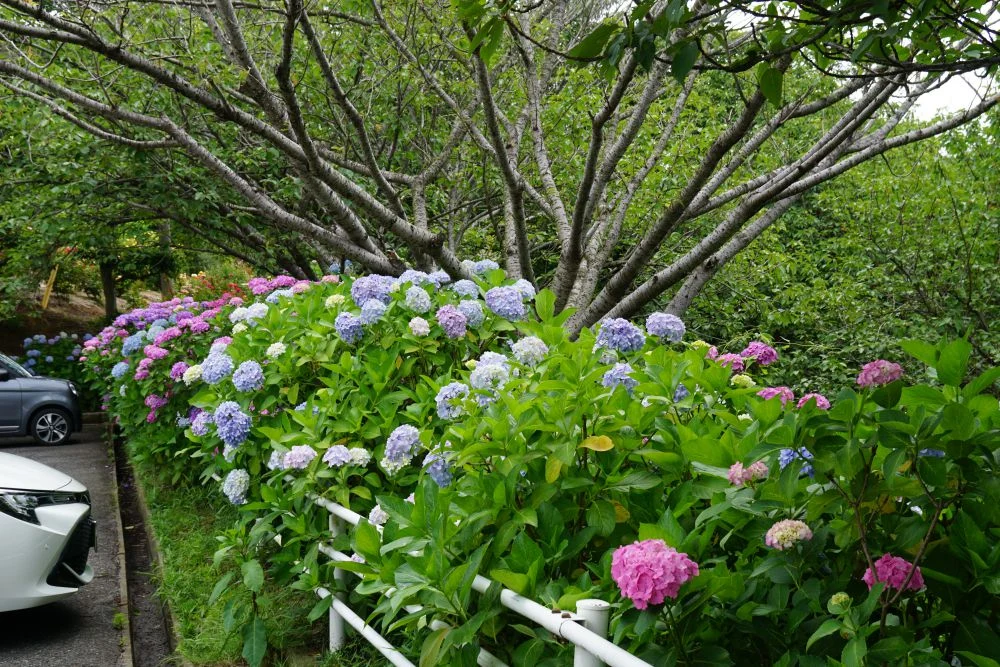
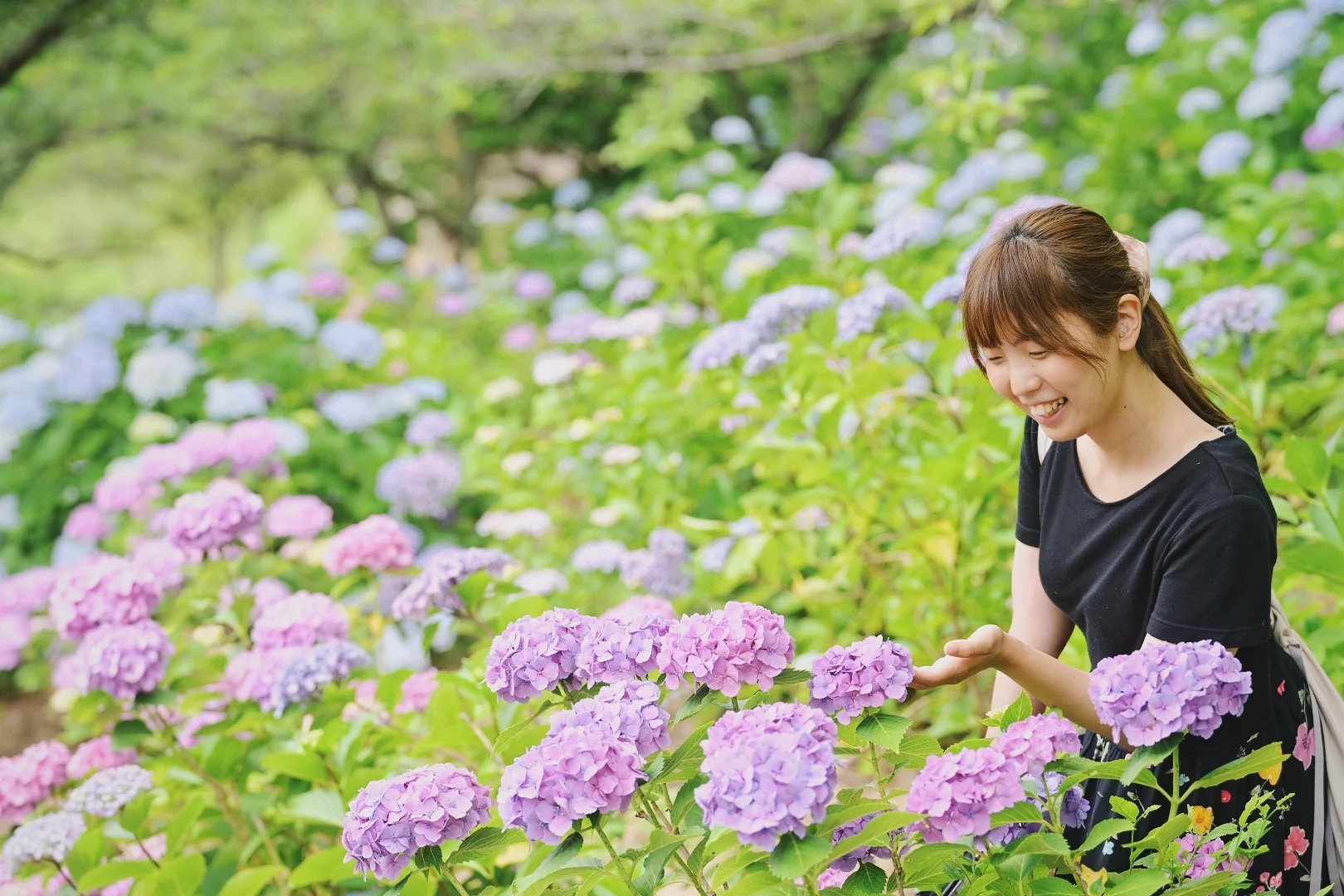
Right next to the parking lot, there are many pink, blue, and purple hydrangeas. The soft colors and vibrant colors adorn the mountain path.
On June 20, 2020, when I covered this, it seemed to be the perfect time to see the hydrangeas.
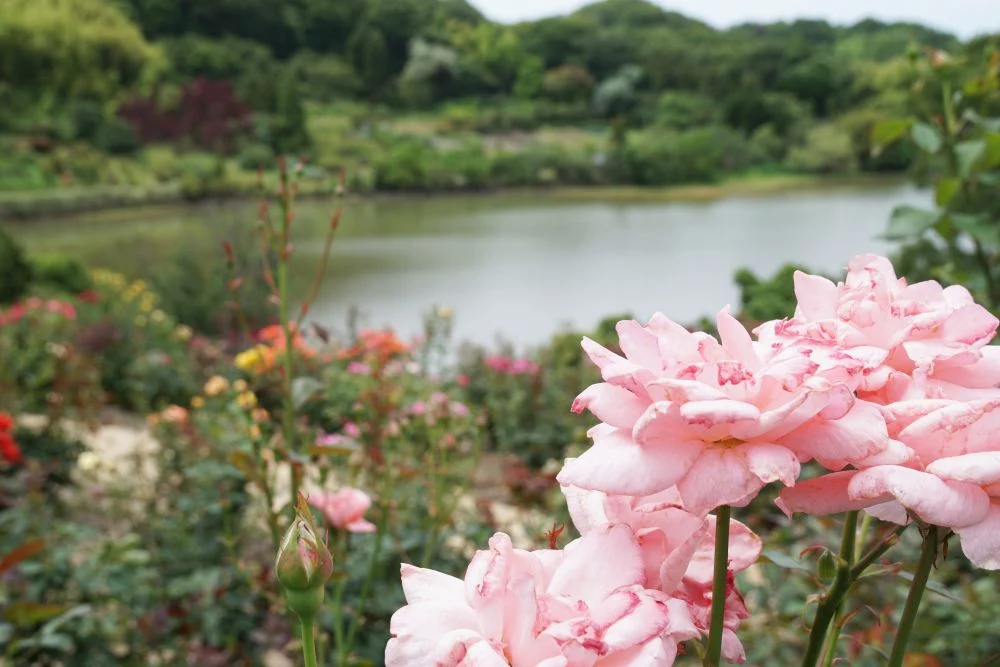
There was also a rose garden that is in full bloom from mid-May to mid-June every year.
You can see beautiful roses in various colors such as pink, red, and orange.
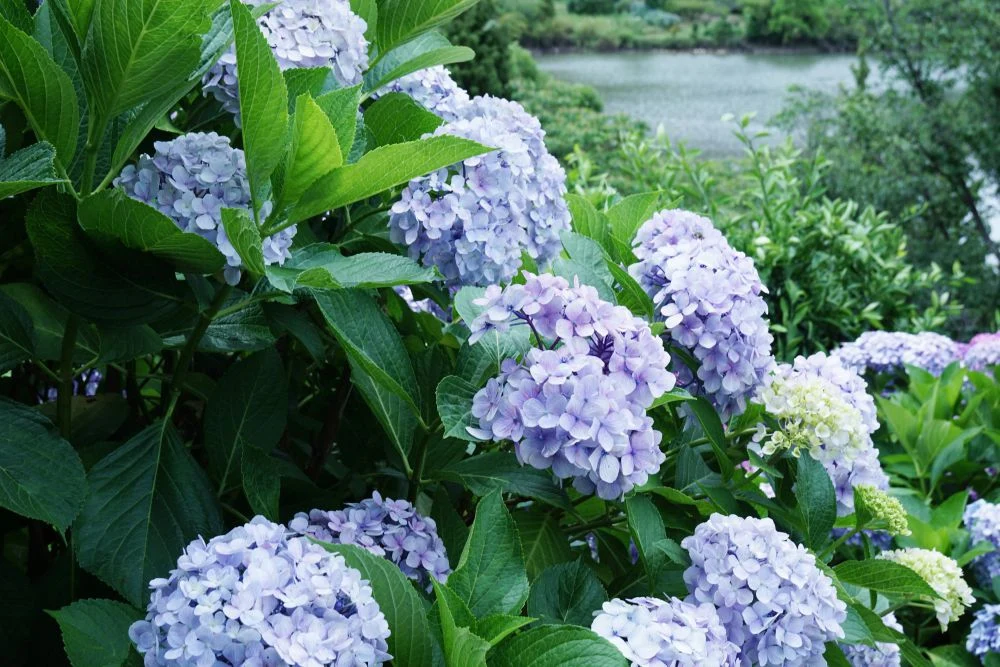
To the immediate east of the rose garden, hydrangeas were spreading out.
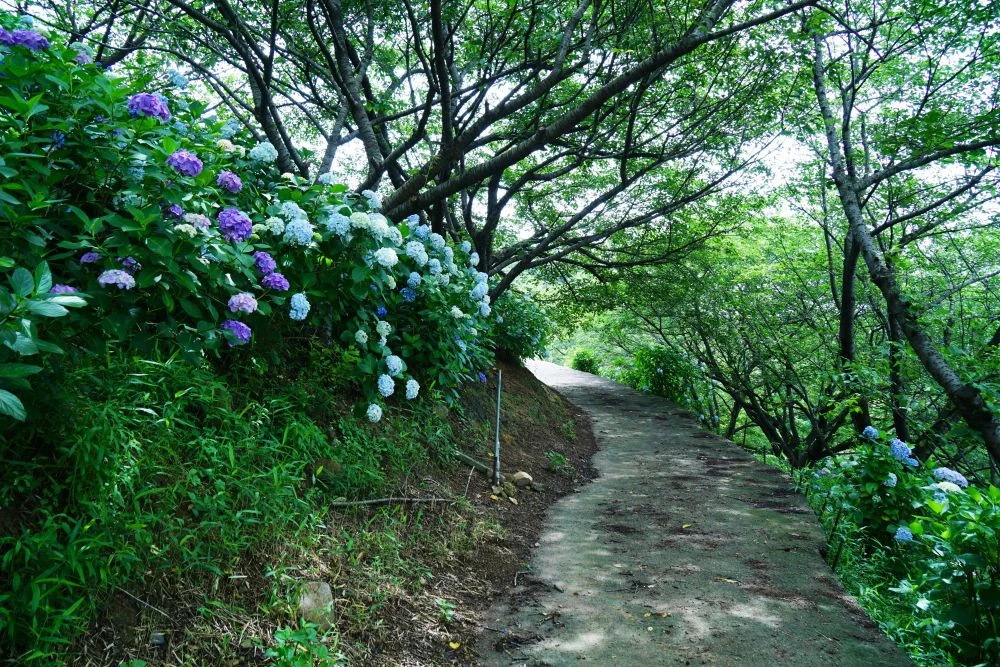
▲This looks like a scene from a story.
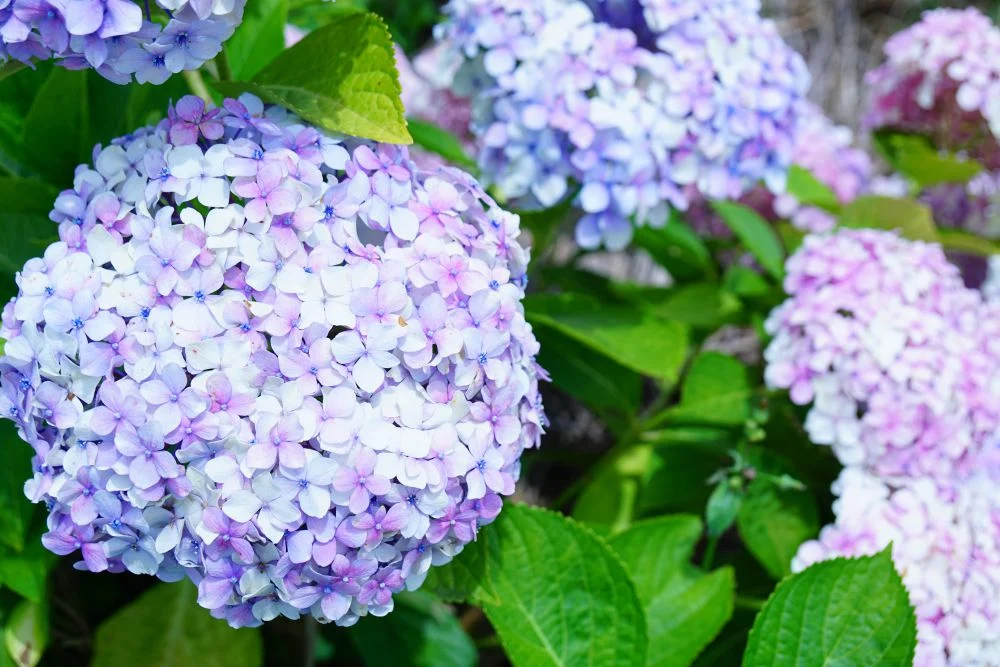
The hydrangeas and green leaves shining brightly in the sunlight are very beautiful!
Since there are many slopes, how about taking a walk in Tanematsuyama Park for some exercise?
"Hanamakimori" designed with Achi's wisteria and hydrangeas floating in Achi Shrine's water basin
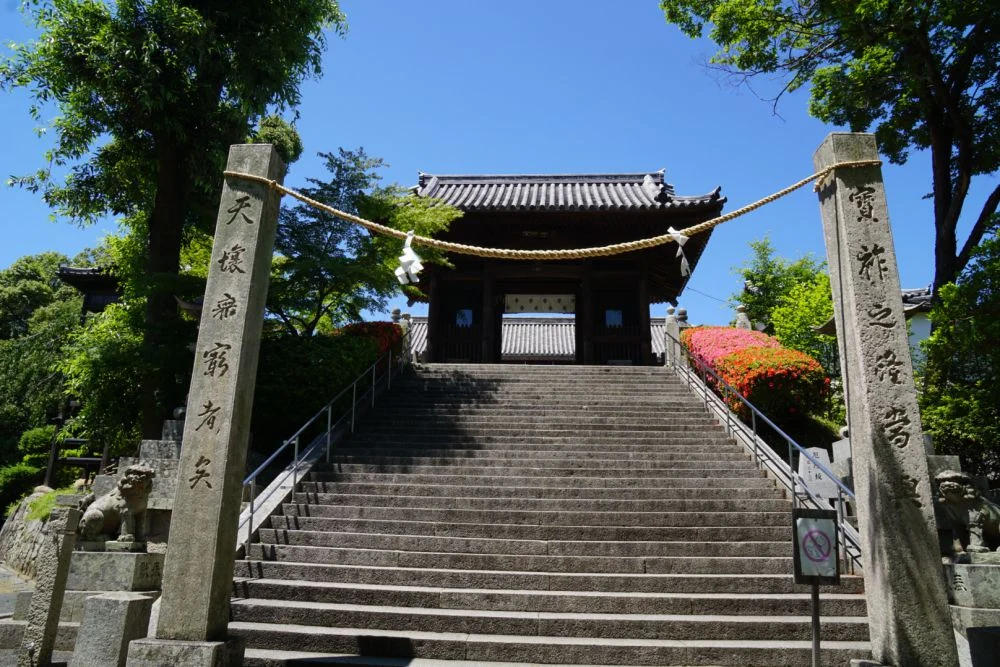
Finally, I headed to Achi Shrine, which sits atop Tsurugatayama in the northern part of the Bikan Historical Area.
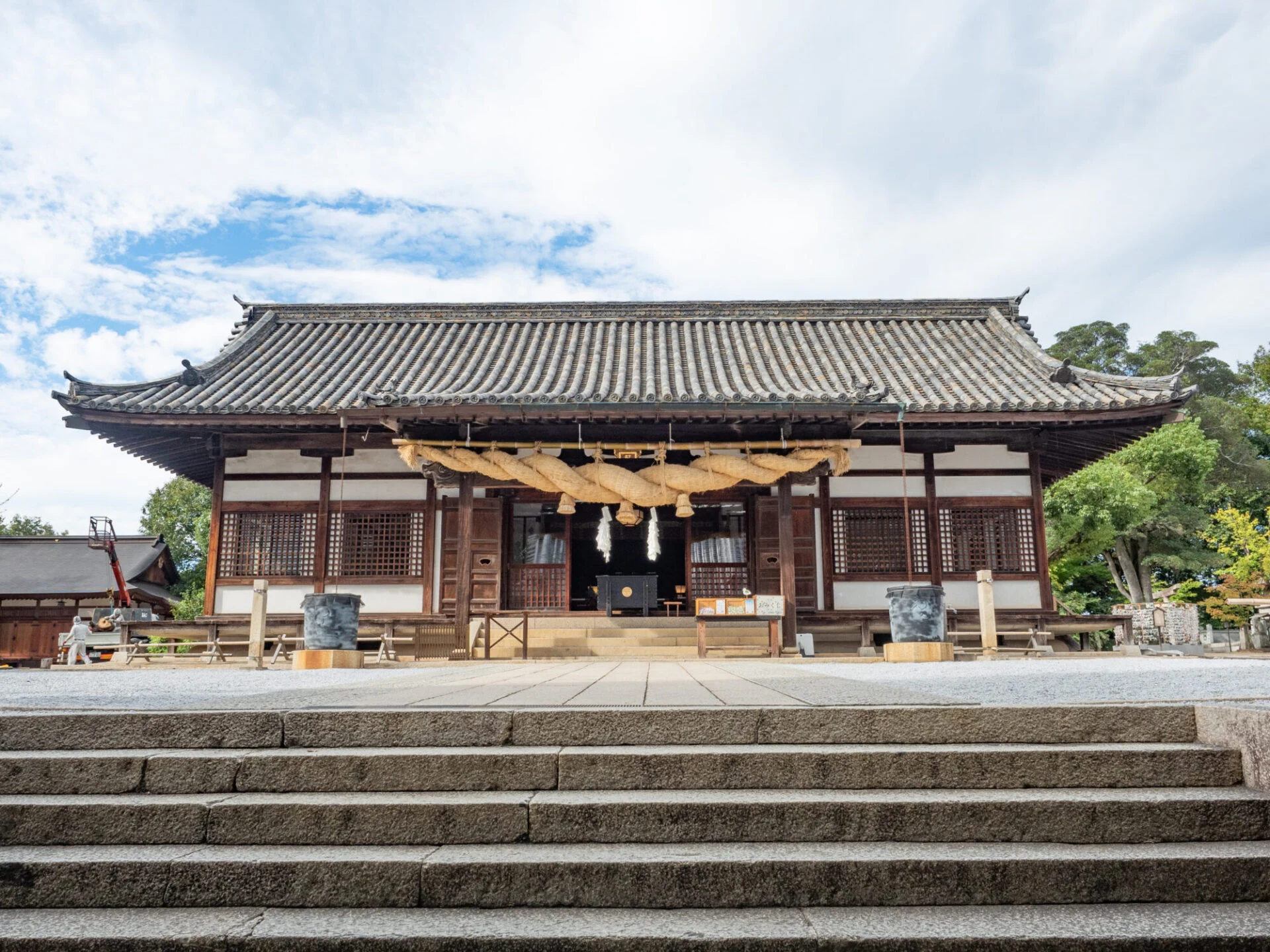
I climbed from the southern approach next to Takadaya, the yakitori restaurant, on the north side of Morita Sake Brewery.
When I reached the water basin, I was slightly sweaty.
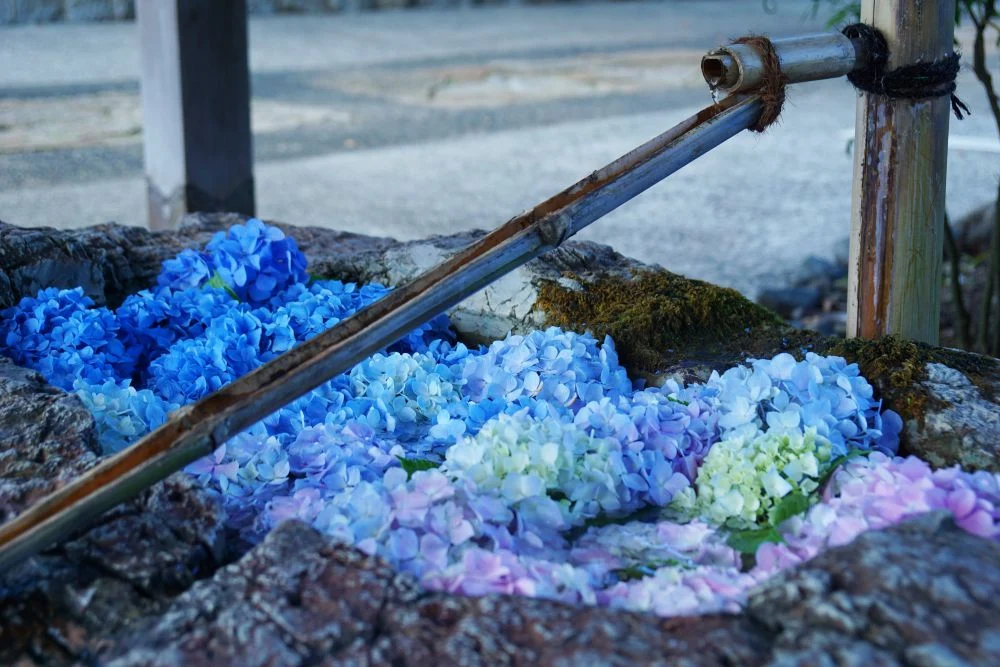
To purify my hands and mouth, I went to the water basin.
Due to the prevention of COVID-19, the ladles have been removed, and now you purify your hands and mouth with water that falls from bamboo.
In the water basin, hydrangeas with beautiful gradients were floating.
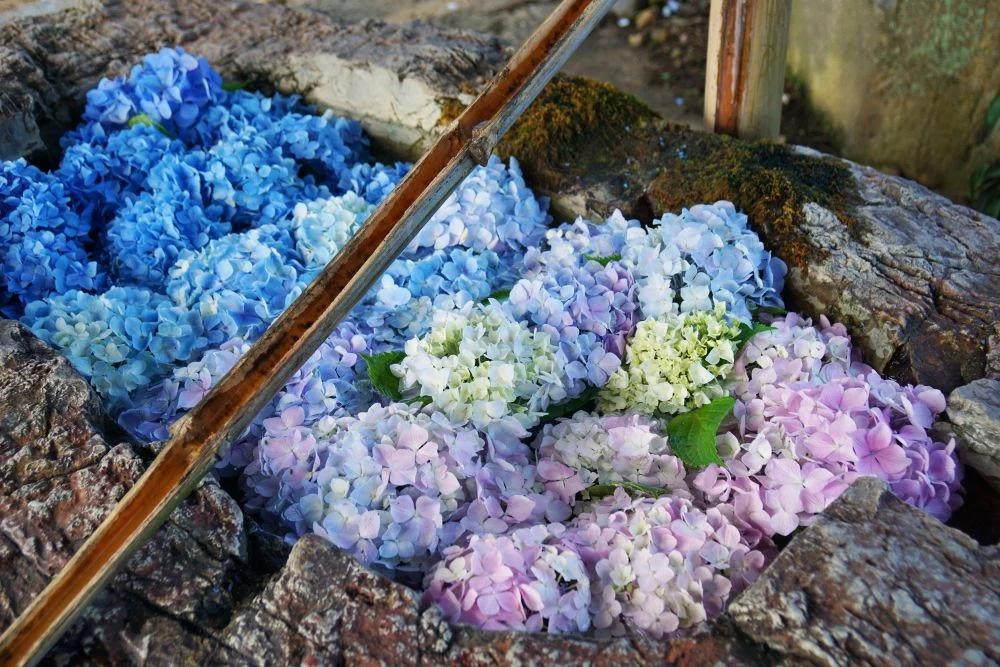
On the left is blue, in the middle are purple and white, and on the right are pink hydrangeas in various colors.
The beautiful gradient reminiscent of a rainbow after the rain is soothing.
After purifying my mouth and hands at the water basin, I prayed for the end of COVID-19.
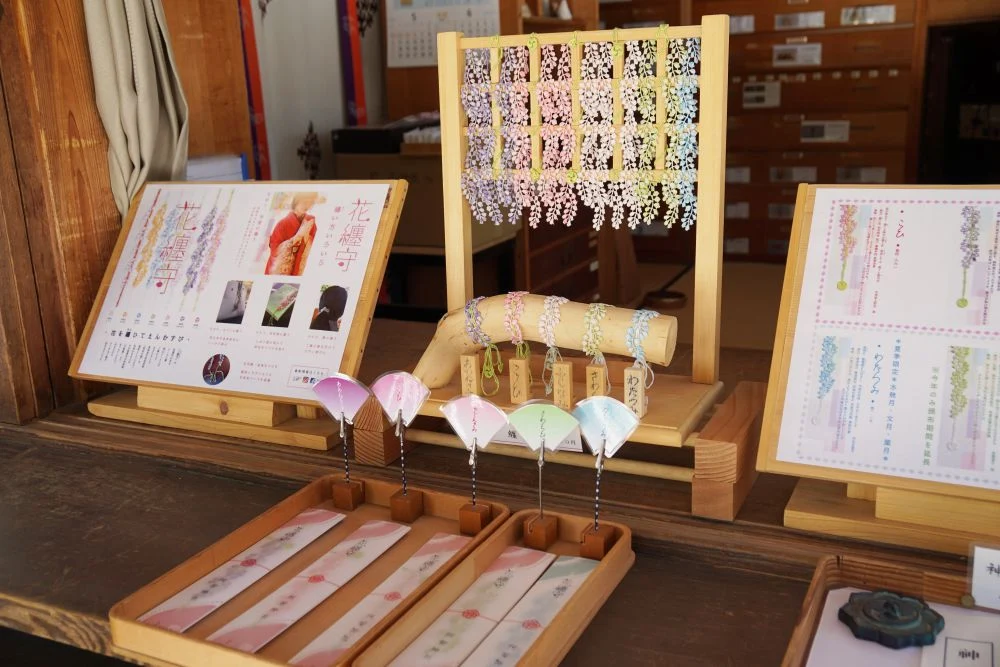
After my visit, I went to the shrine office.
The Hanamakimori is an offering born from the connection between Achi Shrine and Okayama Race Co., Ltd. It has been offered since 2020.
Like the vines of the prefecture-designated natural monument "Achi's Wisteria" that inhabit the grounds of Achi Shrine, it is said to contain a prayer for forming strong and long-lasting connections.
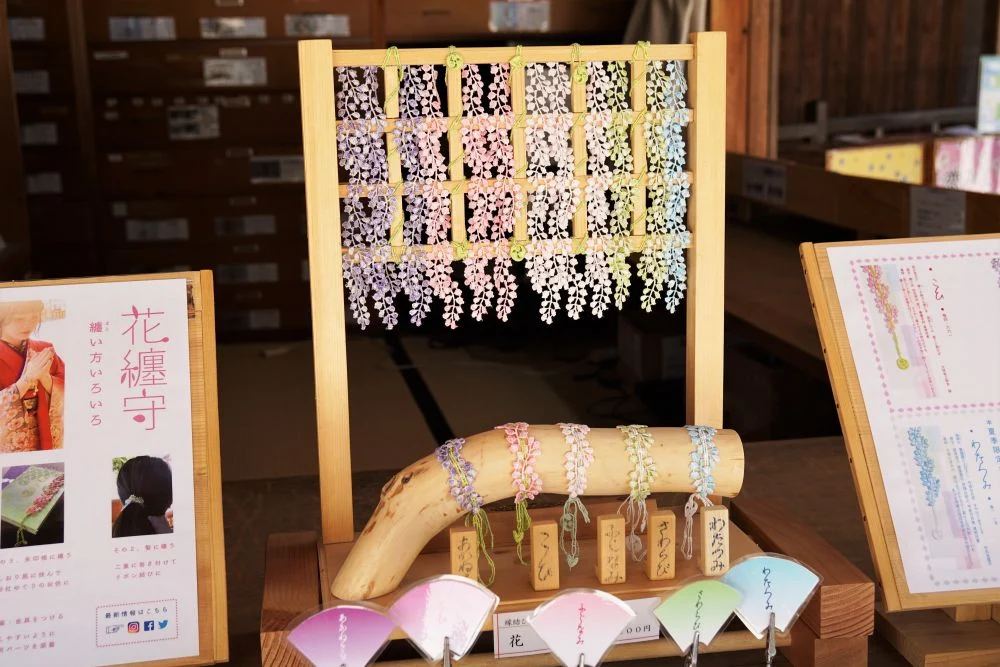
▼The Hanamakimori offered in June 2020 consists of the following five types.
- Akane-sasu
- Kohi
- Fujinami
- Sawarabi (spring limited, March to May)
- Watatsumi (summer limited, June to August)
Typically, three colors (Akane-sasu, Kohi, Fujinami) plus one seasonal limited color are distributed, totaling four colors at all times. The names of each color of the amulet are derived from "Manyoshu," the oldest collection of Japanese poetry.
Sawarabi is a spring limited color, but due to the impact of COVID-19, the distribution period has been extended.
To receive the Hanamakimori from Achi Shrine, you need to pay an initial offering of 1,200 yen.
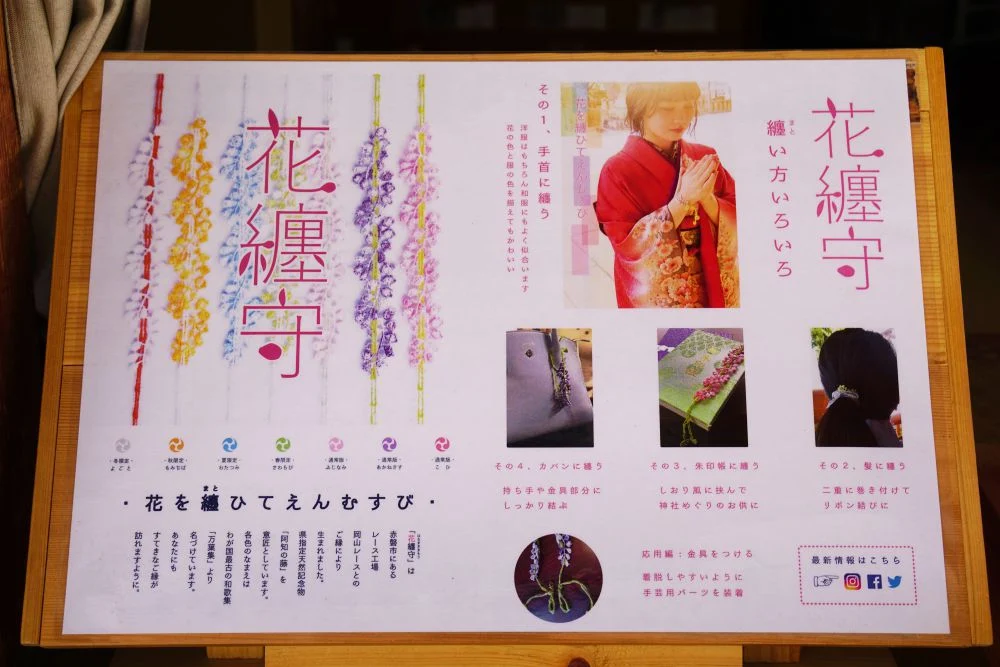
You can wear it on your wrist, in your hair, or attach it to your goshuincho (temple stamp book) or bag, among other ways.
This amulet, which is reminiscent of Kurashiki with its wisteria flowers woven into lace, brightens your heart just by wearing it.
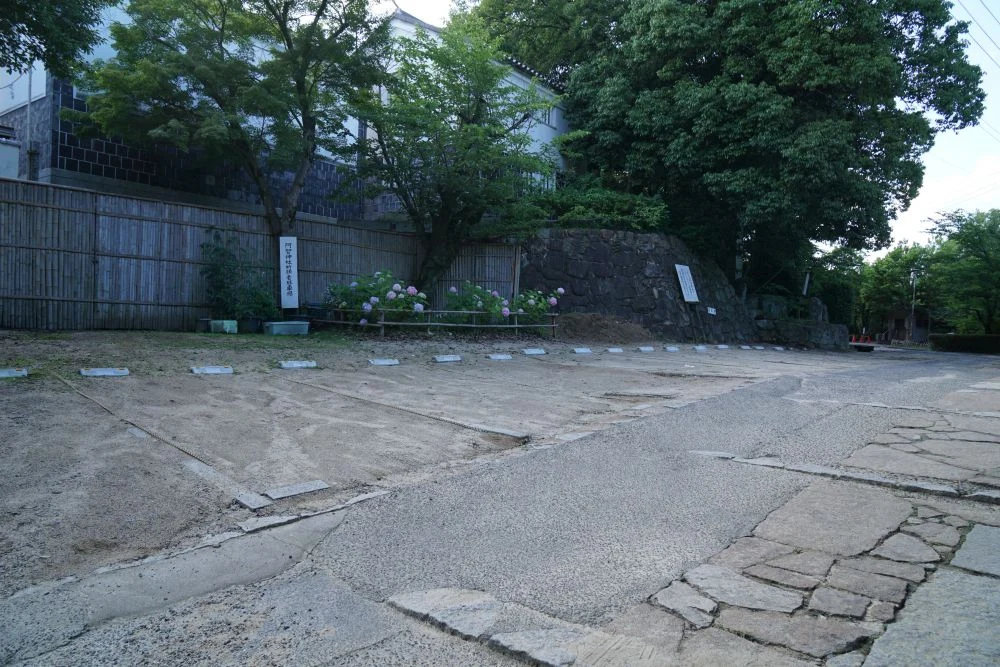
After finishing my visit, I found hydrangeas in the flower bed of the Achi Shrine parking lot as I descended the stairs a bit.
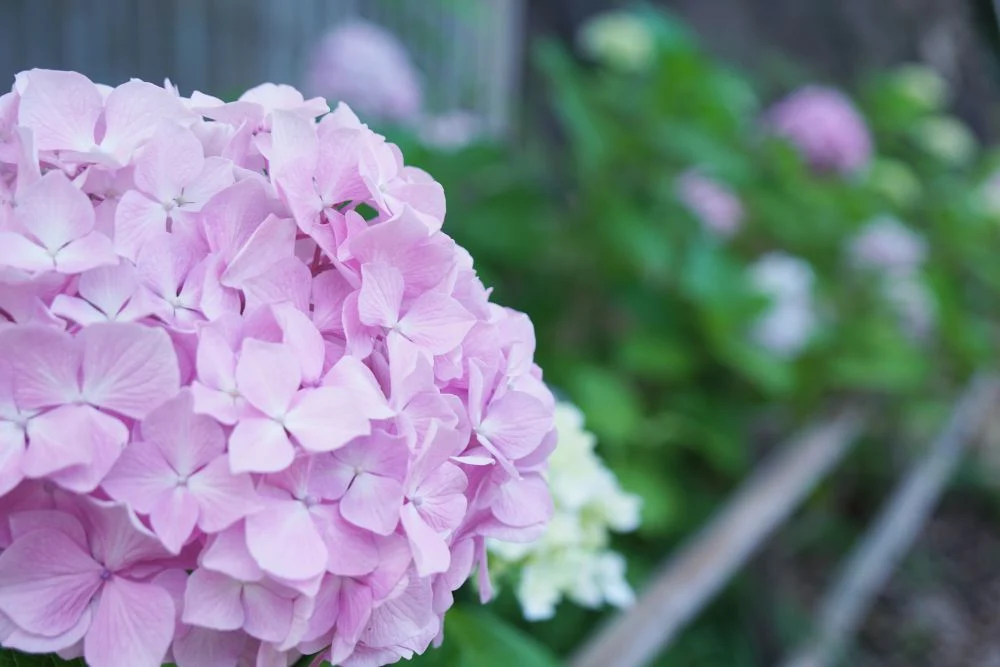
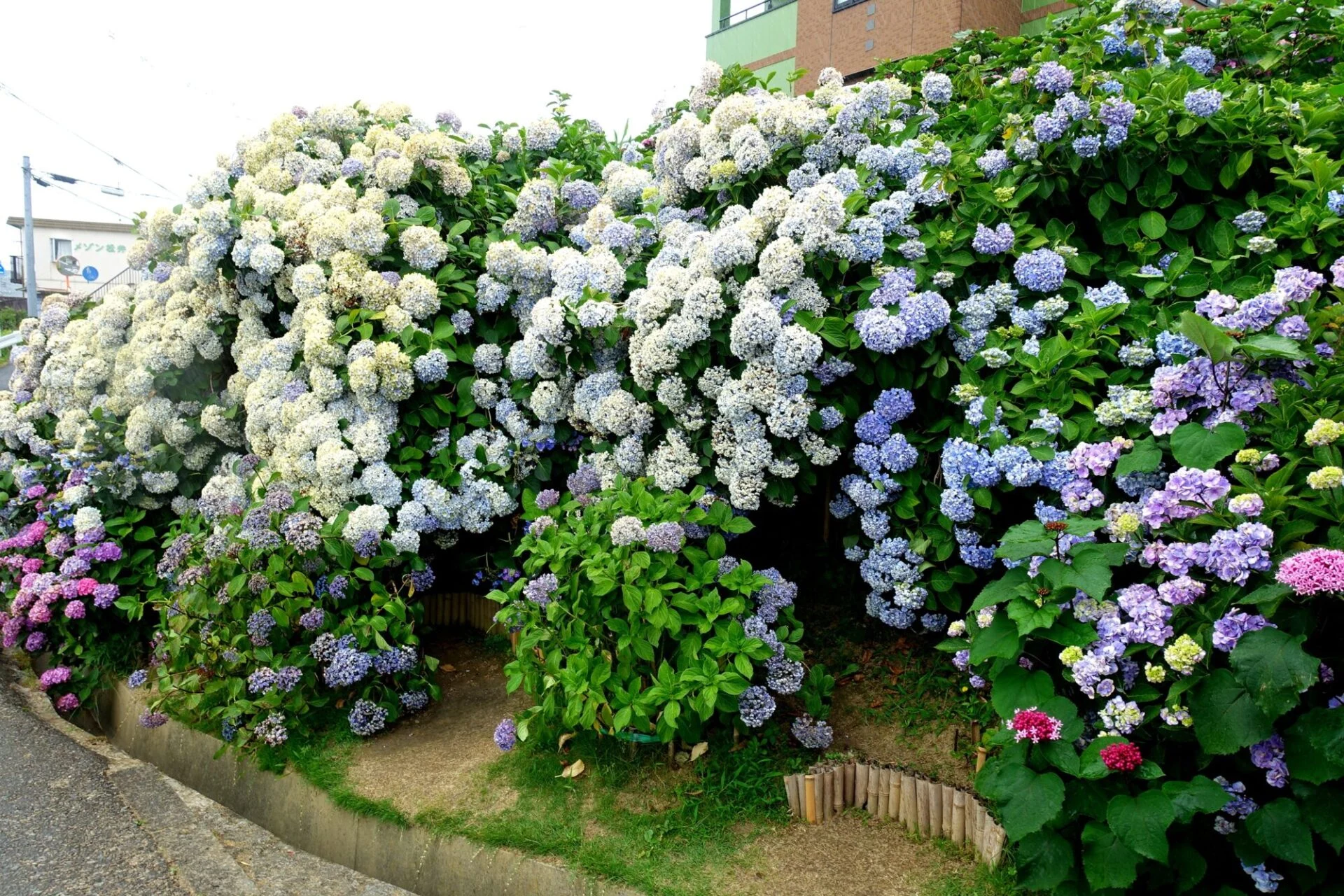
The hydrangeas in the shade have a refreshing color typical of the rainy season.
In Conclusion
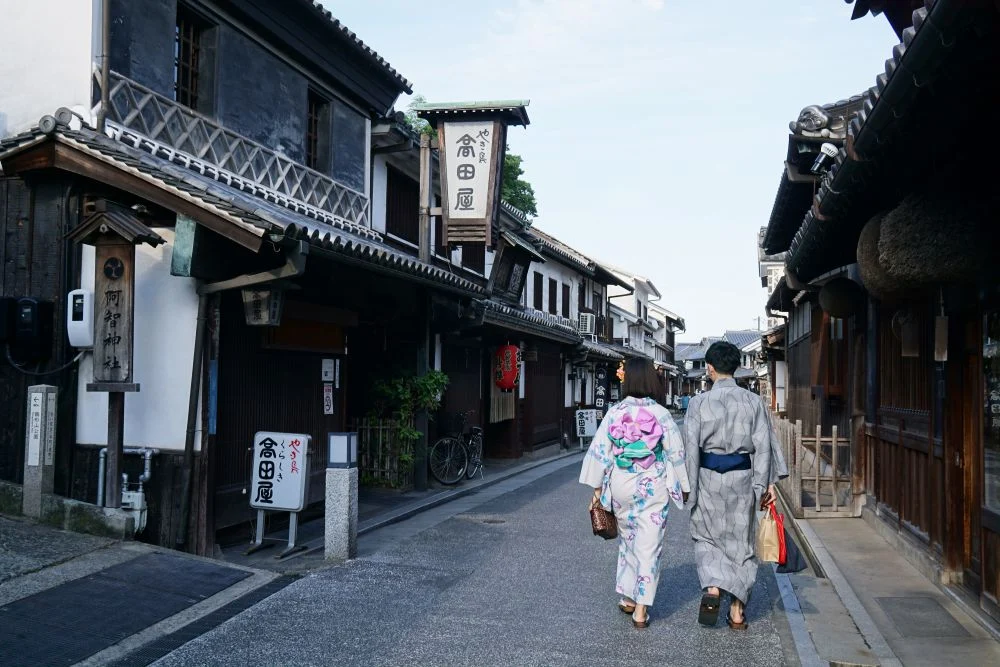
The hydrangeas blooming softly in the dew and the hydrangeas shining brightly in the sunlight are all impressive and wonderful.
It was a day where I could rediscover the charm of Kurashiki by visiting spots where I could enjoy hydrangeas in Kurashiki City.
How about going out to find the hydrangeas that are currently in full bloom?