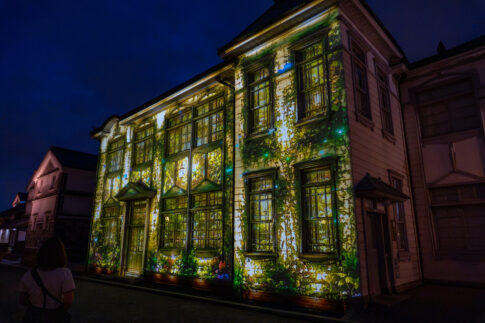
For me, who moved from the Kanto region to Kurashiki in December 2023, what was most shocking was the number of people who are trying to preserve the traditional townscape and way of life.
I have memories of my relatives' house having a katana storehouse and a engawa (veranda), but I have heard that they had to let it go because they could not resolve the issues of inheritance and the costs of maintenance and management.
In our case, we faced those challenges individually, but I feel that in the Bichu region, including Kurashiki, there are many people who are trying to preserve and utilize the townscape and the way of life that is still normally practiced there with the help of the local community.
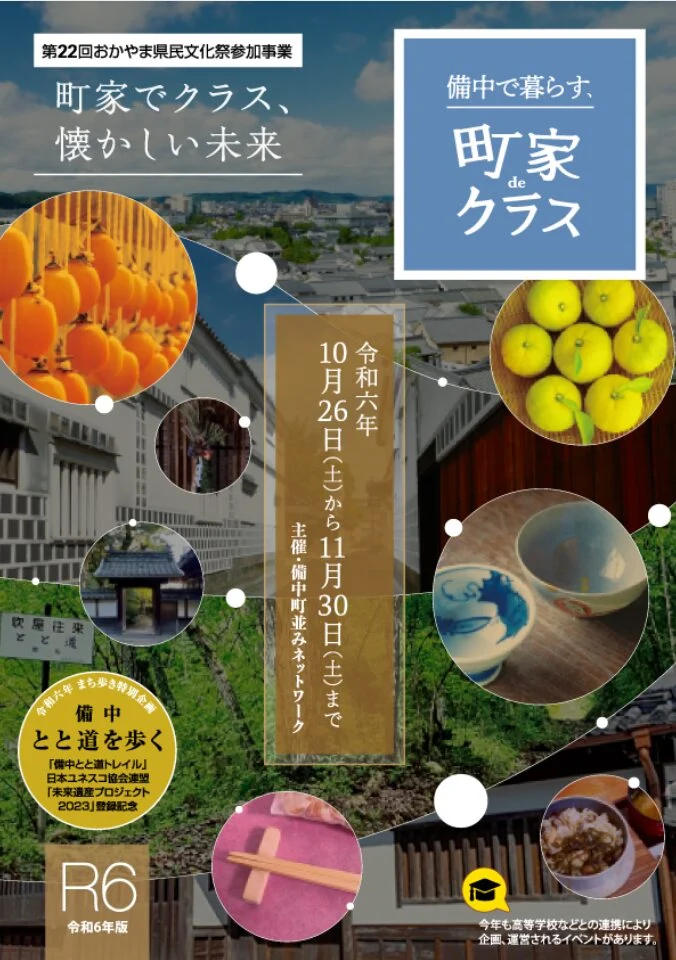
In the Bichu region, every autumn, a month-long program called "Living in Bichu, Machiya de Class" is held, utilizing the townscape, townhouses, and storehouses, focusing on "clothing, food, housing, learning, and play" through walking tours and experiential programs.
I interviewed the executive committee about the notable projects and recommended ways to enjoy in 2024.
What is "Living in Bichu, Machiya de Class"?
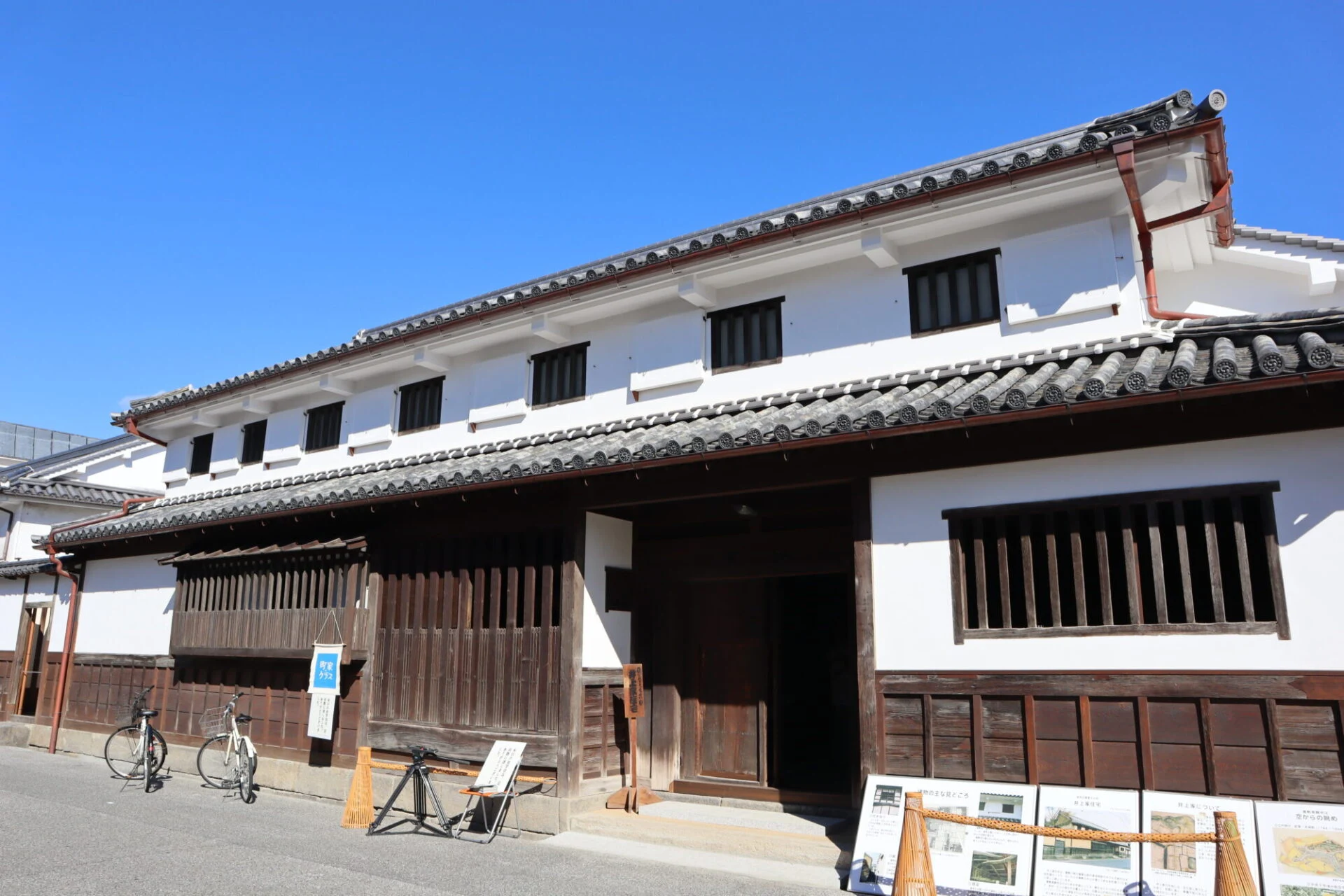
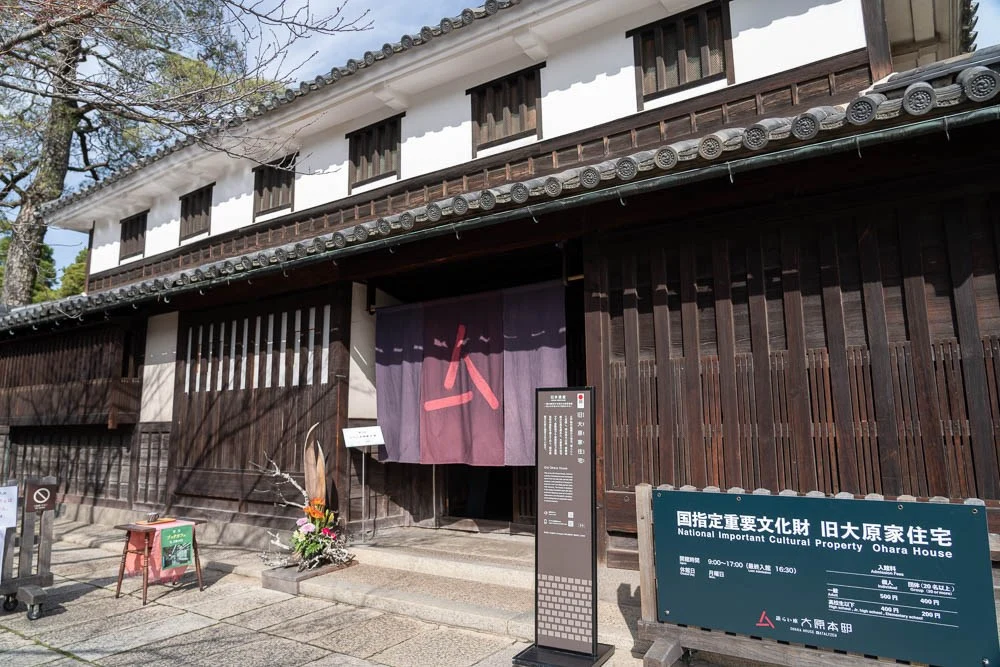
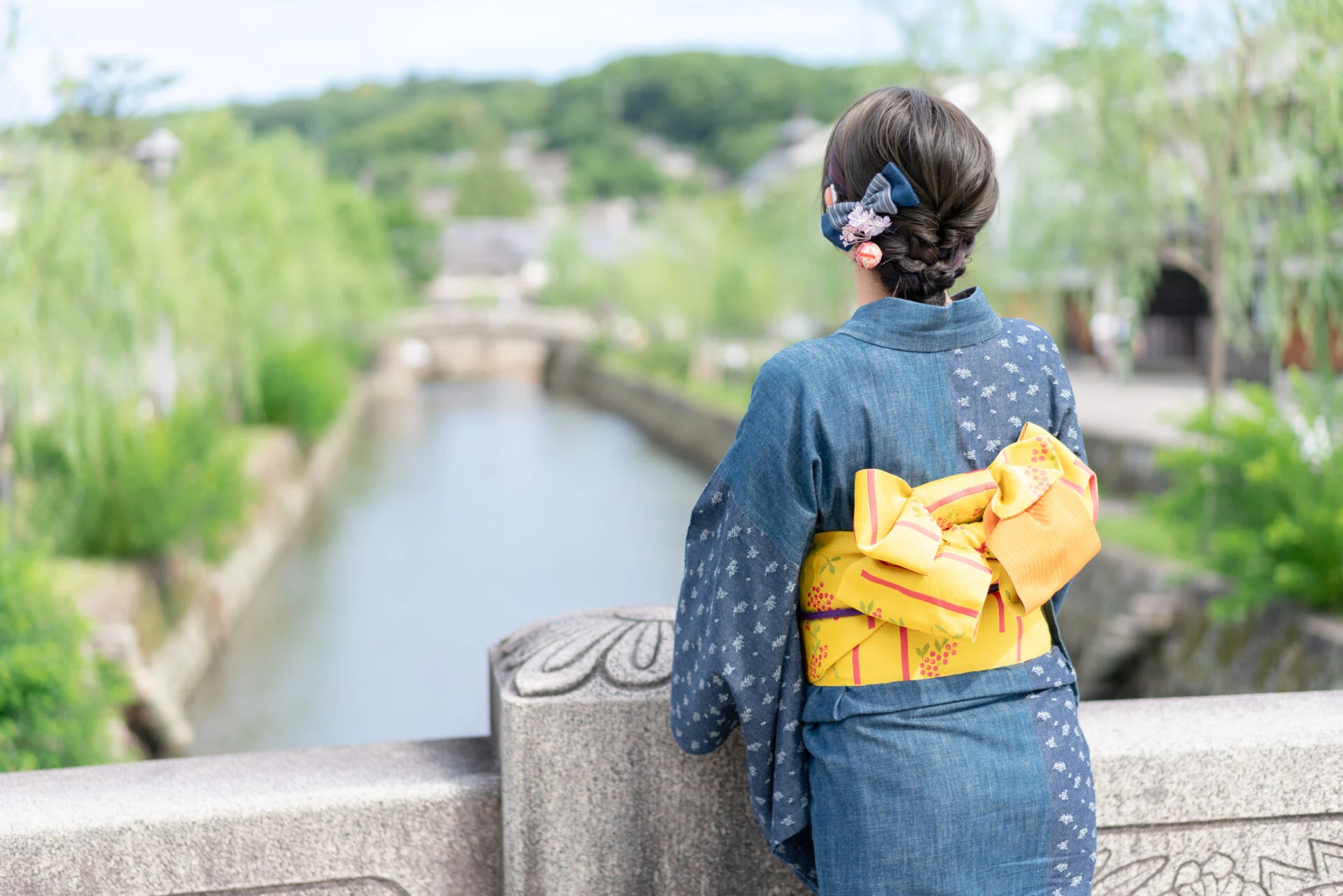
The Bichu region, including the nationally designated "Important Traditional Building Preservation District," is an area where historical townscapes remain. It is not just the townscape that remains. There are people who utilize that townscape to live out traditional lifestyles and enjoyments from the Edo to Showa periods as part of their daily life.
"Living in Bichu, Machiya de Class" provides walking tour programs and experiential programs based on "clothing, food, housing, learning, and play" in such places. This year (2024) marks the 11th event. Reservations will start from September 15 (Sunday).
Some programs require reservations. Programs that have reached capacity will be posted on the official website as needed.
Walking Tour Program
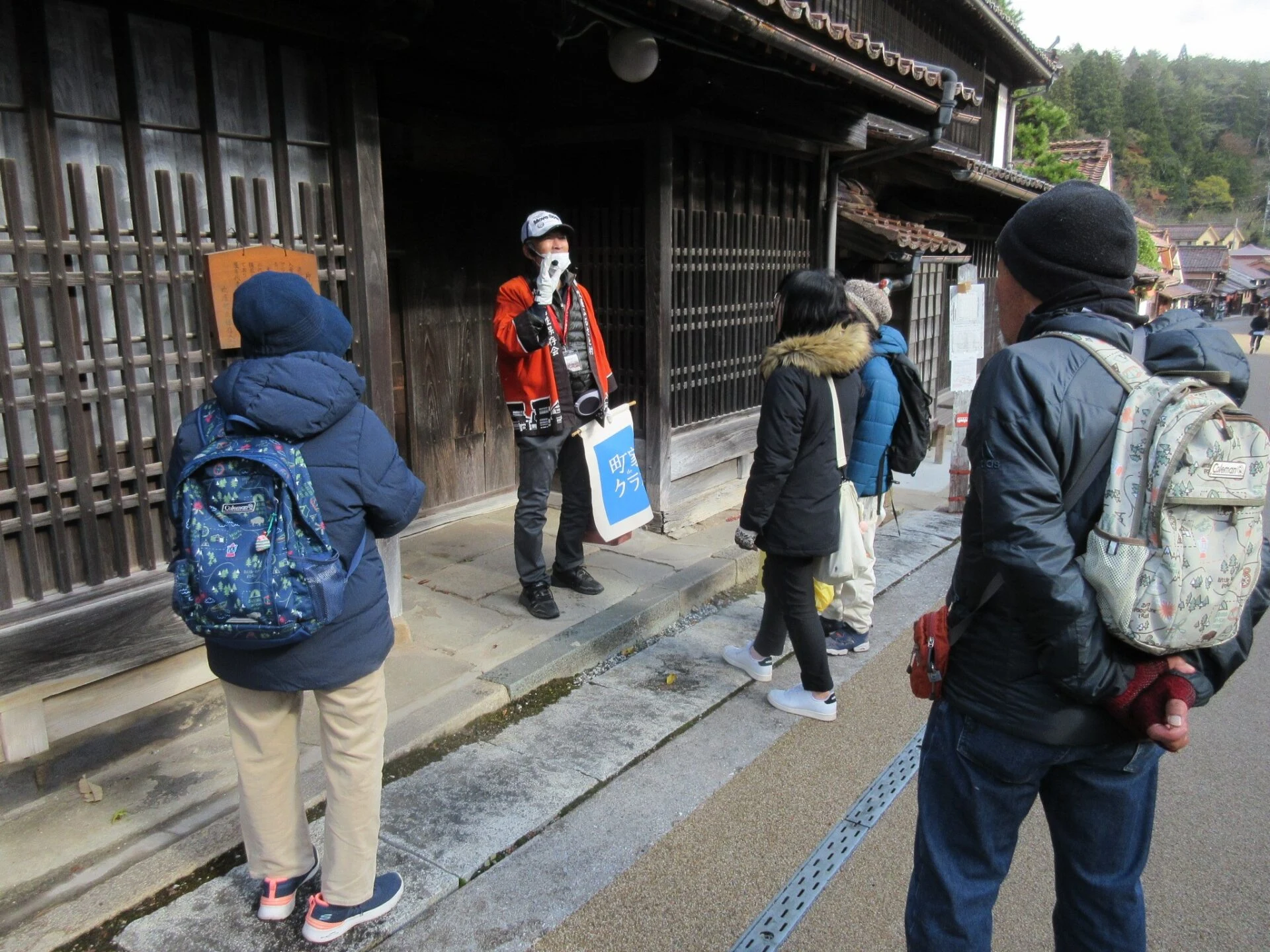
The best way to learn about the townscape is to walk it on your own two feet.
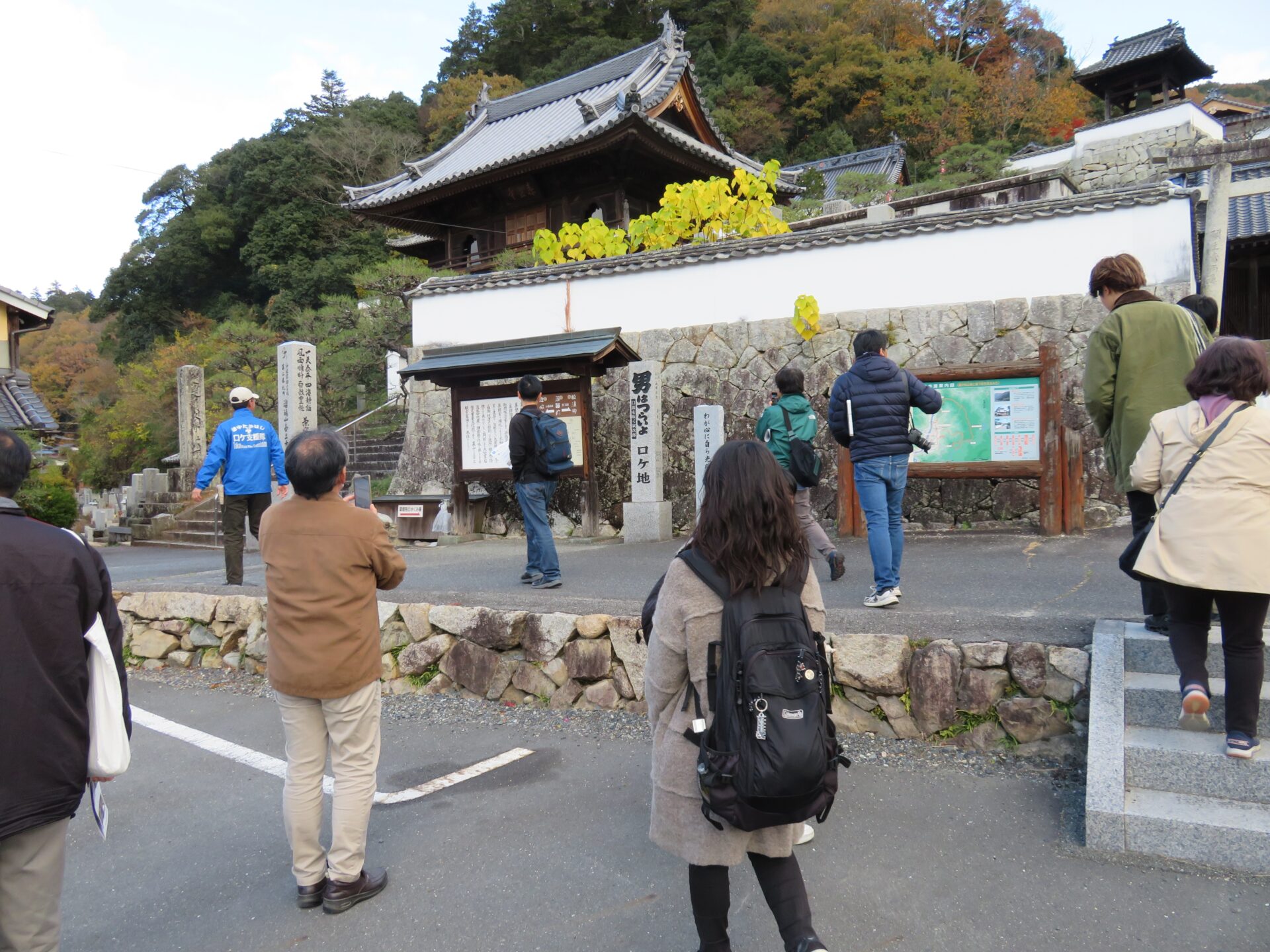
In the 2024 "Living in Bichu, Machiya de Class," 17 walking tour events will be held.
For details, please check the image below and the official website.
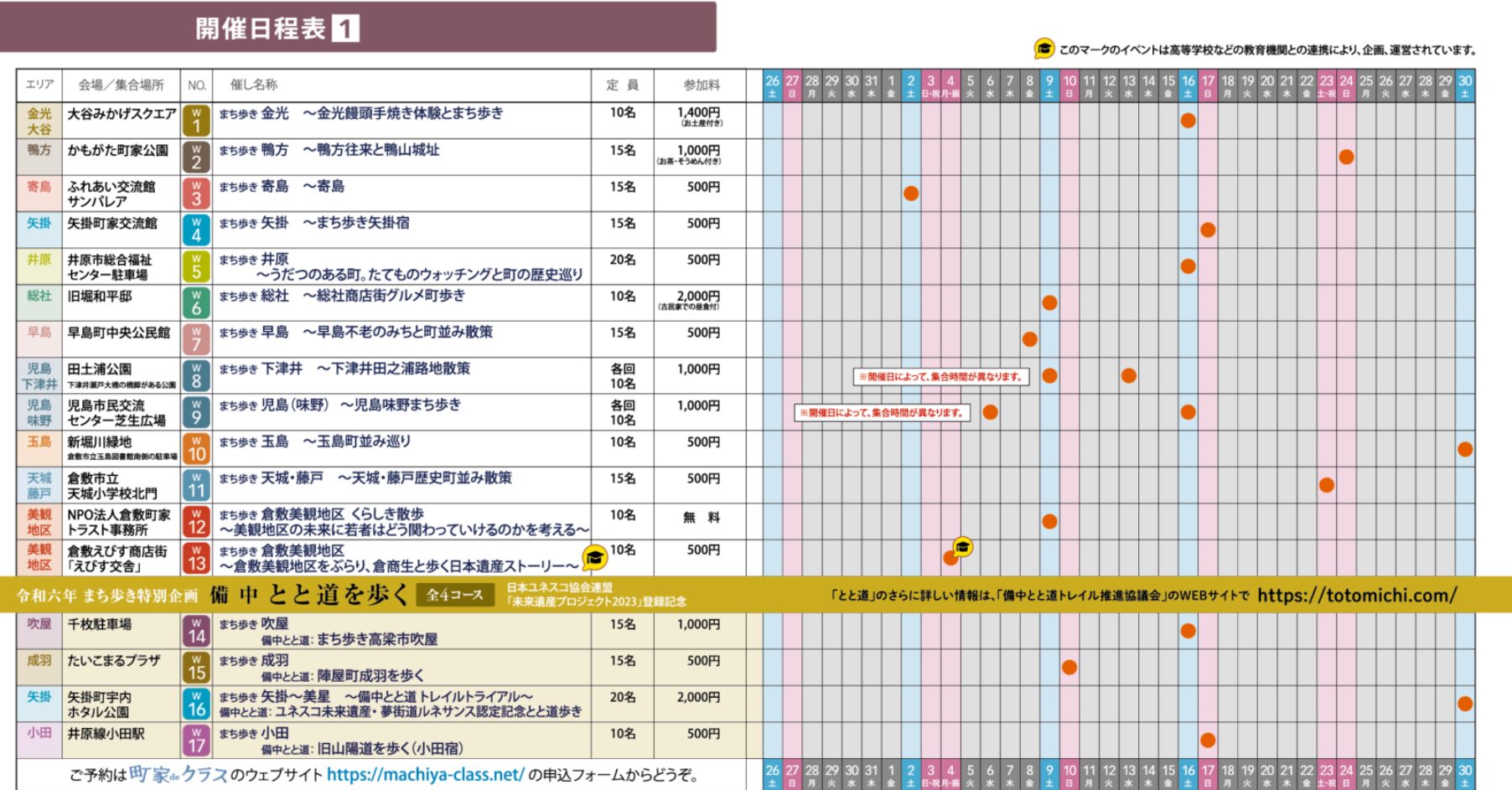
This is a chance to walk through the town from a deep perspective of what kind of life is being lived there.
Events 14 to 17 are special walking tour projects called "Walking the Bichu Tofu Road".
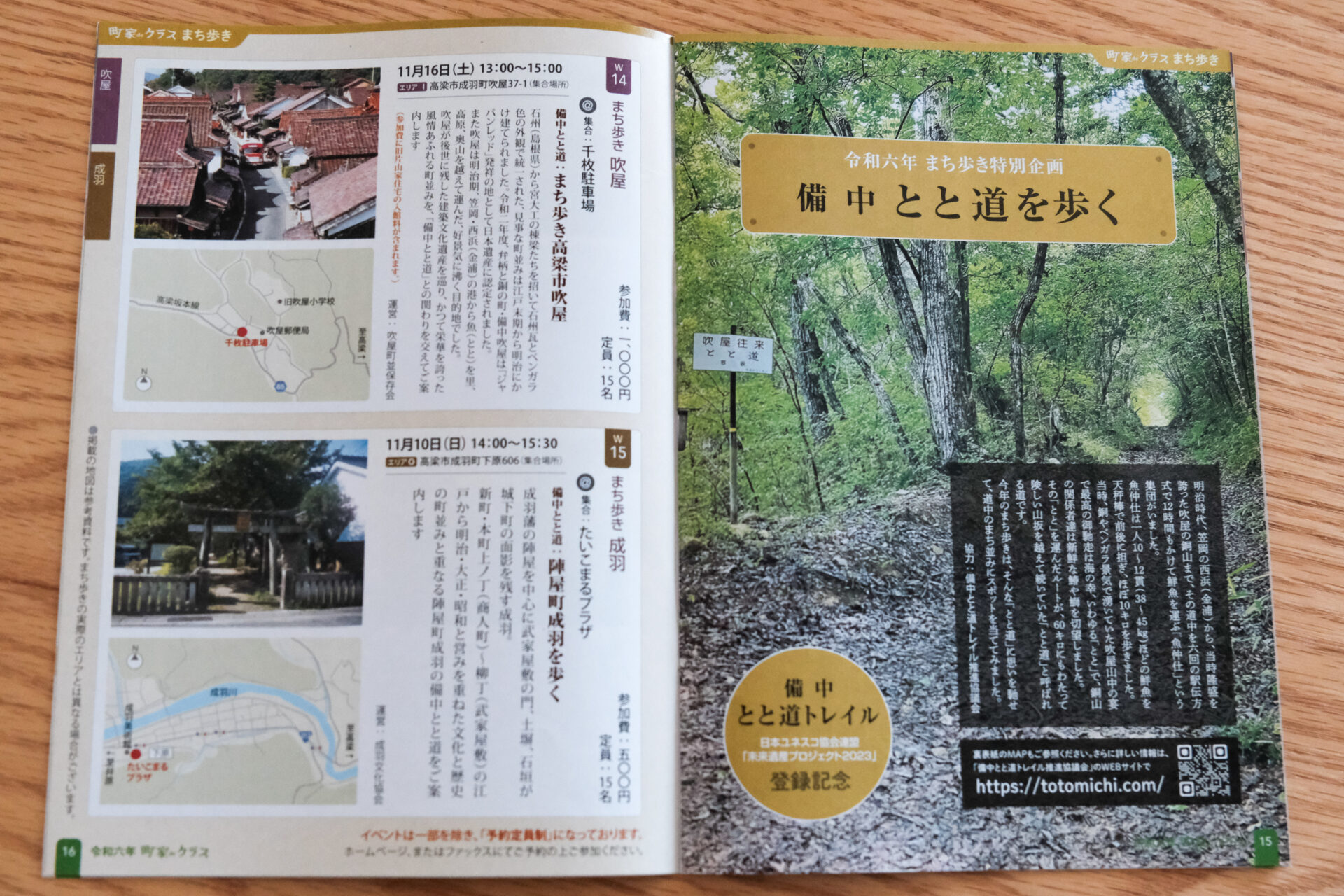
"Tofu" refers to "fish" in the dialect of the Bichu region. The "Bichu Tofu Road" was a route used to transport fresh fish from Nishi-hama (Kinuura) in Kasaoka to the once-thriving Fukiya copper mine, taking 12 hours in a relay style over six stages during the Meiji period.
The "Bichu Tofu Road" has been registered in the "Project Future Heritage 2023," an initiative by the Japan National Commission for UNESCO, which aims to preserve the rich culture and nature that is in danger of being lost for the future of children. In 2024, a program to actually walk the "Bichu Tofu Road" has been set up as a commemoration of the registration.
Experiential Events
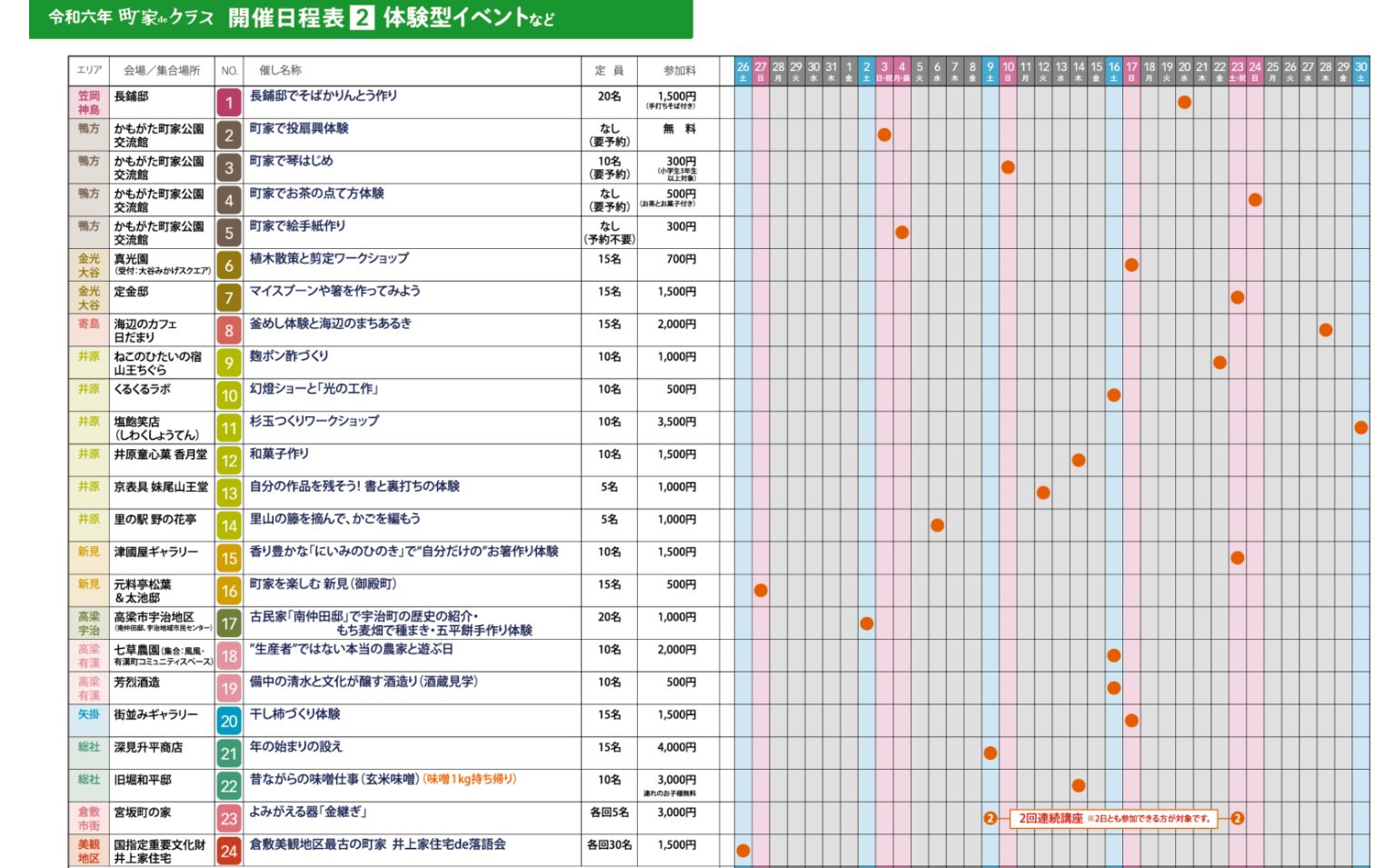
In "Living in Bichu, Machiya de Class," there are many opportunities to experience that "way of life," with 24 experiential programs prepared for 2024.
These programs allow you to experience the life that remains in the Bichu region through hands-on activities and tasting, engaging all five senses.
For details, please check the image below and the official website.
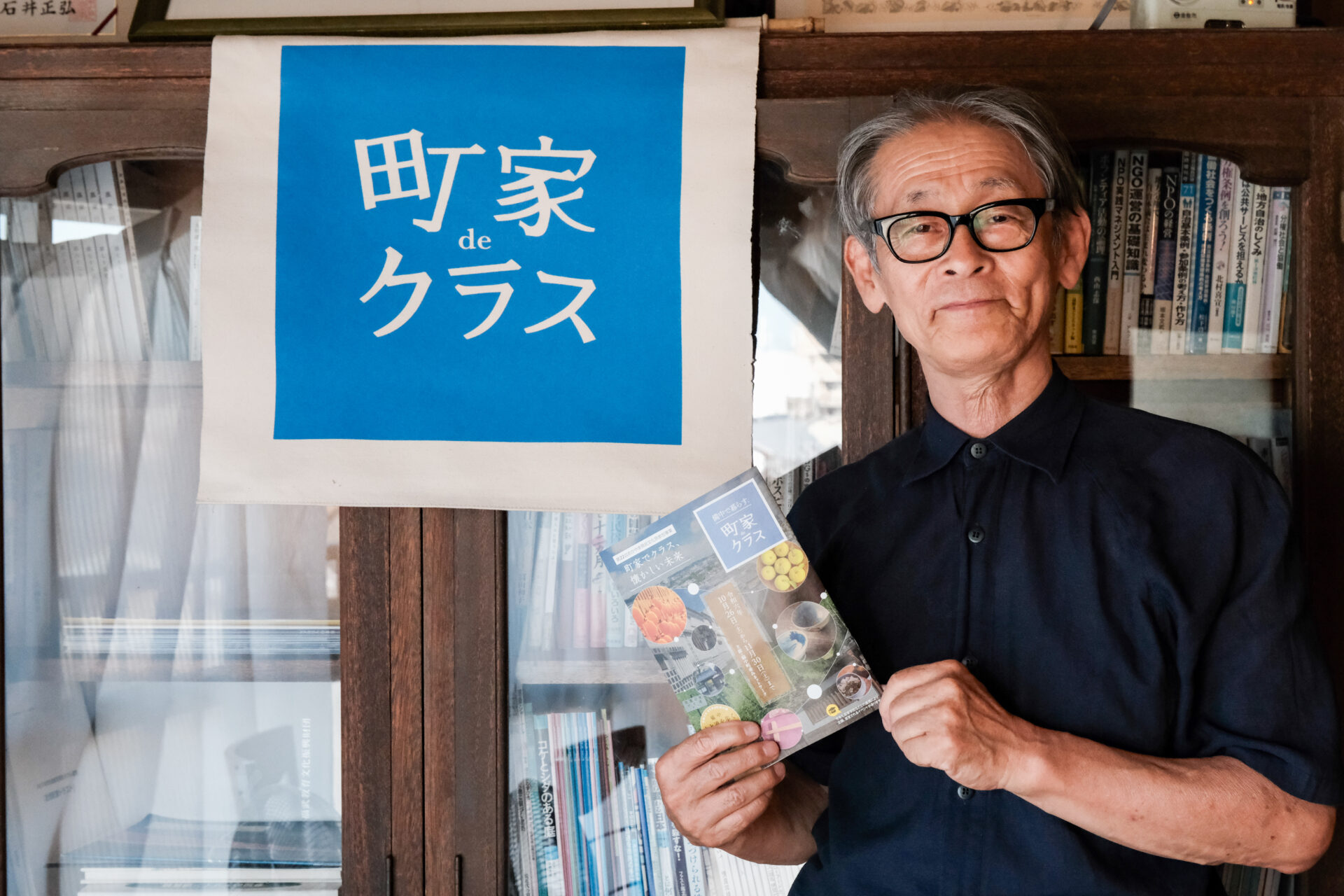
Interview with Nakamura Yasunori of the Bichu Townscape Network
I interviewed Nakamura Yasunori from the Bichu Townscape Network about what is important in "Living in Bichu, Machiya de Class" and recommended ways to enjoy during the event period.
Can you tell us about the background of the "Living in Bichu, Machiya de Class" project?
Nakamura (no honorific)
The trigger was the National Townscape Seminar Kurashiki Conference held in 2013.
The Bikan Historical Area of Kurashiki is a town where buildings from the Edo period have been preserved and utilized, designated as an Important Traditional Building Preservation District by the government. However, there are many other regions in the Bichu area that also preserve historical townscapes, so we cooperated to hold the Kurashiki Conference.
From there, we wanted to create opportunities for visiting each other's towns in the future.
There is another purpose as well. That is, in order to convey the life of townhouses, we first wanted to learn about life in townhouses ourselves.
Most of us, including the baby boomer generation, were born after the war and have lived urbanized lives since childhood. Therefore, we do not know the "culture" of living in townhouses.
If we do not know, we cannot convey it to others. There are only a few people left who can talk about life in townhouses before the war. So, we felt that it was necessary for us to experience various cultures ourselves at this opportunity, which led to the implementation of walking tours and experiential programs in the "Living in Bichu, Machiya de Class" project.
This year (2024) marks the 11th year of this long-standing event. How do participants usually choose their programs?
Nakamura
About 40% of the participants are repeat visitors. Since "Living in Bichu, Machiya de Class" has many programs, I think many people participate a little each year.
Interestingly, those who like walking tours tend to choose multiple walking tour programs, while those who enjoy food select several food programs... Many people choose various programs within the same field.
It seems that everyone wants to master what they love. Since the Bichu region is quite large, I hope they can enjoy various areas.
Until last year, it was called "Bichu no Machiya de Class," but this year it has been renamed to "Living in Bichu, Machiya de Class." Can you tell us the reason for this change and the notable programs for this year?
Nakamura
That's right.
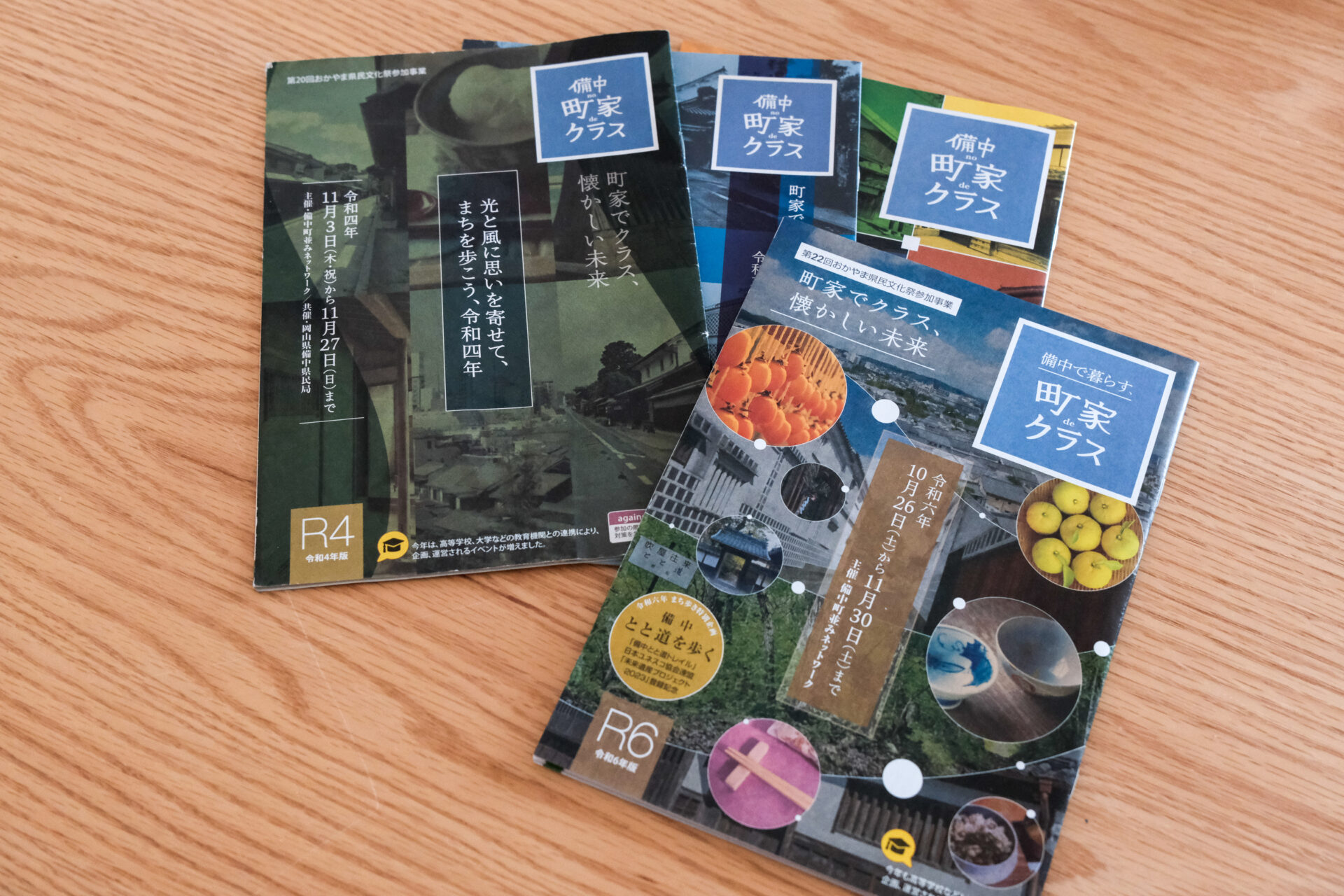
For the past ten years until last year (2023), we focused on "townhouses" for this event. However, the more we held it, the more we realized that life in townhouses is just one element that makes up the region, including the roads that pass through the town and agriculture.
Therefore, I decided to add "Living in Bichu" to the name to focus on the life in the "region" where townhouses exist.
Program 8, "Tour of Old Houses in the Uji Basin and Experience of Hand-making Barley Udon," is not in a townhouse but in a farmhouse. Since there are other ways of life in the Bichu region besides townhouses, I hope participants can experience those as well.
Additionally, this year we have newly prepared a project called "Walking the Tofu Road."
Do you know what "Tofu Road" is?
It refers to the road used to transport fresh fish from the Seto Inland Sea to Fukiya. Back then, there were no cars, so people walked or ran to carry the fish. There is a project to preserve such roads that are essential to the lives of the people in the Bichu region, which has been registered in the Japan National Commission for UNESCO's "Project Future Heritage 2023," so I would like to take this opportunity to walk it.
In particular, the walking tour program 16, "Yakage to Bisei," is a course that has been prepared for the first time this year, so I am looking forward to walking it as well.
Finally, please give a message to the readers.
Nakamura
It may seem special to us, but there are still many people in the Bichu region who live the traditional way of life as "normal." In such a town, we have prepared programs where you can hear and experience the stories of people who love their hometowns.
This summer was hot, so by the time "Living in Bichu, Machiya de Class" is held, I think the heat will have eased, and it will be a season suitable for walking around the town. Why not explore the Bichu region while enjoying the autumn weather?
Conclusion
Mr. Nakamura is dedicated to the revitalization of townhouses, and he always speaks with shining eyes about wanting to know more about traditional lifestyles, including townhouses, because "we have become accustomed to urbanized living."
On this day, he also said, "I want to walk not only the Tofu Road but also the roads that transported iron and salt," and I caught a glimpse of how the concept of "Living in Bichu, Machiya de Class" continues to expand, which is the secret to the longevity of this event.
Autumn of culture, autumn of leisure, autumn of food... How about "Living in Bichu, Machiya de Class" for your autumn outing?
Data on Living in Bichu, Machiya de Class
| Name | Living in Bichu, Machiya de Class |
|---|---|
| Dates | October 26, 2024 (Saturday) to November 30, 2024 (Saturday) |
| Location | Bichu region |
| Participation Fee (including tax) | Pay the participation fee at the reception on the day |
| Website | Living in Bichu, Machiya de Class |