Kurashiki developed as a textile town, thanks to its once-thriving cotton cultivation.
Among the many textile businesses in the city, Marugo Co., Ltd. has been making jikatabi (split-toe work boots) since the Taisho era.
When I thought of tabi, I had a strong impression of them as special footwear worn with kimono, and rarely saw them in everyday life.
But learning about Marugo’s “tabi shoes” changed that image. Tabi shoes are tabi designed for everyday wear, and their distinctive appearance and the functionality unique to tabi make them an appealing product.
Though a long-established company rooted in the community, Marugo continues to create new value for jikatabi. We spoke with Yabuki Mami, a young employee in her fifth year with the company (as of April 2025), about what makes Marugo an appealing company.
The information presented was current when this article was published in April 2025. Please note that it may differ from current information.
About Marugo Co., Ltd. (MARUGO)

Marugo Co., Ltd. (MARUGO) is a long-established jikatabi manufacturer with more than 100 years of history.
Jikatabi are tabi with rubber soles. They are used at worksites in fields such as agriculture and construction as shoes that protect workers’ feet.

In the Taisho era, before shoes had become widespread, people wore waraji sandals and tabi.
To protect workers’ feet, Marugo founder Fujiki Itaro developed “stitched-on jikatabi,” attaching rubber from rickshaw tires to the soles of tabi. These tabi were not only durable but also designed for comfort—a revolutionary idea.
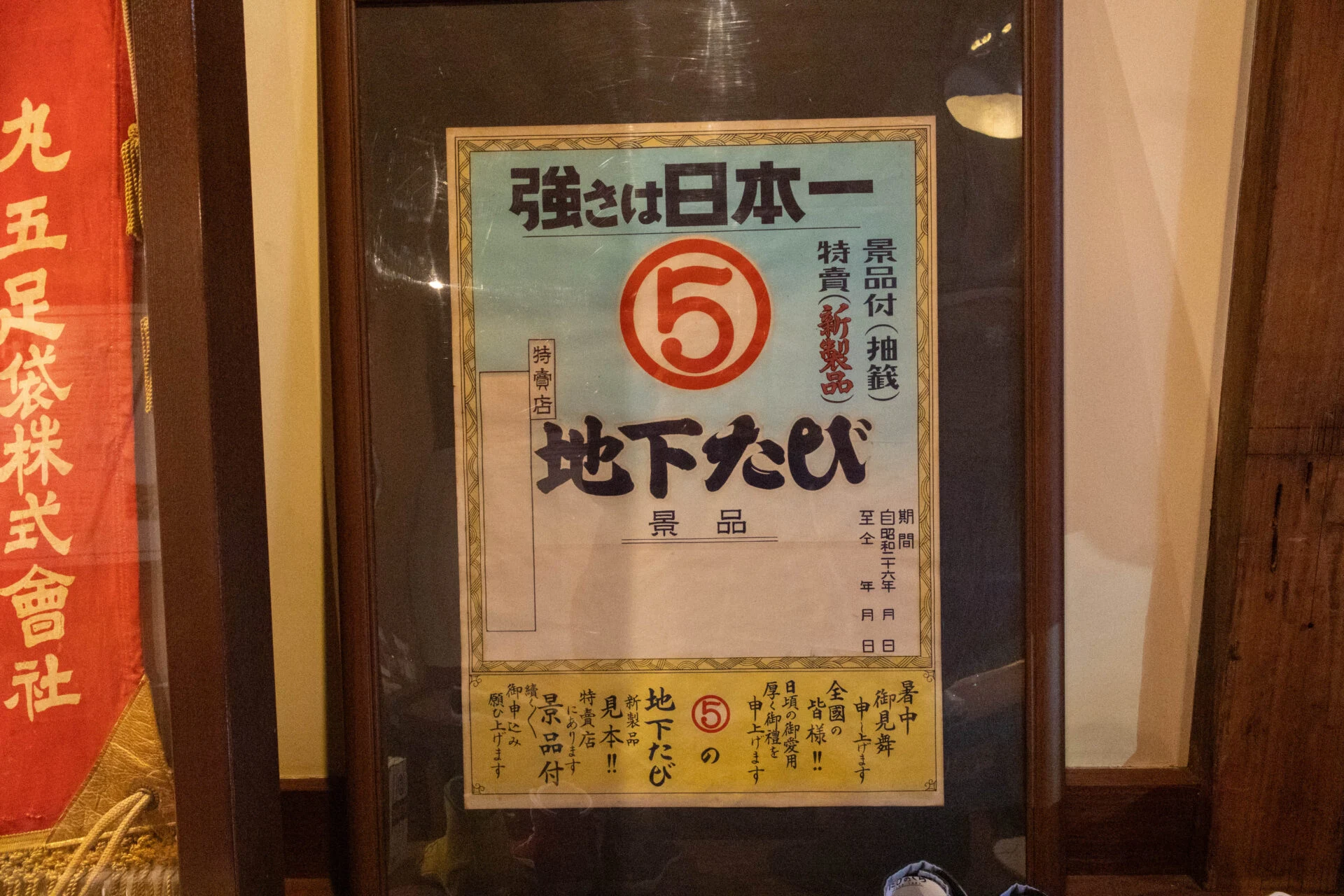
Founded in 1919, Marugo began its business with jikatabi. Drawing on its expertise from making jikatabi over many years, the company has also pursued related ventures, including developing work shoes.
The tabi made by Marugo fall into three main categories: work tabi used at worksites, tabi for festivals, and tabi shoes that support everyday health.
Today, as a pioneering manufacturer of jikatabi and work shoes, Marugo continues to pursue “new possibilities for jikatabi.”

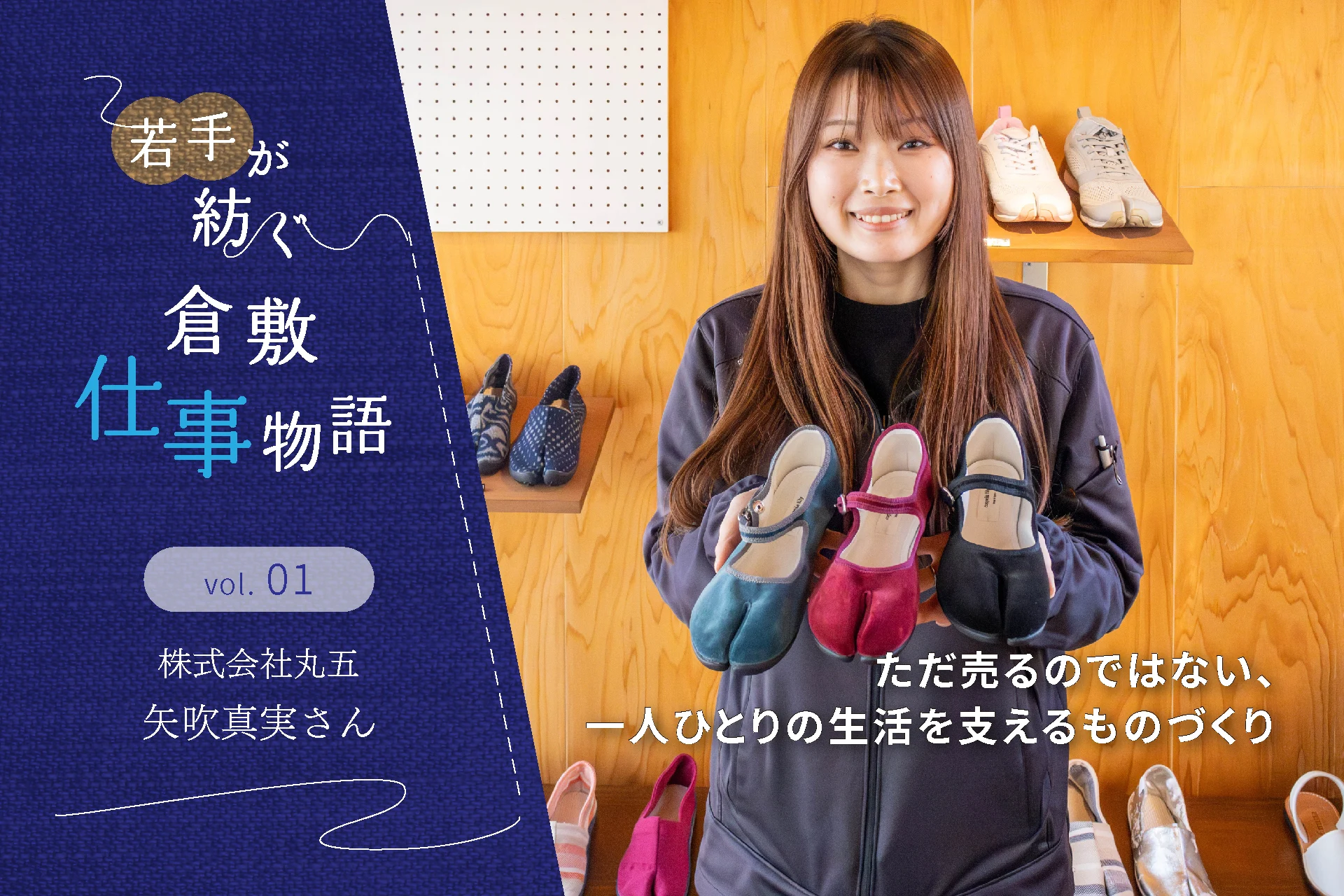
Yabuki Mami, designer of tabi shoes

Yabuki Mami works in the Wellness Promotion Department, which focuses on the tabi shoe business. Born in 1998, she is from Okayama City.
“Okayama is such a comfortable place to live that I’ve never once thought about moving outside the prefecture,” says Yabuki. After studying visual design in the Faculty of Design at Okayama Prefectural University, she joined Marugo as a new graduate in 2021.
Yabuki’s main work is planning and designing tabi shoes. Alongside making shoes, she handles a wide range of design work, including product photography and creating posters and product images. At times, she also models the shoes herself.
Tabi shoes are not only designed for everyday wear; they also support foot health, so developing them requires a range of knowledge and experience.
“It’s fun because I can take on a wide range of tasks at work,” Yabuki told us.
Before Yabuki joined Marugo
Yabuki’s path to joining Marugo began with D-Internship, which she took part in as a student in 2019.
D-Internship was an internship program that used the corporate event “Dragon’s Work Exhibition,” held at Kurashiki Ivy Square, as a way to develop university students’ skills. As university students were matched with companies in the Takahashi River Basin, Yabuki was assigned to Marugo and worked on sales planning for tabi shoes.
D-Internship and the Dragon’s Work Exhibition ended in 2024.

Through the internship, Yabuki discovered the joy of customer service—sharing the appeal of products and helping them reach customers. As she interacted with Marugo employees, she saw how they respected one another’s opinions and spoke openly, and was drawn to the company’s relaxed atmosphere and working environment.
There were no openings for new graduates at the time, but the future head of the Wellness Promotion Department asked her, “Why not come work with us?” She brought a portfolio of drawings and designs she had created as a student to her interview, and was hired by Marugo.

“coppelia lily,” the first brand she produced
“coppelia lily,” which went on sale in October 2023, was the first shoe Yabuki created.

Inspired by ballet shoes, they were created with the hope that people would “experience a slightly dramatic everyday life, like a character in a ballet story.” They retain the functionality of tabi shoes, while the chic texture of domestically made velvet and vivid, deep colors bring out their romantic charm.
The shoes took about two years to make. They were the first tabi shoes released in the third year after Yabuki joined the company—a milestone first creation.

Tabi shoes go on sale after passing through the stages of planning and design, engineering, and manufacturing.
Planning and design involve turning an idea—“I want to make shoes like this”—into reality and deciding on the details. Engineering, she explains, involves selecting the materials to use and testing functionality, including comfort and ease of manufacture.
At Marugo, the person responsible for a product is involved throughout the process, from planning and design to publicity, so the creator’s personal touch is strongly reflected in each shoe’s specifications and branding.
Read the interview later in the article to find out what details Yabuki focused on.
What Yabuki sees as Marugo’s appeal
Yabuki sees two main things that make Marugo appealing as a company.

First, every employee truly appreciates the appeal of Marugo’s products.
Many employees have worn tabi shoes themselves and experienced their benefits, she says, so when serving customers, they can clearly explain the appeal based on their own experience.
During the interview, I also asked about concerns regarding the shape of my feet, and was given a careful explanation of the benefits I could expect from wearing tabi shoes.
Listening to talks that convey a love for the company’s own products makes me feel that the appeal of tabi shoes grows even stronger.

The second is that they focus on their customers’ feet rather than on making a sale.
Tabi shoes can be difficult to fit, so it is necessary to recommend shoes suited to each individual. Marugo’s staff first learn about customers’ concerns before suggesting shoes, which naturally helps bring the sales staff and customers closer together.
Yabuki says, “If customers have concerns about their feet or shoes other than tabi shoes, we will sincerely offer them advice on those as well.” Perhaps it is this sincere approach that has earned Marugo so many fans.

In 2025, Yabuki will enter her fifth year at Marugo.
We interviewed her about Marugo from the perspective that comes with her youth.
Marugo Co., Ltd. (MARUGO) Information
| Organization name | Marugo Co., Ltd. (MARUGO) |
|---|---|
| Industry | Footwear business and industrial supplies business |
| Representative | Fukuda Masahiko |
| Year established | 1919 (Taisho 8) |
| Address | 1680-1 Chayamachi, Kurashiki City, Okayama Prefecture |
| Contact | 086-428-0230 (Sales Department) |
| Website | Marugo Co., Ltd. (MARUGO) |


What would you like to know about Kurashiki?
Enter a word to search articles on this site