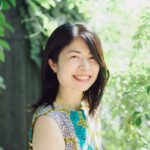
Interview with the staff running Mizushima Kodomo Shokudo Misora
We spoke with Masaki Inoue, representative of the general incorporated association Minna no Ouchi Haru House and operator of Mizushima Kodomo Shokudo Misora, and staff member Michiko Inoue.

The day Mizushima Kodomo Shokudo Misora was born
What prompted you to start Mizushima Kodomo Shokudo Misora?
Inoue (honorifics omitted)
I was working in educational support for families in financial hardship when someone asked me to attend a meeting, saying, “We’re starting a children’s cafeteria.” That was how it began. We started preparing in January 2017, held a soft opening in August, and officially opened in September.
I wanted to create time like a “family gathering” with many people, regardless of whether we were related by blood. We also made an effort to ensure that everyone on the staff could easily express their opinions. Perhaps we were already thinking about what is now called “facilitation.”
Facilitation: Helping conversations between people and the flow of a gathering run smoothly, and encouraging people to work together toward a goal
Looking back on Misora’s eight-year journey

Are there any memorable events from when you had just started the children’s cafeteria?
Inoue
Soon after we started the children’s cafeteria, I went to Tanematsu-yama with my son and met a mother with three young children. She seemed to be having a really hard time, so I spoke to her, looked after the children for a little while, and played with them.
As we were leaving, I told her, “If you like, come to Mizushima Kodomo Shokudo Misora.” Later, she saw us on Instagram and got in touch, and she started coming regularly.
Then, just the other day, we met again for the first time in seven years. Her family had grown, and she had remarried. Seeing her happy smile made us happy too.
It’s been eight years since you started the children’s cafeteria. Has anything changed?
Inoue
The COVID-19 pandemic was a major turning point.
For a while, we stopped serving meals for people to eat together and switched to food-sharing events, but it was really difficult to return to providing a place where people could eat together.
Takeout alone doesn’t create a sense of togetherness. I realized that time spent together is truly at the heart of what matters at Misora.
What matters is ordinary, everyday time—not anything special

What makes Misora unique?
Michiko (honorifics omitted)
I think Misora’s greatest feature is that it is not so much a place for support as a welcoming place where children and parents can feel at ease.
After a meal, the children sometimes come and sit close to a staff member, seeming as if they want to talk about something.
In casual conversation, important feelings can sometimes slip out. We value these everyday moments and try not to miss the small signs.
When needed, we also connect people with other support organizations and specialized facilities. More than anything, though, we hope to be a place where people feel, “Somehow, I feel safe when I come here.”
Forms of support that emerge through connection

I’ve heard that Misora works in partnership with the local community. What does that involve specifically?
Inoue
At Misora, we work with local support organizations to build a network that keeps an eye on families.
Once, the social welfare council invited us to a meeting about supporting a family. We knew the family well from our regular contact, and we had also been messaging the father on LINE. As people came to see that our presence was needed in the community, we began working with Kurashiki City and the social welfare council to build a support system.
Perhaps children’s cafeterias are the ones with the most detailed information and connections within the community. That’s why we want to be a reliable presence that people think of when they’re in trouble.
We want to connect with people who share our vision

You’re looking for staff and volunteers. What kind of people would you like to join?
Inoue
More than anything, we’d like people who feel, “I want to give it a try.”
You don’t need any special skills to start. Learning together as you get involved is a great help to us, too.
A children’s cafeteria is not just a place that serves meals; it’s a very rich and complex place. You begin to see the challenges faced by children and their families, connections within the community, and many other things.
That’s why we hope to work together with people who take an interest in society and want to “make the community better.”
Don’t forget to enjoy yourself

Finally, is there anything you keep in mind to make it possible to continue without overdoing it?
Inoue
There are difficult moments, but we value the attitude of enjoying even those. Because unexpected things happen, every time brings a different story, and that gives us the strength to keep going.
Even on days when things don’t go well, we try to find one thing that was “good about today.” I think these small moments of happiness, one after another, help make Misora an even better place.
What I learned through volunteering

As I volunteered at Misora, I was reminded that a “children’s cafeteria” is not simply a place where meals are prepared and served.
The food is just a starting point. What truly matters is having an adult who quietly offers support. Children and parents alike show relief in their expressions at casual conversation and small acts of consideration.
I realized that these small interactions can be a source of comfort for someone.
“I think we can contribute more to society by improving places that already exist than by starting something new.”
The words of a staff member who said this have stayed with me.
If you’re interested in children’s cafeterias, one option might be to visit a place nearby that is already operating. Even a small first step can surely bring someone a sense of security or hope.
Mizushima Kodomo Shokudo Misora is held on the third Saturday of every month.
If you’re interested, please come by.
Mizushima Kodomo Shokudo Misora data

| Name | Mizushima Kodomo Shokudo Misora |
|---|---|
| Date | Third Saturday of every month, 10:00 a.m.–2:00 p.m. |
| Location | 8 Mizushima Kitakasuga-cho, Kurashiki City, Okayama Prefecture |
| Admission (tax included) | Adults: ¥300; children: free |
| Website | Mizushima Kodomo Shokudo Misora Instagram |





What would you like to know about Kurashiki?
Enter a keyword and we'll search the articles on this site