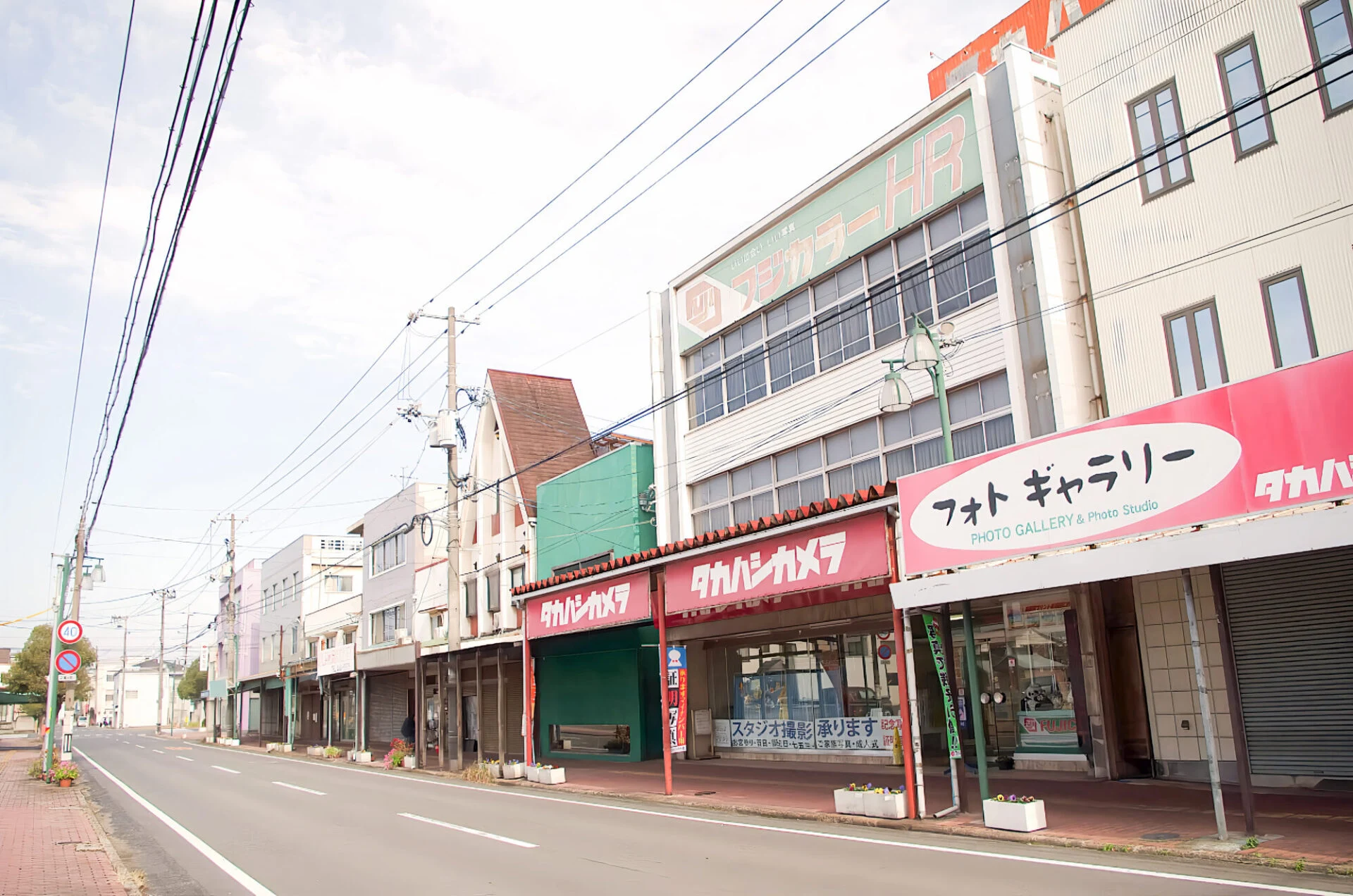
In November 2022, “Nostalgia: A Walking Tour of Mizushima” was held as an autumn course at Mizushima Community Center.
The writer also took part, joining working adults, high school and junior high school students for three days of talks, a walking tour of Mizushima, and group work.
Through the course, the writer discovered new things about Mizushima’s Showa-era streetscapes and the fascinating people who remain there.
Here, we introduce the three-day course and, with a focus on photographs, the “walking tour of Mizushima” on the second day.
The information presented was current when this article was published in December 2022. Please note that it may differ from current information.
What is the autumn course “Nostalgia: A Walking Tour of Mizushima”?
“Nostalgia: A Walking Tour of Mizushima” was held in November 2022.
| Date and Time | Content | Instructor | |
|---|---|---|---|
| Day 1 | Saturday, November 12, 2022 1:30 p.m.–3:00 p.m. | Talk | Akira Furukawa, Representative Director, Mizushima Park Management Lab. |
| Day 2 | Saturday, November 19, 2022 1:00 p.m.–3:30 p.m. | Mizushima Walking Tour | Group A: Ienori Noro, PTA Chair, Daigo Fukuda Elementary School Group B: Mr. Furukawa Group C: Ryoko Tanabe, Representative, Libra DESIGN |
| Day 3 | Saturday, November 26, 2022 1:30 p.m.–3:00 p.m. | Group Work | Mr. Furukawa |
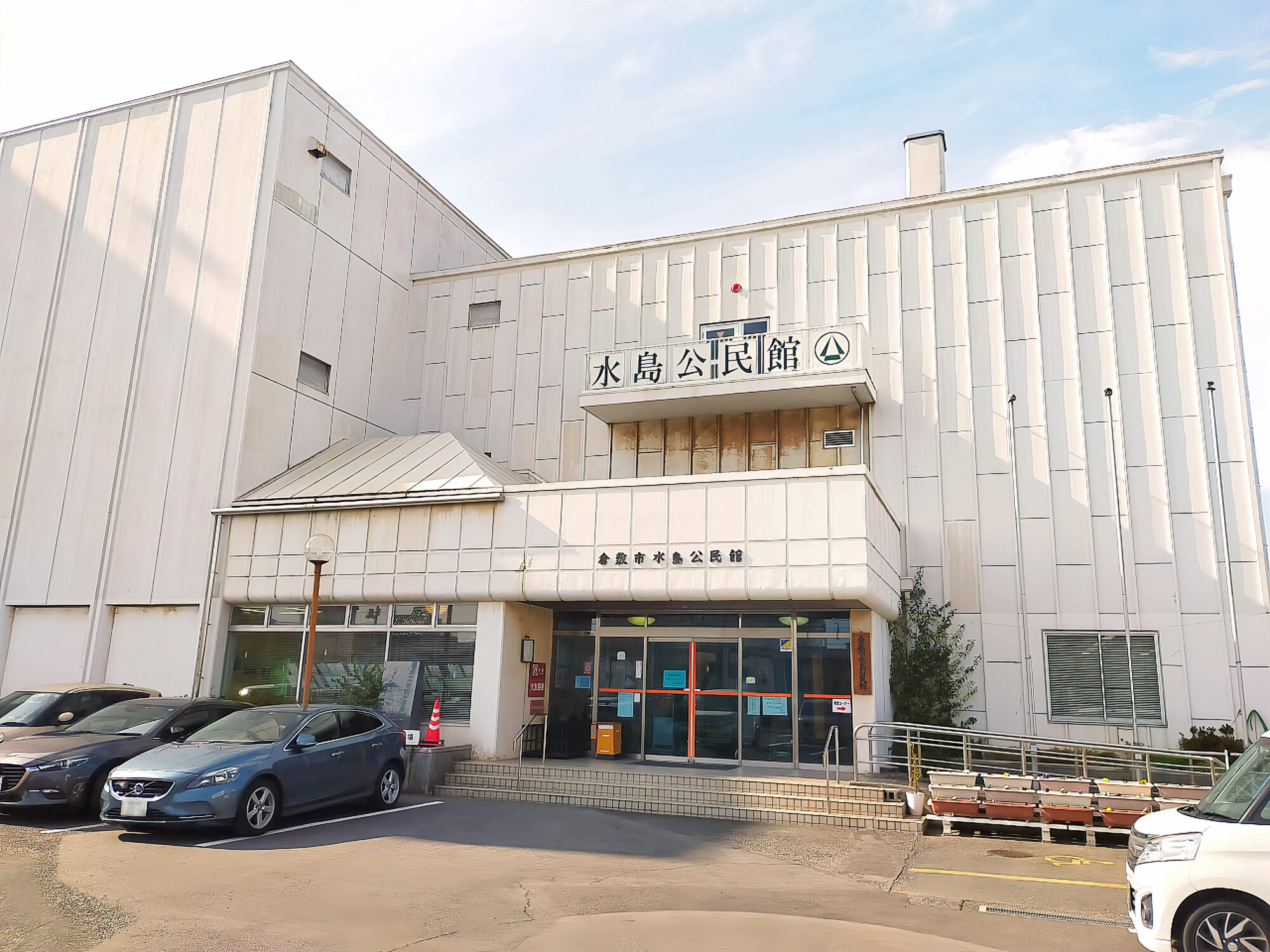
Day 1: “Talk”
The talk covered resources in Mizushima, including food, healthcare, and human resources; Mizushima’s history, including land reclamation; the founding of Mizushima Rinkai Railway and the shopping district; and the strengths, new initiatives, and bright prospects of Mizushima as seen by the instructor, Mr. Furukawa.
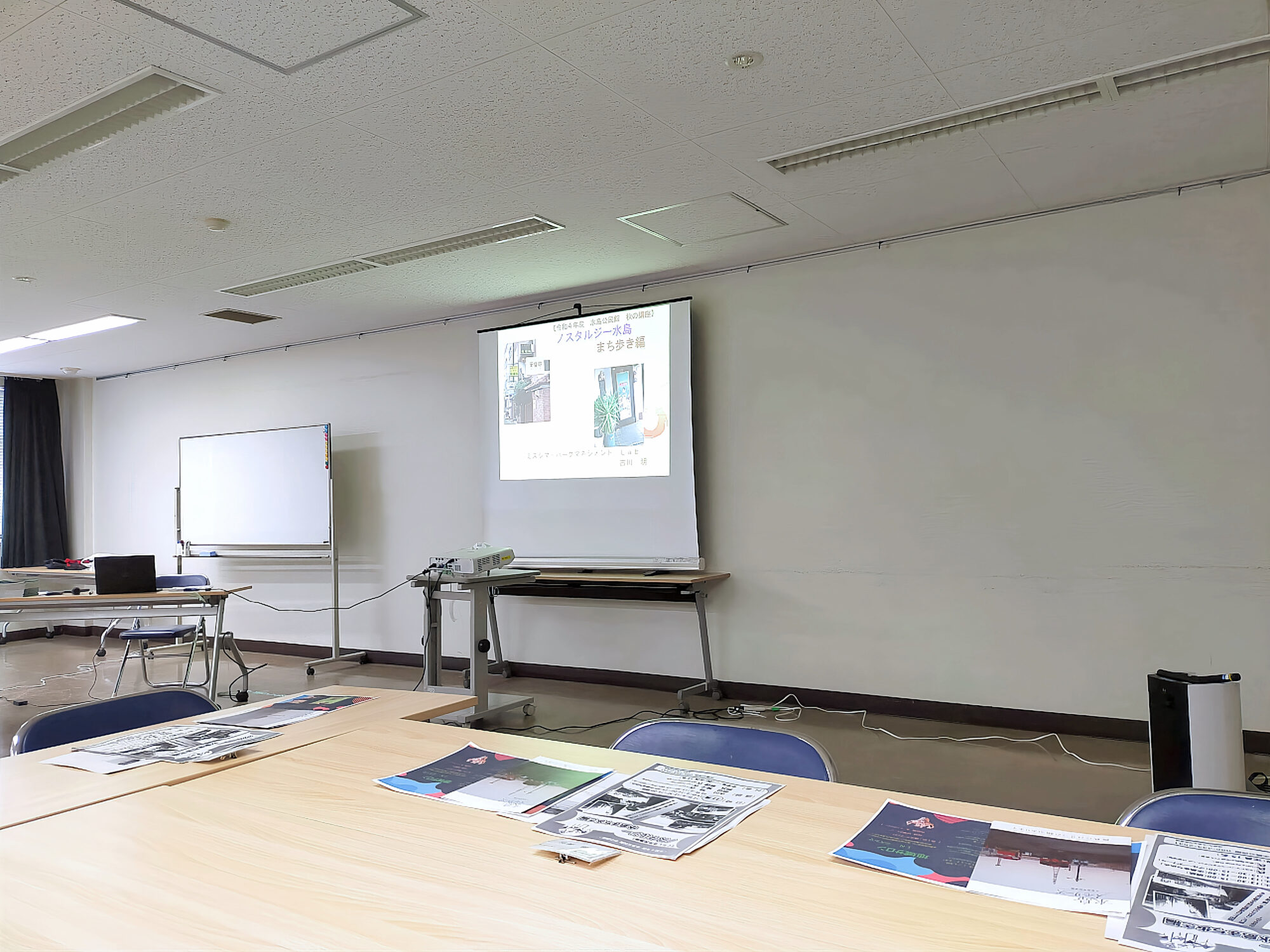
Some of Mizushima’s bright prospects include:
- There are many parks. ※They also served as part of fire-prevention measures, and in the past each park reportedly had a well.
- It has a Showa-retro feel, for example, in its cafes and nighttime snack bars.
- Young people with a keen eye are beginning to move here, and more shops are opening. ※Examples include “One Espresso, Please,” a new gym, and boutiques.
- The back streets retain an atmosphere reminiscent of Nagoya. ※This reportedly dates back to when many employees transferred from factories in Nagoya to the former Mizushima Heavy Industries factory established in Mizushima.
- The people are kind. More people and organizations are actively contributing, and there are signs of loose-knit collaboration.
▼Even walking around Sakae Station on Mizushima Rinkai Railway, you’ll be surprised by how many parks there are.
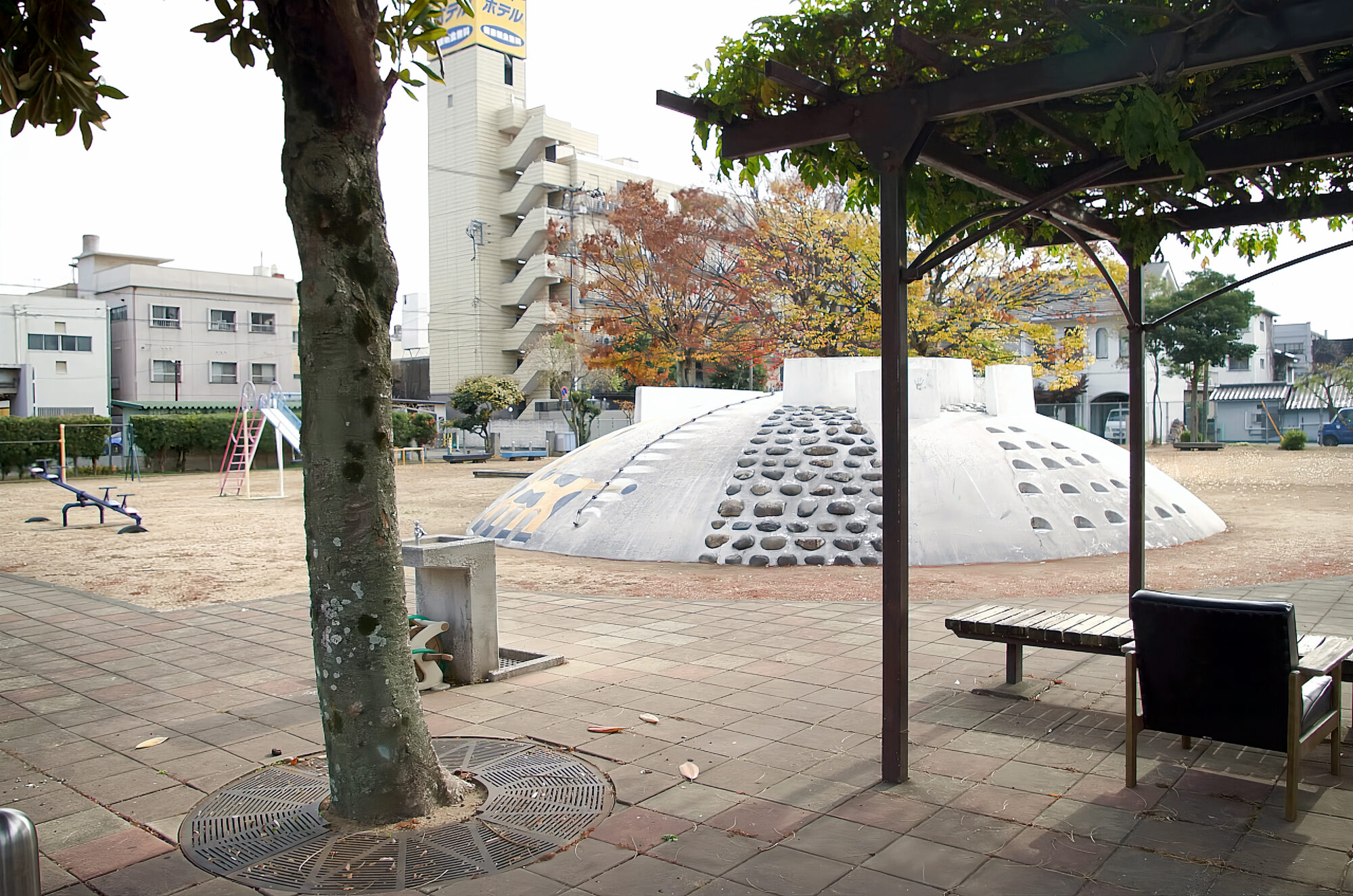
There is one park per block, and in some places parks have been built directly across the road from each other.
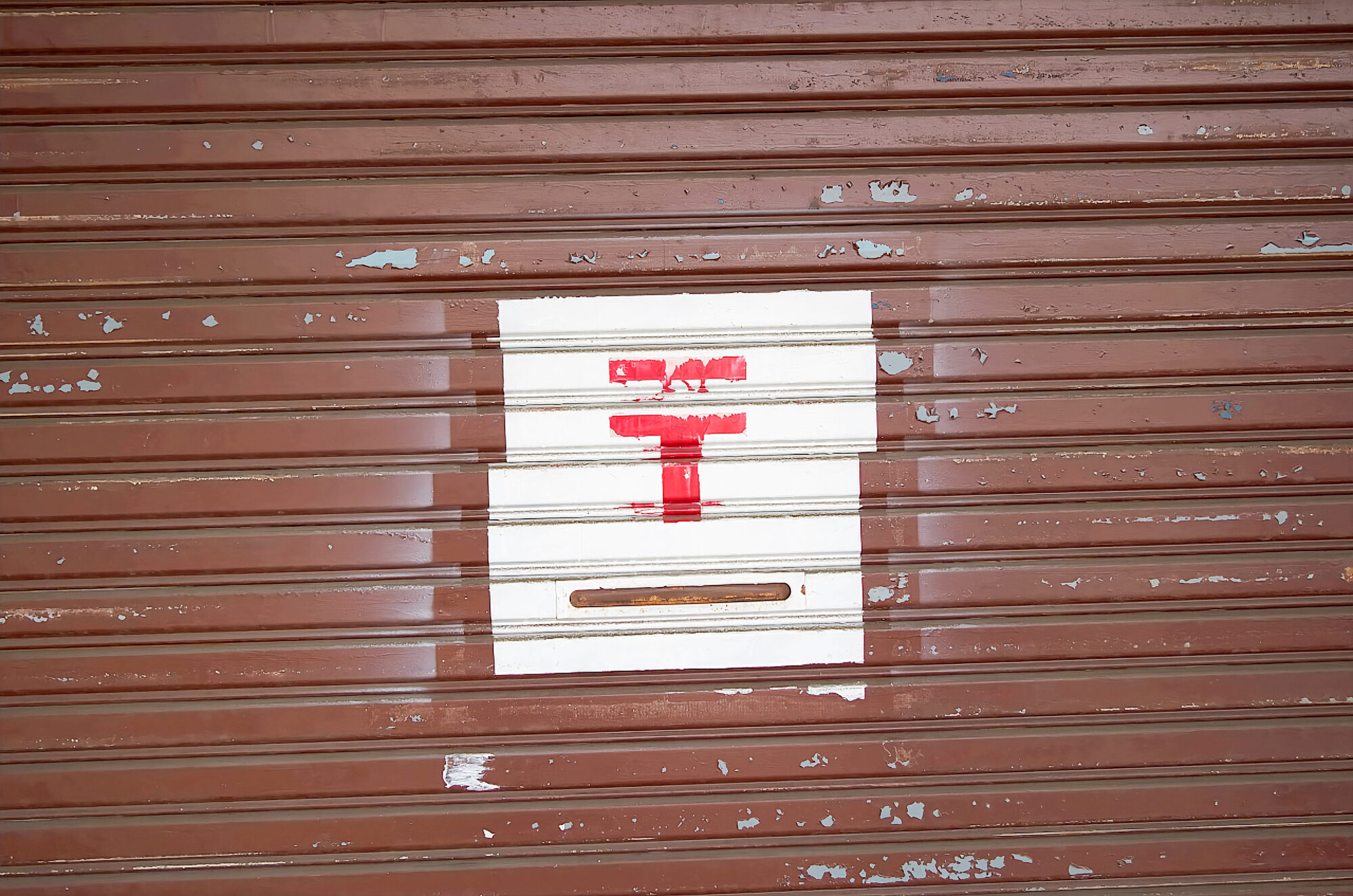
▼A mailbox painted on a shutter in the shopping district. It evokes nostalgia.
Day 2: “Mizushima Walking Tour”
On the second day, the instructor and participants split into three groups and walked around town, focusing on the shopping district.
As they walked freely around town, each group also stopped at three or four shops and other places and conducted interviews.
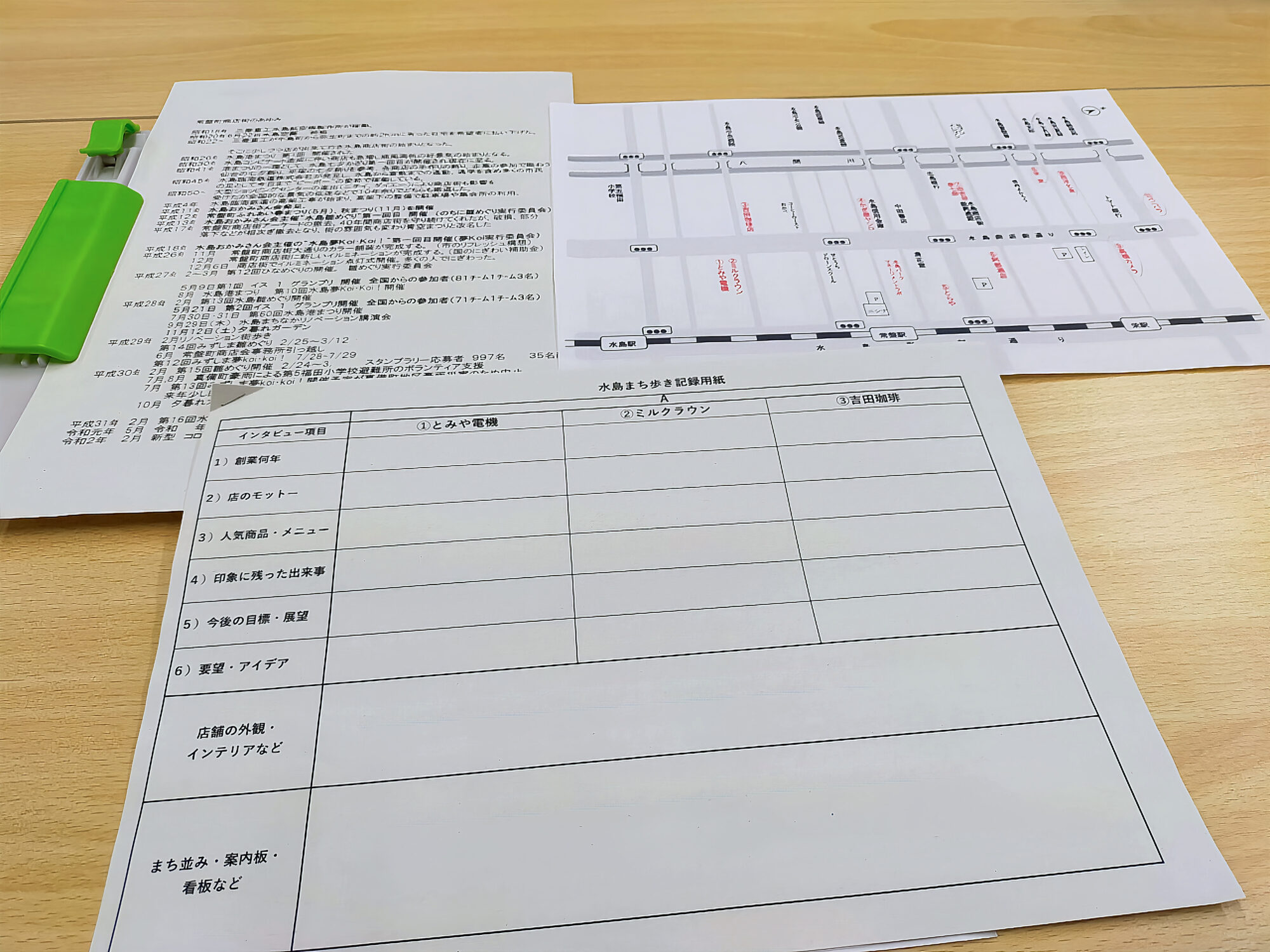
They were also given a simple map and a Mizushima walking tour record sheet with basic interview questions.
Everything was ready.
The writer was in Group C.
Together with instructor Ms. Tanabe, the group visited four shops, including Takahashi Camera, as well as “Mizushima Shiryo Koryukan Asagao Gallery.”
| Instructor | Shop 1 | Shop 2 | Shop 3 | Shop 4 | |
|---|---|---|---|---|---|
| Group A | Mr. Noro | Tomiya Denki | Milk Crown | Yoshida Coffee | |
| Group B | Mr. Furukawa | Kagiya Yashiro | Toraya | Abe Liquor Store | |
| Group C | Ms. Tanabe | Takahashi Camera | Sakaedo | Seiyo Kojiki | Benibara |
Now, let’s head out on the “Mizushima Walking Tour”!
Taking photos with the cameras provided, the groups walked slowly, chatting as they went and consulting their maps.
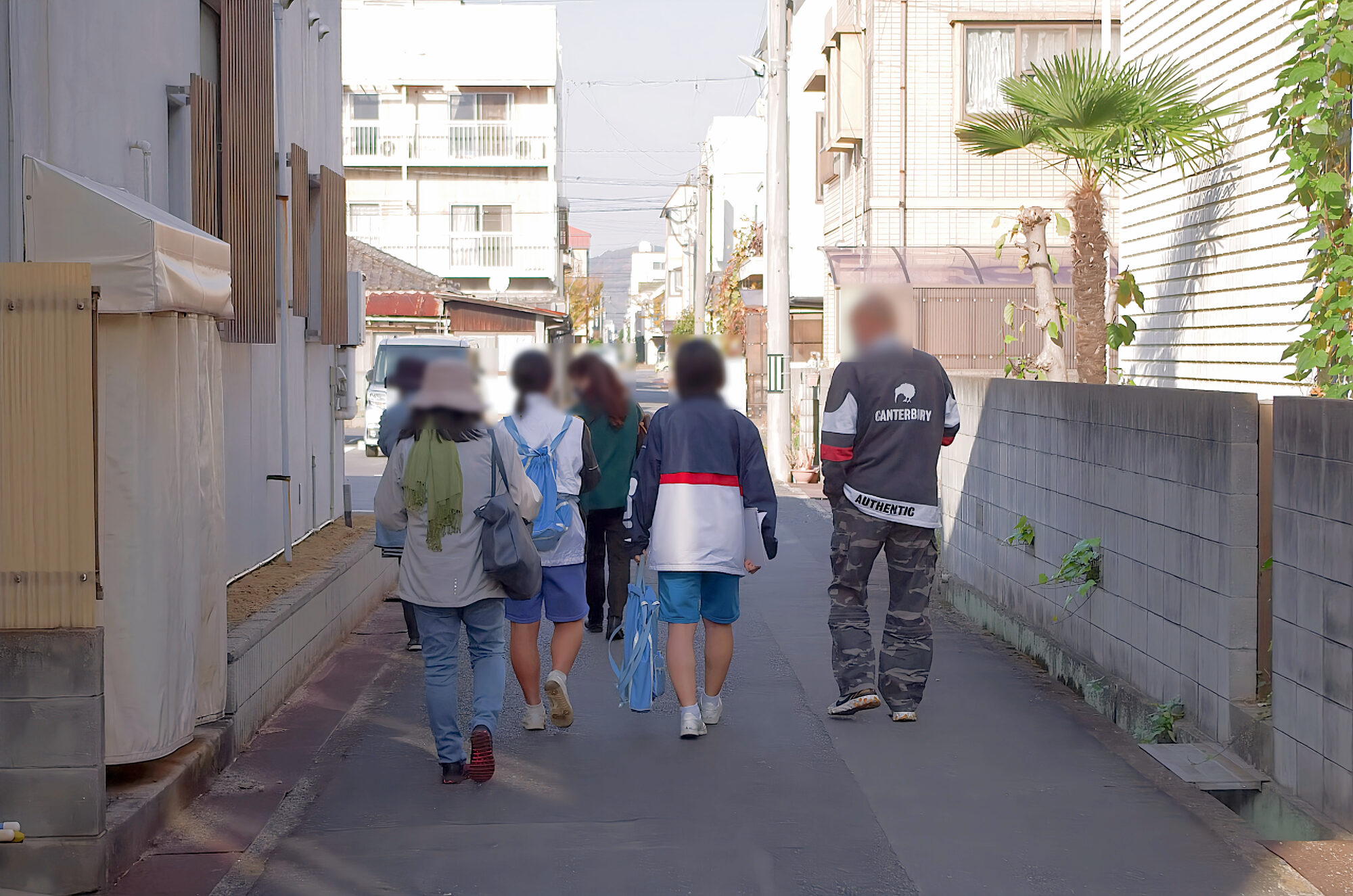
From here, we’ll introduce the shops and other places Group C interviewed!
Takahashi Camera
| Founded | Founded in 1958; now run by the second generation |
|---|---|
| Shop motto | The customer comes first |
| Popular products | They used to sell cameras, but adapted as times changed. Before COVID, they sold “portable photography equipment (¥1.7–1.8 million)” nationwide. |
| Memorable details | Takahashi Camera was the first in Japan to design and sell “portable photography equipment.” The owner draws up plans and other materials to order. LED lighting is used. |
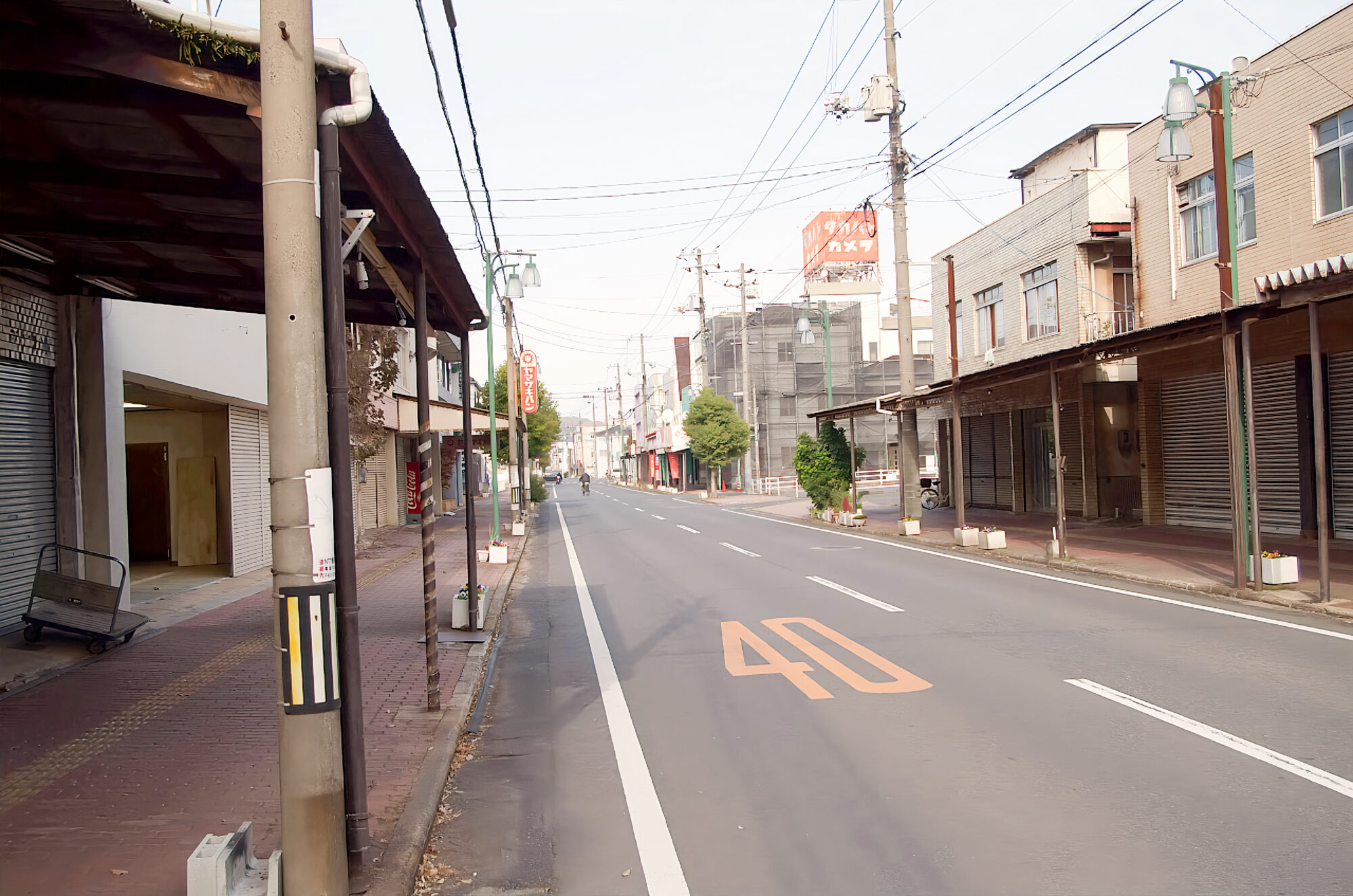
▼The building with the red sign on the right is Takahashi Camera. The nearby arcades also evoke the Showa era for the writer.
▼The owner, Mr. Takahashi, explains the “portable photography equipment.”
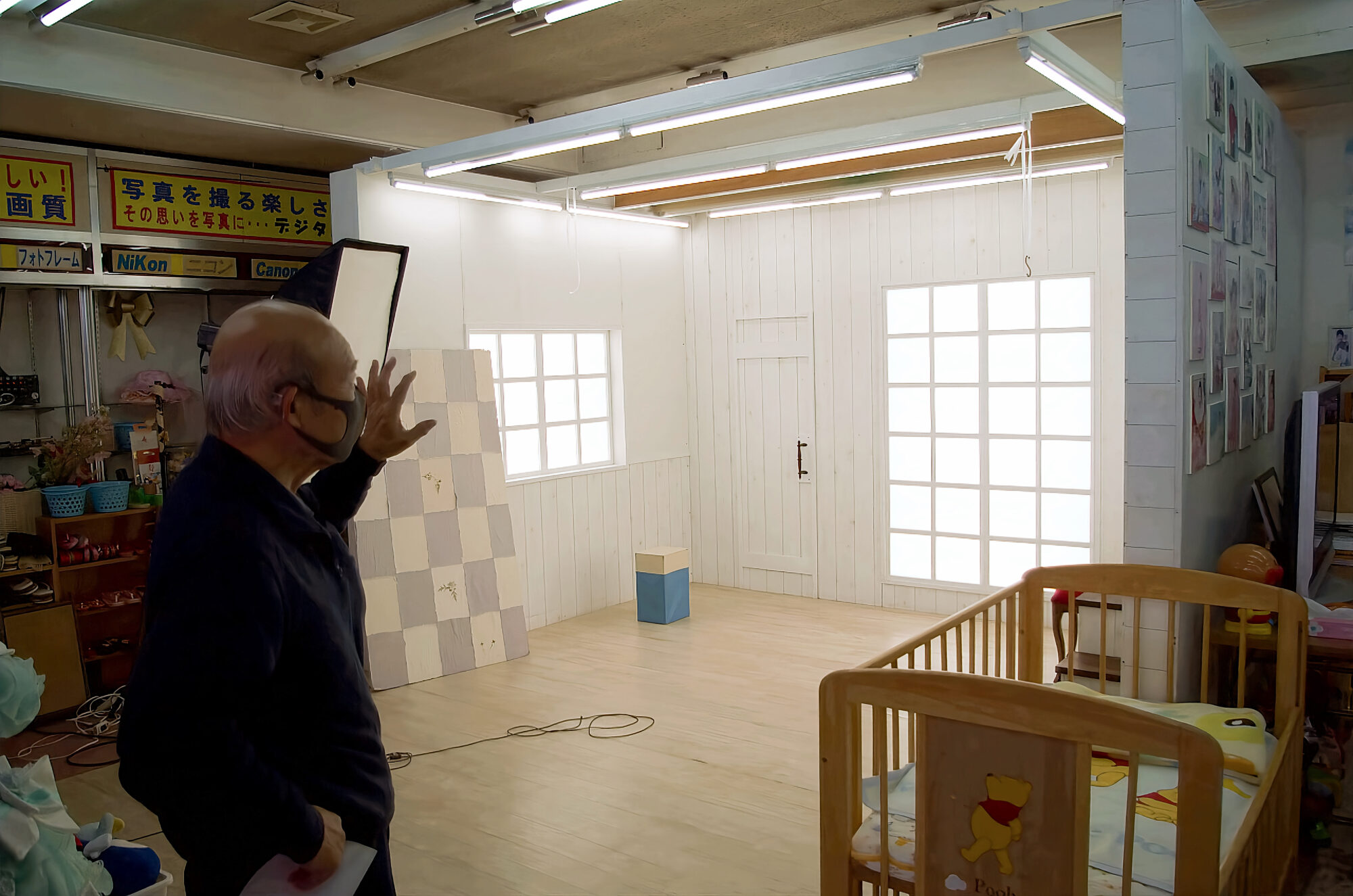
This portable equipment is a photography studio that can be folded up and transported by car.
It can be taken outside and assembled for photography.
The writer was impressed by the idea and the ability to put it into practice.
Before COVID, orders reportedly came from all over Japan.
Shimaya Seika Sakaedo
| Founded | Founded in 1950 (70 years ago) ※The business was first established near Yayoi Station as Yayoi-do |
|---|---|
| What the shop stands for | They wanted to preserve the flavor of the “an” from Yayoi-do, which closed in June 2017. To do so, they carried on its flavors and craftsmanship, opening as “Shimaya Seika Sakaedo” in February 2018. |
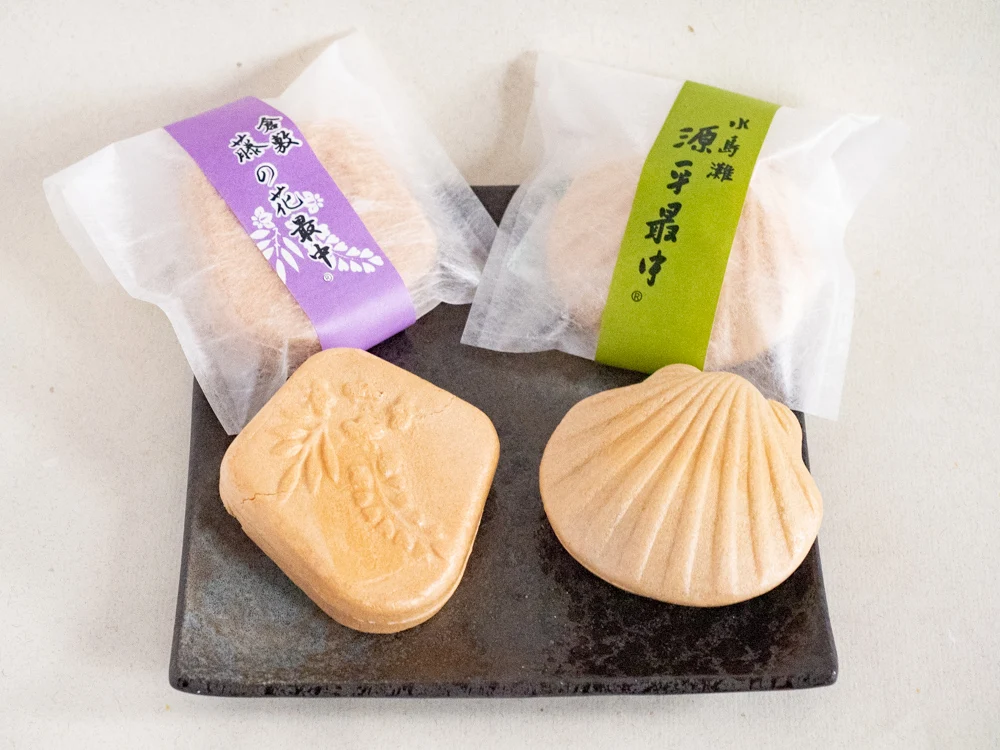
| Popular products | Mizushima Nada Genpei Monaka (black chunky bean paste) Kurashiki Wisteria Monaka (white chunky bean paste) |
| Memorable details | The shop has its own song, in the style of enka. |
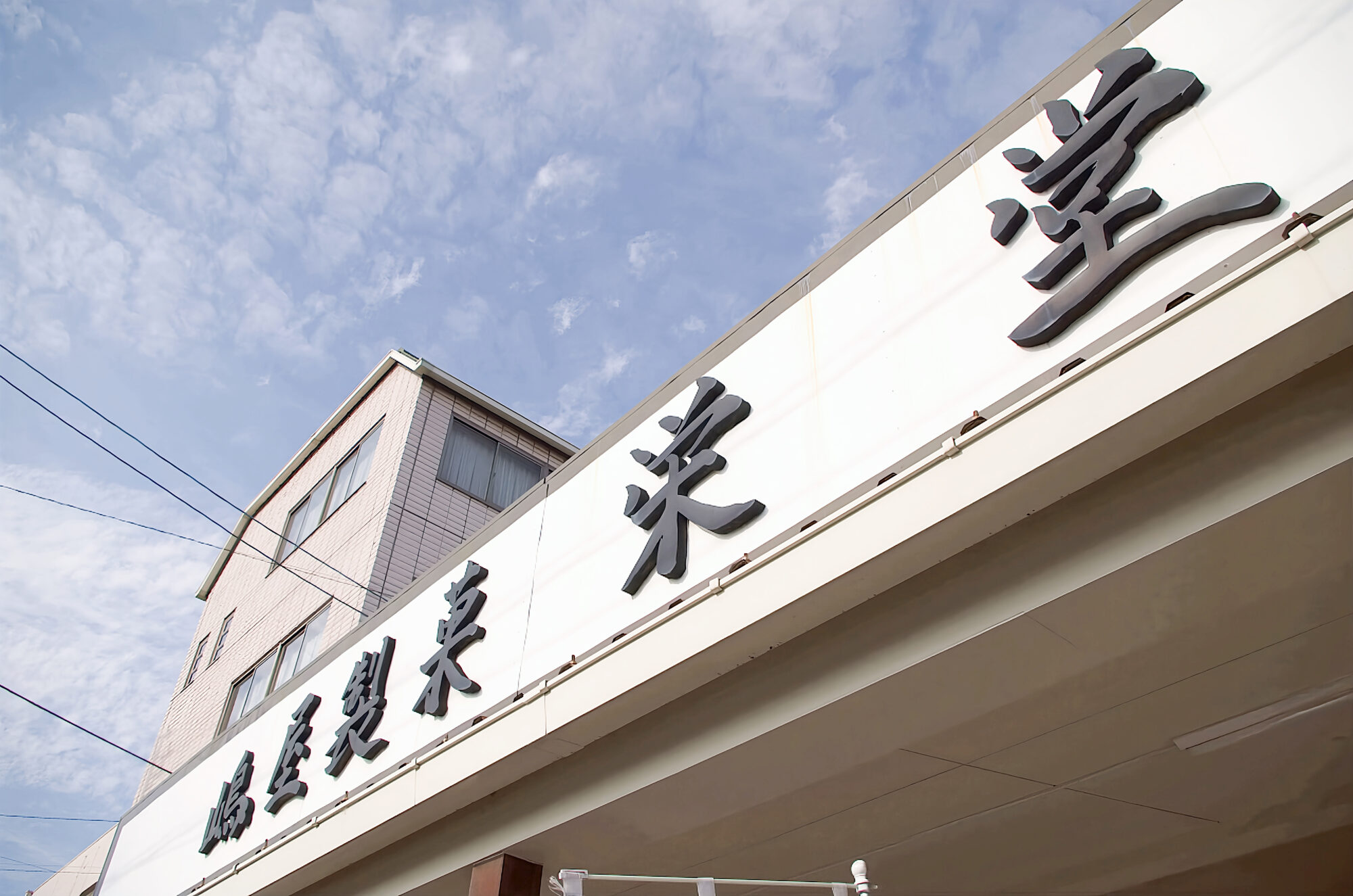
▼Sakaedo, near Sakae Station on the coastal railway.
▼A shop staff member explains the popular product (Wisteria Monaka), holding it in their hand.
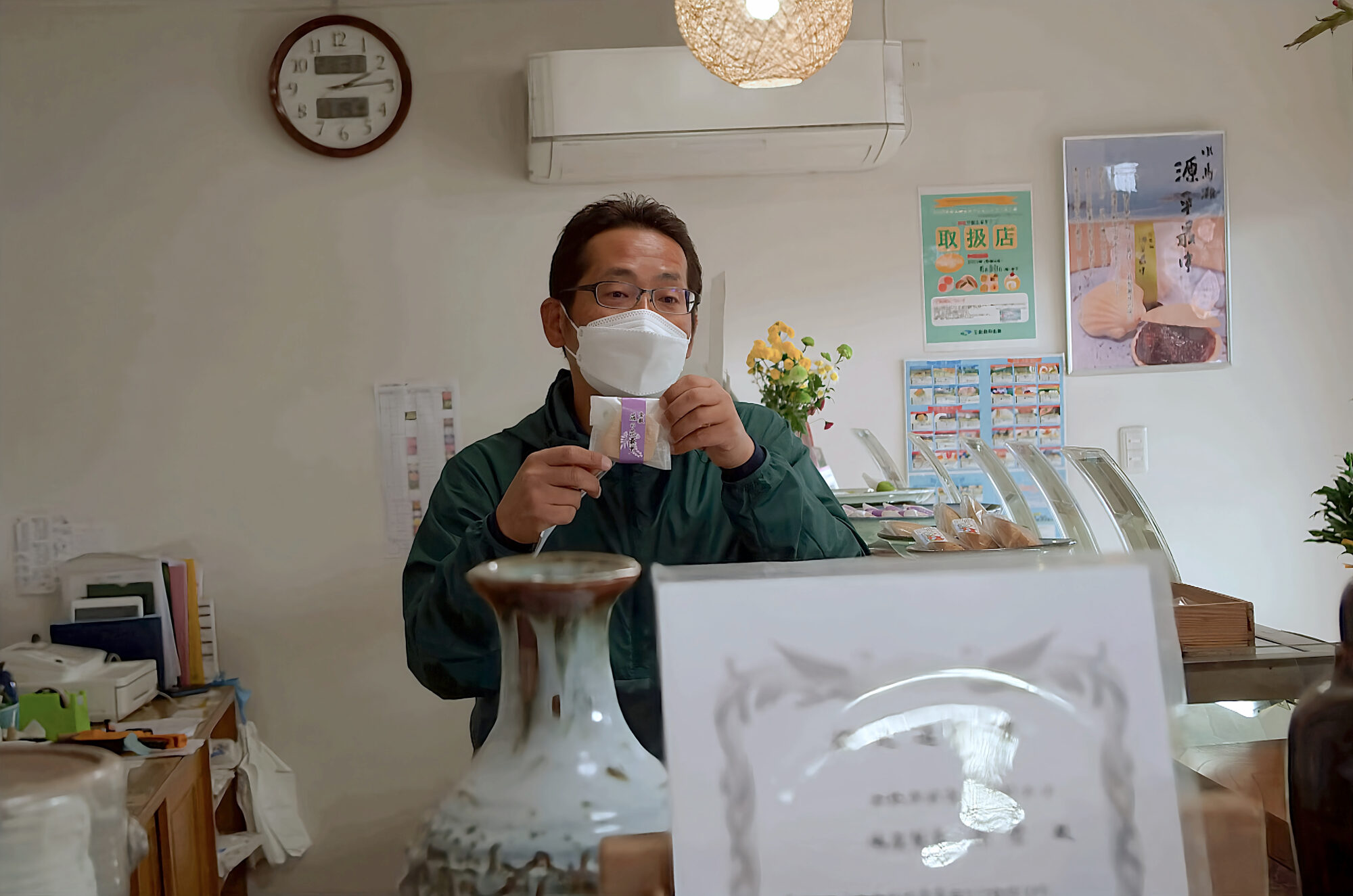
The writer later bought some as a souvenir, too.
The writer was drawn to the just-right sweetness of the “an” and could sense the desire to preserve it.
▼Newly developed products, such as Kurumaya Rocket Monaka, are interesting too. They capture the spirit of Mizushima.
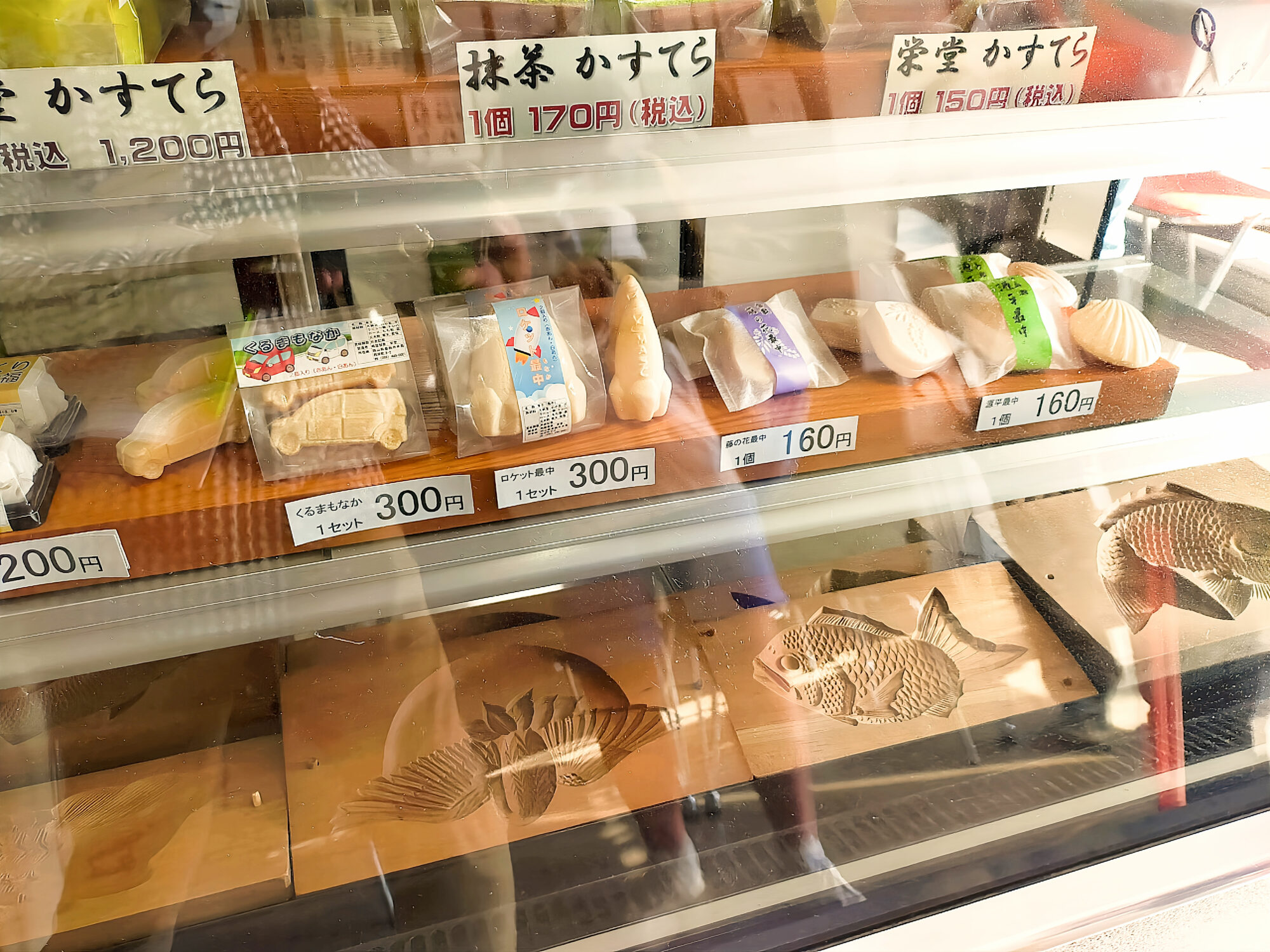
The writer also took note of the wooden molds displayed on the lower shelf.
They are said to be confectionery molds used when the shop was called Yayoi-do.
Their exquisite carving is captivating.
Seiyo Kojiki
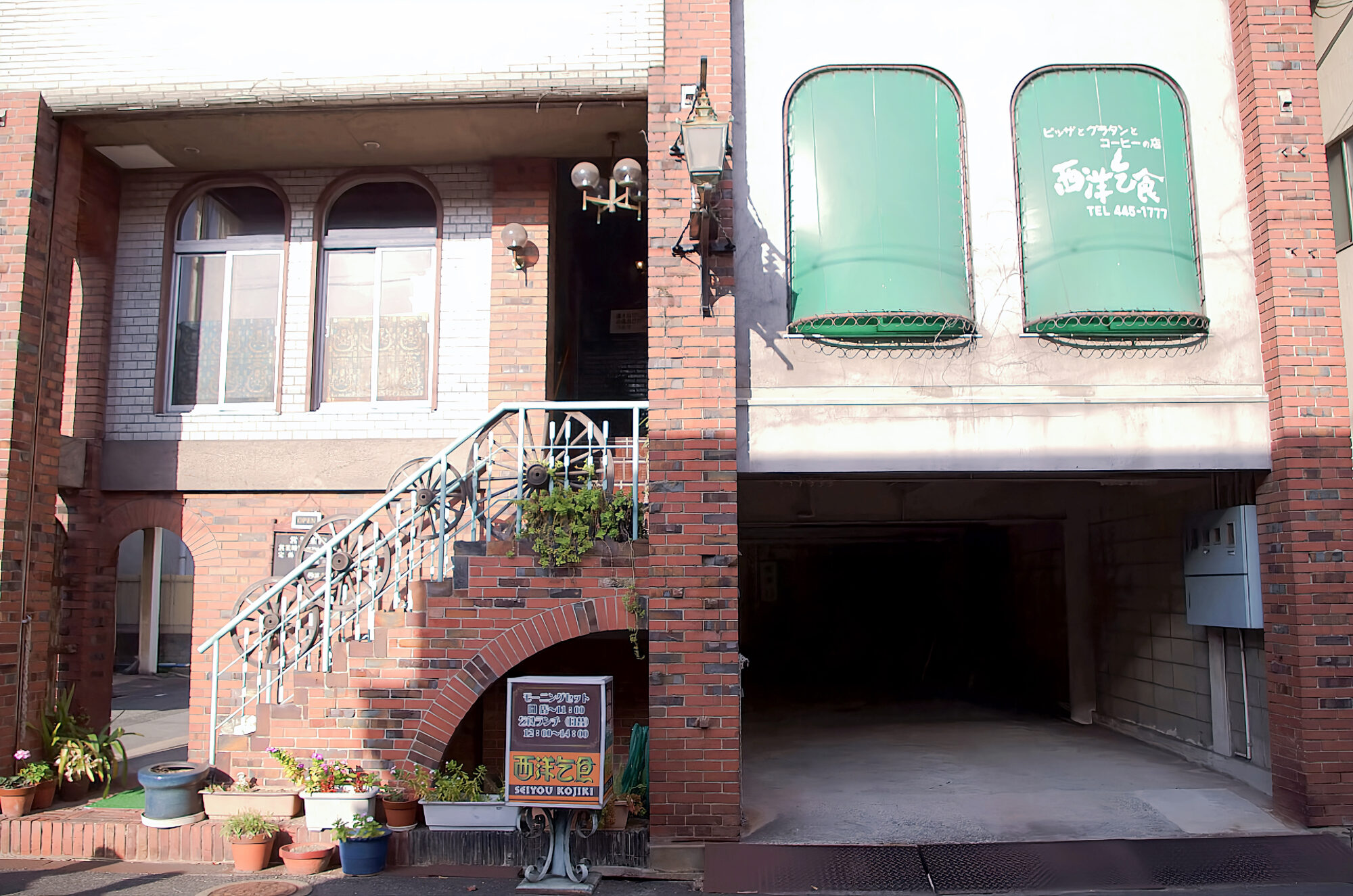
| Founded | Founded in 1975 |
|---|---|
| Origin of the shop name | The owner’s father used it to refer (derisively) to people who adopted all sorts of Western things around the time of Japan’s defeat in World War II |
| Popular item | Cream soda topped with a white rose |
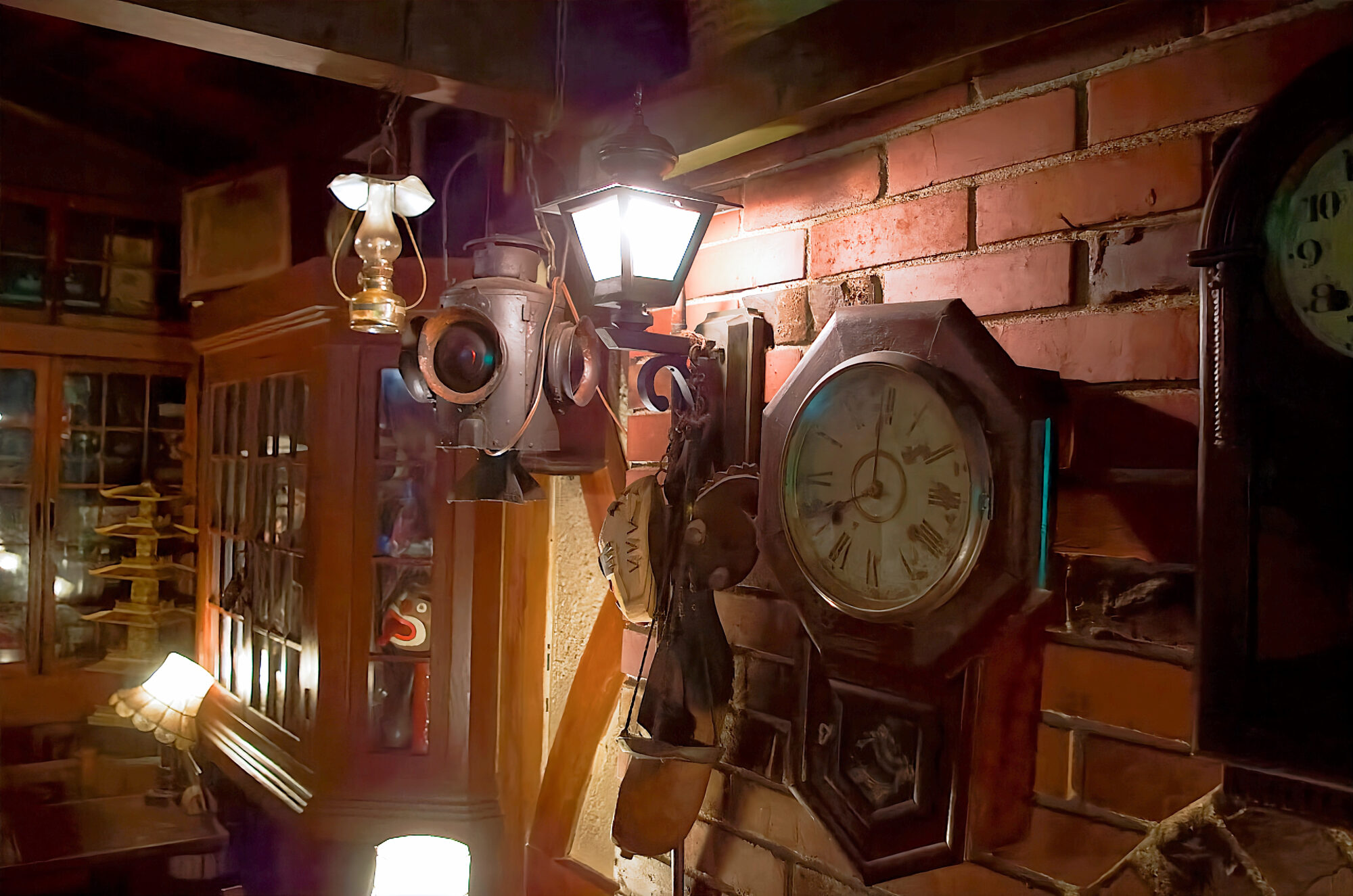
| What left an impression | The antiques that first catch your eye when you enter the shop are said to be things the owner’s father began collecting |
▼ The brick exterior is easy to spot. There is parking on the first floor, and you enter the shop on the second floor via the stairs on the left.
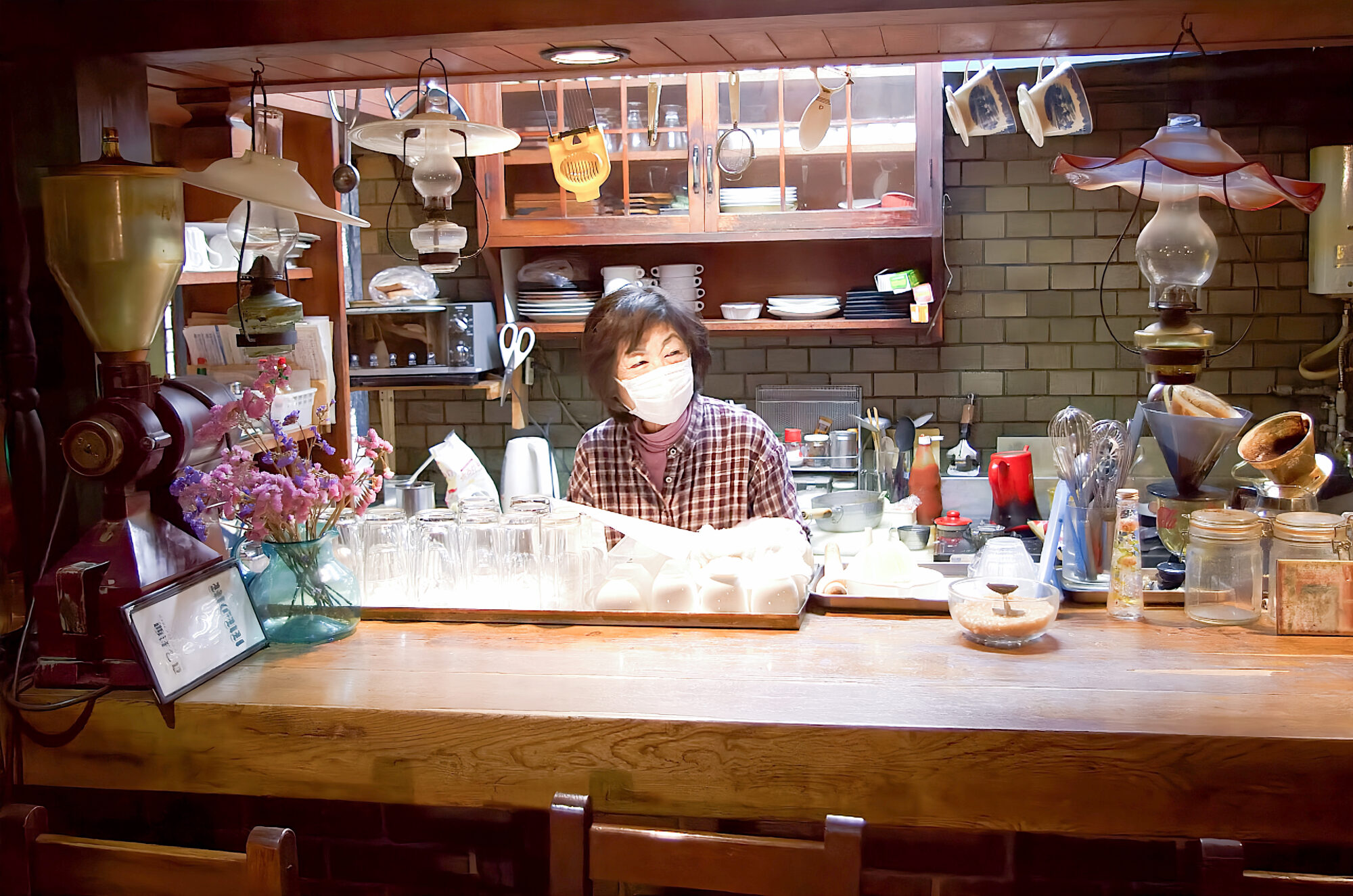
▼ The proprietress took time out of her busy schedule to speak with us. The writer feels a sense of the Showa era even in this photo.
▼ You can spend a leisurely time in the dimly lit, atmospheric shop, looking at the many antiques packed into every available space.
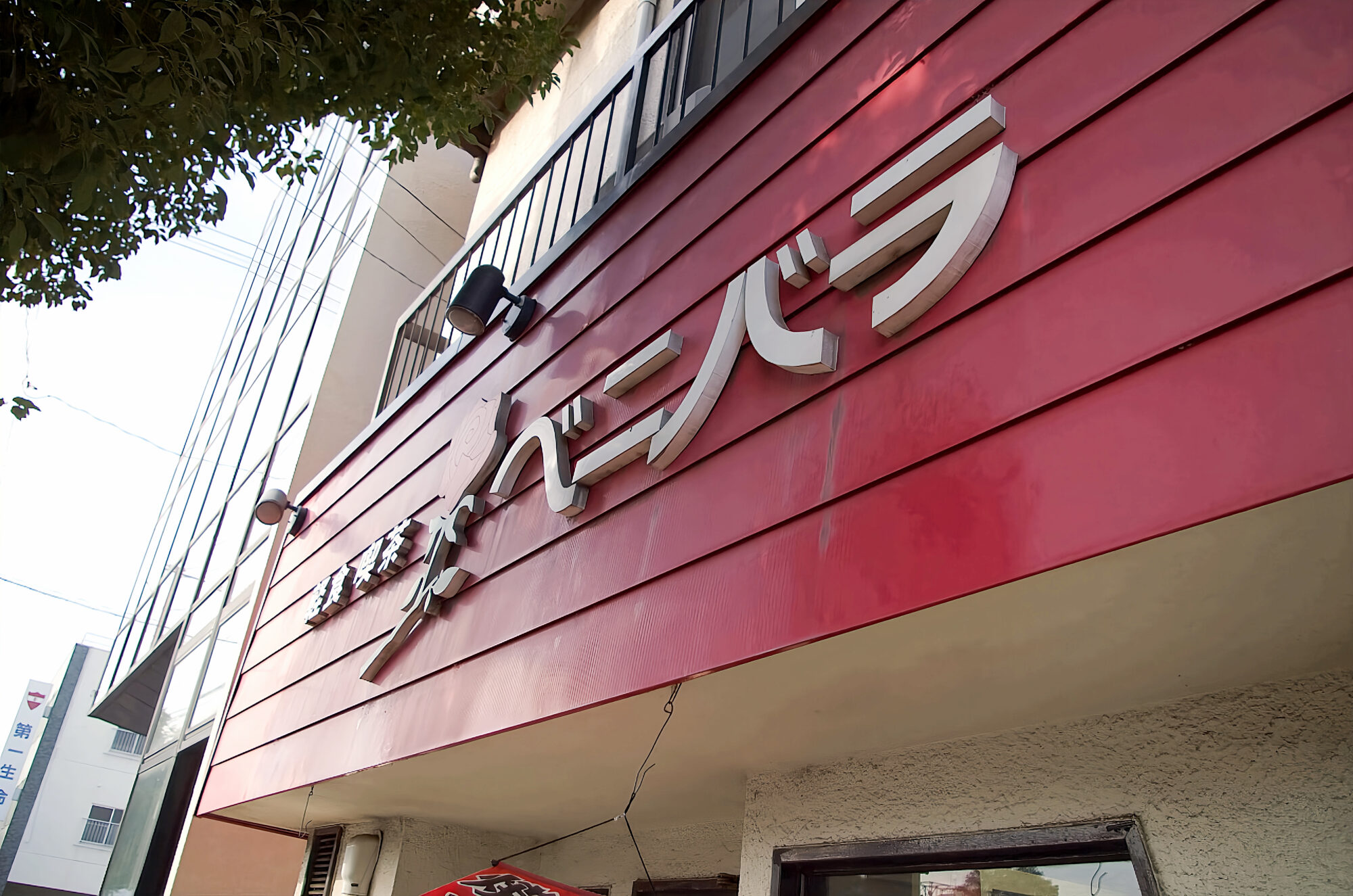
Benibara Light Meals and Coffee Shop
| Founded | Founded in 1970 |
|---|---|
| Shop motto | Treat customers like family. ※Many people came into the shop during the interview, chatting happily |
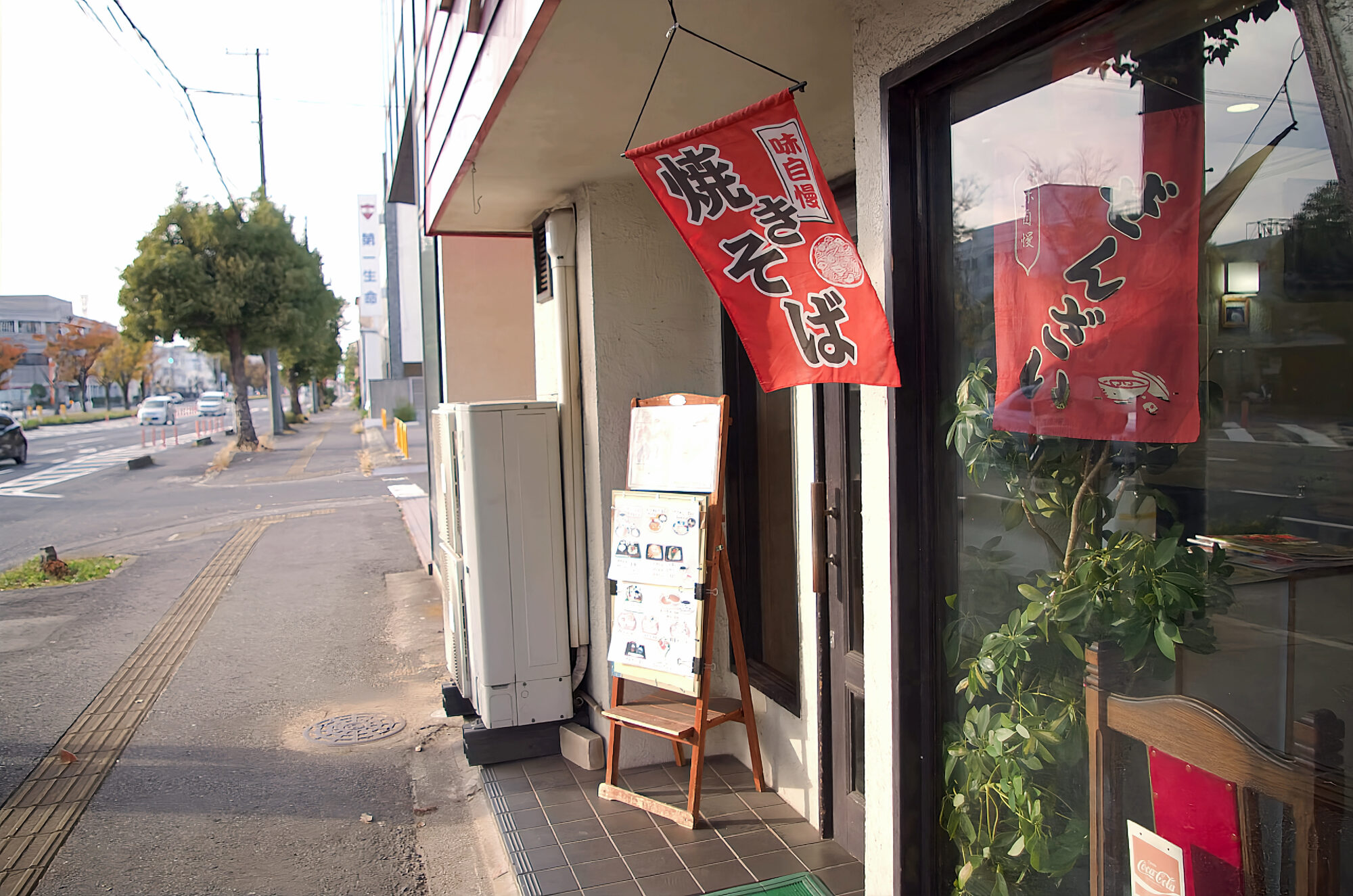
| Popular items | Affordable and delicious breakfast sets and lunches |
| What left an impression | “The energetic proprietress” and “the nostalgic Showa-era interior” |
▼ The Benibara sign brings to mind Showa-era coffee shops serving light meals
▼ The yakisoba and zenzai look delicious, but I’d especially like to try the breakfast set or lunch.
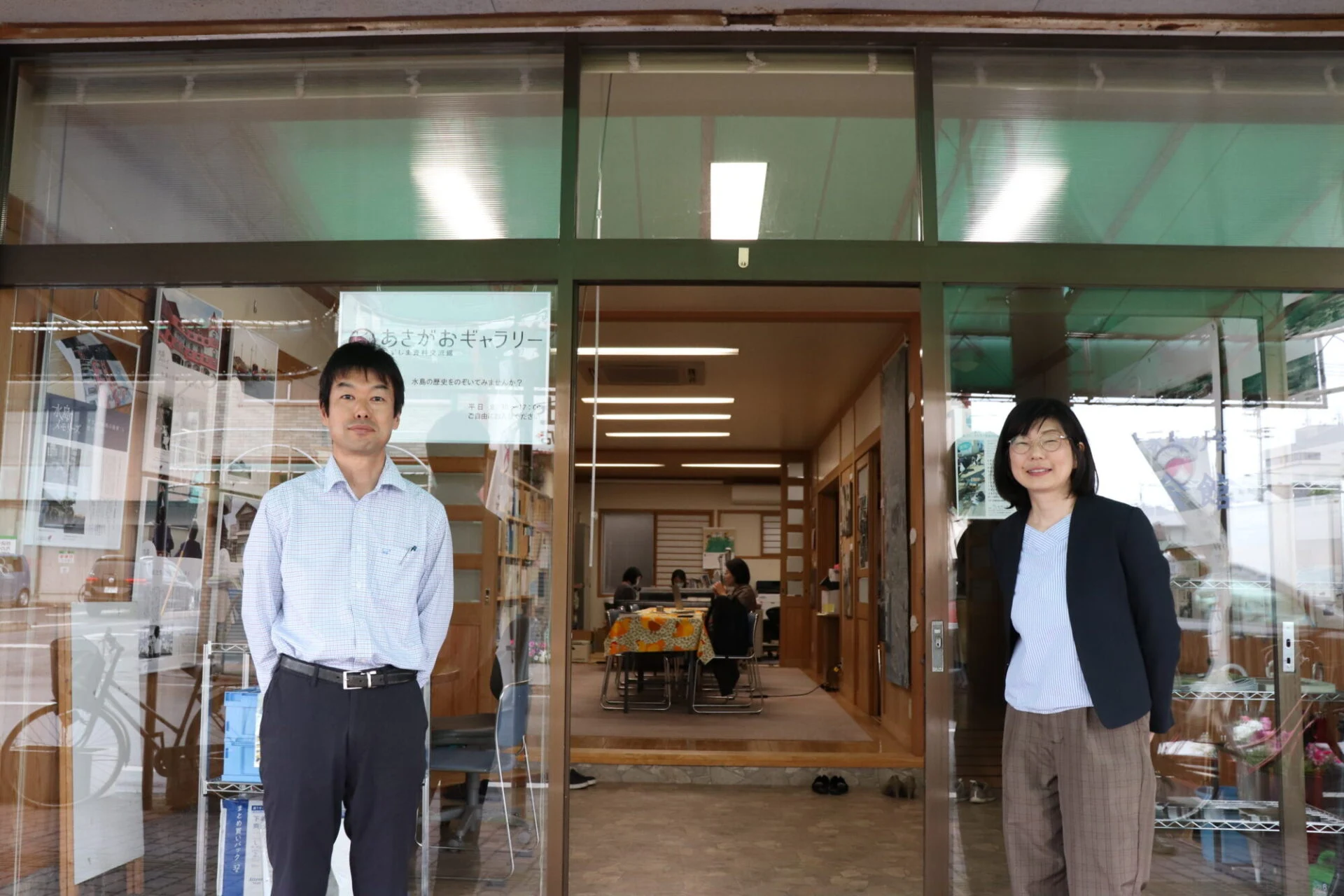
Mizushima Shiryo Koryukan Asagao Gallery
| Opened | Opened on October 15, 2022 |
|---|---|
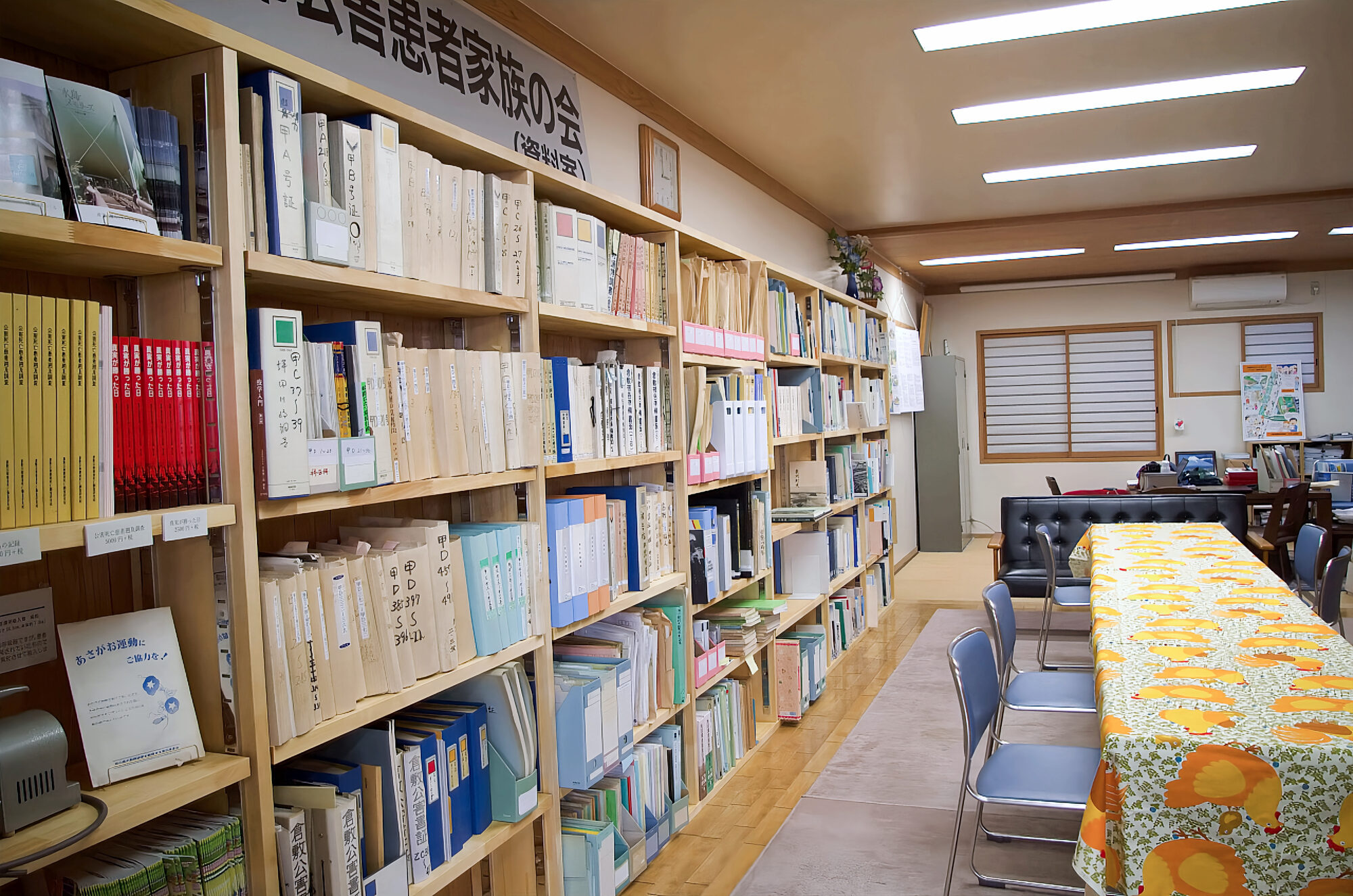
| Gallery’s mission | A gallery exhibiting records of court cases related to “pollution in Kurashiki and Mizushima” ※Opened by the Mizushima Foundation, located directly in front of the gallery |
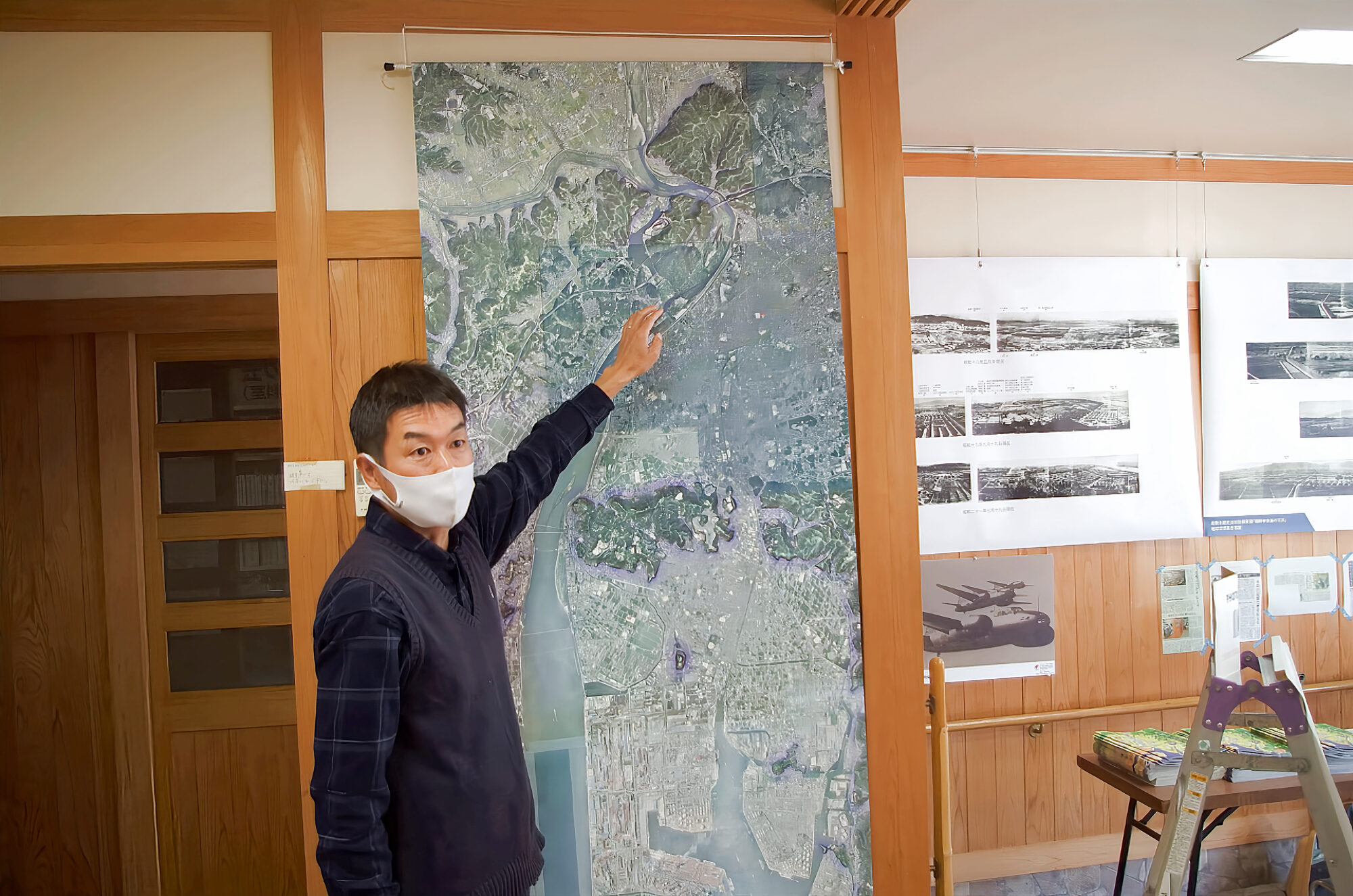
| First item to catch your eye | A tapestry hanging on the wall ※It shows the area from Mabi on the Takahashi River, through Kurashiki and Mizushima, to the mouth of the Takahashi River, and offers a chance to learn about the history of Kurashiki and Mizushima |
| What left an impression | I was surprised that this impressive gallery, bringing together many valuable materials, had opened with the help of so many people |
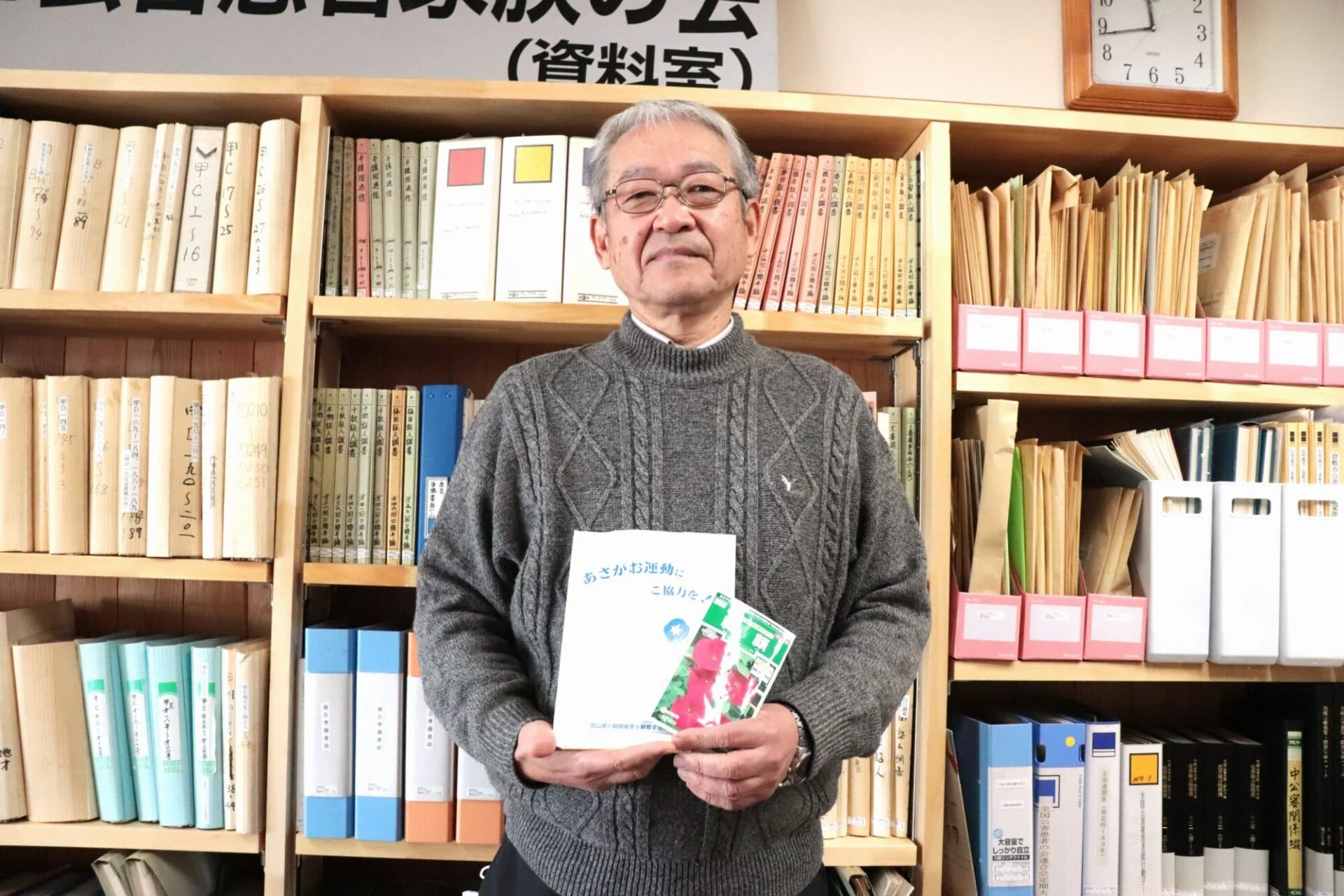
▼ Shiwaku, a researcher at the Mizushima Foundation, explained Kurashiki and Mizushima using a tapestry printed with an aerial photograph.
▼ A wealth of valuable materials arranged across an entire wall. We were told that this bookshelf was also completed with help from students at nearby high schools.
Day 3: “Group Work”
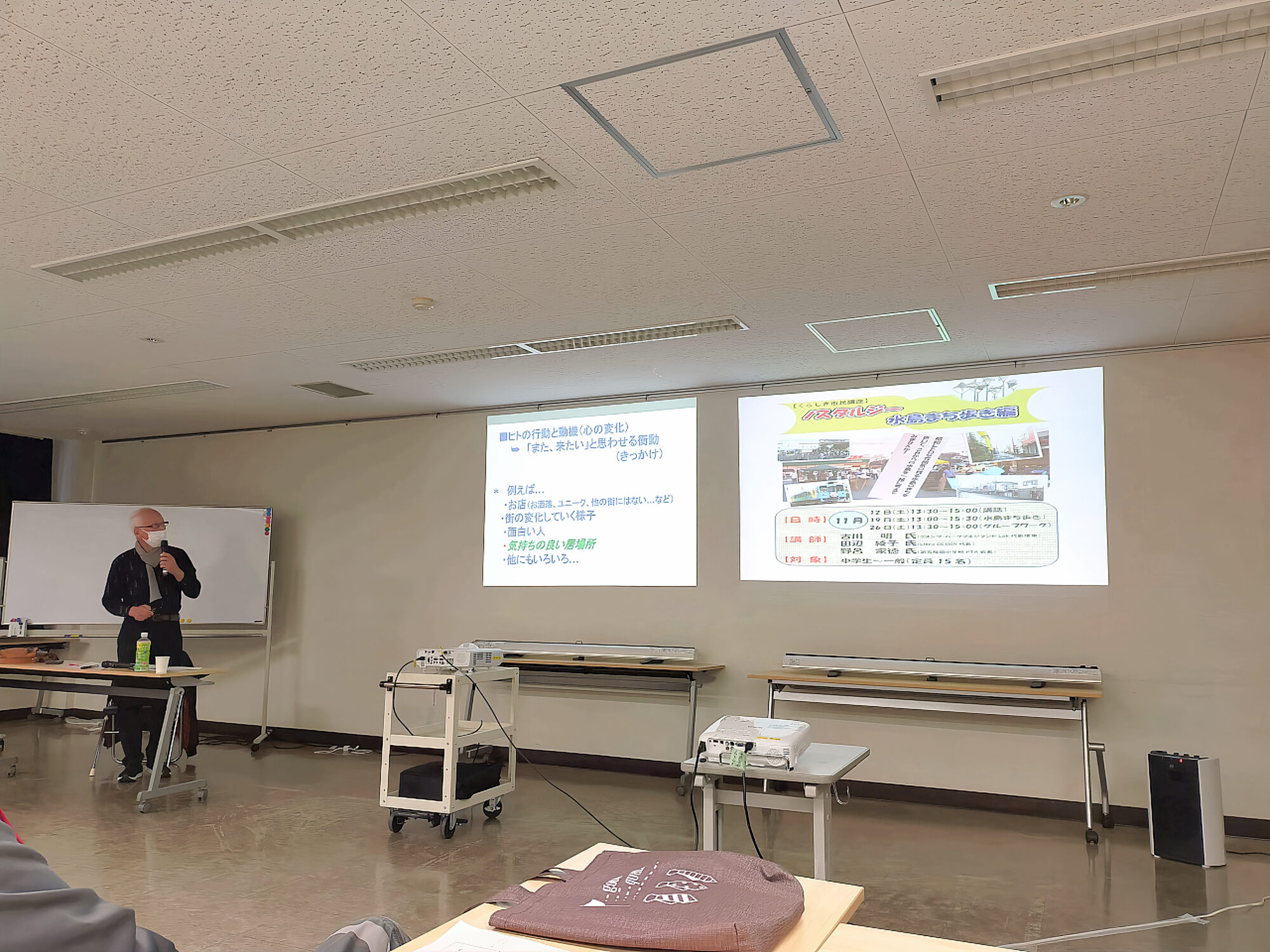
Each group organized and presented the results of their activities, including interviews during the neighborhood walk.
Although it was decided at the last minute that there would be presentations that day, the junior high school student who had walked around and conducted interviews with us gave a confident presentation.
I was curious how junior high school students in 2022 viewed the streets of Mizushima, which I see as having a Showa-era feel.
・According to the presenters and the other junior high school students in the group, the streets of Mizushima feel “retro” rather than “nostalgic.” ※Even though they attend a nearby junior high school, they rarely visit the shopping district. Perhaps because they don’t come often, they made new discoveries and seemed to come away with a more positive impression.

・As for “the future of Mizushima,” the junior high school students said that “the ability to share information through social media and other channels—and going viral” may be necessary. ※It was refreshing to hear such straightforward opinions from young people today.
The three-day course came to an end with Furukawa’s closing remarks.
From the Writer
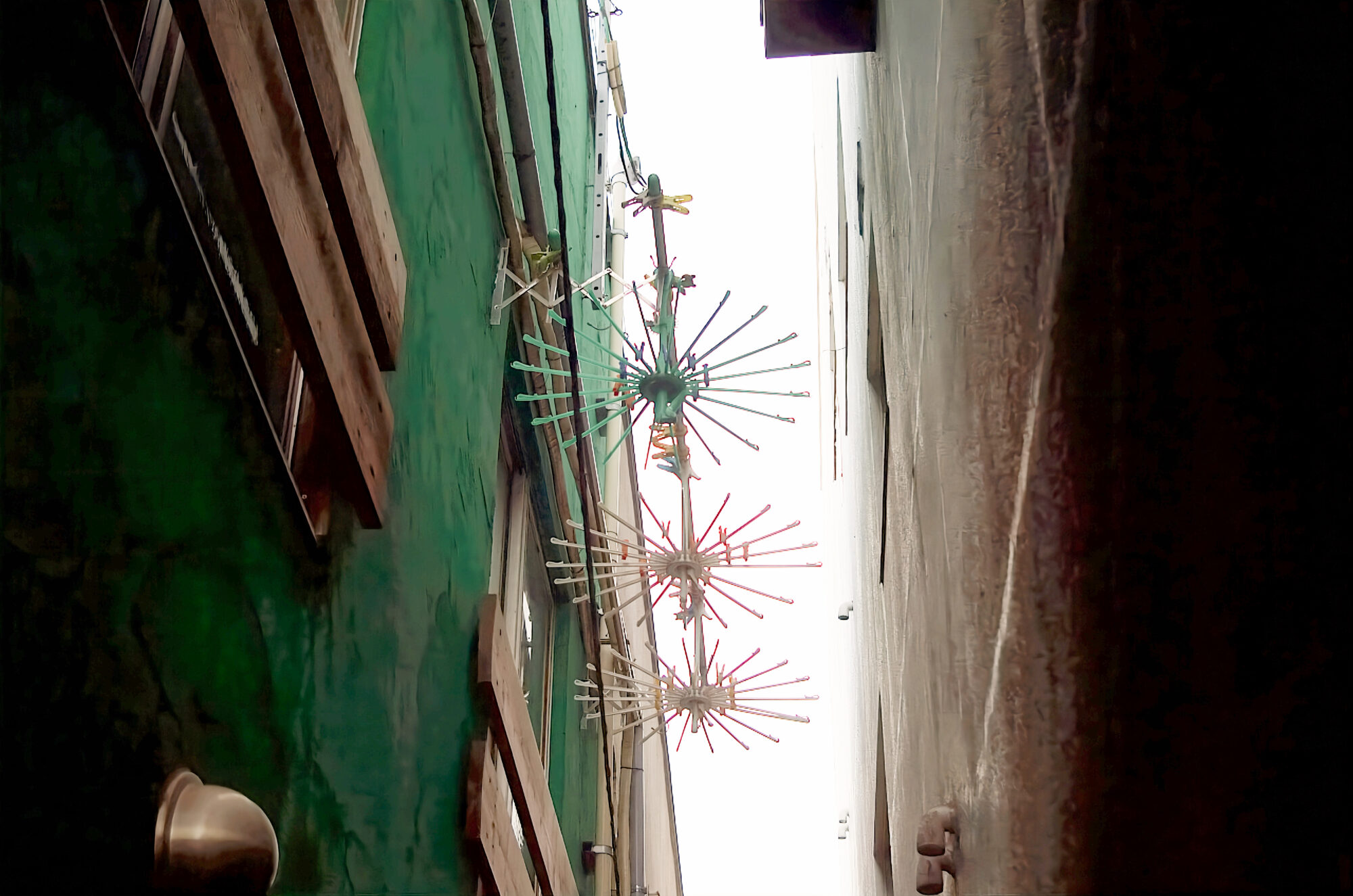
I took part for three days, hoping simply to enjoy the “Mizushima neighborhood walk” together with the other participants.
Once I joined, I found the course was packed with far more than just the neighborhood walk, including lectures, interviews, and group work.
It is a truly valuable opportunity to learn about, walk around, and talk about Mizushima alongside high school and junior high school students and working adults, people I don’t often get to talk with.
A junior high school student also suggested that “we need to be better at sharing information,” and I felt there was an important message in instructor Tanabe’s words: “We are working to build a community that doesn’t go viral.”
I’d be happy if this article inspires you to think, “I’d like to take part in this course,” “Maybe I’ll visit a shop in Mizushima this weekend,” or “Let’s go to this shop!”
Details: Nostalgia — Mizushima Neighborhood Walk (2022 Mizushima Community Center Autumn Course)

| Name | Nostalgia — Mizushima Neighborhood Walk (2022 Mizushima Community Center Autumn Course) |
|---|---|
| Location | Kurashiki City Mizushima Community Center |


What would you like to know about Kurashiki?
Enter a keyword and we'll search the articles on this site