
Monaka and other Japanese sweets are one of the classic gifts.
If you're going to choose a gift, it would be nice to pick a store or product loved by the local community.
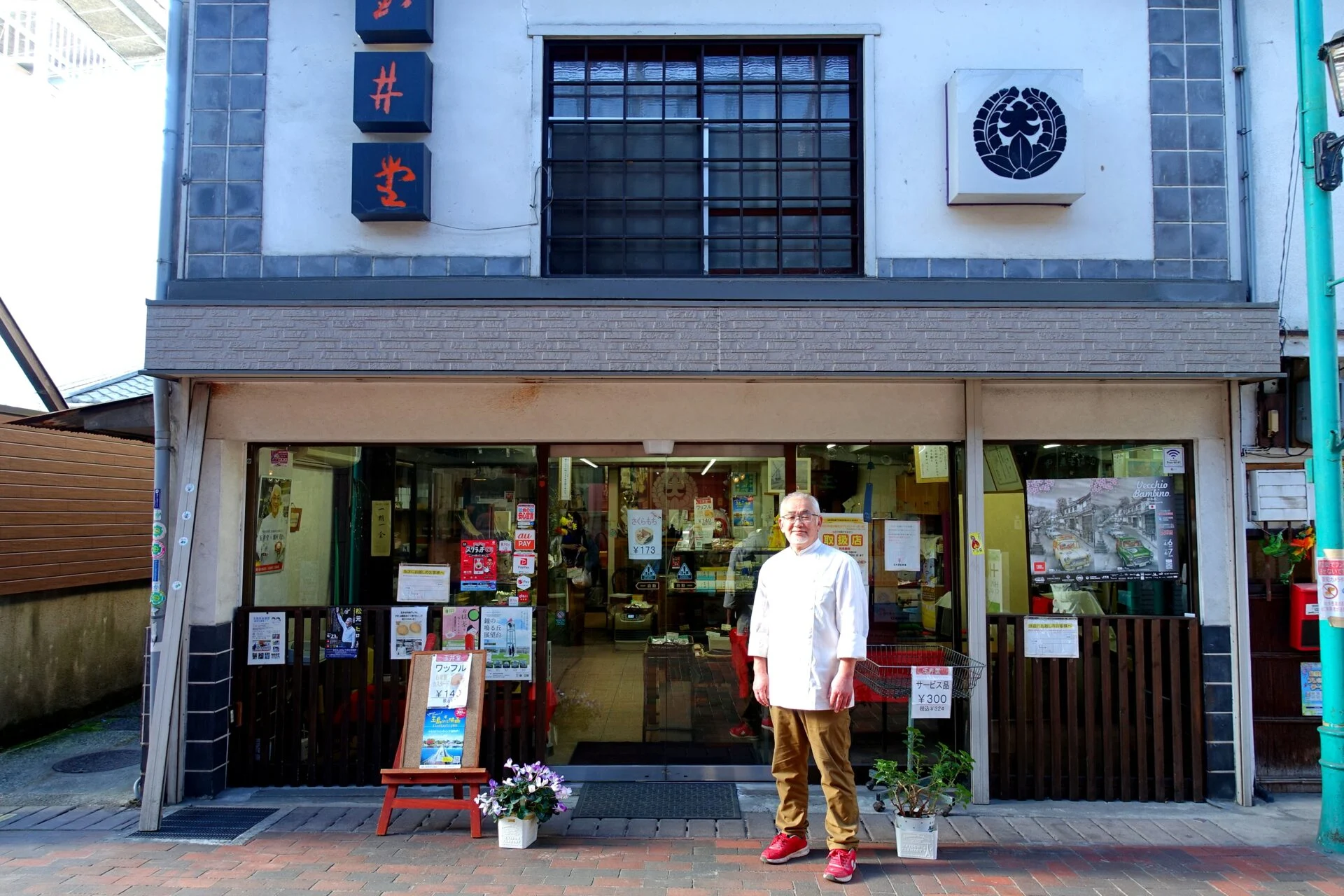
A perfect store for such occasions is "Sakaedo" located in Mizushima, Kurashiki City.
Sakaedo is a Japanese and Western confectionery store that was established in 1950 and has been loved by the local community for many years.
To inherit and pass on the taste and techniques of this long-established store, Sakaedo was established.
Furthermore, the company operating Sakaedo has 3D printing technology, which is utilized in product creation, leading to the emergence of new and unique products.
We will explore the charm of Sakaedo, which creates products using new technologies while preserving its history and tradition.
Sakaedo inherits the taste of Mizushima's long-established Japanese and Western confectionery store
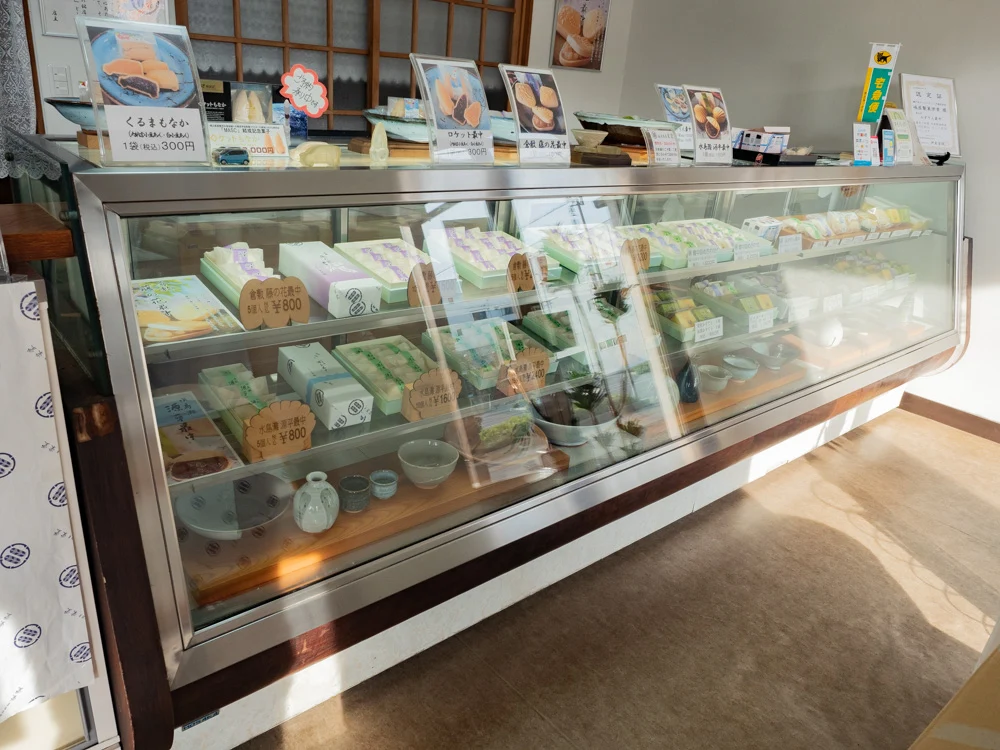
Sakaedo is a Japanese and Western confectionery store located in Sakae-cho, Mizushima District, Kurashiki City.
Setouchi Engineering Co., Ltd. operates it, and it is located next to the company.
Sakaedo itself opened in 2018.
However, Sakaedo has a predecessor confectionery store.
The store was called "Yayoido", which was located in the same Mizushima's Yayoi-cho.
Yayoido was a long-established store founded in 1950, but it went out of business in 2017.
Thus, a long history of 67 years came to an end.
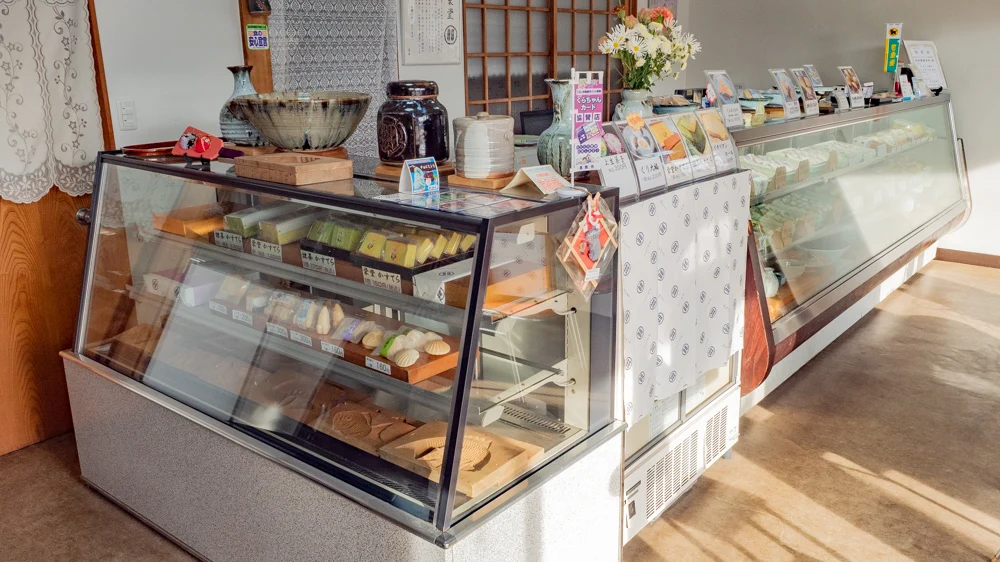
However, to preserve and convey the traditional sweets and flavors loved in Mizushima, Setouchi Engineering opened Sakaedo.
It should be noted that Setouchi Engineering's main business is not confectionery, but the design, development, production, and maintenance of machinery, plant equipment, civil engineering, construction, and information systems.
They also operate facilities such as FabLab Kurashiki Mizushima β.
Main products of Sakaedo
Information as of November 2020. Prices include tax.
Sakaedo handles both Japanese and Western sweets.
The lineup includes the following items.
- Monaka
- Castella
- Roll cake
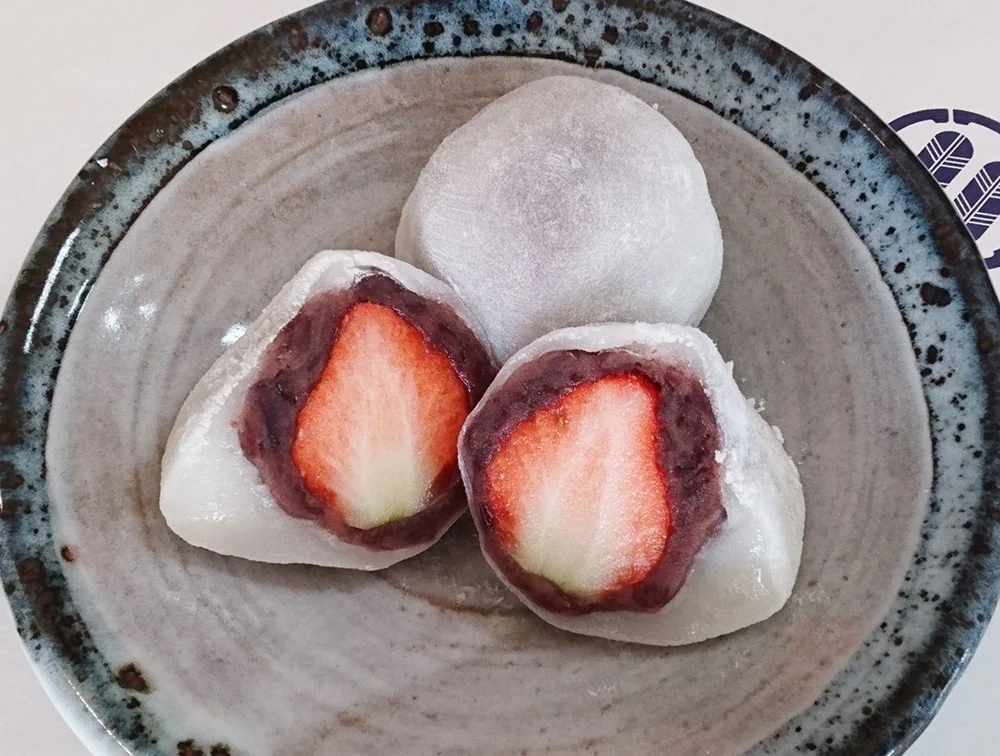
- Seasonal Daifuku (Strawberry Daifuku, Shine Muscat Daifuku, Chestnut Daifuku, etc.)
- Fresh sweets
- Rice cakes
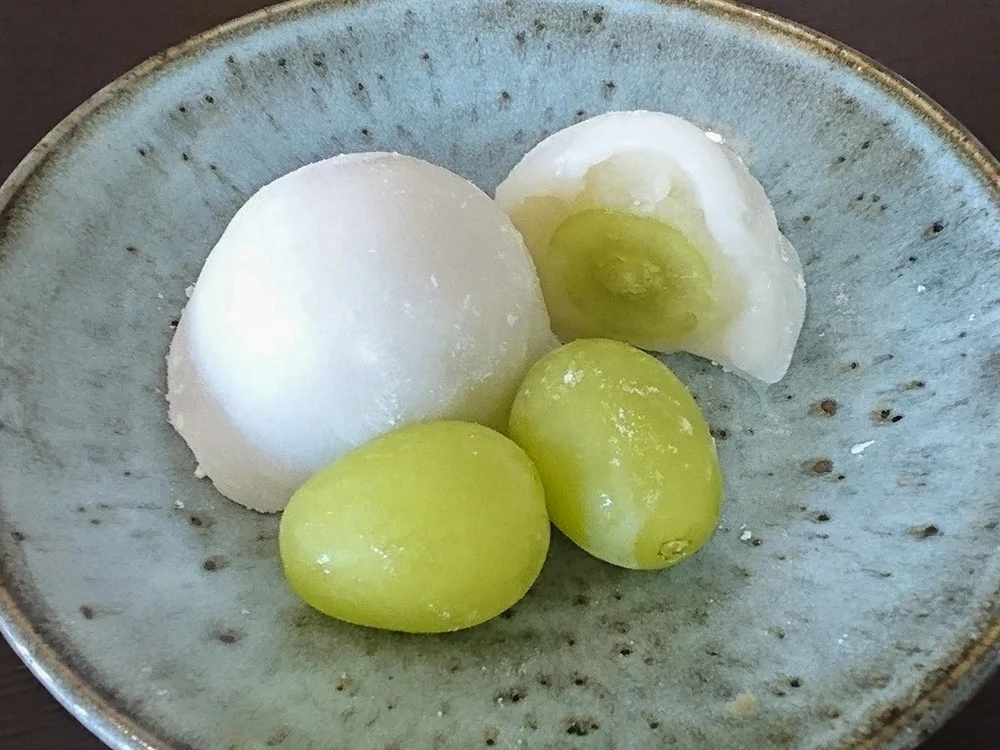
There are many sweets inherited from the Yayoido era, newly created after the opening of Sakaedo, and even those created in collaboration with other companies.
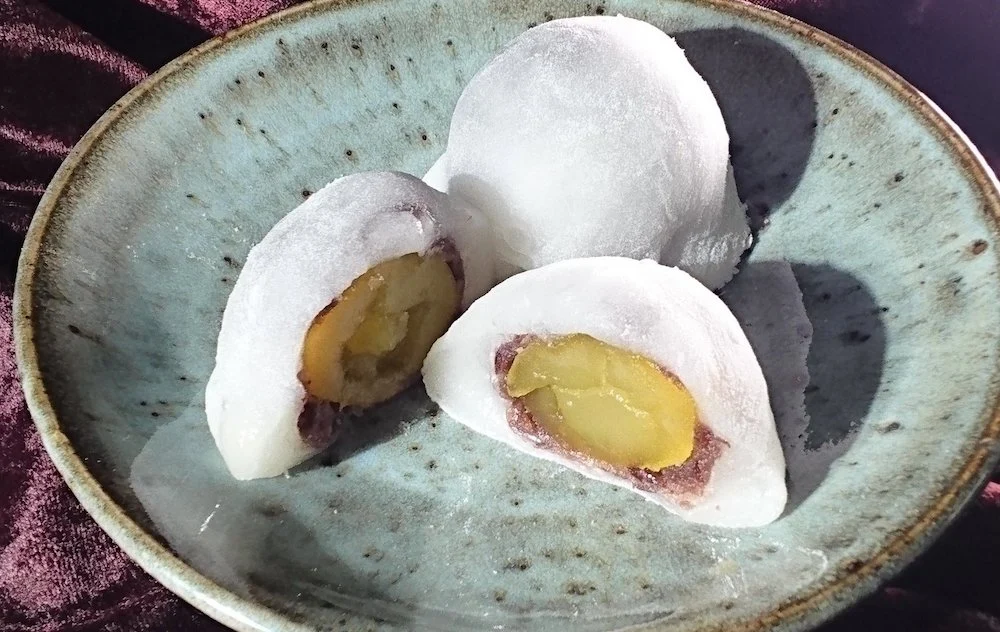
Sets containing multiple products are also available.
Additionally, some products can be ordered online through Sakaedo's official website.
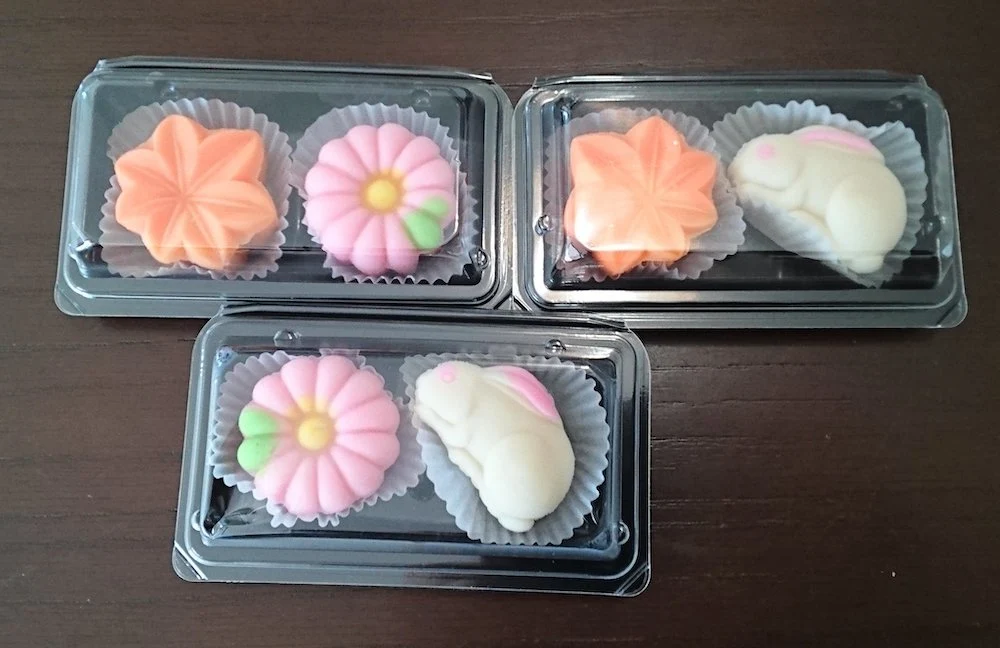
Let's introduce some of Sakaedo's representative products.
Various types of "Monaka" are available
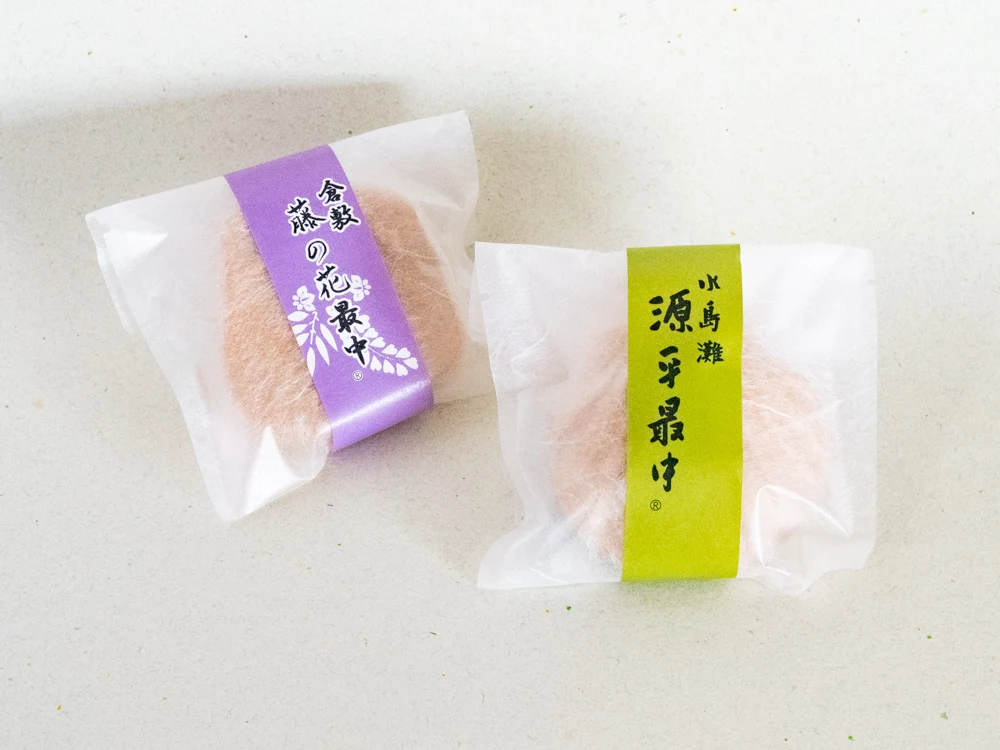
Sakaedo offers a variety of Monaka.
The filling inside the Monaka is basically the same for all.
Let me introduce the features of Sakaedo's Monaka.
Point 1 of Sakaedo's Monaka: Black bean paste made from Hokkaido's Dainagon azuki and white bean paste made from white azuki
Sakaedo's Monaka has the same filling, but there are two types: black bean paste and white bean paste.
The black bean paste is made using the taste and techniques inherited from the Yayoido era.
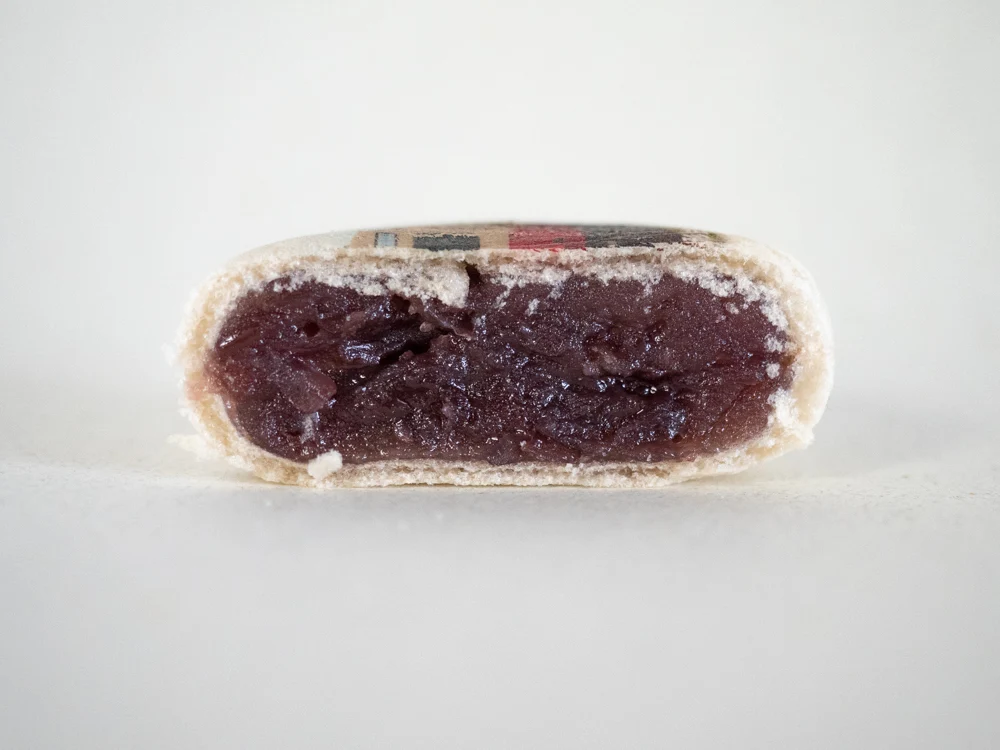
When you eat the black bean paste, you can feel the firm texture of the azuki beans.
The presence of the azuki is significant.
Moreover, within the soft and moist texture of the paste, the azuki beans serve as an accent.
The sweetness is just right, perfectly complementing the aroma of the Monaka shell.
On the other hand, the white bean paste uses white azuki.
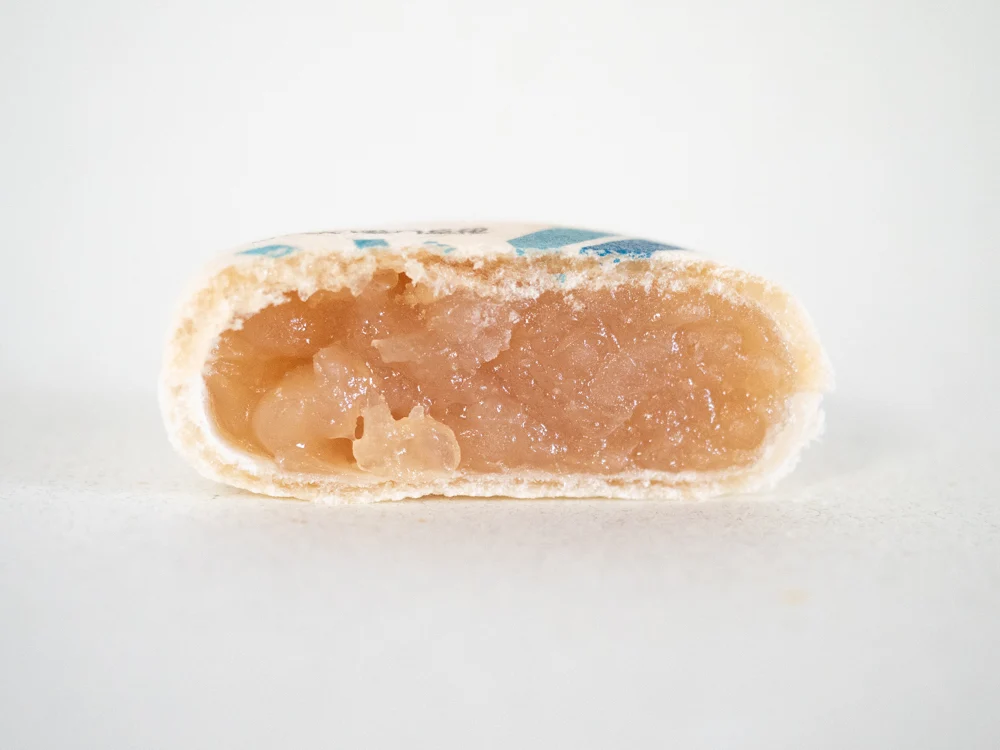
Generally, white bean paste is often made using white kidney beans, but Sakaedo is particular about using white azuki.

White azuki is a rare ingredient with lower production volume compared to white kidney beans.
Since it is made solely from white azuki, you can enjoy the original flavor of the azuki!
Like the black bean paste, the white bean paste also has a firm texture of the white azuki, serving as an accent.
Additionally, the white bean paste has a more refined sweetness compared to the black bean paste.
It pairs well with the aroma of the Monaka shell.
Point 2 of Sakaedo's Monaka: Monaka shells utilizing 3D printing technology
Setouchi Engineering, which operates Sakaedo, has 3D printing technology.
Therefore, they apply 3D printing technology to the production of Monaka.
At Sakaedo, they create molds for Monaka shells (Monaka dough = the skin of Monaka) using a 3D printer!
Based on that, they request production from a specialized Monaka shell store.
As a result, it is possible to manufacture original Monaka in various shapes.
In the past, they have collaborated with other companies to produce and sell rocket-shaped Monaka and car-shaped Monaka.
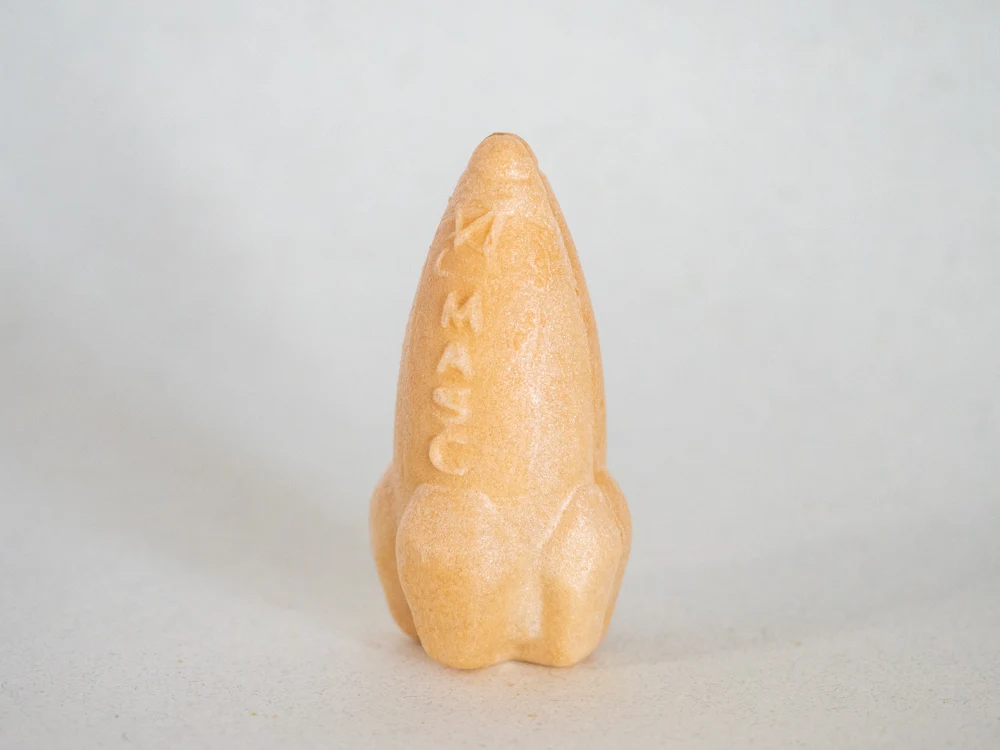
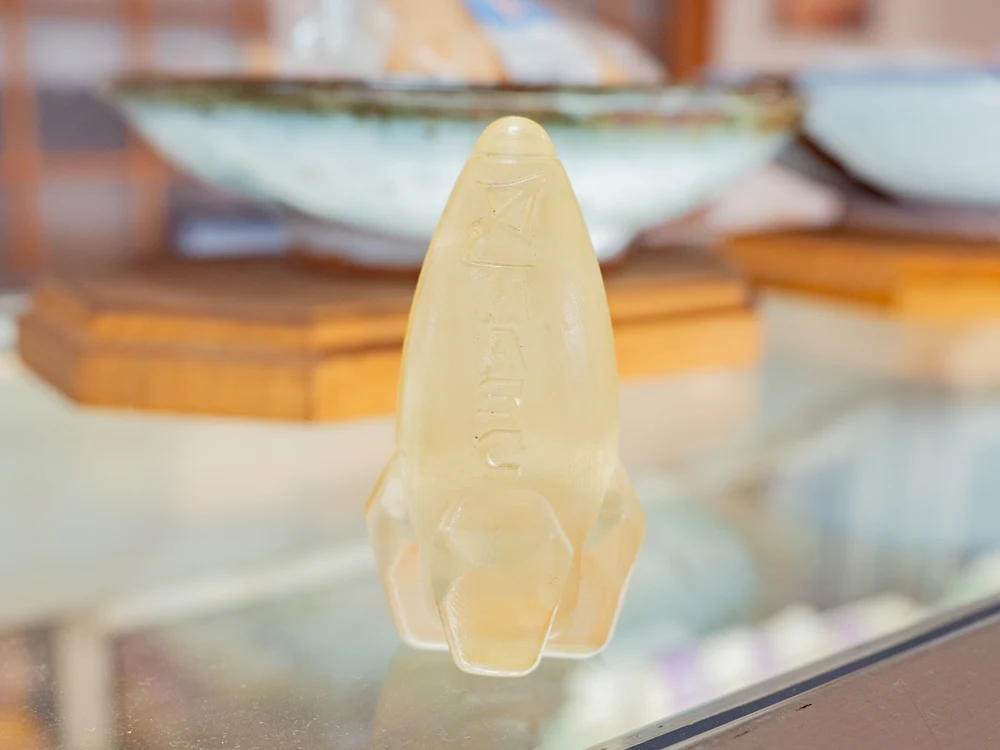
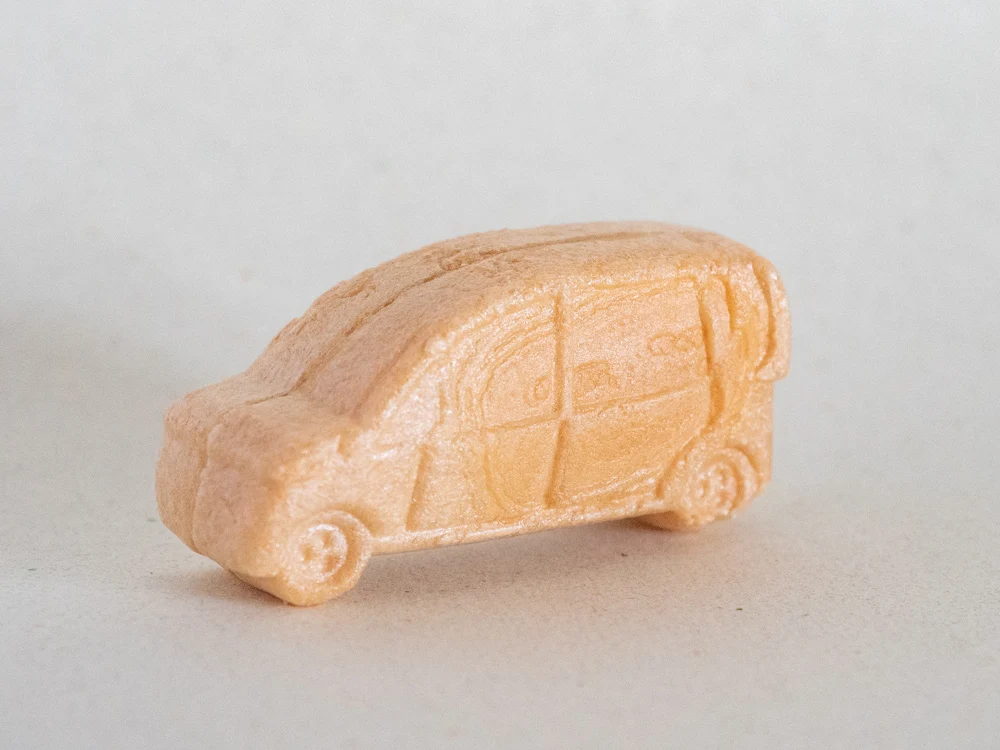
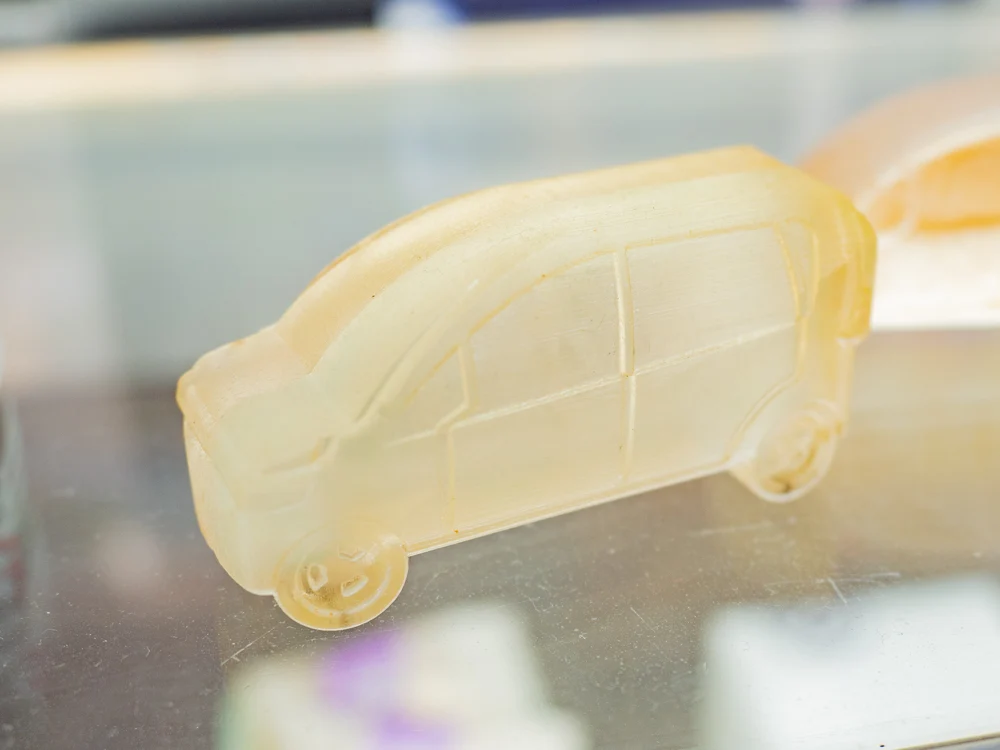
Additionally, they create commemorative Monaka in collaboration with companies, kindergartens, and elementary and middle schools, which are not available for general sale.
By the way, Sakaedo's Monaka shells are made from 100% glutinous rice.
Therefore, they are less likely to stick to the teeth and have a crispy texture, making them easy to eat.
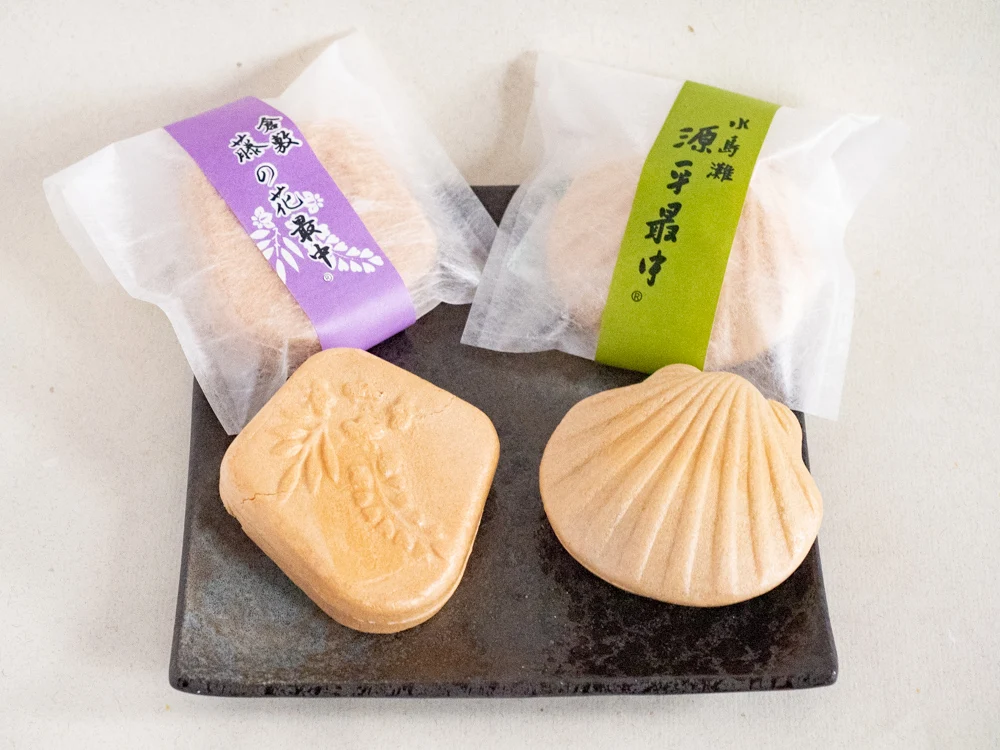
"Mizushima-nada Genpei Monaka" is a representative sweet from the Yayoido era
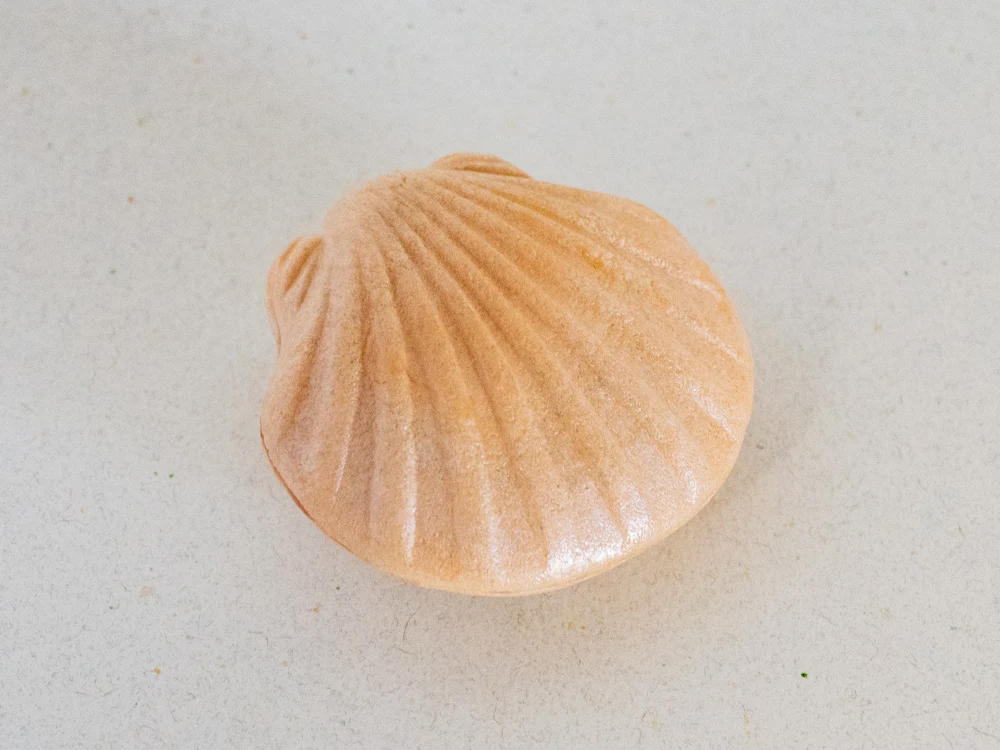
“Mizushima-nada Genpei Monaka” is one of the representative sweets of Eido.
In fact, it has been around since the founding of Yayoi-do in 1950.
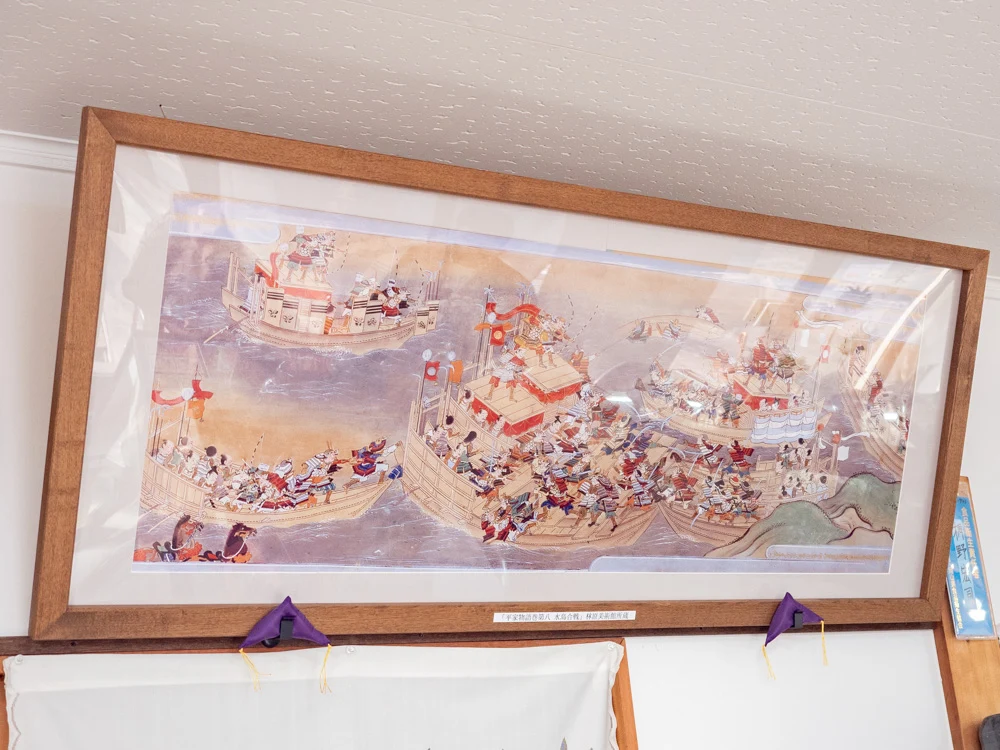
Mizushima-nada Genpei Monaka is a confection inspired by the “Genpei Battle of Mizushima” that took place in the Tamashima area of present-day Kurashiki City in the second year of Juei (1183), during the late Heian period.
Inside the fragrant and crispy monaka shell shaped like two shells, Eido's pride, the black bean paste, is generously packed.
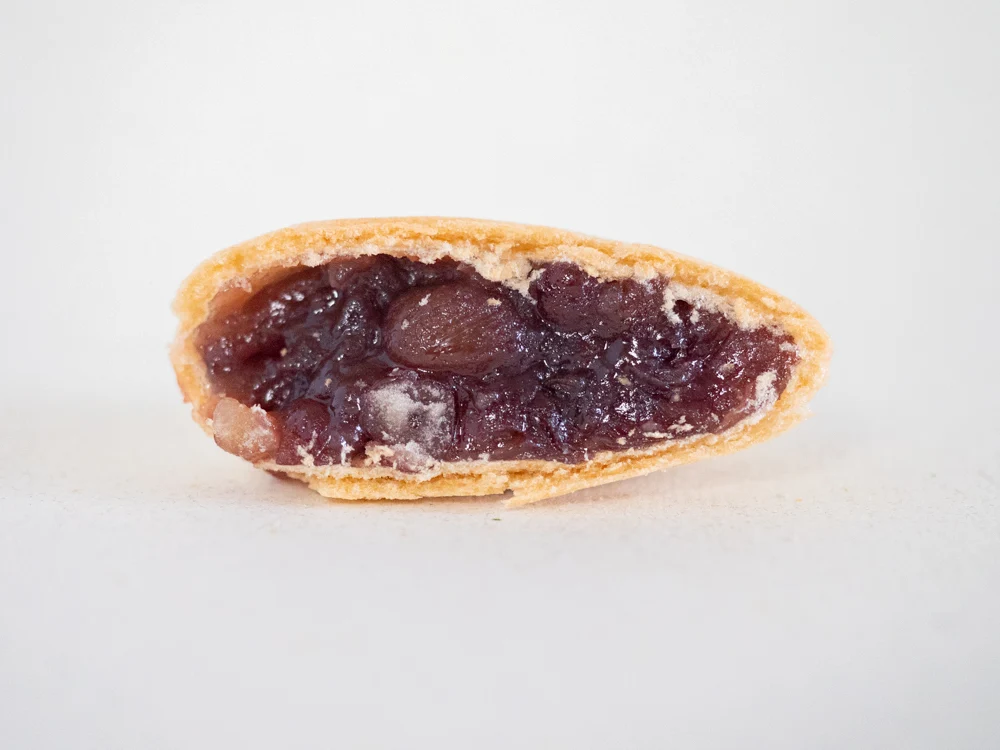
Note that Mizushima-nada Genpei Monaka contains only black bean paste.
| Quantity | Price (tax included) |
|---|---|
| 1 piece | 160 yen |
| 5 pieces | 800 yen |
| 10 pieces | 1,600 yen |
| 15 pieces | 2,400 yen |
| 20 pieces | 3,200 yen |
“Kurashiki Wisteria Flower Monaka” is inspired by the wisteria flower of Kurashiki City
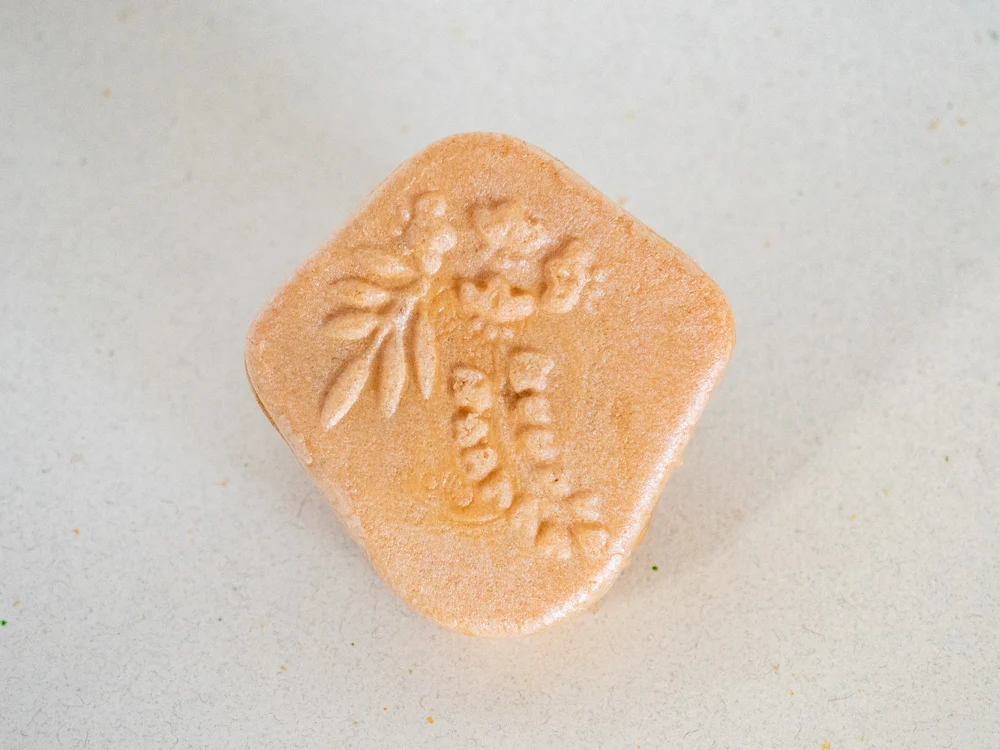
“Kurashiki Wisteria Flower Monaka” is a diamond-shaped monaka depicting the wisteria flower of Kurashiki City.
It is inspired by the “Achi Wisteria,” the longest-living wisteria in Japan, located at Achi Shrine in the center of Kurashiki.
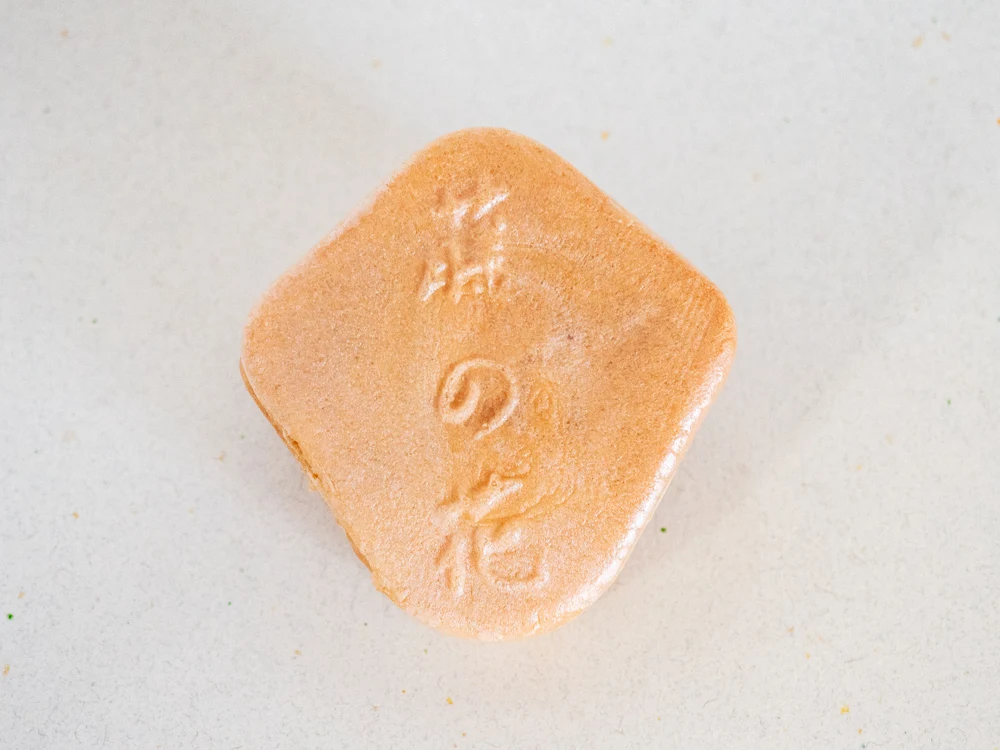
Wisteria Flower Monaka is a product that was created after Eido was established.
In fact, this Wisteria Flower Monaka was also made using a 3D printer to create the mold for the monaka shell.
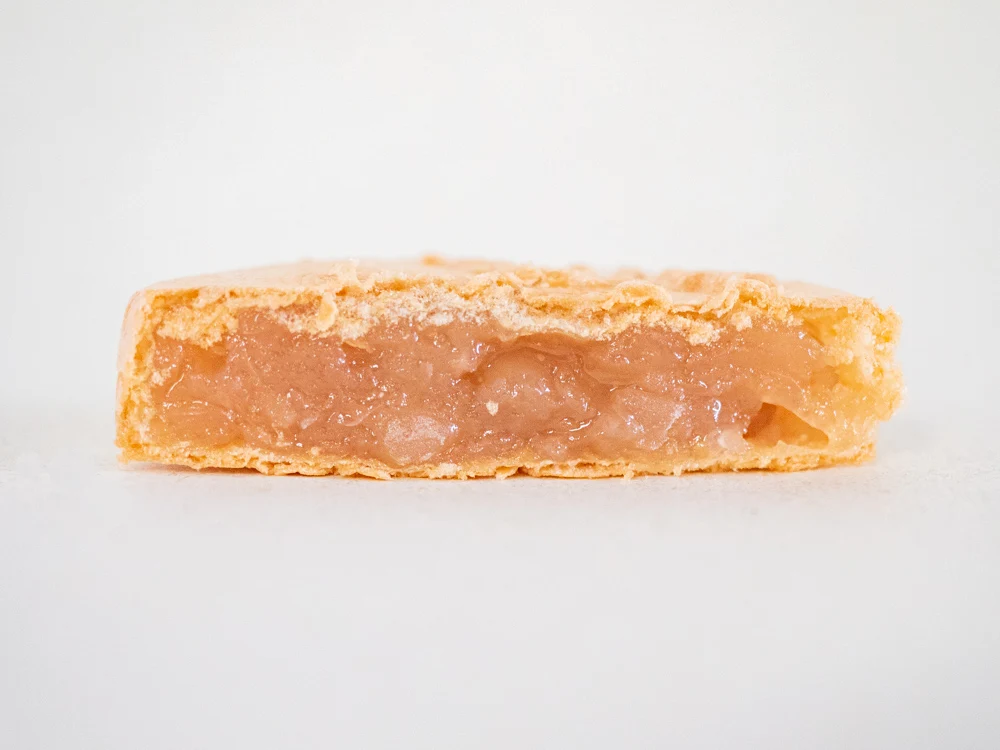
Wisteria Flower Monaka contains only white bean paste.
Inside the thin monaka shell, there is plenty of Eido's carefully selected white adzuki bean paste.
| Quantity | Price (tax included) |
|---|---|
| 1 piece | 160 yen |
| 5 pieces | 800 yen |
| 10 pieces | 1,600 yen |
| 15 pieces | 2,400 yen |
| 20 pieces | 3,200 yen |
“Mizurin Monaka” is a collaboration product with Mizushima Rinkai Railway
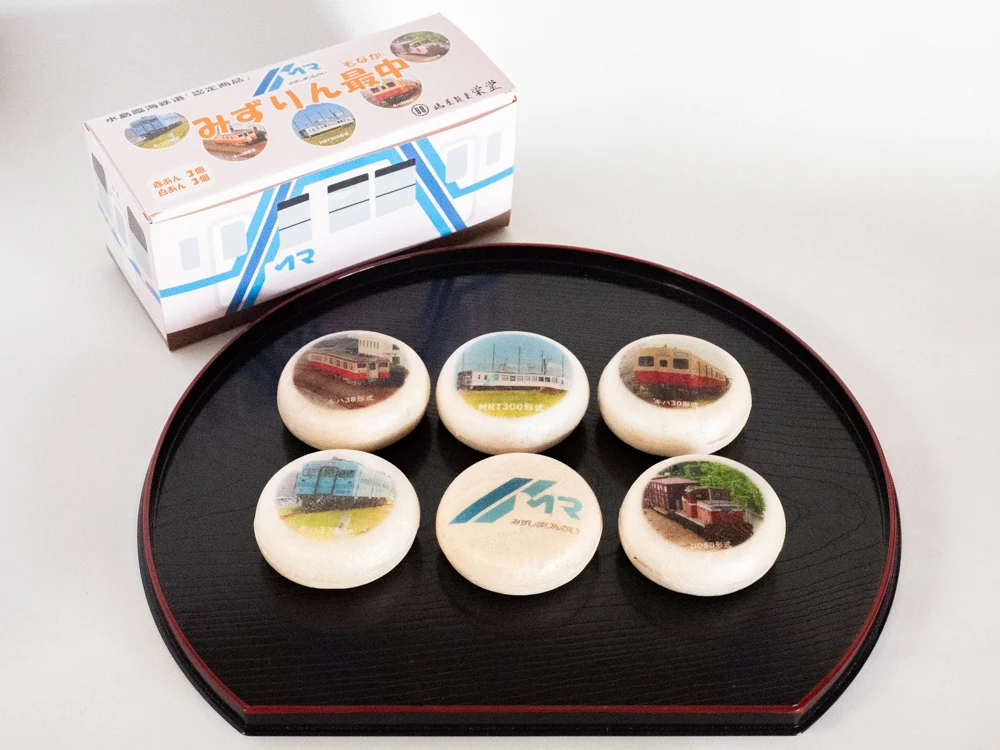
“Mizurin Monaka” (1 box 1,000 yen) was the most talked-about product at the time of the interview in November 2020.
Mizurin (Mizushima Rinkai) is the abbreviation for the Mizushima Rinkai Railway, which connects the center of Kurashiki with the Mizushima area.
This collaboration product was created to celebrate the 50th anniversary of the Mizushima Rinkai Railway in 2020.
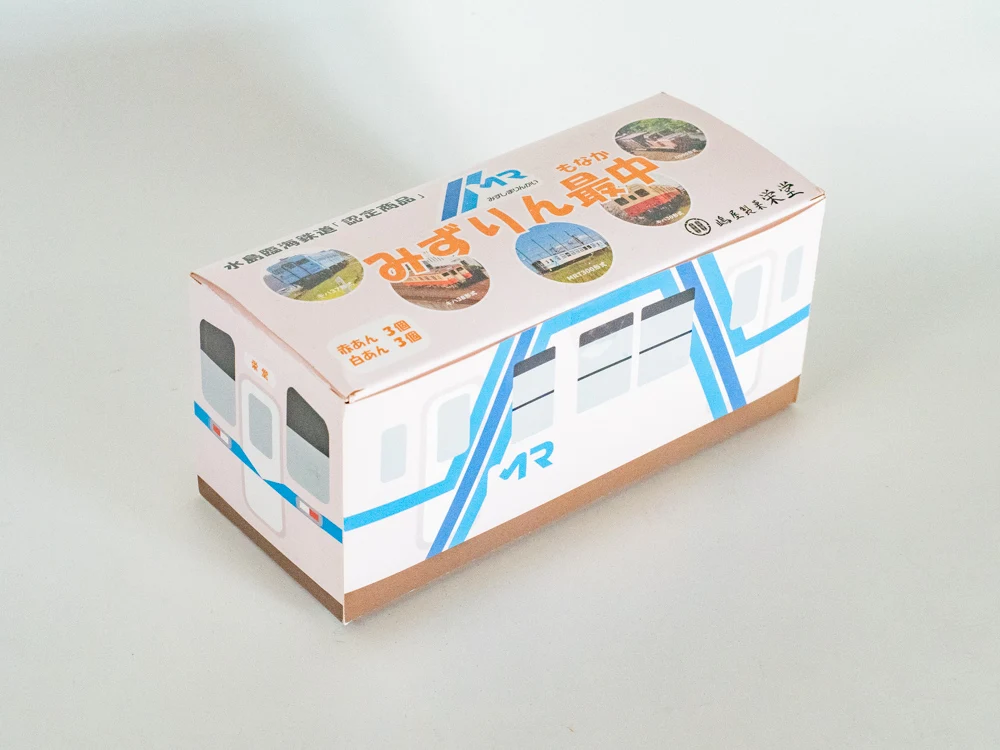
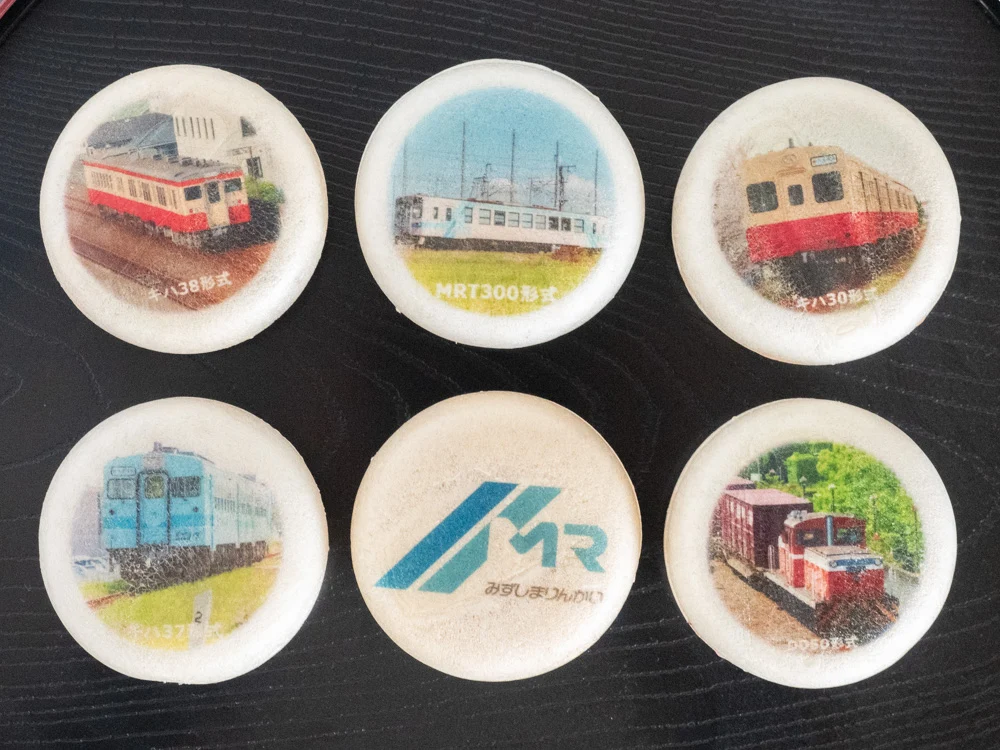
The monaka shell is light-colored and round.
On top, five types of Mizushima Rinkai Railway trains and the logo are printed.
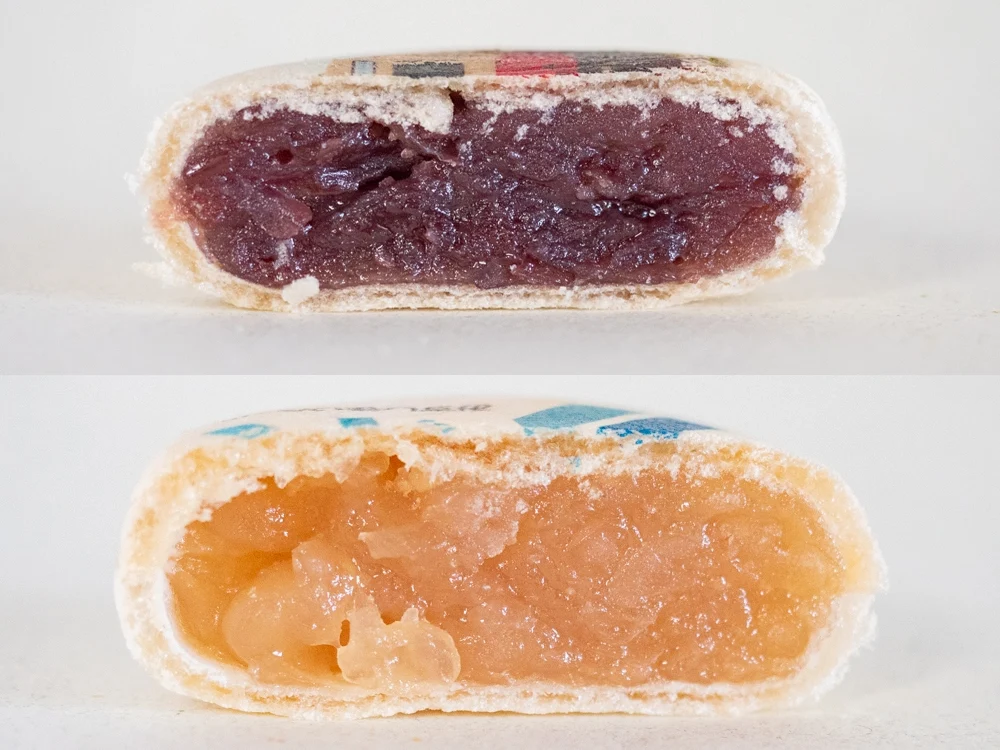
Mizurin Monaka comes in a pack of six, with three containing black bean paste and three containing white bean paste.
Mizurin Monaka is likely a product that railway enthusiasts will love.
I used to be involved with the Mizushima Rinkai Railway for work, so I was very interested in this product.
“Eido Castella” and “Matcha Castella” inherit the traditional Nagasaki method
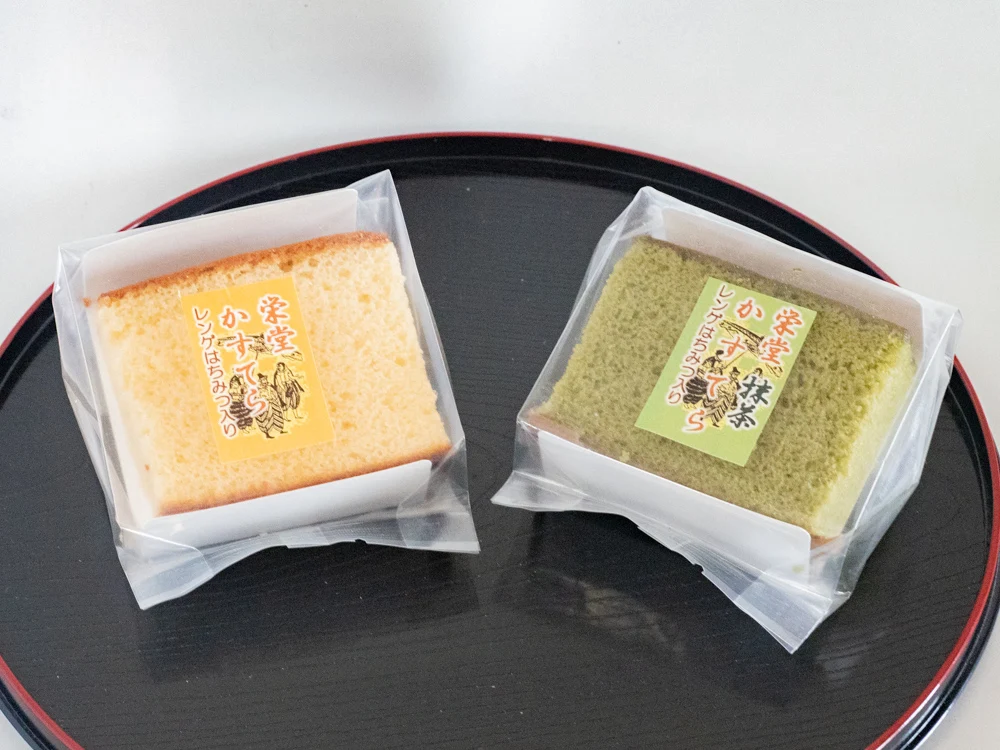
“Eido Castella” has been popular with customers since the Yayoi-do era.
It inherits the traditional method of Nagasaki castella and has a nostalgic taste.
It is characterized by the use of fresh eggs from Bisei-cho and a unique blend of flour, with the addition of lotus honey.
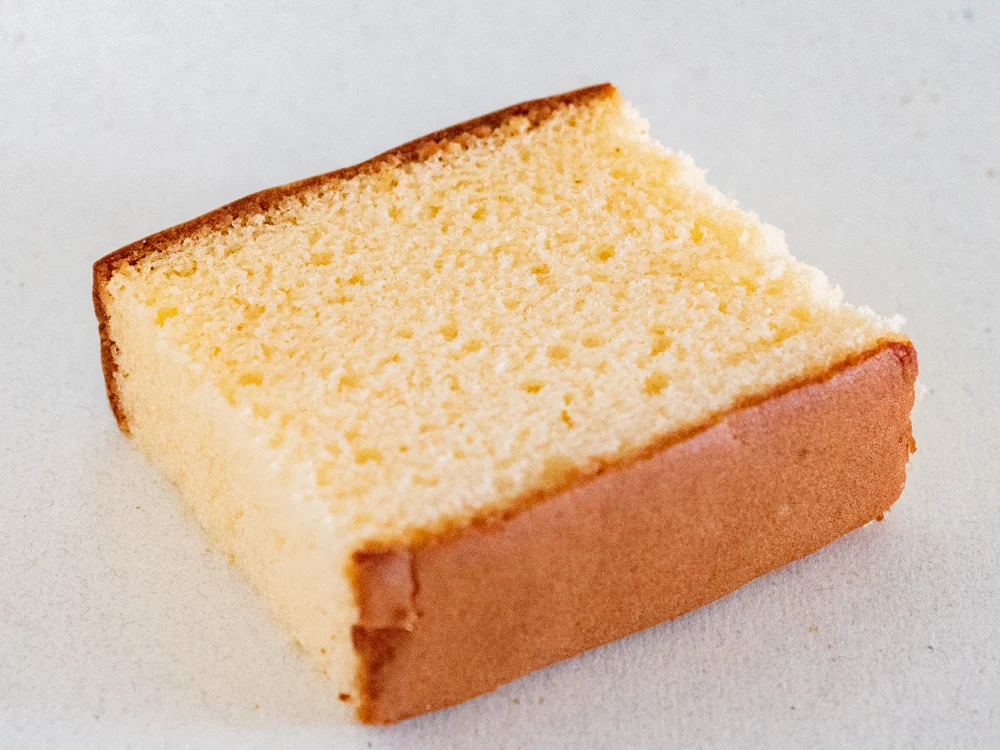
When you eat it, you will experience a very fluffy and soft texture, and it is quite moist.
The sweetness is elegant, not too overwhelming, making it easy to eat.
Matcha castella is a castella that is richly blended with matcha.
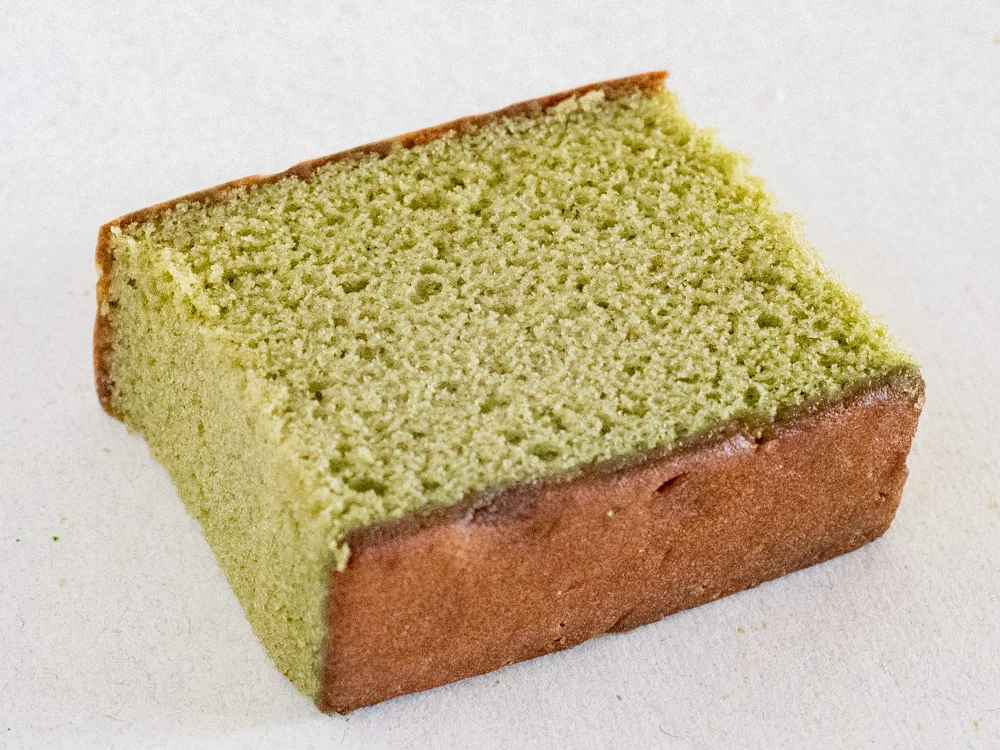
By using carefully selected matcha, you can enjoy a vivid color and rich matcha flavor.
Additionally, using rare lotus honey in the dough is also a highlight.
When you eat matcha castella, you can smell the gentle sweetness along with a slightly bitter and robust matcha flavor.
| Quantity | Price (tax included) |
|---|---|
| 1 piece | Eido: 150 yen Matcha: 170 yen |
| 6 pieces (3 Eido + 3 Matcha) | 960 yen |
| 1 loaf | Eido: 1,300 yen Matcha: 1,400 yen |
| 2 loaves | Eido: 2,600 yen Matcha: 2,800 yen |
“Italian Roll” is a roll cake with three layers of flavor
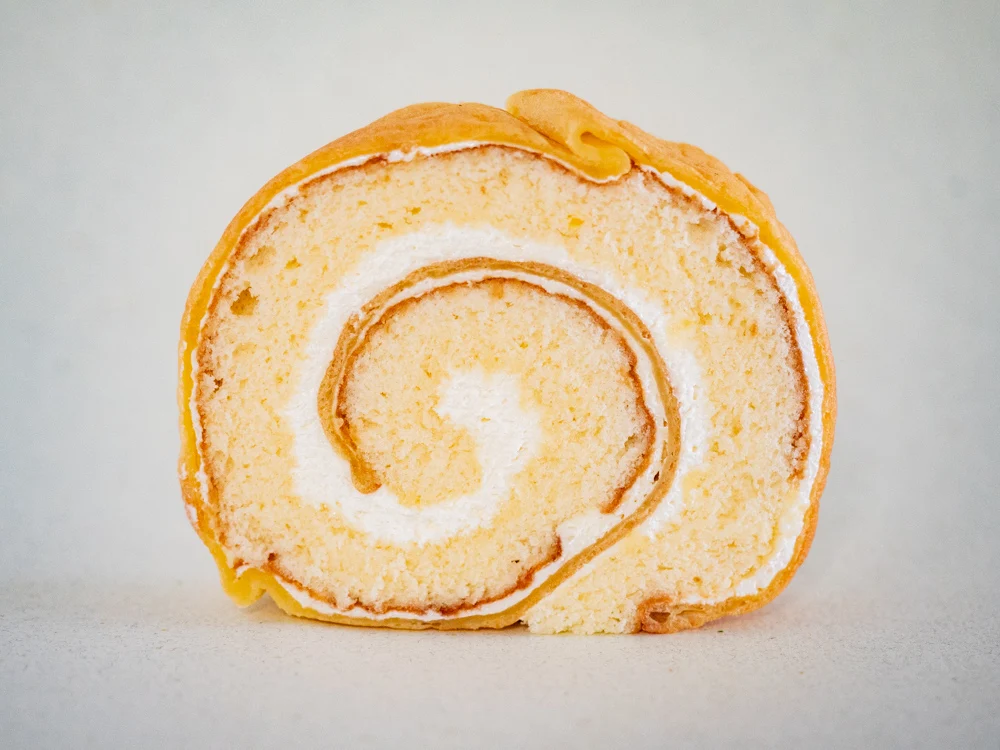
“Italian Roll” (160 yen each) is Eido's original roll cake.
The outside is made of choux pastry, while the inside is castella, and it is filled with homemade buttercream, rolled in a spiral.
It was popular during the Yayoi-do era, and due to many requests from customers after Eido opened, it was revived.
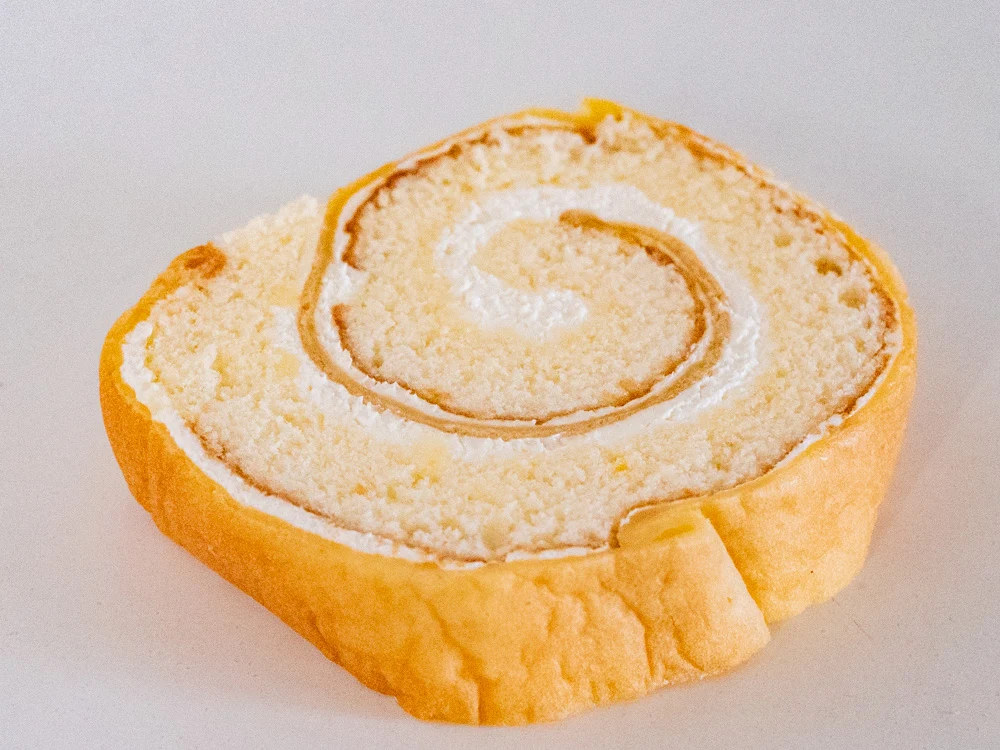
When you try it, the outer choux pastry has a chewy and fragrant texture.
Meanwhile, the castella is light and fluffy in flavor.
The buttercream inside has a smooth texture and rich sweetness.
Overall, it leaves a refreshing impression with a moderate sweetness.
It has a nostalgic taste that makes you want to eat it again.
If you want a single roll of Italian roll (1,800 yen), please make sure to reserve by phone at least 2 days in advance.
Also, the Italian roll is only available for in-store purchase.
Shimiya Seika Eido, which continues the taste of traditional Japanese and Western sweets from the former long-established Yayoi-do.
We interviewed Koide Hiroyuki (the management headquarters of Setouchi Engineering Co., Ltd.), which operates Eido.
Data of Shimiya Seika Eido
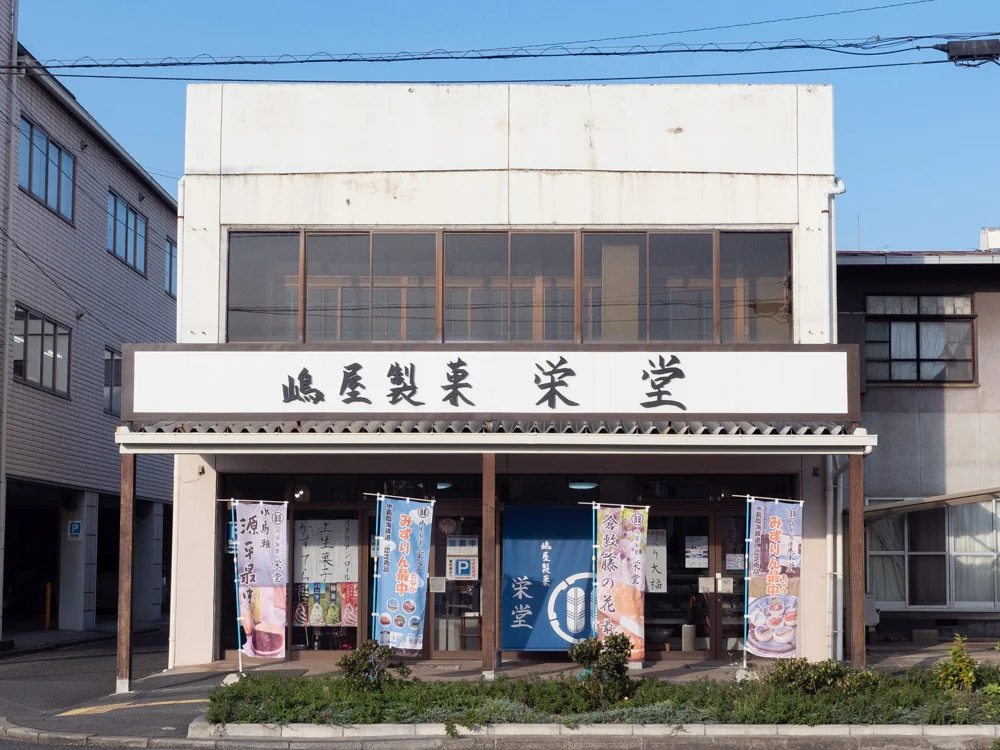
| Name | Shimiya Seika Eido |
|---|---|
| Address | 8-2 Nishi Eicho, Mizushima, Kurashiki City, Okayama Prefecture |
| Contact | 086-448-0001 |
| Parking | Available ・2-3 cars can be parked in the parking lot of Setouchi Engineering next door ・If parked in Kurashiki City Mizushima Higashi Eicho Parking Lot, a 1-hour free ticket is available |
| Business Hours | 9:00 AM - 6:00 PM |
| Regular Holiday | Sunday |
| Payment Methods |
|
| Website | Shimiya Seika Eido |



The main ingredient is Dainagon azuki from Hokkaido!