
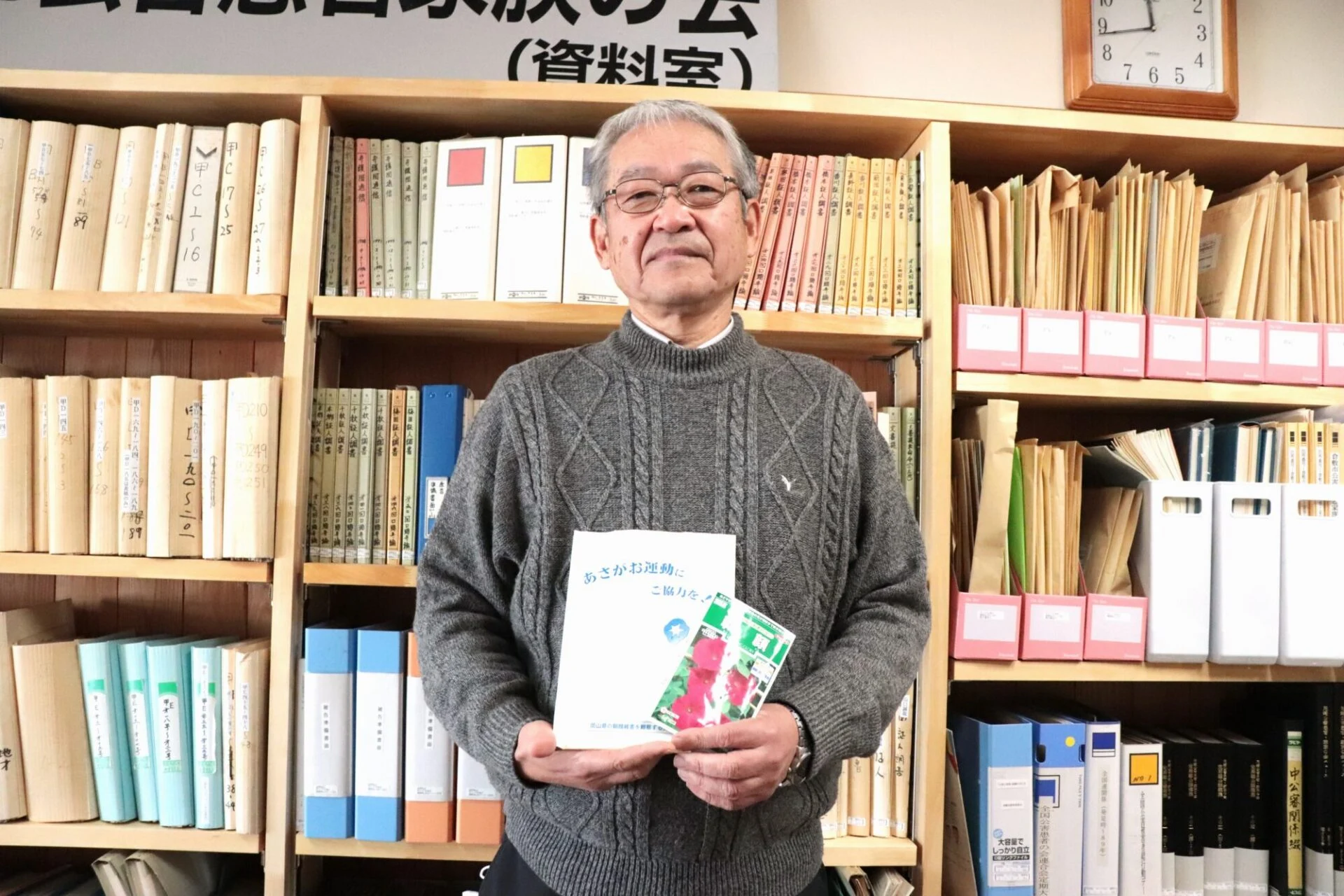
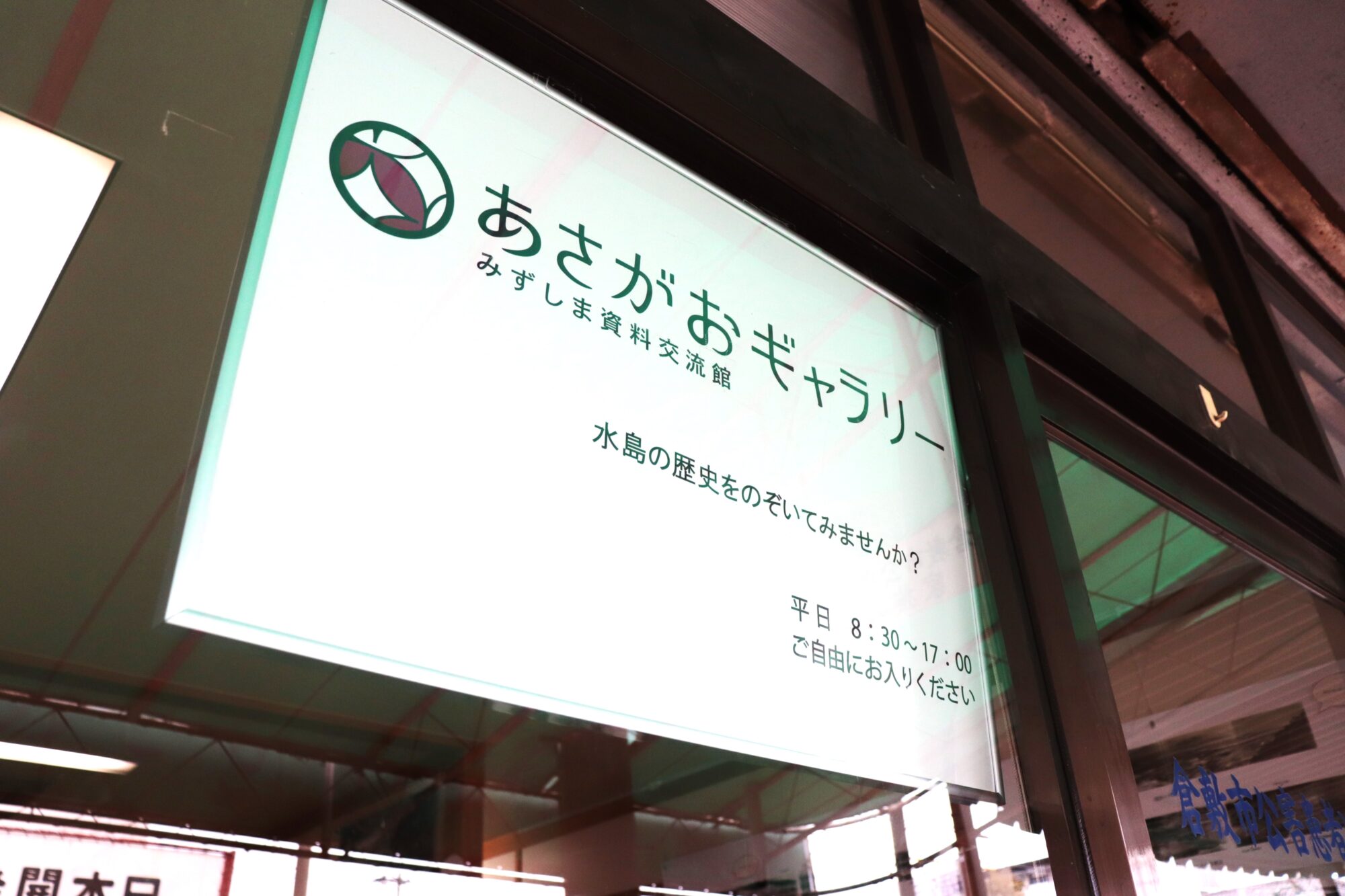
In the shopping district of Mizushima, Kurashiki City, there is the Mizushima Resource Exchange Center Asagao Gallery.
The Asagao Gallery is operated by the Mizushima Regional Environmental Regeneration Foundation (commonly known as the Mizushima Foundation), and it exhibits materials related to pollution and photographs from that time, serving as a place to convey the history of pollution in the Mizushima area that occurred in the 1960s. It opened in October 2022.
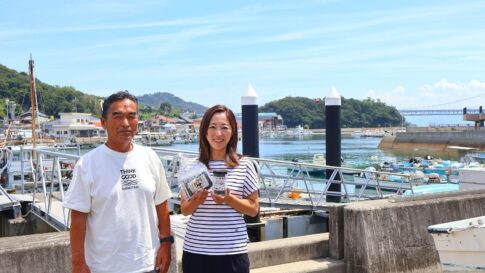
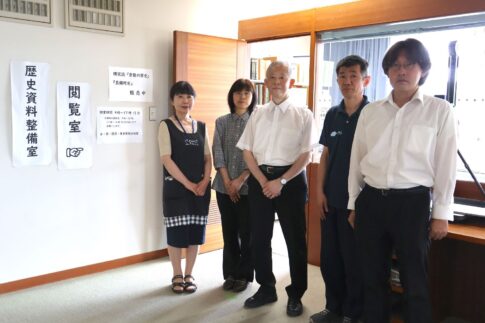
Regarding the Mizushima Resource Exchange Center Asagao Gallery, we spoke with Fukuda Kenichi, the vice president of the Mizushima Foundation and the director of the Asagao Gallery, and Hayashi Miho from the Mizushima Foundation.
About the Mizushima Resource Exchange Center Asagao Gallery
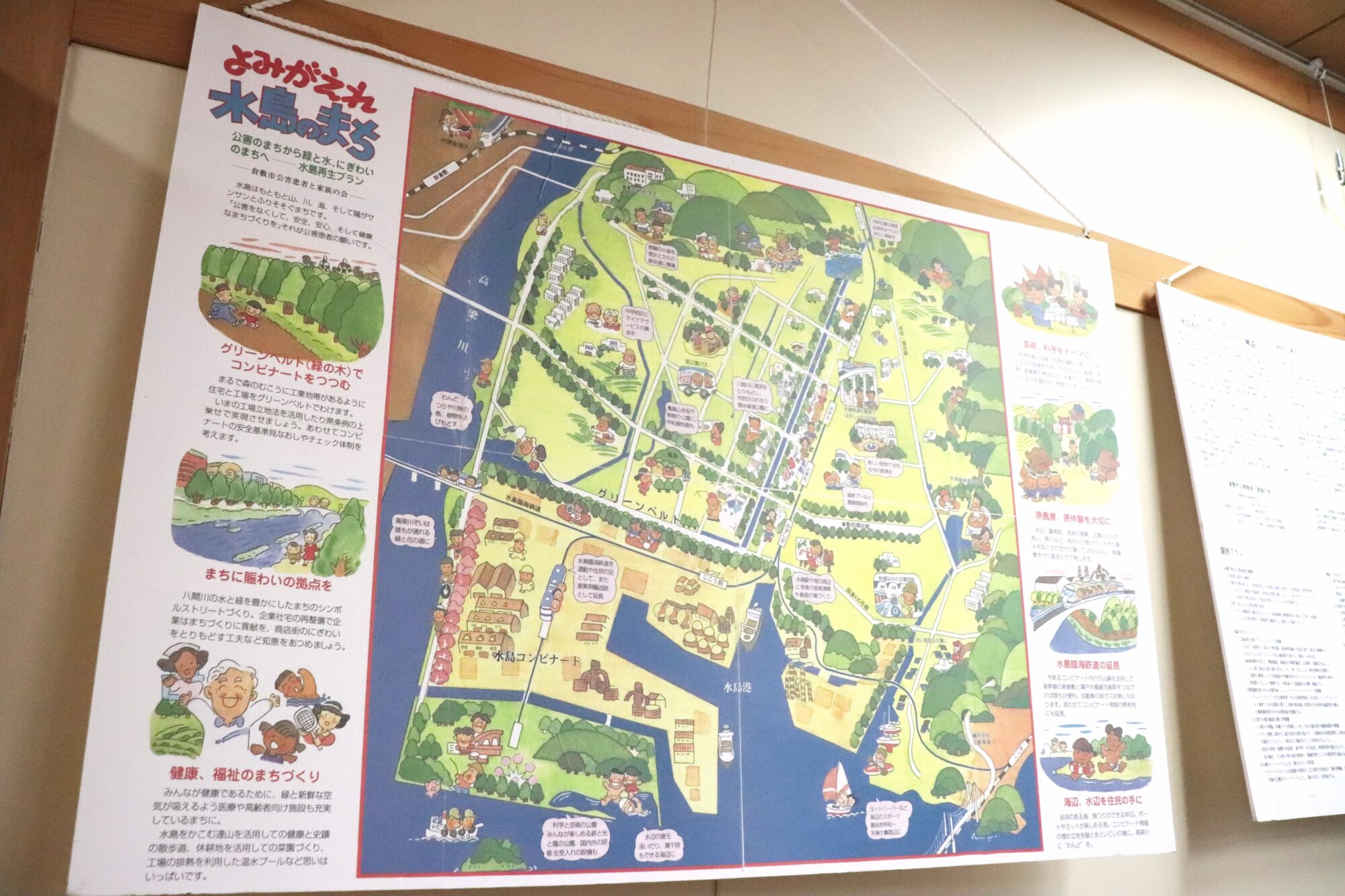
The movement to create a pollution museum in Mizushima has existed since the establishment of the Mizushima Foundation in 2000.
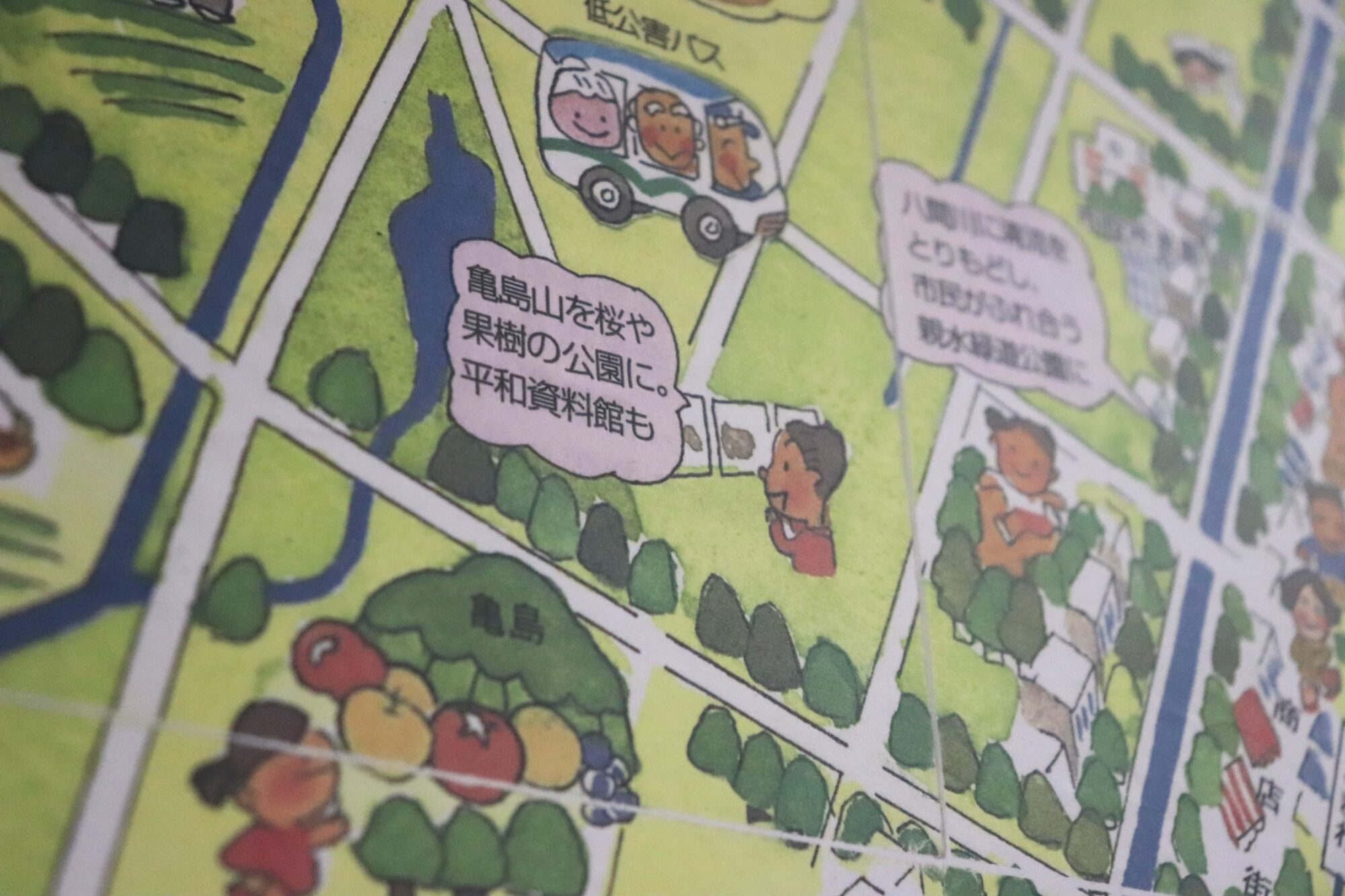
The future vision of Mizushima, drawn by pollution patients in 1995, also shows the intention to create a museum in Mizushima.
In the center of this future vision, there is a speech bubble requesting the creation of a museum.
In this future vision, it is written "Peace Museum".
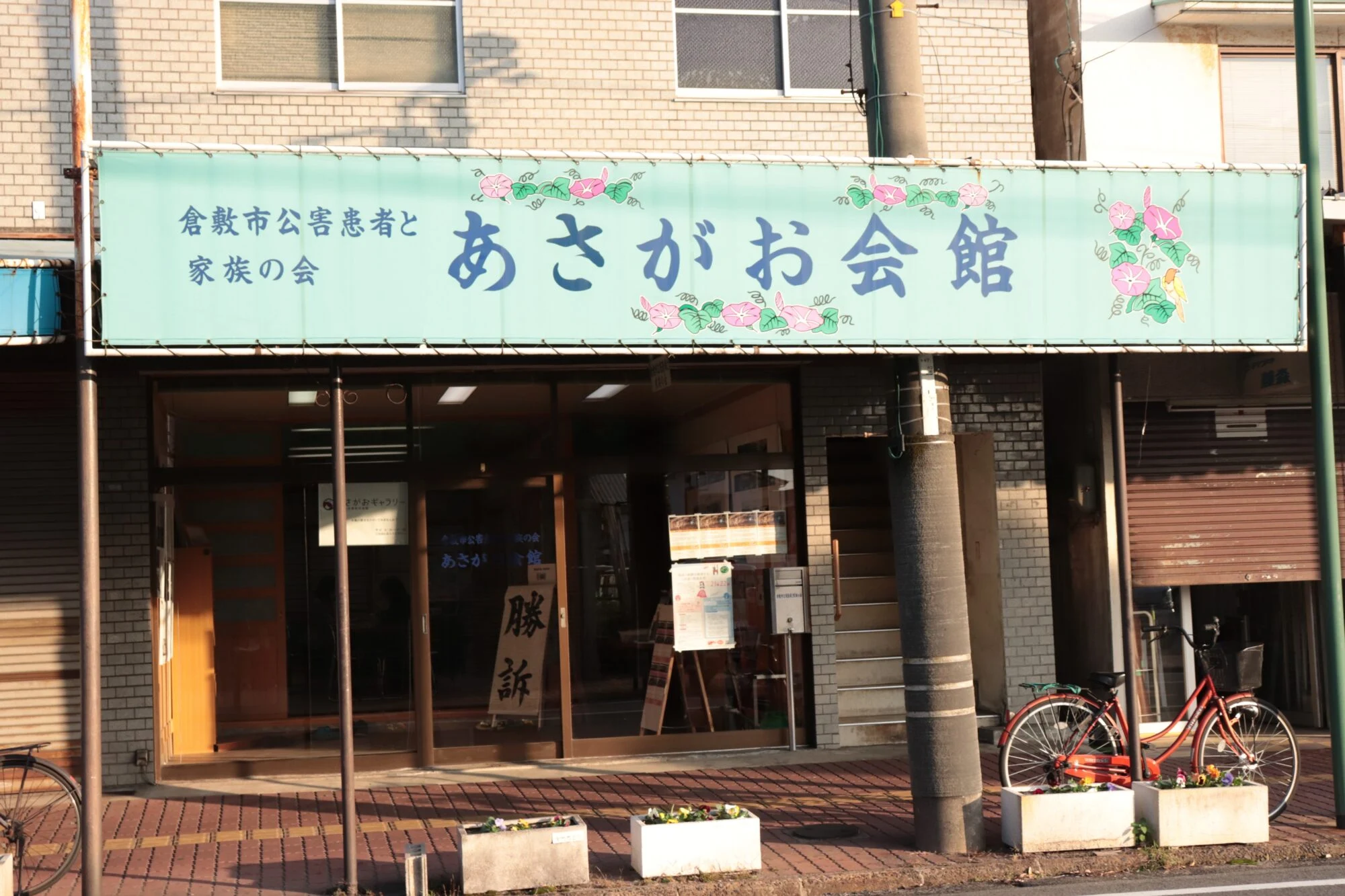
On the door of the entrance to the Asagao Gallery, there are the words "Kurashiki Pollution Patients and Families Association Asagao Hall."
Asagao Hall has been used as a place for interaction and relaxation for pollution patients in the Mizushima area through activities such as meal gatherings and writing picture letters.
However, with the aging of pollution patients, the use of Asagao Hall has decreased.
Therefore, it was decided to utilize the place that had once served as a relaxation spot for pollution patients as a place to convey records and memories of pollution, leading to the establishment of the Mizushima Resource Exchange Center Asagao Gallery at the location of Asagao Hall.
Not only was the location decided, but the arrival of Hayashi Miho, who has knowledge about organizing, preserving, and utilizing materials, at the Mizushima Foundation also accelerated the movement towards the opening of the museum.
"We were able to open the museum because the three conditions of location, people, and materials came together," says Director Fukuda.
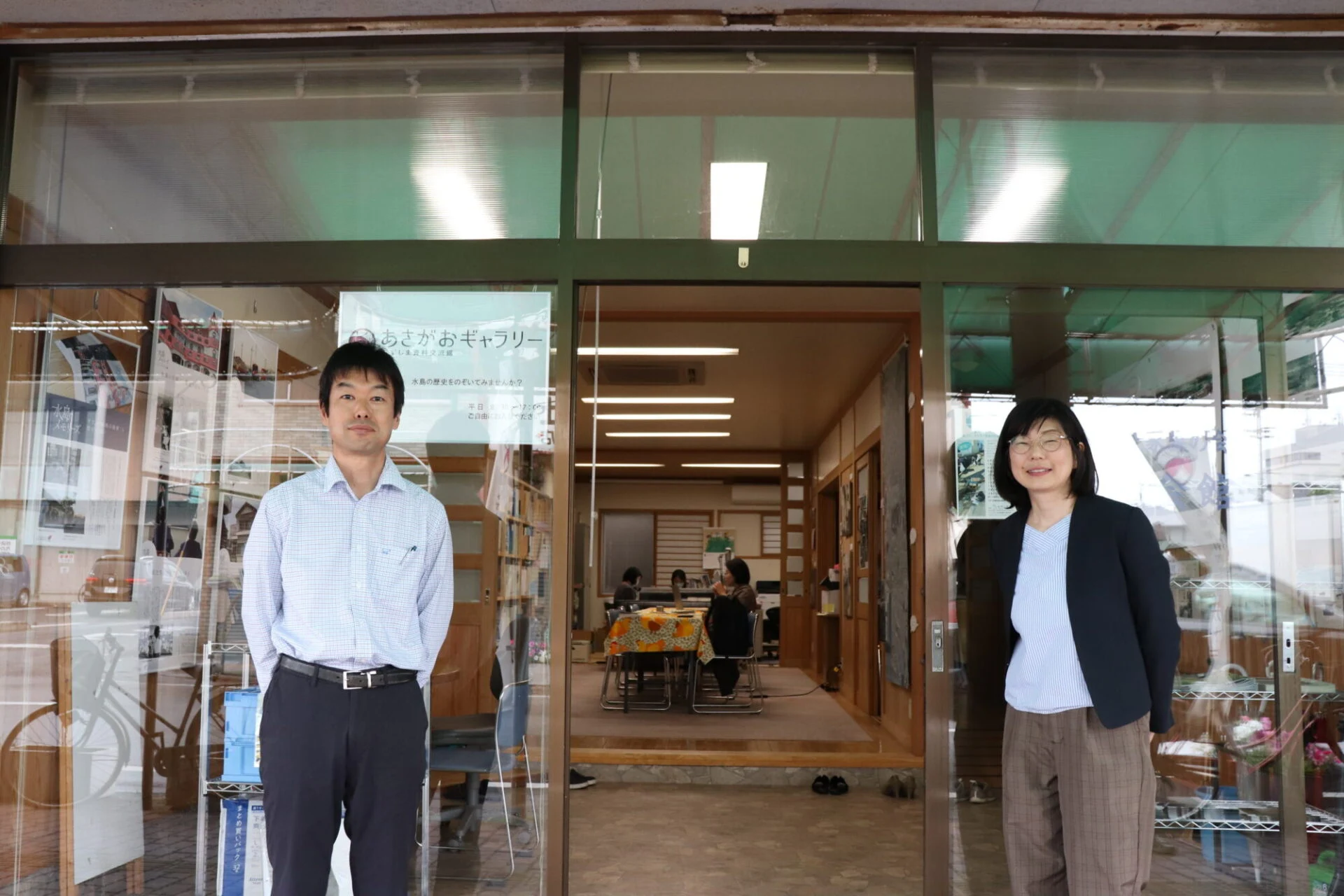
Meaning of the name "Mizushima Resource Exchange Center Asagao Gallery"
The name Mizushima Resource Exchange Center Asagao Gallery carries the thoughts of the people involved with the center.
Although the Asagao Gallery is a pollution museum, there was a request from the local people during the naming process to "not use the word pollution."
Additionally, to encourage people to enter without feeling apprehensive just because it is a museum, the word "exchange" was included in the name.
Regarding why the name "Asagao" is included in the facility names such as Asagao Gallery and Asagao Hall, Fukuda explained as follows.
It was named "Mizushima Resource Exchange Center Asagao Gallery" with the hope that it would become a place where local people can easily drop by and gather.
In particular, Asagao (Figure 2) and taro (Figure 3) are highly sensitive to ozone, the main component of photochemical oxidants, and exhibit damage as white or brown spots on the leaf surface, informing us of the effects of ozone.
Environmental Science International Center: Does "photochemical smog" also have adverse effects on plants?
Materials of the Mizushima Resource Exchange Center Asagao Gallery
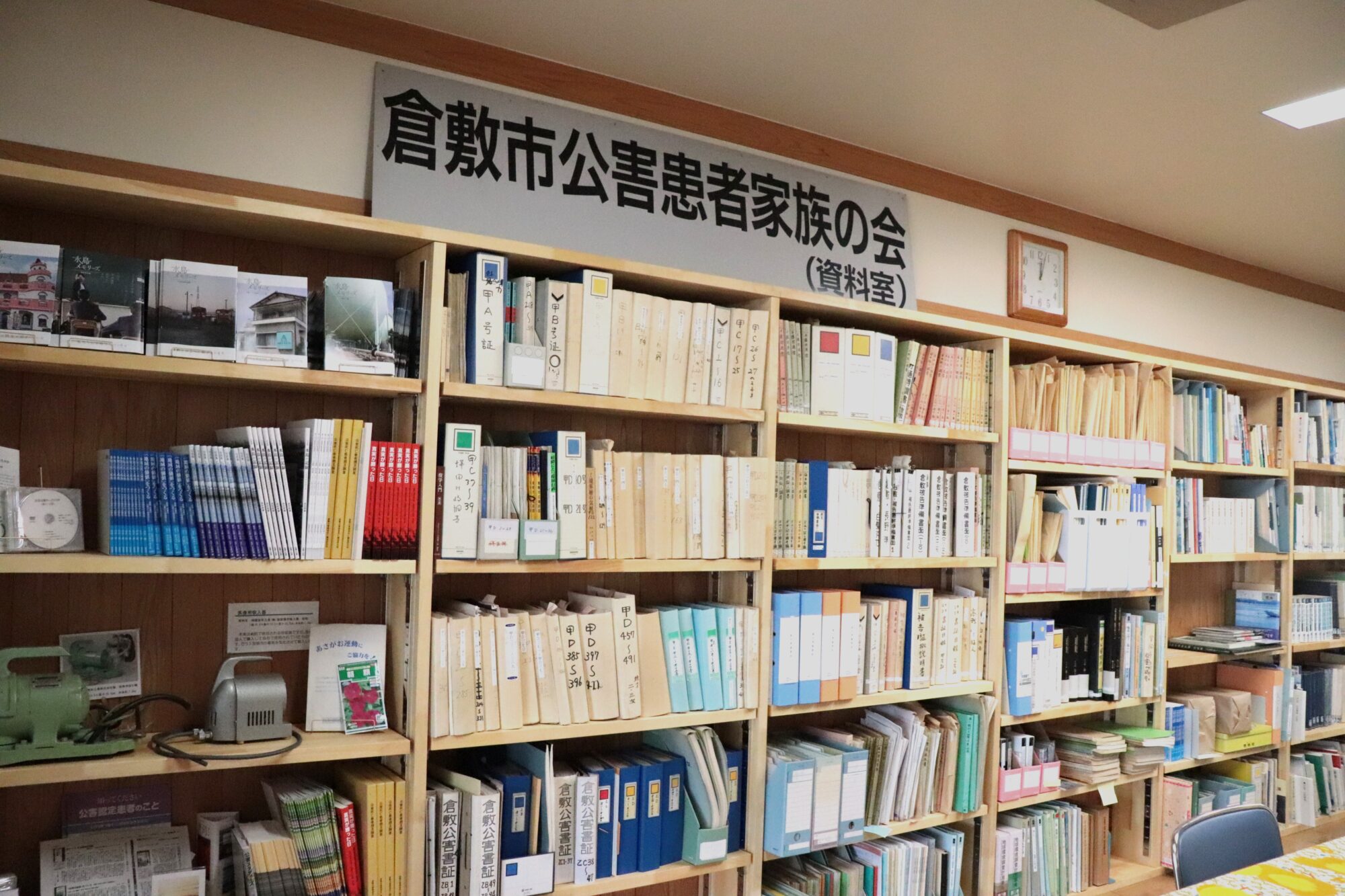
The Asagao Gallery exhibits materials related to pollution in the Mizushima area.
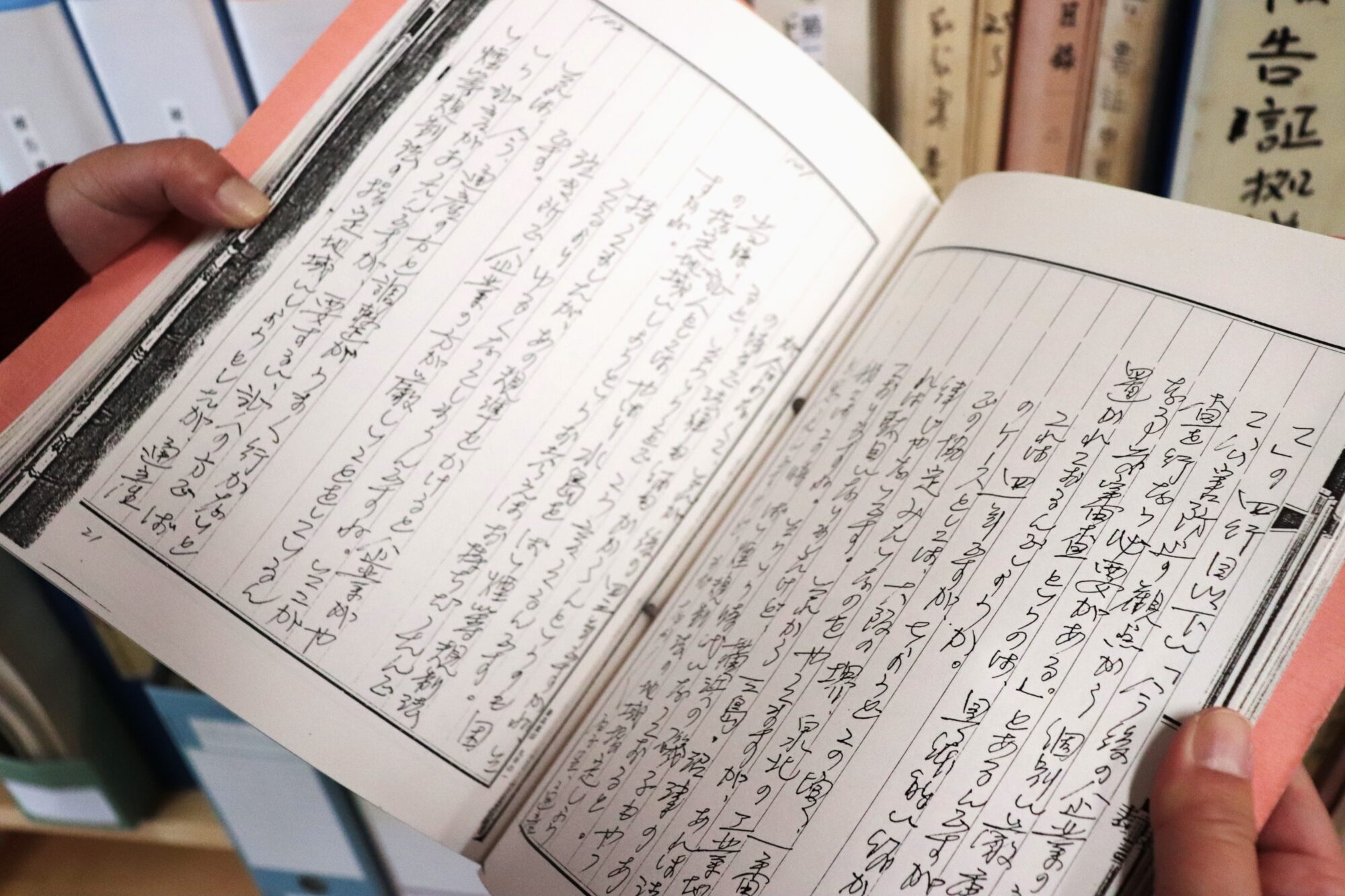
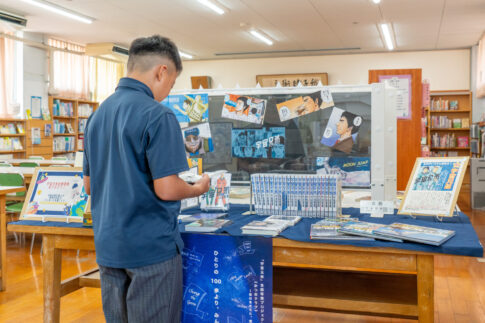
On the left side of the bookshelf upon entering the Asagao Gallery, there are numerous materials related to pollution trials, documents held by the Kurashiki City Pollution Patients and Families Association, and books about pollution.
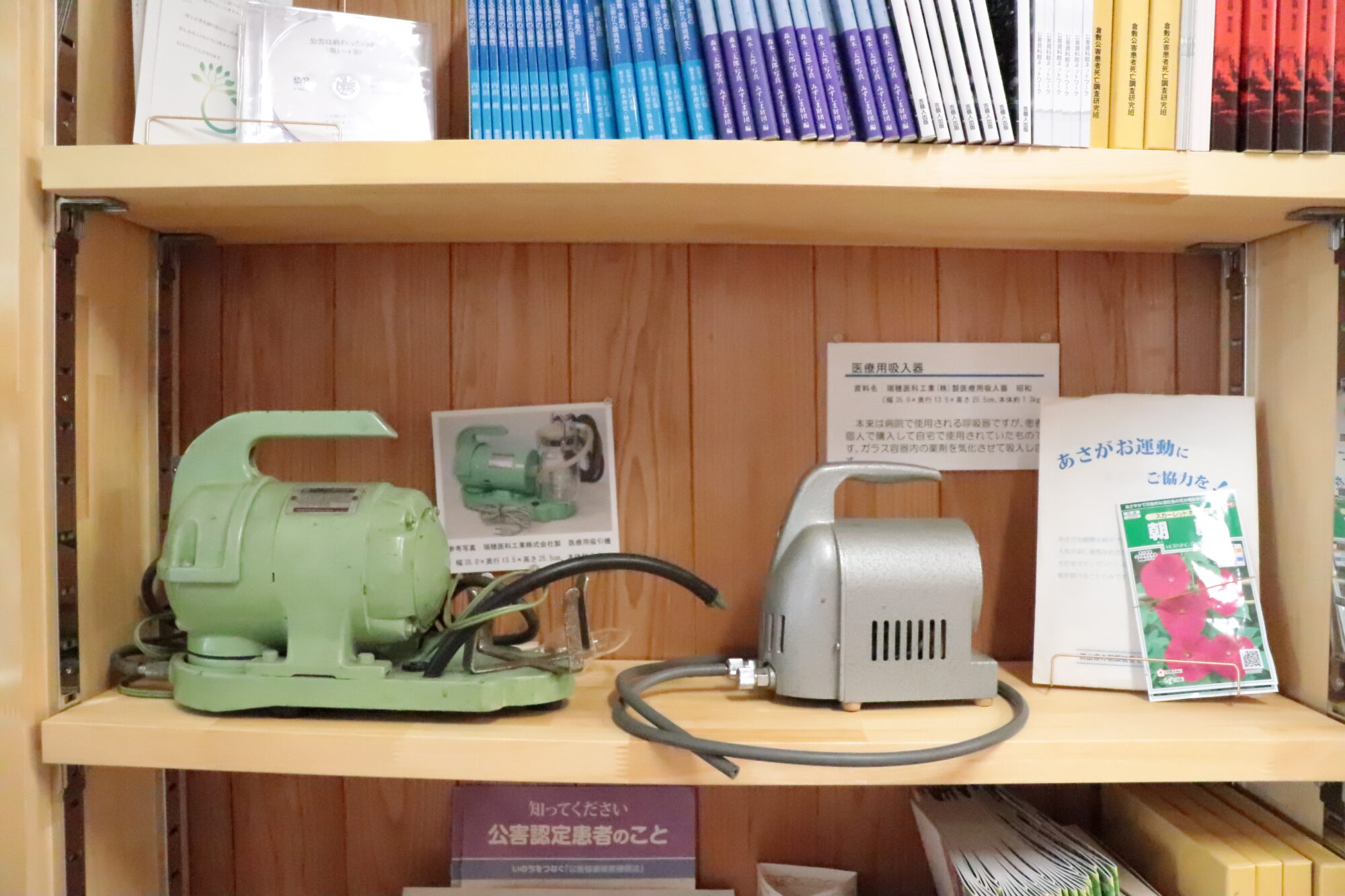
Additionally, there are medical inhalers used by pollution patients, envelopes from the "Asagao Survey" conducted by Fukuda at the Mizushima Foundation, and "Mizushima Memories" on display.
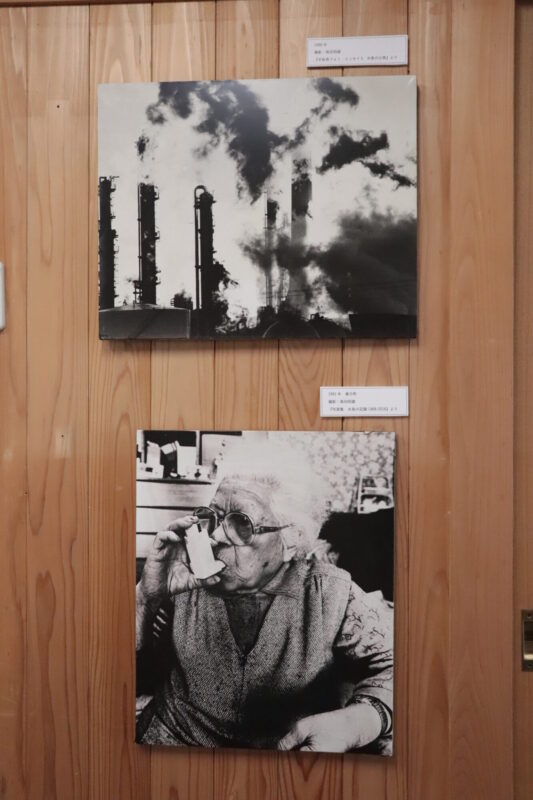
On the wall opposite the bookshelf, there are panels of photographs of Mizushima during the time pollution was occurring and of pollution patients, allowing visitors to learn about the actual region and the situation of pollution patients.
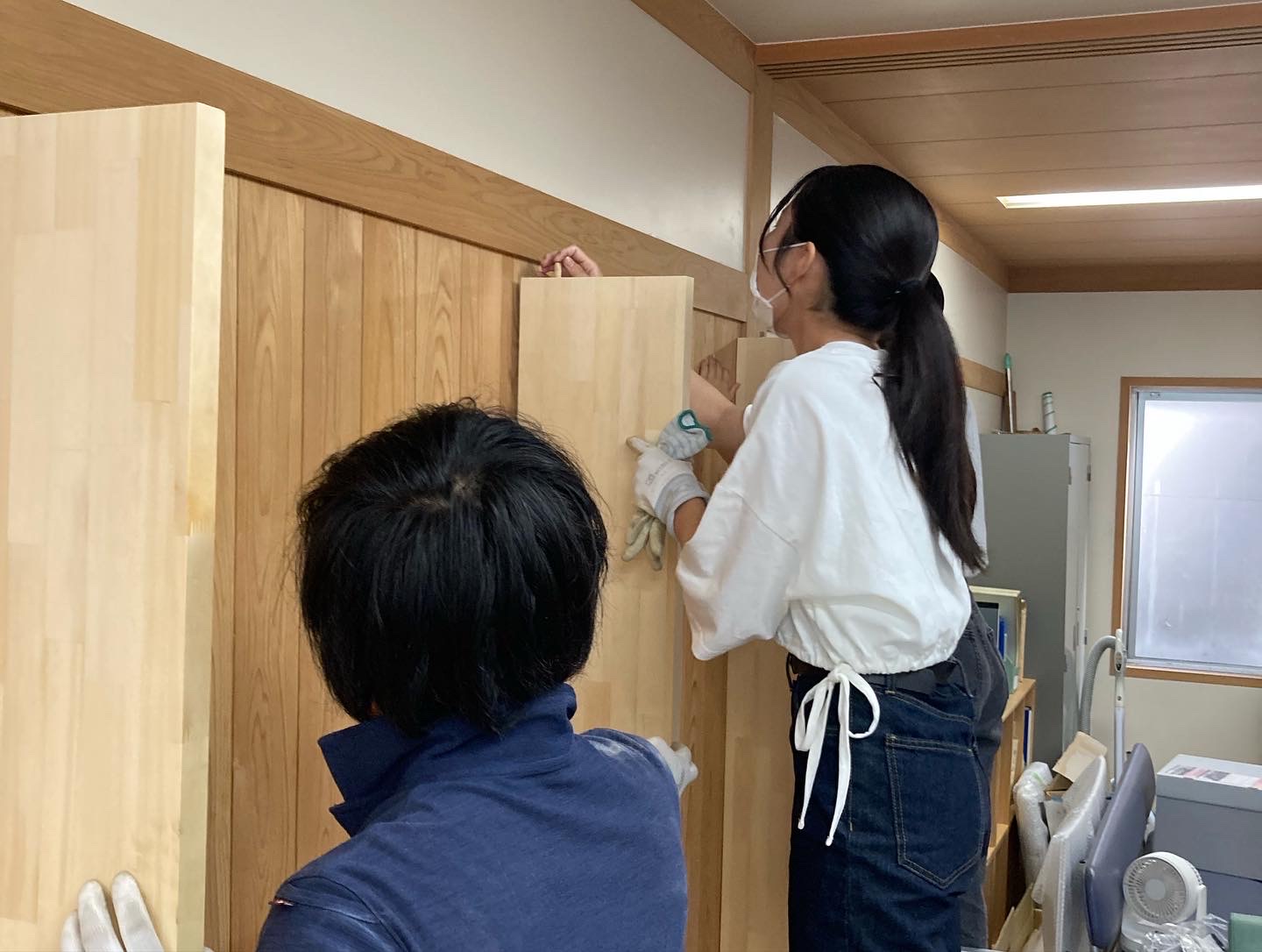
The bookshelf was created with the hope that the Asagao Gallery would become "everyone's museum," in collaboration with various people, including construction workers, local residents, and students from Okayama Prefectural Kurashiki Kojoike High School.
The Asagao Gallery has fewer materials that can be understood at a glance compared to general museums and resource centers.
It is a museum where learning can be gained by facing the materials and thoroughly understanding their content.
Moreover, both Fukuda and Hayashi agree that organizing photographs is challenging.
While written documents record "when" and "who" wrote them, photographs often lack records of "when," "who," "where," and "whom" was photographed.
Unlike modern digital data, the date and time of shooting are not necessarily recorded with the photographs.
As of 2023, they are relying on the memories of patients and local residents to document the people and places captured in the photographs, but once those who have memories of that time are gone, the photographs can no longer be used as records.
The organization of materials held by the Mizushima Foundation is carried out not only by the staff of the Mizushima Foundation but also by interns and volunteers accepted by the foundation.
Hayashi mentioned that they would be happy to have anyone interested in helping with the organization of materials come by.
Relationship with "Mizushima Memories"
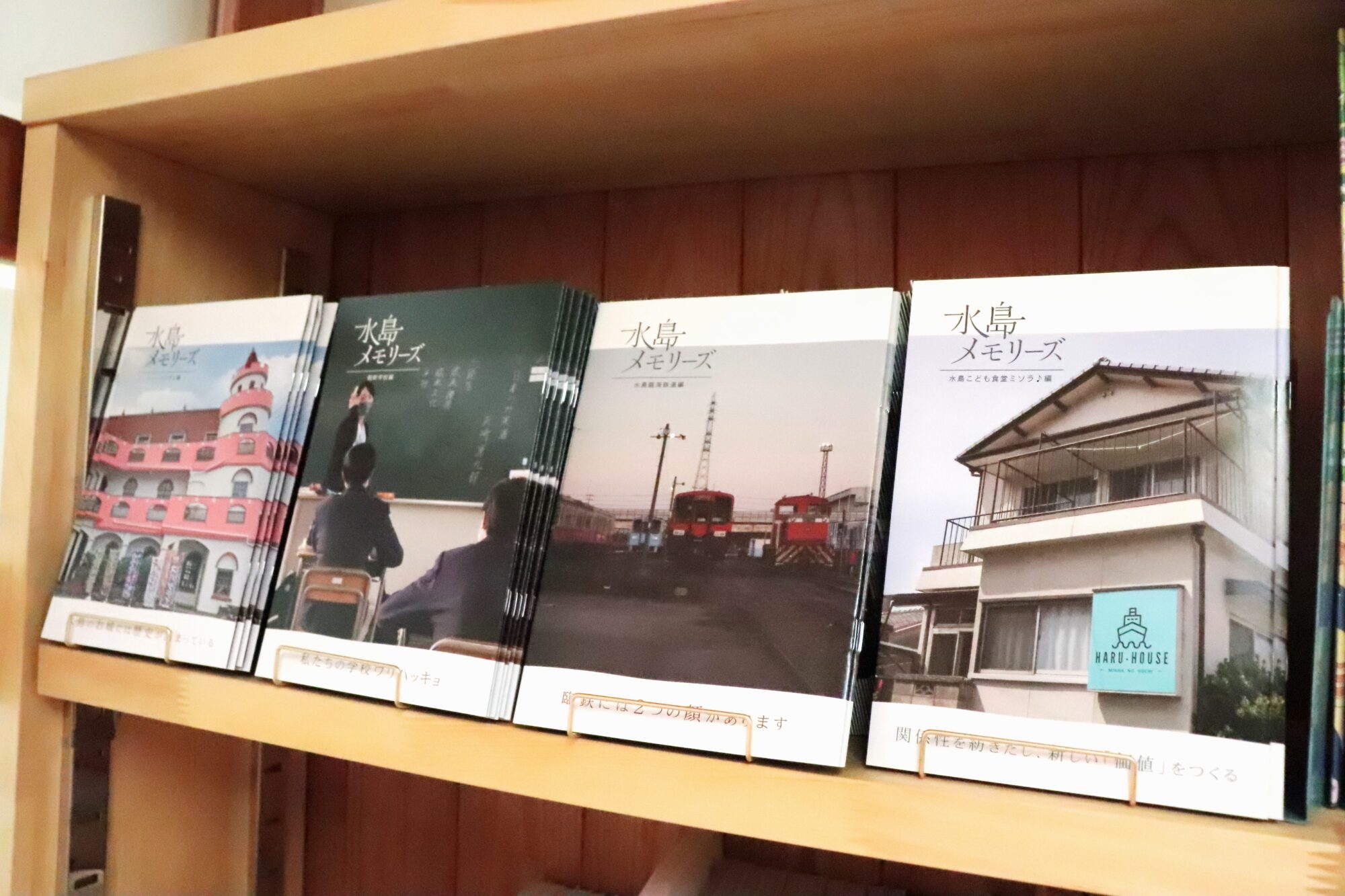
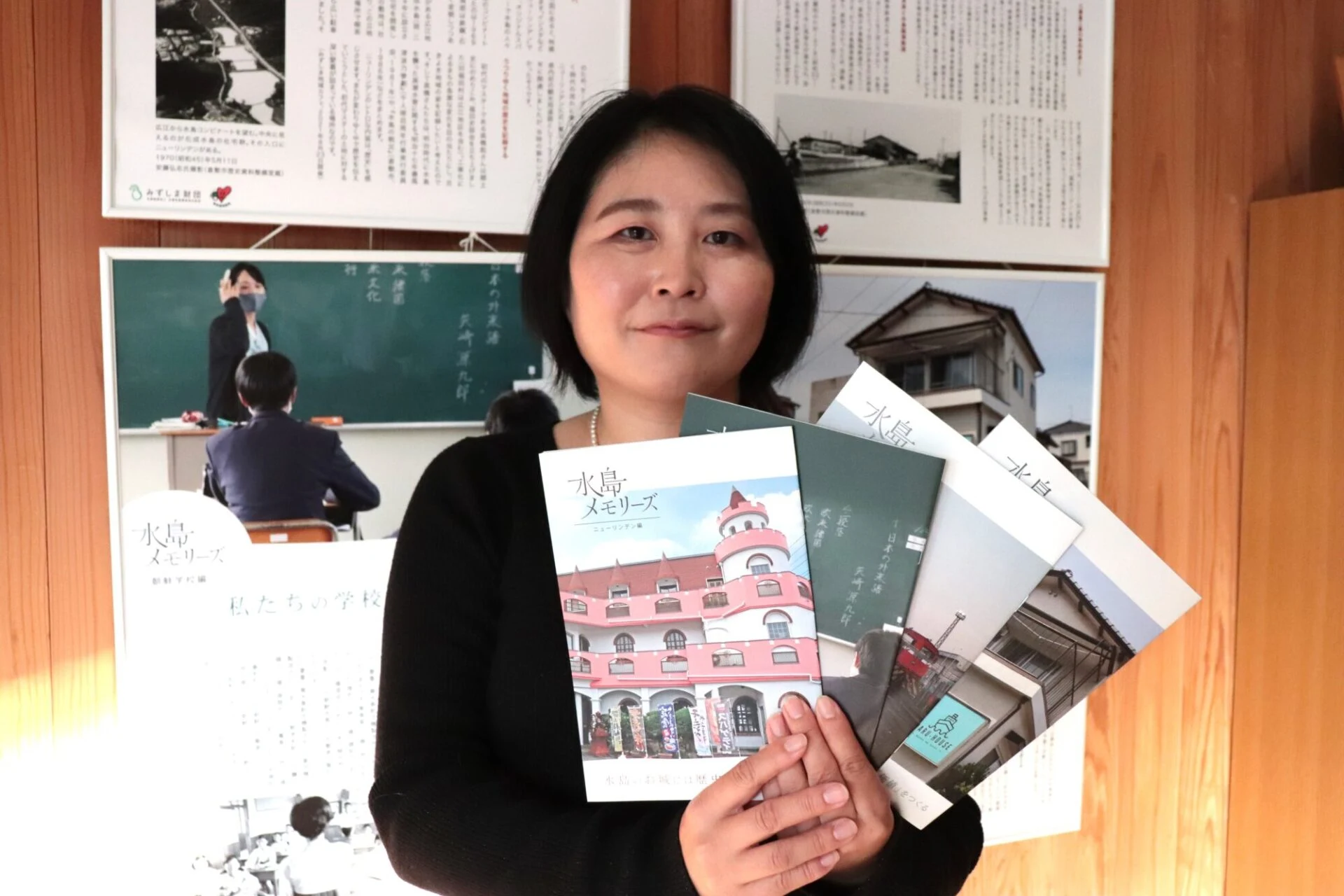
The Mizushima Foundation publishes a book called "Mizushima Memories," which allows people to learn about the history of the Mizushima area.
The "Mizushima Memories" also plays an important role in the museum project.
It seems that pollution has often been discussed from the perspectives of both perpetrators and victims, and Fukuda mentioned that "until Hayashi came to the Mizushima Foundation, we were engaged in activities to clarify the relationship between pollution perpetrators and victims."
However, there has been significant backlash against conveying pollution solely from the perspective of the perpetrating companies or the victimized patients, and there are times when information is not accepted even if it is disseminated.
Hayashi explained the relationship between Mizushima Memories and the Asagao Gallery as follows.
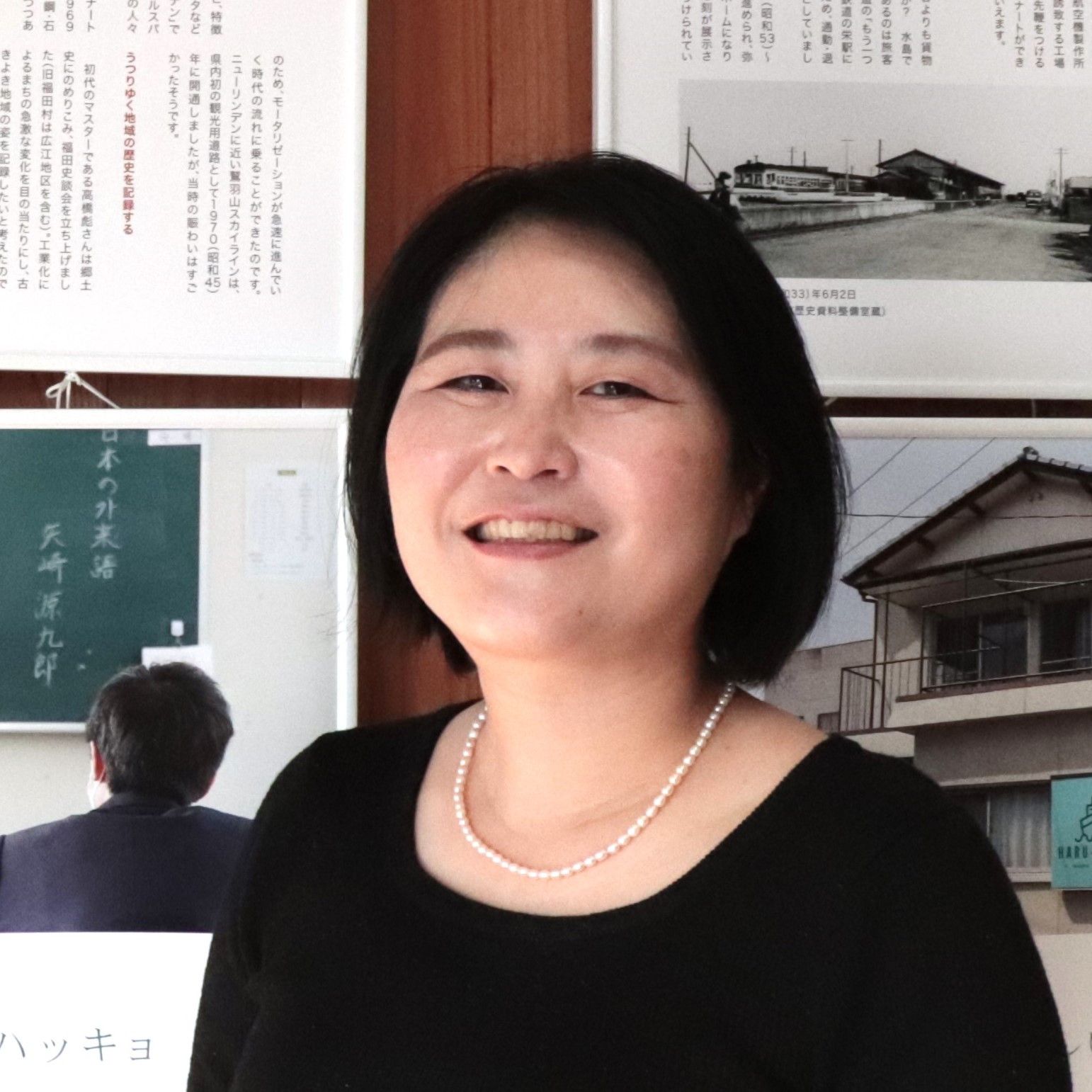
Pollution looks different depending on one's position, so it is very difficult to recognize it from just one perspective. Therefore, we are weaving history together with local people, and in that process, we are helping them learn about pollution through Mizushima Memories.
Even those who might cover their ears to avoid hearing about pollution come to the Asagao Gallery specifically to pick up Mizushima Memories.
When trying to understand pollution, it is necessary to approach it with multiple perspectives rather than from just one side.
The "Mizushima Memories," which embodies that, has become an indispensable presence for the Asagao Gallery.
The future of the Mizushima Resource Exchange Center Asagao Gallery
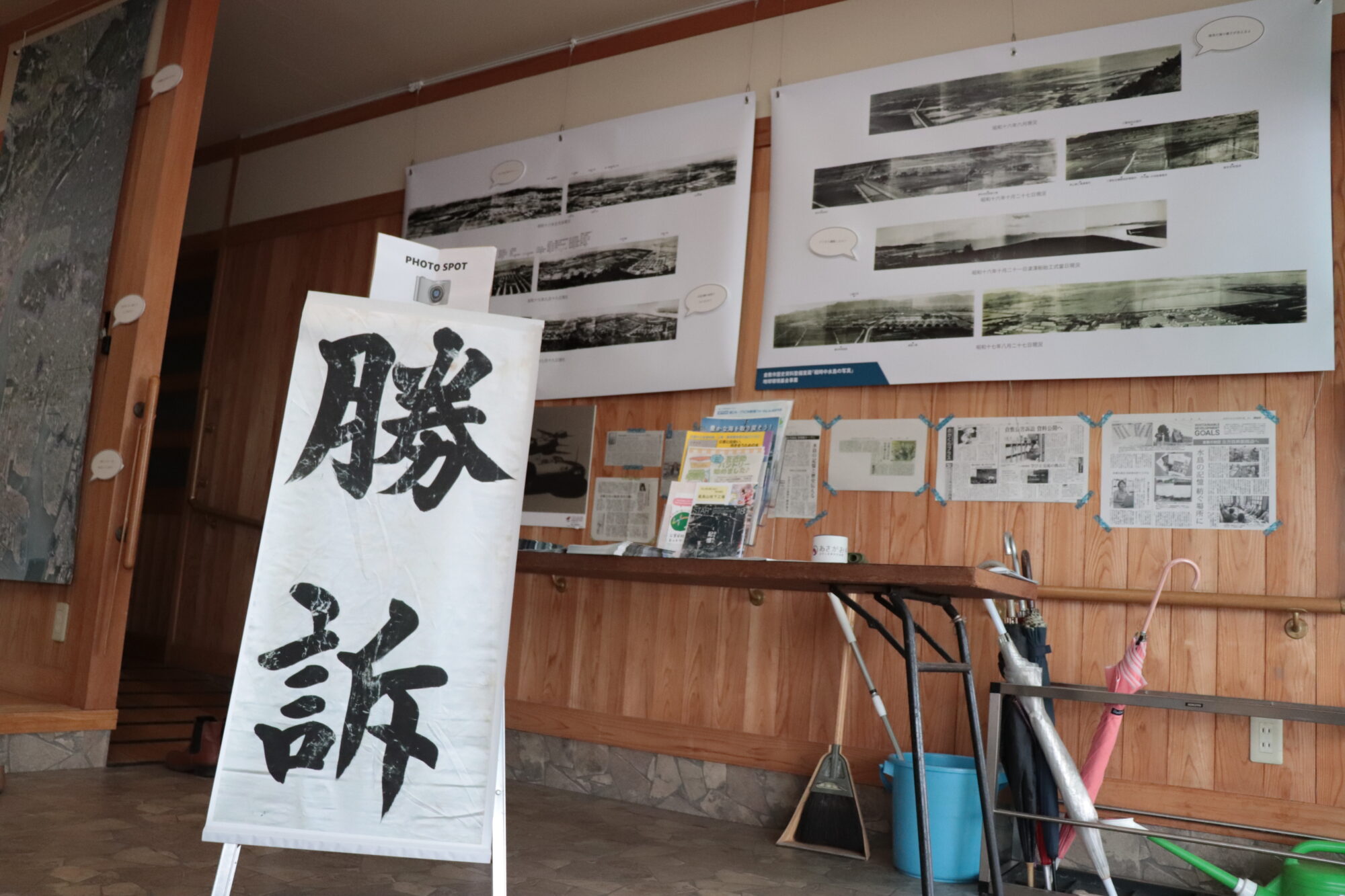
Regarding the future of the Morning Glory Gallery, Fukuda and Hayashi both say, “We want to do interesting things.”
They aim to create a space where anyone who wants to come can freely do so, with free ideas and free usage.
For example, they are trying to create a space for planned exhibitions by local people right at the entrance of the Morning Glory Gallery.
They continue to grow as a museum to become a place where people can gather, learn together, and take action.
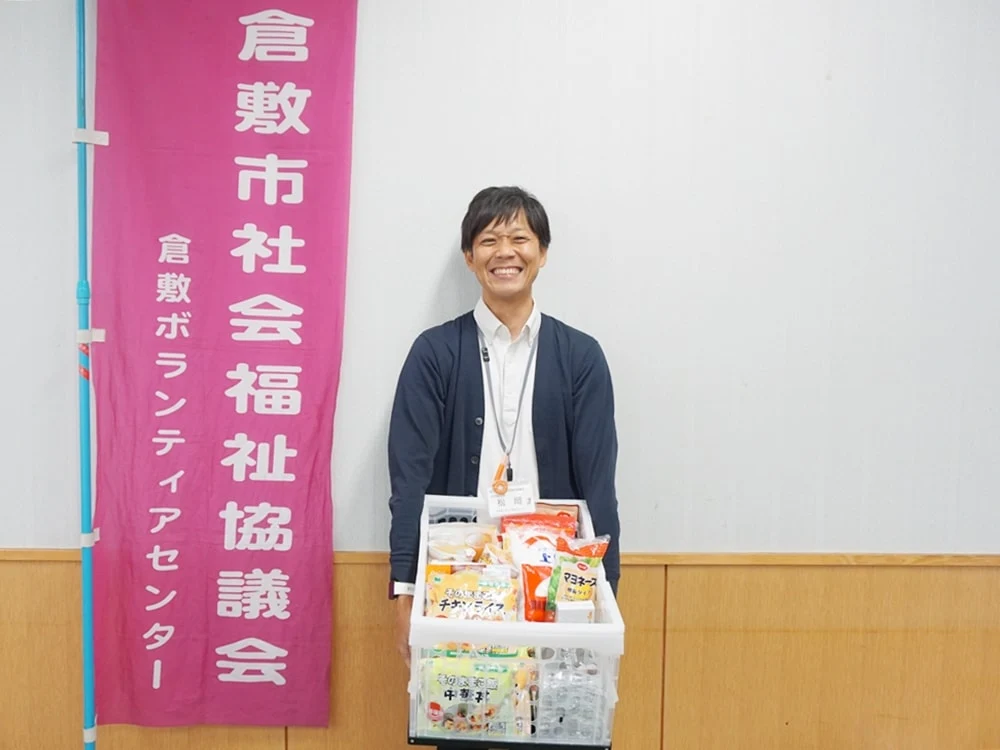
Additionally, as an initiative to encourage local people to drop by casually, they are participating in the “Kurashiki Gokinjyo Pantry Project.”
The Morning Glory Gallery awaits many visitors at the entrance of the Mizushima shopping district, serving as a place for dialogue where the local history can be perceived as one's own.
Conclusion
When you hear “pollution museum,” you might feel that you will hear a lot of difficult stories.
However, at the Morning Glory Gallery, you can think about pollution from various perspectives through dialogue.
The Morning Glory Gallery exists to weave the history of the Mizushima area together with the local people and to create the future.
Please visit the Mizushima Museum Exchange Center Morning Glory Gallery as an “entrance” to learn about the Mizushima area.
Data of Mizushima Museum Exchange Center Morning Glory Gallery
| Name | Mizushima Museum Exchange Center Morning Glory Gallery |
|---|---|
| Location | 11-12 Higashie-machi, Kurashiki City, Okayama Prefecture |
| Contact | 086-440-0121 (Mizushima Foundation) |
| Parking | Available Can accommodate 8 vehicles |
| Opening Hours | Open from 8 AM to 5 PM on weekdays |
| Closed | Saturday, Sunday |
| Admission Fee (tax included) | Free Fees apply for training and hearing sessions |
| Smoking | Completely non-smoking |
| Toilet | Western-style toilet |
| Website | Mizushima Foundation |








To convey that it is a pollution museum without including the word "pollution," we have included the name of the flower "Asagao."
Asagao is a plant that reacts easily to air pollution and was used during investigations in the early pollution trials in the Mizushima area.
For the Mizushima Foundation, Asagao has become a symbol of pollution.