Mabi, Kurashiki City marks the 5th anniversary of the July 2018 heavy rain disaster.
As of 2023, construction continues in various places in Mabi, and the town's landscape is constantly changing.
I also live in Mabi, and while I understand that the construction in front of me is being carried out to make it safer than now, I do not know the details of what is being done or when it will be completed.
Mabi Emergency Flood Control Project (hereinafter referred to as the Project) will be introduced along with an interview with Yasuhiko Hamada, the director of the Takahashi River and Oda River Emergency Flood Control Office.
Status of the Oda River confluence point relocation work
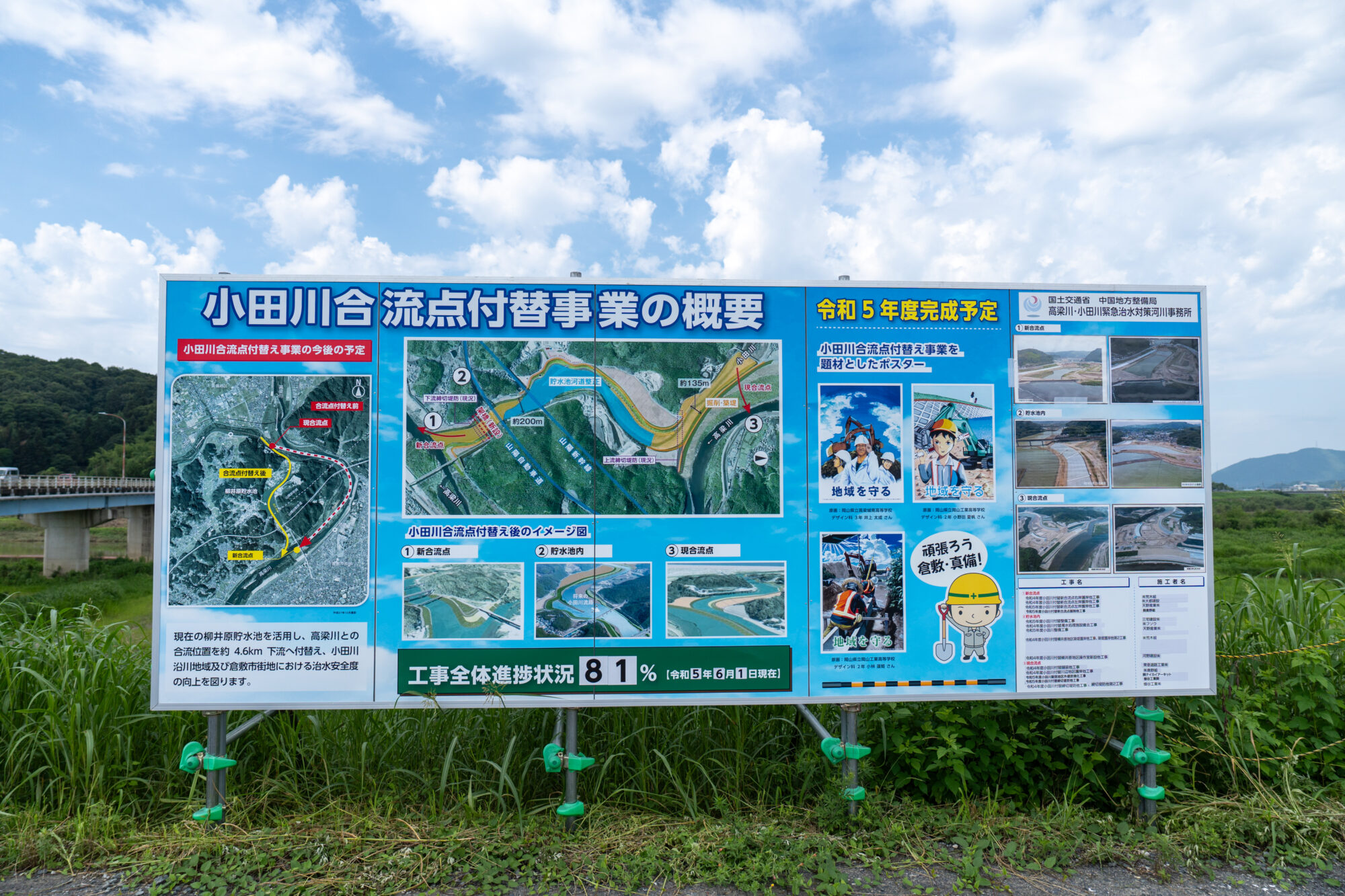
The core of the Project is the Oda River confluence point relocation work, which is a project to relocate the confluence of the Oda River and Takahashi River 4.6 km downstream to reduce the risk of river flooding during heavy rain.
Here are photos showing the status of the construction as of July 2023.
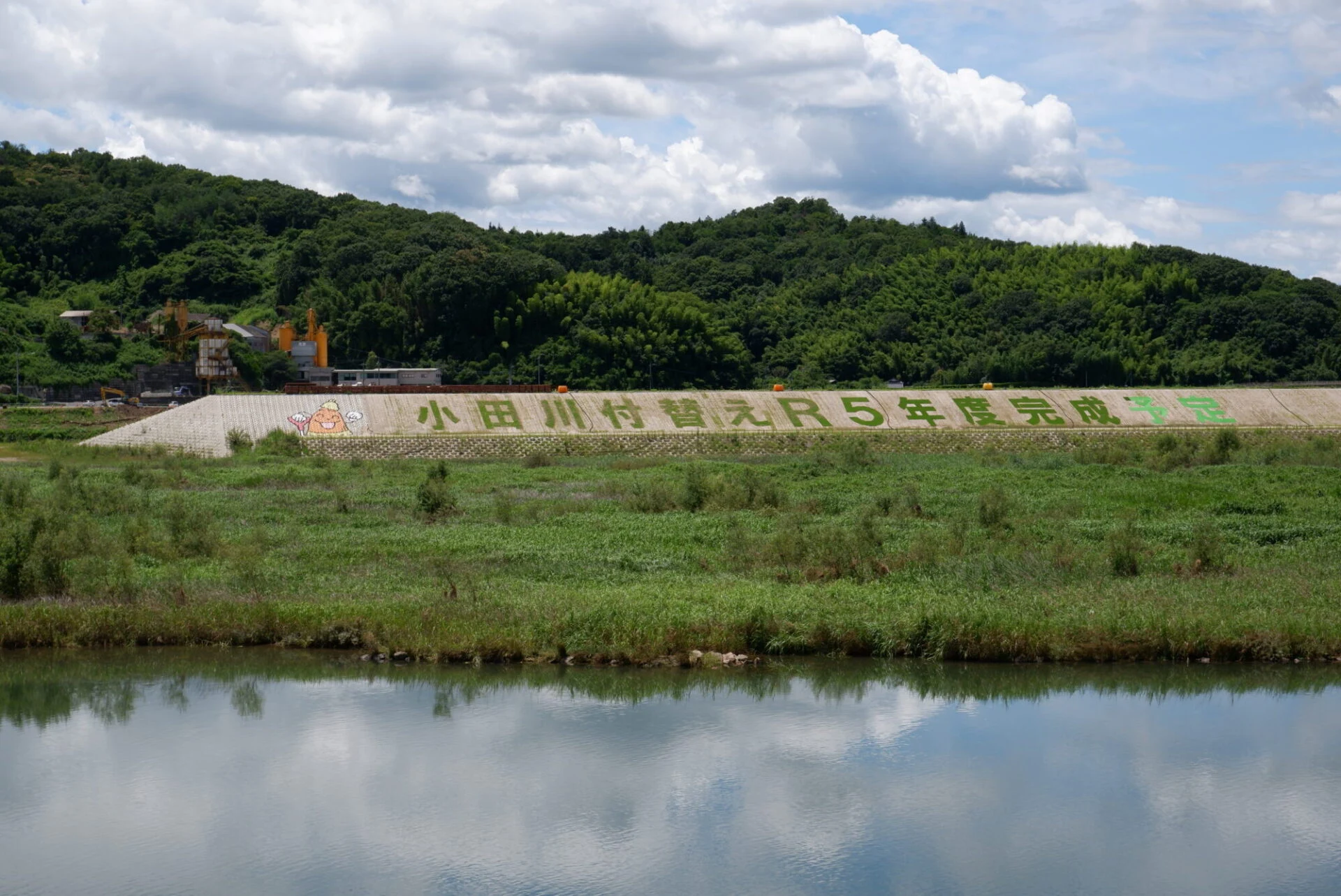
▼ Current status of the confluence point of the Oda River and Takahashi River.
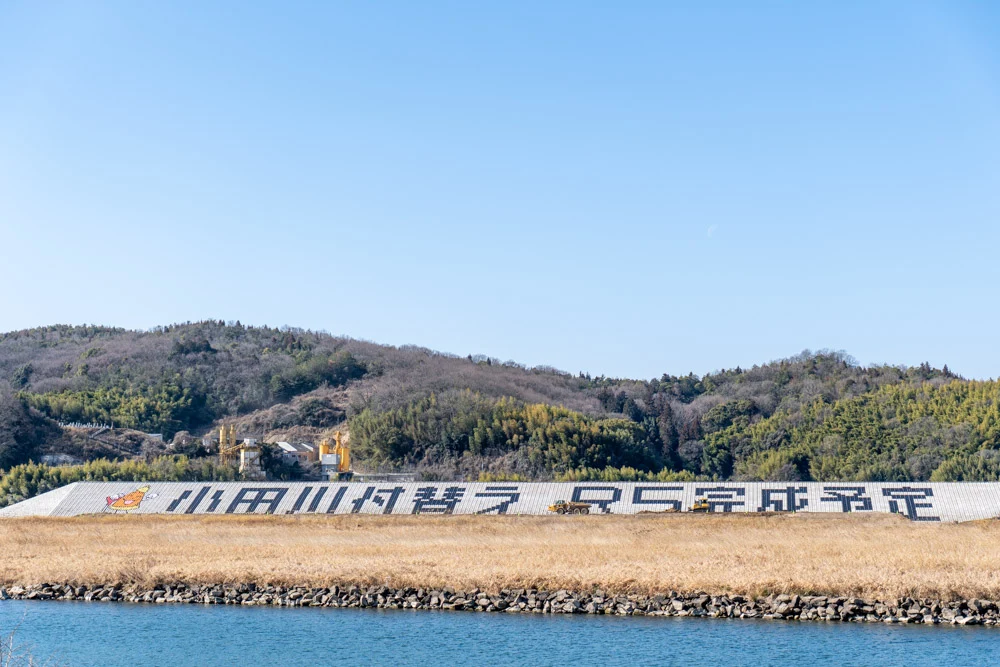
The levee visible on the left connects to the levee on the right, separating the Oda River flowing in the foreground from the Takahashi River visible in the background.
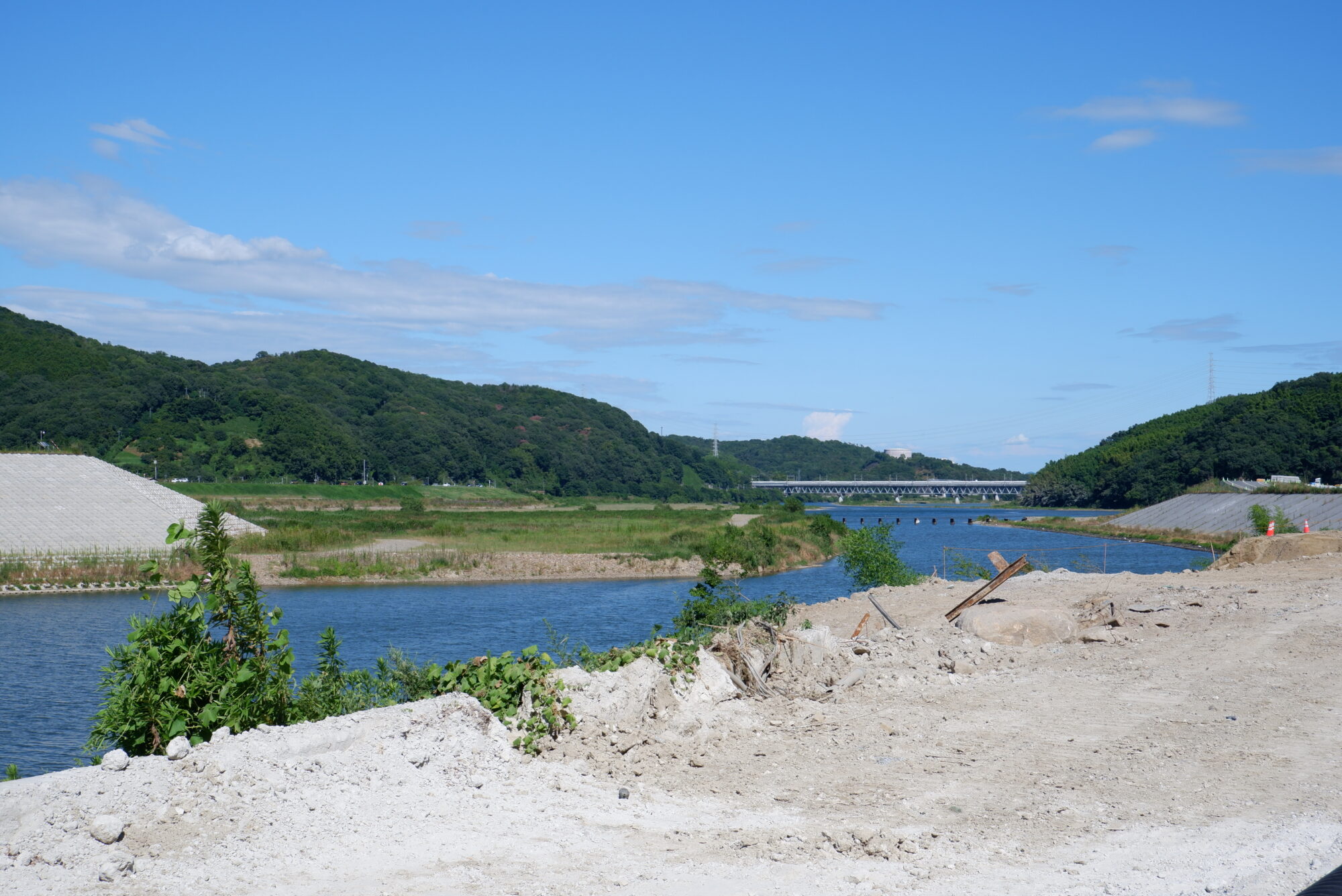
Grass has been planted on the levee for greening, and the words "Scheduled for completion in R5" have also changed to green grass.
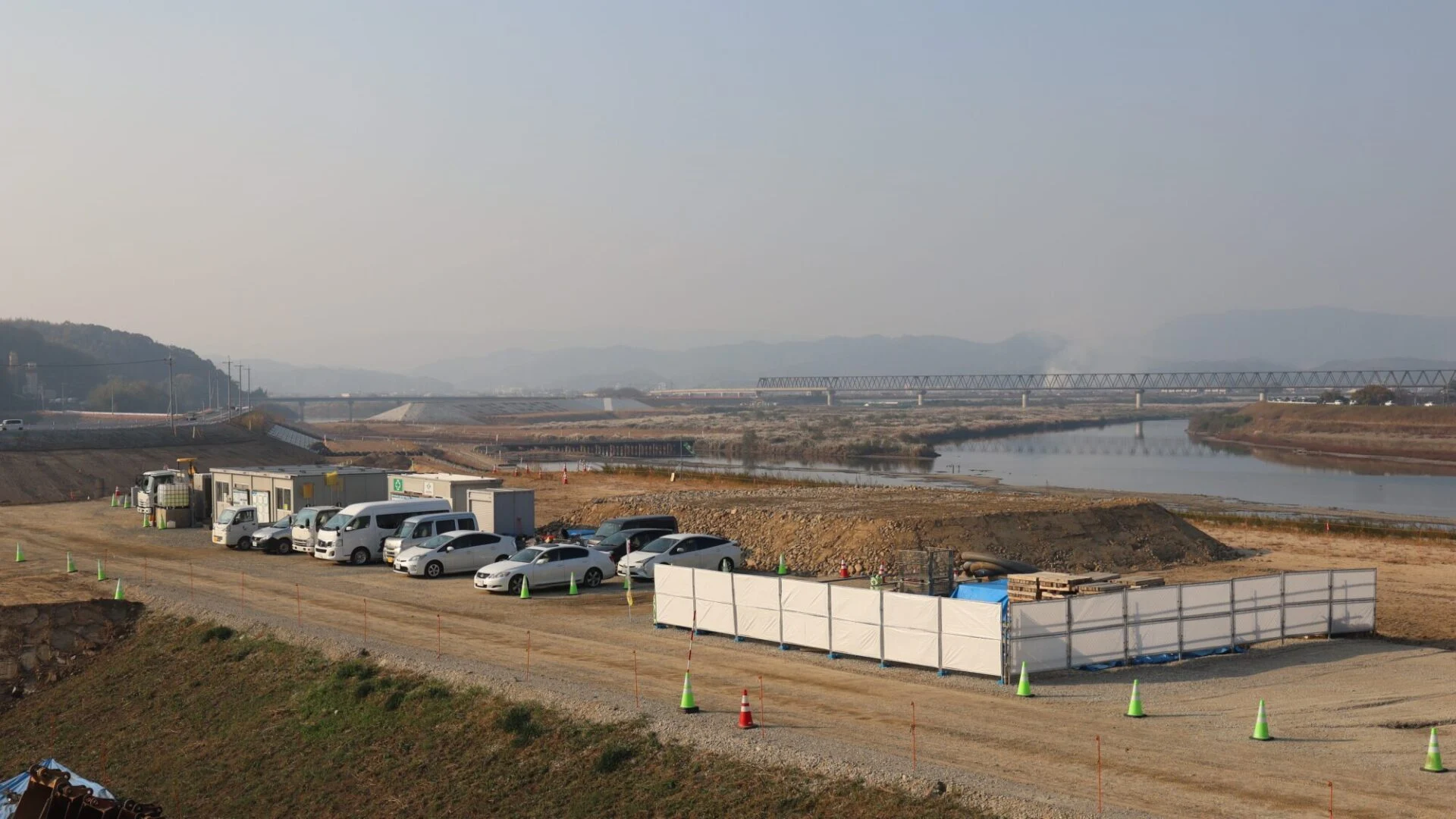
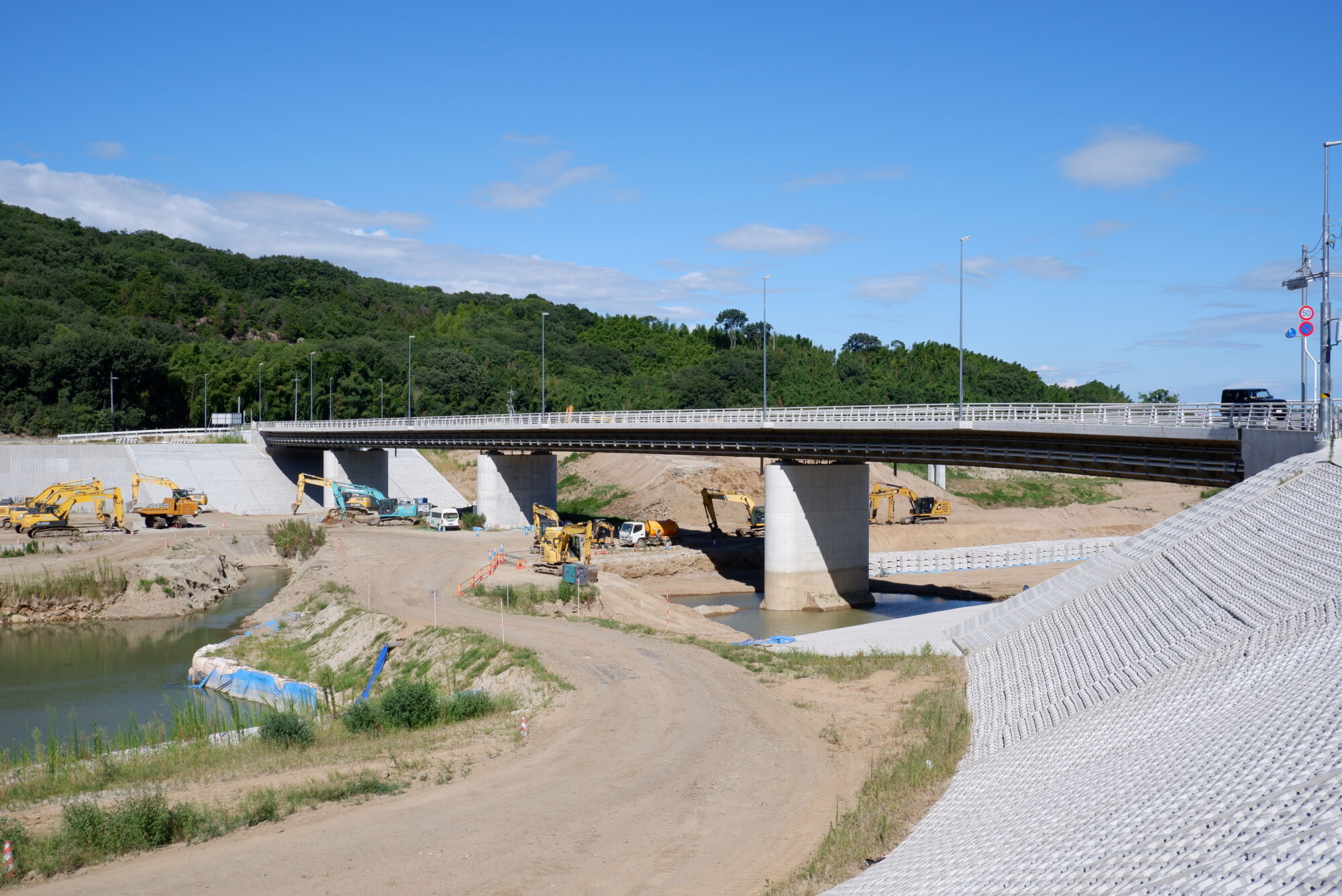
▼ The Shin Yanaihara Bridge opened on August 17, 2022.
Excavation is being carried out under the bridge, which will become the new flow path of the Oda River.
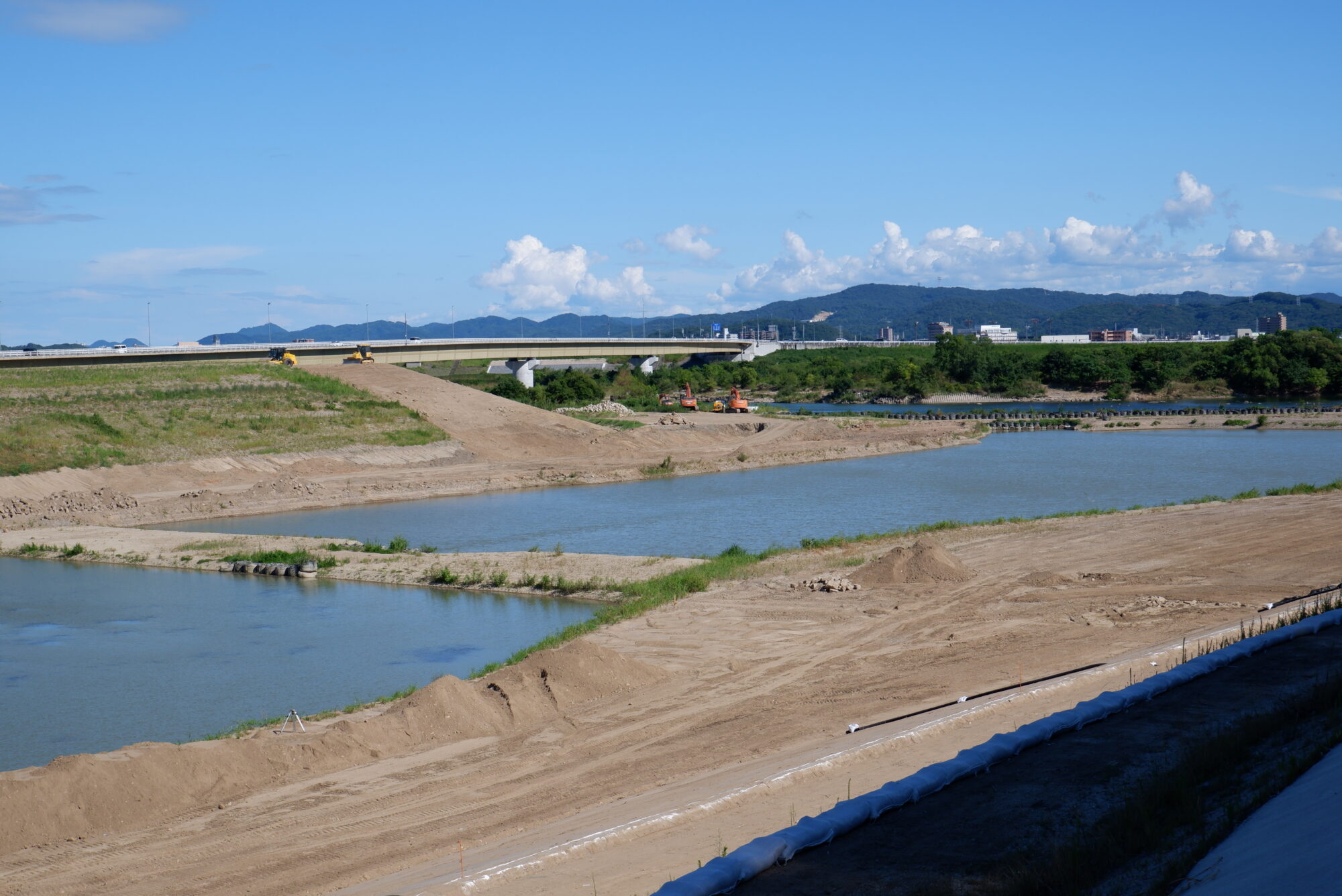
The new confluence point of the Takahashi River and Oda River will be further downstream from this Shin Yanaihara Bridge.
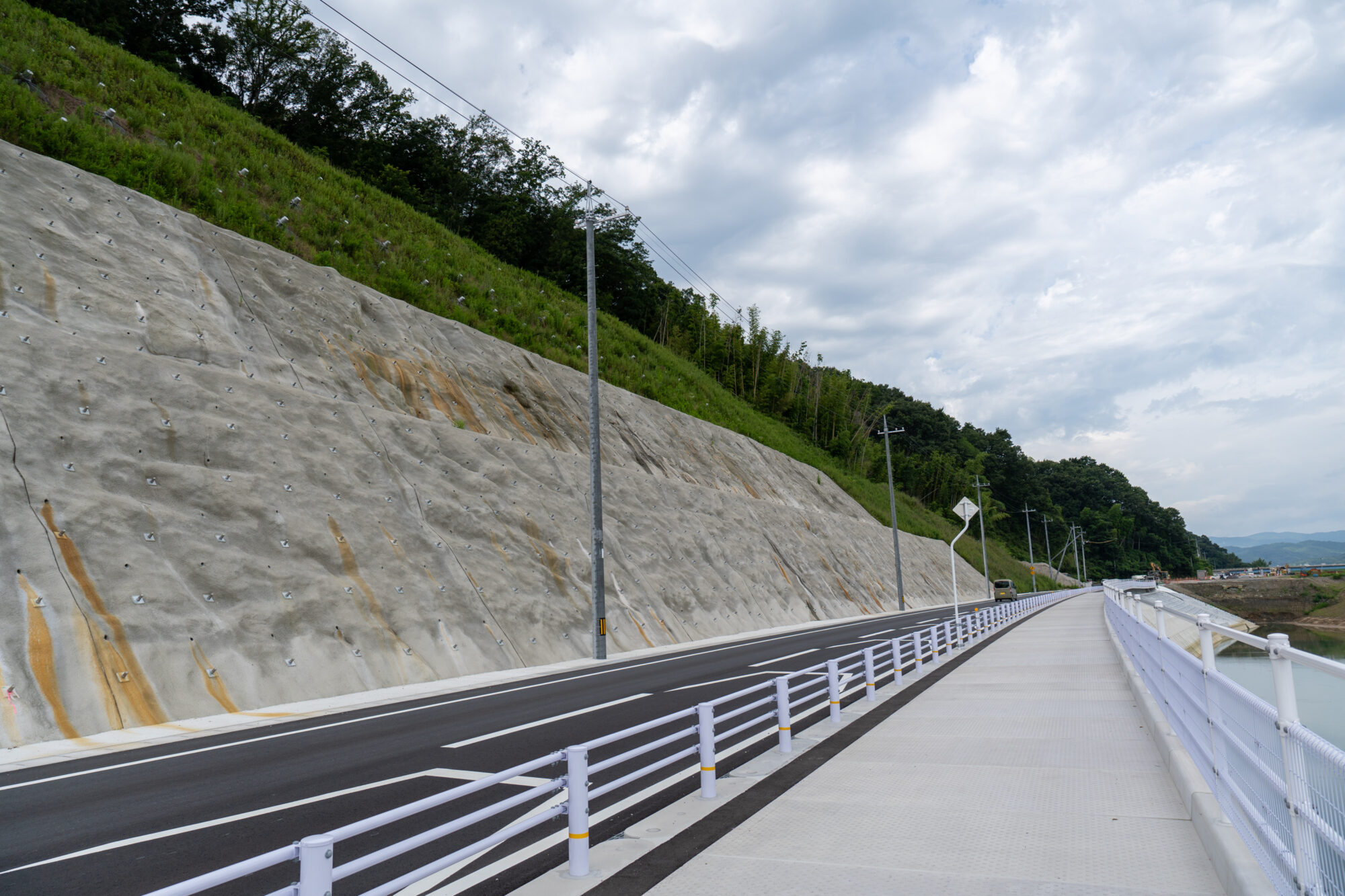
▼ The excavation work in Minamiyama has been completed, and the new prefectural road was opened for use on June 21, 2023.
▼ The river disaster prevention station under construction in Yanaihara, Funao Town.
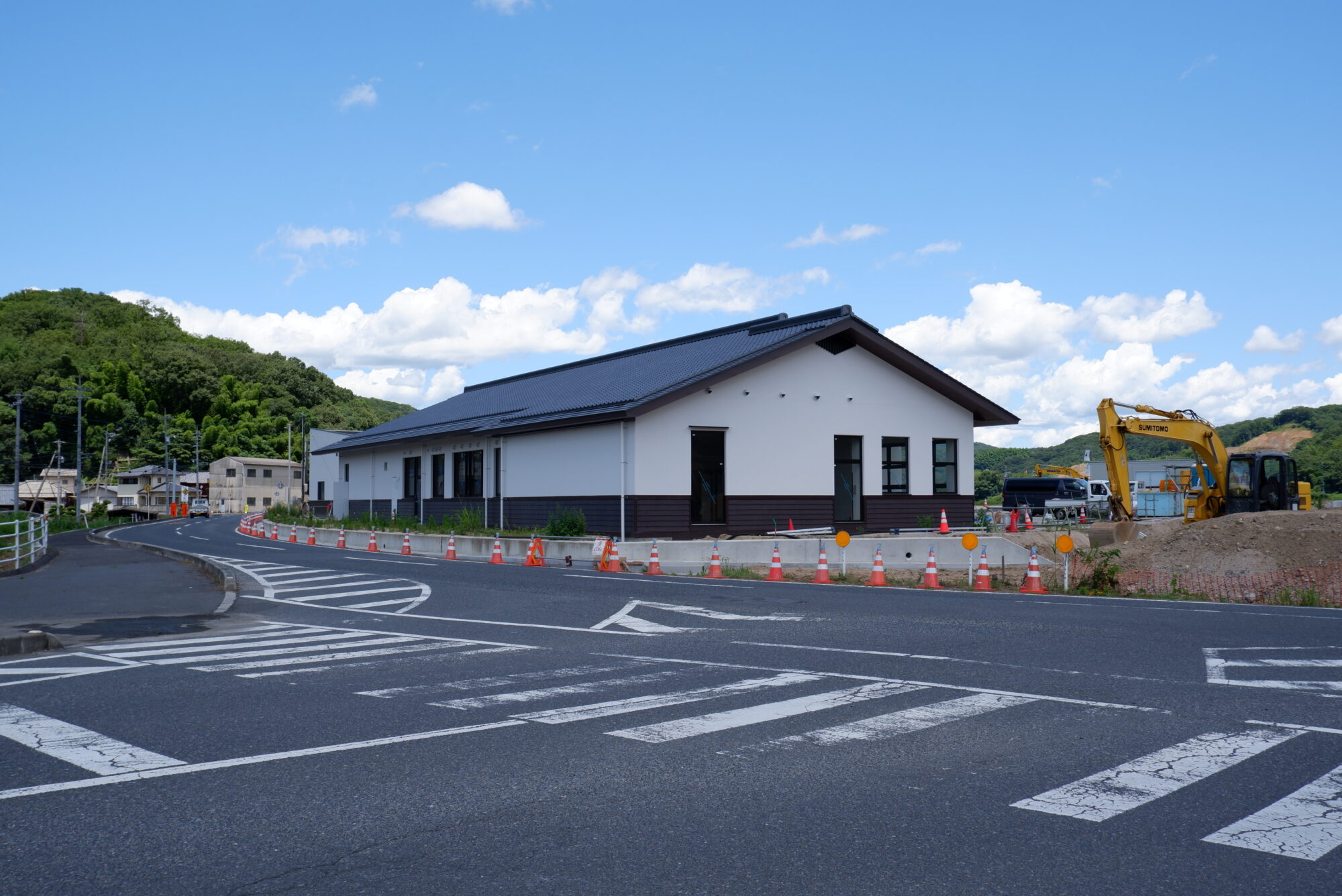
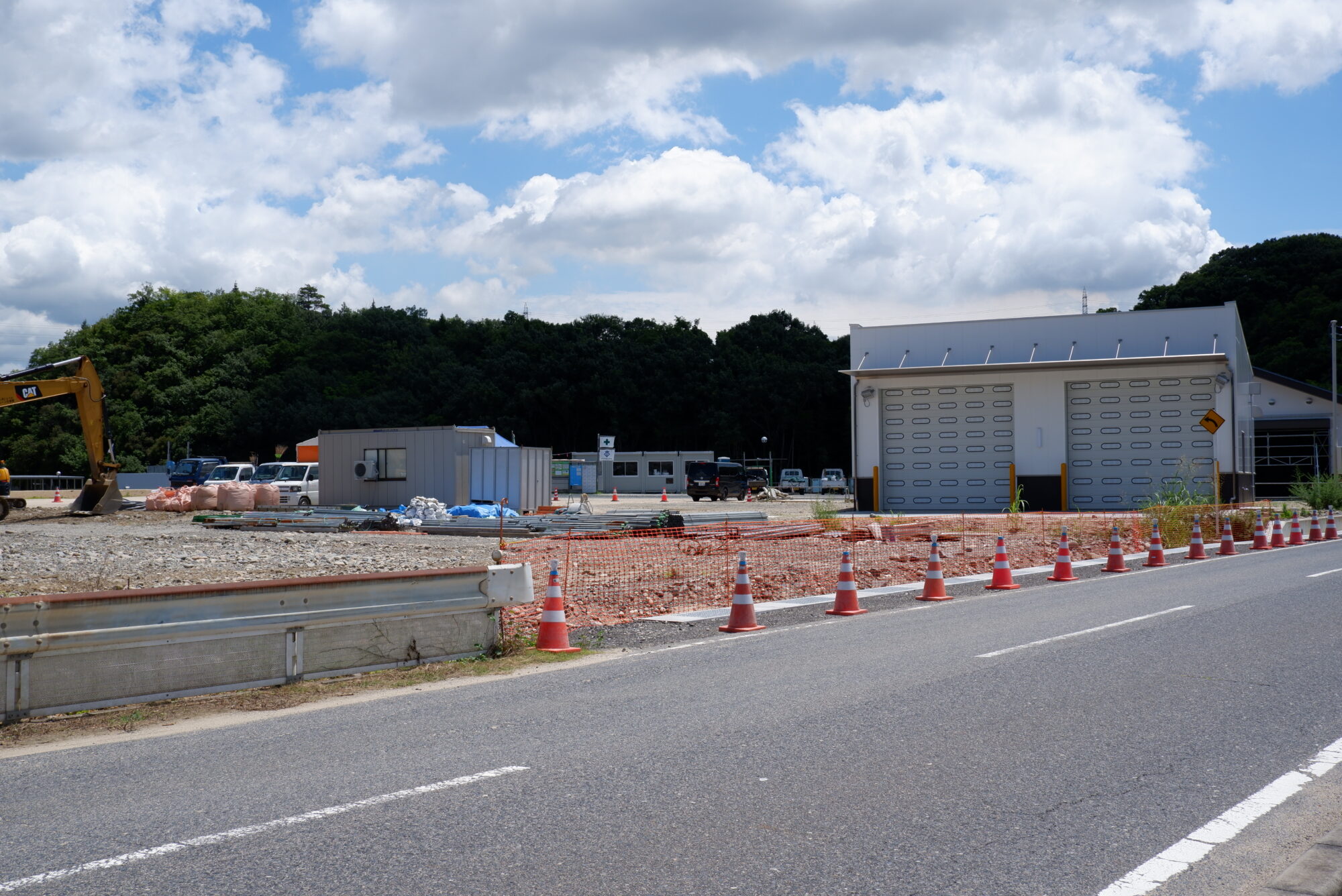
This river disaster prevention station can be used as a park on normal days, but in emergencies, it will serve as a place for water disaster activities and as a base for the front line.
It can also store materials such as blocks and will be equipped with a heliport.
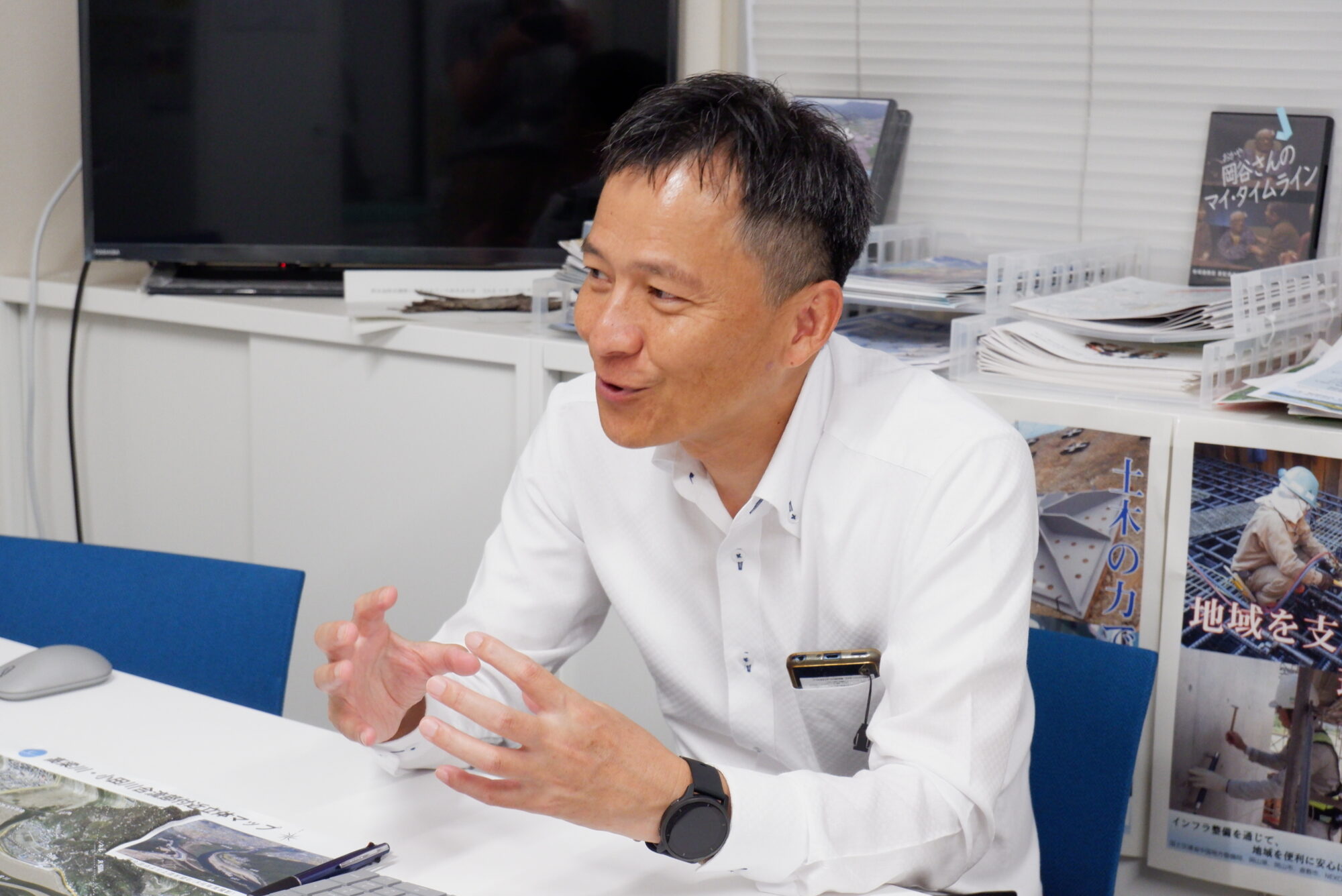
Interview with Yasuhiko Hamada, Director of the Takahashi River and Oda River Emergency Flood Control Office
We asked about the Oda River confluence point relocation work, which is the core of the Project, as well as the soft projects being implemented.
The Oda River confluence point relocation work is scheduled to be completed by the end of R5. Can you tell us about the current progress of the construction?
Hamada (no honorifics)
The project is progressing as planned, and as of July 2023, 81% has been completed.
There is a big sign on the levee saying "Scheduled for completion by the end of R5," so there is pressure not to delay it (laughs).
We are entering the season when rivers are likely to swell due to concentrated heavy rain and typhoons, but since the July 2018 heavy rain disaster, we have been advancing excavation of river channels and strengthening levees.
However, in the current state where the confluence point relocation work is not yet complete, it cannot yet demonstrate sufficient effectiveness.
Of course, I hope there will be no damage and that there will be no setbacks in the construction.
The Oda River confluence point relocation work is being carried out as a "Special Emergency Project for Severe River Disasters (Gekitoku Project)." Is there a difference from regular public works?
Hamada
The sense of speed is different.
Originally planned to be done over 10 years, it is now being done 5 years ahead of schedule.
I believe that the fact that the schedule has progressed without delay even during the COVID-19 pandemic is thanks to the contractors.
No matter how much I say, "We will complete it within this fiscal year," if there are no contractors actually working, the construction will not progress.
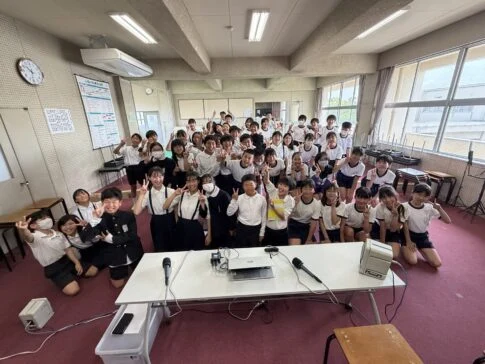
You have actively engaged in soft measures such as outreach classes and local disaster prevention events over the past 5 years. Have you noticed any changes in Mabi?
Hamada
I feel that disaster prevention awareness has been cultivated in Mabi over these 5 years.
Efforts are now being made to address not only heavy rain but also earthquakes and other disasters, and I believe that this high level of disaster prevention awareness is a strength of Mabi.
In the early days, we actively engaged with the community and thought together, but now, if we help a little when they are in trouble, the locals can move forward on their own.
Recently, we have started receiving requests for outreach classes from outside Mabi, and I feel that awareness of the importance of disaster prevention is increasing.
First of all, when seeing news about disasters, I hope people will not just say, "That place is in trouble," but rather take it as an opportunity to think about "what actions we should take."
If you have any expectations for Mabi in the future, such as "I hope it becomes this kind of town," please share.
Hamada
Once the Oda River confluence point relocation work is completed, it will definitely be safer than it was 5 years ago.
However, I hope people will recognize that "hard measures alone cannot guarantee complete safety; the time to evacuate has increased compared to before."
Additionally, the power of the community is essential for disaster prevention.
In times of crisis, it is the neighbors who can help each other.
I hope for deeper community connections and for the younger generation in the community to be able to exert their strength.
Conclusion
If the Oda River confluence point relocation work is completed as scheduled by the end of R5, one of the anxieties of living in Mabi will be alleviated.
However, during the interview, I repeatedly heard the explanation that "there are limits to just hard measures," and I realized that we need to stockpile supplies, decide where and when to evacuate, and learn the actions to take in emergencies.
Moreover, Director Hamada continues to engage with the community by attending local events.
I felt that the relationship is not just "administration and residents carrying out construction as planned," but rather a posture of thinking about disaster prevention in Mabi together, which has garnered understanding and trust from the locals.
The Mabi Emergency Flood Control Project is in its final stages.
Mabi is progressing towards becoming a disaster-resistant area from both hard and soft perspectives, creating a town where residents can live with peace of mind.