Have you ever wondered where improperly discarded trash ends up?
In fact, one place trash ends up is an island in the Seto Inland Sea.
Large quantities of cans and plastic bottles that have washed in from where we live can be found on an island with no shops or vending machines.
The Okayama Remote Islands Project is an initiative that takes people to islands in the Seto Inland Sea to learn firsthand about the problem of marine litter.
It is organized by the street-cleaning volunteer group green bird, a nonprofit organization (Green Bird) and L'Occitane, a cosmetics brand founded in southern France.
The second Okayama Remote Islands Project was held on Saturday, October 21, 2023.
With L'Occitane hoping to continue its activities, participants returned to Mukuchi Island, visited during the previous event, and collected marine litter.
Here we introduce an environmental conservation activity held on an island in Kurashiki by a street-cleaning volunteer group and a cosmetics brand founded in southern France.
The information presented was current when this article was published in November 2023. Please note that it may differ from current information.
What is the Okayama Remote Islands Project?
In its regular activities, green bird focuses on picking up trash in urban areas.
For the Okayama Remote Islands Project, together with its sponsor L'Occitane, it leaves the city and collects marine litter on islands in the Seto Inland Sea.
Overview of the Okayama Remote Islands Project
The Okayama Remote Islands Project invites people living in Okayama Prefecture to visit islands in the Seto Inland Sea, so that through firsthand experience they can appreciate the character and environment of the islands in the Seto Inland Sea and become aware of the challenges facing the islands.
The project was organized by green bird, a nonprofit organization, with sponsorship from cosmetics brand L'Occitane, founded in southern France.
On Saturday, October 21, 2023, the second Okayama Remote Islands Project visited Mukuchi Island, off Kojima in Kurashiki City, and collected marine litter that had washed up on the island's shore.
The aim is to visit an island in the Seto Inland Sea and learn about the reality of marine litter firsthand.
The first event was held on Saturday, May 20, 2023, and also visited Mukuchi Island.
Because L'Occitane wanted to continue the activities, the same location was chosen again.
Cosmetics brand L'Occitane and nature conservation activities
L'Occitane is a cosmetics brand that originated in Provence, a region in southeastern southern France.
Through cosmetics made with natural ingredients, it brings the Provence lifestyle to people around the world.
It has stores throughout Japan, including two locations in Okayama Prefecture.
For L'Occitane, which runs a business that benefits from nature's bounty, the plants and soil that provide the ingredients for its products are precious.
Wanting to protect nature, it organized an event to collect marine litter together with green bird.
Street-cleaning volunteer group green bird, a nonprofit organization
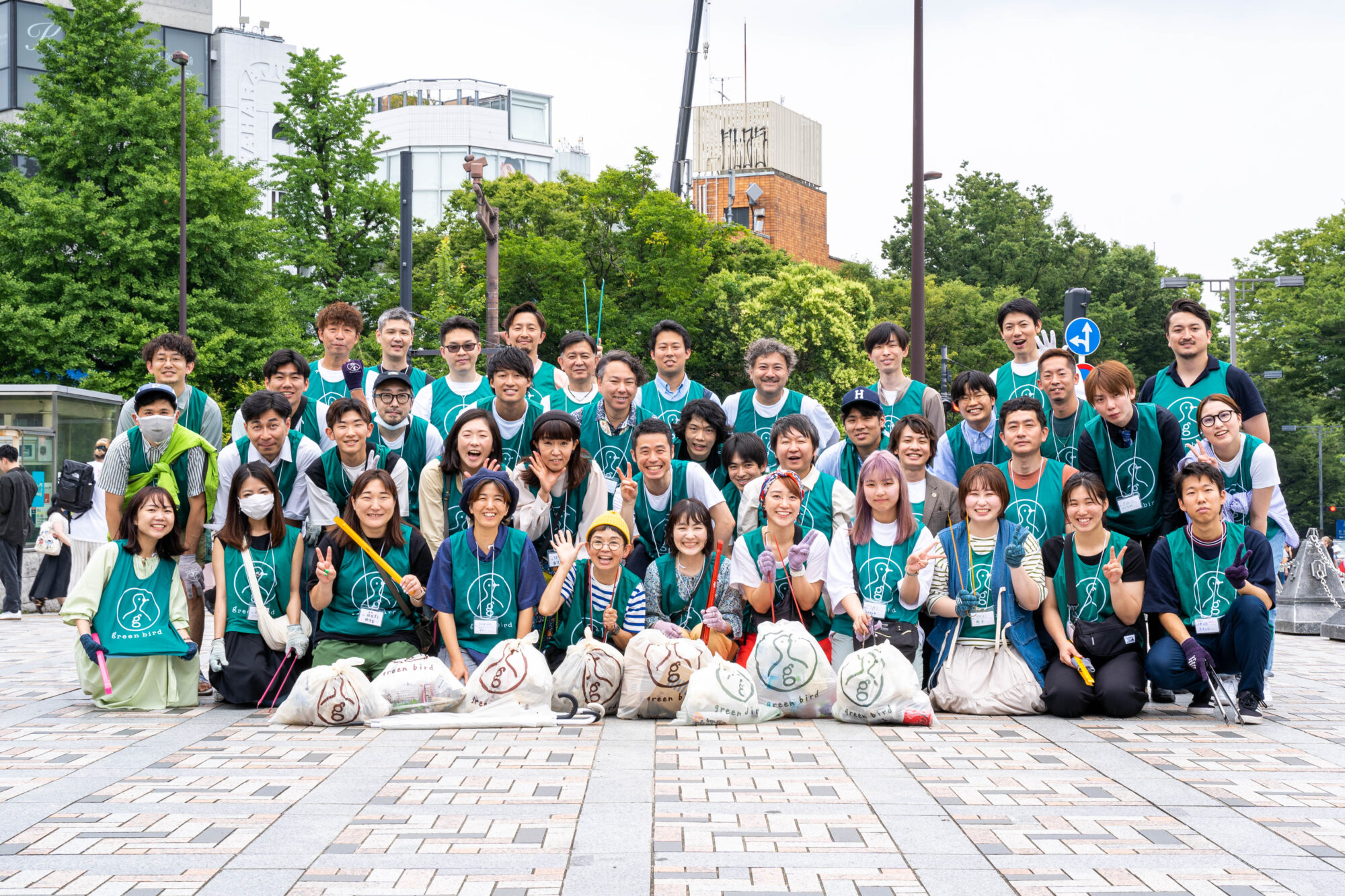
green bird, a nonprofit organization, is a street-cleaning volunteer group founded in Tokyo's Omotesando district in 2002.
Together with fellow volunteers in 62 teams across Japan and 10 teams around the world, it continues trash-picking activities that anyone can easily join.
There are no special requirements to participate; anyone can join simply by showing up at the meeting place at the designated time, without bringing anything.
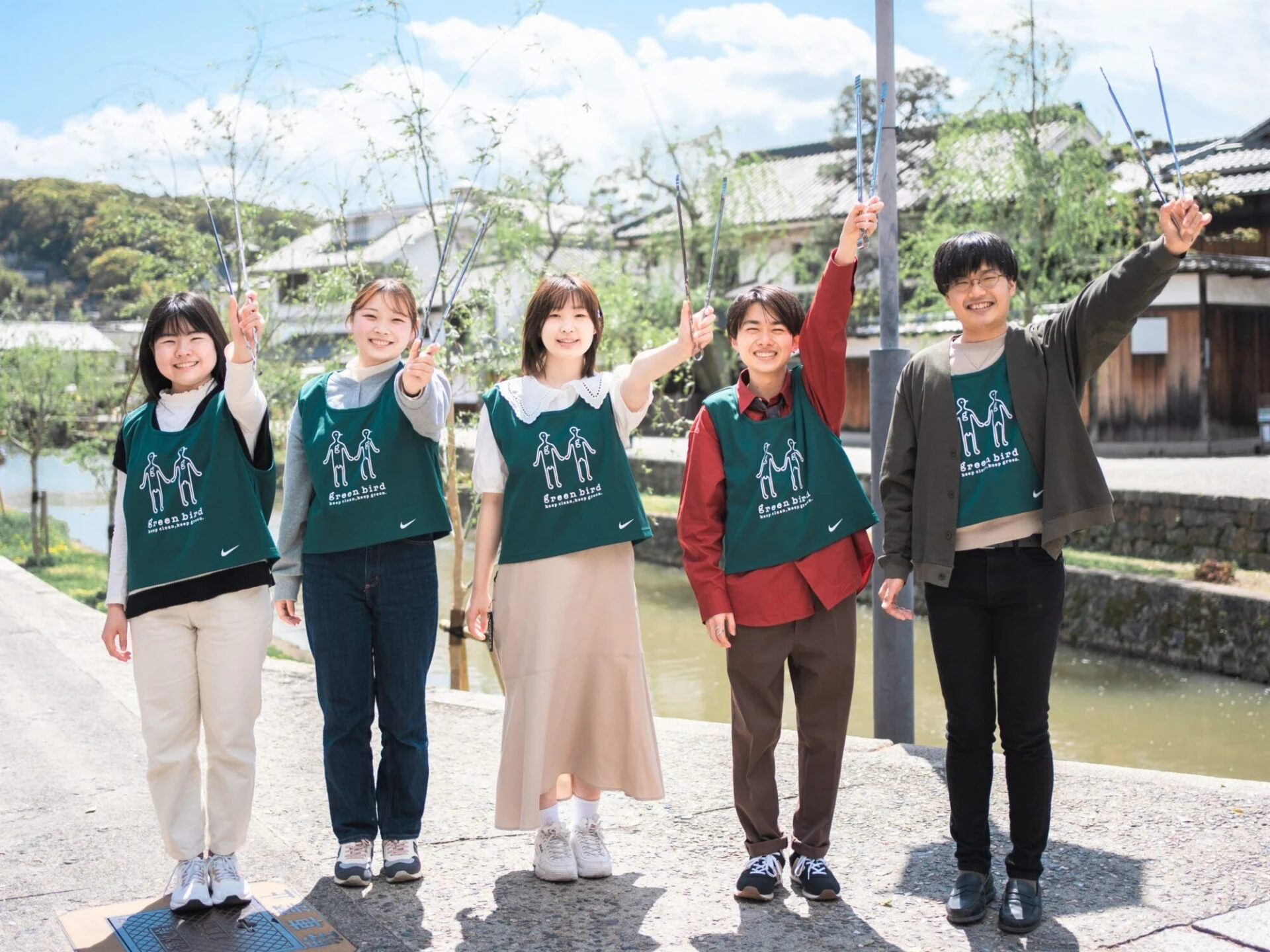
The Okayama Remote Islands Project was coordinated by the green bird Okayama Team.
Founded in 2013, the green bird Okayama Team has carried out around 500 trash-picking activities around Okayama Station, JR Kurashiki Station and the Bikan Historical Area, and Uno Port.
People of all ages, nationalities, and occupations take part in its regular activities, which not only provide opportunities to pick up trash but also create a place for people from diverse backgrounds to connect.
Returning to Mukuchi Island
What changes can be seen when you visit the same island again after a few months?
Here we introduce the activities on Mukuchi Island during the second Okayama Remote Islands Project, held on Saturday, October 21, 2023.
Heading to Mukuchi Island through rough seas
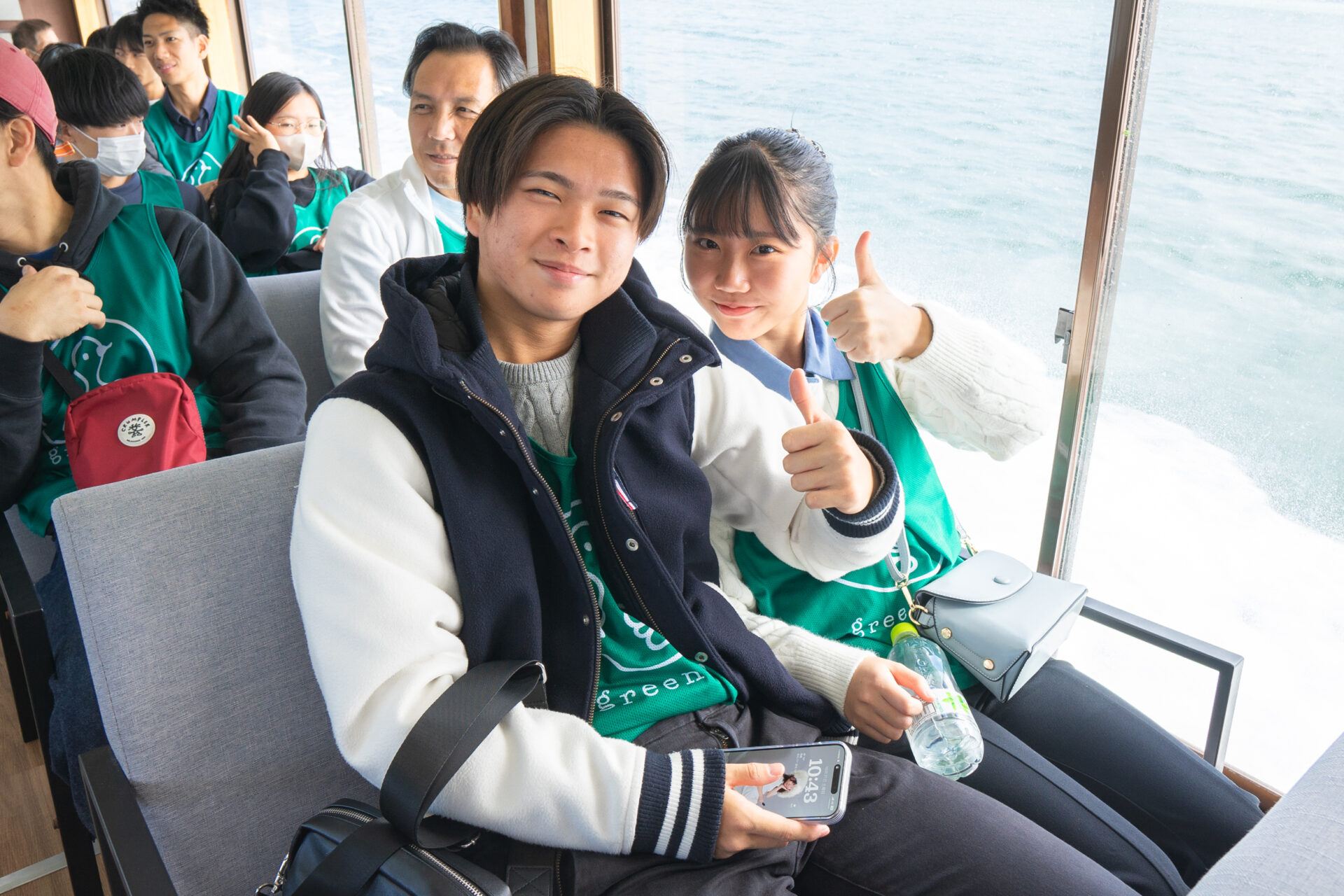
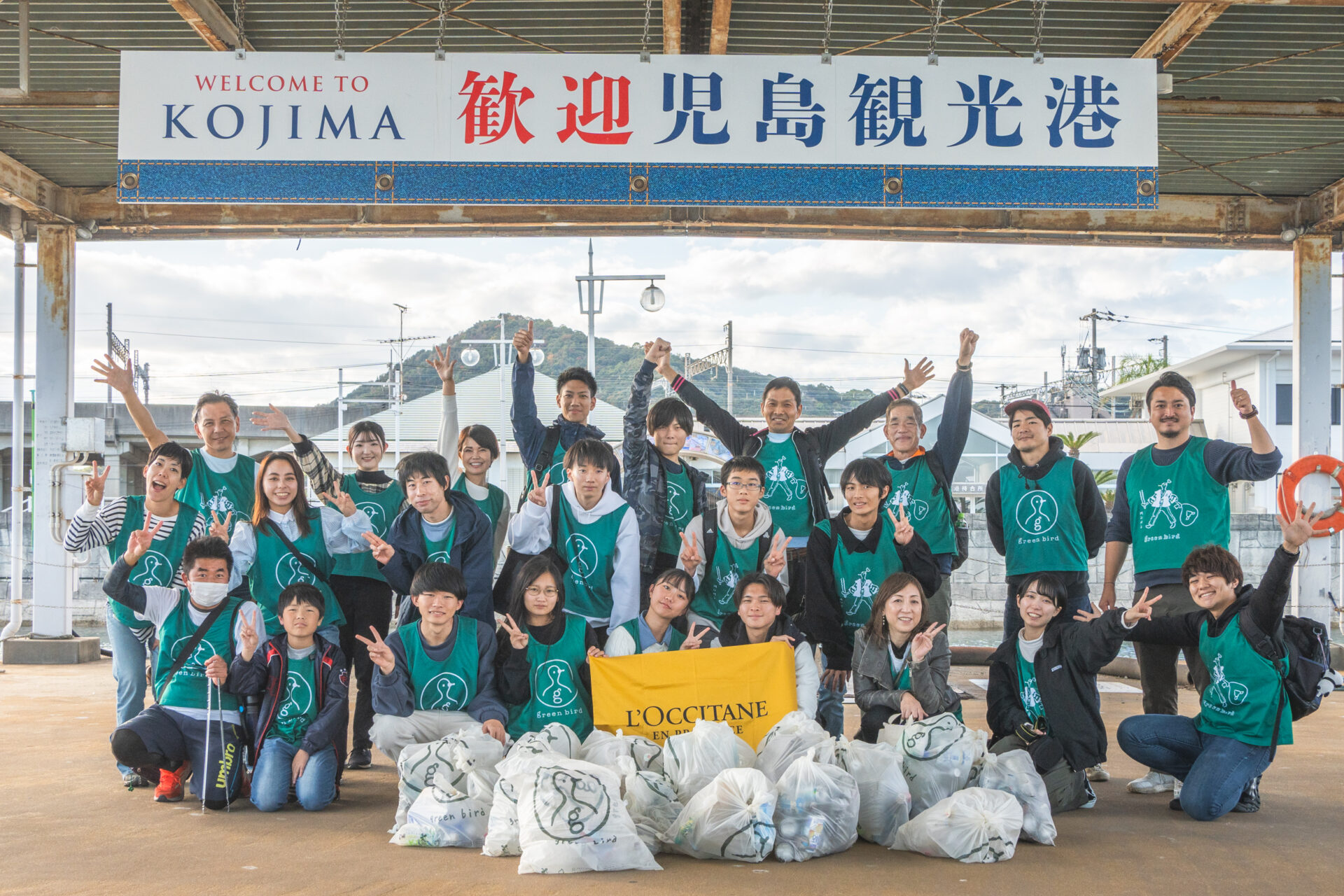
We gathered at Kojima Sightseeing Port to take a boat to Mukuchi Island.
Since there is no regular ferry to Mukuchi Island, we chartered a boat to get there.
The wind was blowing in from offshore that day, and the waves were rougher than usual.
A little while after setting off, the boat began pitching up and down like a roller coaster.
Some people enjoyed the boat's vigorous movement, but it seems others began to feel seasick.
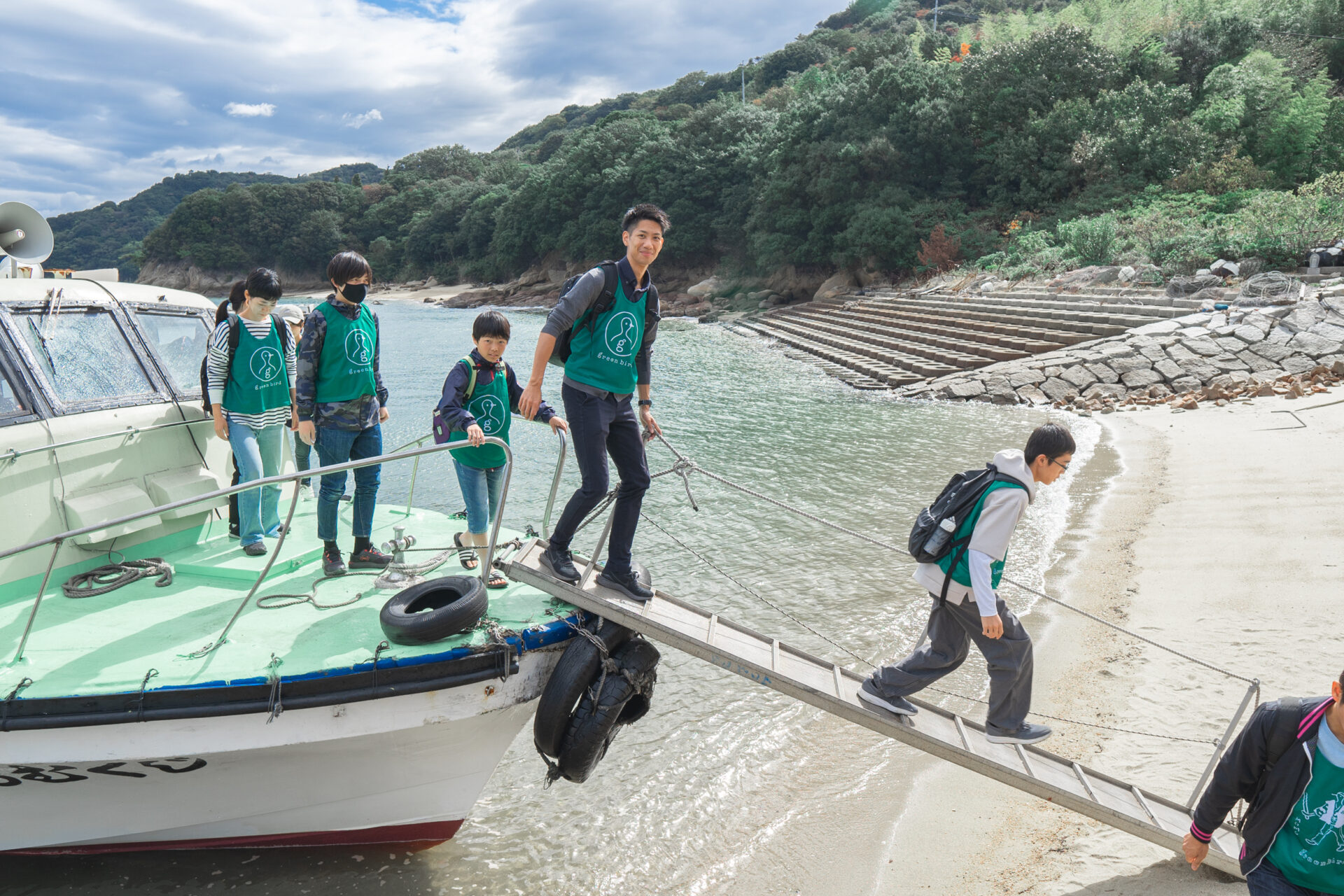
▼ To land on Mukuchi Island, we walked across an unstable plank laid from the bow.
Introductions before the activity
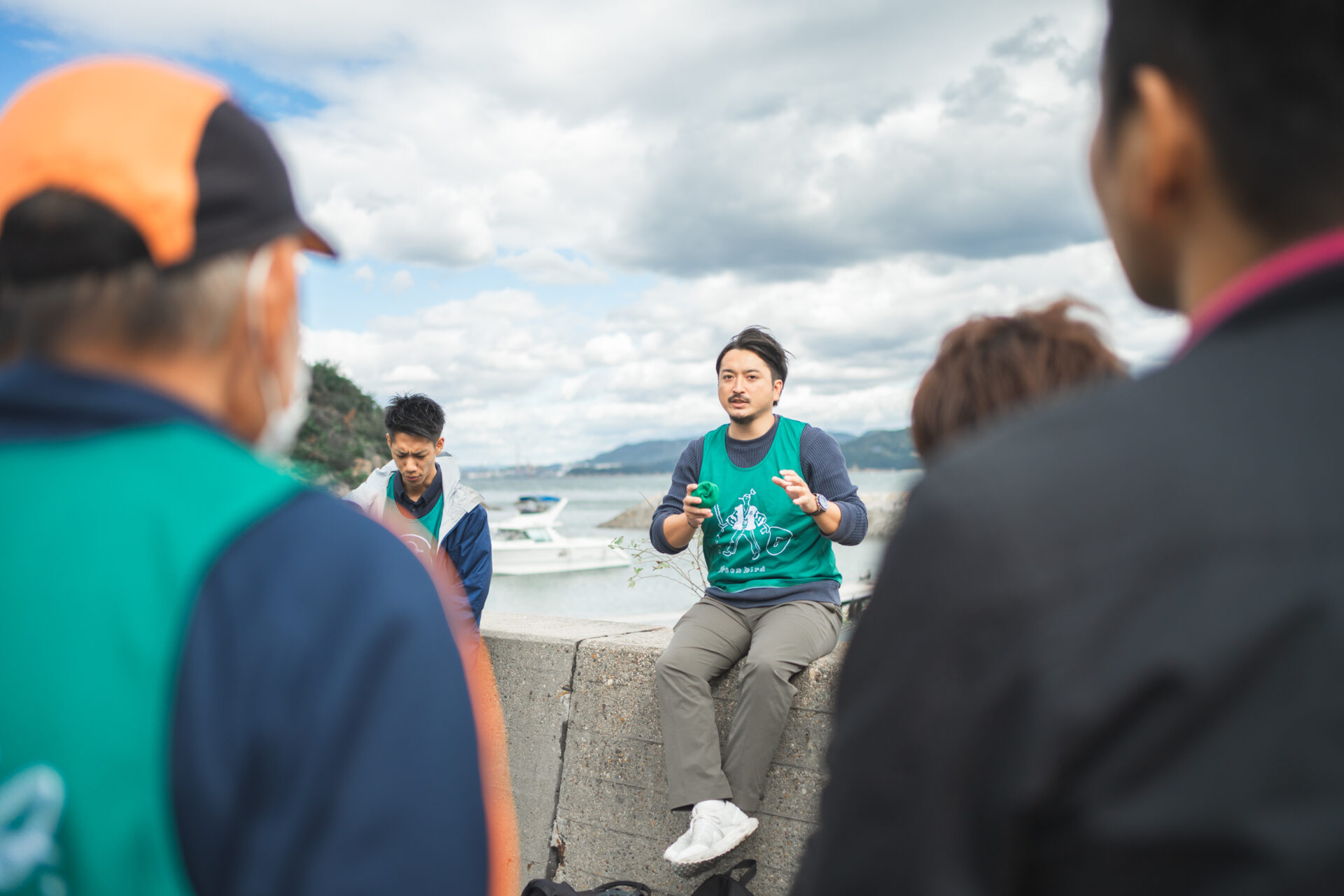
After arriving on Mukuchi Island, Keisuke Fukuda, representative director of green bird, explained the purpose of the activity.
Okayama Prefecture has 19 inhabited islands, and their landscapes and customs are gradually disappearing due to depopulation.
And despite being places where few people live, trash from where we live is washing up on the islands.
▼ Participants were told that the purpose of the activity was to learn about the reality of marine litter on site.
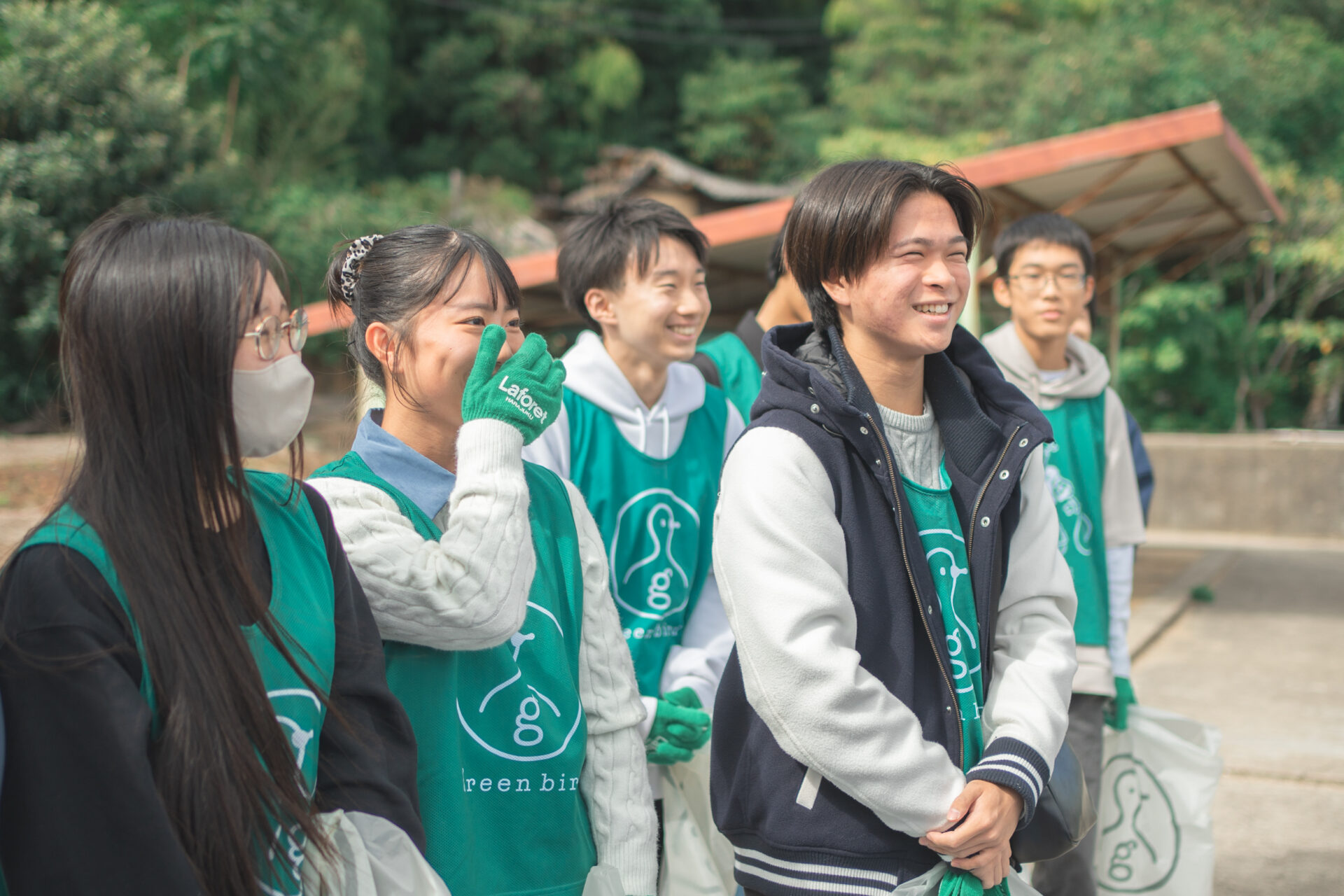
A wide range of ages took part in the second Okayama Remote Islands Project, including elementary school, junior high school, high school and university students, and working adults in their 20s to 50s.
Some regularly took part in the green bird Okayama Team's activities, while others were participating in a volunteer activity for the first time.
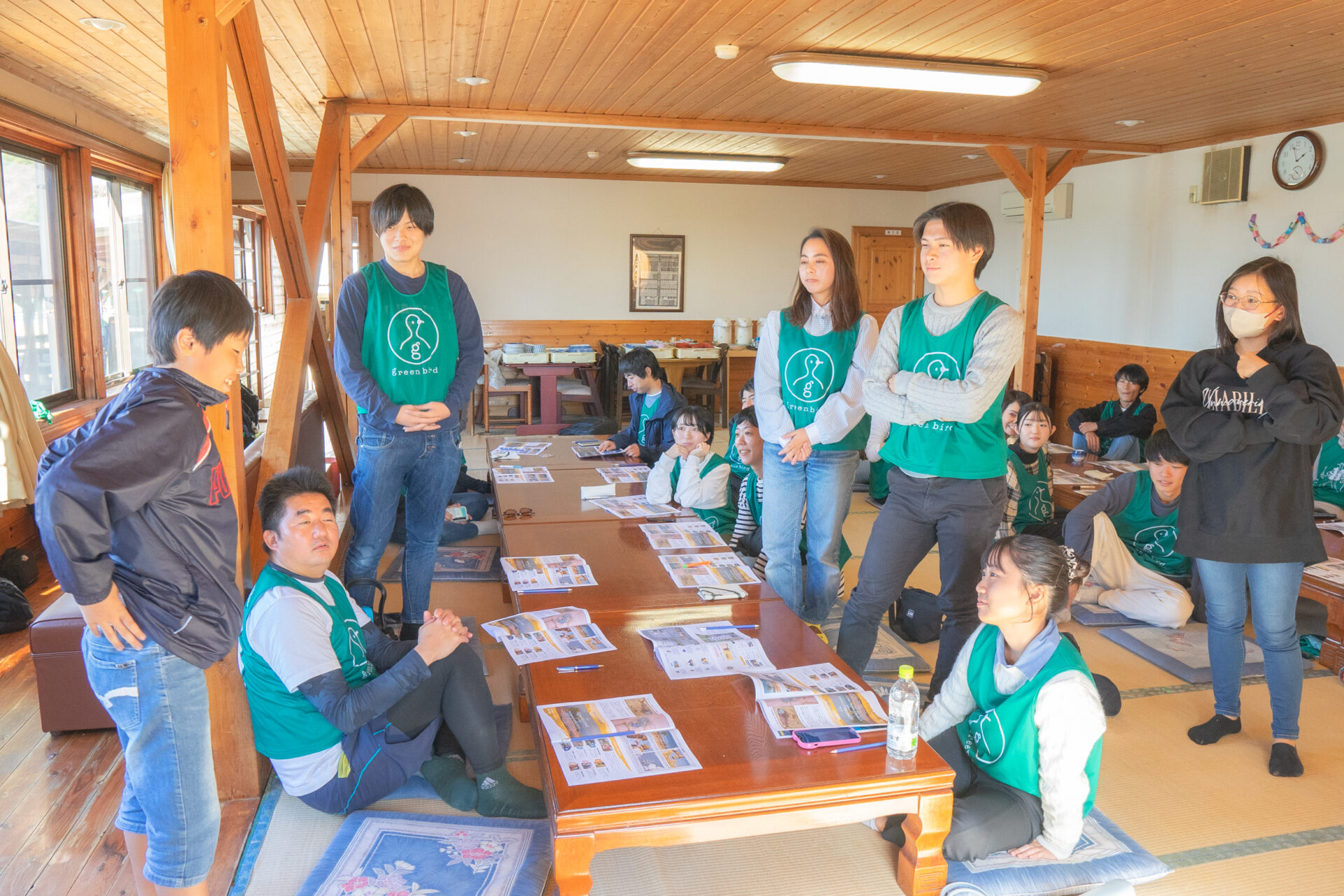
Since many people were meeting for the first time, everyone introduced themselves and shared why they had joined.
Many gave enthusiastic reasons for taking part, such as “I was interested in the marine litter problem” and “It sounded fun to visit an island.”
There were also less enthusiastic responses, such as “My girlfriend invited me, and I was dragged along…”
It's nice that someone would choose picking up trash on an island as a date.
▼ The unexpected reason for joining brought smiles to everyone's faces.
The reality of marine litter on Mukuchi Island
How much marine litter is there on Mukuchi Island?
On an island with no shops or vending machines, we found many things that shouldn't have been there.
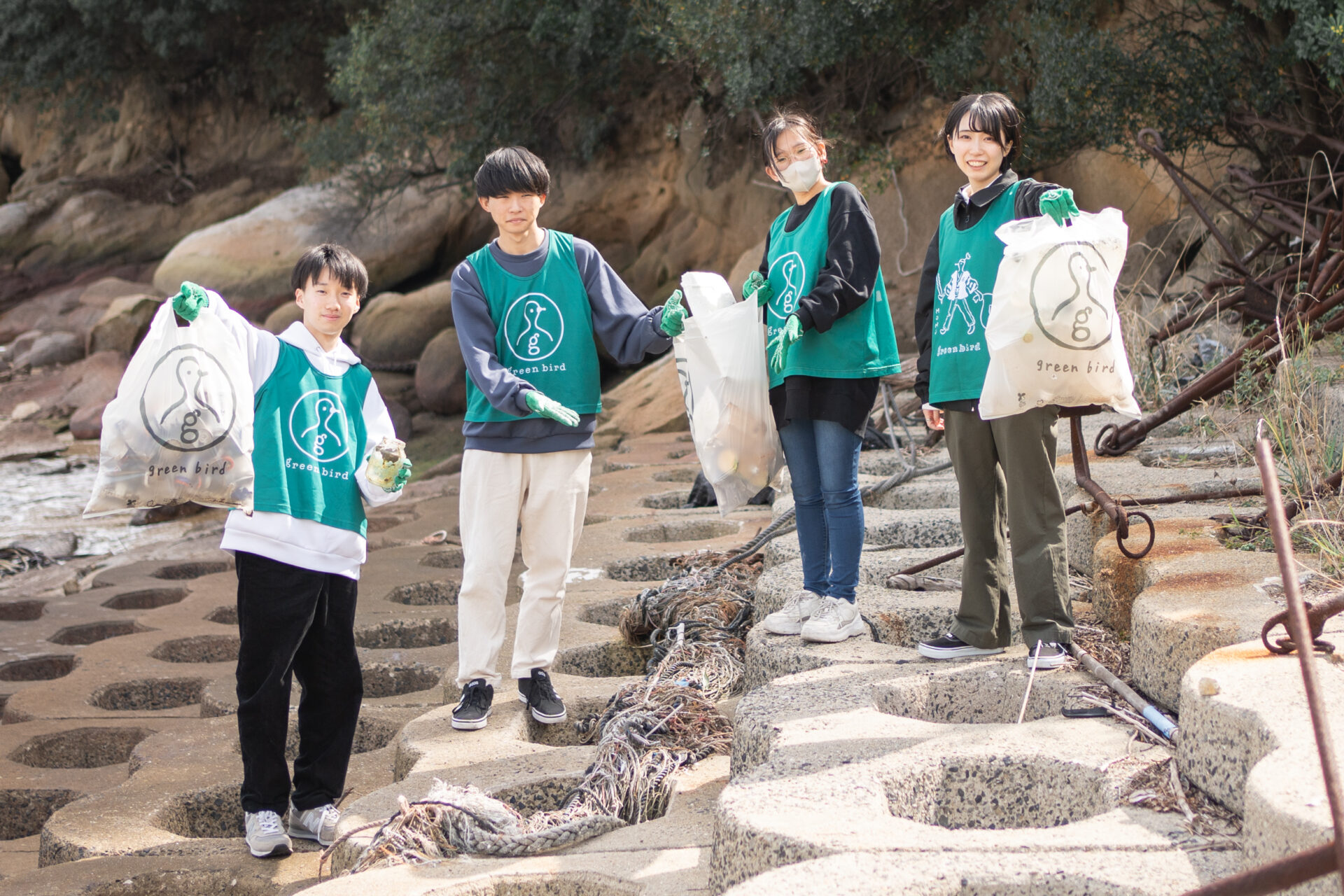
The beach cleanup begins
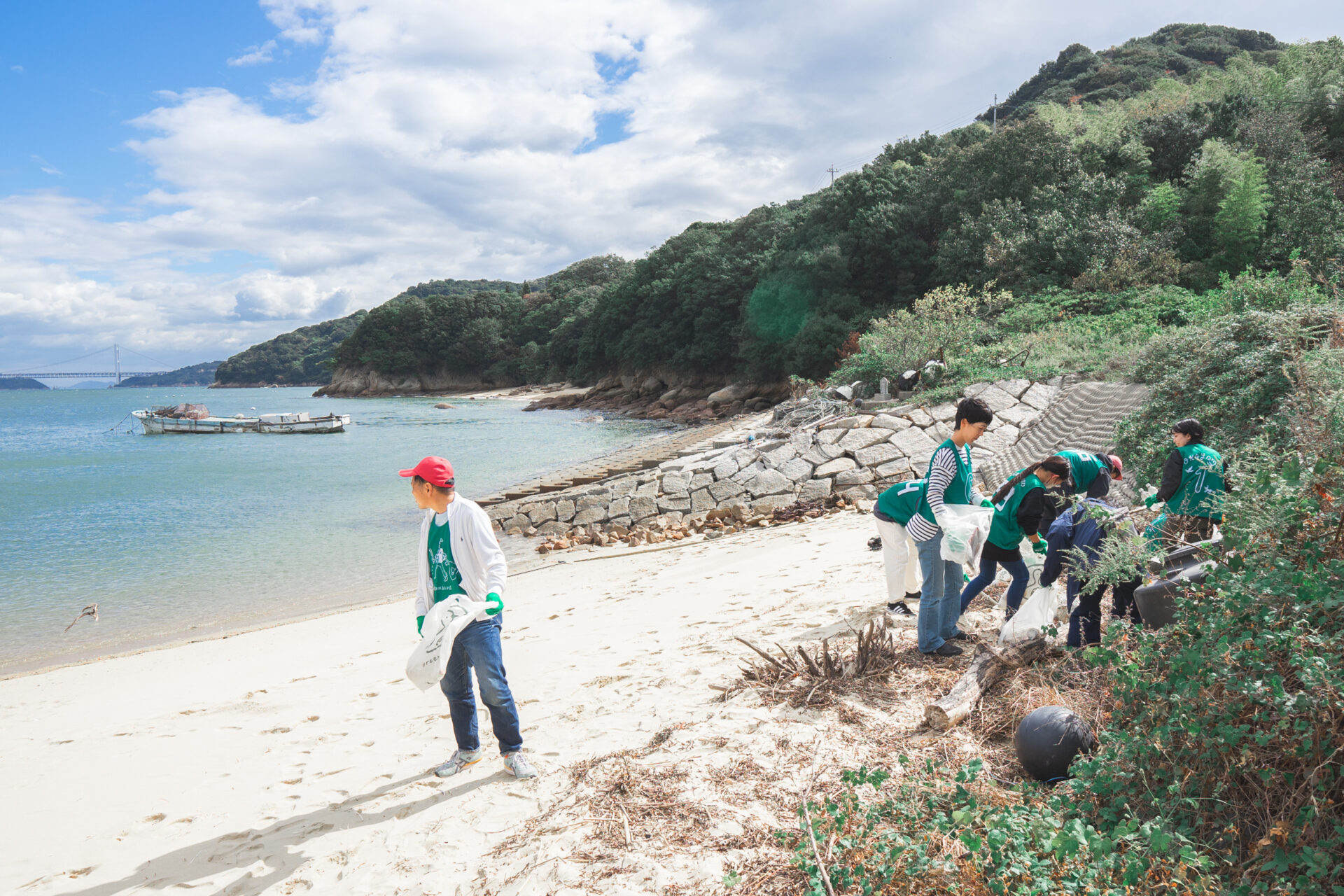
We began picking up trash near the landing where the boat had arrived.
The area around the landing on the island's north side was also a place with a lot of trash during the first activity.
As soon as we started, we noticed that the amount of trash had increased dramatically compared with the previous visit.
▼ There was a lot of trash, but we were picking it up as cheerfully as ever.
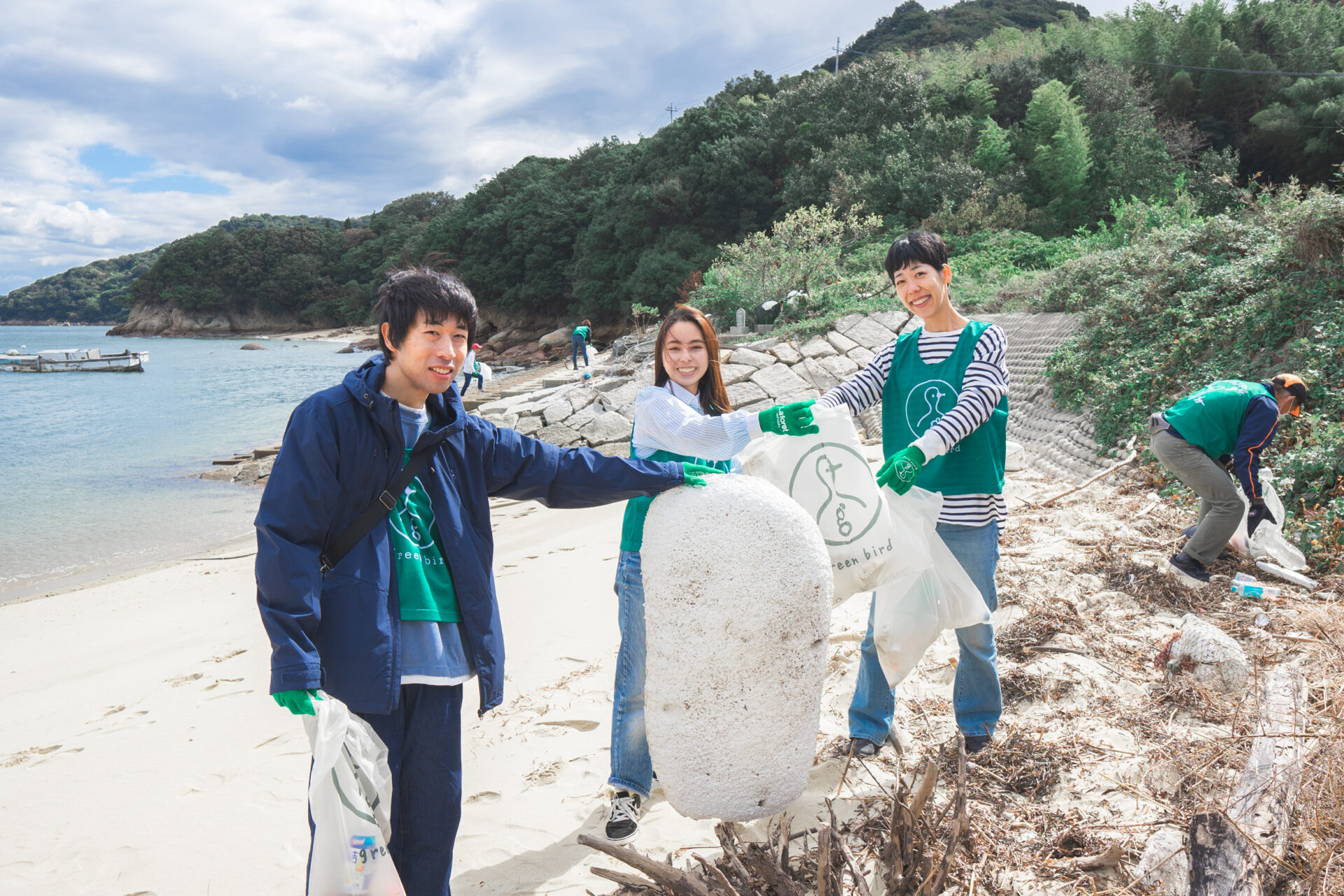
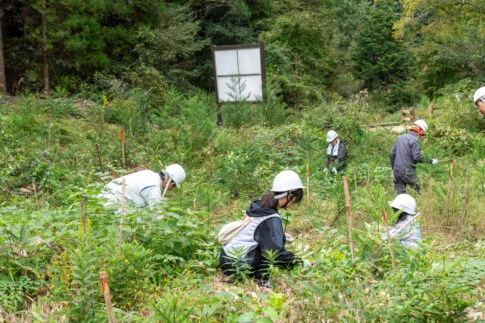
There was more litter in the bushes a little way from the sea than on the beach.
The most common items we found were plastic bottles and Styrofoam.
A characteristic of plastic, its resistance to decomposition, is useful in our daily lives, but becomes a problem when plastic turns into litter.
▼ With our backs to the beautiful sea, we picked up litter in the bushes.
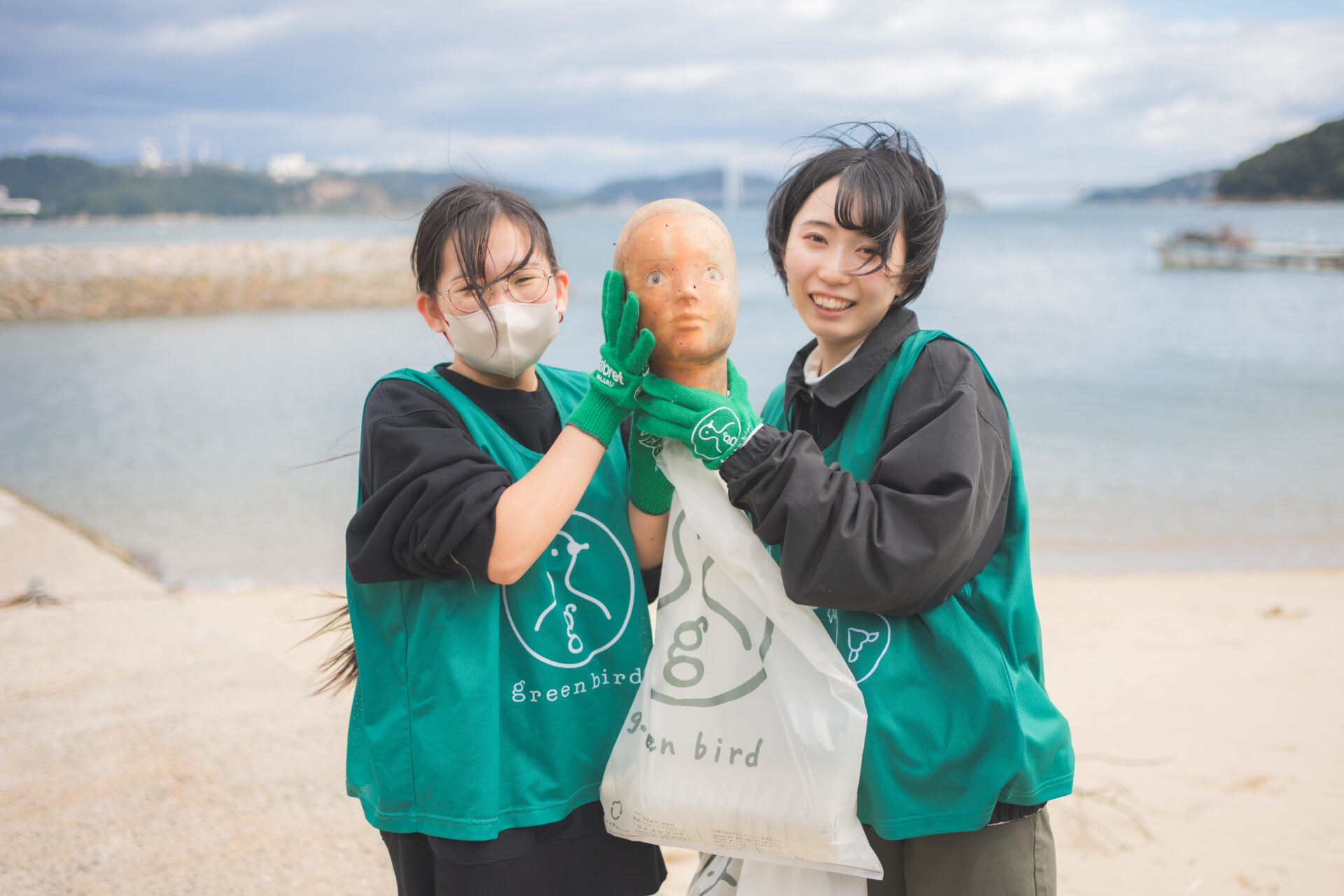
The most surprising piece of litter we found during this activity was a doll's head.
It was probably the head of a mannequin used by barbers to practice haircuts.
It is disappointing to see litter lying around, but finding something unexpected is one of the joys of picking up litter.
▼ The doll, seeing the sunlight for the first time in years—or perhaps decades—may have been happy to be found.
How much litter did we collect?
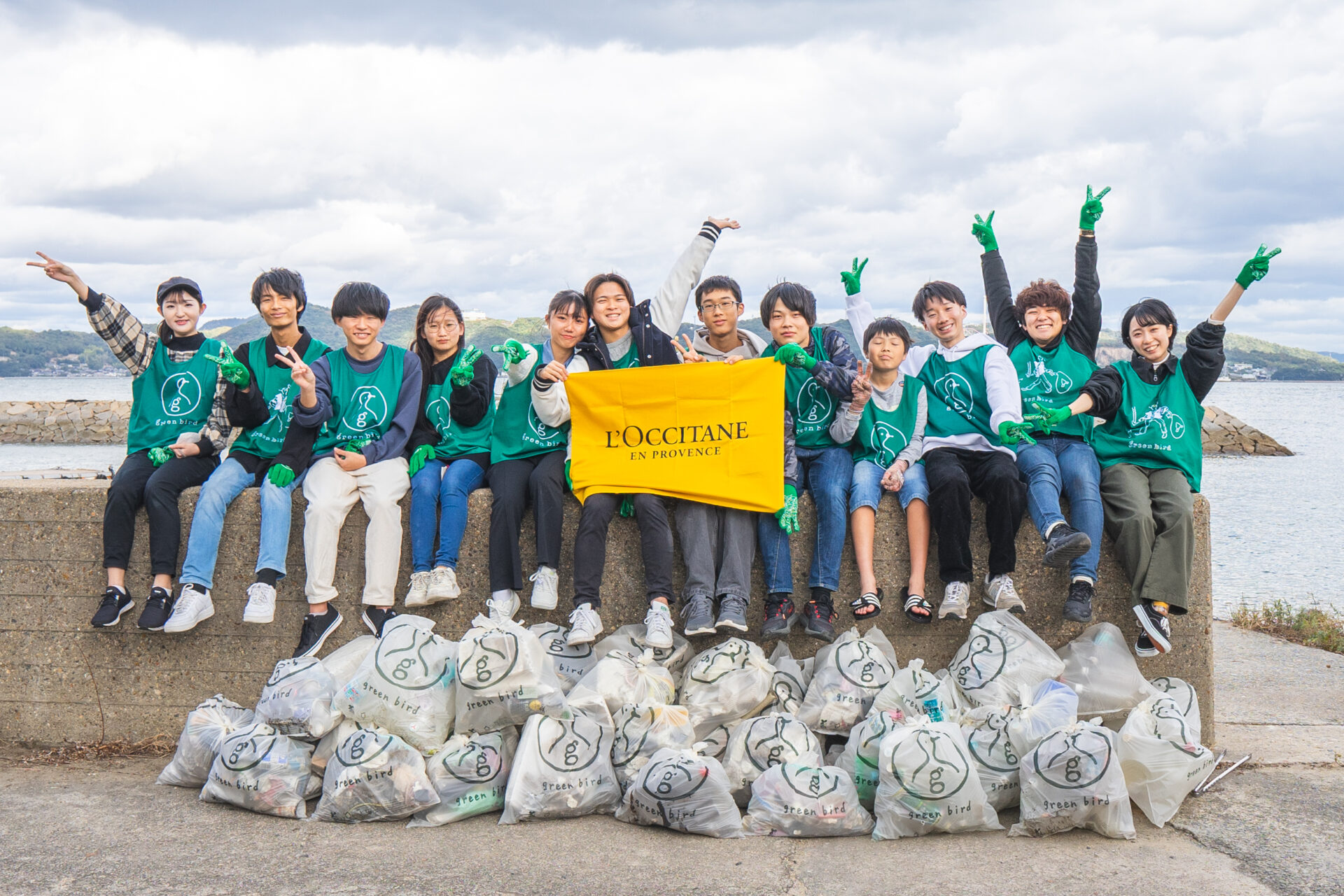
We spent about an hour working around the landing.
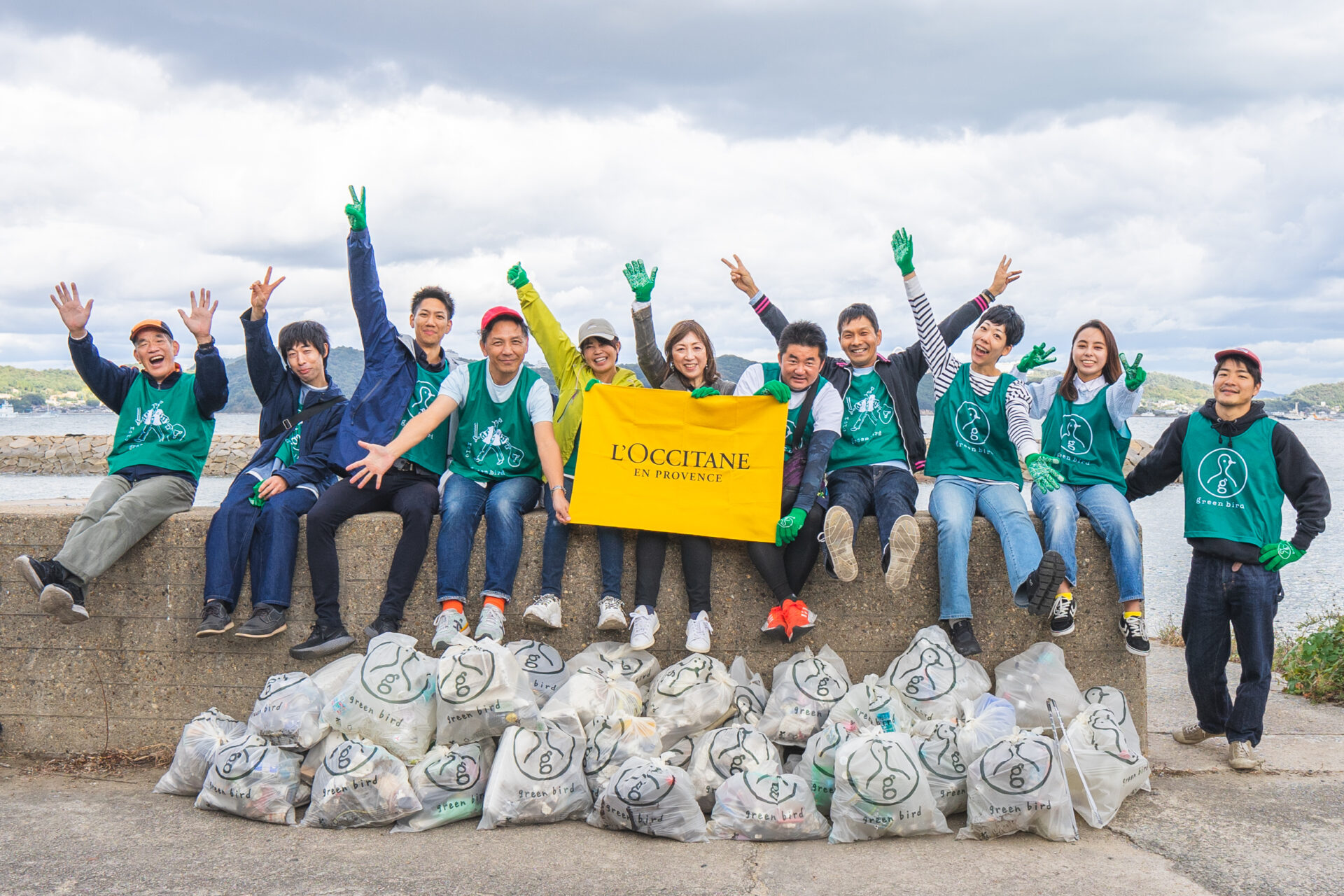
Although it was only a short time, we collected well over 30 bags of litter.
▼ We felt a sense of accomplishment at collecting such a large amount of marine litter.
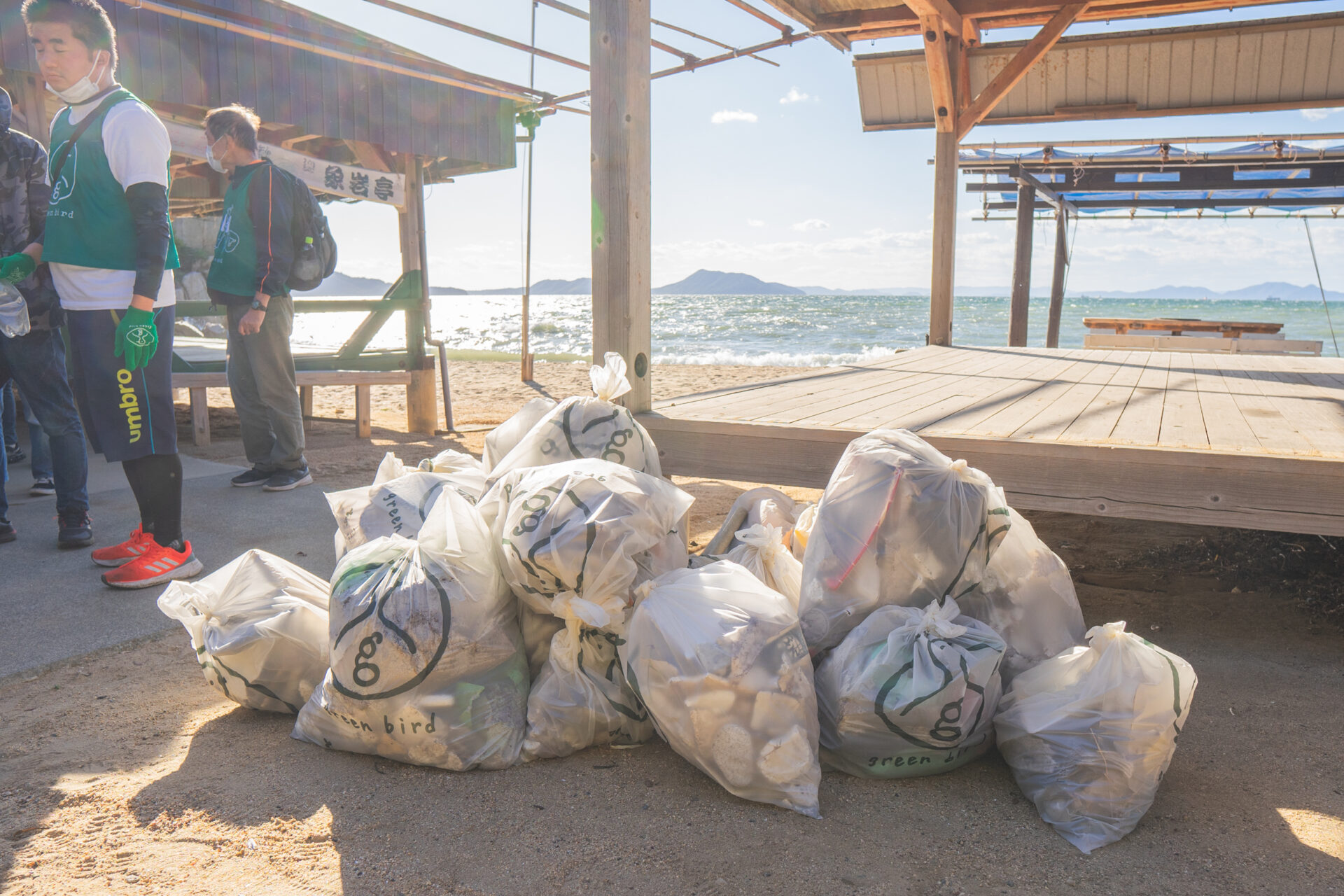
When we counted the plastic bottles we had collected, there were 222.
Some of the bottles had nostalgic labels that looked like ones we had seen decades ago.
Plastic bottles are convenient in our daily lives, but they are a problem for the natural world.
And yet, despite the island having no shops or vending machines, large numbers of plastic bottles were scattered around.
It made us realize just how much litter from our communities is flowing into the sea.
While the seriousness of the marine litter problem was clear, all the participants seemed to enjoy picking up litter.
Getting some exercise on a beach with a sweeping view of the sea naturally lifts your spirits.
▼ After picking up litter, all the participants were smiling.
Lunch and a study session at the guesthouse Zogan-tei
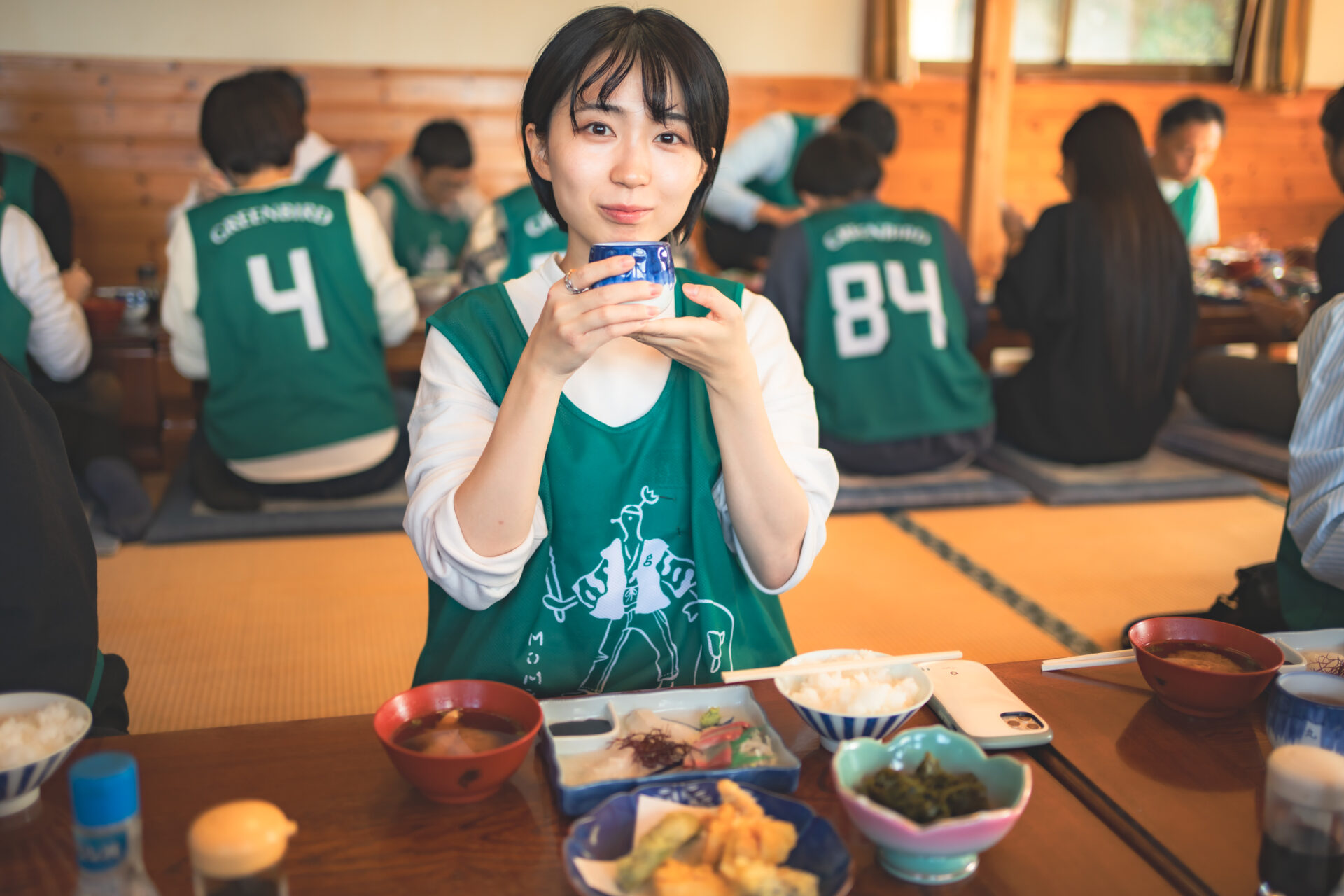
We finished collecting marine litter at noon, just as we were getting hungry.
We headed to the guesthouse Zogan-tei on Mutsuguchi Island and had lunch.
After eating, we learned about the marine litter problem.
Seto Inland Sea delicacies at the guesthouse Zogan-tei
Zogan-tei prepared seafood caught off Mutsuguchi Island for us.
▼ Sashimi of sea bream, greater amberjack, and squid.
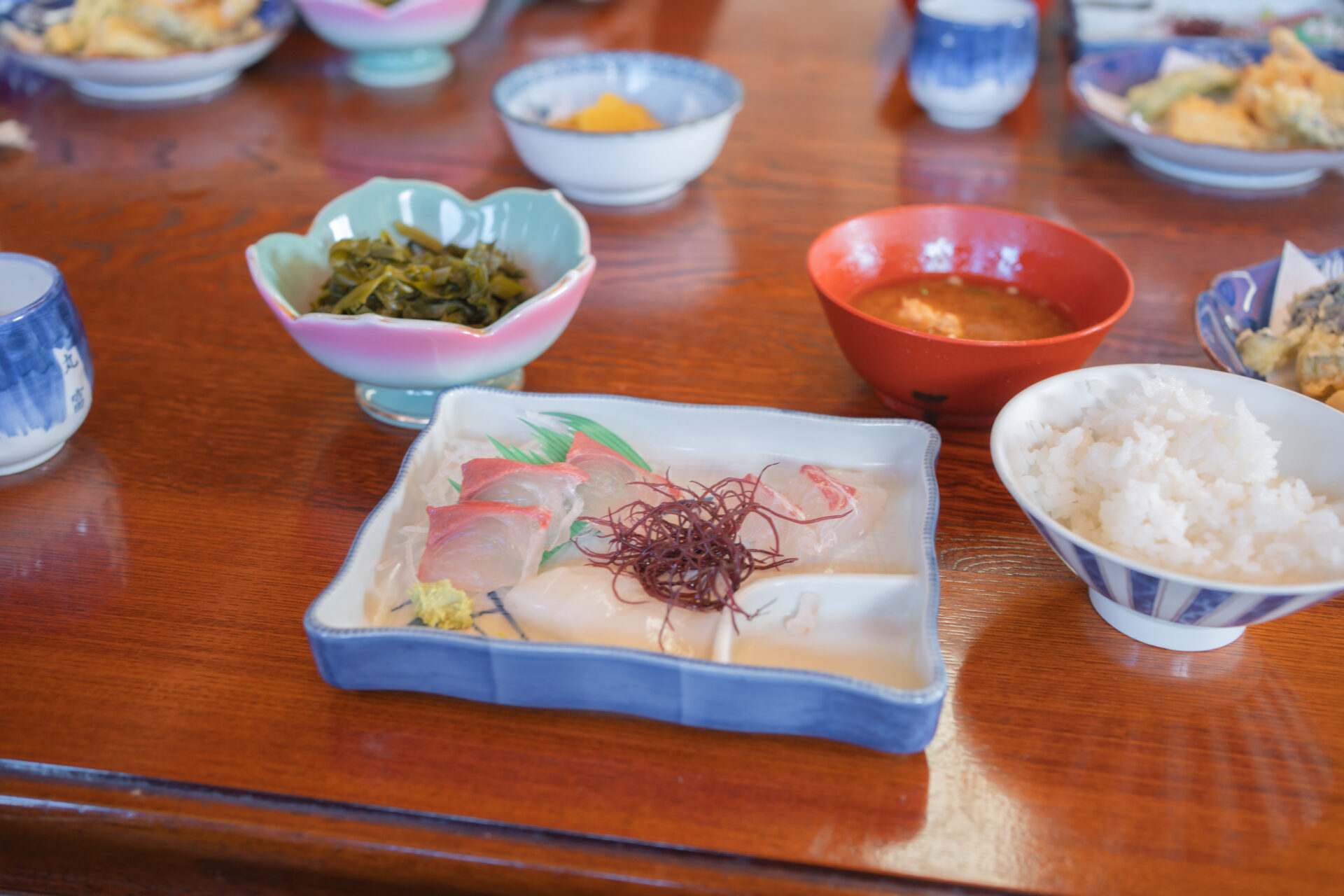
The sea bream and greater amberjack had a light, fresh taste and a tender texture.
We also had pickled wakame seaweed harvested on Mutsuguchi Island and vegetable tempura.
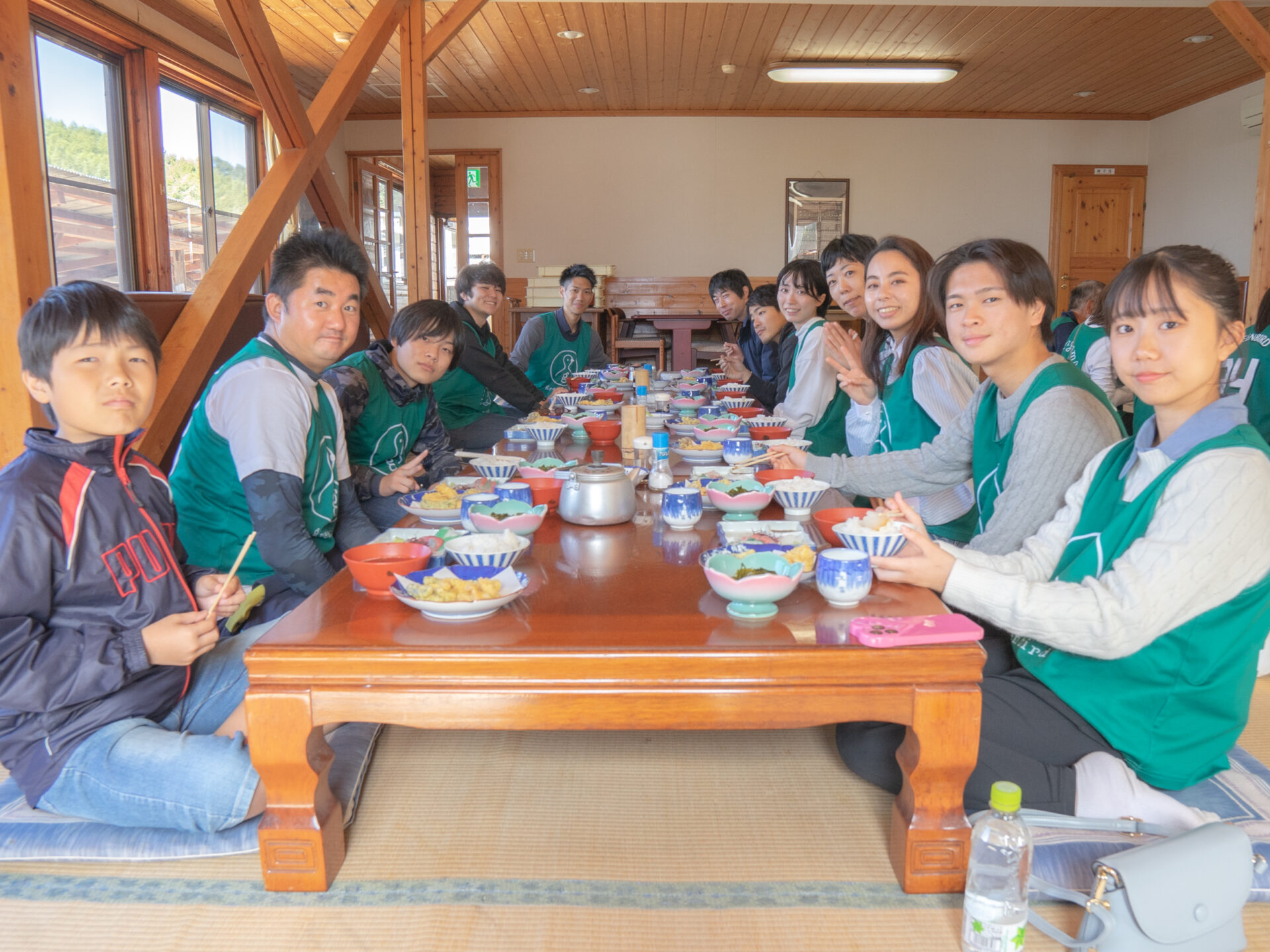
Every dish featured ingredients nurtured by the natural bounty of Mutsuguchi Island.
▼ We gathered around the table and enjoyed the bounty of the Seto Inland Sea.
Learning about marine litter in a classroom session
The first event after lunch was a study session about the marine litter problem.
By learning about the reality of marine litter as well as picking it up, we deepened our understanding of the problem.
About the marine litter problem
The representative of green bird, which has organized beach cleanups across Japan, spoke about the current state of marine litter.
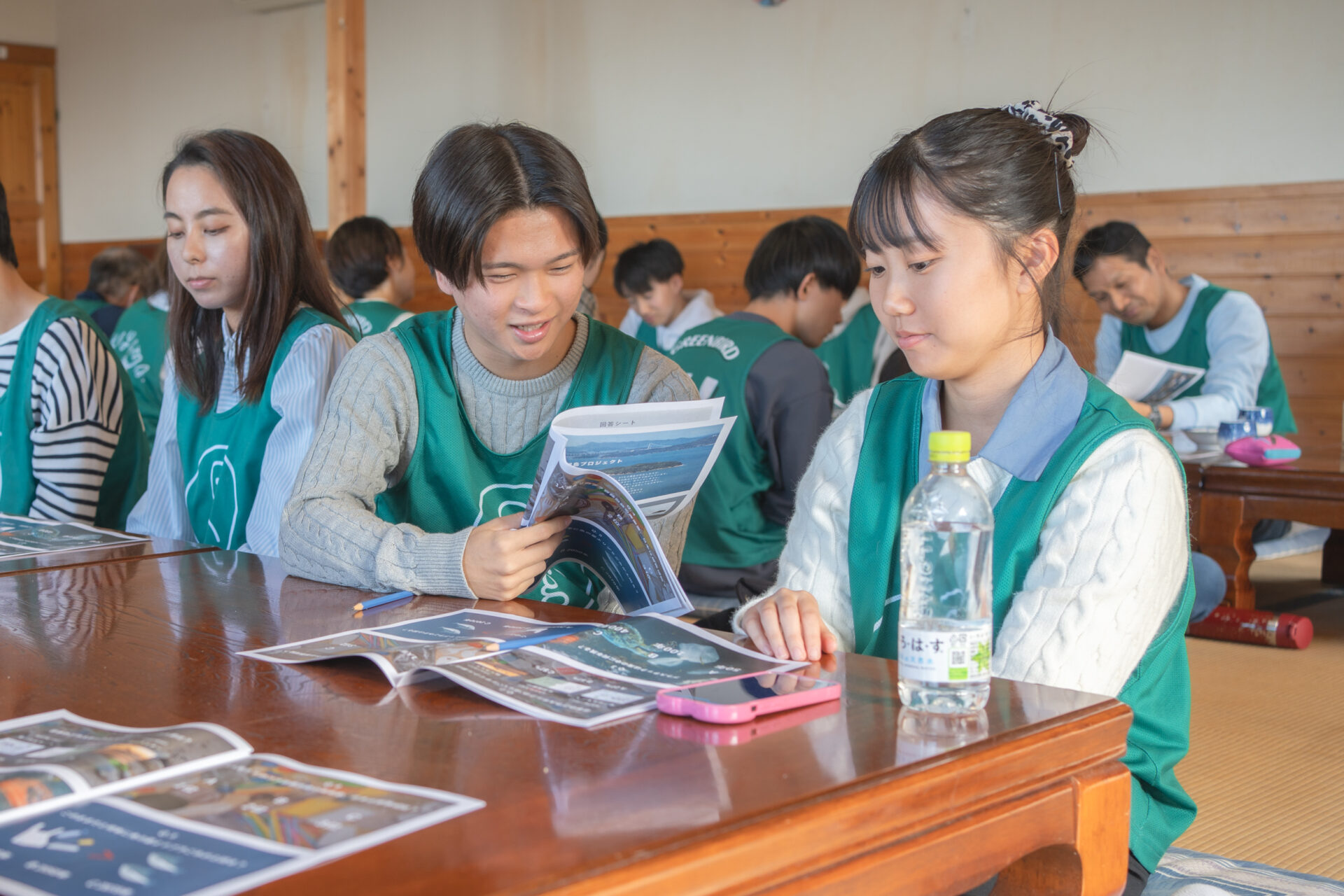
Participants were given a three-choice quiz about marine litter and competed to see who could answer the most questions correctly.
▼ Participants shared their answers and opinions about the quiz, and the study session progressed as everyone thought through the questions together.
A prize was prepared for the person who answered the most quiz questions correctly.
It was a coaster made from plastic waste collected by green bird.
The quiz prepared by the green bird representative did not determine the winner, so the four participants with the most correct answers advanced.
▼ A quiz thought up on the spot by an elementary school student decided the winner.
The quiz the elementary school student came up with was: “In the story of Momotaro as told in Okayama Prefecture, was Momotaro from Okayama, or did he come from outside Okayama?”
All the participants were stumped over which answer was correct.
L'Occitane's nature conservation activities
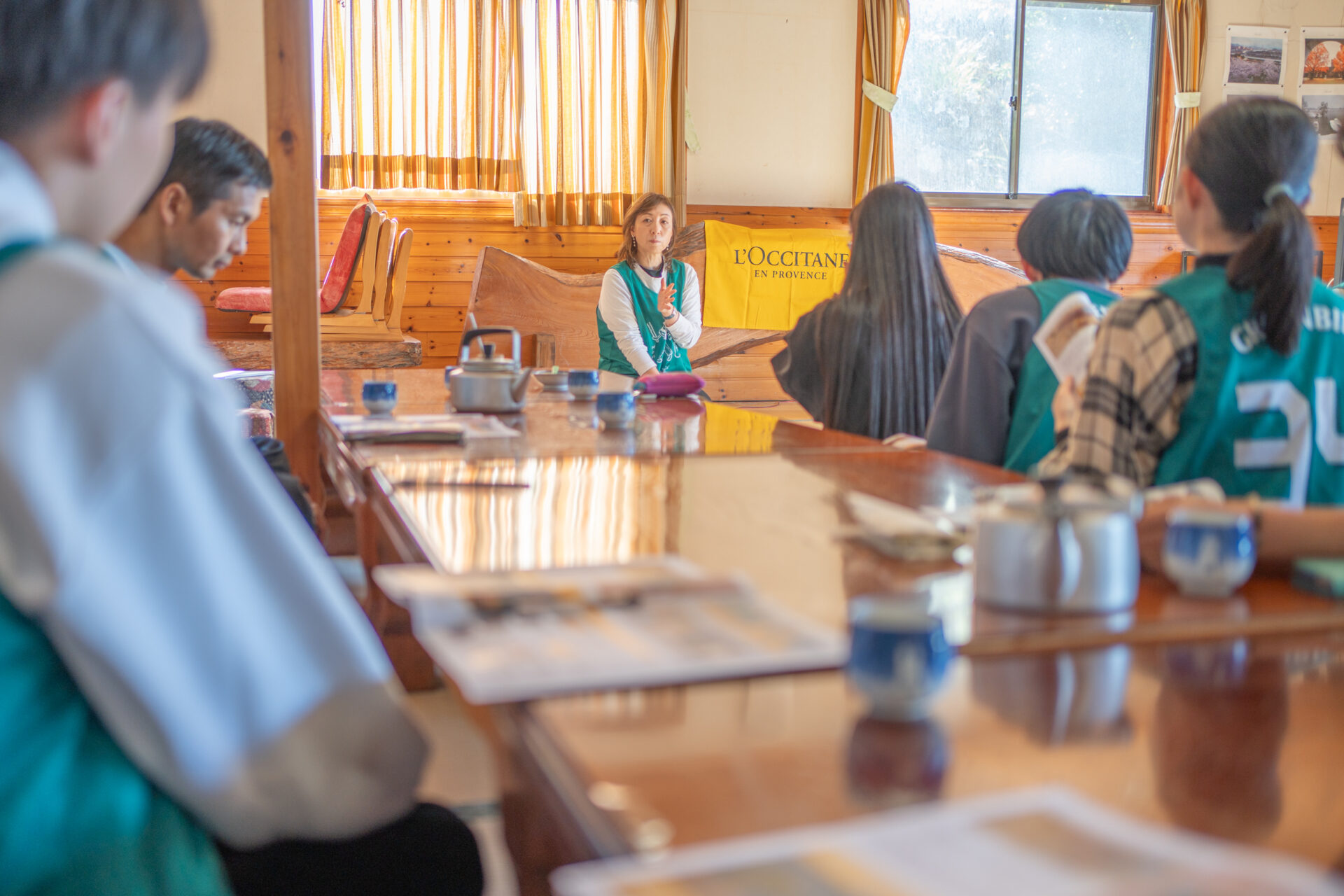
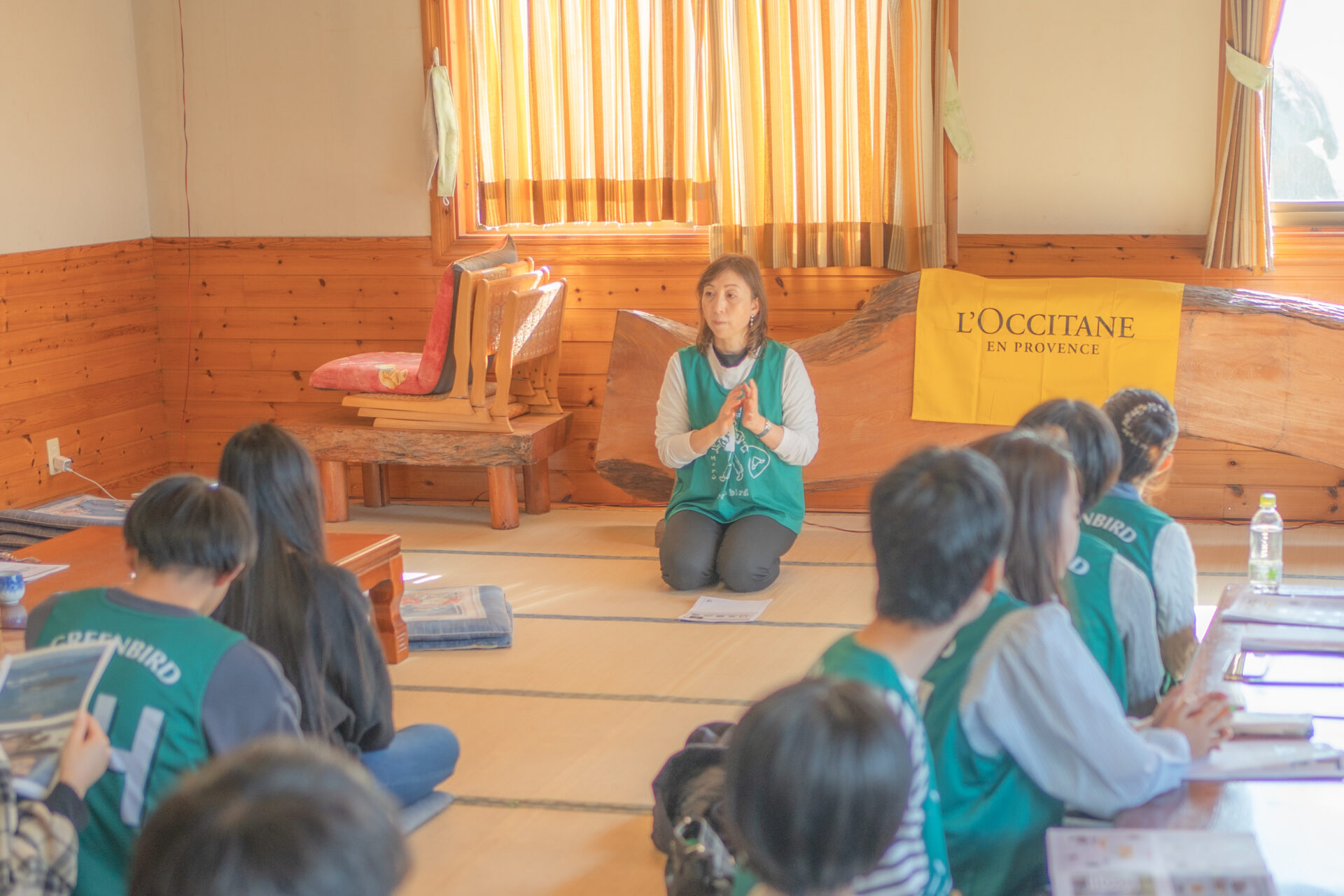
L'Occitane, the cosmetics brand supporting the Okayama Remote Islands Project, explained how the initiative came about.
In addition to nature conservation, L'Occitane works on six social contribution initiatives.
In June 2022, it conducted an online survey asking people to choose which of the six initiatives they supported most.
Of the approximately 20,000 responses, the largest number, 5,850, voted for green bird's activities.
To meet the expectations of those who supported the initiative, the Okayama Remote Islands Project was held as one of its efforts to protect nature.
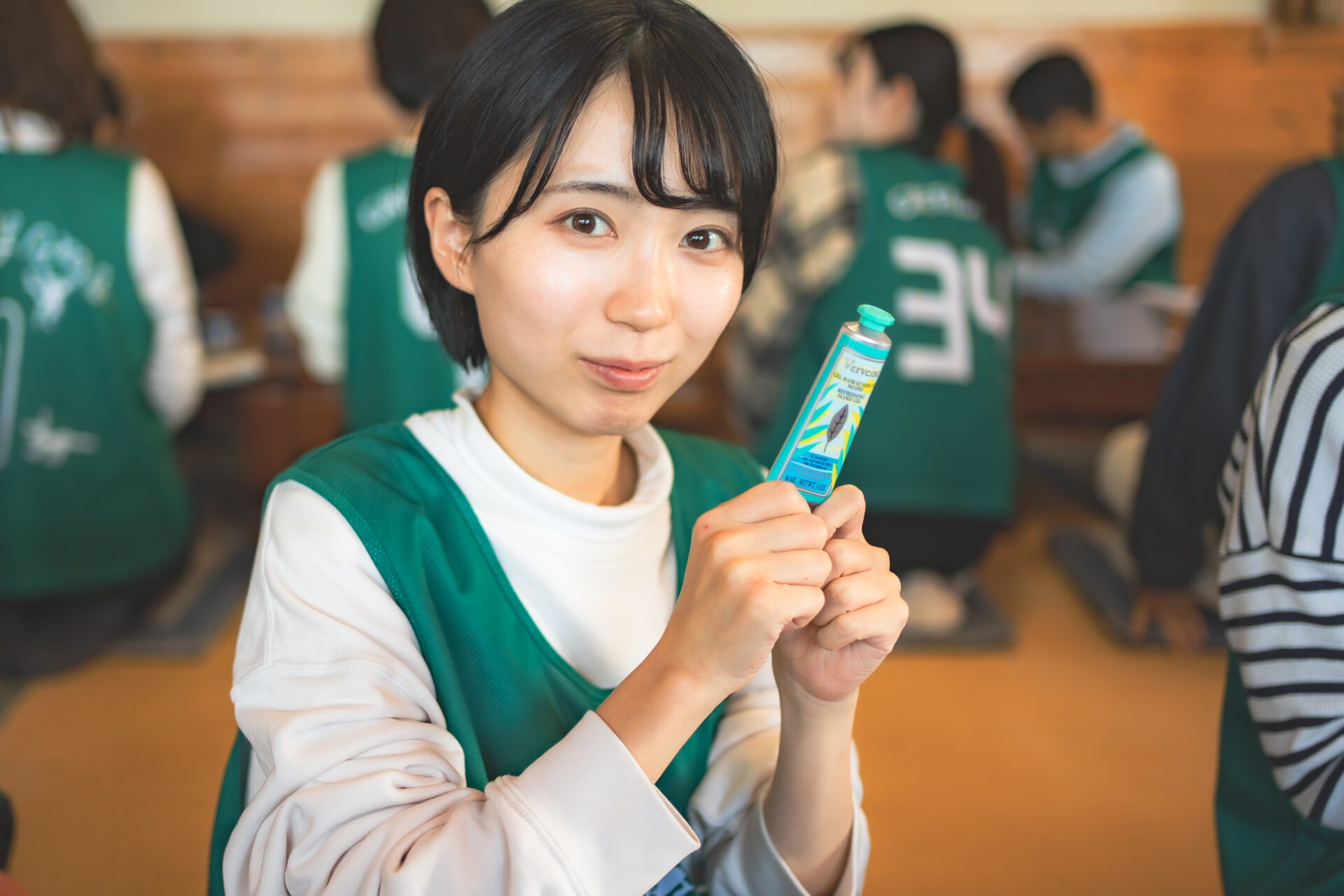
Wanting to give some care to the hands used to pick up litter, L'Occitane gave hand cream to all the participants.
Autumn has arrived, and before long, winter will be here.
▼ This naturally derived hand cream should come in handy during the dry season.
After using our brains to study, we picked up trash
Our minds were getting tired from studying marine litter, so we picked up trash once more.
This time, we picked up trash on the beach around Zoiwatei.
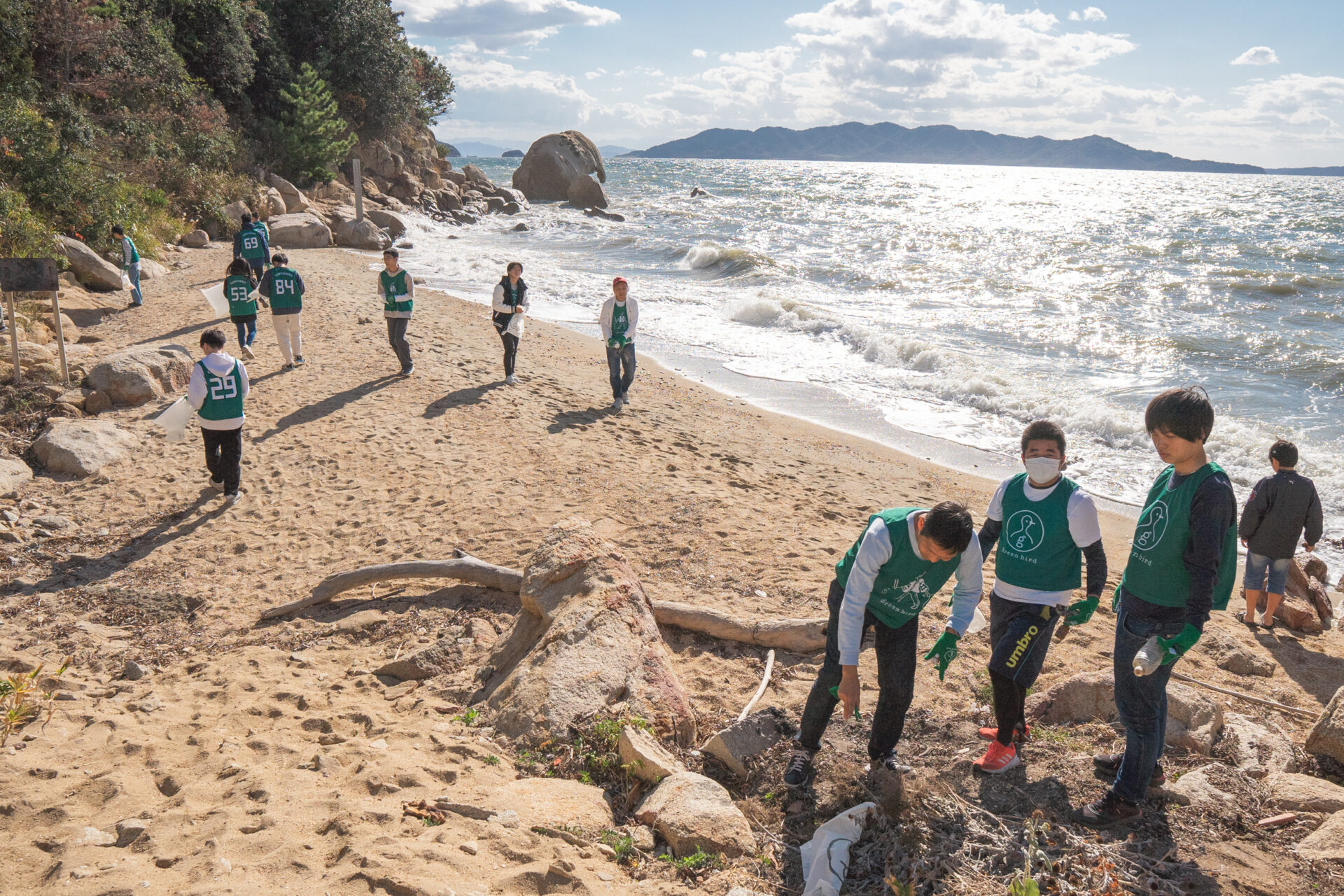
Beach cleanup resumes
From a distance, the beach looks beautiful, but when you look closely at the ground, you can find small pieces of Styrofoam.
And among the plants growing thickly around the beach, there were empty cans and plastic bottles.
This was a place where we had focused on picking up trash during our May activity, but it seems trash washes ashore all over the island.
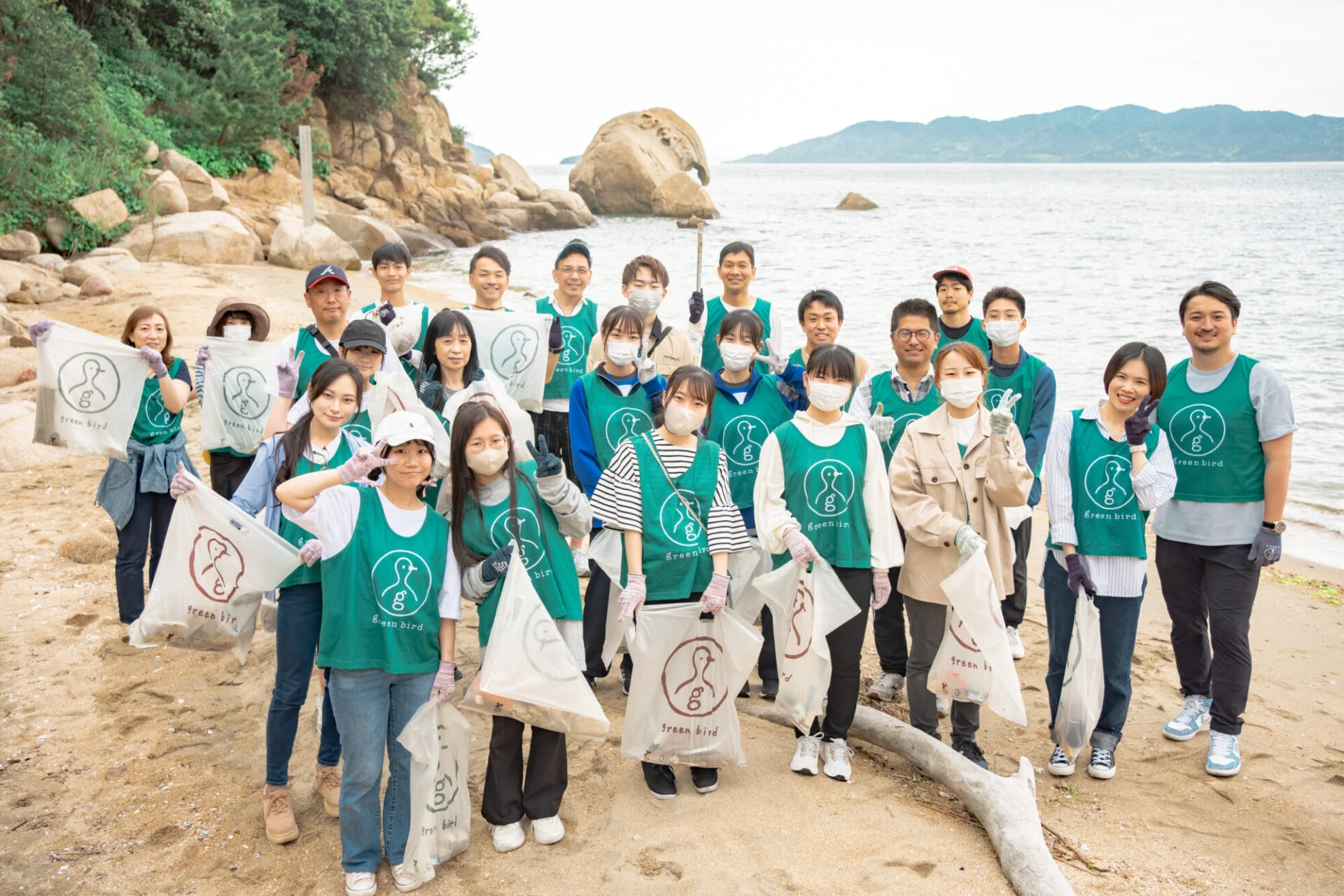
▼Incidentally, the rock visible in the background of the photo is “Zoiwa,” a nationally designated Natural Monument.
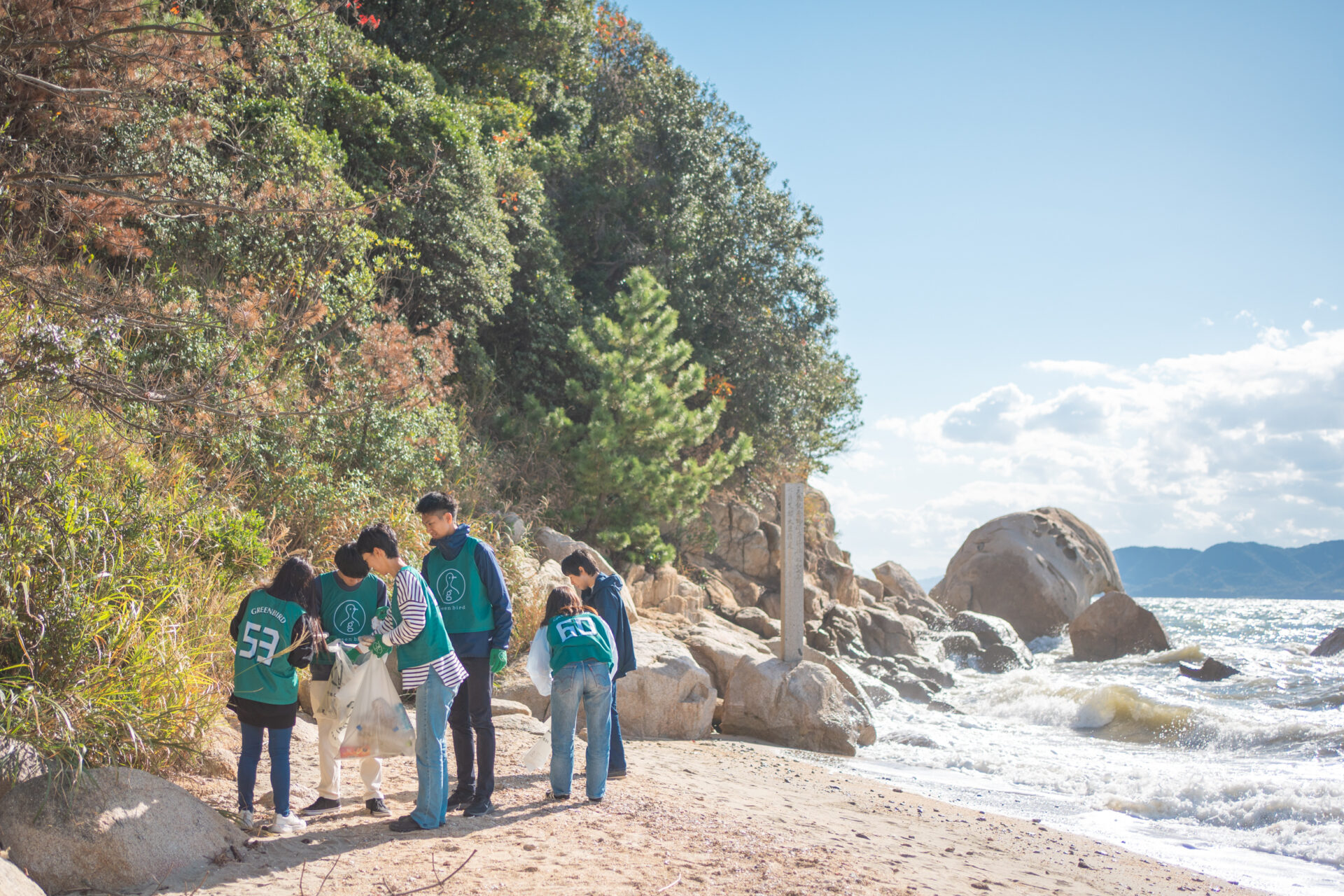
It came to be called Zoiwa because granite has been eroded by the waves into a shape like an elephant facing away.
The beach where you can see Zoiwa is usually a quiet place where you can hear only the gentle sound of the waves.
On this day, perhaps because of the wind, the water offshore was churning violently, and waves crashed toward the beach with a loud roar.
Sunlight reflected off the moving waves and sparkled, creating a beauty different from usual.
One of nature’s charms is that its beauty changes with the weather.
▼The group photo taken after we finished picking up trash was filled with smiles of accomplishment.
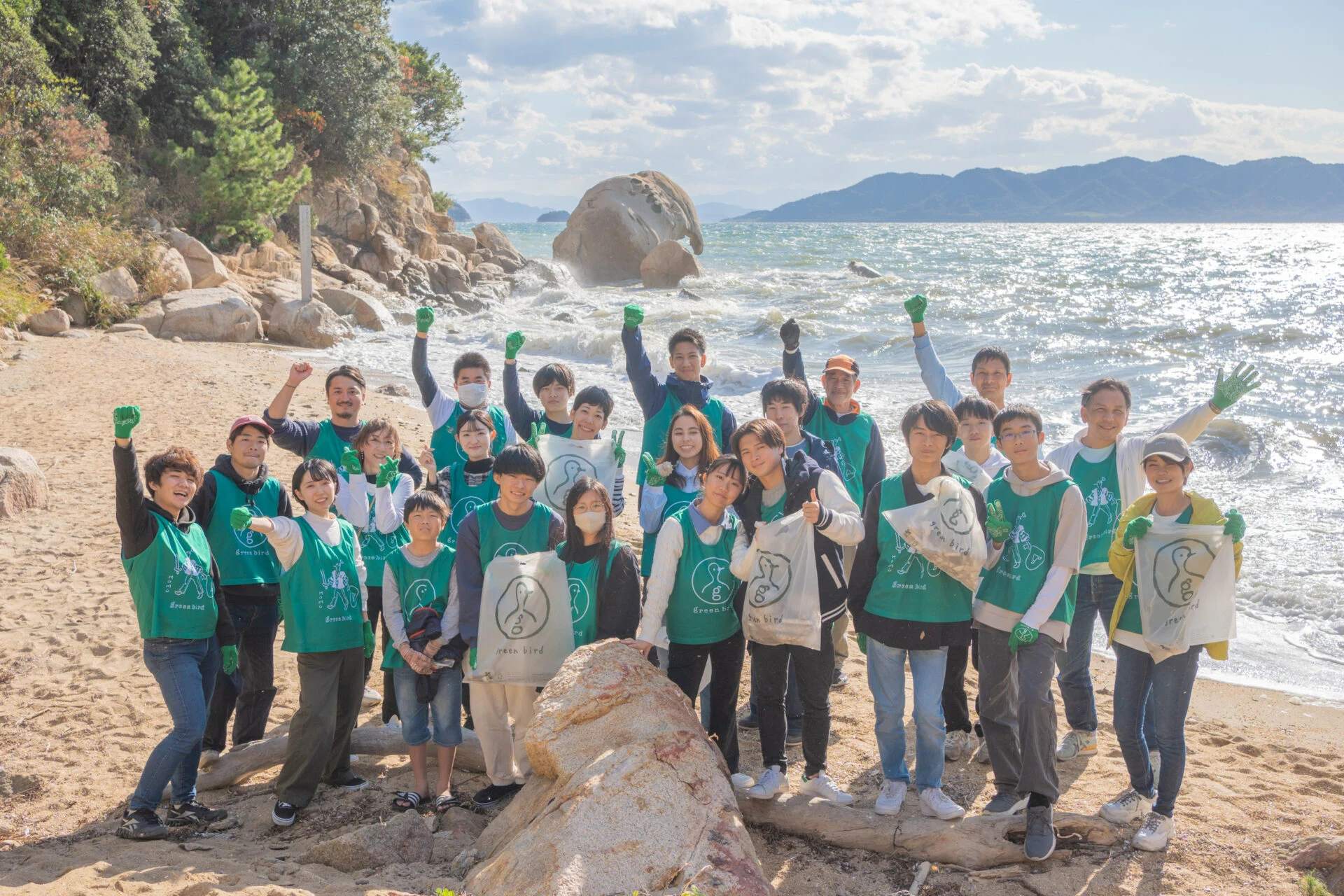
Taking home what we learned and the memories
After our enjoyable experience on Mutsuguchi Island came to an end, we boarded a boat and headed back to Kojima Sightseeing Port.
We boarded the boat by crossing a pier floating on the sea.
▼Feeling tense on the unsteady footing, we boarded the boat.
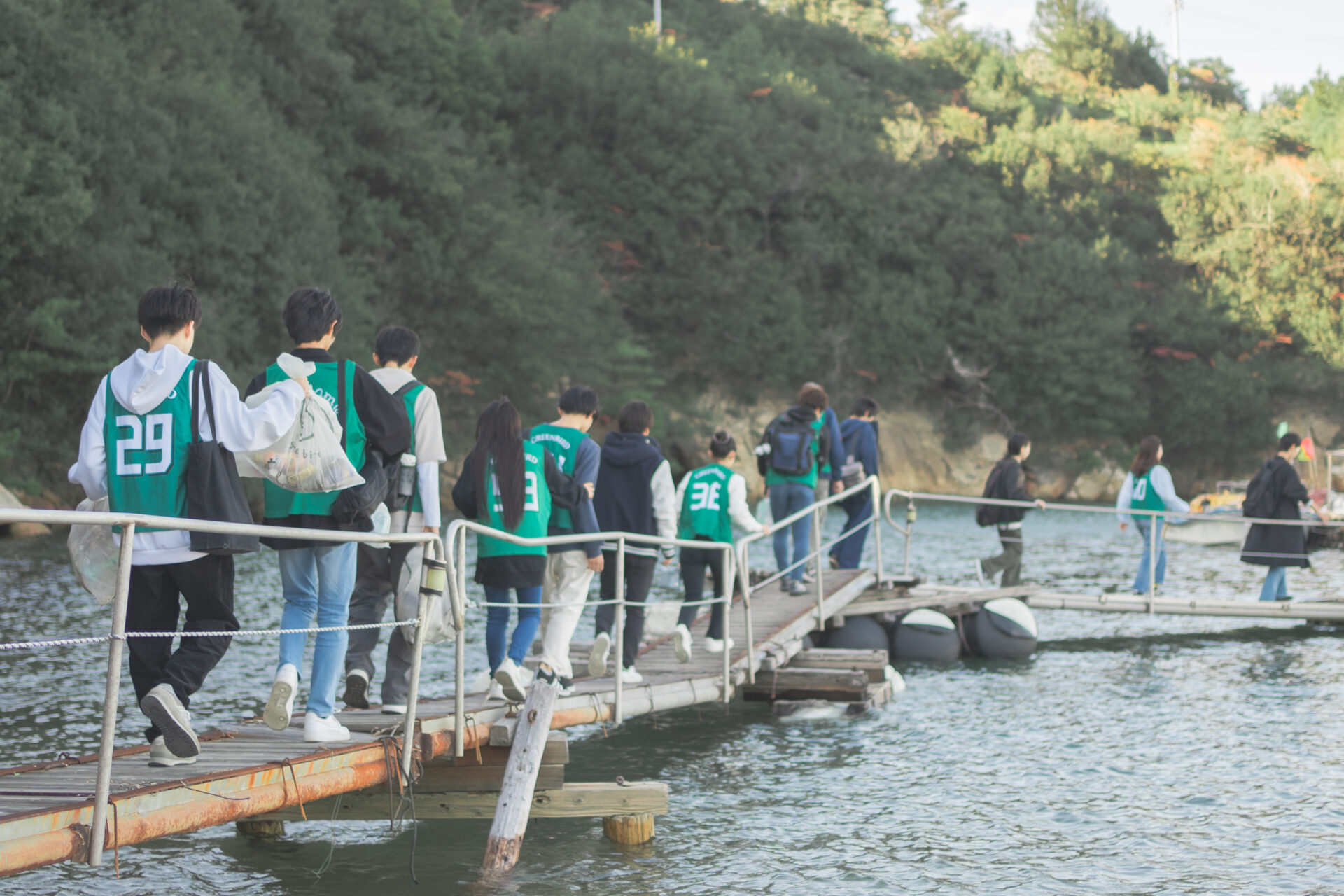
Unlike on the way there, the boat leaving Mutsuguchi Island for Kojima Sightseeing Port sailed over calm waves.
Many people could be seen sleeping comfortably as the boat rocked gently.
Perhaps the unusual experience on the island had used up more energy than usual.
▼After docking at Kojima Sightseeing Port, we took one last group photo.
During the second activity, we picked up more trash than during the first.
Even though we had already collected trash from these places once, we found a lot more, showing that a great deal of trash is drifting in the sea.
It was only by carrying out the activities twice that we were able to glimpse the seriousness of the marine litter problem.
With happy memories of our unusual experience on the island, knowledge about marine litter, and the trash we took home with us, the Okayama Remote Islands Project came to an end.
What we felt on revisiting Mutsuguchi Island
Through the second activity, we were able to see firsthand that large amounts of trash are drifting in the sea.
Some participants had taken part in both the first and second activities, and they could not hide their surprise at seeing places where they had collected trash just a few months earlier now overflowing with it.
It is said that the amount of trash discharged from countries around the world each year exceeds what people can collect by hand.
Perhaps the significance of beach cleanups lies less in picking up trash than in understanding the seriousness of the marine litter problem.
Changing the systems in society that allow trash to escape into the environment is the fundamental solution, and for solutions to be developed, many people in society need to be aware of the problem of marine litter.
We hope that picking up trash on the island will increase the number of people who feel a sense of urgency about marine litter, and that the actions of many people in society will change.
And what is important for that is sustained activity.
I realized that companies like L’Occitane, which continue to engage in environmental protection activities, are important to society.
Okayama Remote Islands Project Information
| Name | Okayama Remote Islands Project |
|---|---|
| Date held | The second event was held on October 21, 2023. Held irregularly. |
| Location | 2670 Shimotsui, Kurashiki City, Okayama Prefecture |
| Participation fee (tax included) | 2,500 yen |
| Website | green bird |

What would you like to know about Kurashiki?
Enter a search term to find articles on this site