The scenery of the Seto Inland Sea, with countless islands floating on gentle waves, is described as multi-island beauty and is recognized as beautiful worldwide.
However, due to the effects of depopulation, the scenery and customs are gradually being lost from the 19 inhabited islands in Okayama Prefecture.
The Okayama Island Project is an initiative aimed at making the charm and challenges of the islands in the Seto Inland Sea known to the people living in Okayama Prefecture.
The street cleaning volunteer group NPO Green Bird and the French-origin cosmetics brand L'Occitane launched this project together.
The first event of the Okayama Island Project was held on May 20, 2023.
Under the guidance of Creators Lounge, a general incorporated association that organizes art events based in Kojima, we visited Mukuchijima and Matsushima.
On Mukuchijima, we conducted a beach clean-up, and on Matsushima, we visited a museum created by utilizing a closed school.
We will introduce the environmental protection activities carried out by the street cleaning volunteers and the cosmetics brand.
What is the Okayama Island Project?
In their usual activities, Green Bird conducts trash collection mainly in bustling urban areas.
Together with the sponsoring company L'Occitane, they held the Okayama Island Project, which tours the islands in Kurashiki City.
The Okayama Island Project involves stepping out of the city to collect marine debris on the islands floating in the Seto Inland Sea.
Overview of the Okayama Island Project
The Okayama Island Project aims to encourage people living in Okayama Prefecture to visit the islands of the Seto Inland Sea and experience the local culture of the islands, as well as to become aware of the challenges faced by the islands.
With the sponsorship of the French-origin cosmetics brand L'Occitane, the project was organized by NPO Green Bird.
On May 20, 2023, as the first event of the Okayama Island Project, we visited two islands, Mukuchijima and Matsushima, located off the coast of Kojima in Kurashiki City.
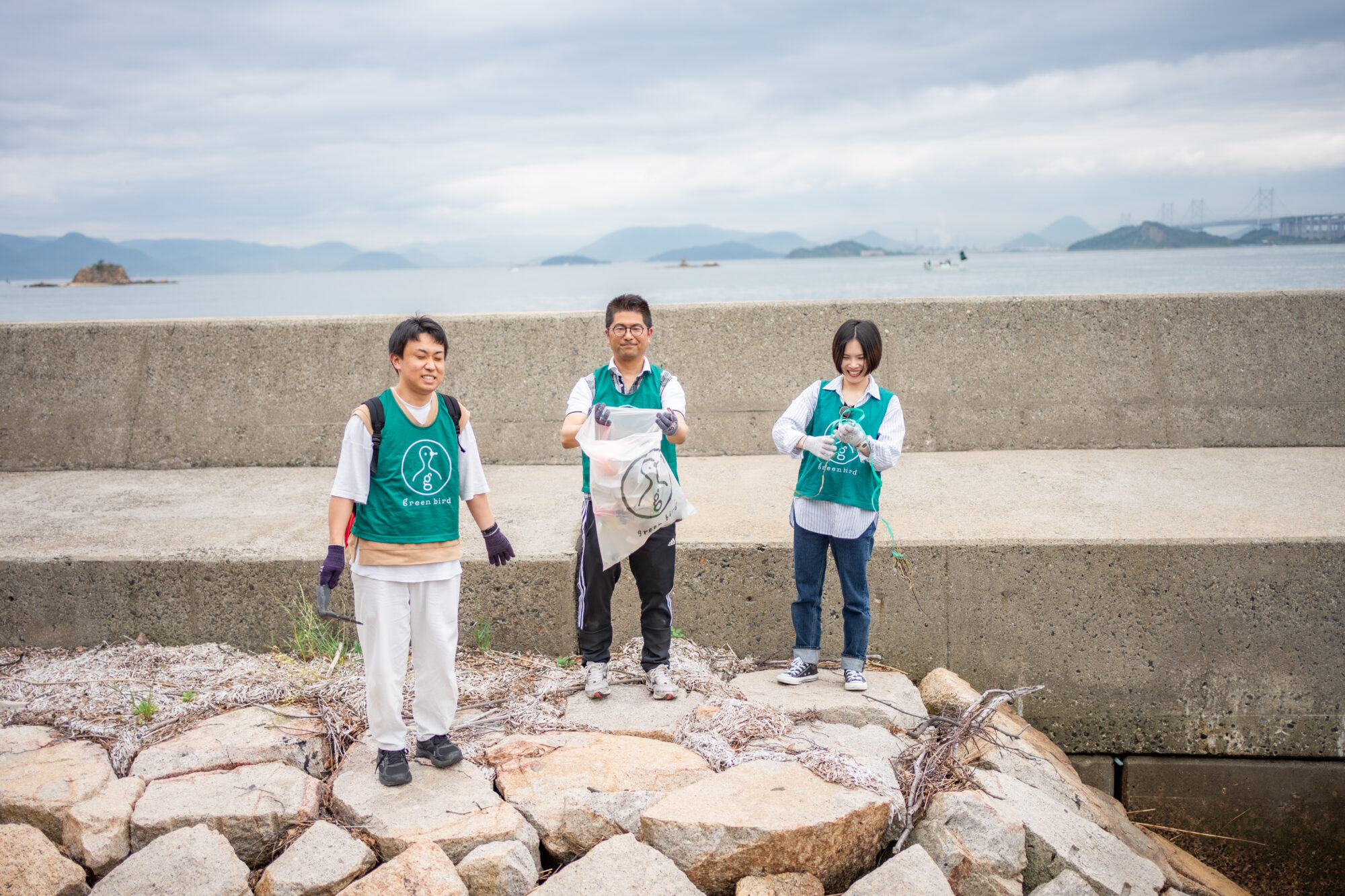
On Mukuchijima, we conducted a beach clean-up to collect marine debris washed ashore.
On Matsushima, we visited the Matsushima Bunkou Museum, which utilizes the former Shimotsui Nishi Elementary and Shimotsui Junior High School that closed in 2000.
While touring the two islands, we learned about the realities of the islands in the Seto Inland Sea.
The cosmetics brand L'Occitane and nature conservation activities
L'Occitane is a cosmetics brand originating from the Provence region located in the southeast of France.
Through natural-based cosmetics, it delivers the lifestyle of the Provence region to the world.
In Japan, it has stores nationwide, with two locations in Okayama Prefecture.
For L'Occitane, which develops a business that benefits from nature, the plants and soil that are the source of their products are essential.
From a desire to cherish nature, they planned an event to collect marine debris in collaboration with Green Bird.
General Incorporated Association Creators Lounge
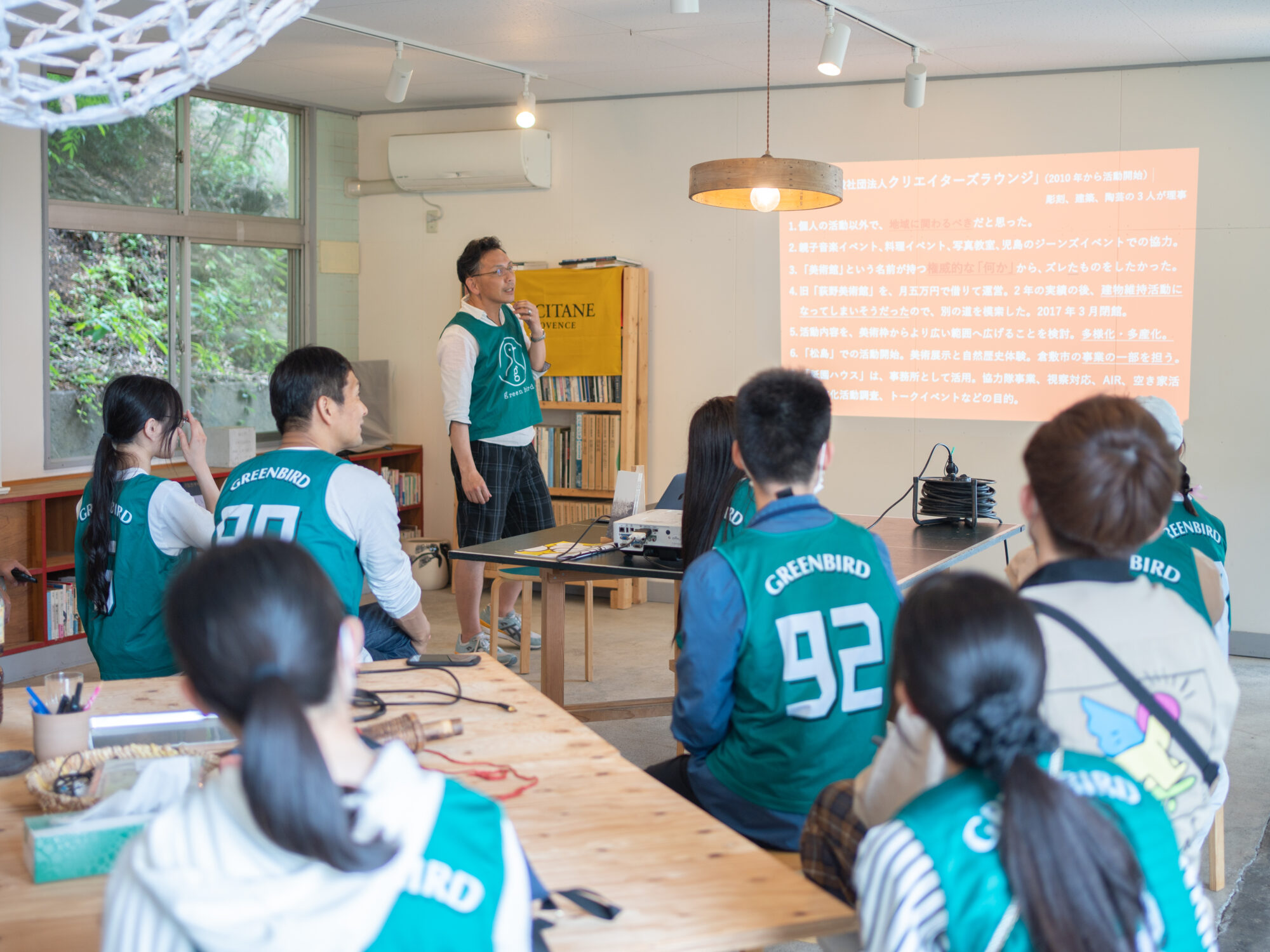
General Incorporated Association Creators Lounge is a group of artists planning art events centered in Kojima.
The purpose of their activities is to create a place for people to communicate through artistic activities.
So far, they have held exhibitions, workshops, and music events based in Shimotsui Port, which prospered as a port of call for Kitamae ships during the Edo period.
For the Okayama Island Project, they guided us to Matsushima as the location for the beach clean-up activity.
Additionally, they provided the Matsushima Bunkou Museum, created by Creators Lounge, as a place for participants to interact.
The name of General Incorporated Association Creators Lounge was changed on May 10, 2023. It is now active as General Incorporated Association Matsushima Bunkou Museum.
Street cleaning volunteer NPO Green Bird
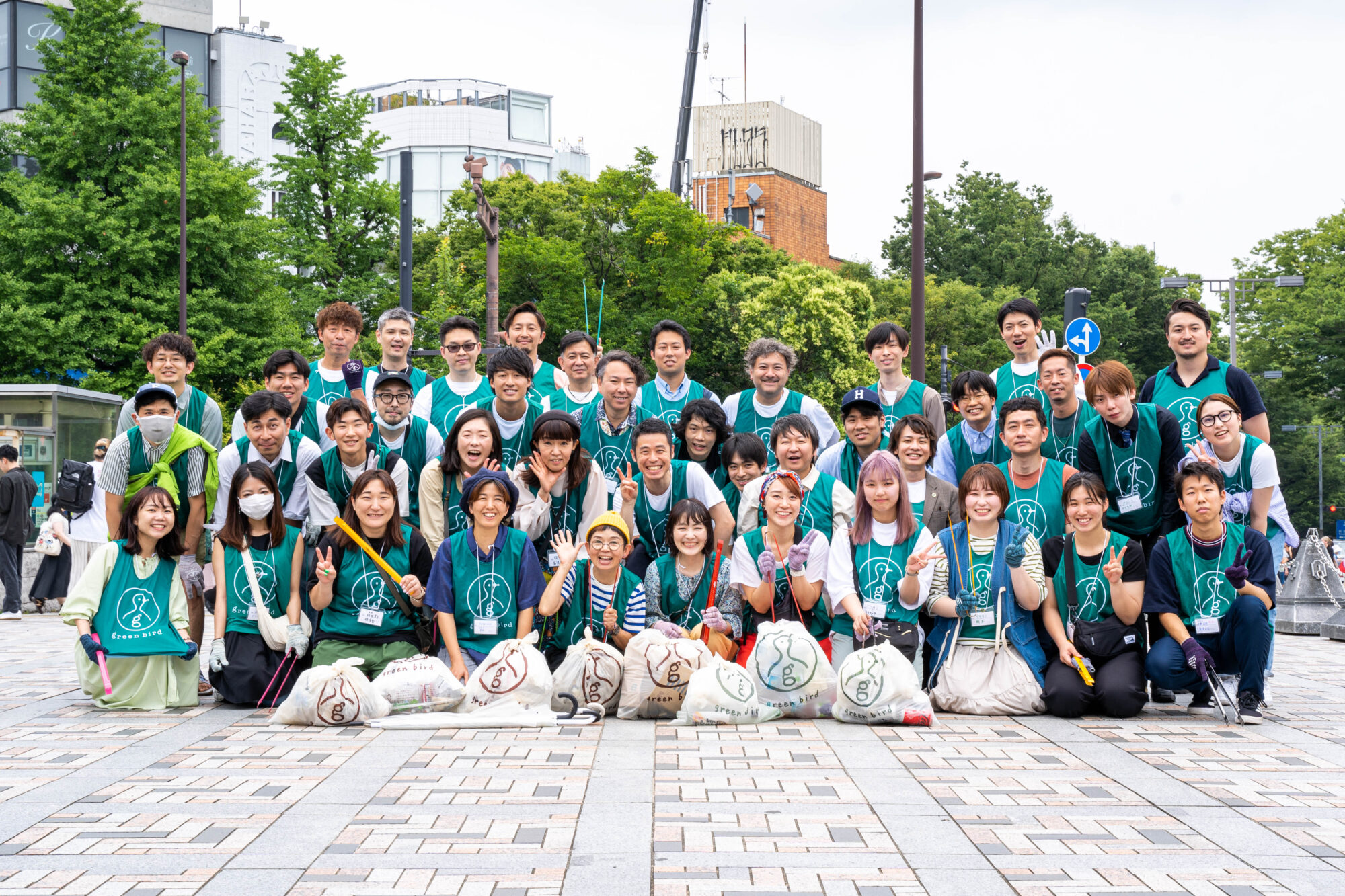
NPO Green Bird is a street cleaning volunteer group that was established in 2002, originating from Omotesando, Tokyo.
Together with 62 teams across Japan and 10 teams worldwide, they continue trash collection activities that anyone can easily participate in.
There are no special qualifications to participate; anyone can join by simply showing up at the meeting place at the meeting time, empty-handed.
The Okayama team of Green Bird organized the Okayama Island Project.
The Okayama team, established in 2013, has conducted about 500 trash collection activities so far in areas such as Okayama Station, around JR Kurashiki Station, the Bikan Historical Area, and Uno Port.
In their usual activities, people of various ages, nationalities, and professions participate, creating not only opportunities for trash collection but also a place for diverse people to interact.
To make the people living in Okayama aware of the local culture and challenges of the islands in the Seto Inland Sea, they planned the Okayama Island Project in collaboration with L'Occitane and Creators Lounge.
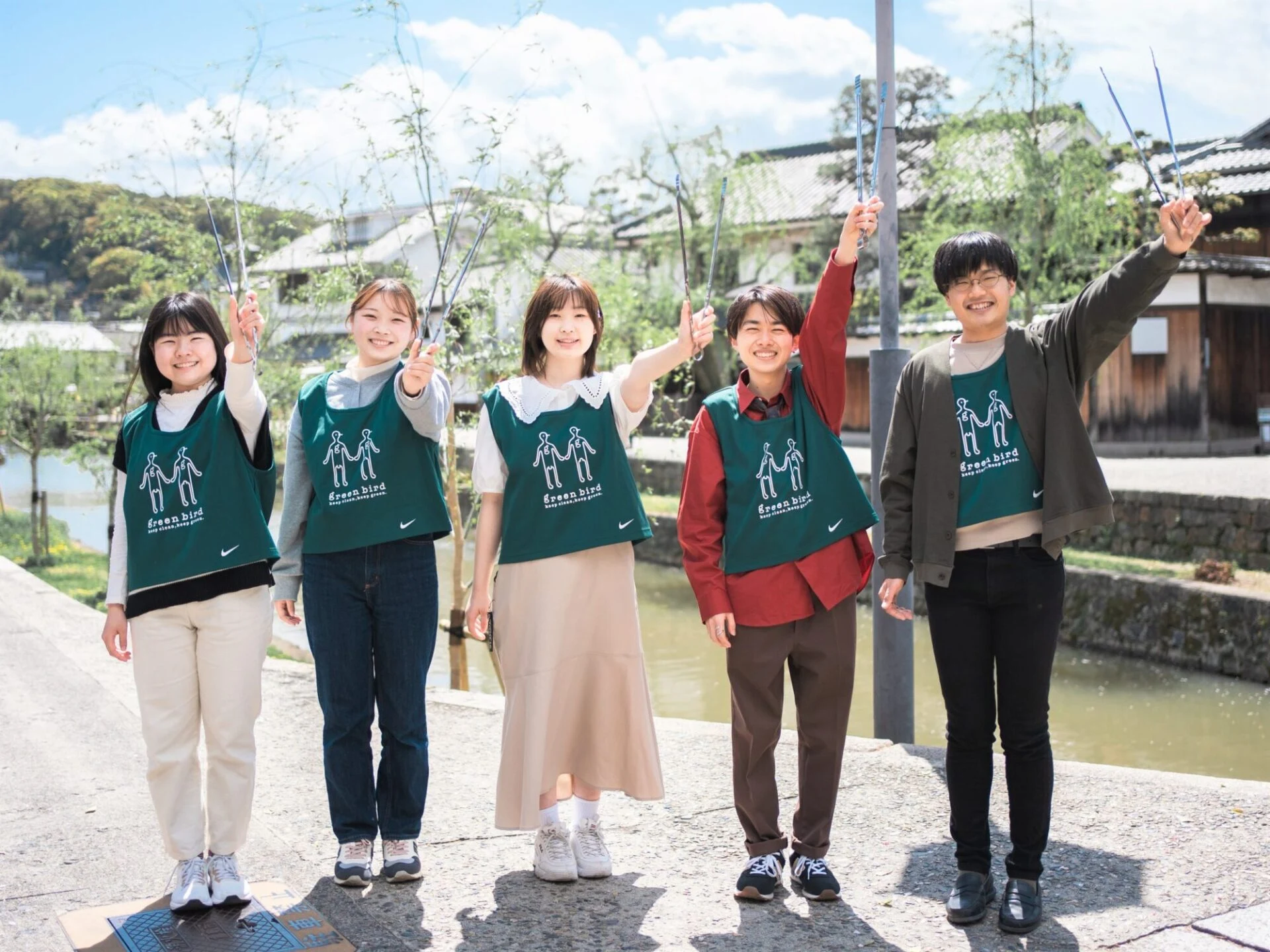
Beach clean-up on Mukuchijima
What kind of environmental protection activities are being carried out by the street cleaning volunteers Green Bird and the cosmetics brand L'Occitane?
We will introduce the events of the Okayama Island Project held on May 20, 2023.
Chartering a boat to Mukuchijima
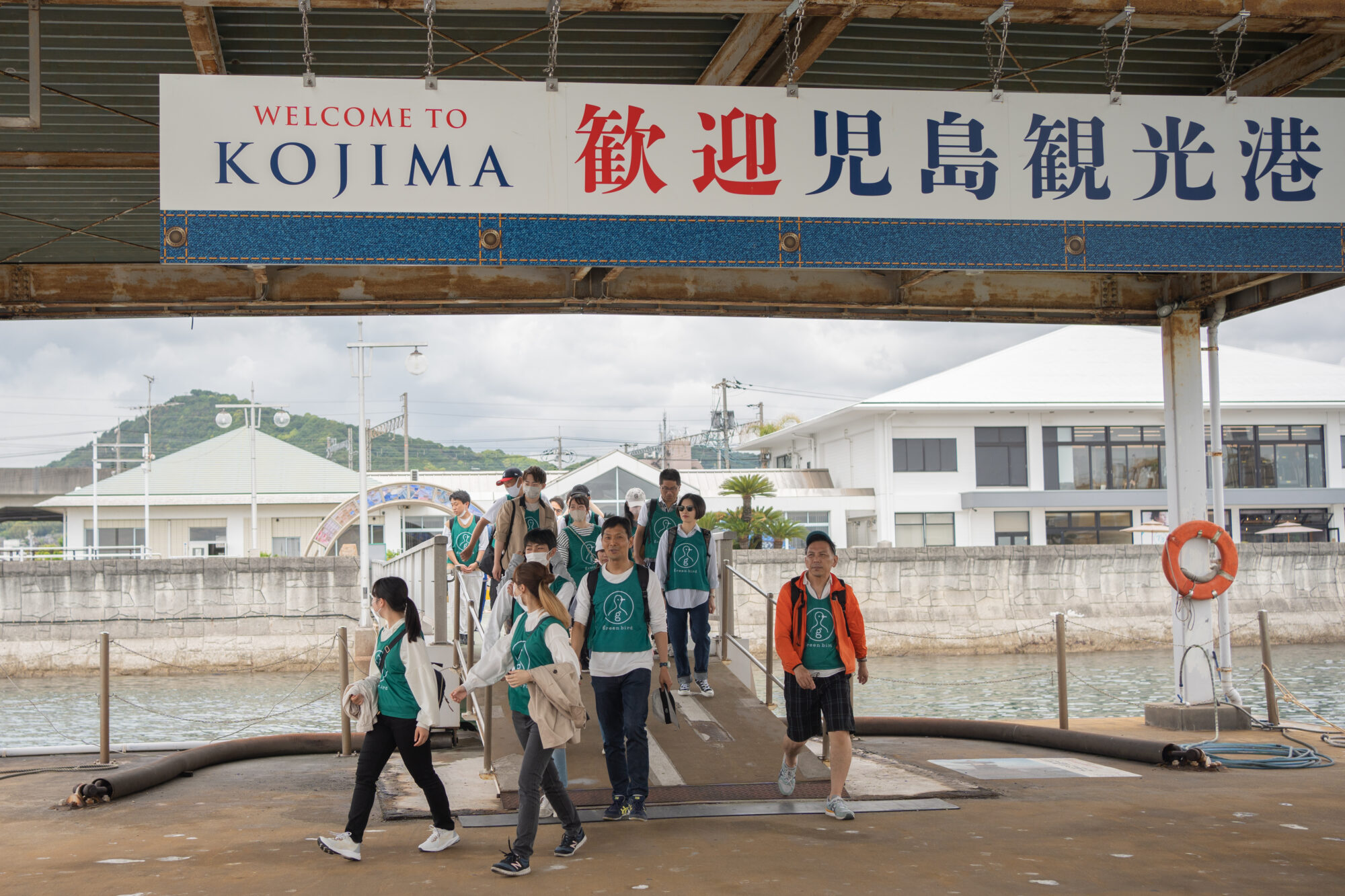
The meeting place is Kojima Tourist Port, about a 5-minute walk from Kojima Station.
The destination, Mukuchijima, is located about 2 km southwest from the southern tip of Kojima Peninsula, while Matsushima is about 600 meters away.
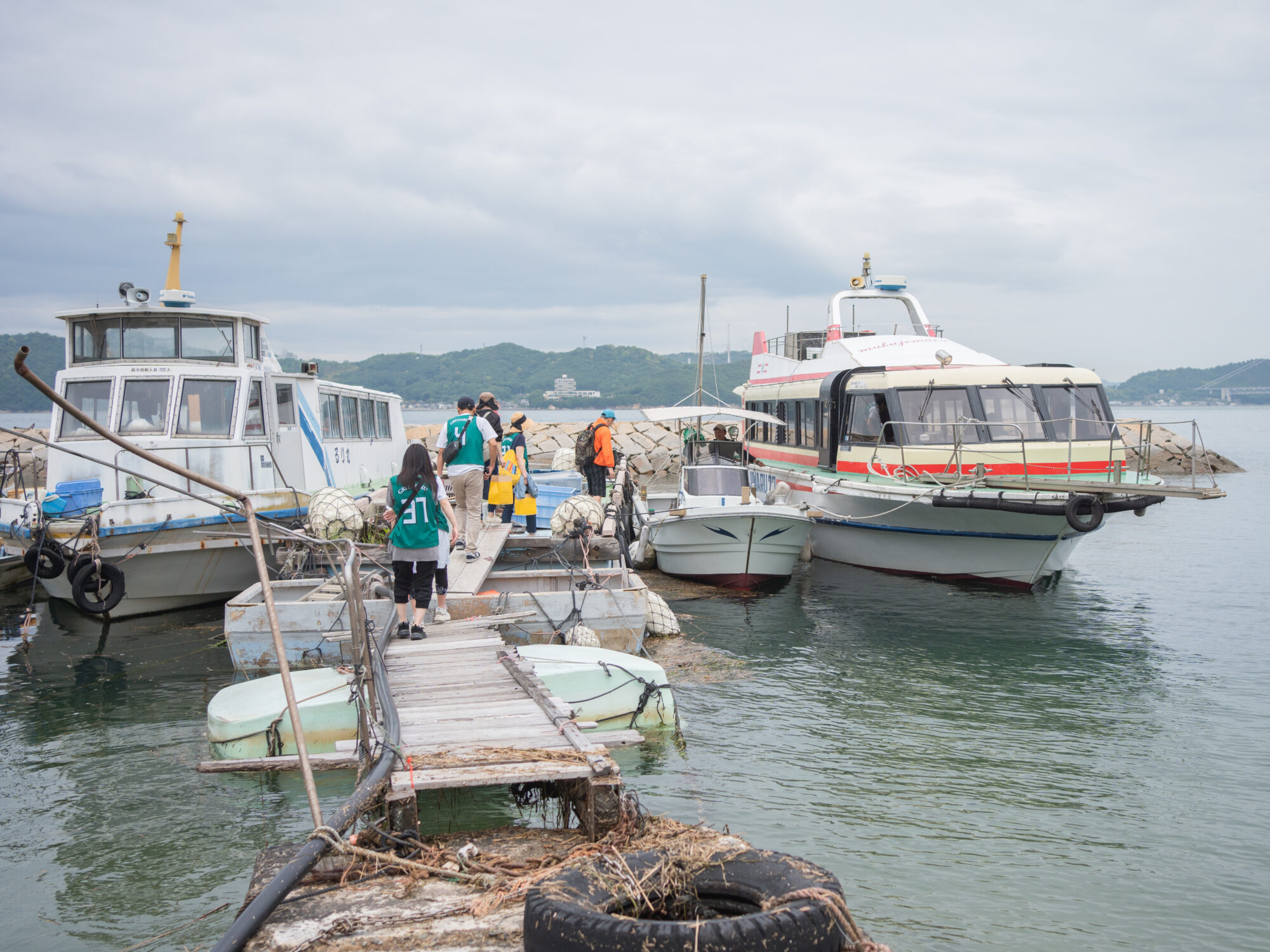
Neither island has a regular ferry service, so we chartered a boat to visit Mukuchijima and Matsushima.
▼ The passenger ship is spacious enough for the 20 participants to relax.
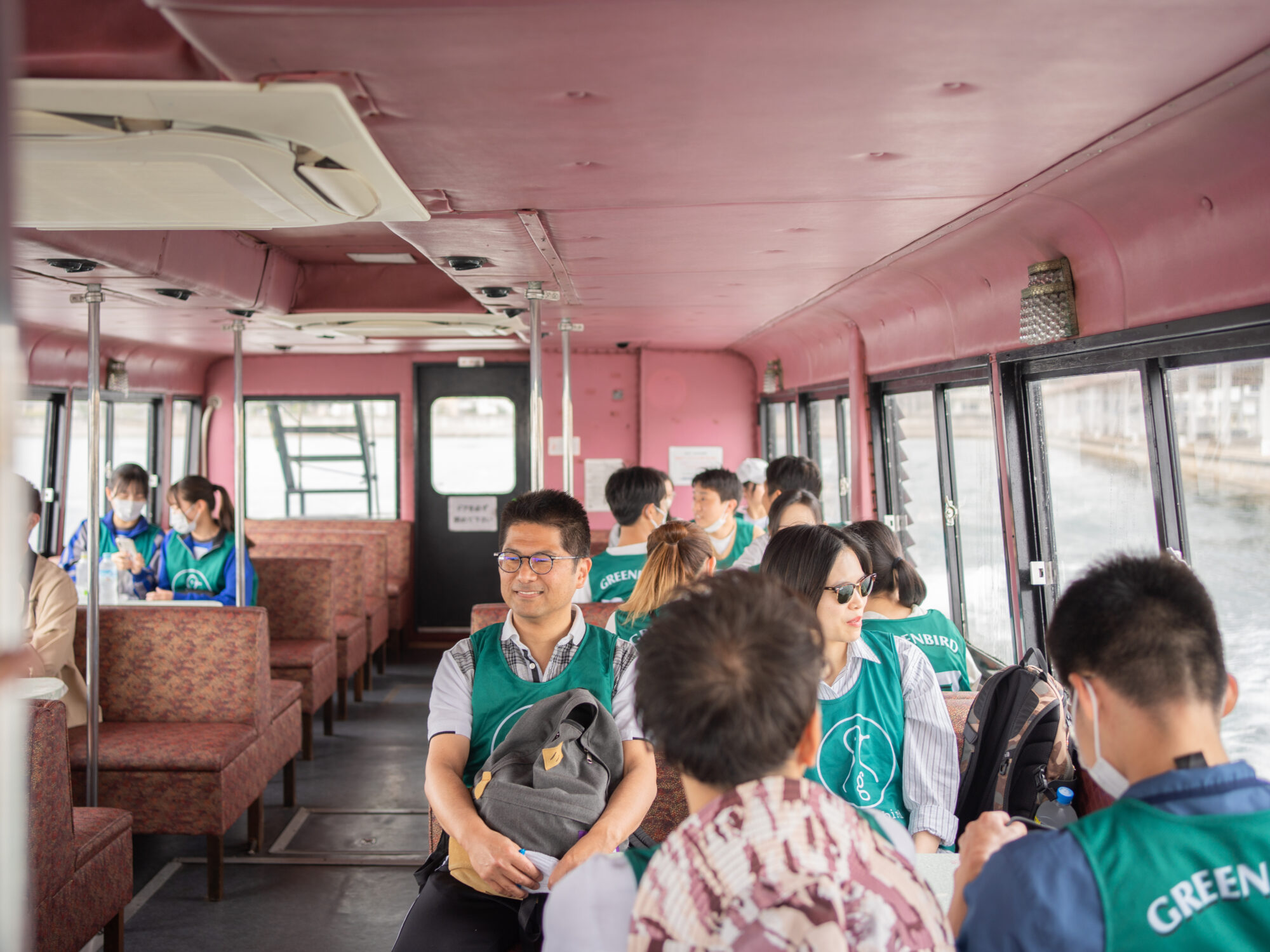
The boat has a roof that you can climb onto.
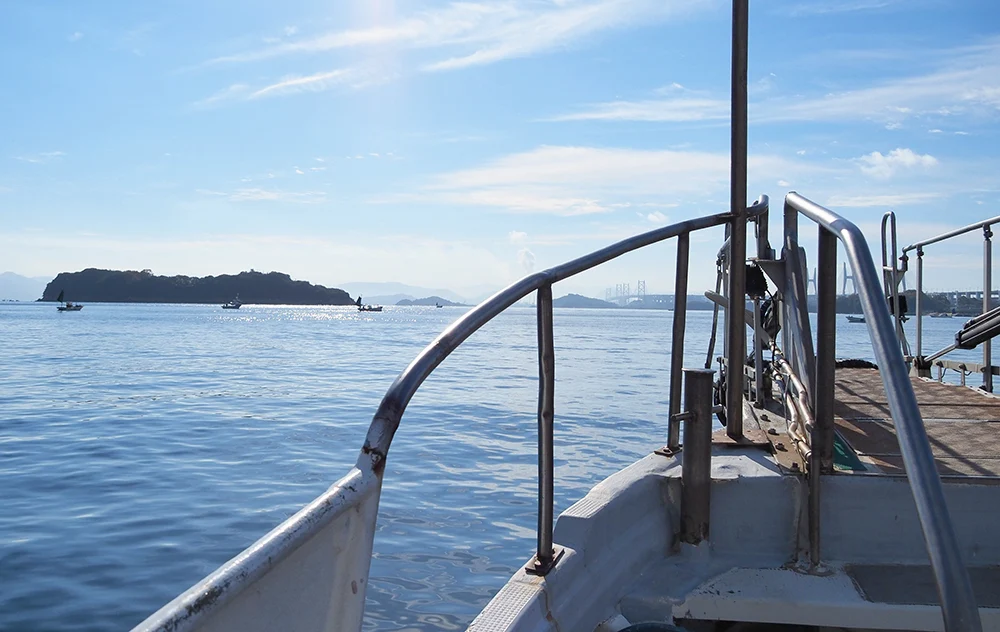
As the boat glided over the sea, a refreshing breeze blew.
▼ The Seto-Ohashi Bridge, which is usually only seen from the ground, looks even more impressive when viewed from the sea.
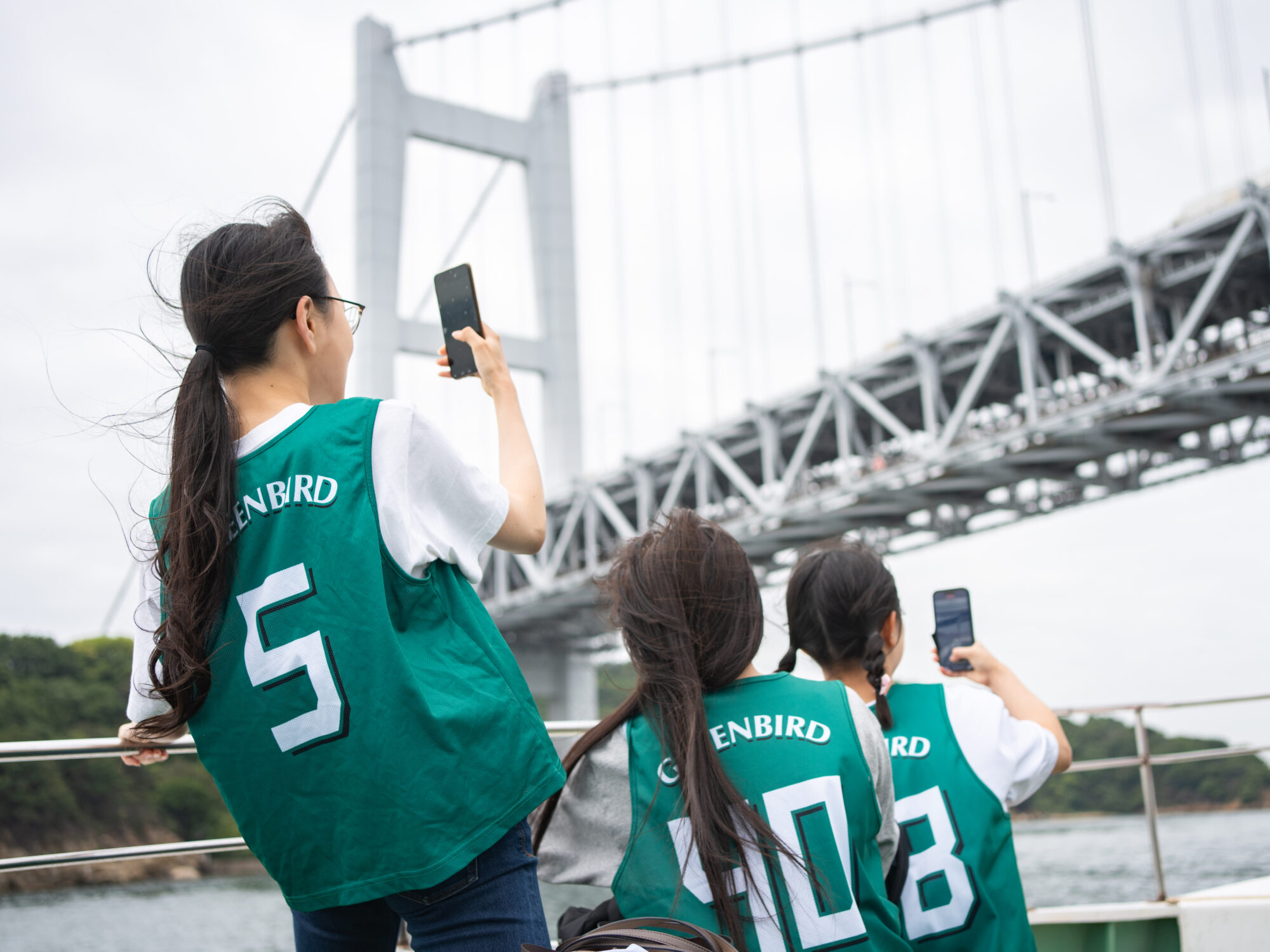
As we enjoyed the view from the sea, we arrived at our first destination, Mukuchijima, in about 15 minutes.
▼ We will walk across an unstable board laid from the bow of the boat to land on Mukuchijima.
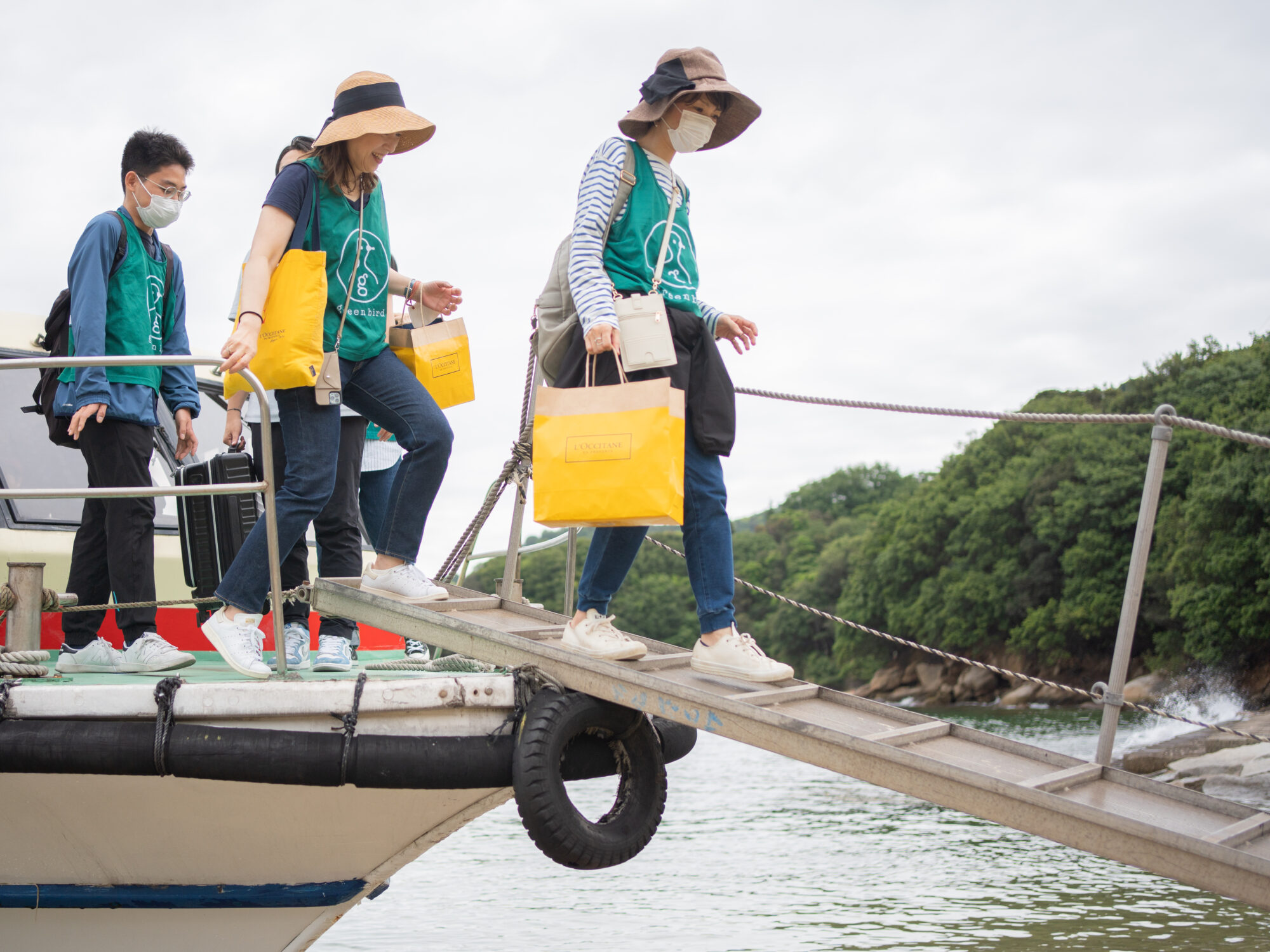
Feeling nervous as I experienced something I don't usually encounter, I stepped forward.
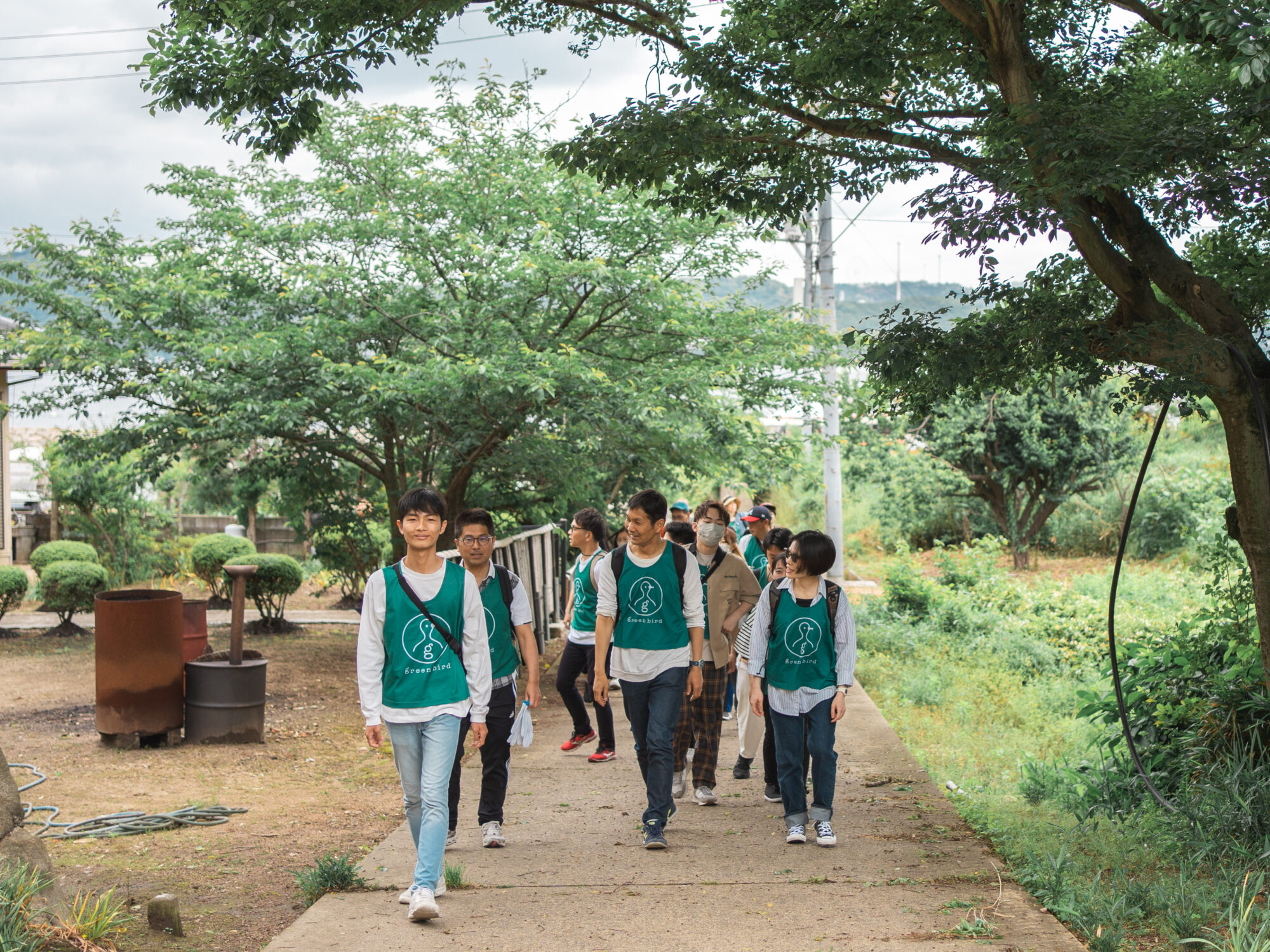
Once we landed on Mukuchijima, we walked about 5 minutes to the beach, our destination.
What is the reason for participating in the Okayama Island Project?
The first Okayama Island Project had high school students, university students, and working adults in their 20s to 50s participating.
Some participants were already involved with the green bird Okayama team, while others were joining a volunteer activity for the first time.
Thus, the first event upon arriving at Rokukuchi Island was a self-introduction among participants.
▼On the terrace of the minpaku "Zouantei", overlooking the calm waves, everyone shared the reasons that brought them to participate.
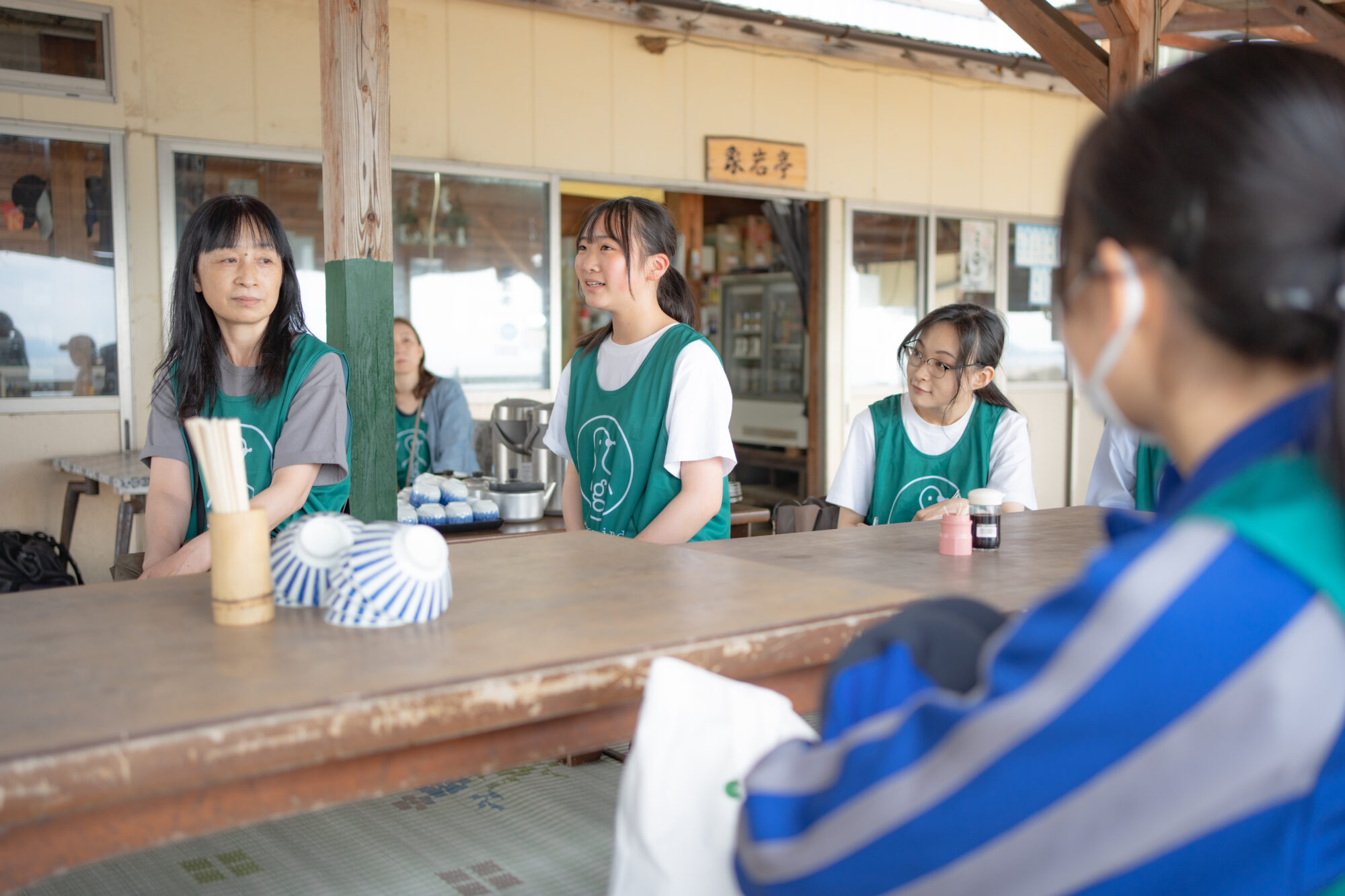
When asked about their reasons for participating, some expressed a strong desire to learn, saying, "I was interested in the marine debris problem", while others simply stated, "It seemed fun to pick up trash and visit an island."
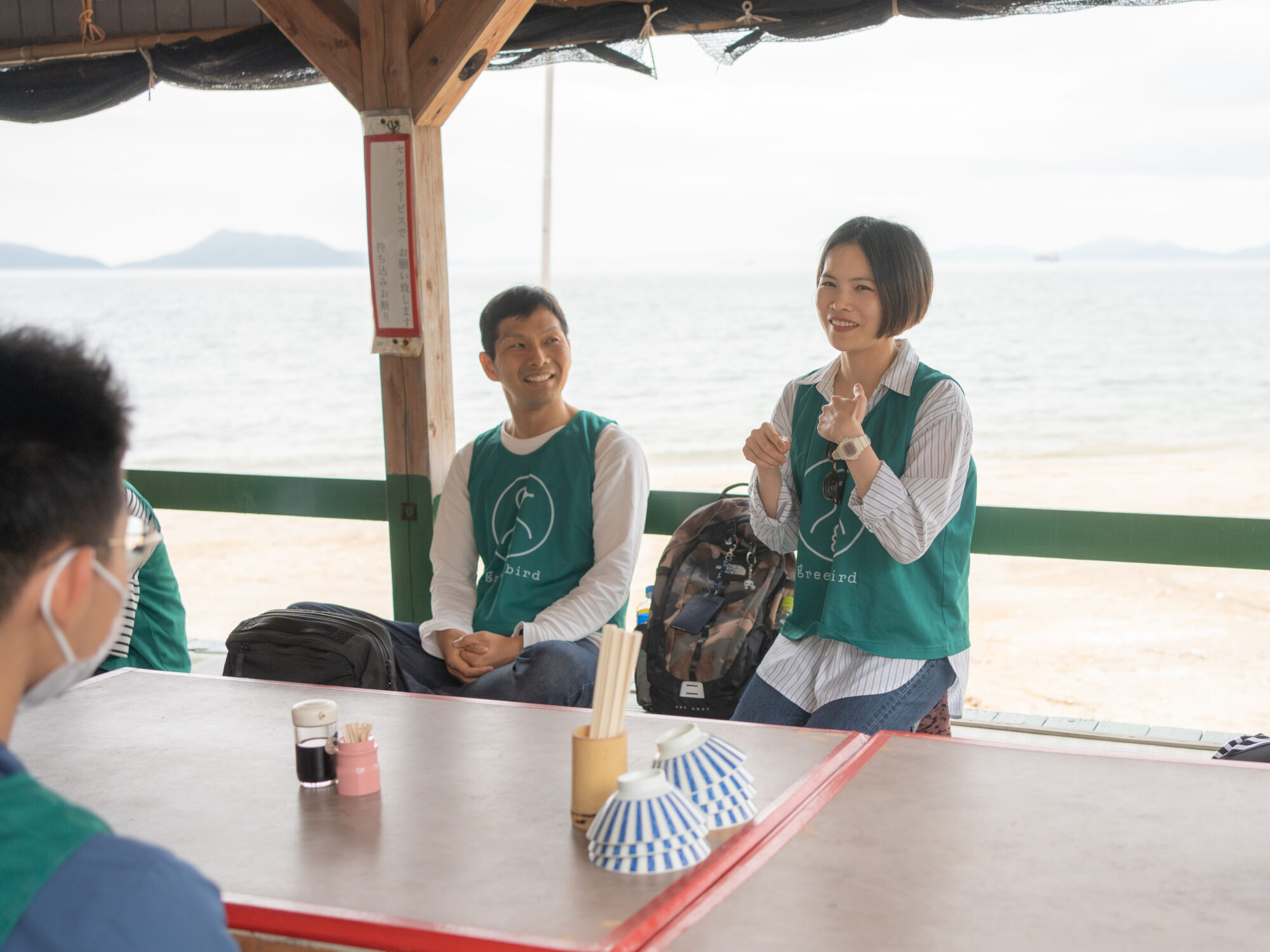
Among the participants, there were also individuals from Vietnam.
▼Traveling to an island in the Seto Inland Sea to pick up trash must have been a valuable experience.
Starting the Beach Clean
After the self-introductions, they immediately began picking up trash.
▼Gathering the necessary tools for the beach clean, such as trash bags and gloves, everyone headed to the beach.
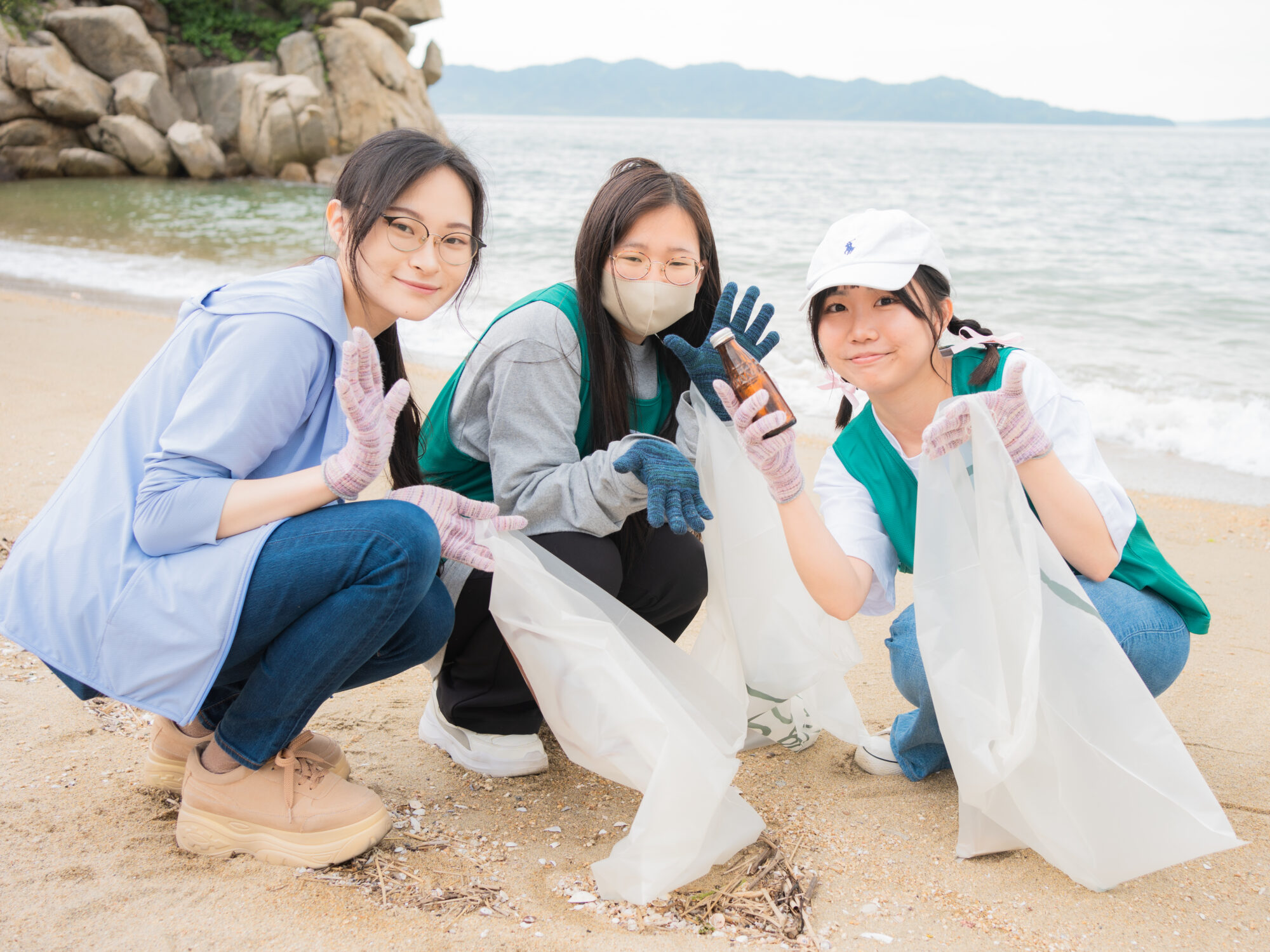
The first place they started the beach clean was the sandy beach of a swimming area on the west side of Rokukuchi Island.
As they walked along the beach, they noticed a white lump mixed in with the sand.
▼It was polystyrene, a petroleum-derived material that does not decompose naturally.
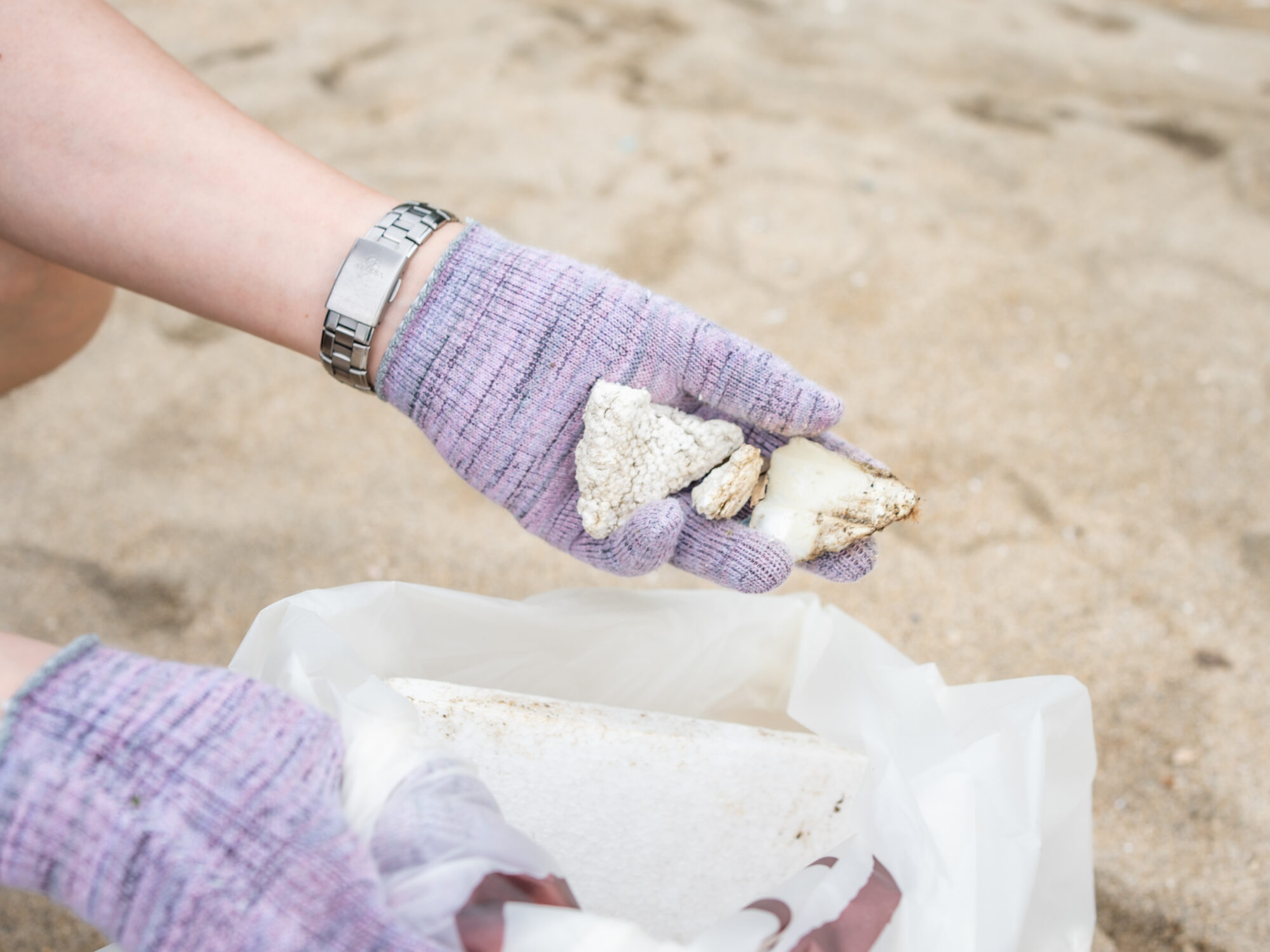
Not only on the beach but also in the bushes, many hand-sized pieces of polystyrene were found.
If they were to break down further, they would be difficult to see.
Considering that they are floating in the ocean as microplastics is frightening.
In addition, countless empty bottles and cans were found scattered on the beach and in the bushes.
▼Changing locations, they collected marine debris around the port located on the north side of Rokukuchi Island.
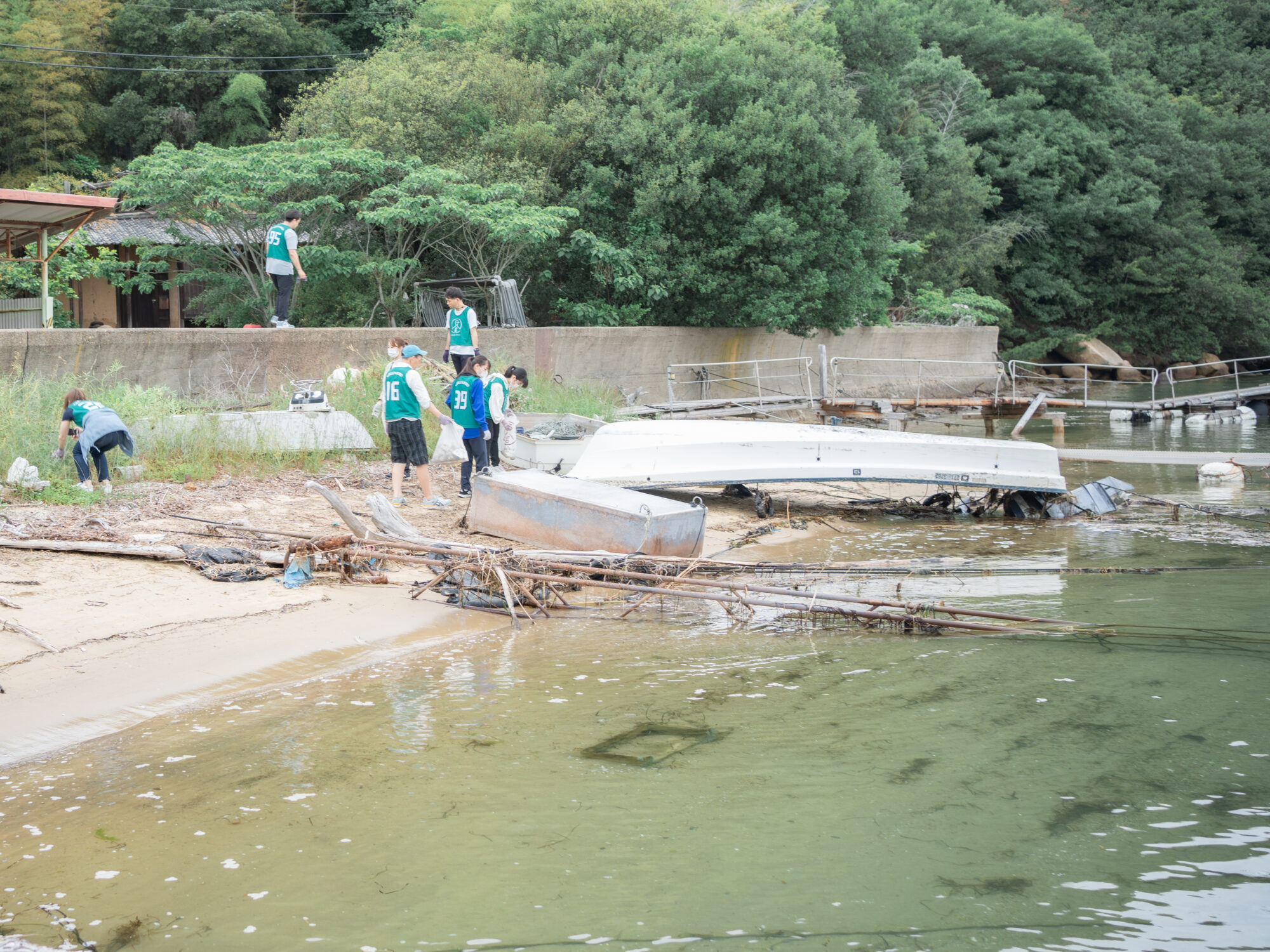
▼As they pushed through the bushes, a large number of plastic bottles were found.
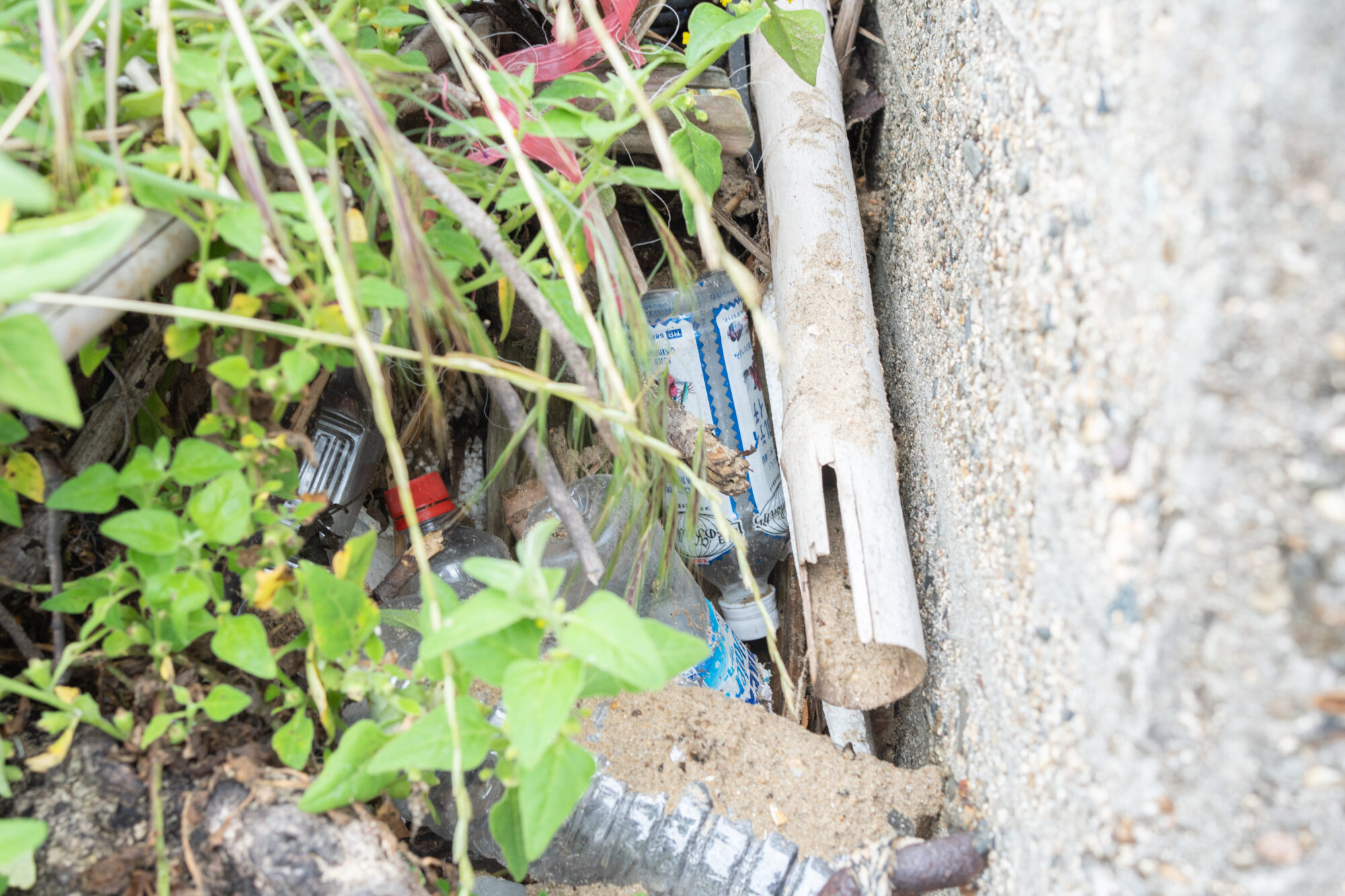
Plastic bottles are also artificial materials derived from petroleum that do not decompose naturally.
Despite there being no shops or vending machines on Rokukuchi Island, a large number of plastic bottles were found.
Surely, they were carried here by the wind and waves from our living areas.
▼A large piece of trash that looked like a helmet was also found.
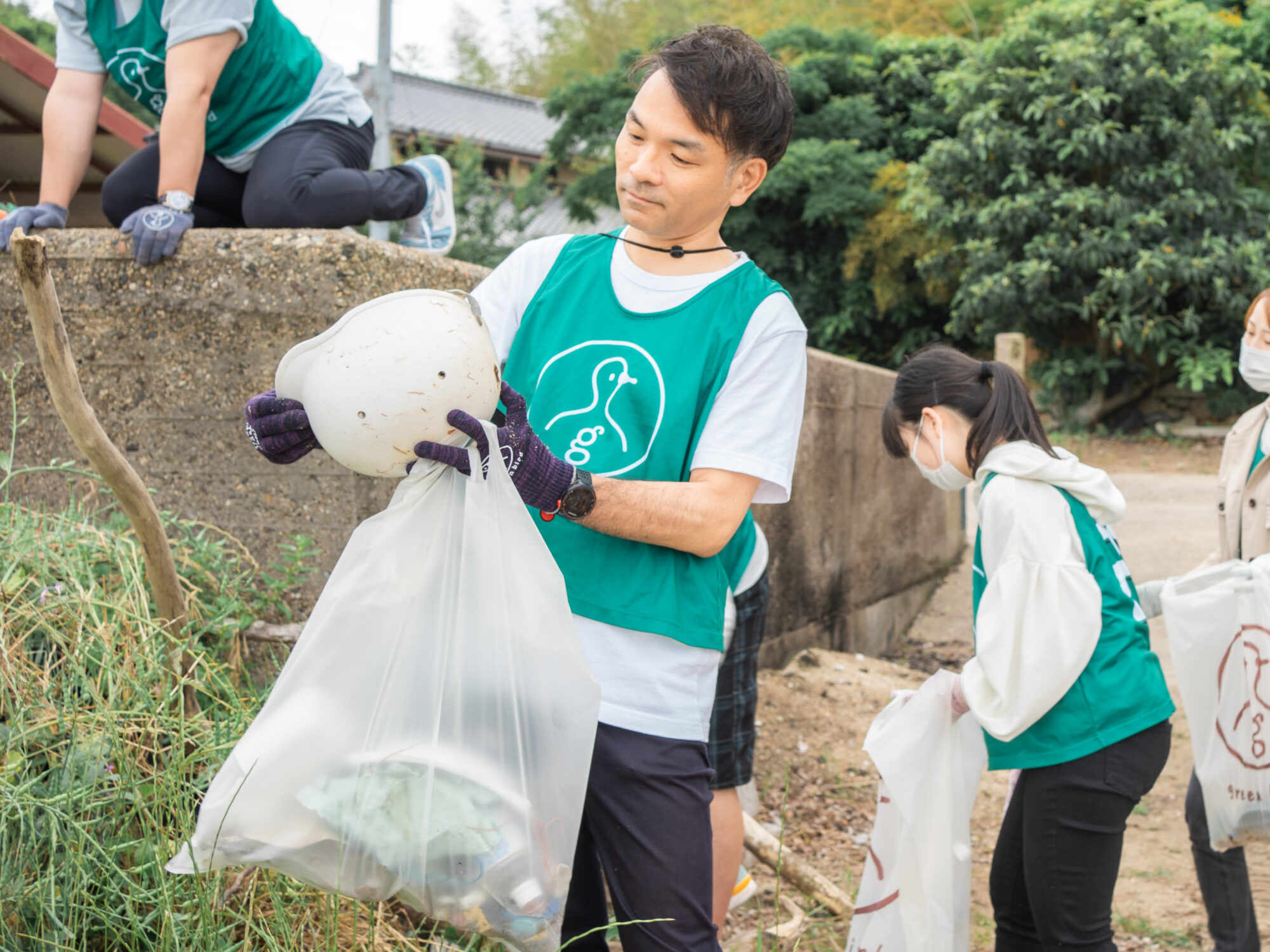
Plastic is a convenient material that supports our lives.
However, when disposed of improperly, due to its nature of being difficult to decompose, it becomes a troublesome presence that pollutes the ocean and island environments.
▼The trash collected during this beach clean.
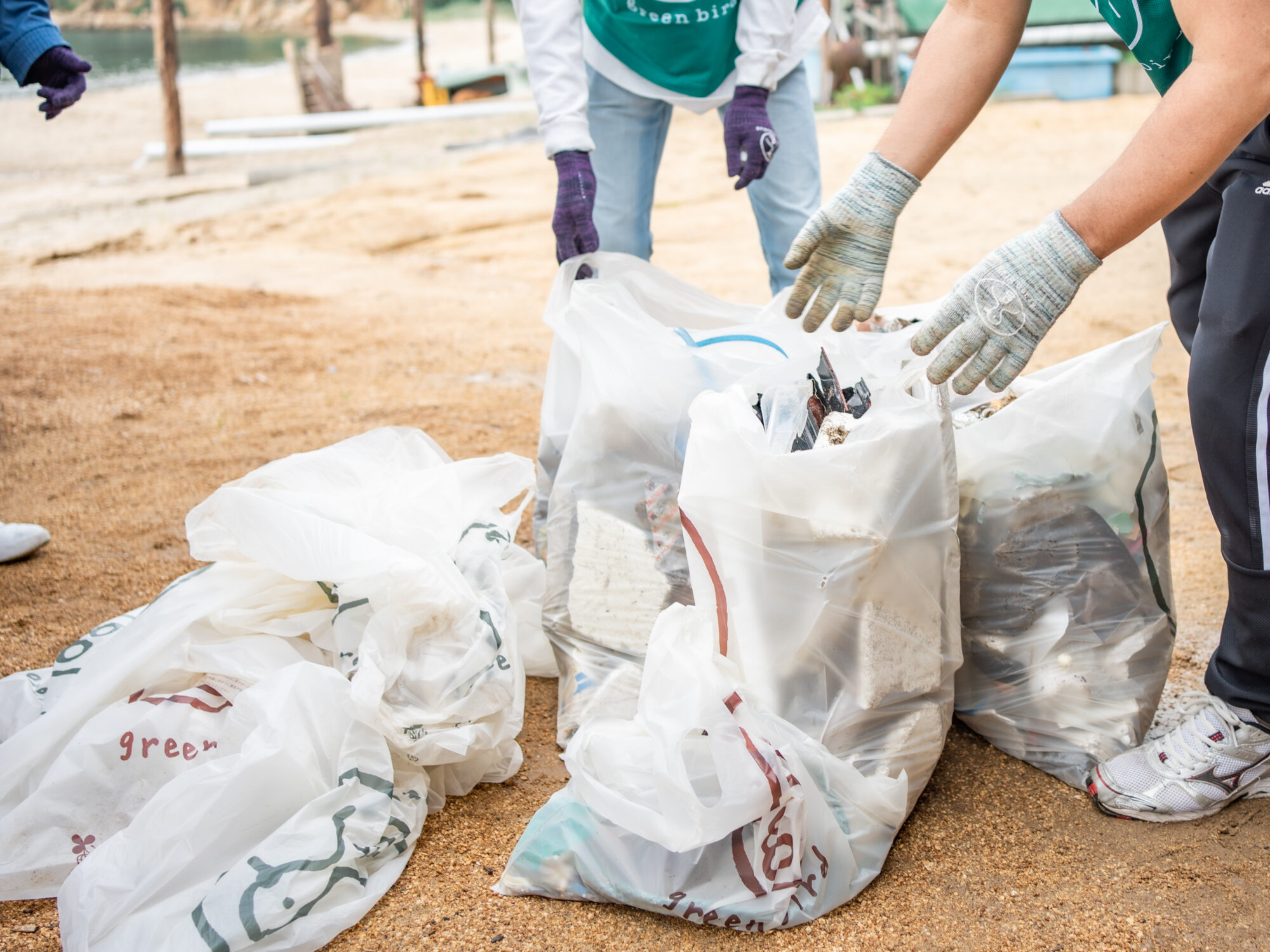
▼A large number of empty cans were also collected.
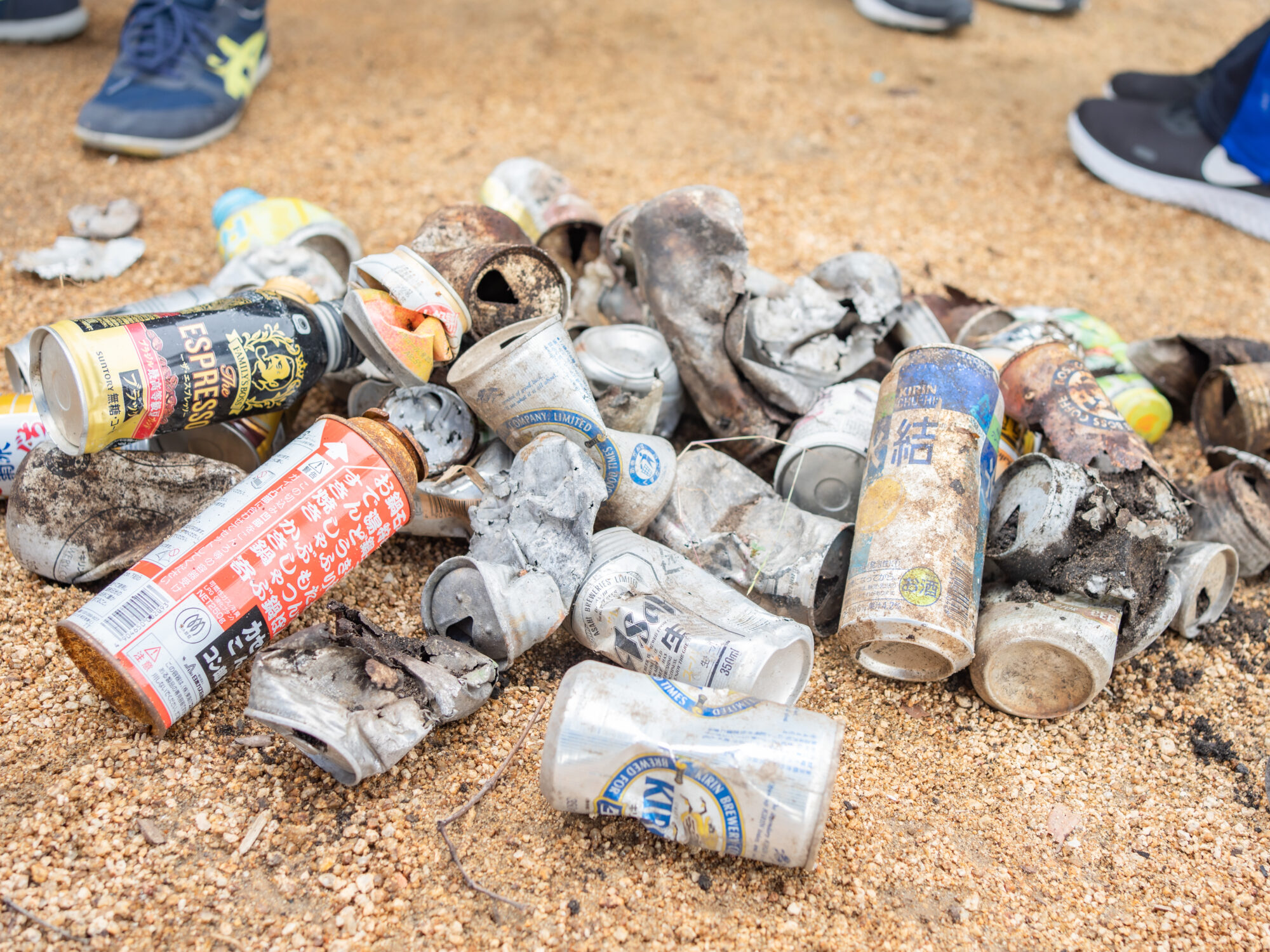
Among the empty cans, there were some with labels that seemed to have been produced decades ago.
When disposed of improperly and drifting as marine debris, even decades do not lead to their decay.
Feeling nostalgia for the labels seen decades ago, I also sensed the deep-rootedness of the marine debris problem.
The Symbol of Rokukuchi Island: "Zou-iwa"
On Rokukuchi Island, there is a nationally designated natural monument called "Zou-iwa".
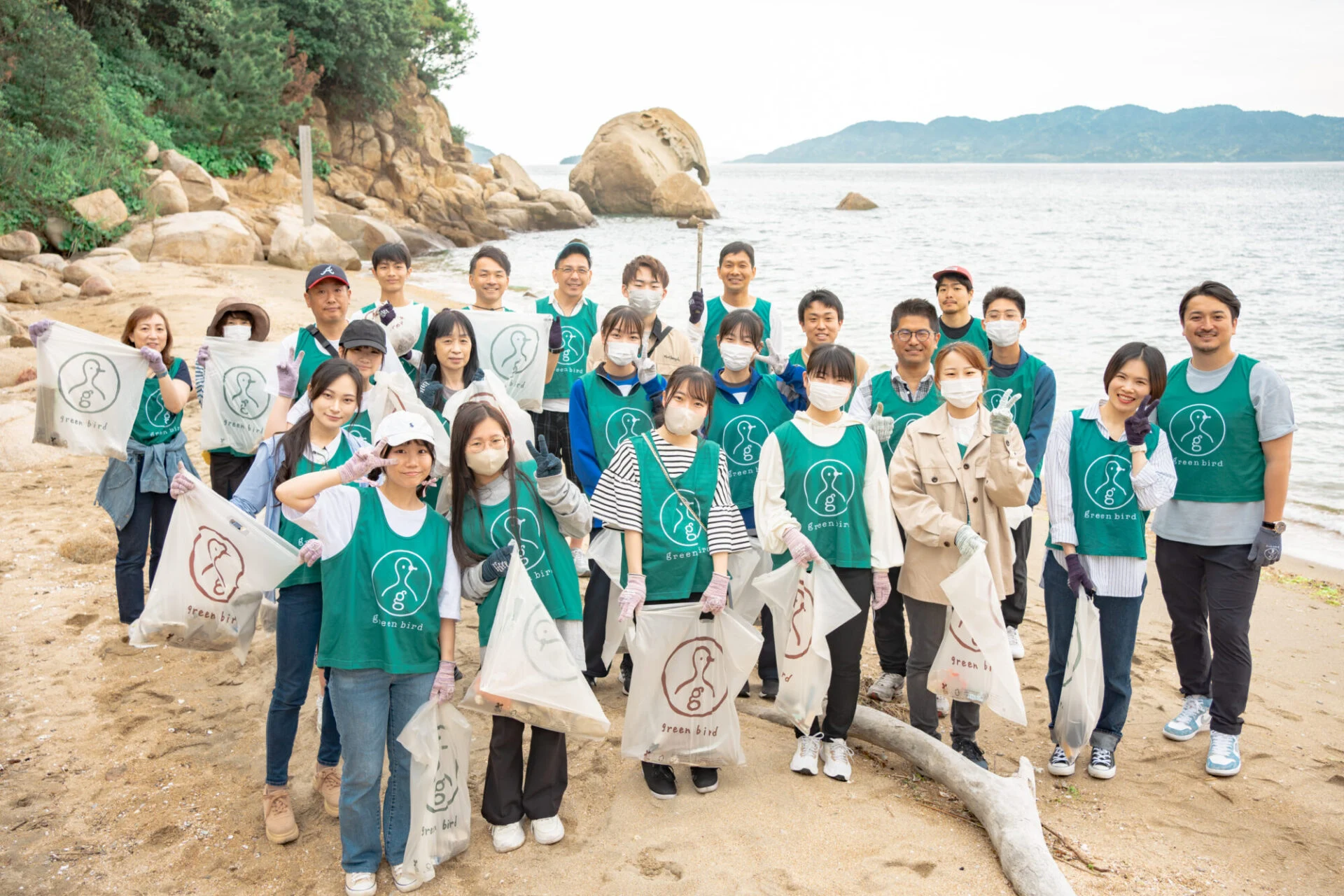
▼The rock visible in the back of the photo is "Zou-iwa".
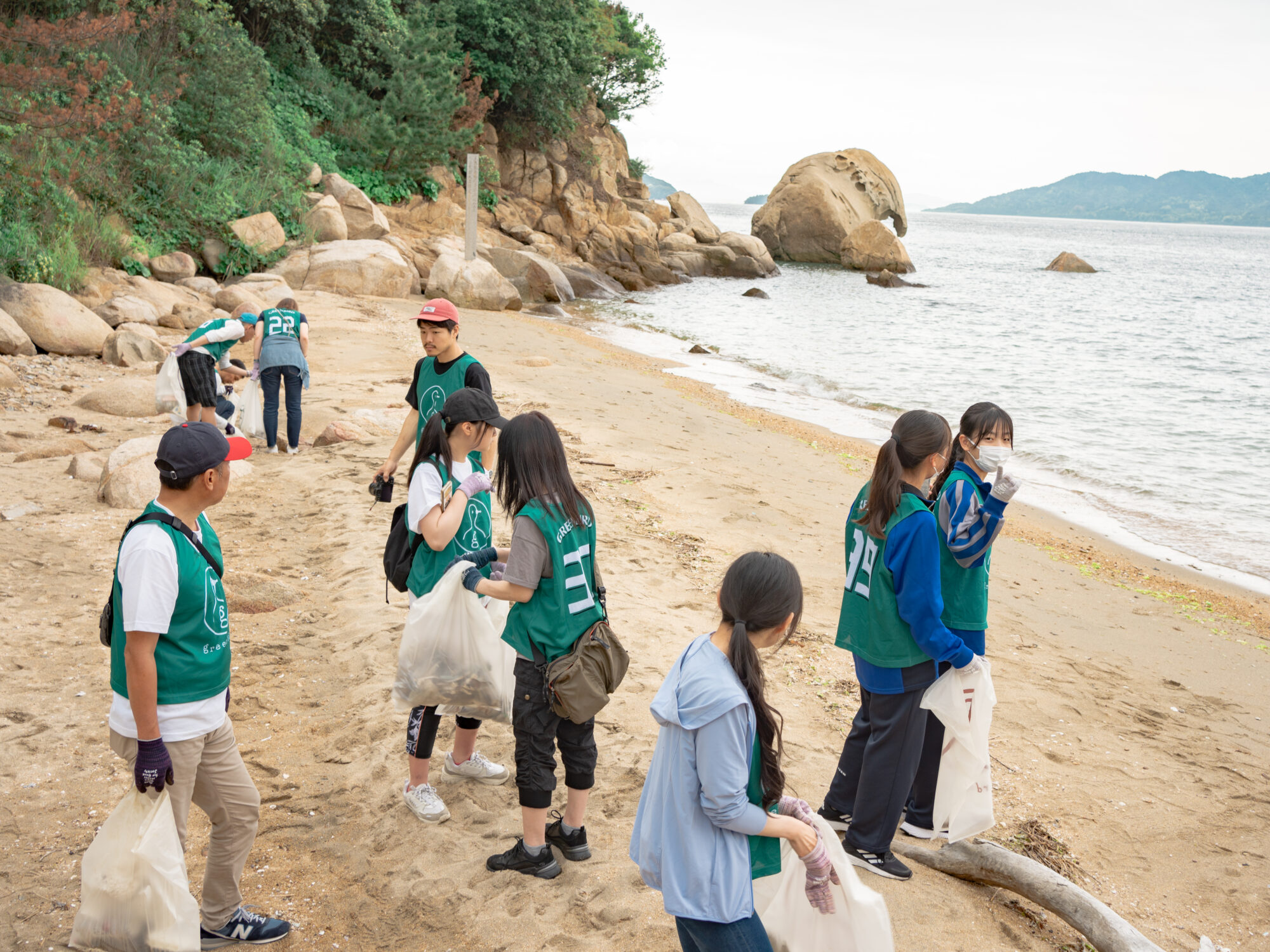
The name comes from the fact that the granite boulder has been eroded by waves, taking on the shape of an elephant with its rear facing.
Rokukuchi Island is an island in Kurashiki City, but it is a sight that even the residents of Kurashiki City rarely get to see.
The view from the island floating on the calm waves is actually a precious sight for the people of Kurashiki as well.
I believe they will remember not only the reality of marine debris but also the beautiful scenery of the Seto Inland Sea.
▼A commemorative photo taken with the symbol of Rokukuchi Island, "Zou-iwa" in the background.
Enjoying Seafood While Gazing at the Calm Sea
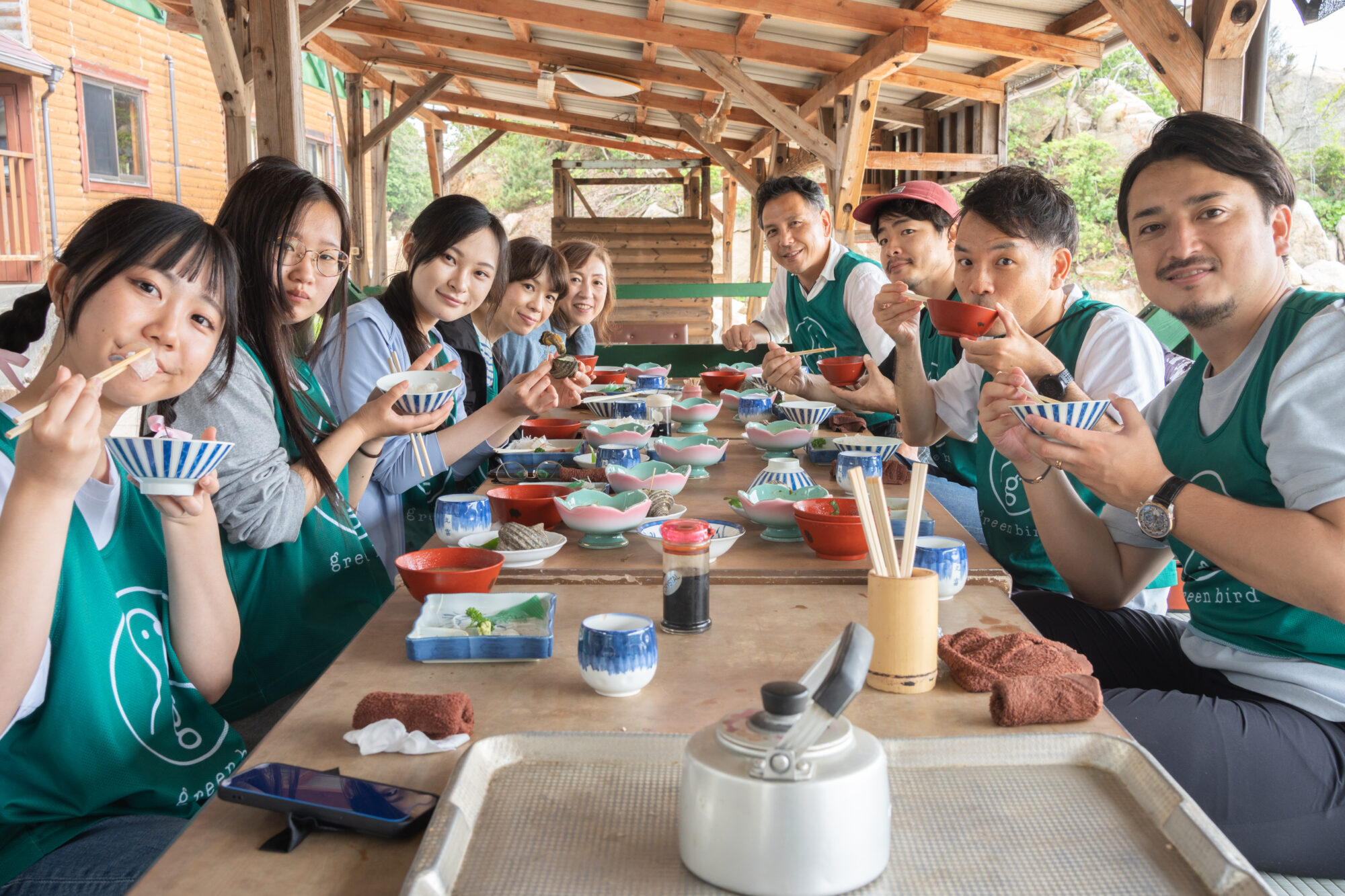
Lunch was prepared by the minpaku "Zouantei".
▼Enjoying seafood while seated on the terrace with a view of the calm sea.
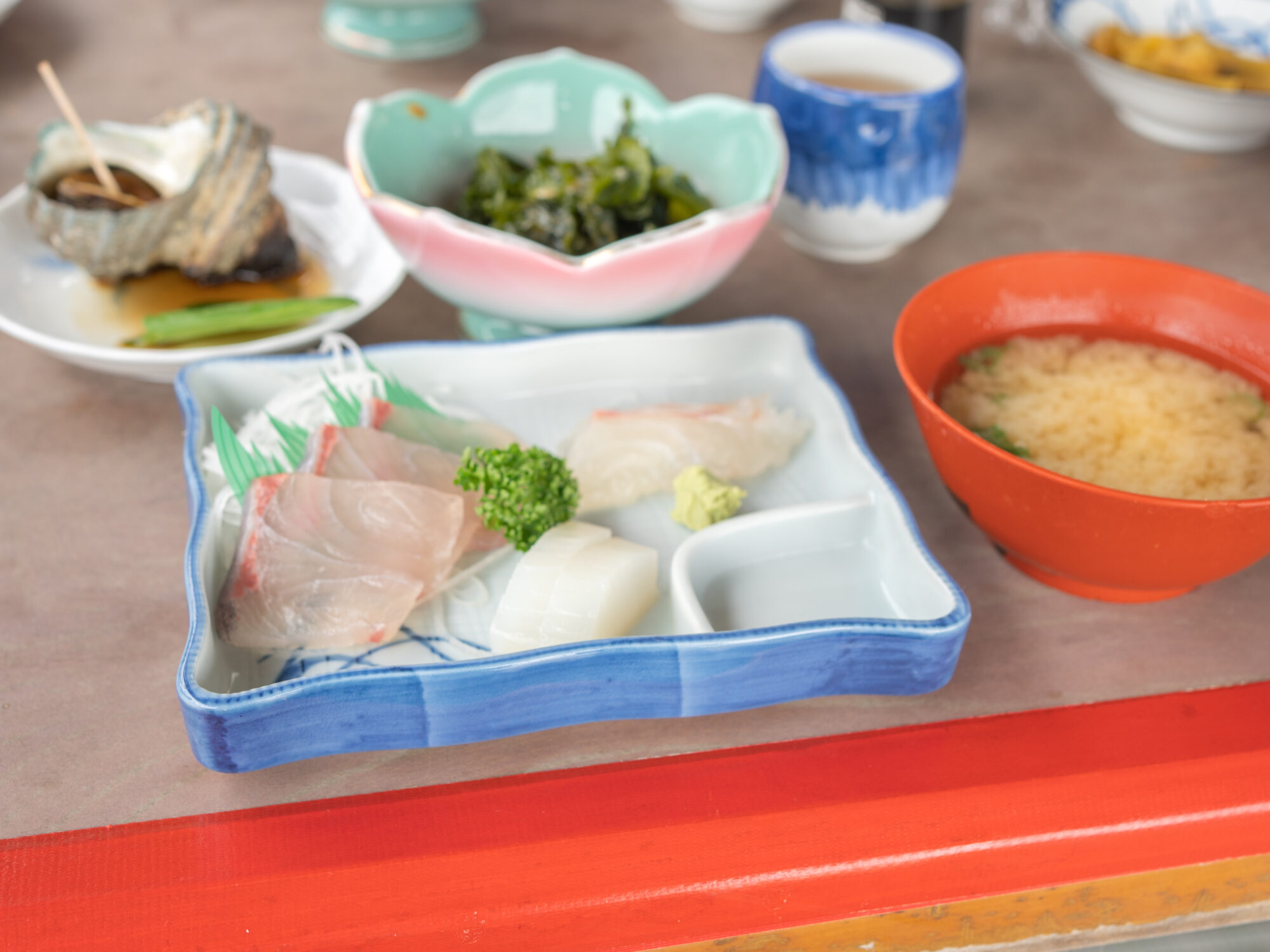
▼We enjoyed fresh seafood from the Seto Inland Sea.
To Matsushima Branch School Art Museum Utilizing a Closed School
In the afternoon, we will move to the Matsushima Branch School Art Museum, a facility utilizing a closed school located in Matsushima.
Once again, we board a boat and depart from Rokukuchi Island towards Matsushima.
Matsushima Branch School Art Museum
Matsushima is an island floating about 600 meters from the southern tip of Kojima Peninsula.
It is the smallest inhabited island in Okayama Prefecture with a circumference of about 1.2 km.
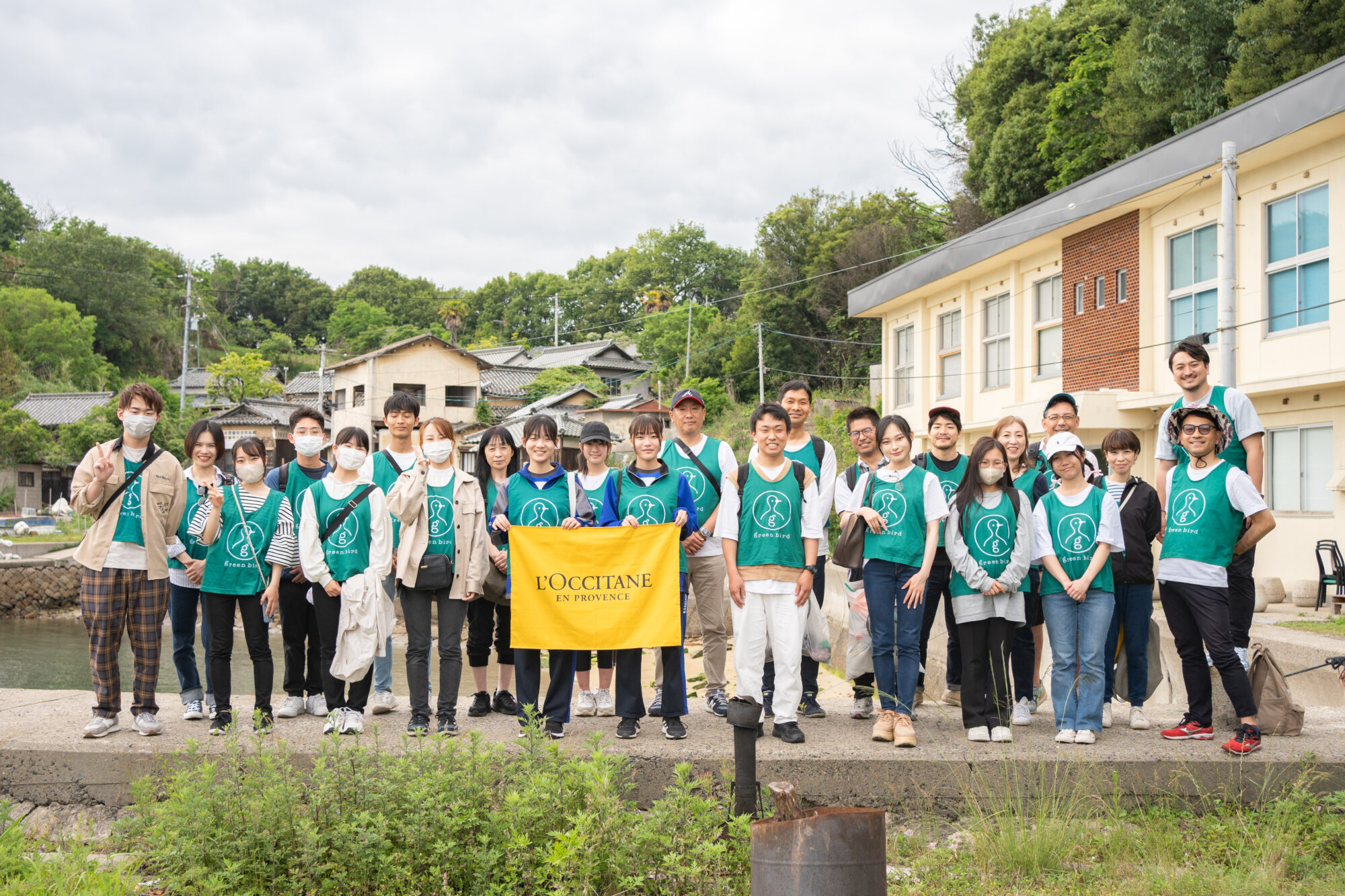
▼ The Matsushima Branch School Art Museum is located right in front of the port.
Before visiting the Matsushima Branch School Art Museum, we took a stroll around Matsushima.
▼ Of course, we collected trash while exploring the island.
Sharing Thoughts on Nature Conservation Activities
The Okayama Remote Island Project was realized through the efforts of three organizations.
At the Matsushima Branch School Art Museum, we introduced the projects of each organization and shared the background of the Okayama Remote Island Project.
L’OCCITANE
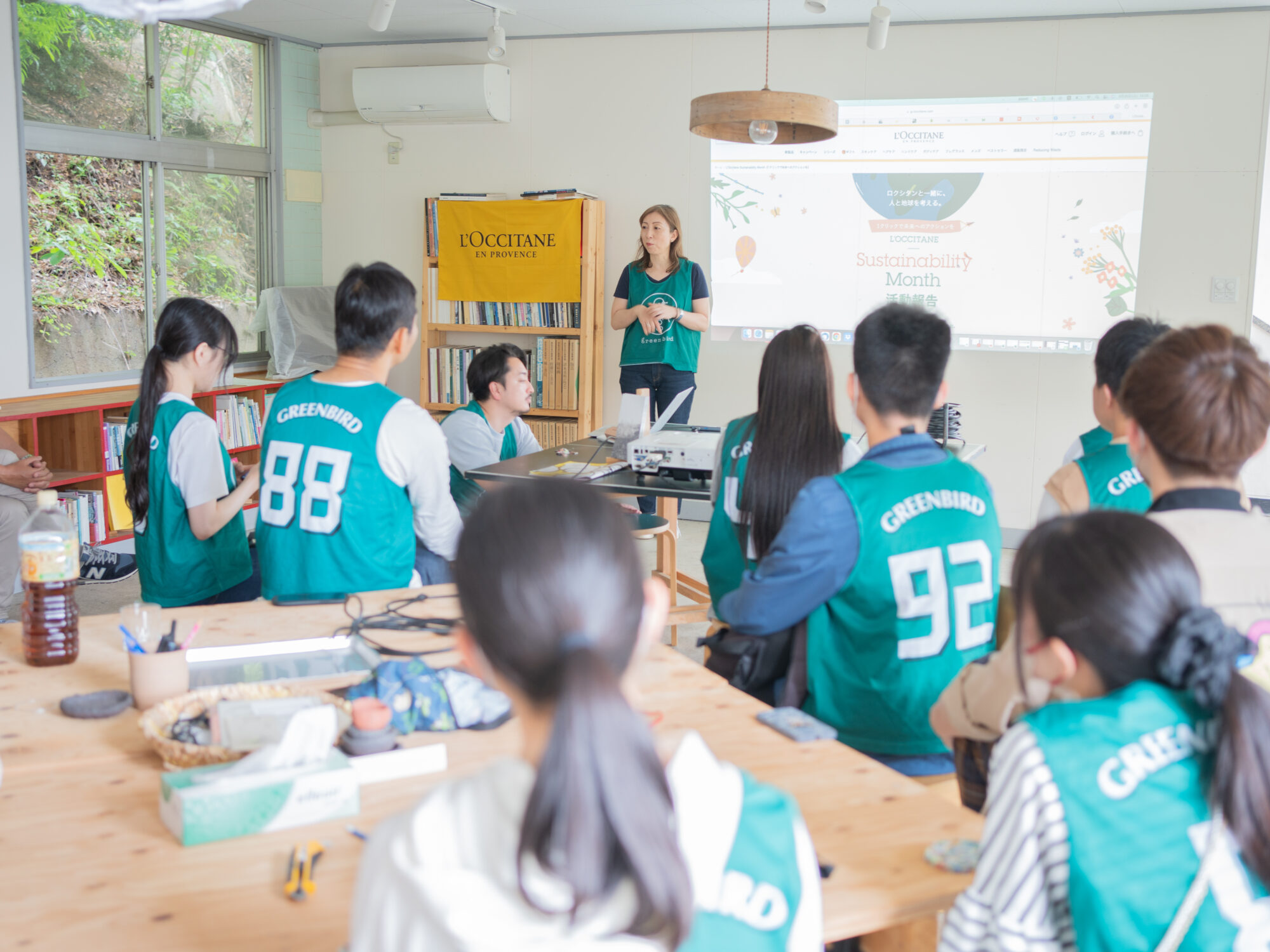
The cosmetics brand L’OCCITANE, which supported the Okayama Remote Island Project, shared the background leading to the planning.
L’OCCITANE is engaged in six social contribution projects that consider people, nature, and the future of the Earth.
In June 2022, during Sustainable Month, an online survey was conducted to select the most supported project among the six.
As a result, out of approximately 20,000 total responses, the most votes, 5,850, were cast for the activities of green bird.
Therefore, to communicate the activities of L’OCCITANE and green bird to those who supported them, the Okayama Remote Island Project was planned.
Creators Lounge
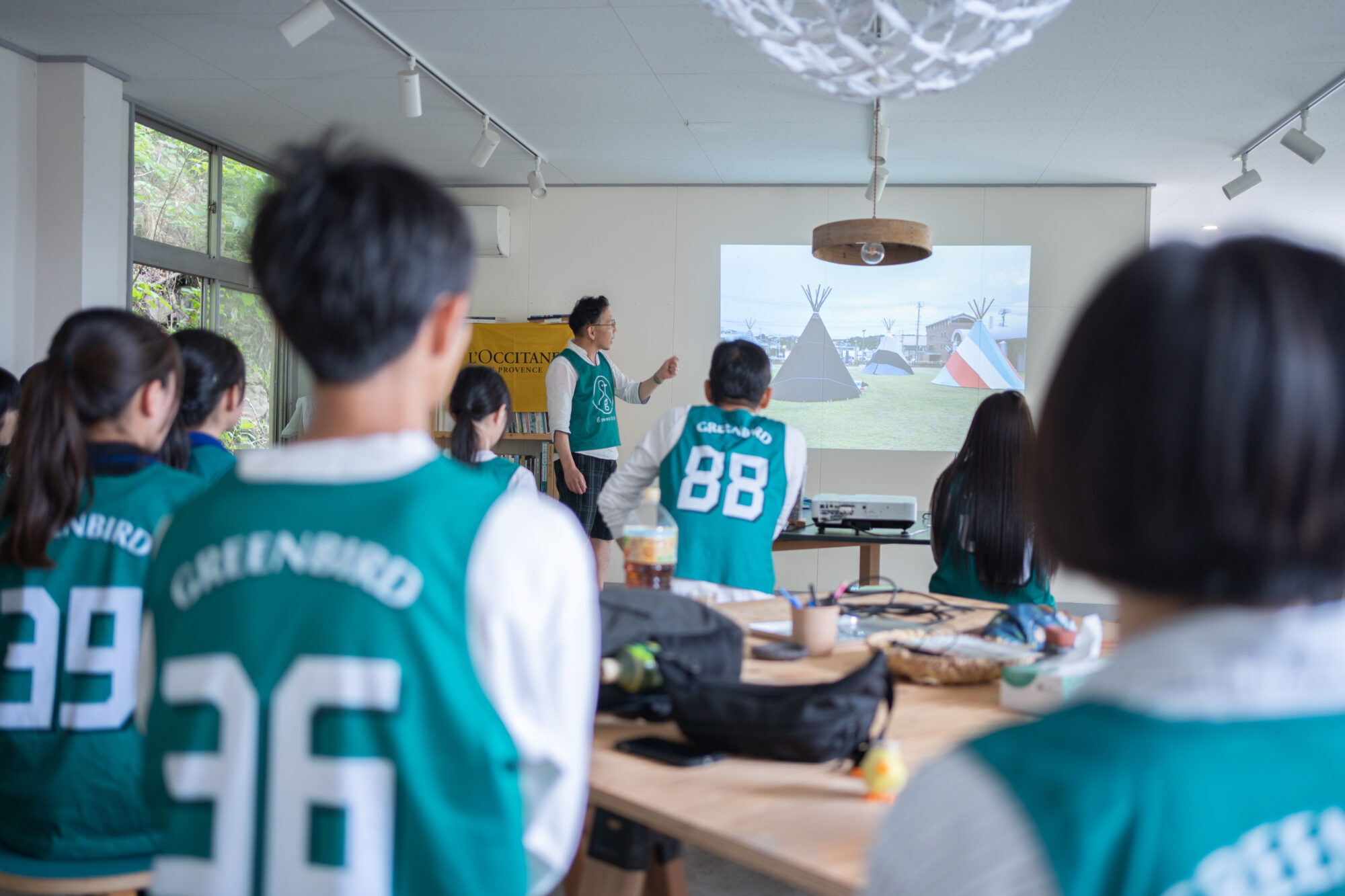
The Creators Lounge introduced the history of Matsushima.
There are traces of human habitation around Matsushima dating back 15,000 years, and stone tools can still be found in the fields.
In the mid-Heian period, Fujiwara no Sumitomo, known for leading a rebellion against the court at that time, was besieged here.
As a result, there is a Sumitomo Shrine enshrining Fujiwara no Sumitomo in Matsushima.
In addition to the history of Matsushima, they also shared about the utilization of the Matsushima Branch School Art Museum.
The second floor of the Matsushima Branch School Art Museum serves as an atelier, where artists regularly visit to engage in creative activities.
Moreover, the general public can enjoy Matsushima, and the area that was originally the schoolyard is utilized as a campsite.
In front of the school building, the sea stretches as far as the eye can see, and enjoying camping while gazing at the beautiful archipelago of the Seto Inland Sea is one of the charms of the Matsushima Branch School Art Museum.
Community Cleaning Volunteer Organization green bird
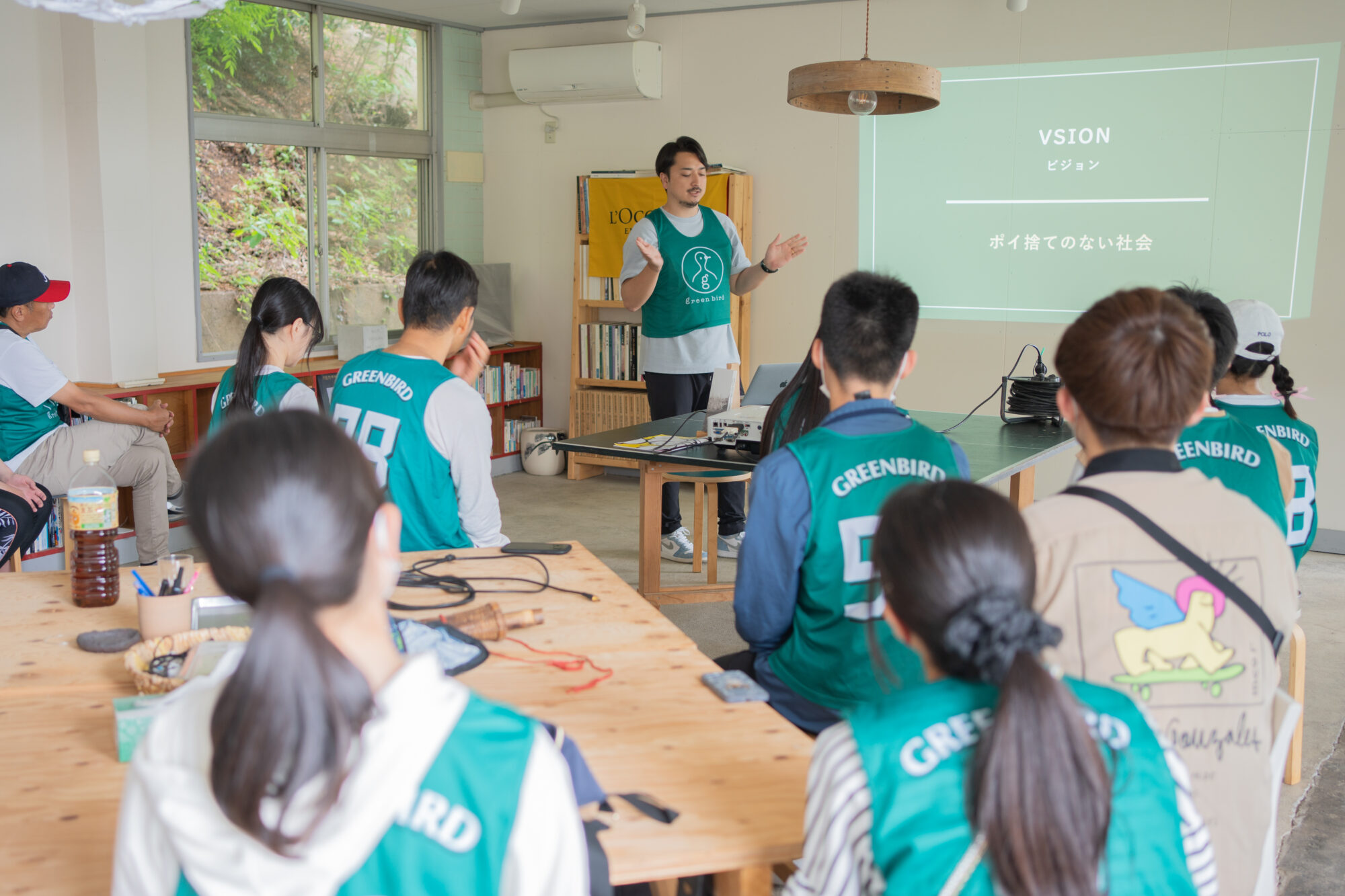
green bird introduced its history since its establishment in 2002.
In 2002, people from the Omotesando shopping district gathered and started a trash collection initiative based on the idea of reducing littering that anyone could easily participate in.
They also introduced activities such as trash collection around Shibuya Scramble Crossing after Halloween and the collection of tapioca milk tea containers.
While collaborating with celebrities and companies, they continue to increase the number of people who do not litter worldwide.
Reluctantly Leaving the Island
The extraordinary time spent on the calm sea passed in the blink of an eye, and before we knew it, the day's schedule was over.
Reluctantly, we return to Kojima Tourist Port.
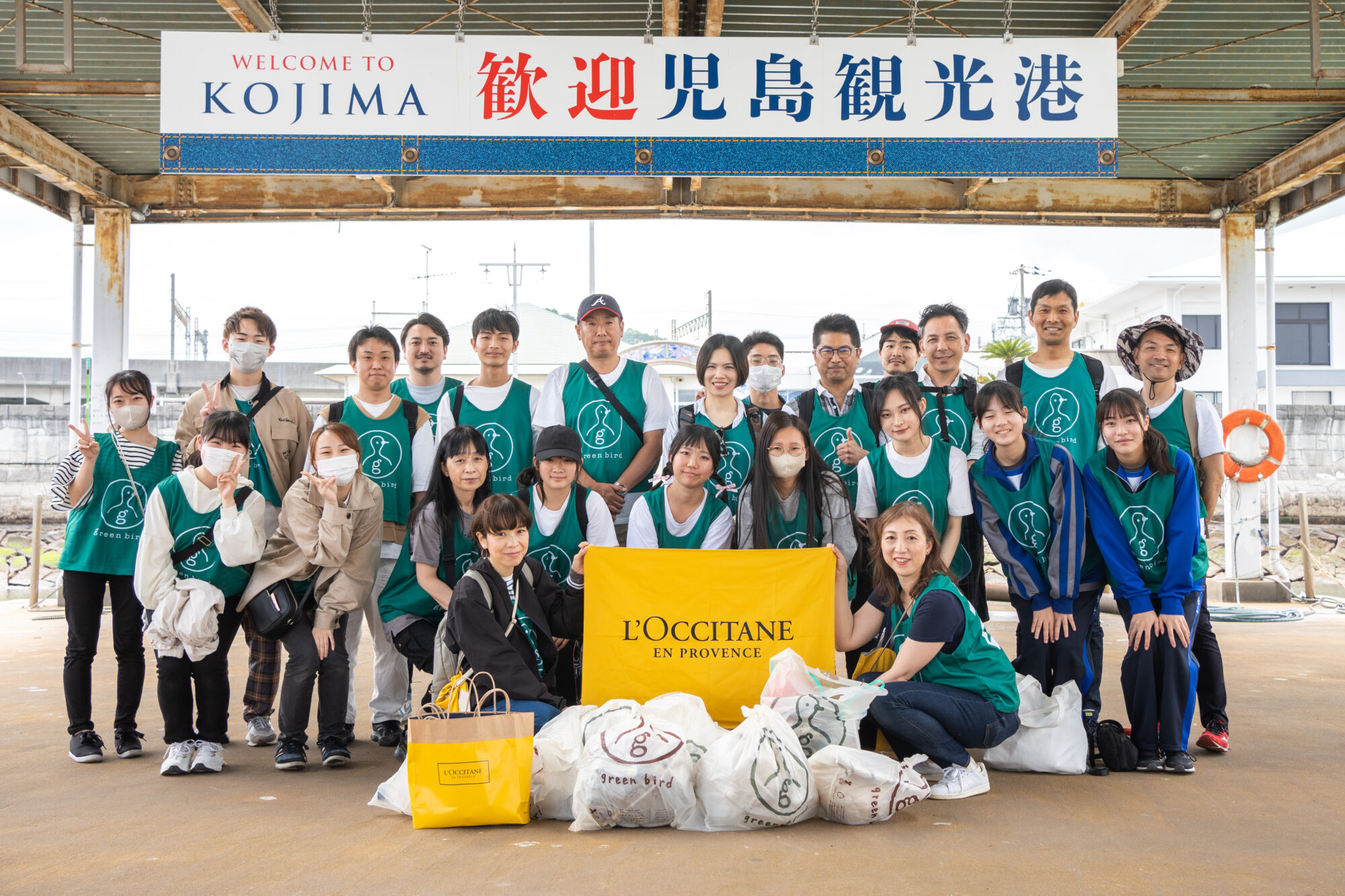
The Okayama Remote Island Project not only involved collecting marine debris but also allowed us to fully experience the climate of the islands in the Seto Inland Sea.
We not only recognized the reality of marine debris but also retained the memory of the beautiful scenery of the Seto Inland Sea.
Thoughts on Picking Up Trash in the Seto Inland Sea
From the island's beach, we could see the gentle waves and the beautiful scenery created by the islands, but looking at our feet, the trash carried by the wind was noticeable.
As we looked at the labels on the trash, we realized that most of the trash had flowed in from our living areas.
We were made aware that improperly disposed trash unintentionally tarnishes beautiful landscapes.
It is sad to realize that the beautiful scenery of the Seto Inland Sea and our daily lives are connected through trash.
The issue of marine debris has started to be addressed in school education, but some may not feel it is a close issue.
However, actually going out to the sea and picking up trash makes it impossible to ignore that it is related to our lives.
If we can feel the beauty of the Seto Inland Sea and further develop a sense of crisis regarding the marine debris issue, we will want to take action towards environmental protection.
The Okayama Remote Island Project provided us with an opportunity to confront trash.
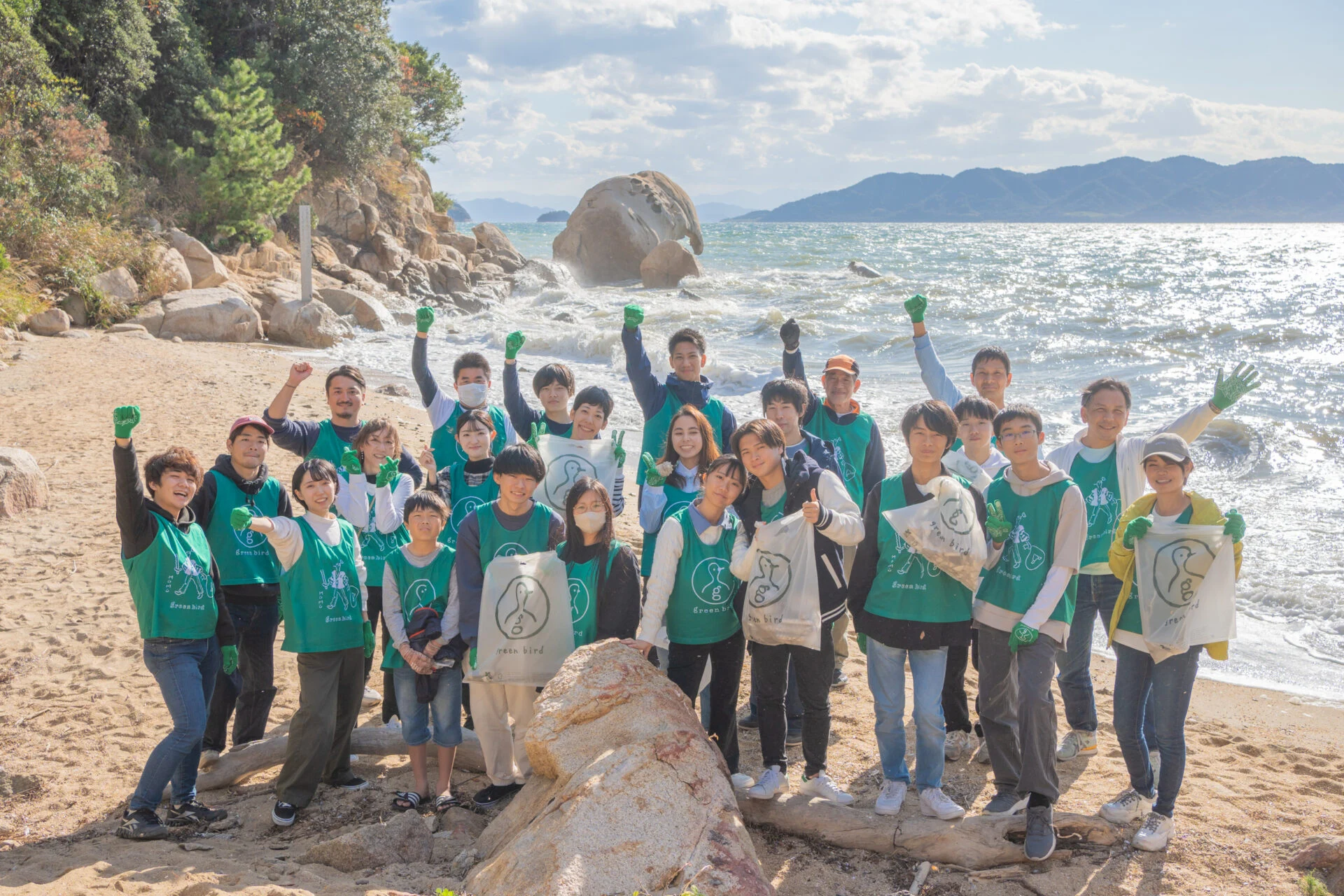
Data on the Okayama Remote Island Project
| Name | Okayama Remote Island Project |
|---|---|
| Date Held | The first event was held on May 20, 2023. Events are held irregularly. |
| Location | 2670 Shimotsui, Kurashiki City, Okayama Prefecture |
| Participation Fee (including tax) | 1,000 yen |
| Website | greenbird |