Do you know "Matsushima," which floats at the southern tip of Kurashiki City? It is the smallest inhabited island in Okayama Prefecture, with a circumference of about 1.2 kilometers.
There are only 2 island residents, but it seems that people come and go for activities like seaweed fishing and visiting graves.
On Matsushima, efforts are underway to create a space that promotes cultural arts utilizing the unique landscapes and resources found only here.
I was able to visit Matsushima and hear about the initiatives being carried out.
What is Matsushima?
To get to Matsushima, take a ferry from Shimotsui in Kurashiki City, which takes about 5 minutes. There is no regular ferry service.
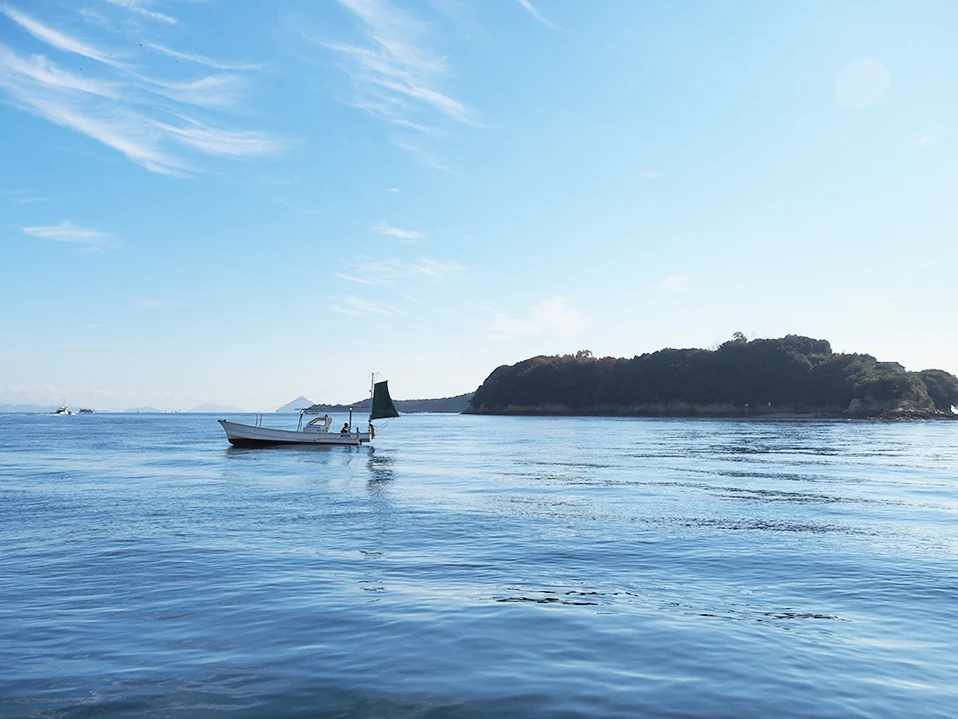
It offers a stunning view of the Seto-Ohashi Bridge.
Rich in seafood, it is also a well-known fishing spot among those in the know.
You can catch sea bream, yellowtail, filefish, squid, octopus, rockfish, conger eel, mackerel, and horse mackerel.
Nozaki's Historical Residence
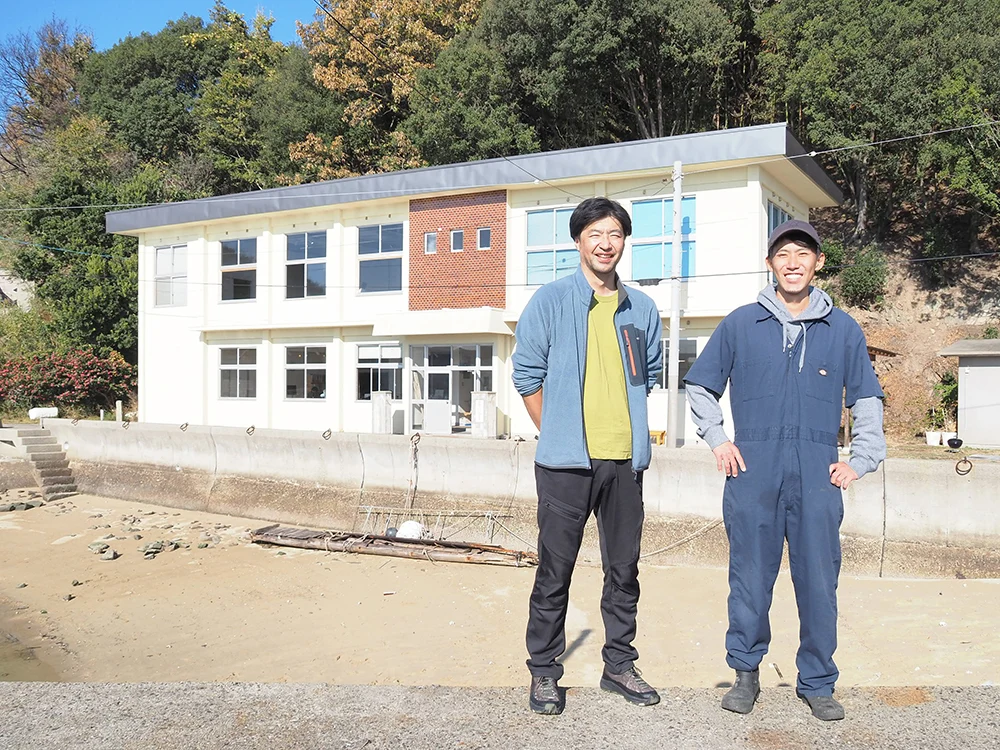
The first building you see upon arriving at Matsushima is Nozaki's Historical Residence, a branch school established in 1902.
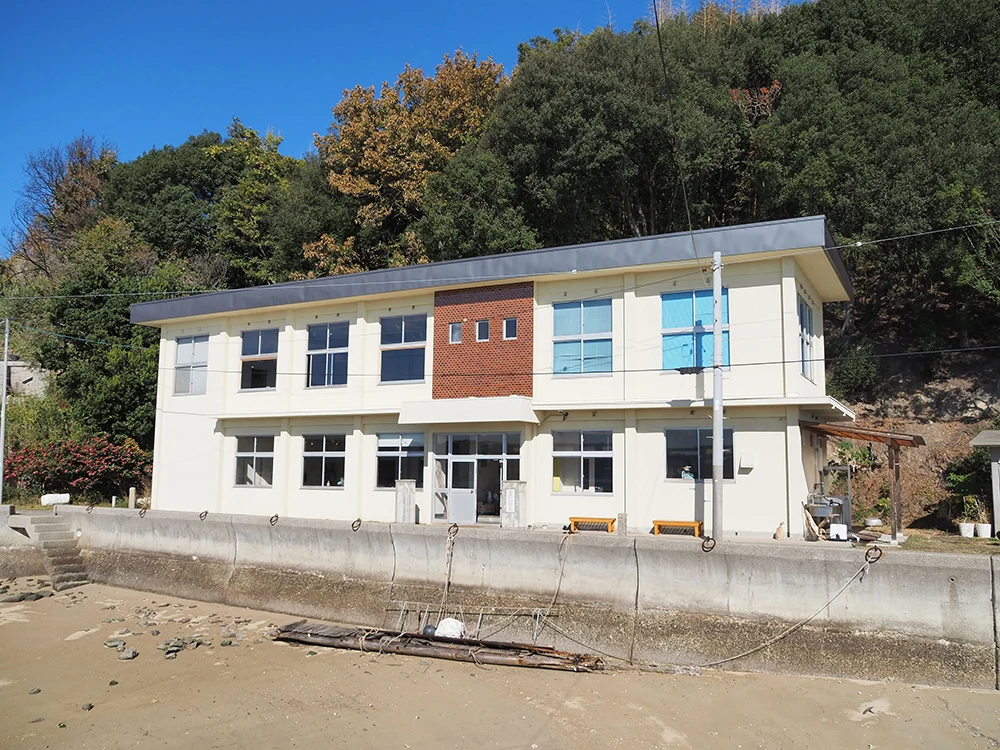
At one time, about 100 people lived on Matsushima, and there was a time when dozens of students attended this school.
Nozaki's Historical Residence closed in 1989 and was officially closed in March 2000.
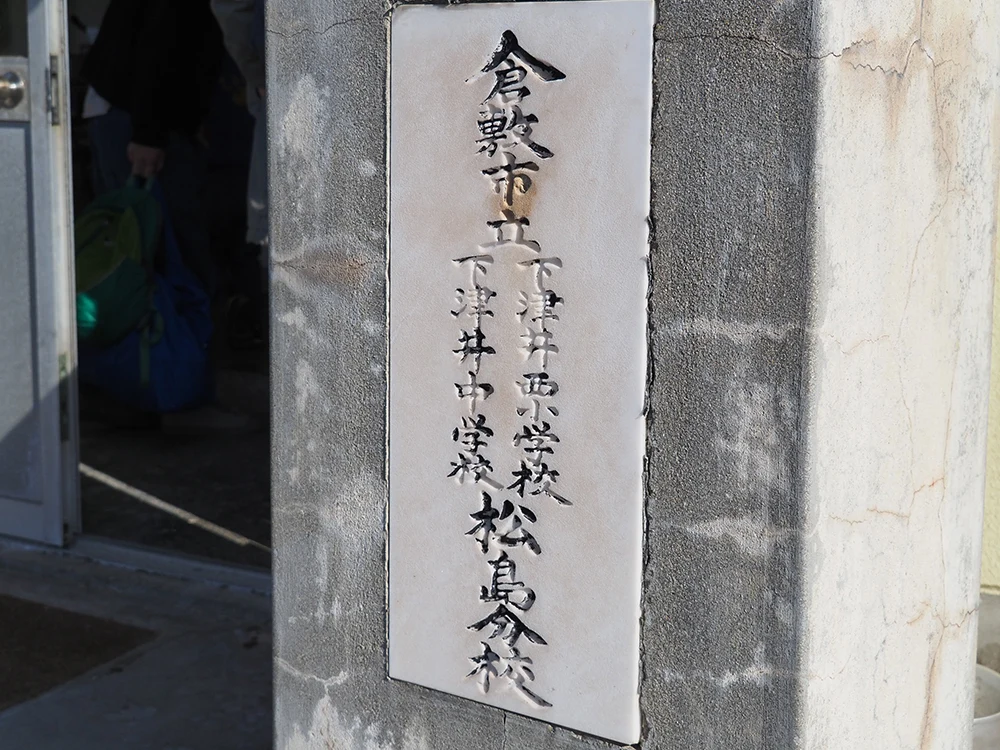
It is now known as the Matsushima Branch School Museum, where efforts are being made to create a space that promotes art utilizing the unique landscapes and resources of Matsushima.
Mr. Katayama Yasuyuki, the representative director of the Matsushima Branch School Museum, has been working for about 10 years with the aim of "creating new values in art and culture from Shimotsui and Matsushima."
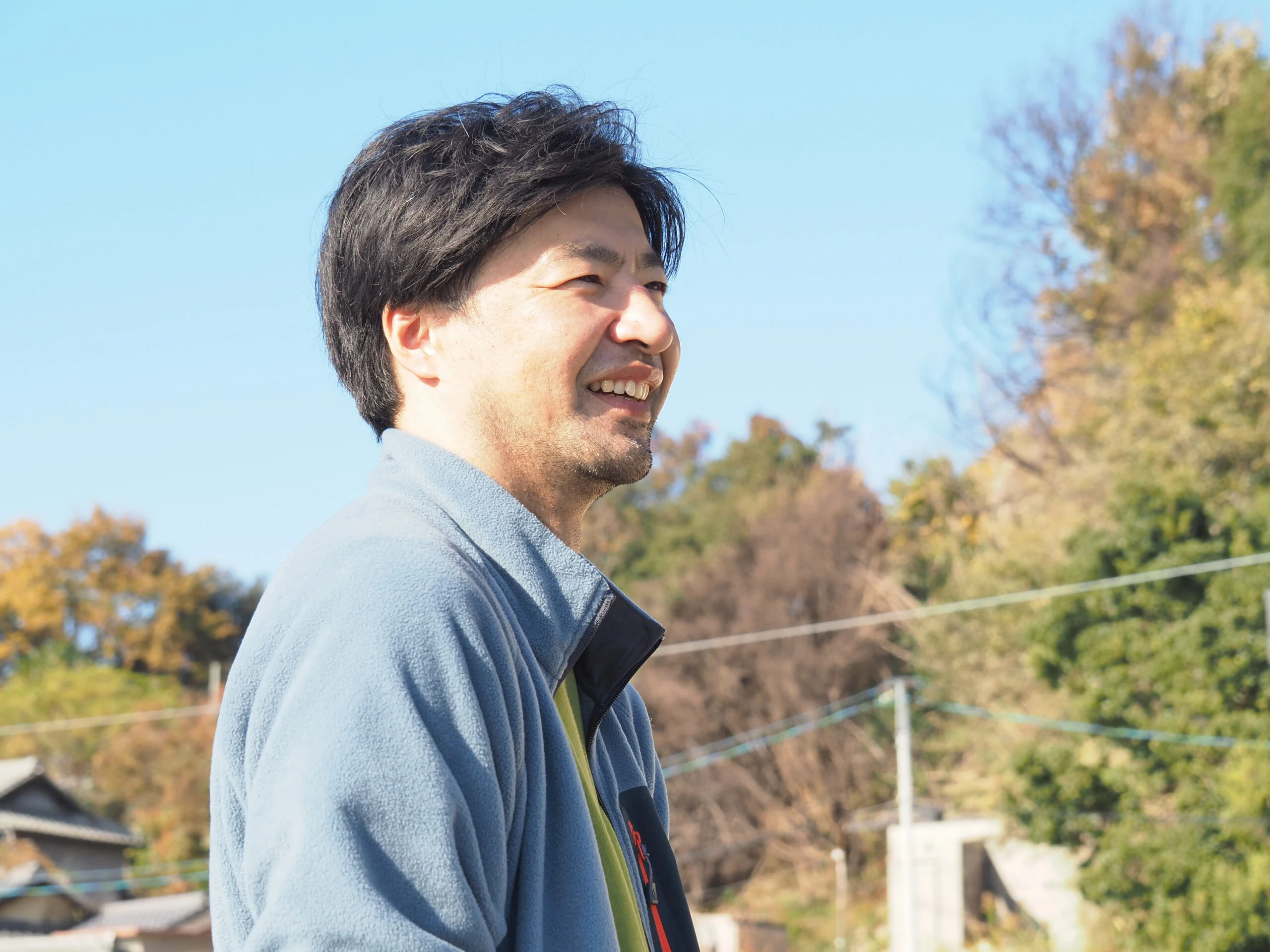
Mr. Katayama, who is from Kojima and currently resides there, is also an artist and is active as a sculptor.
He creates works using various materials, primarily clay, combined with wood and metal.
He has teamed up with the Washuzan and Shimotsui Community Development Council to engage with the administration and carefully build relationships with those involved in Matsushima.
The Matsushima Branch School Museum, entrusted with its utilization by Kurashiki City, is being operated by the general incorporated association.
I Actually Went to Matsushima!
If you take a ferry from near Tatoura Park in Shimotsui, Kurashiki City, you will see the sea in all directions. Right next to you is the Seto-Ohashi Bridge!
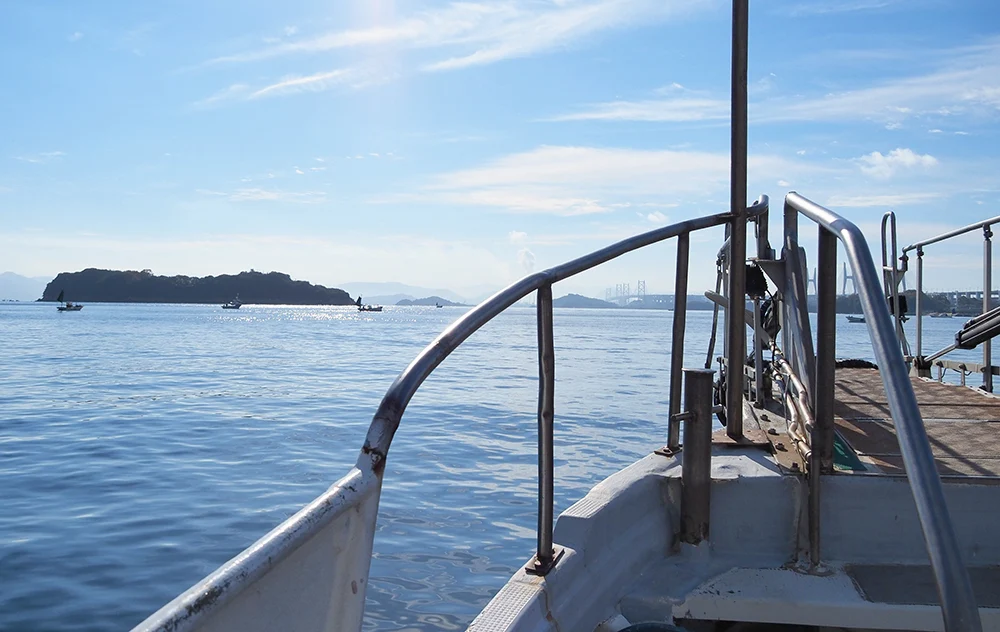
Although it was only a short 5-minute ride, it was the best boat trip.
Upon arrival, the Matsushima Branch School Museum immediately caught my eye.
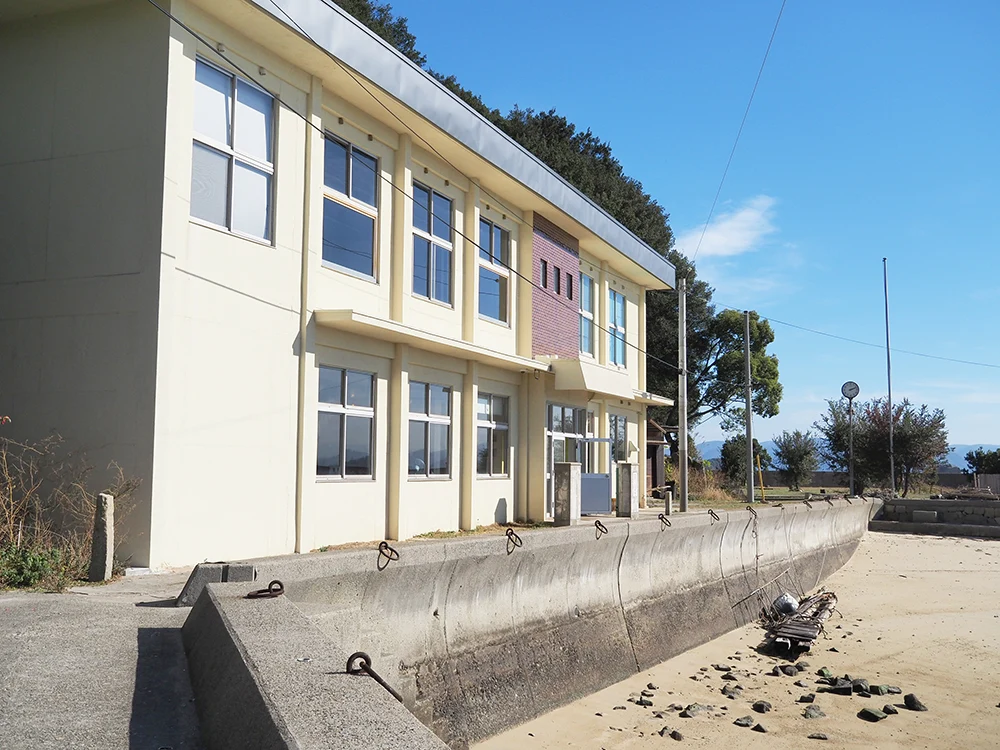
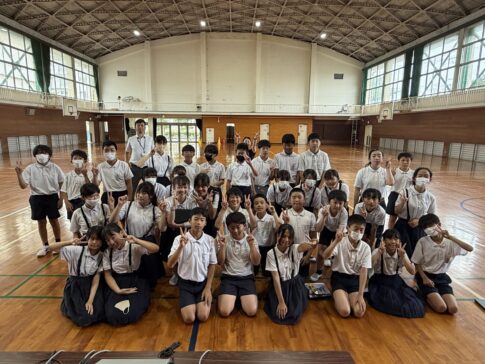
The day I visited was a day when children come to play on the island once a month. Their cheerful voices echoed.
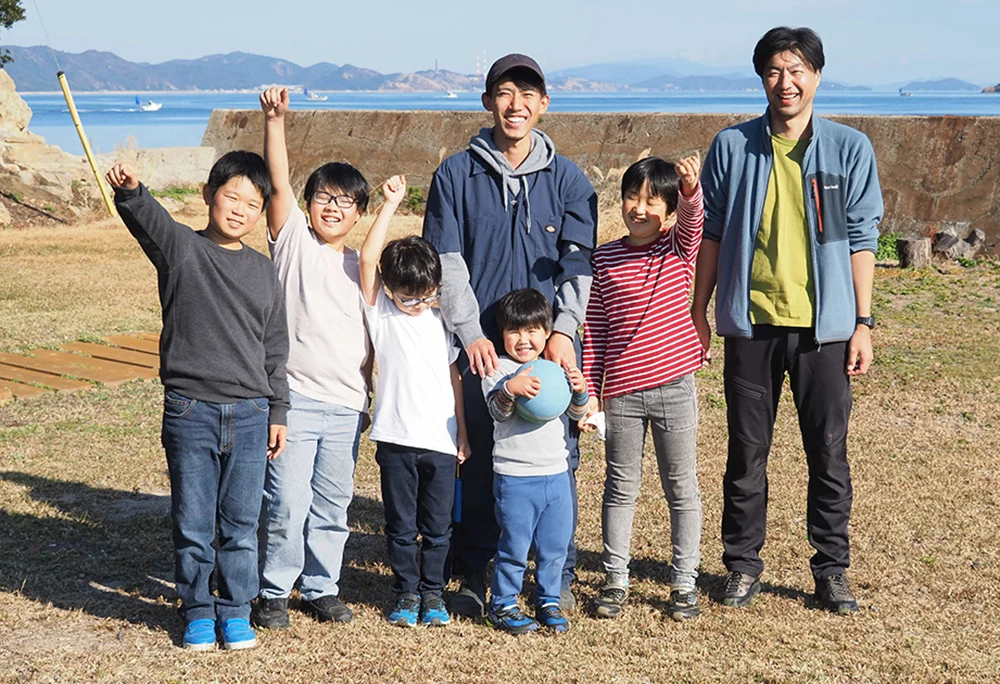
The building, which had not been used for about 30 years since it closed in 1989, was reportedly in a dilapidated state with the ceiling falling down.
In 2018, it was renovated over the course of a year.
The open space on the first floor was originally the location of three classrooms.
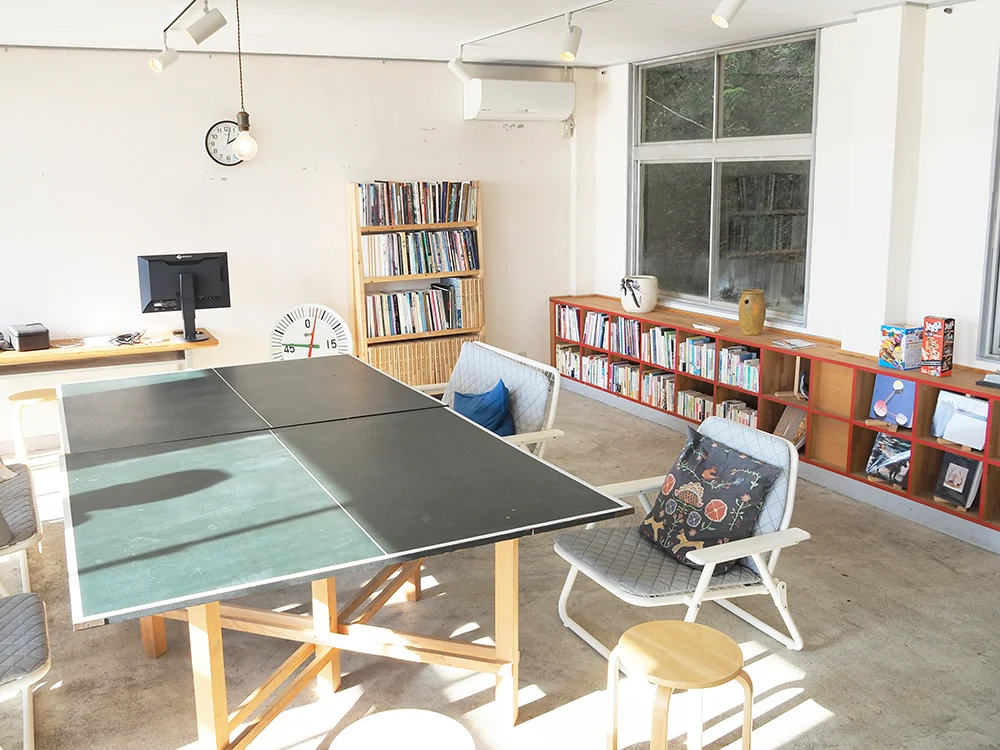
The walls were removed to create a spacious room. The windows are still in use as they were.
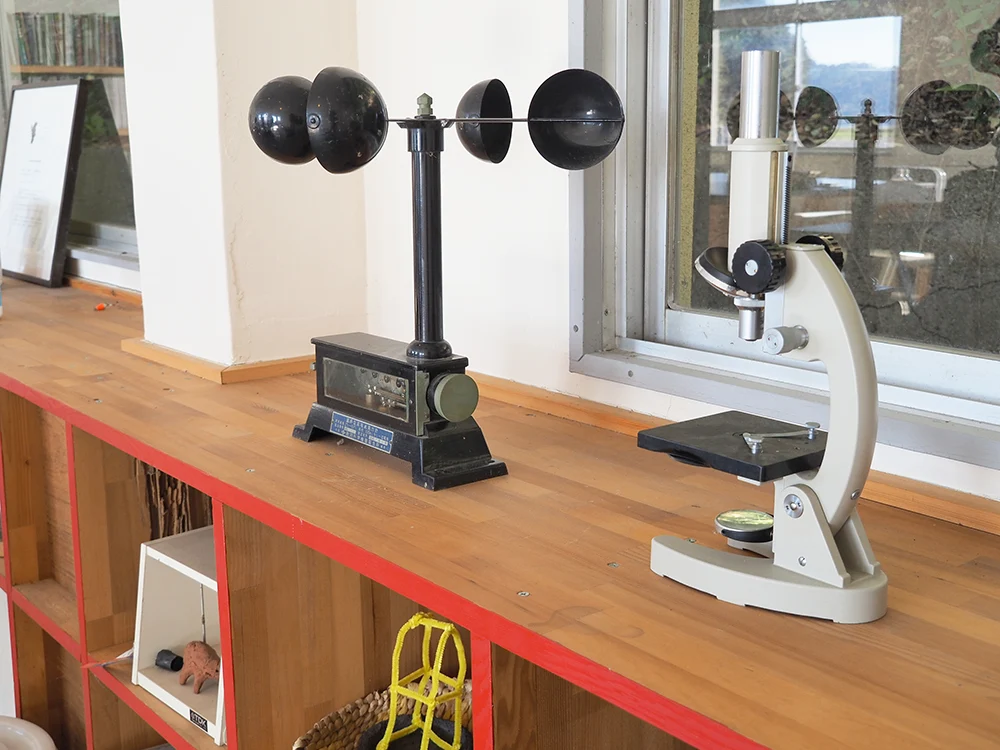
Among the many books lined up, if you look closely, you can also see experimental tools used in school and a large timer.
In what was originally a restroom, a bath has been created.
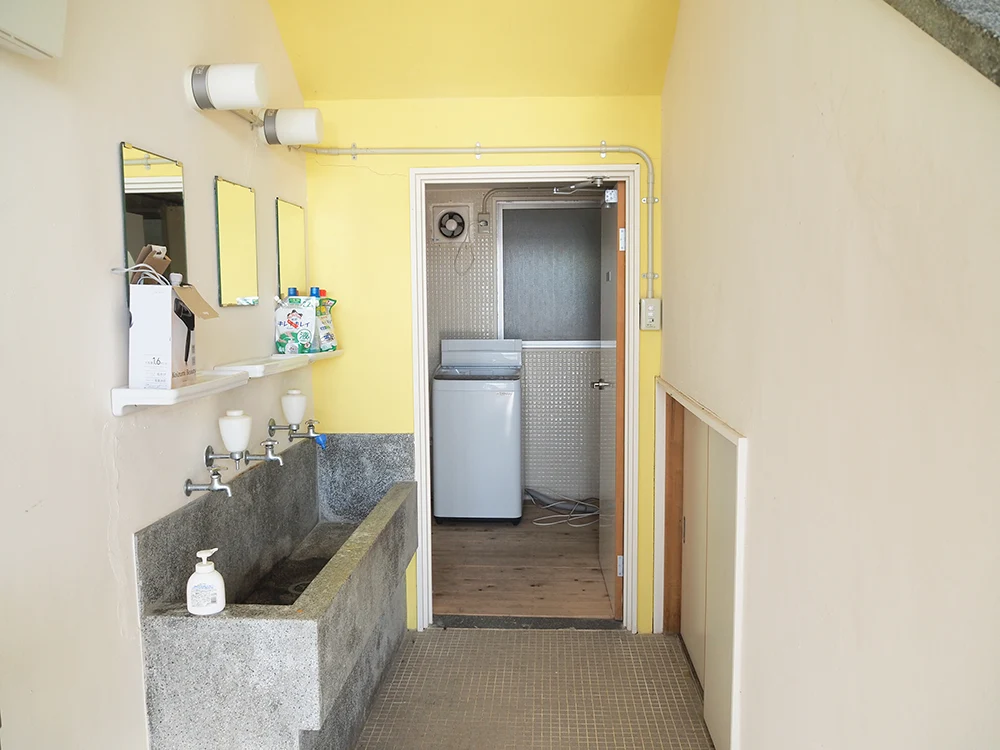
There is also a renovated kitchen space on the first floor.
It has become possible to stay overnight, and it is being utilized as an "artist-in-residence" where artists can stay and create works.
On the second floor, there is a room that is about the same size as the open space on the first floor, which has been set up for screening video works on a screen.
This area was originally a hall.
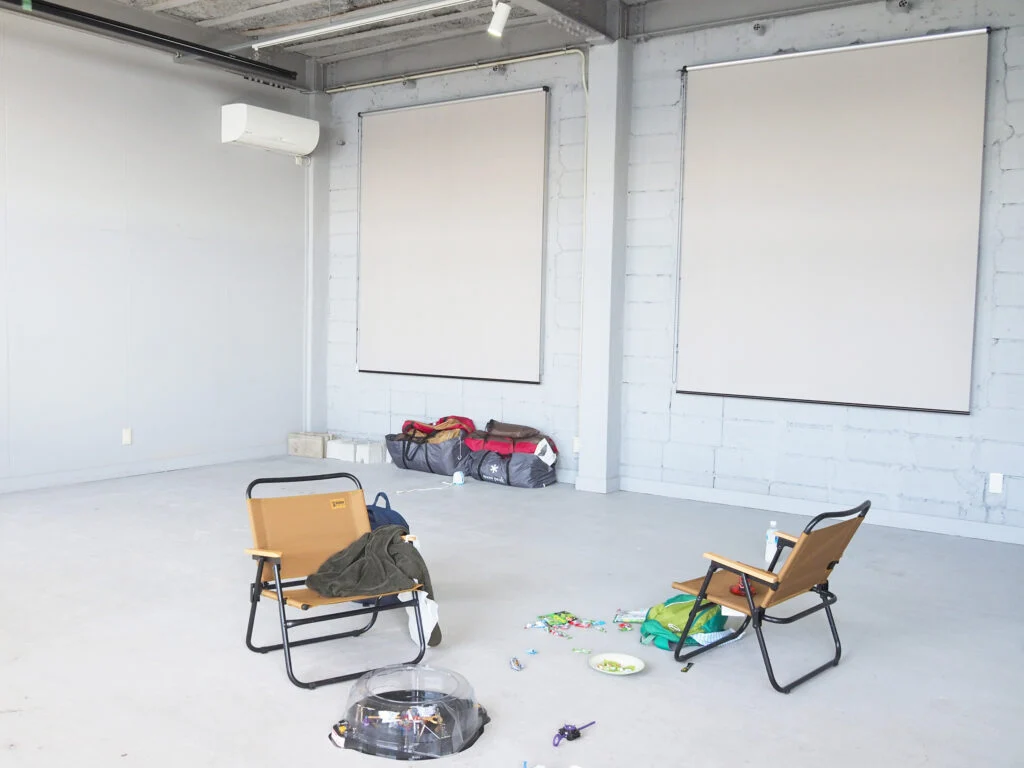
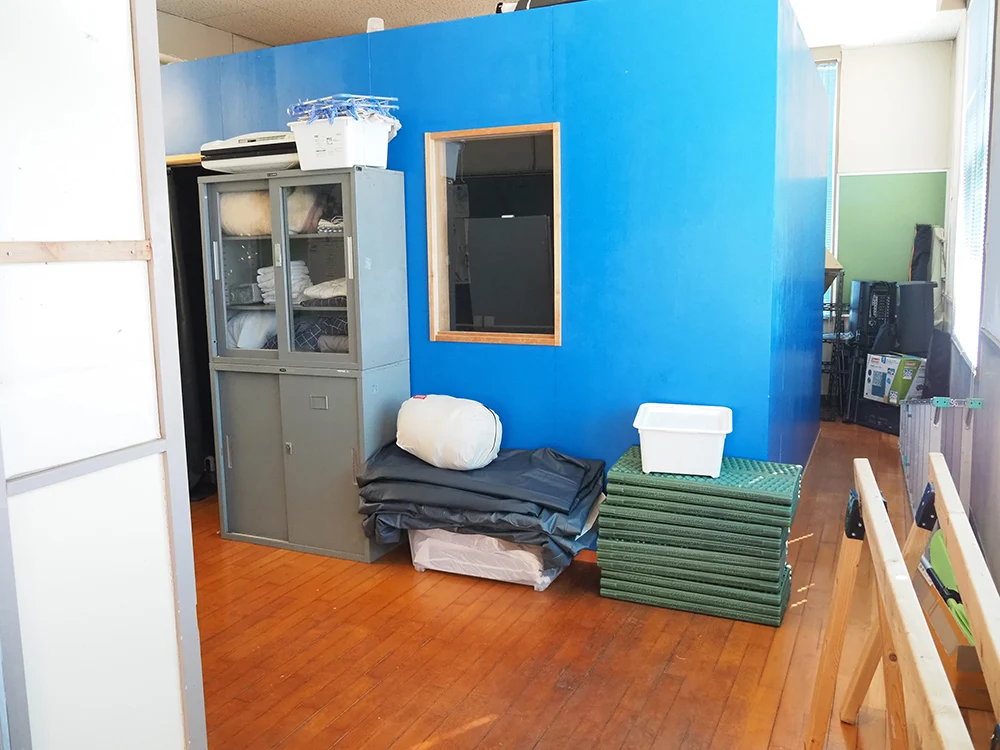
On the east side, separated by the stairs on the second floor, is the former staff room. It is usually a staff room but can also serve as a darkroom for artists creating works.
The schoolyard has been beautifully maintained like a park.
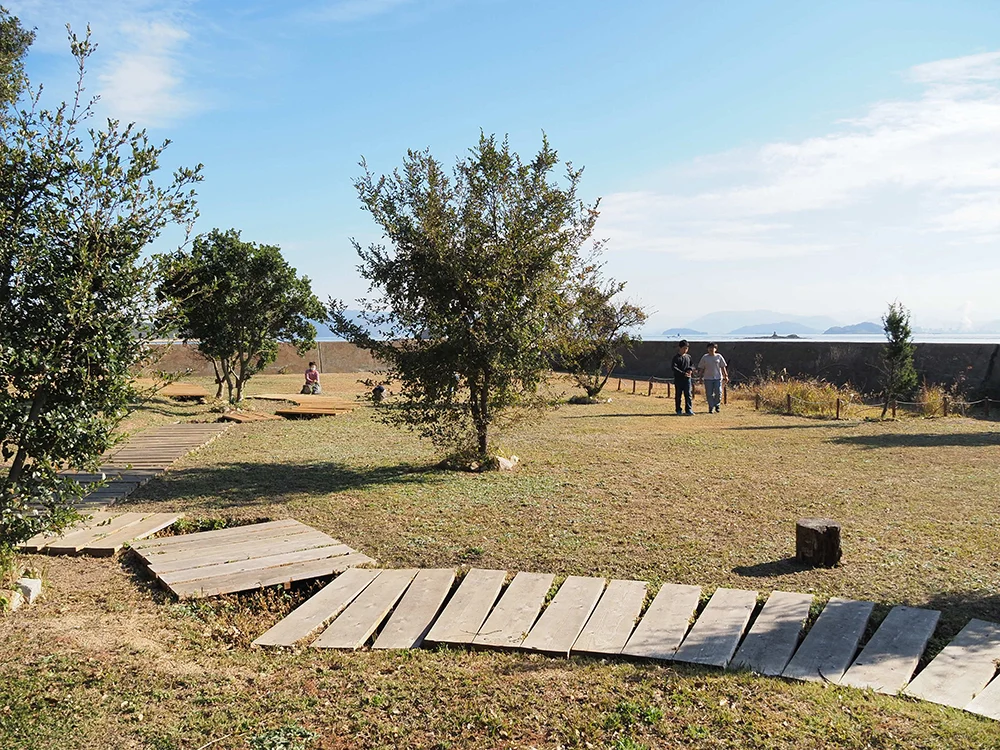
Right next to it is the sea, making it a perfect location. It seems they are preparing for camping here.
As you walk around the island, you can see houses lined up on the slopes facing the sea, and the atmosphere of people having lived there remains everywhere.
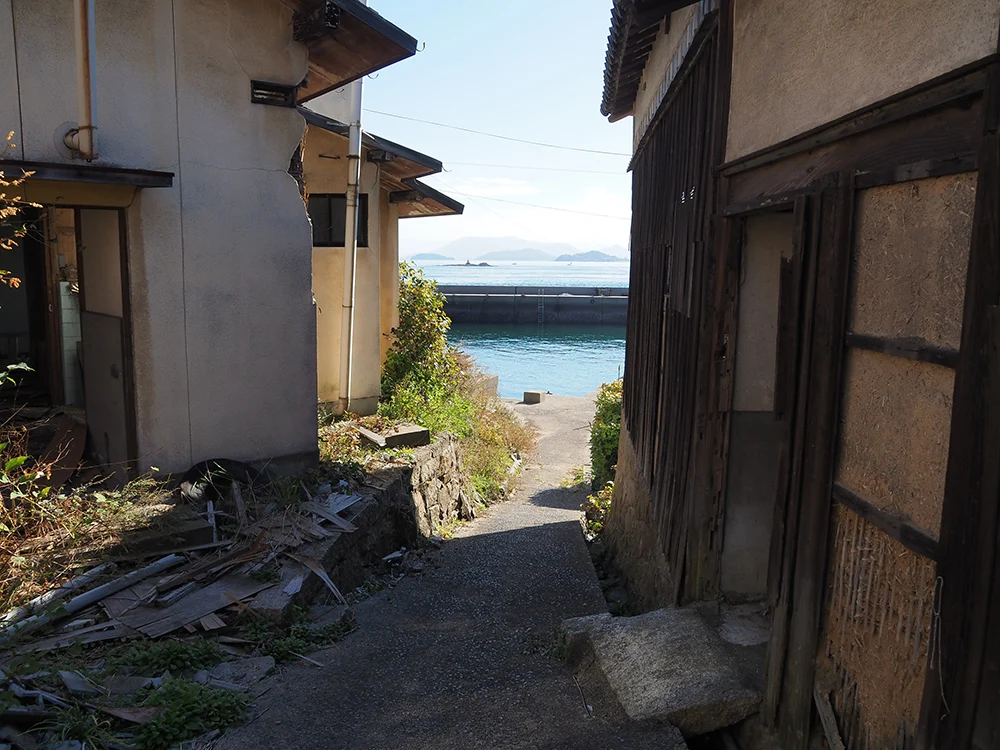
Matsushima was originally an island with many fishermen.
On the day I visited, there were people who enjoyed fishing and were picked up by a boat to return home.
Matsushima, which can be reached in about 5 minutes from the mainland, is likely a hidden gem popular among anglers.
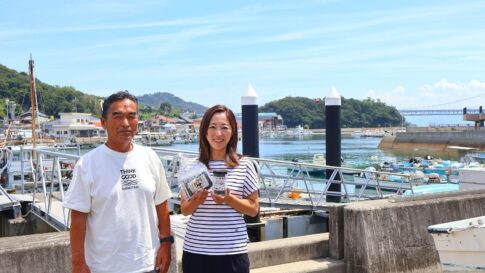
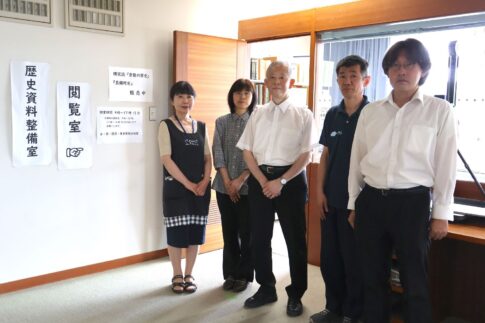
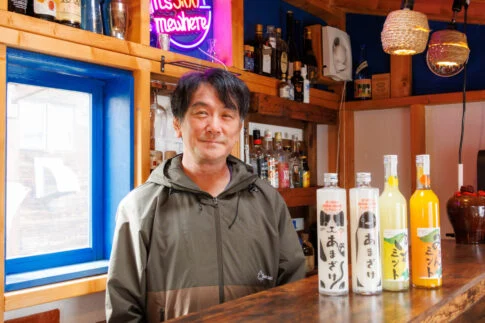
I spoke with Mr. Katayama Yasuyuki, the representative director of the Matsushima Branch School Museum, and Mr. Wakimura Takuji, who is active as a community revitalization cooperation team member in the same organization, about Matsushima and the initiatives of the Matsushima Branch School Museum.