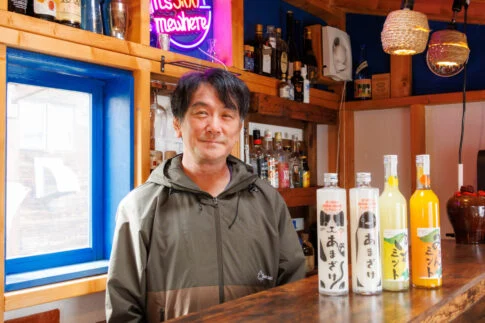
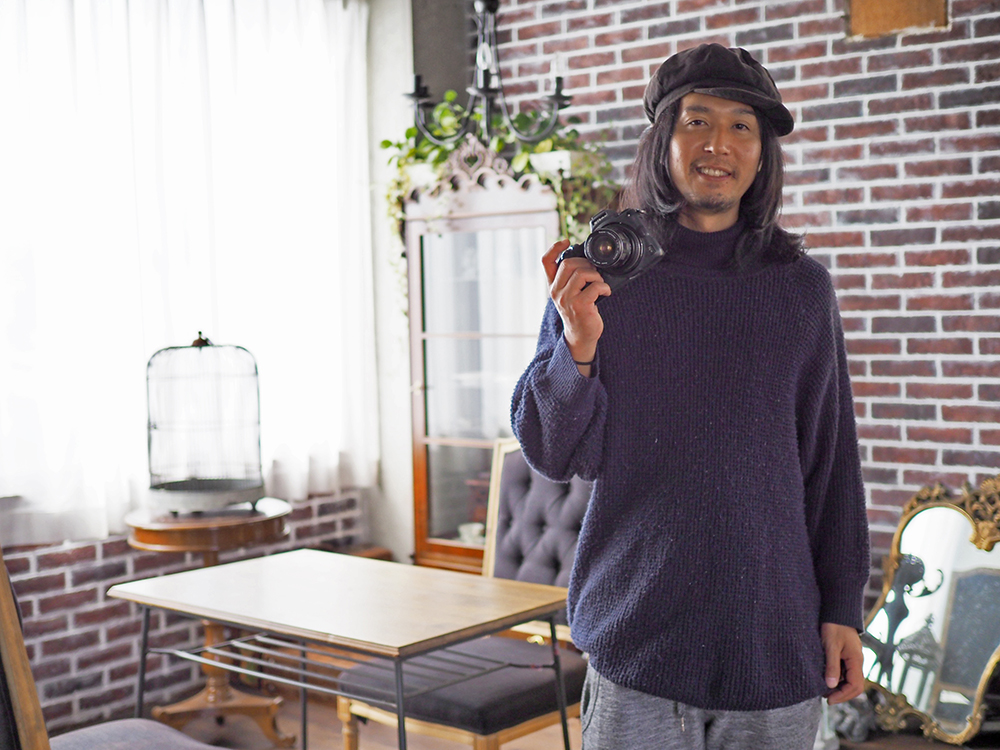
Interview with Pan-nu, the owner of Pan-nu Studio
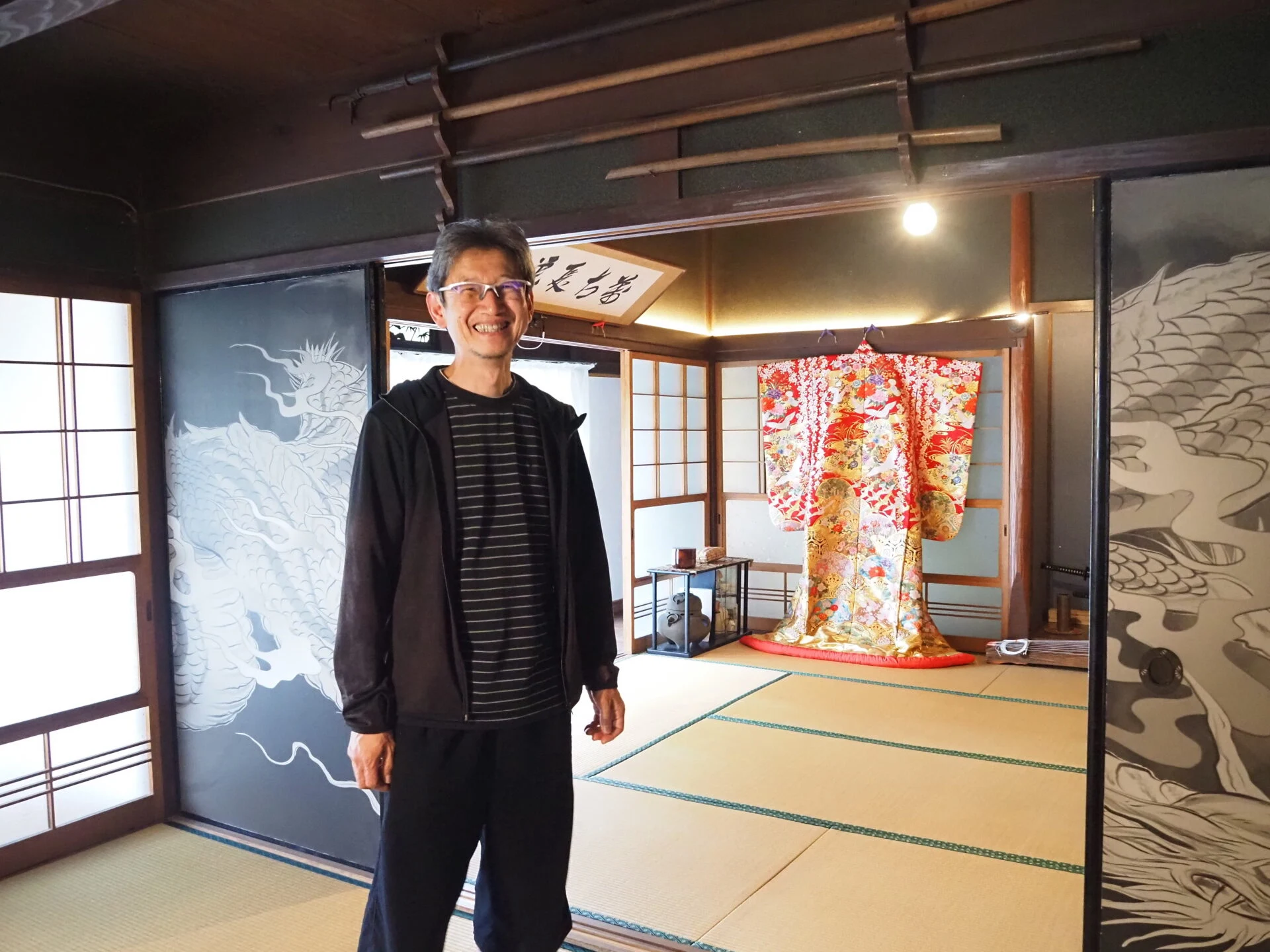
Pan-nu Studio allows for high freedom in photography.
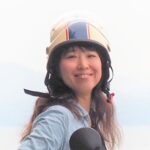
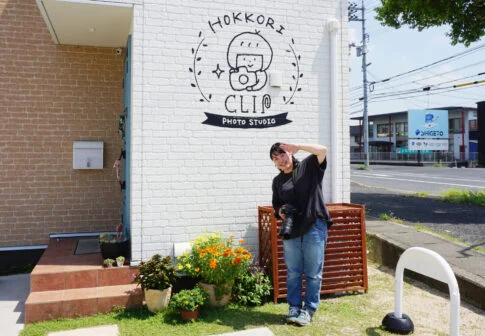
The owner, Pan-nu, became a photographer after embarking on a cycling trip around Japan.
We talked about his travels, the background of opening this rental studio, and his thoughts on photography.
From Traveler to Photographer
Did you always aim to be a photographer, Pan-nu?
Pan-nu (no honorifics)
Originally, I lived a life without anything in particular that I wanted to do.
I left my hometown, Kasaoka, and lived in Osaka for about six years, returning home at the age of 24.
I encountered photography during high school. I used an old film camera I found at home for about two years.
When I broke it, I was told, "It's an old camera, so buying a new one would be cheaper," and that would cost tens of thousands of yen.
I thought I couldn't spend that much money, so I gave up.
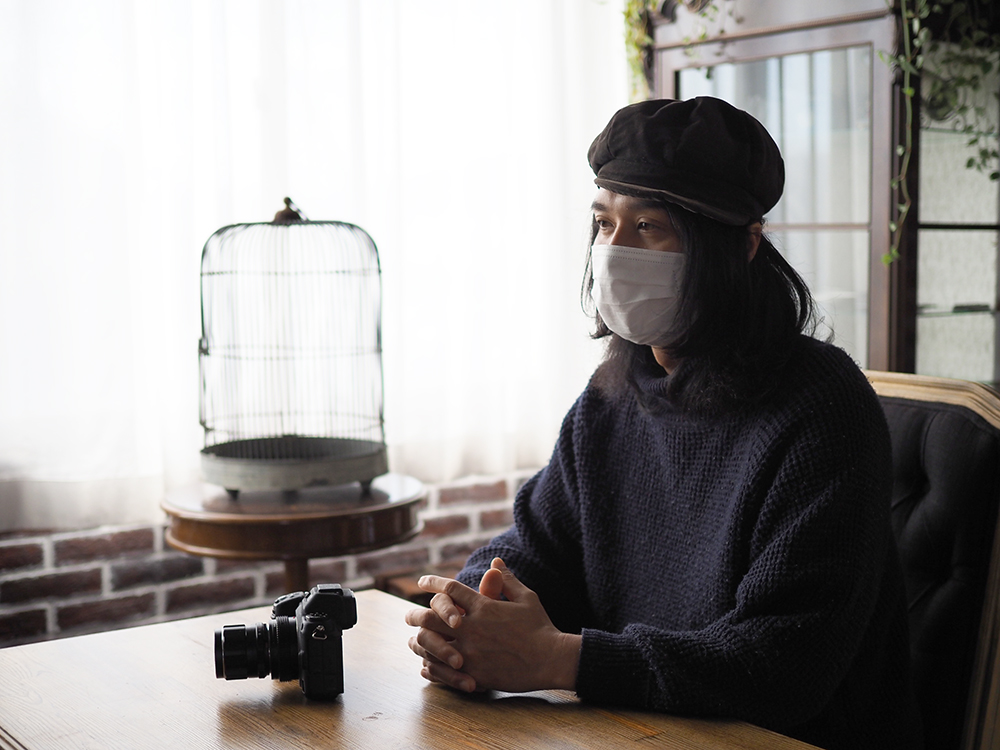
I properly started using a camera at the age of 28, just as I was about to embark on a three-and-a-half-year cycling journey.
It was a time when those around me were working at companies and achieving results, or starting families.
I was living with the thought, "Is this really okay for me?"
I have always loved traveling, and when I was 16, I cycled around Shikoku, and at 17 and 19, I hitchhiked.
I felt like it might be too late to realize my dream of cycling around Japan, but a bar owner I respect told me, "You're 27, right? You can still go for it," and I decided, "Okay, starting tomorrow, I'll prepare for a year and then set off."
Comparing cycling trips to hitchhiking trips, I found that cycling trips left more memories of the towns.
There were many interactions with people, like "Stay over!" and "Have you eaten?" There were a lot of encounters with people. So, I decided on a cycling trip.
I decided not to set a time limit and to travel until I was satisfied, resulting in a journey of three and a half years.
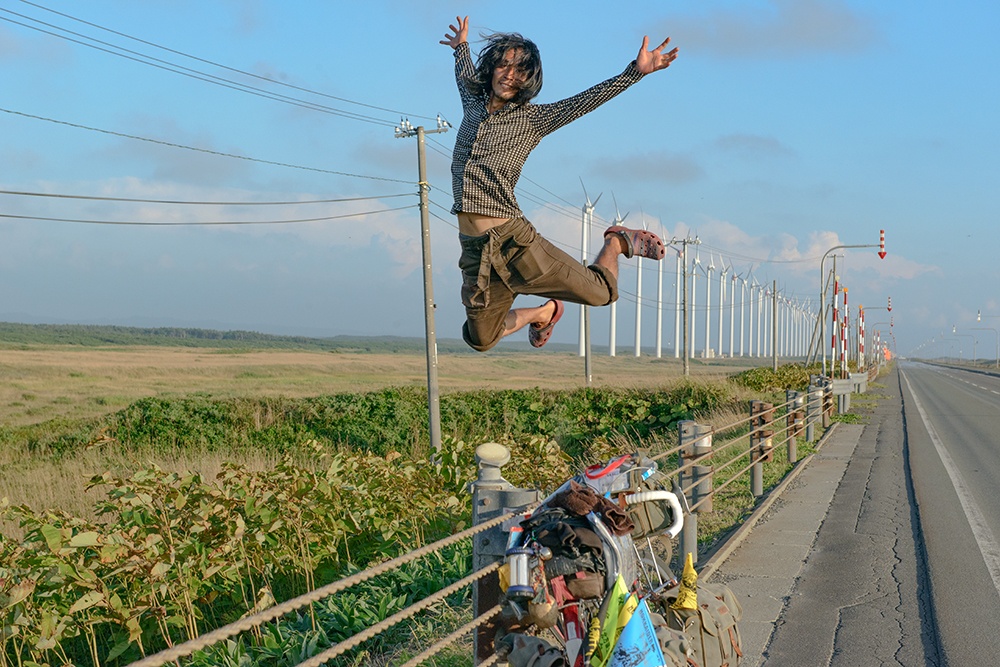
Initially, I planned to take a compact digital camera, but my boss at the workplace, who graduated from art school, said, "Why not take a better camera?" and I bought an Olympus mirrorless camera.
Not just to cycle around Japan, but to create opportunities to talk to people, I started an activity called "Postman Pan-nu Delivery," where I delivered letters.
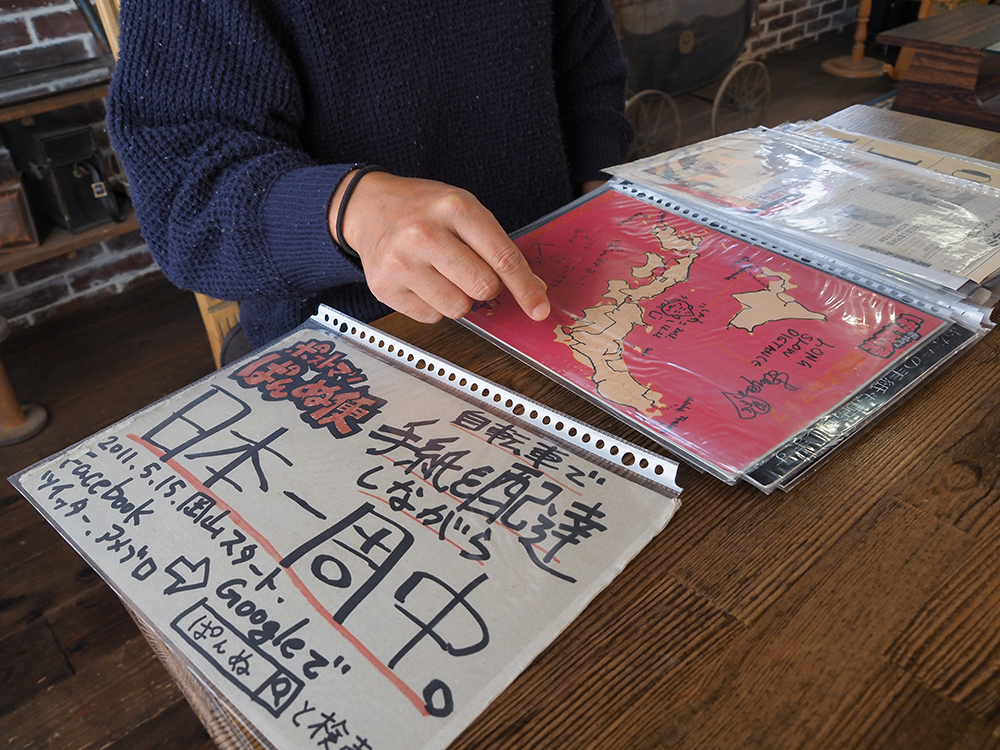
"Postman Pan-nu Delivery"! What kind of activity is that?
Pan-nu
For example, I would receive a letter saying, "Please deliver this letter to my friend's house in XX Prefecture," and I would actually go deliver it.
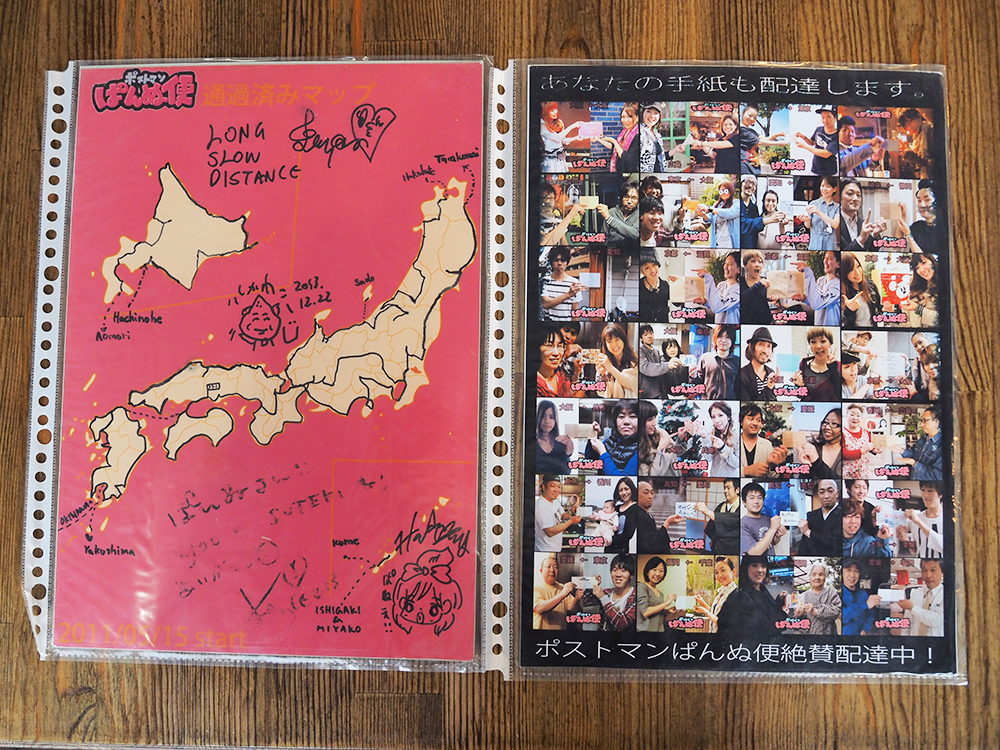
Since the delivery was based on my travel route, there were cases where a letter took three years to arrive after it was written. It was like a time capsule.
And when the letter arrived, a photo was completed with the sender and recipient side by side.
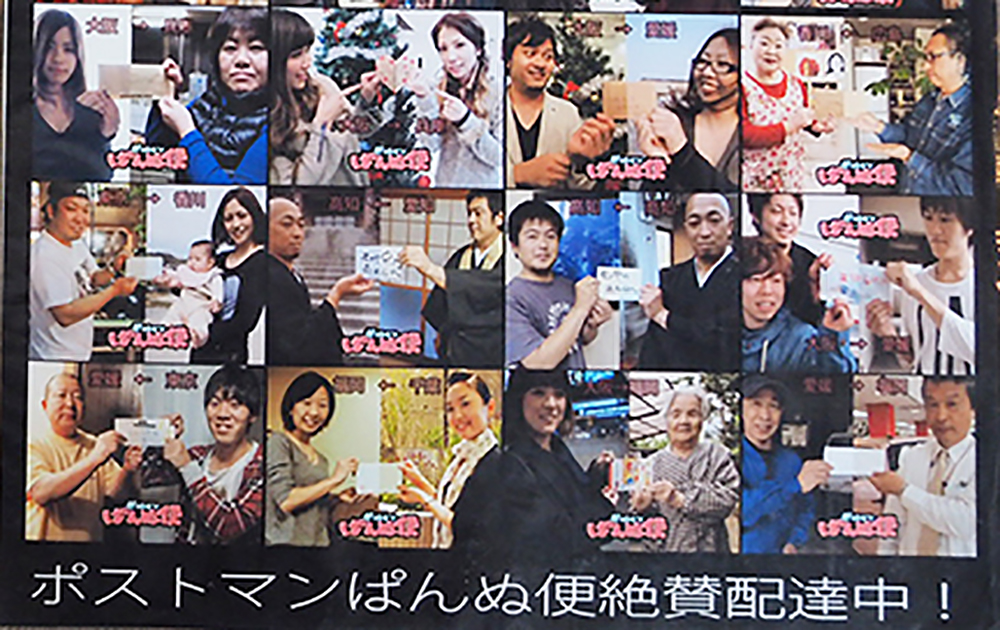
In total, I delivered over 300 letters. It spread through word of mouth, and towards the end of my journey, it was featured on a television program, which extended my travel period by six months.
While traveling, I was often asked, "Where are you from?" In such cases, I would show them a file summarizing my activities.
It contained photos of the people I helped with letter exchanges and articles from newspapers that featured me, which sparked conversations with strangers.
And in the end, I would show them an A4-sized photo I took along with the words, "I'm selling photos to increase my travel funds."
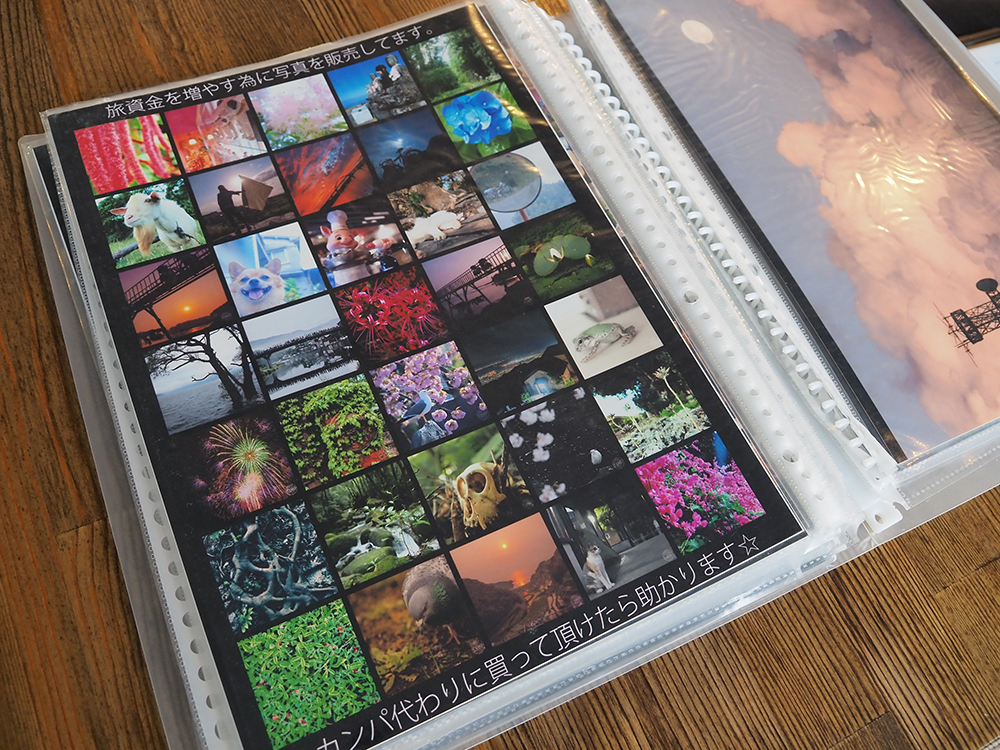
People would say, "Are you making a living from this? Then I'll buy one."
At that time, if I sold one photo a day for 1,500 yen, I could make a living.
I stayed at the homes of those who offered me a place to stay, and usually, they would ask, "Is there anything you need?" and I would receive rice or other help, so as long as I had money for the bathhouse and coin laundry when I did laundry, I didn't have any trouble while camping.
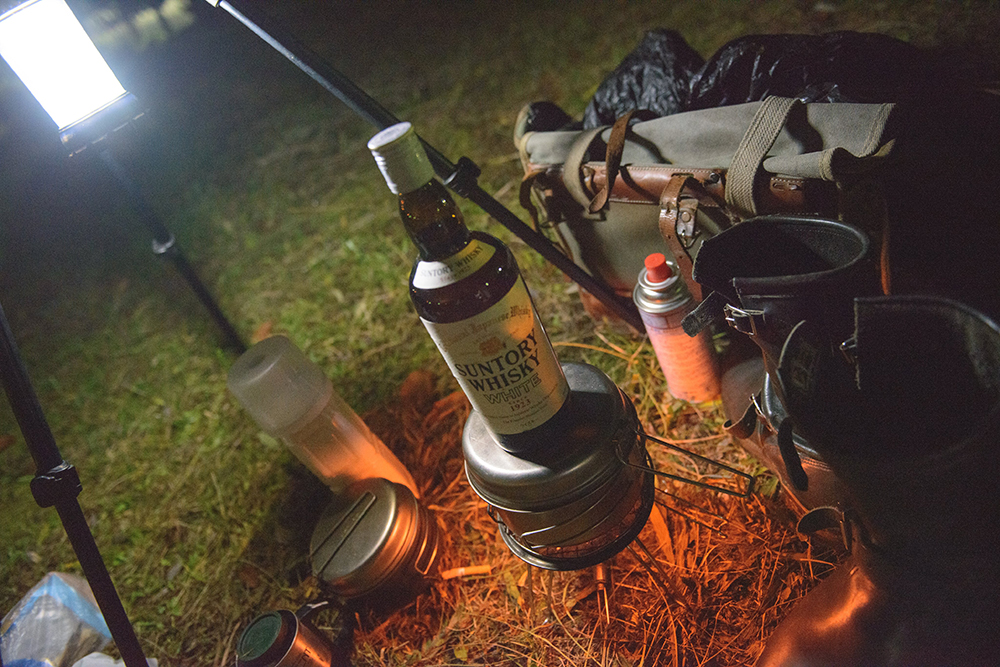
I understood that the reason people bought my photos was out of support, not because of the quality, but I also developed a desire for them to be displayed since they were taken with care.
I was thinking about the trends of which photos sell well and which do not, and what kind of photos are in demand.
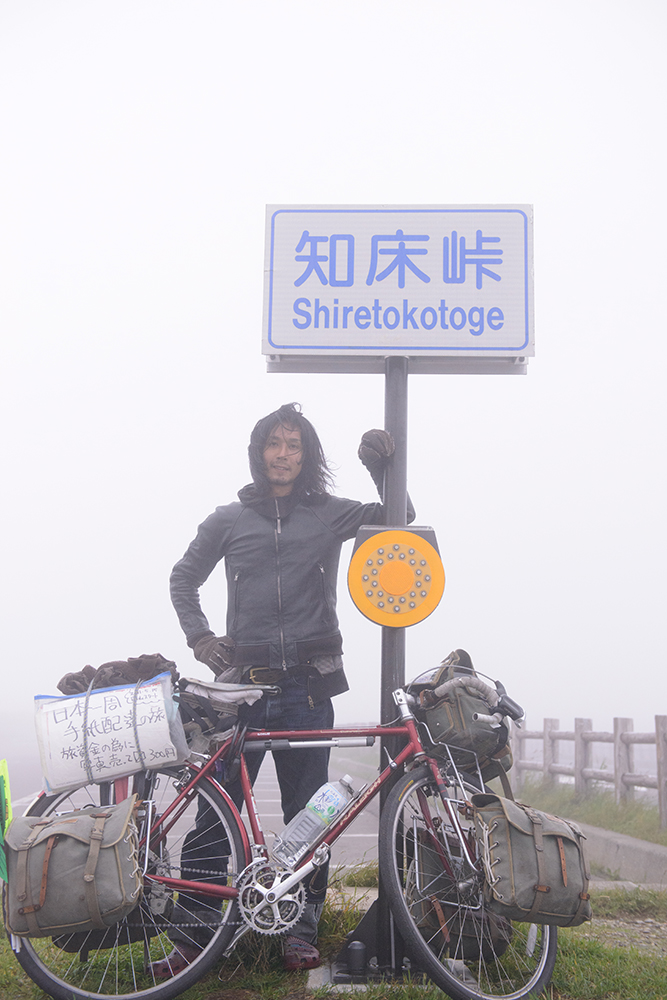
After my journey ended, I wanted to work in photography, and after completing my three-and-a-half-year journey, I got a job at a photo wedding company.
I moved to Okinawa with my now-wife, who had been waiting for me to return from my indefinite journey, and lived there for two years.
Then in 2016, I returned to my hometown due to my marriage.
Challenge of Creating a Gathering Place
How did you come across this building?
Pan-nu
After becoming a sole proprietor in Kasaoka and continuing my activities as a photographer, I encountered this building the following year.
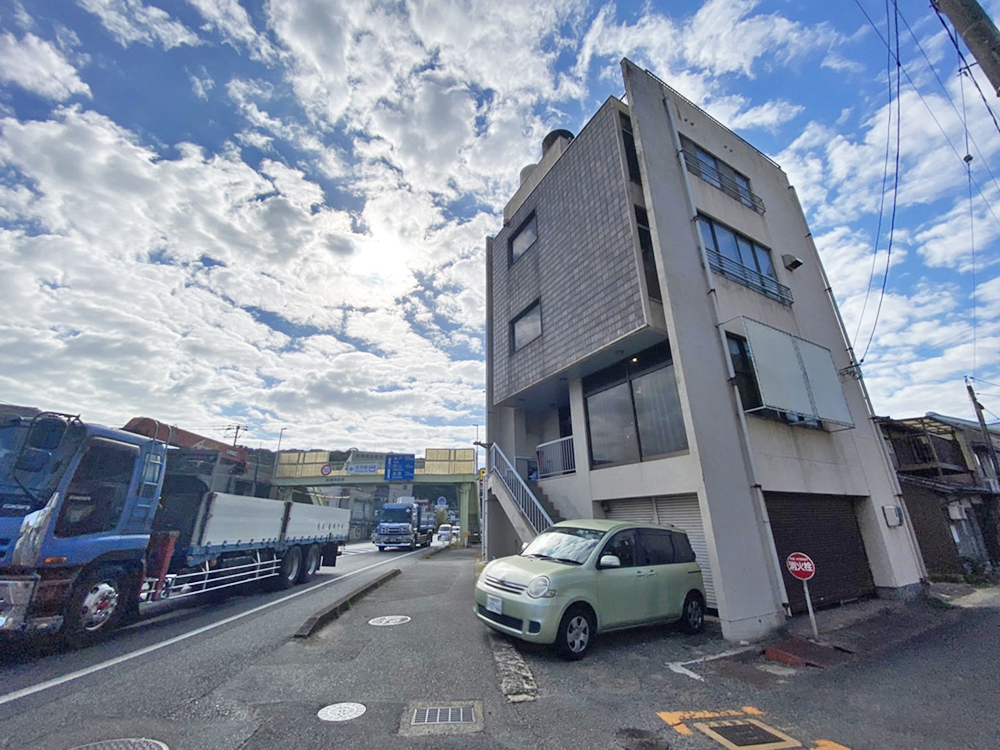
It was originally owned by an acquaintance who said, "I'm not using it and want to let it go," so I purchased it.
It cost a lot of money to buy and renovate the entire building, but I believe I would have eventually done something somewhere even without this encounter.
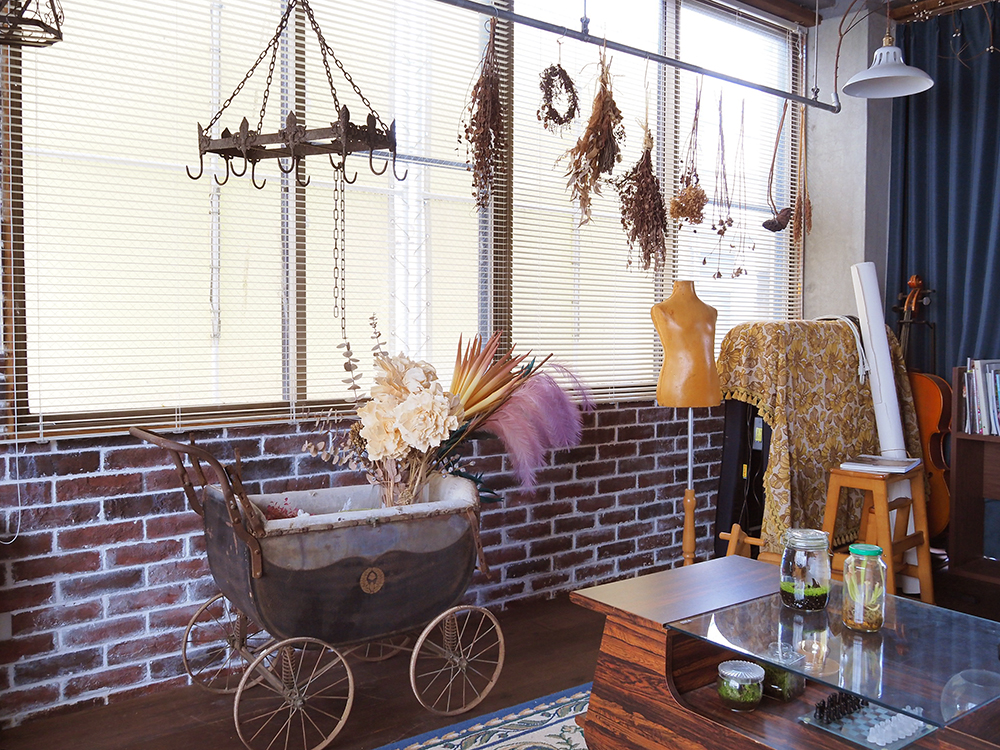
I truly believe in the saying, "People gather in fun places, but there are few who try to create those fun places."
Conversely, it means that if you create such a place, people will gather.
To enjoy myself with those who have photography as a hobby, I want to continue doing various things from this base.
The growth of culture is linked to the growth of the market and leads to the continuation of activities.
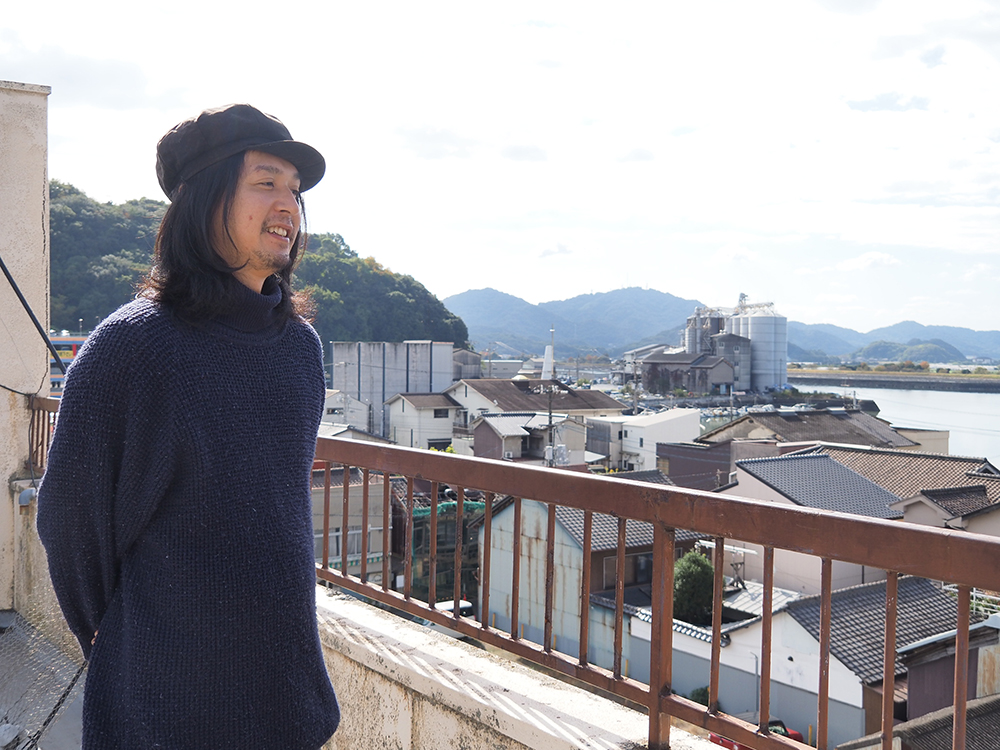
Cosplay shooting events based in Kasaoka are also being held, right?
Pan-nu
Yes, it's called "Island Cos Kasaoka." It gained attention and spread information, attracting cosplayers from all over the country, and it has been sold out continuously.
Currently, cosplay shooting events are on hold due to the COVID-19 pandemic, but the time spent with fellow enthusiasts is exciting, so I want to do it again.
Shiraishi-jima Island, Kitagi-shima Island, and on the mainland, we have also held events at Sugawara Shrine and Hakunotai Shrine.
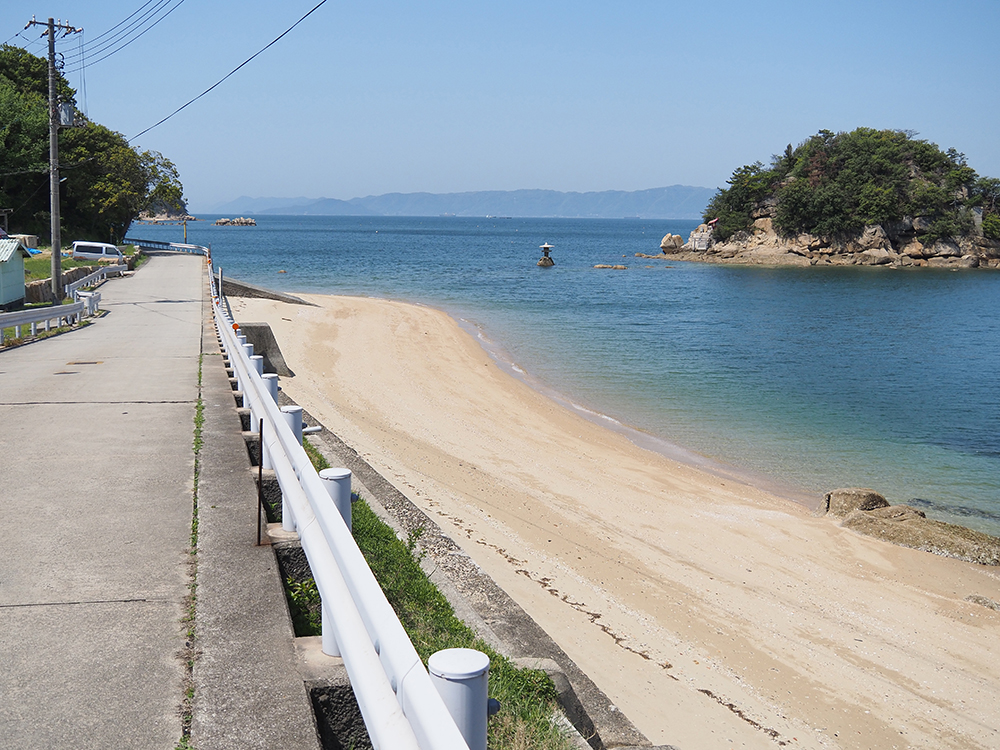
I communicate with those who act as points of contact on the islands to make it happen.
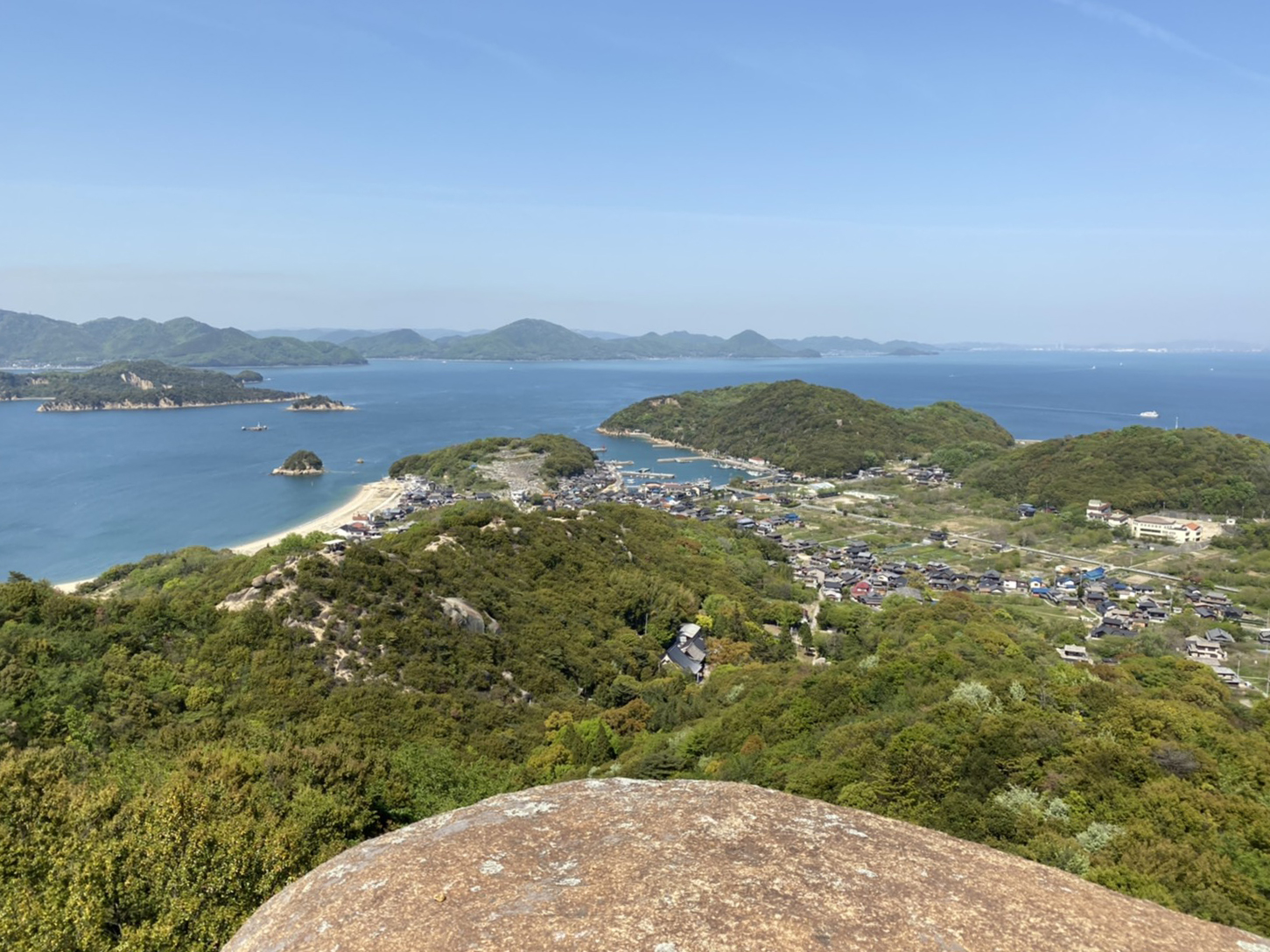
I have traveled all over Japan, but I believe a major charm of Kasaoka is that there are islands.
The beauty of the islands is the sense of isolation. The flow of time is different. At night, it is very quiet, and people coming from the city are often surprised.
There are remnants of the past, and the townscape feels like a time slip.
Being in that place itself becomes an activity.
The trigger for cosplay photography was being amazed by the high quality of shooting techniques using lighting.
I got a job at a photo wedding company in Okinawa, and lighting is also important in wedding photography.
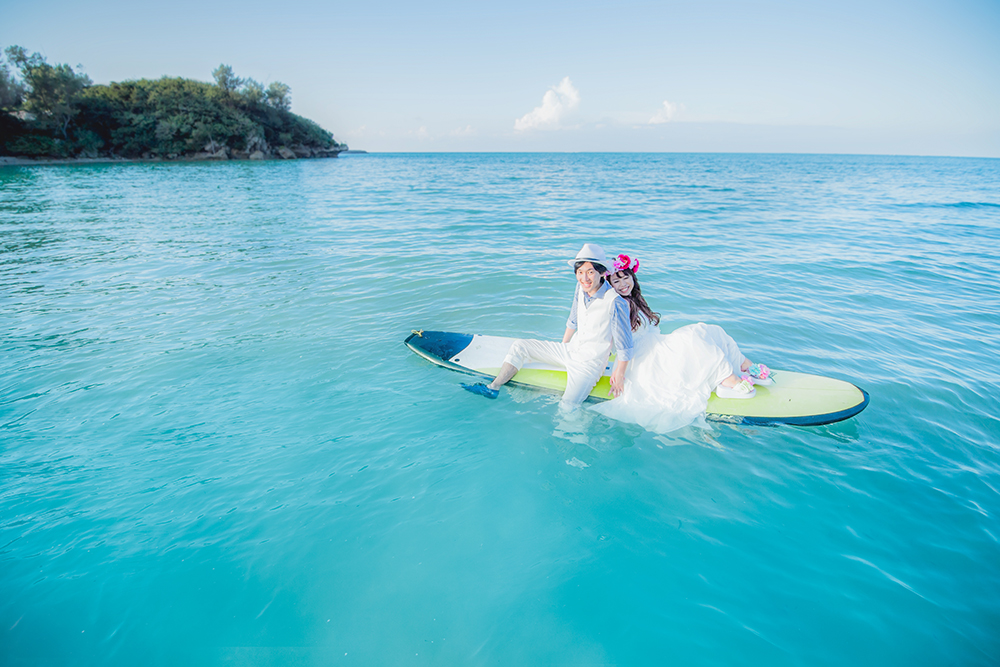
I thought, "Wow, that's amazing," when I saw cosplay photos.
To improve my shooting techniques, I wanted to engage in cosplay photography, and I started after returning to Kasaoka.
I asked acquaintances, "Do you know any cosplayers?" and that led to my introduction to them.
Has your approach to photography changed since starting a family?
Pan-nu
Until now, I only took photos in places I thought were "the spot."
However, since my child was born, I find myself taking photos of everything. And when I look back at the photos, I feel nostalgic.
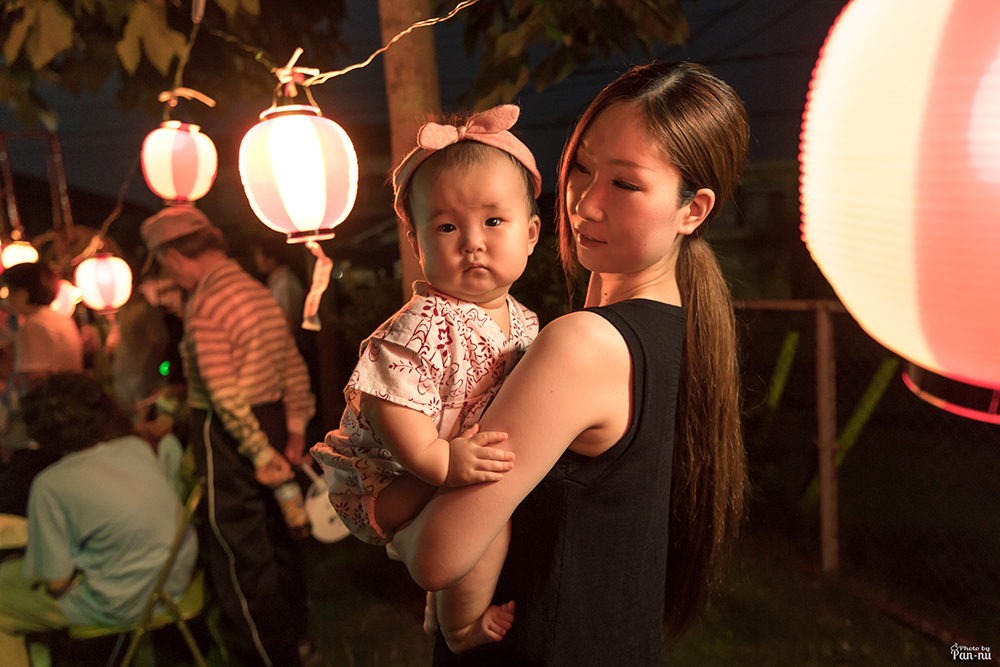
Photos capture irreplaceable moments. I feel like I have to take everything. So, I easily take family photos with my smartphone.
Currently, most of the rental studio's usage is by cosplayers, but there are occasional requests for family photo shoots.
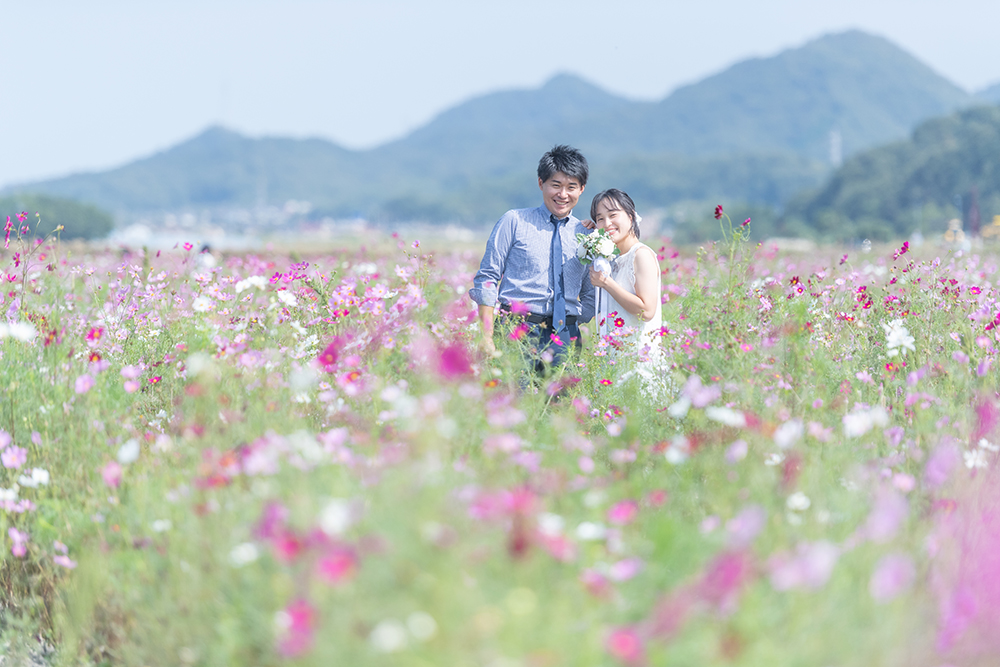
Additionally, besides the studio, I also accept requests for outdoor wedding photos.
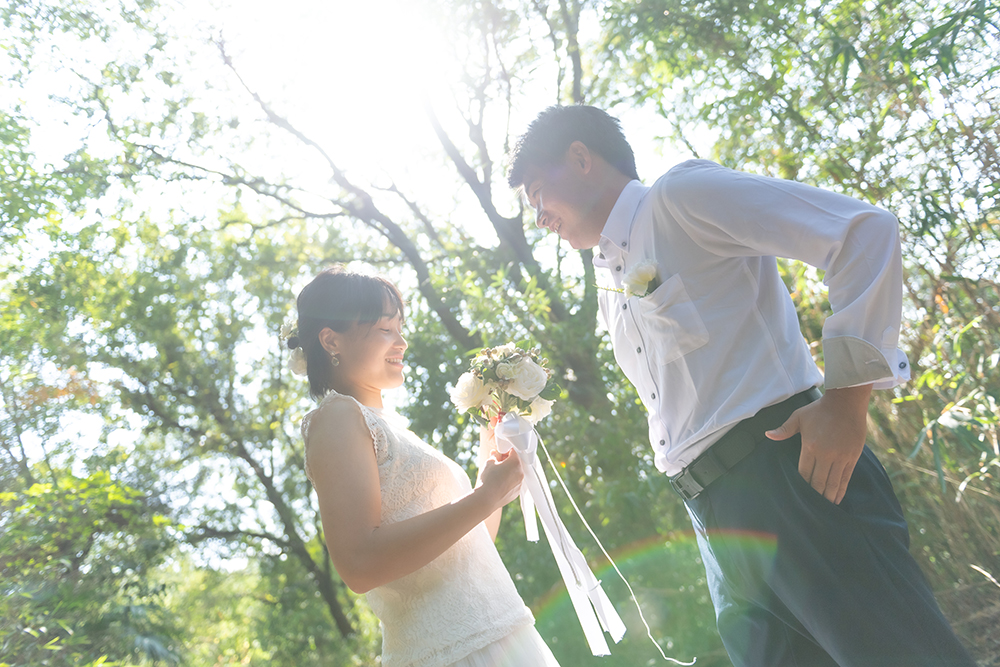
Depending on whether people want a natural image or a clear image, the desired photos vary, so I consider the presence or absence of lighting and the tempo of the shoot accordingly.
From the Writer
I also love to travel and take photos.
The interesting thing about photography is how the judgment of how to capture landscapes and people's expressions reflects the current photographer's style.
Through his travels, photography work, and event planning, Pan-nu has met many people.
Through the interview, I felt that his heart of being close to people is reflected in his photography.
The rental studio created by Pan-nu, who deepens his approach to photography through his travel experiences, encounters with people, and life stages.
I look forward to seeing what kind of events and encounters will be nurtured at Pan-nu Studio in the future.
Pan-nu studio Information
| Name | Pan-nu studio |
|---|---|
| Location | 2425 Kasaoka, Kasaoka City, Okayama Prefecture |
| Contact | 0865-61-4159 |
| Parking | None Park at nearby coin parking |
| Regular Holidays | Irregular holidays |
| Usage Fee (including tax) | 【Weekday Rate】 The first 3 hours are 6,000 yen, and an additional 3,000 yen for every 3 hours thereafter (Example) 3 hours: 6,000 yen, 6 hours: 9,000 yen, 9 hours: 12,000 yen 【Saturday, Sunday, and Holiday Rate】 The first 3 hours are 9,000 yen, and an additional 6,000 yen for every 3 hours thereafter (Example) 3 hours: 9,000 yen, 6 hours: 15,000 yen, 9 hours: 21,000 yen *Rental for only 3 hours is limited to 9 AM to 12 PM |
| Payment Method |
|
| Reservation Availability | Available Reservation required |
| Toilet | Western-style toilet |
| Website | Pan-nu studio |

What do you want to know about Kurashiki?
Enter a word to search articles from this site.