In recent times, as nuclear families and living in apartments have become common, have opportunities for adults and children in the neighborhood to interact decreased?
Even I live without knowing what kind of work the people living in my apartment do or what kind of people they are.
Despite such times, there are still areas in Kurashiki City where local adults continue to pass down festivals together with children.
I went to Kouhachimangu Shrine to experience the festival, where the traditional music "shagiri," passed down orally from adults to children, and the grand festival with floats take place.
What is the Grand Festival of Kouhachimangu Shrine?
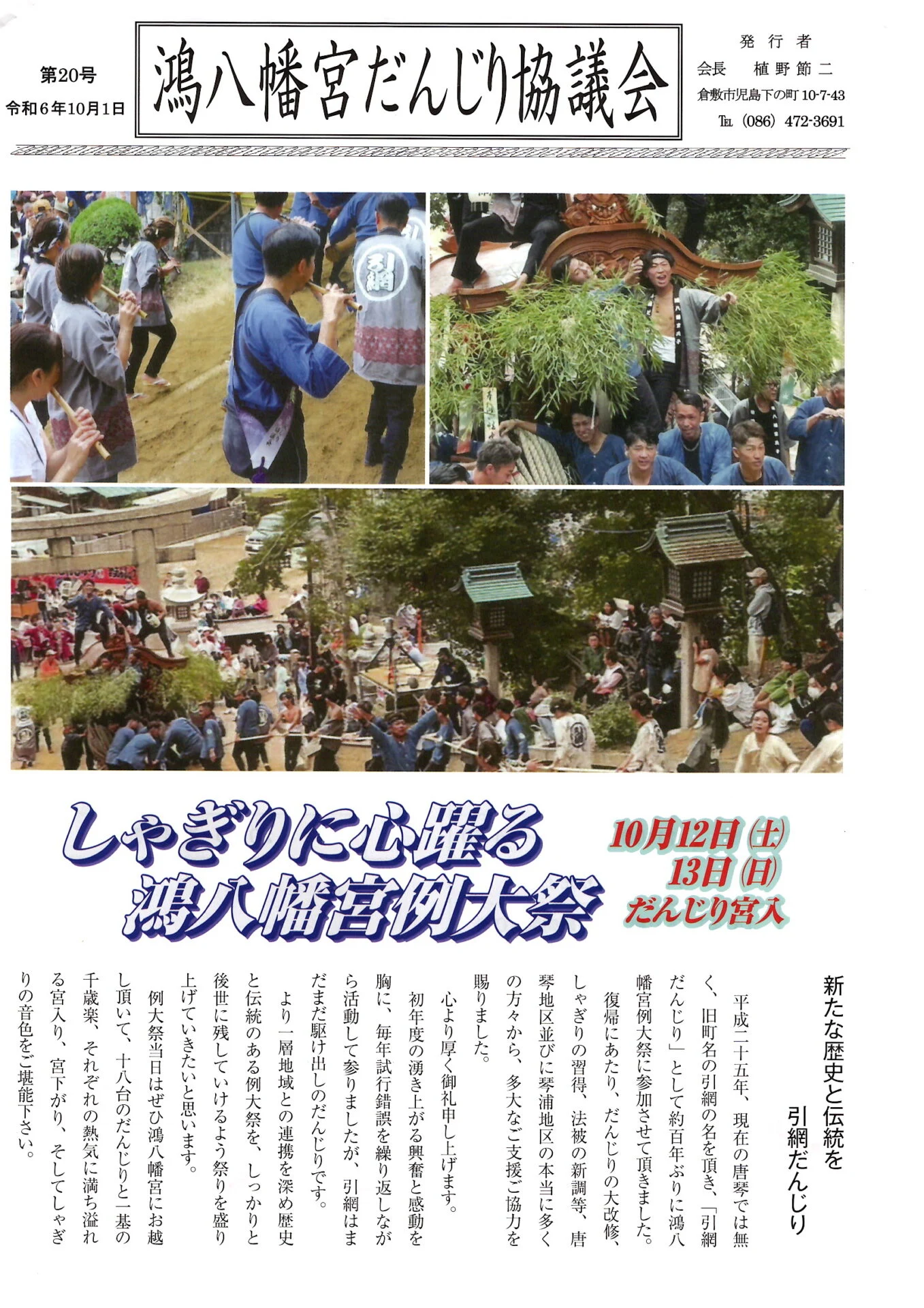
The Grand Festival of Kouhachimangu Shrine, held over two days on October 12 (Saturday) and 13 (Sunday), 2024, at Kouhachimangu Shrine in Kojima and its affiliated districts in Kurashiki City, including Kamino-cho, Shimo-cho, Tanokuchi, and Karakoto, consists of the following:
- The portable shrine procession (omikoshi jinkou) where the sacred object travels back and forth between Kouhachimangu Shrine and the temporary shrine (otabisho) within the district
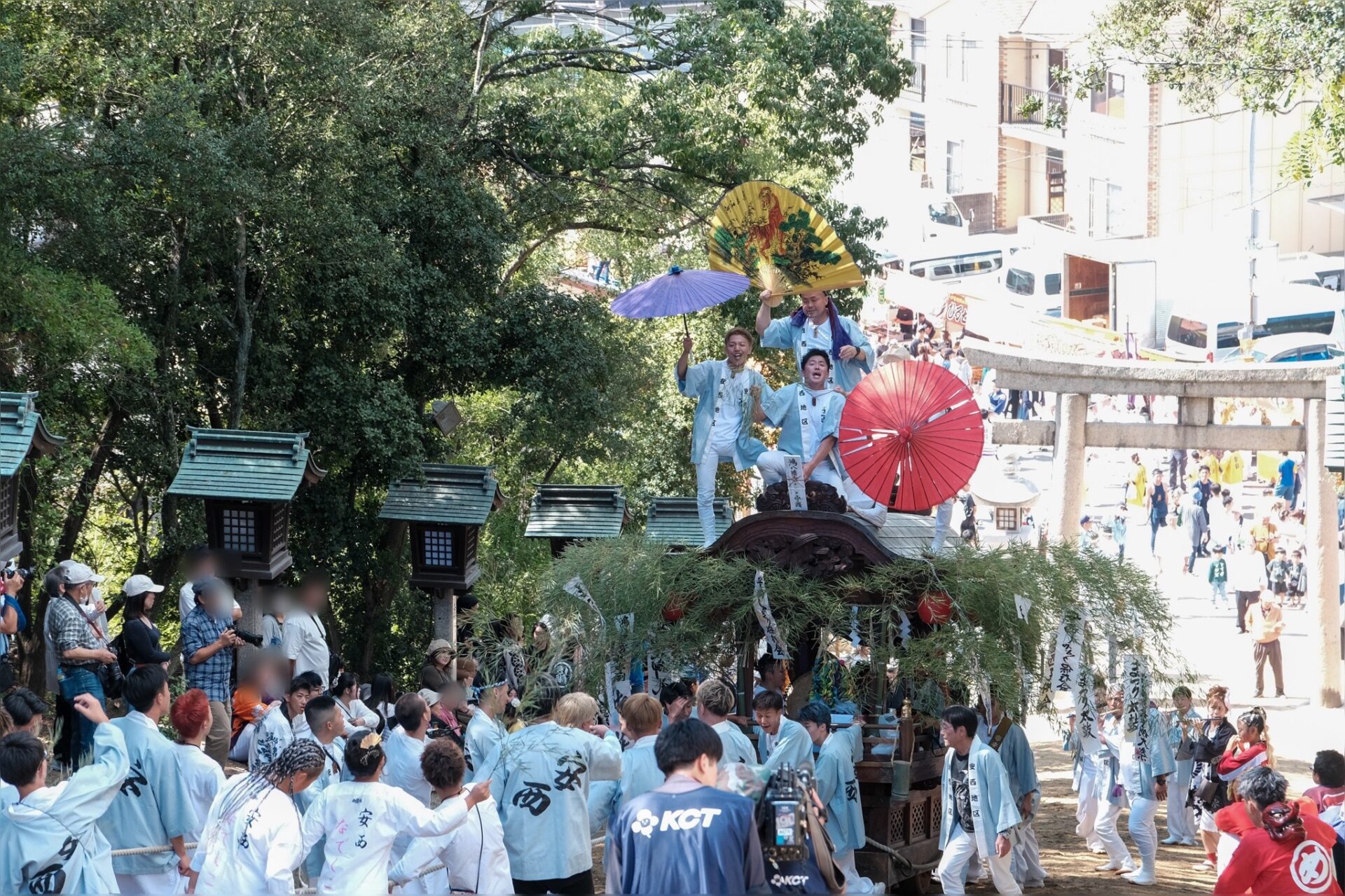
- A festival where nineteen floats and sendairoku (a type of float) enliven the shrine grounds in accordance with the shagiri music
The festival music played at Kouhachimangu Shrine is called shagiri and is designated as an Important Intangible Folk Cultural Asset of Okayama Prefecture.
The festival is held every year on the second Sunday of October and the day before, and in 2024, it was held on October 12 (Saturday) and 13 (Sunday).
On the first day, the floats and sendairoku parade through their respective neighborhoods. On the second day, the portable shrine procession and the floats and sendairoku that departed from each district enliven the shrine grounds from morning till night with the performance of shagiri.
From morning till night, shagiri and floats enliven the Grand Festival
On the second day of the Grand Festival, the sacred object first headed to the temporary shrine for the ceremony.
There are two temporary shrines; if going east, it is Karakoto, and if going west, it is Kamino-cho. In 2024, it was westward, so the ceremony was held at the Kamino-cho Community Center.
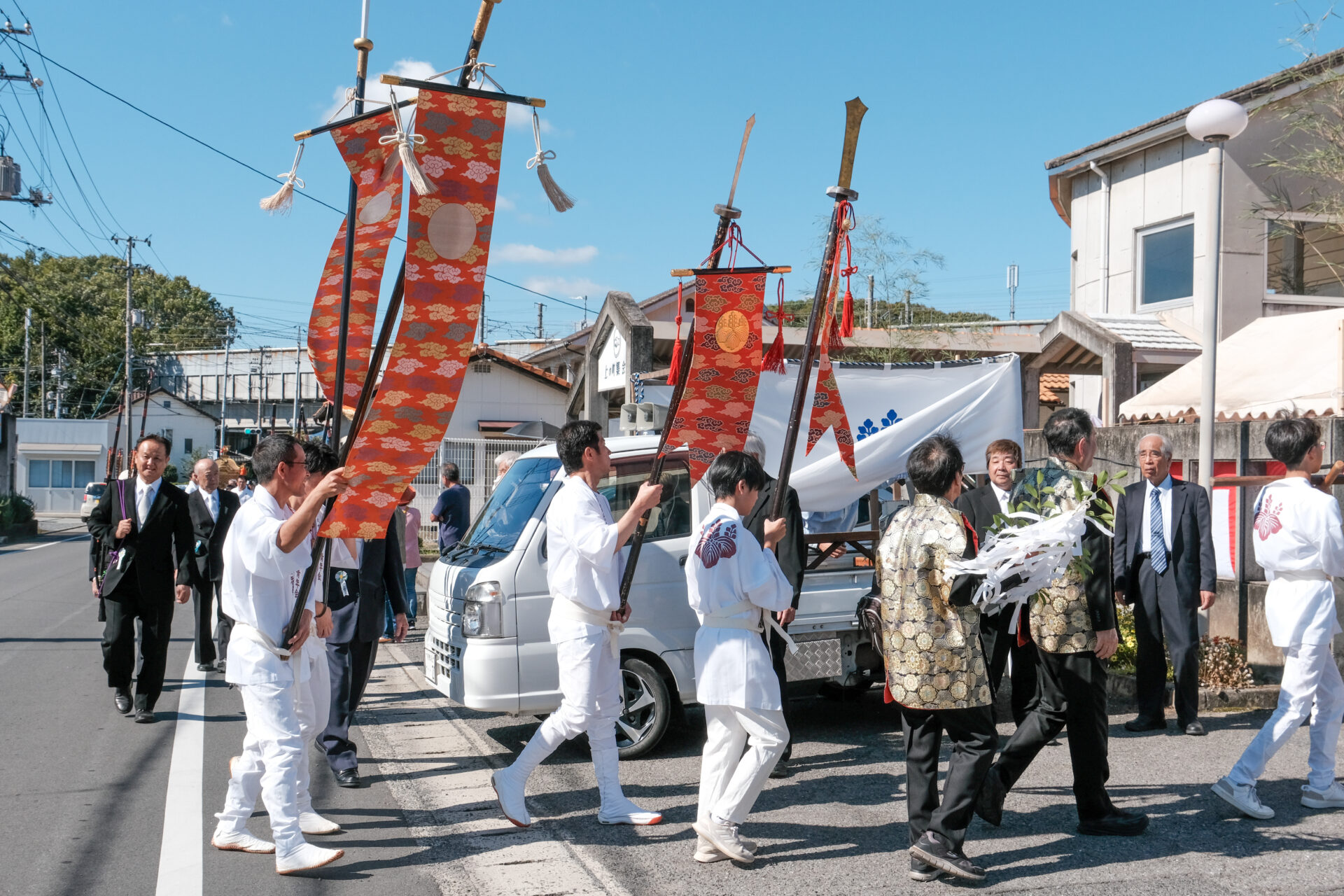
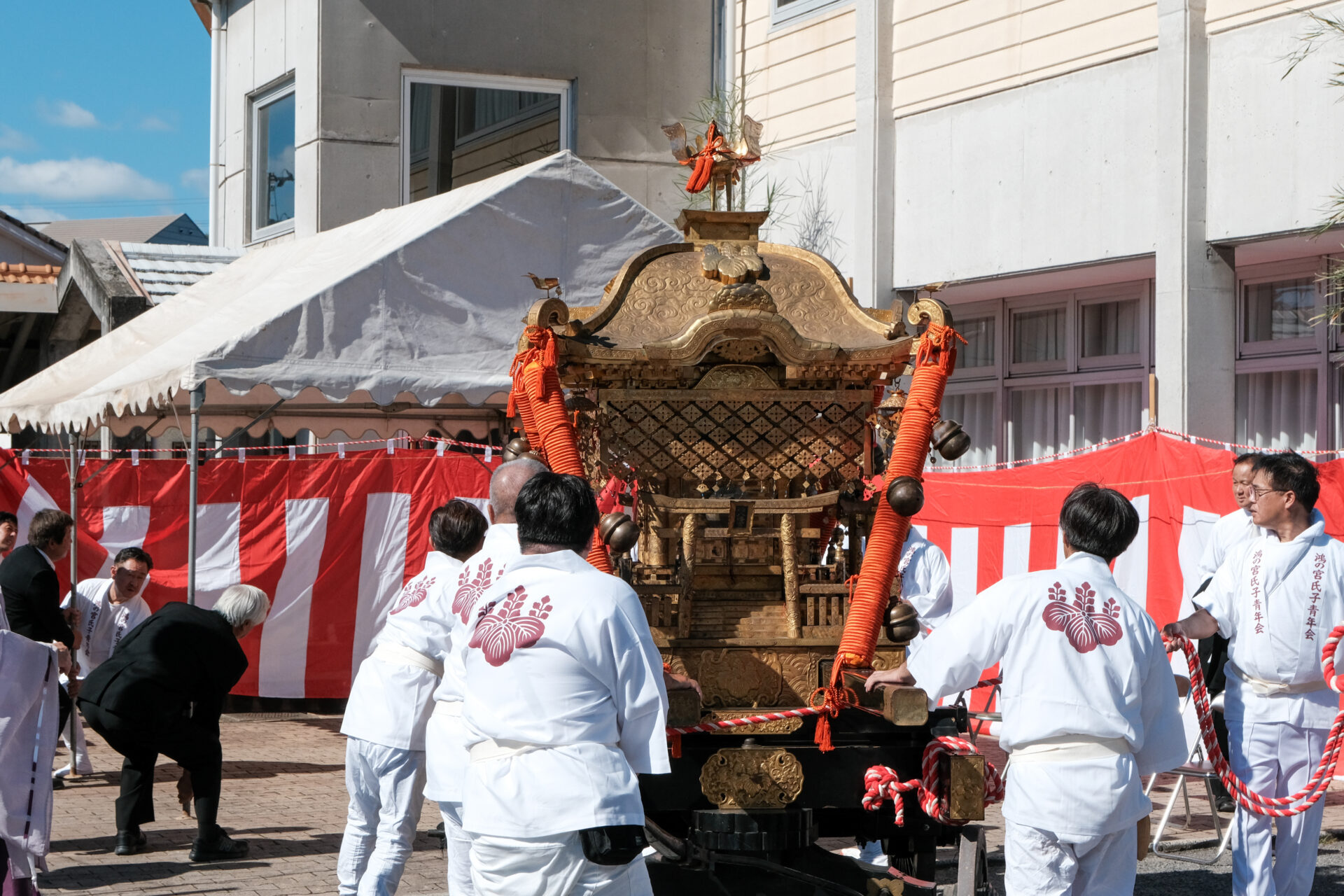
While the sacred object travels back and forth between Kouhachimangu Shrine and the temporary shrine, the floats and sendairoku from each district parade through their respective areas, heading towards the shrine grounds to the melody of shagiri.
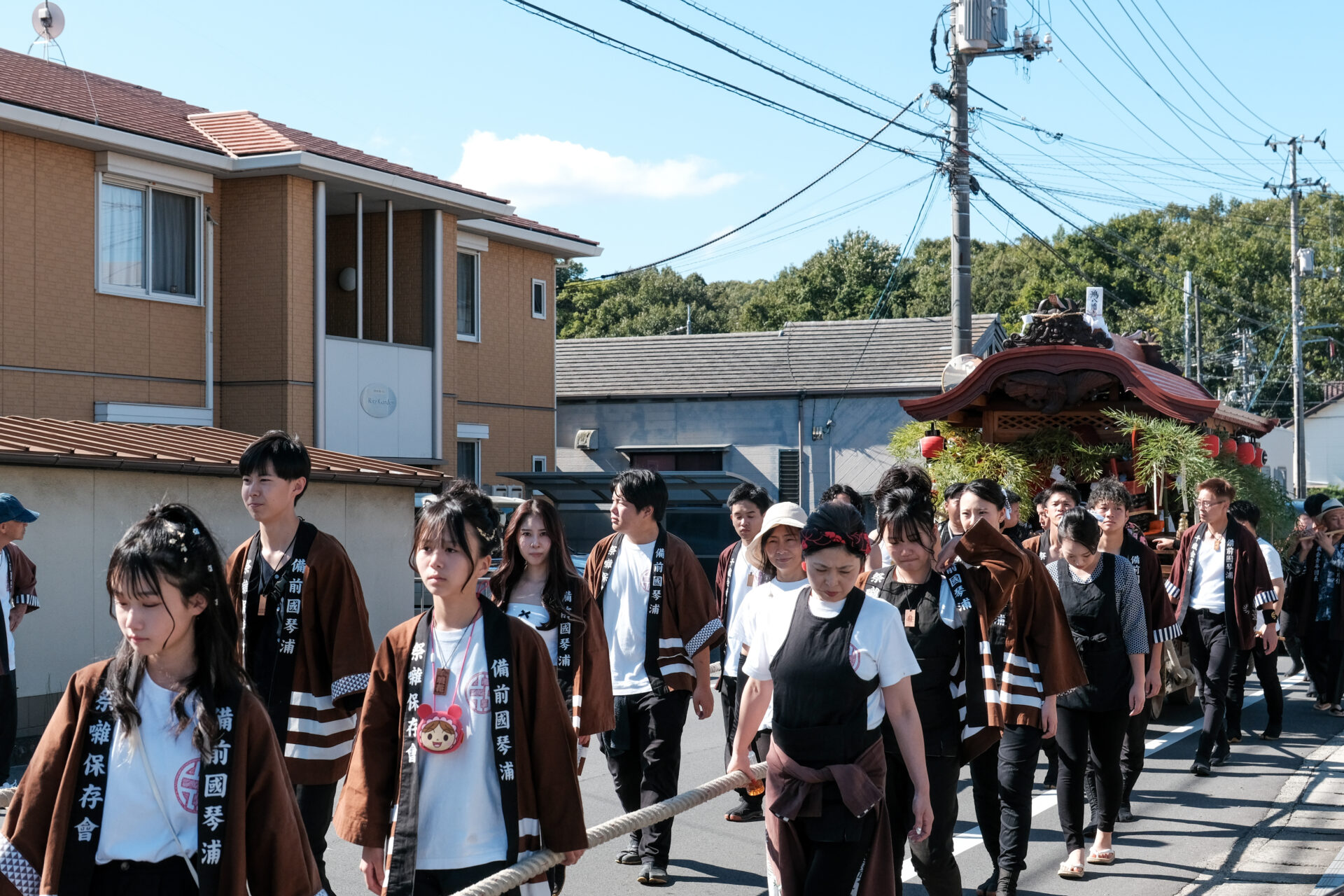
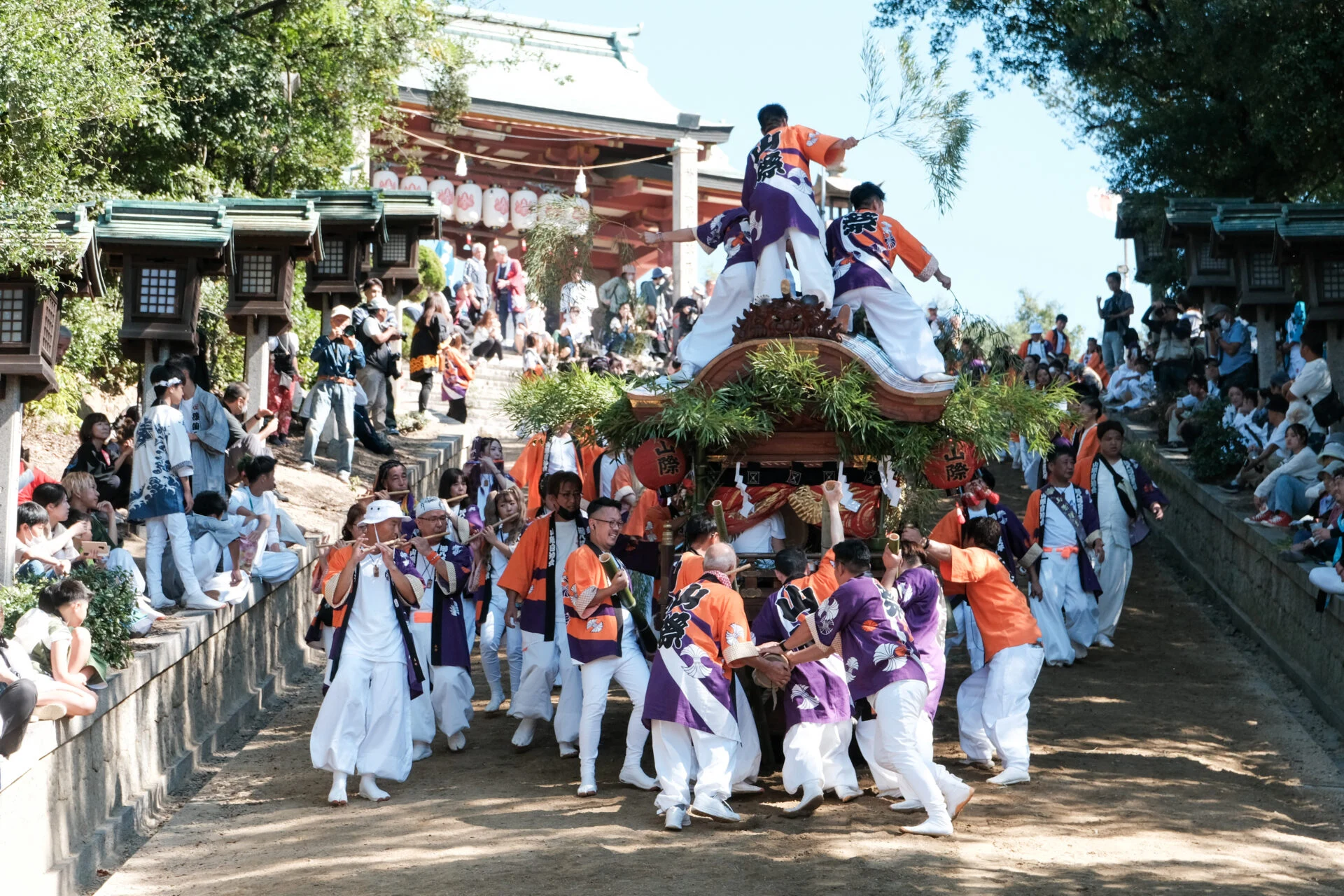
Each district has its own unique melody of shagiri, and the shapes and sizes of the floats also differ, making the sight of the floats lined up in the shrine grounds truly impressive.
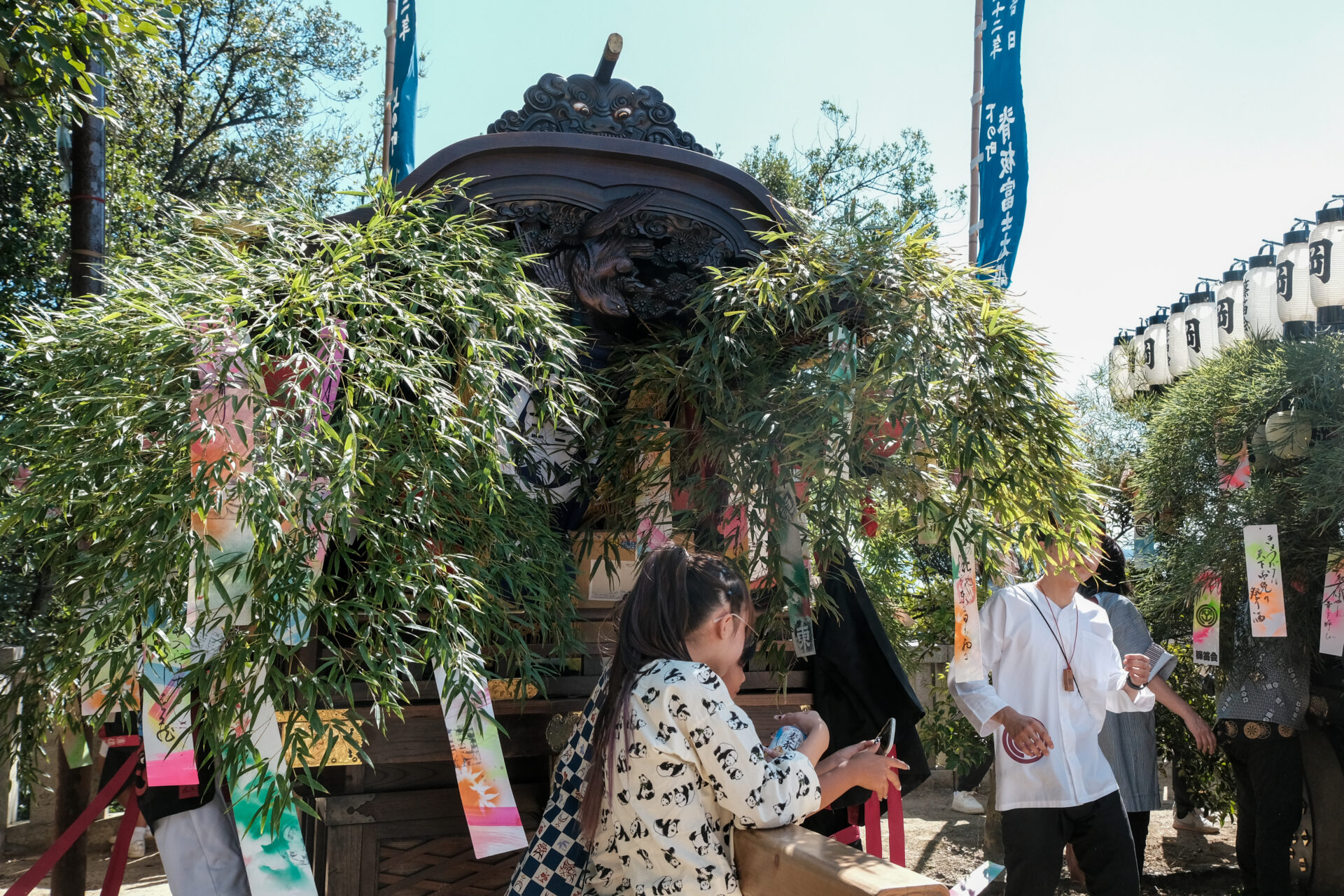
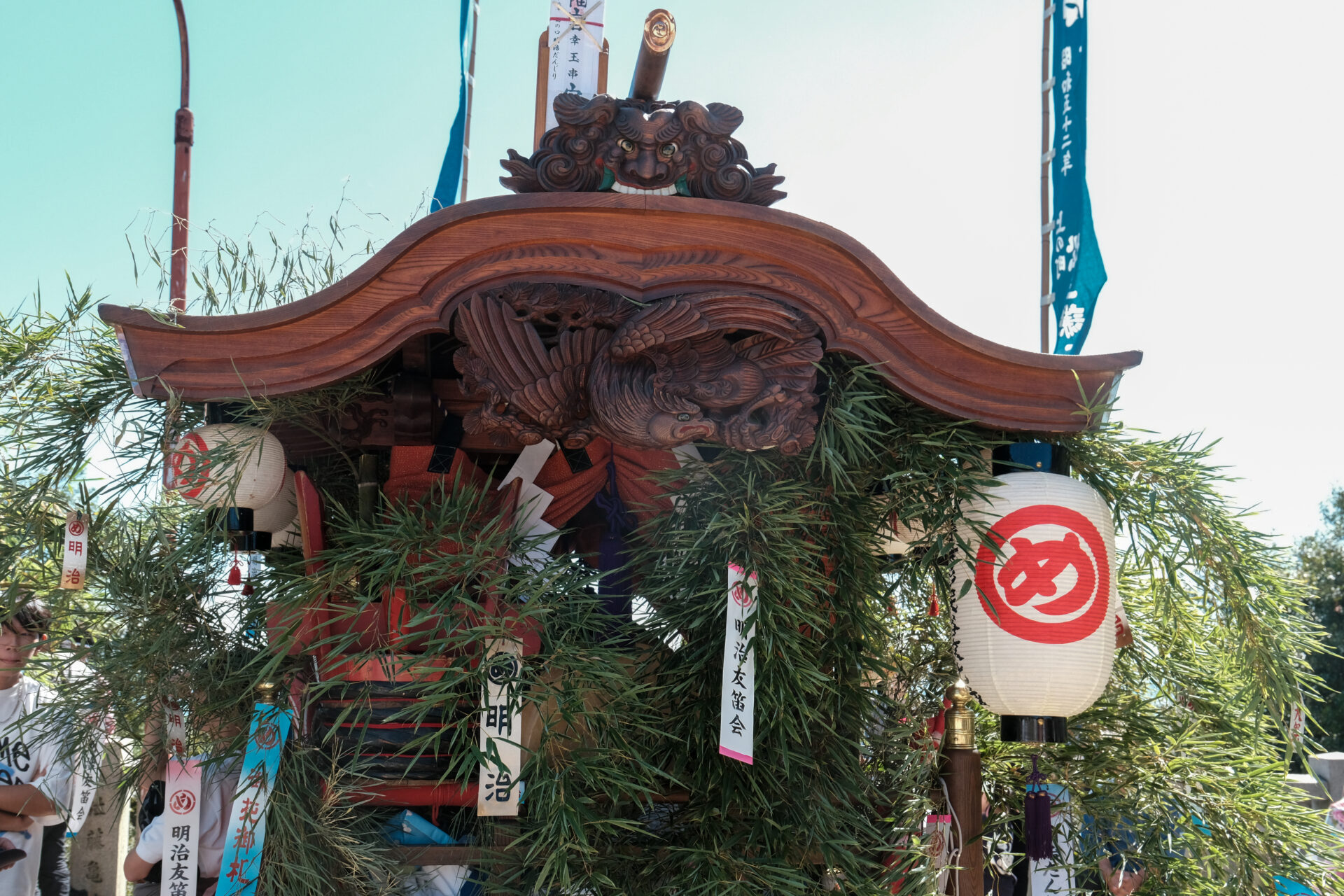
Additionally, there are performances unique to each district while going up and down the steep slope of the approach, making it entertaining to watch.
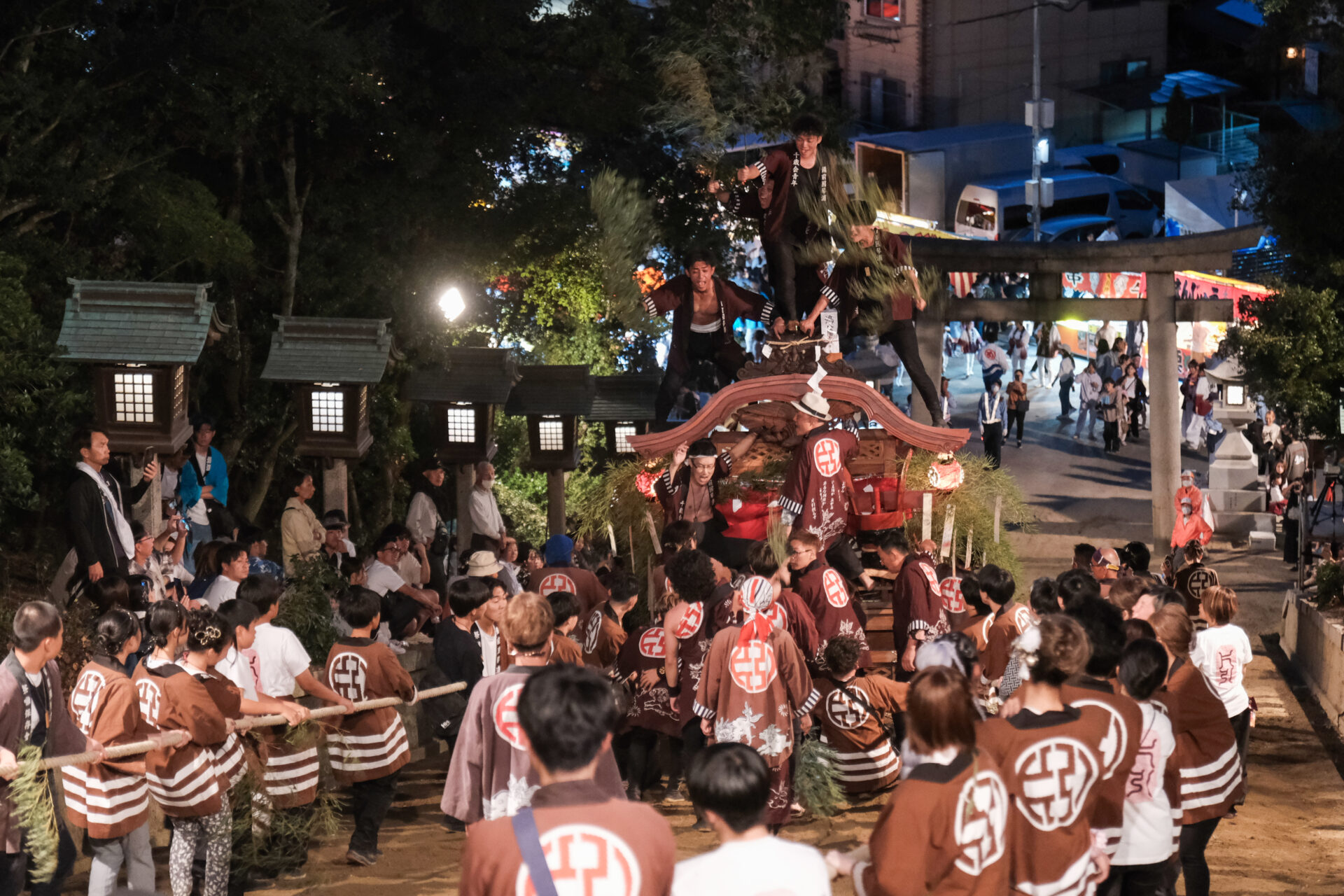
From the time the first float began to ascend the approach at 9:30 AM until the last float descended around 8 PM, Kouhachimangu Shrine remained lively.
Participants in happi coats everywhere you look at the Grand Festival
What surprised me most at the Grand Festival of Kouhachimangu Shrine was that everywhere I looked, there were participants in happi coats.
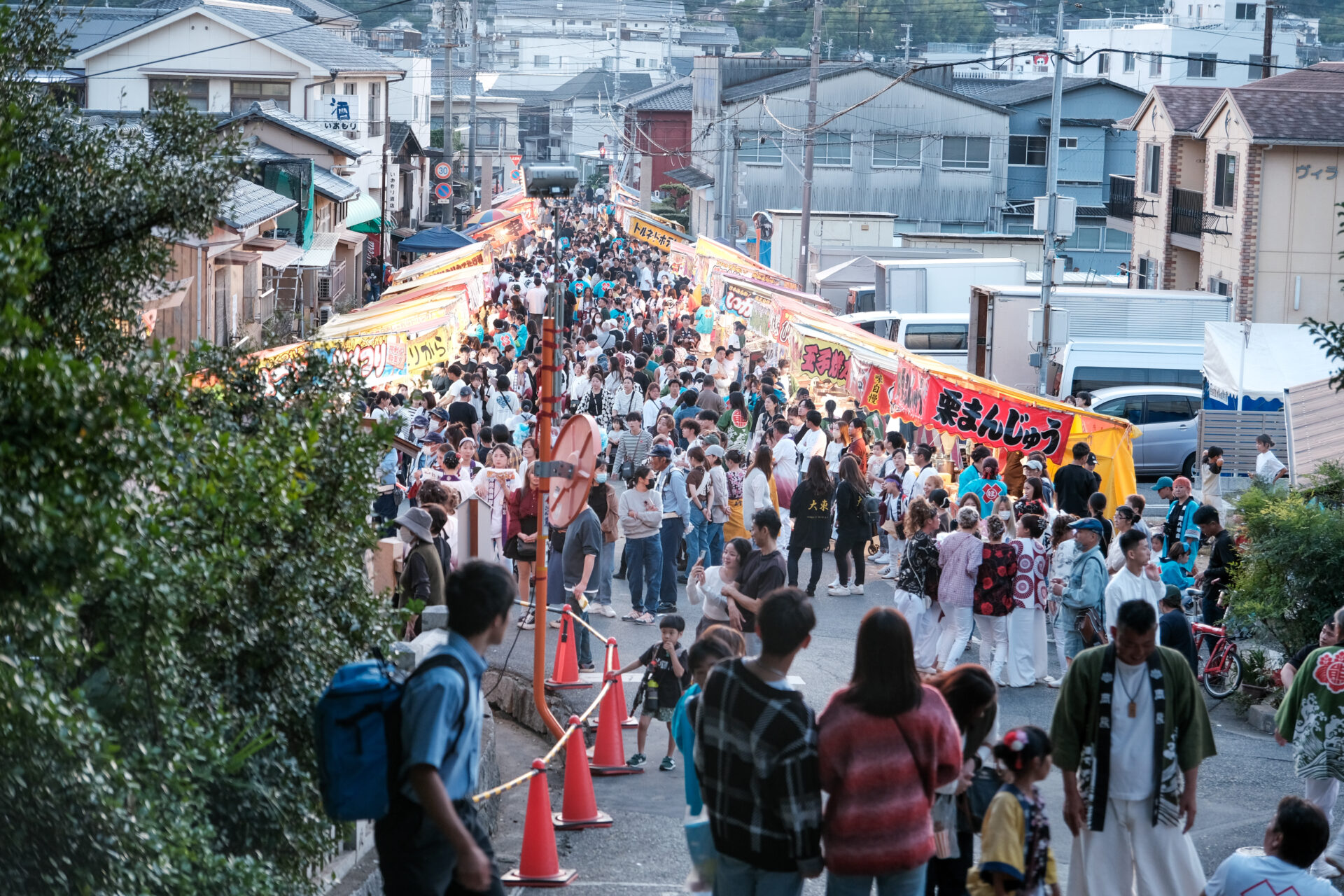
In my hometown in Tohoku, there are also large festivals such as the Nebuta Festival and the Akita Kanto Festival. Unlike the Grand Festival of Kouhachimangu Shrine, these festivals have a noticeable presence of tourists equal to or greater than the participants, and paid viewing seats are also provided. While those who perform at the festival wear happi coats and costumes, tourists mostly wear yukata or casual clothes.
At Kouhachimangu Shrine, most of the people lined up at the stalls on the approach are wearing happi coats from their respective districts. Additionally, the shrine grounds are filled with people who have played shagiri or pulled floats, making it quite rare to see someone like me in casual clothes.
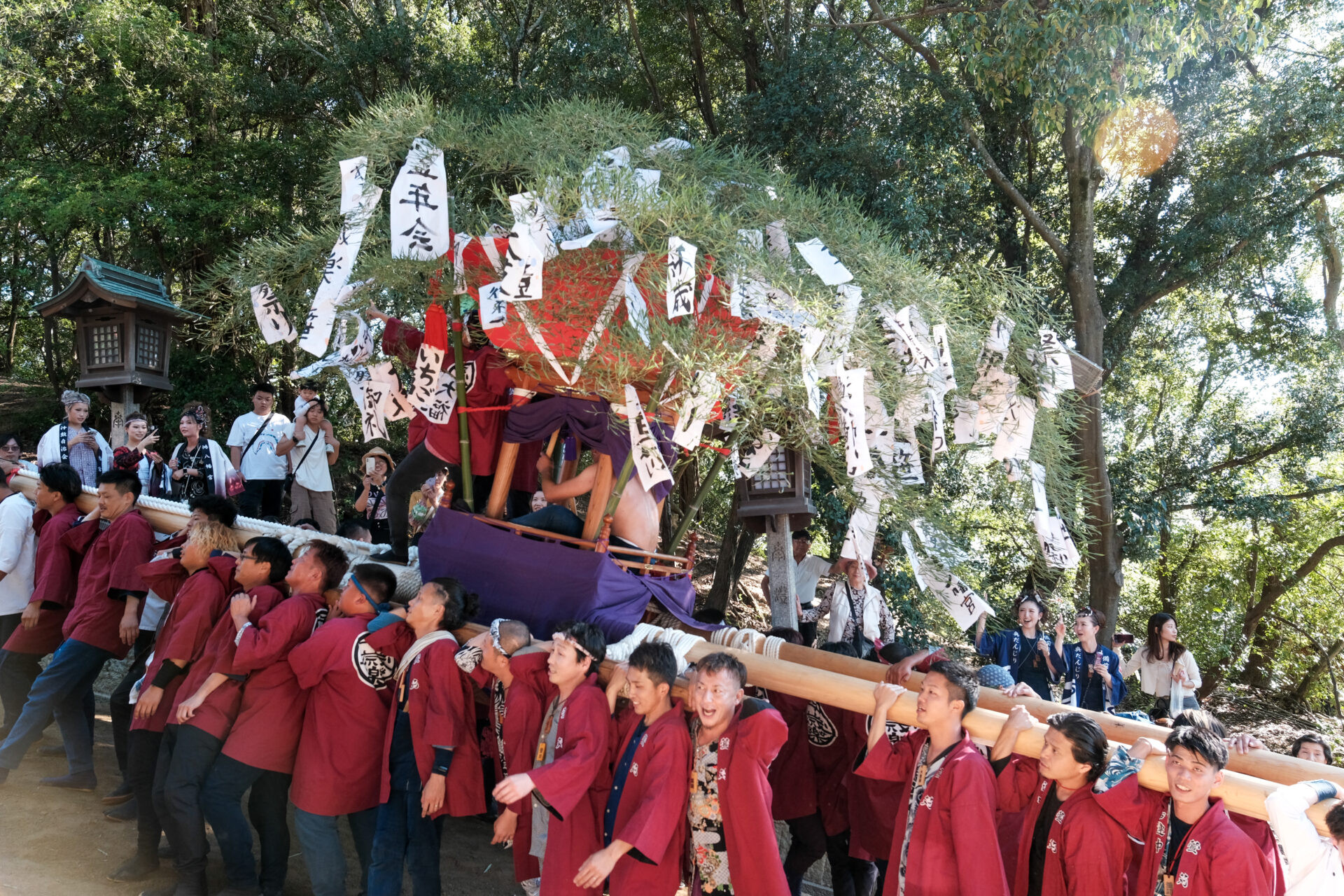
However, even as someone from outside the district enjoying the floats and the festival, the local people warmly watch over and even offer places where the floats are easy to see, allowing me to enjoy without hesitation.
I truly felt that this is a festival held by the local people for the local people.
Both children and adults, regardless of gender, enjoy the Grand Festival
When I hear "floats," the city of Kishiwada in Osaka Prefecture comes to mind as it is nationally famous.
The culture of floats that enlivens the Grand Festival of Kouhachimangu Shrine is said to have come from Kansai along with the Kitamaebune (northern-bound ships). In Osaka, it is decided that women can only pull floats until the age of 18, and adult women cannot pull floats.
However, at the Grand Festival of Kouhachimangu Shrine, people from the district, regardless of gender, from adults to children, come together to play shagiri and pull the floats.
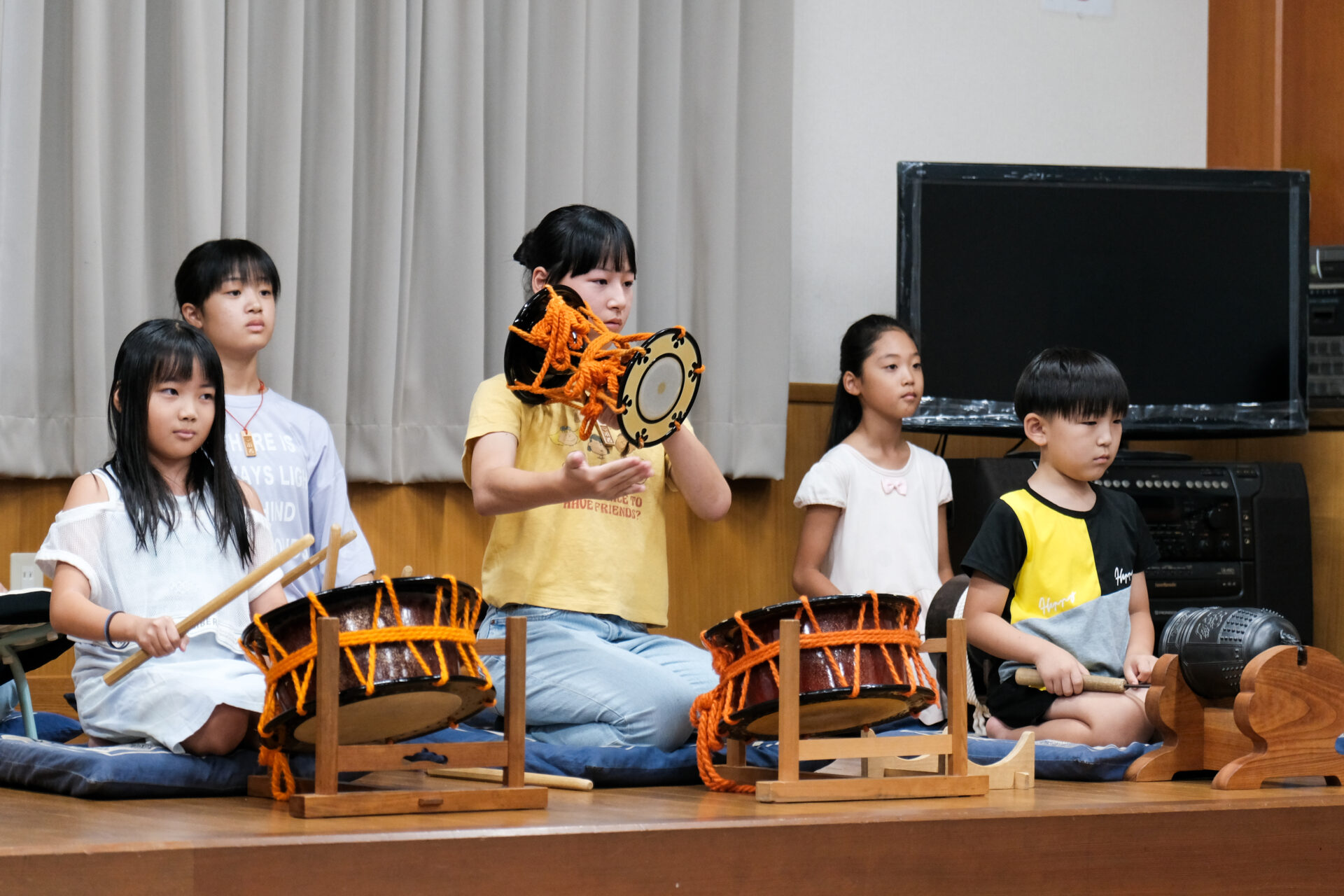
In particular, the practice of shagiri is passed down orally from the adults in the district to the children. It is said that in some districts, practice sessions have been held about three times a week since before summer vacation in preparation for the Grand Festival.
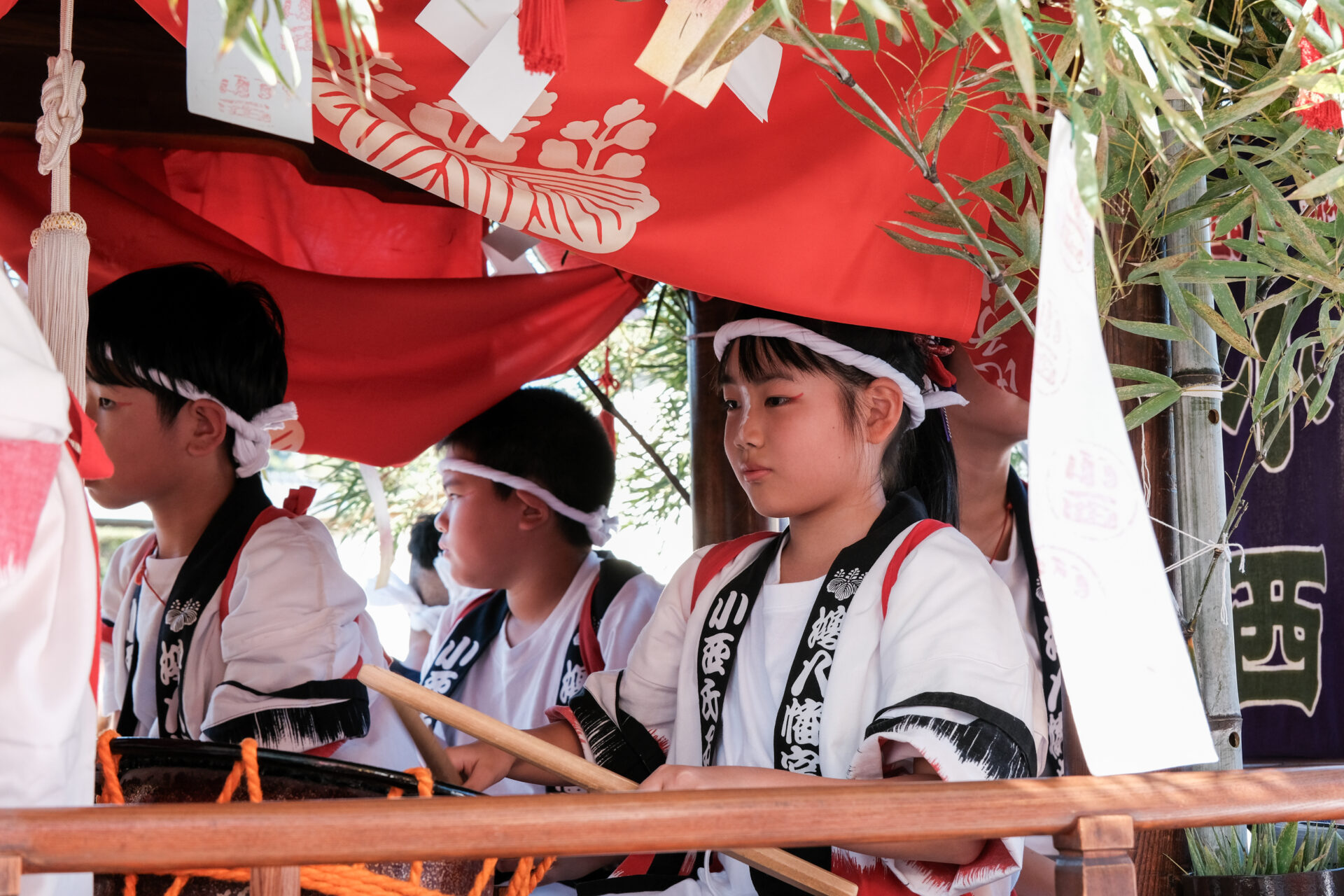
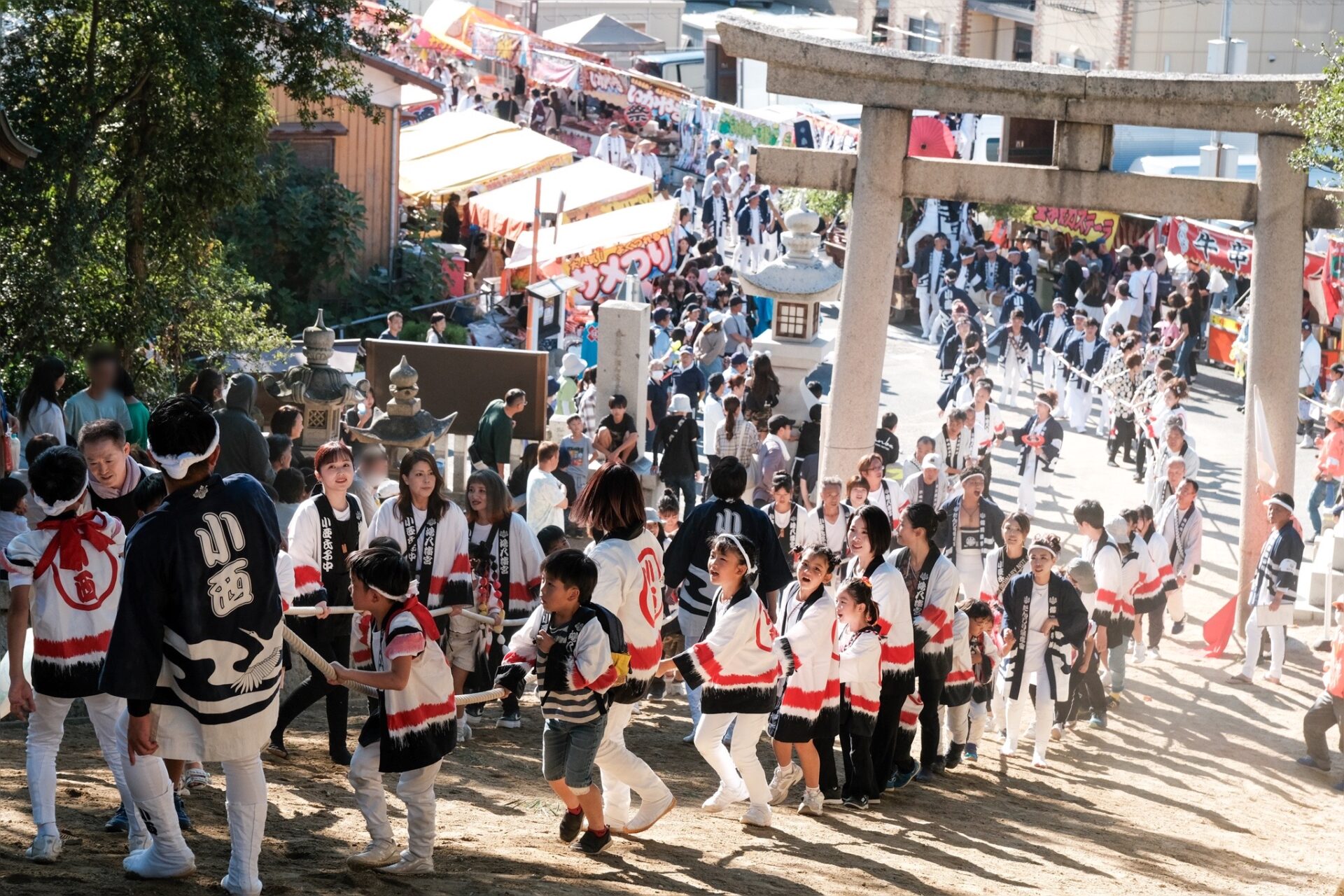
On the day of the festival, people of all ages from the area were seen encouraging each other with beaming smiles, enhancing the atmosphere of the festival. There were also babies participating, carried in baby carriers.
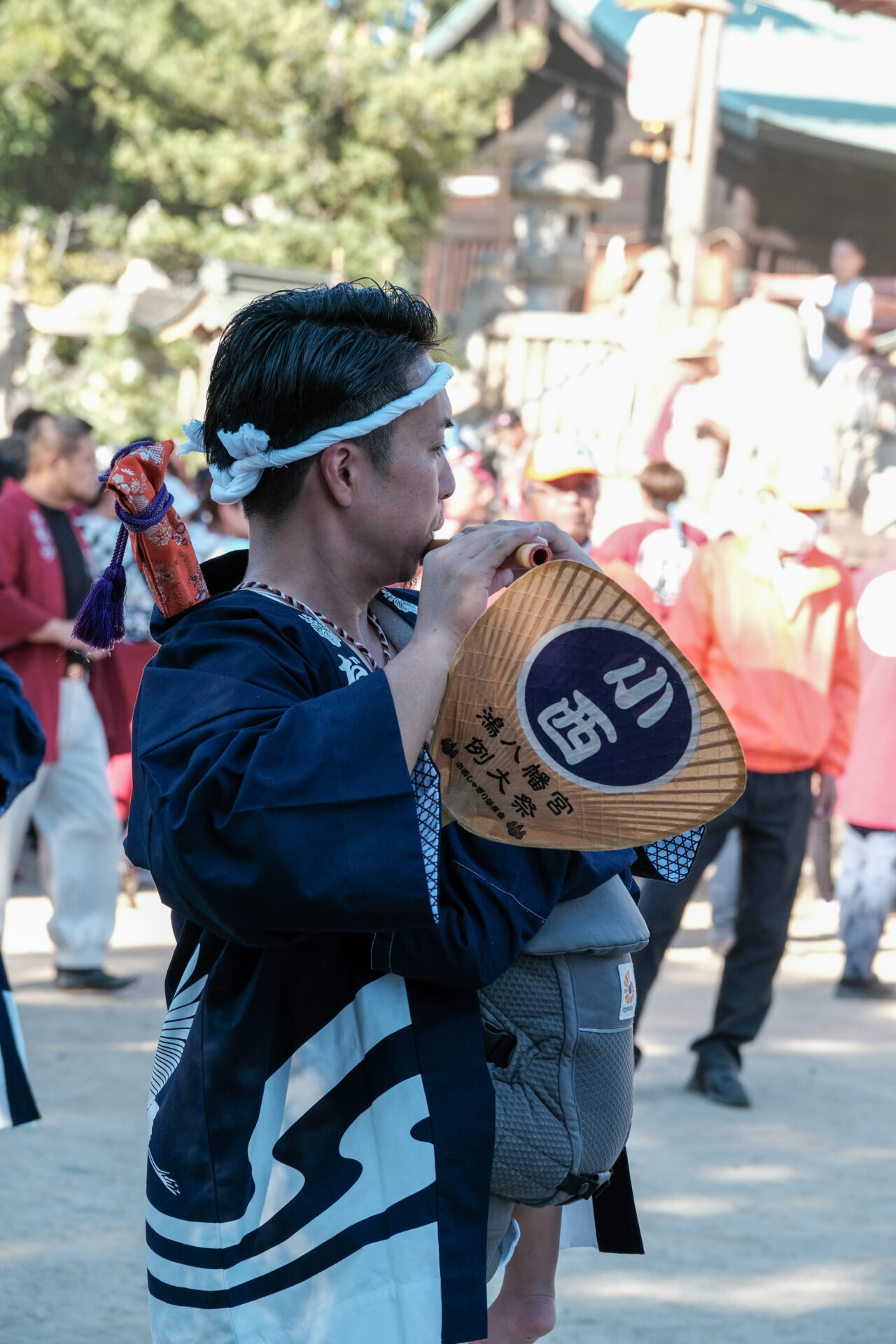
Participants from the Konishi area arrived at the shrine grounds after 3 PM.
“We were able to safely make it to the shrine grounds while showcasing the results of our daily practice. Since it will be late on the way back, the number of people playing the shagi (traditional festival music) and pulling the danjiri (festival float) will decrease, so we want to return to the Konishi area without letting our guard down until the end,”
they said with a smile.
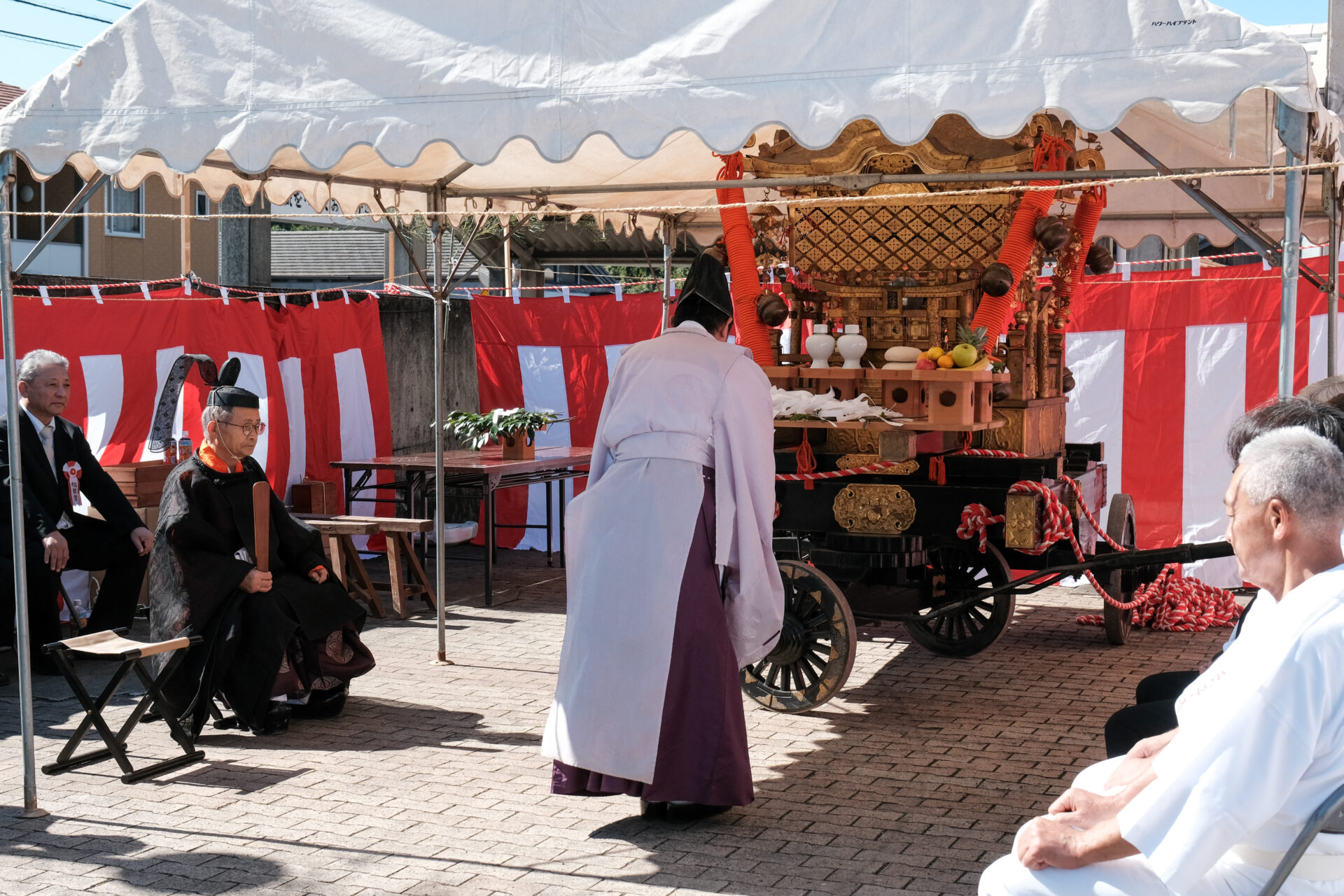
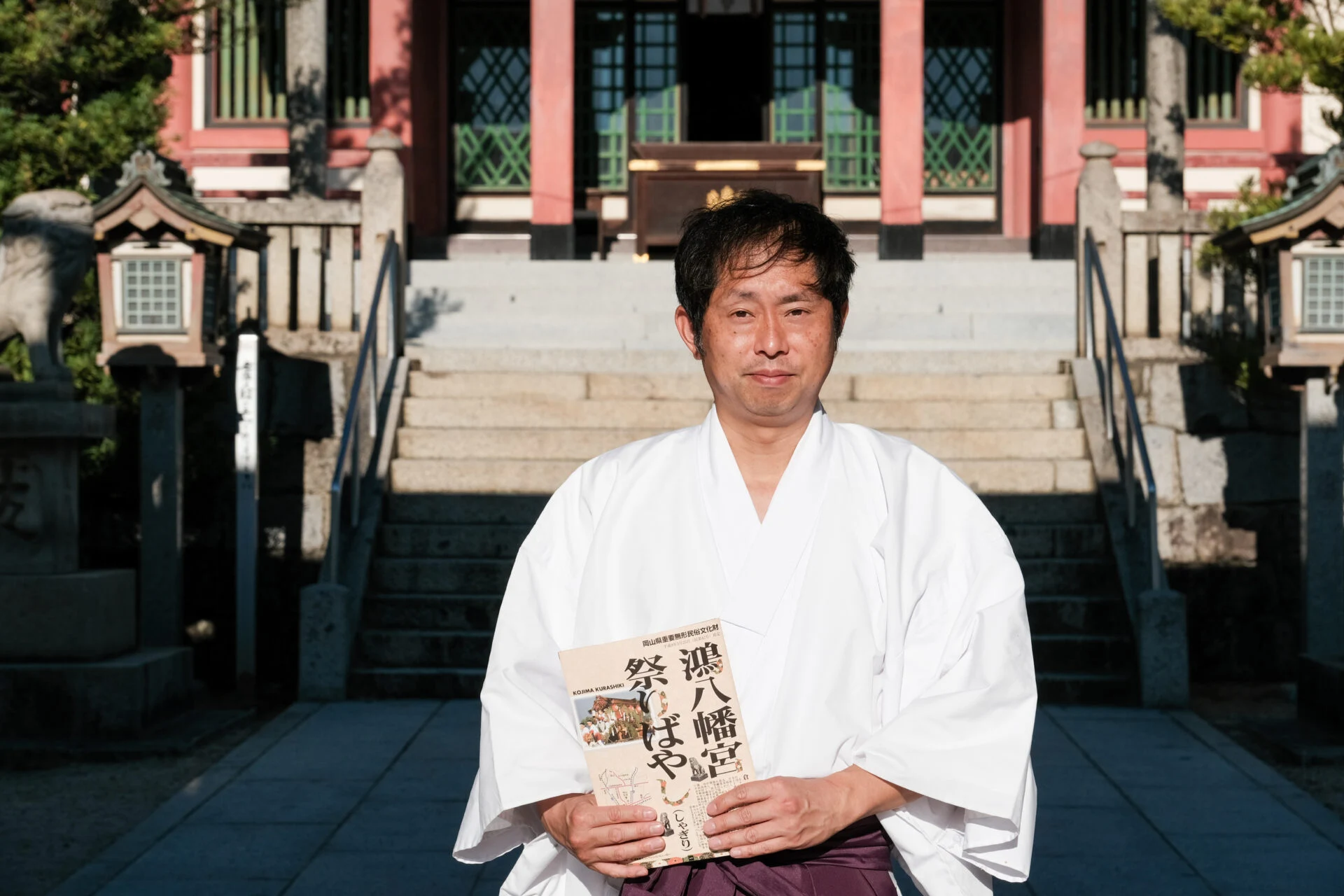
Additionally, Mr. Masaki Komoto, who serves as the negi (shrine priest) at Koh Hachiman Shrine, also said,
“I am relieved that we were able to successfully hold the festival this year as well. It is clear that each area has been practicing for today, and the performances and music were wonderful, bringing joy to see the happy expressions of the participants. The festival continues until everyone returns to their respective areas, so I hope we can finish safely without any injuries.”
He spoke cheerfully.
Conclusion
From morning until night, melodies of shagi could be heard from all the districts of the Koh Hachiman Shrine, as people dressed in the traditional happi (festival coat) enjoyed the festival together.
This festival at Koh Hachiman Shrine was made possible because participants practiced diligently in their respective areas and strengthened their bonds with each other to fully enjoy this day.
It is one of the traditional cultures that we hope will continue to be passed down from the adults in the community to the children.
Data on the Koh Hachiman Shrine Festival
| Name | Koh Hachiman Shrine Festival |
|---|---|
| Date | October 12, 2024 (Saturday) times vary by district; October 13, 2024, from around 8 AM to around 8 PM |
| Location | 7-14-1 Shimonochō, Kojima, Kurashiki City |
| Participation Fee (including tax) | Free admission |
| Website | Koh Hachiman Shrine |