The rice ears in the rice fields shine golden, and new rice for 2024 has begun to appear in supermarkets, signaling the arrival of "autumn harvest".
It seems that many shrines hold festivals to express gratitude to the gods who protect the fields. Indeed, recently while walking around town, I often see posters saying "XX Shrine Festival".
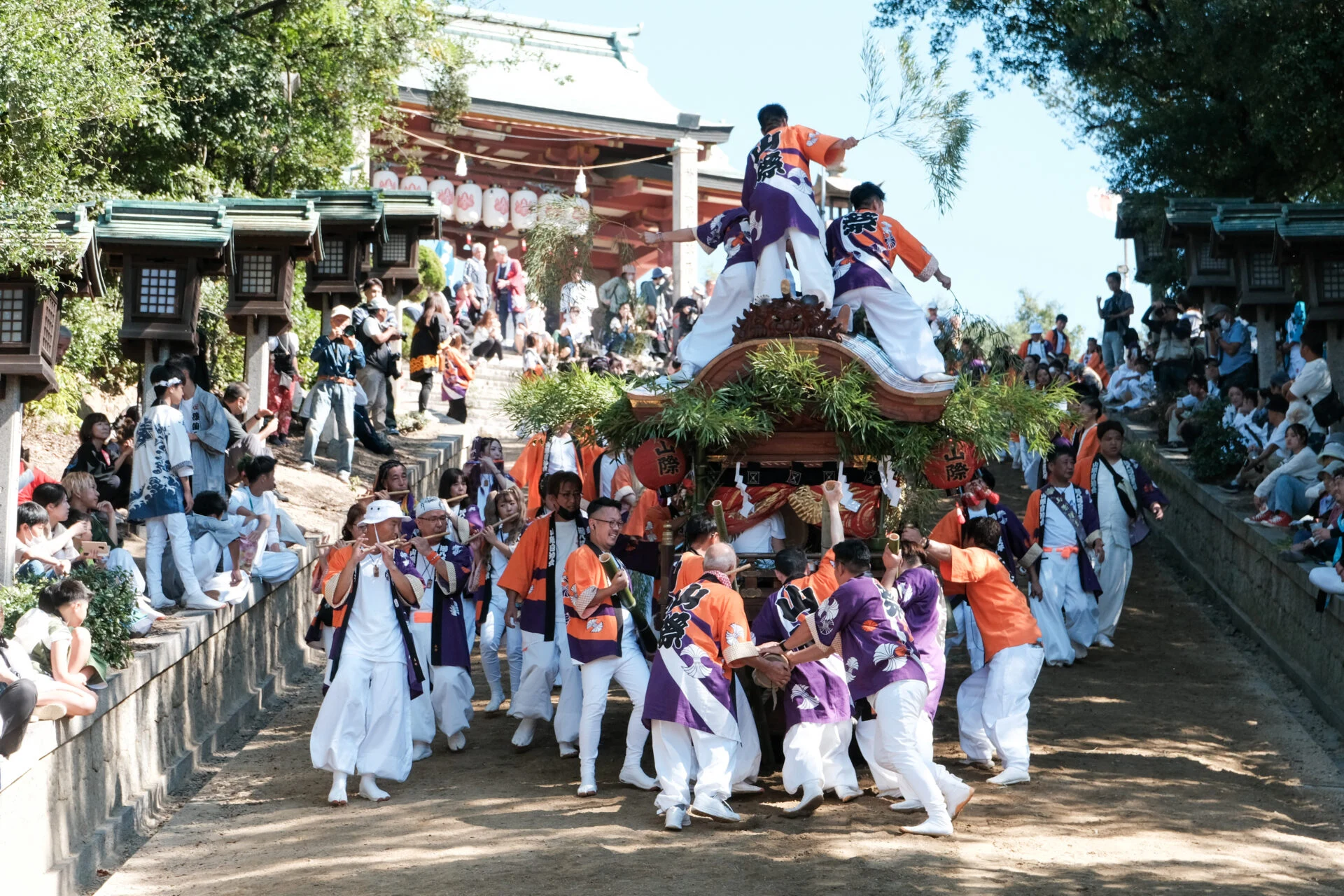
At Kōhachiman Shrine (こうはちまんぐう), located on a hill in Kojima, Kurashiki City, a grand festival is held every year on the second Sunday of October and the day before, where floats parade through the district accompanied by the "shagiri" festival music.
I interviewed the shrine's chief priest and the Konishi Float Preservation Society about the highlights of the Kōhachiman Shrine Grand Festival, which has been passed down since the late Edo period.
What is Kōhachiman Shrine?
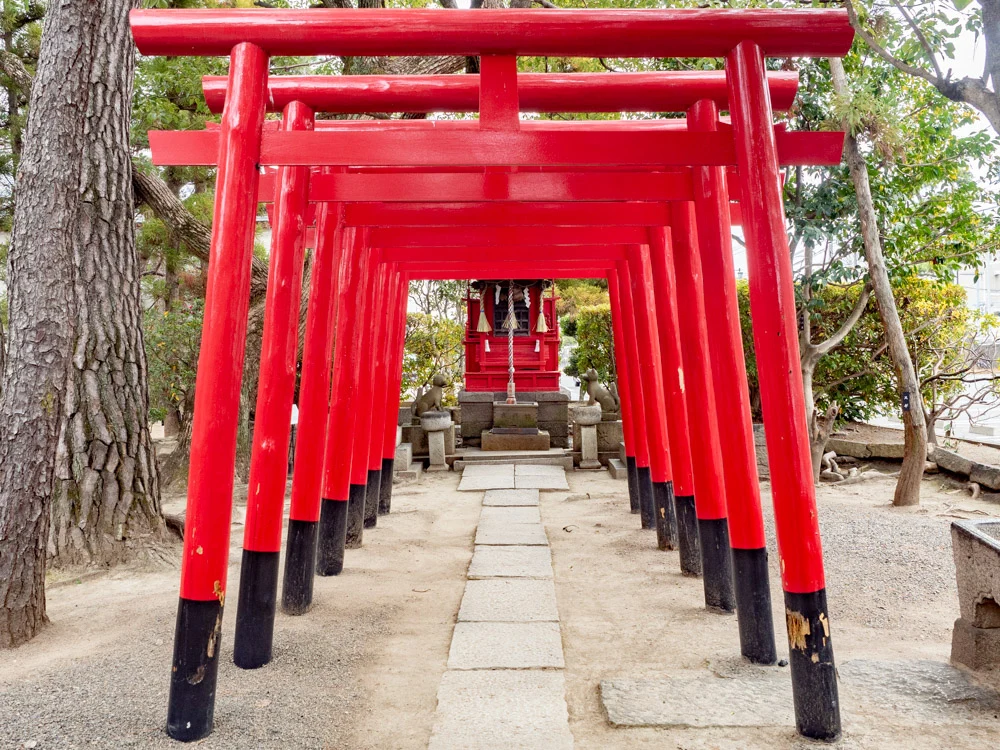
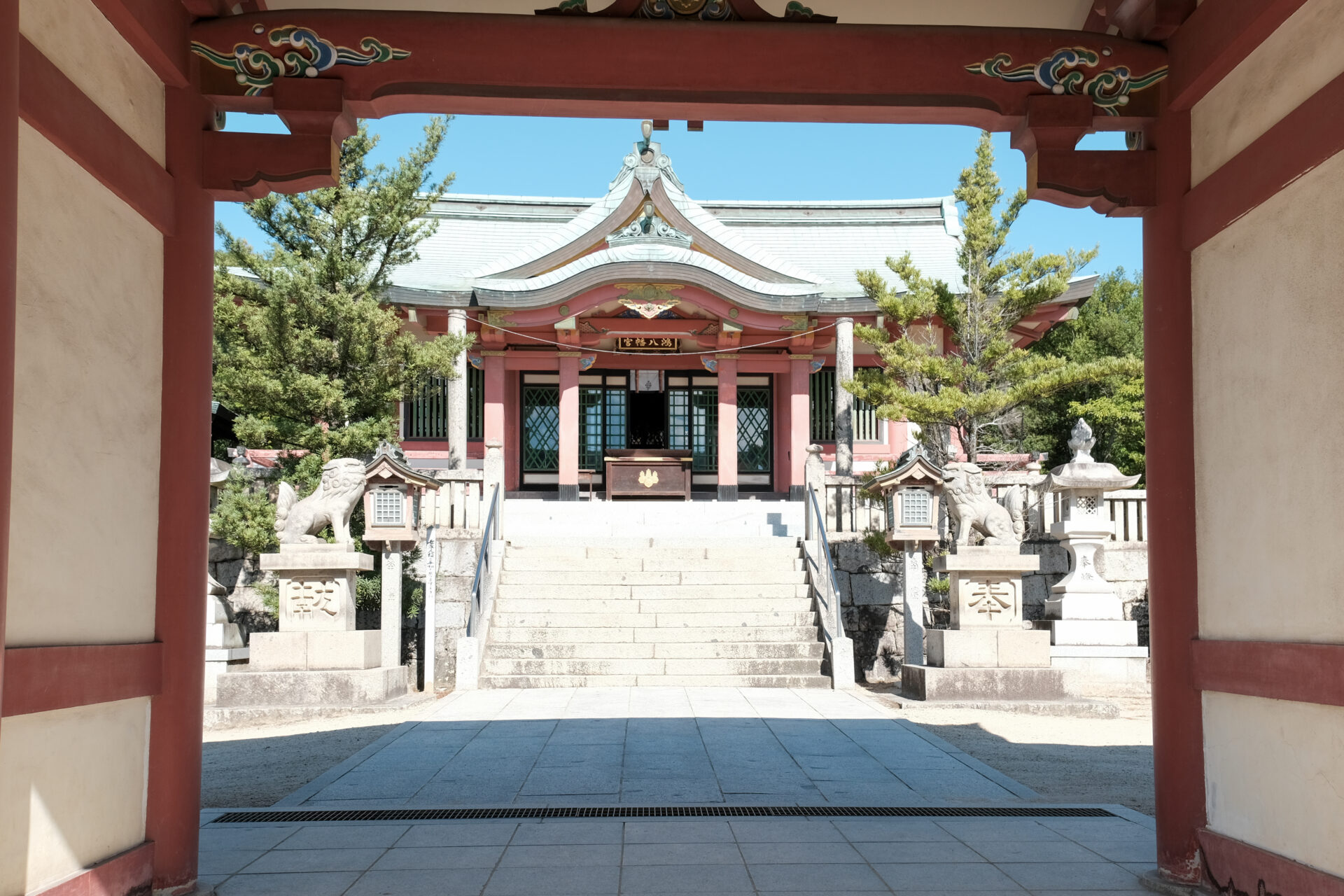
Kōhachiman Shrine is located in Shimo-no-cho, Kojima, Kurashiki City. It has been revered as the guardian deity of the residents since ancient times, serving as the collective deity for the current areas of Kamino-cho, Shimo-no-cho, Tanakuchi, and Karakoto.
Within the shrine grounds, there are a pair of wooden lions designated as Important Cultural Properties of Okayama Prefecture, and it is said to be a shrine associated with the legend of the stork. Currently, it is worshipped as a guardian deity of industry, protection from misfortune, traffic safety on land, sea, and air, as well as a deity for safe childbirth.
What is the Kōhachiman Shrine Grand Festival?
The Kōhachiman Shrine Grand Festival is the autumn festival of Kōhachiman Shrine. It consists of the following:
- Mikoshi procession, where the sacred palanquin travels back and forth between Kōhachiman Shrine and the temporary shrine in the district
- A festival where 19 floats and Chitosegaku entertain the area and the shrine grounds, accompanied by the festival music (referred to as "shagiri")
It is held over two days, on the second Sunday of October and the day before, with the 2024 festival scheduled for October 12 (Saturday) and 13 (Sunday).
On the first day, October 12 (Saturday), the floats and Chitosegaku will parade through their respective neighborhoods. On the second day, October 13 (Sunday), the mikoshi procession and the floats and Chitosegaku from each district will enliven the shrine grounds from morning until evening with performances of shagiri.
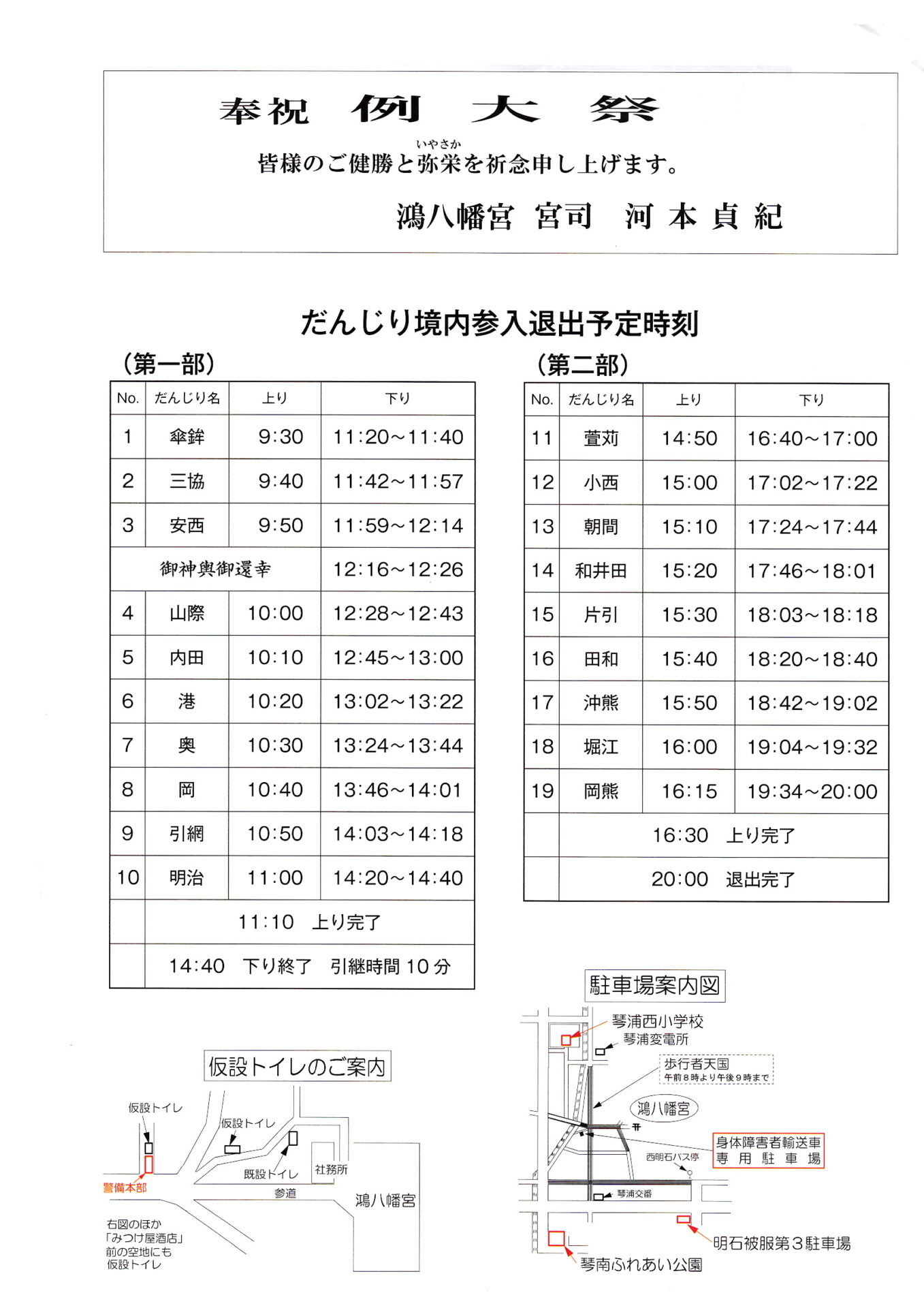
Please check the following image for the scheduled times for the mikoshi procession and the entry and exit of the floats and Chitosegaku on the 13th (Sunday).
Mikoshi Procession
The mikoshi procession is a religious event held on the second Sunday of October every year.
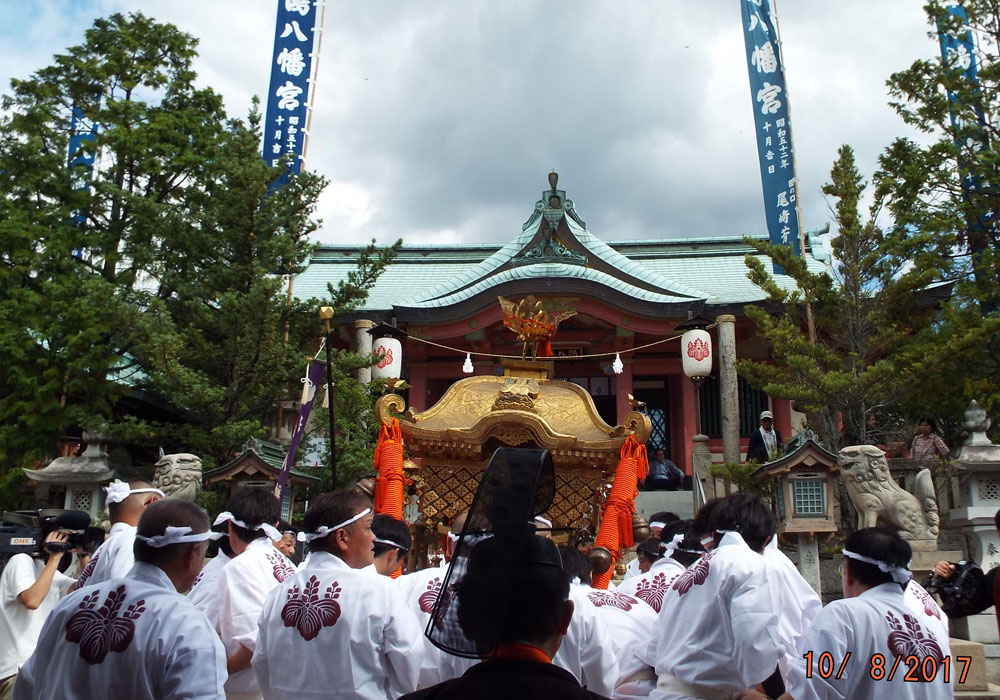
The mikoshi, which carries the sacred object, departs from Kōhachiman Shrine at 8:20 AM after the departure ceremony and travels through the parish area, performing rituals at the temporary shrine. There are two temporary shrines; if going east, it heads to Karakoto, and if going west, it heads to Kamino-cho. In 2024, it is scheduled to head to Kamino-cho as it will be going west.
Floats and Chitosegaku
Floats are vehicles that carry musicians (excluding flutists) who perform shagiri, measuring 1.4 to 1.7 meters in height and 1.9 to 3.4 meters in width. It is said that they arrived in the Kojima area from the Kansai region with the entry of the Kitamae-bune (northern-bound cargo ships) in the late Edo period.
The Chitosegaku from the Kayakari district was newly made and revived in 1992. It is carried by 40 people, standing 2.5 meters tall and weighing about 700 kg.
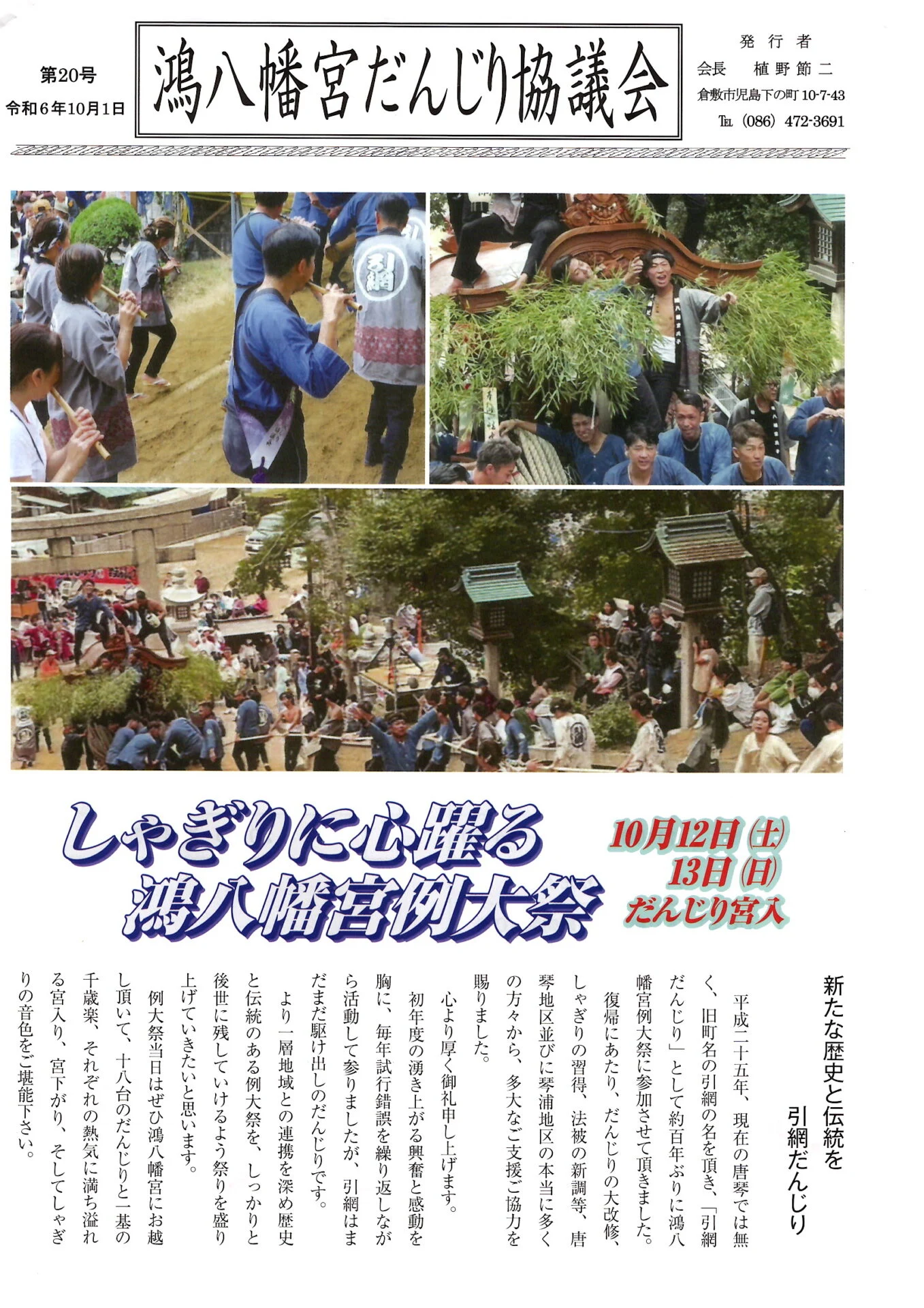
On the day of the festival, around 200 to 400 people from each district will pull the floats while parading through the town and entering the shrine grounds. In 2024, 18 floats and 1 Chitosegaku are expected to participate.
| District Name | Number of Floats and Chitosegaku |
|---|---|
| Kamino-cho District | 5 Kasaboko, Sankyo, Anzai, Yamagiwa, Uchida |
| Shimo-no-cho District | 9 Kayakari (Chitosegaku), Waidai, Katahiki, Asama, Konishi, Okikuma, Horie, Okakuma, Tawa |
| Tanakuchi District | 5 Minato, Oku, Oka, Meiji, Nishi-Akashi |
The appearance of the floats varies by district, especially the intricate carvings on the roofs, which are unique. The numerous auspicious carvings of phoenixes, Ebisu, and the three intertwined tomoe are breathtaking, so be sure to check them out.
Shagiri
The festival music performed at Kōhachiman Shrine is called "shagiri". It is said to have been played since the late Edo period and is designated as an Important Intangible Folk Cultural Asset of Okayama Prefecture.
The instruments used in the performance are the following five types.
- Shinobue (bamboo flute)
- Long-bodied drum
- Taiko drum
- Bell
- Tsuzumi (hand drum)
The shinobue must have a unified sound for performance, so each district handcrafts their own to match the traditional flutes passed down through generations.
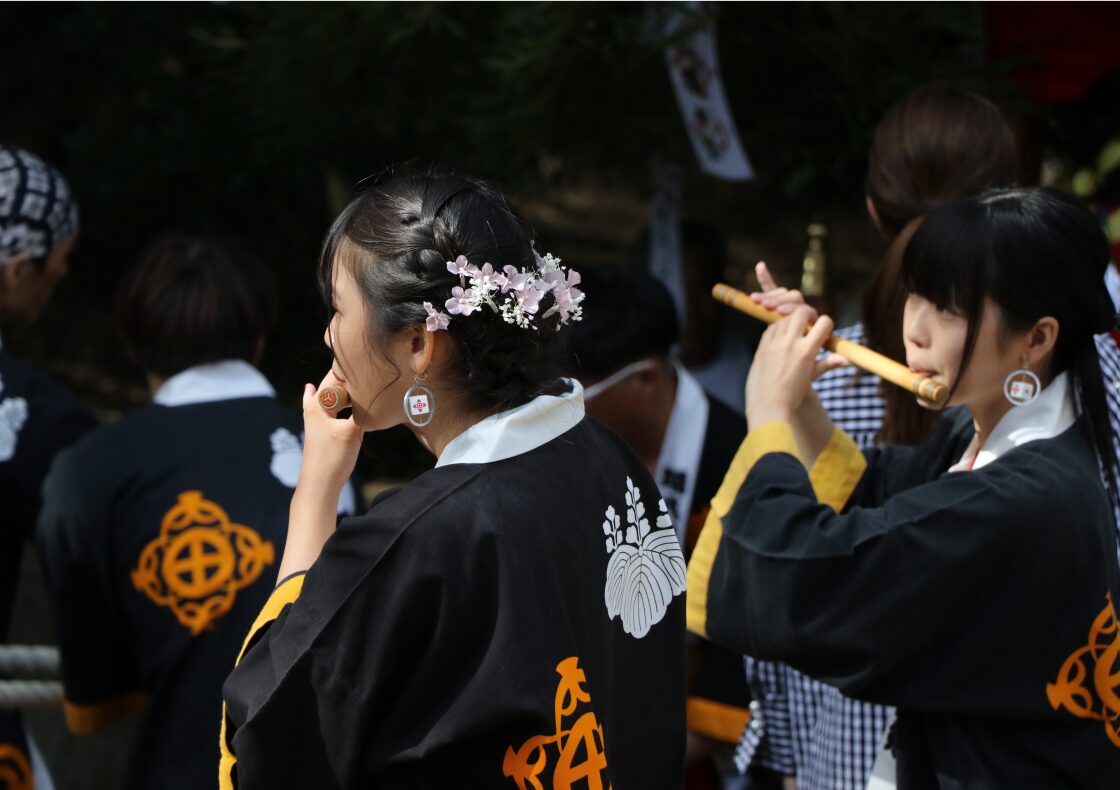
Shagiri is performed in accordance with the movements of progress and stop, with the following seven pieces played.
- Dangire Bayashi
- Shinagawa Bayashi and Hyogo Bayashi
- Gion Bayashi
- Oyaji (Ue-gari)
- Kagura Bayashi
- Shitagari Bayashi
- Ohyariko Bayashi
Since there is no sheet music for shagiri, it is passed down orally from adults to children in each district. They begin practicing for the grand festival around June, as summer approaches.
Practice in the Konishi District
I visited the Konishi District to observe their practice, with less than two weeks remaining until the grand festival.
The Konishi District practices three days a week on Mondays, Thursdays, and Saturdays. On this day, they were practicing shagiri.
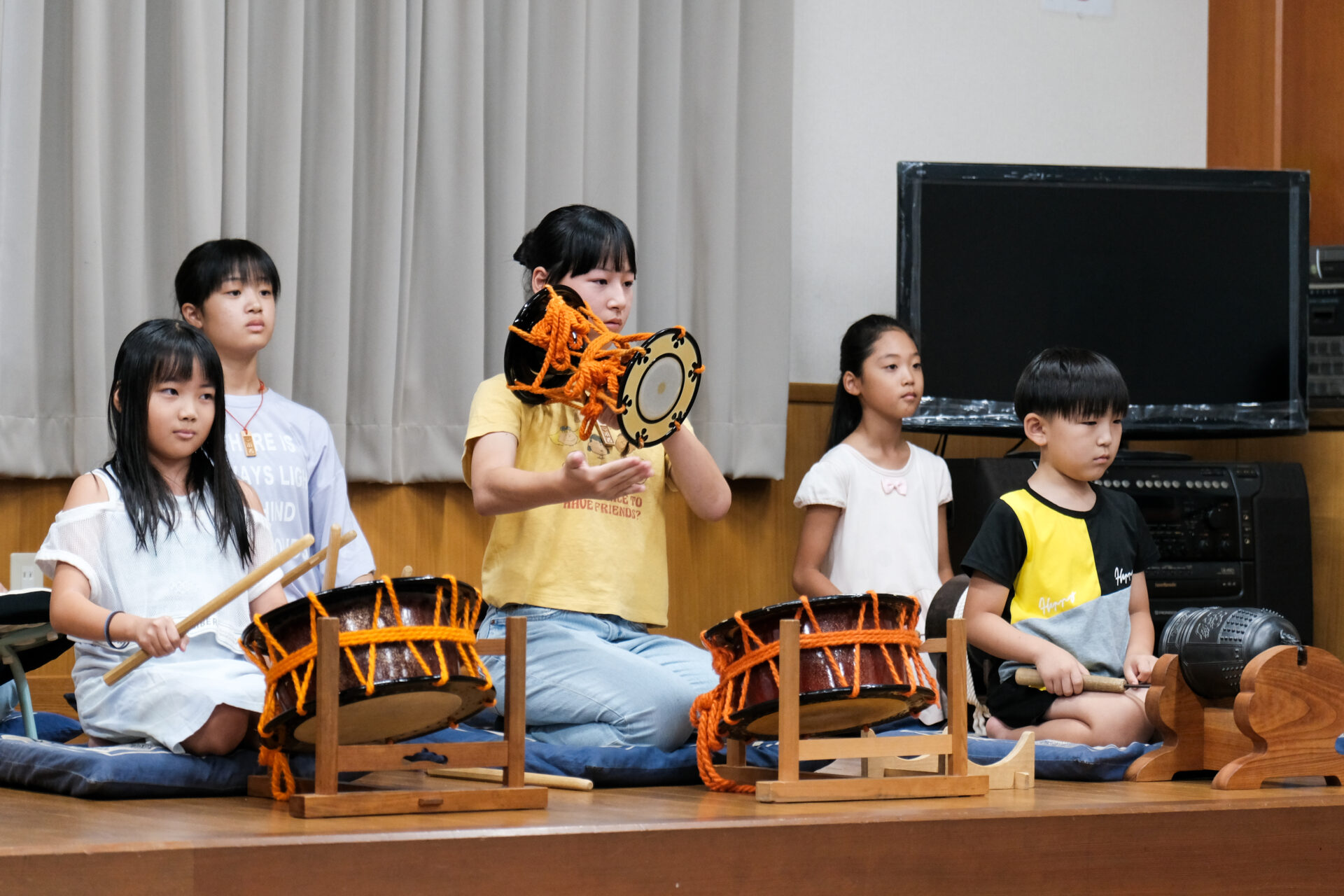
In the Konishi District, children under elementary school age play instruments other than the shinobue. The instructors are OBOG (alumni) from the Konishi District. The adults who teach also have handmade shinobue in their hands.
The Konishi District participates in the grand festival with about 130 people each year. Among the participants, there are those who return from outside the prefecture only during the festival season. Even after a long time, those who grew up in the district still remember the feel of the music and the movements of the floats.
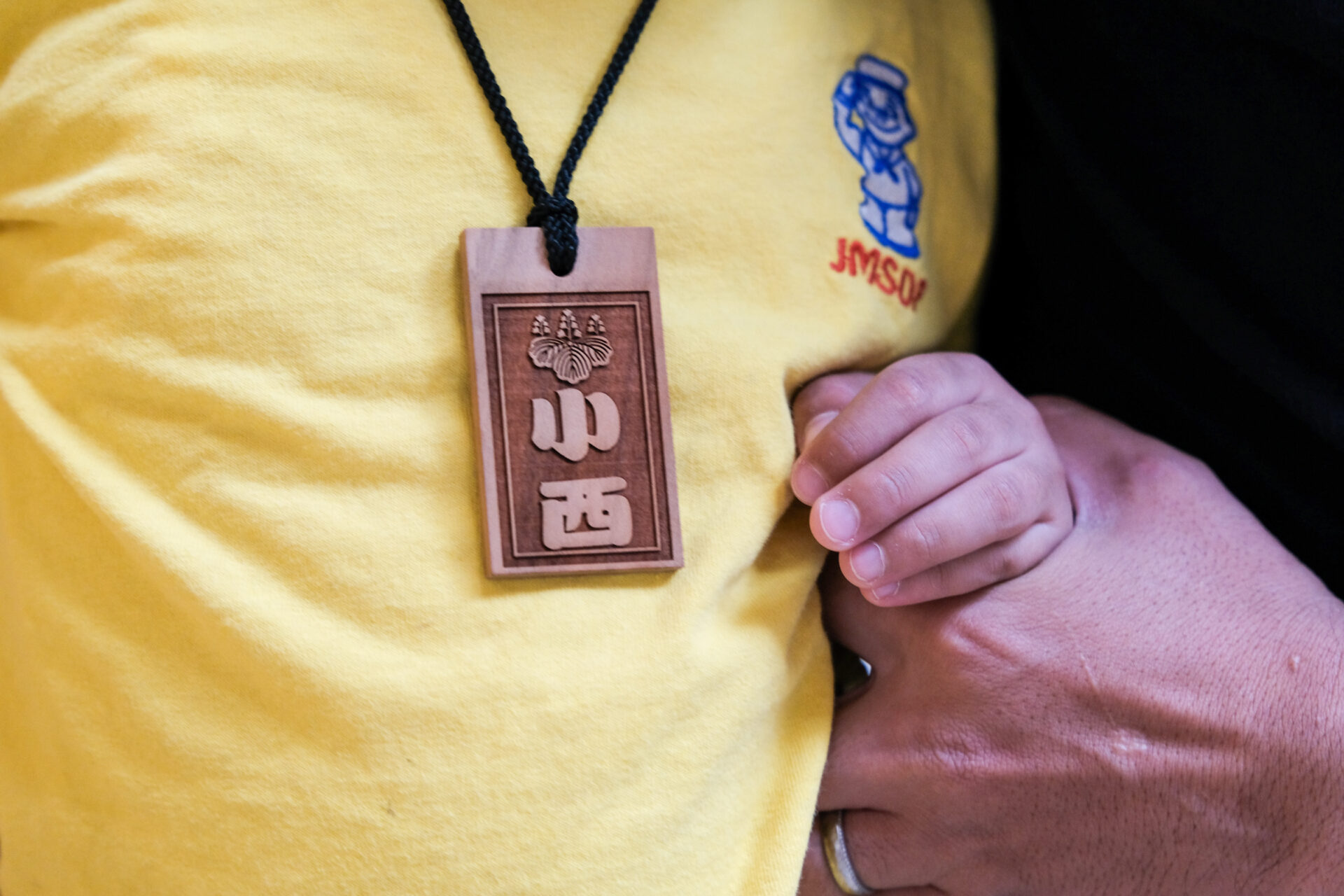
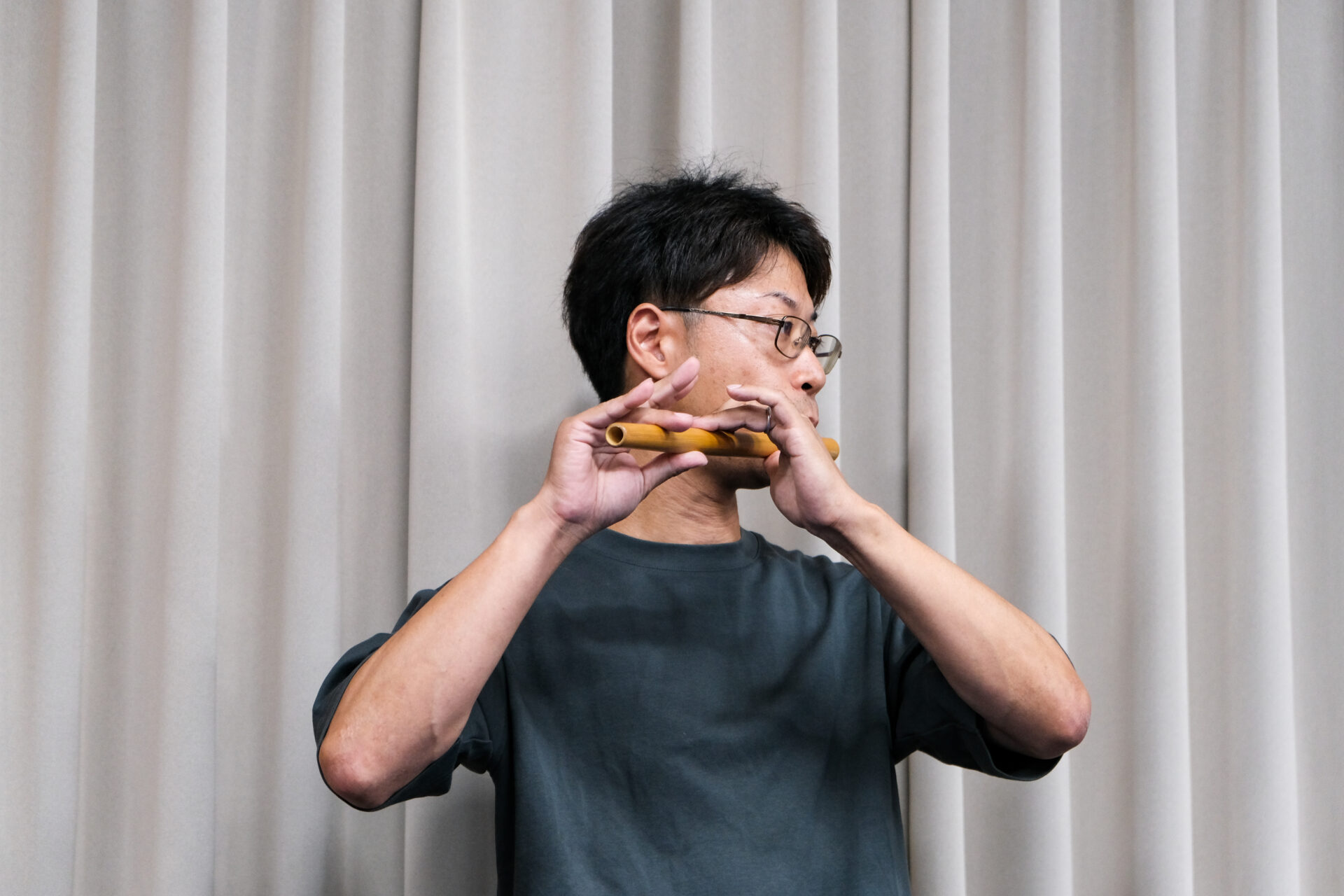
Mr. Kiyama from the Konishi Float Preservation Society, holding a shinobue in one hand, said,
"The charm of the Konishi District is its homely atmosphere. With the increase in new housing developments, the population has been growing, and I hope that newcomers will come to see the festival and become part of the Konishi District's float community. We will do our best to showcase the friendliness of the Konishi District and the results of our practice on the day of the festival."
He expressed.
After the interview, I also observed the floats from the Konishi District.
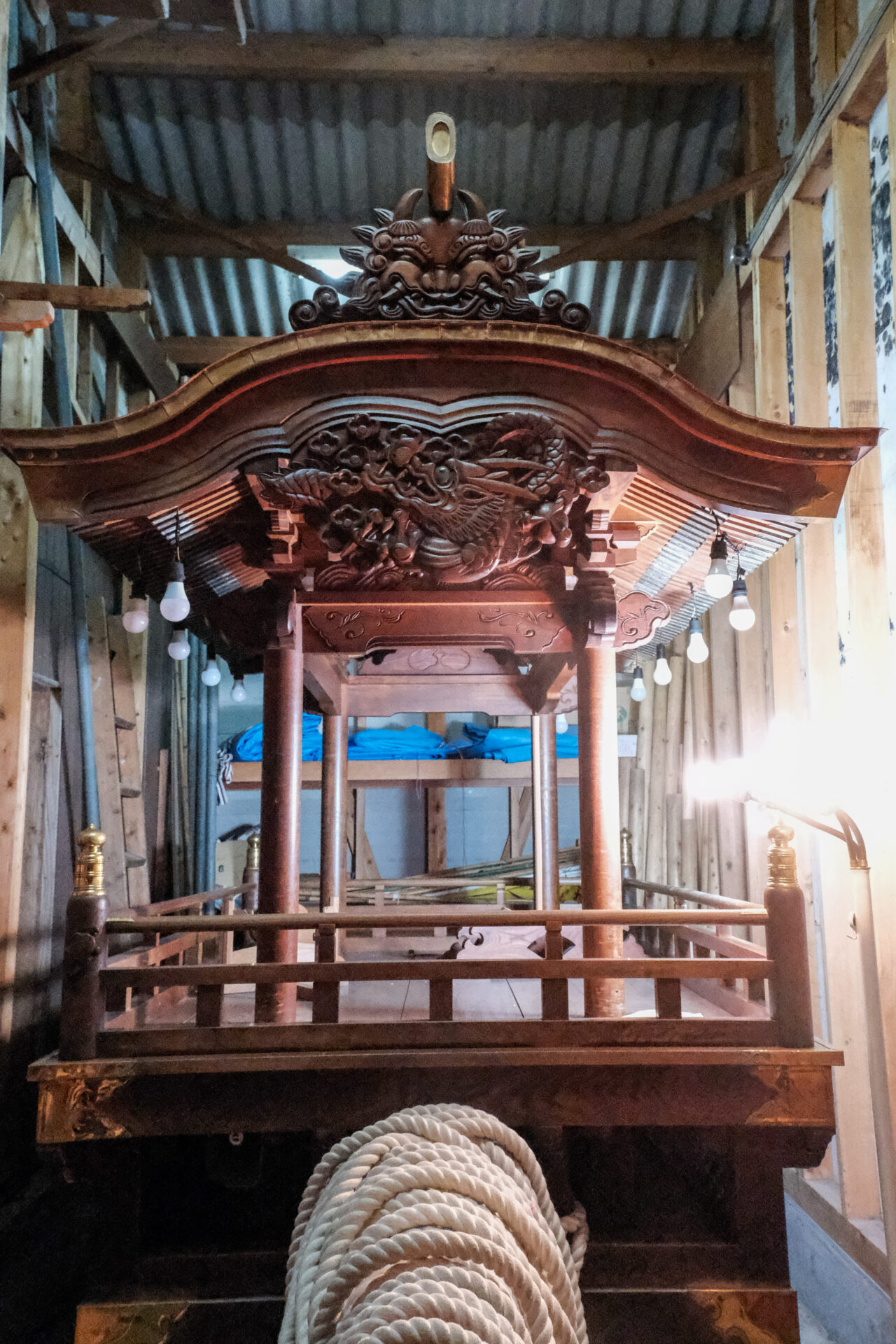
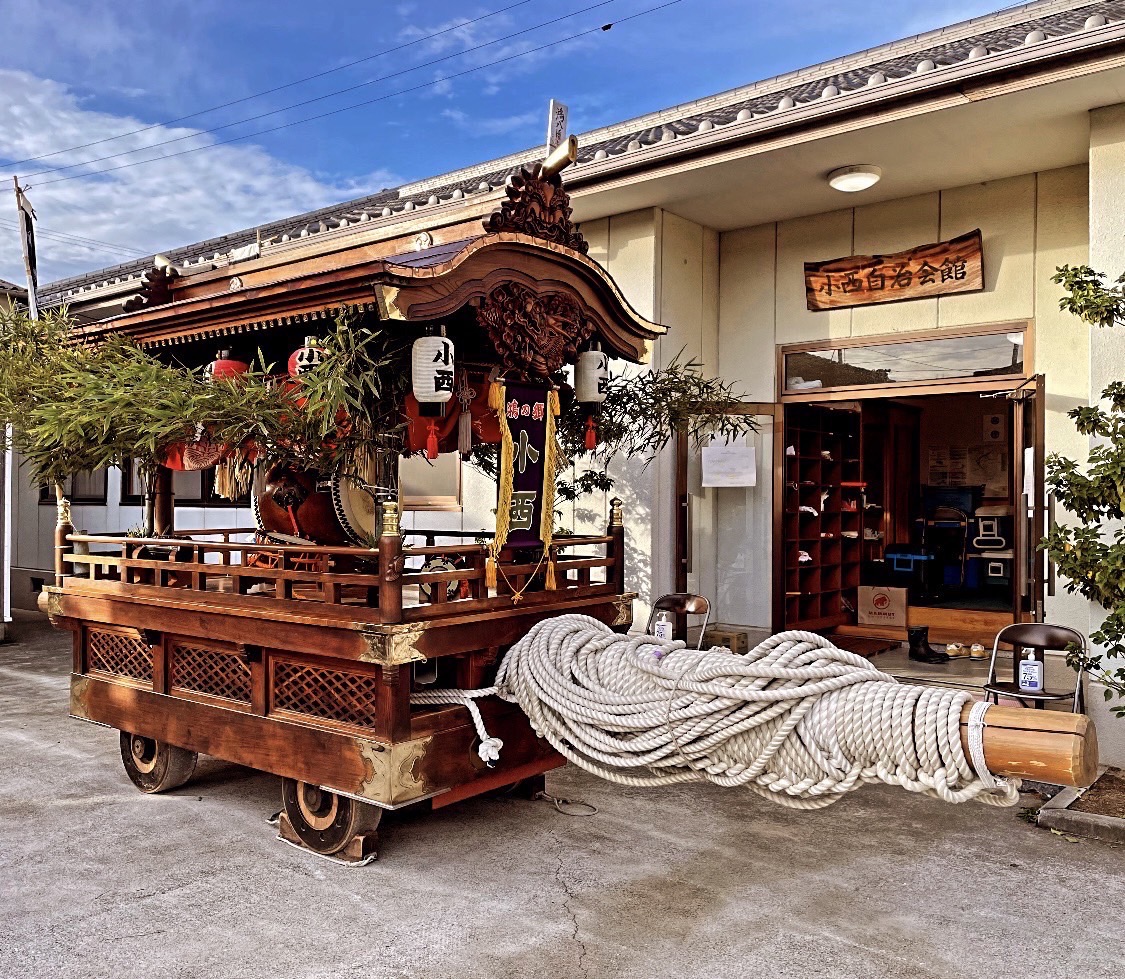
On this day, the float was still undecorated. On the day of the festival, it will be adorned with sakaki (a type of tree) and lights.
Interview with the Kōhachiman Shrine Festival Organizers
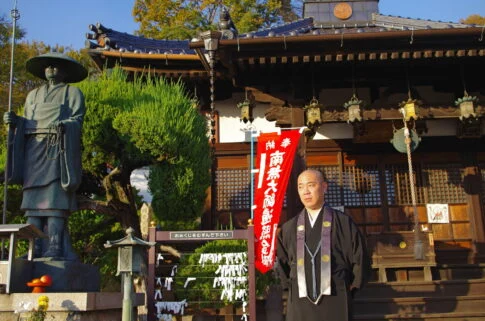
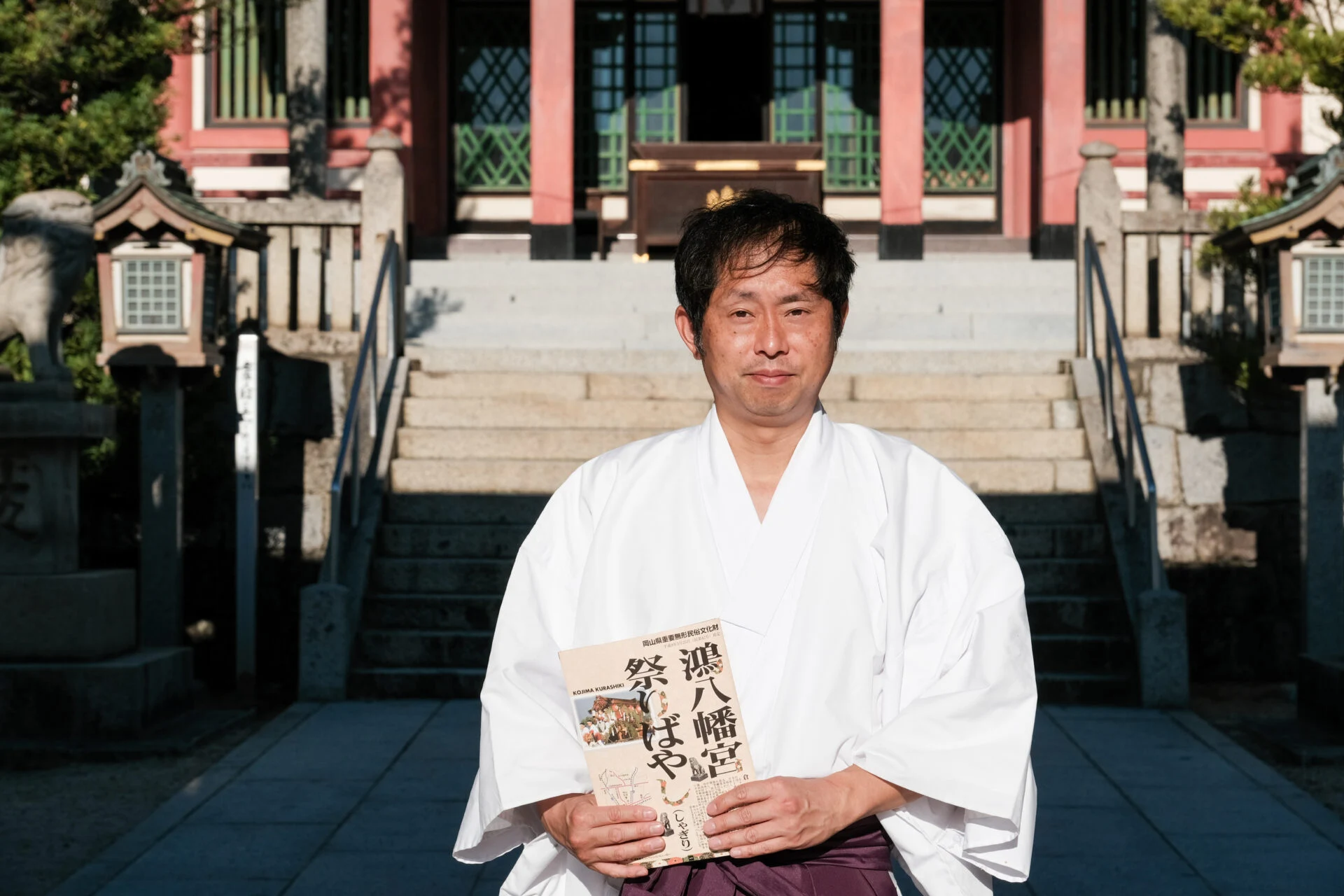
I spoke with Masaki Komoto (河本昌樹), the chief priest of Kōhachiman Shrine, about the highlights and ways to enjoy the Kōhachiman Shrine Grand Festival.
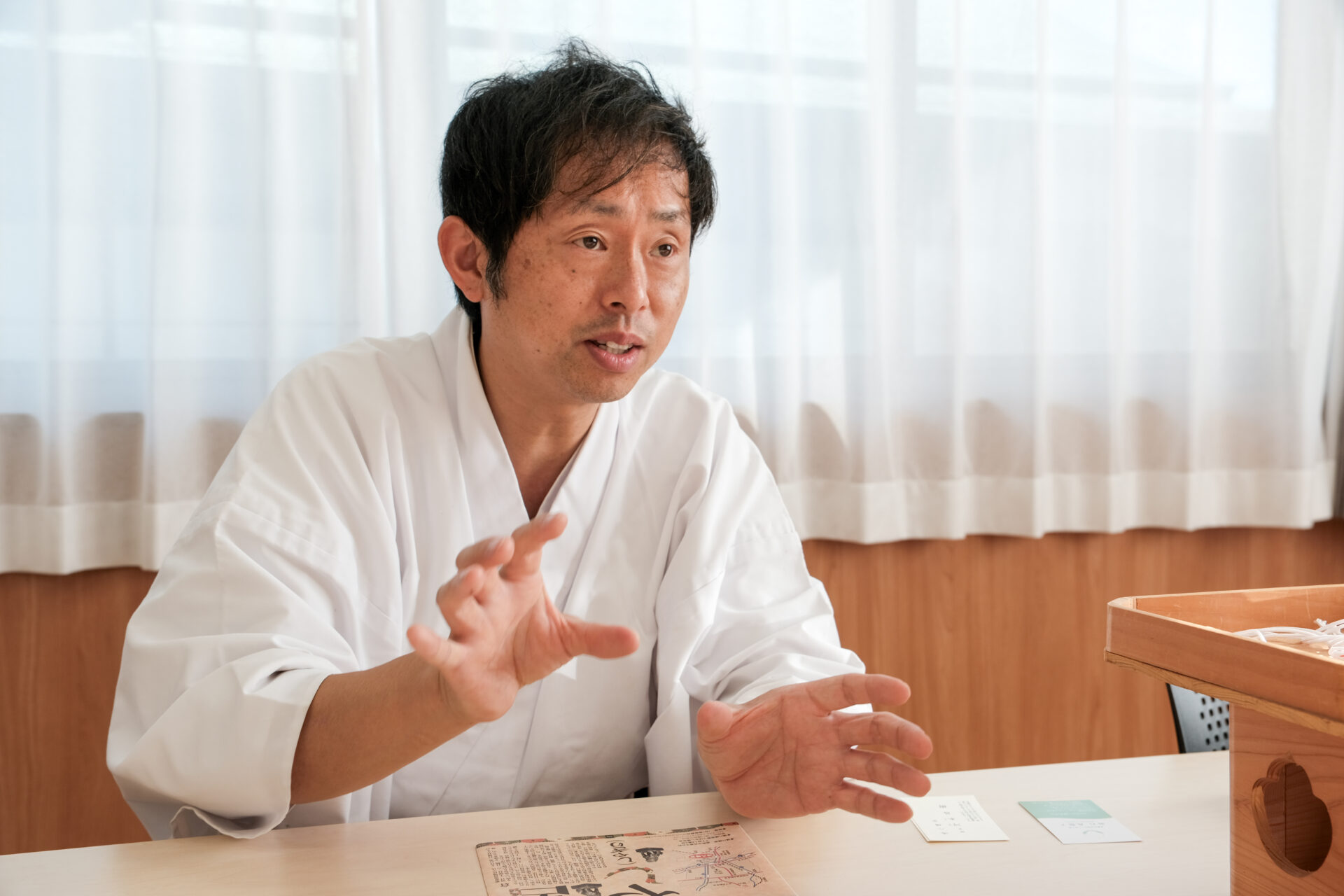
I hear that the Kōhachiman Shrine Grand Festival has been a beloved event for the local people for a long time.
Komoto (no honorifics)
The autumn festival of Koh Hachiman Shrine has been lively with danjiri (float) since the late Edo period, according to records, but it is said that the entire town began to be energized by both danjiri and shagiri (traditional music) only after the Meiji period. Did you know that the town of Shimotsui was a port of call for the Kitamaebune (northern-bound ships)? It seems that the culture of danjiri came to this area along with those Kitamaebune from the Kansai region.
Since it is an autumn festival, it is thought to be a celebration of a good harvest, but its true origin is actually unknown. However, the "reitaisai" (annual festival) is the most important festival for the shrine, held every year without fail. At Koh Hachiman Shrine, the tradition of holding the festival in October throughout the district has been preserved, so it continues to be inherited.
What are the highlights of the reitaisai at Koh Hachiman Shrine?
Kawamoto
First of all, the number of danjiri is impressive. At the reitaisai of Koh Hachiman Shrine, you can see 18 danjiri, one chito-saku (a type of float), and a mikoshi (portable shrine). Each district has different shapes and sizes of danjiri and chito-saku, so I hope you enjoy that.
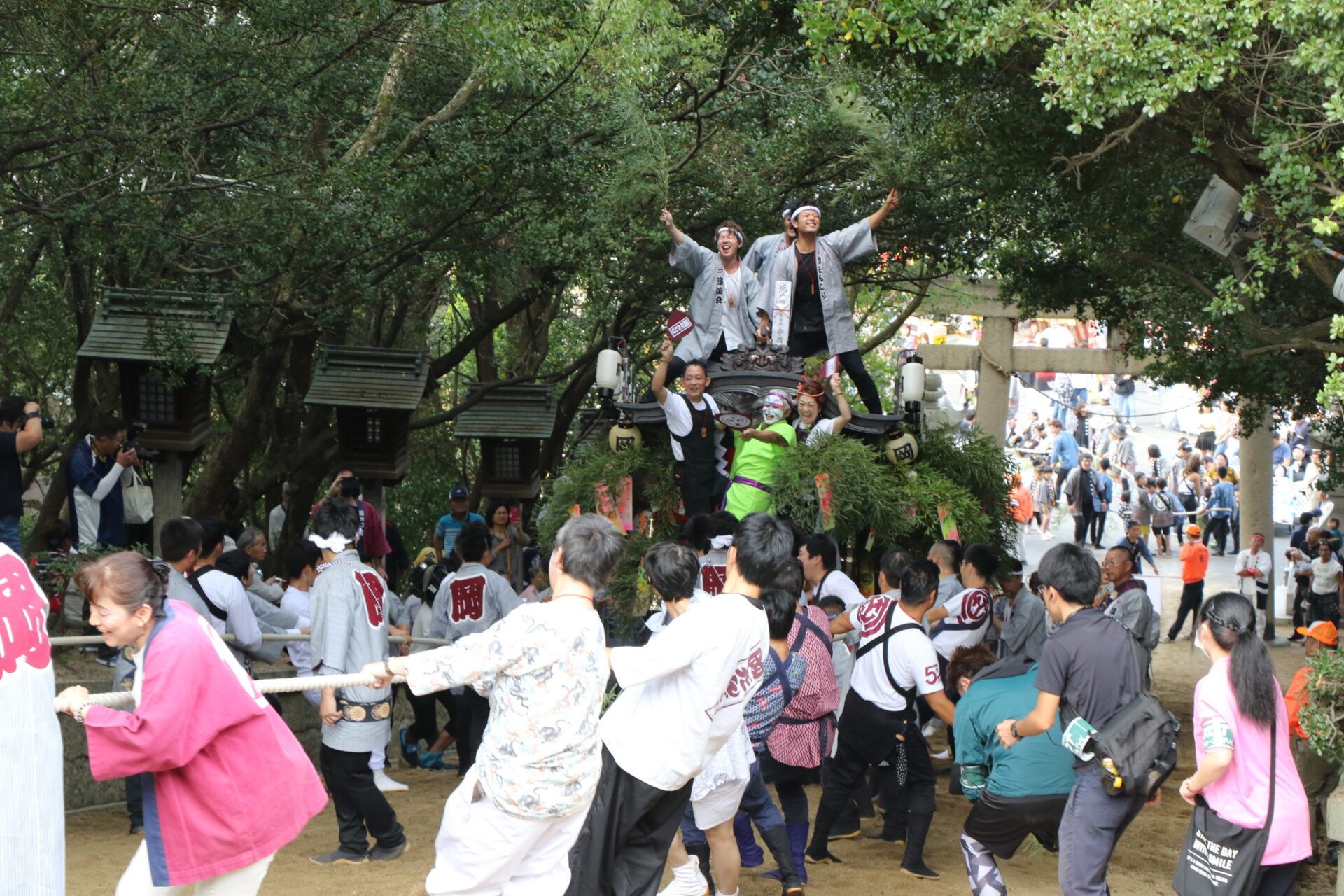
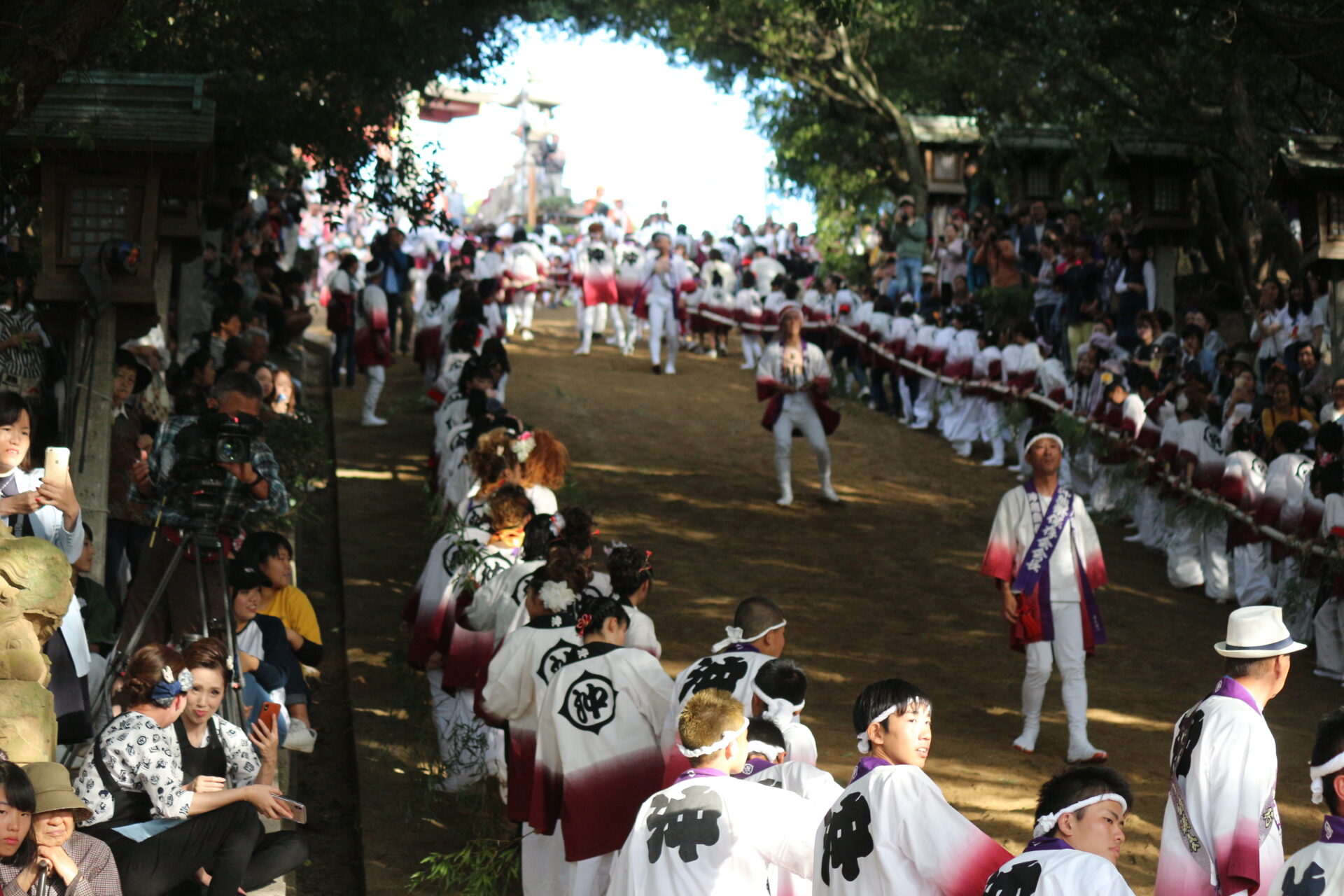
Next, the sight of the danjiri, chito-saku, and mikoshi climbing the slope of the approach to the shrine is also breathtaking. It is said that the slope of the approach to Koh Hachiman Shrine has a 16-degree incline. With such a steep slope, most shrines would have stone steps, but Koh Hachiman Shrine maintains a dirt slope approach because it has the tradition of having danjiri, chito-saku, and mikoshi ascend the slope during the reitaisai.
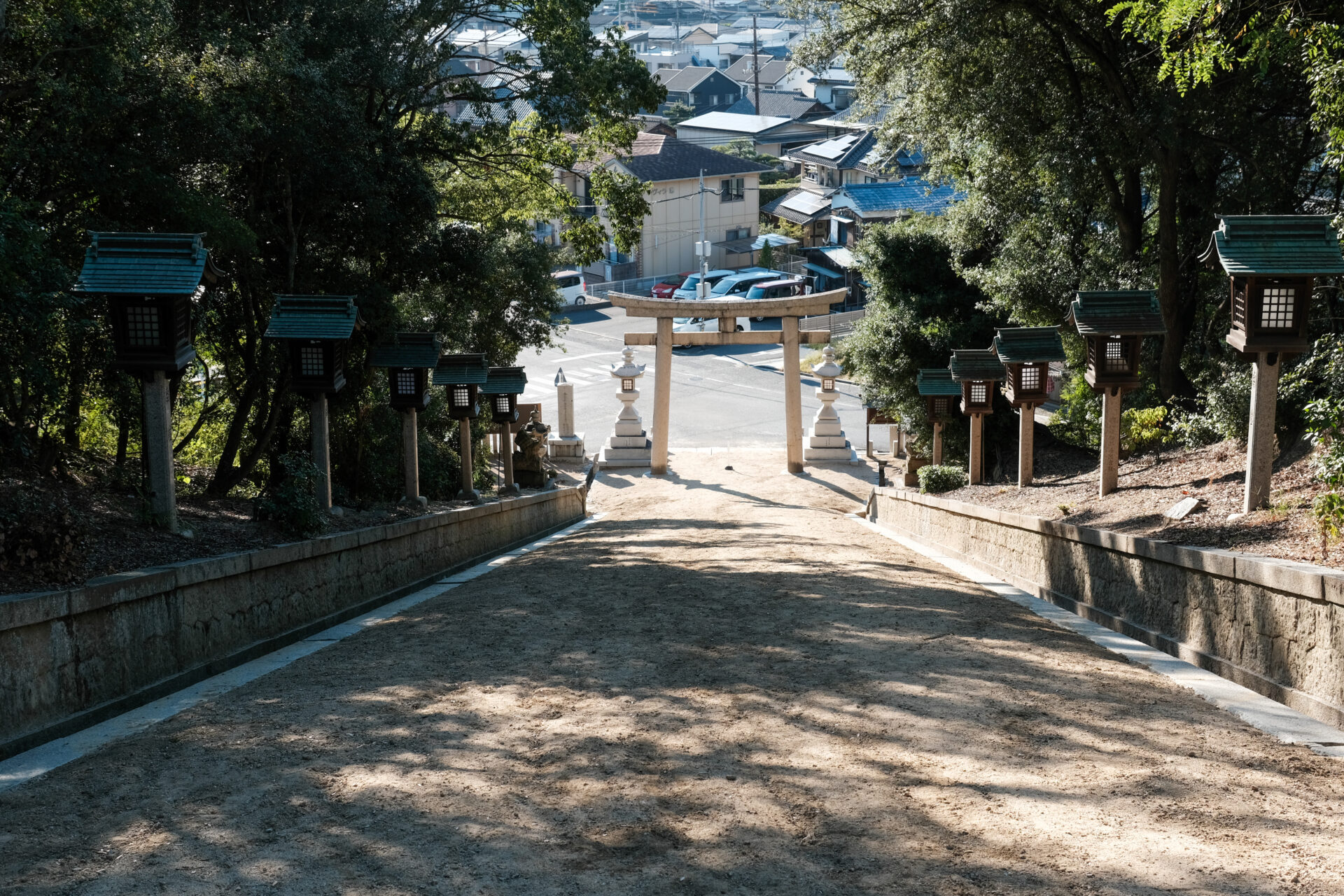
Also, I would like you to pay attention to the music. The music passed down at Koh Hachiman Shrine is called shagiri and is designated as an Important Intangible Folk Cultural Asset of Okayama Prefecture. What sets it apart from the music of danjiri in other regions is that the shinobue (bamboo flute) is used. This is a transverse flute made of bamboo that plays a very refined melody.
The melody of shagiri is something many people living around Koh Hachiman Shrine have heard since childhood, and when they hear this melody as the reitaisai approaches, it fills them with excitement from the bottom of their hearts. It is like a so-called soul music.
For the locals, it is something that resonates deeply, allowing them to reaffirm their identity as "we are from here," so please enjoy the sound of shagiri as well.
What are the good points of the Koh Hachiman Shrine reitaisai?
Kawamoto
It is a place where intergenerational exchange is actively taking place.
Since shagiri is a melody passed down orally without sheet music, it is inherited from the adults in the district to the children. Each district wants to show off their danjiri beautifully, so the adults are very dedicated to teaching.
Percussion instruments are played by elementary school students, while the shinobue is played by skilled adults. Many adults and children pull the danjiri together. By fulfilling their respective roles, a single danjiri is completed, creating a sense of collaboration where adults recognize children as partners.
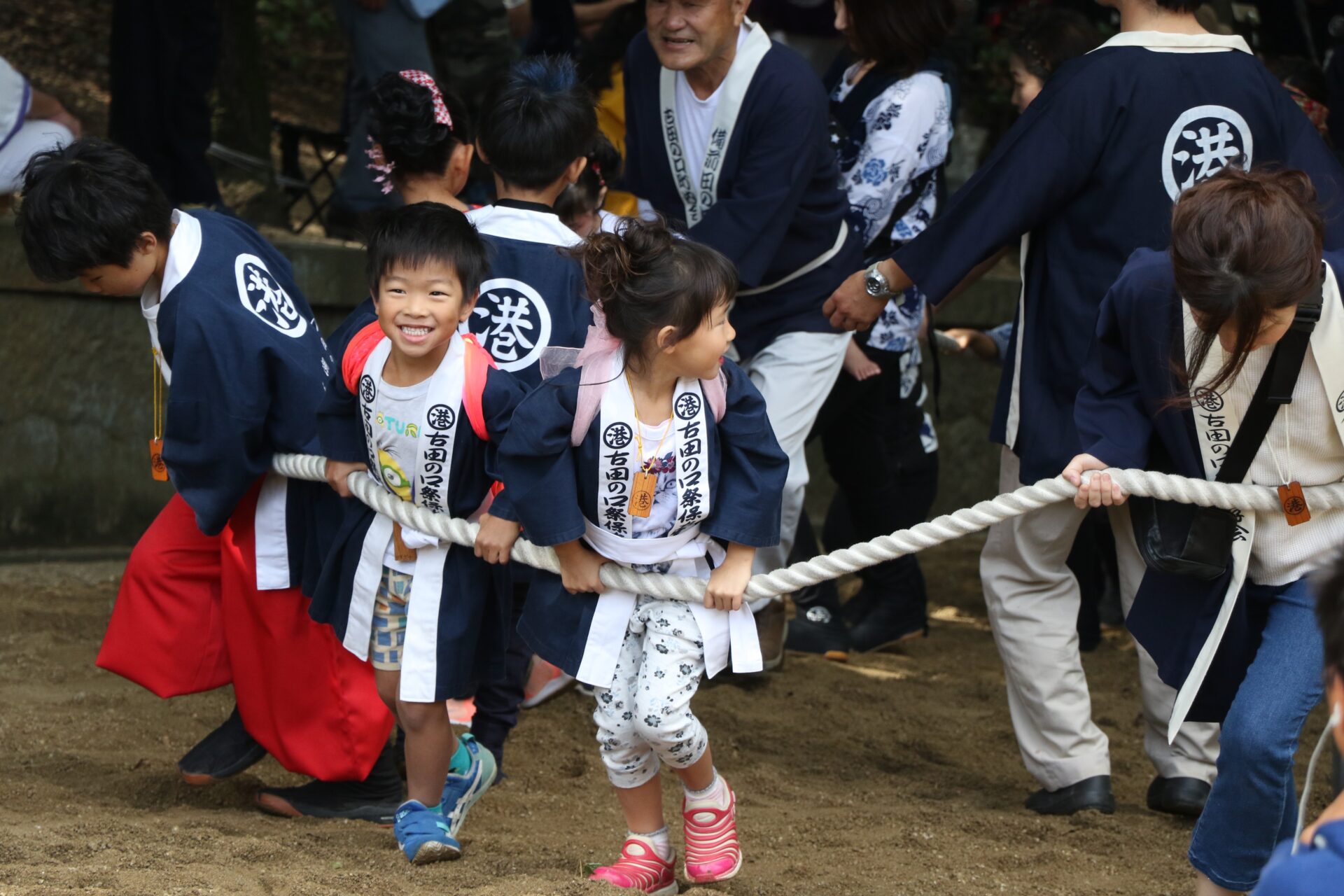
Because they are companions, there is strict guidance, but I believe it is a good thing that the local adults and children can build such a trusting relationship.
On the day of the festival, I look forward to everyone, regardless of age or gender, coming together to celebrate the reitaisai.
Are there any highlights for this year's (2024) Koh Hachiman Shrine reitaisai?
Kawamoto
The reitaisai is held on a fixed date every year, so I think it is meaningful that we will hold the reitaisai as usual this year. It is a festival rooted in the community, where people who have moved away for education, employment, or marriage return for the reitaisai. I believe they come back because they enjoy the relationships centered around danjiri and shagiri.
Therefore, rather than doing something special just this year, we will hold the reitaisai as usual this year.
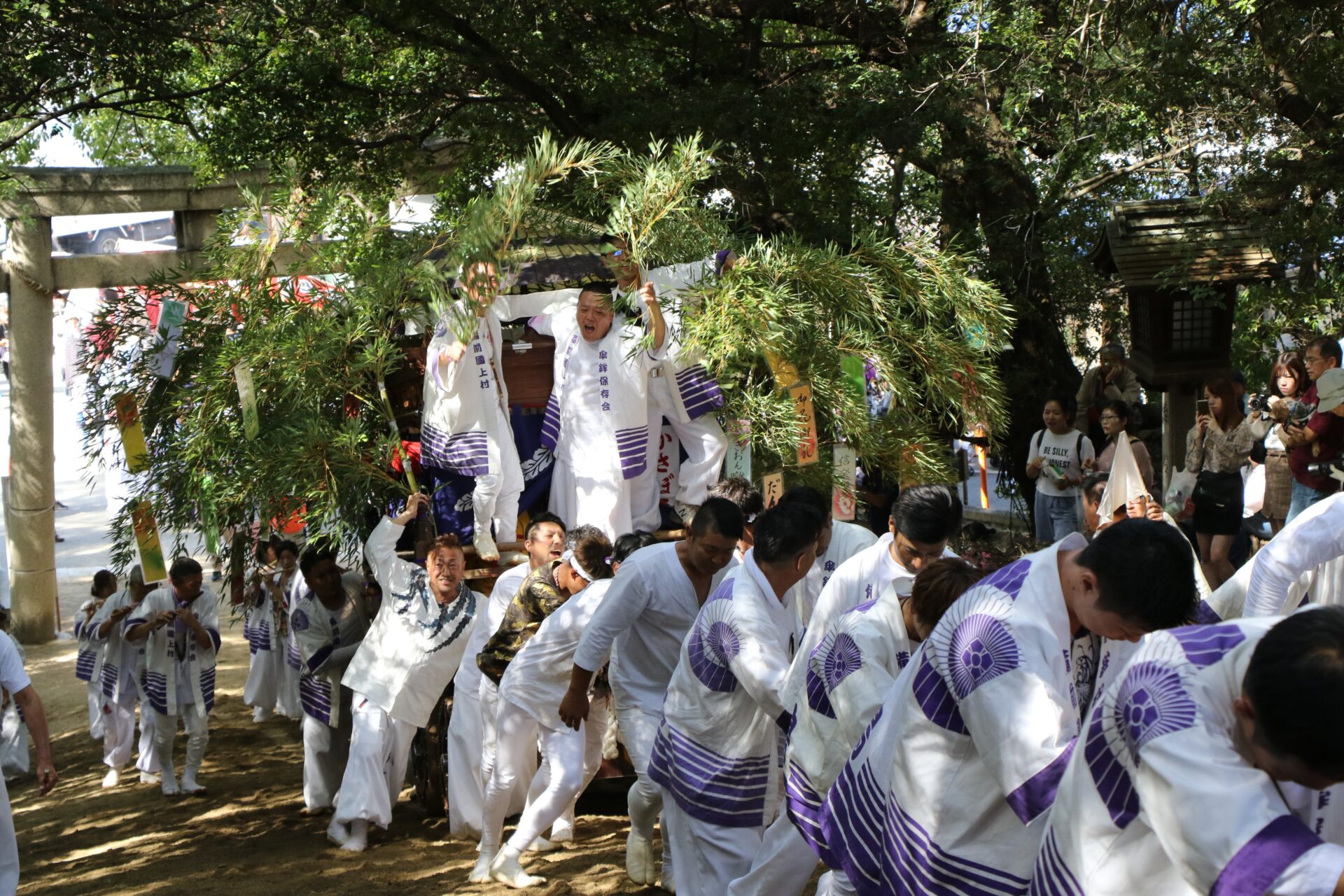
This is because, in modern times, travel and leisure have become commonplace, but in the past, festivals were one of the few forms of entertainment for people. Even now, everyone in the community spends months preparing for the reitaisai, which is a special day held once a year. I believe that continuing the usual reitaisai in this area is our mission as those involved with Koh Hachiman Shrine.
Finally, please give a message to the readers.
Kawamoto
This is not a festival with a so-called "audience," but I would like you to feel the presence of so many people involved in the danjiri, which takes a long time to parade through the local area.
On the day of the festival, there will also be a television broadcast, but the power of the large danjiri climbing the steep approach to the shrine by human power and the strength of the shagiri melody is something that cannot be conveyed unless experienced live. It is a strong individuality of the Koh Hachiman Shrine reitaisai that you won't find in other festivals. Please come and see it.
Conclusion
For me, who moved from Kanto to Kurashiki in December 2023, the annual festival of the local shrine felt somewhat like someone else's affair. I had never really thought about the existence of an event where "neighbors come together to practice" in a core city like Kurashiki.
However, when I actually visited Koh Hachiman Shrine and the Konishi Danjiri Preservation Society, I was surprised by the welcoming atmosphere of "We want newcomers to this area to join us!" and I felt my spine straighten as I watched the local adults encouraging each child while practicing.
In preparation for the day, each district is likely doing intensive practice.
On October 12 and 13, why not visit the Koh Hachiman Shrine reitaisai to enjoy the homey yet powerful danjiri and the live performance of shagiri, which is designated as an Important Intangible Folk Cultural Asset of Okayama Prefecture?
Data on the Koh Hachiman Shrine Reitaisai
| Name | Koh Hachiman Shrine Reitaisai |
|---|---|
| Date | October 12, 2024 (Saturday) times vary by district, October 13 (Sunday) from around 8 AM to around 8 PM |
| Location | 7-14-1 Shimono-cho, Kojima, Kurashiki City |
| Website | Koh Hachiman Shrine |