Kurashiki City is located between Hiroshima and Osaka and is a city with convenient transport links. It is the second-largest city in Okayama Prefecture, about an hour from Osaka by Shinkansen, and a region steeped in history and culture.
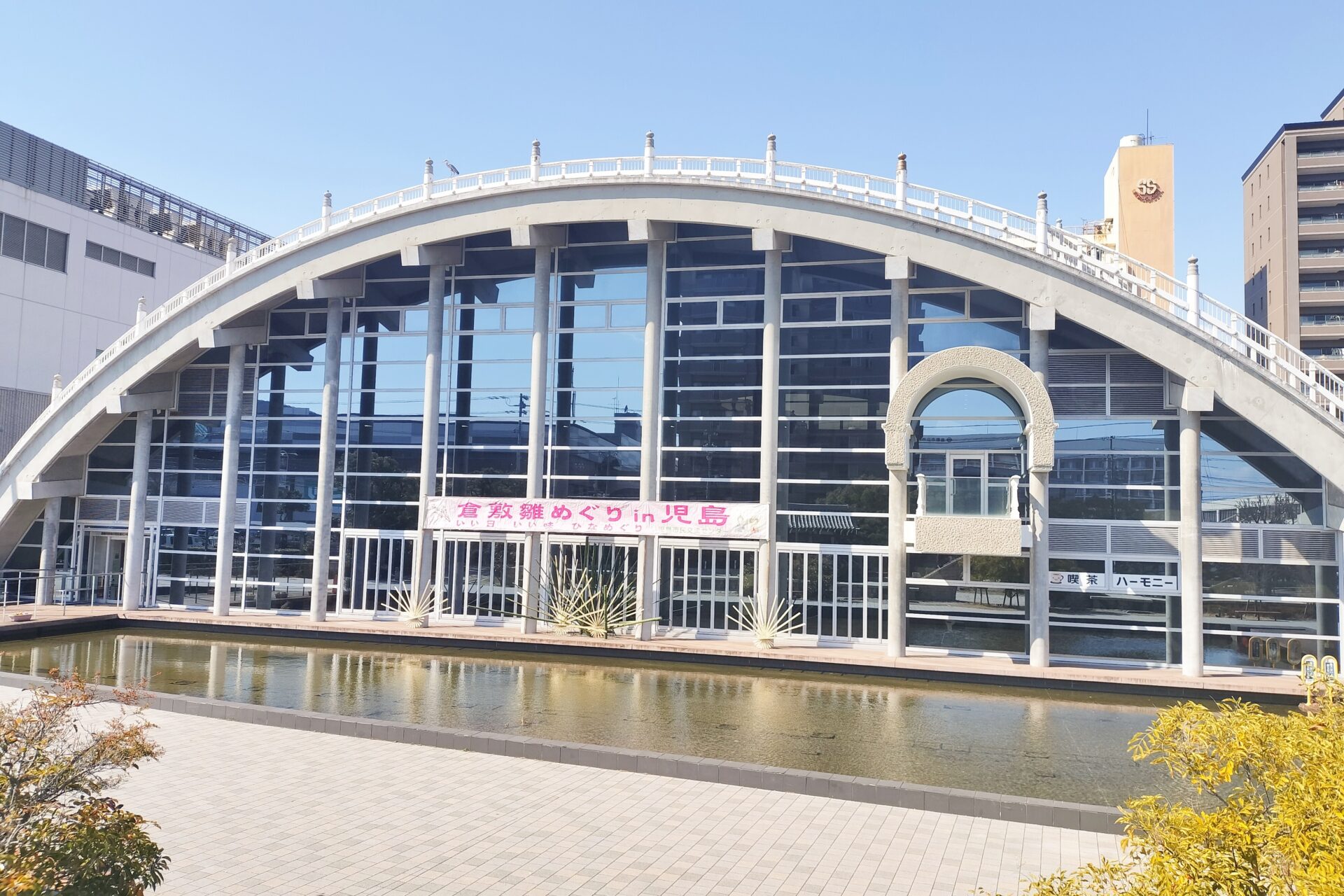
The writer wanted to introduce Kojima’s charms from a Chinese perspective, and visited the “26th Kurashiki Hina Doll Tour in Kojima.”
As part of the tour, we visited the “10th Industrial Hina Doll Exhibition,” held at the Kojima Civic Exchange Center. We enjoyed a lovely time with our family while taking in the atmosphere of early spring in Kojima and the charm of a town where history and modernity come together.
The information presented was current when this article was published in March 2025. Please note that it may differ from current information.
What is Kojima like?
Kojima, at the southern tip of Kurashiki City, is a port town surrounded by the beautiful natural scenery of the Seto Inland Sea, and attracts many visitors through events held throughout the year.
With the excitement of spring in the air, our family set out for Kojima.
It was a 30-minute drive from home. As we entered the Kojima area, flags for the “Kojima Hina Doll Tour” lined both sides of the road, making it seem as if the adorable hina dolls were welcoming us at the entrance.
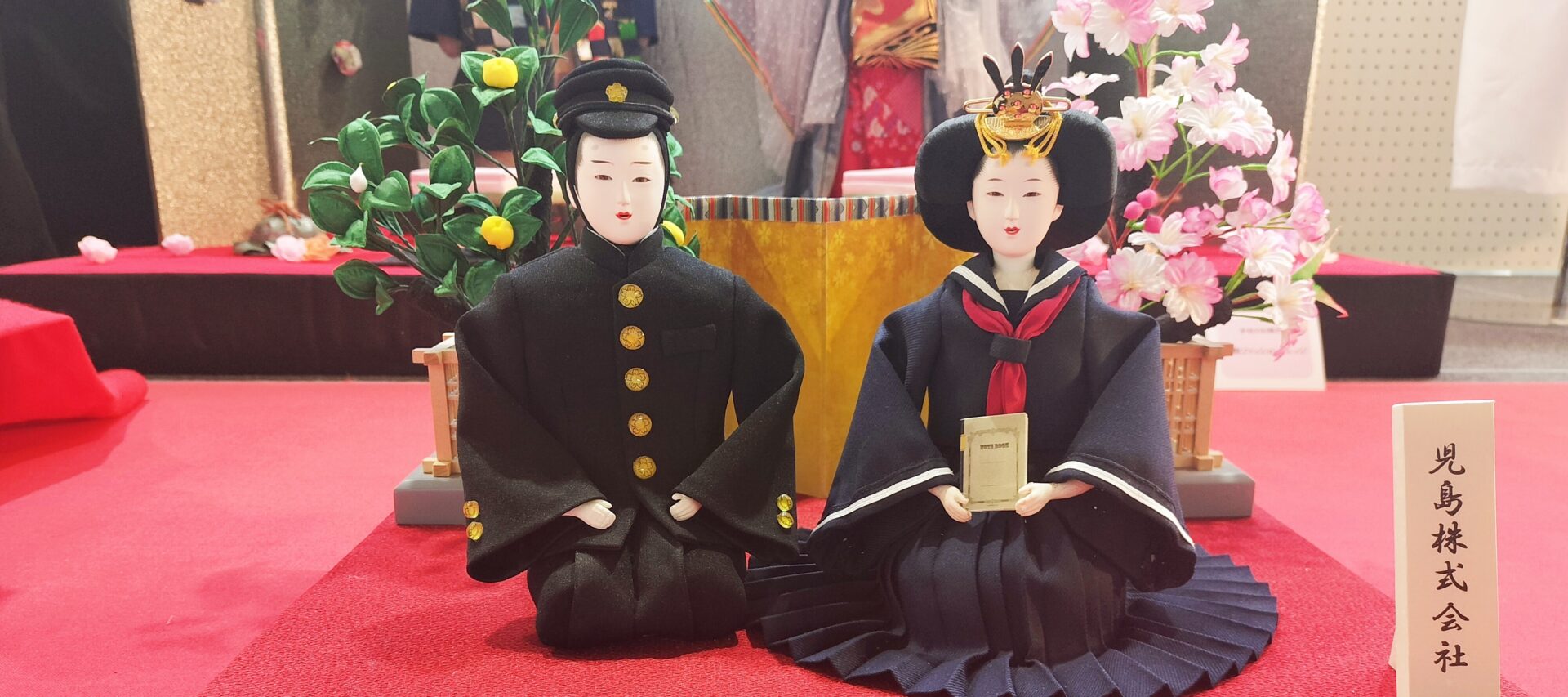
During the Edo period, Kojima prospered through salt production and cotton weaving, developing as a town of merchants. In the Meiji period, it became the birthplace of Japan’s first domestically produced school uniforms, and after the war, it drew attention as a pioneer of the jeans industry. Today, it is known as the “birthplace of Japanese-made denim” and attracts many tourists. It is also a town that cherishes traditional culture, including the Kojima Hina Doll Tour, and is a fascinating region where history and innovation coexist.
To enjoy the Kojima Hina Doll Tour more deeply, we traced the history of hina dolls and discovered an unexpected connection.
The connection between hina dolls and Kojima
Japanese hina dolls developed as a distinctive cultural tradition, but tracing their history reveals a deep connection with Chinese customs.
In ancient China, people had a custom of floating dolls made of paper or cloth down rivers to ward off misfortune. This custom, known as “Nagashi-bina,” was introduced to Japan during the Heian period (794–1185) and became associated with “hina-asobi,” a game played by children of the aristocracy.
Later, during the Muromachi period (1336–1573), it took the form of today’s “Hina Festival,” and during the Edo period (1603–1868), the custom of displaying beautiful hina dolls spread among ordinary people. The clothing and decorations of hina dolls show the influence of the culture of ancient Chinese palaces.
So why is hina doll culture so cherished in Kojima, the place we are visiting this time?
Why the “Hina Doll Tour” is held in Kojima
The Hina Festival is a traditional event held on March 3, the “Peach Festival,” to wish for the healthy growth and happiness of girls. The “Hina Doll Tour” is held in Kojima because the town has long prospered through commerce and cherished its traditions.
During the Edo period, Kojima developed as a town of textile production and commerce, and the Hina Festival became rooted in everyday life.
Today, hina dolls adorn the town, creating a festive atmosphere just by walking around. The event has also become a popular tourist attraction. This year (2025) marks the 26th “Hina Doll Tour.” It will continue to be cherished by many as an important springtime scene in Kojima.
Under a blue sky, feeling the gentle breeze of early spring, we stepped into the Kojima Exchange Center, venue for the “10th Industrial Hina Doll Exhibition.”

Highlights of the 10th Industrial Hina Doll Exhibition
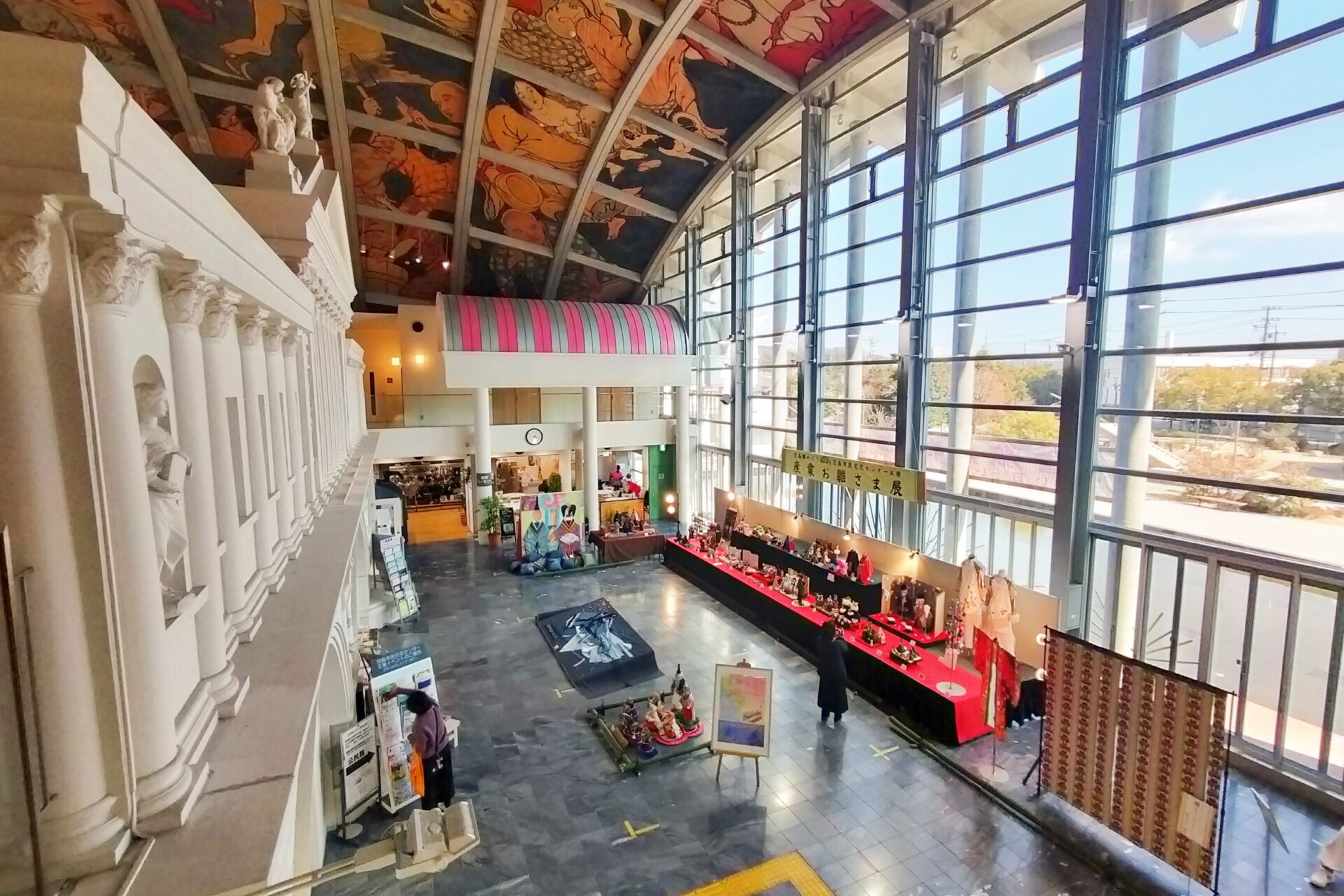
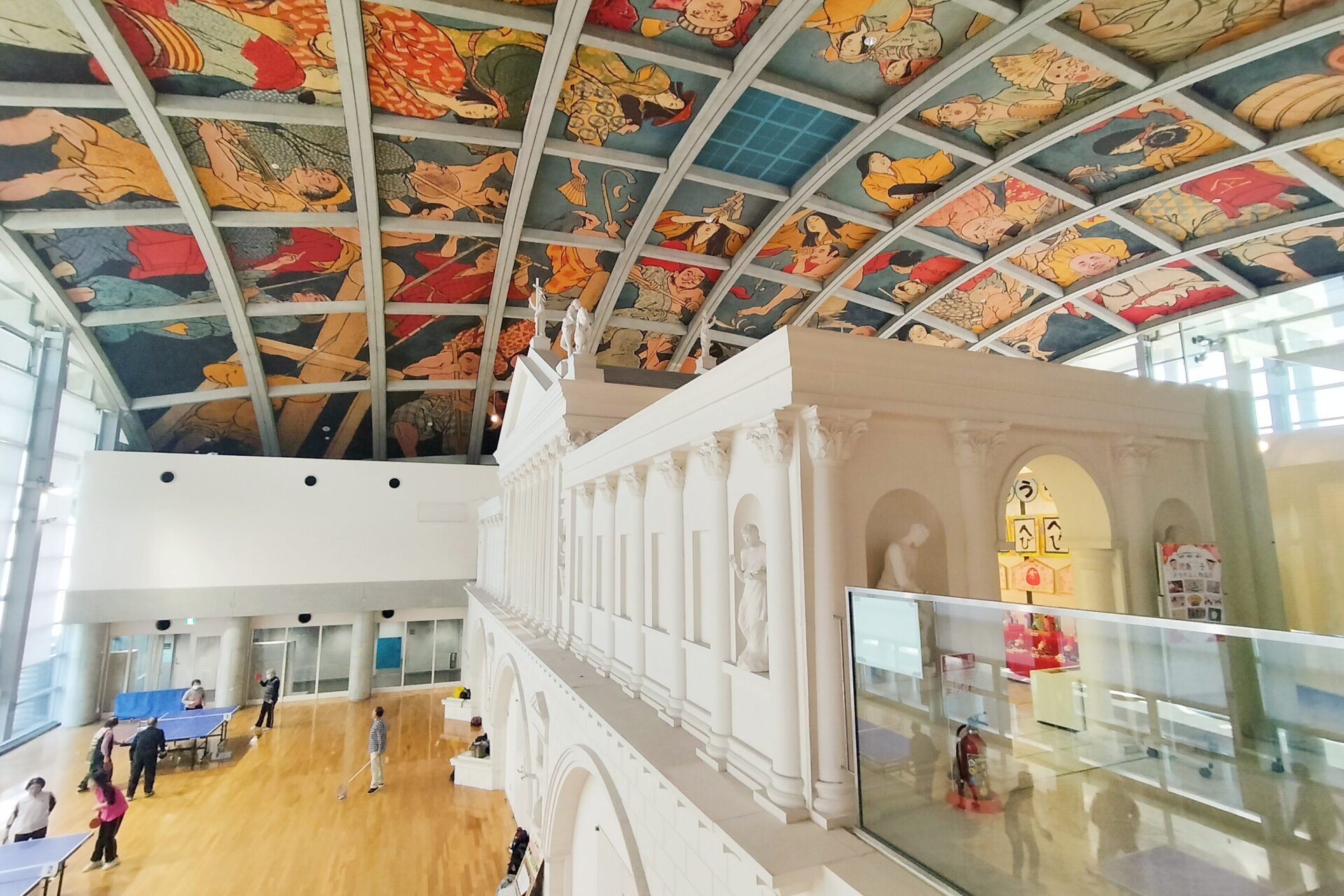
Upon entering the building, we were greeted by a beautiful ceiling painting that stretched across the high ceiling, and the magnificent space took our breath away. The exhibition for this year’s “Hina Doll Tour” was being held in this special atmosphere.
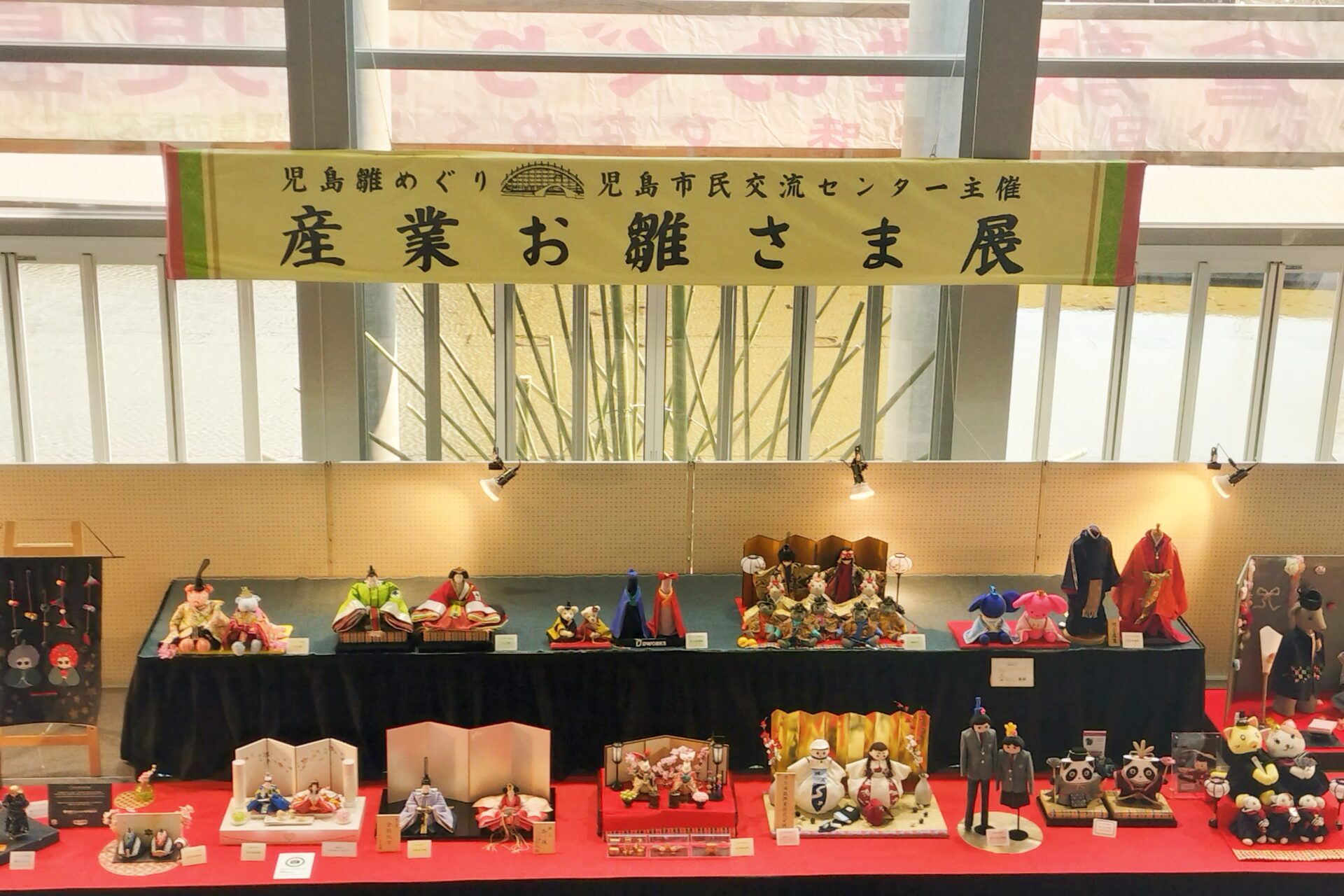
The “Hina Doll Tour Exhibition,” featuring 23 textile companies and four schools from Kojima, showcases unique works that blend tradition with modern sensibilities.
Main exhibits
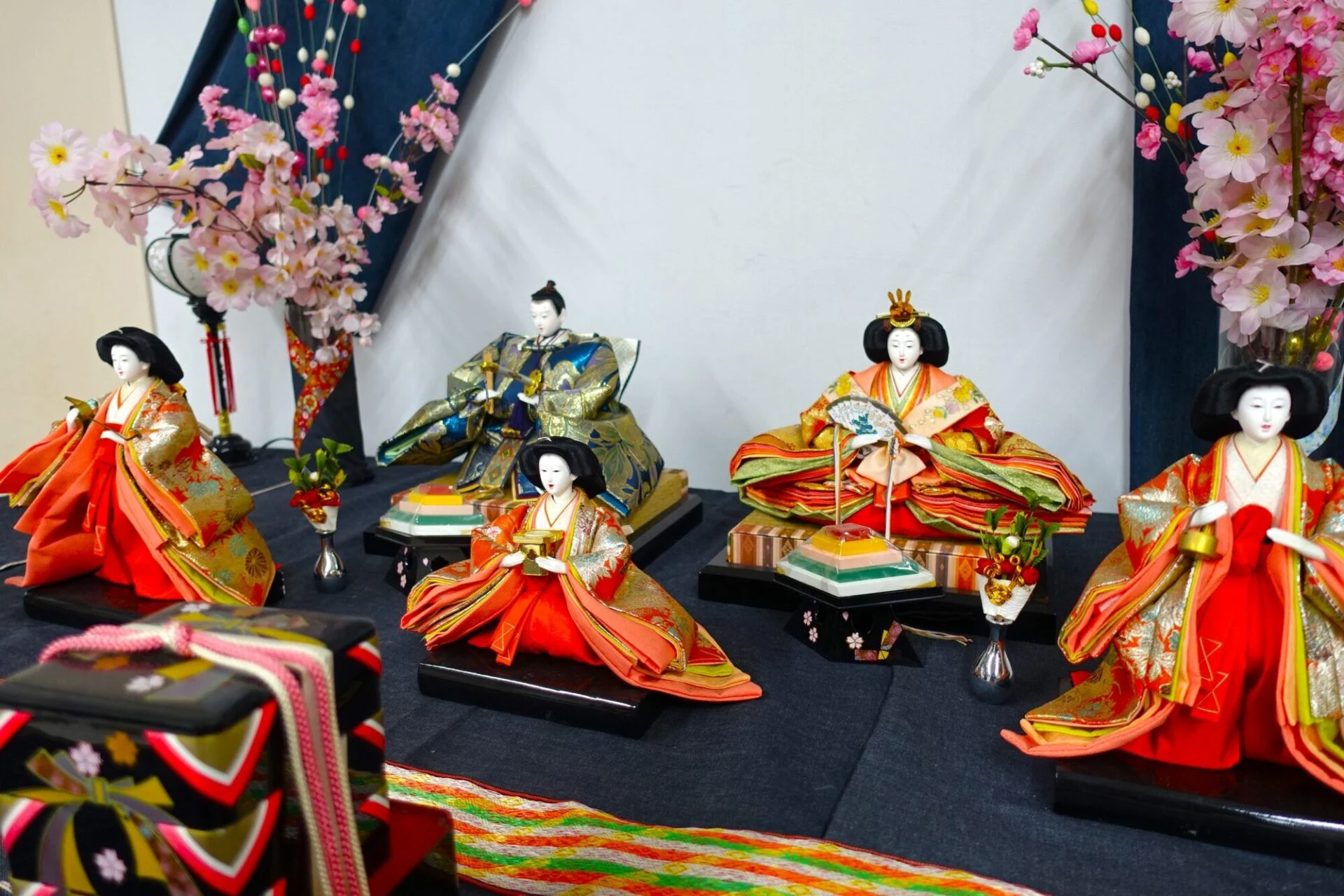
The venue was lined with hina dolls, each with its own distinctive character and charm. I couldn’t help stopping to take a closer look at the sight of the dolls in brightly colored outfits lined up together.
Among the many wonderful works on display, I’d like to introduce a few that particularly impressed me.
Domingo Co., Ltd.
Domingo Co., Ltd. is a company that makes denim in Kojima. This exhibit lets visitors enjoy both Japanese traditional culture and the distinctive charm of a denim town.
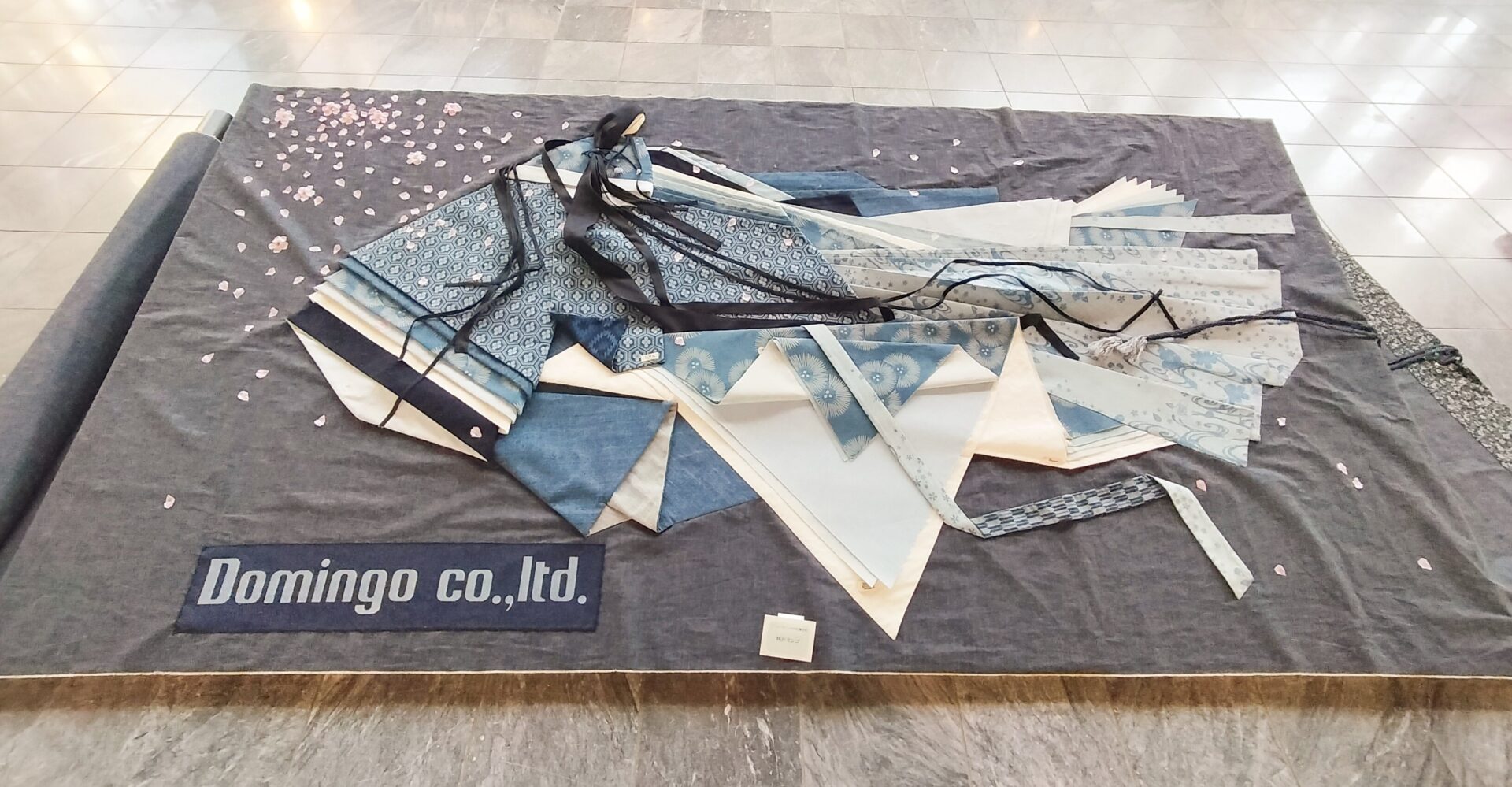
These hina dolls are made with fabric unique to Kojima, the denim town, and combined with Japanese patterns. Their elegant design makes them look as if they are dancing alongside cherry blossom petals.
Kiyohara Co., Ltd.
This work features a special touch.
Apparel parts such as buttons and thread have been used to create animal-themed hina dolls. Dogs, cats, crocodiles, and other animals have been turned into hina dolls, resulting in playful designs.
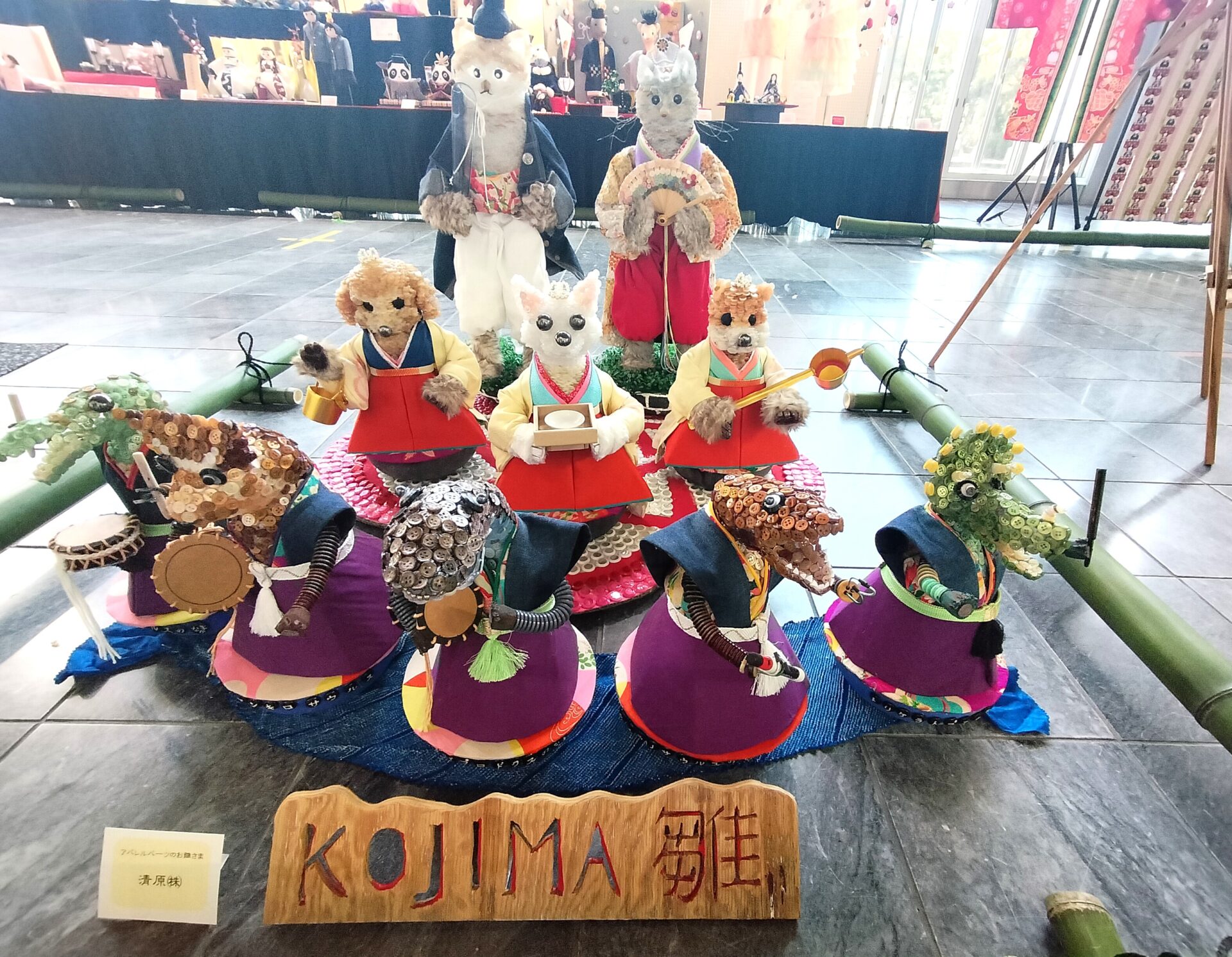
Don’t you feel the distinctive charm of Kojima, a town of jeans and clothing, in these hina dolls? Their unique concept and adorable appearance are sure to bring a smile to your face.
Sowa Co., Ltd.
These special hina dolls are made from workwear fabric. Bears and rabbits wear traditional outfits, showcasing the craftsmanship of Kojima.
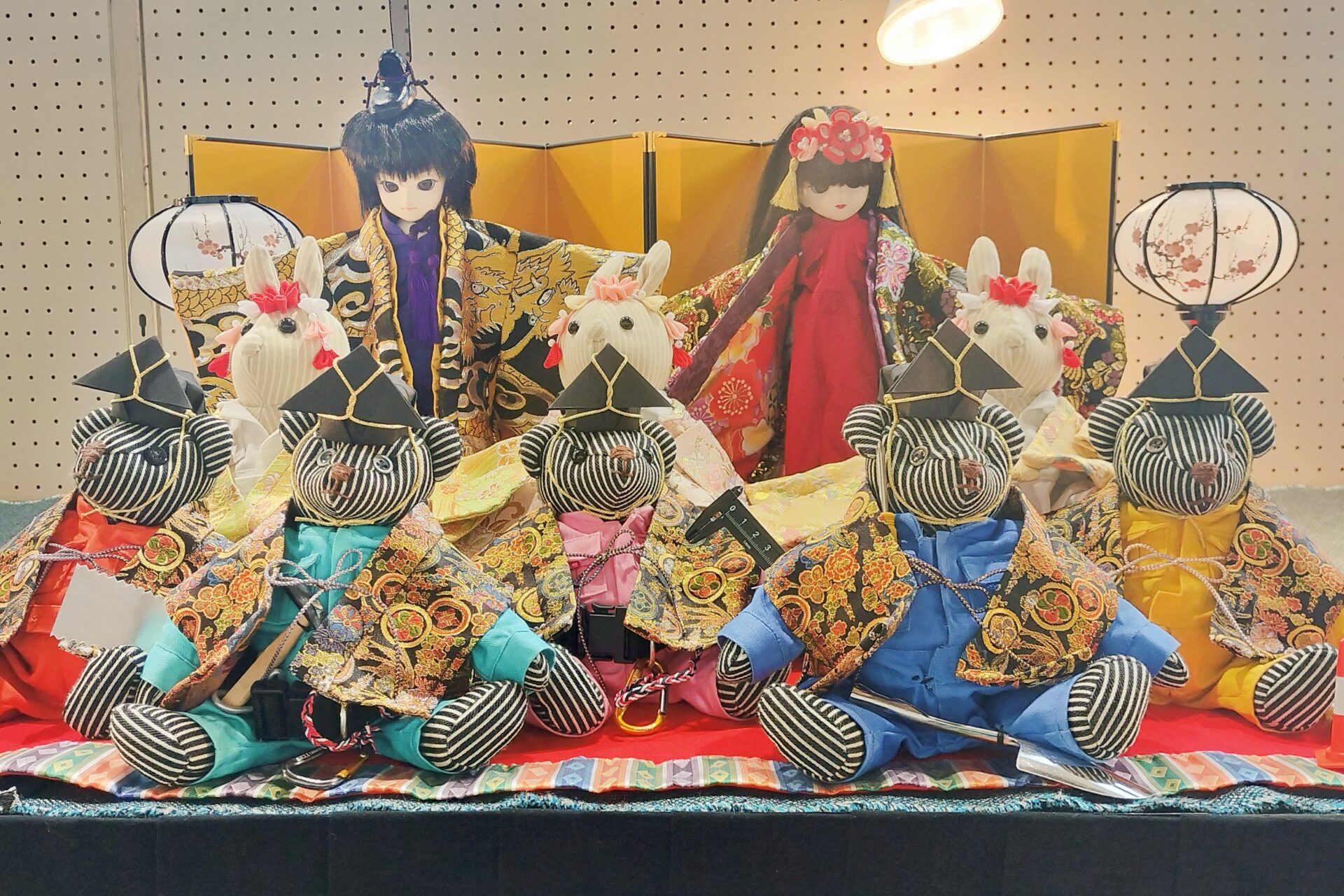
These hina dolls are a little different from ordinary ones! Cute bears and rabbits are dressed in traditional Japanese clothing. The dolls in the back are also very cool.
Big John Co., Ltd.
This work is by Big John, known as Japan’s first domestic jeans manufacturer. The hina dolls made with denim are a fascinating exhibit that blends tradition with modern fashion.
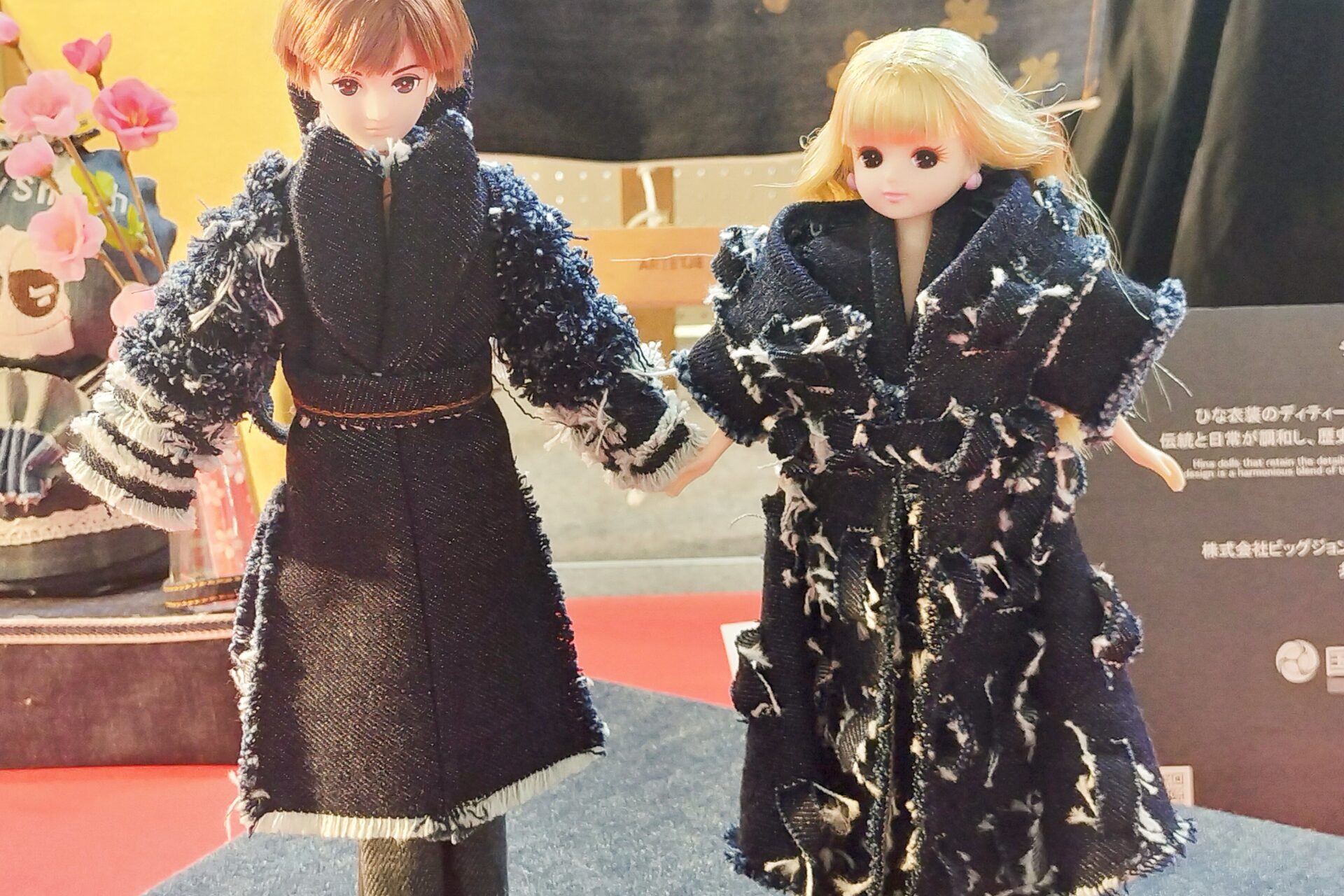
This work combines traditional Japanese culture and modern denim fashion in the clothing worn by Western dolls. It offers another way to enjoy Kojima’s jeans-making history.
Koritachi Co., Ltd.
A unique work that turns wine bottles into hina dolls. The bottles are dressed in traditional kimono and denim outfits.
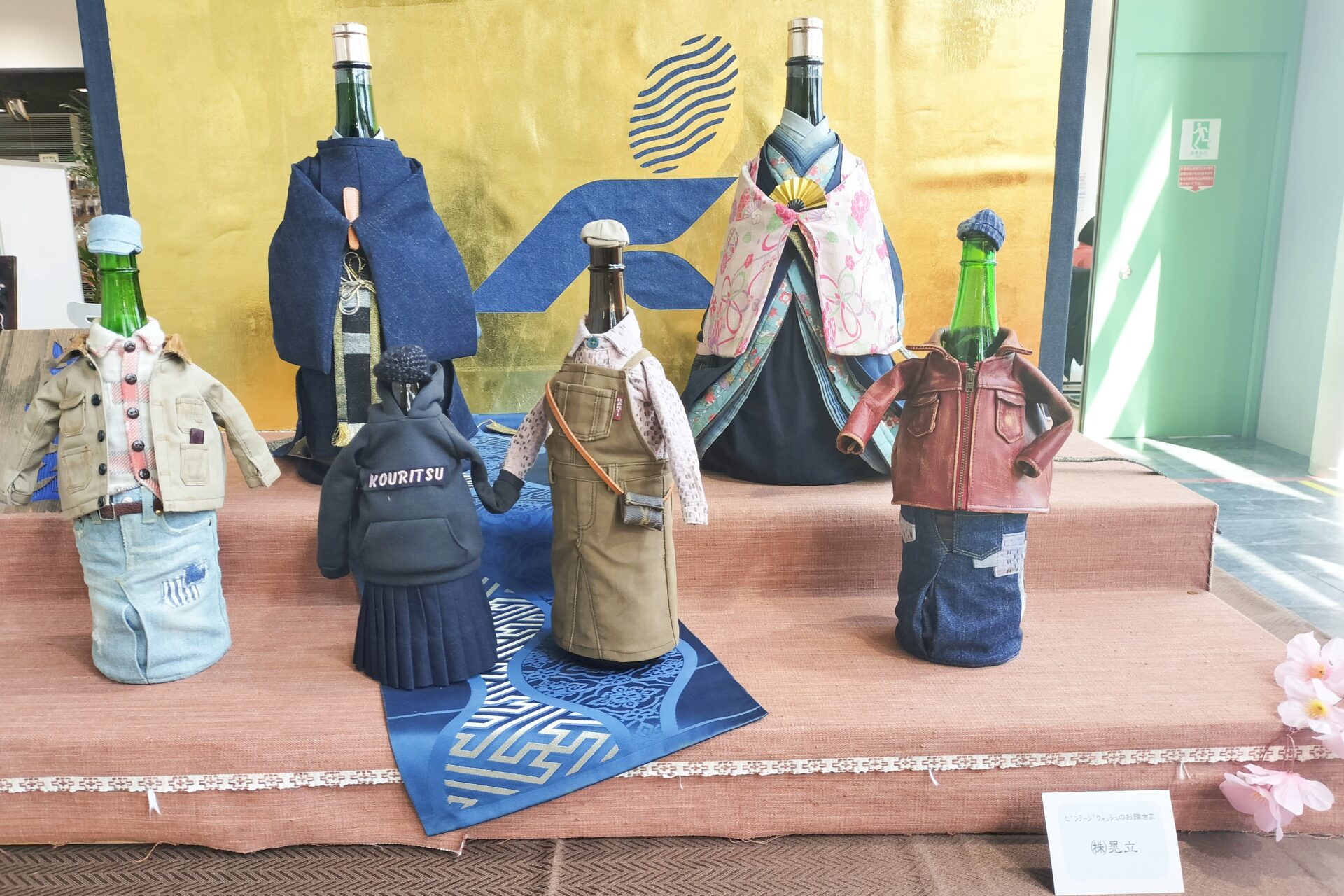
Hina dolls dressed in traditional Japanese kimono stand alongside characters wearing denim clothes. These are called “bottle hina dolls.”
Kurashiki Canvas Co., Ltd.
Kurashiki Canvas uses a special manufacturing process to create products with excellent durability and breathability, which are loved by many consumers.
This piece incorporates canvas, a specialty of Kojima, into traditional Japanese hina dolls. It is a work that conveys the warmth of its materials.
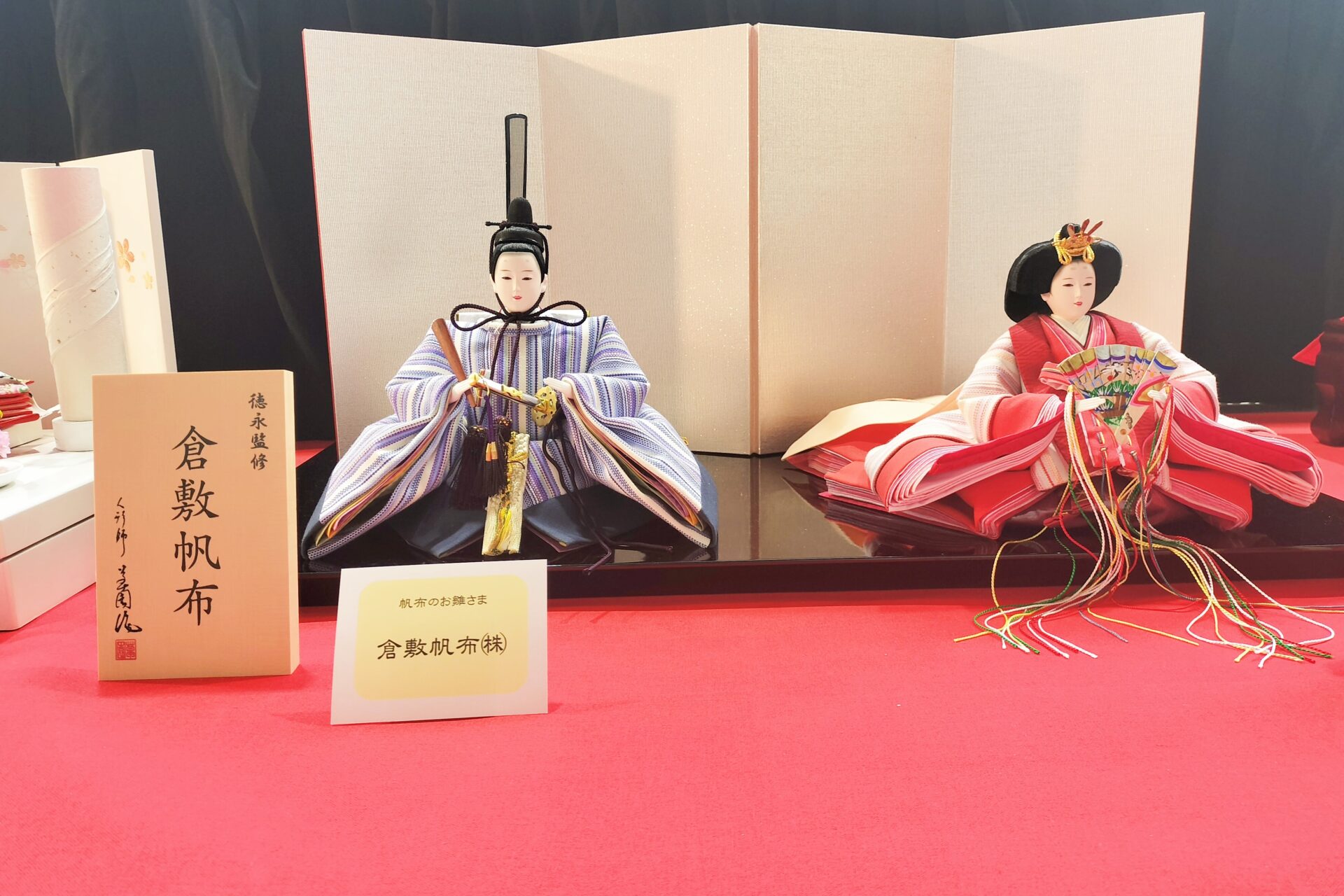
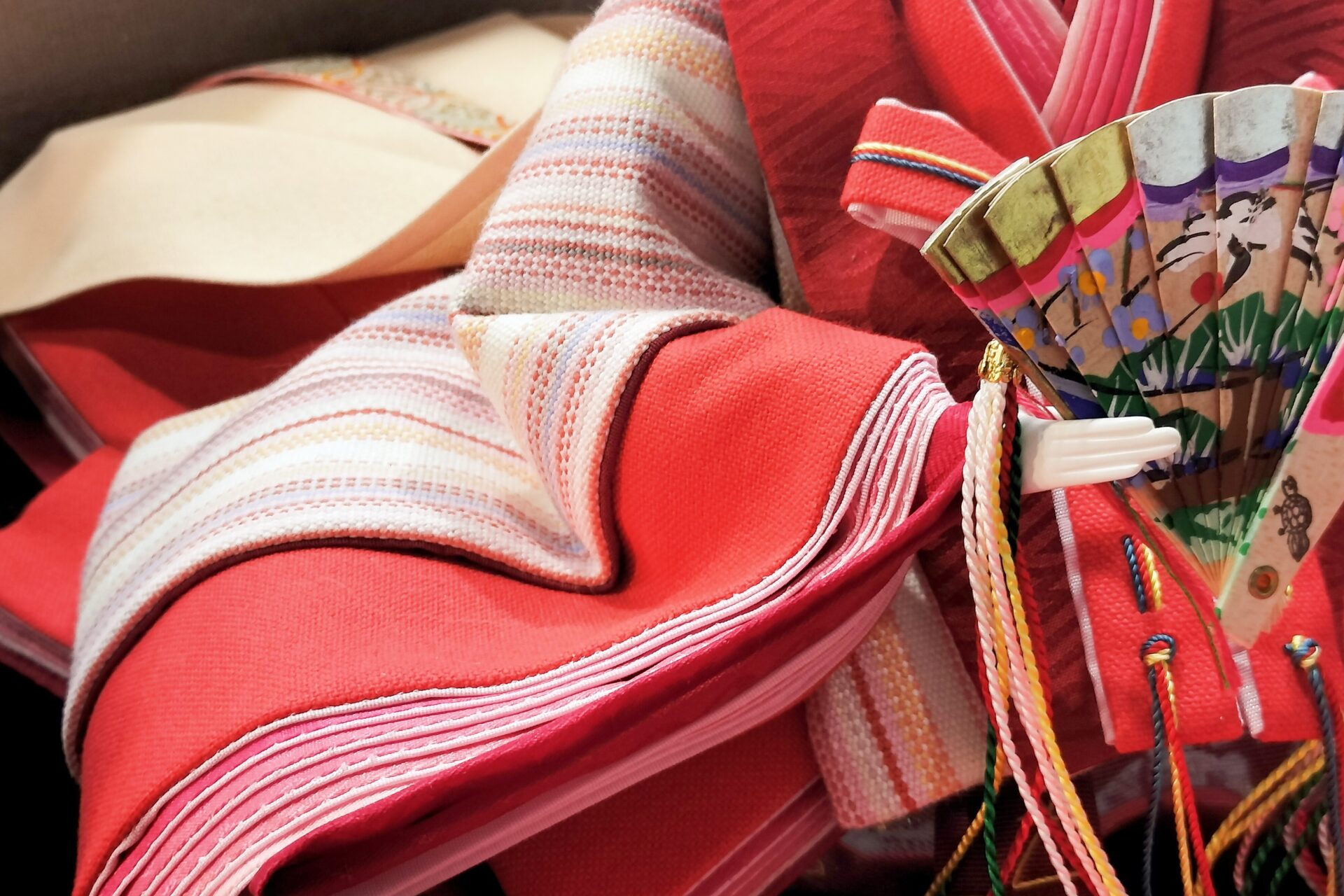
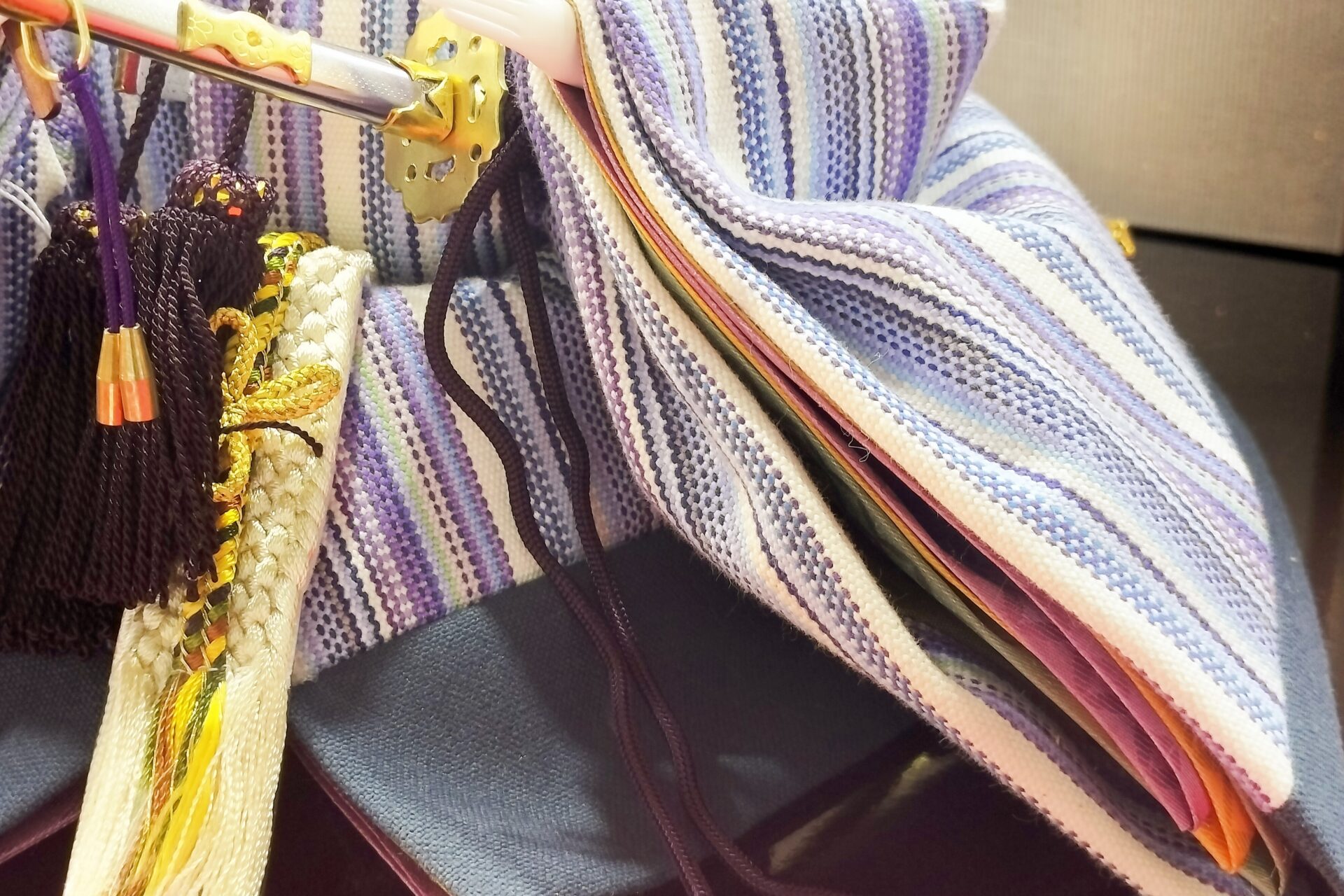
The outfits for these hina dolls also showcase the high quality of the craftsmanship, with careful attention to detail evident in everything from the colors to the fabric.
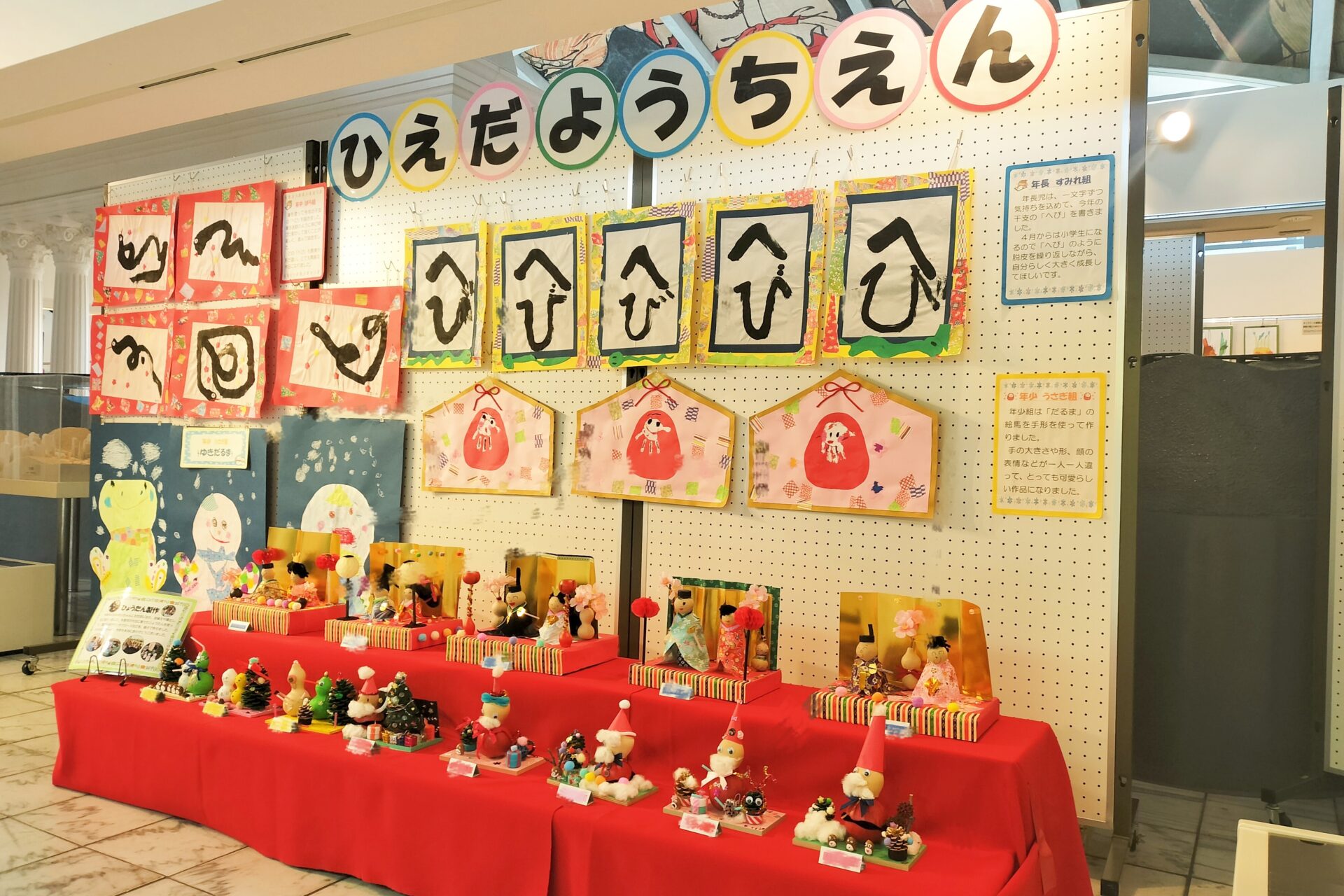
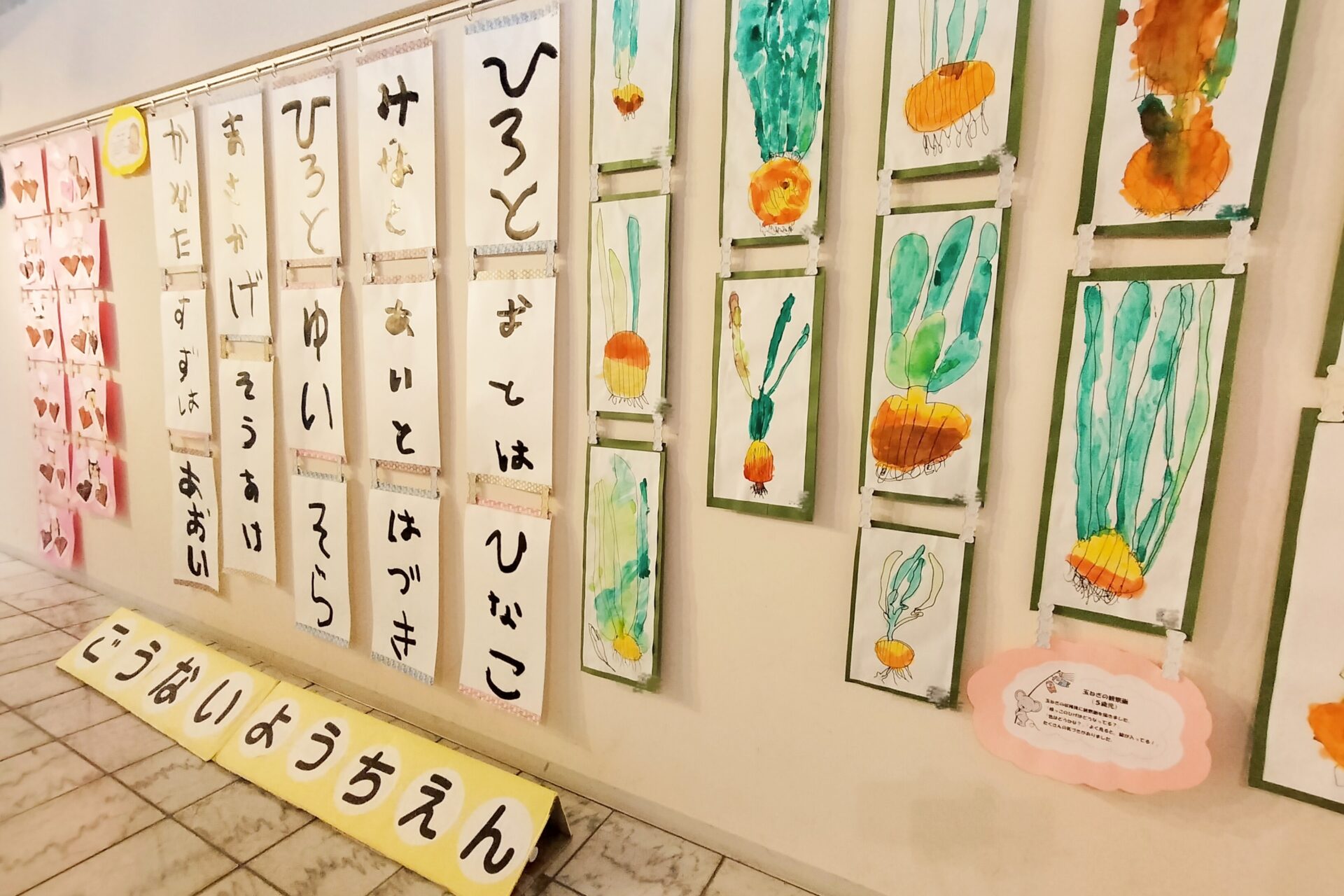
After taking our time to enjoy the exhibits on the first floor of the Kojima Civic Exchange Center, we finally climbed the stairs and headed to the second-floor exhibition room displaying hina dolls made by kindergarten children.
Kindergarten Children’s Works Exhibition (12th Kojimakko Kindergarten Works Exhibition)
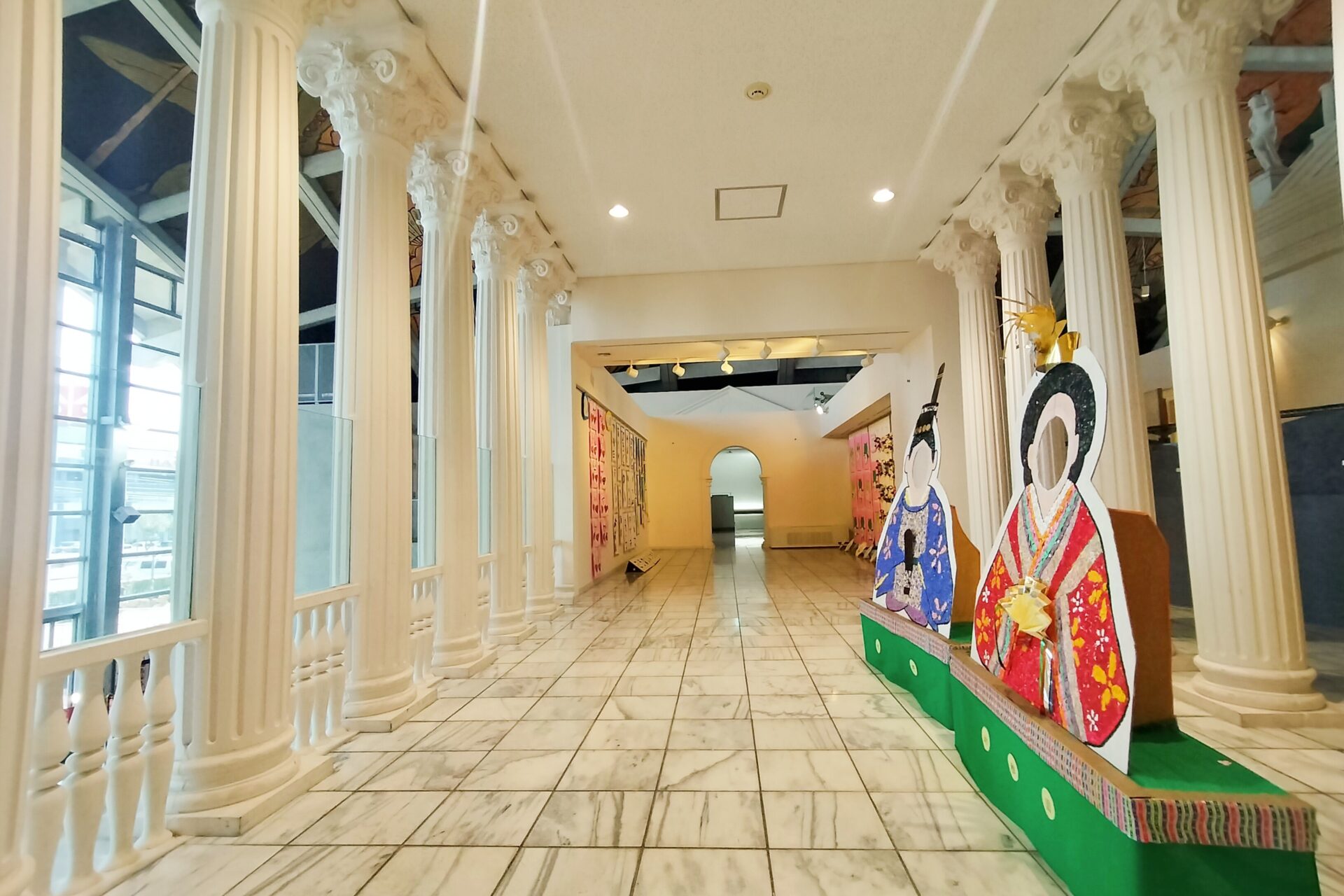
The second-floor exhibition room was hosting the “12th Kojimakko Kindergarten Works Exhibition.” The European-style space, lined with white pillars, is distinguished by a vivid and dynamic ceiling mural.
Traditional Japanese paintings and figures are depicted along the arched structure, creating an impressive scene reminiscent of a large illustrated scroll.
The ceiling mural is also said to represent Kojima’s history and culture, leaving a strong impression on visitors. Combined with the Western-style building design, it creates a special atmosphere, with the entire space enveloped in artistic charm.
In addition, the white walls feature beautiful decorations and mosaic patterns, allowing visitors to admire works brimming with children’s creativity while experiencing the atmosphere of historic Western architecture.
From the Writer
The Kojima Hina Doll Tour features 15 exhibition venues, allowing visitors to enjoy the festive hina dolls throughout the town. This time, we visited the Kojima Civic Exchange Center in the Kojima Jeans Street area and experienced traditional Japanese culture. We were able to appreciate not only the beauty of the hina dolls, but also the artisans’ skills and the history of the textile industry, making it a truly fulfilling experience.
Next time, I look forward to seeing the various hina dolls displayed in the grand hall of Nozaki's Historical Residence Annex Taikado, a nationally registered tangible cultural property.
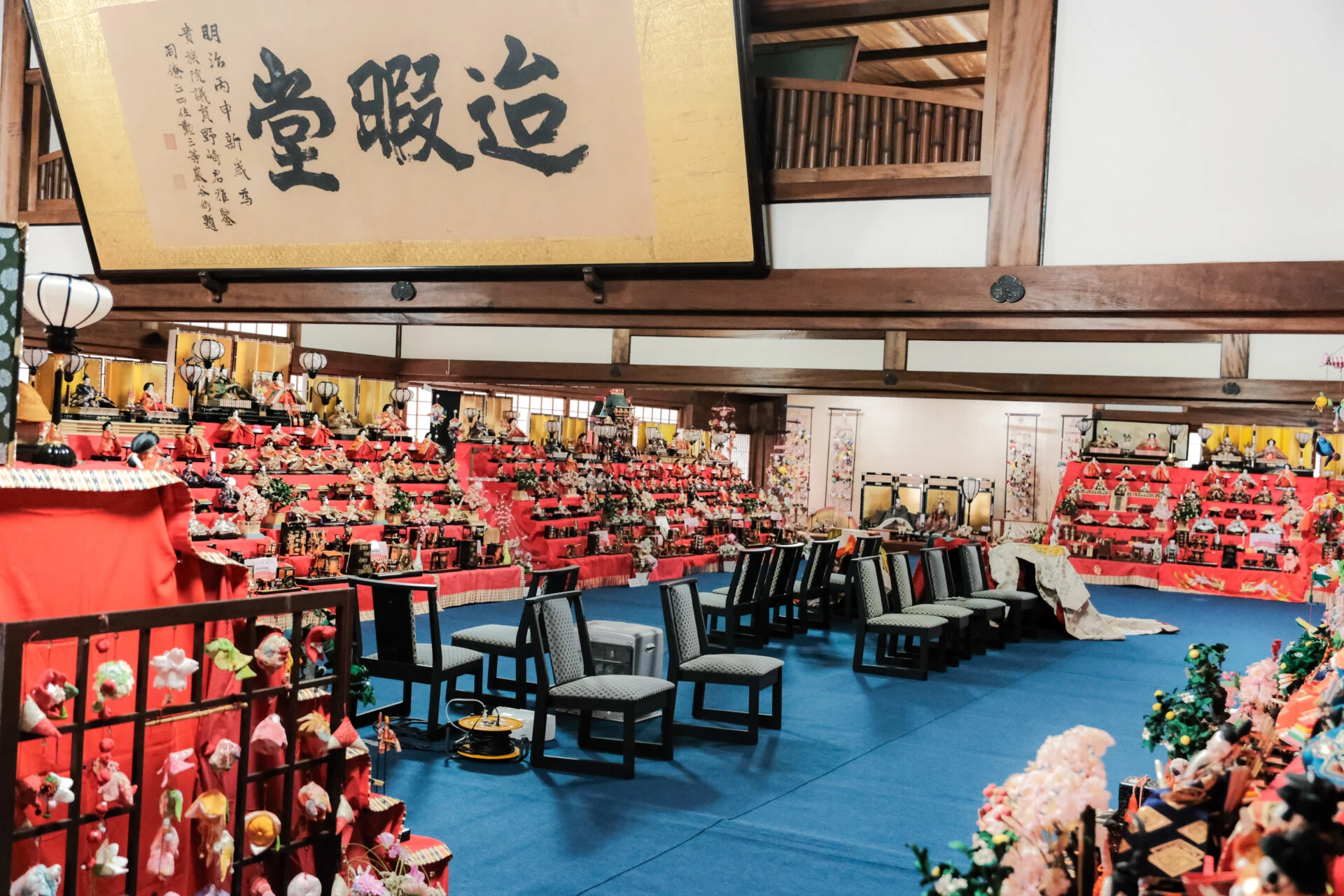
10th Industrial Hina Doll Exhibition Information
| Name | 10th Industrial Hina Doll Exhibition |
|---|---|
| Dates | Saturday, February 15, 2025 – Sunday, March 9, 2025, 9:00 a.m. – 4:30 p.m. |
| Location | Kojima Civic Exchange Center |
| Admission (tax included) | Admission: Free |
| Website | Kojima Civic Exchange Center |



What would you like to know about Kurashiki?
Enter a search term to find articles on this site