The Tamashima Historical Study Group was held in Tamashima on Thursday, May 9, 2024.
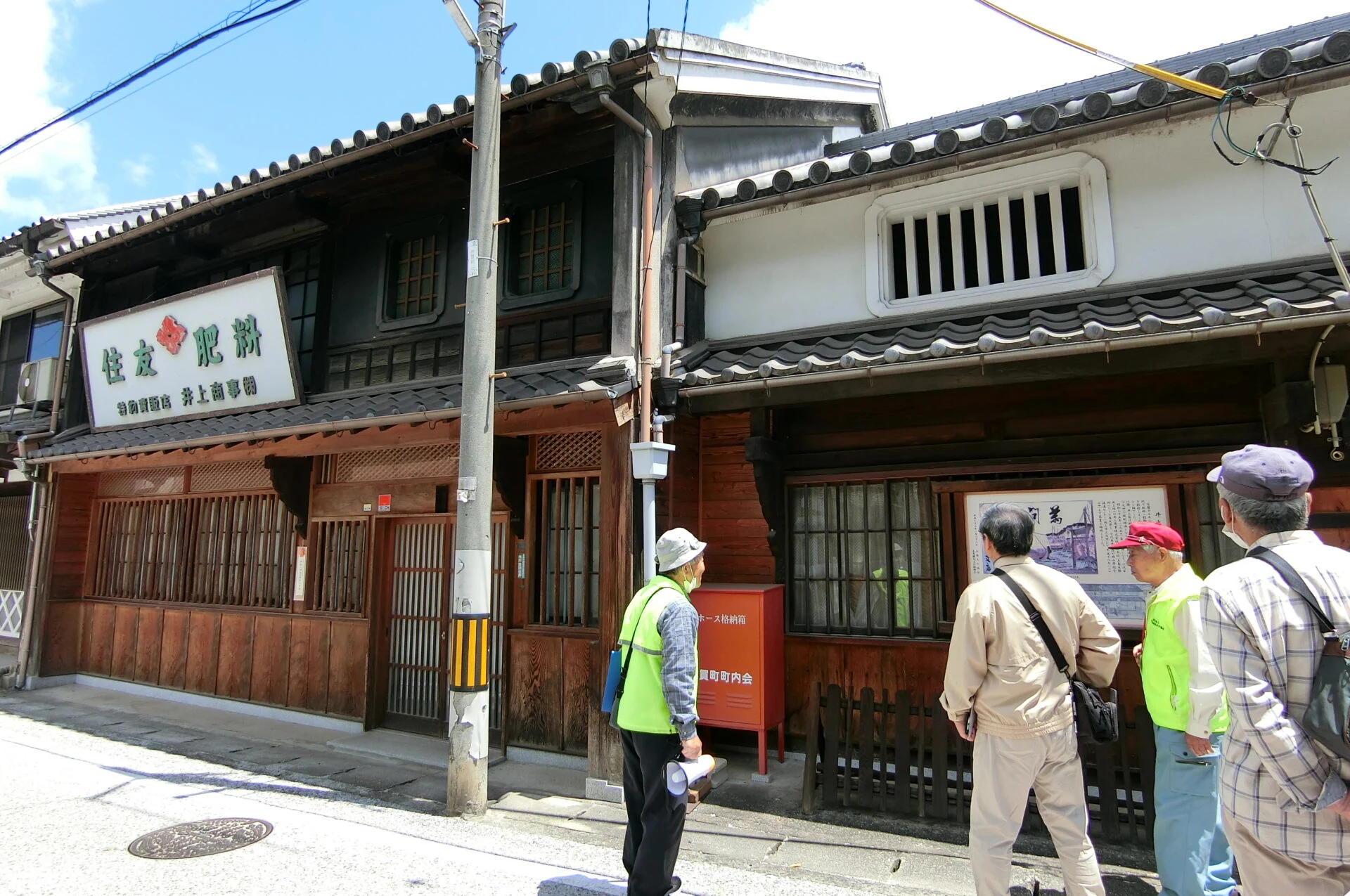
Tamashima was a bustling town as a port for the Kitamae-bune (Northbound ships).
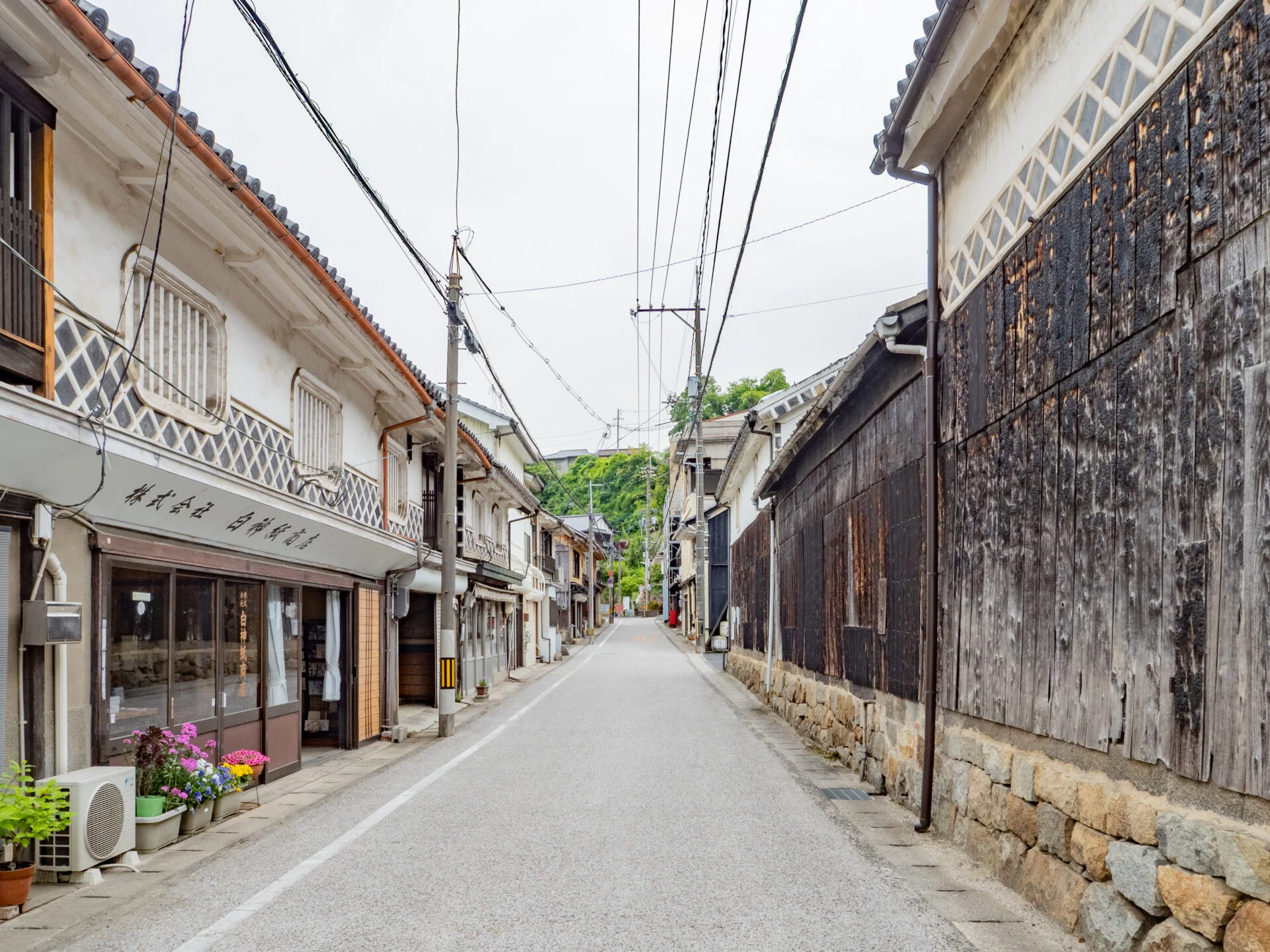
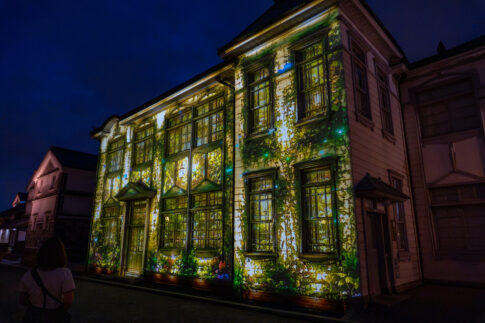
It is well known for its nostalgic retro townscape and has served as a filming location for movies such as "Always: Sunset on Third Street" and "Tobi".
Tamashima developed through land reclamation from the sea, and I participated because I wanted to learn more about how the town was created.
What is the "Tamashima Historical Study Group"?
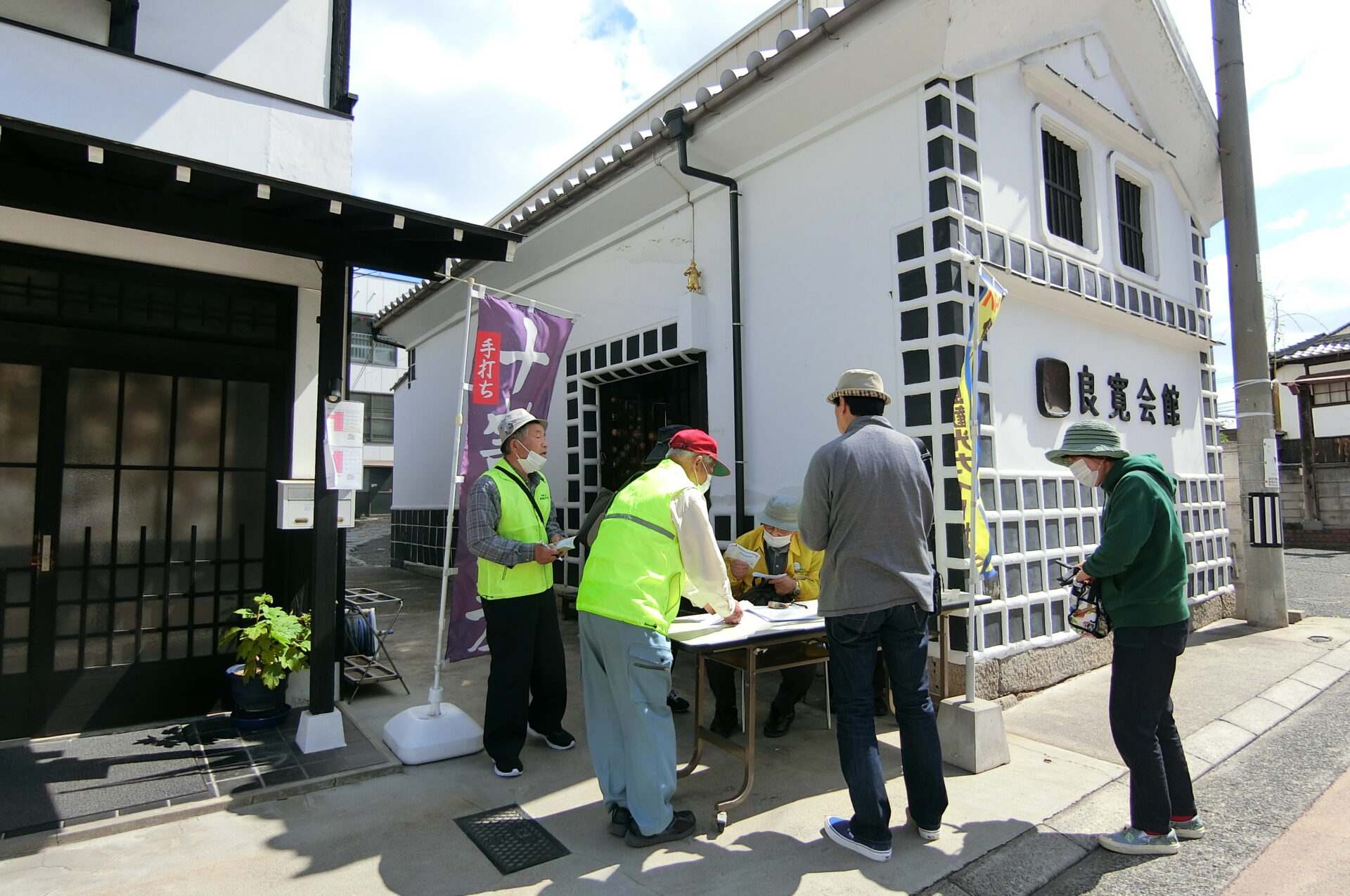
The "Tamashima Historical Study Group" is a study group organized by the NPO Tamashima Tourism Guide Association to learn about the history and culture of Tamashima.
Participants learn through lectures by Tamashima tour guides, as well as by walking around and visiting facilities while listening to explanations.
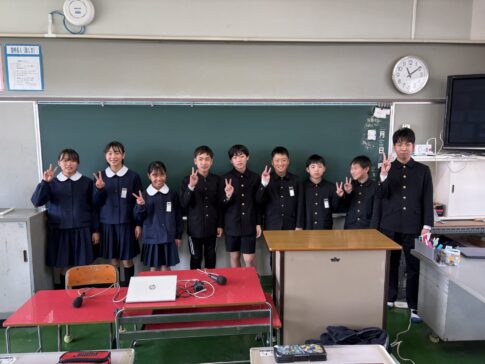
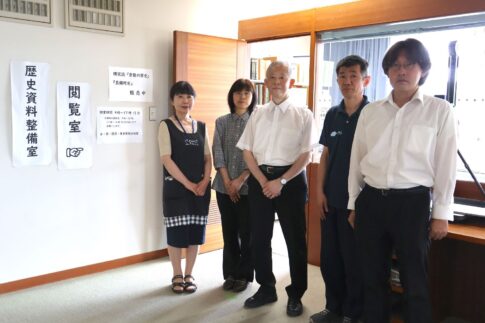
This time, there were 9 participants.
They walked around the town of Tamashima starting from the Ryokan Hall near Haguro Shrine, learning about its history and culture.
The Birthplace of Tamashima: Haguro Shrine
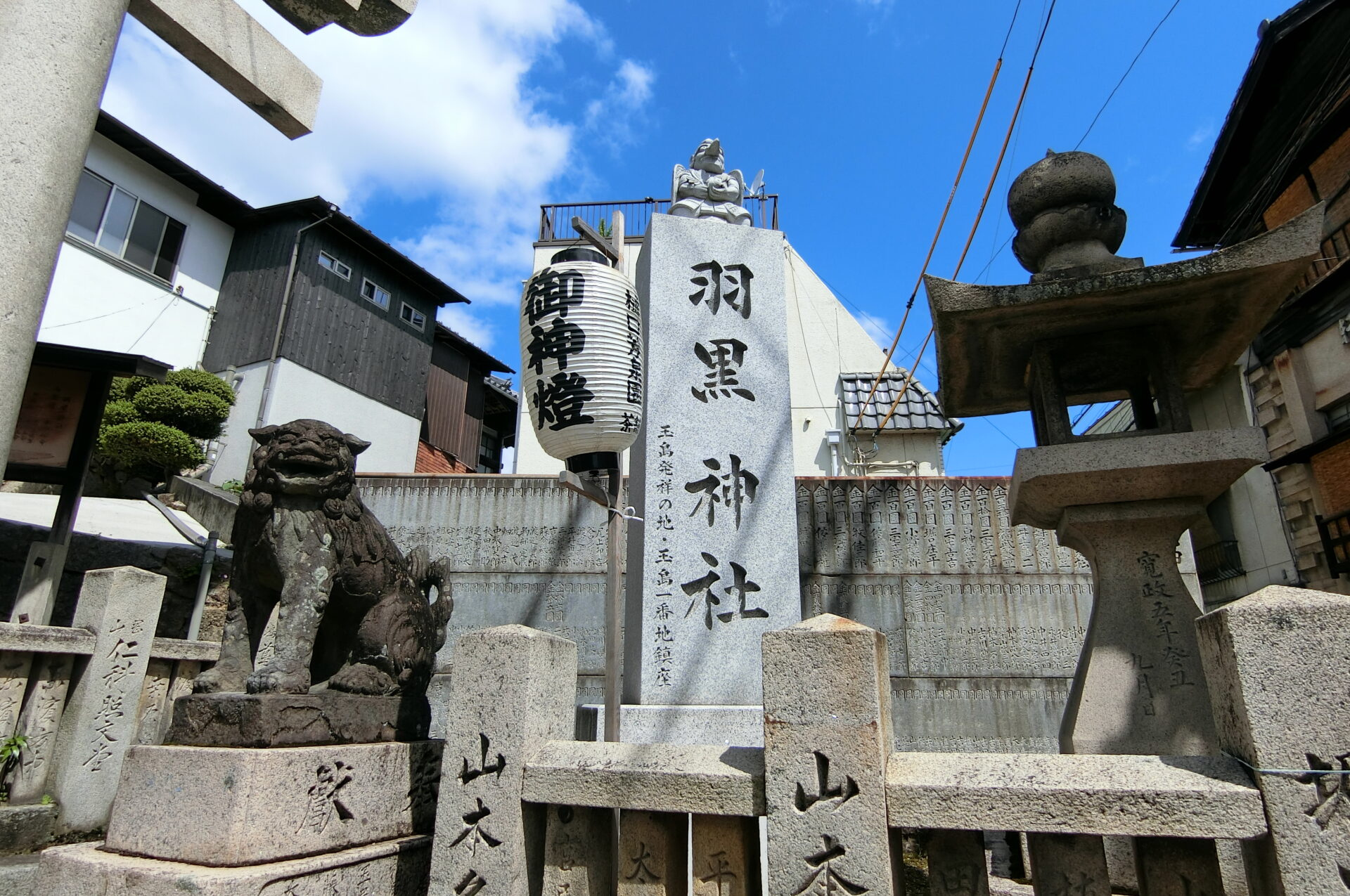
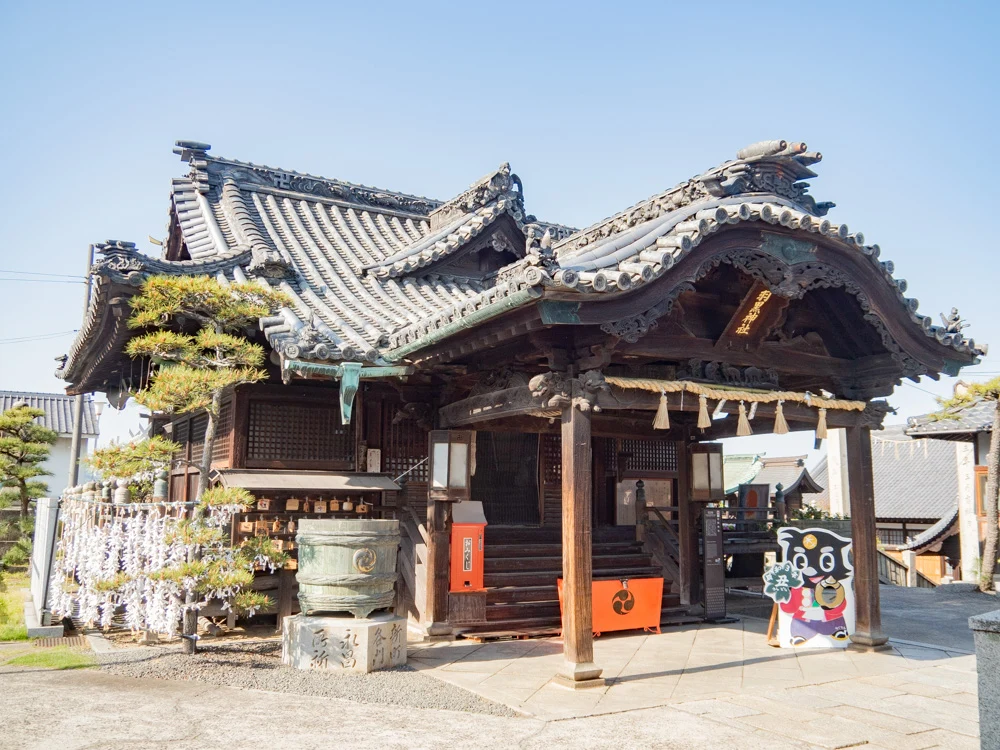
First, we visited Haguro Shrine, located right in front of Ryokan Hall.
The stone monument at the bottom of the stone steps reads, "Haguro Shrine: The Birthplace of Tamashima, 1-1 Tamashima." Amida Mountain, where Haguro Shrine is located, is the starting point of land reclamation in Tamashima.
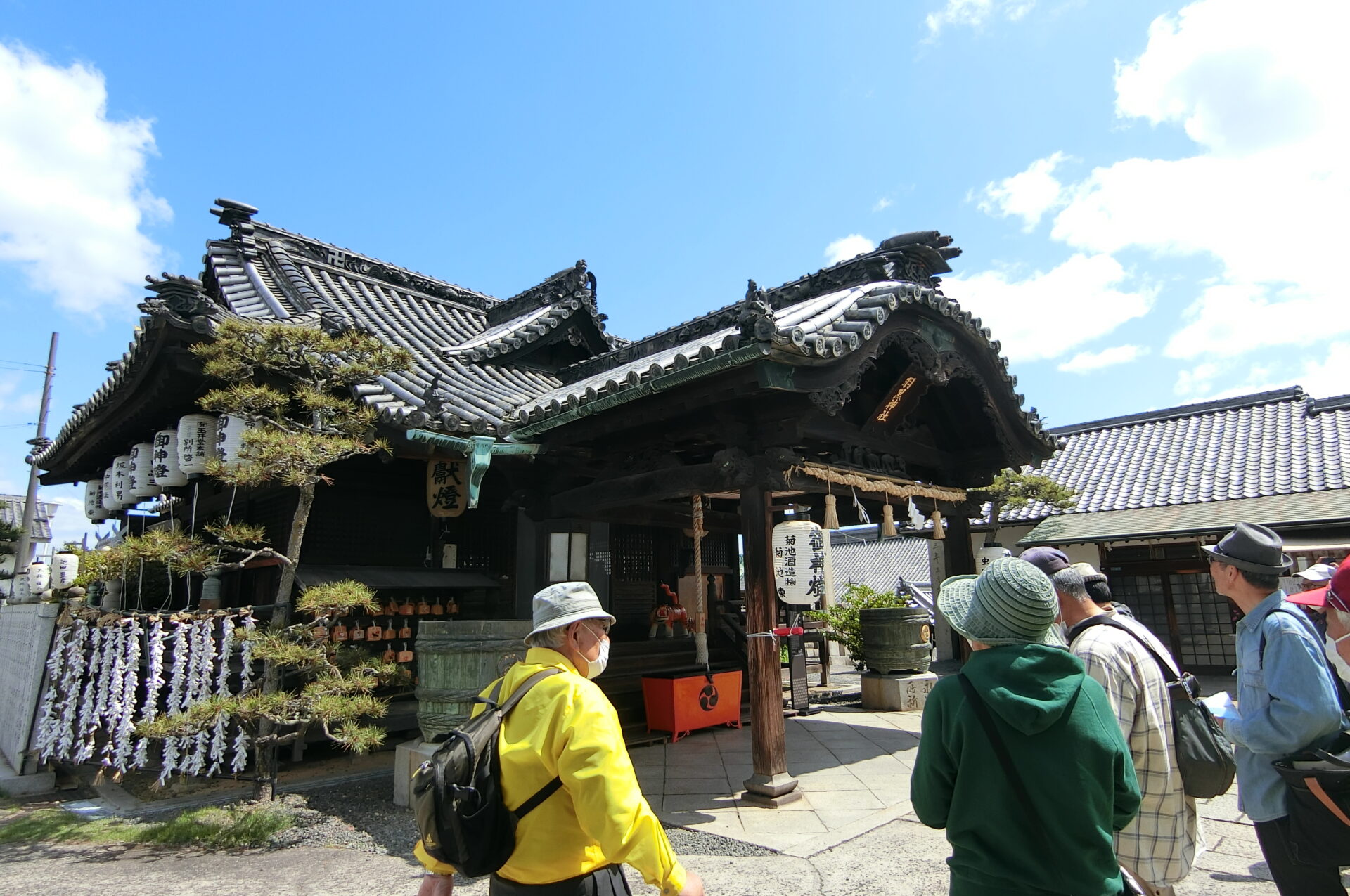
Haguro Shrine, which is also popular as a power spot, was built to pray for the safety and success of land reclamation. Once you ascend to the grounds of Haguro Shrine, you can overlook Tamashima Port and the townscape around Haguro Shrine.
It is truly the center of Tamashima.
Old Yunoki House (Saiso-tei)
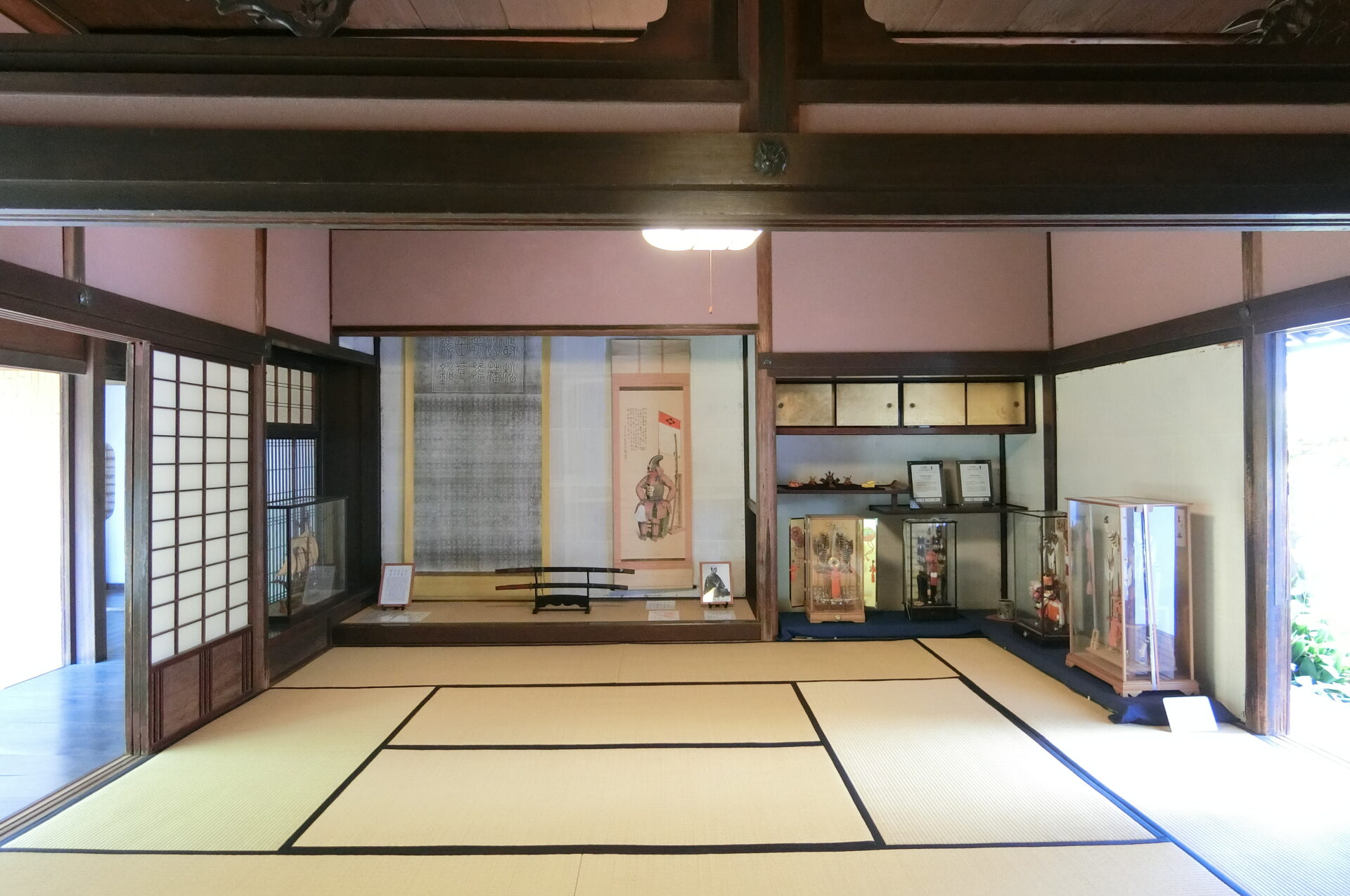
Saiso-tei is the former farmhouse of the Tamashima village headman, Old Yunoki House.
It also served as the residence of the lord of the Bitchu Matsuyama Domain.
During the late Edo period, Kumada Ataka, a samurai of the Bitchu Matsuyama Domain, committed seppuku in the next room of this Saiso-tei to save his subordinates. As a result, Tamashima was spared from the flames of war with the Bitchu Okayama Domain, and Kumada Ataka is called the "Benefactor of Tamashima".
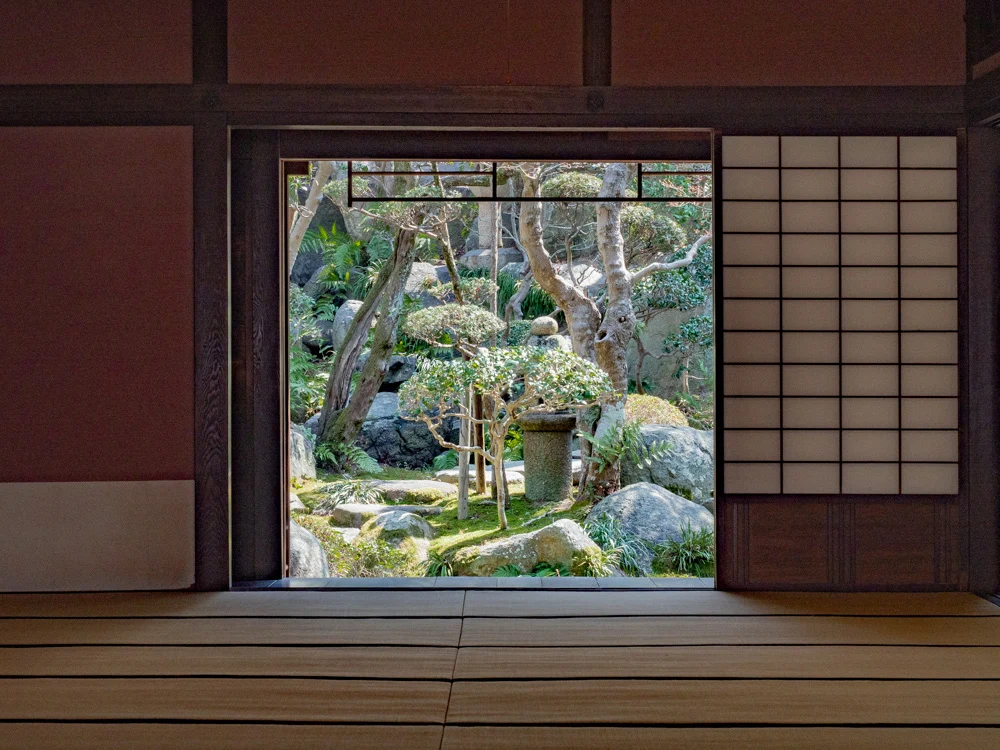
Sitting in the quiet, shoin-zukuri style mansion and gazing at the carefully crafted garden, I felt as if I had traveled back to the late Edo period.
The Wholesale District of Shinmachi, Bustling with Kitamae-bune and Takase-bune
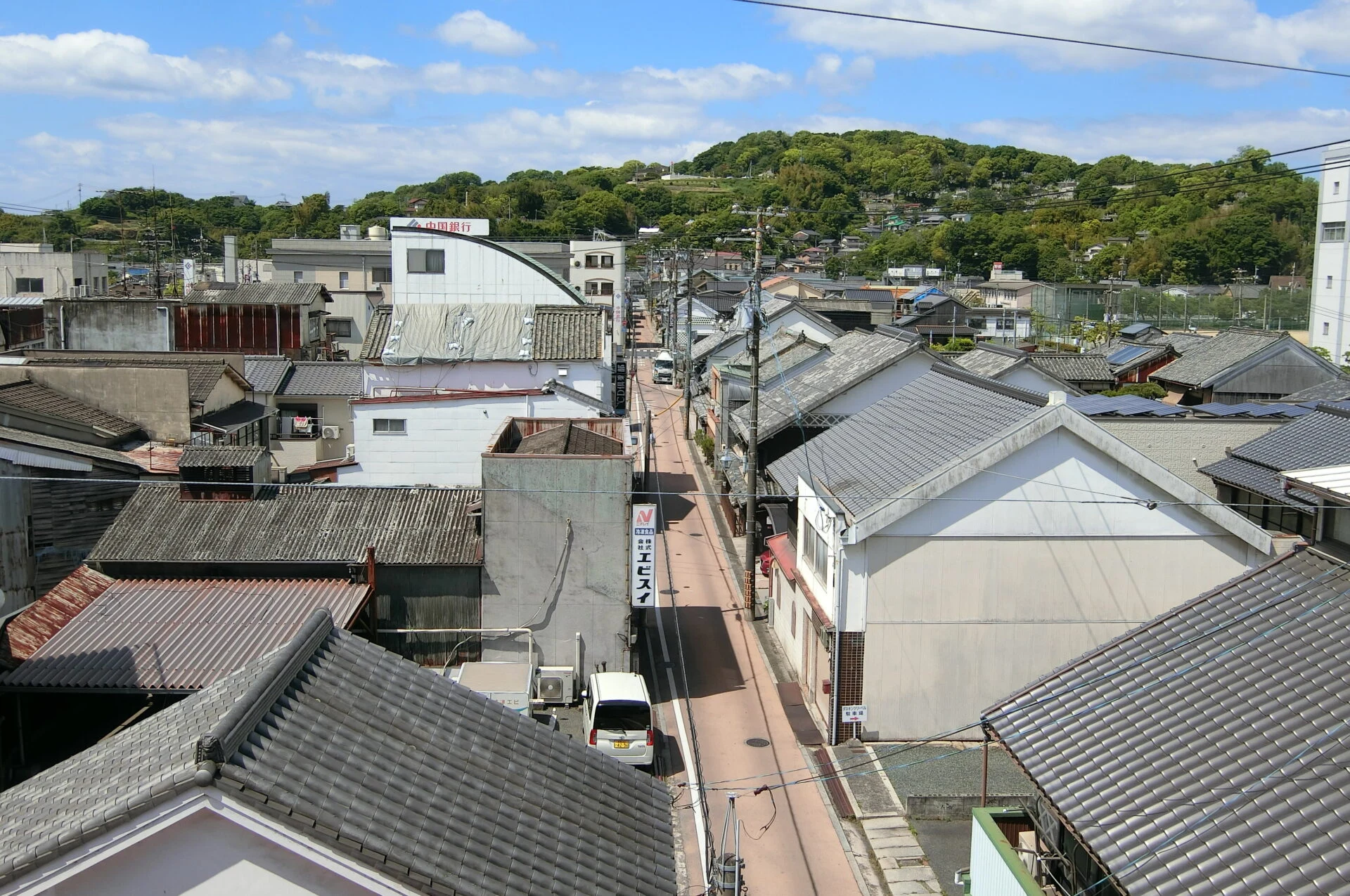
Shinmachi was a levee built about 400 meters west of Haguro Shrine to stop the tide. On the seaside were warehouses, while the north side was occupied by offices and residential areas.
With the construction of this levee, development progressed northward from Shinmachi.
It is hard to imagine now, but it seems that many ships from Hokkaido in the north to Kyushu in the south were bustling in this lively port town.
I was also surprised to learn that there were many banks, including the first Okko Bank established in Tamashima.
This indicates how much the economy had developed, given the high volume of goods circulating.
Nakagai-cho, a Street of Shops Known as "When You Think of Tamashima"
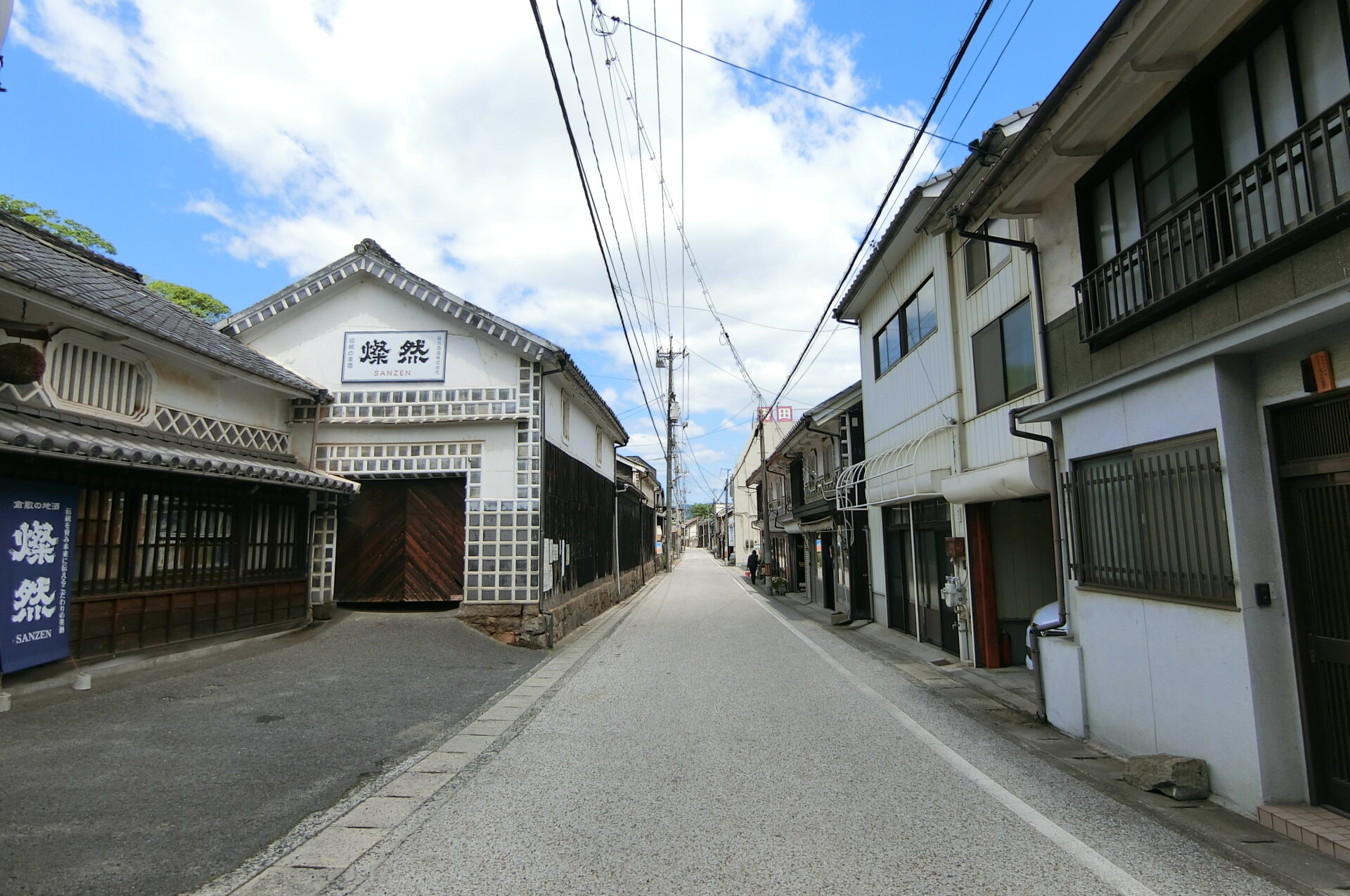
After passing through Shinmachi and crossing Showa Bridge, we arrived at Nakagai-cho.
We enjoyed walking while taking in the retro atmosphere of the old days.
Nakagai-cho was a town where local industries such as miso, soy sauce, sake, tatami, paper, and stone flourished. While there were many sake breweries in Tamashima, currently, Kikuchi Sake Brewing Co., Ltd. is the only sake manufacturer in Tamashima.
In Nakagai-cho, there is also the birthplace of Kondo Banjyo, a national scholar and poet from the late Edo period.
Kondo Banjyo is also known for leaving behind writings about meeting a person who resembled Ryokan during his travels in Tosa, where he spent time at Ensu-ji Temple in Tamashima.
It is not well known what Ryokan did until he returned to Niigata from Ensu-ji Temple. This provides a valuable clue to understanding Ryokan's footsteps.
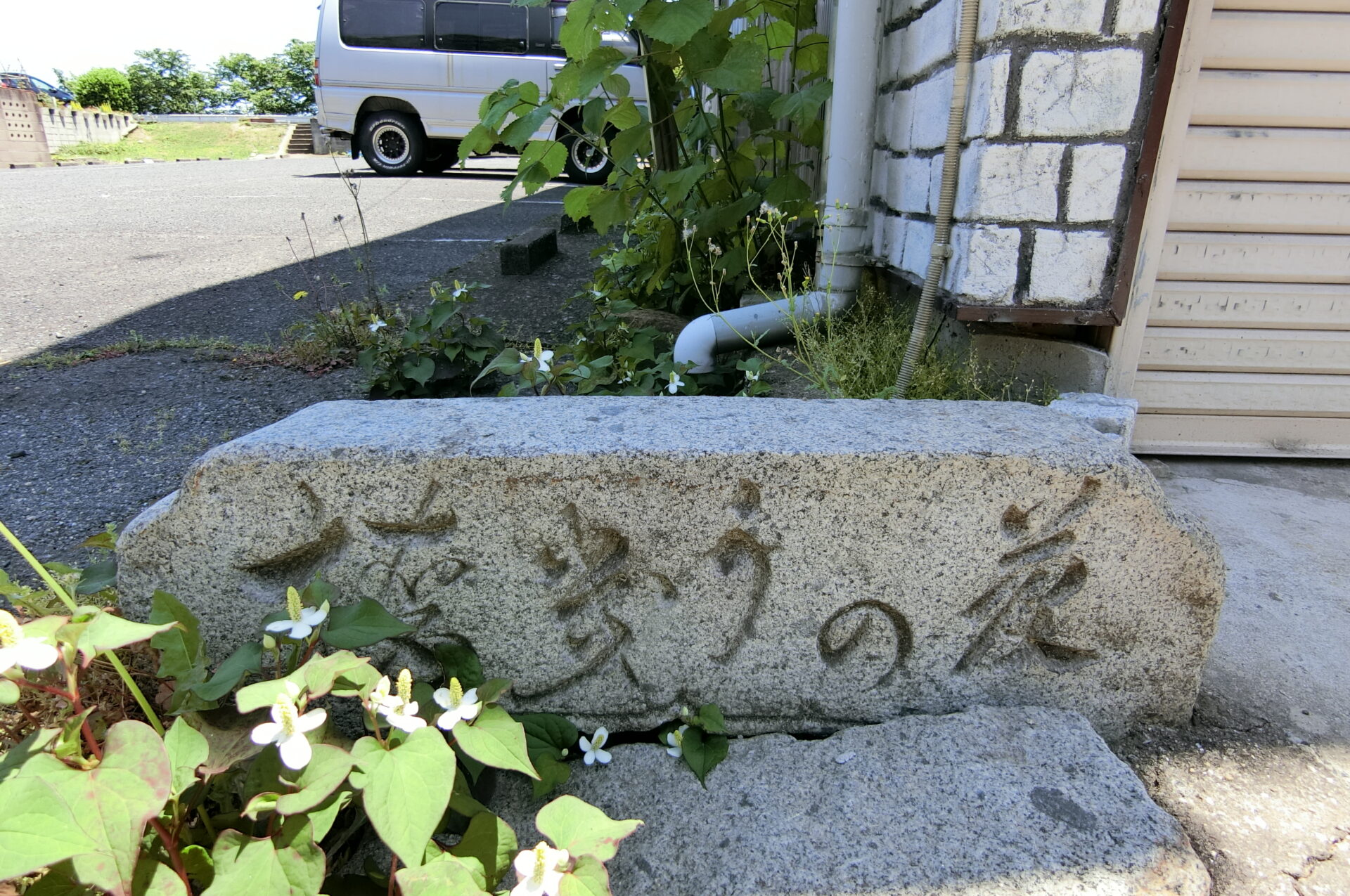
There was something I had been curious about for a long time.
That is the Dream Floating Bridge.
It is built over a trench-like area and is too small to be called a bridge. Moreover, there is nothing in this area that evokes the idea of "dream".
I have always wondered what this means.
According to the guide's explanation, beyond the "Dream Floating Bridge" was a pleasure quarter (yukaku). And at the point where the pleasure quarter ended was the "Hell Bridge".
Crossing this bridge means waking from a dream and returning to the empty "reality".
Conclusion
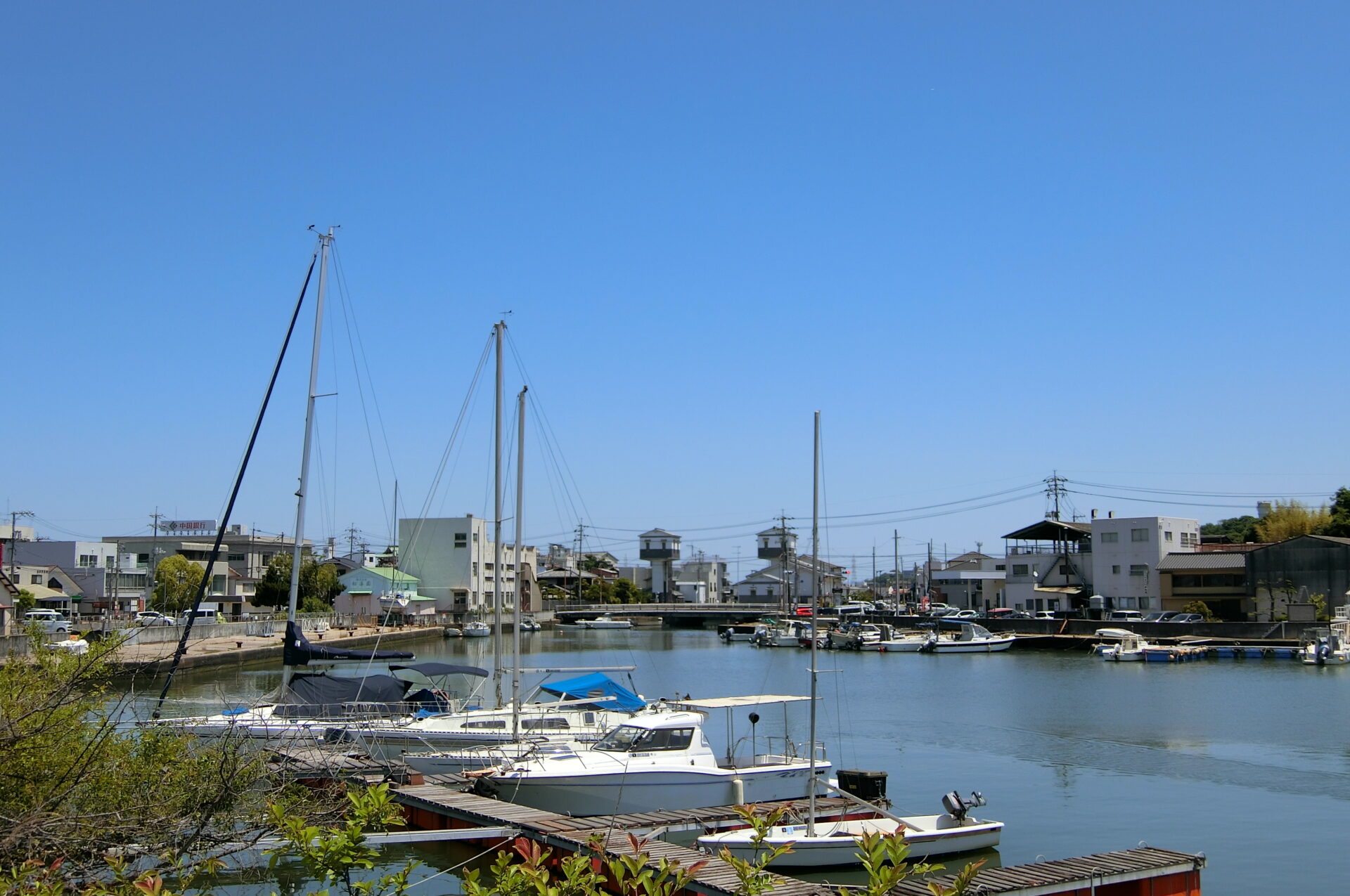
Tamashima developed through land reclamation and was a port town where goods from all over the country flowed.
As times change, the roles and industries of towns also change, but the sea, rivers, and waterways still have a close relationship with the town of Tamashima.
It is enjoyable to walk around the town of Tamashima centered around Haguro Shrine while imagining the lively atmosphere of the past.
The next "Tamashima Historical Study Group" will be held on Thursday, June 13, 2024.
If you are interested, why not participate? Please check the image of the flyer for details.
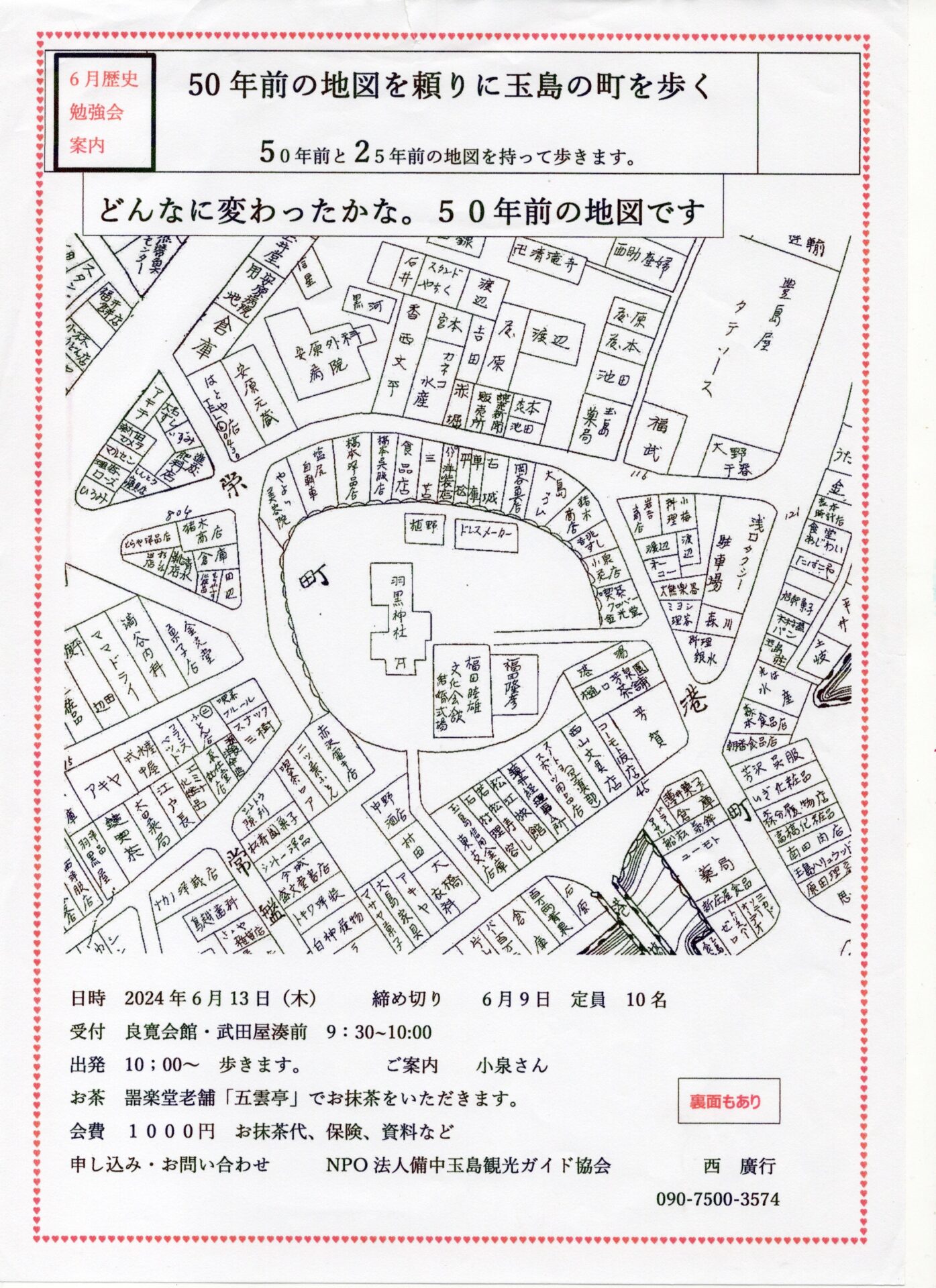
Data on the Tamashima Historical Study Group
| Name | Tamashima Historical Study Group |
|---|---|
| Date | May 9, 2024 |