From the Meiji period through the early Showa period, there was a road known as the “Bitchu Totomichi,” said to have been used to carry fish on one’s shoulders over a distance of about 60 km from Kanoura in Kasaoka City to Nariwa in Takahashi City.
I remember being deeply moved by the distance and scenery when I walked it alone a few years ago. This time, I was excited to take part in the event, knowing I would be able to hear detailed stories from local residents of the Mikawa district in Yakage Town.
The information presented was current when this article was published in April 2026. Please note that it may differ from current information.
What is the Historic Site Exploration Walk, “Let’s Walk the Totomichi”?
The Historic Site Exploration Walk, “Let’s Walk the Totomichi,” was held on Saturday, March 7, 2026, hosted by the Mikawa Community Center Exploration Club and the Yamabiko Class.
Participation was free.
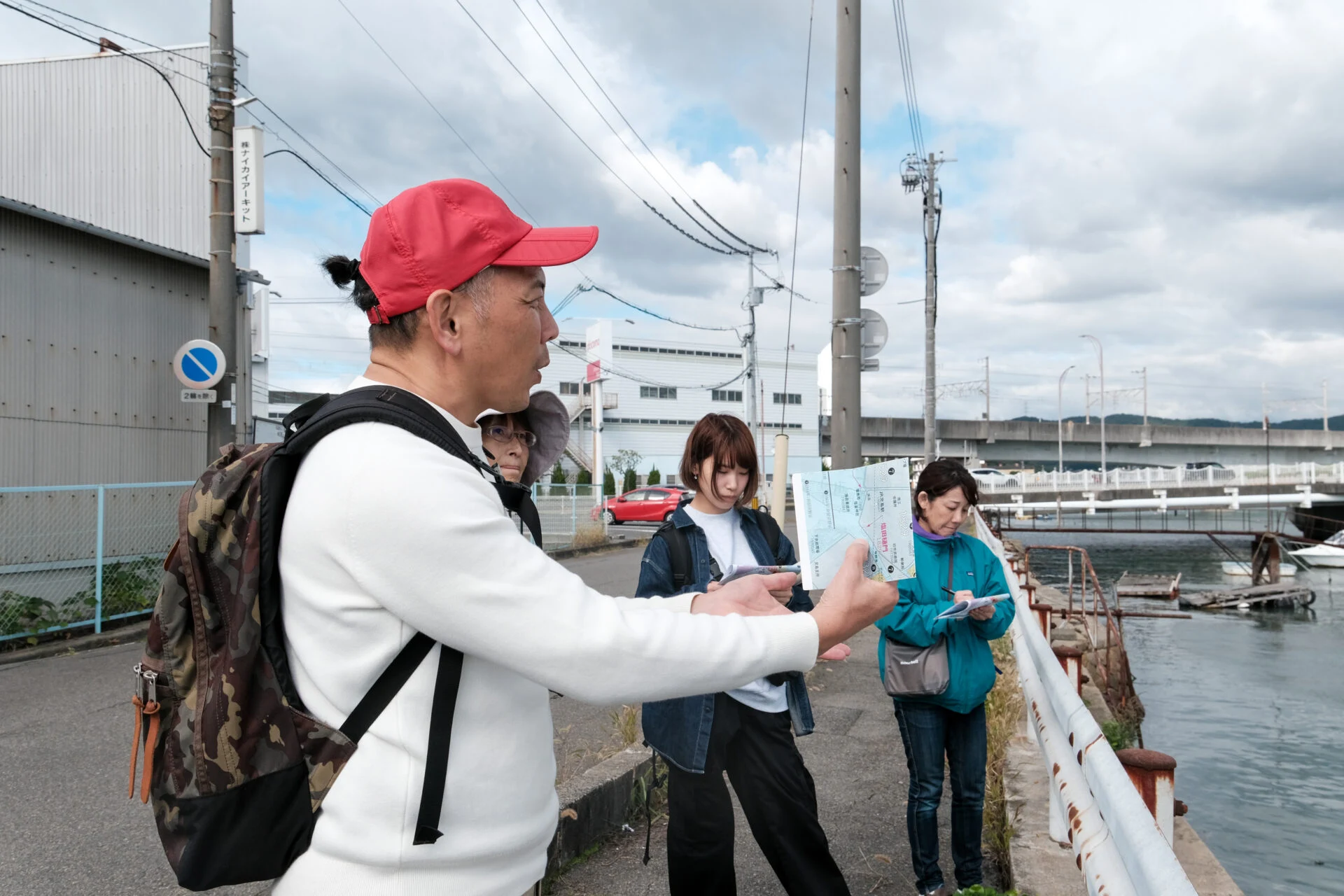
In addition to local residents, members of the Bitchu Totomichi Trail Promotion Council joined as guides, making this a valuable opportunity to hear more expert explanations.
This time, the route covered about 6 km from Unai in Yakage Town to Keno in Bisei Town. Participants walked along the road once used to transport “toto” (fish), experiencing its history and the lives of those who used it.
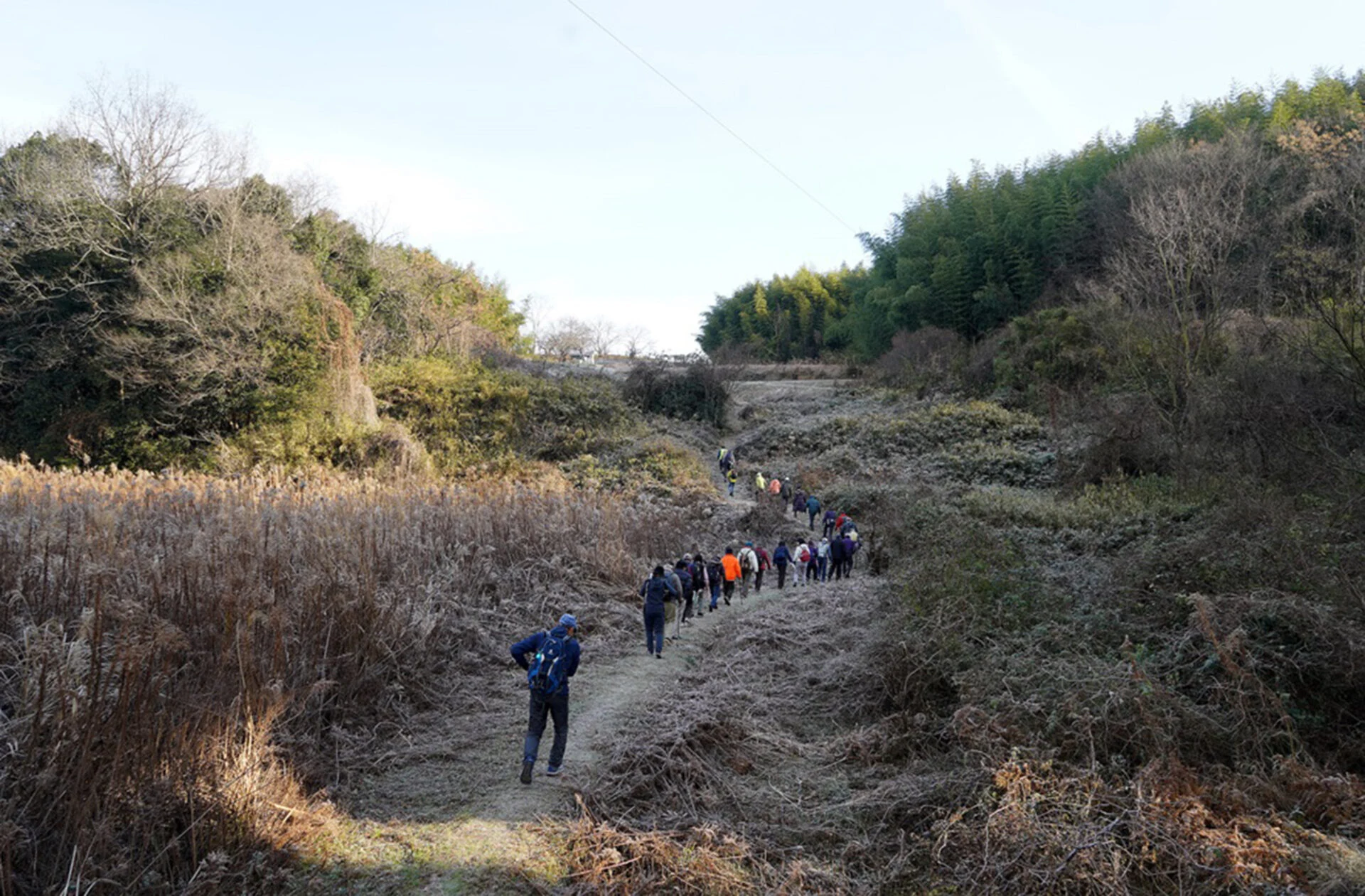
Walking through satoyama as spring arrives

A total of 27 people, including one elementary school student, took part that day.
They gathered at the community hall in the Unai district at 9 a.m., starting with introductions.
Most of the participants were local residents, and they were so dependable that it felt as if everyone were a guide. They seemed accustomed to hills and mountain paths, which put us at ease.
As we began walking, fields and rice paddies stretching as far as the eye could see greeted us.
Pink henbit flowers bloomed along the paths, heralding the arrival of spring. Amid the peaceful scenery, we enjoyed a leisurely pace, reflecting on the lives of people in the past.
Experience the weight of fish carried on a shoulder pole

The shoulder pole at the meeting place caught our eye.
Baskets were attached to both ends of a wooden pole about 2 meters long. Inside were large numbers of plastic bottles in place of fish, bringing the total weight to about 45 kg.
Fish porters, known as “uonakase,” are said to have carried these loads over routes as long as 10 km. Several people tried it for themselves, but even lifting the pole was a struggle. Walking with it was out of the question.
We were simply amazed by the strength and stamina of people more than 100 years ago.
A new route from the Unai district to the Keno district

One of the major highlights was being able to walk a route newly identified in March 2026. A previously unknown path was discovered around the old prefectural road, which branches north from the Kasaoka-Bisei Prefectural Route.
Unlike the traditional ridge route, the new route follows a valley. The recently cleared path was muddy underfoot, and branches blocked the way, making it feel like a real adventure.
Even in places reclaimed by the forest, traces such as the remains of a pond gave us a sense that people had once lived there.
Cattle memorial stones and four-post halls

Along the Totomichi are scattered cattle memorial stones and buildings called “yotsudo.”
The many memorial stones convey people’s gratitude to the cattle that were indispensable for farm work and carrying loads.

A yotsudo is a roofed hall with no walls, supported by four posts. It has long served as a place where local people can rest and exchange.
It was also an important rest stop for the fish porters, much like a marathon aid station today. It is easy to picture them setting down their heavy loads and taking a welcome breather.
From the Writer

Thanks to the thoughtful guidance of local residents and the Bitchu Totomichi Trail Promotion Council, “Let’s Walk the Totomichi” proved to be a rewarding experience that gave us a deeper understanding of the region’s history and way of life.
Walking the route in person made me realize that the conveniences of modern life cannot be taken for granted; they are built on the accumulated efforts of many people. I hope many people will have the chance to experience the Bitchu Totomichi.
The “Bitchu Totomichi Trail” guidebook is available for purchase from the council, Yakage Yashiki Exchange Center, and Taikomaru Plaza, the Nariwa Complex in Takahashi City.
Historic Exploration Walk, “Let’s Walk the Totomichi” Information
| Name | Historic Exploration Walk, “Let’s Walk the Totomichi” |
|---|---|
| Date | Saturday, March 7, 2026 |
| Location | 2926 Shimotakasue, Yakage Town, Oda District, Okayama Prefecture (Mikawa Community Center) |
| Participation fee (tax included) | Free |
| Website | Mikawa Community Center website |



What would you like to know about Kurashiki?
Enter a search term to find articles on this site