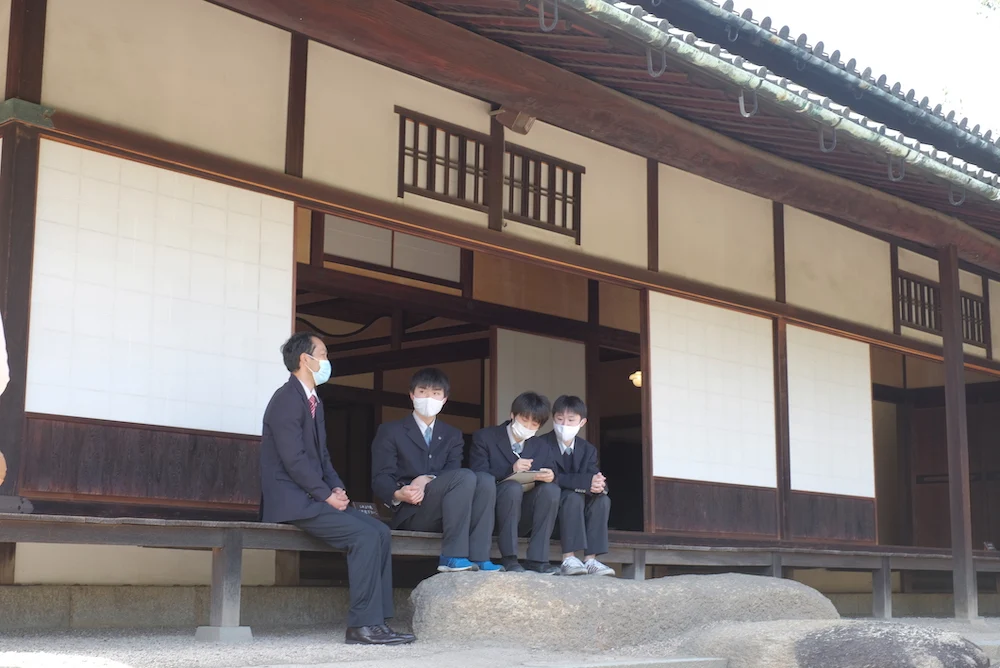
Around Kojima Station, within walking distance, is Nozaki's Historical Residence, famous for its salt fields, which gives the area the image of a "salt town" with local specialties like salt buns.
Although the salt fields were abolished in the 1960s, it is said that traces of the salt fields remain throughout the town.
In 2024, the "Living in Bichu, Machiya de Class" program featured Shinsaku Yamaguchi, who has worked on many buildings in the Kojima area, conveying the story of life in Kojima Ajino through visible forms in architecture and townscapes.
What is "Living in Bichu, Machiya de Class"?
The Bichu region is home to many historical townscapes, including the nationally designated "Important Traditional Buildings Preservation District." Moreover, it is not just the townscapes that remain. There are people who live their daily lives utilizing the townscapes, engaging in traditional lifestyles, pleasures, and play from the Edo to Showa periods.
In such places, "Living in Bichu, Machiya de Class" offers walking programs and experiential programs focusing on "clothing, food, housing, learning, and play." This year (2024) marks the 11th event.
In 2024, "Living in Bichu, Machiya de Class" will host 17 walking events, and the "Kojima Ajino Town Walk" that I participated in is one of those programs.
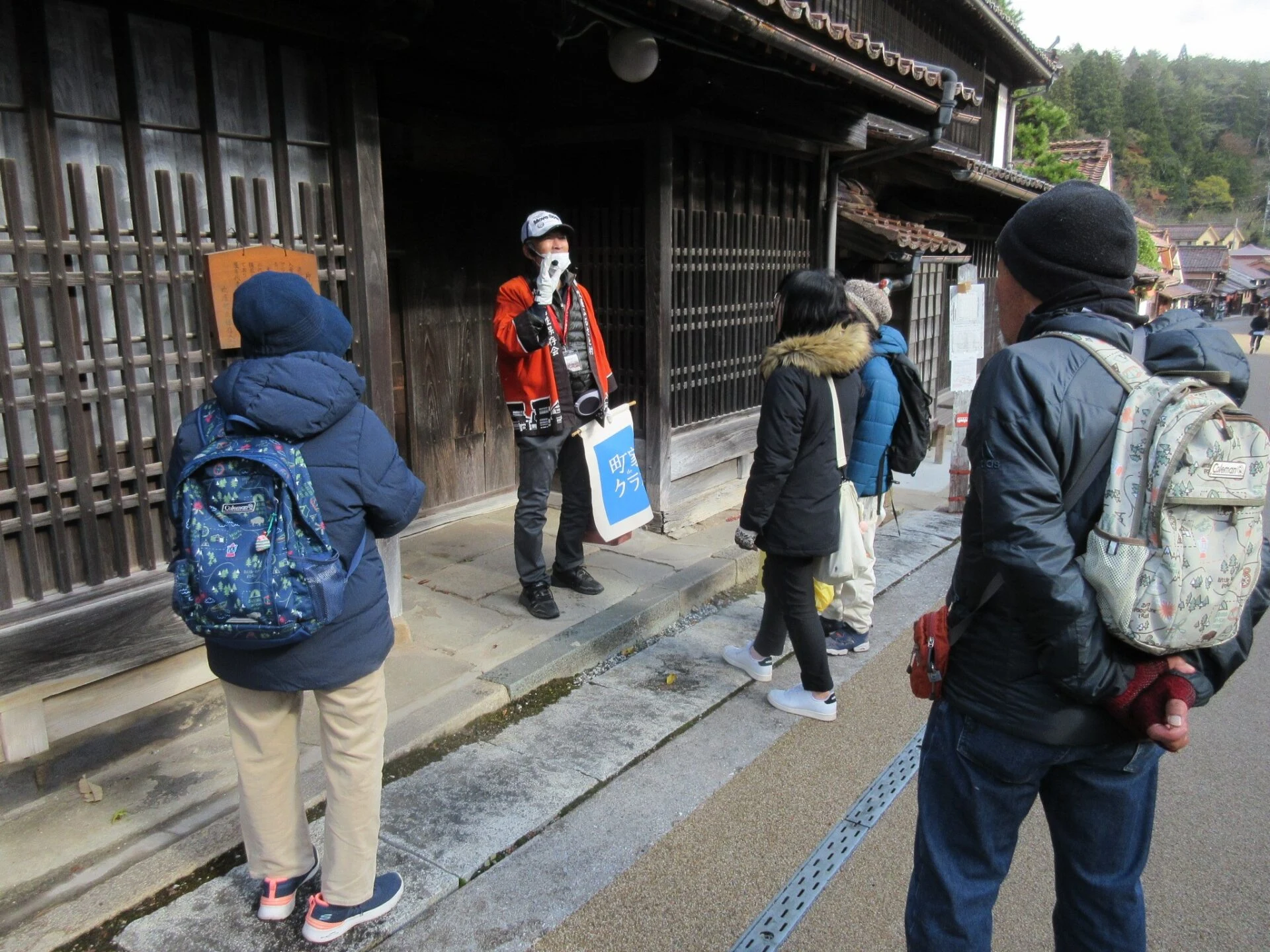
I went to "Kojima Ajino Town Walk"
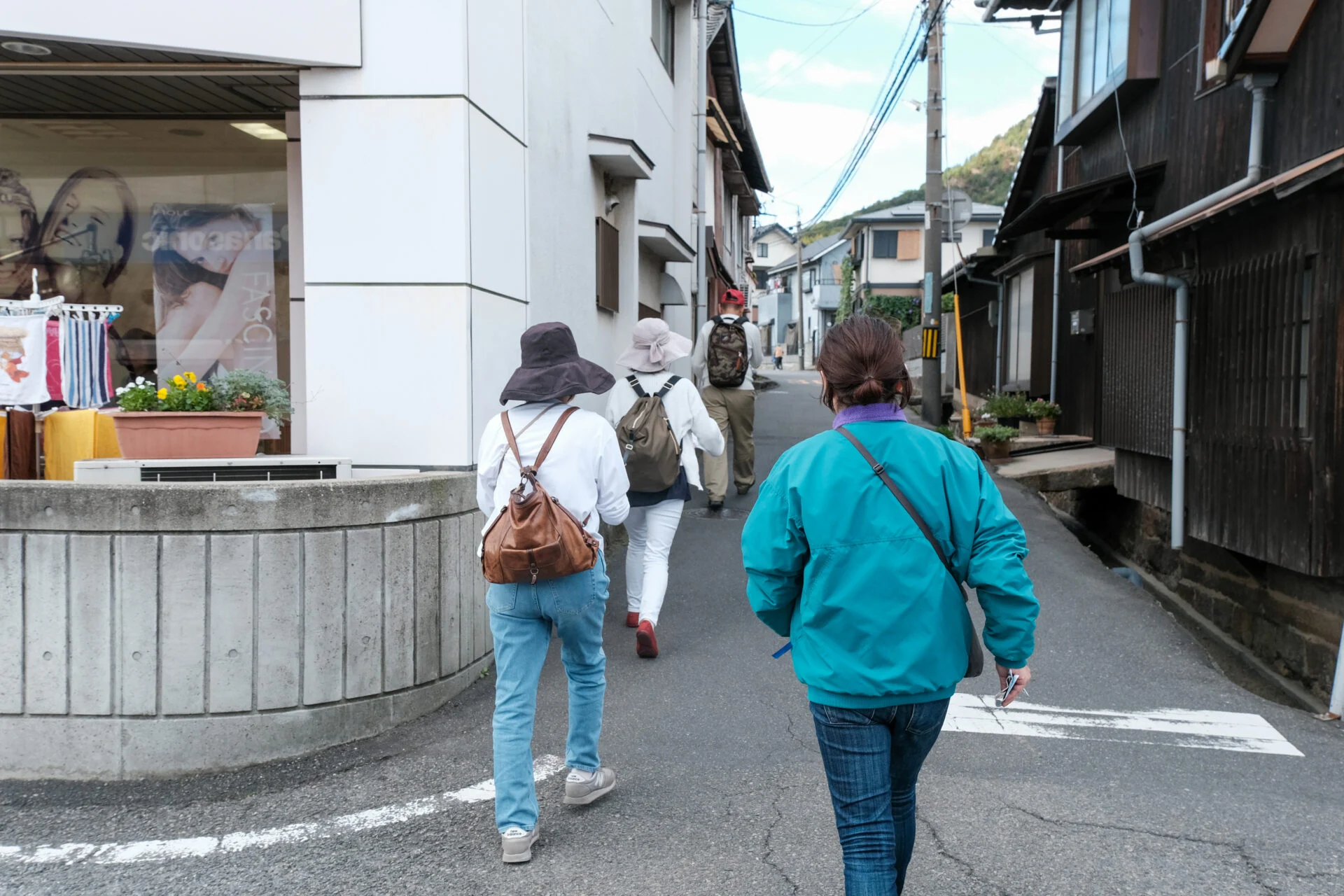
This year, the heat continued, and cool days were hard to come by, but the morning of November 6 (Wednesday) was pleasant, though a jacket was needed due to the chill. Participants gathered at the Kojima Community Center, wearing jackets.
The guide for the day was Shinsaku Yamaguchi from Kurashiki Architectural Studio Yamaguchi Shinsaku Design Office, who has worked on many buildings in the Kojima area.
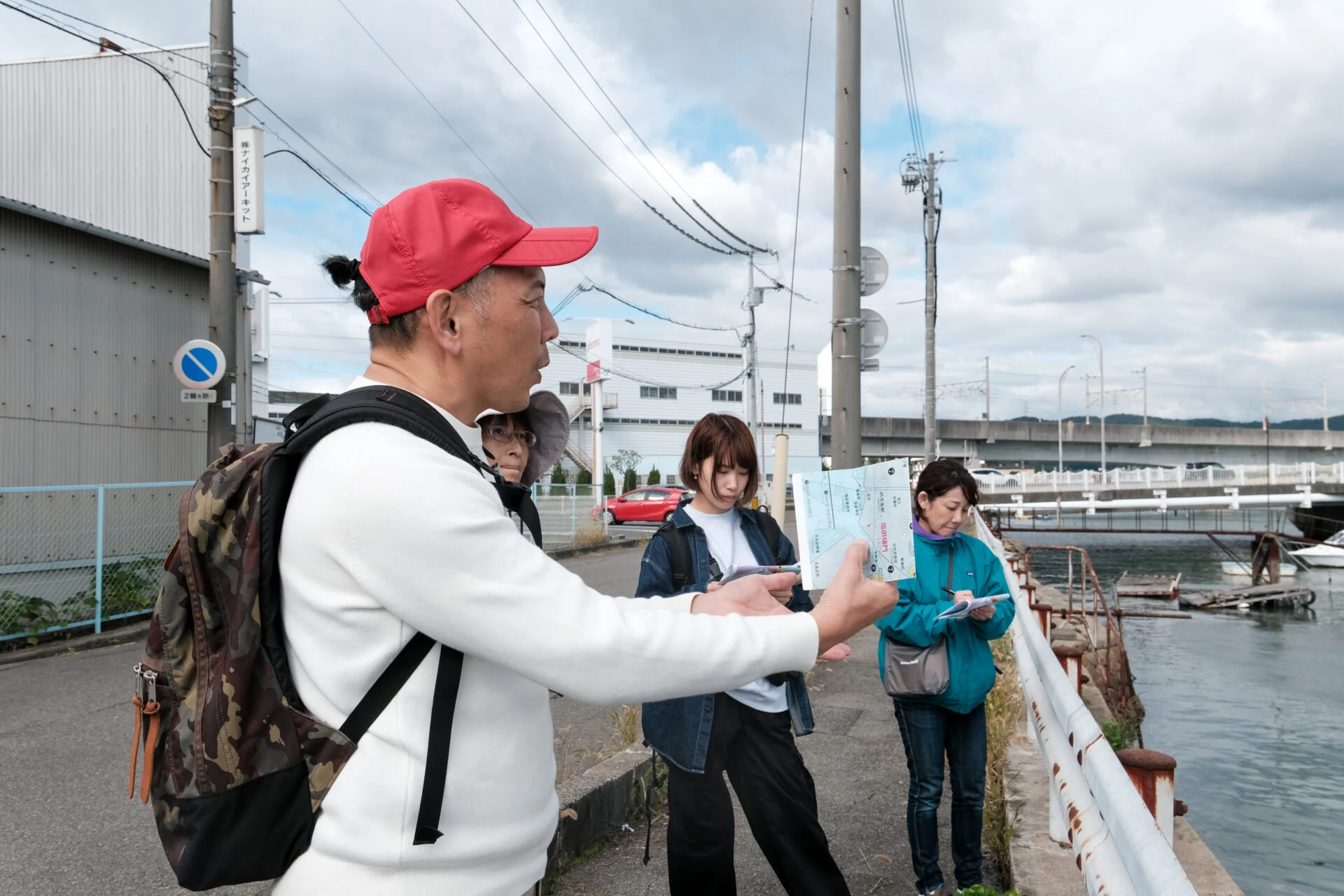
Although it was my first meeting with Yamaguchi, I had heard from one of the staff of "Living in Bichu, Machiya de Class" that "Yamaguchi looks at the town from the perspective of an architect, so walking with him will allow you to see the town from a new angle, which is interesting," so I was looking forward to this day.
At the meeting place, we were briefly informed about the course for the day and began walking.
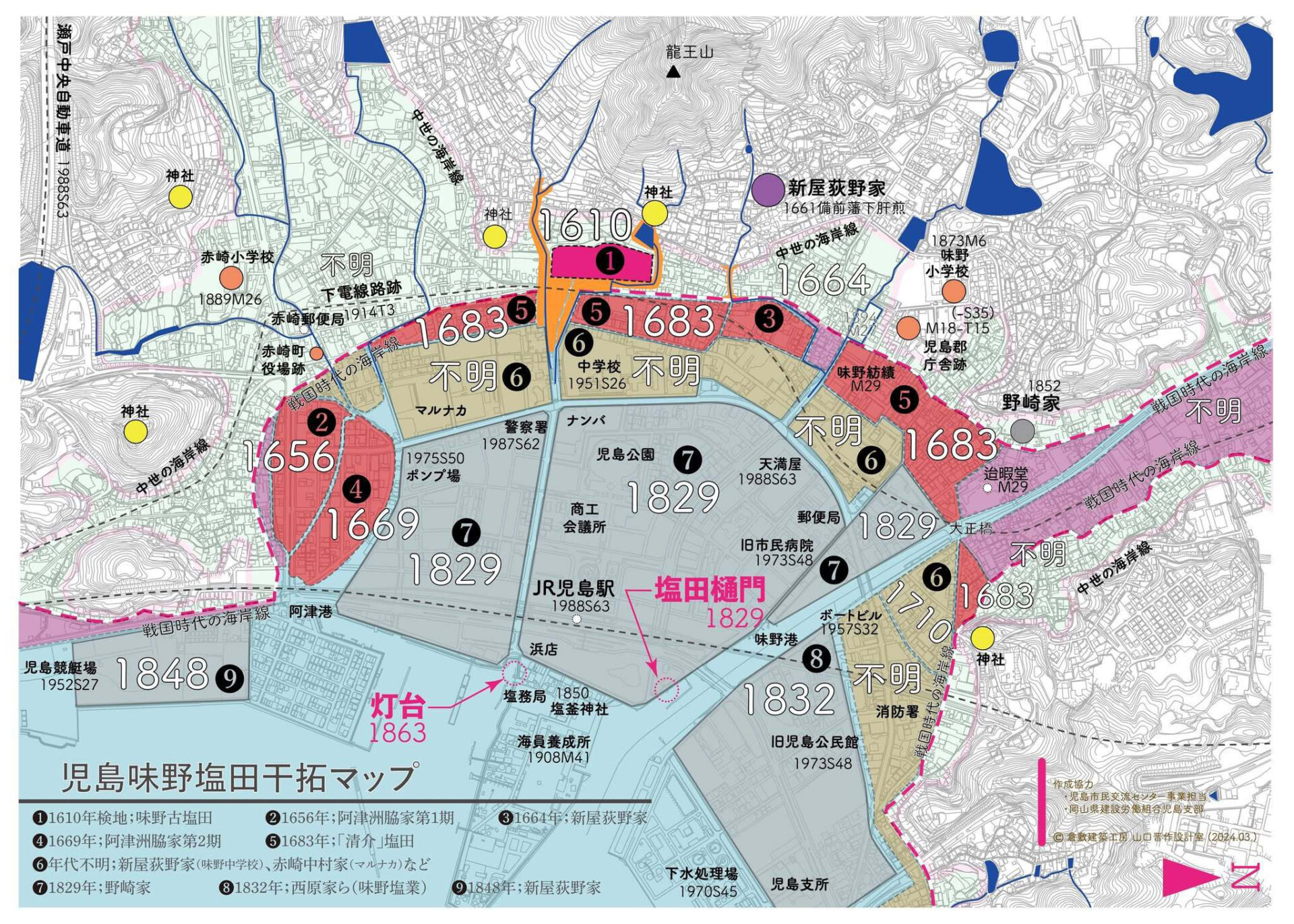
- Kojima Community Center
- Kojima Maritime School, Kojima Seamen Training Center, Kojima Seamen School, Kojima Branch of the National Institute of Technology
- Old Nozaki Hama Lighthouse
- Kurashiki City Ajino Junior High School
- Shimotsui Electric Railway track remnants
- Kojima Holy Covenant Christian Church
Traces of the sea town remaining throughout the city
The salt fields in Kojima ceased operations in the 1960s, so currently, the salt fields cannot be confirmed. However, while walking through the town, many traces of the salt fields were found.
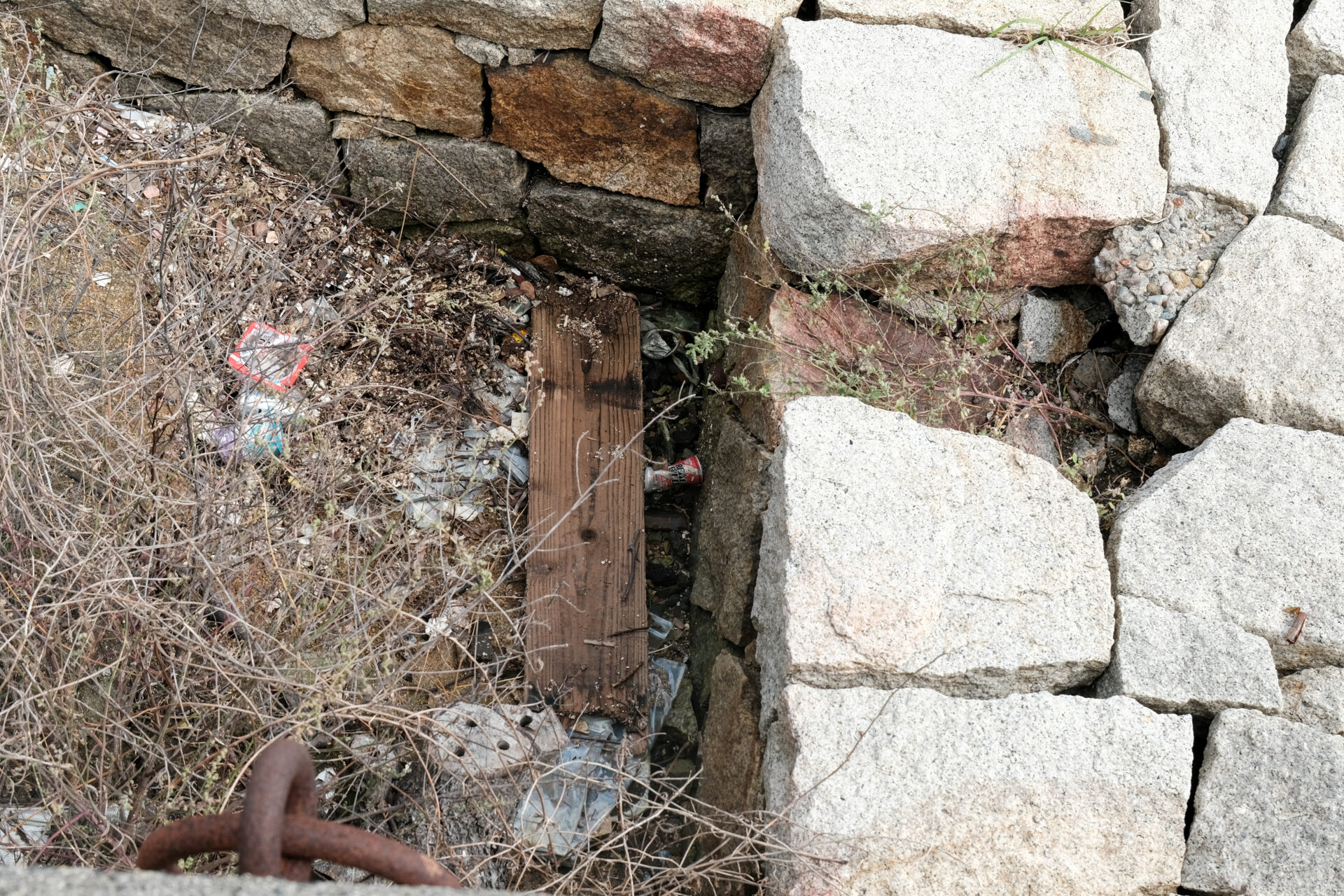
First, along the Oda River flowing behind Kojima City Hospital.
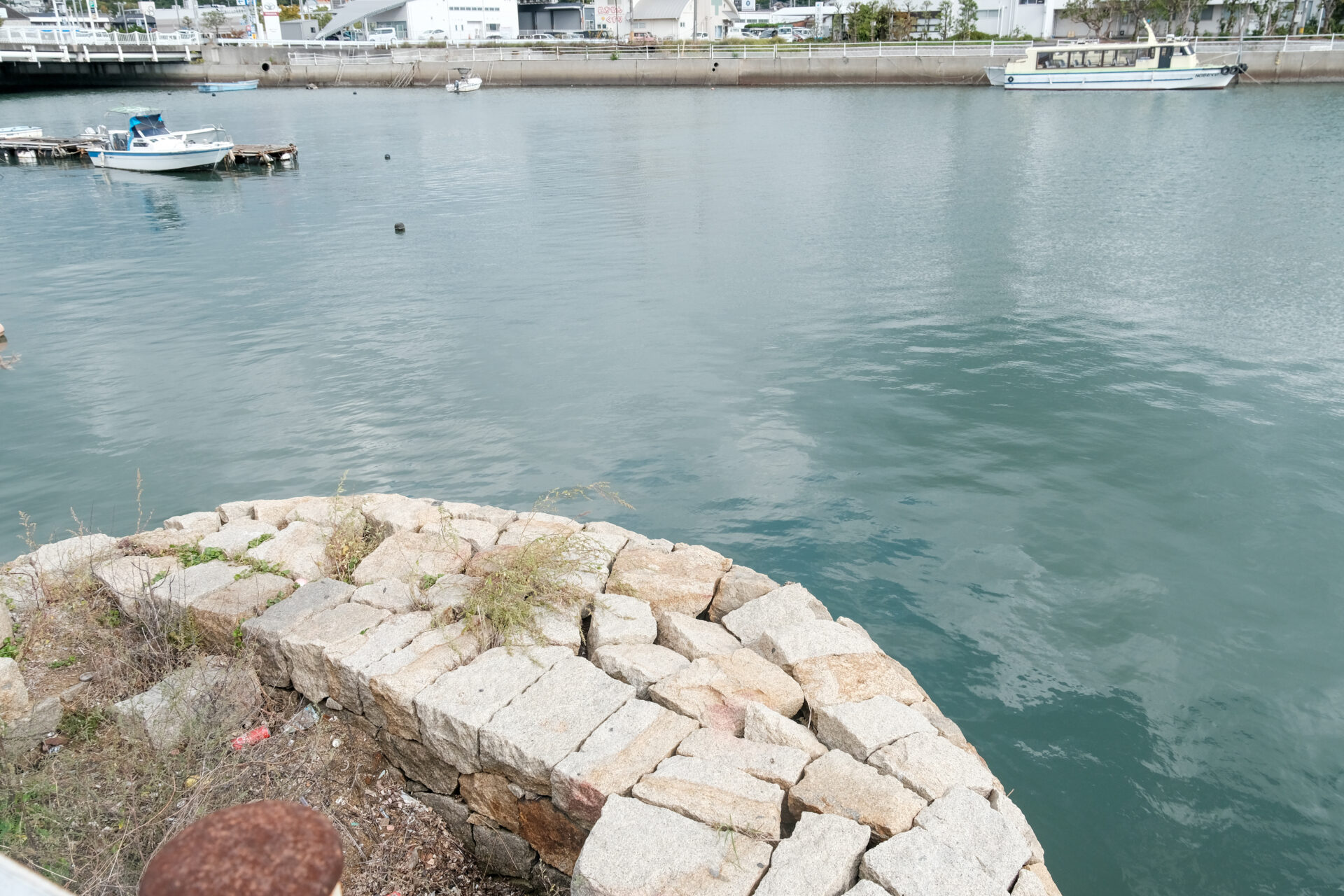
This protruding part is a remnant of what is called the salt field gate (enden himon), which was used to bring seawater into the salt fields. The area around the salt field gate is made of stone walls to prevent the seawater intake from being damaged by ocean waves. It is said that during high tide, the water level rises enough to cover the wooden boards.
After walking a bit, the monument of Kojima Maritime School appears.
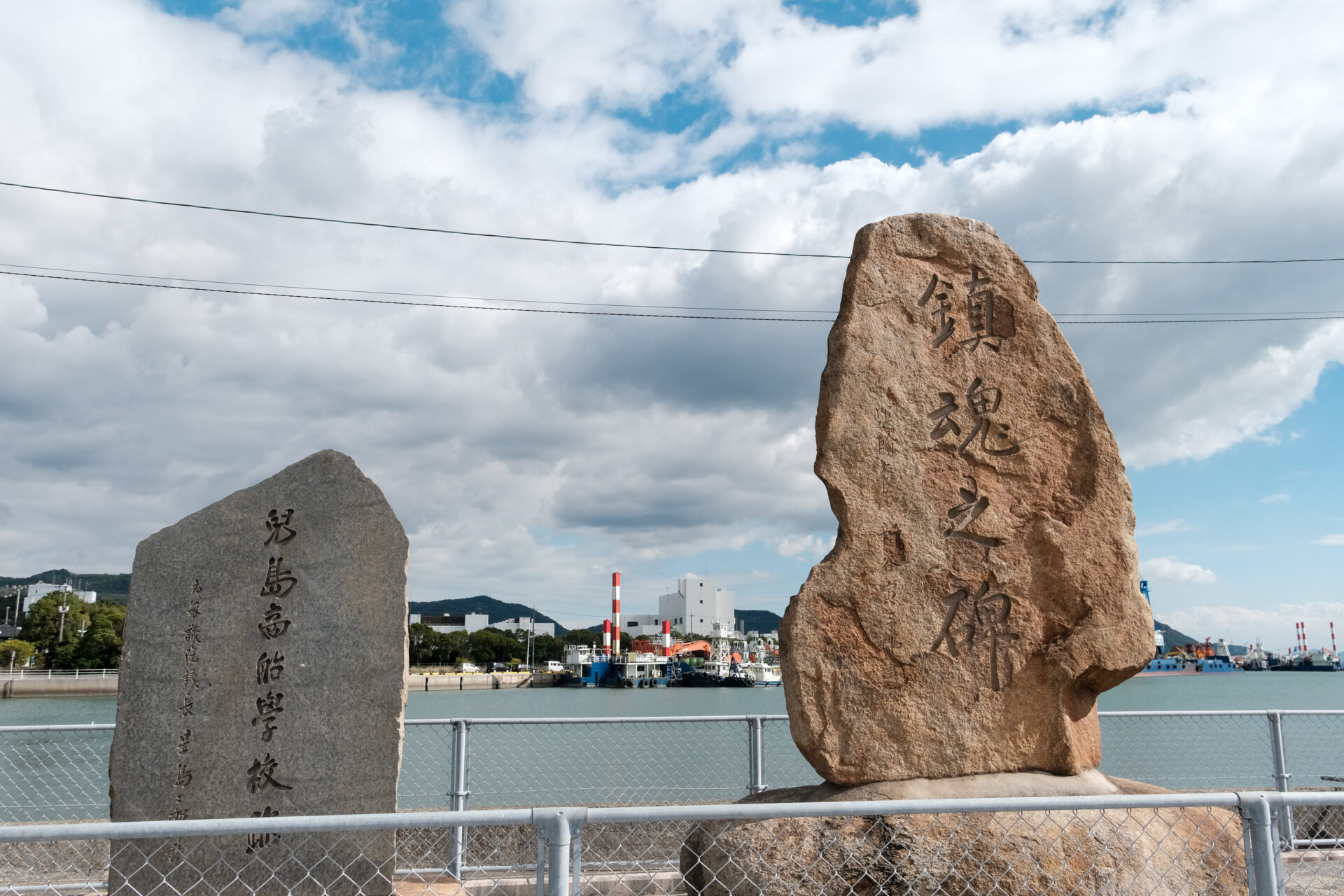
Kojima Port was also a place for training sailors for military ships.
While walking through the town, we encountered buildings designed by Yamaguchi.
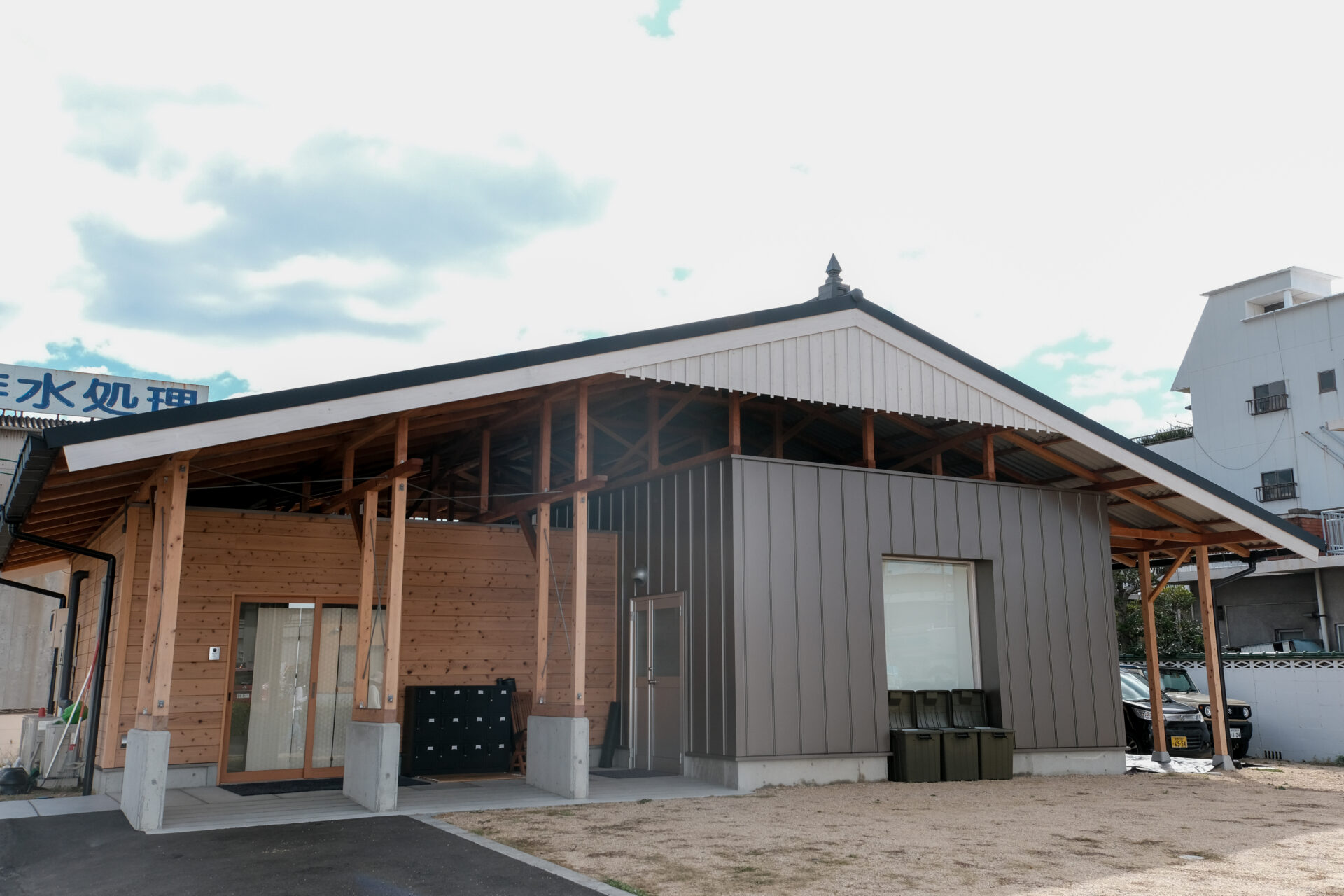
He shared anecdotes about several buildings he was involved in designing. Each building reflects Yamaguchi's understanding of Kojima's climate and history, making them livable spaces.
An experience that expands imagination by listening to the guide's stories
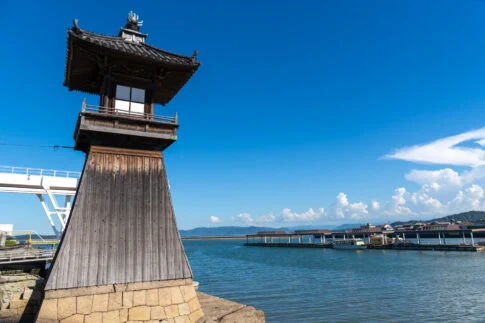
As we walked along the coast, the Old Nozaki Hama Lighthouse came into view, one of the symbols of Kojima.
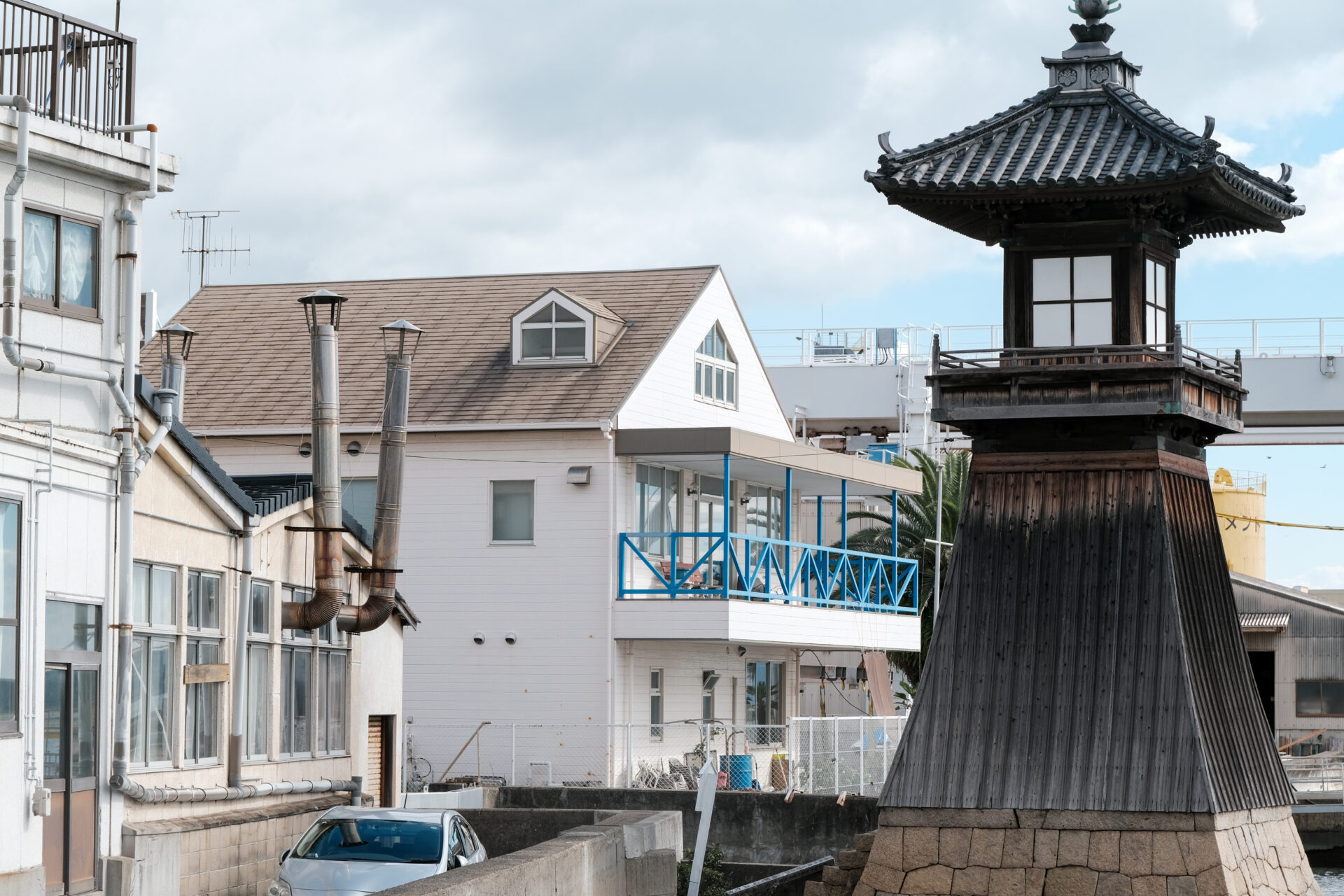
"Do you know why there is a lighthouse here?" Yamaguchi asked, prompting participants to ponder. After a moment, he continued, "Look across from the lighthouse. There is a Lawson convenience store over there."
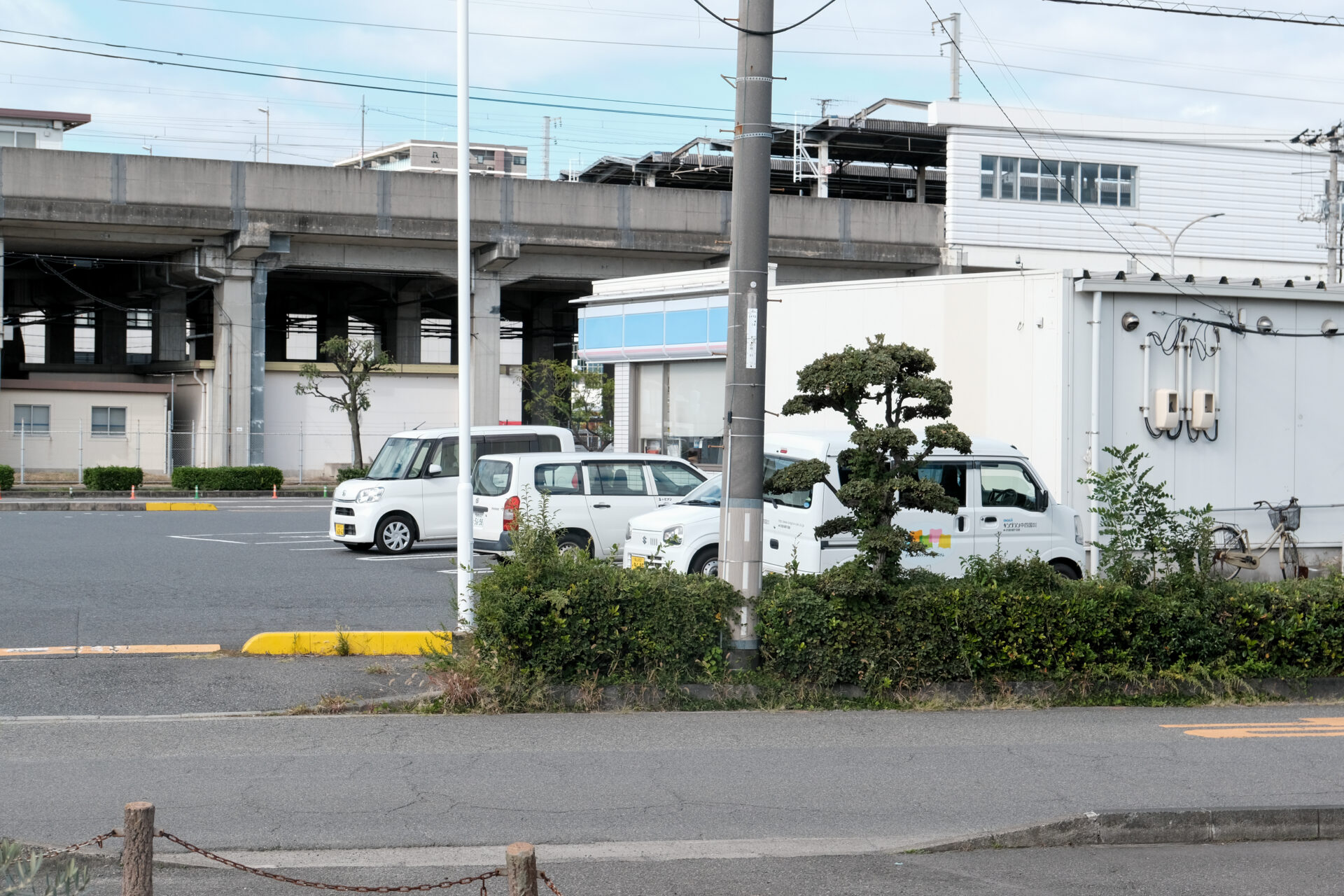
"The place where Lawson is now used to be a store selling salt. People coming from afar would enter the port relying on this lighthouse, buy salt here, and then load it onto their ships to head to the next port of call."
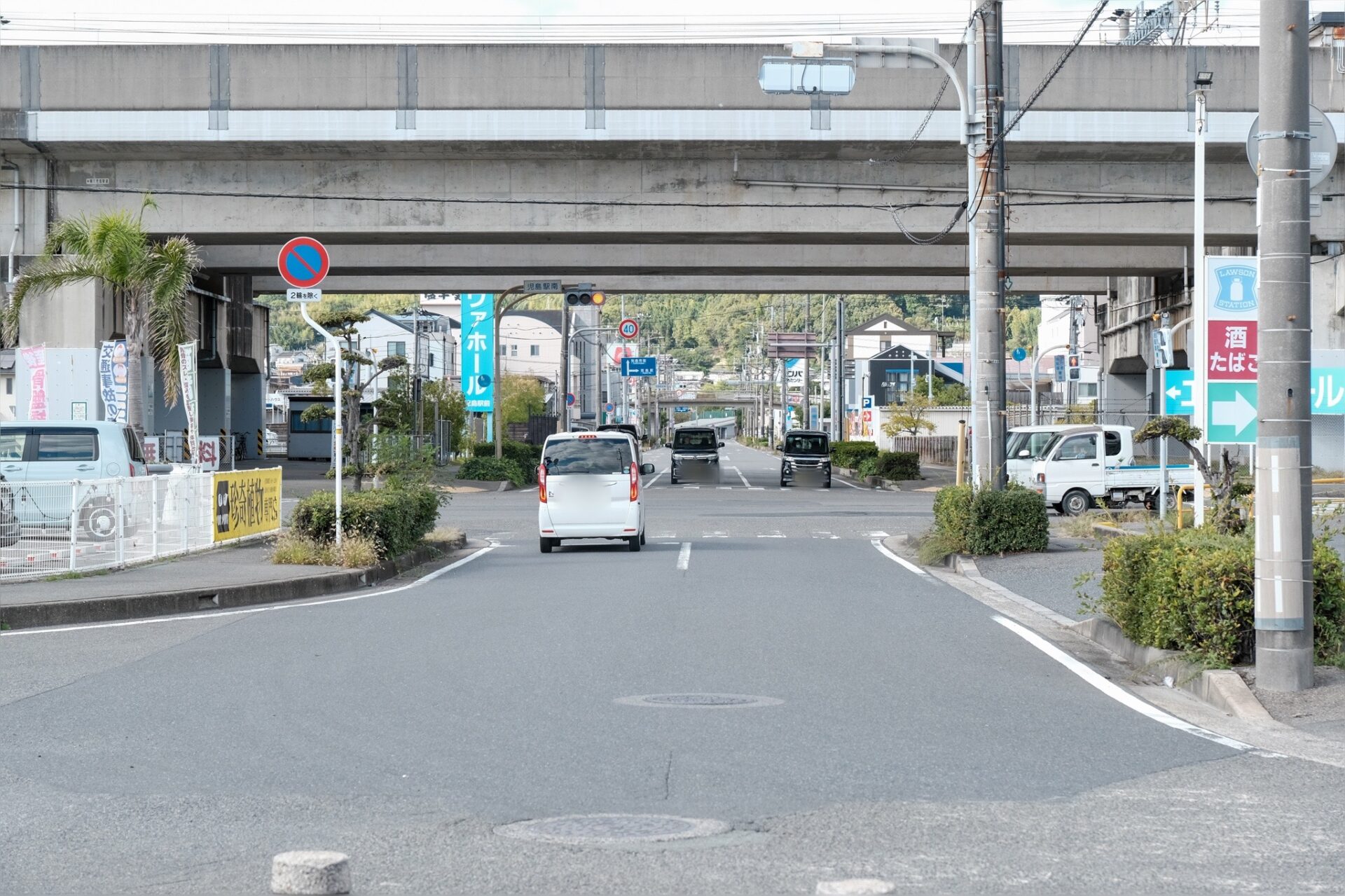
"The street in front of the lighthouse also has a large road. This used to be a canal. The salt fields were worked on in each settlement, so canals were developed to transport goods by boat to each settlement. Some of the places that are now large stores are remnants of wharves."
Listening to Yamaguchi's stories made the ordinary scenery appear like a scene from a drama.
Kojima's salt production was not only by the Nozaki family. The existence of the Ogino family
When it comes to salt production in Kojima, the Nozaki family is famous, but in fact, salt production was also carried out by families other than the Nozaki family.
Prominent among them are the Suwaki and Ogino families, and it is said that the Nozaki family was able to achieve large-scale operations by learning from the salt production of both families. The Nozaki family had the environment to learn from the businesses that were conducted in their hometown.
The site of the Ajino (Ajino) town walk this time was once the location of the Ogino family's salt fields. The land of the current Kurashiki City Ajino Junior High School was also previously owned by the Ogino family.
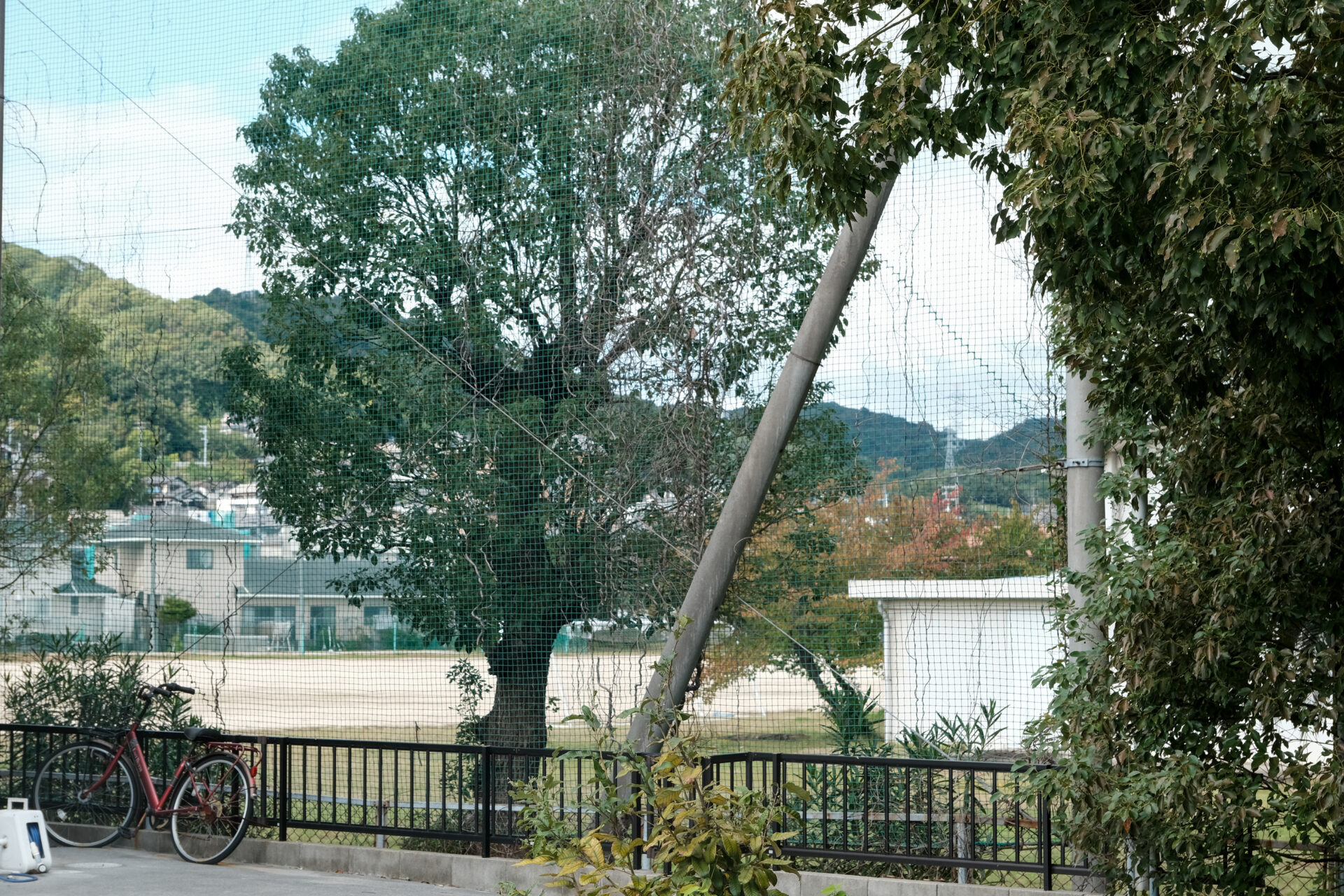
Even after it became a junior high school, there is a legend that on rainy days, salt would blow from the playground, possibly due to the influence of the salt fields.
As we climbed further up the hill from Ajino Junior High School, we arrived at the Kojima Holy Covenant Christian Church.
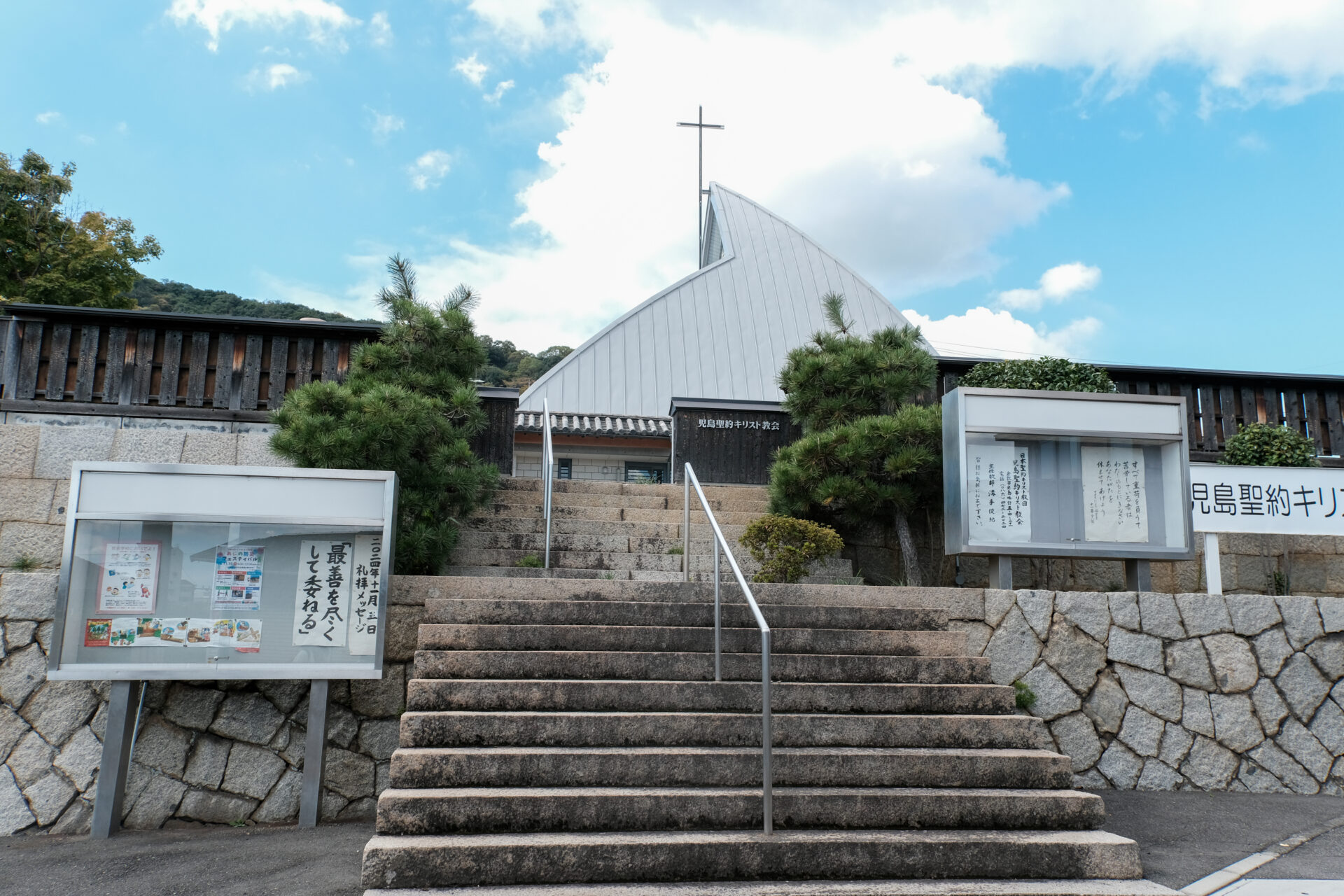
It is said that this location of the church was also once the land of the Ogino family. The Japanese house next to the chapel was a parlor for entertaining guests during the time of the Ogino family.
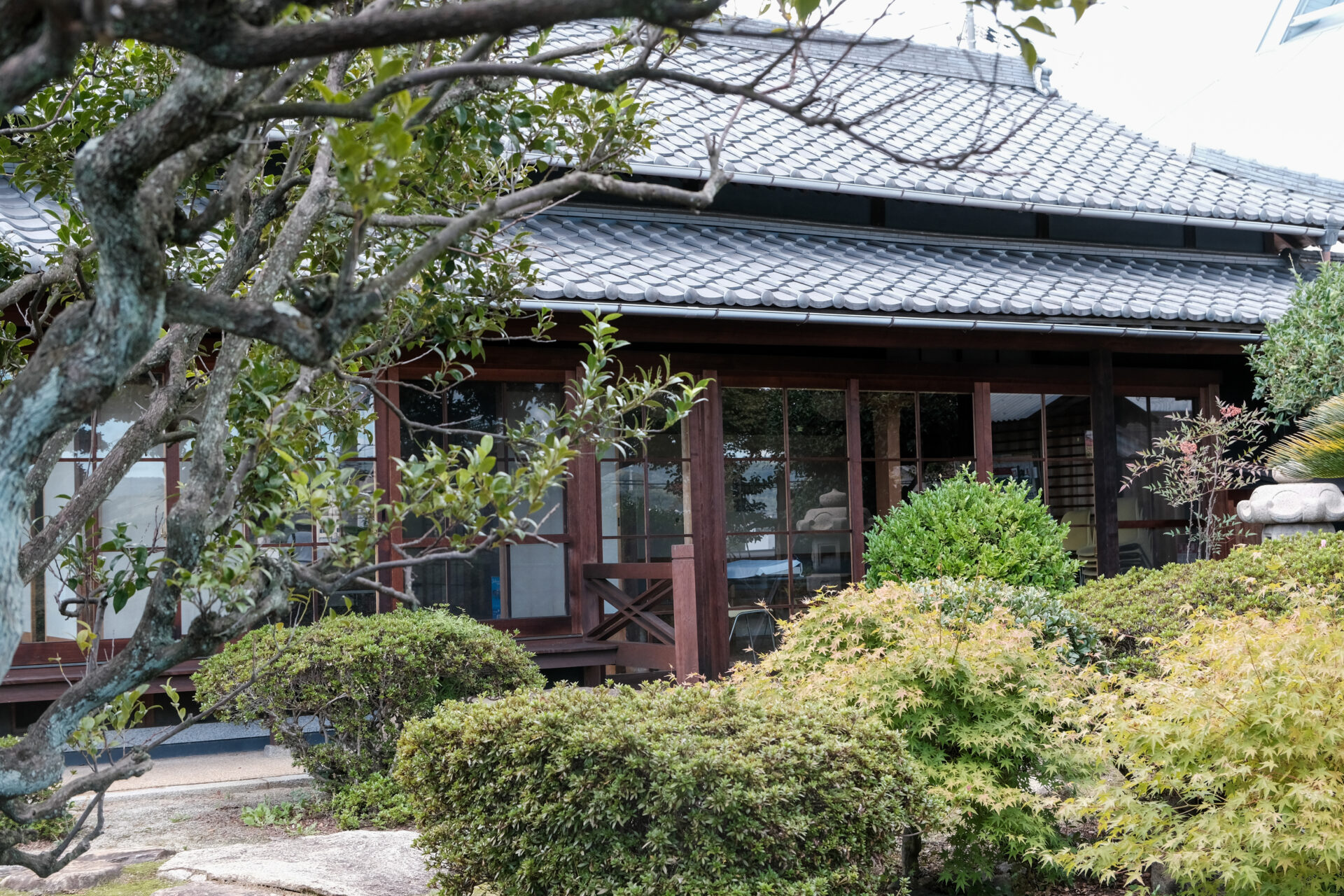
Since the Kojima Holy Covenant Church received the building, it has been used as a chapel, but now it serves as a place for interaction while retaining an eight-tatami mat room.
It seems that Mr. Yamaguchi was involved in the renovation of this traditional Japanese house.
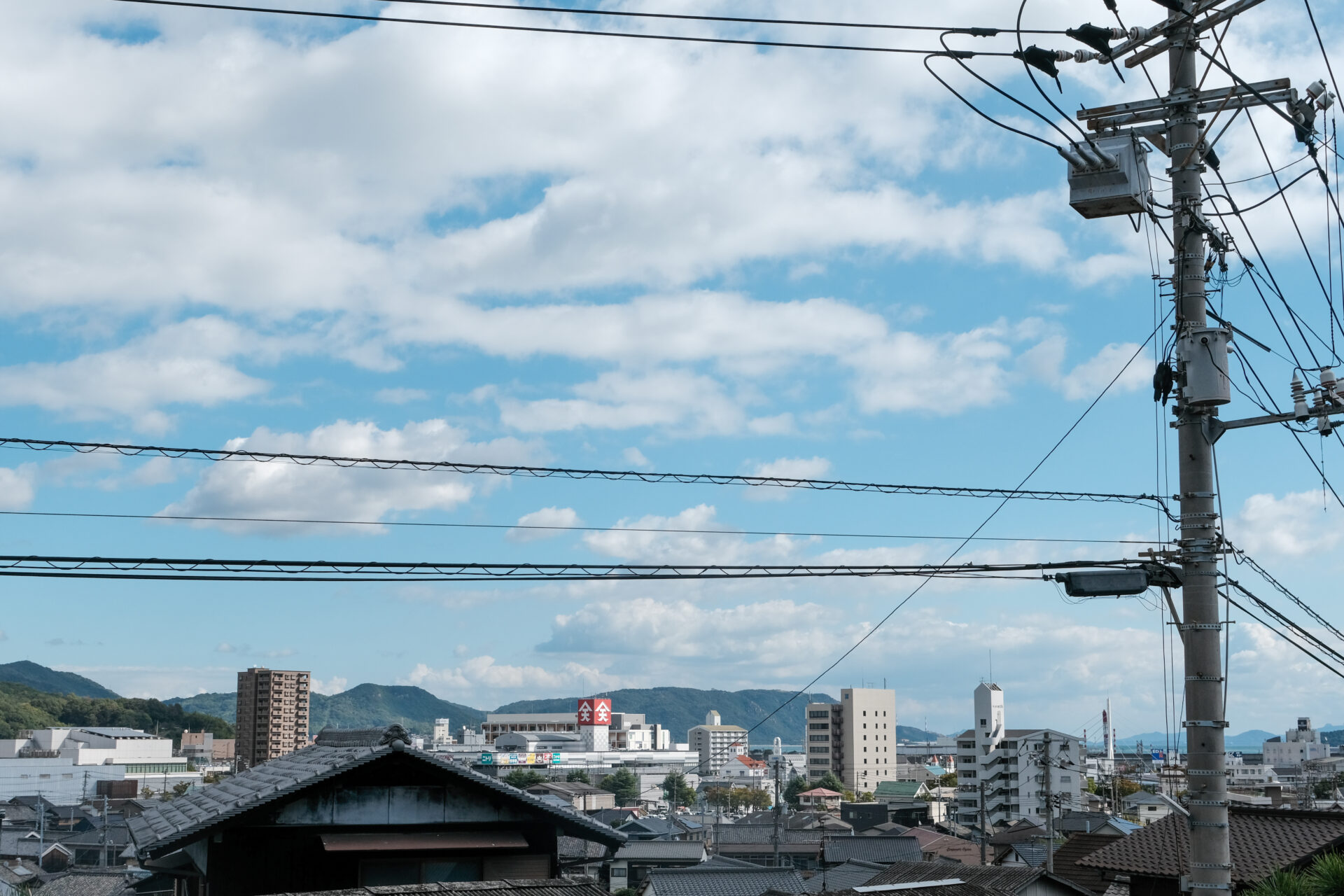
When Mr. Ogino was engaged in salt production, there were fewer buildings than now, and it must have been a residence with a panoramic view of the Seto Inland Sea.
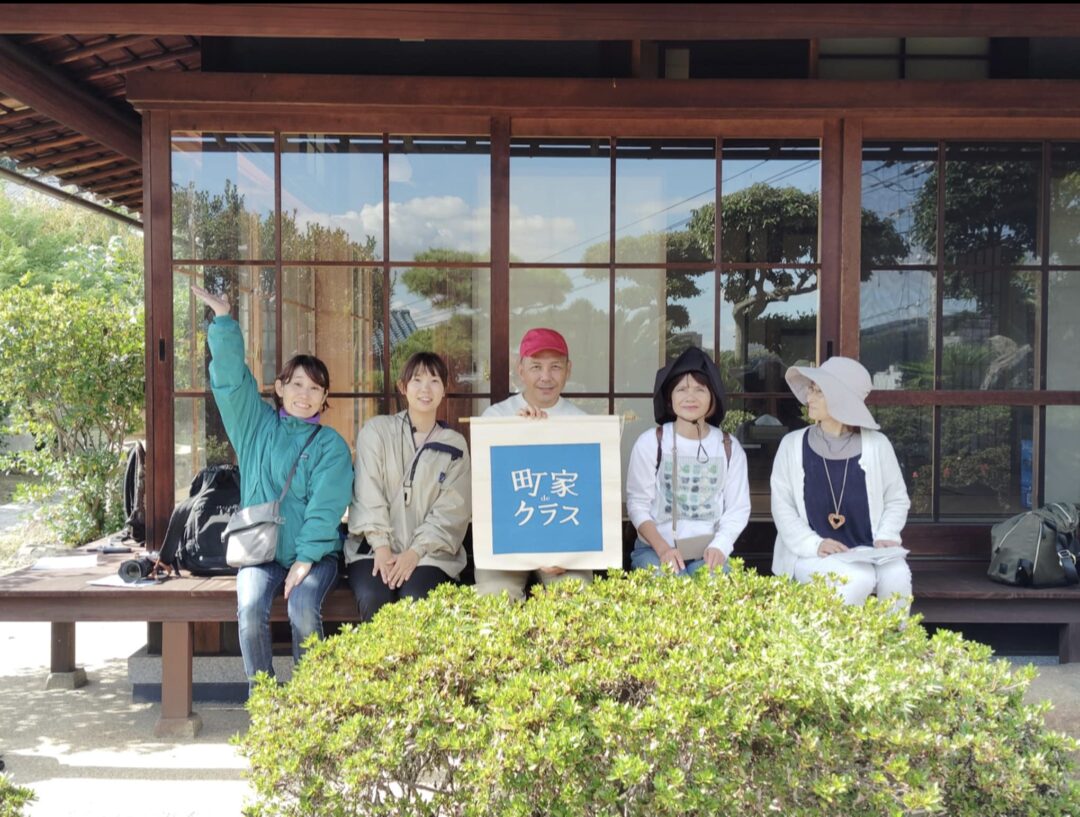
The walking tour of Kojima Ajino ended successfully with a group photo taken while admiring the beautiful Japanese garden reflected through the glass.
The walking tour lasted about two hours, starting from the Kojima Community Center at 10 a.m.
The traditional Japanese house next to Kojima Holy Covenant Church is private property. We entered with special permission this time.
Conclusion
For me, who moved from Kanto to Kurashiki in December 2023, this walking tour came at a time when I was starting to get a sense of the land in Kojima. Since I have participated in events at Nozaki's Historical Residence and Kojima Port, I feel that every time I learn about events that took place there in the past, I can visualize those scenes in my mind.
In Bichu, the Machiya de Class holds various walking tour events every year.
Although the 2024 Bichu living, Machiya de Class has ended, I hope to participate in walking tours at different spots next year and reflect on the stories of the town of Bichu.
Data on the Kojima Ajino Walking Tour
| Name | Kojima Ajino Walking Tour |
|---|---|
| Date | November 6 (Wednesday) and 16 (Saturday), 2024 10 a.m. to 12 p.m. |
| Location | Ajino, Kojima, Kurashiki City |
| Participation Fee (including tax) | 1,000 yen |
| Website | Bichu Living, Machiya de Class |