A 10-minute walk from Kojima Station.
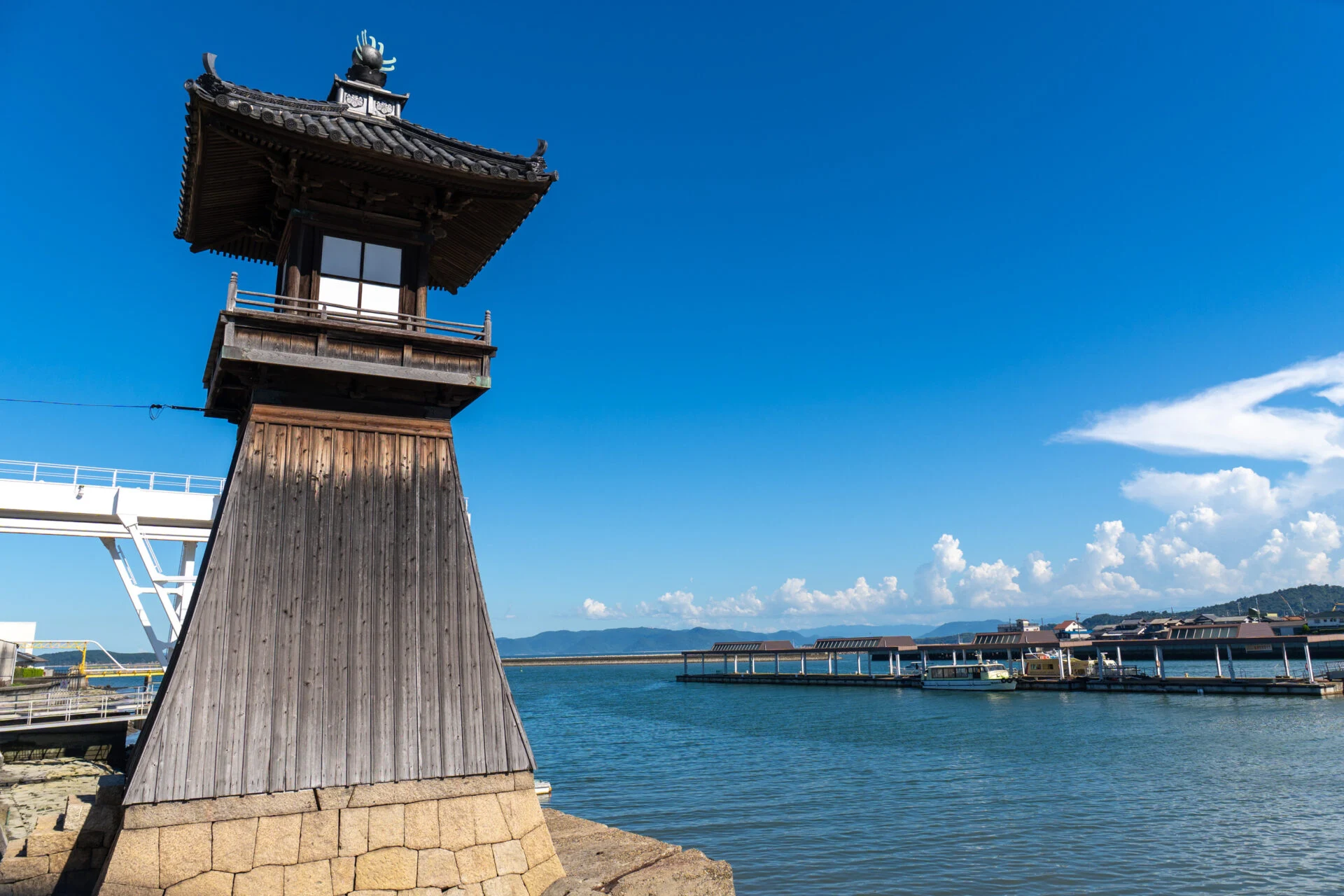
Did you know that there is a wooden lighthouse (tomyodai) at Kojima Tourist Port, where sightseeing boats pass under the Seto-Ohashi Bridge and regular ferries to Honjima in Marugame City, Kagawa Prefecture, will be held during the Setouchi International Art Festival 2025 Autumn session?
That is the Nozaki's Historical Residence.
We interviewed about the history and architectural features of Nozaki's Historical Residence, which has watched over the town of Kojima since the Edo period.
What is the Nozaki Family?
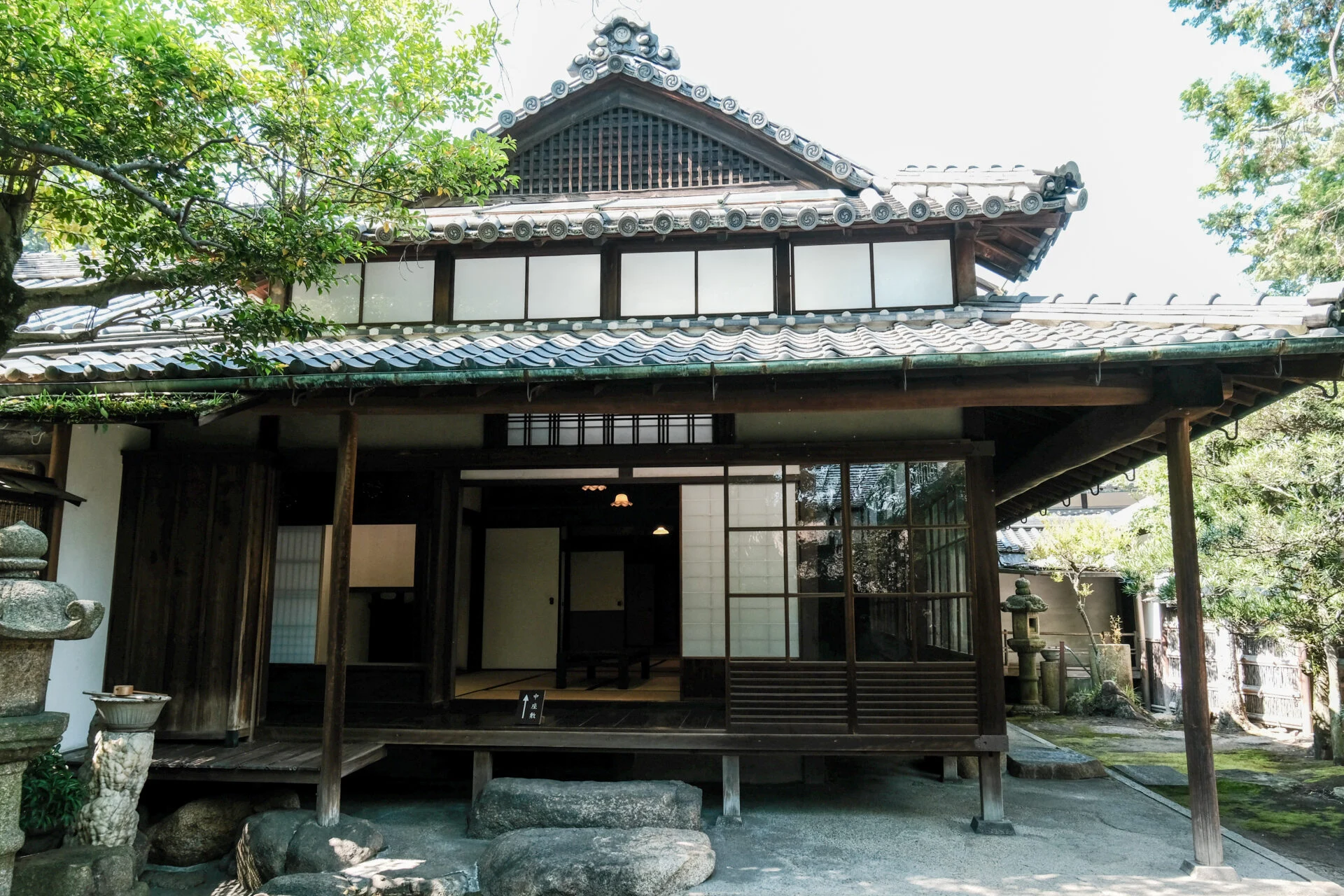
The Nozaki family, whose ancestor is the Seiwa Genji, is said to have adopted the surnames Tada and Konan in the past and began residing in Ajino Village, Kojima District in the late 16th century.
Nozaki Buzaiemon, who built Nozaki's Historical Residence, was engaged in the manufacturing and sales of tabi (traditional Japanese socks), but at the age of 38, he resolved to create salt pans off the coast of Ajino Village and Akasaki Village. He then adopted the surname Nozaki, taking the names of both villages.
Subsequently, the area of the salt pans he owned expanded to about 161 hectares, and he grew into a major salt landowner. Furthermore, at the command of the Okayama Domain, he successfully undertook a land reclamation project of about 700 hectares in Fukuda Shinden.
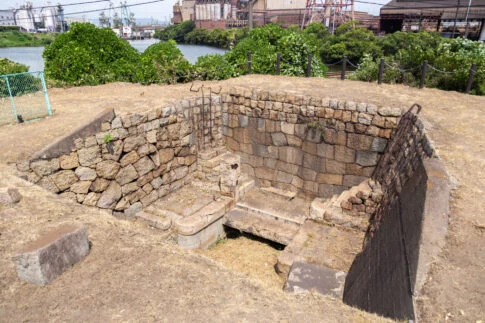
In 1890, Buzaiemon's grandson, Bukichiro, was elected as a member of the House of Peers, further establishing the family as a prominent household representing Kurashiki.
What is the Nozaki Family Salt Industry Museum?
When it comes to Nozaki's Salt, it is still widely known today, and various products using salt, including not only table salt but also chemical products (industrial products made by applying chemical changes in chemical factories), continue to be produced.
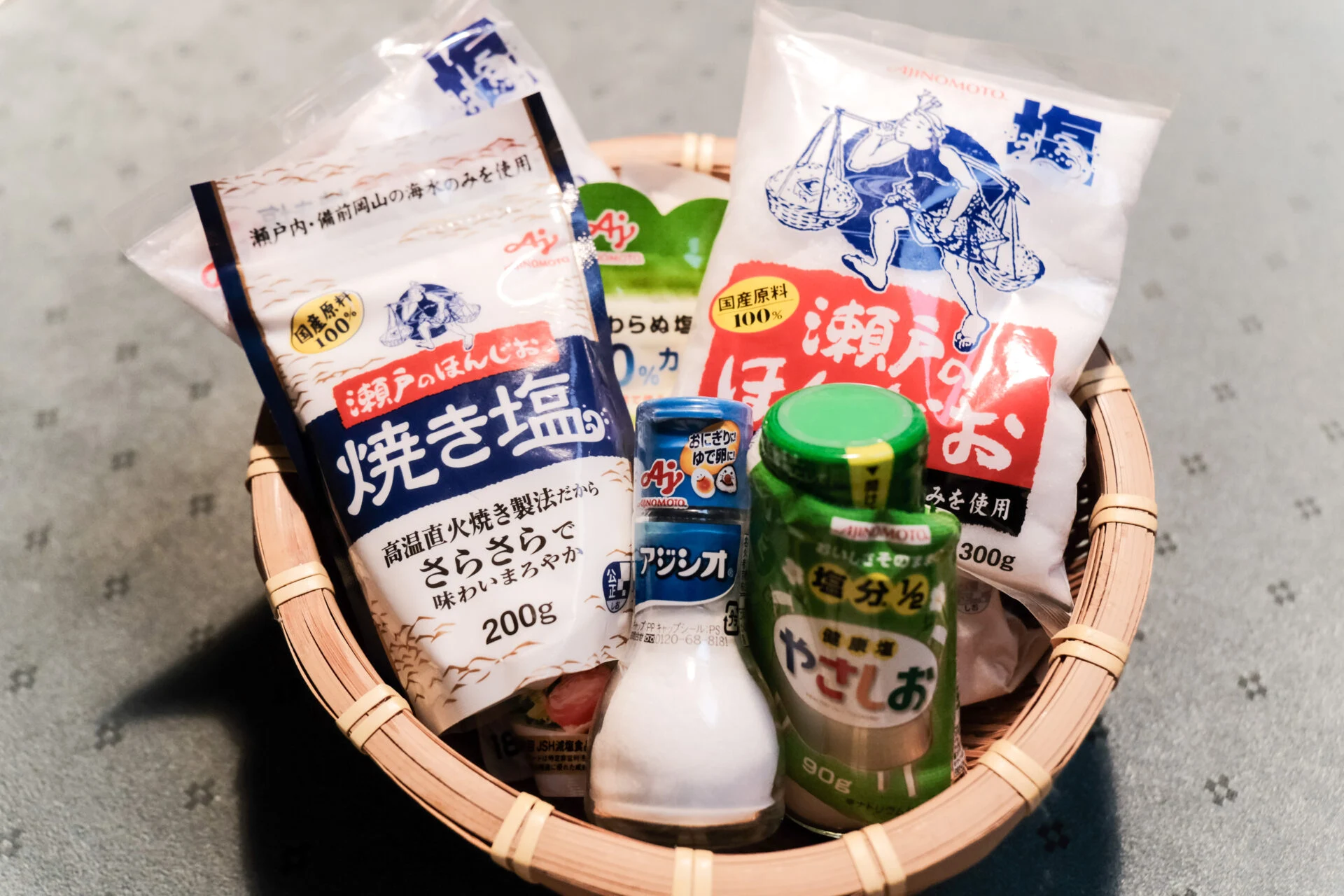
The salt produced by the Nozaki family is made by Naikai Salt Industry Co., Ltd..
Since its establishment in 1829, it has consistently continued the salt production business on the Kojima Peninsula facing the Seto Inland Sea.
Naikai Salt Industry, which continues the salt business in the same area, is the oldest salt company still in existence.
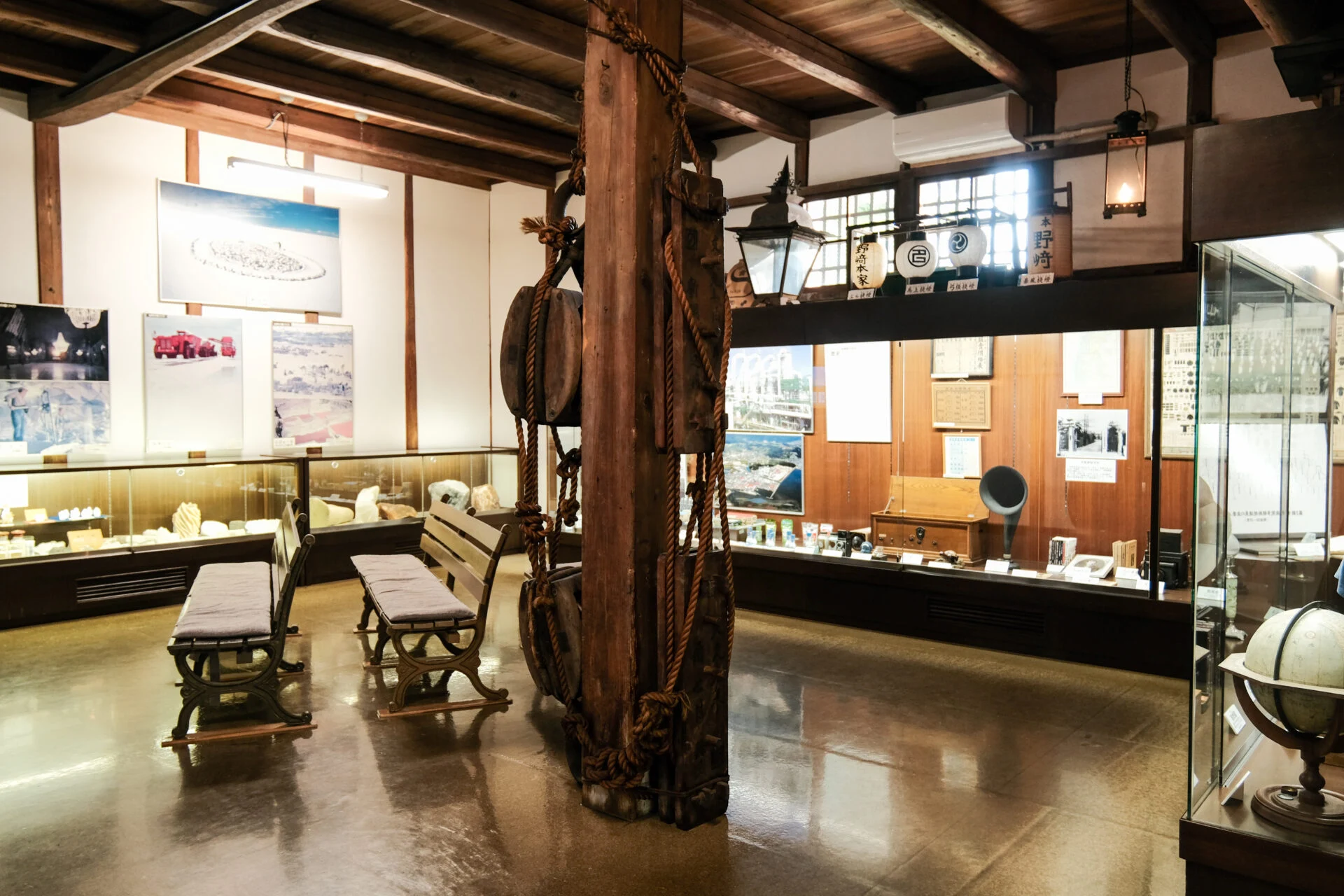
The large mansion and storehouses of the Nozaki's Historical Residence, located near the Kojima Community Center, was recognized as a public interest incorporated foundation museum for the first time in Okayama Prefecture in 2011.
In addition to housing and exhibiting numerous valuable collections, the history of the salt industry, which is the family business of the Nozaki family, is also displayed and explained with actual items.
What is the Nozaki Lighthouse?
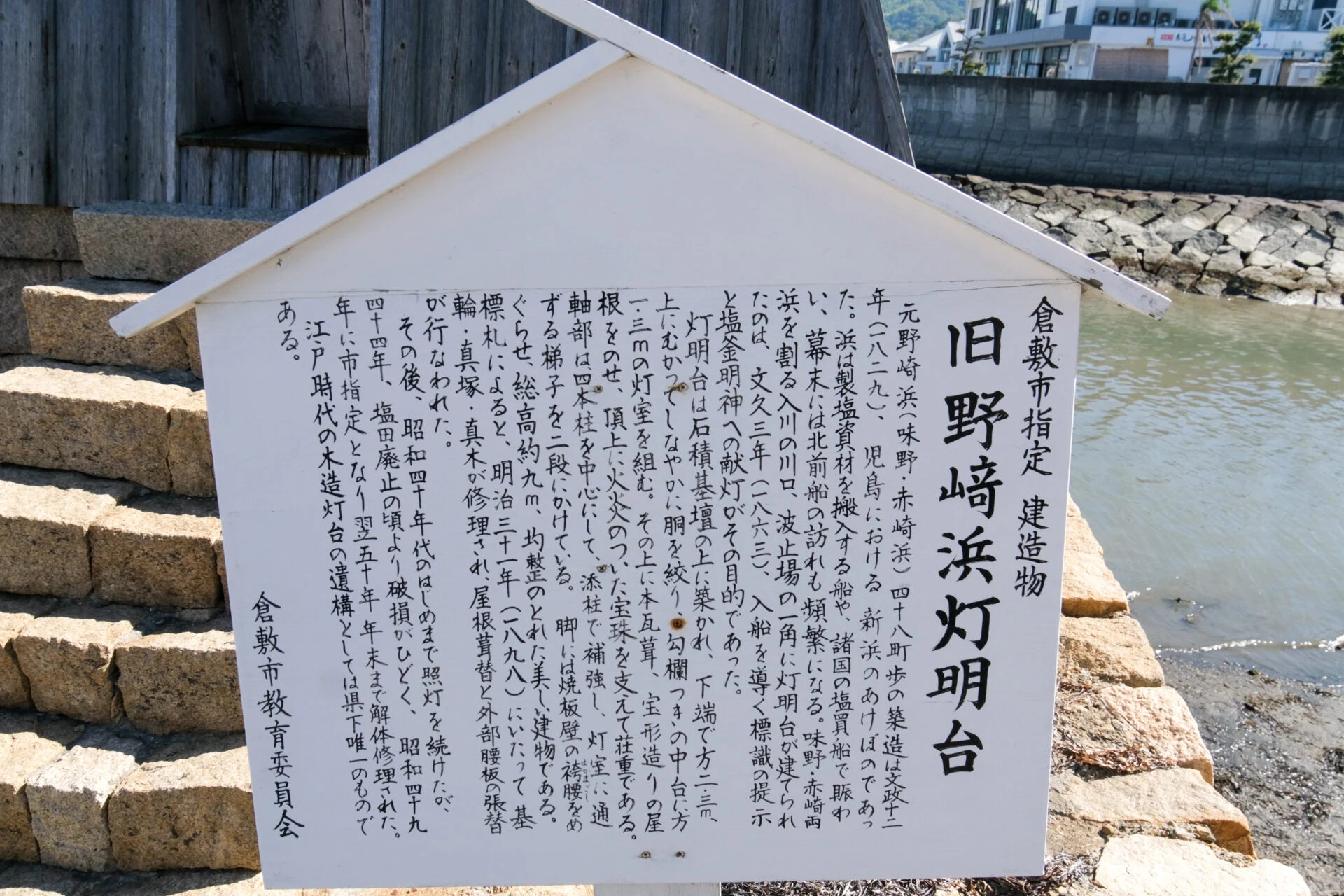
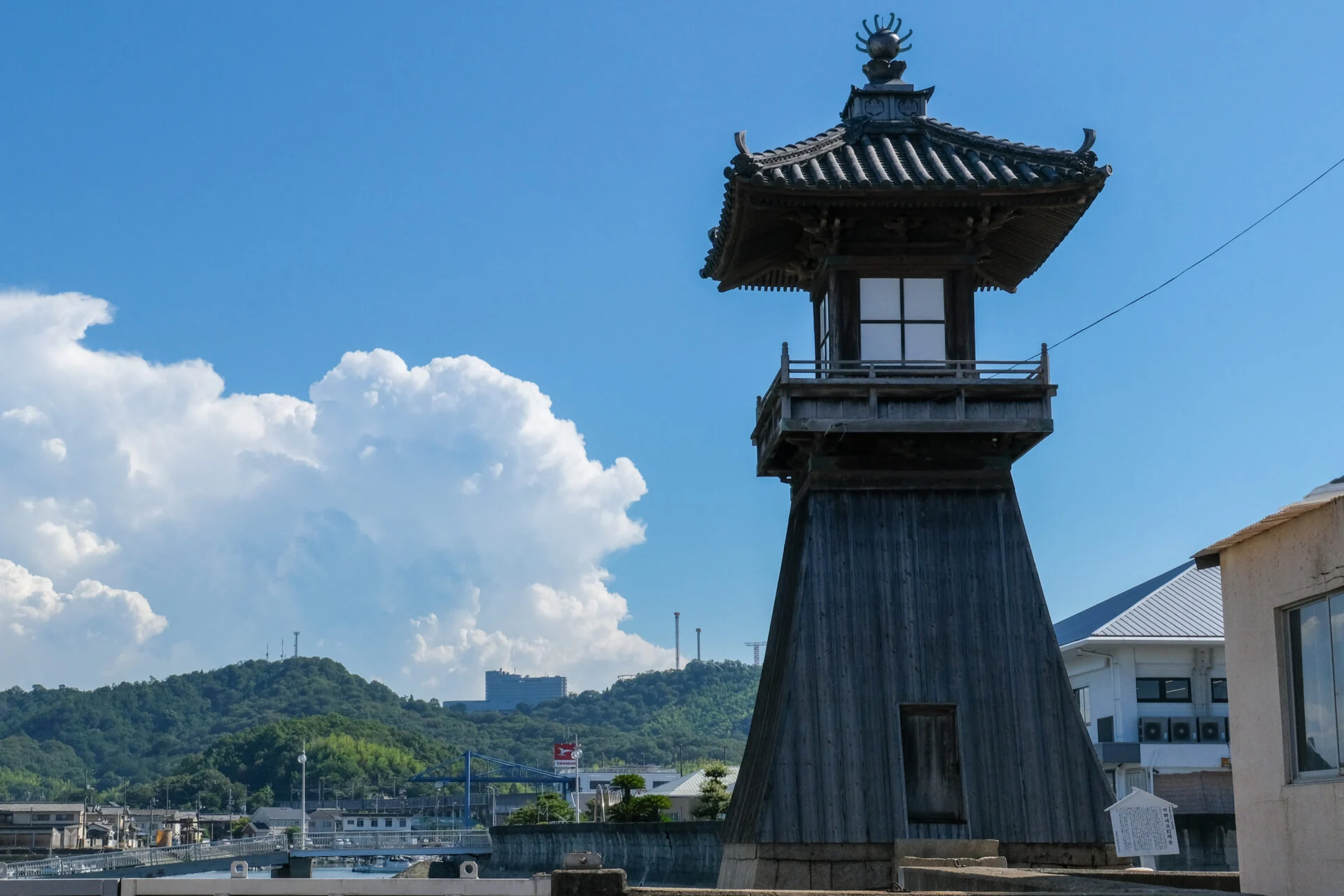
The Nozaki Lighthouse is a wooden lighthouse located in Kojima Ajino.
It is said to have been built in the 3rd year of Bunkyu (1863), making it over 160 years old. Nozaki Buzaiemon, who built Nozaki's Historical Residence, established it primarily for the sacred lantern (goshintou) of Shiogama Shrine, located to the north of the lighthouse.
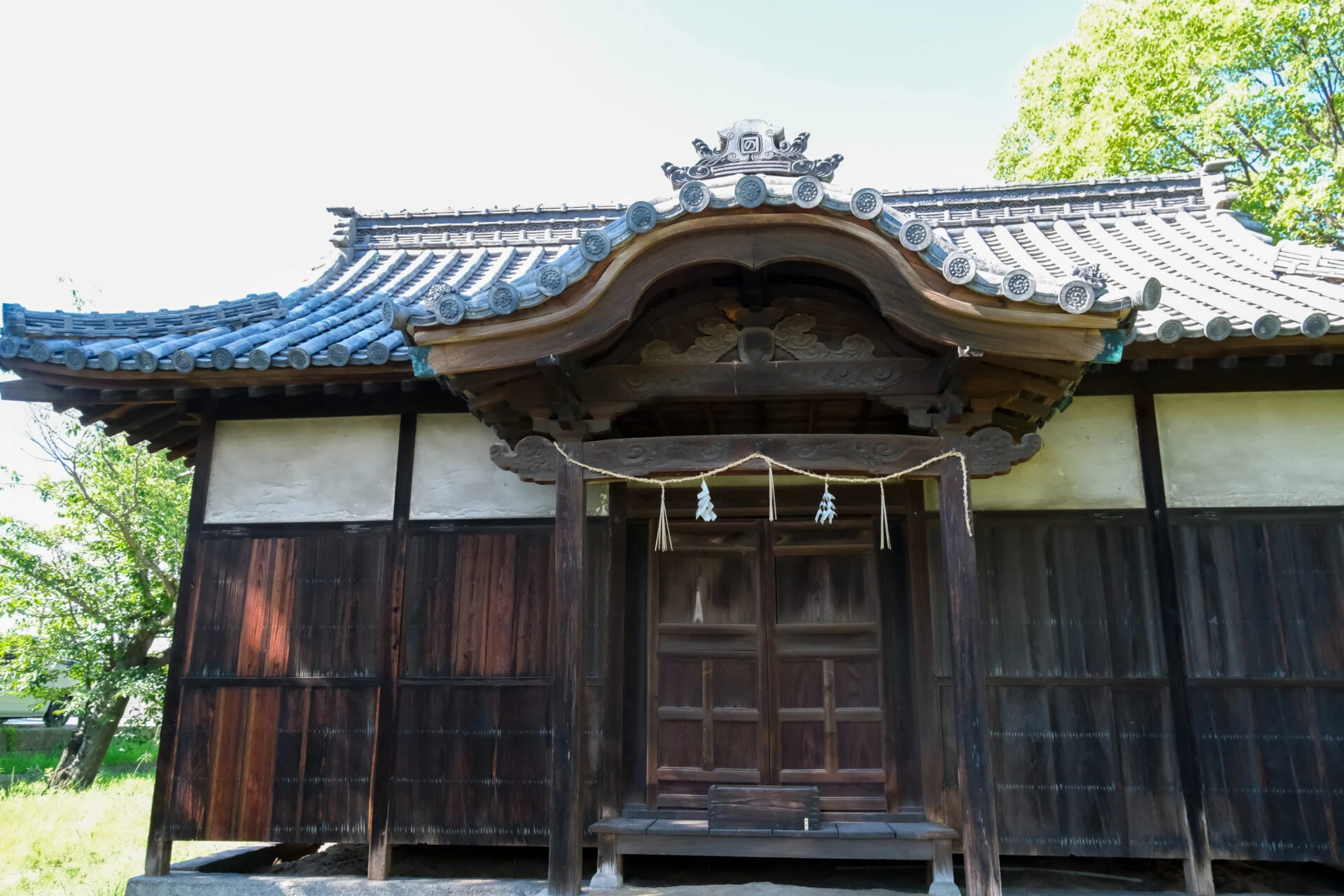
A lighthouse that illuminates not only the gods but also the people
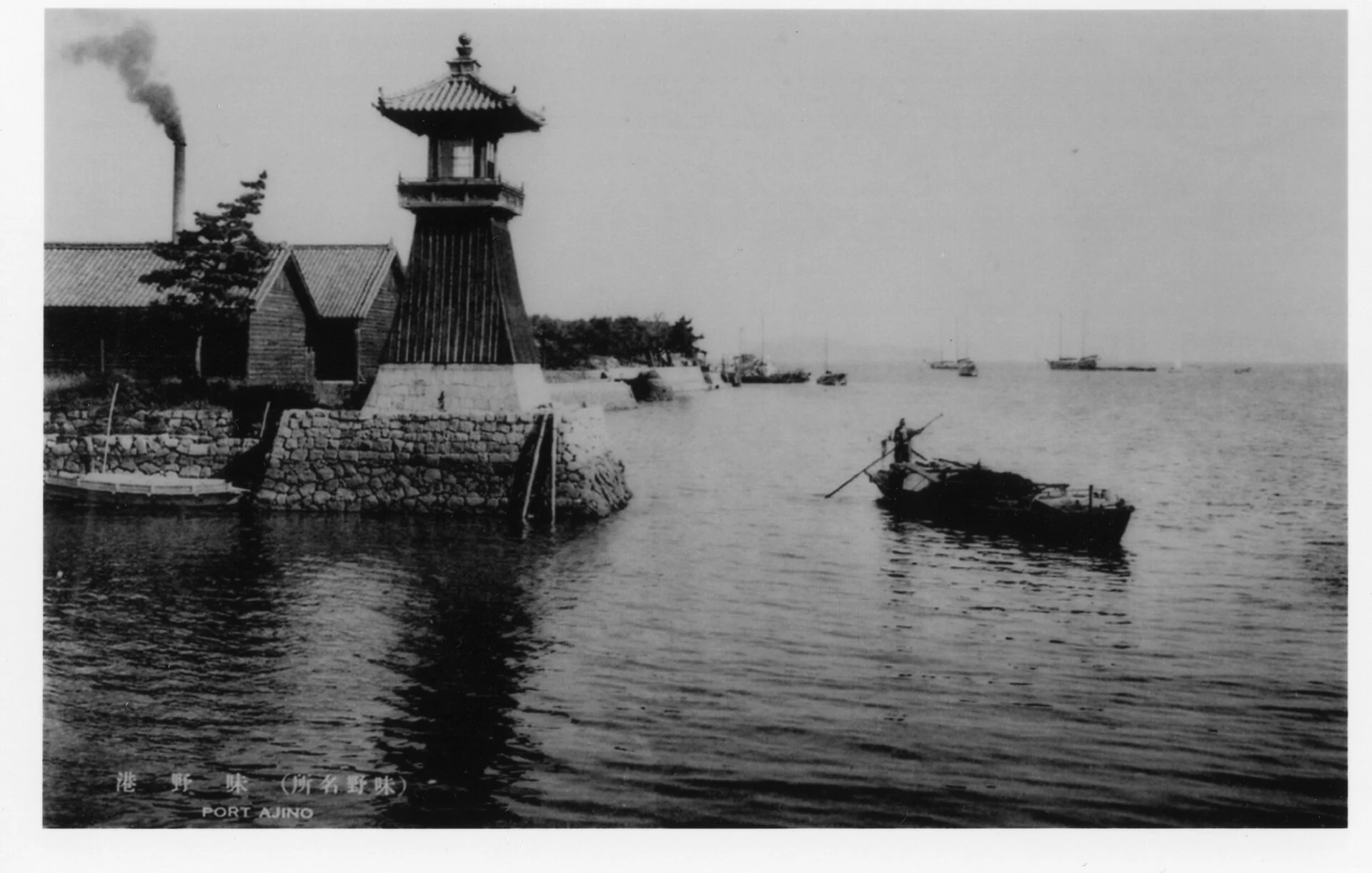
The Nozaki Lighthouse was established at the southern end of the Nozaki family's salt pans, which were thriving at the time.
Since it was also used as a loading dock for shipping salt, it served as a lighthouse for ships entering and leaving the beach and for those navigating nearby waters, and was valued as a presence that illuminates both the gods and the people.
In 1898, it underwent a partial dismantling renovation, including the replacement of the roof with tiles, and took on its current appearance.
Later, in October 1974, it was designated as an Important Cultural Property of Kurashiki City, and in August 1975, preservation and repair work was carried out, and it continues to illuminate the port of Kojima to this day.
One of the few remaining Japanese-style lighthouse structures in the country
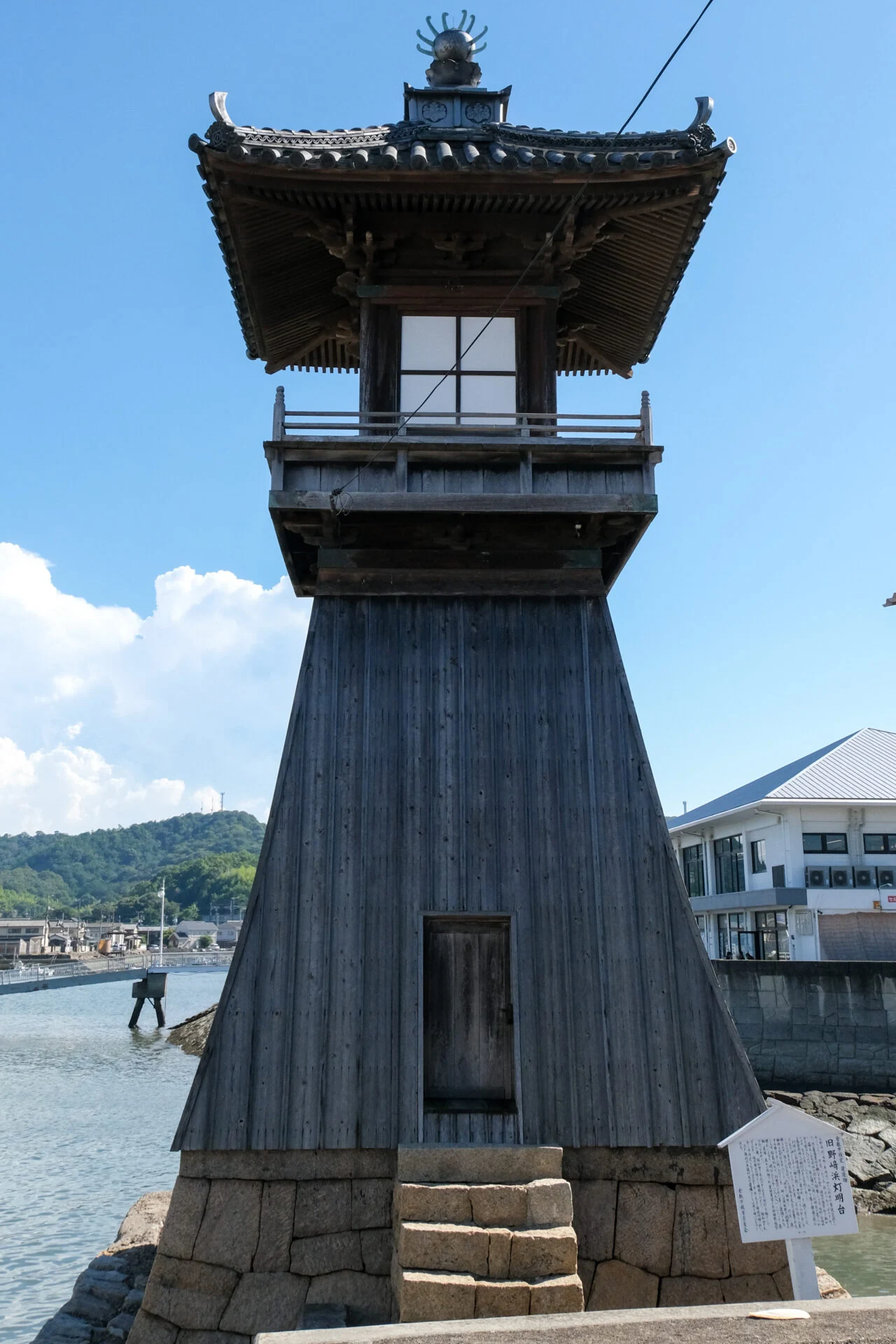
One reason the Nozaki Lighthouse was designated as an Important Cultural Property of Kurashiki City is its architectural rarity.
First, despite being a lighthouse right in front of the sea, it is a wooden high lantern.
It stands 9.69 meters tall.
When one thinks of lighthouses, white cylindrical structures made of stone in the Western style come to mind, but before Western culture entered Japan during the Edo period, wooden lighthouses were the norm.
Existing wooden lighthouses are rare nationwide, including the high lantern at Sumiyoshi Shrine in Osaka, which also serves as a lantern offering, and other high lanterns in Kanbira-cho, Kagawa Prefecture.
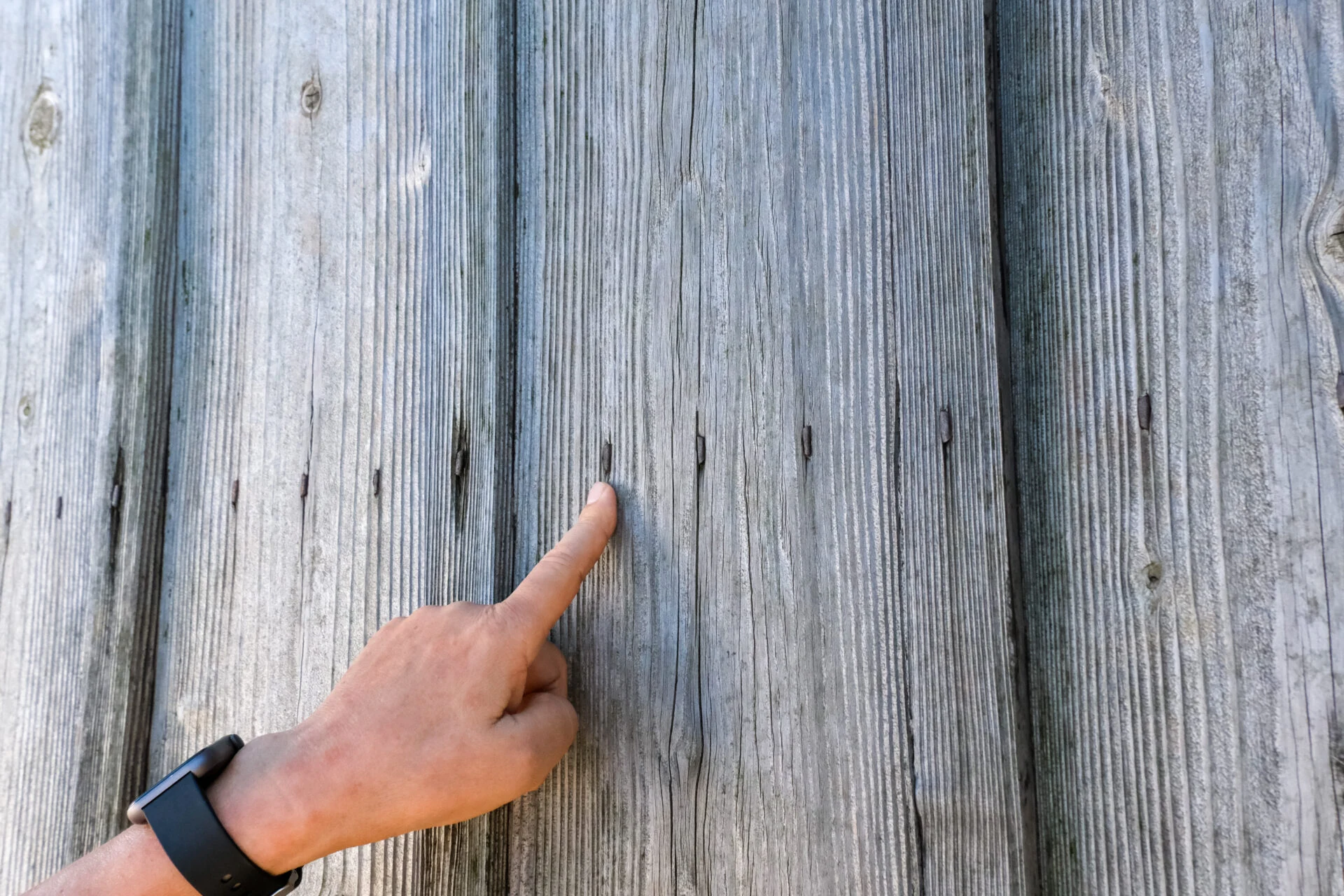
Additionally, the fact that the roof is covered with ceramic tiles is also a characteristic.
The tiles, carefully laid one by one, create an even greater sense of heaviness.
Under the roof, there is a room-like space, but since it is a lighthouse, lights are lit when it gets dark. The presence of a room for lighting the lights is also a unique feature of this Japanese-style lighthouse.
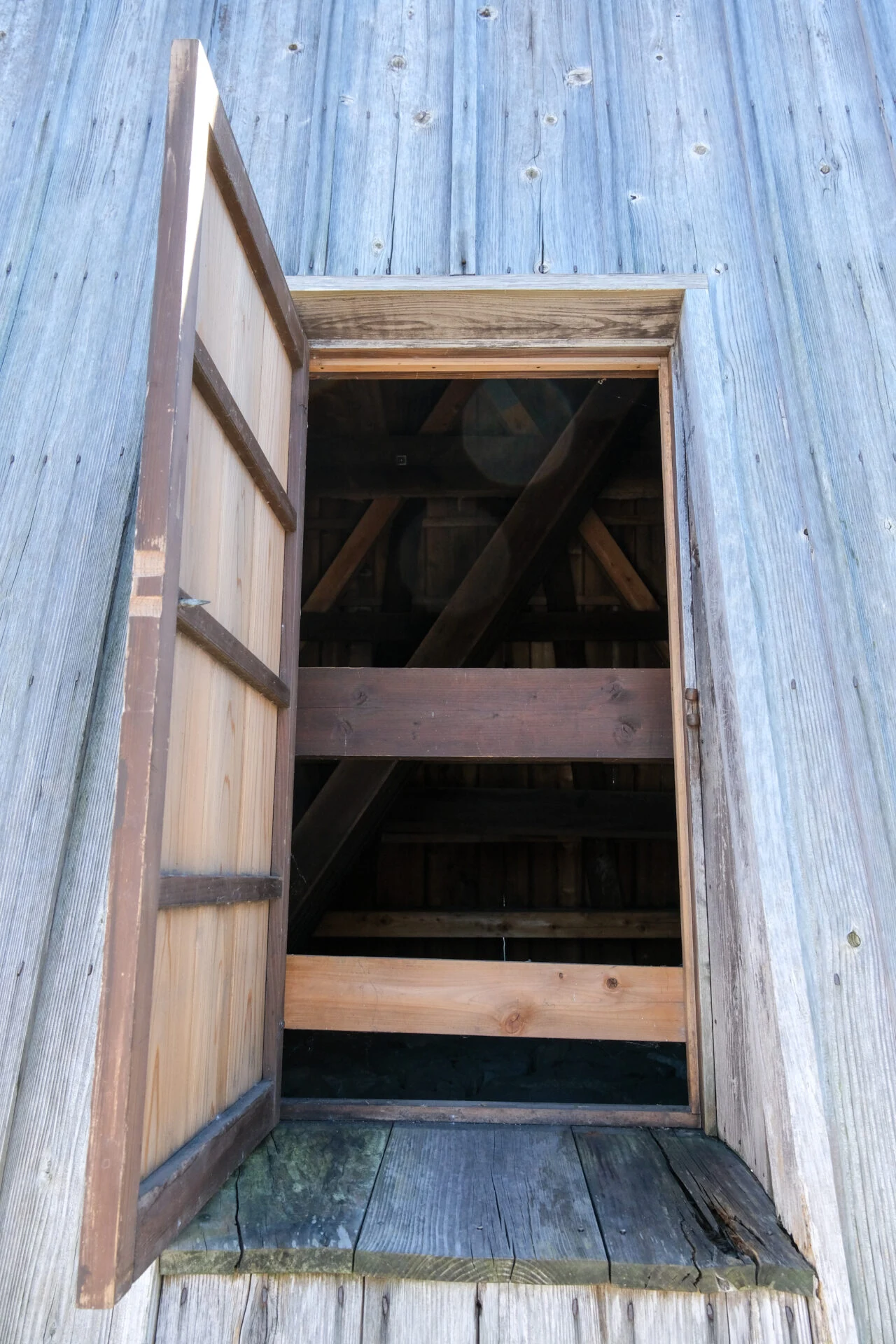
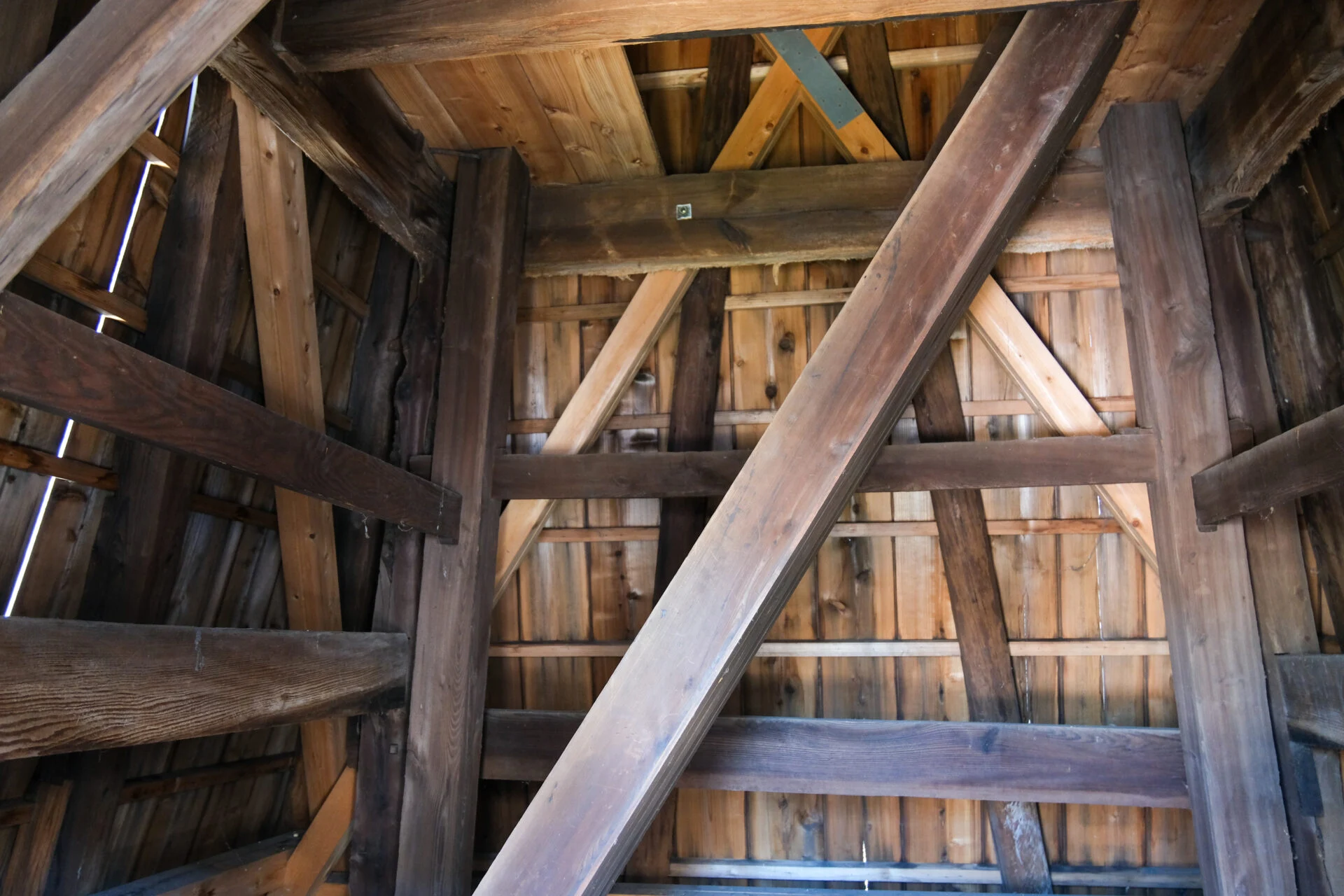
Normally, the inside of the door is not open to the public.
This time, it was specially unlocked for the interview, and we were able to take photos.
Even now, at night, the Nozaki Lighthouse gently illuminates Kojima Tourist Port.
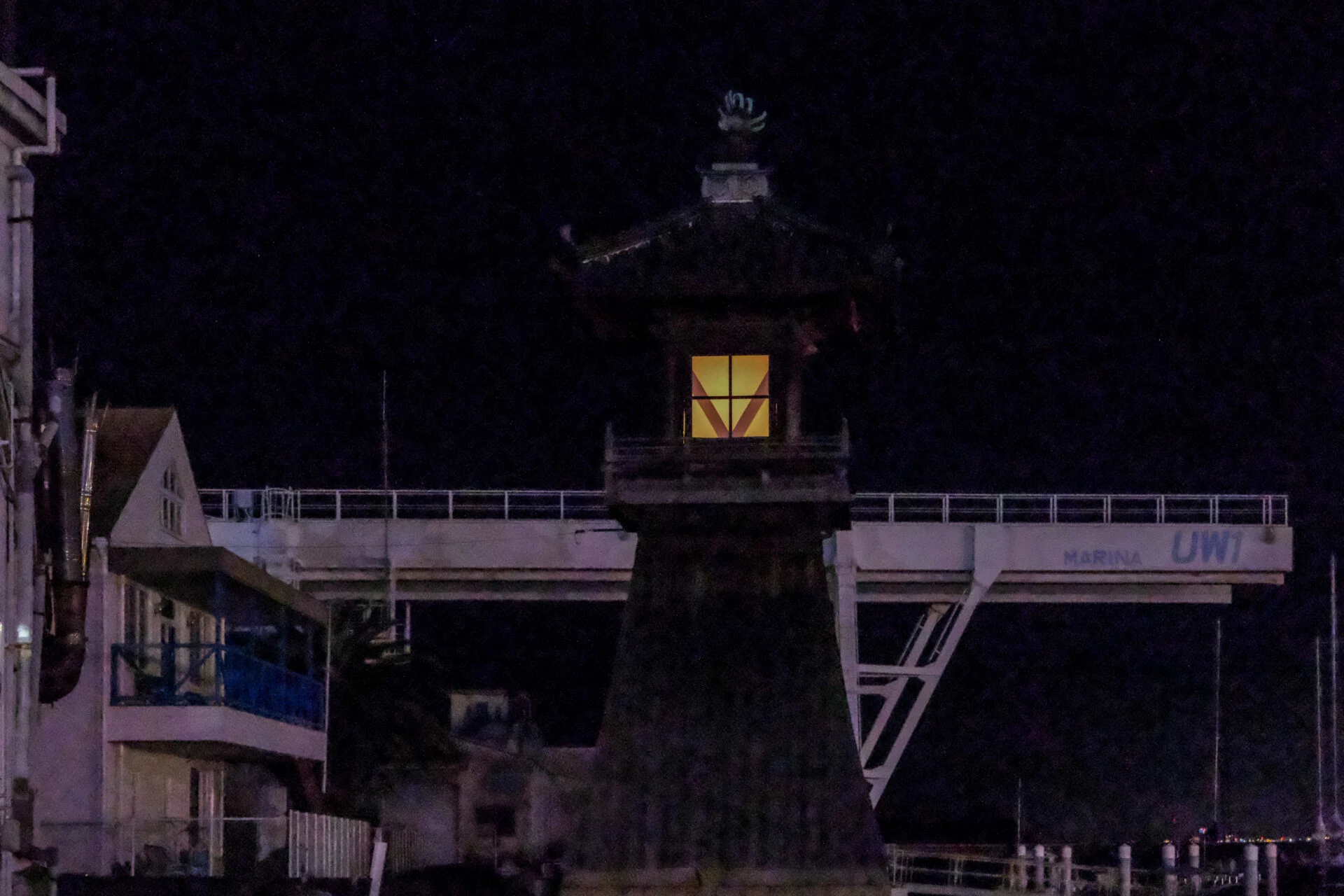
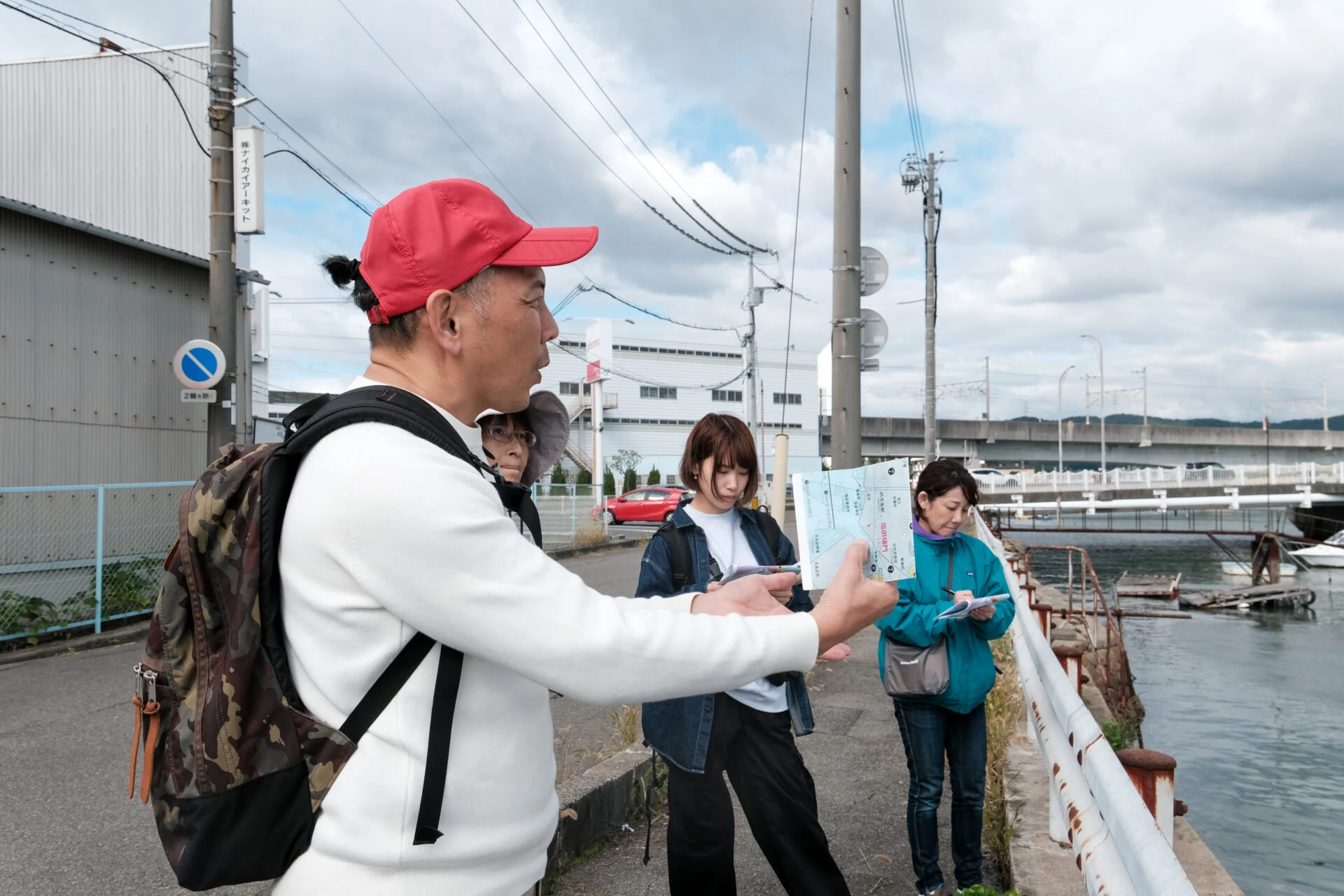
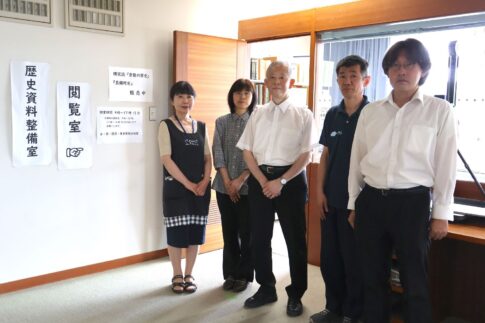
We spoke with Tsujinoriyuki, a curator at Nozaki's Historical Residence, about the historic Nozaki Lighthouse.
Data of Nozaki's Historical Lighthouse
| Name | Nozaki's Historical Lighthouse |
|---|---|
| Address | 4048 Ajino, Kojima, Kurashiki City, Okayama Prefecture |
| Contact | 086-472-2001 |
| Website | Nozaki's Historical Residence |