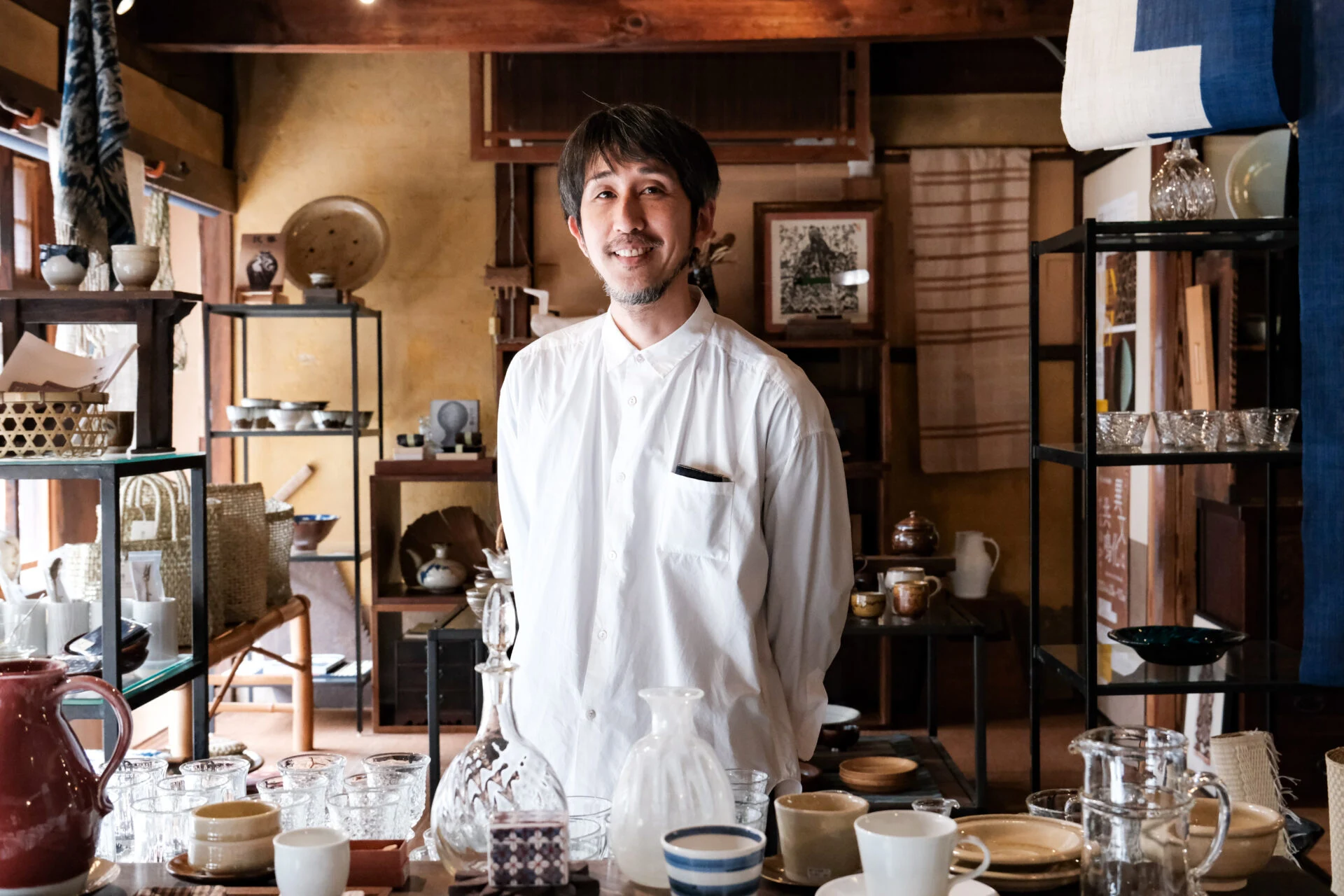
Interview with Yamamoto Takano
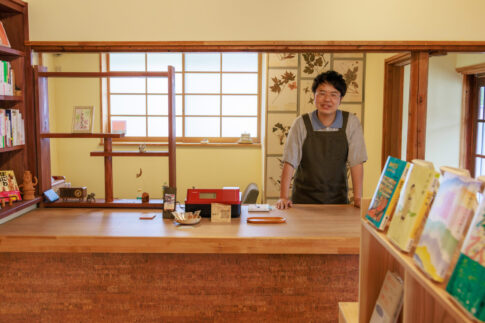
I interviewed Yamamoto Takano, the owner of Yuu Mingeiten, about what the shop continues to cherish.
Attracted to the concept of "inheritance," became the owner of Yuu Mingeiten
Please tell us the reason you inherited Yuu Mingeiten.
Yamamoto (no honorific)
I had been greatly indebted to the previous owner, Yuu Ko, since my time at Okayama Mingei. When I heard about Yuu Ko's retirement, I felt very sad about the possibility of "Yuu Mingeiten disappearing from this town." So, when Yuu Ko asked me, "Would you like to inherit Yuu Mingeiten?" I thought about it a lot and decided to take it on.
To begin with, I didn't have a strong desire to own my own shop.
However, I was attracted to the concept of inheritance.
I had heard the word "inheritance" before, but when it came to inheriting Yuu Mingeiten, I learned the term "succession." "Succession" also means inheriting a belief.
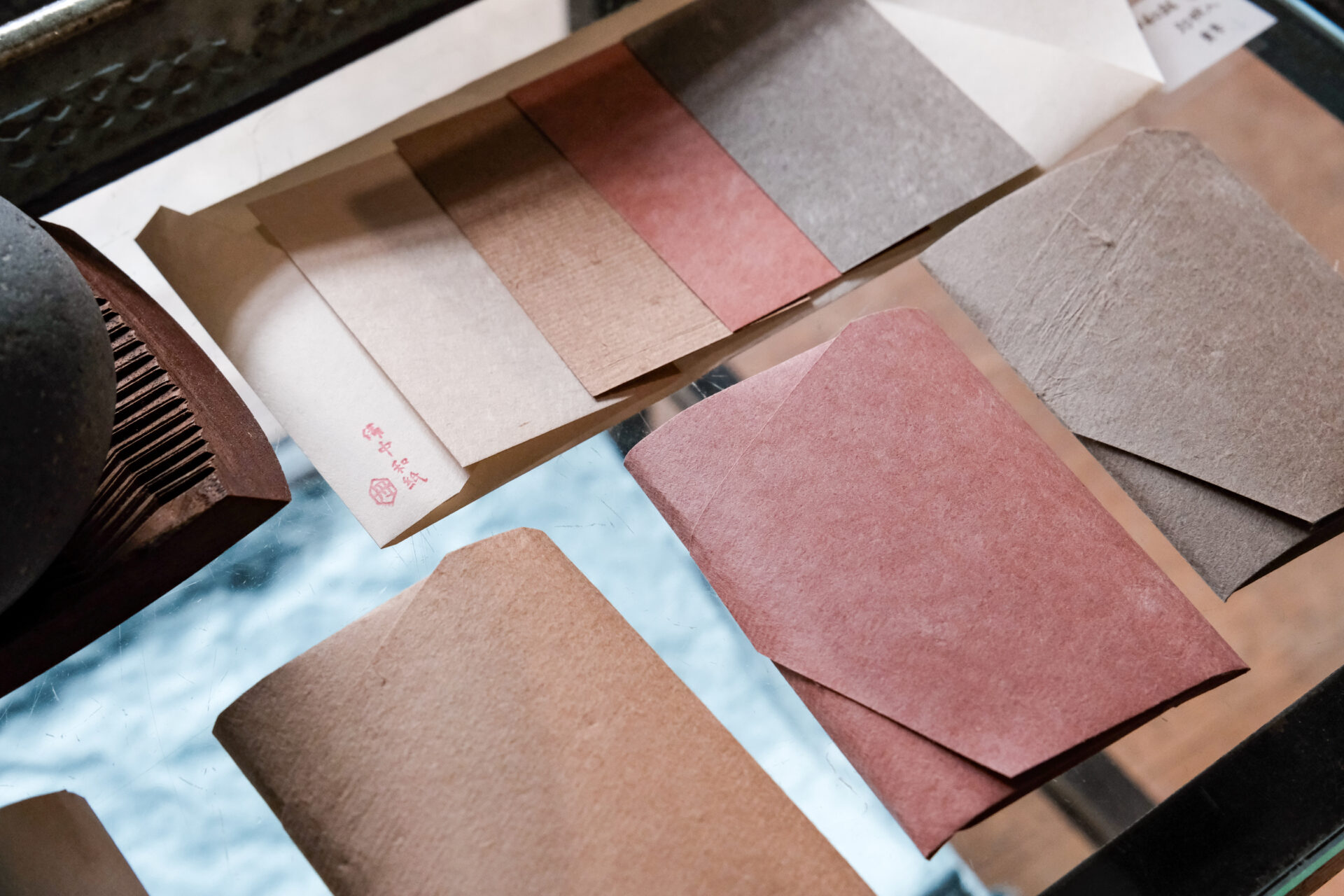
The users who have been coming for a long time, the makers I do business with, and this place.
I thought that if I didn't do it and Yuu Mingeiten disappeared, I would surely regret it, so I came to believe that I should inherit and preserve this place. Therefore, the shop name remains "Yuu Mingeiten."
What kind of presence does Kobayashi have for you?
Yamamoto
A very significant presence. For Yuu Ko, I am a junior from Okayama Mingei. Therefore, every time I visited Yuu Mingeiten, I was treated well. Yuu Ko always brewed coffee or tea in the mugs and cups made by the artists. She would say, "Isn't it pleasant to drink from?" or "I love the feel of this handle," and I learned the comfort that can only be understood through experience.
When I welcome new makers' works to Yuu Mingeiten, I also meet the makers directly and see and touch the items. I think my ability to intuitively feel, "This fits Yuu Mingeiten," is influenced by my experiences with Yuu Ko.
After inheriting Yuu Mingeiten, what has been the reaction from customers and makers?
Yamamoto
I received many "thank yous." Even though I haven't done anything yet.
Since the shop name was derived from Yuu Ko's name, she told me, "You can change it," and I thought about it in various ways. However, I wanted to inherit Yuu Ko's belief in mingei, so I kept the shop name the same.
Including that, I was told "thank you," and I realized again that the scenery of the "Mingei Yuu" sign and the works lined up by the window are things that should be inherited in everyone's memory.
Healthy, efficient, serious, and not arrogant
Are there things that have changed and things that have not after the succession?
Yamamoto
As I mentioned earlier, I have inherited the shop name and the scenery visible from the street.
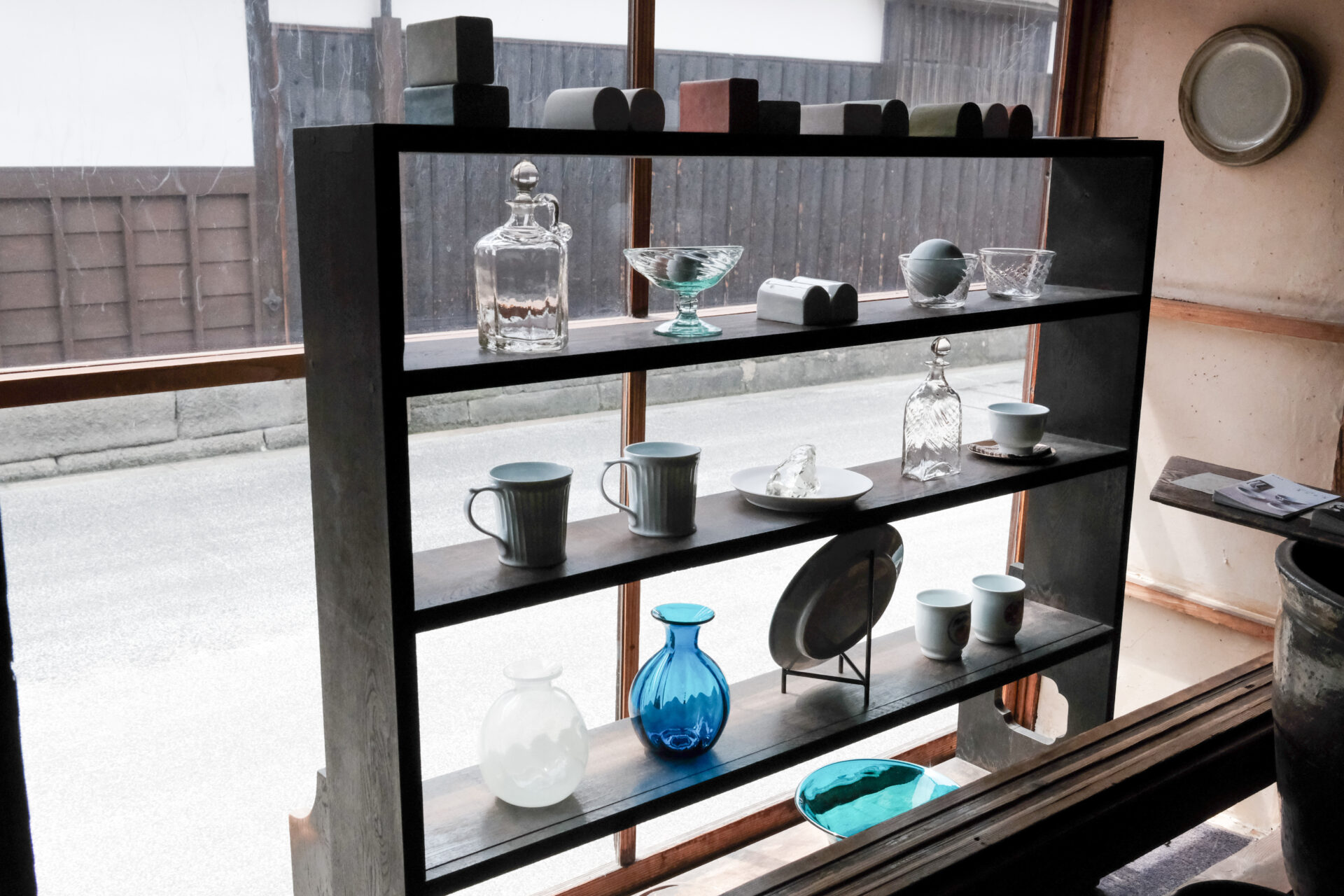
On the other hand, I have made some changes to the layout inside the shop. This place originally had a Hashima pottery shop. It seems that there was a shelf by the window where pottery was displayed since that time.
I was approached by the retired third-generation Hashima potter, Ogawara Tsunemi, who suggested that it might be good to return the shelves and lighting used during the time of the Hashima pottery shop to their original places. Some of these items need maintenance, so I plan to gradually incorporate them into this shop as their condition improves.
In this way, there are things that can be inherited across generations.
However, many of the makers I have been dealing with since Yuu Mingeiten opened are veterans. Therefore, I have started to welcome new makers and works and incorporate new attempts by makers.
What do you keep in mind when welcoming new artists?
Yamamoto
Healthy, efficient, serious, and not arrogant.
I try to choose things like that. This phrase is from Yoshinosuke Sotomura, the first director of the Kurashiki Museum of Folkcraft. It is a phrase that clearly expresses "mingei," and it applies to both people and things.
First, it refers to a sense of security that is well-balanced so that it does not fall over, and durability that does not break or shatter easily is the healthy aspect. I interpret that not exaggerating or making things look overly fancy is the seriousness. I believe this phrase is filled with mingei elements, so I always keep it in mind.
What specifically do you mean by "good things"?
Yamamoto
In terms of mingei, "good things" are, first of all, things that have practicality. I think they are items that are often used and are at the front of the dish rack, or things that are always in the washing basket and can be used daily.
Additionally, I believe that simplicity in materials and processes, and things that are made repeatedly are elements of "good things." Rather than the deliciousness of complicated and elaborate dishes, I think of the deliciousness of home-cooked meals like nikujaga or miso soup. I often feel that "good things" are simple, reassuring, and allow you to experience richness in your daily life.
What specific episodes do you have regarding "supporting the challenges of makers"?
Yamamoto
The previous owner, Yuu Ko, placed importance on the items displayed in the shop being "tools that can be used in life." Therefore, she sometimes made suggestions to makers like, "I think this decoration is unnecessary." This was a pointed observation, as per Sotomura's words.
However, I have recently started handling this Bichu washi papier-mâché.
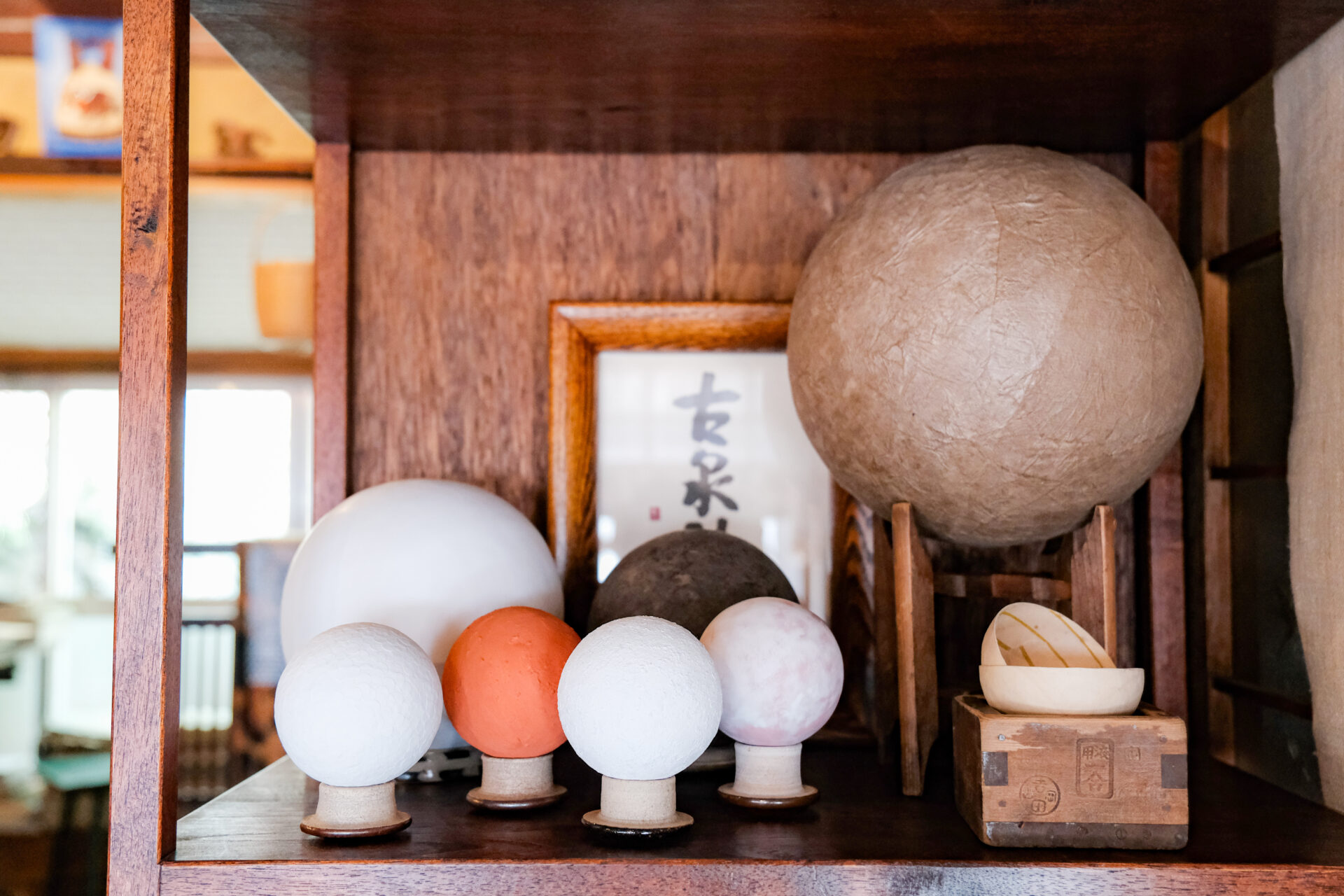
This cannot be said to be an essential tool for life, and it may deviate from Sotomura's words. However, I see works like Bichu washi papier-mâché as an extension of mingei work.
I want to create a shop where ambiguity can also be enjoyed, regardless of whether it is mingei or not.
Therefore, while being conscious of what the previous owner, Yuu Ko, cherished, I want to maintain a balance between "things I think are good" and "things that can be enjoyed."
When you think of a place where makers and distributors work together, I imagined it would take the form of regularly held "exhibitions." Does Yuu Mingeiten hold regular solo exhibitions?
Yamamoto
Even when planning an exhibition, while sales are an important indicator, I want to consider meanings beyond that.
If something different is done to hold an exhibition and it doesn't sell, both the makers and the items will be unhappy.
I think it would be good to have exhibitions where items made with consideration for the users can be properly picked up. Through exhibitions, I believe it is also my role as a distributor to convey voices from users to makers, such as "I would be happy if there were such things."
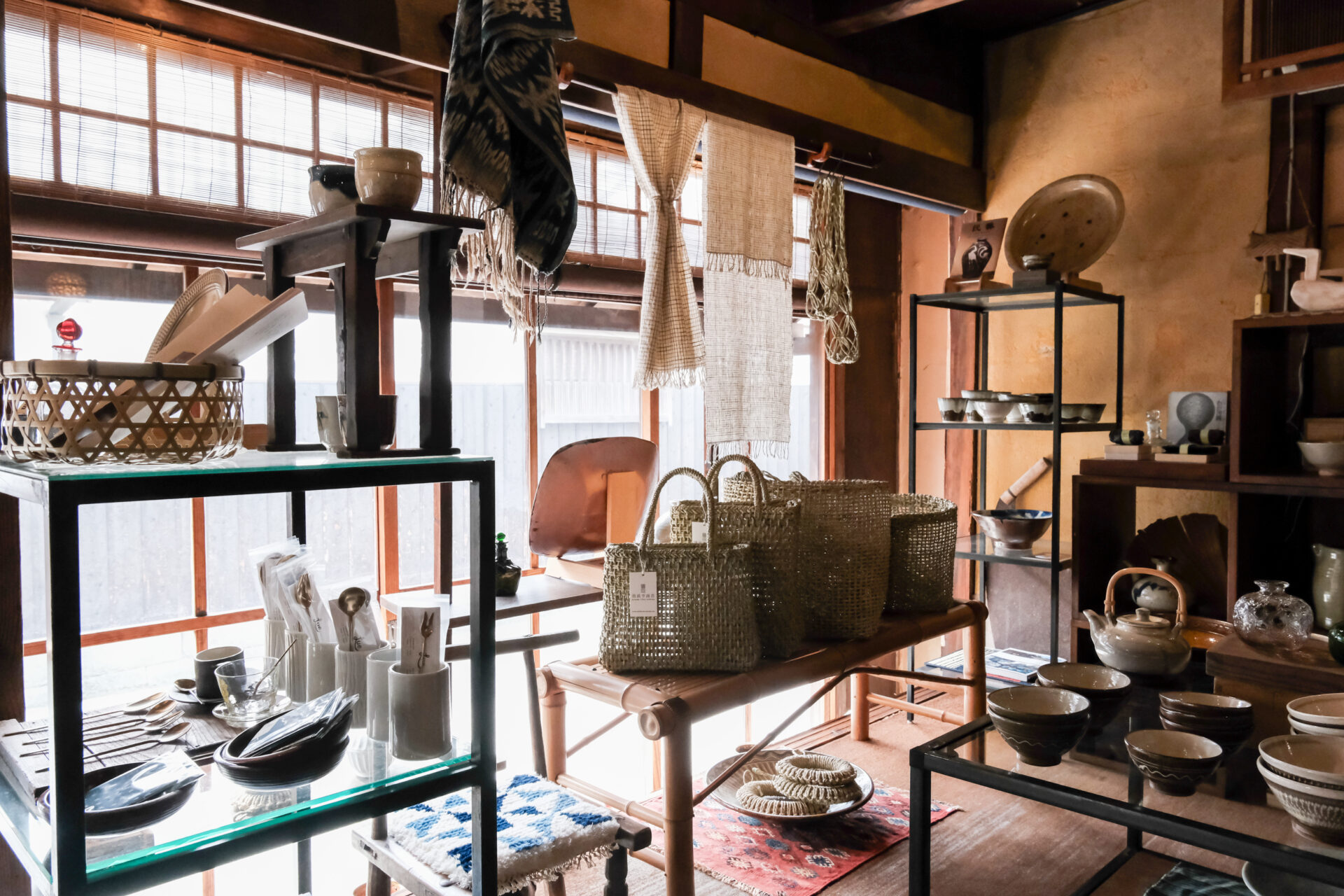
For example, I would like to hold exhibitions as needed, gathering voices of users who want items that have become less common from veteran makers, and consulting with the makers.
Users can reunite with the items they wanted, and makers can ensure that their created items reach the hands of users. I want to utilize exhibitions to provide such opportunities.
In December 2024, there will be an exhibition of a glass maker.
I want you to find what you think is "good" at Yuu Mingeiten
Are there any memorable episodes from the two and a half years you have been standing in the shop?
Yamamoto
There was a time when a young customer came to the shop. That day, a regular customer happened to be in the shop as well, and I saw the young customer looking at the items, which sparked a communication with the regular customer.
They were saying things like, "I use this like this," and "I like this part of this work." At the end of their exchange, the young customer purchased a piece they liked.
I believe the beauty of mingei is that it allows anyone, regardless of generation or status, to casually incorporate what they think is "good" into their lives. Seeing the connections between people and between people and things through the items at Yuu Mingeiten made me feel the meaning of this shop continuing to exist.
What kind of experience do you want customers to have at Yuu Mingeiten?
Yamamoto
I want them to have the experience of "seeing and choosing with their own eyes."
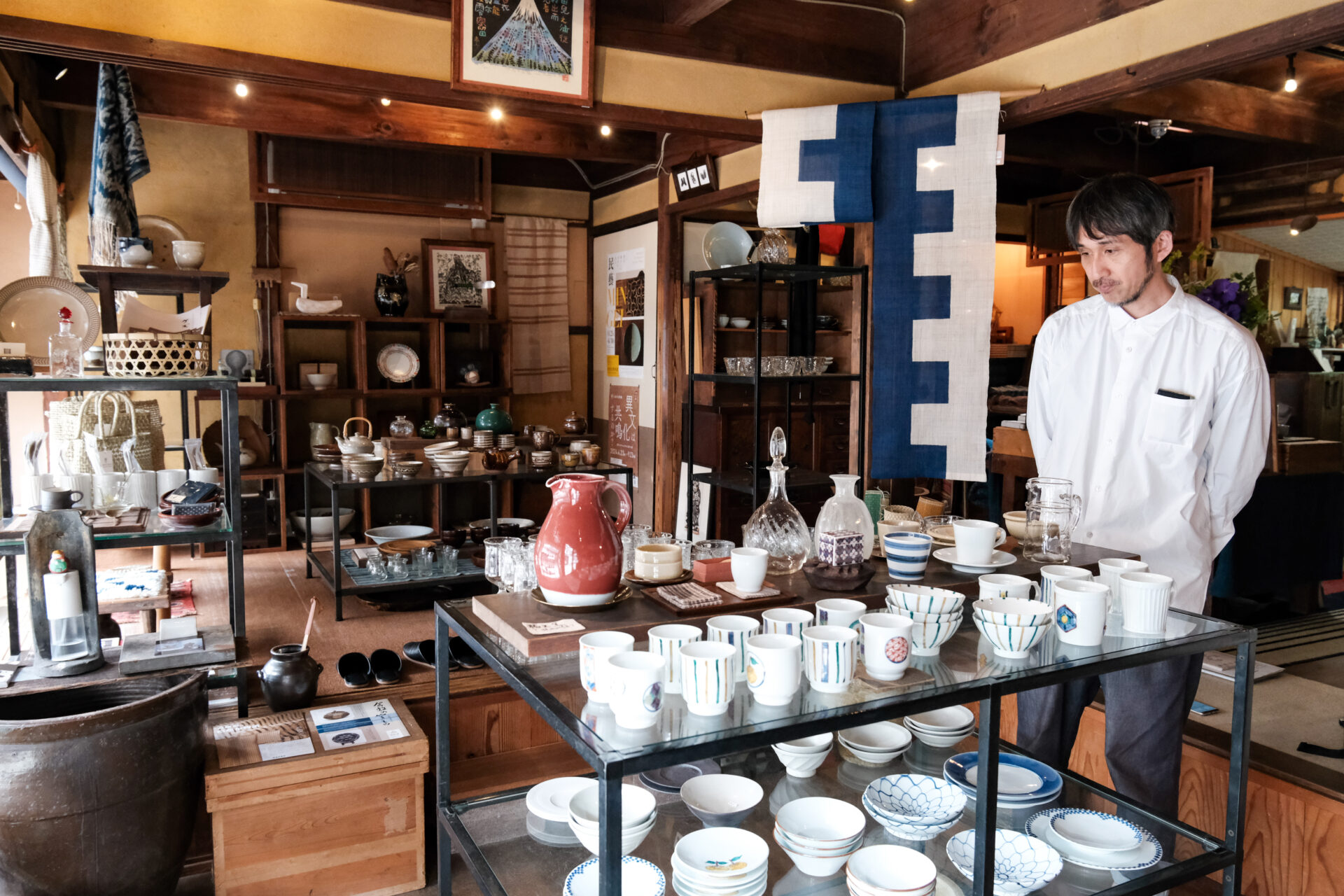
Recently, I have encountered customers who say, "I want this piece I saw in a magazine" or "I want something that looks good on social media." But are those really things they genuinely think are "good"?
I want to help them gain confidence in choosing things they truly love, without relying on word of mouth or marketing.
In that sense, I think there may be realizations to be had by visiting Yuu Mingeiten after seeing the everyday tools that were actually used displayed at the Kurashiki Museum of Folkcraft. I was also one of the customers who started visiting Yuu Mingeiten after seeing the Kurashiki Museum of Folkcraft.
Conclusion
"Am I confident in the things I have chosen because I truly like them?"
At that moment, I found myself unable to nod confidently.
With the spread of social media and the internet, we are inundated with vast amounts of information every day. Not only regarding tools for living but also about fashion and values, the thought of "how I am perceived by others" often crosses my mind.
As a community revitalization cooperation team member, I also use Instagram, so I often follow and look at the Yuu Mingeiten account.
After the interview, I shared a photo posted on Instagram
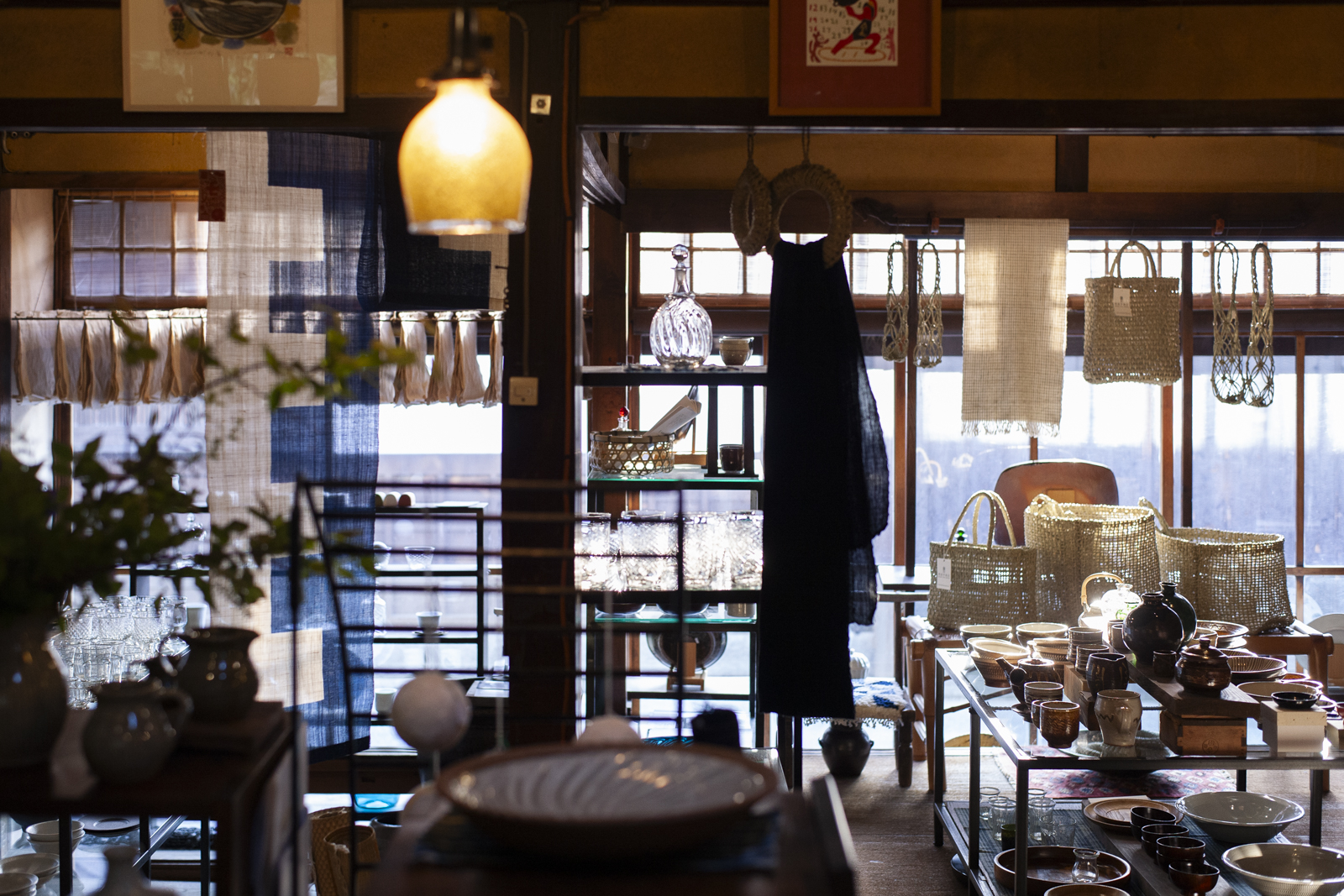
When I said, "I like this photo,"
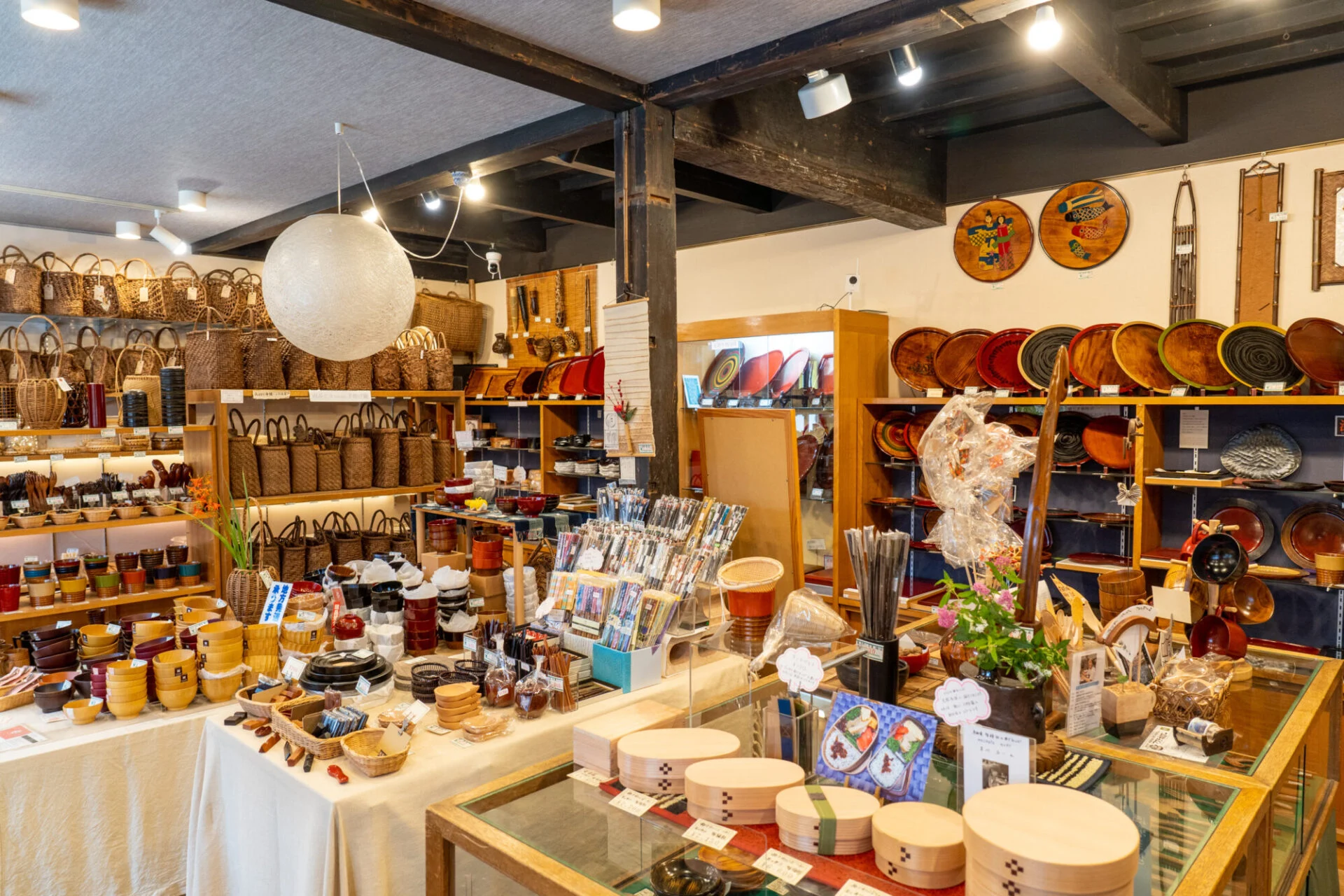
He told me, "This shop has skylights, so natural light comes in from multiple directions. I particularly like the shop around 3 to 4 PM. The light filtering through the washi and the glass placed by the window is indescribable."
He taught me that.
Feeling warmly affirmed about what I thought was "good," I plan to visit the shop again around 3 PM to encounter "good things" I want to use in my life.
Data on Yuu Mingeiten
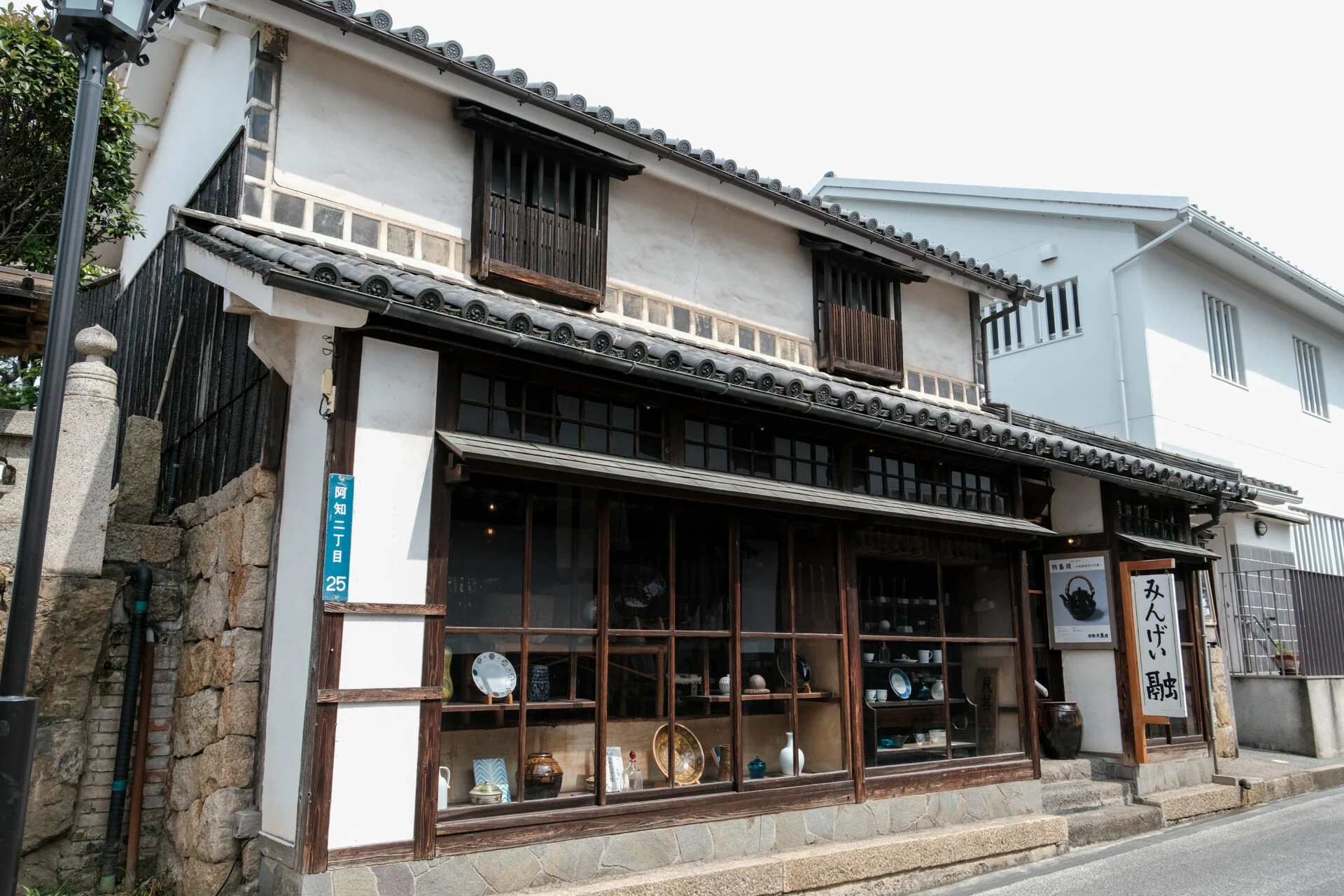
| Name | Yuu Mingeiten |
|---|---|
| Address | 2-25-48 Achi, Kurashiki City, Okayama Prefecture |
| Contact | 086-424-8722 |
| Parking | None |
| Business Hours | 11 AM to 6 PM |
| Regular Holidays | Monday, Tuesday May have temporary closures. Please refer to social media for details. |
| Payment Methods |
|
| Website | Yuu Mingeiten |