“What is your dream for the future?”
Do you remember being asked that in an elementary school essay and struggling because you couldn’t think of anything to write? Some people grow up without having a dream, then find one as adults. That dream was to deliver the manga *Space Brothers* to school libraries across Japan.
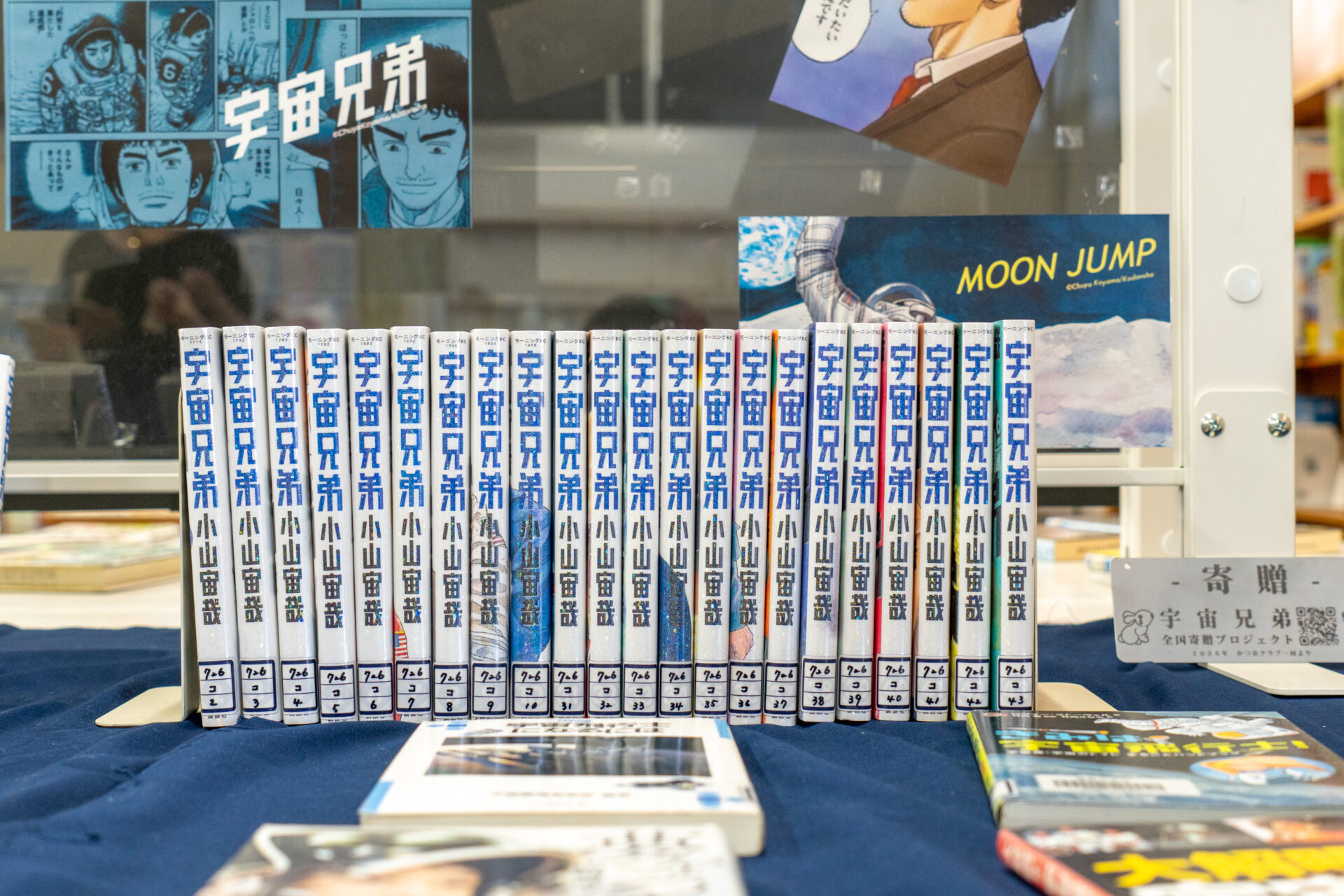
As part of an initiative called the “Space Brothers Nationwide Donation Project,” all 46 volumes were donated to Kurashiki Municipal Tsurajima Junior High School on Monday, August 31, 2026. They say the purpose is not to give children dreams. We spoke with both the donors and recipients.
The information presented is as of the article’s publication in September 2026. Please note that it may differ from current information.
What is the “Space Brothers Nationwide Donation Project”?
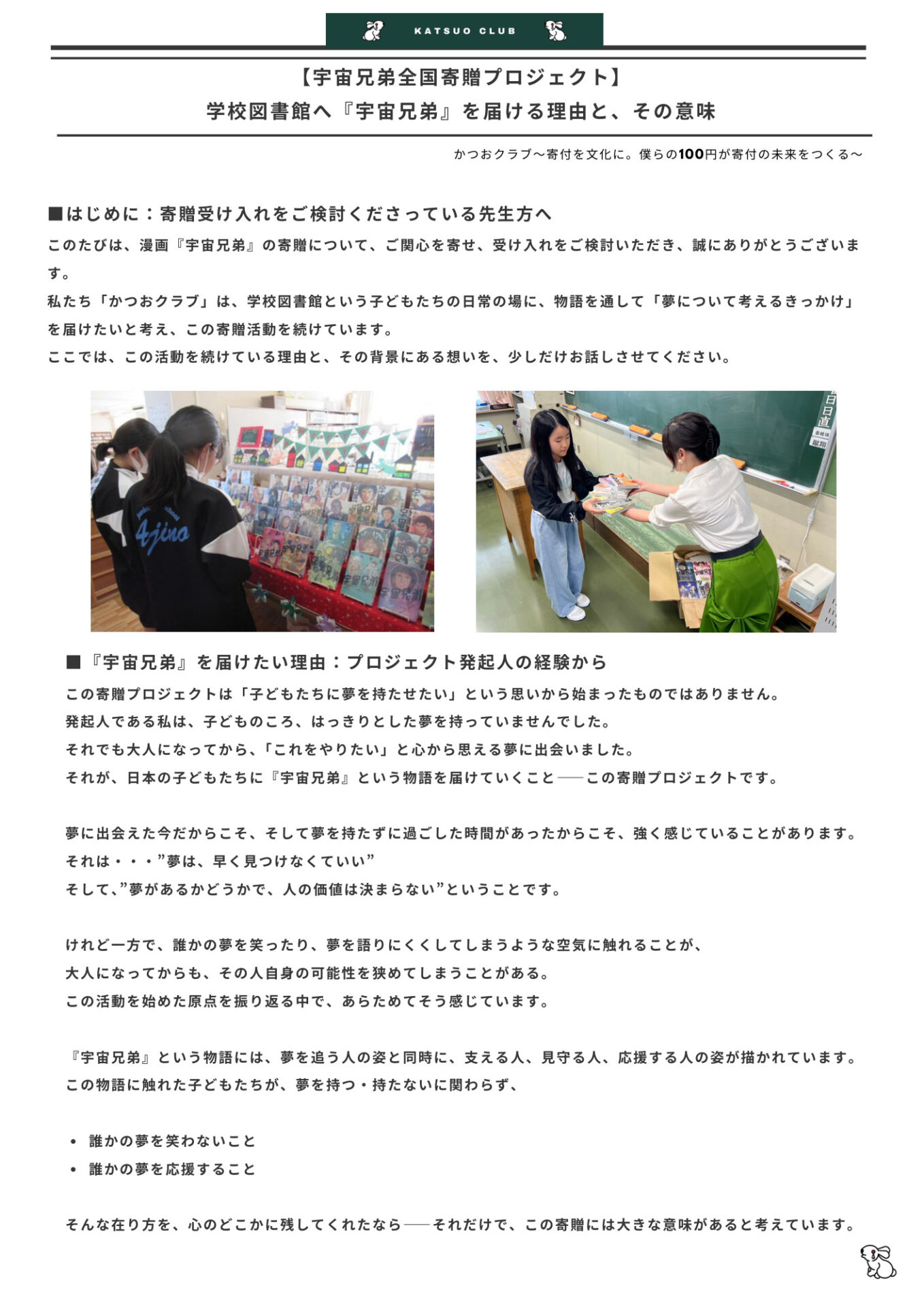
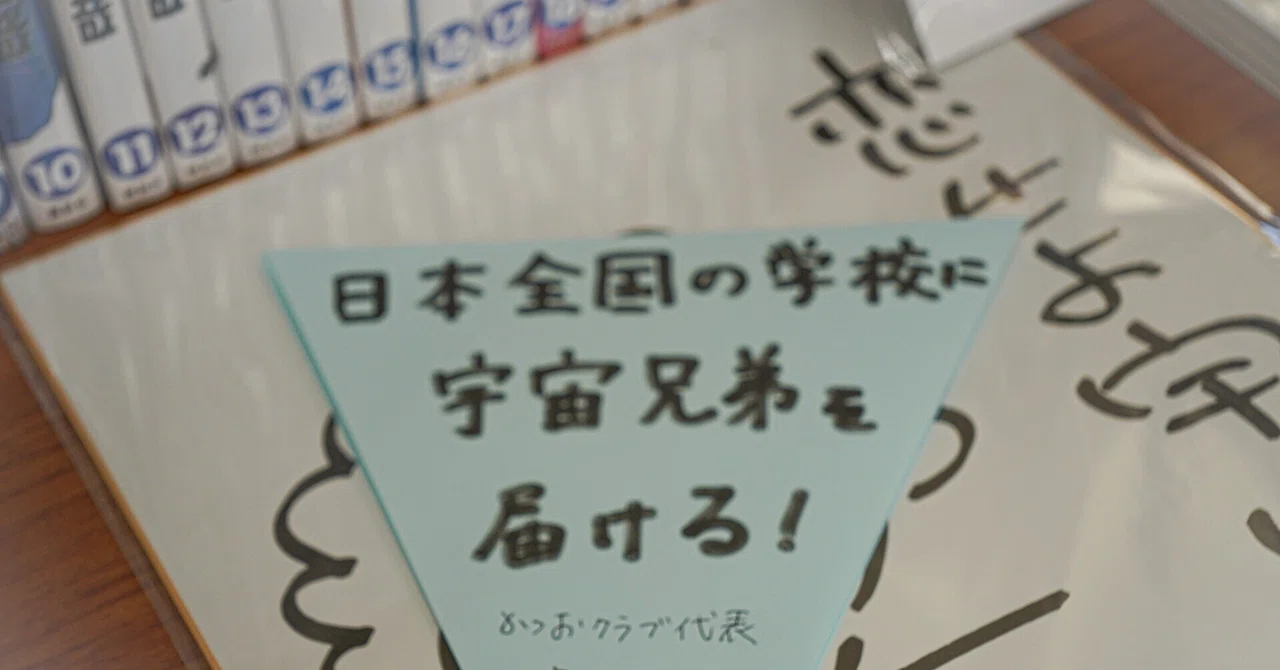
The “Space Brothers Nationwide Donation Project” is an initiative to donate the manga *Space Brothers* to school libraries across Japan. It is independently run by volunteers from the voluntary organization “Katsuo Club” and is not an official project of the manga *Space Brothers*.
Katsuo Club is a voluntary organization guided by two principles: “Make giving part of our culture” and “One step together is better than a hundred steps alone.”
Using note’s membership feature, it aims to foster a culture of mutual support through a donation system that allows anyone to participate starting from 100 yen. In addition to donating books to school libraries, the group also provides disaster relief and donations to facilities for people with disabilities.
The organization’s name, “Katsuo,” comes from someone who spent many years with its representative, Adachi Masaki. The experience of sharing what little he had during a financially difficult period is said to have become the starting point for the group’s current guiding principle: “supporting others in a way that doesn’t overextend ourselves.”
They chose school libraries as the recipients because they believe these are places of learning and, at the same time, where children can encounter stories most naturally. Katsuo Club writes the following in its activity leaflet:
It isn’t for a class, and no one is graded on it. Yet a book picked up on a whim can stay somewhere in your heart.
Even if *Space Brothers* doesn’t inspire you to change anything right away, we hope it can become “that book I picked up in the school library”—something you remember at some point in your life, years or even decades later.
Source: “Space Brothers Nationwide Donation Project” introductory leaflet
Kurashiki Municipal Tsurajima Junior High School, a recipient of the donation
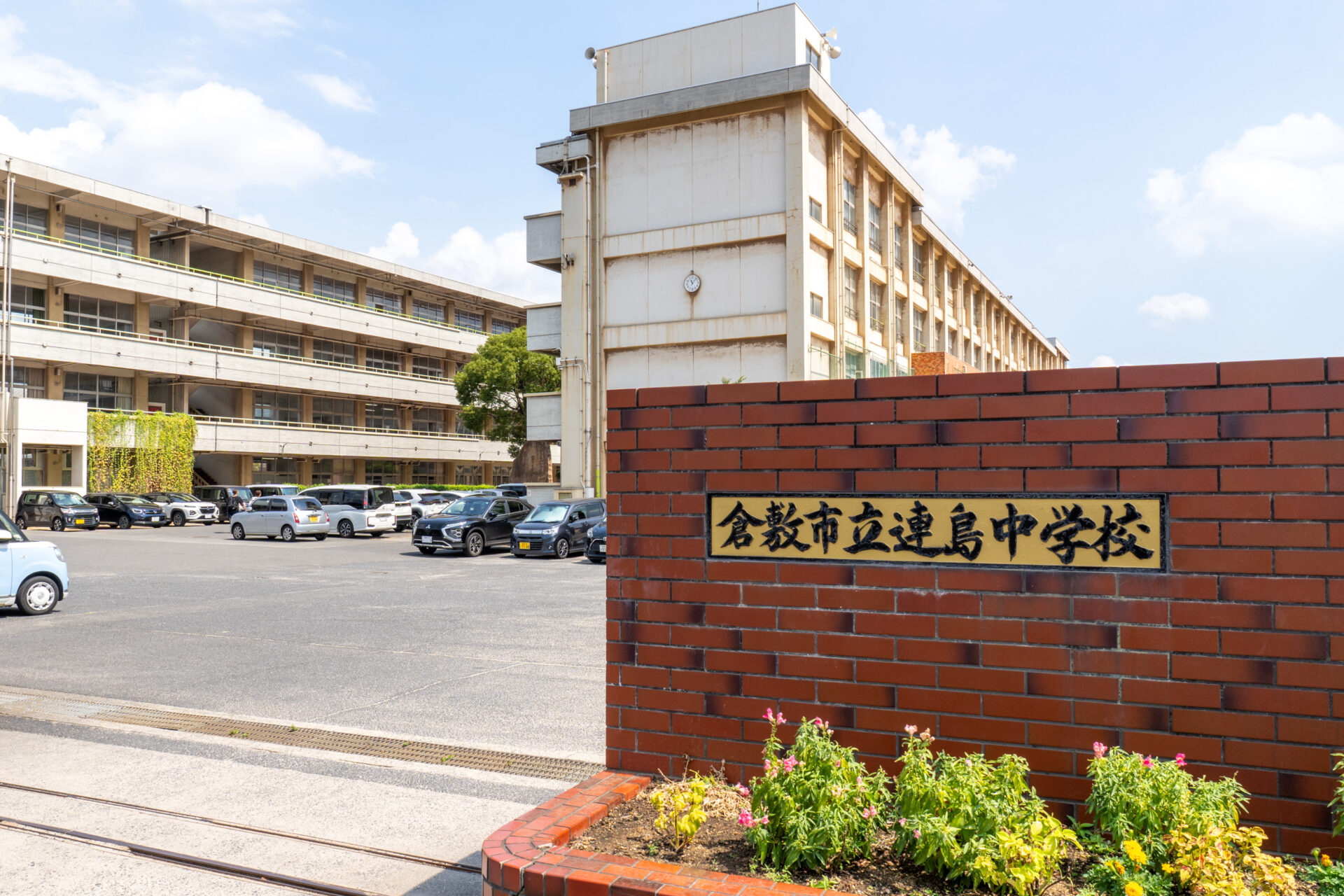
Kurashiki Municipal Tsurajima Junior High School is a municipal junior high school in Tsurajima, Kurashiki City.
As of May 1, 2026, it had 415 students.
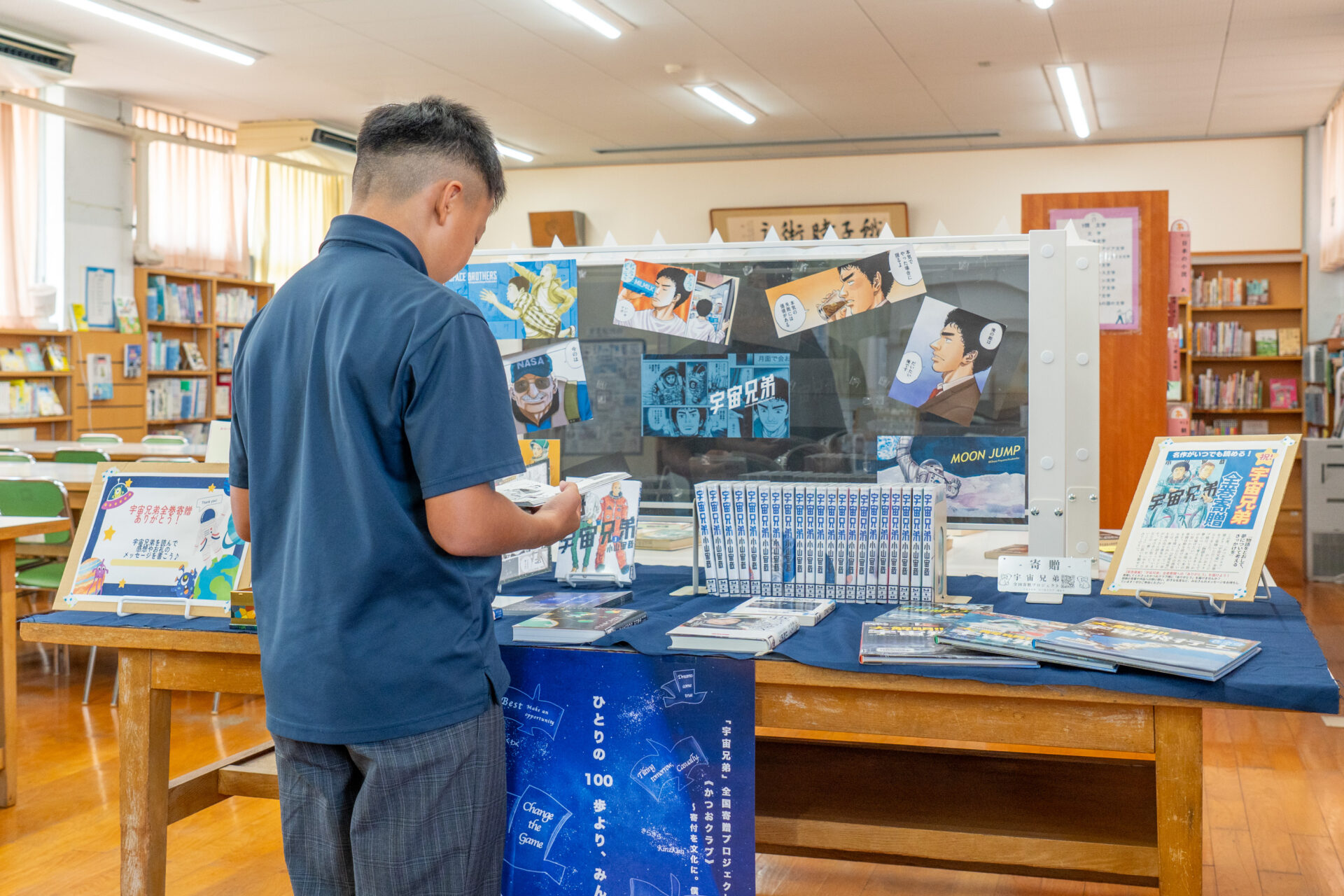
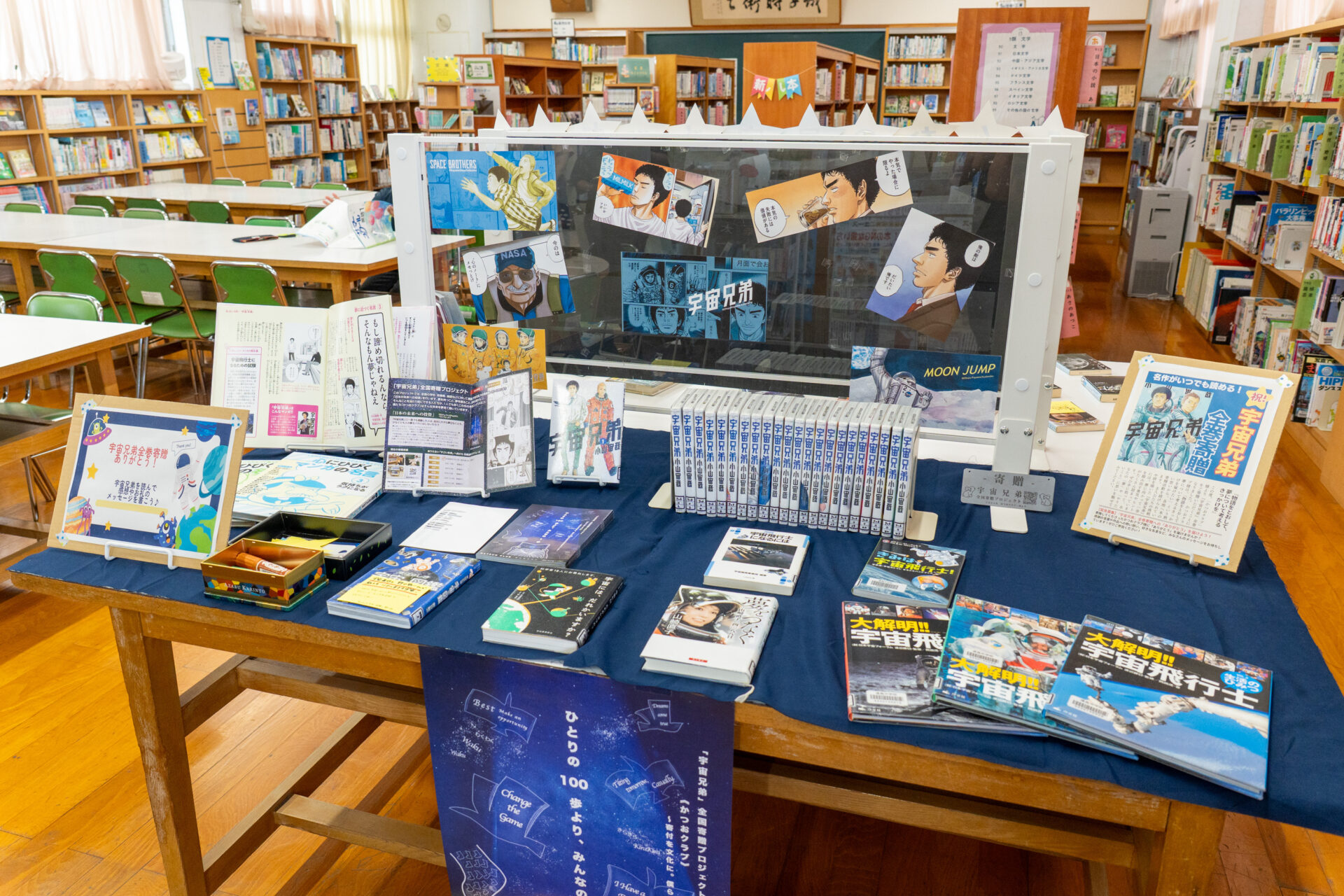
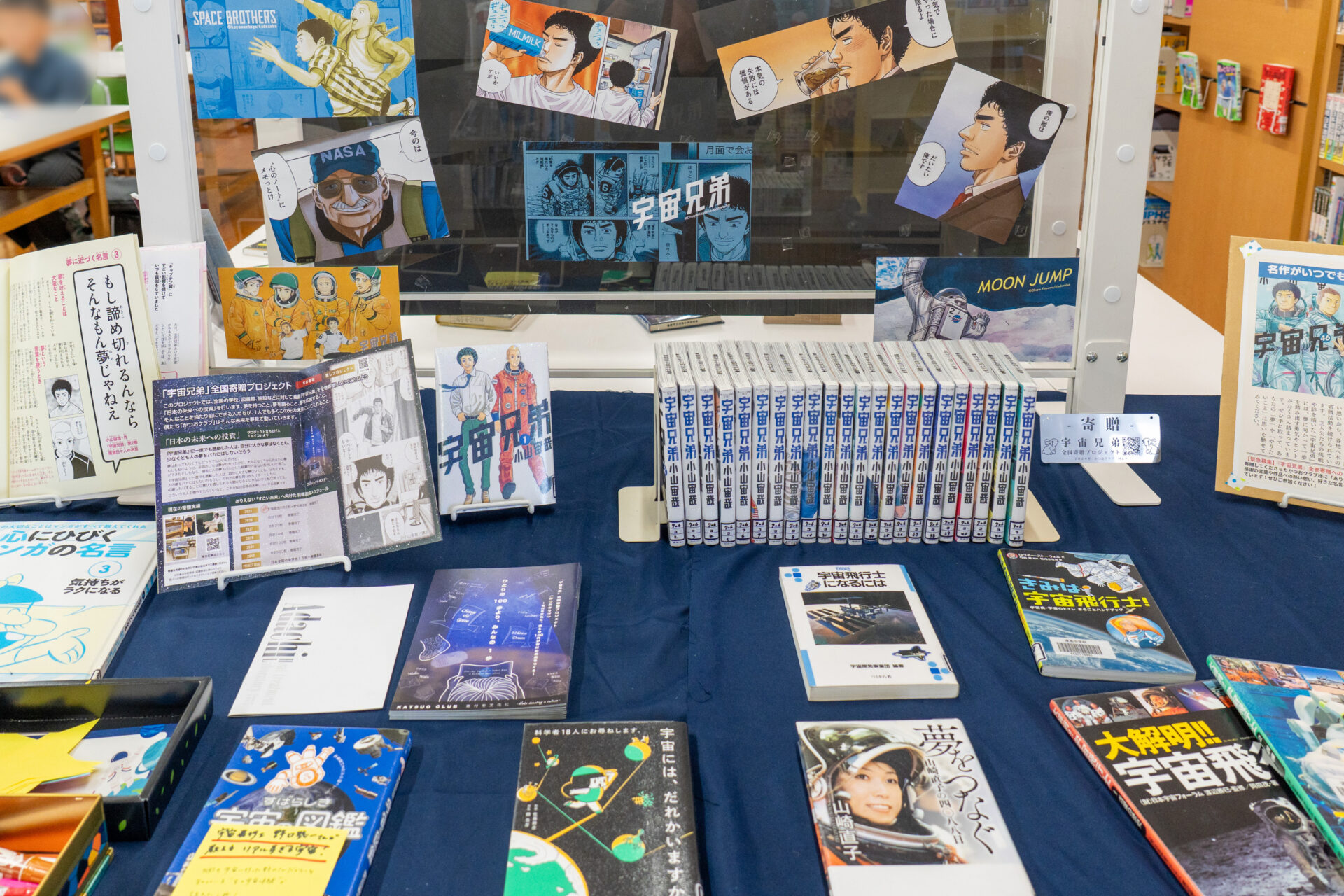
A librarian is always on duty in the library, which also has manga in its collection. With this donation, all 46 volumes of *Space Brothers* are now on the shelves.
By August 2026, donations had been made to a total of nine schools in Hokkaido, Aichi Prefecture, Hyogo Prefecture, and Kurashiki City. Tsurajima Junior High School was the tenth recipient.
Interview with Miiko of Katsuo Club
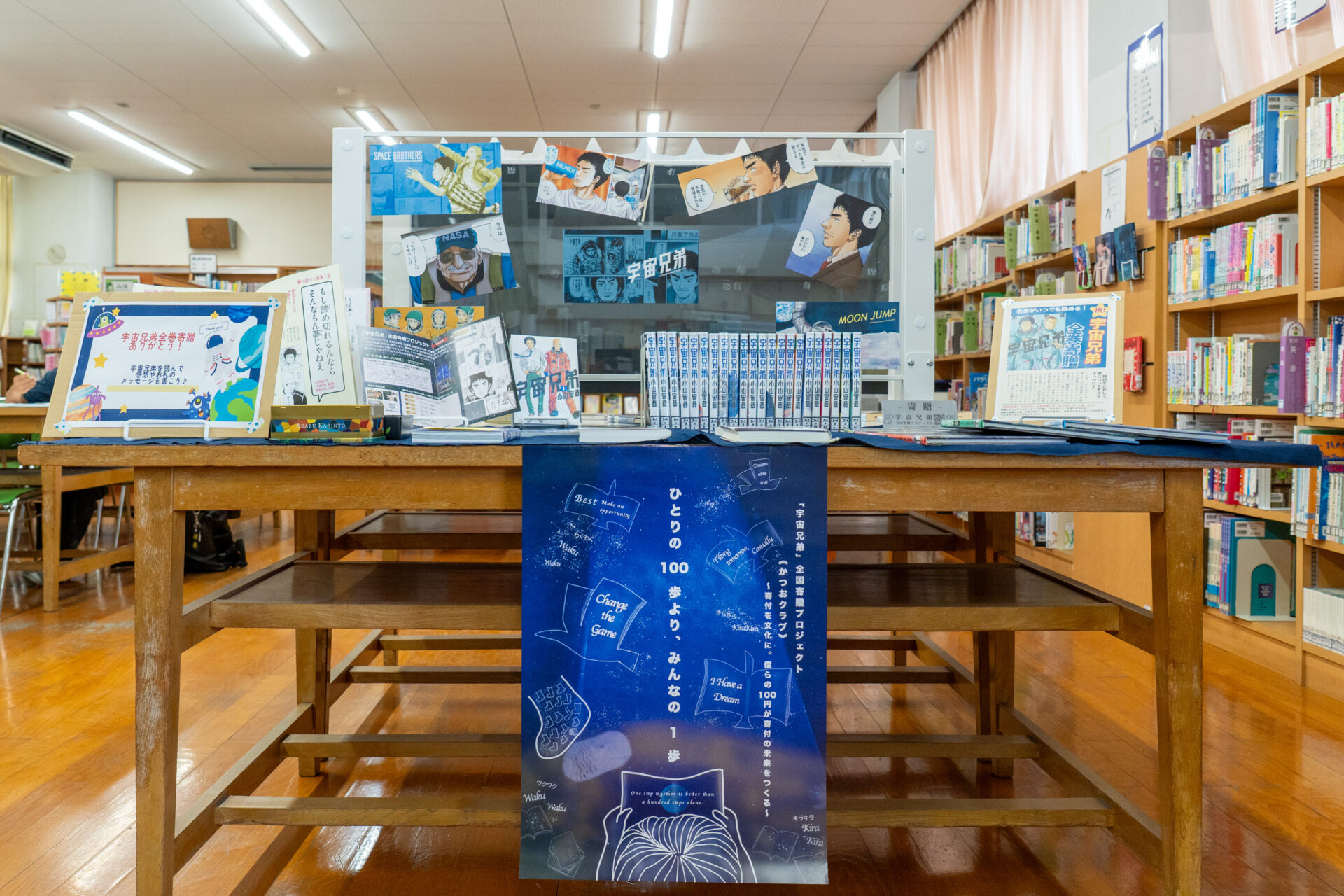
We asked Miiko of Katsuo Club, who visited Tsurajima Junior High School to make the donation, about the Space Brothers Nationwide Donation Project.
What prompted you to start the “Space Brothers Nationwide Donation Project”?
Miiko (surname omitted)
I didn’t set out to start a donation project from the beginning.
It started when I personally bought *Space Brothers* because I felt, “I absolutely have to get my own children to read this.”
But as I read further, I came to feel that I wanted every child born in Japan to read it, and that became a dream of donating it to schools and libraries.
I shared this dream on note, and through note I got to know a junior high school teacher. When I asked the teacher about making a donation, they agreed to accept it. That was the beginning of the donation project. So it started entirely as a personal effort.
But when I was looking for a second school, I had no connections and didn’t know what to do.
If you suddenly contact a school and say you want to donate something, it’s hard to get them to understand.
Adachi Masaki of Katsuo Club and I knew each other through note. Katsuo Club had previously donated books to libraries, so I asked if they could help. That was how the “Space Brothers Nationwide Donation Project” began.
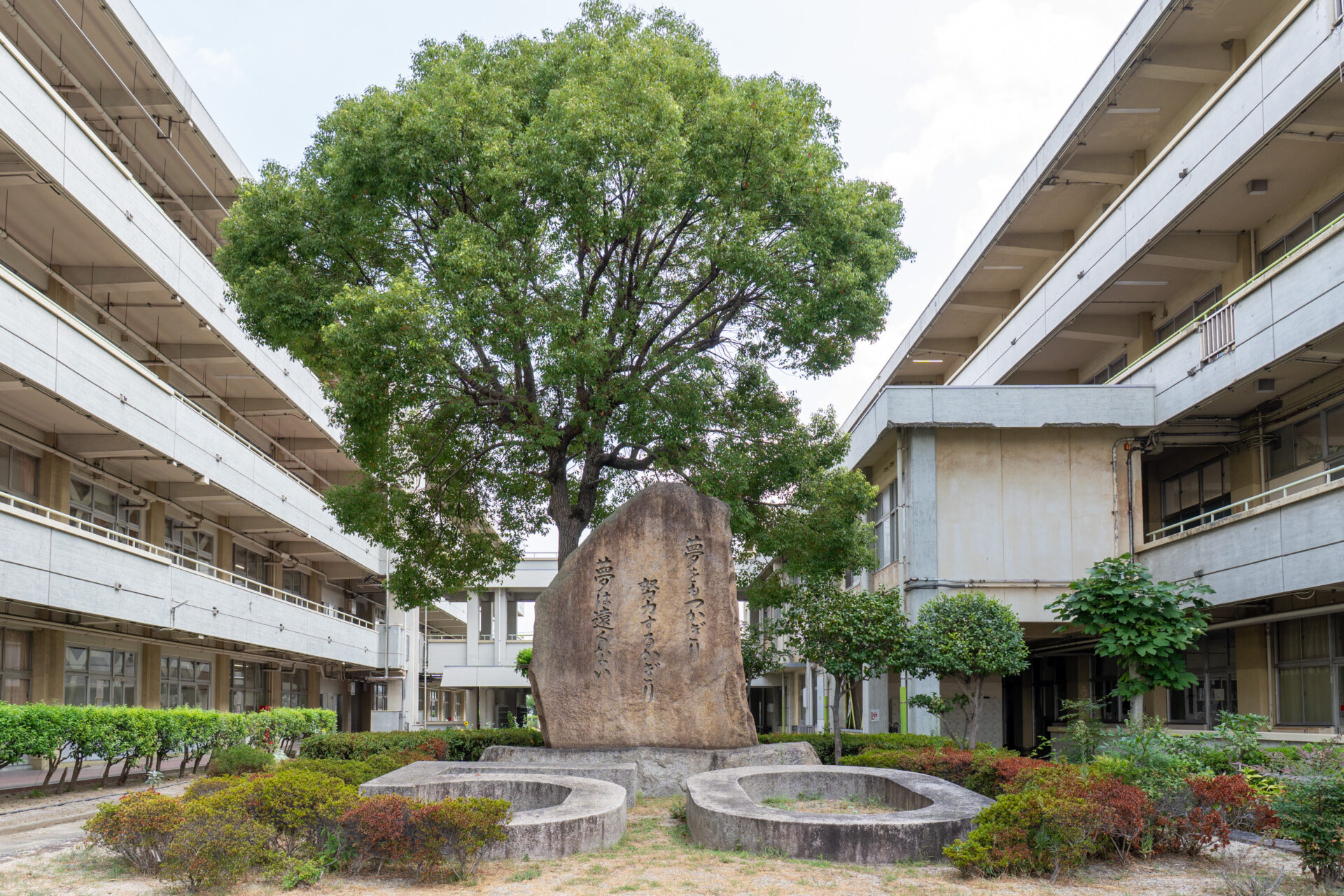
Why was Kurashiki Municipal Tsurajima Junior High School chosen to receive the donation?
Miiko
We always speak by phone at least once with a teacher at each school. Teachers have different levels of enthusiasm, but Mr. Moriya showed interest.
Then, through Mr. Moriya, we were able to donate to Kurashiki Municipal Ajino Junior High School in December 2025. Actually, I came to Kurashiki this time to deliver the final volume to Ajino Junior High School. Mr. Moriya had transferred to Tsurajima Junior High School for this school year (2026), so we had been saying, “Looks like we won’t get to meet.”
Then I received an email from Mr. Moriya that said, “Kapeh!”
“Kapeh!” is a phrase from *Space Brothers*. It’s a famous line spoken by a little girl who is still too young to say “Good luck” when her astronaut father is leaving.
When I saw the email, I burst into tears. I thought I had to go see him, so I asked if we could please make a donation. It was a very last-minute request.
Volume 46 of *Space Brothers*, released on July 22, 2026, is the final volume. Tsurajima Junior High School was the first school to receive the complete set from the outset.
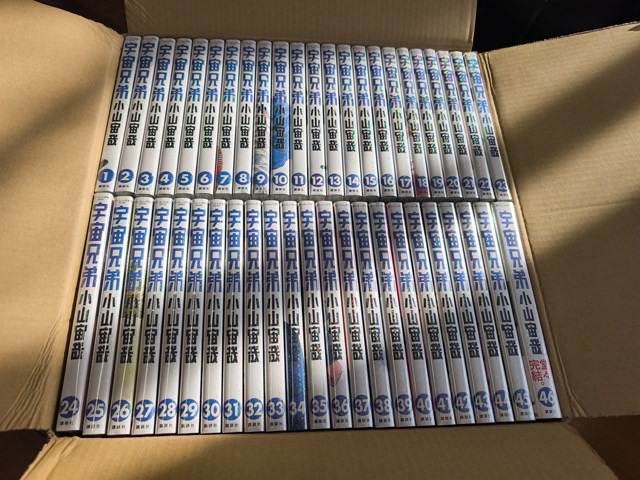
What kind of response have you received to the donations so far?
Miiko
Lots of children got absorbed in reading them.
Children today have fewer opportunities to read printed books. In the past, parents would scold children for reading nothing but manga, but it seems parents now think that reading manga is better than not reading at all.
We’ve also heard from the parent of a child who borrowed the books: “My child never reads printed books, so I’m grateful they had this opportunity.”
We also donated to an elementary school, and some sixth graders read the books and asked, “It’s sad that we can’t read the final volume. Can we come back to read it even after we graduate?” The school then introduced us to the junior high school they would attend, and we made a donation there too.
Interview with Moriya Kazuyuki of Tsurajima Junior High School
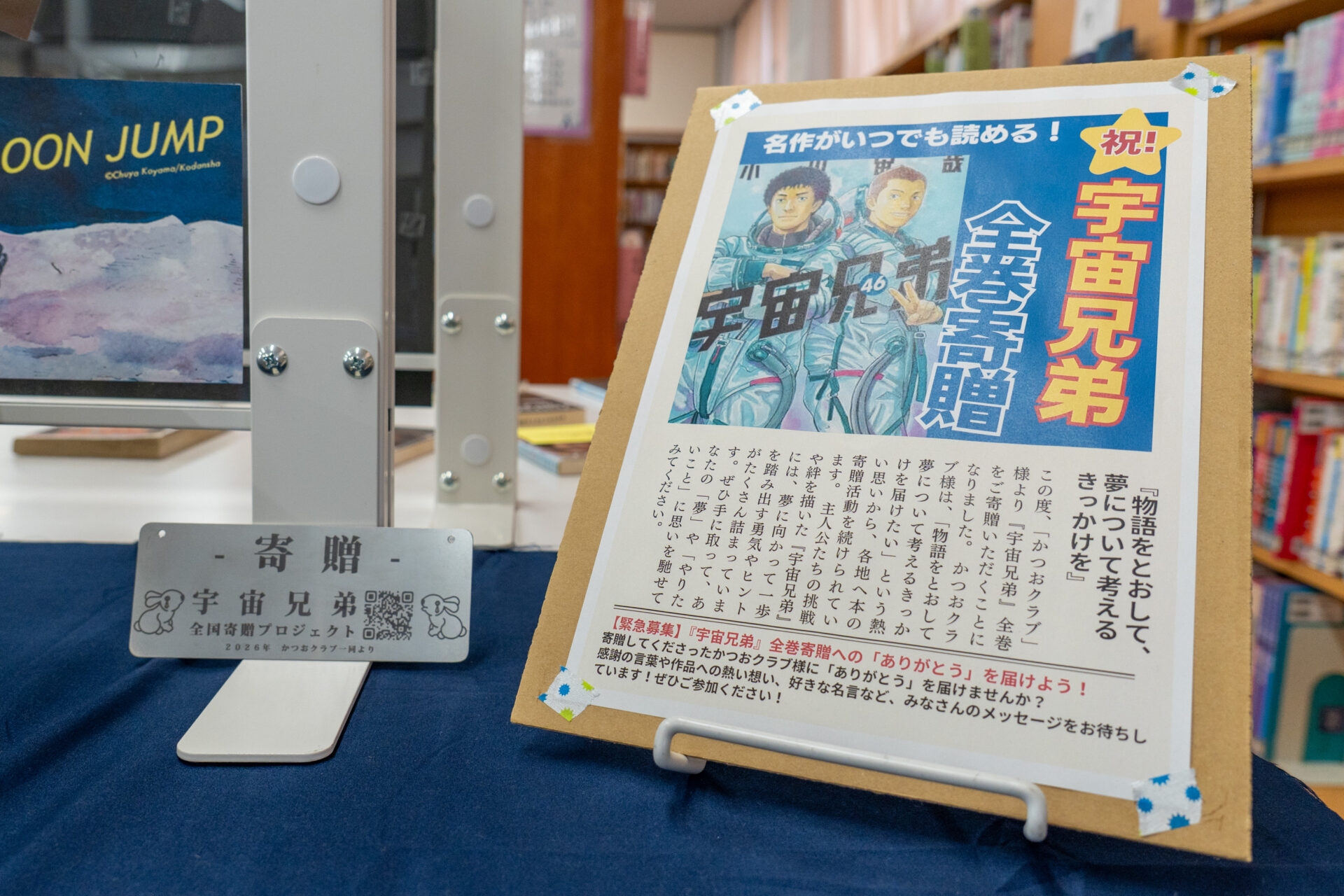
We spoke with Moriya Kazuyuki of Kurashiki Municipal Tsurajima Junior High School, which accepted the donation.
How did you first hear about the “Space Brothers Nationwide Donation Project”?
Moriya (surname omitted)
A teacher I knew introduced it to me when I was at my previous school, Kurashiki Municipal Ajino Junior High School.
Ajino Junior High School already had a few manga in its collection, and the librarian knew about *Space Brothers*. I had also read some of it myself. I’d read about 20 volumes, so I did have the personal thought, “If we get a donation, I’ll be able to read the rest” (laughs).
I spoke with the principal, and we decided to accept the donation, saying, “It’s a good thing, so let’s gratefully move forward with it.”
How did Tsurajima Junior High School come to receive the donation?
Moriya
At first, I was told the donation would happen several years later.
But I thought I probably wouldn’t be here by then, and I didn’t want to leave the school with something half-done, so I told them I was sorry.
Still, to show that I supported the activity itself, I wrote “Kapeh!” in an email. As a result, the donation was arranged at short notice.
Ajino Junior High School also received a donation. Is there anything about the students’ reactions that stands out to you?
Moriya
Students who liked manga borrowed the books and read them, and I borrowed and read them from the library too.
There was one student who was always in the library after school. They would tell me, “I’ve read up to here now.” It gave us a chance to talk, and I realized that there were students who were actually picking up the books and reading them.
We asked five people: “What do you hope students will feel?”
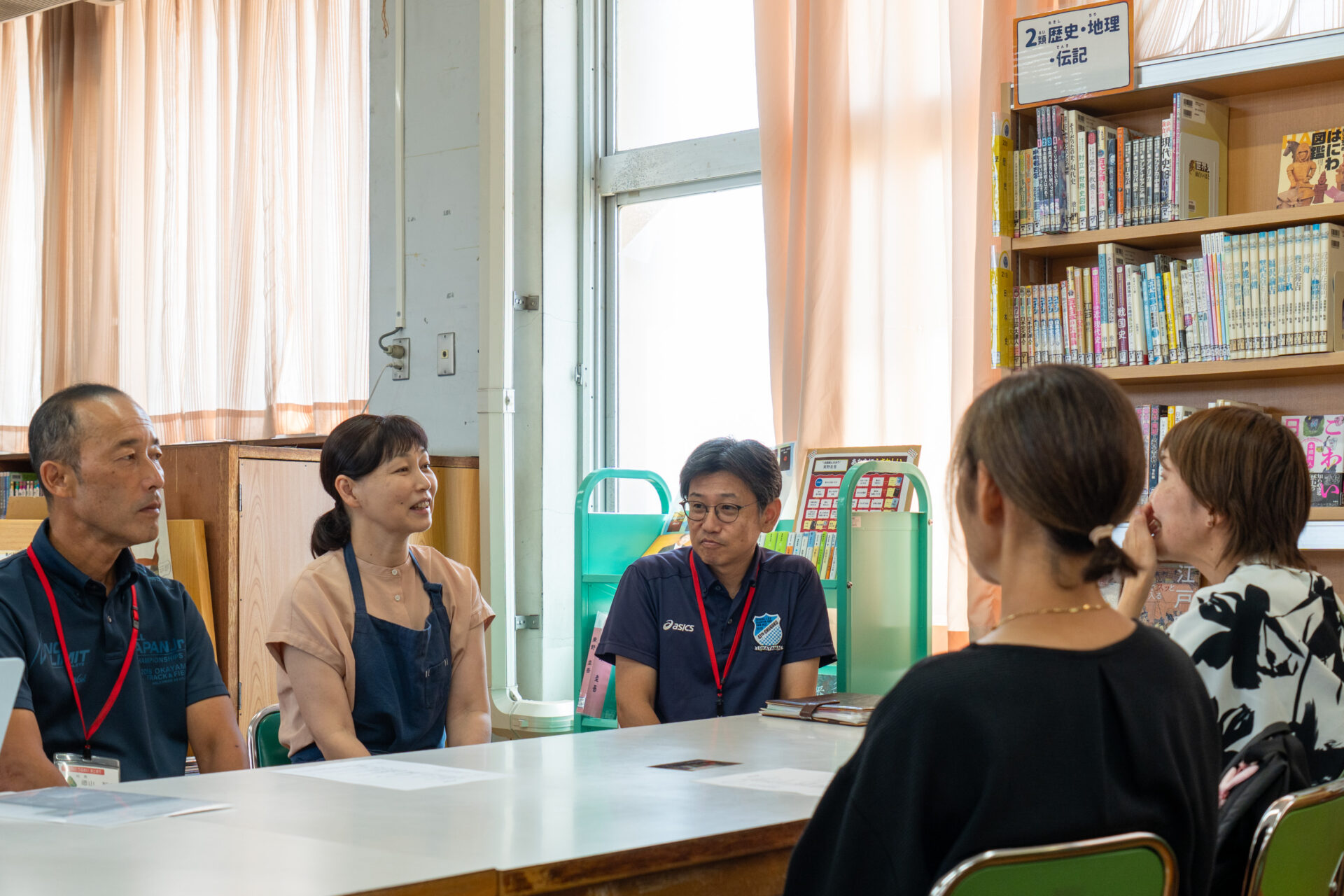
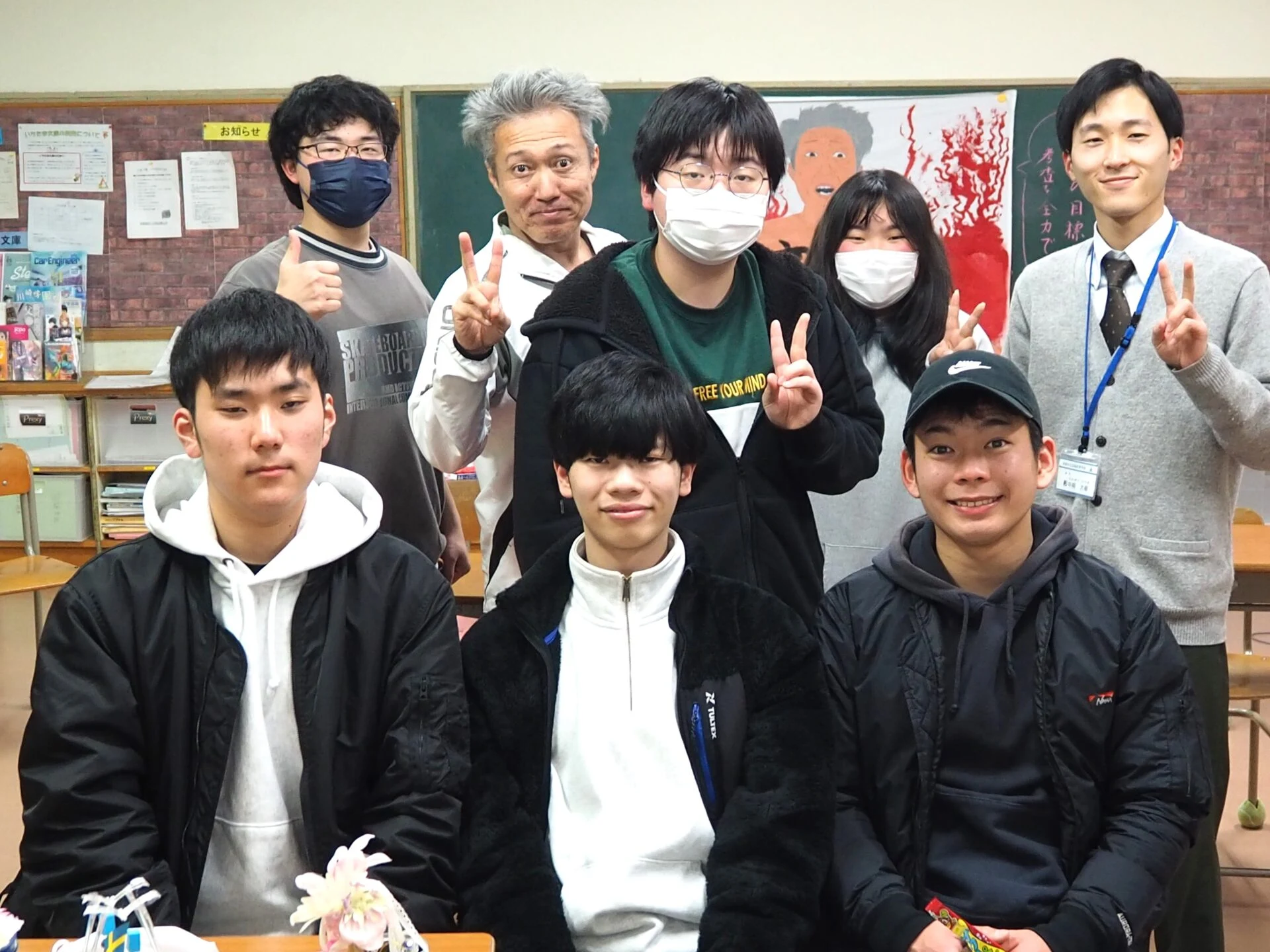
Front: from left, Miiko and Hara Tsukune
Back: Principal Tokuyama Tomo, Nishijima Yayoi, and Moriya Kazuyuki
Along with Miiko and Mr. Moriya, the interview was attended by Tokuyama Tomo, principal of Tsurajima Junior High School; Nishijima Yayoi, the librarian; and Hara Tsukune, who connected Miiko with Ajino Junior High School.
We asked what they hoped students would feel through *Space Brothers*.
Miiko
When people talk about *Space Brothers*, the main message is usually, “Dreams are wonderful, so don’t give up.” But that’s not how I see it.
I was someone without a dream.
When you’re a child, you’re asked, “What is your dream?” and made to write an essay about it at school, right? I had nothing, so I wrote whatever came to mind. But I didn’t find a dream until I was an adult.
That’s why I want to create an environment where people can talk about their dreams. I think everyone is afraid of being laughed at for saying something big, and I’m doing this because I want to get rid of that fear.
It’s perfectly fine to have a dream or not. And even if children don’t have dreams of their own, I hope they won’t laugh at someone else’s. So that when they eventually find something they want to do, they don’t crush their own dream.
Of course, it’s enough if they simply enjoy reading it.
Hara Tsukune (surname omitted)
As Miiko said, “What is your dream?” is something children are often made to write about in elementary school. But children today can live without having a dream.
It’s important for adults, as well as children, to show that you can focus on what you enjoy in the present moment. Children who grow up seeing someone like Miiko say, “I’m going to do what I love,” will naturally learn to do what they love too.
I hope *Space Brothers* can be an opportunity for children to see the confident, strong example of adults who show that growing up is fun and that you can do so many things you love.
Nishijima (surname omitted)
Kurashiki City elementary schools have library periods, and students come to the library at least once a week. Even children who don’t like books have time to pick one up and read.
But junior high schools don’t have library periods, so students have far fewer opportunities to encounter books, and the same faces keep showing up.
When books are donated, one person reads them and says, “They were great,” and word of mouth spreads, bringing in more and more readers. Once they’ve finished the whole series, it spreads into, “What should I read next?”
I’m looking forward to seeing how the children respond. It’s a story that will surely inspire them to move forward with a positive attitude, so I hope everyone will read it.
Moriya
Of course, there’s the story about dreams, but I have two sons. One is in university and the other is in junior high school.
They have the same dynamic as Mutta and Hibito, the main characters in Space Brothers, with the younger brother being the more capable one. The older brother works hard and is now pursuing what he wants to do at university, so there are some parallels.
I hope they’ll also be close like the brothers in the story, support each other when it matters, and have a relationship where they respect one another.
Space Brothers also explores siblings and family in many different ways. I’d really like them to see that side of it, too, and I hope they’ll build that kind of family and home.
Tokuyama (honorific omitted)
I haven’t read it, but of course I know the title. I’m very interested in how someone who has given up or come close to a setback goes on to live their life afterward.
So I’d like to read it myself and have my students experience that, too. Maybe the best thing is to achieve your dream without ever straying from your path, but I’d also like them to see how someone who has come close to a setback and nearly given up goes on to live their life afterward.
From the Writer
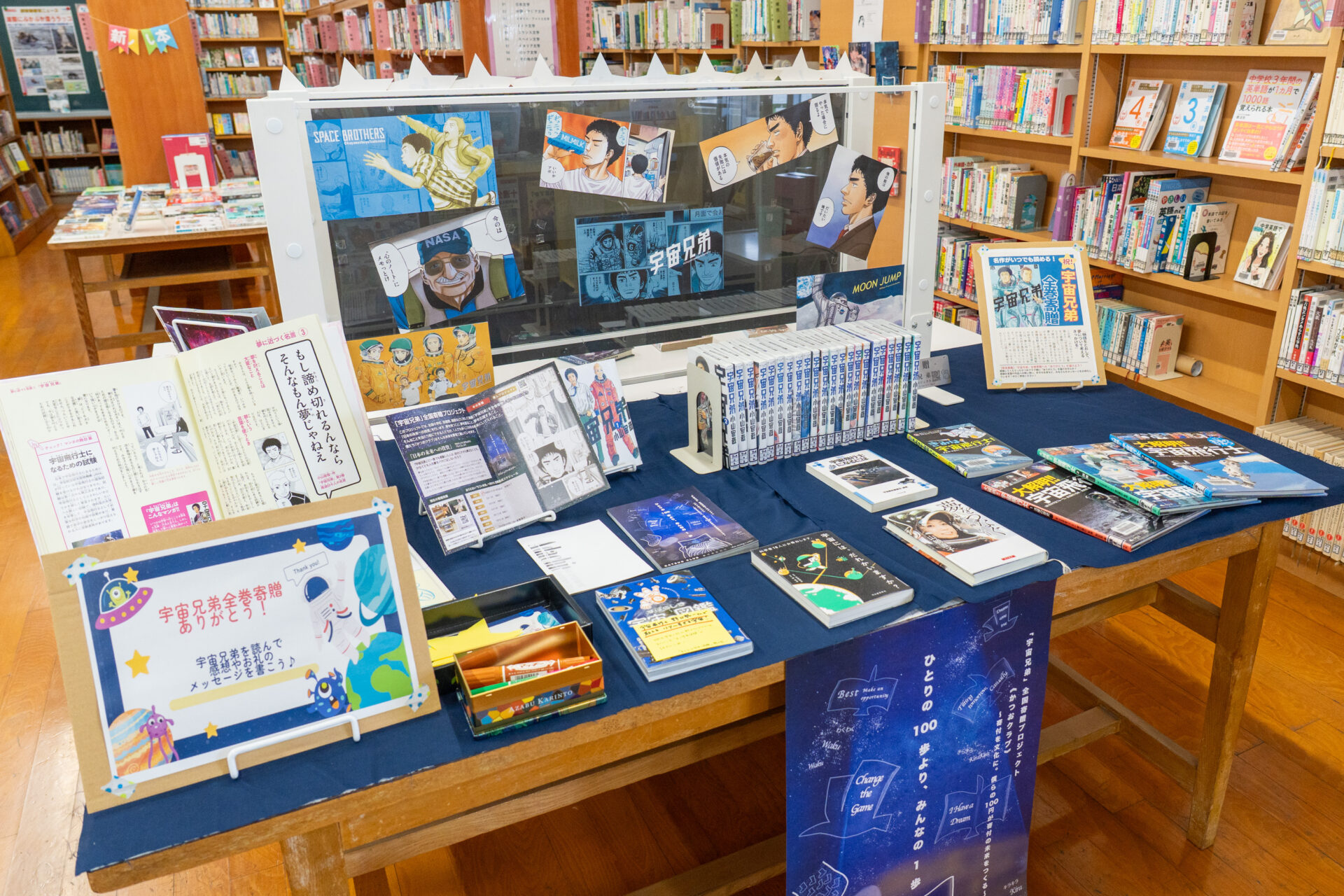
Miiko, who said it was her first time visiting a school she had donated to, was moved to see the books displayed in the library.
In fact, the manga had been donated in advance. Although it was during summer vacation, students who visited during that time borrowed them one after another, so only about half remained on the day. She was moved not only by how neatly they were displayed, but also by the fact that students were actually picking them up and reading them.
There was no ceremony like a donation presentation when we visited, but this can be seen as one of the achievements made possible by the accumulation of small efforts.
They plan to continue the donation project through donations starting at 100 yen to the “Katsuo Club,” using note’s membership feature.
If you’re interested, check out their activities too.
Space Brothers Nationwide Donation Project Information
| Name | Space Brothers Nationwide Donation Project |
|---|---|
| Contact | Contact via note’s messaging feature |
| Website | Information on the Space Brothers Plan: We want to bring Space Brothers into the everyday lives of children through school libraries. |






What would you like to know about Kurashiki?
Enter a word to search articles on this site