

For me, who moved to Kurashiki from the Kanto region in December 2023, the transition from 2024 to 2025 was my first New Year’s holiday in Kurashiki.
I wanted to take the opportunity to experience a New Year’s Eve that felt distinctly Kurashiki, so I joined the New Year’s Eve festivities in the Bikan Historical Area. Here, I’ll share what the Bikan Historical Area was like on New Year’s Eve.
The information presented here was current when this article was published in January 2025. Please note that it may differ from current information.
Start your New Year’s Eve stroll through the Bikan Historical Area at the Kurashiki-Higashi Elementary School parking lot
When you think of the Bikan Historical Area, you might picture the Ohara Museum of Art and traditional townhouses, but there are also several shrines and temples.
Among them, Achi Shrine, the only shrine in the Bikan Historical Area and also known as Kurashiki’s guardian shrine (the local guardian deity), opens the grounds of Kurashiki City Kurashiki-Higashi Elementary School as a temporary parking lot from New Year’s Eve, December 31, through January 3.
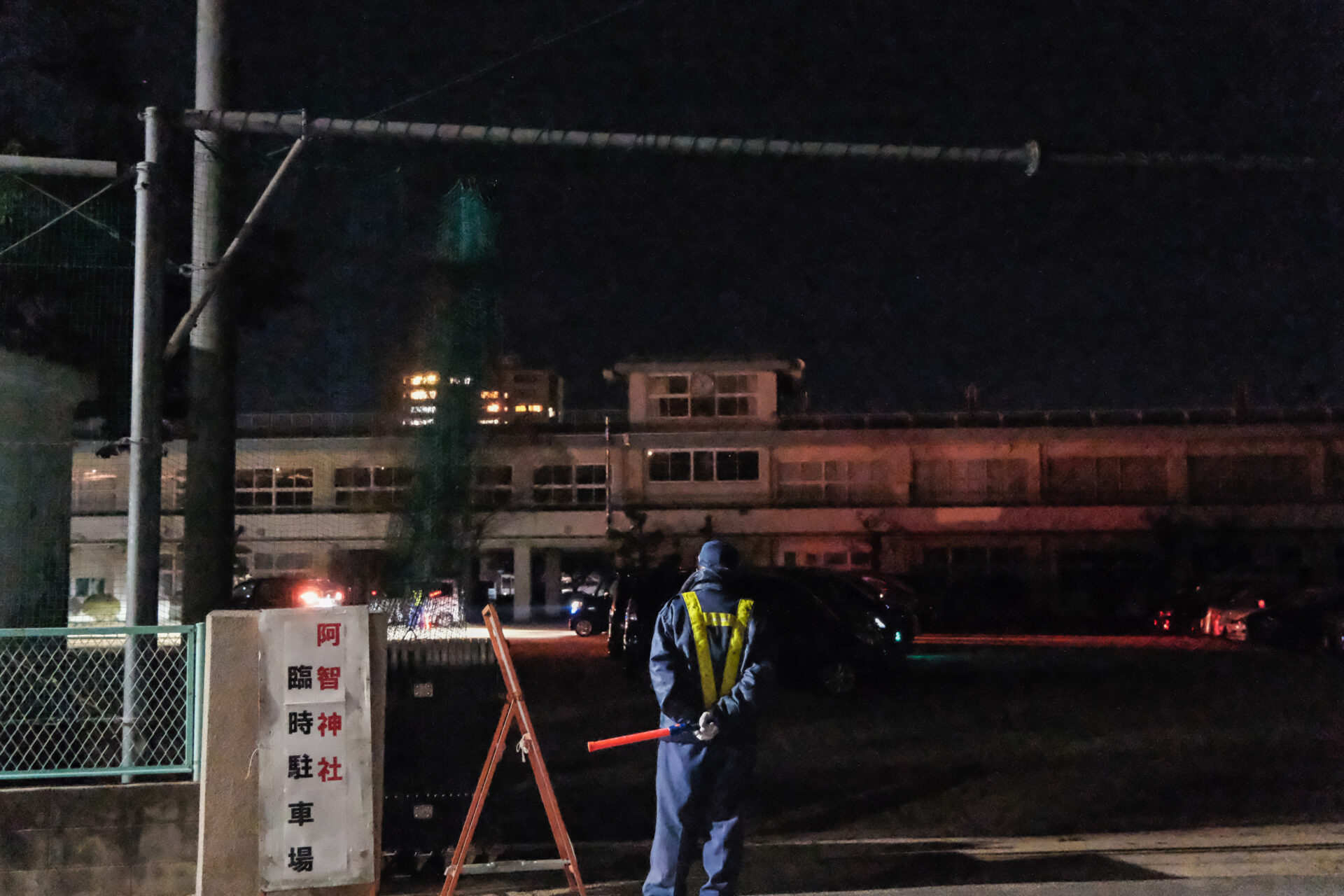
I also started from the grounds of Kurashiki-Higashi Elementary School at 11 p.m. and walked the following route until 1 a.m. on January 1.
Ring the New Year’s Eve bell at Seiganji Temple
After leaving the grounds of Kurashiki-Higashi Elementary School, my first stop was Seiganji Temple.

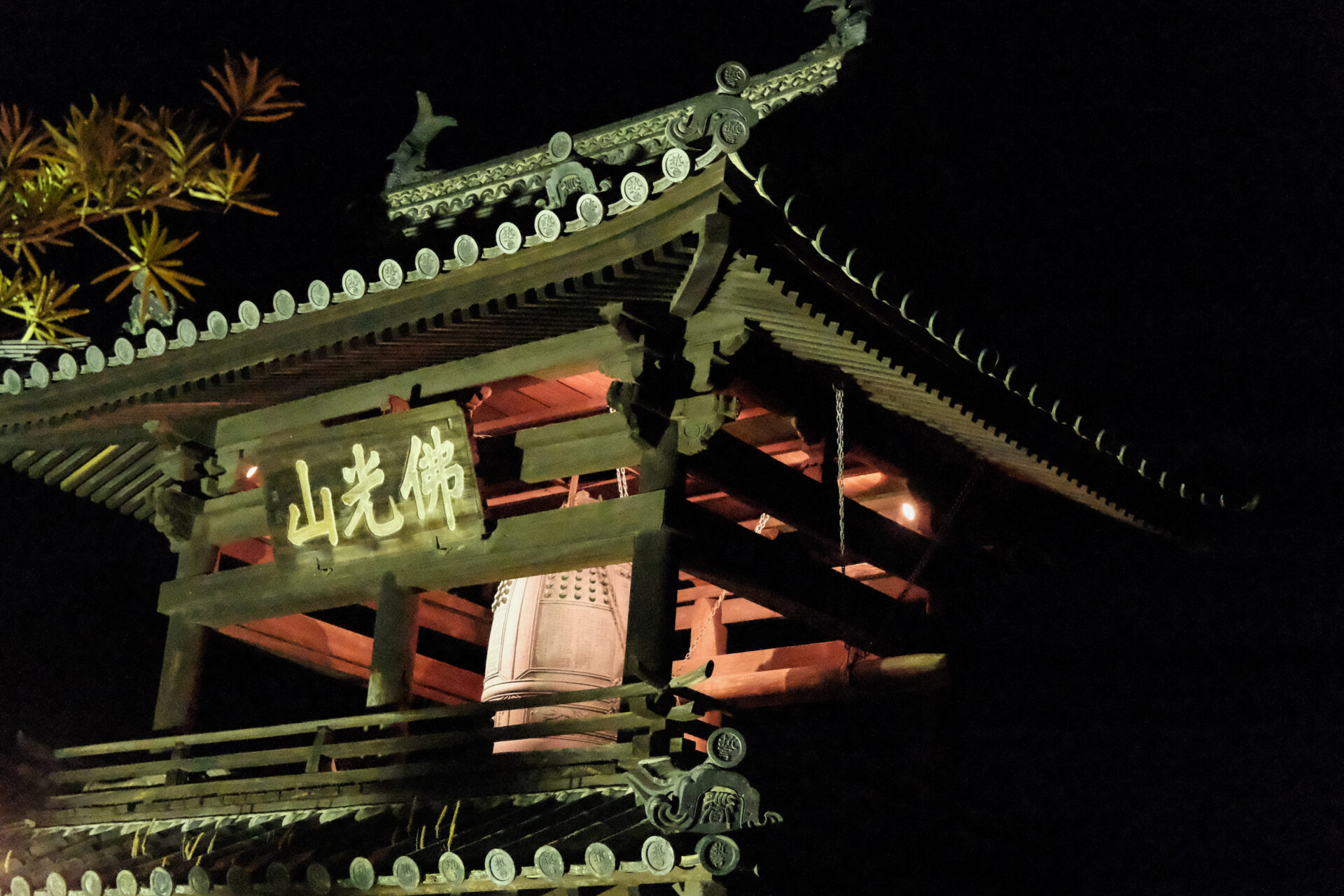
I wanted to ring the New Year’s Eve bell that can be heard throughout the city around midnight on New Year’s Eve.
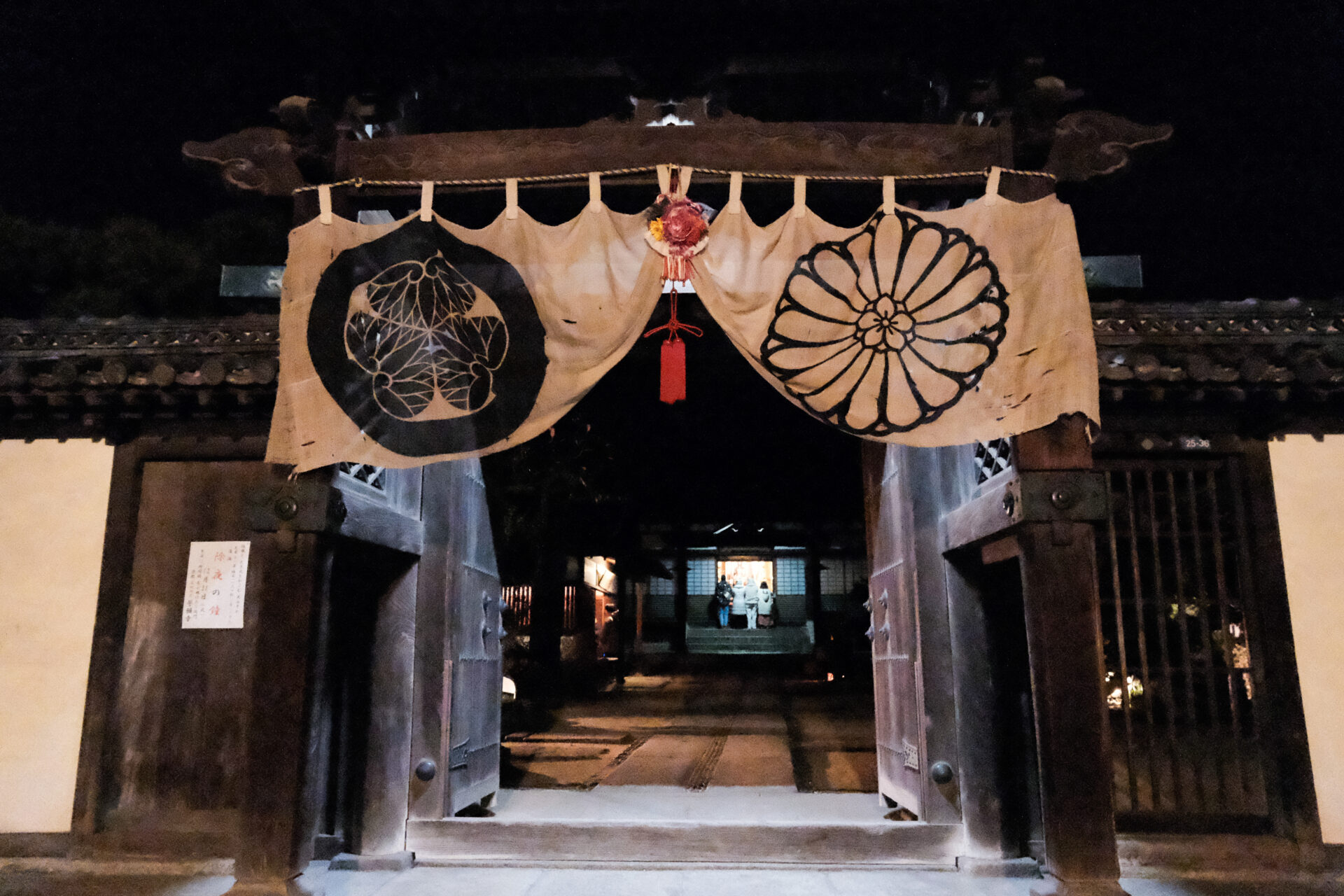
When I arrived at around 11 p.m., the New Year’s Eve bells were already ringing throughout the Bikan Historical Area. I was a little worried I might be too late or face a long line, but only a few people were waiting, and I reached the bell after about five minutes in line.
A priest was waiting by the bell and explained that we should bow before ringing it and when to strike, so I felt at ease.
After ringing the bell, I received a sange, a card marked with my place in the order. Sange are cards representing flowers offered to the Buddha in Buddhist rites. I used to receive them whenever I visited a temple with my grandmother as a child, so they brought back fond memories.
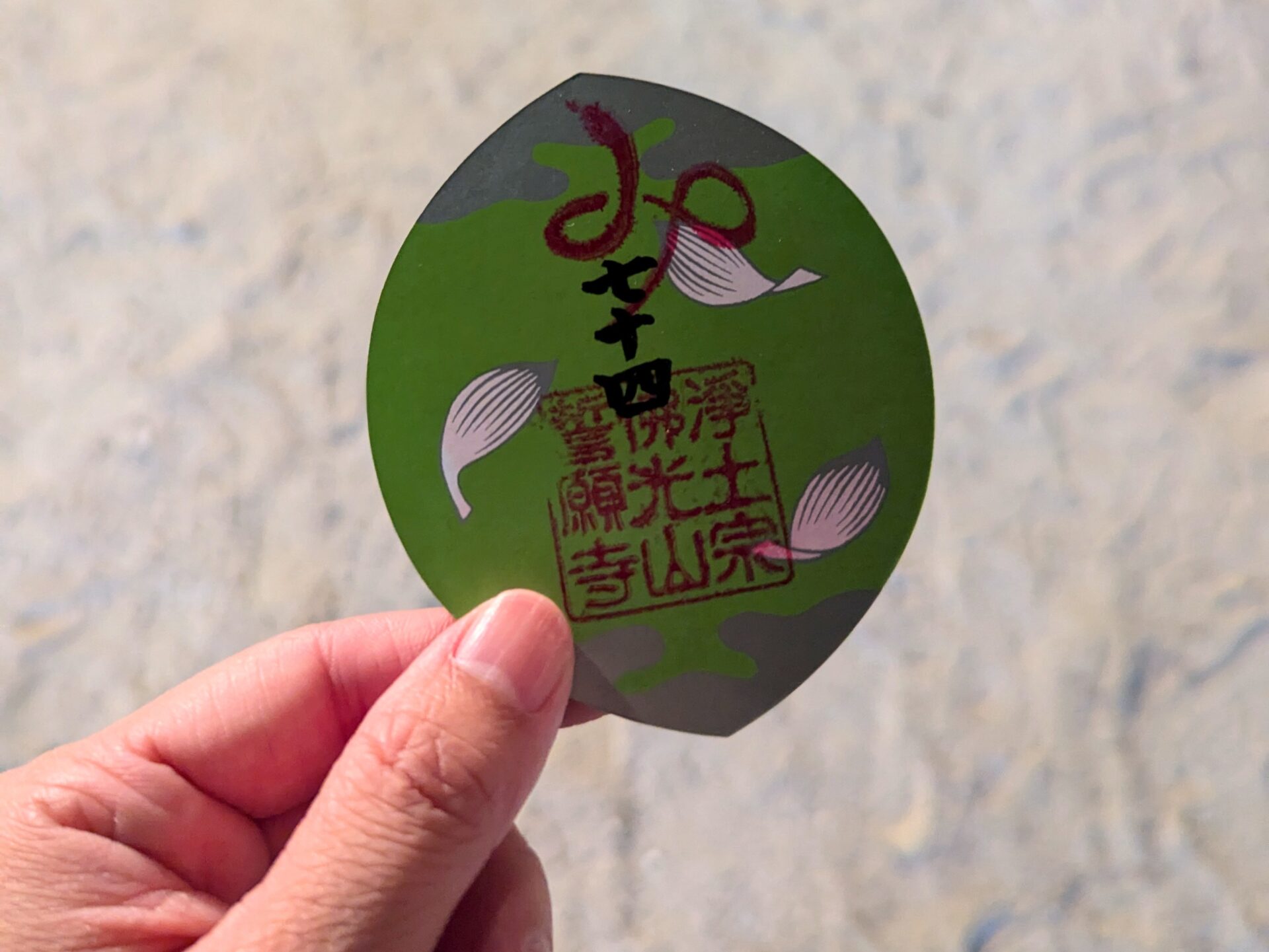
At many temples, the New Year’s Eve bell is rung 108 times. The number 108 represents the number of human bonno—the mental workings that disturb the mind and cause suffering, such as desire, anger, and confusion.
The New Year’s Eve bell is rung to offer prayers for the year’s bonno and welcome the new year. Ringing one of those important strikes with my own hands made me feel more focused.
Welcome the New Year at Achi Shrine
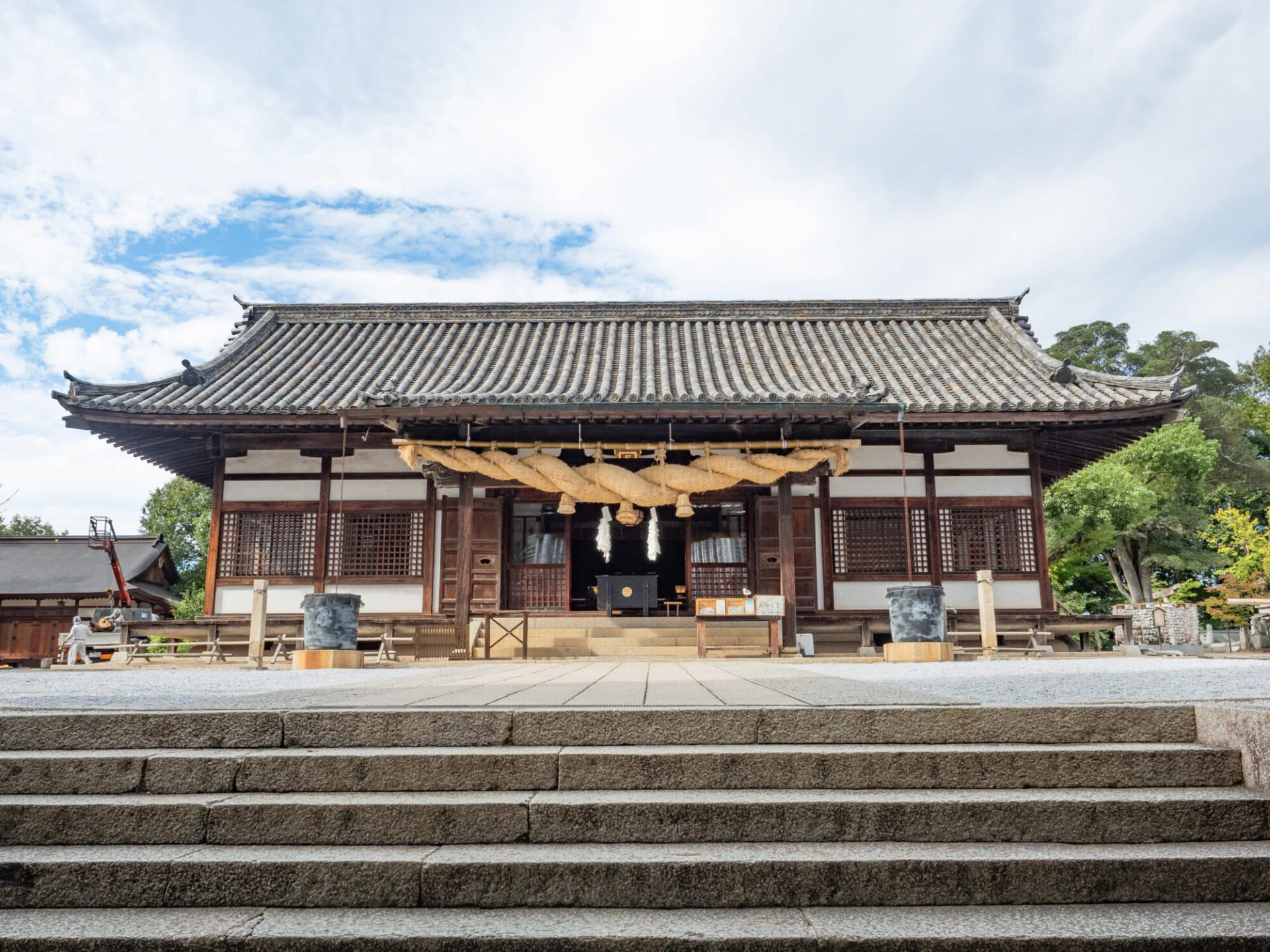
After warming up from the inside with amazake at Seiganji Temple, I walked through the Bikan Historical Area toward Achi Shrine.
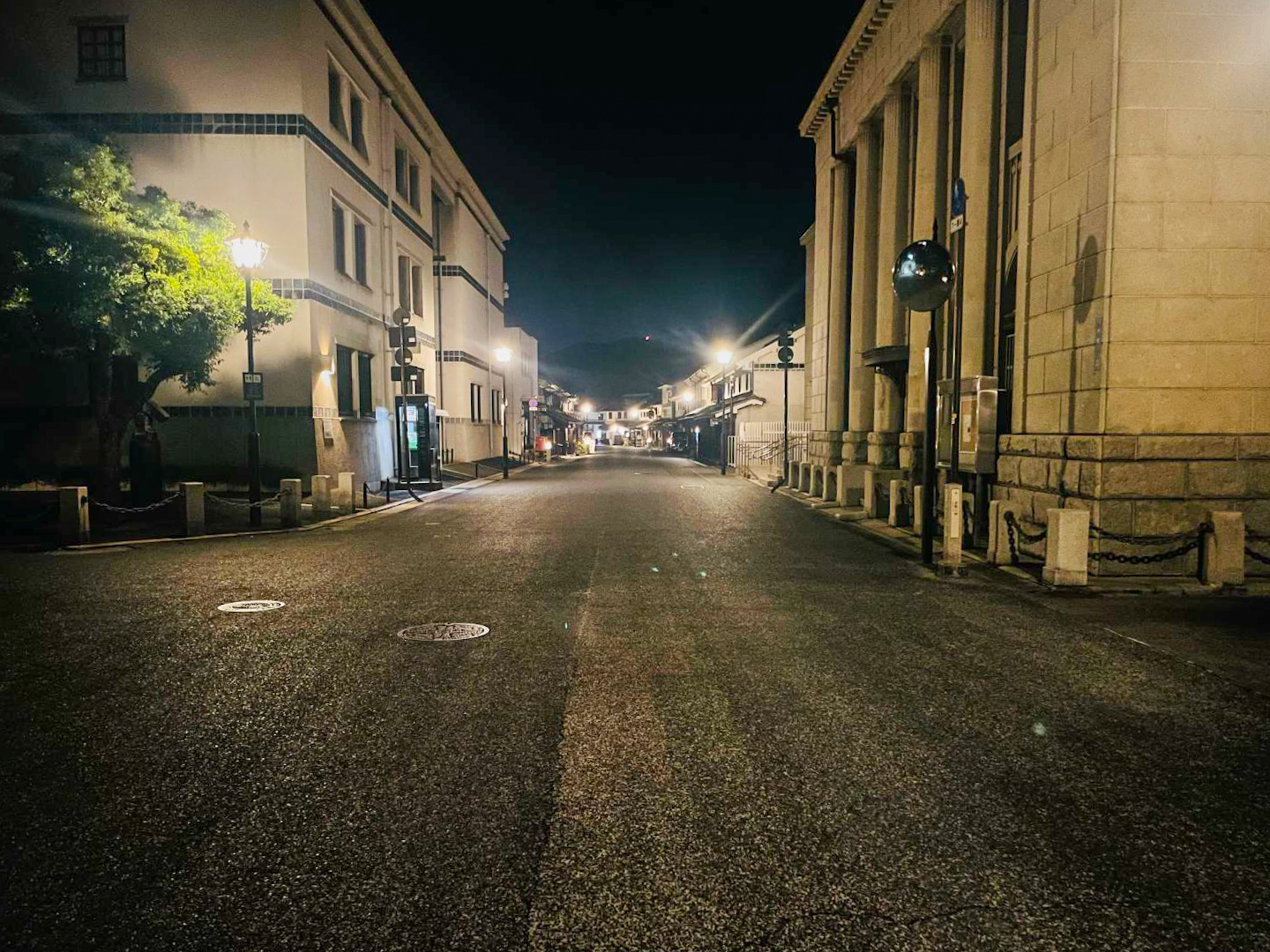
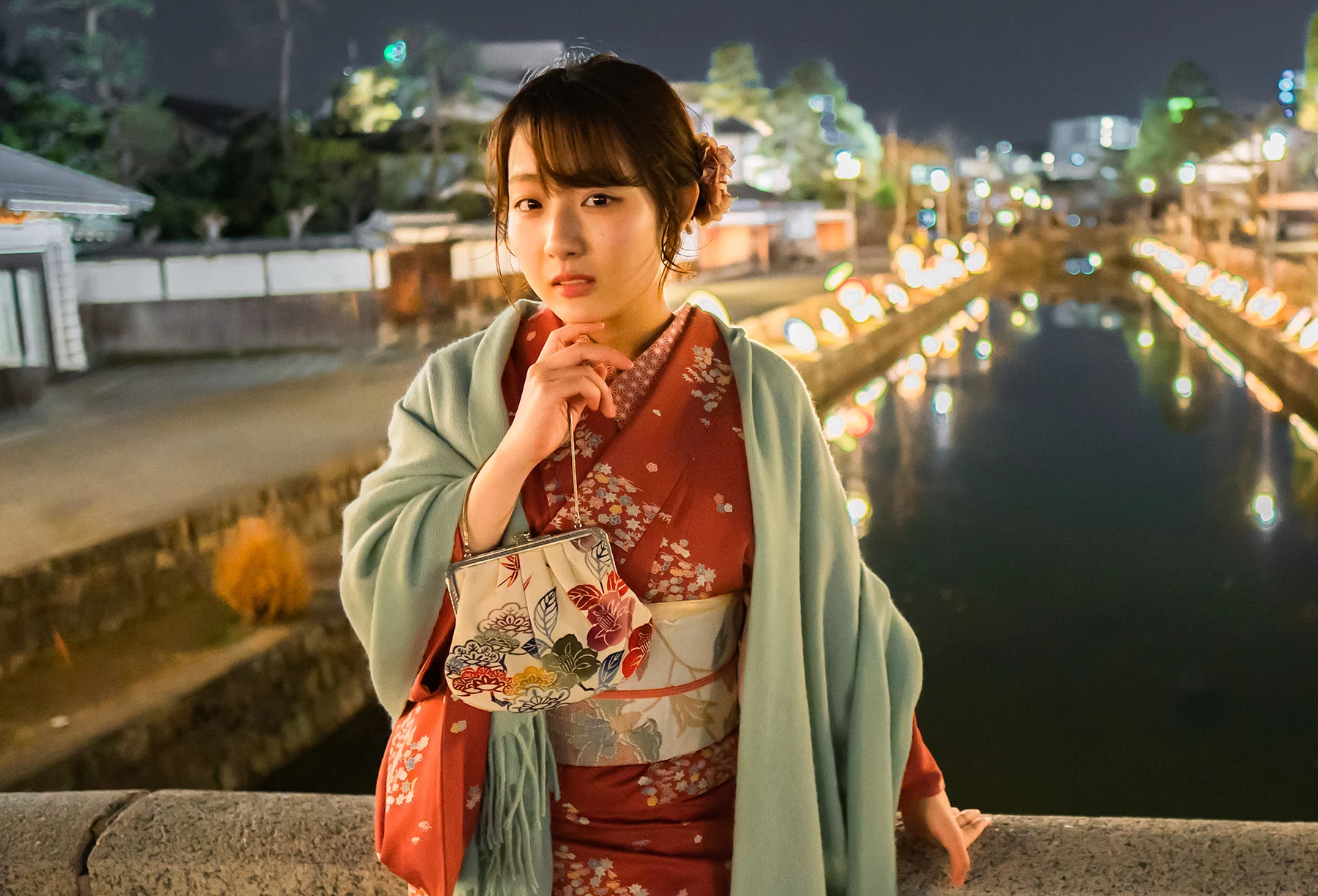
Many shops in the Bikan Historical Area close in the evening, so walking through the streets at night felt like a fresh experience.
New Year’s Eve soba and udon
When I arrived at the grounds of Achi Shrine, the delicious aroma of dashi broth filled the air.
Following the smell, I found that New Year’s Eve soba and udon were being served.
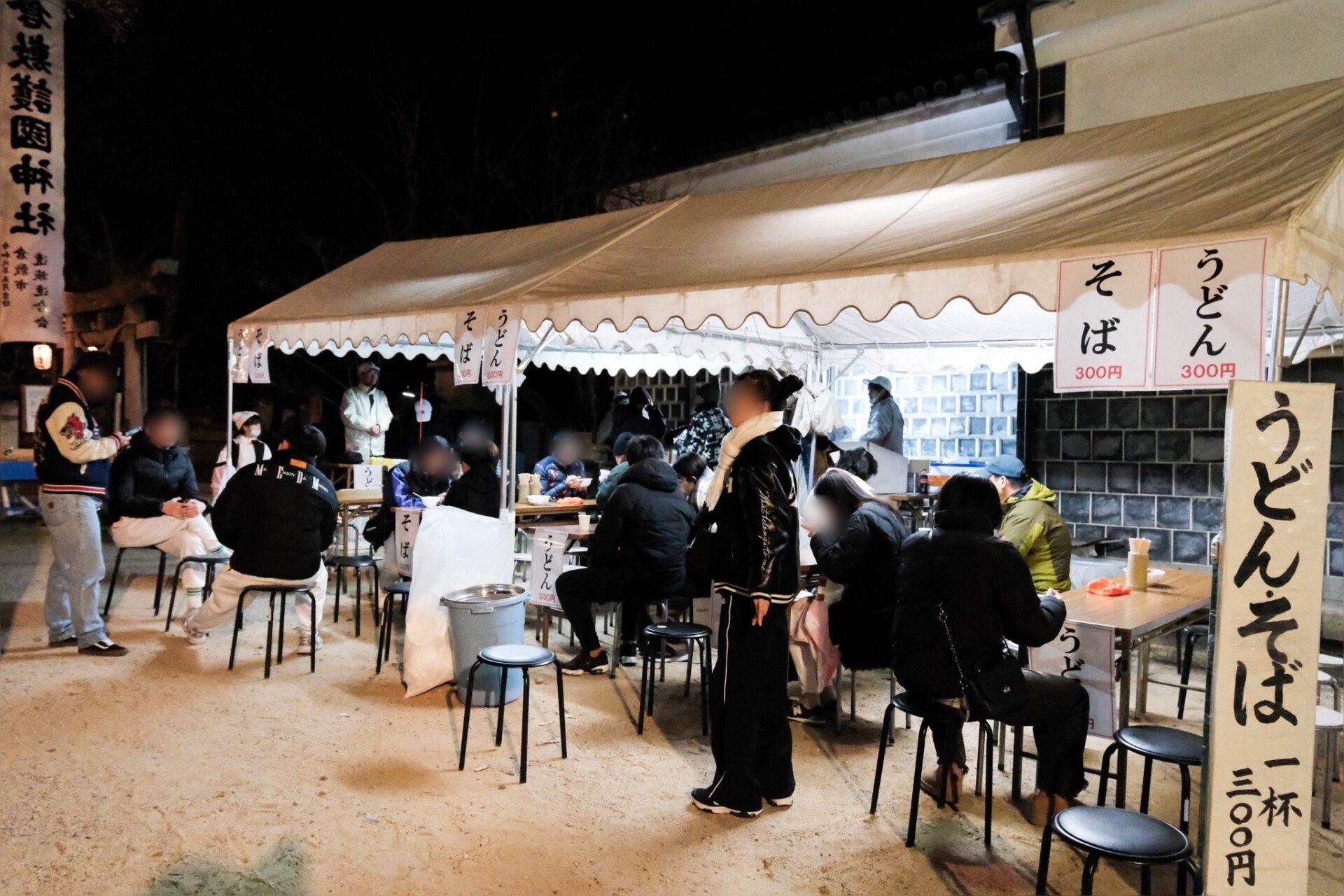
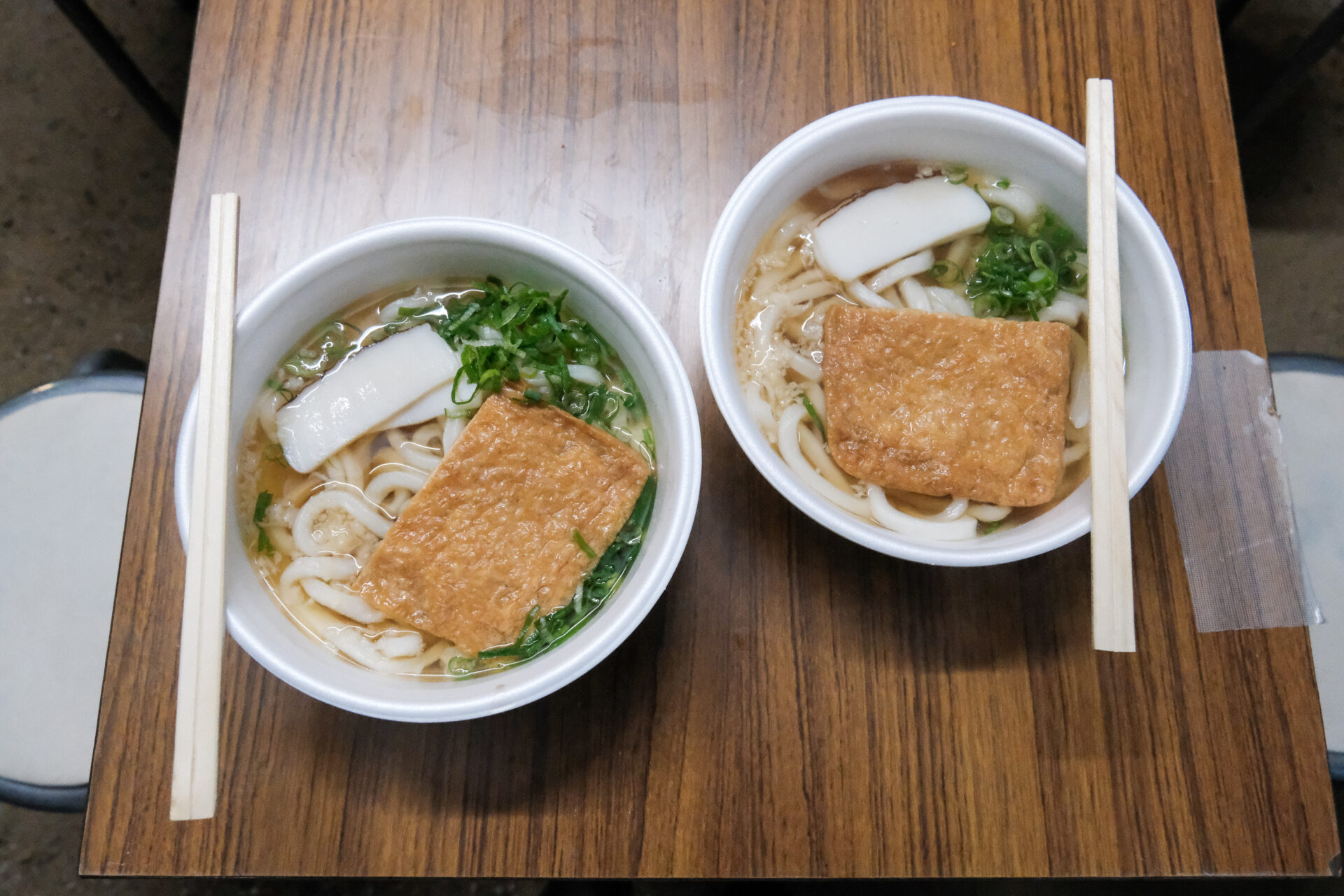
The long, thin shape of New Year’s Eve soba and udon symbolizes wishes for longevity and good health, and they are also said to ward off misfortune. Since 2025 was my year of yakudoshi misfortune, it was the perfect New Year’s Eve tradition for me, so I decided to have some.
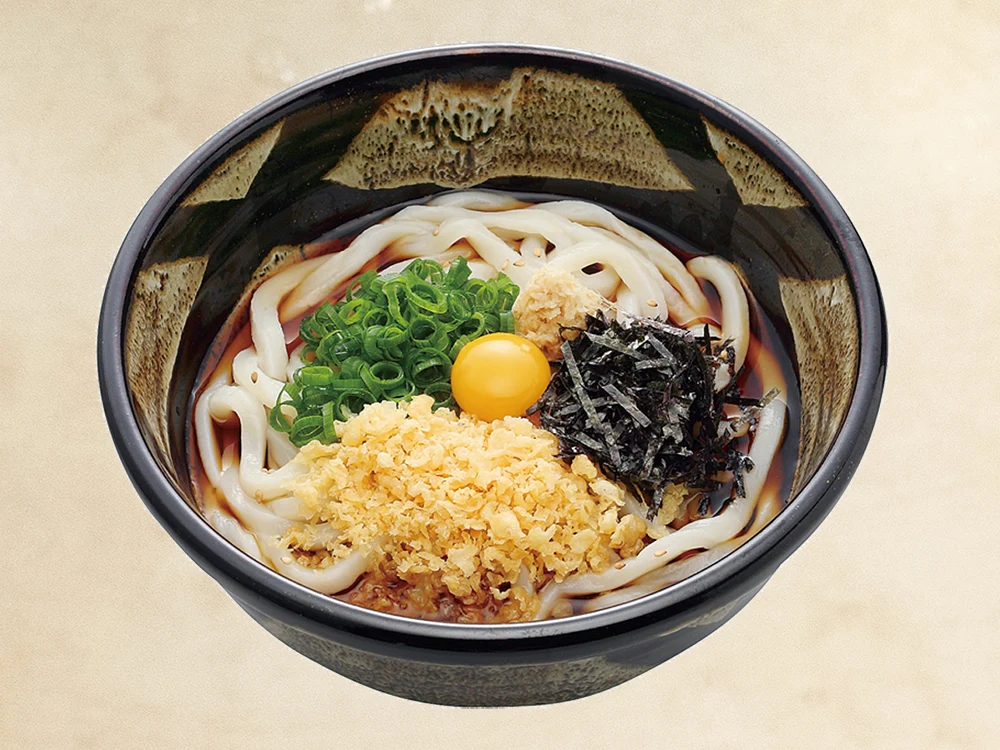
I like udon, so I chose that. I was told the noodles were from Bukkake udon “Furuichi,” and they were smooth and pleasantly easy to swallow.
Kagami biraki and a ceremonial dance
The New Year at Achi Shrine began with kagami biraki, the ceremonial opening of a sake barrel. The sake was Mannenyuki, made by Morita Shuzo, a brewery in the Bikan Historical Area.
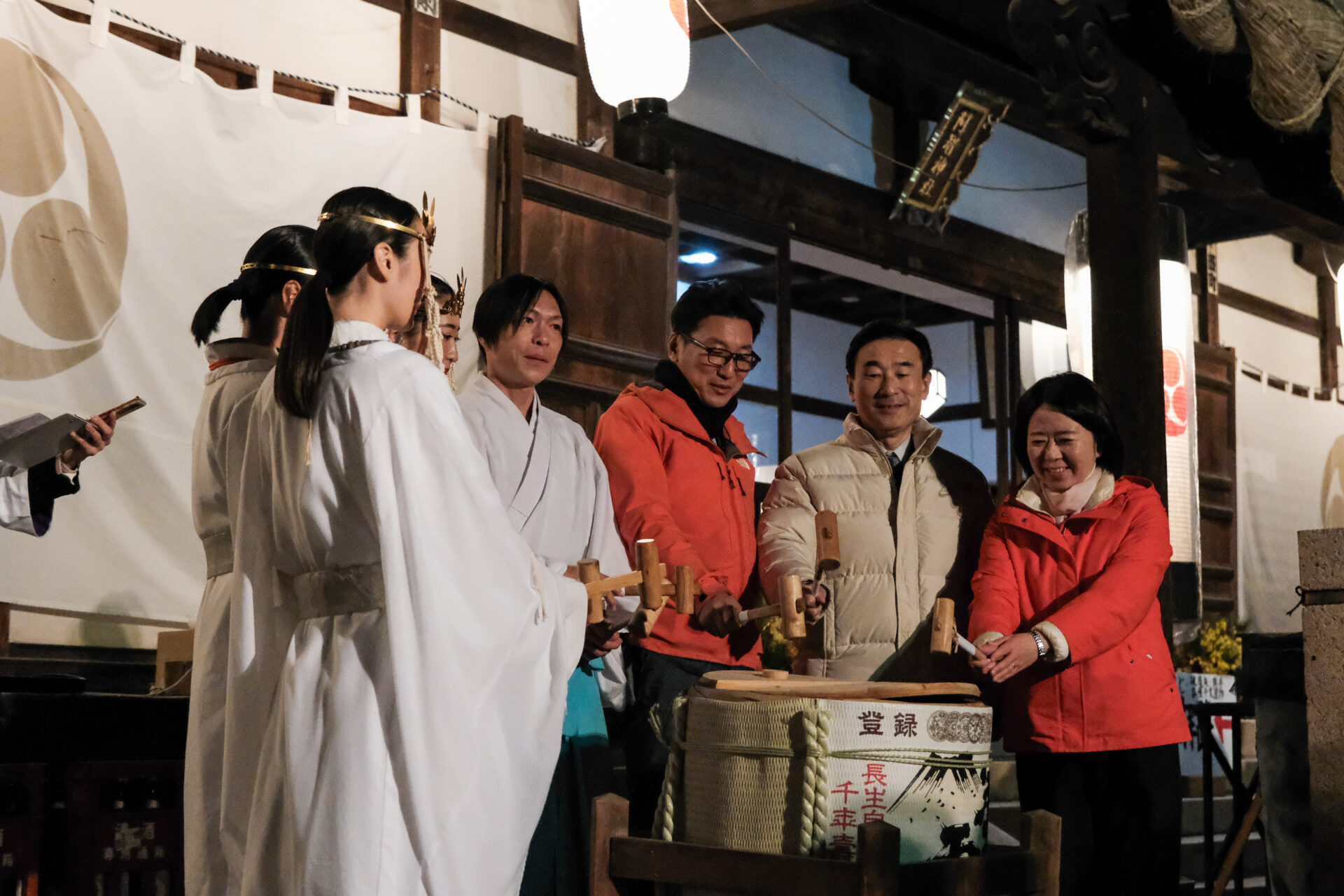
We counted down together with the 26th generation of Achi’s Three Goddesses, and the barrel-opening ceremony took place the moment January 1, 2025 began. We welcomed the new year safely.
Next came a dance offered by the Three Goddesses of Achi. Many shrines across Japan have shrine maidens perform dances as offerings, but at Achi Shrine, the dancers embody the gods and offer their dance with the people in mind.
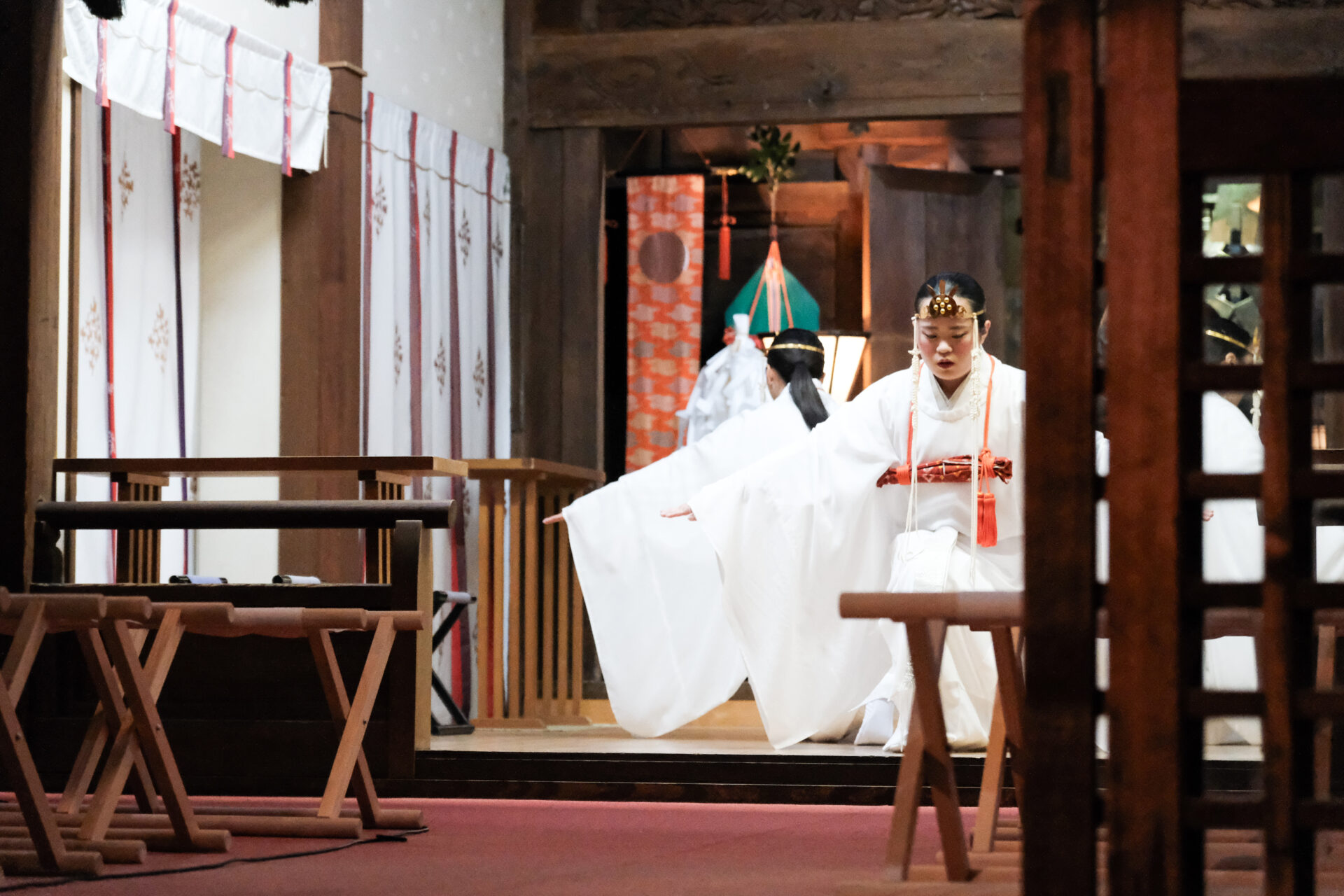
In contrast to the busy shrine grounds filled with people making their first shrine visit of the year, a dance was offered in the solemn atmosphere of the worship hall.
A variety of New Year’s good-luck charms
A variety of New Year’s good-luck charms are surely one of the pleasures of making a first shrine visit of the year.
Since there are many businesses in the Bikan Historical Area, the shrine had a wide selection of good-luck charms, including kumade (bamboo rakes) and hamaya (arrows to ward off evil).
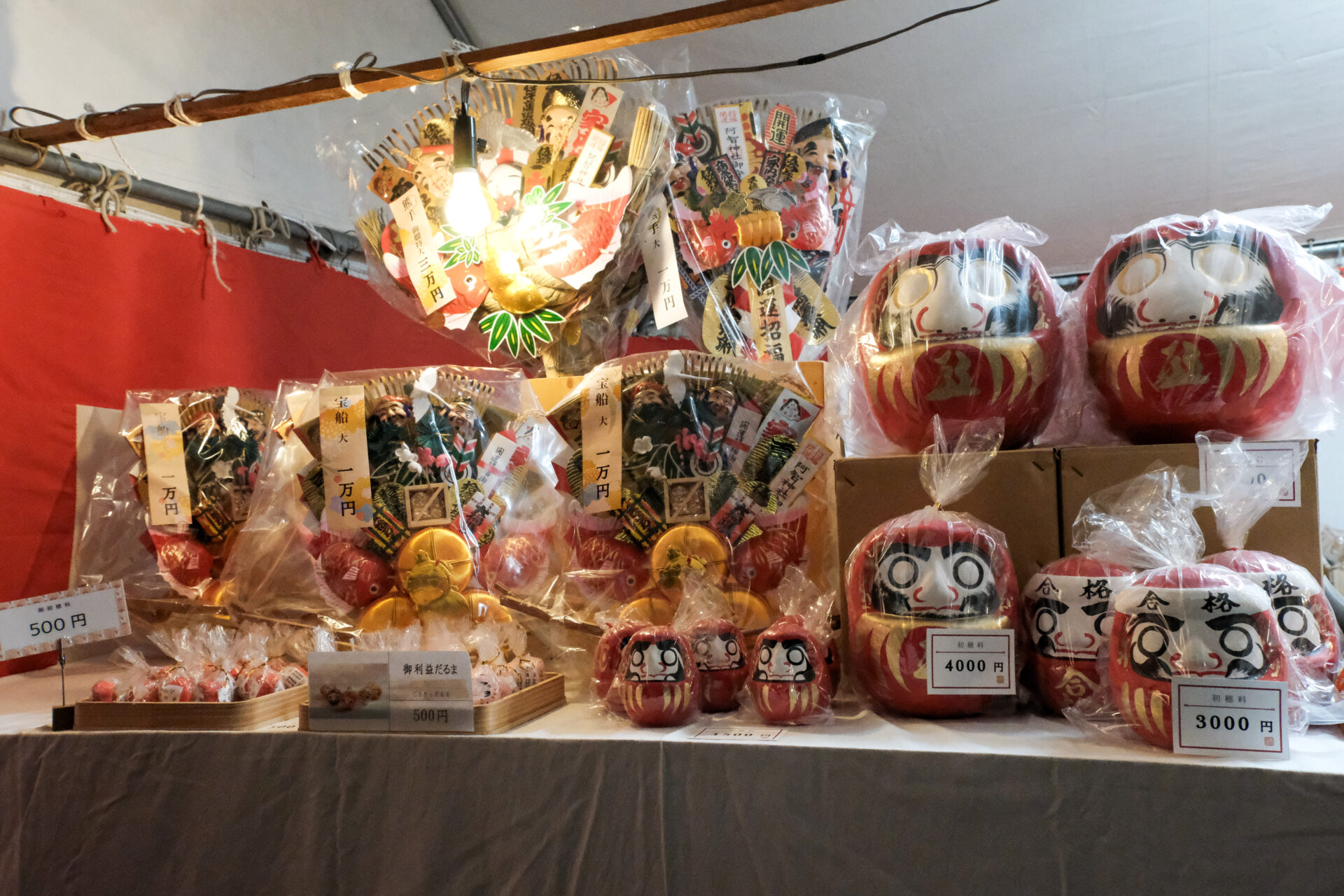
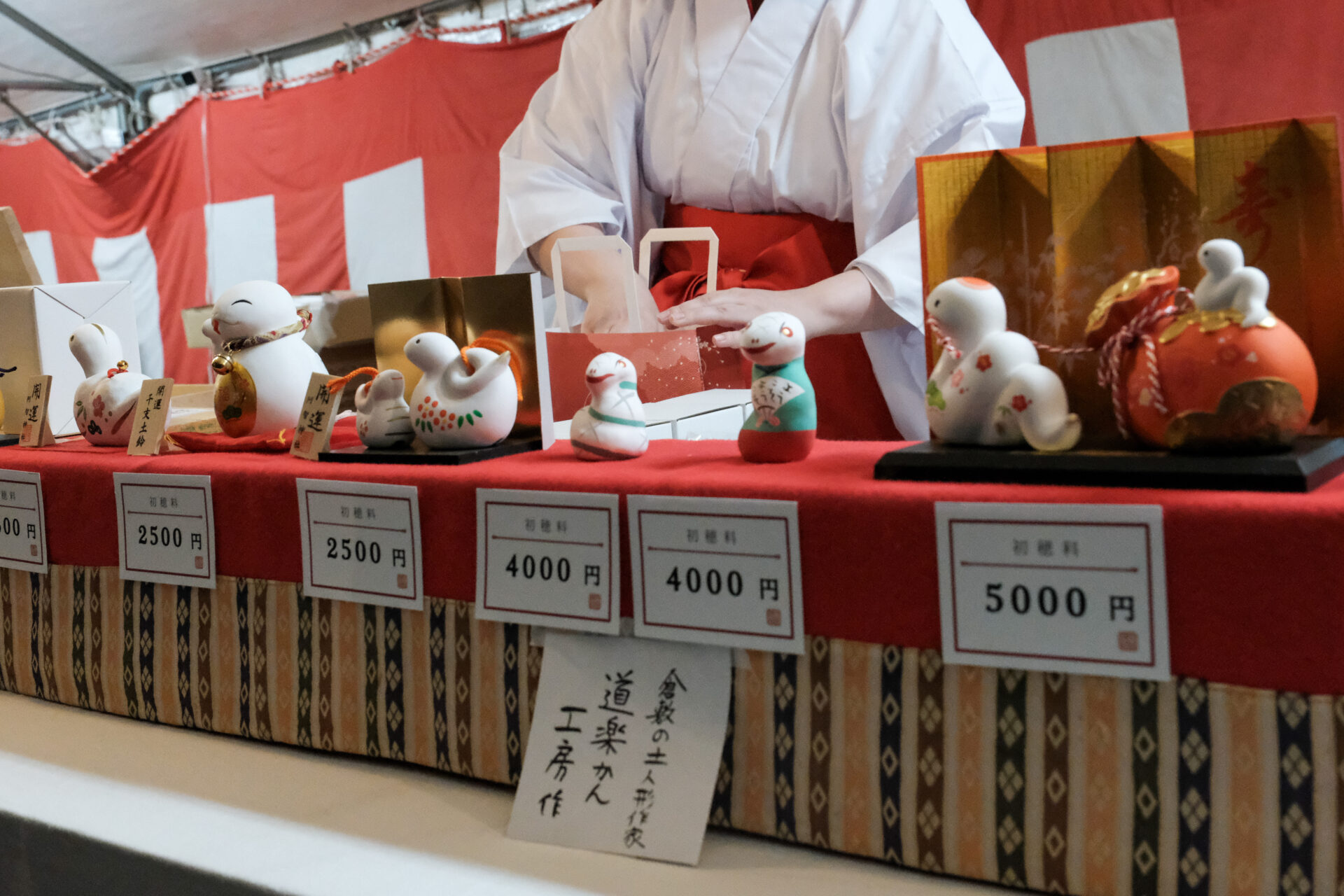
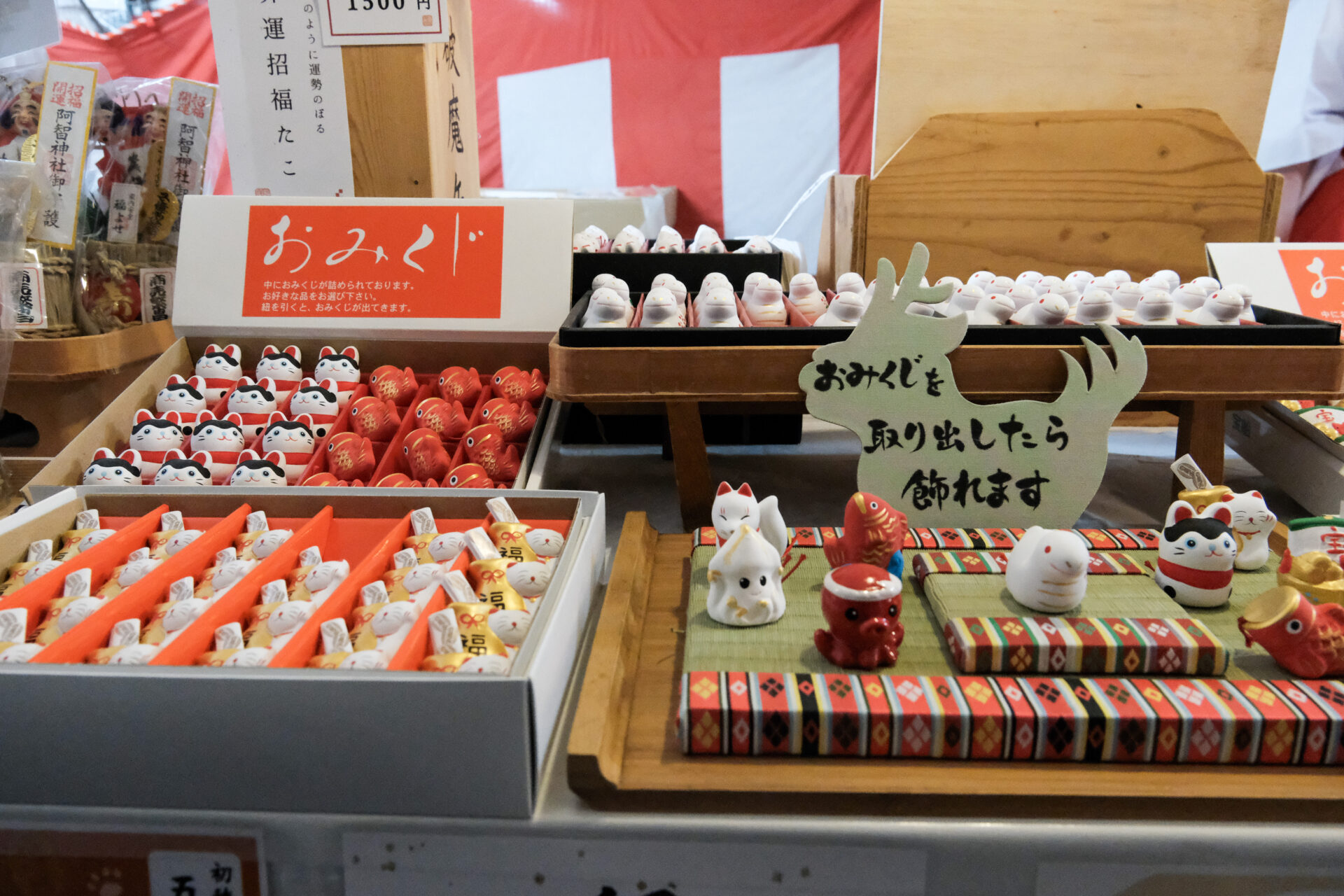
I also found omikuji fortune slips tucked inside zodiac animal figurines, a New Year’s specialty. I was curious about the fortunes and wanted a New Year’s decoration for my home, so they were just the thing for me, and I picked up an omikuji tucked inside a zodiac figurine.
There were also charms unique to Achi Shrine, such as the Hanamaki Mamori. This charm is made jointly by Achi Shrine and Okayama Lace Co., Ltd. It is said to contain a prayer for lasting bonds, like the thick, long vines of Achi Wisteria, a prefecture-designated natural monument that grows on the grounds of Achi Shrine.
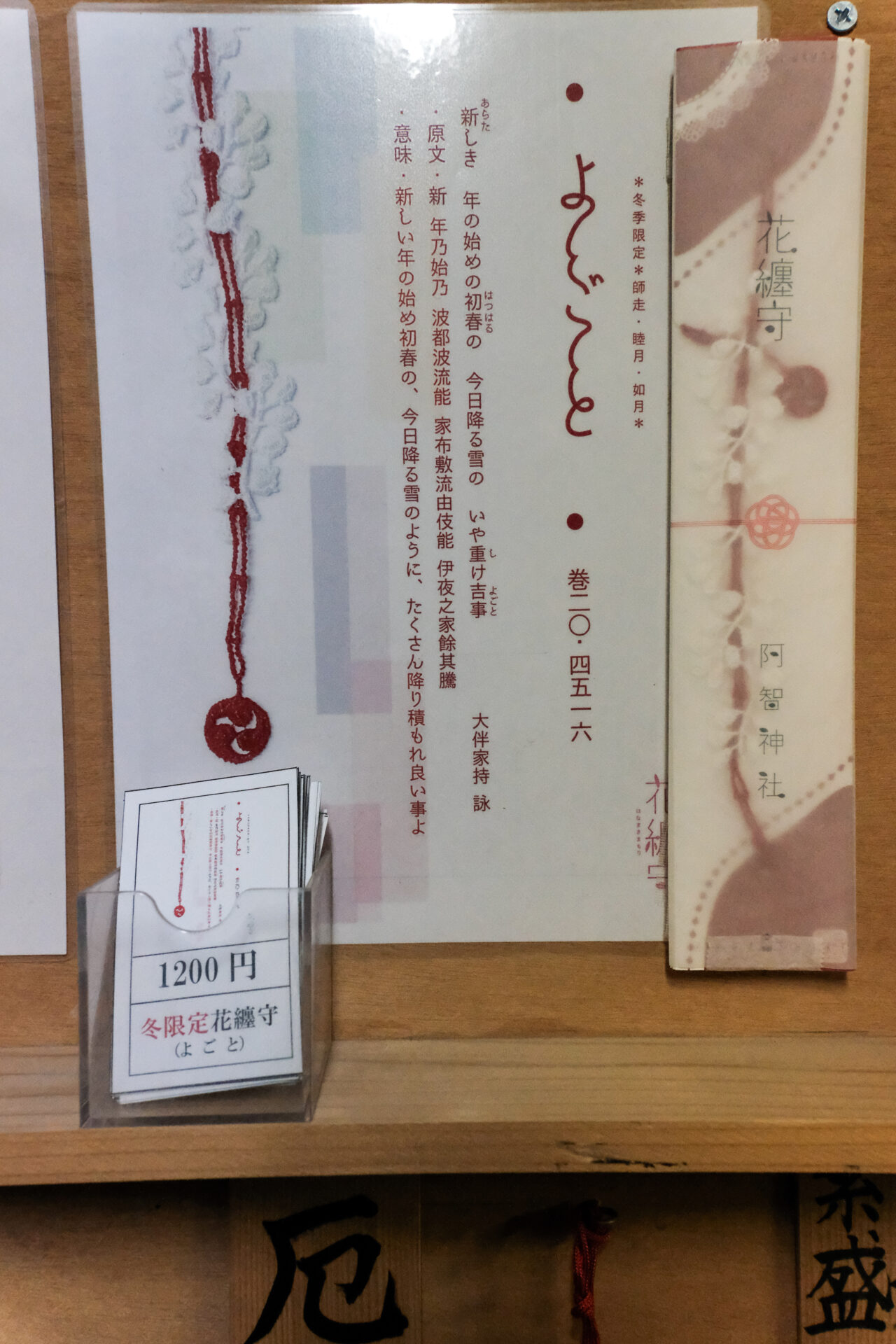
Since I was born in February, I received “Yogoto,” available only in winter. I hope many good things will pile up in my heart and body throughout the coming year.
From the Writer
With a temporary parking lot set up and the amazake served containing no alcohol, the event seems accessible even to people who do not live within walking distance of the Bikan Historical Area.
The sound of the temple bells ringing out across the Bikan Historical Area, with its old-fashioned streetscape, was deeply evocative, and a stroll through the quiet town at night was the perfect setting for reflecting on the year. I also savored Kurashiki-style New Year’s udon and the sake from the Bikan Historical Area, served during the kagami-biraki ceremony in the shrine grounds, making for a New Year’s Eve unique to Kurashiki.
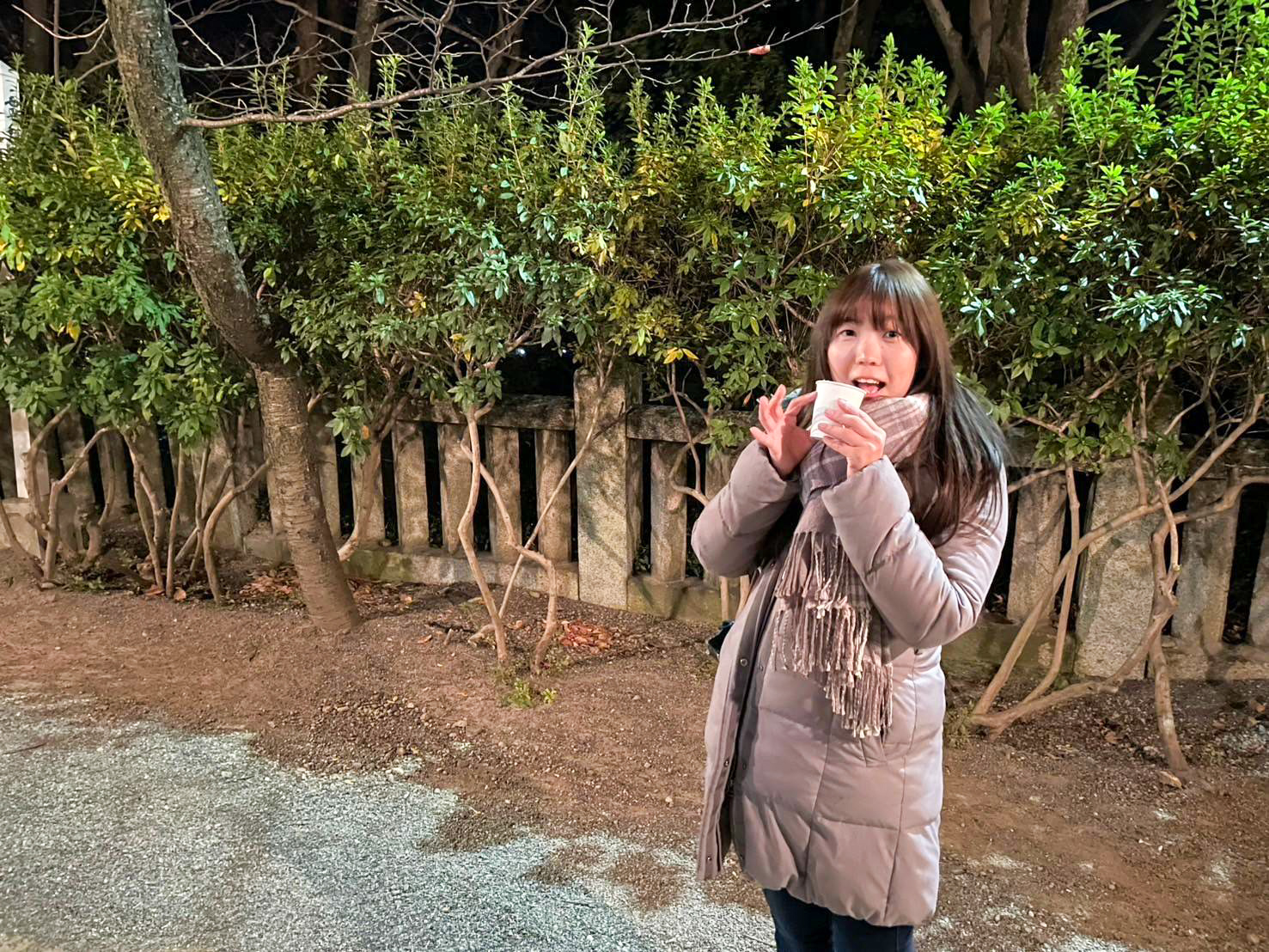
The Bikan Historical Area’s traditional New Year’s events have been preserved for generations. They are among the annual events I hope will continue here for years to come.
Details: Seiganji Temple’s New Year’s Eve Bell and Achi Shrine’s New Year Festival

| Name | Seiganji Temple’s New Year’s Eve Bell and Achi Shrine’s New Year Festival |
|---|---|
| Address | Bikan Historical Area |
| Website | Achi Shrine |

What would you like to know about Kurashiki?
Enter a search term to find articles on this site


































Kurashiki-Higashi Elementary School → Seiganji Temple → Achi Shrine → Kurashiki-Higashi Elementary School