When disasters such as earthquakes and tsunamis occur, information transmission is very important to protect people and mitigate damage.
Do you know the emergency notification FM radio "Kokucchi"?
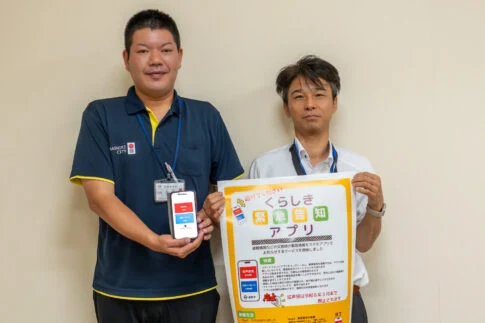
"Kokucchi" is a radio that automatically turns on during emergencies to convey important information such as evacuation instructions.
It is said to be highly effective for information transmission during disasters, and as of February 2022, about 250,000 units are in use nationwide, from Hokkaido in the north to Nagasaki in the south.
It was developed by the radio station "FM Kurashiki" in Kurashiki City and others.
Let me introduce the features of "Kokucchi".
What is "Kokucchi"?
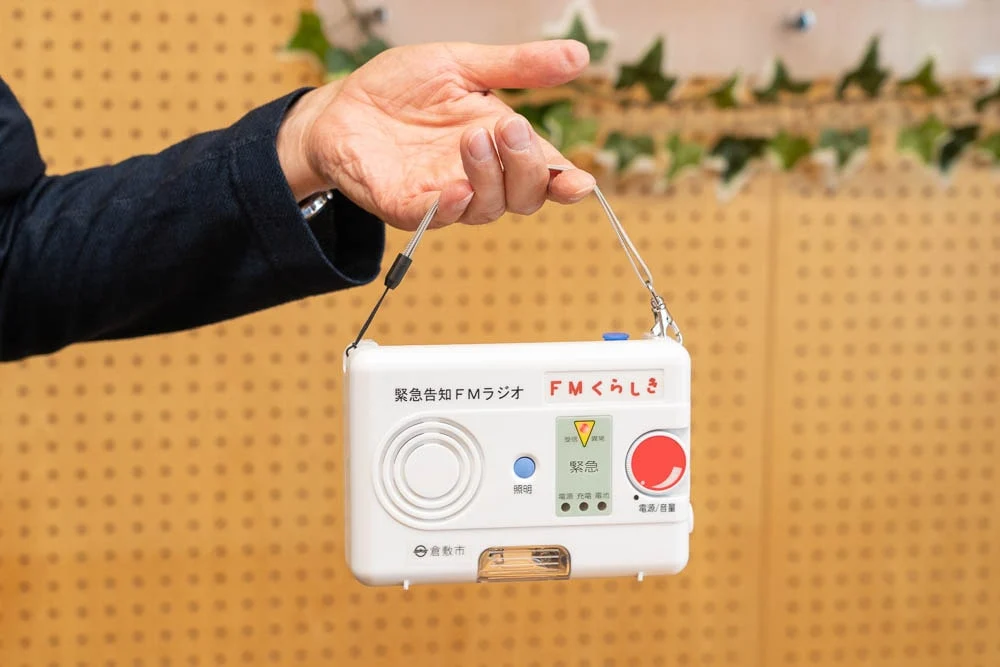
"Kokucchi" is a radio for transmitting emergency information broadcasted on FM radio.
It has a built-in rechargeable battery and automatically turns on during emergencies.
It was developed by "Kurashiki Community Media," which consists of the following three companies:
- FM radio station in Kurashiki, FM Kurashiki
- Cable television station, Kurashiki Cable Television
- Cable television station, Tamashima Television Broadcasting
To minimize damage when disasters occur, a system that can transmit information quickly and reliably is necessary.
One means of information transmission during disasters is "Kokucchi."
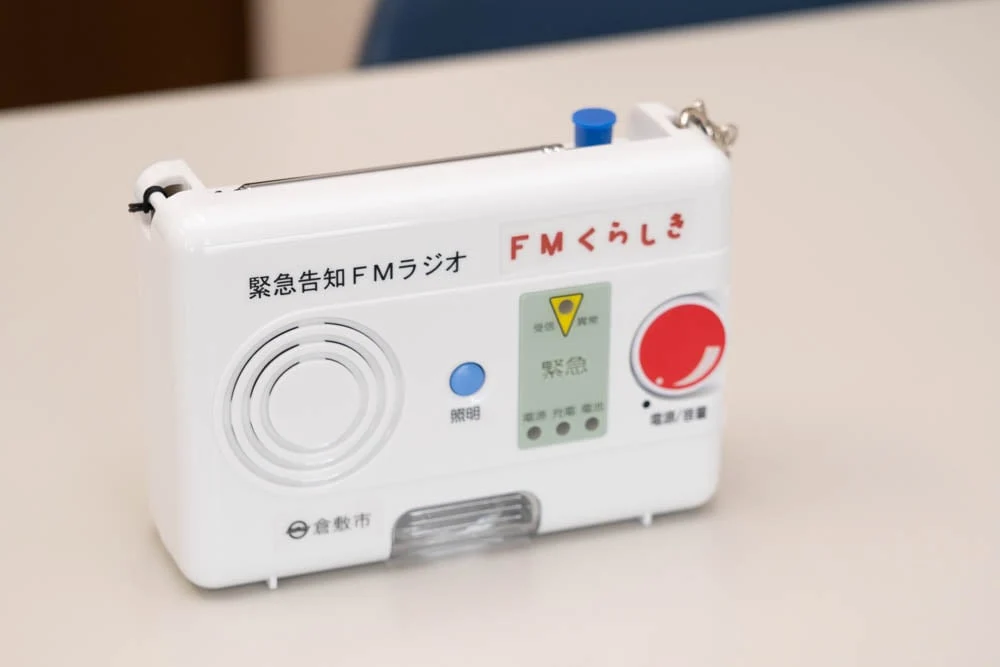
Weighing 485 grams and measuring 11 cm in height, 16 cm in width, and 5 cm in depth, it is easy to carry.
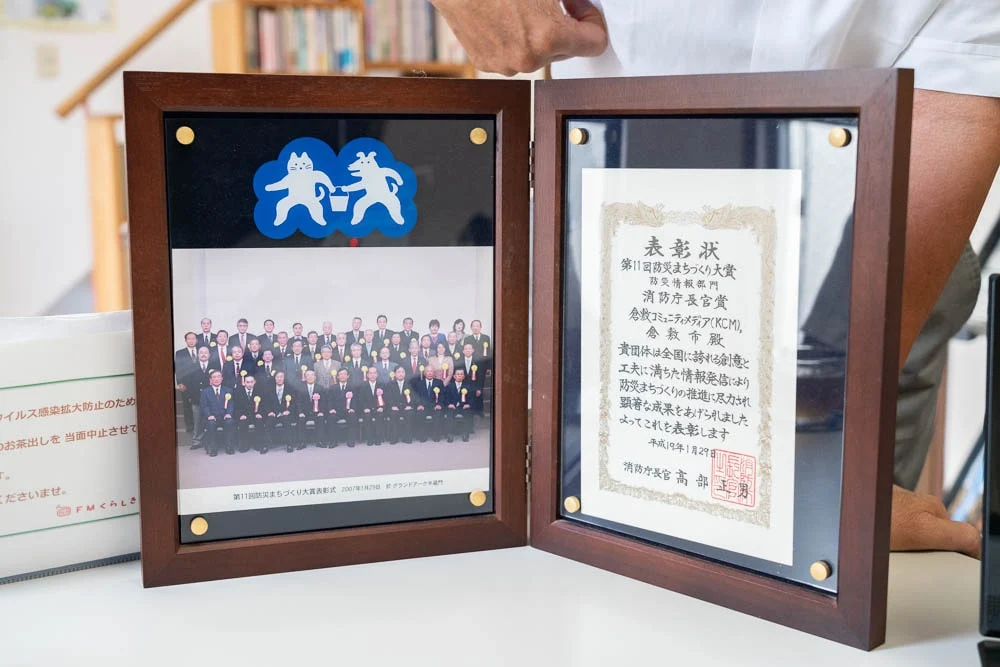
The usefulness of "Kokucchi" has also been recognized by the government.
It was awarded the "Fire and Disaster Management Agency Commissioner Award," which is second to the "Minister of Internal Affairs and Communications Award," at the 11th Disaster Prevention Town Development Awards.
With a simple structure that is durable, it has been recognized as an "excellent disaster prevention tool" after a rigorous review.
How to use "Kokucchi"
Placement and usual usage
First, check the radio reception status and place it in a location where "the radio waves can be properly received when plugged into an outlet."
If the radio reception environment is poor, connect it by branching the antenna line from the cable television.
Please keep it plugged into an outlet during normal use.
Even if the power of "Kokucchi" is turned off, it can still receive emergency broadcasts.
Function during emergencies
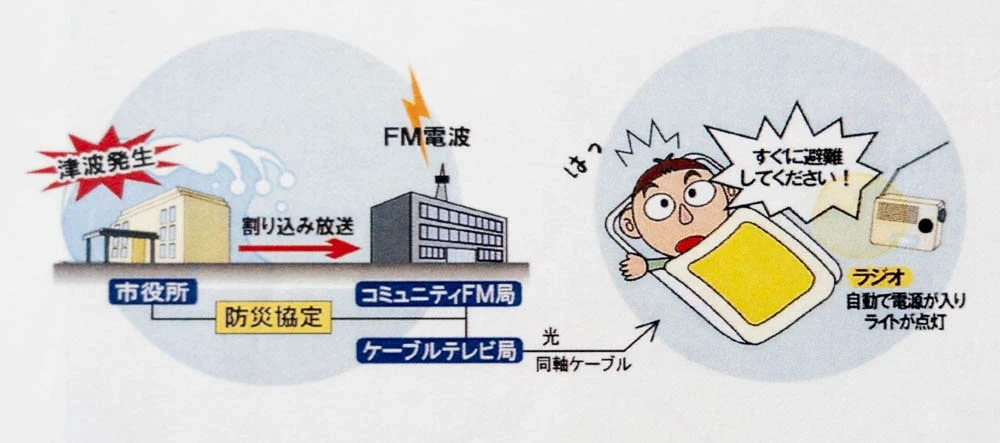
When an emergency occurs and a request for information transmission such as evacuation instructions is issued, the community FM broadcasting station sends a special activation signal.
"Kokucchi" automatically turns on, and a light indicating that it is an emergency lights up.
Then, it broadcasts the emergency announcement at maximum volume.
It is easy to notice even when sleeping, and you can listen to emergency broadcasts even during power outages.
It is also implemented in many nursing facilities, kindergartens, daycare centers, and offices, as it can alert people who do not have smartphones or similar devices at hand during emergencies.
Features of "Kokucchi"
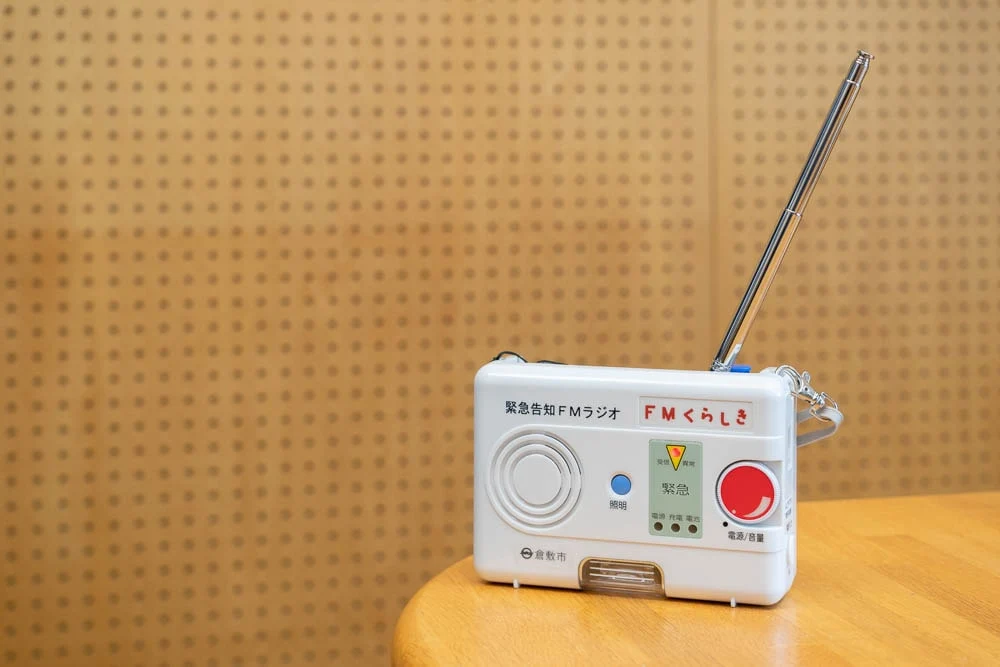
"Kokucchi" has the following features.
- Simple and easy to handle
- Less expensive than other systems
- Can receive emergency information indoors, making it easy to hear
- Uses radio waves for transmission, making it less affected by disasters
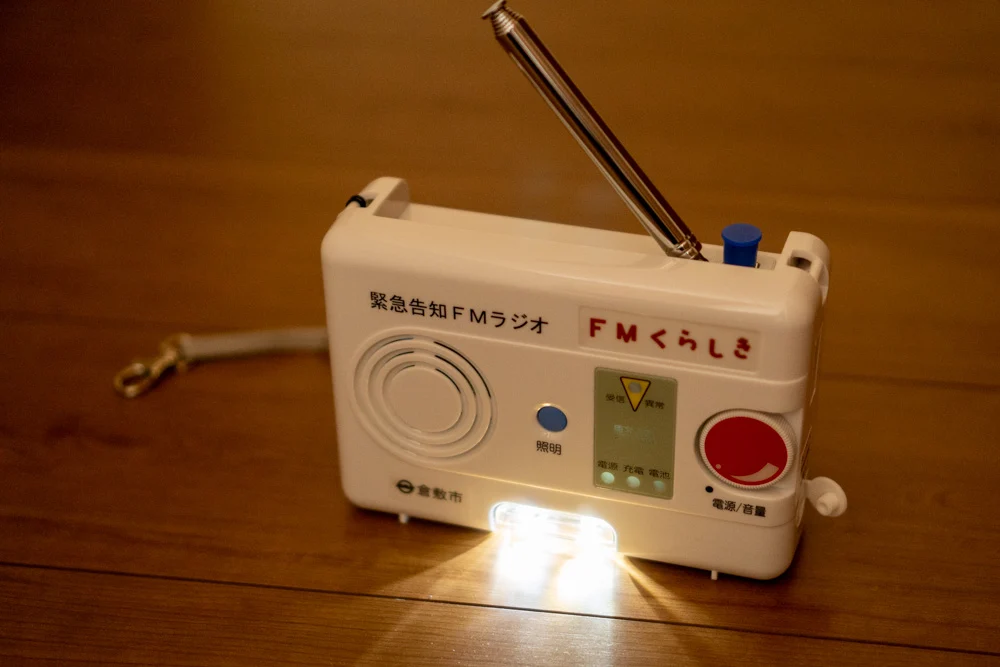
- Has a built-in rechargeable battery, so it can be used during power outages
- Can also be used as emergency lighting
Let me introduce them in a bit more detail.
Easy to hear emergency information indoors
During the heavy rain in July 2018, I was listening to evacuation information broadcasted from the disaster prevention administrative radio.
I remember well that I was late to notice the broadcast because I had closed the room, and even when I opened the window, I could hardly hear the content due to the sound of the rain.
"Kokucchi" can be heard indoors, so the sound is not disturbed by wind and rain.
It is very easy to hear, and the content is well understood.
Less affected by disasters as it uses radio waves for transmission
When disasters such as tsunamis or heavy rains cause damage to mobile phone base stations, it may become impossible to use the internet.
During the Great East Japan Earthquake, there were voices saying that "radio was the only means of obtaining information at the beginning of the disaster."
"Kokucchi," which uses FM radio waves, is relatively less affected by disasters.
Can be used during power outages as it has a built-in rechargeable battery
What happens to information acquisition methods during a power outage?
First, you cannot watch television.
Mobile phones and smartphones have a wide range of uses, so if the power is out for several days, the smartphone battery may run out.
"Kokucchi," which operates on a rechargeable battery and has limited uses, is easy to use as a means of information acquisition during power outages.
How to purchase "Kokucchi"
"Kokucchi" is not available for purchase everywhere.
It is meaningless if it is not used correctly and maintained, so the seller provides an explanation at the time of purchase.
Additionally, addresses and names are managed along with the serial numbers.
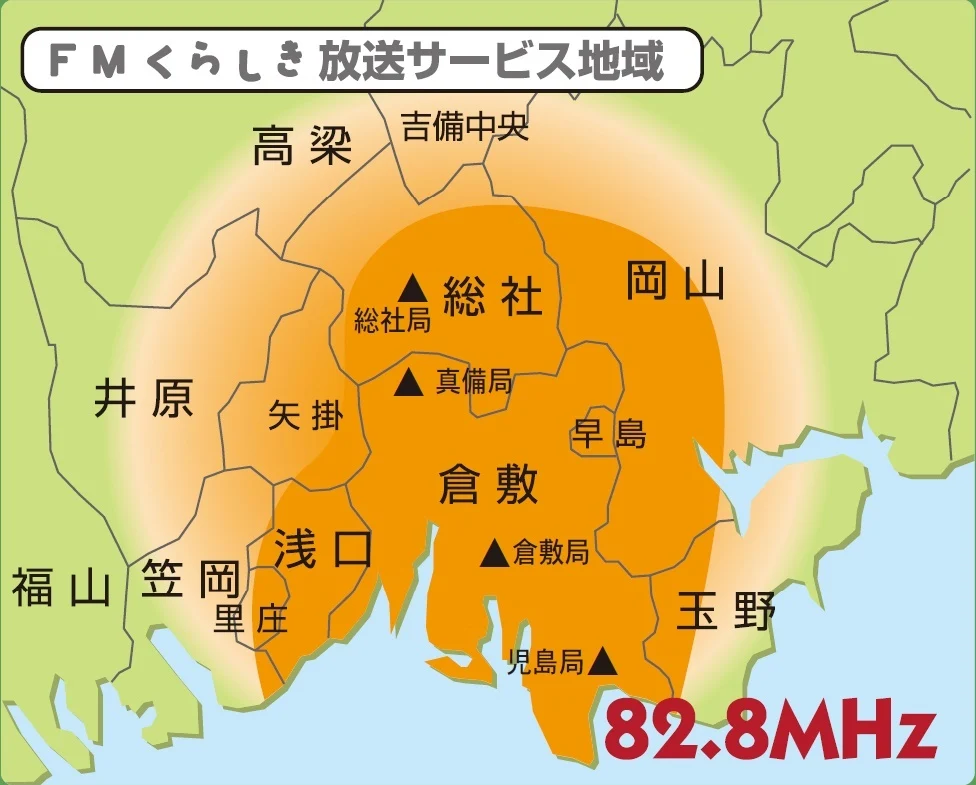
FM Kurashiki conducts test broadcasts on the first day of every month and receives reception reports to check "how it is placed and whether it sounded correctly."
The price is 8,800 yen (including tax).
If you wish to purchase, please contact one of the following if you are in the FM Kurashiki broadcast area.
| Company Name | Phone Number | Sales Type |
|---|---|---|
| FM Kurashiki | 086-430-0600 | For Kurashiki City and Soja City |
| Takenoko Chaya (inside Makibi Park) | 086-698-1514 | For Kurashiki City |
| National Lodge Sanroad Kibiji (Shop) | 0866-90-0550 | For Soja City |
| Kojima Community Center | 086-474-8550 | For Kurashiki City |
| Tamashima Community Center | 086-526-1400 | For Kurashiki City |
For more details about the sales locations, please see the "Kokucchi" product and sales location introduction page on the official FM Kurashiki website.
"Kokucchi" is deployed in over 40 cities and towns nationwide.
If you are outside the FM Kurashiki broadcast area, please inquire with your nearest community FM station to see if they handle it.
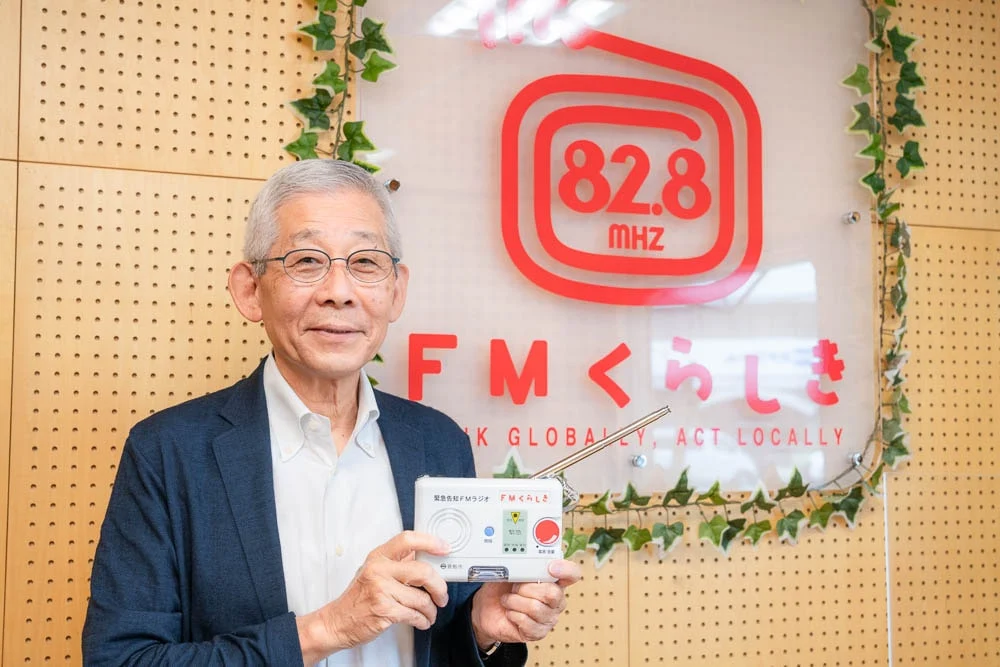
Interview with Ken Saku Okubo, President of FM Kurashiki
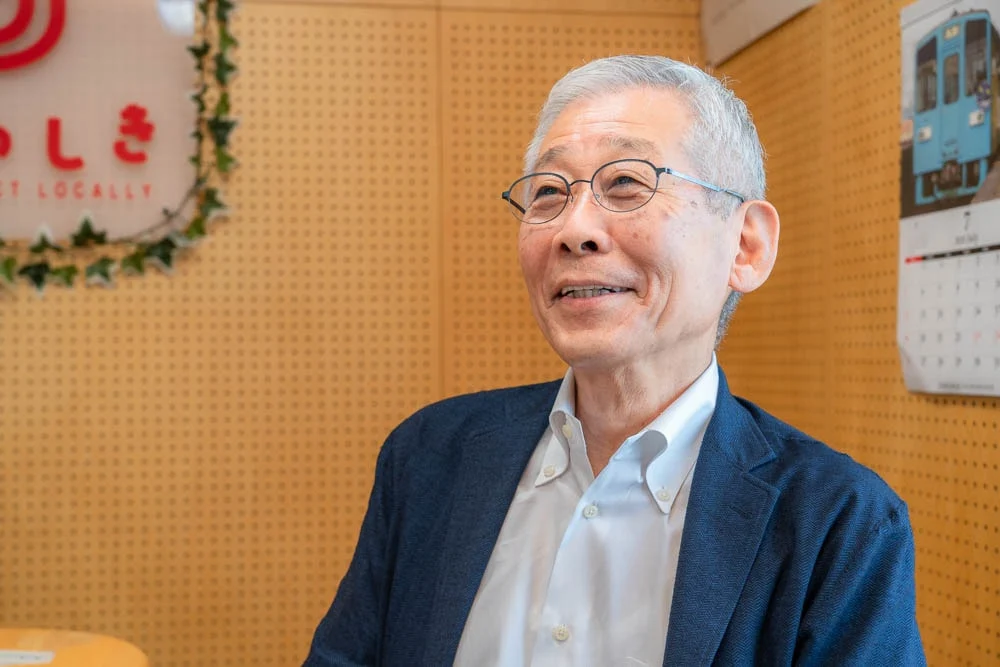
I spoke with Ken Saku Okubo, the president of FM Kurashiki, who developed "Kokucchi."
This interview is based on the content from the initial interview conducted in October 2020.
What is community broadcasting?
Okubo
Broadcasting stations are classified by their broadcast target areas.
They are divided into national broadcasting, wide-area broadcasting, prefectural broadcasting, and community broadcasting, with community FM broadcasting primarily covering "parts of a single city or town."
In 1992, community FM broadcasting was institutionalized to promote regional information.
I was originally a radio enthusiast and loved radio.
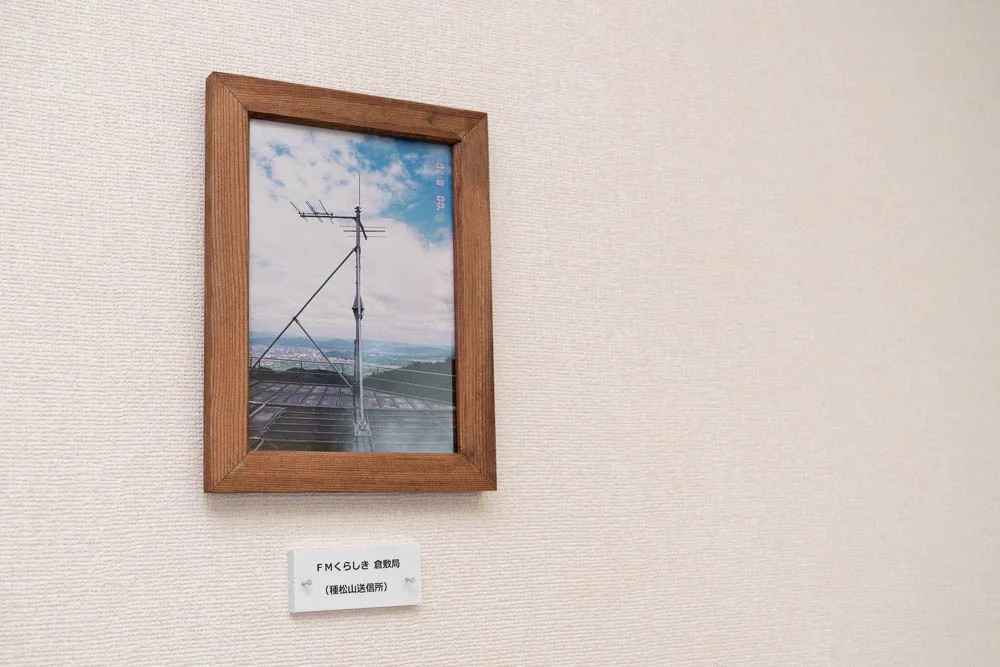
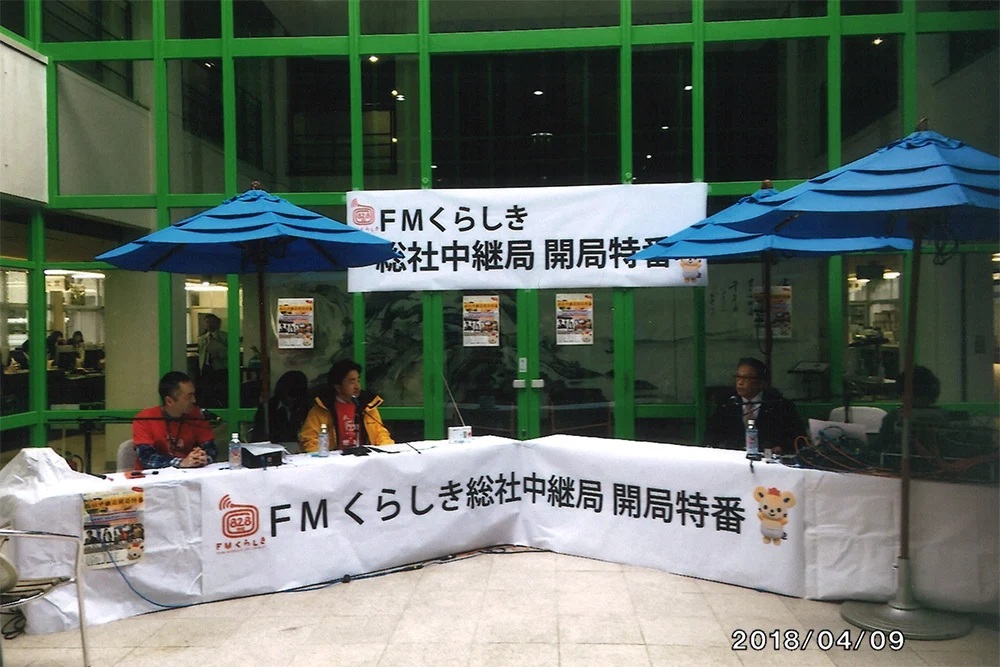
I started moving towards opening a station in 1994, and FM Kurashiki began broadcasting in 1996.
It was the 53rd community FM broadcasting station. Now there are over 330 stations.
The role of community FM broadcasting during normal times is to assist residents in leading rich lives.
It is about community development.
It constantly provides a platform for people involved in community development activities to appear.
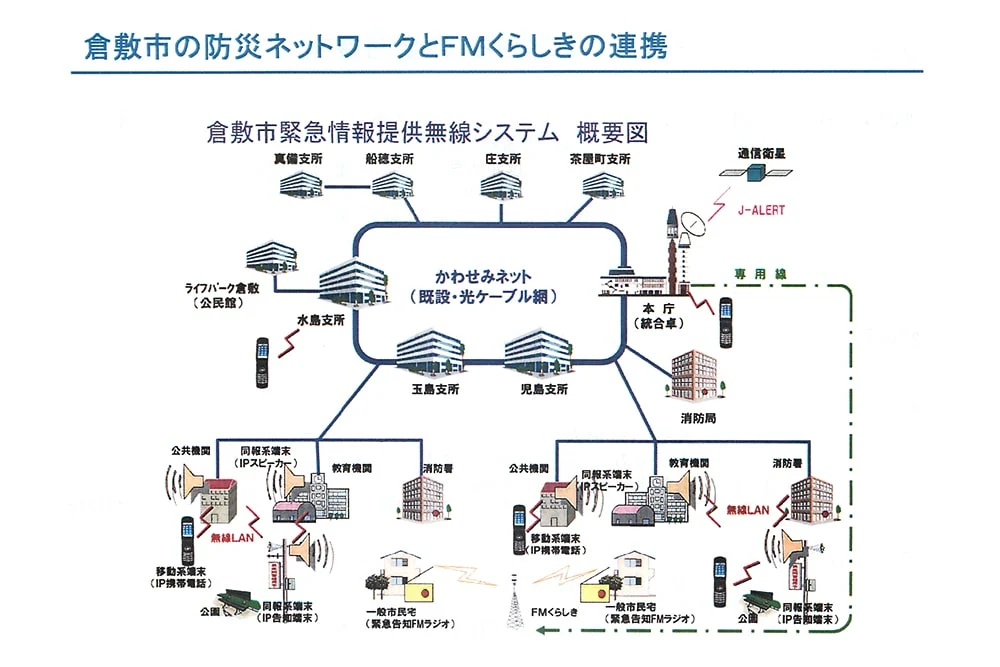
And one of its roles during disasters is to transmit emergency information.
"Kokucchi" is one of the tools for information transmission.
In times of crisis, the more familiar you are with the community broadcasting station you usually listen to, the more closely it will be tied to you as a transmission tool during disasters.
That's an important role.
Okubo
That's right.
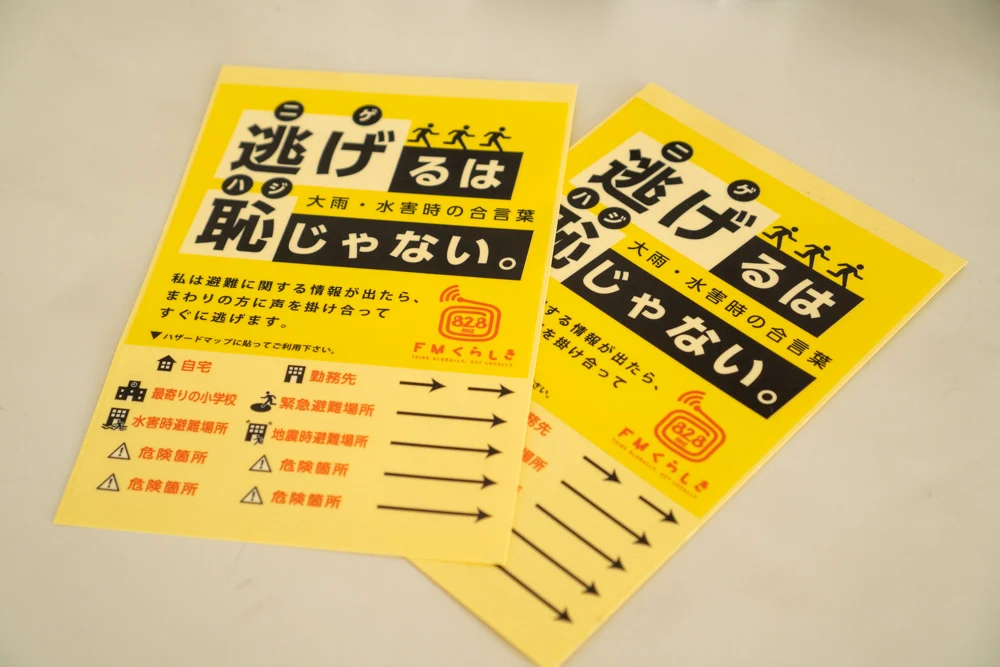
In addition to "Kokucchi," we are also focusing on disaster prevention activities, such as creating stickers to call for early evacuation.
However, community broadcasting operates with a sense of mission, but it is a small organization.
Relying on advertisements from companies that may not exist tomorrow, we strive to fulfill our mission to the community both during normal times and emergencies.
In small communities, there are few companies that can place advertisements, making it difficult to maintain relay stations.
However, if it is not useful in times of crisis, it means nothing.
Maintenance is also necessary. It is tough.
Can you tell us what inspired the development of "Kokucchi"?
Okubo
In 2004, there was a major earthquake with a maximum intensity of 7 in Niigata (the Niigata Chuetsu Earthquake).
At that time, I was serving as the vice president of the Japan Community Broadcasting Association.
Even if you have a radio, if a disaster strikes suddenly in the middle of the night, just broadcasting information unilaterally on the radio won't be heard and won't be useful.
Since I was actively working with the philosophy of wanting to improve the community, I thought, "We need something that can forcibly inform residents of emergency information."
So, I decided to create a radio that would automatically activate, and it took about two years to develop.
At that time, there were no smartphones, and the media that residents relied on after a disaster was the radio.
Therefore, we thought, as a social responsibility, we should provide a radio that is useful during disasters.
Looking at the country as a whole, there were no emergency notification radios at the community level.
I often hear voices saying they were encouraged by the radio during disasters.
Okubo
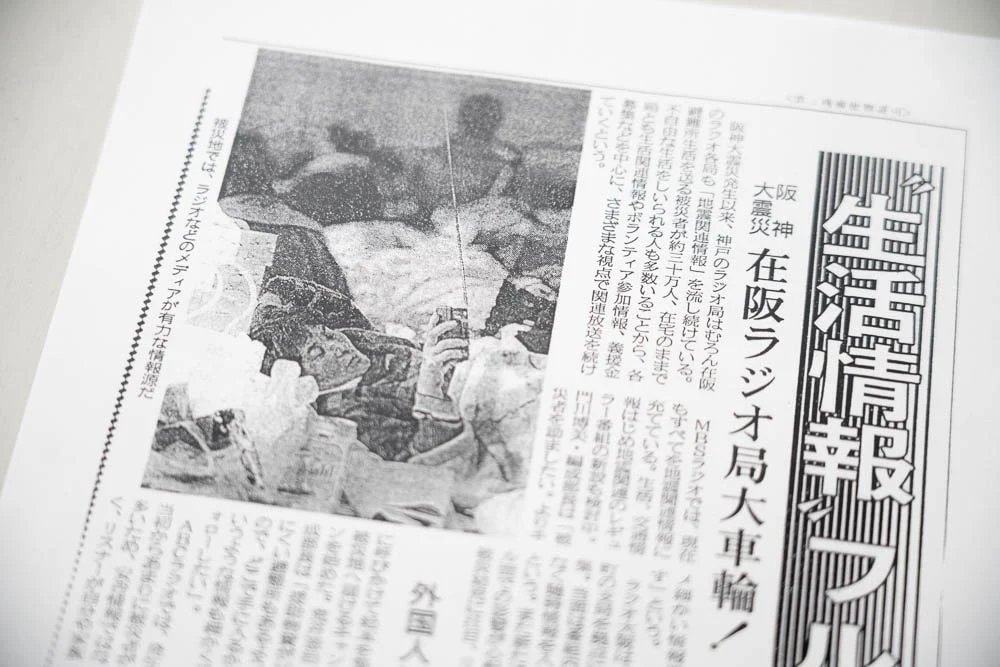
When I saw news photos taken at evacuation centers during the Great Hanshin-Awaji Earthquake in 1995, I thought that radio is indeed important.
At that time, the radio media, which was declining, was reevaluated.
During the Great East Japan Earthquake in 2011, many temporary community broadcasting stations (temporary disaster FM broadcasting stations) were established.
In Tohoku, there were power outages for several days, and television could not be used.
Radio during disasters is easy to use and highly useful.
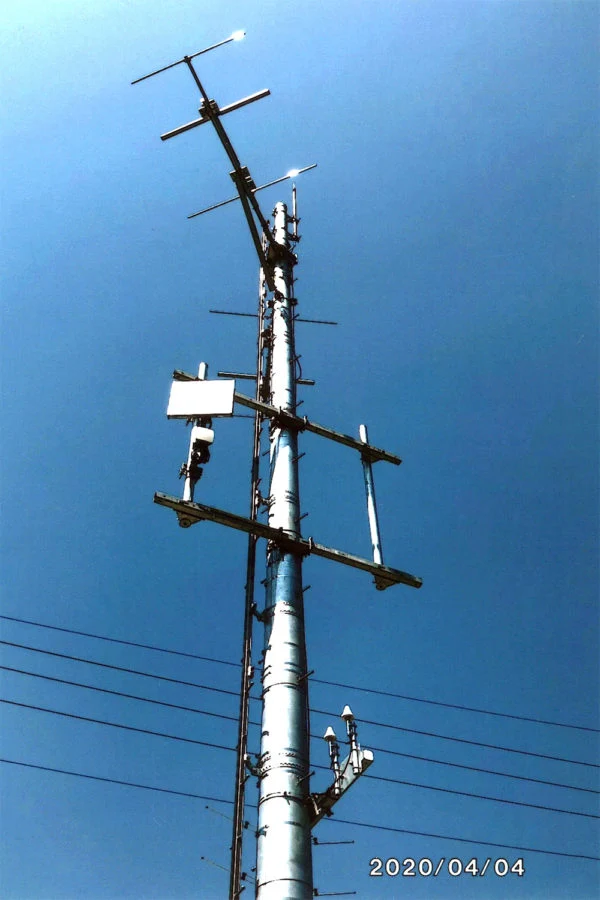
Moreover, community FM broadcasting stations know their towns well.
Information about the restoration of lifelines and the distribution of supplies requires detailed information about the town you are in.
I believe that community FM broadcasting stations can convey disaster prevention and disaster information unique to the region most appropriately.
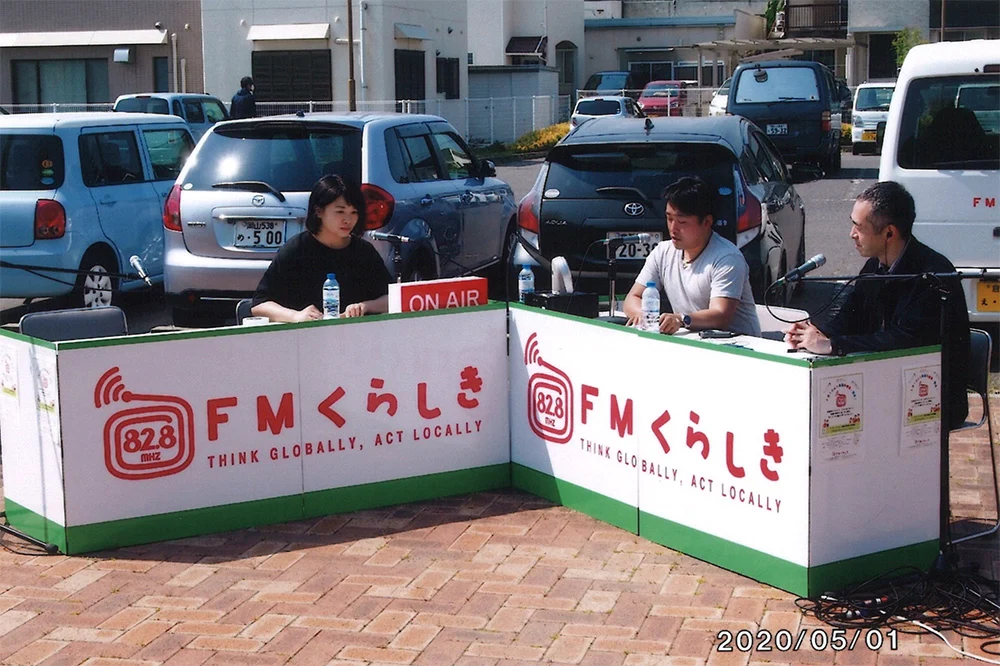
What does radio mean to you, Mr. Okubo?
Okubo
Radio is an old medium, but in the post-COVID era, I think that local radio and the voice of radio will become important tools for conveying images.
I believe it will become an essential infrastructure for the community.
I have always thought that information is the nutrient that nurtures the community.
People are exposed to information every day like a shower.
If the community is a flower, information is like water.
Just as trees, flowers, and plants grow when they are lovingly watered, good information becomes good nutrients.
It takes many years to lead the community in a good direction, and I believe the insights of the broadcasting station are crucial for that.
Collecting, processing, and retransmitting information is the role of a broadcasting station.
How to process it and what kind of editorial policy to adopt is extremely important.
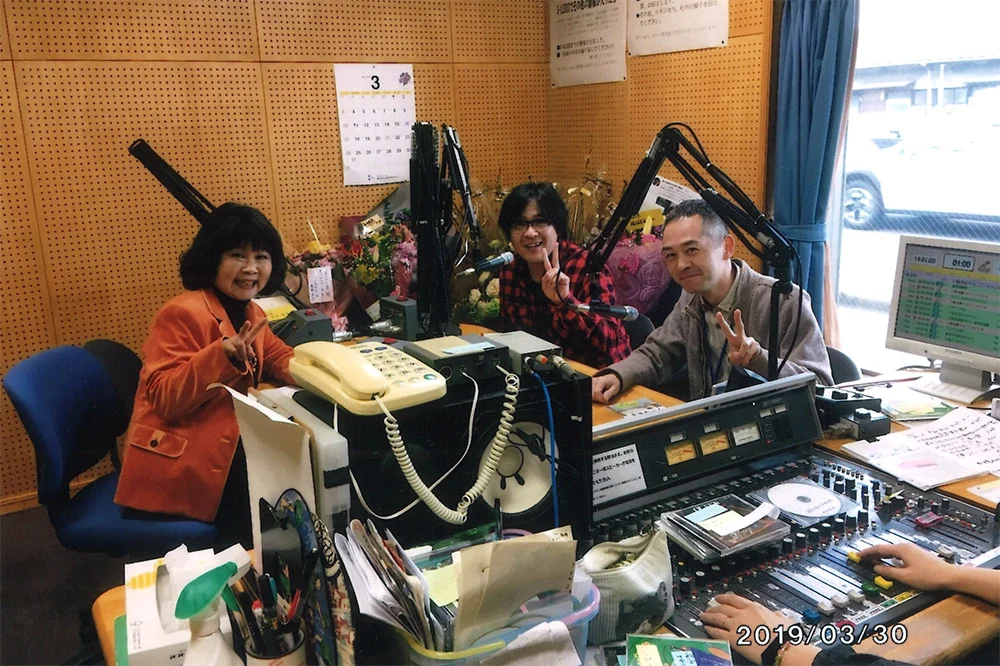
To be thought of by the citizens as "I'm glad that station exists," we need to put in considerable effort.
I want to provide a better space and fulfill our role in the community.
Conclusion
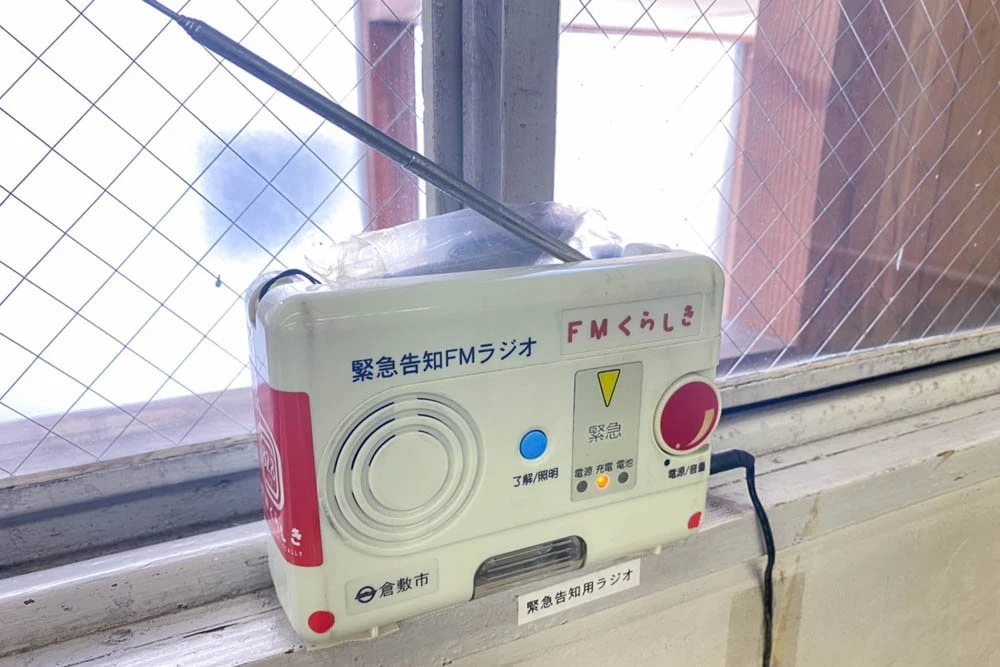
At the workplace where I used to work, "Kokucchi" was operational.
On the first of every month, I felt reassured by the clear, loud test broadcast that played.
With its simple mechanism, "Kokucchi" will surely contribute to disaster prevention.