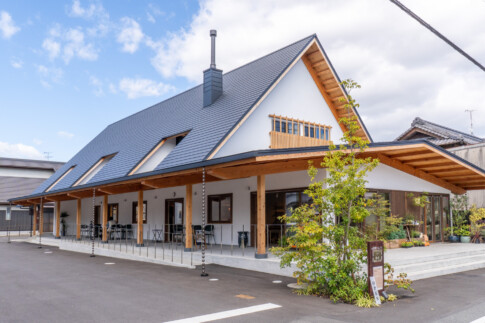
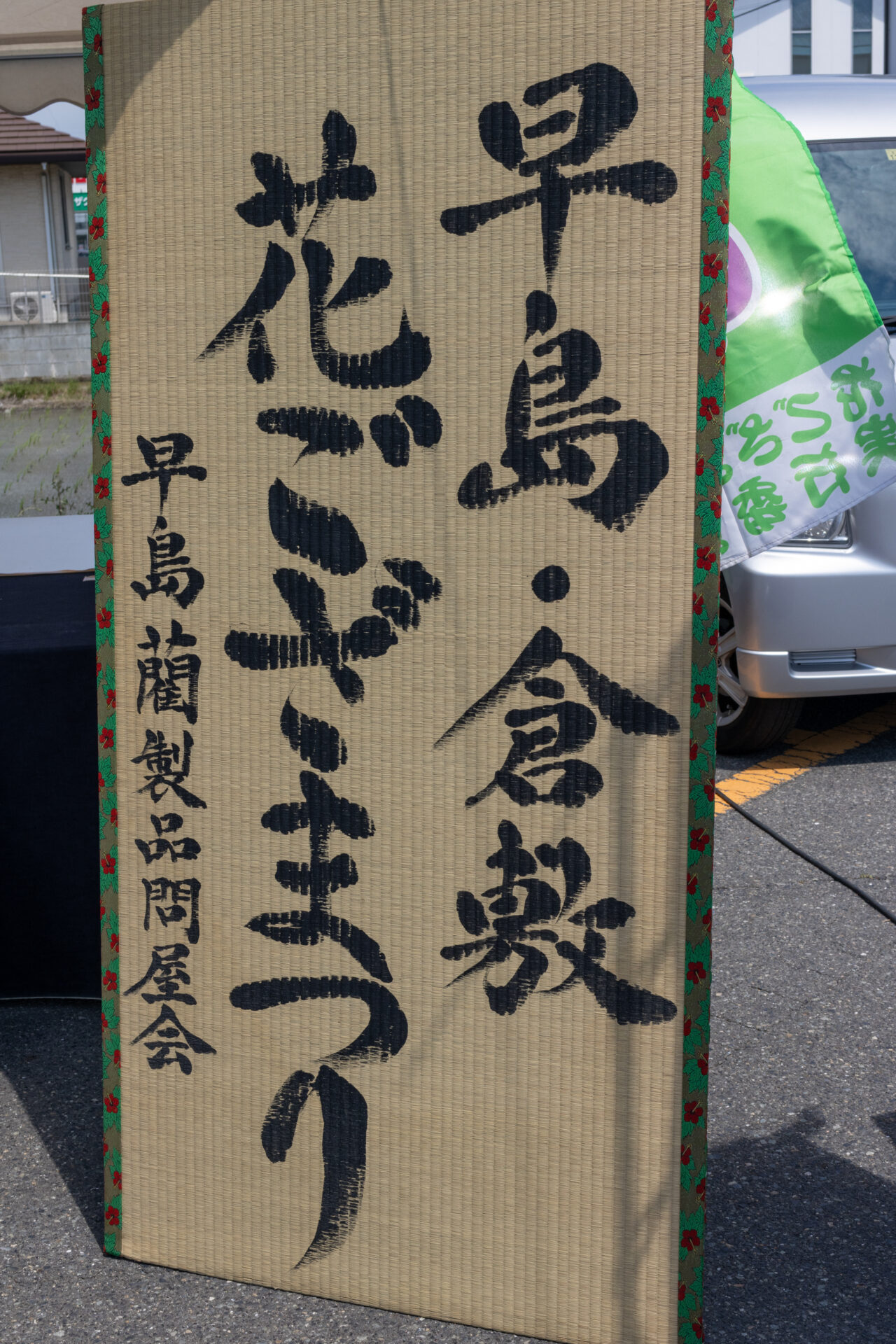
The annual “30th Hayashima-Kurashiki Hanagoza Festival” was held in Hayashima Town over two days, July 6 and 7, 2024.
The Hayashima area was once Japan’s leading producer of rush grass.
I knew the festival was held every year, but had never been, so this was my first time attending.
There was plenty to see and do beyond the exhibition and sale of rush-grass products, including workshops and live demonstrations. Here’s my report.
The information presented was accurate when this article was published in July 2024. Please note that it may differ from current information.
About the 30th Hayashima-Kurashiki Hanagoza Festival

The 30th Hayashima-Kurashiki Hanagoza Festival was held over two days, Saturday, July 6 and Sunday, July 7, 2024, at the special west venue at Hayashima Town Hall.
Many local wholesalers and manufacturers exhibited, bringing together a wide range of rush-grass products, including hanagoza mats, which were sold at special prices. There were also areas for live hanagoza hand-weaving demonstrations and mini tatami-making experiences, making this an event where visitors could rediscover the appeal of rush grass.
I visited the event

I arrived at the venue shortly before 11 a.m. on July 6.
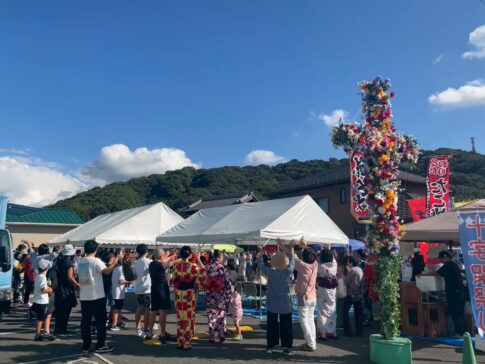
Under clear skies that felt like the height of summer after the rainy season, the sale venue was already bustling with people.
One of the special features of the sale was being able to buy hanagoza mats and tatami coverings laid out under the tents at affordable prices.
There was also a corner for replacing tatami surfaces, and sandals and geta made with rush grass were on sale.
A tatami maker told me, “Tatami mats with a coarser weave are more breathable, so they feel comfortable when you lie down.” I’d thought a finer weave meant higher quality, so this was a surprise.
There was also a food area, with many different food stalls.

It was hot, so many people were buying shaved ice.

The charcoal-grilled yakitori was cooked fresh, one batch after another, and was juicy and delicious.
Mini tatami-making corner
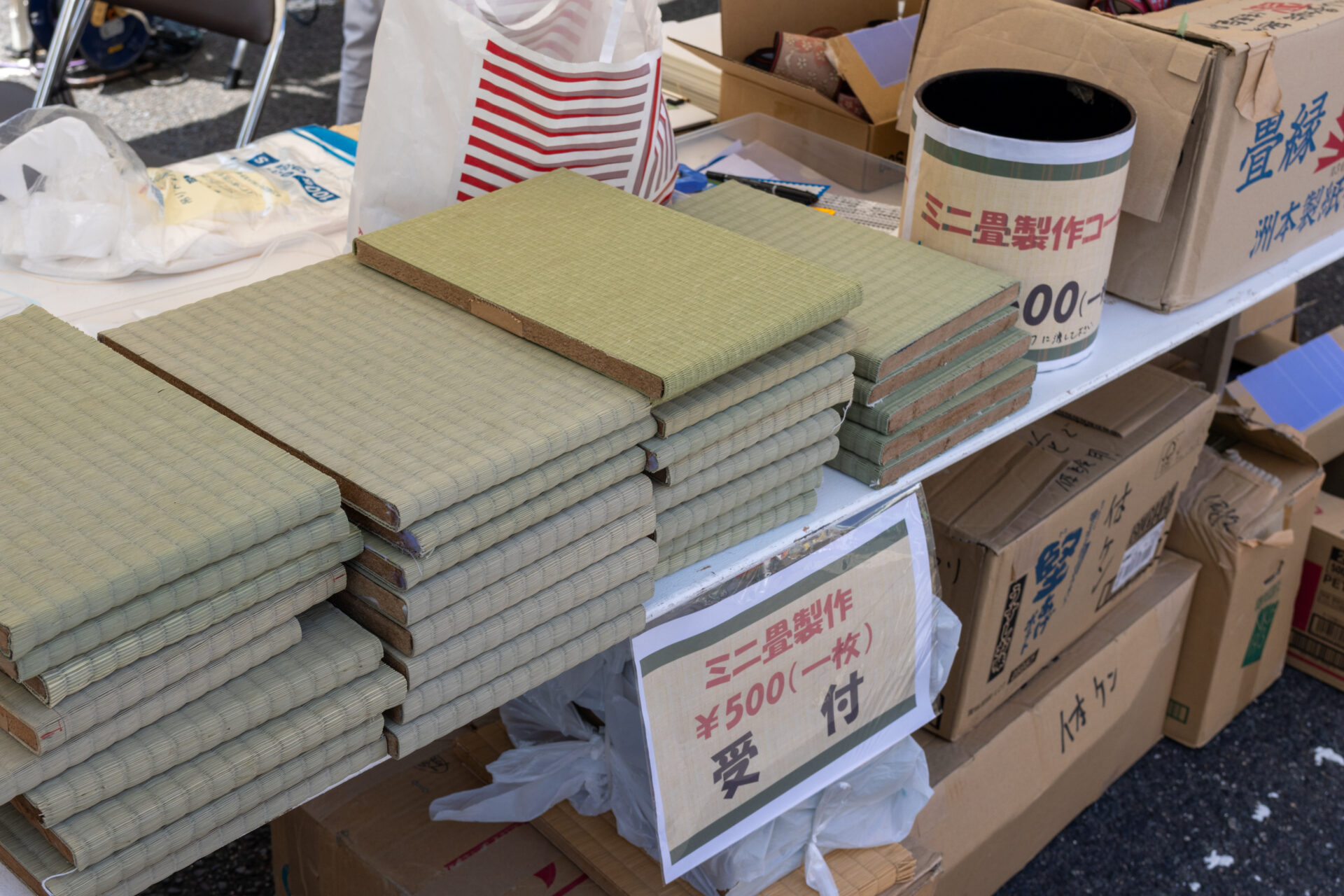
A mini tatami-making workshop was being held in one corner of the sale venue, so I joined in with my child.

You choose your favorite tatami edging and staple it onto the mat.
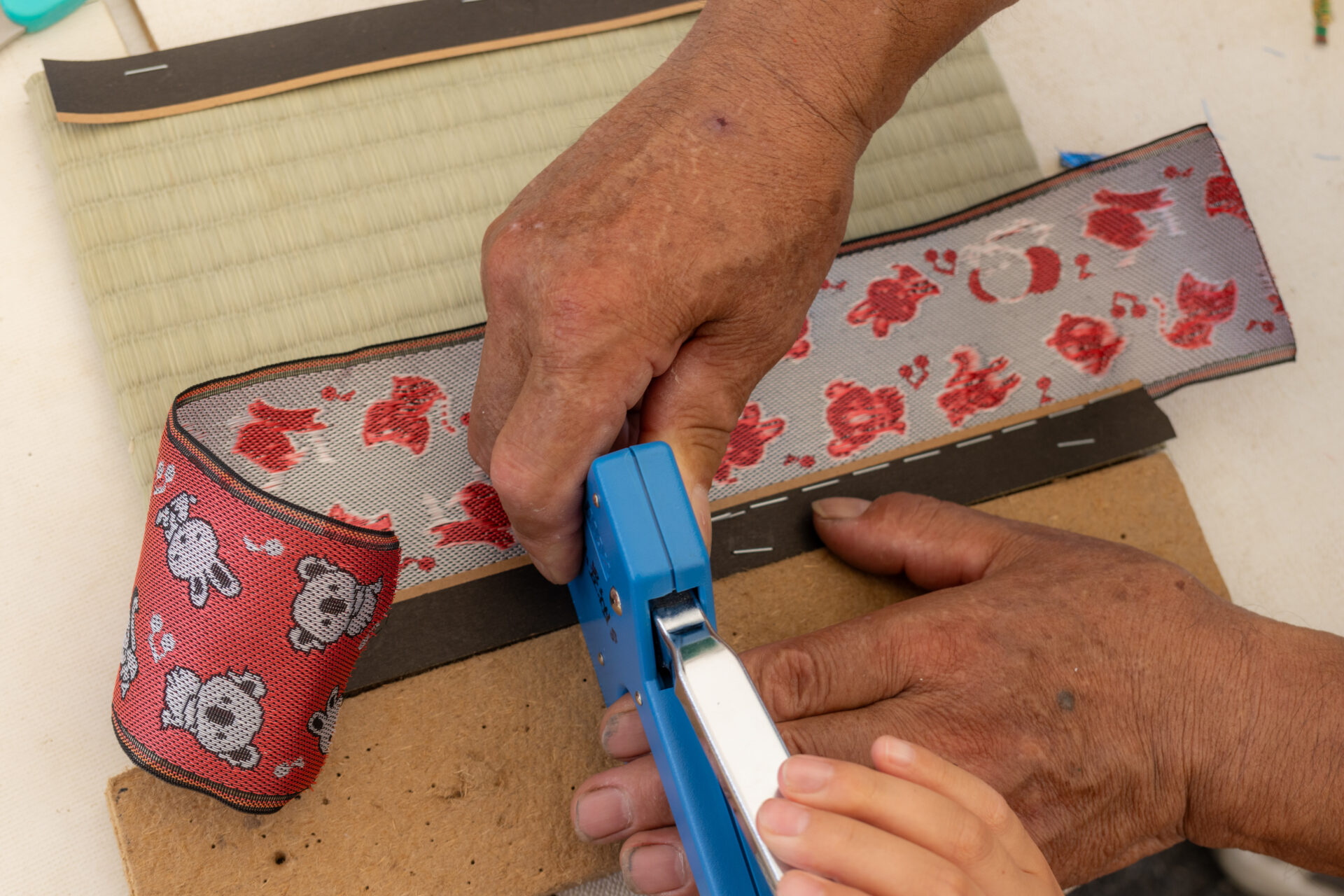
A tatami craftsman helped us, so we were able to finish it neatly.
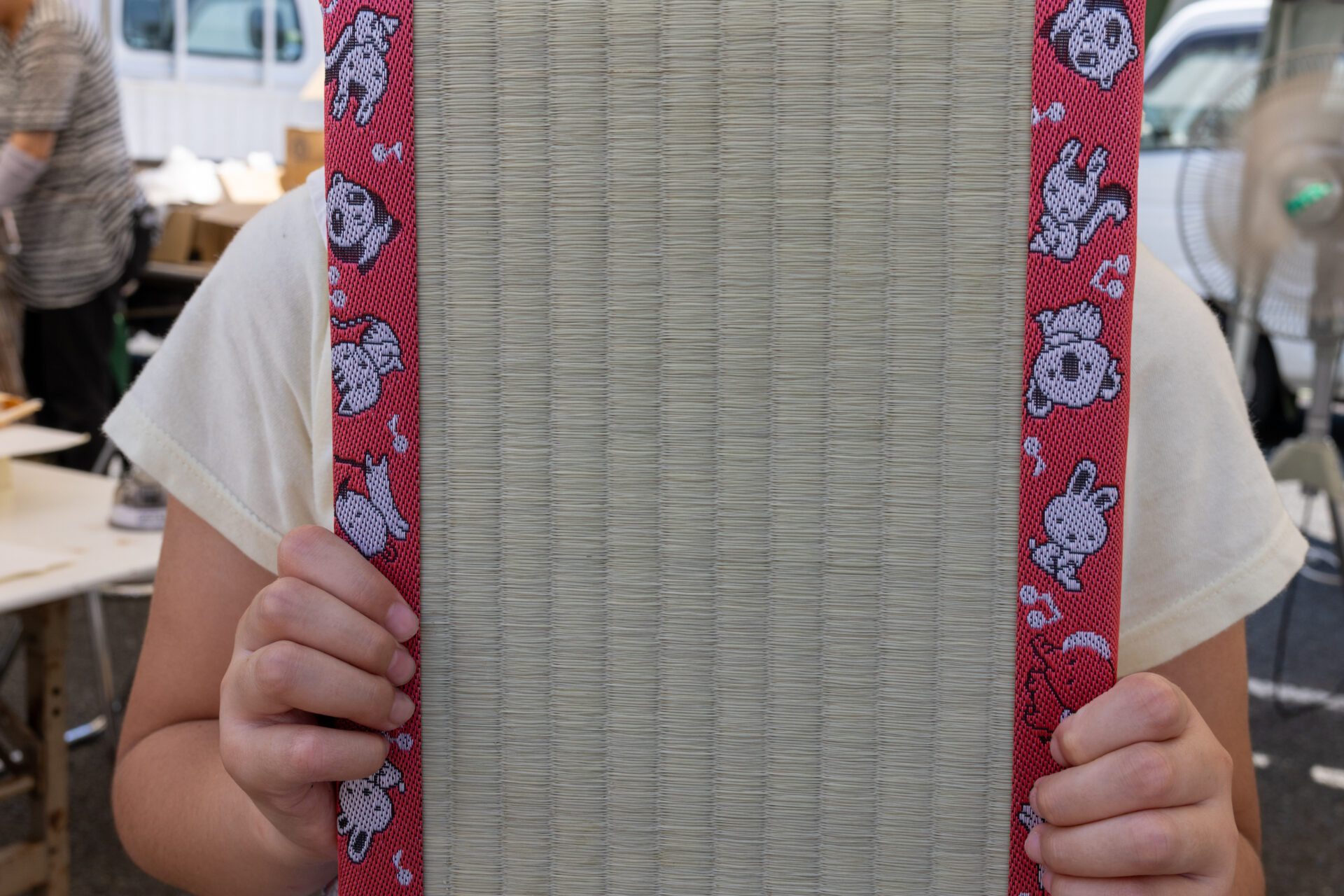
It’s finished.
It’s about the size of an A4 sheet, making it just right for displaying a small ornament.
Tatami-making demonstration
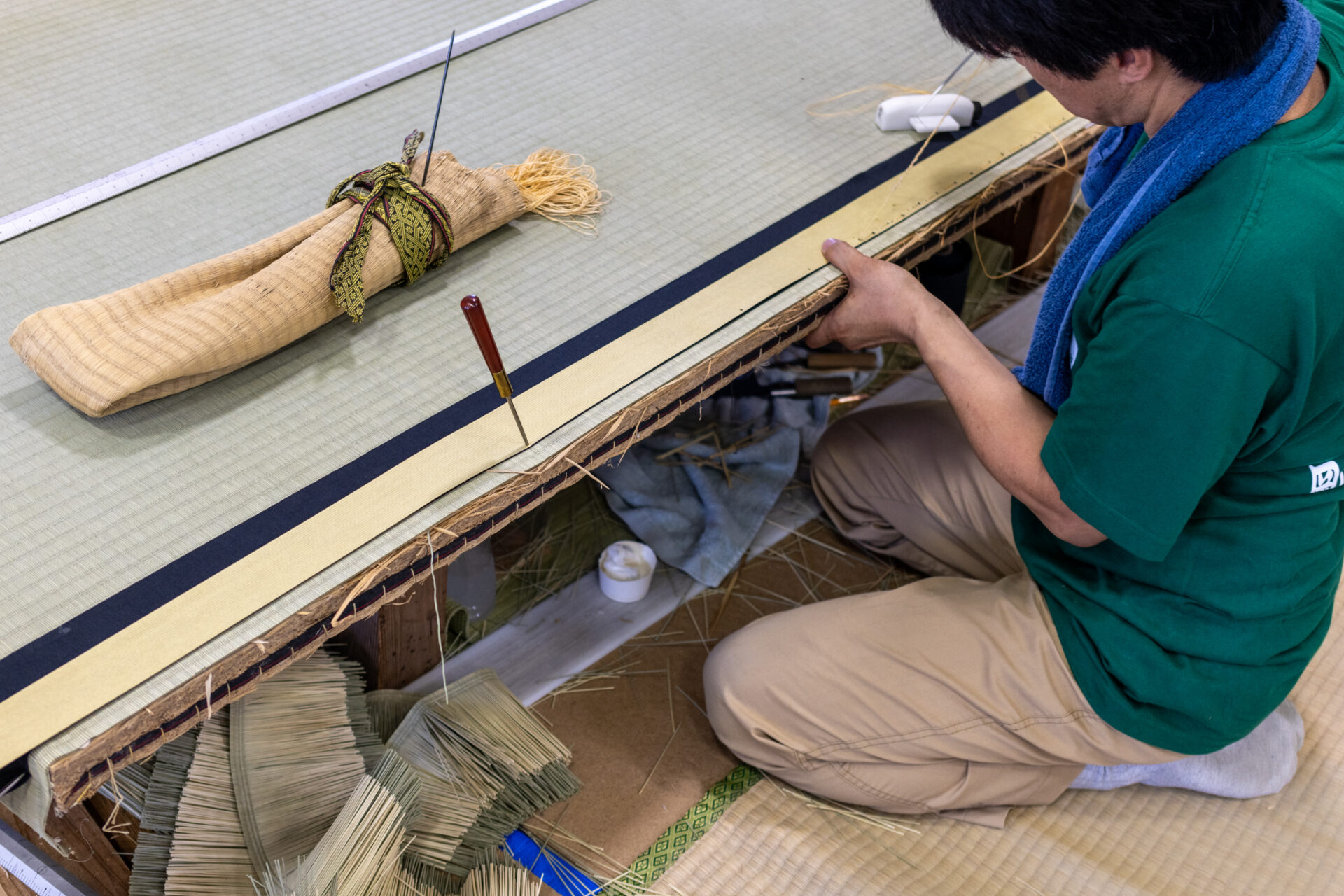
Inside the Community Center, Akagi Kaoru Tatami Works of Soja City gave a tatami-making demonstration.
The photo above shows a process called “hira-zashi,” in which the tatami edging and mat are sewn onto the tatami base.
This work is now mechanized and is usually done with a sewing machine made specifically for tatami, but this time a craftsman sewed it by hand.
Sewing in a straight line requires considerable skill.
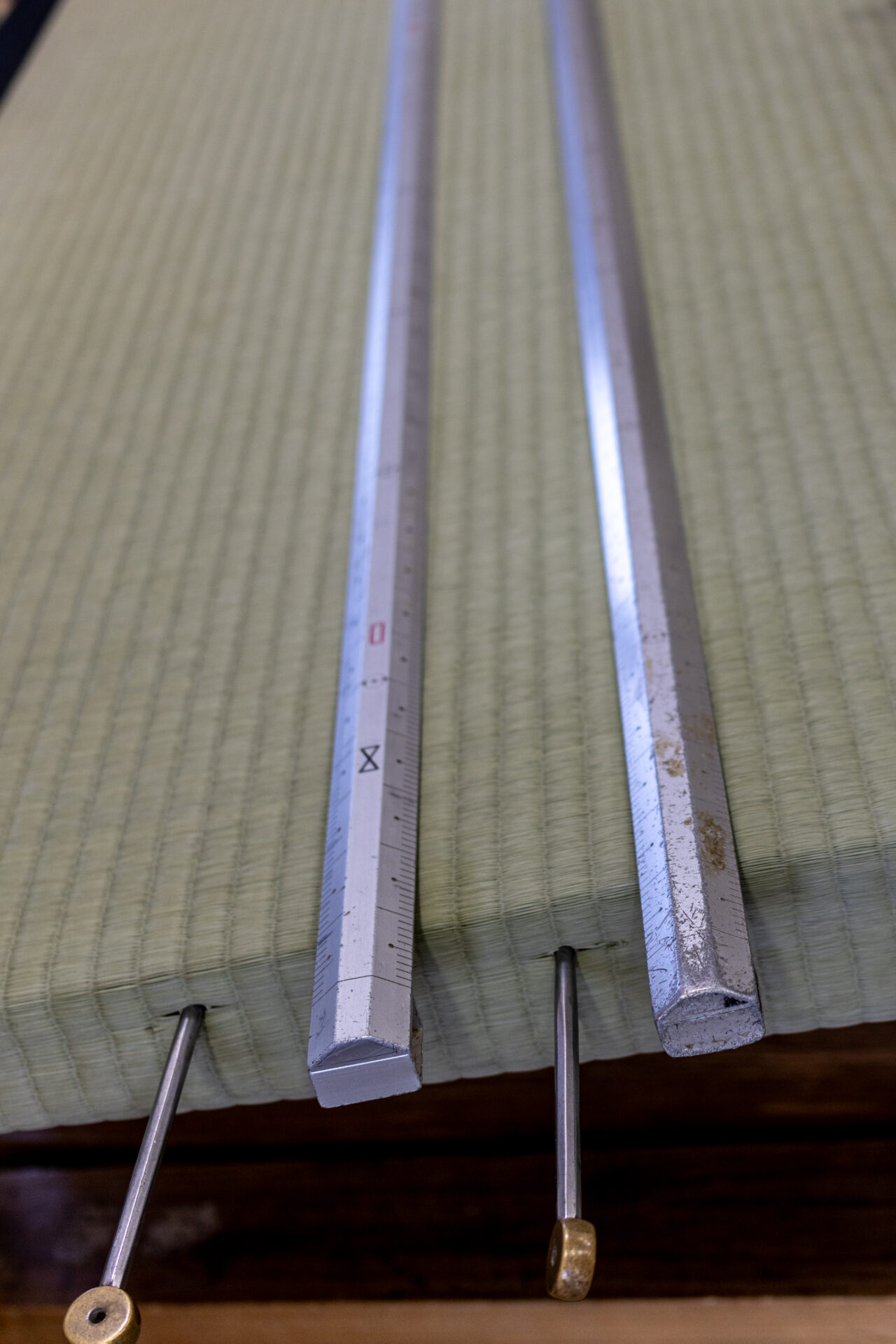
This is a ruler made specifically for tatami.
The markings use the traditional shaku unit, just like a carpenter’s square.
Hanagoza hand-weaving experience
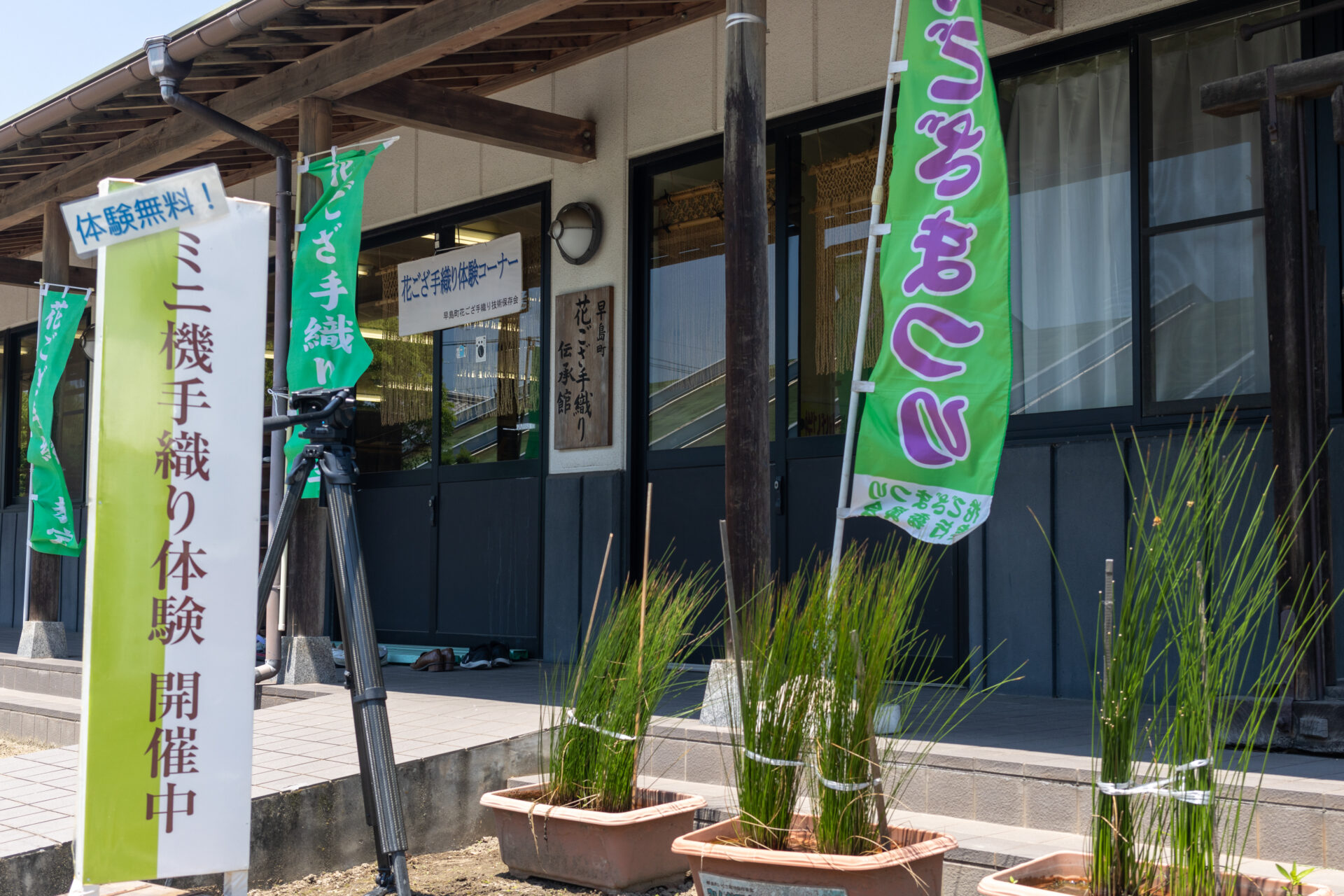
A workshop offering hanagoza hand-weaving experiences was held at the Hanagoza Hand-Weaving Heritage Center next to the venue.
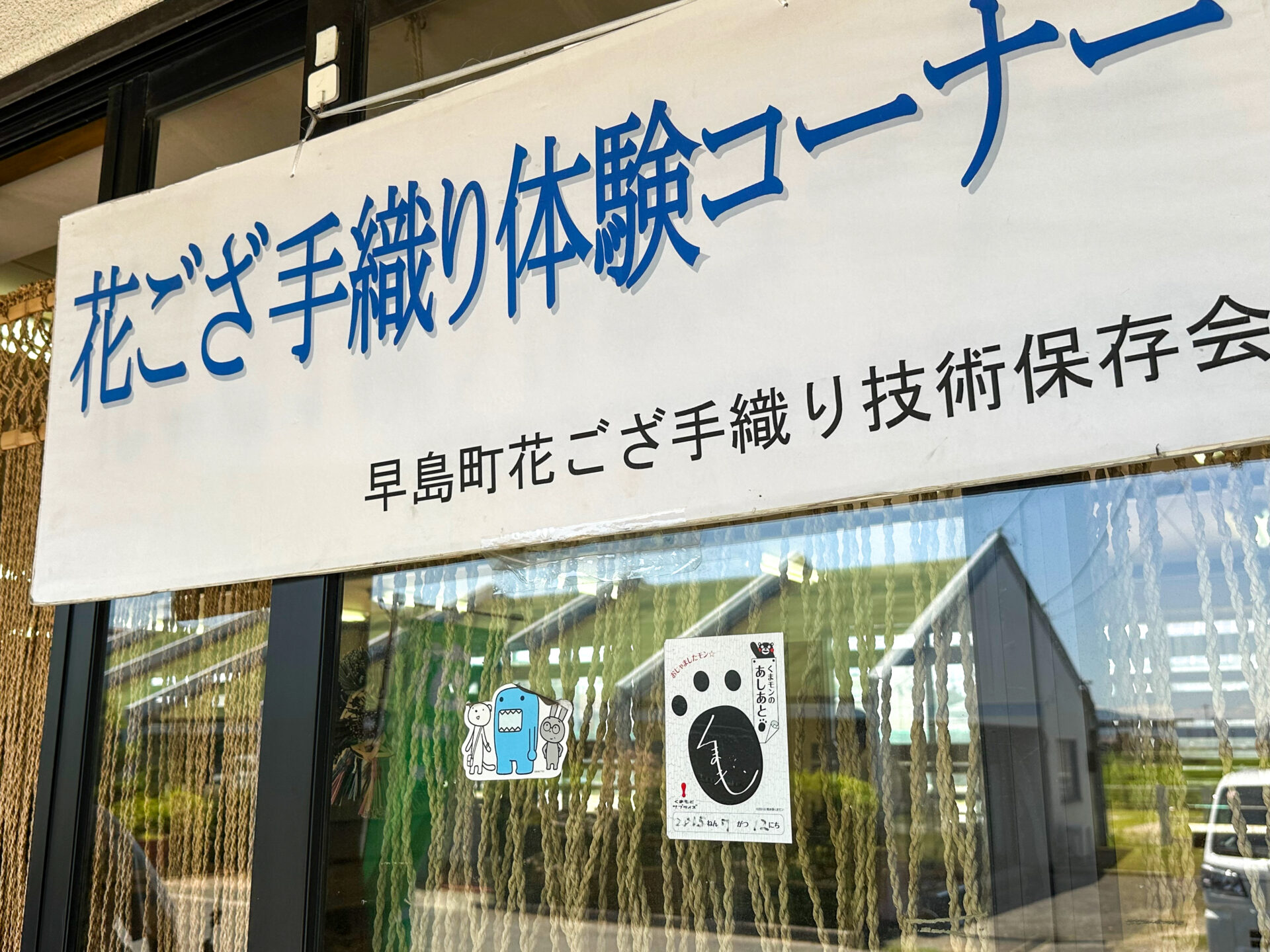
Let’s head inside and take a look.
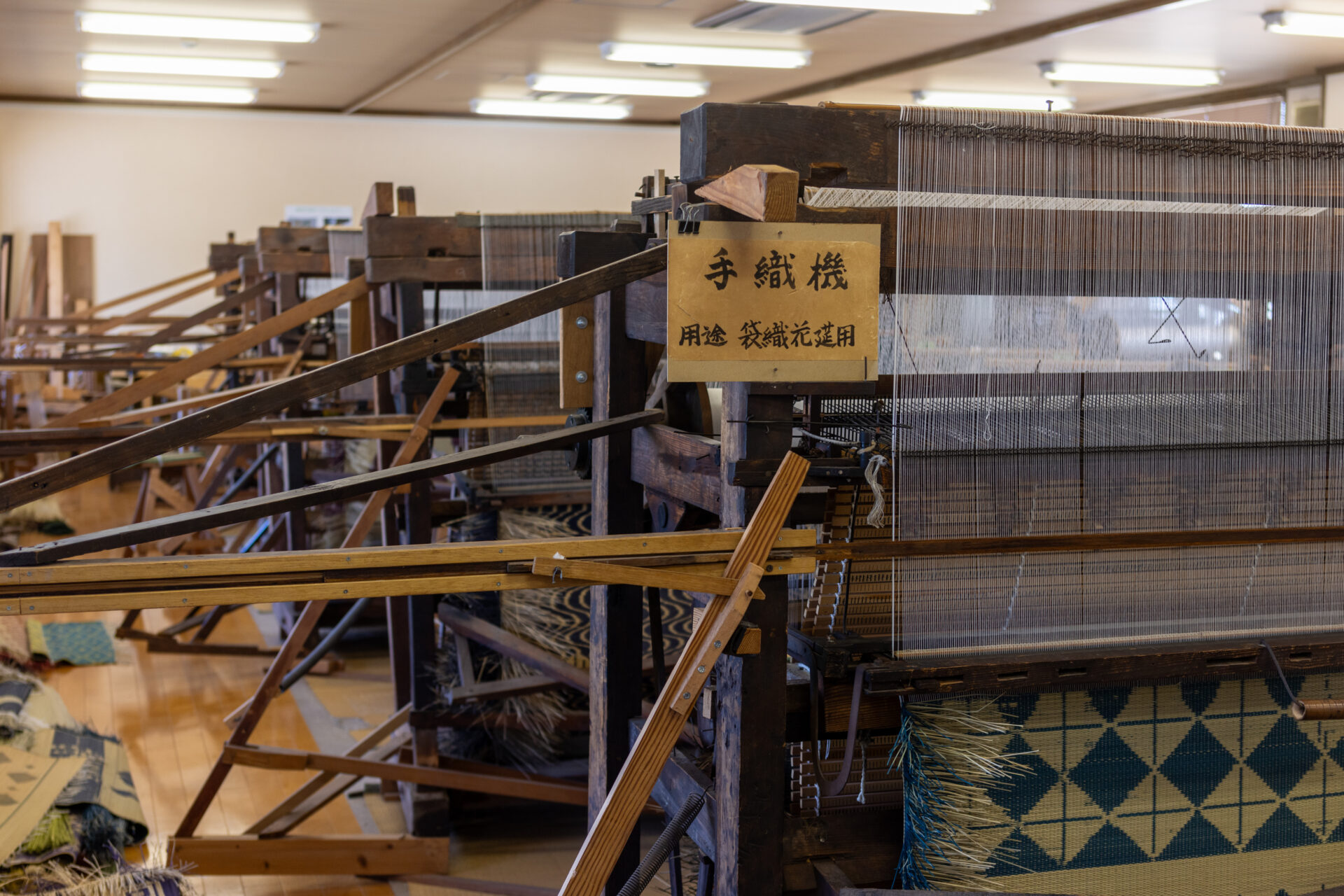
Inside, on the left, old handlooms once used to weave hanagoza were neatly lined up.
For this experience, we’ll be using a miniature version of one of these handlooms.
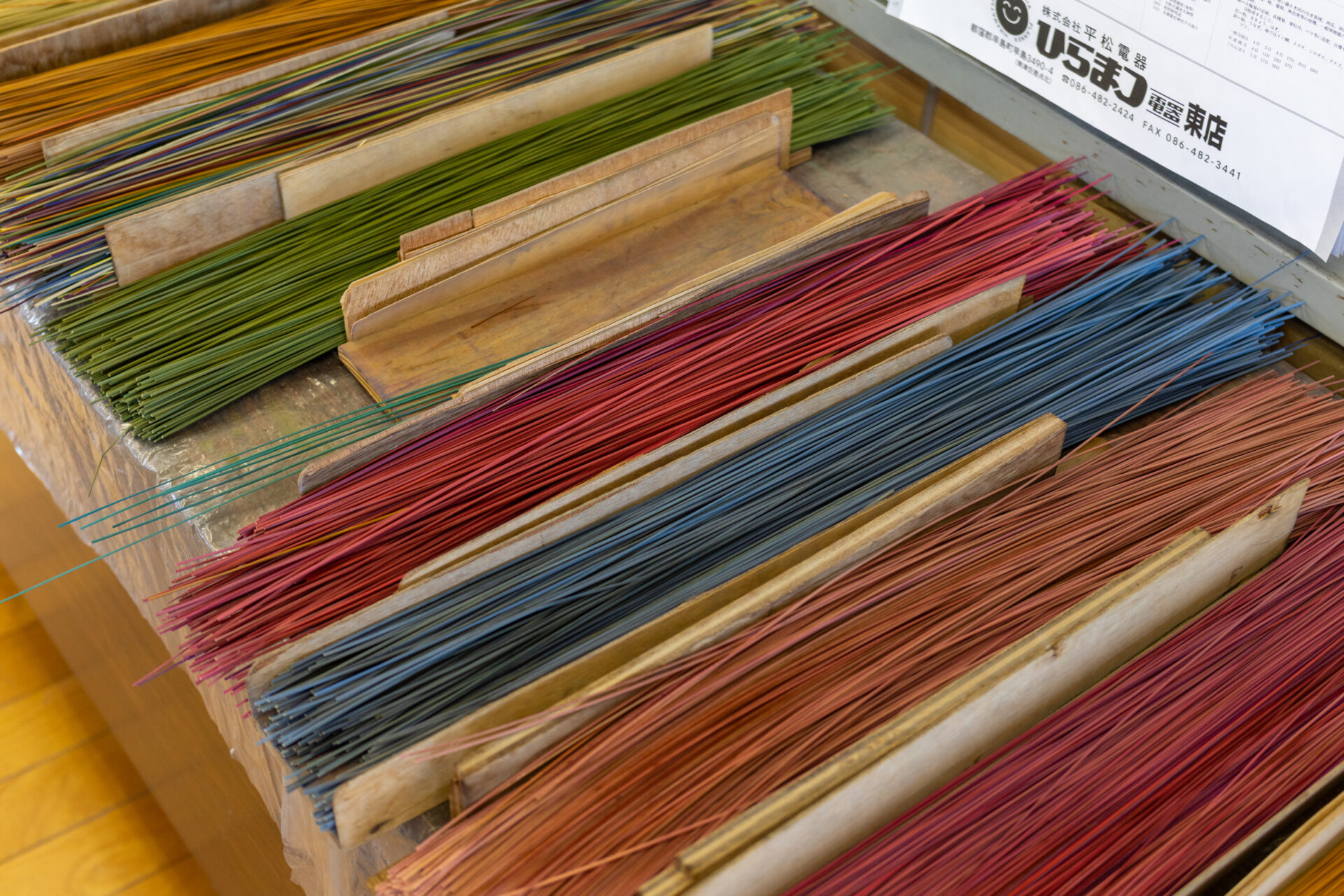
First, choose two types of rush grass to use as the weft.
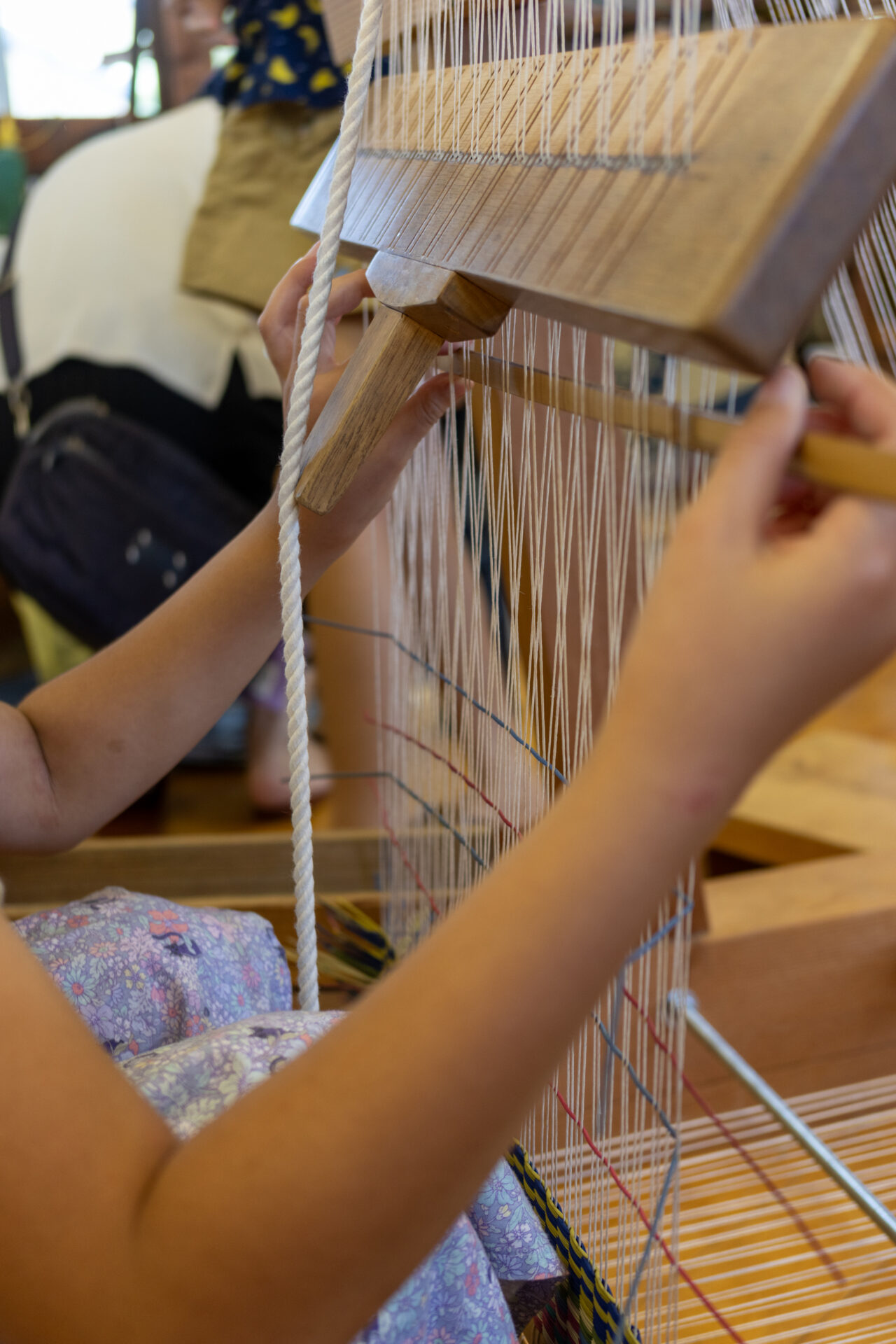
Alternately insert the rush grass from earlier between the vertically stretched threads.
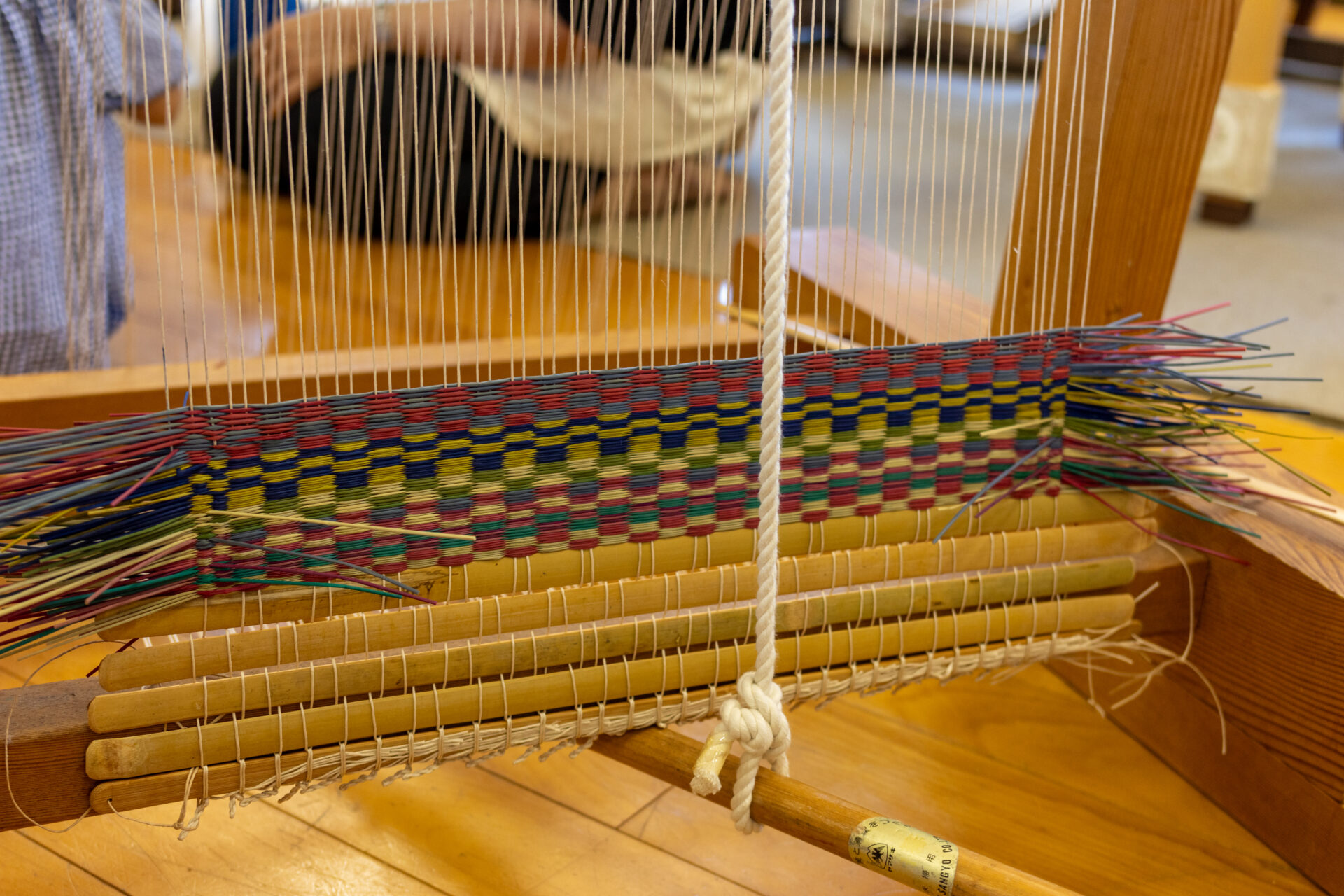
The blue and red pattern in the top row is the section woven this time. The pattern has its own unique character, too.
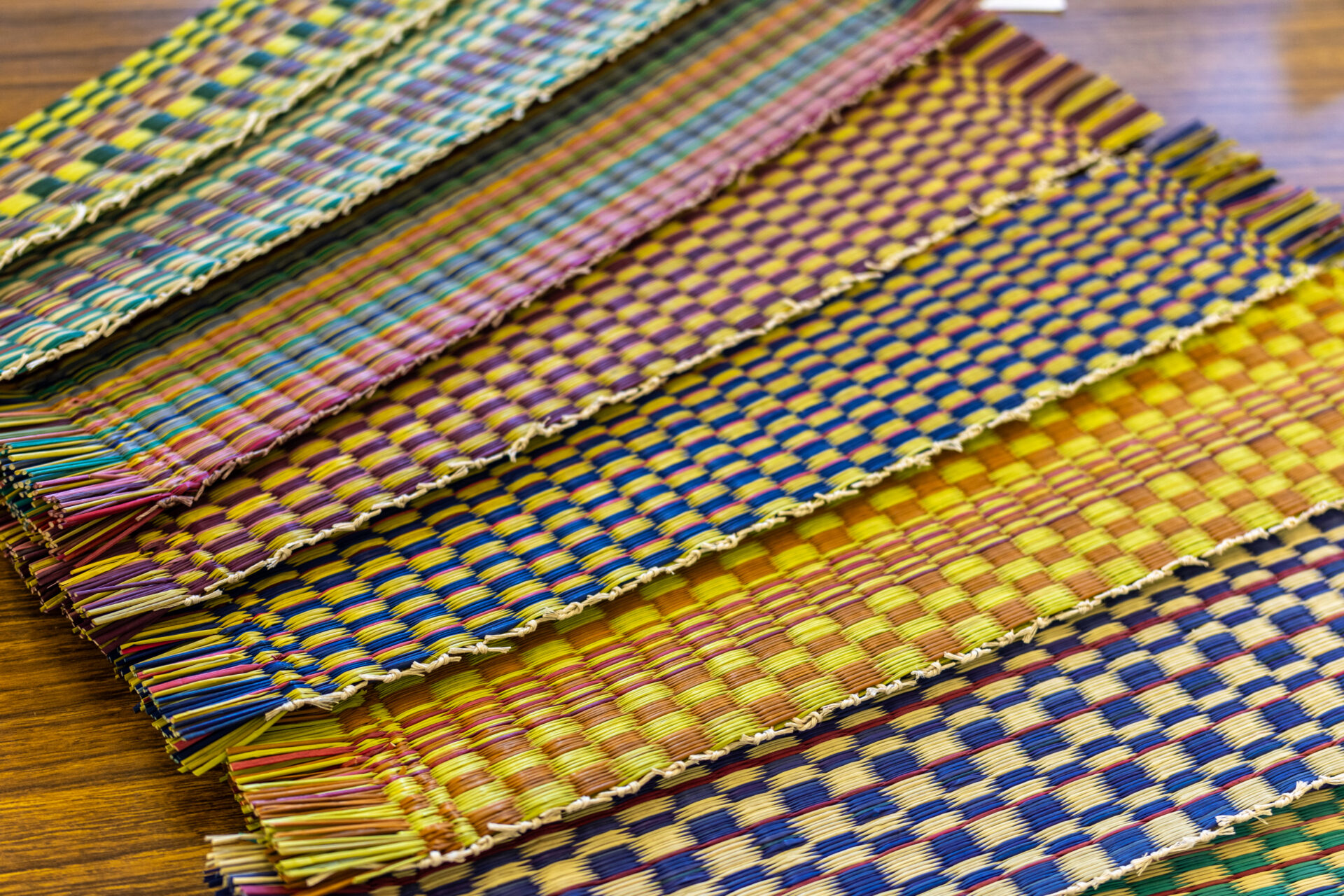
This piece was made by one of the staff at the Traditional Craft Museum who guided us. The fact that no two patterns are alike is part of the charm of handmade crafts.
From the Writer
It seems that demand for tatami declined for a time as lifestyles became more Westernized, but recently the merits of natural materials have been attracting renewed attention, and tatami is becoming popular again.
I knew to some extent that the Hayashima and Kurashiki area was once Japan’s leading producer of rush grass. Through this event, I feel I was able to rediscover the appeal of rush grass, a natural material close to home.
Today, most rush grass in Japan is produced in Kumamoto Prefecture.
However, although they are not often in the spotlight, many long-established Okayama companies are also involved in distribution, sales, and manufacturing.
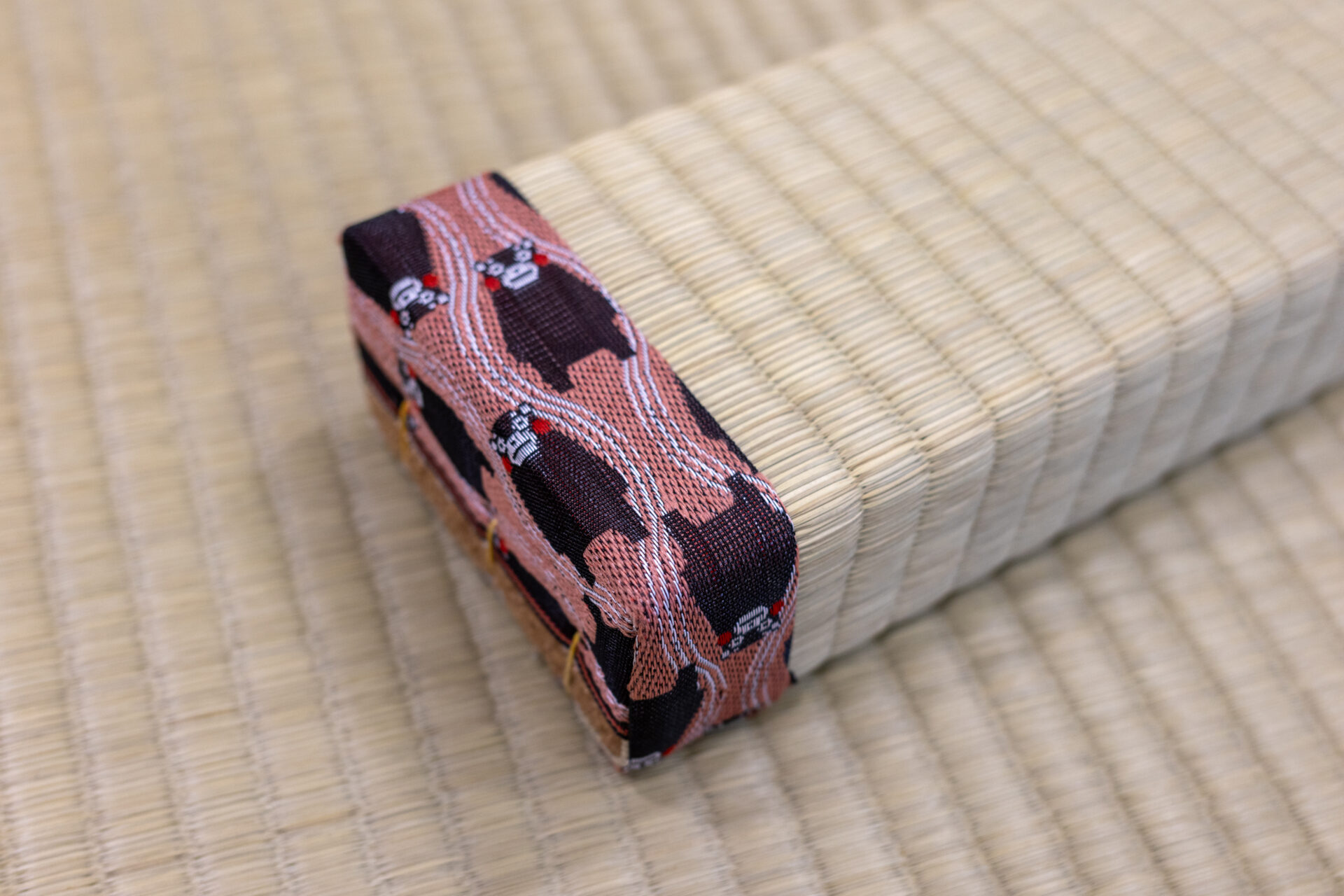
For example, Takata Orimono in Kojima, which makes this tatami edging, also has an antenna shop in the Bikan Historical Area.
Thank you for all these valuable experiences.
I’m looking forward to next year’s event.
30th Hayashima-Kurashiki Hanagoza Festival Information
| Name | 30th Hayashima-Kurashiki Hanagoza Festival |
|---|---|
| Dates | July 6, 2024 (Saturday), 9:00 a.m.–5:00 p.m. July 7, 2024 (Sunday), 9:00 a.m.–4:00 p.m. |
| Location | West Special Event Venue, Hayashima Town Hall |
| Admission (tax included) | Free |



What would you like to know about Kurashiki?
Enter a word to search articles on this site