Do you know tatami edges?
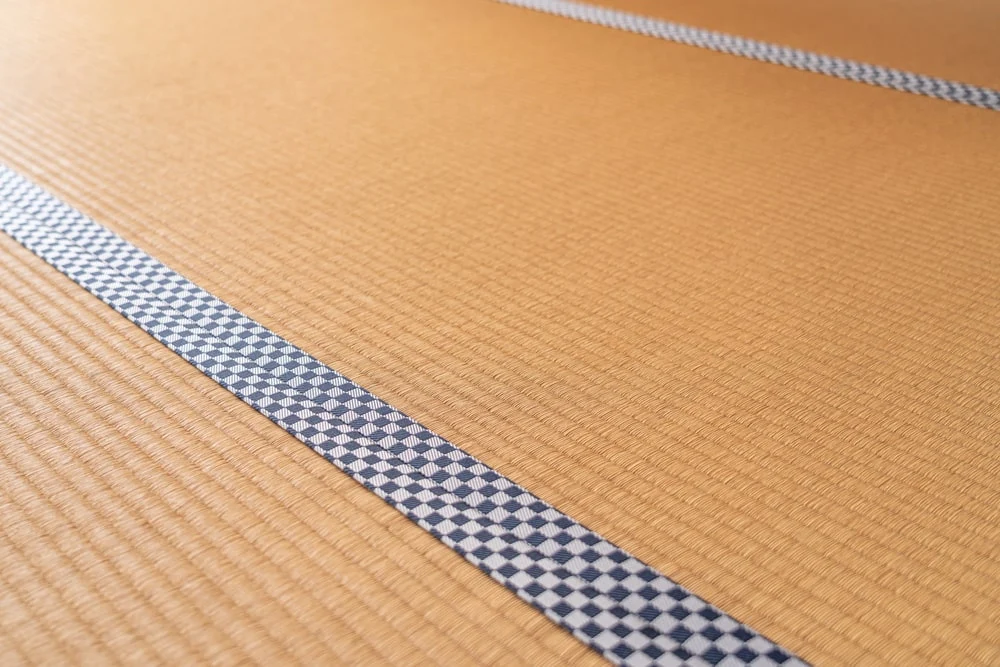
Tatami edges are the fabric attached to the edges of tatami mats.
In Kurashiki City, there is a company that has the highest production volume of tatami edges in Japan.
That is Takata Orimono Co., Ltd., which was founded in 1892.
While being a supporting element of tatami, a traditional Japanese building material, it is a company that continues to challenge itself and is gaining attention from the public.
We interviewed Takata Orimono, which is paving the way on uncharted paths.
What are tatami edges?
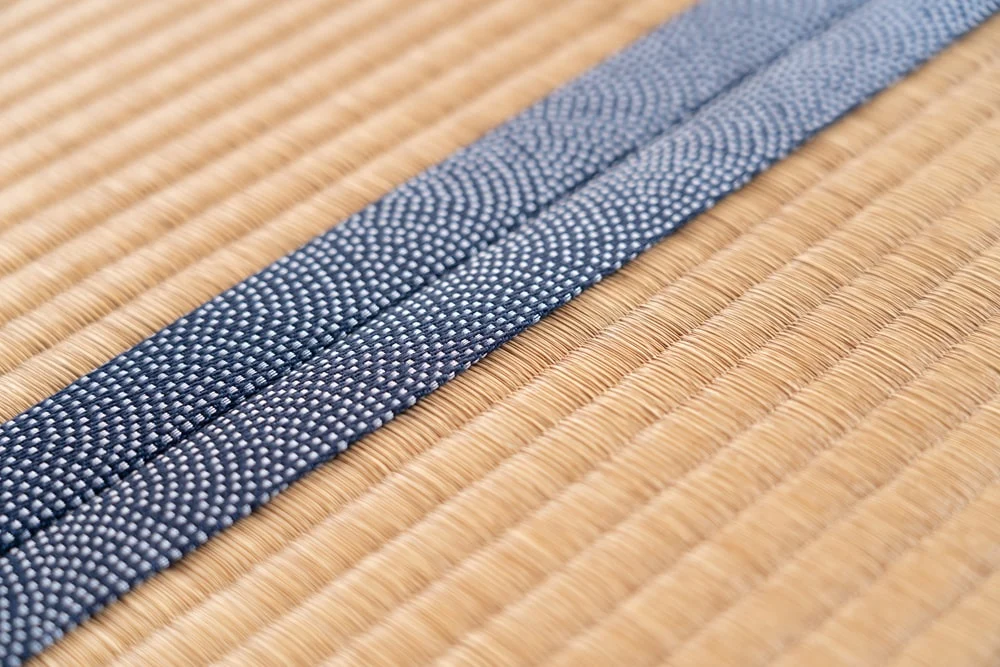
Tatami edges are the woven fabric attached to the edges of tatami mats.
Functionally, tatami edges have three main roles.
The first is to bind the components of the tatami together.
Tatami is made by covering the core of the tatami, called "tatami-doko," made from rice straw, with "tatami-omote," woven from rush grass, and sewing the "tatami-beri" to the long edges.
The second is to prevent damage and protect.
As tatami is used, the corners of the tatami-omote can fray and get damaged.
Tatami edges help prevent splintering.
Tatami with edges lasts longer than tatami without edges.
The third is to close the gaps between tatami mats.
When laying tatami in a room, the gaps can be finely adjusted and tightened, making it harder for dust to accumulate in the gaps.
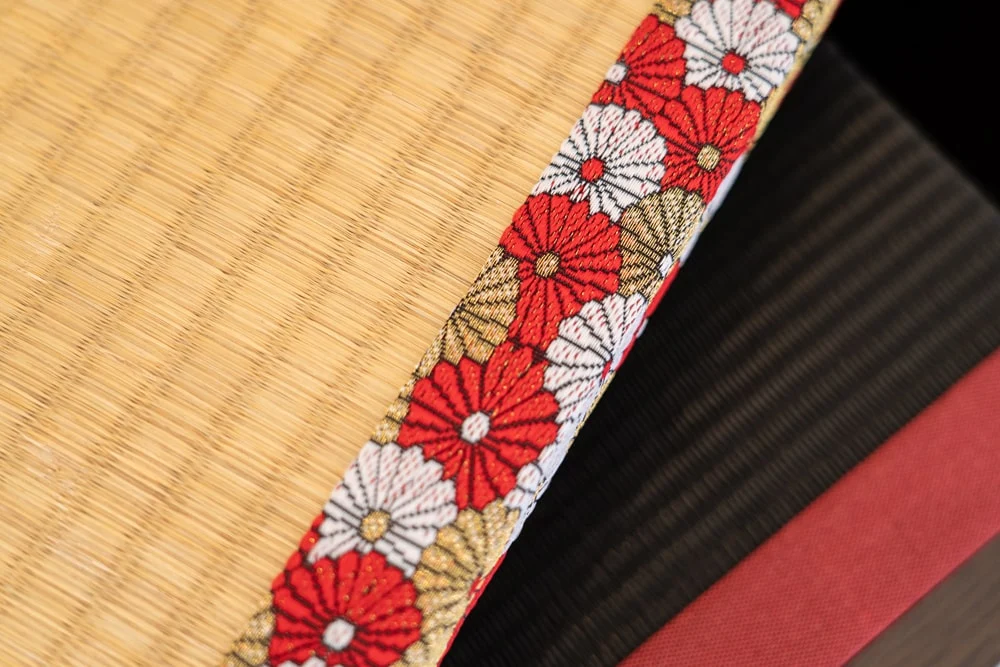
It is not just a functional role. It also plays a significant role as a room decoration.
When the tatami edges change, the atmosphere of the room changes significantly.
History of tatami edges
Since when have tatami edges existed?
From the Nara period to the present
The oldest existing tatami is stored in the Shosoin in Nara.
It is believed that during the Nara period, Emperor Shomu used it like a bed.
This tatami also used edges.
For a while, tatami edges were made by cutting wide fabric and applying it.
The use of narrow woven fabric like today began around the end of the Meiji period.
As tatami became more common, narrow tatami edges were produced as dedicated fabric for tatami.
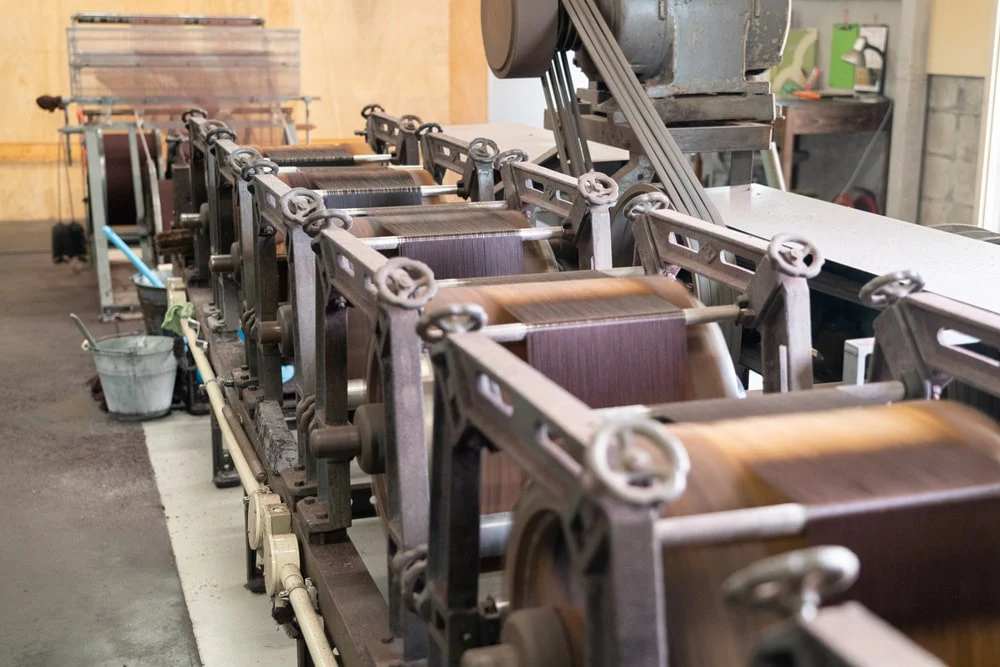
In the past, they were made from cotton thread, but now they are woven from a combination of synthetic fibers like polyethylene and cotton thread that has been luster processed.
Okayama and tatami edges
Tatami edges began to be produced in Okayama around 1921.
In the process of recovering from the Great Kanto Earthquake (1923), the reputation that "Okayama's tatami edges are of good quality" spread.
In the post-war recovery of the Showa era, the demand was high, and Okayama's tatami edges were used nationwide.
As of 2022, 80% of tatami edges are produced in Okayama Prefecture.
And about half of that, a nationwide share of 40%, is produced by Takata Orimono.
Additionally, the rush grass used as the raw material for tatami-omote was also produced in the highest volume in Okayama from the Meiji period to the early Showa period.
I thought, "The production of tatami edges must have flourished because rush grass cultivation was thriving," but it turns out that it is not related.
In Kurashiki, which is a reclaimed land, the soil had a lot of salt, making it difficult to grow rice, so cotton and rush grass were cultivated since the Edo period.
The development of cotton spinning led to the production of tatami edges as one of the textile industries.
As a result, it seems that Okayama became the production area for both rush grass related to tatami and tatami edges by chance.
History of Takata Orimono
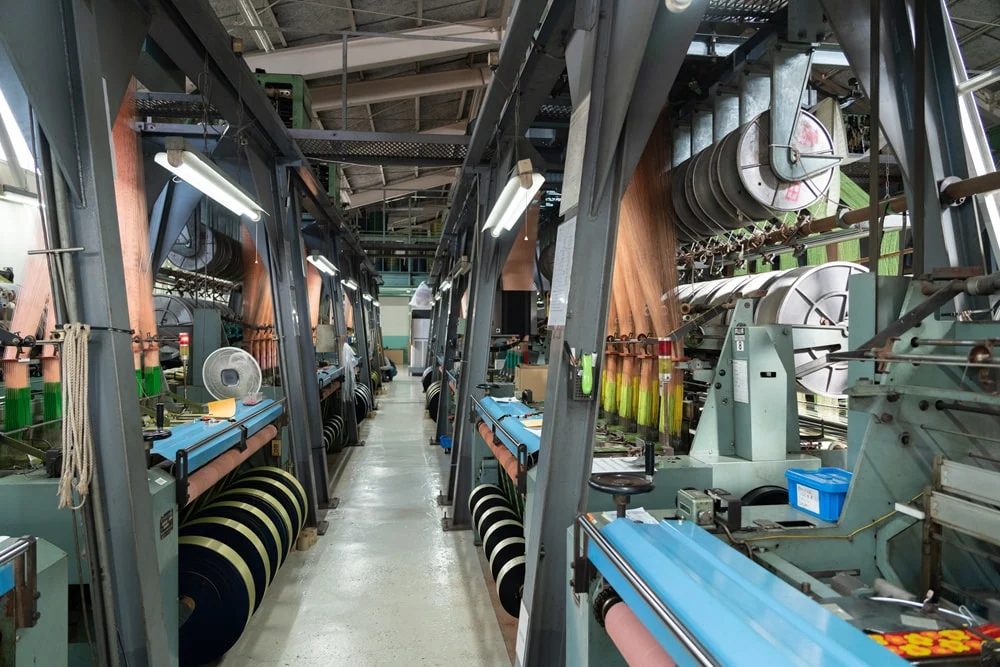
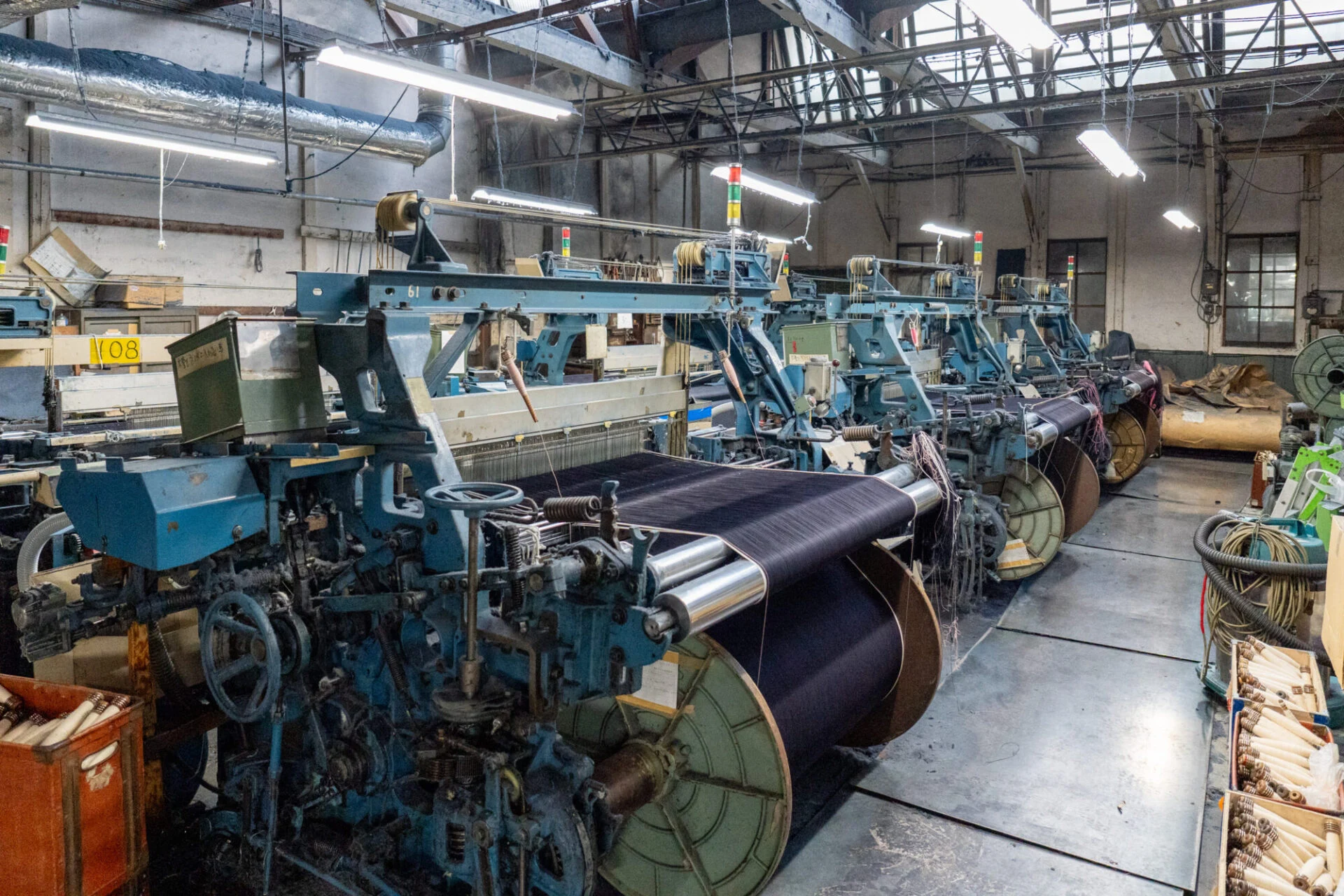
Takata Orimono was founded in 1892 as a textile company.
Initially, it seems they made Sanada cords and obi fabric used for kimono and tea ceremony utensils.
Around the transition from the Meiji to the Taisho period, people's clothing changed, and the demand for the products they had been manufacturing decreased.
In the early Showa period, with advice from local people, they started tatami edge manufacturing as a business that could utilize their weaving equipment and raw materials.
In the late 1950s, Takata Orimono was the first in the industry to develop patterned tatami edges.
Takata Orimono has worked to expand the recognition and value of tatami edges, and opened the directly managed store "FLAT" in 2014.
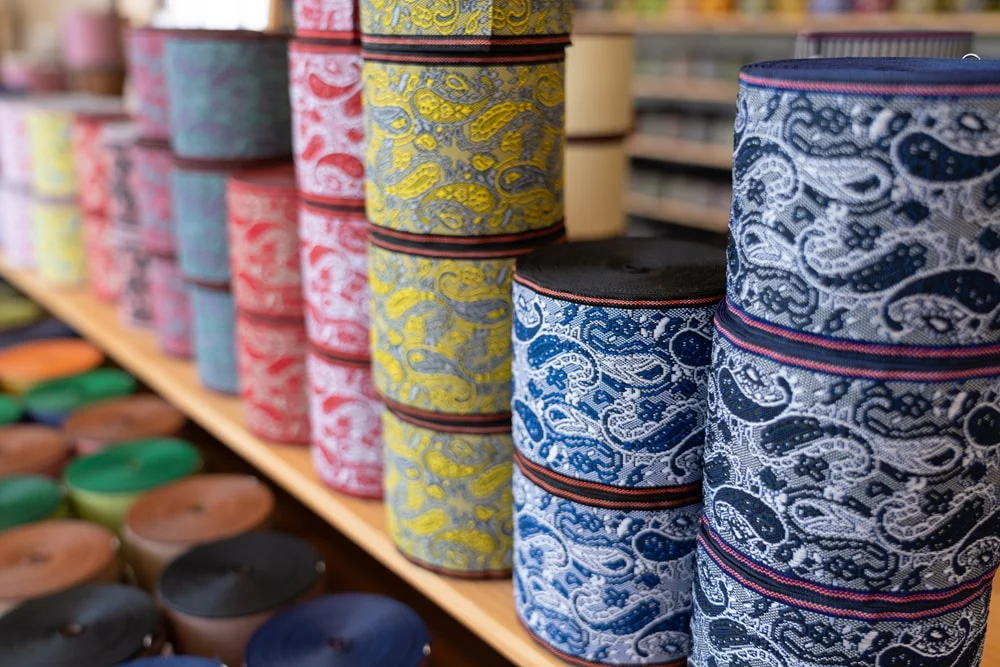
Currently, they manufacture and sell about 1,000 types of tatami edges.
We will introduce their various initiatives and thoughts on tatami edges in the latter part of the interview.
Directly managed store FLAT
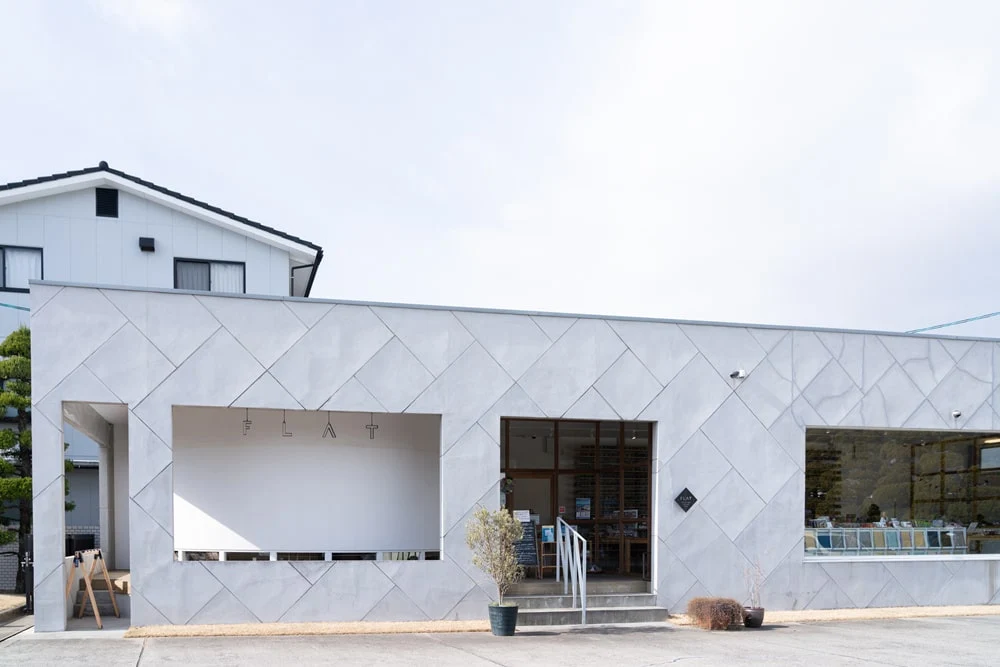
As of 2022, Takata Orimono operates the following two stores.
| Store Name | Address |
|---|---|
| FLAT Kojima Main Store | 2-2-53 Takakoto, Kojima, Kurashiki City, Okayama Prefecture |
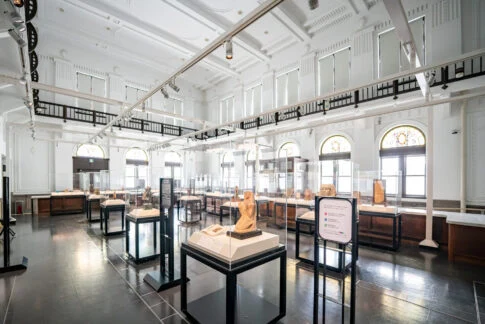
| FLAT Bikan Historical Area Store | 1-4-16 Chuo, Kurashiki City, Okayama Prefecture (inside Japanese Folk Toy Museum) |
It is a rare opportunity to see many tatami edges.
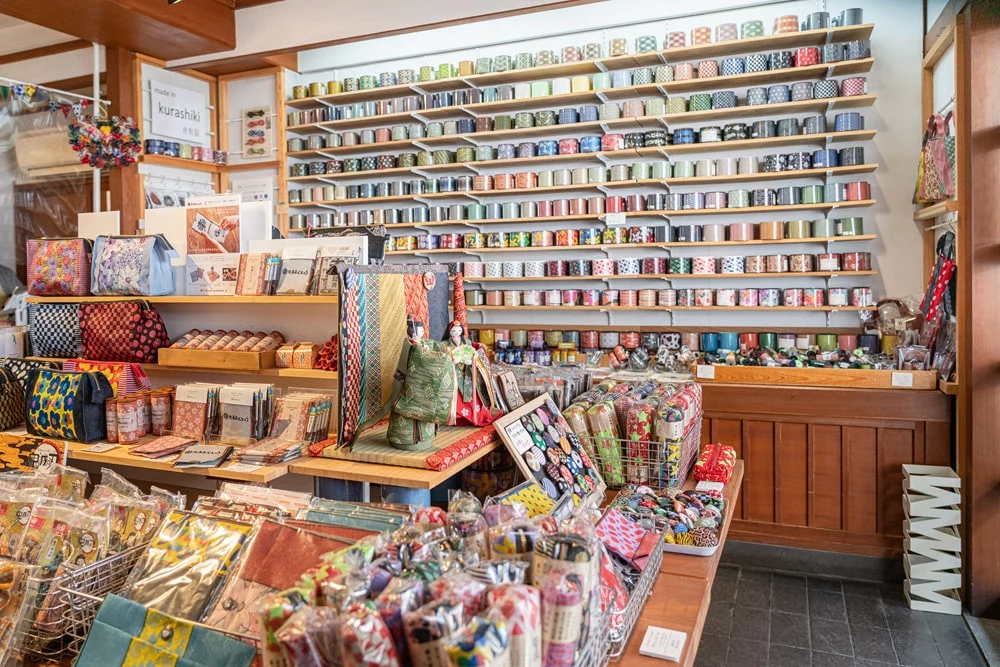
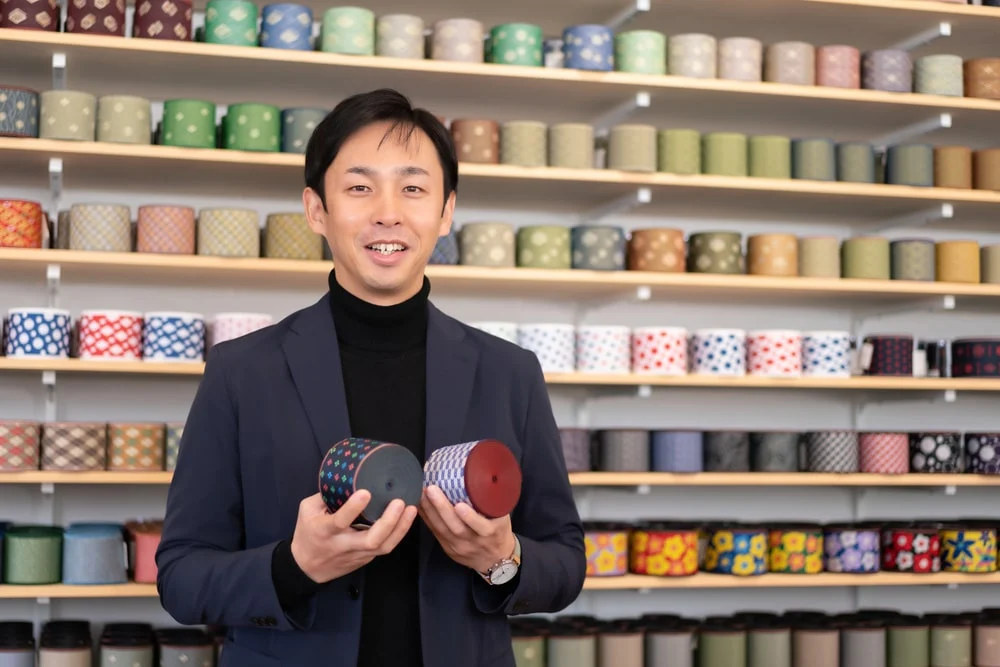
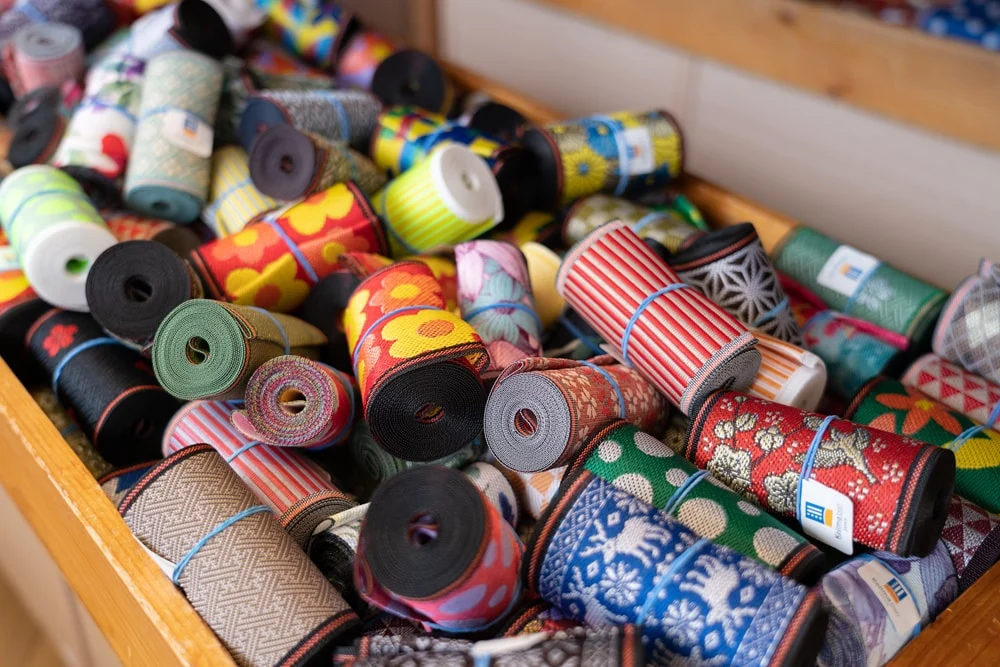
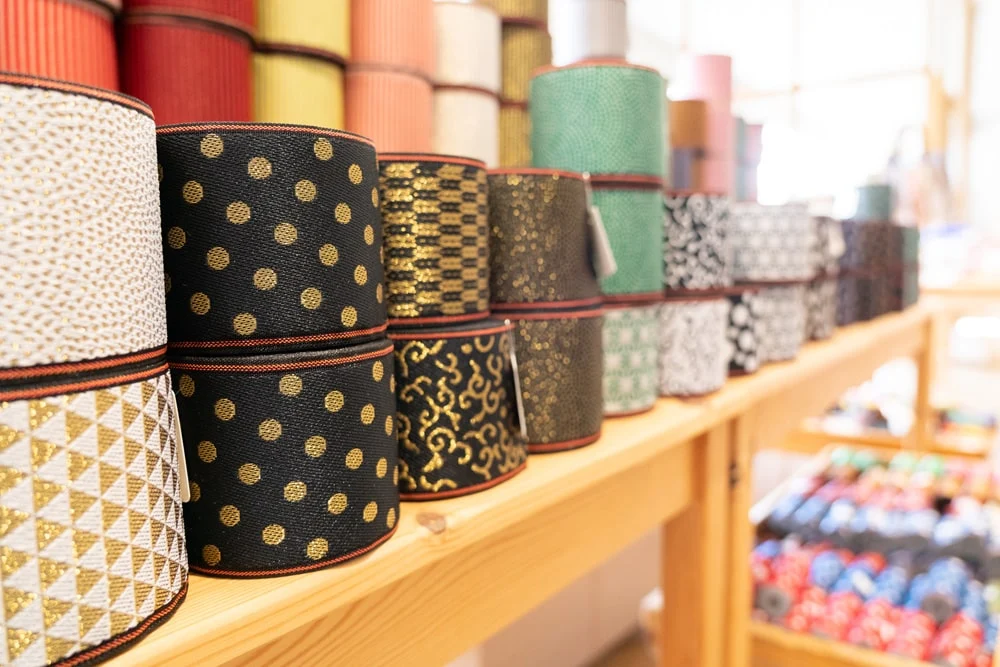
FLAT has a colorful and diverse array of tatami edges!
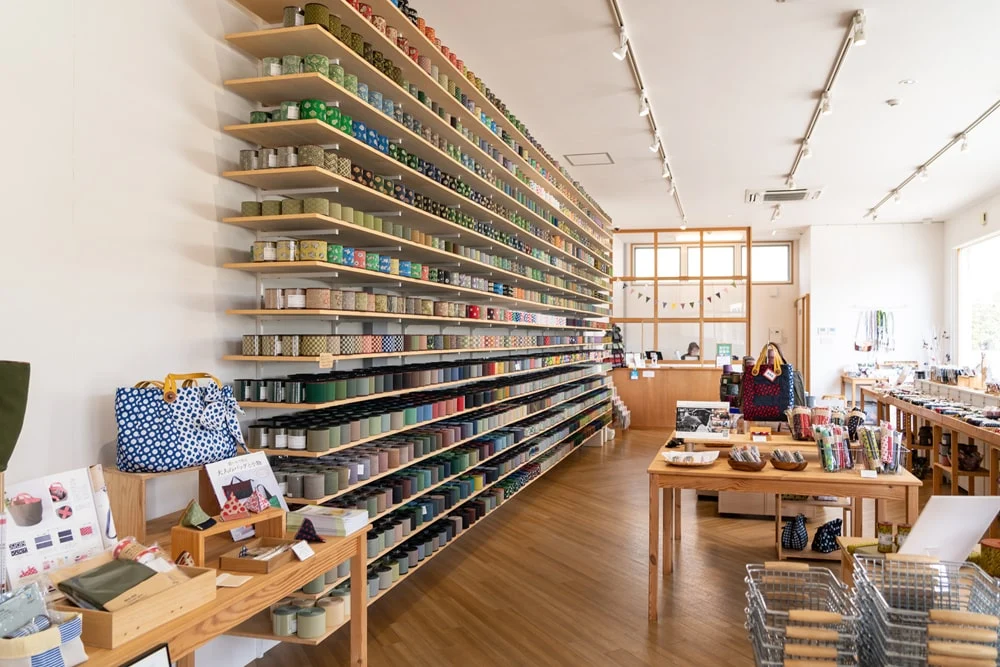
When I first visited FLAT, I was surprised to see tatami edges in vivid colors and modern patterns, thinking, "I didn't know there were such tatami edges!"
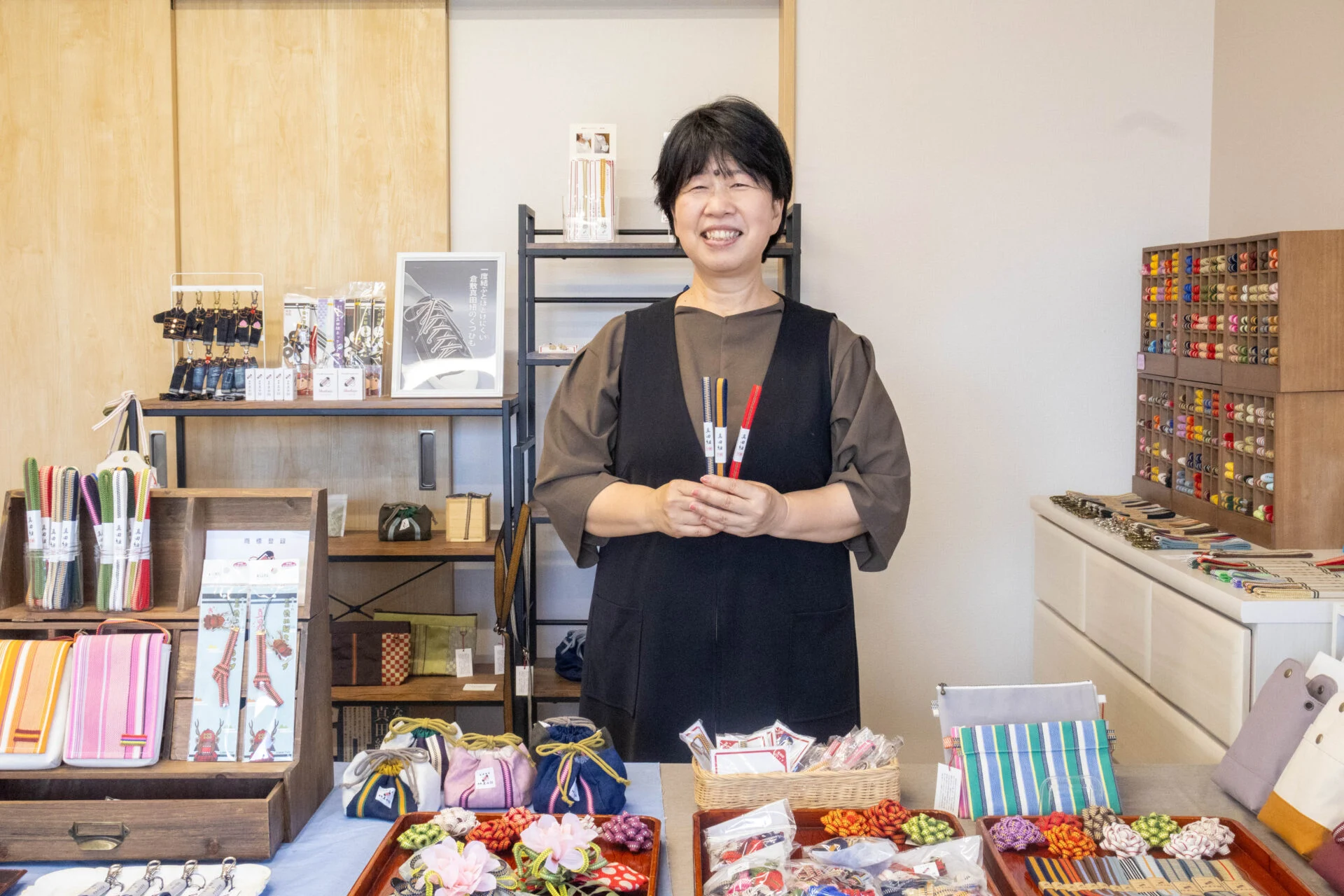
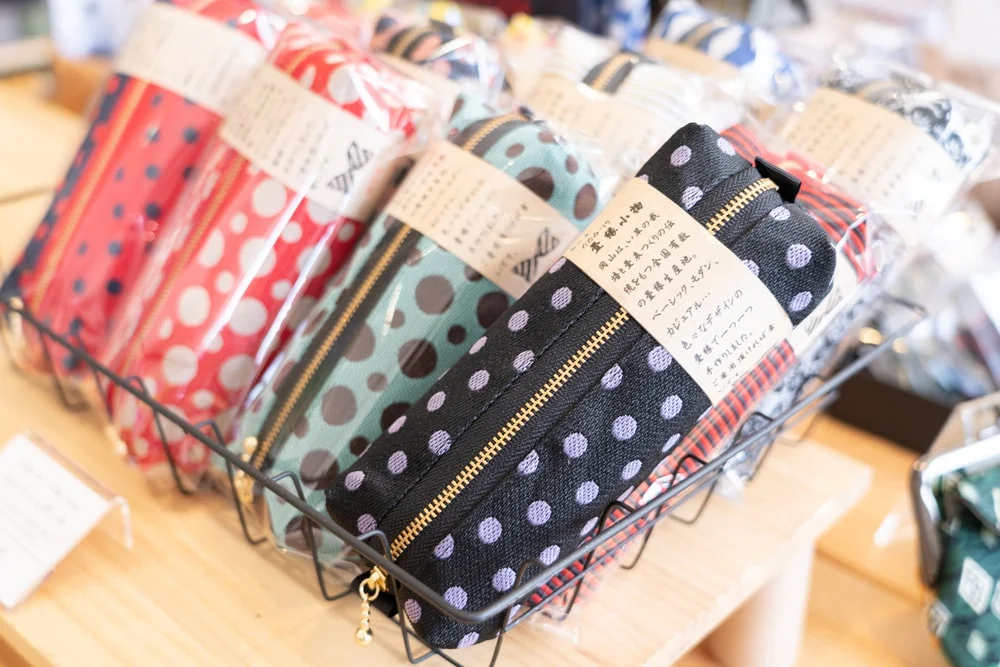
There are also many small items made using tatami edges, such as pouches, card holders, gift envelopes, and hair accessories.
They can also be purchased as handmade materials.
It seems fun to make your own favorite small items.
Sustainable tatami rooted in Japan since ancient times
In recent years, tatami without edges, such as Ryukyu tatami, have been increasing.
Tatami without edges looks neat, but they tend to get damaged easily, are expensive, and many have thin tatami-doko that feels hard to step on.
Additionally, their lifespan is said to be short.
Mr. Takata, the representative director of Takata Orimono Co., Ltd., says, "In Japan, we have originally built houses that incorporate things from nature and breathe with the seasons."
Traditional tatami, used for over 1,000 years, was made by weaving rush grass to create tatami-omote and compressing straw to make tatami-doko.
Tatami made by sewing tatami-omote and tatami-doko together with tatami edges can easily have the tatami-omote removed by cutting the thread.
Therefore, when the tatami-omote gets damaged, it can be removed and flipped over, allowing the other side to be used well, and when finished, the rush grass can be returned to the soil.
The tatami-doko, which is the core of the tatami, can be used for decades if repaired.
It is also possible to replace only the tatami-omote and tatami edges in a process called "omotegae," further utilizing resources.
However, many tatami without edges are glued together with tatami-omote and tatami-doko.
Since they cannot be removed, if the surface of the tatami-omote gets damaged, the only option is to throw everything away.
Tatami with edges, which are sewn together, can be considered environmentally friendly building materials that effectively use resources.
I think it is a waste to have limited resources and have to throw them away when they can still be used.
Since its founding in 1892, what kind of thoughts have gone into making tatami edges?
I spoke with Mr. Takata Naoshi, the representative director of Takata Orimono Co., Ltd.
Data of Takata Orimono Co., Ltd.
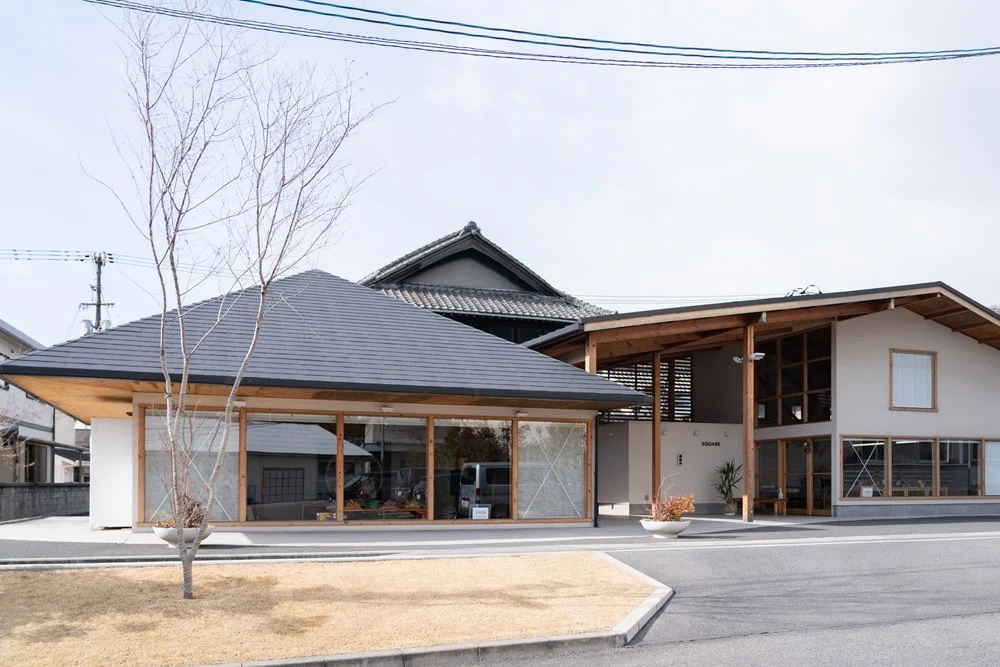
| Organization Name | Takata Orimono Co., Ltd. |
|---|---|
| Industry | Tatami edge manufacturing |
| Representative Name | Takata Naoshi |
| Year Established | 1950 |
| Address | 2-2-53 Takakoto, Kojima, Kurashiki City, Okayama Prefecture |
| Contact | 086-477-7162 |
| Website | Takata Orimono Co., Ltd. |