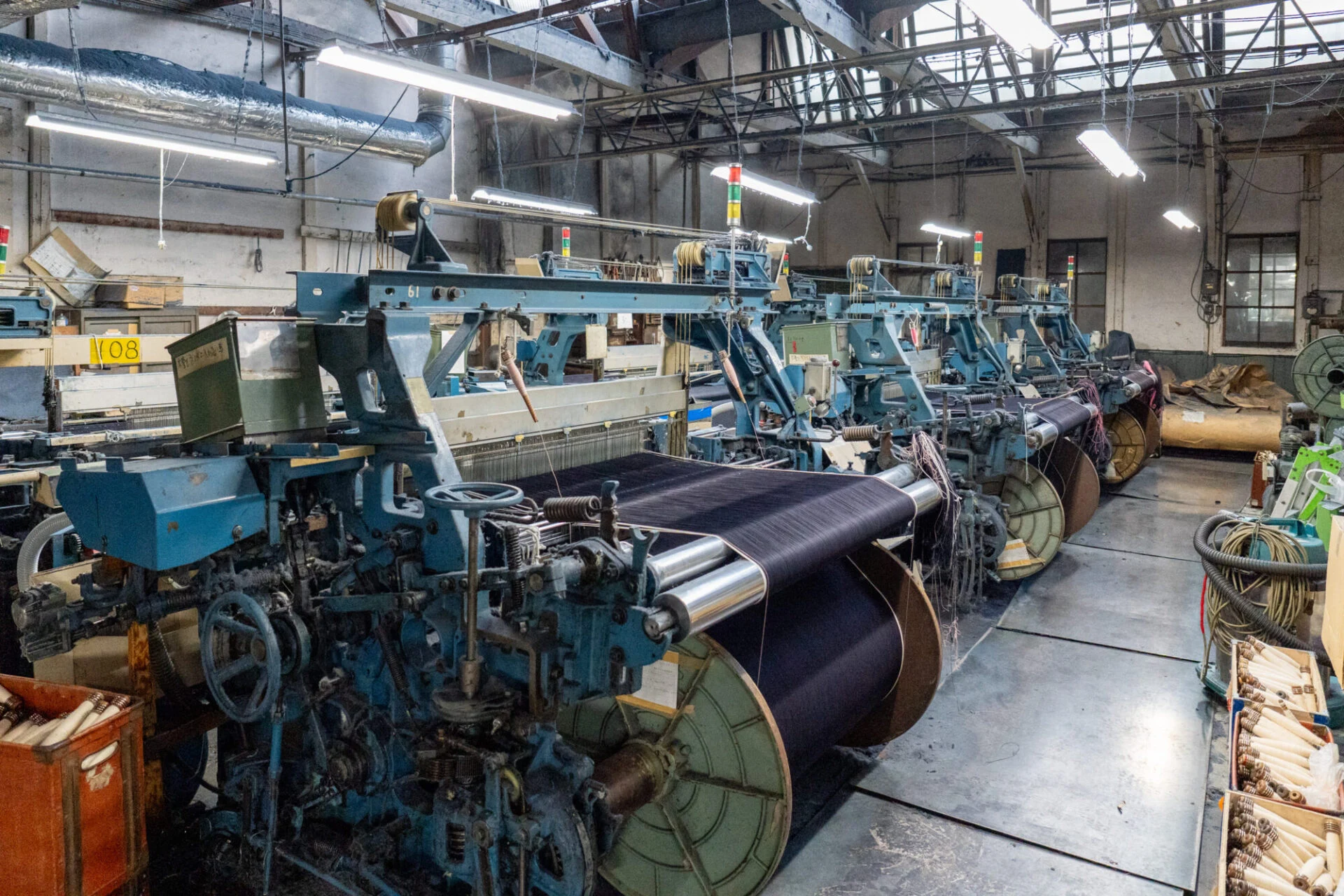
Ibara City, Okayama Prefecture is known as the "Holy Land of Denim."
The town of denim, Ibara.
Ibara's denim is highly regarded not only domestically but also internationally.
In Ibara, there is a textile factory, NIHONMENPU TEXTILE CO., LTD., which has been producing cotton textiles since the Taisho era.
A textile factory refers to a building or person that weaves fabric.
They are committed to the texture and expression of denim, carefully dyeing each thread and weaving it with traditional techniques passed down through generations.
Even in an era of low-price competition in the apparel industry, they have maintained a non-mass production model with high added value.
Delivering Ibara's high-quality denim to the nation and the world.
We will introduce NIHONMENPU's passion for denim and its connection to the community.
Overview of NIHONMENPU TEXTILE CO., LTD.
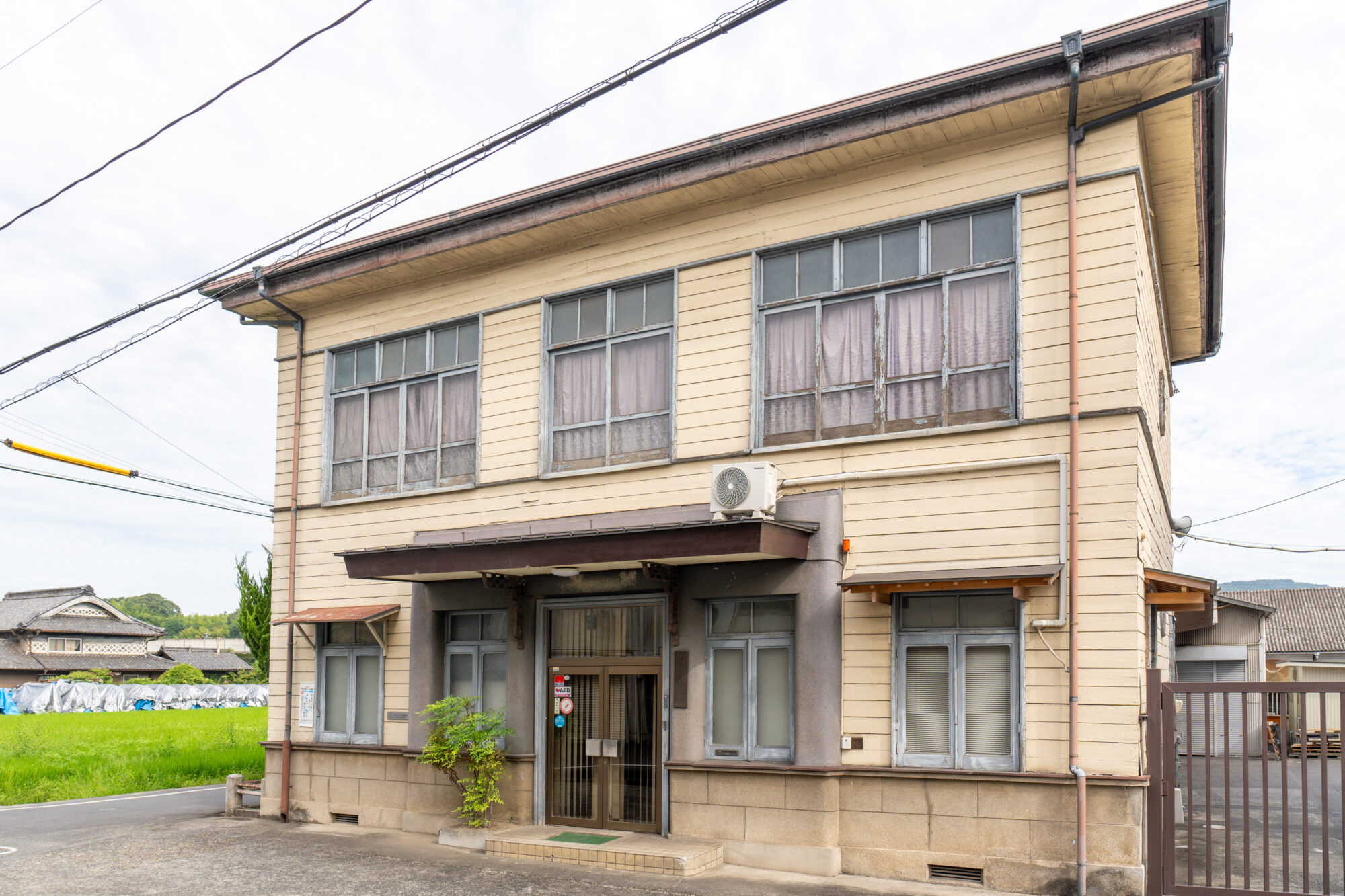
Next to the Oda River, surrounded by a peaceful rural landscape, are the company building and factory of NIHONMENPU, along with an attached factory shop.
The factory shop opened in September 2022.
The factory shop offers jeans, shirts, and accessories made from NIHONMENPU's denim.
NIHONMENPU was founded in 1917 as a manufacturer of Bichu Kokura textiles.
They began manufacturing women's and children's clothing through a consistent process from dyeing to weaving.
In 1926, they had the honor of having their fabric used as a gift to the Crown Prince (Emperor Showa) from Emperor Taisho.
In 1985, they began producing denim and expanded not only domestically but also internationally.
In 2007, the Ministry of Economy, Trade and Industry recognized the cotton textile factory, dyeing factory, office, and cafeteria as "Modern Industrial Heritage of Ibara City's Cotton Industry."
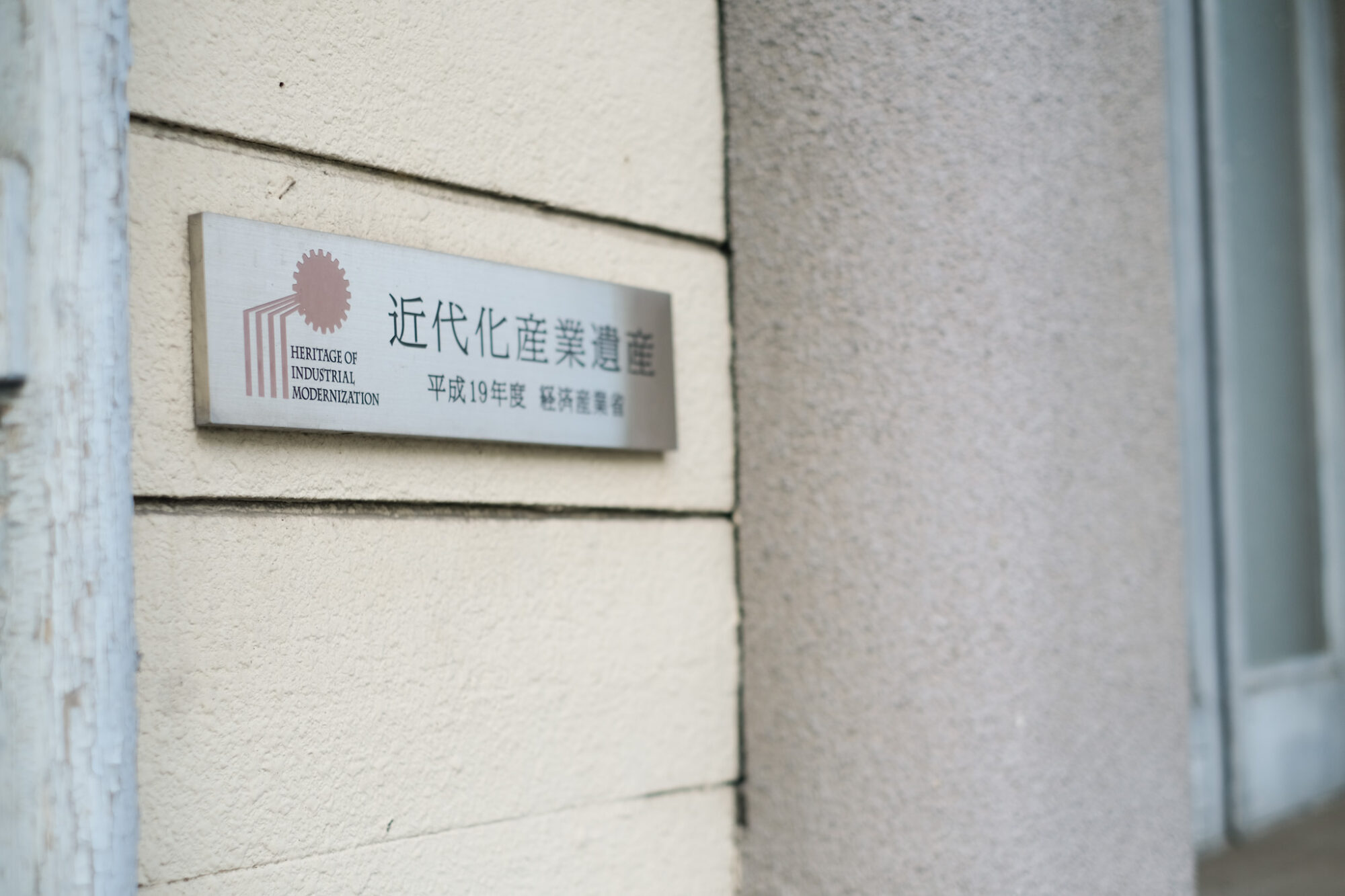
Modern industrial heritage refers to buildings, machinery, documents, and the efforts of predecessors that tell the story of Japan's industrial modernization, recognized by the Minister of Economy, Trade and Industry for the purpose of revitalizing the region.
The Sanbi Region, Active in the Textile Industry
In the early Edo period, cotton production was still low and considered a luxury item.
It was used for gifts among feudal lords, such as obi (sashes) and hakama (trousers).
Cotton-woven fabric was warm and had a good texture, gradually spreading as clothing for common people.
With the spread of cotton, cotton was produced in warm regions across the country.
Ibara City is one of those regions.
Ibara City is located in the southwestern part of Okayama Prefecture and was a route for the Sankin-kotai (alternate attendance) system during the Edo period.
It prospered as a post town on the Sanyo Road and as a production area for Bichu Kokura textiles.
After the Meiji period, cotton textiles developed into factory-based industries.
The region from Okayama Prefecture to Hiroshima Prefecture is called the Sanbi Region, active in the textile industry.
- Bizen: southeastern Okayama Prefecture, Kojima
- Bichu: western Okayama Prefecture, Ibara, Kurashiki
- Bingo: eastern Hiroshima Prefecture, Fuchu, Fukuyama
Ibara was also known for producing one of Japan's three major kasuri (ikat) textiles, Bingo Kasuri.
Denim is born from the traditional techniques of Bichu Kokura textiles and Bingo Kasuri.
The dark blue found in Bingo Kasuri patterns is the origin of denim.
From Ibara to the World
NIHONMENPU has many overseas clients.
Names of famous brands that everyone knows come up.
RALPH LAUREN from Los Angeles, Chrome Hearts, and LEVI’S from San Francisco, among others.
RALPH LAUREN jeans cost over 100,000 yen each.
They also do business with LOUIS VUITTON and Hermes.
Ibara denim is sought after and used overseas.
NIHONMENPU's denim is highly regarded overseas.
Domestically, they also have transactions with jeans manufacturers like EDWIN, focusing on high-quality, high-priced denim.
NIHONMENPU TEXTILE CO., LTD.'s Commitment
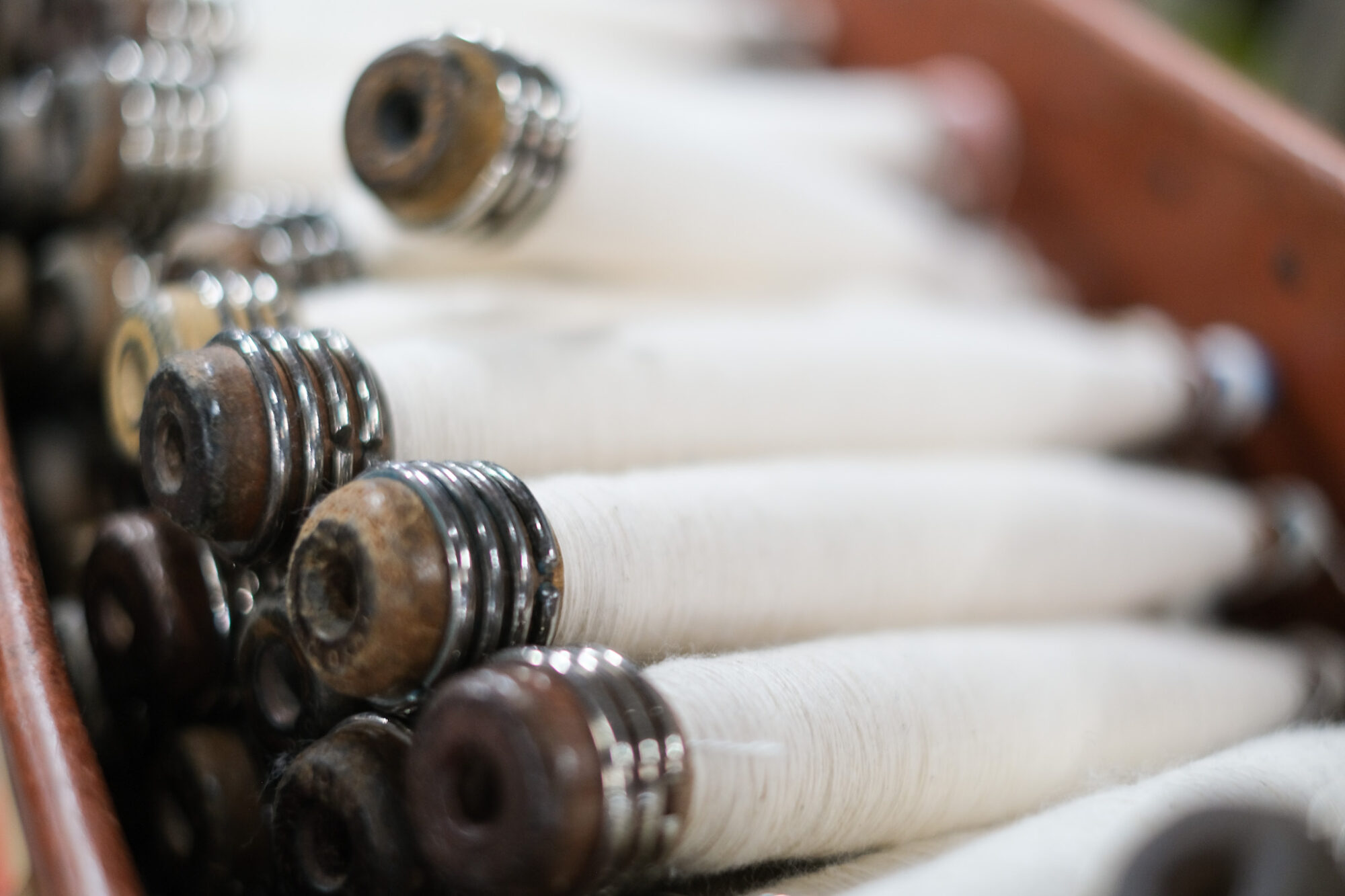
NIHONMENPU's denim, which has received high praise both domestically and internationally, has several commitments.
Shuttle Looms and Jacquard Looms
The machine that weaves thread into fabric is called a loom.
There are shuttle looms that use a shuttle to pass the weft thread and looms that do not use a shuttle.
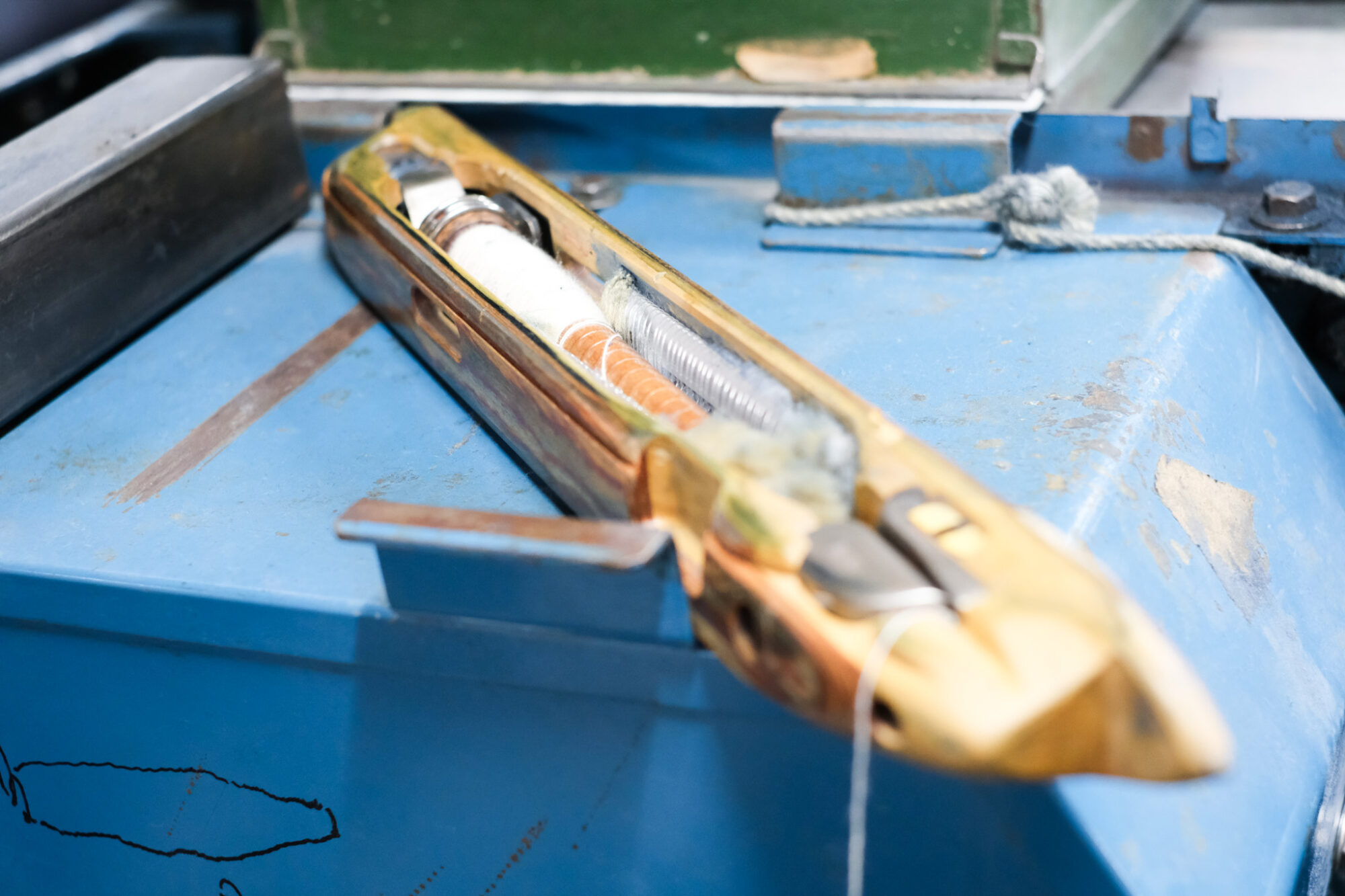
NIHONMENPU uses shuttle looms and jacquard looms.
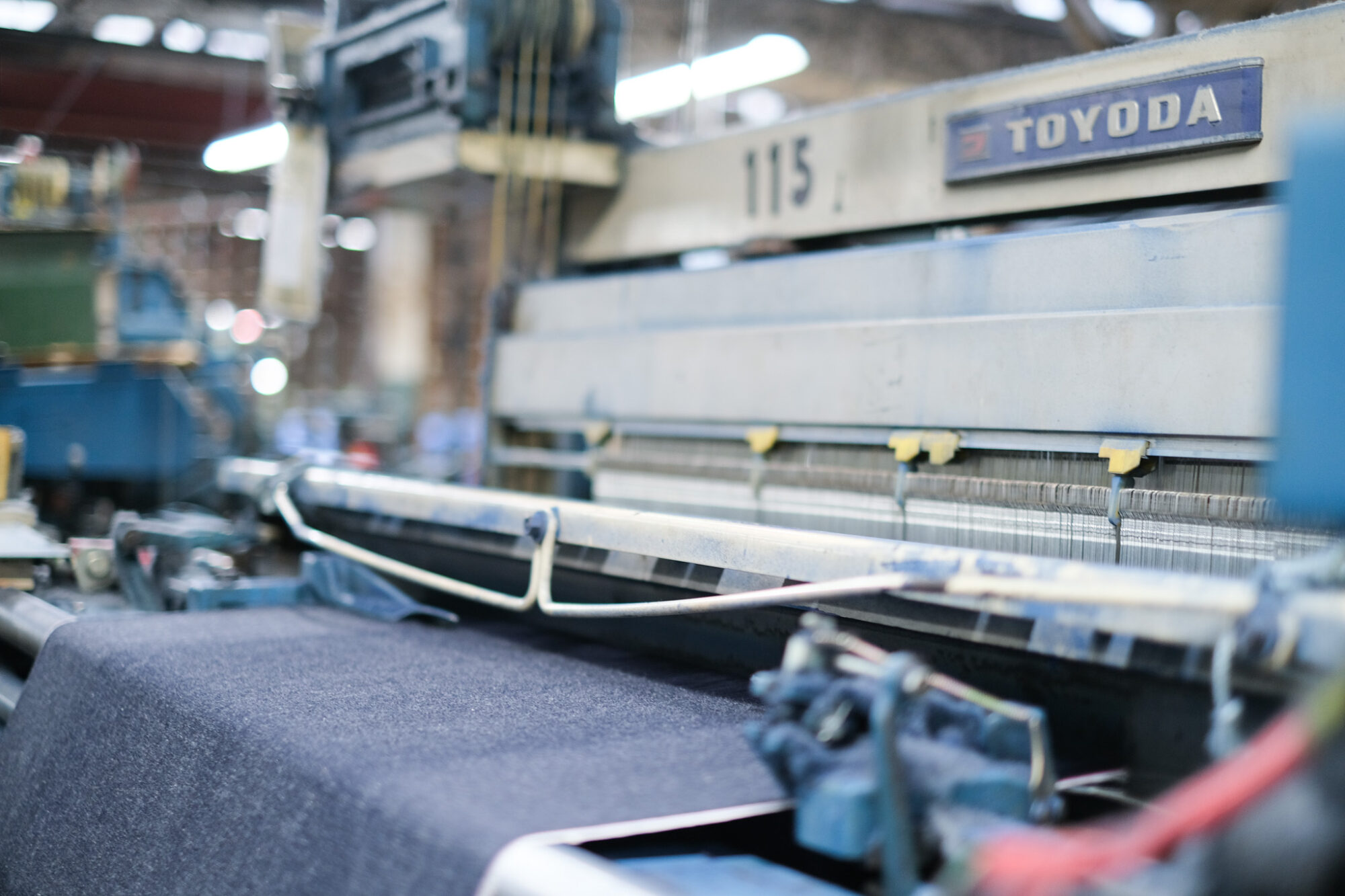
The shuttle loom, referred to as an old loom, weaves denim by having the shuttle carrying the weft thread move back and forth between the warp threads.
The fabric width is 80 cm.
The amount woven in a day is about 50 meters.
Compared to other looms, the weaving speed is slow, requiring a lot of craftsmanship and manual work.
This weaving method does not put stress on the thread, resulting in durable denim with a fluffy texture.
The jacquard loom uses data recorded by punching holes in cards to control 5,000 threads with different movements while weaving.
The fabric width is 150 cm.
It produces denim with a three-dimensional feel and substantial thickness.
Selvedge Denim
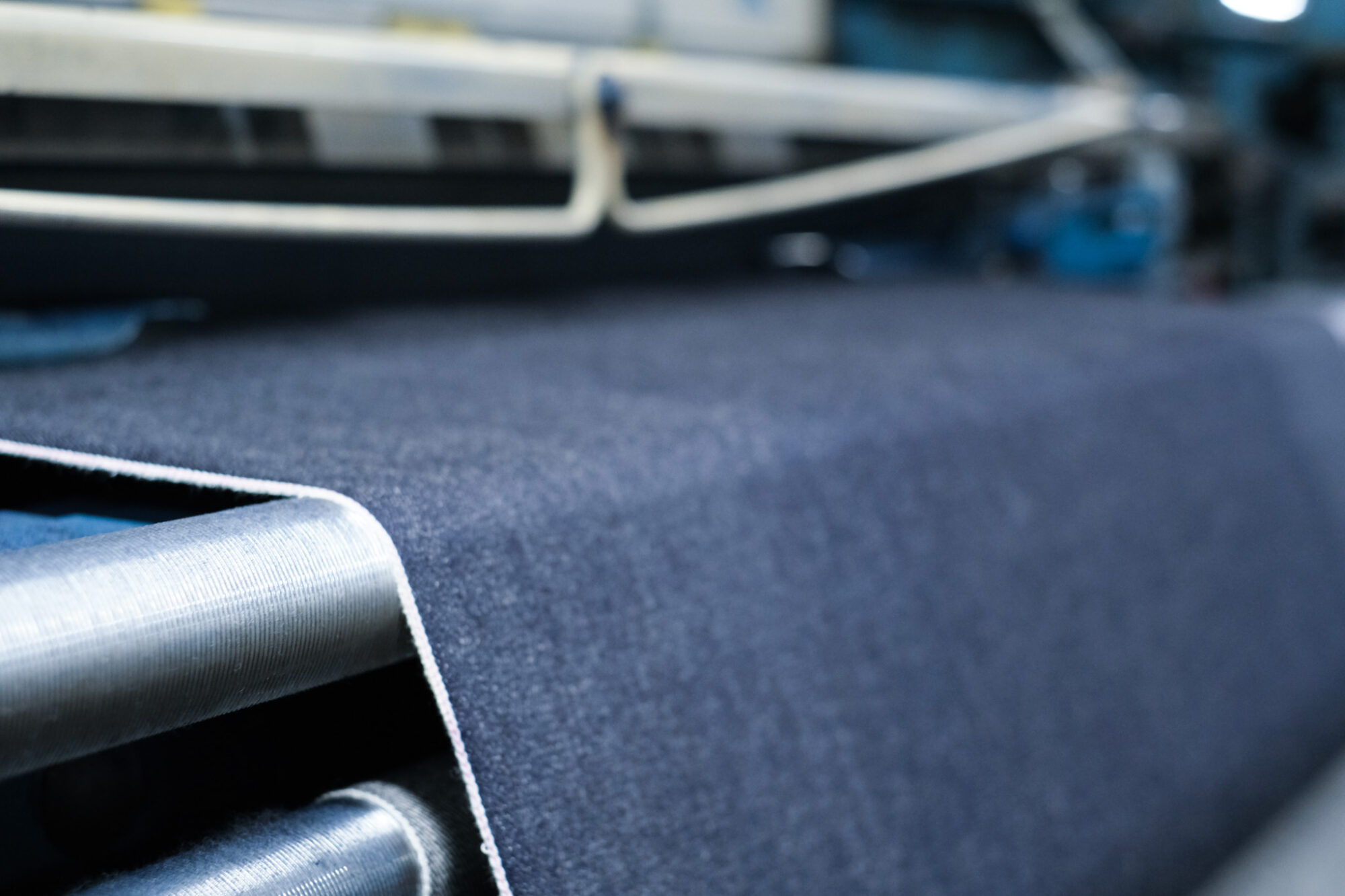
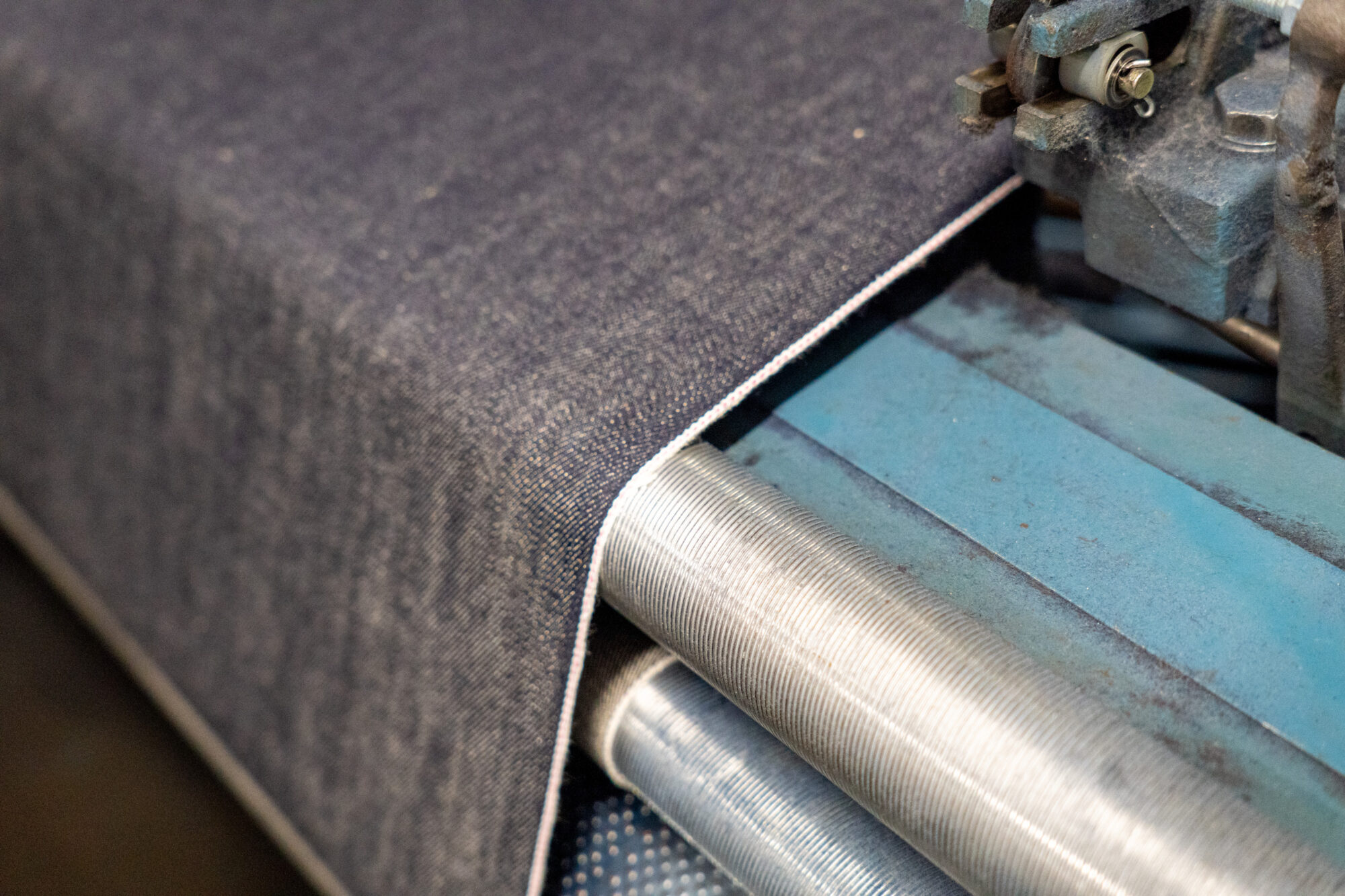
Denim woven on a shuttle loom is called selvedge denim.
Selvedge refers to the fray-stopping edge of denim fabric when woven.
The fray-stopping edge with a red line is commonly known as RED TAB "aka-mimi" and is popular among enthusiasts.
NIHONMENPU has focused on selvedge denim since its inception.
Denim with a selvedge was born in the 1870s in America and was used for workwear jeans that considered the production efficiency of non-frayed denim fabric.
In Japan, "aka-mimi" selvedge jeans and Levi's 501 became popular among young people.
The "aka-mimi" is a mark of vintage denim produced before 1970.
There are also other types of selvedge.
Some models subtly show off their craftsmanship by slightly rolling up the hem of their jeans to reveal the selvedge.
Importing Selected Cotton from Around the World
NIHONMENPU imports cotton from around the world.
- San Joaquin cotton from California
- Tulufan cotton from China
- Zimbabwe cotton from Africa
- Organic cotton from Turkey
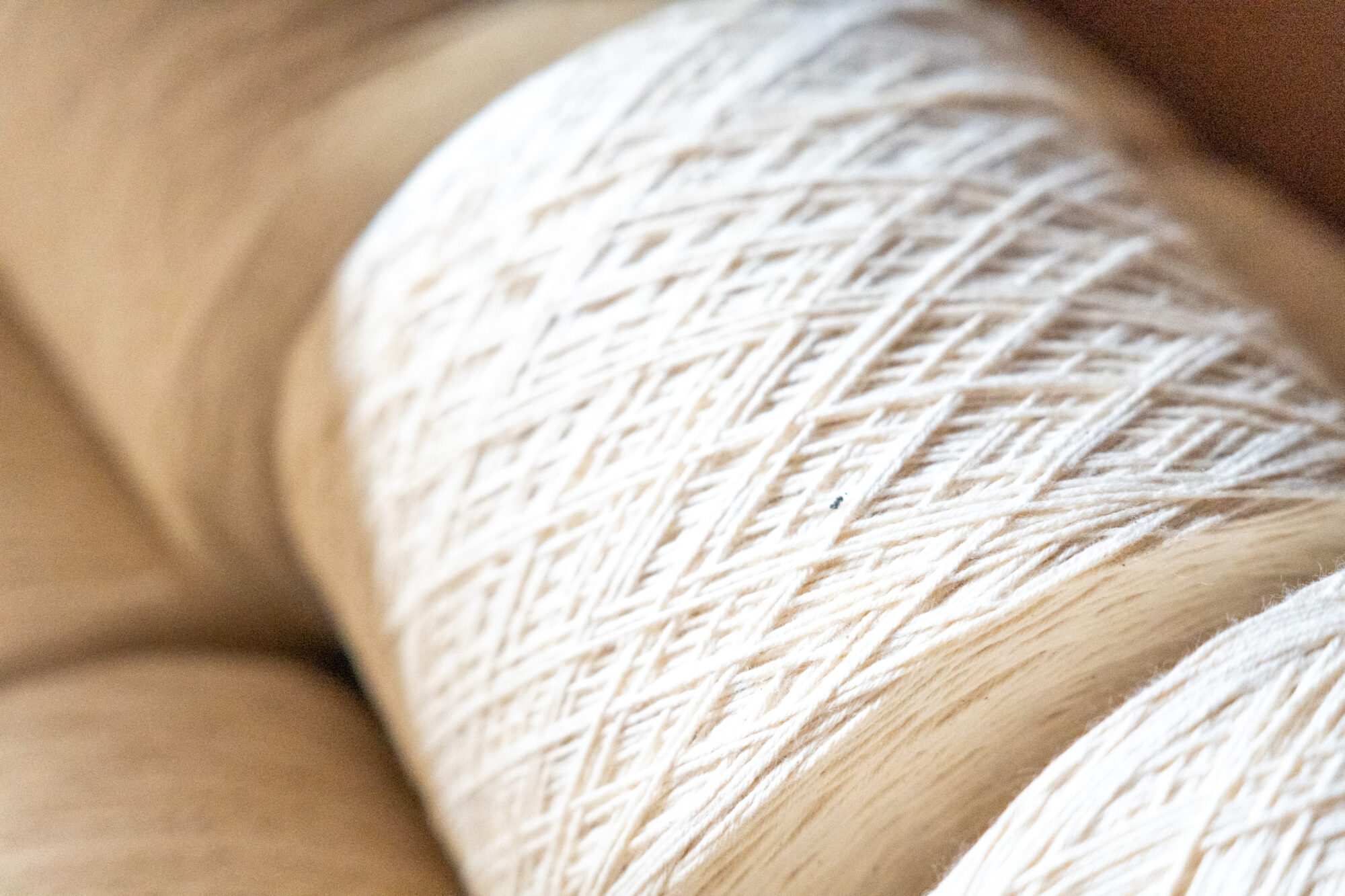
The carefully selected cotton is spun into thread at spinning mills and transported to NIHONMENPU by large container trucks.
The Process of Making Ibara Denim
The process of making Ibara denim is as follows:
- Hank Winding
- Refining
- Indigo Dyeing
- Rope Dyeing
- Sizing
- Shedding
Now, let’s introduce each step in order.
Hank Winding
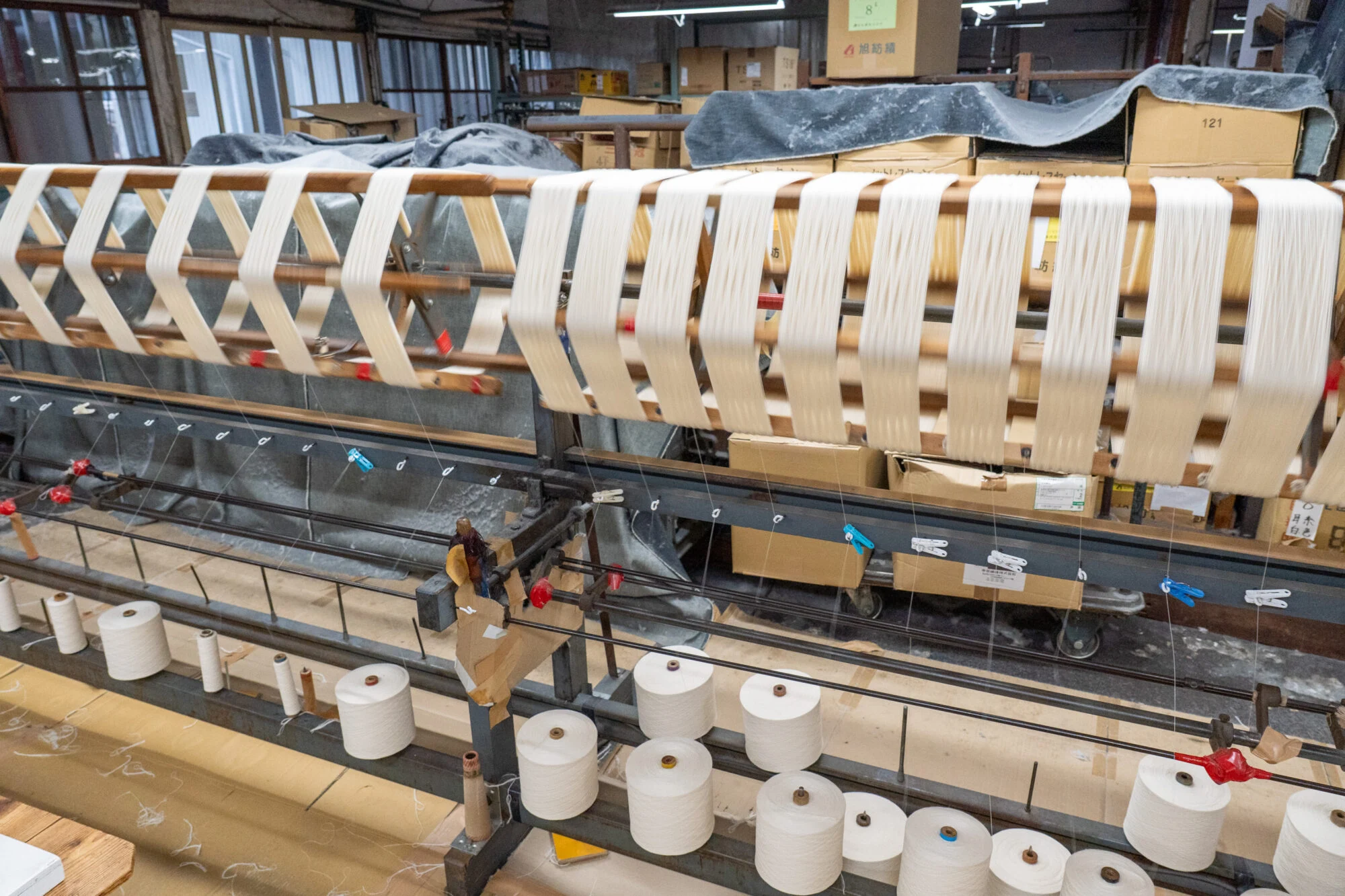
The thread transported from the spinning mill is prepared in a loosened state for dyeing.
The character for thread is written as "kase" in Japanese.
Refining
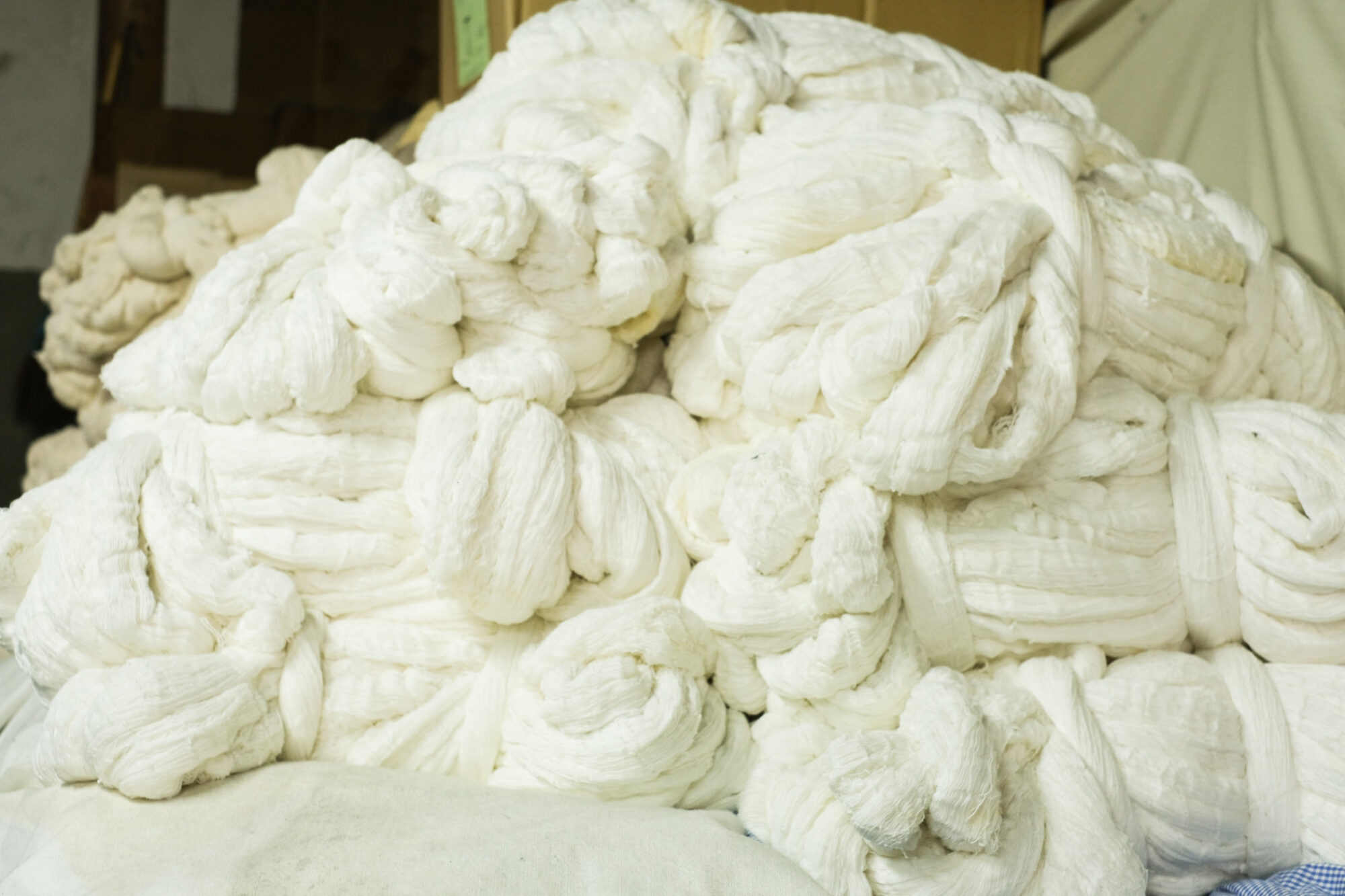
The thread made into a skein is placed in a pot for refining.
Refining is the process of removing dirt and impurities from the thread.
The bundles of thread that have been unraveled and refined are fluffy and more receptive to dye.
Indigo Dyeing
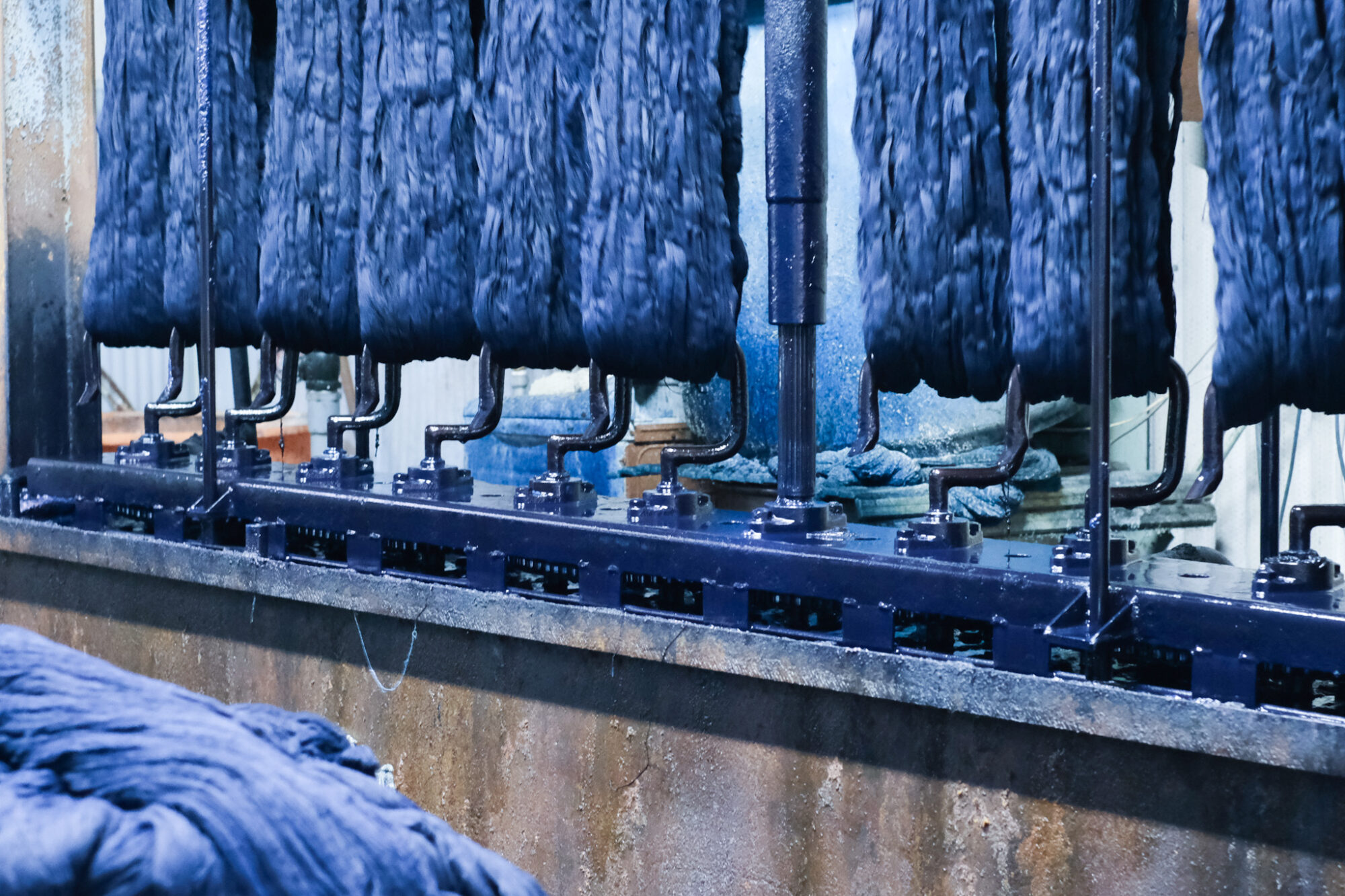
Dyeing with indigo and plant materials.
The thread dyed by artisans in the indigo vat has a vivid indigo color.
We use indigo from Tokushima Prefecture.
Rope Dyeing
The warp threads are dyed with a different machine.
In rope dyeing, only excess liquid is removed, and the center is not dyed.
The "taste" or used feel that develops from wearing jeans continuously is created by rope dyeing.
Sizing
To prevent the threads from breaking due to friction when weaving on the loom, the threads are coated with starch or synthetic sizing.
Threading the Heddles
The thread is passed through the heddles, which have small holes in the wire.
If there are 3,000 warp threads, it is done manually through 3,000 heddles.
This process takes a skilled artisan a whole day.
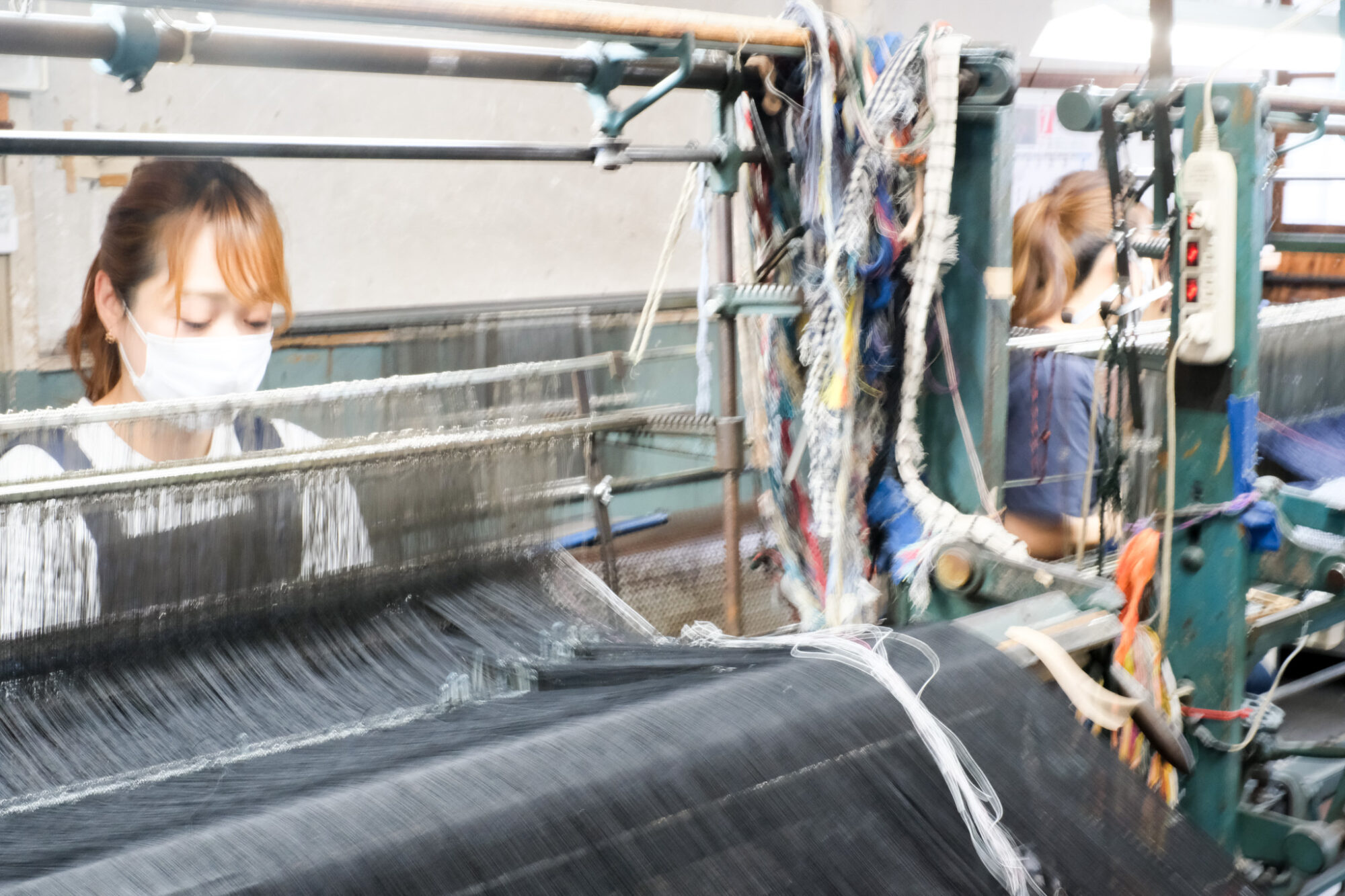
This is the preliminary stage before weaving denim.
Next, denim will be woven on each loom.
We interviewed President Shinji Kawai about the charm of Ibara denim and its connection to the community.
Data of NIHONMENPU TEXTILE CO., LTD.
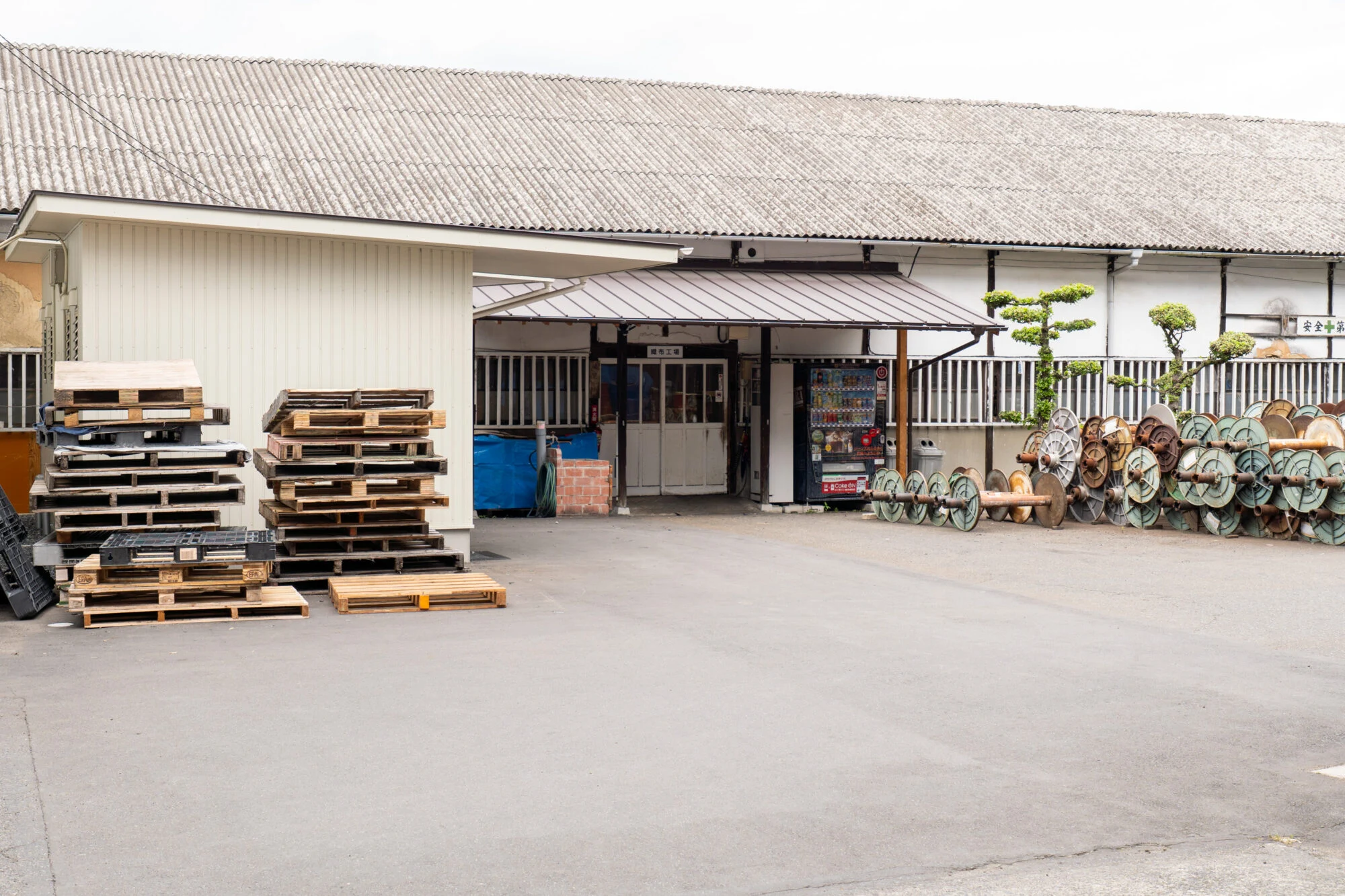
| Organization Name | NIHONMENPU TEXTILE CO., LTD. |
|---|---|
| Industry | Manufacturing and sales of denim and yarn-dyed fabrics |
| Representative Name | Shinji Kawai |
| Year Established | 1917 January 2 |
| Address | 1076 Higashikawahara-cho, Ibara City, Okayama Prefecture |
| Contact | 0866-63-0111 |
| Website | NIHONMENPU |