
When it comes to domestically produced jeans, Kojima in Kurashiki City, famous for "Kojima Jeans Street," is well-known, but do you know where the fabric for jeans, "denim," is made?
In fact, over 90% of domestically produced denim is manufactured in the Bingo region, including Ibara City and the neighboring Fukuyama City in Hiroshima Prefecture.
Located in Ibara City, Ono Hanako Shoten is an experiential denim shop that opened in April 2020, aiming to "convey the charm of Ibara denim through manufacturing."
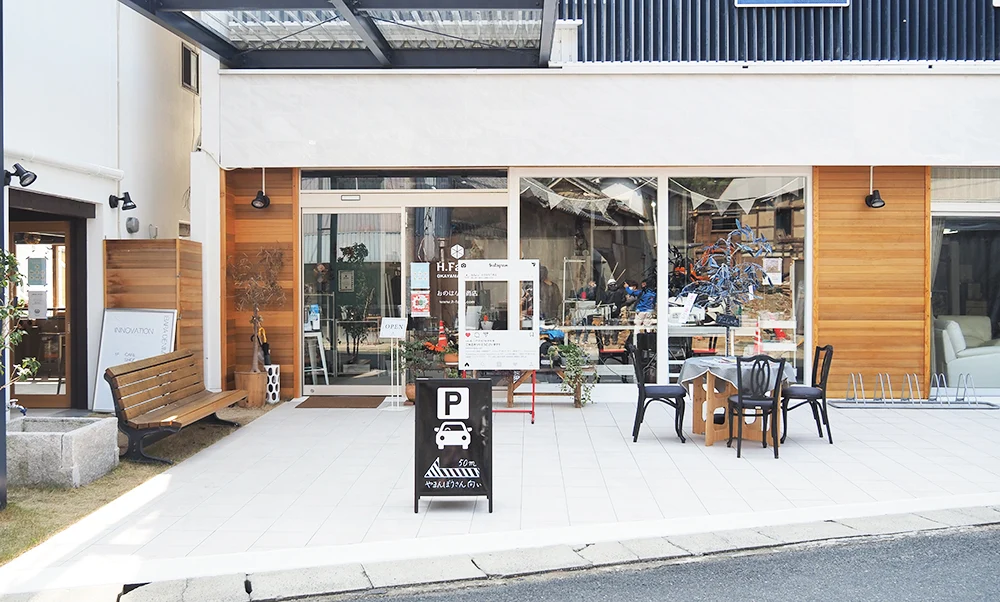
In addition to purchasing denim fabric and miscellaneous goods, you can experience creating original items using Ibara denim.
Using denim fabric that can only be obtained in the holy land of denim, Ibara, I made a clutch bag.
Experiential Denim Shop Ono Hanako Shoten
In April 2020, the "Ibara Denim Square Garden" opened in the Shinmachi shopping district, right next to the famous cherry blossom tunnel of Ibara Tsutsumi.
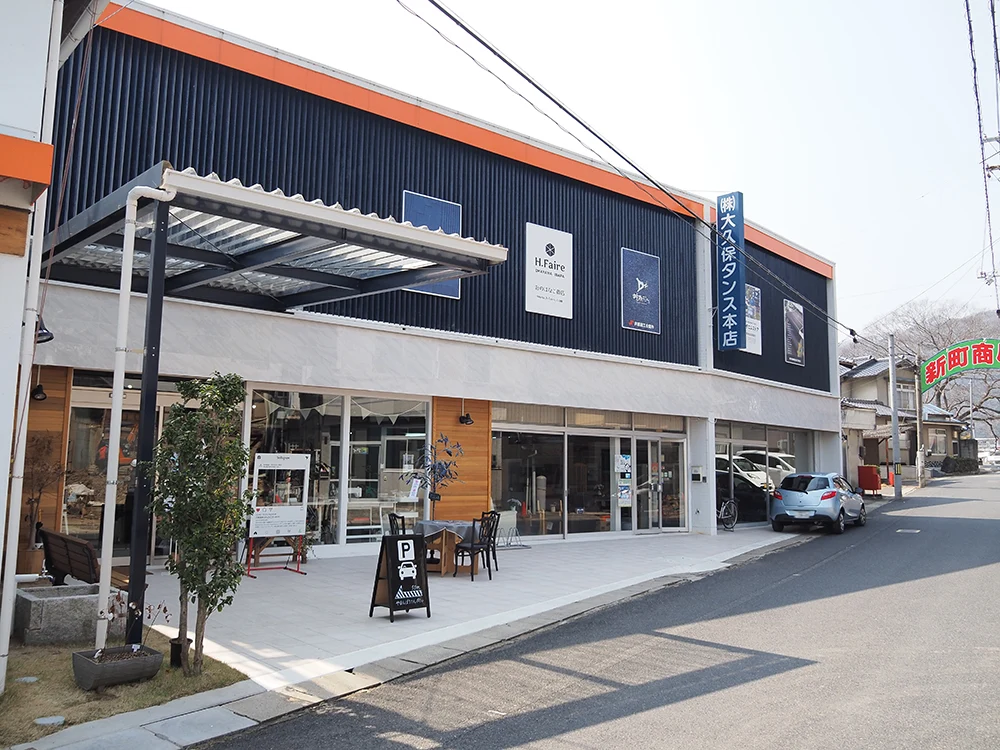
It is a complex facility themed around denim, housing three shops and a hotel annex.
- Experiential Denim Shop Ono Hanako Shoten
- Indigo Dyed Knit ID&i .
- Coffee Stand AIIRO COFFEE STAND
- Hotel "Maizuru-ro" Annex (4 guest rooms)
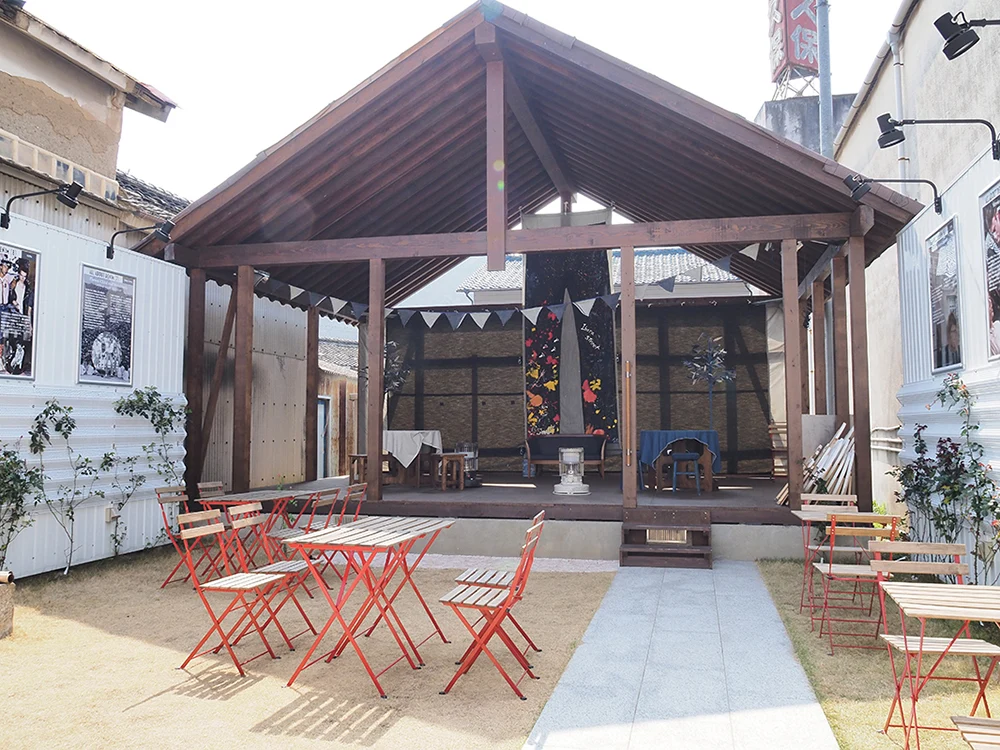
In the courtyard, there is a stage displaying a large pair of jeans. There are also panel exhibits where you can learn about the history of denim.
Ono Hanako Shoten, located in Ibara Denim Square Garden, also opened in April 2020.
Inside the store, you can find denim fabric and denim goods, as well as denim masking tape and socks made from denim scraps.
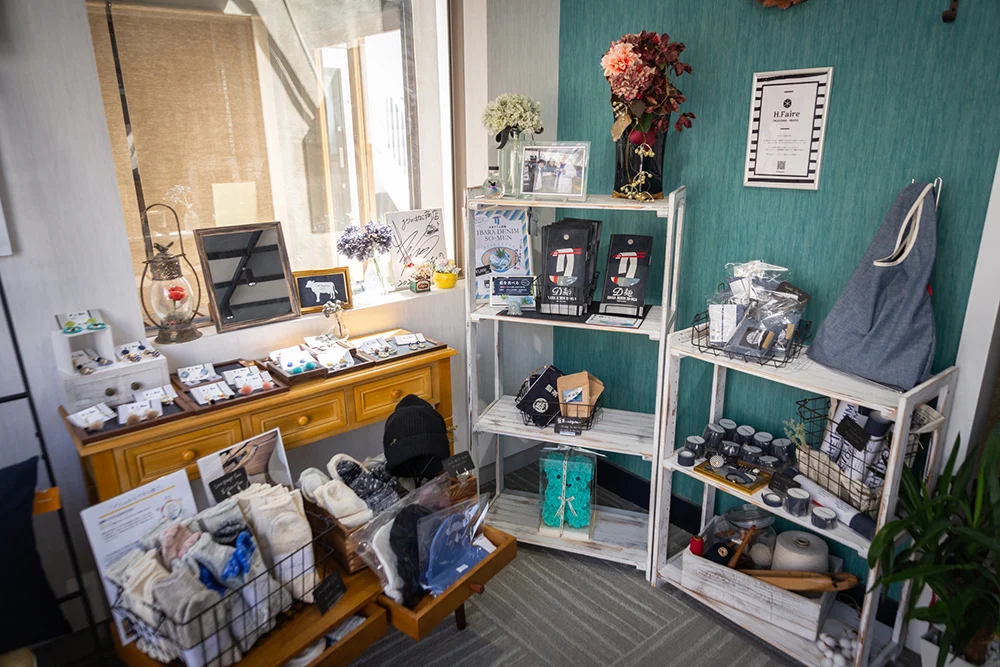
The shop owner, Ono Hanako, is involved in planning, designing, and sewing bags and hats using Ibara denim under her original brand H.Faire, promoting the charm of Ibara denim.
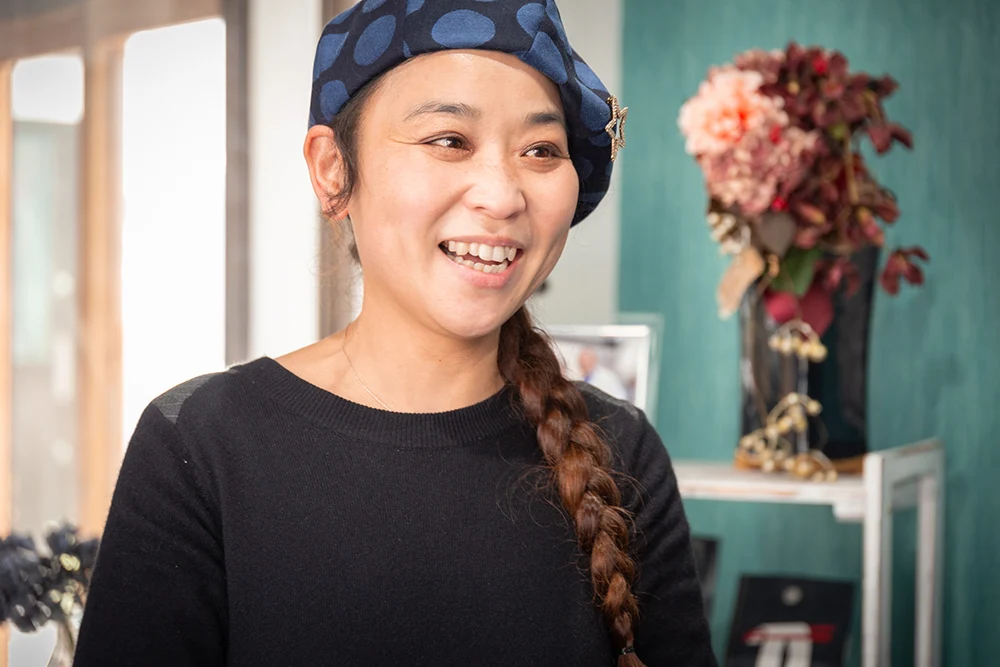
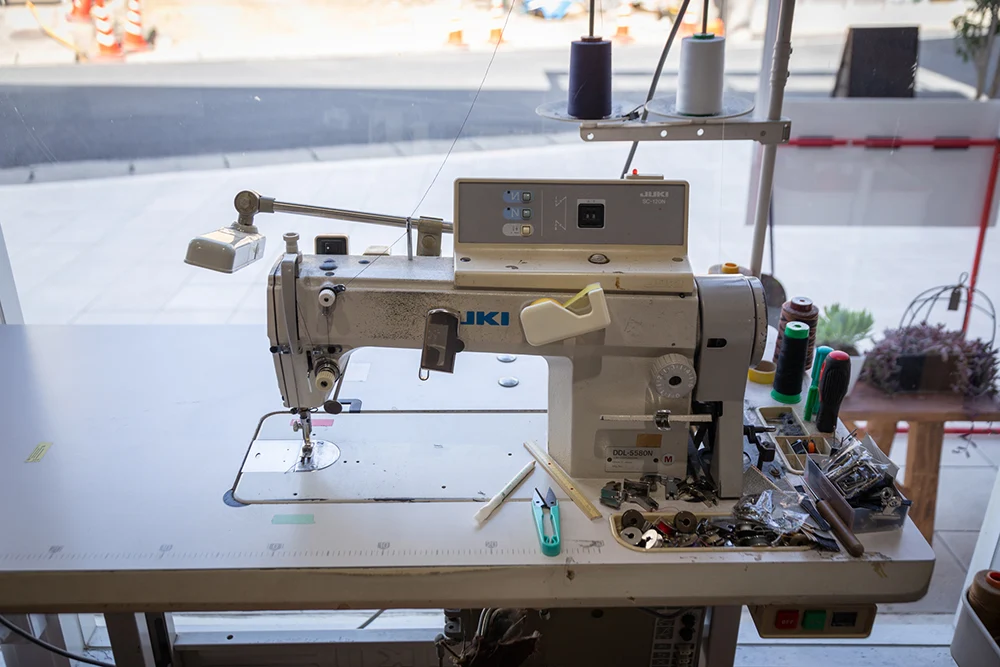
The shop's commitment is, above all, the workspace lined with sewing machines.
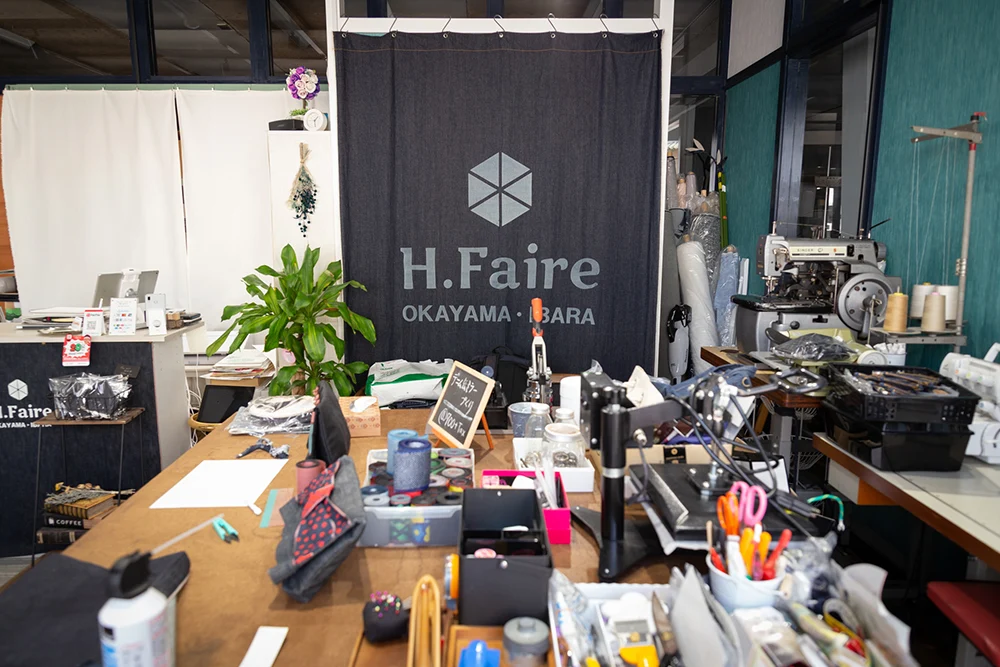
Here, you can experience making items using Ibara denim.
"Ibara Denim," which has a deeper history than domestically produced jeans
In Ibara, indigo-dyed textiles have been produced since the mid-Edo period.
During the Meiji to Taisho periods, a type of indigo-dyed textile called "Bichu Okura-ori" was produced, similar to American denim.
In other words, they were making fabric similar to denim before jeans became popular in Japan after the war.
Even now, Ibara is a major production area for denim, with factories for denim fabric, as well as cutting, sewing, and processing factories for jeans.
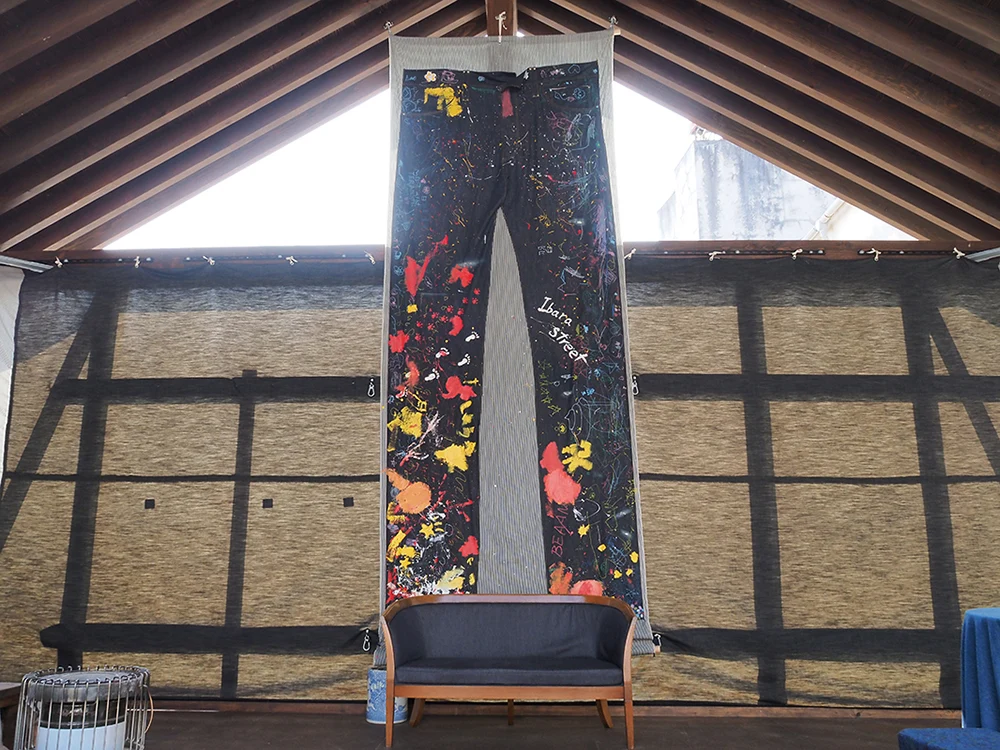
The term "Ibara Denim" was registered as a regional collective trademark in March 2019.
A regional collective trademark is a system that allows the registration of a trademark consisting of a regional name and a product name, representing a "local specialty."
Ibara denim has supported domestically produced jeans since their inception, but until now, it seems that the production area has rarely been publicized due to contracts with manufacturers.
The registration of the regional collective trademark seems to indicate that the historic denim industry of Ibara is being reevaluated as a local attraction.
I learned about two representative types of Ibara denim from Ono.
One is selvage denim.
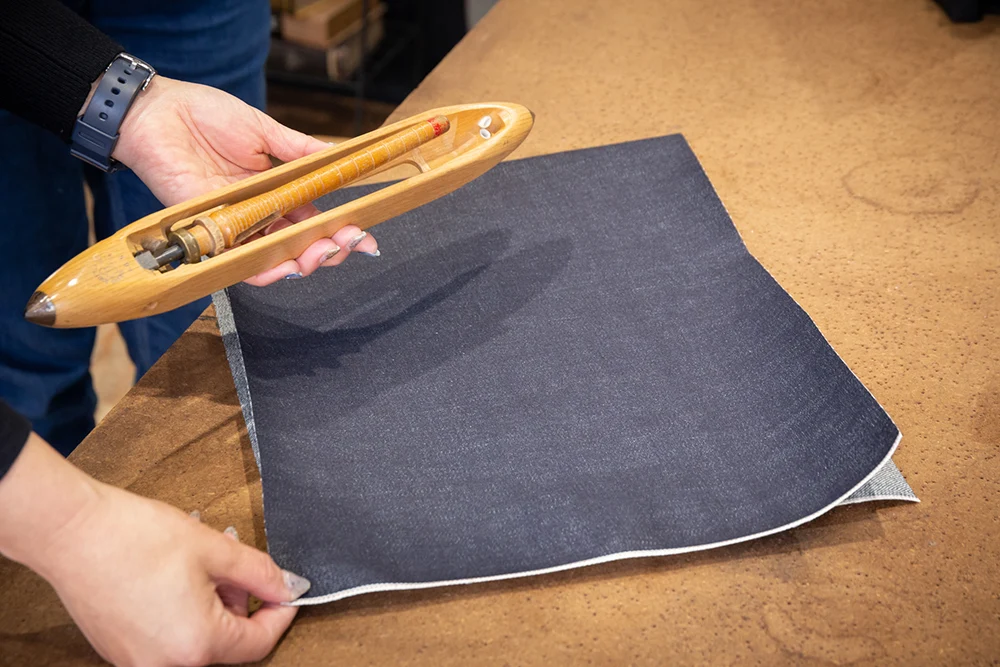
This is a special type of denim fabric used in vintage jeans and similar items.
Due to the red stitching at the edge, it is also called "red ear."
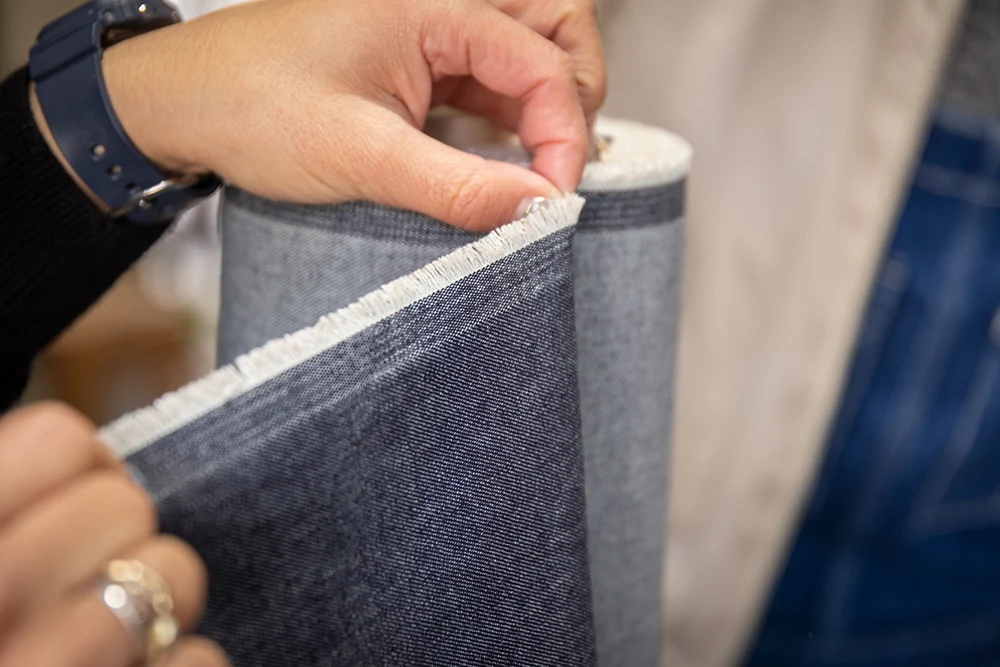
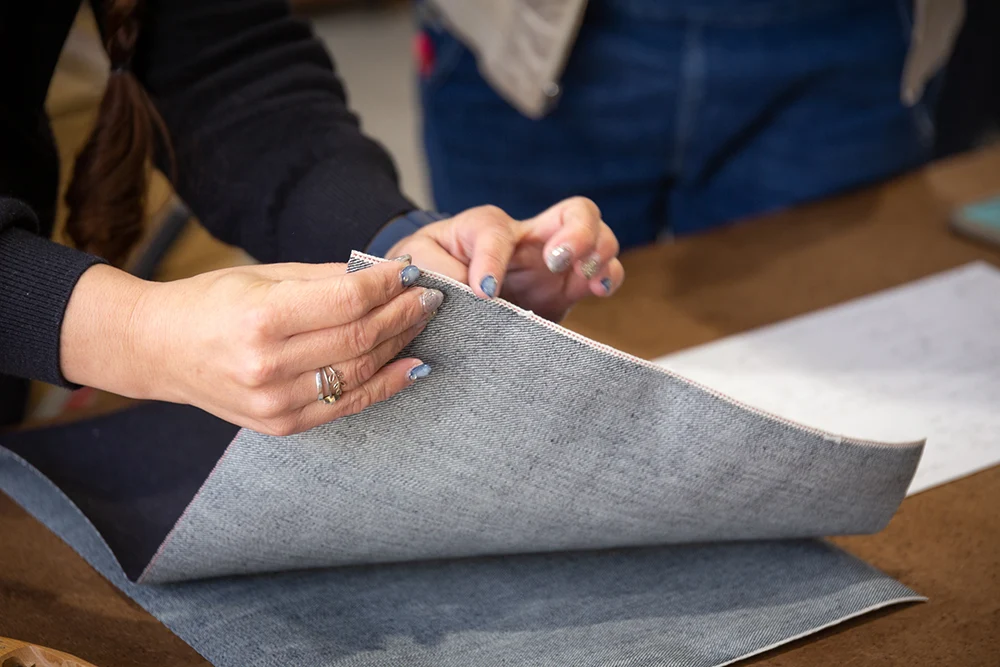
Selvage denim has a loose tension and a texture close to hand-woven fabric, characterized by a rough surface.
As it is used, the fading of the color becomes a part of its character, making it popular among denim fans.
The other type is patterned denim fabric, including jacquard denim.
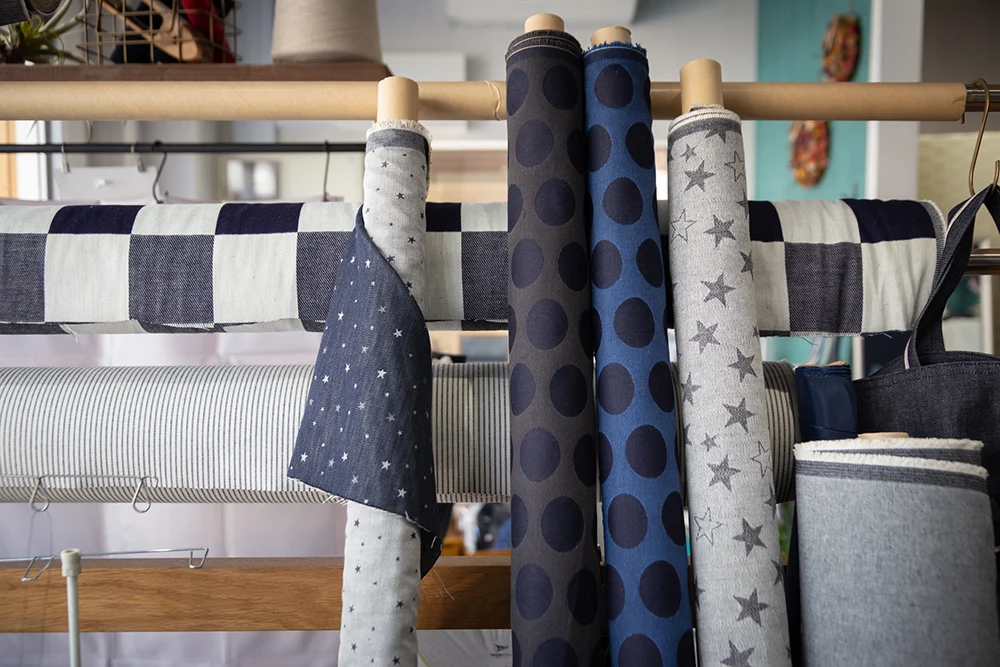
By changing the combination of warp and weft yarns, various patterns can be created through weaving.
Ono refers to this as "evolutionary denim."

I used to teach at a fashion vocational school, but I first learned about the existence of patterned denim fabric when I came to Ibara. I was surprised to find that this is also denim and that it is made in Ibara. This was the reason I wanted to create things in Ibara.
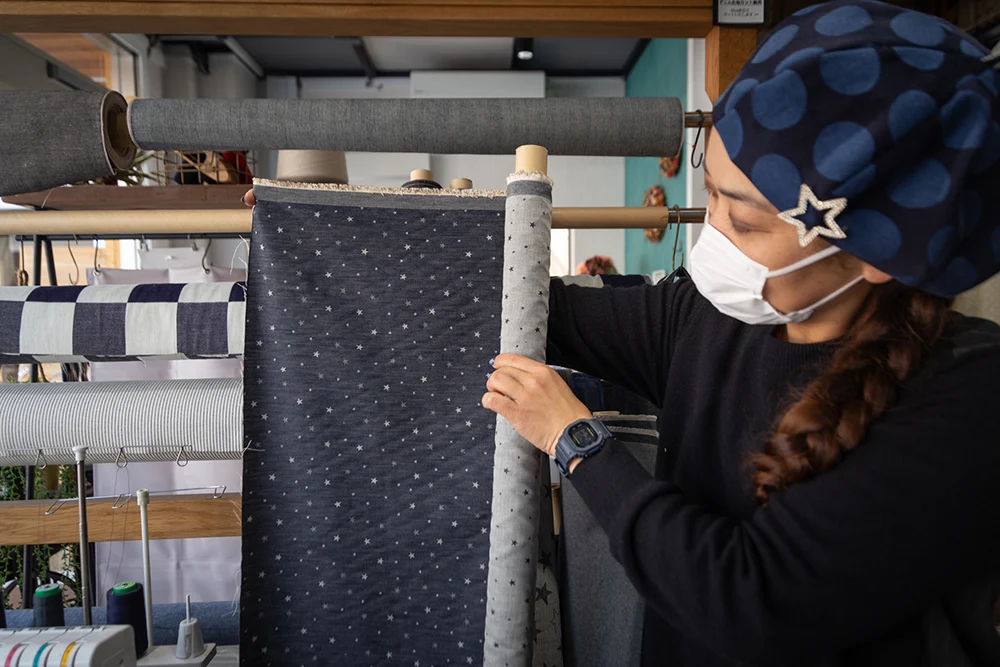
Ono's trademark, a beret, is also made from jacquard denim.
Experience making denim clutch bags
At Ono Hanako Shoten, you can experience three types of denim processing using a sewing machine.
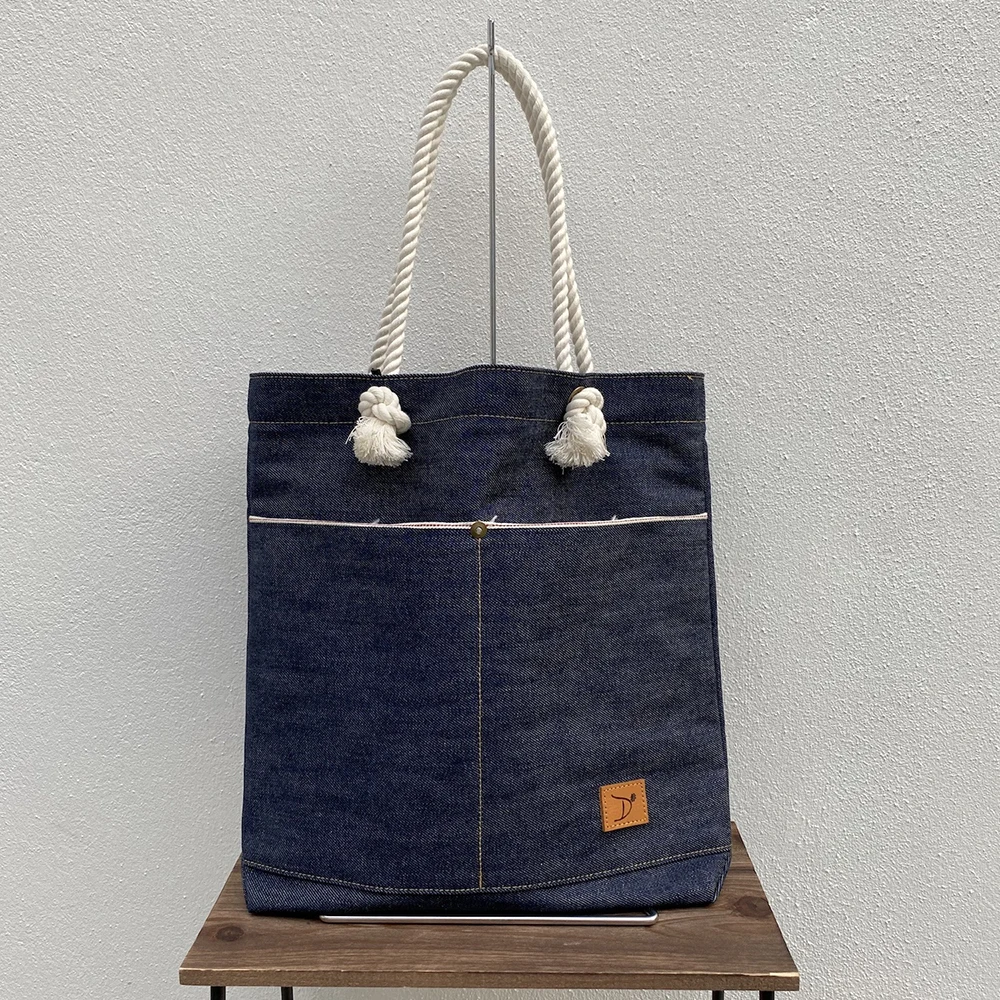
1. Denim Tote Bag 4,400 yen (tax included)
Make a tote bag in A4 vertical size. The finishing includes experiences of riveting and eyelet punching.
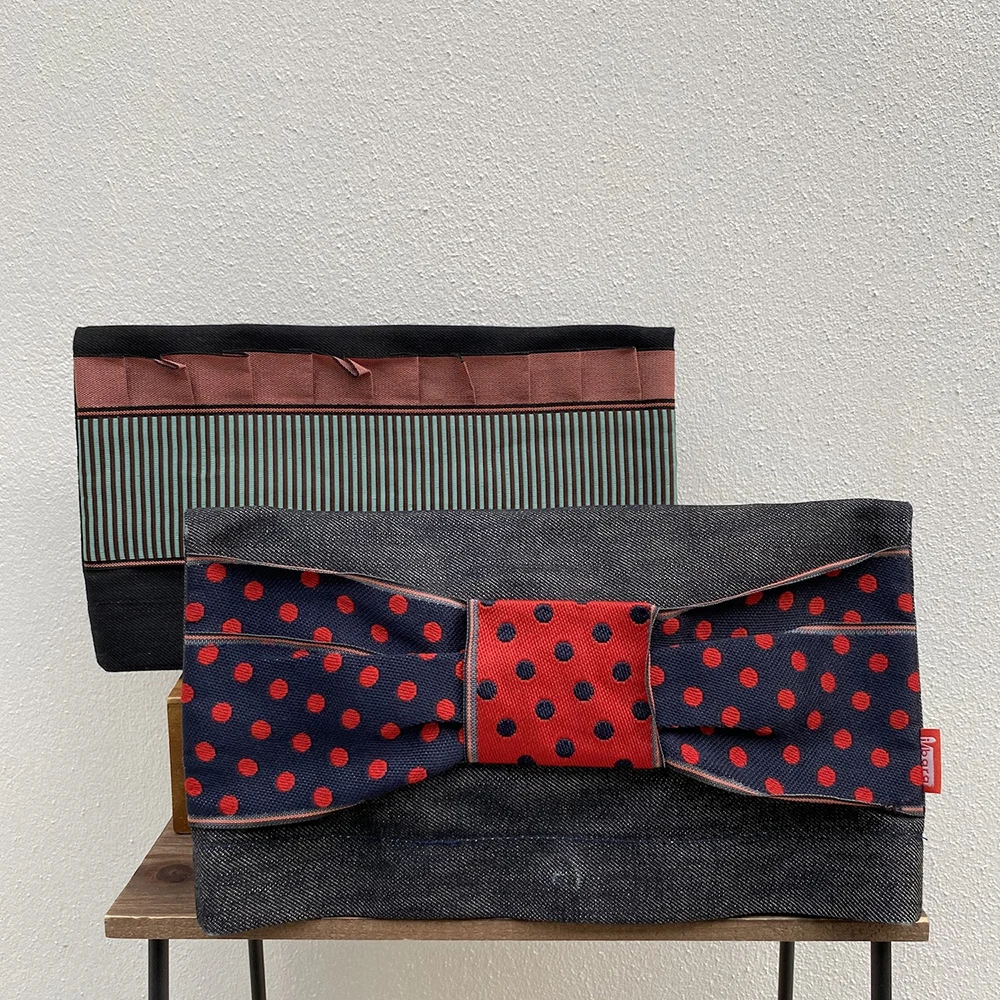
2. Denim Clutch Bag 4,730 yen (tax included)
Make a folded clutch bag. Choose your favorite design of tatami edging for decoration.
3. BOX Tissue Case 3,850 yen (tax included)
The finishing includes an experience of dot button punching.
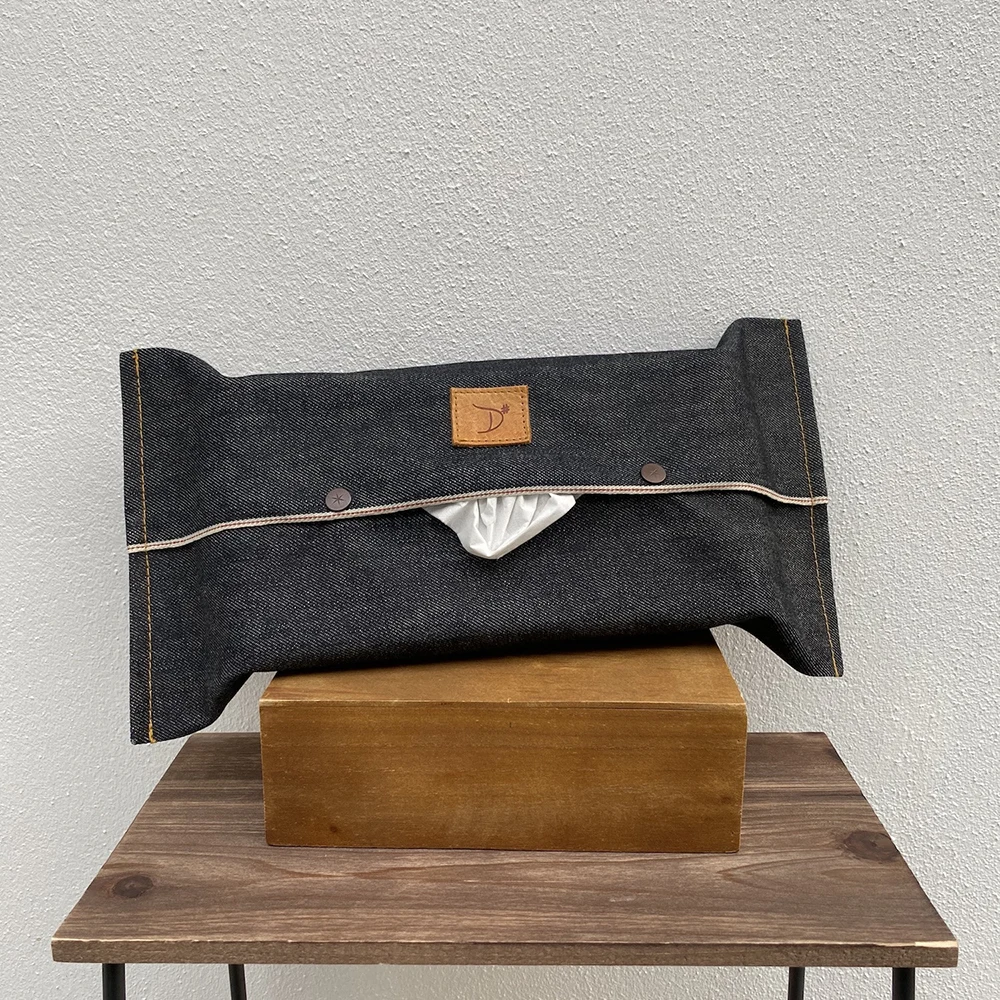
All fabrics used are made from selvedge denim produced in Ibara.
In addition, at Ono Hanako Store, you can experience a variety of denim processing activities, such as making photo frames and can mirrors without using a sewing machine.
Let's Experience!
I experienced making a denim clutch bag using a sewing machine.
I, writer Kobana, was anxious since it had been since high school home economics class that I used a sewing machine, but I will do my best to create a wonderful clutch bag like the example!
I made the clutch bag through the following steps.
- Prepare materials (denim fabric, tatami edging)
- Practice with the sewing machine
- Sew the clutch bag with the sewing machine
- Completion
Prepare materials (denim fabric, tatami edging)
The fabric used is selvedge denim produced in Ibara.
This is a creation using a special type of denim.
In the center of the clutch bag, tatami edging will be used for decoration.
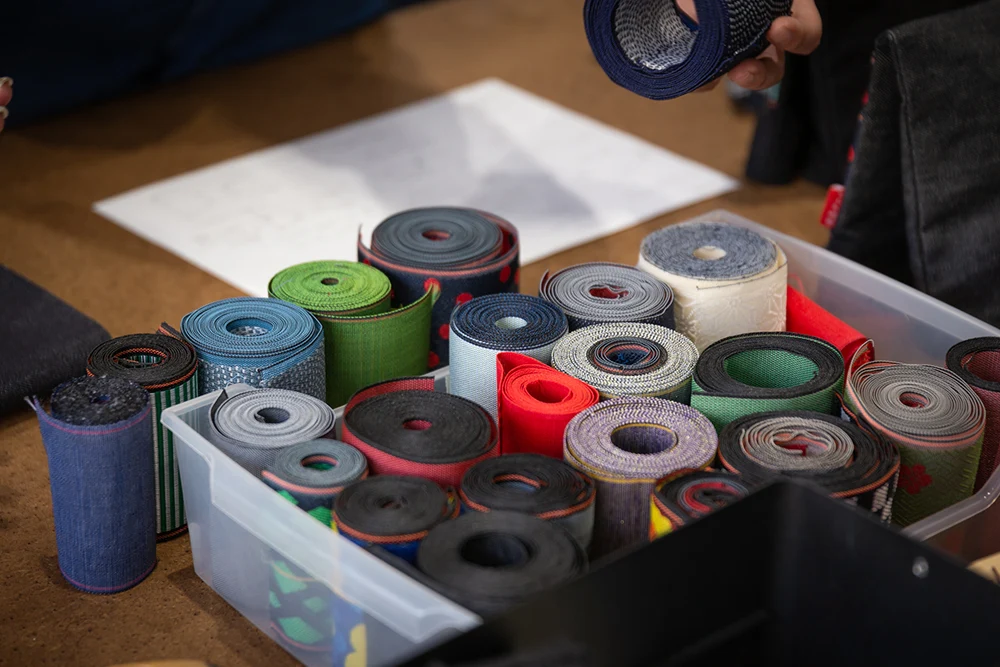
Tatami edging is a thick fabric attached to the edges of tatami mats to prevent wear.
While black and green are commonly used for regular tatami, it is also popular as a material for handmade goods, with various designs available.
I chose my favorite design from over 20 types of tatami edging from Takada Textile in Kurashiki City and had it cut.
Choosing the tatami edging is an important step that determines the appearance of the clutch bag. I decided on this design.
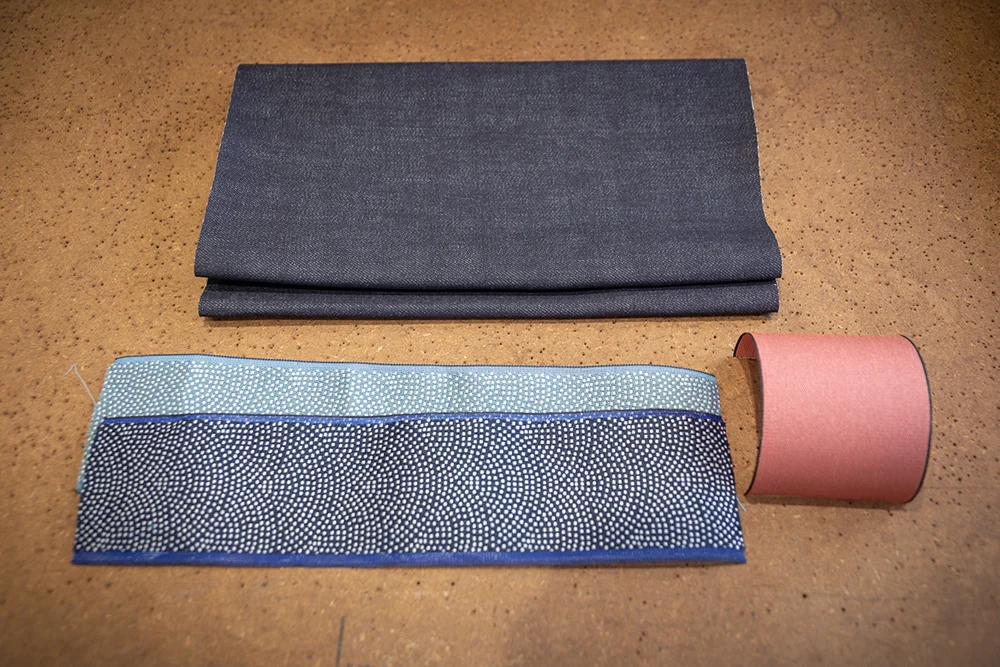
I wonder how it will turn out.
Practice with the sewing machine
After selecting and cutting the materials, it's finally time to sew!
Feeling nervous, Ono-san said, "Let's practice."
Yes, there is a practice time, so beginners can feel at ease.
We will be using an industrial sewing machine. I learned about the posture when facing the sewing machine, how to operate the foot pedal, and where to place my hands.
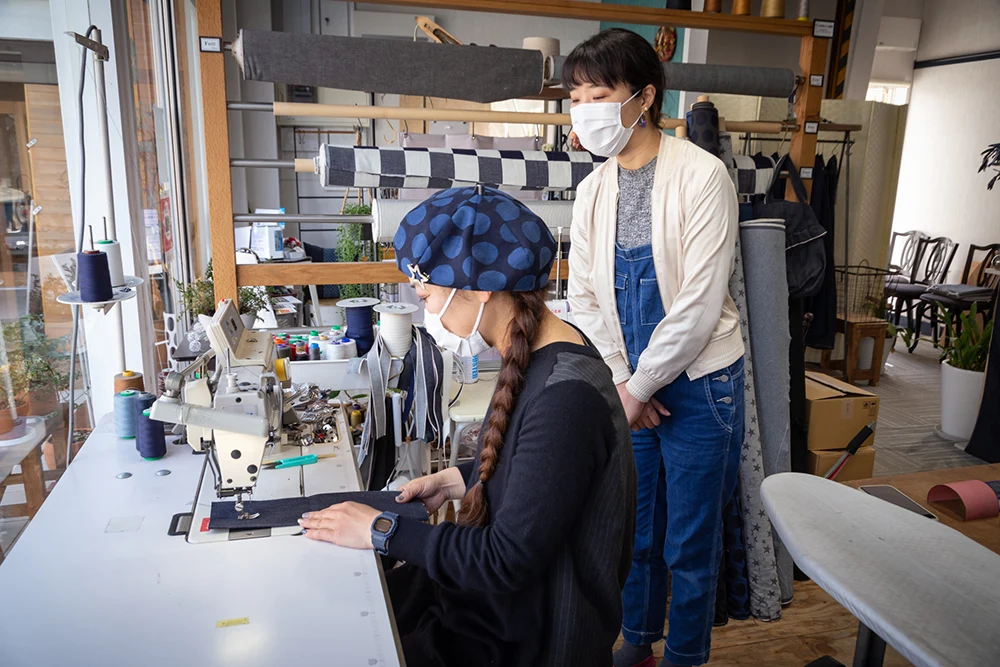
After learning from Ono-san, I was able to practice sewing straight using sample fabric.
I adjusted the sewing speed with my foot pedal.
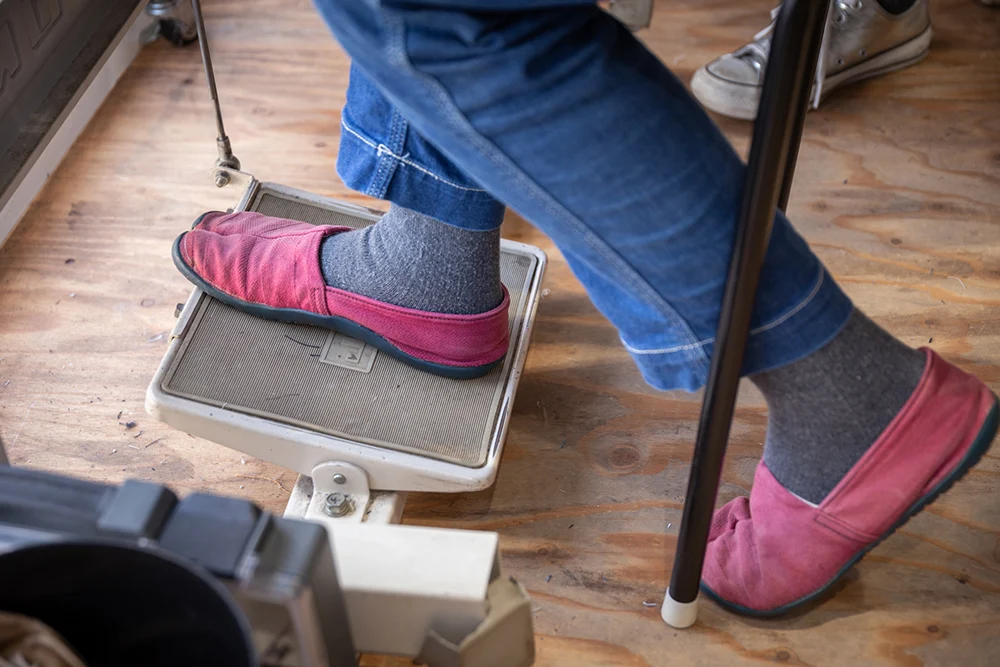
Ono-san is a professional teacher who has also taught at a fashion vocational school. I was able to acquire the skills perfectly.
"You're doing great! You can do it!" I was encouraged, and as my confidence grew, it was finally time for the main event.
Sew the clutch bag with the sewing machine
First, I will sew the tatami edging for the decorative part of the clutch bag.
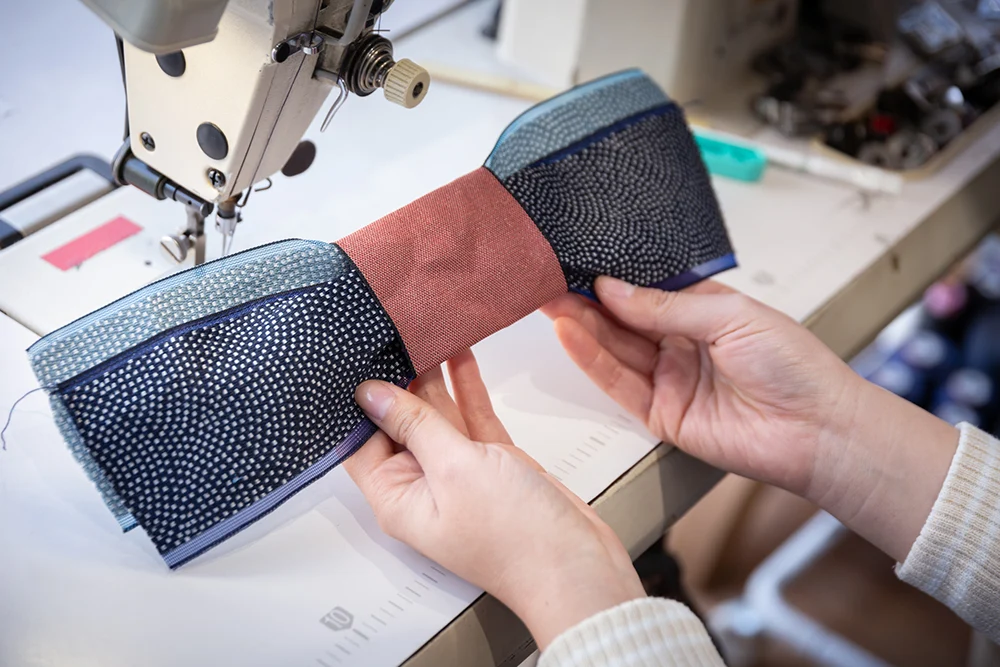
Shapes made with tatami edging can be ribbons, frills, and more.
I decided to challenge myself with the ribbon type.
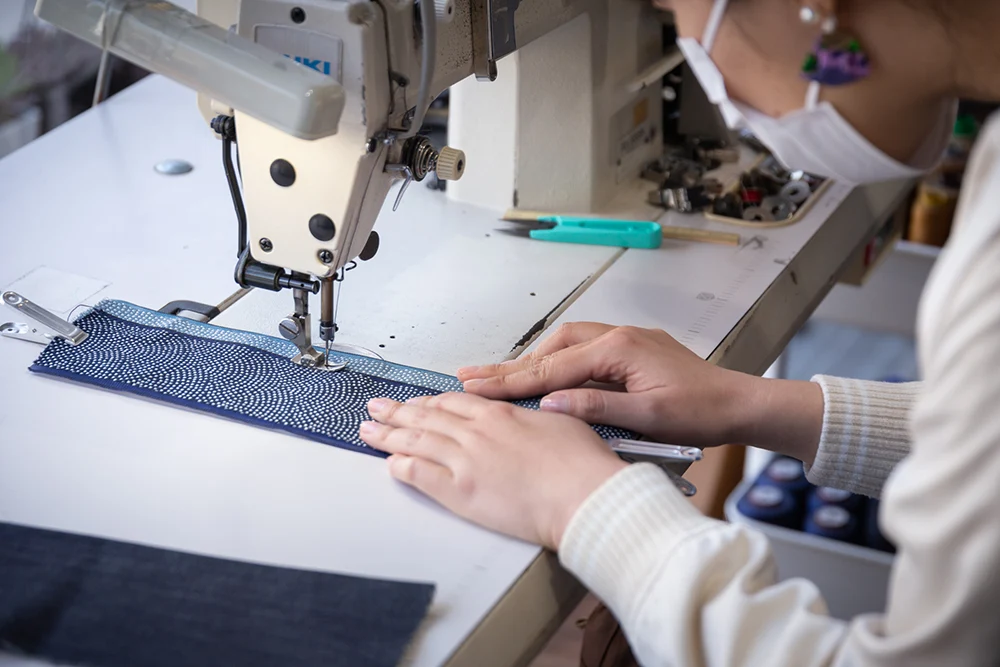
To prevent the thread from unraveling, "backstitching" is done with the help of Ono-san.
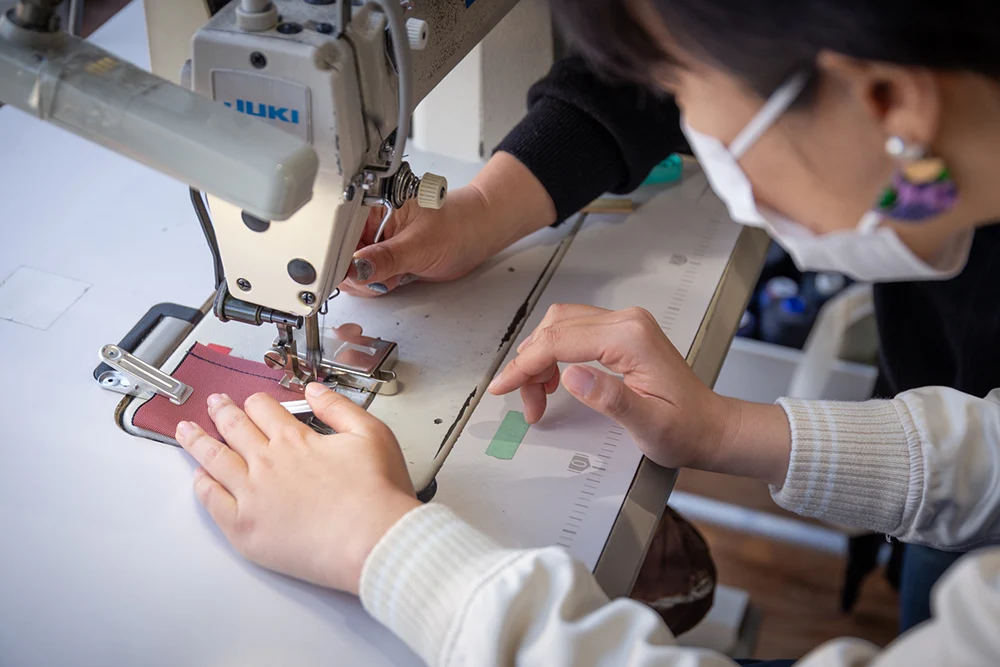
I was able to sew straight!
After combining it, I gathered it to look like a ribbon, and it was completed. I can't wait to attach it!
Next, to attach the magnet button to the denim fabric, I will fold the opening of the bag 3.5 centimeters and use an iron to create a crease.
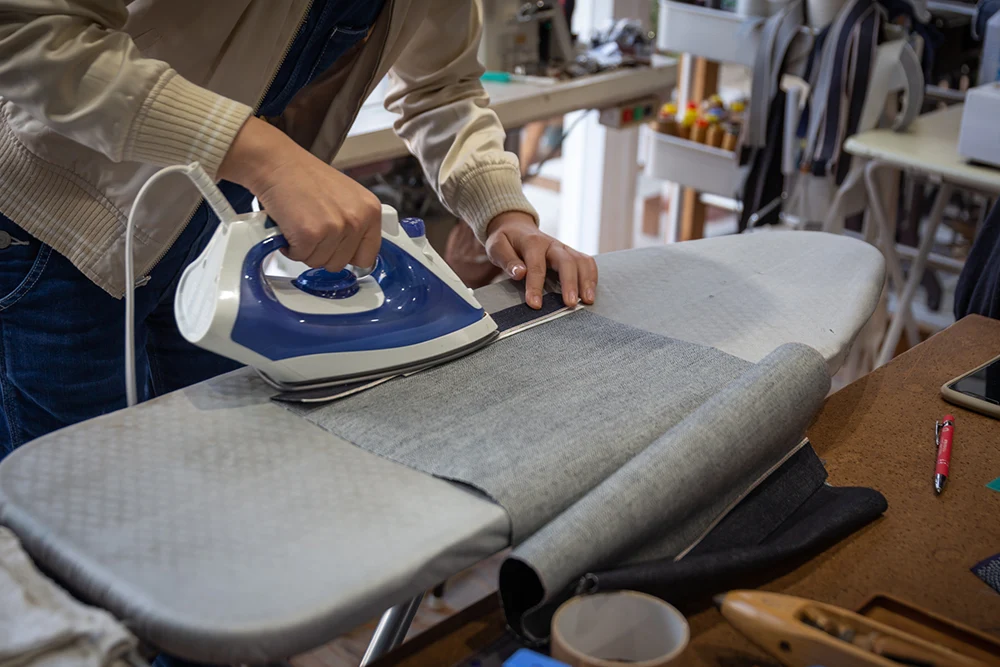
As I applied heat, a gentle scent of denim dye spread.
This ironing process is also an important step that affects whether the product will be completed well.
Next, I will attach the magnet button. Ono-san attached one side for me.
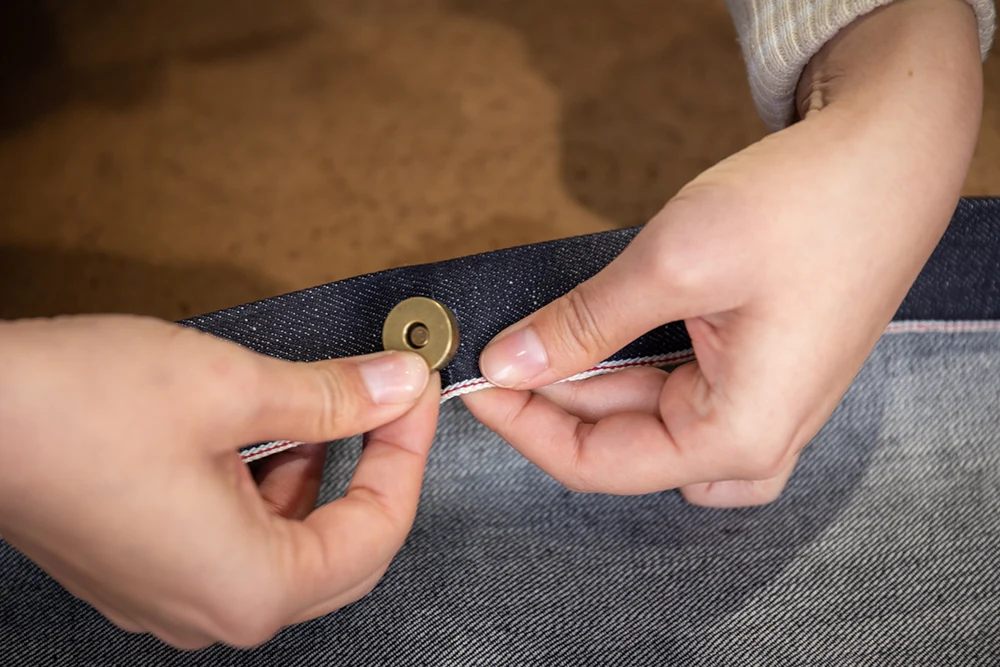
Using that as a reference, I will try it myself.
The denim fabric was quite thick, so it took some time, but I was able to attach it successfully.
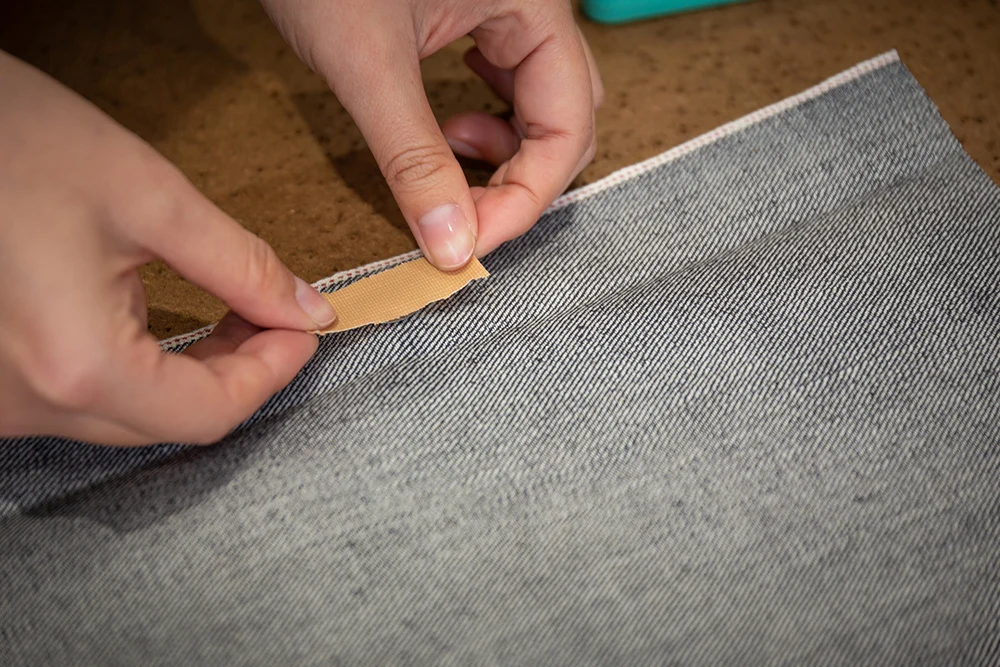
Surprisingly, the backside was reinforced with duct tape. It is a professional technique to make it sturdy and long-lasting.
Next, after temporarily attaching the ribbon to the clutch bag, I will sew it on with an overlock sewing machine.
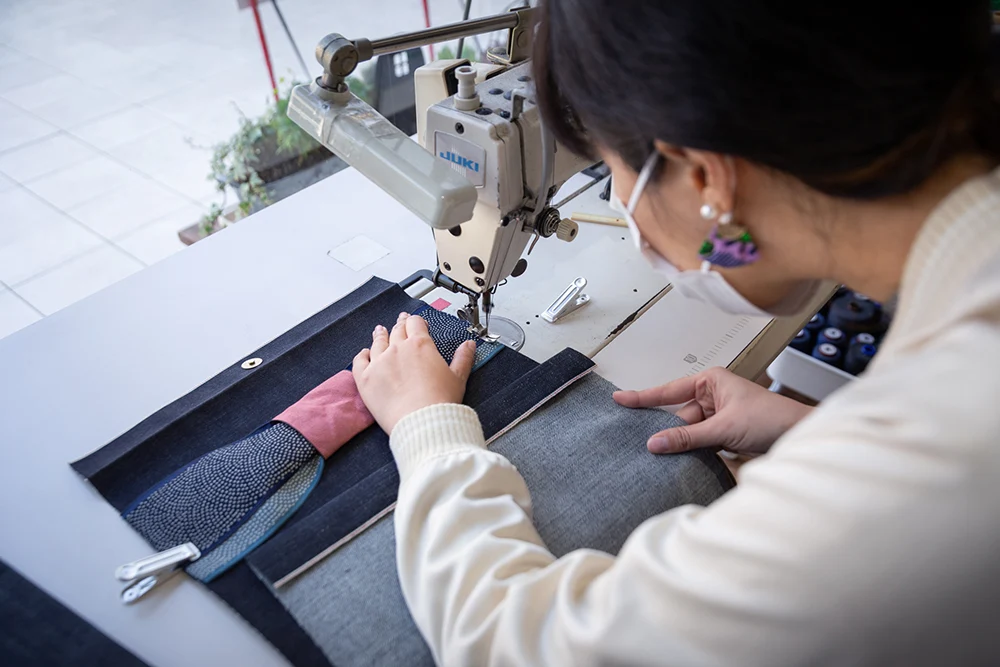
Ono-san operated the overlock sewing machine.
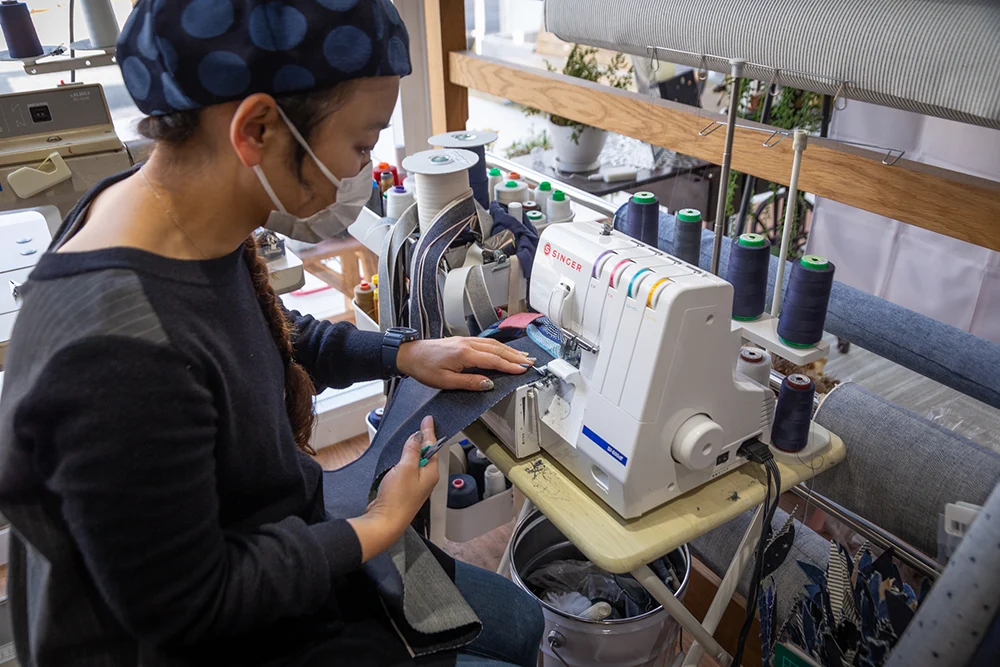
Once the overlock sewing is finished, it suddenly looks like a product!
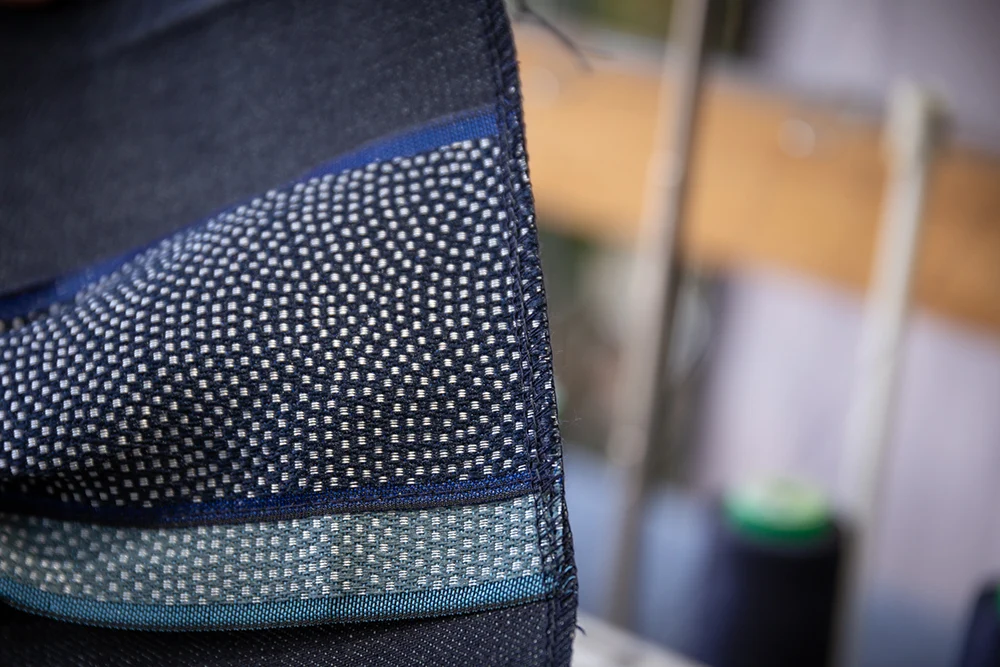
Next, I performed straight sewing on the part where the denim fabrics come together.
To continue sewing straight, I placed magnets to prevent shifting.
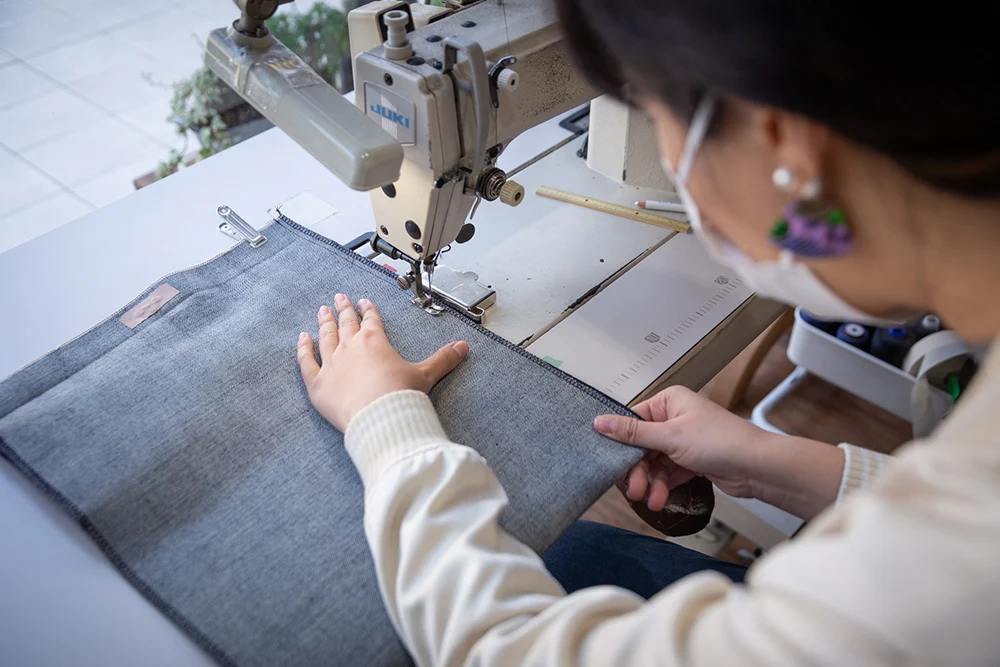
“Even if you make a little mistake, it’s all about the taste and charm!” Encouraged by Ono-san, I was able to sew from one end to the other without any issues.
Next, I will sew the gusset part of the bottom of the clutch bag to give it depth.
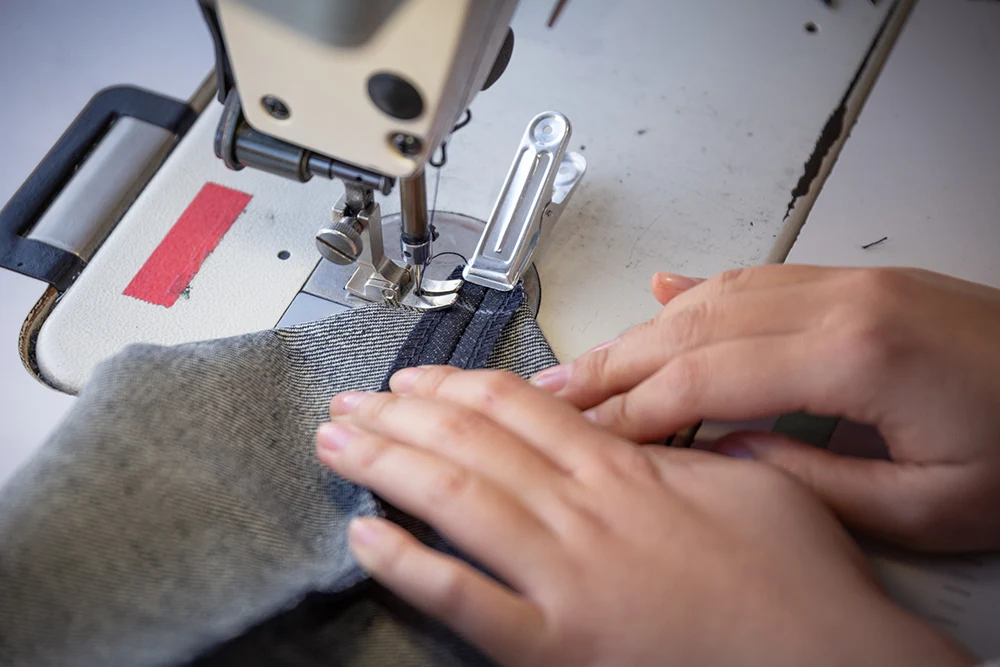
Finally, after sewing the edge of the bag, it’s complete.
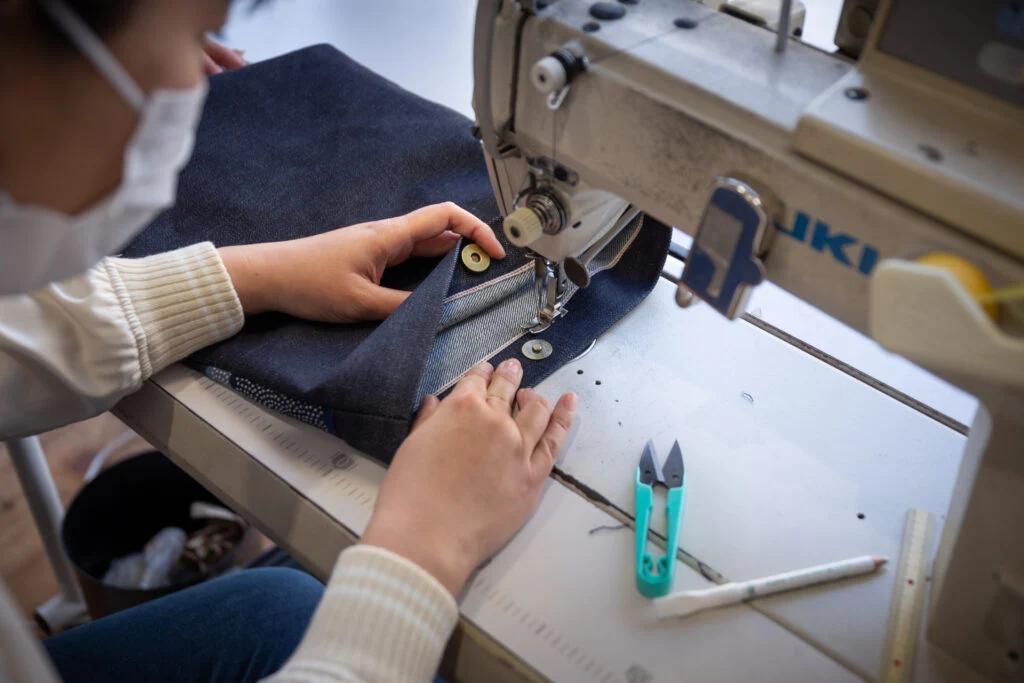
Until then, I had been helped by Ono-san, but I did the final backstitch by myself!
Completion
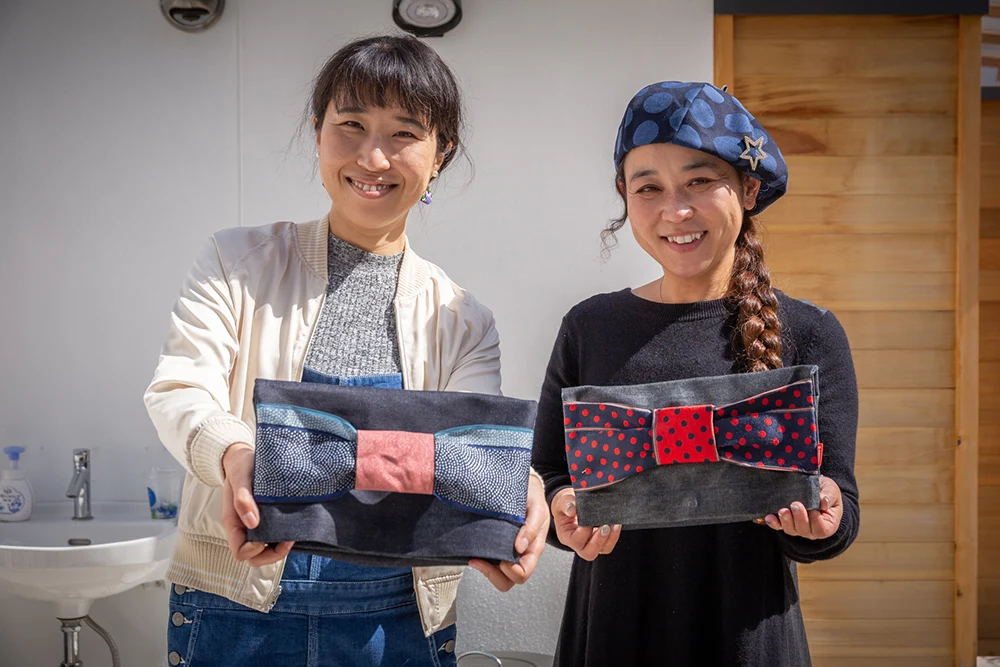
The texture of the Ibara-produced selvedge denim and the nuance of the tatami edging match exquisitely.
A one-of-a-kind clutch bag has been completed.
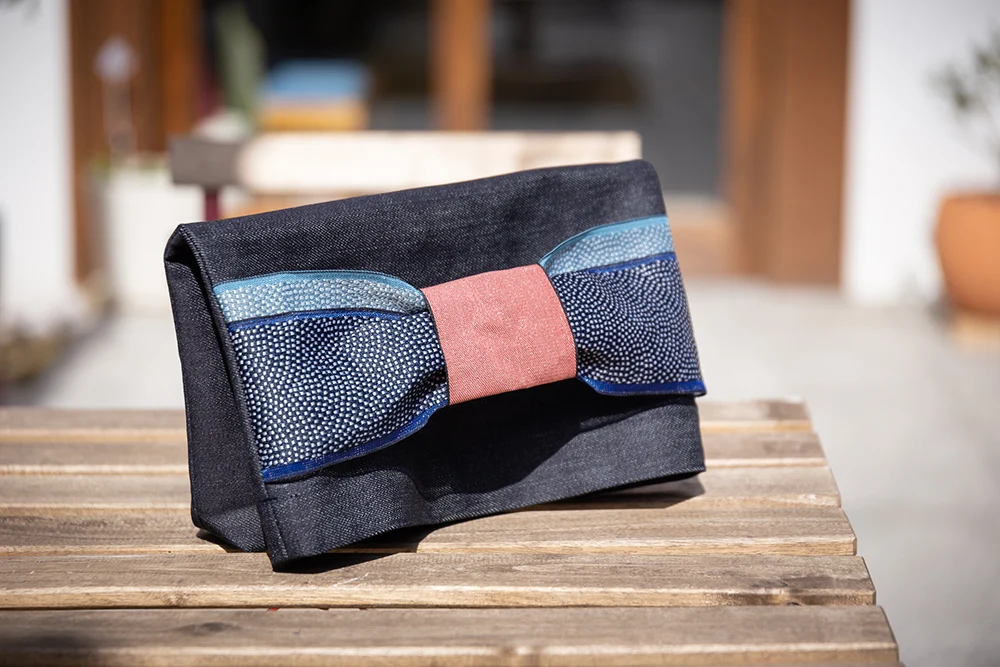
Isn’t it a wonderful finish that doesn’t look like it was made by a beginner with a sewing machine!
Not only sewing with a machine, but I also enjoyed being able to add original decorations with tatami edging while making the clutch bag. The color scheme was particularly important to me.
Additionally, the rough texture of the Ibara-produced selvedge denim seems to match various outfits.
I feel excited thinking that I will remember this experience every time I use it.
Conclusion
I had heard of “Ibara denim,” but I was surprised to learn that it has a longer history than domestically produced jeans and that patterned denim fabric is made only in Ibara.
Through the denim processing experience using a sewing machine, I can feel the charm of Ibara denim through seeing and touching it.
Also, since Ono-san provided detailed support, I was able to enjoy the experience.
When I told her, “I was happy that I could do the final backstitch by myself,” she smiled and said, “Once you get used to it, would you like to try doing the whole process? I think that way, when it’s completed, you’ll have more affection for it.”
It has turned into a clutch bag that I can proudly say, “I made it myself using Ibara denim at an Ibara store.”
While listening to the story of Ibara denim, I created a one-of-a-kind original bag. Why not try the experience yourself?
- Photography: Sasaki Toshiyuki
Data of Experience-based Denim Shop Ono Hanako Shoten
| Name | Experience-based Denim Shop Ono Hanako Shoten |
|---|---|
| Location | 1496 Ibara-cho, Ibara City, Okayama Prefecture |
| Contact | 070-1875-6978 |
| Parking | Available Nearby parking available (across from Yamambou Honpo) |
| Business Hours | 10:00 AM - 6:00 PM |
| Regular Holidays | Thursday Temporary closures may occur |
| Usage Fee (including tax) | Denim processing experience using a sewing machine ・Denim tote bag: 4,400 yen (including tax) ・Denim clutch bag: 4,730 yen (including tax) ・BOX tissue case: 3,850 yen (including tax) |
| Payment Methods |
|
| Reservation Availability | Reservations are required for the denim processing experience using a sewing machine at least two days before the desired date. |
| Toilet | Western-style toilet |
| Website | Ono Hanako Shoten (H.Faire) |

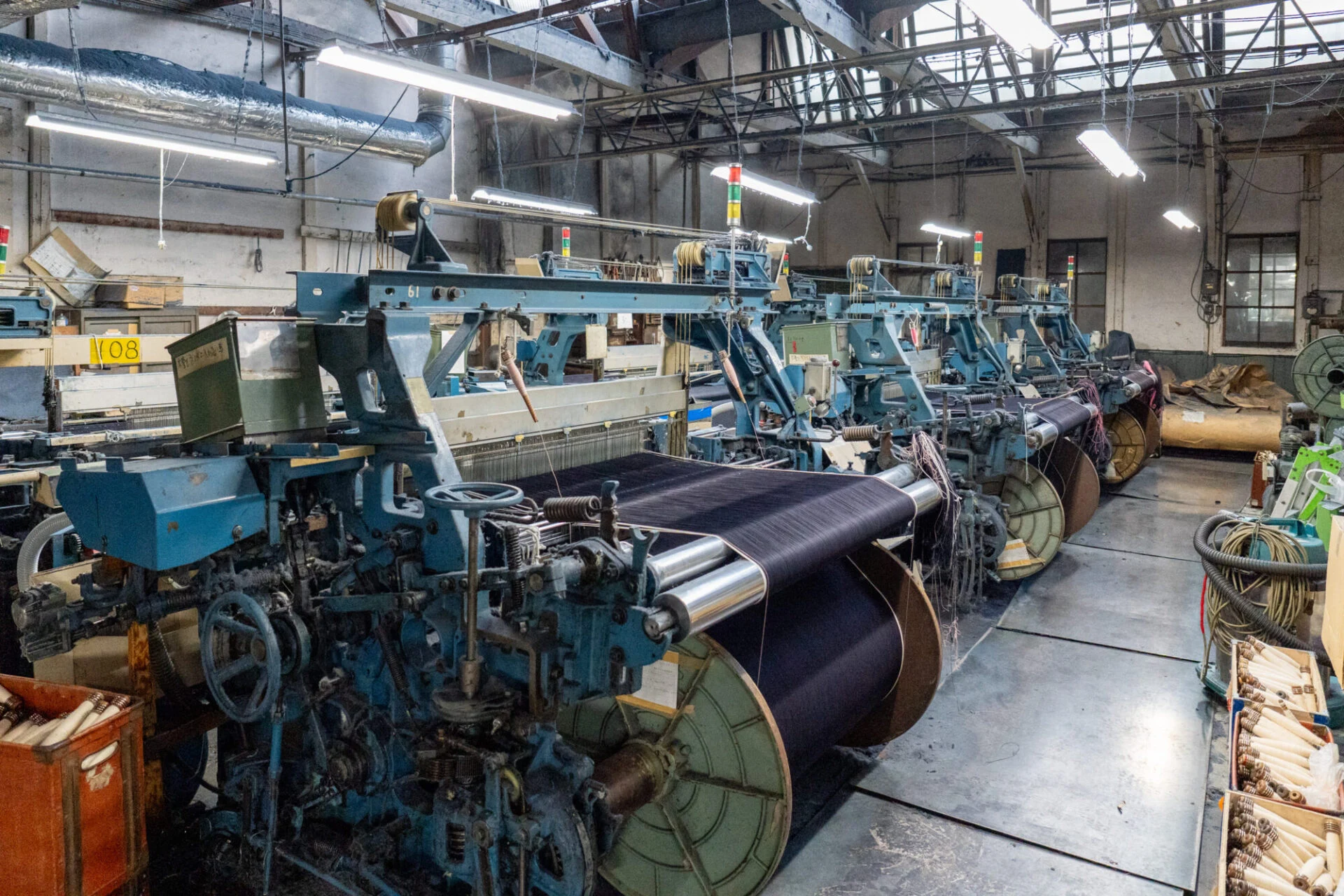
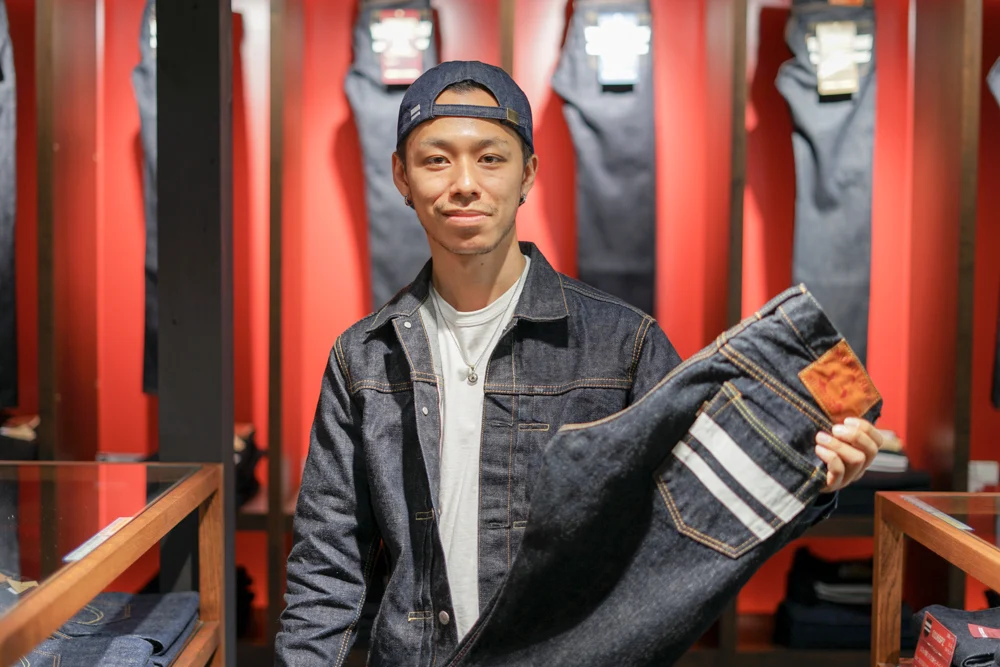






Regular denim is woven by flying the weft yarn with air or water, which causes the edges to become frayed. Selvage denim is woven by moving a shuttle wrapped with white yarn as the weft, creating a clean edge.