Interview with Tatsuro Seno, owner of Oudon Iori
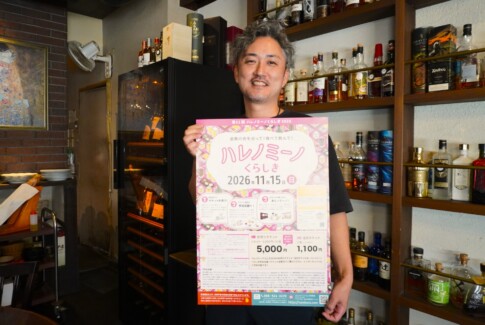
We spoke with Tatsuro Seno, president of Oda Sushi Co., Ltd., which operates Oudon Iori.
This article presents the interview conducted during our first visit in May 2019.
Asked to apprentice under the craftsman who made his favorite udon

Could you tell us how you came to open Oudon Iori?
Seno
Actually, I originally ran a sushi restaurant.
It’s called Oda Sushi, about two kilometers west of Iori.
It opened in 1978, and I’m the third-generation owner.
My father, who was the second-generation owner, was from Shikoku and loved udon. When I was little, he often took me around to various udon shops.
Among the udon shops we visited, there was one that my father and I liked best.
The person who had made udon there for many years was a man named Moriya.
Moriya was an udon master who had many apprentices over the years and a large following of people who loved the udon he made.
I really loved the udon he made, especially the dashi.
After Moriya retired from making udon, he came to Oda Sushi once.
I thought it might be my first and last chance, so I desperately asked Moriya, “Please teach me how to make udon.”
Moriya said, “I’ll make you my last apprentice,” and agreed to take me on.
After that, Moriya came to Oda Sushi, and I devoted myself to learning how to make udon.
We also visited more than 200 udon shops together.
Moriya taught me for about two years.
At first, we served udon at Oda Sushi, but word gradually spread, and many customers started coming to eat it.
So I decided to open an udon shop.
Around that time, JA (the agricultural cooperative) was planning to open a farm-produce market called Kirari in Yakage Town. Through a fortunate connection, I was able to open a shop there.
Iori opened in 2010.
Now I focus on the udon shop, while Oda Sushi is open by reservation only in the evenings.
The lesson: “If you’re going to serve something that didn’t turn out right, don’t open the shop that day”

What was difficult after opening the shop?
Seno
Moriya taught me, “If you’re going to serve something that didn’t turn out right, don’t open the shop that day.”
As it happened, a few days after opening the udon shop, I made a mistake with the dashi.
Following Moriya’s advice, I closed for the day and apologized to every customer who came in.
Until I got used to it, the same sort of thing happened many times.
But now I realize just how important Moriya’s lesson was.
Wheat has been widely grown in Yakage Town since long ago, so udon-making is also common here.
That’s why people here, especially older residents, are very particular about udon and extremely strict about its taste.
Many of our customers are local, and sometimes they give us some very tough feedback…
Given the character of the area, if we served udon that wasn’t perfect, bad word would have spread in no time and eventually hurt the business.
By following Moriya’s lesson, we’ve had many people in the community come to our shop.
Some customers even come every day.
Moriya sounds like he was a strict person. Is there anything about him that particularly stands out in your memory?
Seno
Moriya never compromised when it came to udon.
So he taught me very strictly.
Even though he was teaching me how to make udon, I was the owner of Oda Sushi.
But to anyone watching, it looked as if our roles had been reversed.
I also think he taught me the basics of running a business, not just how to make udon.
The lesson “If you’re going to serve something that didn’t turn out right, don’t open the shop that day” was one of those lessons.
Also, Moriya never praised me at all for a long time.
Even after I opened the shop, Moriya often came by and gave me all kinds of guidance, but he still never praised me.
But about five years after I became his apprentice, he praised me for the first time.
The people around us couldn’t believe he had praised me.
That’s how remarkable it was for Moriya to praise someone.
When he first praised me, I was more surprised than anything because it came out of the blue, but later I felt happy.
At the same time, I also felt sad, as if I had graduated from being Moriya’s apprentice.
About two years later, Moriya passed away.
However, many of Moriya’s fans hear that I’ve inherited his flavor and come to the shop.
Some come from outside Yakage Town, and even from outside Okayama Prefecture.
It really made me appreciate how great Moriya was.
Hit by the “July 2018 Heavy Rains,” but decided to reopen with support from friends

Yakage suffered extensive damage in the “July 2018 Heavy Rains.” Was Iori also affected?
Seno
The Oda River flows about 100 meters south of our shop.
In fact, the embankment along the Oda River south of our shop collapsed before the embankment in Mabi gave way.
As a result, the area, including our shop, was flooded.
Iori was under about 170 centimeters of water.
A lot of mud and debris, along with the shop’s supplies and equipment, flowed into the grounds and the shop.
I was out of town in Yakage at the time.
I took a detour on my way home, but there were several places where mud had flowed onto the road. I remember taking a long time to get home while avoiding it.
We had just built a new house and were about to move in. The new house was flooded beneath the floor, and our old home was flooded to a depth of about 60 centimeters.
Fortunately, our home wasn’t badly damaged.
However, I belong to the local volunteer fire brigade, so I was busy responding to the disaster that day.
While I was working on a floodgate, the water level suddenly dropped.
I learned later that this was when severe flooding occurred in Mabi.

What did you do between the disaster and reopening the shop?
Seno
The day after the disaster, we started cleaning up the shop in the morning.
To my surprise, friends from the Young Entrepreneurs’ Group of the Chamber of Commerce came from all over the prefecture to help.
There were about 30 people in all, including some who came from as far away as Mimasaka City.
Thanks to them, the cleanup was finished much faster than I expected—in just one day.
When the cleanup was done that evening, I was moved by how dependable my friends looked as they headed home.
When I saw the shop buried in mud and debris, I thought reopening was hopeless and had given up.
But as we all worked together to clean up, when the floor of the shop came into view, I suddenly thought, “Maybe I should reopen.”
For about a month after that, I helped clean up local homes and schools affected by the disaster, and devoted myself to helping with cleanup in neighboring Mabi.
Once the cleanup work had settled down, I went to work at a tempura restaurant run by an acquaintance at the foot of Mt. Fuji in Yamanashi Prefecture.
I wanted to save as much money as I could to reopen the shop.
I heard that Iori received support for reopening through crowdfunding. What led you to use crowdfunding?
Seno
After returning from Yamanashi Prefecture, I gradually began preparing to reopen.
At that point, someone from the Okayama Prefectural Federation of Small Business Associations introduced me to crowdfunding.
At first, I didn’t know much about crowdfunding and was skeptical, but as I listened, I started thinking I might give it a try.
With help from the person who introduced it, I managed to call for support through crowdfunding.
And, amazingly, we reached our goal in three days.
I was very surprised and deeply grateful.
We then bought supplies and equipment and renovated the interior, and held a soft opening in December 2018.
We were able to officially reopen the shop in January 2019.
Fortunately, none of our employees were affected by the disaster.
I’m very grateful that they’ve continued working at the shop.
I want to continue preserving my mentor’s flavor

Is there anything you’d like to try in the future, or any plans you have?
Seno
Rather than wanting to “run an udon shop,” I’ve always been driven by the desire to preserve the flavor of Moriya’s udon, which I loved.
I want to pass on both the dashi-making skills I inherited from my father for the sushi restaurant and the different dashi-making skills I inherited from Moriya for the udon shop.
I think taste accounts for about 30% of a customer’s overall satisfaction.
I want to aim for a perfect score on that 30%—the taste—while satisfying customers by improving our service in other ways.
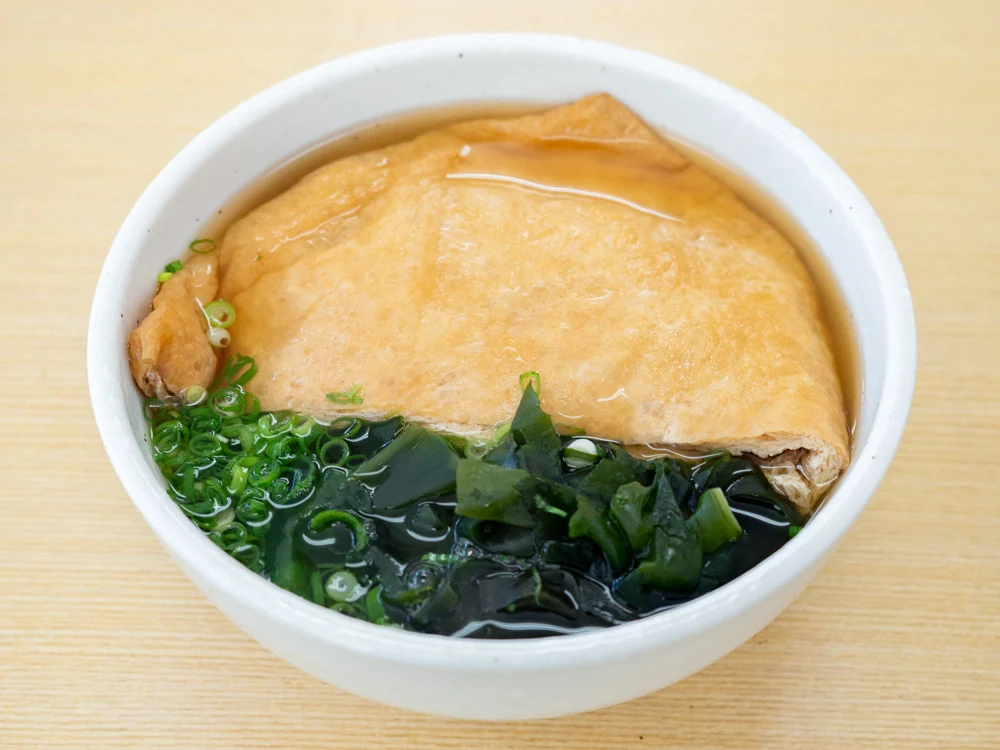
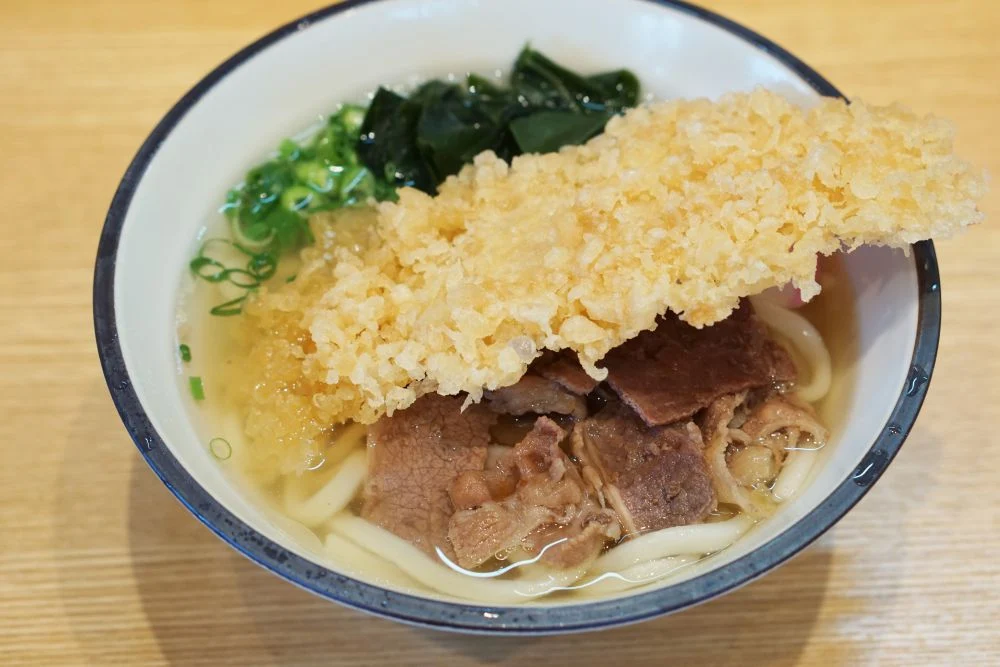
For example, we’ll give extra green onions to people who like them, extra wakame to those who like it, and adjust the wasabi and ginger to suit each person’s preference. We do our best to meet our customers’ requests.
I’d also like to put more effort into the hands-on classes we offered as rewards for crowdfunding supporters.
Children like udon and sushi, and parents can learn how to make delicious tempura, so families enjoy the classes together. I’d like to develop them into a new business.
I also saw the potential for inbound tourism when I went to help out at the tempura restaurant in Yamanashi Prefecture.
I’d like to focus on inbound tourism in the future, too.
From the Writer

After hearing from Seno of Oudon Iori, I thought that the udon made by the late Moriya must have been truly delicious.
It’s no longer possible to eat Moriya’s udon.
But we can enjoy its flavor through Seno’s udon, which was praised by Moriya, a man who rarely gave praise.
Seno says that “Yakage is an area where people are strict about the taste of udon.”
But perhaps the fact that people from Yakage, as well as former fans of Moriya’s udon, keep coming to Iori shows that they recognize the quality of Seno’s udon.
Iori was also hit by the heavy rains, but reopened with the help of crowdfunding and other support.
Having overcome the hardship of the disaster, Oudon Iori continues to preserve the flavor of its mentor, Moriya.
Be sure to try the udon at Iori.
Oudon Iori (formerly Teuchi Udon Iori) details

| Name | Oudon Iori (formerly Teuchi Udon Iori) |
|---|---|
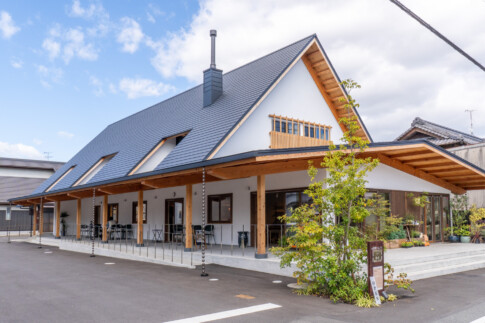
| Address | 1109-1 Motobori, Yakage Town, Oda District, Okayama Prefecture (inside Kirari, the Yakage-juku farmers’ market operated by Kurashiki Kasaya Agricultural Cooperative) |
| Contact | 0866-82-1221 |
| Parking | Available Shared with Kirari |
| Hours | 11:00 a.m.–2:00 p.m. |
| Closed | Open daily Closed over the New Year holidays |
| Payment methods |
|
| Reservations | Not accepted Hands-on classes are by reservation only |
| Seating | 36 seats ・Wall-side counter seats: 10 ・Window-side counter seats: 6 ・Tables seating four: 3 ・Table seating eight: 1 |
| Smoking | Entirely non-smoking |
| Restrooms | Western-style restroom, accessible restroom |
| Childcare facilities | Diaper-changing table Shared with Kirari |
| Accessibility | Accessible restroom Restroom shared with Kirari The shop has no steps, so wheelchair access is possible |
| Website | Oudon Iori Official Facebook Page |


What would you like to know about Kurashiki?
Enter a word to search articles on this site